Tuesday, December 30, 2025
Home Blog Page 4849

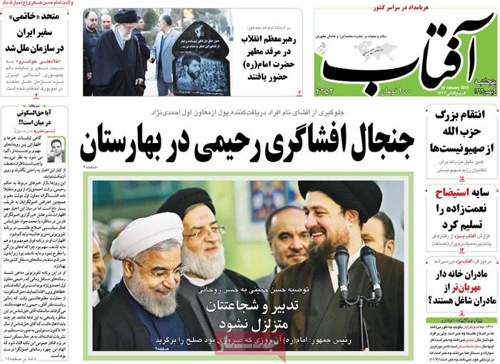
A look at Iranian newspaper front pages on Jan. 31

Iranian Newspapers Headlines

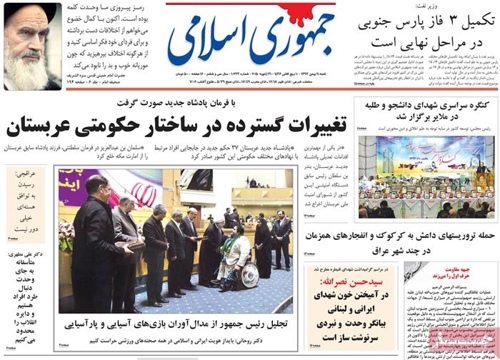
Remarks by President Hassan Rouhani that discrimination against women in sports should become history made headlines in most Iranian dailies on Saturday. Iranian newspapers also put on their front pages comments by Lebanon’s Hezbollah leader Seyyed Hassan Nasrallah in which the cleric lashed out at the Tel Aviv regime and said Hezbollah would retaliate against the Zionist regime if and when it harms the interests of the movement.


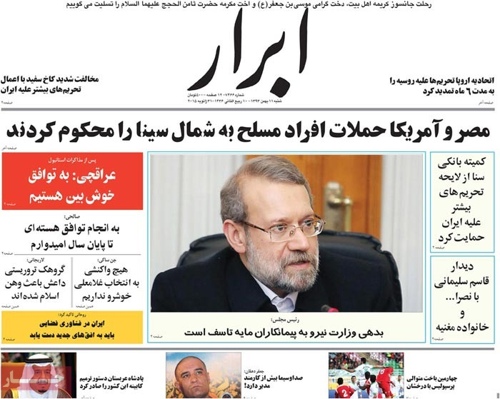
Abrar: “I hope a [nuclear] deal will be clinched by the end of the year [March 21, 2015],” said the director of the Atomic Energy Organization of Iran.


Abrar newspaper 1- 31


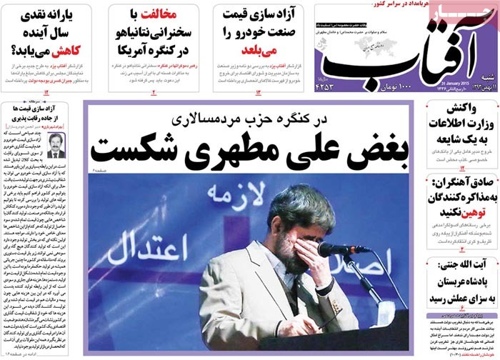
Aftab-e Yazd: The Intelligence Ministry has dismissed rumors that the director of a privately-run bank has fled abroad.


Aftabe yazd newspaper 1- 31


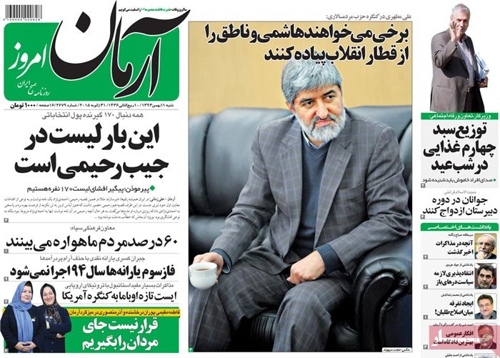
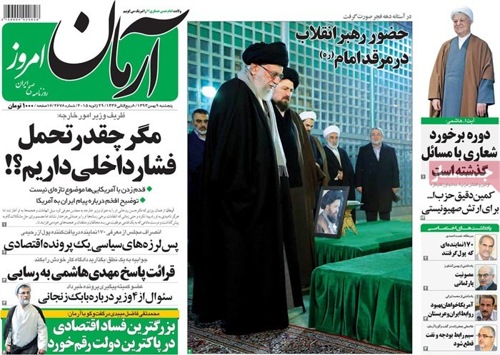
Arman-e Emrooz: “Some individuals seek to throw Hashemi and Nategh Nouri overboard,” Ali Motahari, a principlist MP, told a Democracy Party Congress.

Arman-e Emrooz: The third phase of targeted subsidies won’t come into effect next year.


Armane emruz newspaper 1- 31


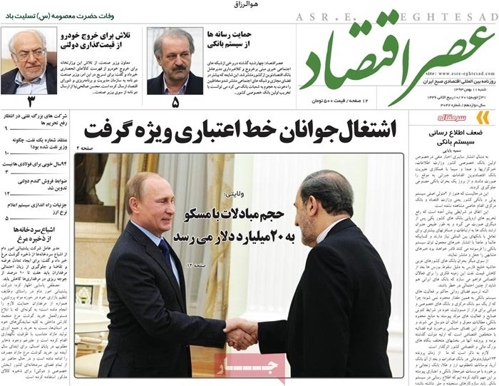
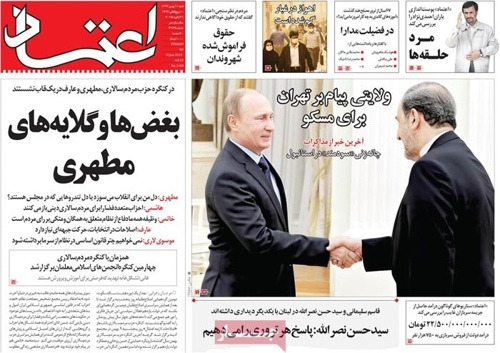
Asr-e Eghtesad: “The volume of trade between Iran and Russia is to hit $20 billion,” said Ali Akbar Velayati, a special envoy of President Rouhani after submitting a message to Russian President Vladimir Putin.


Asre eghtesad newspaper 1- 31


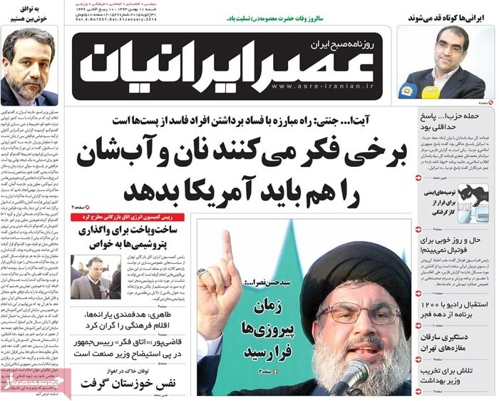
Asr-e Iranian: “Some think the US provides their most basic needs,” Tehran Friday prayer leader Ayatollah Ahmad Jannati said [in taking a swipe at those who support continued negotiations to cut a deal with the US].


Asre iranian newspaper 1- 31


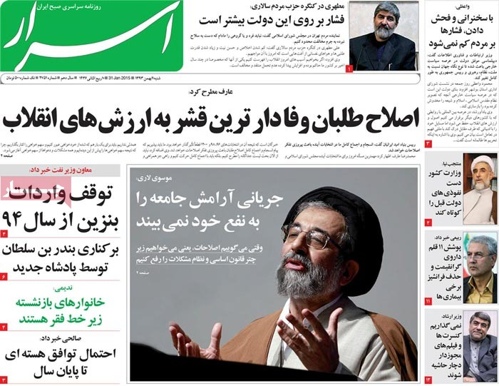
Asrar: “Imports of gasoline from abroad will stop as of next year [late March 2015],” said a deputy oil minister.


Asrar newspaper 1- 31


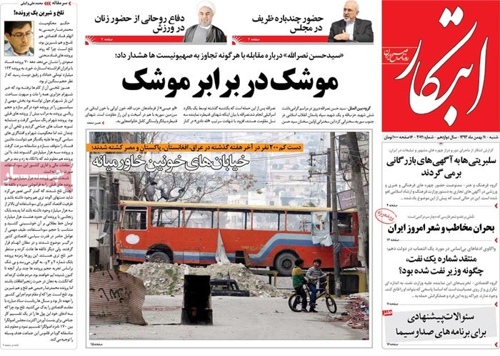
Ebtekar: President Rouhani has supported women’s widespread presence in sports.


Ebtekar newspaper 1- 31


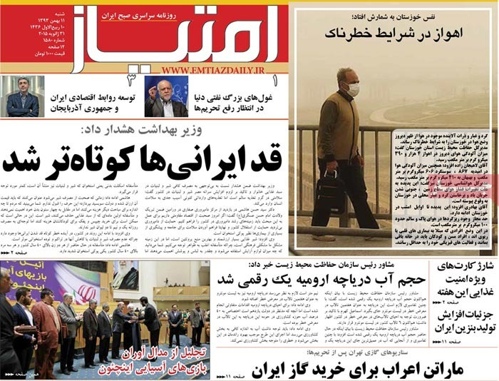
Emtiaz: “World oil giants are waiting for the removal of sanctions to find their way back to the Iranian market,” said the Iranian oil minister.

Emtiaz: Iranian sportsmen and women who bagged medals in Incheon Asian Games in South Korea have been awarded at a ceremony attended by President Rouhani.


Emtiaz newspaper 1- 31


Etemad: Ghasem Soleimani, the commander of the Quds Force of the Islamic Revolution Guard Corps, has met with Seyyed Hassan Nasrallah, the leader of the Lebanese Hezbollah movement.


Etemad newspaper 1- 31


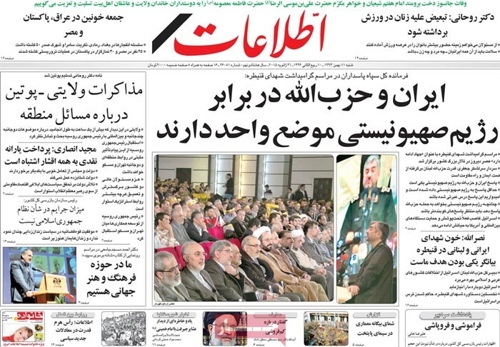
Ettela’at: “Discrimination against women in sports should come to an end,” said President Rouhani.


Ettelaat newspaper 1- 31


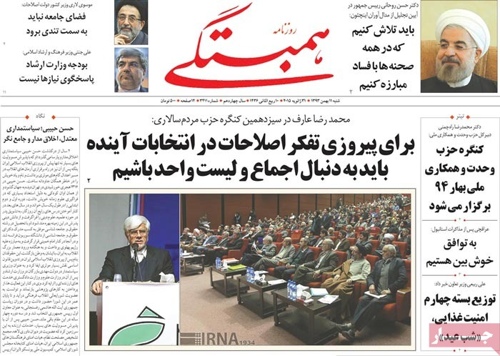
Hambastegi: “To help the reformist mentality win in the upcoming elections, we need to seek consensus and put together a single ticket,” said Mohammad Reza Aref, a senior reformist leader.


Hambastegi newspaper 1- 31


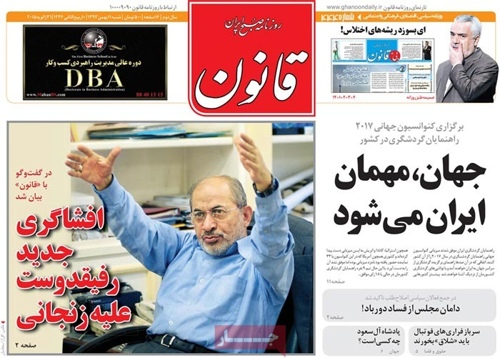
Ghanoon: Iran is to host a world gathering of tour leaders in 2017.


Ghanoon  newspaper 1- 31


Jomhouri Islami: “Unfortunately, instead of circling the wagons, some are driving people out of the circle of revolution,” said Ali Motahari, a principlist deputy who represents Tehran in the Islamic Consultative Assembly.


Jomhorie eslami newspaper 1- 31


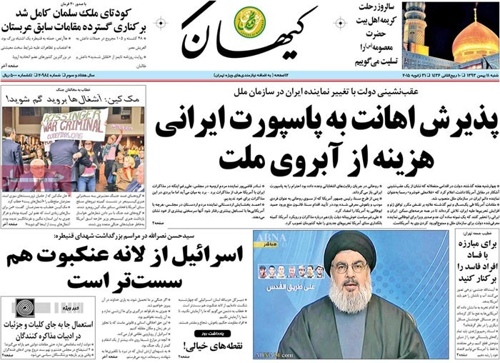
Kayhan: At the expense of Iranian reputation, the government has backed down in the face of US pressures by changing its nominee for UN ambassador [following America’s failure to grant a visa to the previous choice.]


Kayhan newspaper 1- 31


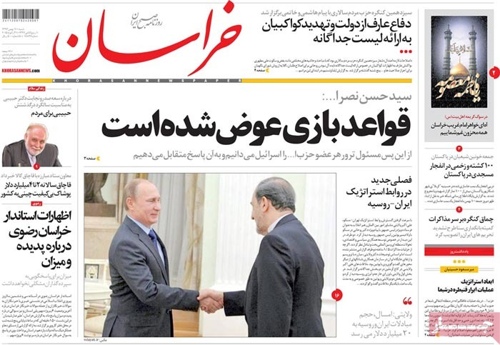
Khorasan: “Each year between $2 billion and $4 billion in low-quality Chinese clothing is smuggled into the country,” said a senior member of the commission that leads the fight against smuggling in goods.


Khorasan newspaper 1- 31


Iran condemns terrorist attacks in Sinai Peninsula

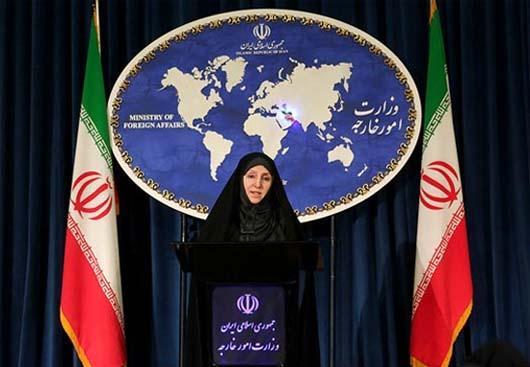
Iranian Foreign Ministry Spokeswoman Marziyeh Afkham

Foreign Ministry Spokeswoman Marzieh Afkham on Friday condemned terrorist attacks in Egypt’s Sinai Peninsula.

Afkham said such terrorist actions “aim to get Islamic countries involved in minor issues and get them distracted from the top priority of the Muslim world which is supporting Palestinian people and defending the Holy Quds.”

Forty-eight people were killed and 105 injured on Thursday in a series of attacks on soldiers and police in north-east Sinai, where the government of Egypt has struggled to contain an 18-month insurgency by terrorist groups linked to ISIL.

The Egyptian army said militants had attacked army and police bases in Arish, the region’s capital, with car bombs and mortar attacks.

Iran welcomes enhanced ties with Saudi Arabia, Lebanon: MP

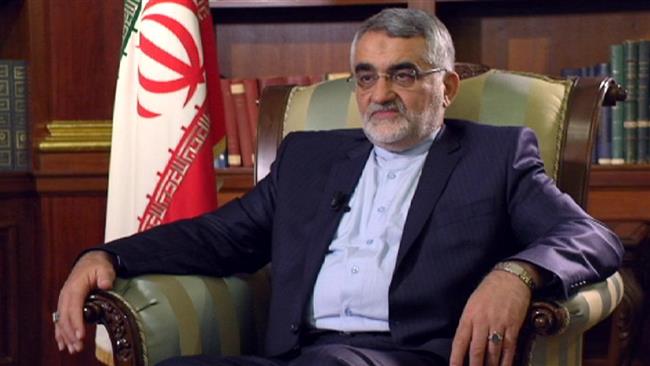
Broujerdi

“The Islamic Republic of Iran attaches special significance to strengthening security and stability in the region, [including] in Lebanon,” Chairman of National Security and Foreign Policy Committee of Iran’s Parliament (Majlis) Alaeddin Boroujerdi told reporters after a meeting with Lebanese Foreign Minister Gebran Bassil in Beirut on Friday.

He added that the ongoing political developments in the region can help restore security, peace and stability to Lebanon.

Boroujerdi is in Beirut to participate in the commemoration ceremony of six Hezbollah members and a general of Iran’s Islamic Revolution Guard Corps (IRGC) who lost their lives in an Israeli airstrike on Syria’s Golan Heights on January 18.

The Iranian legislator said he had held “constructive and positive” talks with the Lebanese foreign minister on the latest developments in the region and ways to improve Tehran-Beirut relations, particularly in trade and economic sectors.

On January 18, an Israeli military helicopter fired two missiles into Amal Farms in the strategic southwestern Syrian city of Quneitra, close to the line separating the Syrian part of the Golan Heights from the Israeli-occupied sector.

Six Hezbollah members as well as the IRGC general, Brigadier General Mohammad Ali Allahdadi, lost their lives in the Israeli assault.

On Wednesday, Hezbollah killed two Israeli soldiers in a retaliatory attack on an Israeli convoy in northern occupied territories.

Interim political deal likely by March: Iranian nuclear negotiator

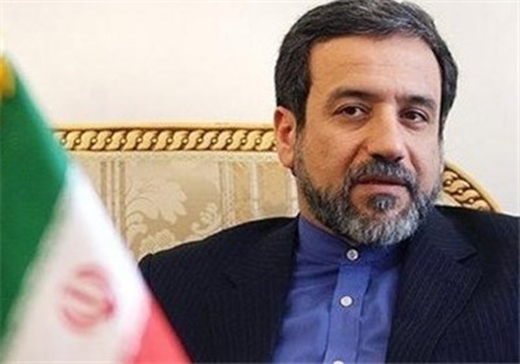
Araqchi

Iranian Deputy Foreign Minister Seyyed Abbas Araghchi described talks with P5+1 over Tehran’s peaceful nuclear program as a difficult “marathon”, but said an interim agreement could be reached by March.

“The marathon of negotiations continues,” Araghchi said after four hours of negotiations with his French, British, and German counterparts on Thursday, adding “We are trying to reach a preliminary political agreement by March”.

Deputy foreign ministers from Iran and the European members of P5+1 (also known as E3+3) held one-day nuclear talks in Istanbul on Thursday.

The talks were part of regular meetings between Tehran and the world powers aimed at settling a decade-long standoff on Iran’s nuclear case.

“Simultaneous negotiation with six countries is difficult,” he stressed, noting that the six countries have diverse opinions on the issue.

The senior negotiator said the Iranian delegation held good negotiations with the three European countries on Thursday, days after their bilateral talks with the Americans.

Araghchi added that talks with the Russian and Chinese sides are also held regularly.

He further described the negotiations as “very useful”, but noted that it is too early to say that progress has been made.

Iran and P5+1 are in talks to hammer out a final agreement to end more than a decade of impasse over Tehran’s nuclear energy program.

What is really going on in Yemen? An expert point of view (PART ONE)

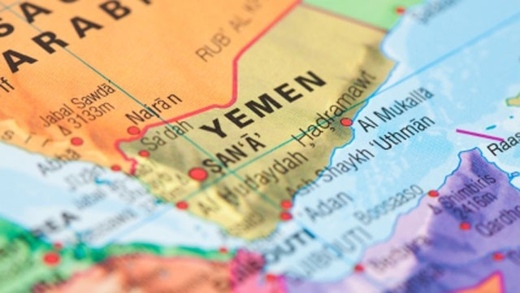
Yemen-map-jpg

A Middle East expert says that Saudi Arabia along with its fellow Persian Gulf Cooperation Council members is seeking to disintegrate Yemen. They are trying to wage North-South wars to dissuade Yemen’s revolutionaries from having a democratic system. The reactionary Arab regimes are fearful of democracy, and not Shiites.

Four years have passed since Yemeni strongman Ali Abdullah Saleh was ousted, but the southwest Asian country is still in the grip of dictatorship because Abd-Rabbu Mansour Hadi, Yemen’s vice-president under Saleh, took over as the head of a transitional government, following in the footsteps of the toppled president.

Mansour Hadi stepped down on January 23. Although the Arab country’s parliament didn’t initially accept his resignation, it has rejected his recent decision to withdraw his resignation.

Houthi Shiites staged peaceful rallies and sit-ins to protest the government’s failure to meet their demands and honor Hadi’s promises, calling for the removal of the president. However, the rallies turned ugly and supporters of Houthis and the tribes backing the Ansarullah movement eventually managed to force Mansour Hadi to quit in two weeks.

Analysts say that the Yemeni case is of paramount significance to new Saudi King Salman bin Abdulaziz, citing speculations that a possible alliance between Shiites in Yemen and Saudi Arabia could pose a grave threat to Riyadh.
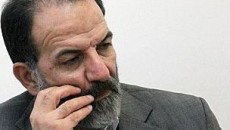
Ghannad BashiJafar Ghannad-Bashi, a Middle East expert, believes that Saudi Arabia is not facing the threat of disintegration, but that Yemen is highly likely to fall apart.

Khabaronline’s Zohreh Norouzpour had an interview with Ghannad-Bashi on January 27, putting Yemen’s developments under the microscope. The following is PART ONE of the translation of the interview:


How do you evaluate the downfall of the Yemeni government and the possible takeover by Houthi Shiites? 

Based on what we’ve seen since midsummer, they [Houthi Shiites] are representing the Yemeni people trying to protect their revolution. Houthis who are defending people are not exclusively Shiite; there are also Sunnis in their ranks who support the Ansarullah movement. They are calling for the revolutionary demands of people to be met, among them a regime change, ouster of corrupt government officials, and an end to interference in Yemen by Arab and foreign countries as well as Arab kings and reactionaries.

Ansarullah has so far successfully passed its tests, taking control of the revolution and its leadership. Having faced multiple challenges over four years, Ansarullah, which is massively popular, has managed to land the revolution on the right path, and above all, it has demonstrated good leadership.

Yemen’s popular revolution is very complicated. Tribes are politically active there. Tribal leanings affect the country’s political trends. Yemen used to be two independent countries in the past: North Yemen and South Yemen. Separatist tendencies are still palpable in Yemen; that’s why it is a complicated revolution.

Another challenge is that former President Ali Abdullah Saleh did not leave office outright. His deputy – Mr. Mansour Hadi, the president who was forced to quit – took charge after Abdullah Saleh. Ansarullah held peaceful protest rallies, sit-ins and strikes this past summer. Ansarullah, which has taken the upper hand since the fall, finally achieved its goal: resignation of Mansour Hadi.


What do you mean by complexity of the Yemeni revolution?

When a revolution is in the making against a totalitarian system, supporters of the autocratic rule and people opposed to it line up against each other and in most cases the lineup is clear. But what happened in Yemen broke the ranks of the revolutionaries. The lines were blurred after the resignation of Saleh and the breakdown in the country’s national dialogue. Certain non-revolutionary figures and corrupt officials of the previous regime found their way into the ranks of the revolutionaries. Since Mr. Mansour Hadi hailed from the South, Ansarullah had to keep him in the job to satisfy public opinion in the South. Abdullah Saleh too had appointed him as his vice-president to win the support of the South.

Second, Yemen’s parliament has not been dissolved since 2003 when its deputies were last elected. The fact that parliament didn’t get dissolved and Saleh’s vice-president was named his successor means the very previous government came to power – although on a weaker scale. Divisions made the struggle all the more difficult, and distinguishing between those who were revolutionary and those who were not became difficult. Many army men joined Ansarullah which took charge of security in the capital.

As for parliament, the previous chamber with its anti-revolutionary approach has remained in place. It was about three years ago when Mansour Hadi was named president to take charge for two years during a transitional period for [writing] a new constitution. Now three years have passed with Hadi still in power one year beyond the original term thanks to partisan approval. According to the constitution and parliament, he was not supposed to remain at the helm for four years; rather, he was a holdover from the previous government who had the responsibility to set the stage for drafting a constitution.


Are you saying that the revolution was far from complete?

Revolutions always feature a downfall which is followed by the establishment of a new system. In Yemen the collapse was still in progress when efforts got underway to establish a new system. Measures to establish a new system and the collapse of a failed system are two complicated things which take time to complete. No revolution has ever managed to go through these two processes at the same time.

The collapse has now taken place. Through logical moves, Ansarullah forced Mansour Hadi to leave the political scene [to prepare the ground] for the establishment of a new system. His departure will be followed by the dissolution of parliament which was elected in 2003 for six years. Parliament has met with no mandate since 2009. A parliament with no mandate and an acting president lack credibility in the eyes of people, so they cannot be at the helm of the state.

Britain circulated a motion at the Security Council to confirm Mansour Hadi. London thought the collapse of Mansour Hadi would be to its detriment, so it referred the case to the Security Council which decided that the resigned president should keep his post.

The British and Arabs did not want this system to collapse, but a few days after the Security Council passage [of Britain’s Yemen statement] they changed course, contemplating the resignation of Mansour Hadi instead of implementing the Security Council statement, because they wanted to create a power vacuum in the capital. In that case Sana’a would be swept by tensions, and supporters of Hadi would stage protest rallies in the South. Three southern provinces have declared independence based on plans devised overseas.


Does it mean that Houthis are against the country’s disintegration?

They do not seek the breakup of the country. The West, especially Britain, wanted to create a void in the capital, but it did not happen because Ansarullah is tactfully after forming an all-party revolutionary council to fill the void and assume power. Naturally they will be successful thanks to public support.

Yemen’s disintegration is one of Ansarullah’s concerns. They are concerned about the secession of the South. In fact, the Westerners are after disintegration. One of the West’s strategies to knock down a revolution is to bolster secessionist movements, like what we witnessed in Nicaragua and Iran. In the early years after the revolution in Iran, secessionist movements received backing from the West.

Iran’s IRGC launches new Parmida crew boat

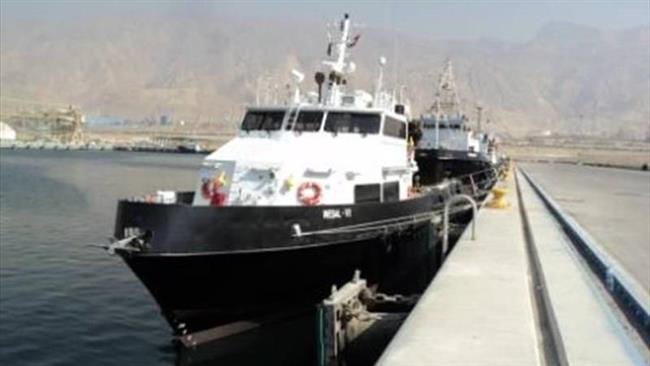
IRGC-Parmida

A new model of Iran’s first domestically manufactured crew boat has begun its maiden voyage in the Persian Gulf waters.

The boat was launched in the southern port city of Bushehr on Wednesday in the presence of chief of the Islamic Revolution Guards Corps (IRGC) naval forces Rear Admiral Ali Fadavi.

According to Sepah News, the light vessel, named “Parmida 6”, is specialized in transporting passengers and equipment.
With a maximum speed of 25 nautical miles per hour, the boat has the capacity to carry 73 passengers and eight crew on board.
The first version of the vessel, “Parmida 1,” was built in 2010.

In recent years, Iran has unveiled several domestically made submarines, ships and warships, including the Jamaran destroyer.

Jamaran, a Mowj-class warship, has been designed and built by Iranian experts and has state-of-the-art navigation equipment and complex defensive systems.

Iran has so far launched different classes of home-made advanced submarines, including Fateh, Ghadir, Qaem, Nahang, Tareq and Sina.

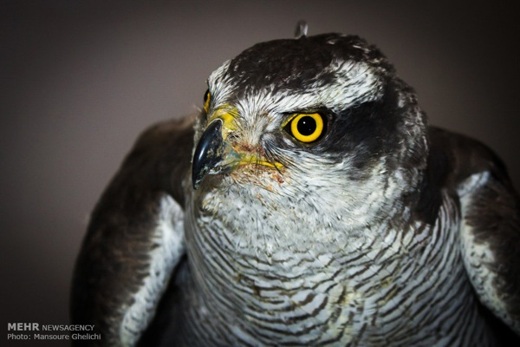
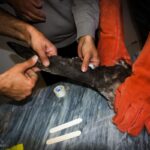
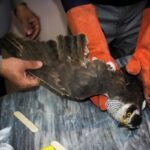
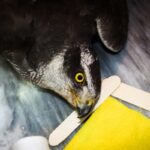
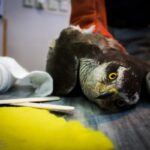
Goshawk rescue in Iran (Photos)

Goshawk rescue in Iran 10

Environmental guards could rescue and treat a goshawk which was wounded in Shahroud region, Semnan Province.

Goshawk is a medium-large bird of prey which inhabits the temperate parts of the northern hemisphere.

The following are the photos Mehr News Agency released online on January 29 of the rescue operation:


A look at Iranian newspaper front pages on Jan. 29

Iranian Newspapers Headlines

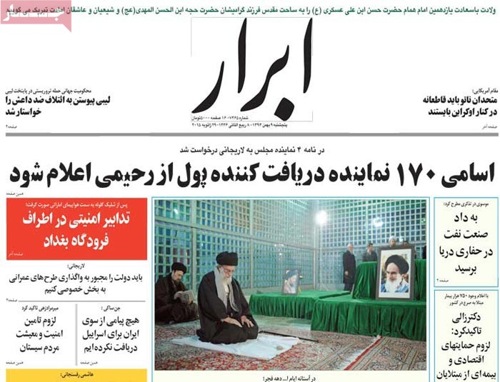
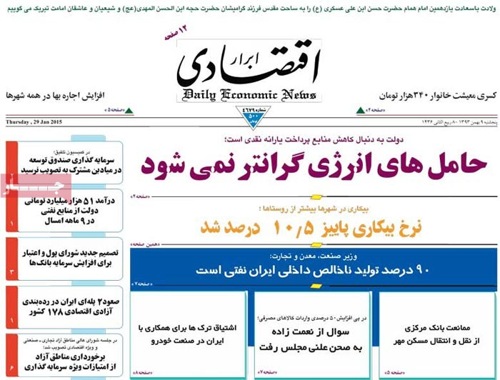
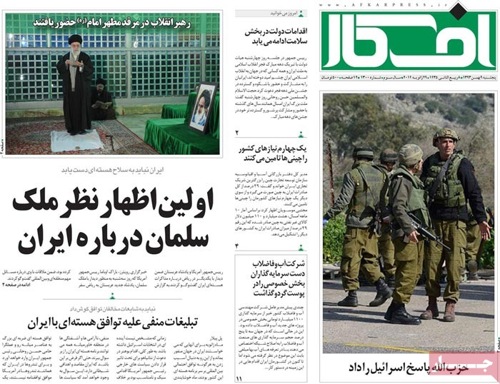
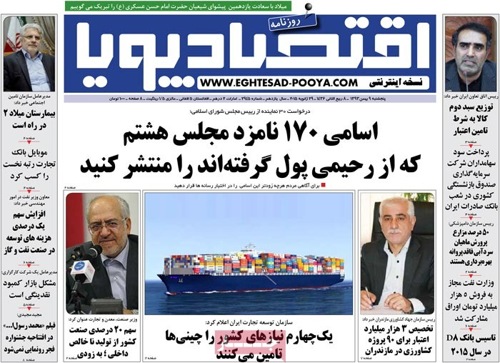
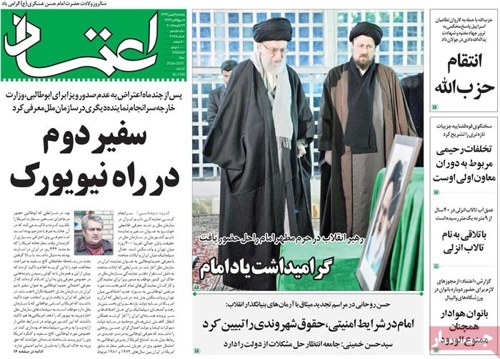
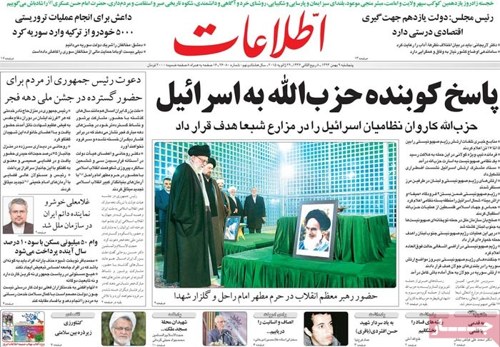
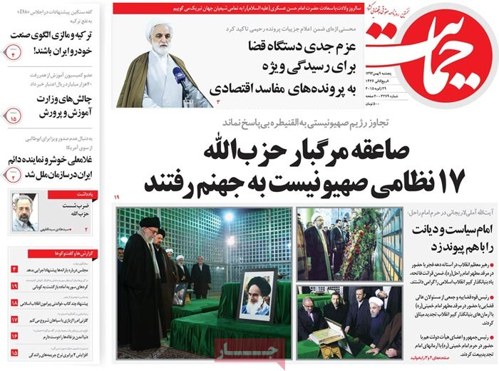
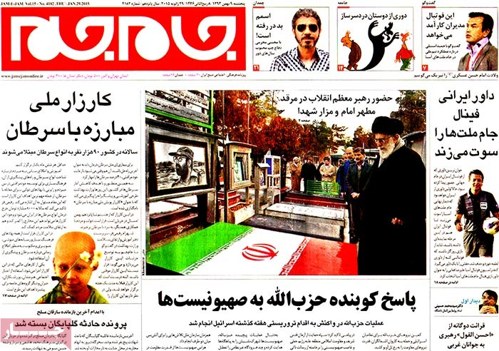
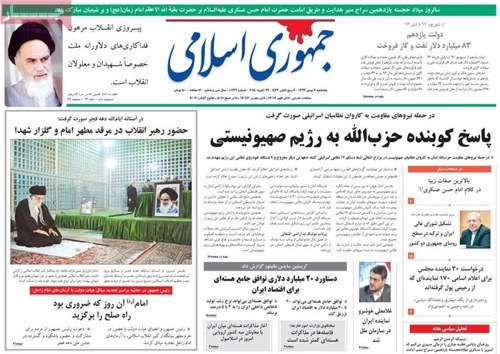
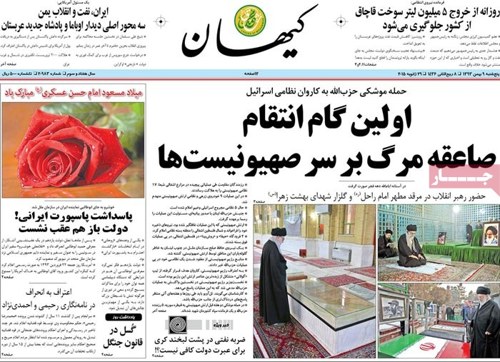
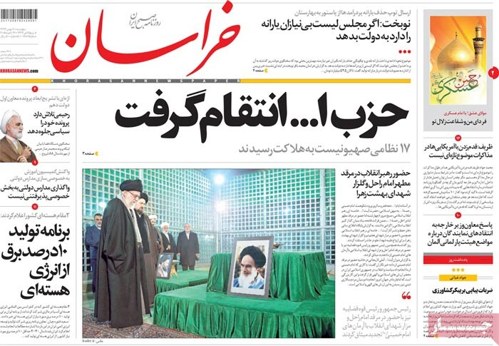
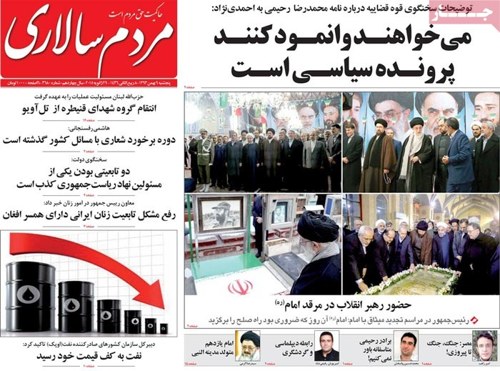
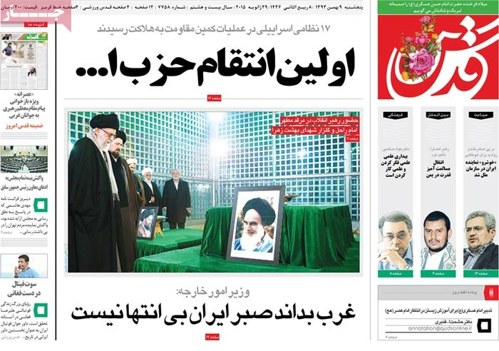
A visit by the Supreme Leader to the mausoleum of the late Imam Khomeini to pay respects to the architect of the Islamic Republic as the 36th anniversary of the Islamic Revolution nears appeared on the front pages of all newspapers on Thursday. Also on the cover of dailies was the retaliatory attack of Hezbollah on an Israeli military convoy.


Abrar: In a letter to the parliament speaker, four MPs have called for the list of deputies who have received financial aid from Mohammad Reza Rahimi [a convicted deputy of the former president] to be made public.

Abrar: “Government should be required to hand over development projects to the private sector,” said Parliament Speaker Ali Larijani.


Abrar Newspaper-1-29-2015


Abrar-e Eghtesadi: “Oil accounts for some 90 percent of the country’s GDP,” said the minister of industries, mines and trade.

Abrar-e Eghtesadi: Following a 50 percent rise in imports of consumer goods, a motion to question Mohammad Reza Nematzadeh [the minister of industries, mines and trade] will be debated on parliament floor.


Abrar Eghtesadi Newspaper-1-29-2015


Afkar: The new Saudi King has made his first official comment on Iran. “Iran should not develop nuclear weapons.”

Afkar: Lebanon’s Hezbollah has retaliated against the Israeli attack.


Afkar Newspaper-1-29-2015


Aftab-e Yazd: Gholamali Khoshroo, an ally of [former President Mohammad] Khatami has been named Iran’s new ambassador to the United Nations.

Aftab-e Yazd: The grandson of Imam Khomeini has urged President Rouhani – when he visited the mausoleum of the late Imam – to stick to his “prudence and bravery”.


Aftabe Yazd Newspaper-1-29-2015


Arman-e Emrooz: A member of the committee looking into the corruption case involving billionaire Babak Zanjani has said four ministers have been questioned in connection with the case.


Armane Emrooz Newspaper-1-29-2015


Eghtesad-e Pooya: “The Chinese supply one-fourth of Iran’s needs,” reported the Trade Promotion Organization of Iran.


Eghtesad pouya Newspaper-1-29-2015


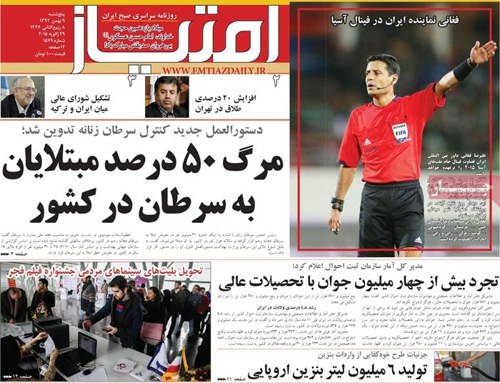
Emtiaz: Some 50 percent of those who develop cancer in Iran die of the disease.


Emtiaz Newspaper-1-29-2015


Etemad: “The crime Mohammad Reza Rahimi has been convicted of dates back to the time he was first vice-president,” said the spokesman of the judiciary. [His comment seems to be in response to former President Ahmadinejad’s statement that Rahimi’s corruption case has nothing to do with his presidency.


Ettemad Newspaper-1-29-2015


Ettela’at: The president has urged the public to turn out in force for festivities to mark the victory of the Islamic Revolution.


Ettelaat Newspaper-1-29-2015


Hemayat: Judiciary Chief Ayatollah Sadegh Amoli Larijani paid respects to the founding father of the Islamic Republic by visiting his mausoleum, south of Tehran. “Imam established a link between politics and religiosity.”


Hemayat Newspaper-1-29-2015


Jamejam: An Iranian referee will officiate the final of the AFC Asian Cup in Australia.


Jame Jam Newspaper-1-29-2015


Jomhouri Islami: “Gaps in nuclear talks have somewhat narrowed,” said the Iranian Foreign Ministry spokeswoman.

Jomhouri Islami: Talks between Iran and deputy foreign ministers of E3 [Germany, France and Britain] will open in Istanbul, Turkey later on Thursday.


Jomhouri Eslami Newspaper-1-29-2015


Kayhan: “Police prevent some 5 million liters of fuel from being smuggled out of the country on a daily basis,” said Police Chief Brigadier General Esmail Ahmadi Moghaddam.


Kayhan Newspaper-1-29-2015


Khorasan: “Mohammad Reza Rahimi seeks to depict his conviction in a corruption case as being politically motivated,” said the judiciary spokesman.


Khorasan Newspaper-1-29-2015


Mardomsalari: “Reports that a senior official at the Presidential Office holds dual citizenship are untrue,” said the government spokesman.


Mardom Salari Newspaper-1-29-2015


Qods: “The West should know that Iran’s patience is not infinite,” said the Iranian foreign minister.


ghods Newspaper-1-29-2015


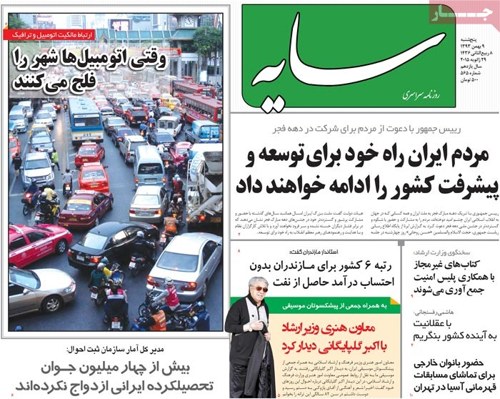
Sayeh: “Up to four million educated Iranian men and women are single,” said the National Organization for Civil Registration.


Sayeh Newspaper-1-29-2015


Iran, EU3 set to begin nuclear talks in Turkey

IranTalks

Representatives from Iran and three big European Union countries involved in negotiations on Tehran’s nuclear program are set to hold a fresh round of nuclear talks.

The Islamic Republic and the EU three — France, Germany and the United Kingdom — will start the one-day talks in the Turkish city of Istanbul later on Thursday.

The Iranian negotiating team, led by Deputy Foreign Minister for Legal and International Affairs Abbas Araghchi, is due in Istanbul on Thursday.

Iran’s Deputy Foreign Minister for Europe and Americas’ Affairs Majid Takht-e-Ravanchi, who is also an Iranian nuclear negotiator, arrived in Istanbul earlier in the day.

Helga Schmid, the deputy of EU foreign policy chief Federica Mogherini, will also participate in the talks.

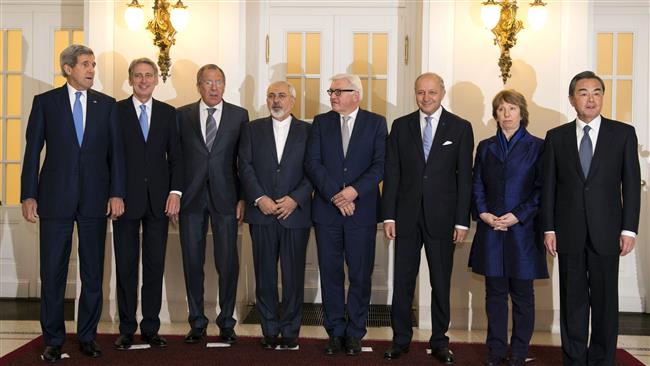
Iran and P5+1 – the US, France, Britain, China, Russia and Germany – are in talks to secure a final comprehensive deal over the Islamic Republic’s nuclear work.

On Tuesday, Iranian Foreign Minister Mohammad Javad Zarif said Tehran and P5+1 are close to reaching a final deal over the Islamic Republic’s nuclear program, adding that details are now being worked out in the talks.

“We are done with the generalities and have begun [discussing] details. Iran’s [uranium] enrichment program and the continuation of the nuclear program have been approved,” Zarif said on Tuesday.

Since an interim deal was agreed in Geneva in November 2013, the negotiating sides have missed two self-imposed deadlines to ink a final agreement.

Iran and the six powers now seek to reach a high-level political agreement by March 1 and to confirm the full technical details of the accord by July 1.

Iran’s Velayati submits Rouhani’s message to Russian president

Velayati-Putin

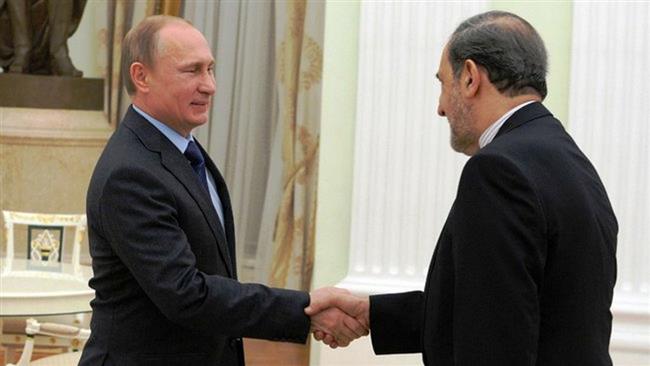
Senior Iranian official Ali Akbar Velayati has held a meeting with Russian President Vladimir Putin as a special envoy for Iran’s President Hassan Rouhani.

Velayati, an advisor to the Leader of the Islamic Revolution Ayatollah Seyyed Ali Khamenei, gave Rouhani’s message to the Russian president in Moscow on Wednesday, IRNA reported.

The two sides agreed on efforts for the promotion of Iran’s status at the Shanghai Cooperation Organization (SCO), according to the Iranian embassy in the Russian capital.

The meeting, which lasted more than an hour, also focused on bilateral political and economic ties as well as Tehran’s nuclear talks with the Sextet of world powers.

Iran, which received observer status at the SCO in 2005, eyes the body’s upcoming meeting in the Republic of Bashkortostan next summer, where new membership will be discussed.

Iran-SCO ties have been on the rise since President Rouhani’s first international trip to the 2013 SCO summit in Kyrgyz capital Bishkek and a 2014 one in Dushanbe, the capital of Tajikistan.

Iran’s 2008 application for full membership has so far been blocked due to sanctions imposed on the Islamic Republic over its nuclear program.

Tehran, however, argues that the program is totally peaceful and is currently engaged in negotiations with P5+1 (China, Russia, France, Britain, and the US – plus Germany) in an effort to reach a high-level political agreement by March 1 and to confirm the full technical details of the accord by July 1.

According to the Iranian embassy, Velayati also met with Russian Foreign Minister Sergei Lavrov and Russian Energy Minister Alexander Novak.