Wednesday, December 24, 2025
Home Blog Page 4842

Defense Minister: ISIL too weak to threaten Iranian border

General Hossein Dehqan

Iran does not consider the Islamic State in Iraq and the Levant (ISIL) terrorist group to be even a threat, Defense Minister Brigadier General Hossein Dehqan said, stressing that any hostile move by the notorious group against Iran will be nipped in the bud.

“Daesh terrorist group lacks the capability and capacity to pose any threat to the Iranian borders, and we do not deem it a threat,” Dehqan said on Iran’s southern island of Qeshm on Thursday, using an Arabic acronym for the ISIL, also known as the ISIS.

“Definitely, the power of Iran’s security, military and law enforcement forces stands at a level that they can foil any move by that group (ISIL) before it even starts,” he added.

The ISIL militants would have done something against Iran’s security if they had had the ability to do so, Dehqan noted, adding that Iran’s military power has curbed their activities.

He also noted that Iranian security forces monitor each and every move by the terrorist group.

ISIL is a militant group operating in Iraq and Syria which is believed to be supported by the West and some regional Arab countries. The terrorist group claims that Iraq and Syria are part of the territory it has called an independent state, with implied future claims intended over more of the Levant, including Lebanon, occupied Palestine, Jordan, Cyprus, and Southern Turkey.

ISIL militants made advances in northern and western Iraq in summer 2014, after capturing swaths of northern Syria.

However, a combination of concentrated attacks by the Iraqi military and the volunteer forces, who rushed to take arms after top Iraqi cleric Ayatollah Ali al-Sistani issued a fatwa calling for fight against the militants, have blunted the edge of ISIL offensive.

Amid tensions in Iraq, Iran is known as the first country to help the Arab country and has always voiced support for Iraq’s prosperity and territorial integrity.

Intelligence ministry foils counterrevolutionary attacks across Iran

Iran's Intelligence Minister Seyyed Mahmoud Alavi

Intelligence Minister Seyed Mahmoud Alavi said that his forces have foiled several terrorist attacks in different Iranian cities and arrested the terrorists.

A bombing plot in Mashhad, a poisoning plot in Tehran and a bombing plot in Qom are some of the conspiracies foiled by the Intelligence Ministry, he said.

‘There is no single day when Iranian intelligence forces do not discover and foil a conspiracy,’ he added.

The comments by the Iranian intelligence minister came as the Daesh Takfiri terrorist group is actively operating in Iraq and Syria. Daesh group is engaged in a campaign of terror and killing in the two Arab countries.

There are reports that the Daesh is also recruiting forces in Afghanistan, another Iranian neighbor.

Panahizadeh named to world wrestling commission

Panahizadeh

United World Wrestling President Nenad Lalovic announced the addition of Farnaz Panahizadeh to the international wrestling federation’s Women and Sport Commission.

Panahizadeh, who runs the International Department for the Iranian Wrestling Federation in Tehran, becomes the first Iranian woman to serve on a United World Wrestling commission, unitedworldwrestling.org wrote.

‘We are pleased to have Ms. Panahizadeh join our wrestling family,’ said Lalovic.

‘We fully expect her expertise and passion for the sport to influence the participation of women athletes around the world. Wrestling will be well served to have her voice.’

The Women and Sport Commission is responsible for overseeing the development of women’s wrestling around the world.

‘Wrestling is the national sport of Iran,’ said Ms. Panahizadeh. ‘During our history, Iranian women and men have loved wrestling and wrestling’s heroes are part of their heritage.’

The appointment of Panahizadeh occurred as a direct result of United World Wrestling’s recent Super 8 campaign, which highlighted the role of women in wrestling. The campaign brought together leading voices within sport and helped improved the representation of female athletes around the world, including developing countries like Iran who sent Panahizadeh to the Super 8 announcement in January.

‘Today women are provided a chance to take part in wrestling in accordance to our religious and cultural values. I am sure that with cooperation of other members of the commission we can help bring even more women to the sport of wrestling,’ Panahizadeh said.

Good progress made over removal of anti-Iran sanctions in Iran N-talks: Iranian official

Baidi Nejad

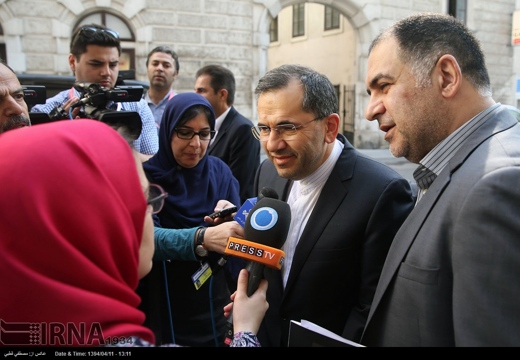
A senior Iranian nuclear negotiator says good progress has been made on the issue of the removal of the anti-Iran sanctions during nuclear talks between the Islamic Republic and the P5+1, Press TV reports.

Hamid Baidinejad, who is also the director general for political and international affairs at Iran’s Foreign Ministry, made the remark in an exclusive interview with Press TV in the Austrian capital, Vienna, on Friday.

He did not provide specifics.

Baidinejad, who has been in Vienna for talks with the P5+1, is now heading to the Swiss city of Geneva to join Iranian Foreign Minister Mohammad Javad Zarif and other members of the Iranian nuclear negotiating team for the continuation of the talks there.

During the interview, he also said that the idea of foreign access to the country’s military sites has never been on the agenda of negotiations between the Islamic Republic and six world powers over Iran’s civilian atomic activities.

“In fact, inspection of military installations has never been on agenda in our negotiations. As we have made it very clear, we never accepted that there could be inspections from the military sites in our country,” he said.

“But, there are very clear rules and regulations which are defined within the Additional Protocol, which… define in concrete terms… what are the regulations and conditions that such an access could be requested by the [International Atomic Energy] Agency and what are the rights of the state parties in response to these concerns,” he added.

The senior Iranian official said that Tehran and its negotiating partners are not contemplating an extension of Iran’s nuclear talks beyond the June 30 deadline.


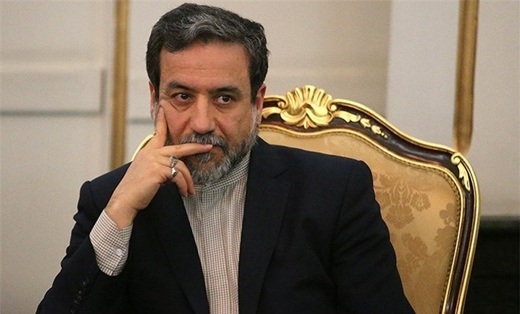
Earlier on Friday, Seyyed Abbas Araqchi, who is Iran’s deputy foreign minister for legal and international affairs, made similar remarks about the issue of visits to Iranian military facilities and interviews with Iranian nuclear scientists.

“We have fully informed the opposite [negotiating] side that this (the issue of inspections and interviews) will never be on the agenda” of the negotiations, he said.

On May 20, Leader of the Islamic Revolution Ayatollah Seyyed Ali Khamenei said Iran will not allow any inspections by foreign countries of its military sites. He also stressed that foreigners will not be permitted to interview Iranian scientists.

Araqchi said the Leader’s remarks are “a decisive and serious guideline” for the Iranian negotiating team.

[…]


Iran has cooperated with IAEA more than reflected in recent report: Official

Reza Najafi

An Iranian nuclear official says the part of a recent report by the International Atomic Energy Agency (IAEA) about Iran’s cooperation with the agency is “incomplete,” as the Islamic Republic has cooperated with the agency more than reflected in the report.

“From the 18 practical measures [on which] we agreed with the Agency, we concluded 16. Two remaining practical measures are under discussion,” Iran’s Ambassador to the IAEA Reza Najafi told Press TV in an exclusive interview on Friday.

He said that during recent meetings with IAEA officials in the Iranian capital, Tehran, “we discussed [the] two remaining practical measures. We provided some clarification with regard to those two issues.”

“What has been considered by some media as information about one issue is indeed a sentence in the report which refers to one of the issues. But, indeed, we provided information for two issues and we believe that that part of the report is incomplete; it is not a full reflection of the facts,” he explained.

In separate remarks, Najafi said the IAEA report repeats previous allegations about the so-called possible military dimensions (PMD) in Iran’s nuclear program.

“The latest report, when compared to earlier ones, shows the IAEA has nothing new to present concerning the implementation of the Safeguards Agreement in Iran,” said Najafi, adding that the new report has the same content as that of the previous ones only with different figures.

Najafi also rejected the UN nuclear watchdog’s so-called PMD allegations and said repeating the same baseless accusations against Iran’s peaceful nuclear activities cannot give credibility to IAEA reports.

He pointed out that the report, issued to the IAEA’s 35-nation board and the UN Security Council on Thursday, attests that all of Iran’s atomic activities and its nuclear facilities have been under the close supervision of the UN nuclear agency, and have had no diversion from peaceful dimensions.

Iran condemns terrorist attack on Saudi Shia worshippers

Saudi shia mosque attakcked

The Islamic Republic of Iran has condemned a recent deadly terrorist attack against Shia worshippers in Saudi Arabia’s Eastern Province.

All measures should be taken to prevent such incidents and combat those who have targeted the security and stability of the region by provoking religious strife, said Iran’s Foreign Ministry spokeswoman Marzieh Afkham on Friday.

Cruel, unjustifiable act

Amnesty International also denounced the act of terror as cruel and unjustifiable.

“Members of Saudi Arabia’s Shia Muslim community have been subjected to cruel attacks during Friday prayers for the second week in a row. There can be absolutely no justification for attacking worshippers in a mosque,” said Deputy Director at Amnesty International’s Middle East and North Africa Program Said Boumedouha.

The activist called on Saudi officials to carry out a “transparent” probe into the incident and adopt serious measures to protect the Shia minority in the kingdom, saying Riyadh must translate into action its words in condemnation of terrorism and extremism.

“Unless the Saudi Arabian authorities are transparent about the investigations they are carrying out into these atrocities, and unless they take serious and effective steps to end discrimination and advocacy of hatred against the Shia, it will fuel perceptions that they are looking the other way while sectarian tensions and violence against Shia intensify,” Boumedouha stated.

“The authorities… must do more to protect members of this community from further violent attacks,” he went on to say.

Massive rally in Qatif

According to reports, thousands of people took to the streets in the Qatif region of Eastern Province to protest against the terrorist attack.

The demonstrators accused the government in Riyadh of failing to protect the Shia population in the Arab country.

Earlier in the day, a car bomb attack targeted the Imam Hussein Mosque in Dammam, the capital city of Saudi Arabia’s Eastern Province.

The ISIL Takfiri terrorist group claimed responsibility for the attack, which left at least four people dead.

The attack came a week after another Takfiri element blew himself up at the Imam Ali Mosque in Qatif, killing 21 people and injuring 97 others.

Kafe Namak or Salt Lake in Sirjan (Photos)

Kafe Namak

Namak Lake in Sirjan, which is in fact a dry lake, has turned into a tourist attraction in Kerman Province.

A dry lake or playa is an ephemeral lakebed, or a remnant of an endorheic lake. Such flats consist of fine-grained sediments infused with alkali salts.

A playa lake may cover a wide area, but it is never deep. Most water in it evaporates, leaving a layer of salt on the surface. These salt covered stretches are called saltpans. When the basin is primarily salt, the dry lake is called a salt pan or salt flat.


Tasnim News Agency has released the following pictures of the dry lake in southern Iran:

Bastam Grand Mosque in Semnan (PHOTOS)

Mosques in Iran; Cultural Havens with Impressive Architecture

Bastam Grand Mosque is located at a distance of 200 meters from the tomb of Bayazid, a famous Persian Sufi, south of the city of Bastam, in Iran’s northern province of Semnan. It was constructed in the 1st century AH.

The historic mosque is connected to the Kashaneh Tower in the southeast. The tower has 30 sides. Some researchers believe this structure is a relic from the times of Qazan Khan Mongol and it was previously known as Qazaneh.

The following are the pictures Mehr News Agency has posted online of the mosque and the tower:

Senior cleric stresses safeguarding nuclear achievements

Ayatollah Kazzem Sediqi

Tehran’s Friday Prayer Leader Ayatollah Kazem Sediqi underlined the necessity for safeguarding the country’s nuclear achievements, saying that inspection of Iran’s military sites is against the holy Koran’s teachings.

“It is not acceptable to us to see our nuclear energy (industries) become a lion without mane and tail and useless, as we will then (under such conditions) be incapable of enriching uranium and will depend on the foreigners for meeting our domestic needs,” Ayatollah Sediqi said, addressing a large congregation of people on Tehran University campus on Friday.

He also voiced opposition to the inspection of Iran’s military and missile centers by the foreigners, and said it is against the teachings of the holy Koran.

Sediqi underlined that the guidelines of Islamic figures and clerics also say that the enemies shouldn’t have Muslims under their control.

In relevant remarks on Wednesday, Supreme Leader of the Islamic Revolution Ayatollah Seyyed Ali Khamenei urged the Iranian negotiators not to bow to the West’s pressures and keep on insisting on the country’s stances that have already been announced.

“The negotiators should insist on the stances that have been announced and I hope they could meet the country’s and the ruling system’s interests,” Ayatollah Khamenei said in a meeting with Iranian Parliament Speaker Ali Larijani and parliamentarians in Tehran.

Yet, the Supreme Leader underlined that the Iranian negotiators are engaged in hard work and efforts.

“There are many solutions to the nuclear issue all of which rely on the domestic capacities and reinforcing (domestic) production,” Ayatollah Khamenei added.

The Supreme Leader underlined that the nuclear issue is only a pretext to pressure Iran and even if this problem is resolved, the Western powers would seek other excuses such as “human rights”.

Ayatollah Khamenei called on Iranian officials to rely on the country’s domestic capabilities, and said, “If we boost production and use domestic potentialities, this will not only solve internal problems, but also facilitate settlement of foreign issues such as the nuclear one,” Ayatollah Khamenei added.

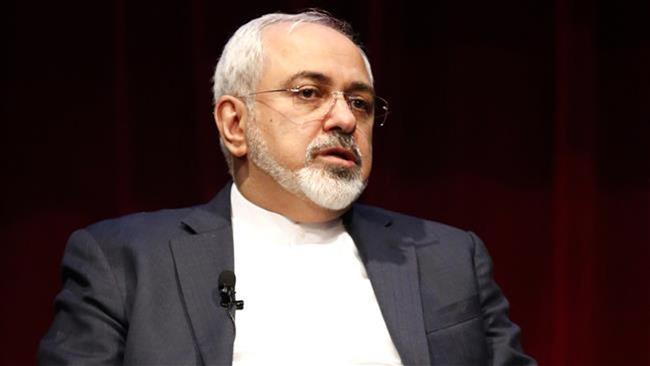
Iran FM warns against excessive demands in nuclear talks

Zarif-Greek

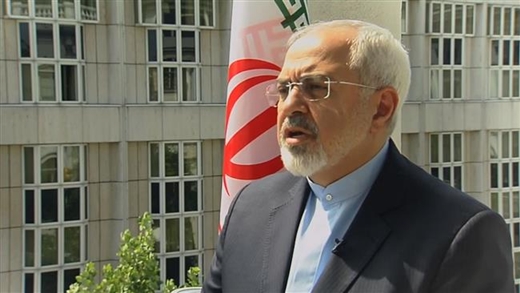
“I would expect my negotiating partners to refrain from making excessive demands,” Zarif said after meeting with his Greek counterpart, Nikos Kotzias, in the Greek capital city of Athens on Thursday.

His remarks came a day after French Foreign Minister Laurent Fabius said Paris would not approve a final nuclear deal which rules out the inspection of Iran’s military sites.

Fabius said Paris “will not accept a deal if it is not clear that inspections can be done at all Iranian installations, including military sites,” adding that this is the “independent” position of his country.

Zarif, however, stressed that France’s new stance runs counter to the mutual understanding reached between the two sides in the Swiss city of Lausanne on April 2, saying what Paris demands is tantamount to a request to re-negotiate the Lausanne agreement.

“If people insist…on re-negotiations, then it will be difficult to envisage an agreement,” he went on to say.

Such an accord is accessible before the deadline of June 30 provided that “people have their foot in reality, not in illusions,” he said, adding, “We can only have agreements in which both sides can claim that they have achieved positive results. You need to either win together, or lose together.”

Zarif added that Tehran seeks to clinch a “dignified, mutually respectful agreement” with its negotiating partners.

The comments comes as Zarif and his US opposite number, John Kerry, are set to meet in the Swiss city of Geneva on Saturday in an effort to facilitate the progress in talks over Iran’s nuclear program.

The latest round of negotiations between Tehran and the P5+1 group – Russia, China, France, Britain, the US plus Germany – came to an end in the Austrian capital city of Vienna on May 22.