Monday, December 22, 2025
Home Blog Page 4842

Africa Day celebrated in Iran (PHOTOS)

Africa Day

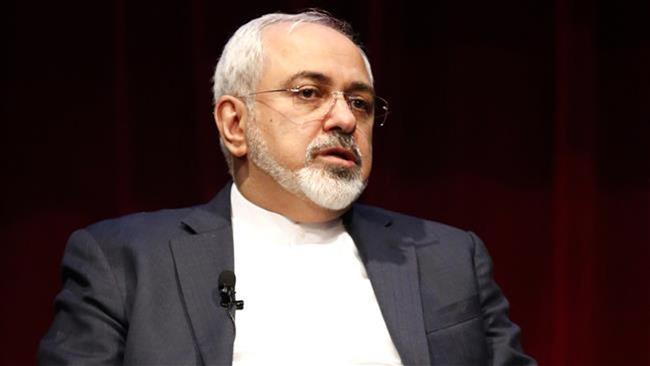
A ceremony was held in the Foreign Ministry Monday night to mark Africa Day [May 25]. Iran’s top diplomat Mohammad Javad Zarif and heads of Tehran-based foreign missions as well as a number of guests from African countries took part in the ceremony.

The following pictures have been released by Mehr News Agency of the ceremony:

Takht-e Jamshid, a look at Iran’s colorful past (PHOTOS)

Takht-e Jamshid033

Takht-e Jamshid, also known as Persepolis [literally meaning “the city of Persians”] was the ceremonial capital of the Achaemenid Empire (ca. 550–330 BCE).

Persepolis is situated 70 km northeast of Shiraz in Fars Province. The earliest remains of Persepolis date back to 515 BCE. UNESCO declared the ruins of Persepolis a World Heritage Site in 1979.

The following are pictures of the historical site released by different news agencies:

Tehran-Moscow talks on S-300 successful: Iran official

dbf4cd6e-71ce-4eb1-967b-dae63a01ae39

A senior Iranian official has described as “successful” negotiations on the delivery of Russia’s S-300 surface-to-air missile system to Iran.

“Negotiations on the delivery of the S-300 [missile system] to Iran has been successful”, Iran’s Deputy Foreign Minister for Arab and African Affairs Hossein Amir-Abdollahian said on Monday during a press conference after a meeting with Russian Deputy Foreign Minister Mikhail Bogdanov in the Russian capital Moscow.

Amir-Abdollahian also stressed that all issues surrounding the delivery of the system to Iran are progressing well.

He further noted that the delivery of S-300 to Iran will happen at the soonest opportunity possible.

On April 13, Russian President Vladimir Putin signed a presidential decree paving the way for the long-overdue delivery of the missile system to Iran.

The decision to deliver the missile system came after Iran and P5+1 reached a mutual understanding on Tehran’s nuclear program in the Swiss city of Lausanne on April 2.

Moscow had banned the delivery of the S-300 system to Tehran in 2010 under the pretext that the agreement it signed with Iran in 2007 was covered by the fourth round of the Security Council sanctions against Iran over its nuclear program. The resolution bars hi-tech weapons sales to the Islamic Republic.

The Russian president defended Moscow’s decision on S-300 supply to Iran, saying the system is meant for deterrence.

Israeli Prime Minister Benjamin Netanyahu criticized Russia over its decision to lift the ban on the delivery of S-300 missile system to Iran, saying Tel Aviv sees the plan with “utmost gravity.”

A look at Iranian newspaper front pages on May 26

Iranian Newspapers Headlines

The news conference of the judiciary spokesman in which Mohseni Ejei talked about a number of issues, including the corruption case involving Babak Zanjani and rumors surrounding the arrest of a former police chief, dominated the front pages of Iranian newspapers on Tuesday. Coverage of the heated exchange in parliament between Foreign Minister Zarif and a hardline deputy was also front-page news.


Afarinesh: The value of goods smuggled in the country is estimated to be around $25 billion.


A look at Iranian newspaper front pages on May 26


Aftab-e Yazd: Iran will take action against IS if the terrorist group [which is positioned on Iraqi soil 40 km away from the Iranian border] advances another 10 km on the frontier.

Interior Minister Abdolreza Rahmani Fazli issued the warning on Monday.


A look at Iranian newspaper front pages on May 26


Amin: “No one is above reproach in our Islamic establishment,” said Tehran MP Ali Motahari.


A look at Iranian newspaper front pages on May 26


Arman-e Emrooz: An indictment has been issued against Babak Zanjani [a young billionaire who stands accused of massive corruption]

In a press conference, the Judiciary spokesman also said one suspect has been arrested in connection with a spate of acid attacks in Isfahan late last year.

Arman-e Emrooz: “The previous government allowed Iranian nuclear scientists to be interviewed,” said the Iranian foreign minister.

[Mohammad Javad Zarif made the comment in reaction to finger-pointing by hardliners opposed to President Rouhani’s nuclear policy.]


A look at Iranian newspaper front pages on May 26


Asrar: Players of Persepolis Football Club [who are in Saudi Arabia for an Asian Championships match against Al-Hilal] have been mistreated by authorities in Riyadh.


A look at Iranian newspaper front pages on May 26


Ebtekar: The judiciary spokesman has denied reports that the former police chief [who was recently replaced] has been taken to custody or interrogated.


A look at Iranian newspaper front pages on May 26


Etemad: Another Khordad 2 [May 23 on which Mohammad Khatami secured an overwhelming victory in presidential elections in 1997] may be around the corner.

[The prediction was made by Saeed Hajarian, a reformist strategist, in a speech in Tehran University.]

Etemad: Some MPs have dismissed as illegal the public disclosure by a fellow deputy of the comments of a deputy foreign minister in a closed-door session of the chamber.

[In the session Sunday, Araghchi and his boss Foreign Minister Mohammad Javad Zarif presented a report on nuclear talks to members of the Islamic Consultative Assembly.]


A look at Iranian newspaper front pages on May 26


Ettela’at: “Ten individuals tried in connection with a major corruption case have been sentenced to between one and seven years in jail,” the judiciary spokesman said.

Ettela’at: “All officials of the establishment comply with the orders of the Supreme Leader,” said Foreign Minister Mohammad Javad Zarif.


A look at Iranian newspaper front pages on May 26


Jomhouri Islami: Iran’s trade balance improved 65 percent in 2014.


A look at Iranian newspaper front pages on May 26


Kayhan: “The US has not done a damn thing in the fight against IS,” said commander of IRGC’s Quds Force Major General Ghasem Soleimani.


A look at Iranian newspaper front pages on May 26


Khorasan: A final stage of war games by the ground troops of the Iranian Army has been successfully completed.

Khorasan: “Those who were part of armed robberies targeting gold shops in Mashhad will be executed on Wednesday,” said an assistant prosecutor.


A look at Iranian newspaper front pages on May 26


Mardomsalari: “Under Ahmadinejad, the printing house of the Central Bank was the most productive unit in the country,” said Tahmasb Mazaheri, a former governor of the Central Bank.


A look at Iranian newspaper front pages on May 26


Payam-e Zaman: The Health Ministry has warned hookah smokers that some of the tobacco used in water pipe is tinged with illegal drugs.


A look at Iranian newspaper front pages on May 26


Roozan: A fourth tender of Tehran football giants Esteghlal and Persepolis has produced no winners.


A look at Iranian newspaper front pages on May 26


Araqchi: Negotiators obliged not to cross red lines

araghchi

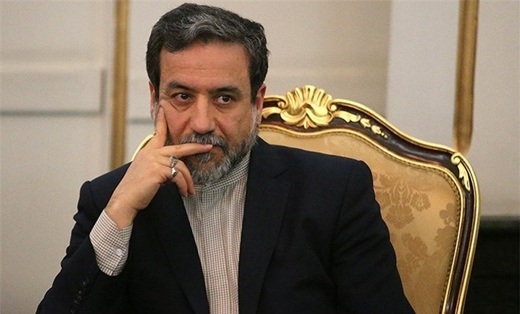
Deputy Foreign Minister and senior nuclear negotiator Seyyed Abbas Araghchi underlined that Iran’s negotiating team is obliged to act within the framework of the red lines set by Leader of the Islamic Revolution.

“The diplomats and negotiators are duty-bound to act in accordance with guidelines and red lines,” Araghchi said in an interview with IRIB’s channel 2.

He expressed his gratitude and happiness over widespread attention by people as well as social and political groups to the nuclear issue.

Araghchi underlined that Iran’s red lines in the negotiations are prepared under the auspices of Ayatollah Seyed Ali Khamenei.

Elaborating on the trend of nuclear negotiations, the Iranian deputy foreign minister said that the negotiators attend Majlis (Iranian parliament) open sessions after each round of talks and submit a report on the trend of negotiations to the parliament’s National Security and Foreign Policy Committee.

“We presented a complete report in Sunday’s session of parliament after listening to statements of four lawmakers from different factions,” he added.

Asked about the so-called managed access to people, centers and documents in relation to nuclear program, Araghchi said this is one of the cases to be discussed in the nuclear negotiations that the critics pursue with sensitivity.

Commenting on red lines of the nuclear talks, and said, “Generally, the Iranian diplomats and negotiators in any field act according to the guidelines depicted for them.”

The senior negotiator pointed out that in any negotiation and diplomatic negotiations, diplomats are duty-bound to fulfill the guidelines given to them and they do not have special powers except in certain cases for conducting special maneuvers.

Araghchi reiterated that guidelines are specified for the diplomats, and said, “With regard to nuclear issue which is very sensitive and the country’s interests and future are related to it, the framework, principles and red lines are very important.”

The deputy foreign minister for legal and international affairs said that as Leader of the Islamic Revolution has said the red lines are prepared according to his guidelines and its details are given to a council which operates under the auspices of President Hassan Rouhani for making the negotiations operational. “The guidelines and red lines prepared in this council are relayed to the negotiating team and we are duty-bound to work within this framework.”

Shamkhani: Iran resolved to continue nuclear talks with world powers

Ali-Shamkhani

Secretary of the Supreme National Security Council (SNSC) Ali Shamkhani said Monday that Iran is determined to continue nuclear talks with the six world powers while respecting the country’s already-mentioned red lines.

Speaking at a ceremony held in World Studies Faculty of Tehran University to mark the liberation of Khorramshahr from the occupation of Ba’athist regime of former Iraqi dictator Saddam Hussein, Shamkhani said that Iran will not succumb to excessive demands.

Shamkhani said that Iran’s cooperation with the International Atomic Energy Agency is based on international norms and merely deals with the nuclear issue.

He noted that Iran will accept nothing beyond the international regulations, nor will it provide access beyond the Additional Protocol.

He said that the people of the region and some wise regional leaders are well-aware that the US and the West are seeking their own interests by creating fake crises and fueling discords and that they never do anything to help improve the security and welfare in the region.

Shamkhani criticized the United Nations and other international organizations for their indifference to the massacre of innocent people in Yemen and destruction of the Arab country’s infrastructure by the Saudi-led coalition.

Zarif decries UN discriminatory stance vis-à-vis conflicts

Mohammad-Javad-Zarif1

Foreign Minister Mohammad Javad Zarif on Monday strongly criticized the double standards and unprincipled stance of the United Nations in dealing with regional conflicts in the past and present.

Zarif made the remarks in a meeting with Austrian Deputy Foreign Minister Michael Linhart.

He also criticized the U.N. indifferent and passive approach vis-à-vis the deterioration of humanitarian situation and malignity of Saudi war of aggression against Yemen.

He said that the United Nations is expected to take effective steps to stop the violation of the international humanitarian law in the Middle East.

He highlighted the menace of terrorism and said that Western governments and the governments in Central Asia are exposed to more threats by terrorists and extremist groups.

Zarif called for active and close contribution among governments in the region and Europe to thwart the danger of terrorism.

Given deep-rooted relations between Iran and Austria, Zarif said there is no obstacles to expansion of all-out political, economic, parliamentary and cultural relations and cooperation between the two countries.

Visits by officials of Iran and Austria is of prime importance to prepare the ground for expansion of relations and cooperation between the two nations.

Austrian Deputy Foreign Minister Michael Linhart said his country welcomes expansion of relations and spares no effort to prepare the ground for economic cooperation.

The Austrian government welcomes expansion of cooperation in an array of fields such as environment, science and technological know-how, economy, energy and culture, he said.

The threats posed by the terrorist and extremist groups are more than ever before mainly because a large number of European residents have joined the extremist groups, he said.

Europe is to adopt a firm stand in the war against terrorism, he said.

The two officials also reviewed issues of mutual interests along with regional developments.

Commander rules out inspection of military sites, interview with scientists

Firouzabadi

Chief of Staff of the Iranian armed forces underscored that nobody is permitted to inspect the country’s military sites or interview its nuclear scientists, something he derided as the West’s “excessive and illogical” demands in the course of nuclear talks with Iran.

In a message released on Monday, Major General Hassan Firouzabadi described the enemy’s access to Iran’s military centers and interviews with nuclear scientists as being out of the question.

He added that calls for access to military sites and interviews with scientists are “excuses” to prepare the ground for harming the Islamic Revolution.

Earlier on April 9, Supreme Leader of the Islamic Revolution Ayatollah Seyed Ali Khamenei also categorically rejected foreign access to the country’s “security and defense” sectors under the pretext of nuclear monitoring.

[…]

Can Iran and P5+1 strike a deal by July 1?

Capture1

With five weeks to go before a July 1 deadline, nuclear talks between Iran and P5+1 have entered a critical stage with the two sides expressing optimism that a final deal seems to be on the horizon. Nonetheless, new differences have emerged between Iran and the US in the drafting of a comprehensive nuclear deal.

Aftab-e Yazd daily has asked international relations experts to weigh in on the latest developments in nuclear talks. The reformist daily raised the following questions: Can we be hopeful about the conclusion of an agreement? How can the recent differences between the parties to the talks affect the process? Will the talks be extended again?

What comes below is the translation of excerpts of what the experts said in response to those questions:

Iran and US hands are tied in nuclear agreement 

ali-khoramAli Khorram, a former diplomat and international relations expert 

[…]

We are now farther back than where we stood on April 2 when the Lausanne statement was released. […] As time goes by, we fall farther behind and face tougher conditions, opponents of the talks gain ground and the US administration comes under increasing pressure to succumb to hardliner demands. […]

If the current trend persists, nuclear talks will extend and they get tougher in the process. The obstacles which crop up may make the parties involved come to the conclusion that they’d better break off the talks, and this will see hardliners in Iran and the US take pleasure in the inconclusiveness of the talks. Certainly this does not serve the interests of Iran or the United States.

Nuclear agreement will be signed by July 1

sadegh-zibakalamSadegh Zibakalam, political science professor at University of Tehran

[…] If President Obama and fellow Democrats fail to reach an agreement with Iran by July 1, nuclear talks will be taken off the agenda and the US will go into election mood as of the second half of the Iranian year [September 2015 – March 2016].

At the current situation, the opponents cannot use the inconclusiveness of the talks against Obama; nor can the US president claim that he has managed to sign an agreement with Iran at the negotiating table after 36 years [of estrangement].

[…]

Now there is no room for more bargaining. A question arises here as to whether or not Iran and the US approve of the general framework of the Lausanne agreement? If parties to the talks can sign the statement they released in Lausanne, an agreement will be produced. If not, Iran will return to the period when Ahmadinejad was president.

[…]

I’m hopeful about an agreement by the deadline

hermidasDavoud Hermidas-Bavand, professor of international law

[…]

I’m hopeful about Iran and P5+1 reaching an agreement by [July 1] deadline. Lengthy talks will not serve the interests of either side. I think the remarks the two sides make aim to prepare public opinion for a situation in which no agreement is produced.

We need to bear in mind that the current situation is different from the period in which the talks were believed to be headed for a breakdown. Even if the [nuclear] agreement is kept on hold, a more positive atmosphere will be created in Iran thanks to the talks.


The current atmosphere does not mean we are less hopeful

falahatHeshmatollah Falahatpisheh, university professor and a former MP

I think chances for striking a deal are 50-50. […]

That Obama has signed the congressional Review of Iran Nuclear Deal Bill into law is not a new and unpredictable issue. […]

In my opinion, the current conditions are serious and realistic; this does not mean that hopes for reaching an agreement have disappeared.

The negotiating teams are trying to arrive at an agreement at the negotiating table, but the red lines which are set beyond the negotiating table are to blame for the slow pace of the talks.


The current negative views are the result of a politically charged climate

hadi-haghshenasHadi Haghshenas, a former MP       

The fact of the matter is that the two sides are trying to arrive at an agreement. But now the Americans are looking for an excuse [to obstruct the talks]. For its part, Iran has taken several measures [in good faith], among them reduction of the level of uranium enrichment to less than five percent and agreeing to UN inspections.

[…]

If the Lausanne agreement fails to be finalized thanks to the [measures taken by the] Americans, it will show to the whole world that they are not trustworthy at all.

[…]

All in all, I am very much optimistic about inking a [final comprehensive nuclear] agreement in the not-too-distant future.

Extension of talks earn the two sides nothing

bigdeliAli Bigdeli, a political analyst

[…]

Extension of the talks seems to be of no use. This will be definitely to the detriment of Obama, because the election campaign officially gets in full swing in the United States next year. If Obama had not sought an agreement, he would not have accepted to get engaged in nuclear talks.

Obama is under pressures now and has to set a different tone. Earlier he had announced that extra issues such as missile purchases and ties with Israel would have nothing to do with the talks, no strings attached. But Mr. Obama has set a new condition today, talking about a change in Iran’s regional policies.

Although talks are likely to be extended, passage of time will earn the two sides nothing. Rather, the two sides should solve their problems soon.


Hardliners are to blame for failure to ink an agreement

majlesiFereydoun Majlesi, University Professor

Although I am now less optimistic about the conclusion of a deal, I do not view Obama’s signing of a Senate bill into law as something critical, because Obama was supposed to sign the bill earlier if it were toned down.

As the talks were moving forward, certain hardline Iranian officials resorted to obstructionism, forcing the American side – which is under pressure from Saudi Arabia and its allies – to choose between Saudi Arabia and Israel on the one hand and Iran on the other.

[…]

The possible inconclusiveness of nuclear talks can be blamed on what the hardliners did which helped Netanyahu achieve his intended goal. When confidence-building measures were needed, the hardliners started to make threats.

Inspection of military sites seems suspicious

jalilvandMohsen Jalilvand, international relations experts 

[…]

Inspection of military sites is a new suspicious question. IAEA chief Amano’s reading of the Additional Protocol is a problem too. There are still outstanding issues as to whether just nuclear sanctions or all sanctions should be lifted. Removal or suspension of sanctions and the way UN experts will inspect the Iranian sites are the bone of contention too.

We should wait to see if the outstanding questions can be removed in the remaining time before the conclusion of a nuclear deal.

Iran’s reaction to aggression not to be limited to borders: Former guard commander

Mohssen Rezai

Any wrong move against the Iranian territories will be followed by an unforgettable lesson for invaders, Secretary of Iran’s Expediency Council Mohsen Rezaei said, noting that such response will not be confined to the country’s borders.

“If there is any aggression against Iran’s borders, we will not remain at the borders like (we did) in the past,” Rezaei said in the southwestern city of Khorramshahr on Sunday.

He was speaking in a ceremony to commemorate the anniversary of the liberation of Khorramshahr, a city in southwestern Iran which had been occupied by Iraq’s Baathist army in the early 1980s. The city was recaptured by the Iranian armed forces on May 24, 1982.

Rezaei also lashed out at the US and Israel for triggering unrest in Muslim countries over the past 70 years, warning that they want insecurity to spill into Iran.

“I advise you to come to you senses and stop fomenting insecurity in Syria, Iraq, Gaza and Yemen. Let the world of Islam be as calm as Europe,” he said in comments addressed at the West, the US in particular.

While the Iranian diplomats try to put out the flames of wars through diplomatic approaches, the country’s military commanders are prepared for every possibility, he underlined.

In relevant comments on May 6, Supreme Leader of the Islamic Revolution Ayatollah Seyyed Ali Khamenei reaffirmed that the Iranian nation will not let any possible act of aggression against the country go unanswered.

The Leader said he has already made it clear, even during the tenure of former US president, that “the era of hit and run has ended”, and that the Iranian nation will chase aggressors.