Sunday, December 28, 2025
Home Blog Page 4830

EU move to re-impose bans defies logic: Iran FM

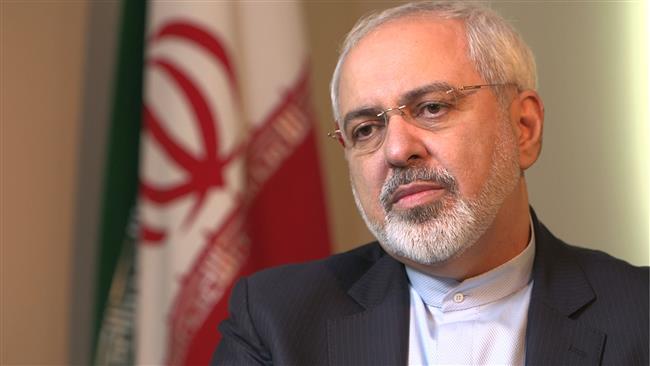
Mohammad Javad Zarif

Iranian Foreign Minister Mohammad Javad Zarif says the European Union’s move to put the country’s biggest tanker firm back on its sanctions list defies logic.

“Their move is against logic because the West has not yet realized that sanctions are a kind of liability rather than an asset for them, [with] which they cannot advance their objectives,” Zarif told Mehr news agency.

On February 12, European Union governments agreed to put Iran’s biggest tanker firm back on a list of sanctioned companies.

The EU move to put back the Iranian company on its sanctions list comes as Iran and the P5+1 group of countries – Russia, China, France, Britain, the US and Germany – are in talks to reach a comprehensive final agreement on Tehran’s nuclear program.

Zarif said that a serious deal would seem unlikely as long as the US and EU regard sanctions as an effective way to press ahead with their objectives.

“If they really think that their sanctions are effective, [then] why do they negotiate with us? They [can] continue their sanctions,” he added.

Iran’s nuclear talks

Zarif reaffirmed Iran’s stance that a nuclear deal would be reached only if the two negotiating sides agree on all issues.

He said that the two sides can reach a comprehensive agreement once certain key issues are settled.

“In my opinion, we should definitely agree on all details by [Iranian calendar month of] Tir (beginning June 22). We cannot simply issue a political statement in Tir and then wait to agree on details. That would be an endless process that benefits no one,” Zarif said.

The senior Iranian official once again stressed that a comprehensive nuclear agreement would be possible if the opposite side demonstrated political will.

“If an agreement cannot be reached, it is because the other side lacks the political will to do so or because it cannot stand up to the Zionist lobby and pressure groups or because it wants to make excessive demands,” Zarif said.

Since an interim deal was sealed in the Swiss city of Geneva in November 2013, the negotiating sides have missed two self-imposed deadlines to ink a final comprehensive agreement over Tehran’s nuclear program. Iran and the P5+1 have set July 1 as the deadline for their current talks.

European concerns over Iran are groundless

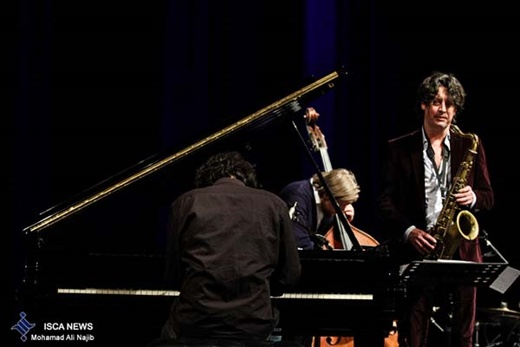
Yuri Honing

Yuri Honing, a Dutch jazz saxophonist who performed a quartet at Tehran’s Vahdat Hall on February 15 during the 30th edition of Fajr International Music Festival, has been quoted by Iscanews.ir as saying that his interest in Iran’s culture and its remarkable history has been the reason behind his visit to Tehran, adding the Europeans do not have a clear understanding of the Middle East, history and civilization of a country like Iran.

On the European tour of his band to mark the anniversary of 9/11 attacks, the distinguished Dutch musician said, “Widespread concern was felt throughout Europe, so it was time to go on a tour with my band. Our attention was focused on music and humanity. I was then introduced to an Iranian artist by a member of this band; that was how I learned about Iran’s annual music festival.”

Honing added, “Iran had captured my attention quite a while ago. Because it was home to those who speak Persian and I had read different things about its history. In Europe people confuse things. To them, Turkey is part of Europe. They do not know that the Middle East stretches from the west of Egypt to the north of Iraq.”

Highlighting that a majority of people in Europe do not have an accurate understanding of the Middle East and the Iranian civilization and history, he stated, “It’s hard for the Europeans to draw a line between different cultures of Middle Eastern countries. […] What one hears and reads about the Middle East in Europe does not conform to realities on the ground, including in Iran.”

Honing, a progressive musician in Europe, described his music as a combination of different styles of art music from Baroque to Rock.


Islamic establishment treats those under house arrest with tolerance

Mohammad Javad Larijani

The secretary of Iran’s Human Rights Council has said that the Islamic establishment has exercised tolerance in dealing with those who have been placed under house arrest [a reference to Mehdi Karroubi and Mir-Hossein Mousavi, two presidential candidates who disputed the 2009 election results and caused widespread unrest in the country].

Mohammad Javad Larijani, who was in Lorestan Province, said there is a lot of evidence pointing to commission of offenses in the case involving people who are under house arrest. [In order to put someone under house arrest] Either a judge’s order is necessary, or the Supreme National Security Council decides on the issue.

The following is a partial translation of the human rights official’s remarks as reported by Entekhab, a news website, on February 18:

As the judiciary chief has already said, putting people under house arrest should come through legal channels. One such channel is that a file is lodged [against individual(s)] in a court of law and a judge issues a verdict in the case.

The other channel is specifically for security cases. Under the law, if the Supreme National Security Council deems it necessary – on any grounds – to limit the freedom of an individual or a group to promote national security, it can communicate its decision to different government branches, among them the judiciary, and they have to act on the council’s decision.

Naturally, there is a lot of evidence pointing to commission of offenses in the case of people under house arrest, but it can be dealt with only through these two channels.

The house arrest of these individuals is quite legal and it has gone through the channel of the Supreme National Security Council.

I have not met with them [the people under house arrest]. Naturally, we do not hold personal grudges against individuals, especially those who have served the country in the past. The establishment normally treats them with tolerance.

The onus is on the security apparatus to protect these individuals. Nothing has gone wrong. They can even make trips to different parts of the country; they have access to medical services as well.

The services these people have rendered [in the country] have been always taken into account. But when a person commits offenses they should take responsibility for what they have done, even though they have served [the country].

Official: Moderation brings down curtain on certain groups

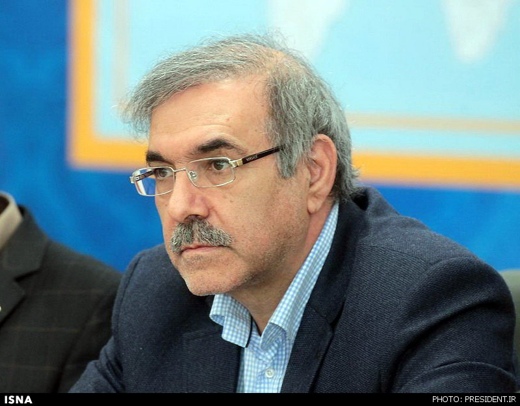
Morteza Bank

An official at the Presidential Office has said that the youth should not allow to be affected by extremist groups and those who think that the revival of moderation would sound their death knell.

Morteza Bank, Vice President for Supervision and Strategic Affairs, said in a congress of the Moderation and Development Party on Thursday despite the emergence of groups such as ISIL [which have hijacked the Muslim faith], Islam pursues moderation.

No extremist group can institutionalize extremist acts in the name of Islam in the country, he said.

He added that those who think development and conclusion of agreements with [the rest of] the world is dangerous for Iran defy the existing trend in the country [a reference to the policy of moderation and interaction].

Kerman qanats up for global registration

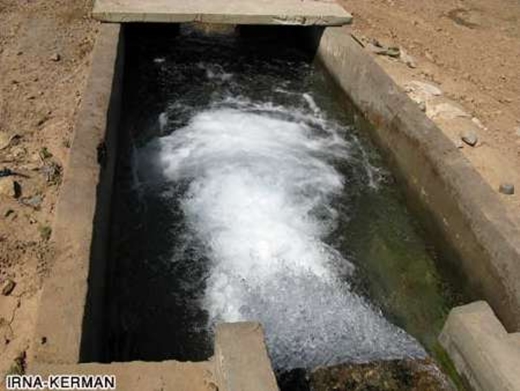
Kerman Qanats

A deputy director of the Kerman provincial Cultural Heritage, Handicrafts and Tourism department has said that dossiers of three qanats in Kerman dating back to a century ago have been submitted to UNESCO for registration on global heritage list.

Mohsen Movahhedi said that Kerman is one of the historic provinces of the country with valuable qanats.

Since Jupar, Akbarabad and Qasemabad Baravat qanats seem qualified for global registration, their cases have been sent to UNESCO, he said.

Movaheddi also said that qanat is considered a valuable global heritage founded by Iran.

Extracting underground waters through qanats is one of the wonderful inventions by mankind which has played a crucial role in Iran’s agriculture since ancient times, he said.

Most of the historians and researchers have attributed the technology of qanat building to Iranians and consider Iran as the birthplace of qanats, he said.

Qanat is one of a series of well-like vertical shafts, connected by gently sloping tunnels. They create a reliable supply of water for human settlements and irrigation in hot, arid and semi-arid climates.

Iran, US to begin fresh nuclear talks Feb. 20: Iran negotiator

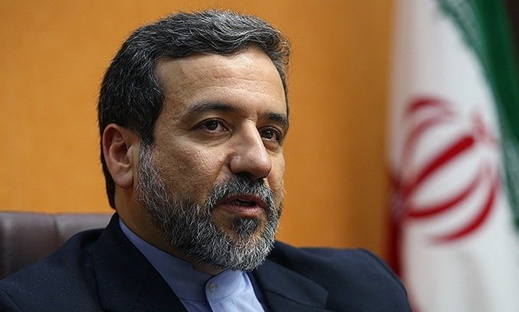
Abbas Araghchi

A senior Iranian negotiator says Iran and the United States will kick off a fresh round of talks on Tehran’s nuclear program in the Swiss city of Geneva on February 20.

The negotiations will begin on Friday when deputy foreign ministers from Iran and the US will hold talks on the Islamic Republic’s nuclear program, said Iranian Deputy Foreign Minister for Legal and International Affairs Seyyed Abbas Araghchi.

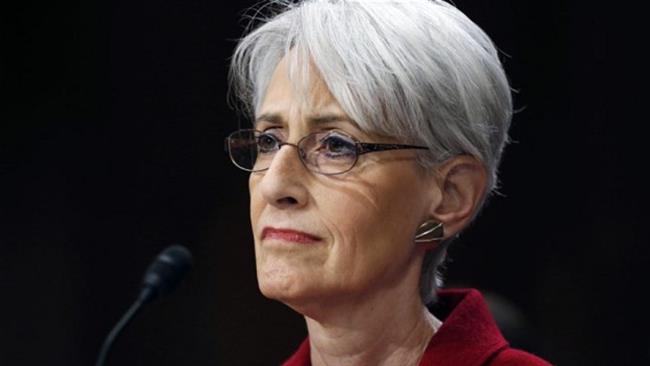
Araghchi further noted he and Iran’s Deputy Foreign Minister for European and American Affairs Majid Takht-e-Ravanchi will sit down with a US delegation headed by Under Secretary of State for Political Affairs Wendy Sherman.

The talks between the deputy foreign minister will continue on Saturday, Araghchi said, adding, “On Sunday and Monday, Iran’s Foreign Minister Mohammad Javad Zarif and US Secretary of State John Kerry will join the negotiators and the talks will continue” between the delegations from the two countries.

“It is also likely that after the fourth day [of bilateral talks between Iran and the US] the negotiations are held at P5+1 level,” Araghchi added.

Sherman and her team will travel to Geneva, Switzerland, on Thursday to hold negotiations with Iranian officials, the State Department said on Wednesday.

“These bilateral consultations will take place in the context of the P5+1 nuclear negotiations with Iran,” it added.

Iran and P5+1 – Russia, China, France, Britain, the United States and Germany – are seeking to seal a high-profile political deal by the end of March and to confirm the full technical details of the accord by July 1.

Iran: Single-phase agreement only acceptable solution to nuclear standoff

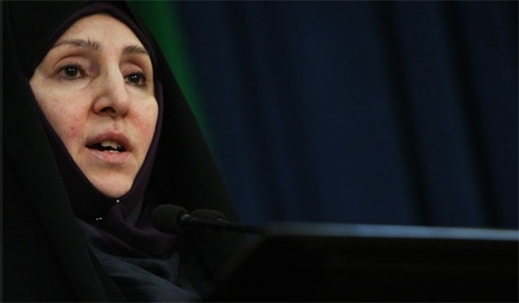
Afkham

Iranian Foreign Ministry Spokeswoman Marziyeh Afkham has once again rejected the possibility of Iran’s acceptance of a two-phase nuclear agreement with the world powers, calling on the latter to show a political will to end the standoff.

“The Islamic Republic of Iran has announced that we will accept an agreement in a single phase and all its details should be clear and it should contain no ambiguities,” Afkham said in her weekly press conference on Wednesday.

Stressing that no final deal will be possible as long as all issues and aspects of the agreement are not fully brought under the spotlight, she said, “We believe only when all the dimensions of the agreement are clarified the time will be ripe for announcing the agreement.”

Afkham also appreciated the constructive role of Russia and China in the nuclear talks, and said Tehran continues talks and consultations with the two countries not only on the nuclear issue, but also on other regional and international developments.

Her remarks came after Supreme Leader of the Islamic Revolution Ayatollah Seyyed Ali Khamenei underlined earlier this month that Iran would never accept a bad agreement with the world powers, adding that the country is in favor of a single-phase comprehensive deal which would respect the Iranian nation’s inalienable rights and entail all details.

“I agree with an agreement if it can be struck, but I disagree with a bad agreement,” the Supreme Leader said in a meeting with the commanders and personnel of the Iranian Air Force and Air Defense in Tehran in February.

He pointed to the US officials’ remarks that “disagreement is better than a bad agreement”, and said, “We believe the same and we believe that not agreement is better than striking an agreement that would harm the national interests and pave the way for humiliating the great Iranian nation.”

The Leader further stressed his opposition to striking a deal over general issues and leaving the details for some other time in future, saying a final agreement should include all the general principles and all the details together and should not leave anything for future.

The Supreme Leader reiterated that the Iranian nation will not tolerate bullying, excessive demands and illogical behavior.

Ayatollah Khamenei stressed that the general points and technical details of any accord need to be agreed upon simultaneously as the US has already proved that it tries to escape its undertakings under the pretext of different interpretations.

“The contents of such a contract should be transparent, clear and not open to interpretation. The contents of the agreement should not allow the other side which is used to bargaining to seek excuses on different issues,” he added.

The 10th round of negotiations between Iran and the six world powers was held in Vienna from November 18 to 24, where the seven nations decided to extend the talks until July after they failed to strike an agreement.

The latest round of the nuclear talks between Iran and the six world powers was held in February.Both Iran and P5+1 have underlined that cutting a final deal before the July 10 deadline is possible.

Iran, US to resume new nuclear talks in Geneva

Wendy Sherman

Iranian and US negotiators will resume a new round of talks on Tehran’s nuclear program in the coming days.

Under Secretary of State for Political Affairs Wendy Sherman and her team will travel to Geneva, Switzerland, on Thursday to hold negotiations with Iranian officials, the State Department said on Wednesday.

“These bilateral consultations will take place in the context of the P5+1 nuclear negotiations with Iran,” it added.

It noted that Deputy Secretary General for the European Union’s External Action Service Helga Schmid would also join the bilateral talks.

The new round of talks will come as Iranian Foreign Minister Mohammad Javad Zarif and US Secretary of State John Kerry have held meetings multiple times mostly in European capitals.

The last face-to-face meeting between Zarif and Kerry was held in the German city of Munich earlier this month, when they met twice on separate days on the sidelines of an international security conference.

Iran’s nuclear stance

Iran’s President Hassan Rouhani said on February 10 that the country favors a “win-win” nuclear deal with P5+1, expressing hope that Tehran’s negotiating sides would show the necessary political resolve for the settlement of the nuclear case.

“Given the nuclear dossier, we have also managed to direct the negotiations to be constructive, and put the case on the track of… clinching an agreement between the two sides,” he added.

Iran and P5+1– Russia, China, France, Britain, the United States and Germany – are seeking to seal a high-profile political deal by the end of March and to confirm the full technical details of the accord by July 1.

The scale of Iran’s uranium enrichment and the timetable for the removal of anti-Iran sanctions are seen as the major stumbling blocks in the talks.

Iran has so far suspended some of its enrichment program in return for certain sanctions relief.

Iran’s legislative elections to come on February 26, 2016

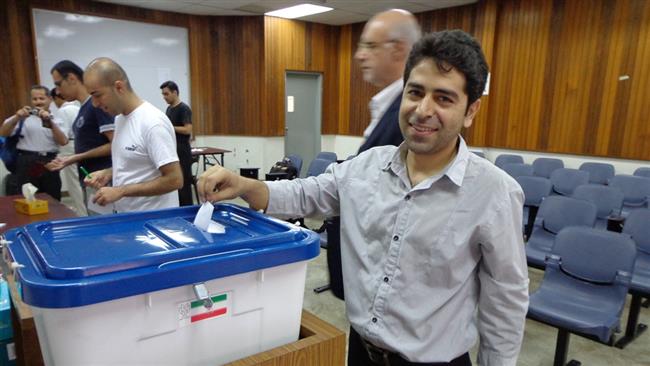
Iran elections

The spokesman for Iran’s Guardian Council has announced the official date for the next legislative elections in the country.

Nejatollah Ebrahimian said Wednesday that nationwide elections to elect representatives for the Iranian parliament (the Islamic Consultative Assembly) will take place on February 26, 2016.

Iran’s Interior Ministry, which is charged with organizing the vote, had demanded the Guardian Council to pick a choice between February 26 and March 4 next year, Ebrahimian said.

The election for choosing members of the Assembly of Experts, an overarching body which supervises Iran’s leadership, will come on the same day. This will be the first time the two major bodies are elected simultaneously.

After the Islamic revolution of 1979, Iran has organized more than 30 votes at the national level. People are expected to cast their ballots in the next elections to pick representatives of their constituencies for a four-year term in parliament.

The new 290-seat legislature is scheduled to convene in the second half of 2016.

Members of the Assembly of Experts are elected every eight years.

A 4,200-year-old Zoroastrian grave found in northeastern Iran

4200-year-old Zoroastrian grave

Deputy Director of the Cultural Heritage, Handicrafts and Tourism Organization Ali Akbar Vahdati said that a Zoroastrian grave as old as 4,200 years has been discovered at the northeastern heights of Bojnourd in North Khorasan Province.

What comes next is a partial translation of a February 15 report the Islamic Republic News Agency filed on the find:

Vahdati said, “The discovery of the grave was made in 2012 during a project to build a park in Bojnourd. Back then the public announcement was put on hold so that further archeological examinations could be carried out. Unfortunately, operations by heavy machinery caused some damage to the skeleton and the vessels buried together with it in the grave.”

He further said that a bone sample from the skeleton was sent to a laboratory for DNA tests and studies on the vessels and the grave revealed signs of the Iranian civilization and Zoroastrianism in the region.

The ash found in the grave and the skeleton of a dog in an adjacent burial plot are indicative of Zoroastrian burial rites.

Vahdati added, “Further studies on the finds and the region suggest that there was an ancient cemetery in the suburbs of Bojnourd, an indication that back then some people took up residence in the Bojnourd Plain. The studies also confirmed that there has been a close cultural relation between the northern and southern parts of the Kopet Dag [a mountain range on the frontier between Turkmenistan and Iran’s North Khorasan Province] since 4,200 years ago.”

He went on to say, “The examination has revealed that there is a close resemblance between the finds in this region with those excavated in a hill in Turkmenistan’s Merv, suggesting that Zoroastrianism is older than it was previously thought.”

Vahdati added, “Although researchers and archeologists initially believed that people started taking up residence in the Bojnourd Plain during the Islamic Age, the recent evidence reveals that Persian tribes established residence in Bojnourd at least 4,200 years ago.”