
Date cultivators across Bushehr Province are getting prepared to harvest their crops.
Snapshots of the harvest season in southern Iran posted online by Mehr News Agency:

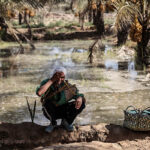
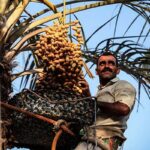



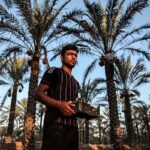


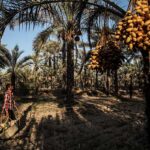




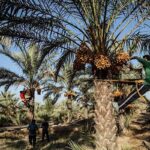
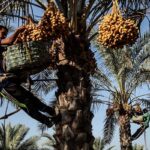


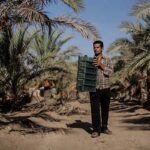

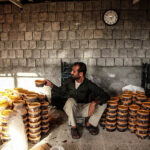

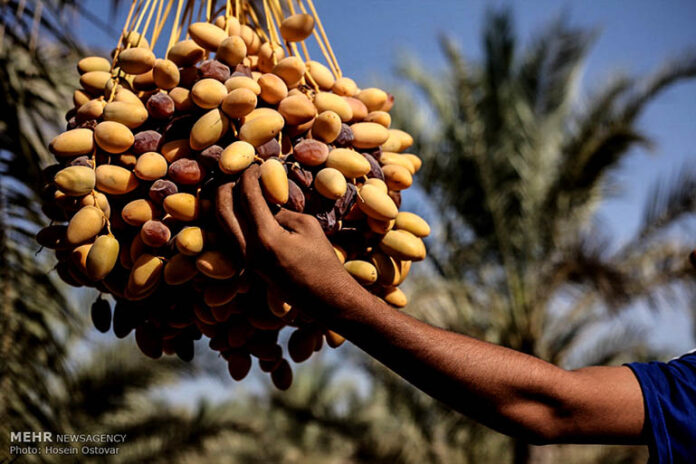
Date cultivators across Bushehr Province are getting prepared to harvest their crops.
Snapshots of the harvest season in southern Iran posted online by Mehr News Agency:
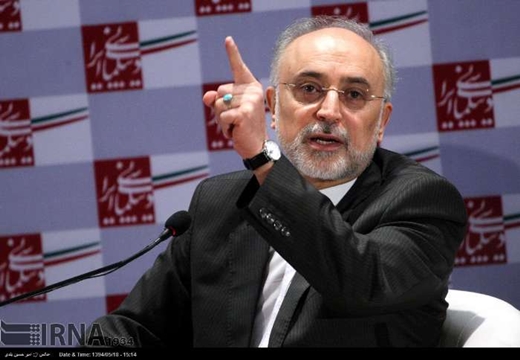
Director of the Atomic Energy Organization of Iran Ali Akbar Salehi said on Sunday that the red lines have been upheld in the Iranian nuclear program.
Salehi told a meeting to survey the Joint Comprehensive Plan of Action (JCPOA), signed by Iran and P5+1, that the objective of the Iranian nuclear program is to commercialize output.
Salehi expressed hope that Iran will generate 3,000 megawatts of nuclear electricity within the next 10 years.
He said the idea to generate nuclear electricity dates back to before the Islamic Revolution.
He noted that after the nuclear talks, Iran faces no limitation to continue with its peaceful nuclear program.
He said that as far as verification is concerned, the IAEA should go on with its inspection – as has been the case over the past 30 years – in Iran which is an IAEA member and a signatory to the NPT.
“As long as the world order exists and as long as we have nuclear activities, the inspection will be in place for our country and all member states,” he said.
Salehi said that there will be another form of inspection: After the Vienna deal, we should do quantitative activities, minimizing the number of centrifuges, lowering the amount of reserves to 300 kilograms. In return, they will verify that Iran honors the IAEA Safeguards Agreement. So, they will terminate all sanctions.
He added, “As far as the verification is concerned, we have accepted limitations on the purchase of equipment and they offered a list of equipment subject to limitations. […]”
After the deal we struck in Vienna, we can purchase the equipment we need through official channels; and we will lodge an official complaint in case of any industrial wrongdoing.”
On talks with P5+1, Salehi said Iran managed to gain what it wanted in the deal.
[…]
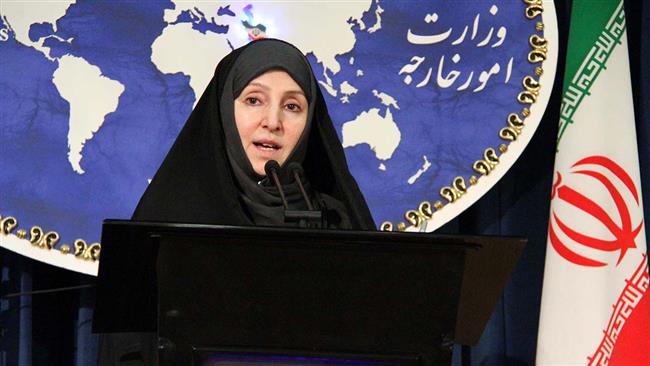
Iranian Foreign Ministry Spokeswoman Marzieh Afkham on Sunday strongly condemned the terrorist attack in Kabul which killed 15 people Friday.
At least 15 people were killed and over 400 others were wounded in the deadly truck bomb blast in the Afghan capital.
“The recent terrorist attack in Kabul showed that terrorism will do anything to achieve its inhumane and heinous objectives,” Afkham said
She extended Iran’s condolences to the Afghan government and nation, and expressed sympathy for the bereaved families of the victims of the terrorist attack.
“The Islamic Republic of Iran sees terrorism as a common enemy of all countries and accordingly voices its readiness to confront this common threat at regional and international levels,” said Afkham.
[…]
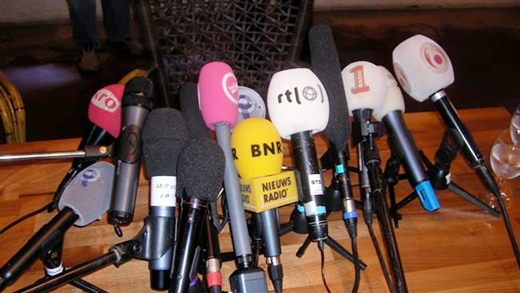
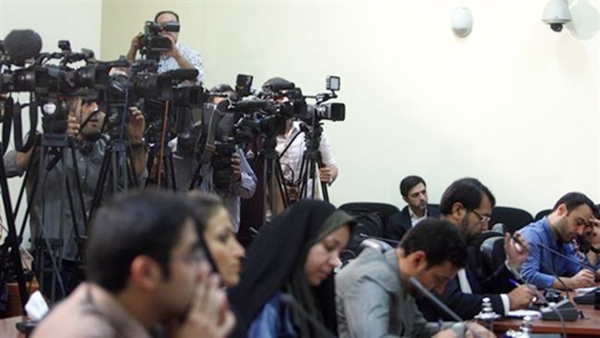
Iran’s Ministry of Culture and Islamic Guidance says it has issued work permits for 110 foreign media outlets that have no offices in the country.
On Sunday, the ministry announced that 110 foreign media have been provided with temporary work permits since the beginning of the current Iranian calendar year (started on March 21).
The ministry added that 141 international media already have active offices in Iran.
In an address on the occasion of National Reporter’s Day, Minister of Culture and Islamic Guidance Ali Jannati pointed to the important role of media in today’s world, stressing that Tehran should employ the power of media to improve its global image, which has been unfairly tarnished over the past ten years.
The ministry also stated that it would immediately examine other requests by foreign media outlets for temporary and permanent work permits in the Islamic Republic.
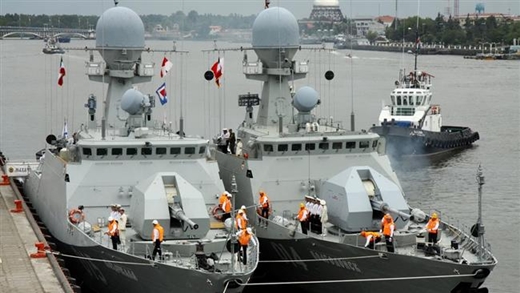
A Russian navy fleet has docked at the northern Iranian port city of Anzali in a bid to boost friendly maritime ties between the two countries.
On Friday, the two Russian warships – Volgodonsk and Mahachkala – arrived in Anzali for a three-day stay with around 130 personnel on board.
Upon arrival, Capt. Kirill Taranenko, the commander of the Russian fleet, met with Rear Admiral Afshin Rezaei Haddad, the commander of Iran’s Fourth Maritime Zone in the port city.
“The maritime relations between Russia and Iran will be expanded and we will go ahead with our official and unofficial visits to Iran,” Taranenko vowed, adding that the two sides plan to hold a joint naval exercise during their stay.
Haddad also noted that the Russian forces are scheduled to visit Iranian navy units in the area.
“Iranian forces will most likely pay a visit to Russia in mid-October,” he went on to say.
This is the third visit by a Russian fleet to Anzali, with the first two being made in 2007 and 2014.
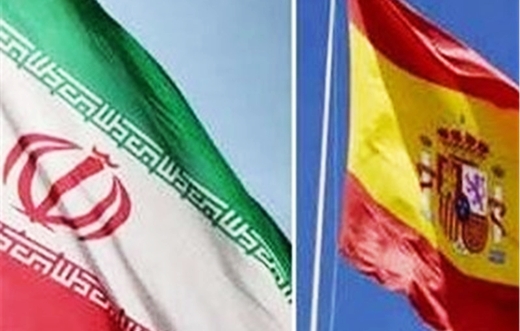
A group of businessmen from Spain was due in Tehran Monday as Iran hosts more foreign delegations before termination of economic sanctions against the country.
The spokesman for Iran Power & Water Industries Equipment and Services Export Company (Sunir), Mahmoud Sharif, told IRNA on Sunday that a trade delegation from Spain is to visit Iran on Monday to develop mutual trade relations.
He added that the Spanish group which already has a working partner (Sunir) in Iran is coming here to negotiate and sign a memorandum of understanding on cooperation with Sunir.
He said that Sunir is composed of 21 independent firms involved in manufacturing different equipment.
Sharif added that also a senior official from the Armenian Energy Ministry is due to arrive in Tehran on Aug. 12 to sign a contract for exports of 1,000 MW of electricity.
The visit will take place as part of a new wave of renewed interest in ties with the Islamic Republic after Iran and P5+1 (Russia, China, the US, Britain, France and Germany) on July 14 reached a conclusion over the text of a comprehensive 159-page deal on Tehran’s nuclear program.
The comprehensive nuclear deal between Iran and six world powers would terminate all nuclear-related sanctions imposed on Iran.
Experts believe that Iran’s economic growth will rise remarkably after the final nuclear deal takes effect.
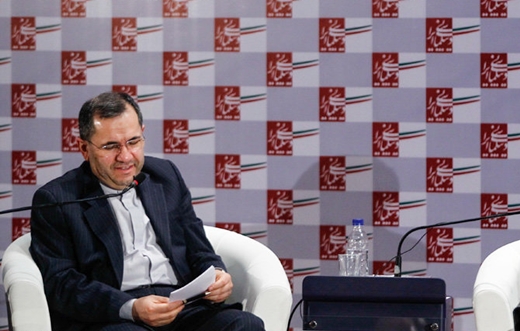
Deputy foreign minister for Euro-American affairs has said that Iran has taken into account the possibility of improper implementation of the Joint Comprehensive Plan of Action (JCPOA) and the problems it may throw our way.
Majid Takht-e Ravanchi made the comment at a special gathering to review the nuclear deal on Sunday and added that the nuclear deal comes with solutions that prevent the problems that may be created in the post-Obama US. He said it is not acceptable for a government to lift the sanctions and its successor to refuse to comply with a previous decision, adding that JCPOA has asked the US administrations to remain committed to the termination of sanctions [against Iran].
The following is the translation of part of his remarks as reported by the Iranian Students’ News Agency (ISNA) on August 9:
If a US president does not lift the sanctions, her or his failure would amount to gross violation of the Iran nuclear deal. If so, the mechanism envisioned in JCPOA will be pursued, but it seems a distant possibility for a person [read a president] in the US to seek to kill this deal. From the beginning of nuclear talks, we stressed that the deal should not be tied to a single person.
The Iranian government entered talks with six other governments plus the representative of the European Union and we had to reach a workable deal. The negotiating countries and the EU representative are members of a joint commission which will look into any problems which may arise in the implementation of the deal.
From the start, we sought to clinch an executable agreement. Talks dragged on, because we wanted to arrive at a good agreement, something which ultimately happened in Vienna.
[…]
If anybody in any of the participating countries tries to kill the deal after a while – only to influence the sanctions regime – the international community will learn who is throwing obstacles in the way of an international trend, and that person would be seen as defying all UN members and even American allies.
World nations have shown a great interest in entering economic partnership with Iran. When this economic trend is enforced, anything which may dent such a trend can pile growing political pressure on the US. Nobody at the White House can make a decision against the views of other nations.
Talking with six world powers, including five permanent members of the UN Security Council, is a tough task. Talks over complex issues are time-consuming as well.
The negotiating team as well as the Atomic Energy Organization of Iran (AEOI) made tireless efforts. Our friends at the AEOI helped us along the path we were walking down over the past year and a half. There were other people who helped the nuclear team with economic issues and sanctions. Mr. Zarif himself supervised the whole trend.
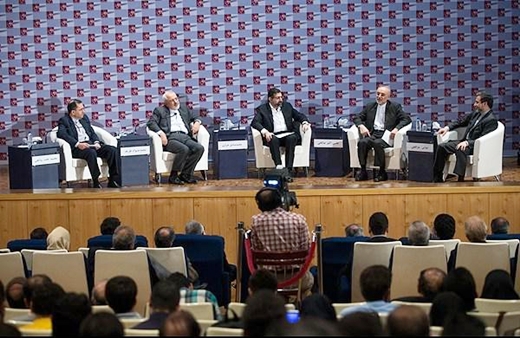
The massive turnout of Iranians for the presidential election in 2013 dissuaded the other side from seeking to impose its will on the Iranian people and thus led to a breakthrough in nuclear talks with six world powers in Vienna, Foreign Minister Mohammad Javad Zarif told a special gathering to review the nuclear deal in Tehran on Sunday.
He said the text of the Joint Comprehensive Plan of Action is a balanced one because both sides found a happy medium in it as far as their demands were concerned.
[…]
The top diplomat further said all the sanctions the UN Security Council has imposed against states and nations have resulted in either regime change or war, because they are basically designed to drive a wedge between the public and the establishment. “In Iran’s case, though, a 73 percent turnout [in 2013] told the world that sanctions do not work. Our people told the world that they interact with their government through the ballot box.”
[…]
Zarif went on to say that Iran’s case at the UN Security Council will be declared closed after a 10-year period, adding that unlike previous UN Security Council Resolutions which banned other nations from cooperating with Iran in the nuclear field, Resolution 2231 encourages countries to cooperate with Iran on its peaceful nuclear program.
[…]
In conclusion, Foreign Minister Zarif said since the conclusion of the deal on July 14, there has been a major change in the way other countries deal with Iran over our nuclear program.
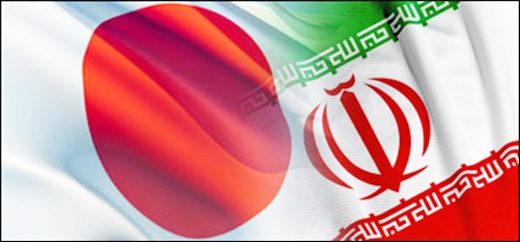
Japan’s Deputy Minister of Economy, Trade and Industry Daishiro Yamagiwa in a meeting with Governor of the Central Bank of Iran Valiollah Seif on Saturday called for tapping into opportunities that the lifting of sanctions will present.
Valiollah Seif told the Japanese delegation, including directors of oil and gas industry, insurance and banking system, that the Islamic Republic of Iran is keen on enhancing the level of trade and economic ties with Japan.
He said that Iran has great potential for investment and Japan is an advanced country in the field of industry and technology, adding vast markets in Iran and the region offer an opportunity for production of modern industrial outputs.
He said that interaction between banking networks of the two countries play a key role in improving economic relations, adding that Japanese banks helped Iranian trade partners when anti-Iran sanctions were in place.
Seif welcomed more Japanese investment in Iran and said that obstacles and limitations should be removed promptly.
He called for an increase in Japan’s banking activities in Iran, saying that Japanese banks used to work in Iran as representatives, but Iran currently wants to enhance the level of such activities and have branches of the Japanese banks established in Iran.
Japanese Deputy Minister of Economy, Trade and Industry Daishiro Yamagiwa welcomed Iran’s readiness for expansion of cooperation and said that he would convey Iran’s proposals to the Japanese ministries promptly.
“On behalf of the Japanese government, I would like to felicitate nuclear agreement and we hope the created opportunities could be used for strengthening economic relations,” said the deputy minister.
In spite of international sanctions against Iran, the Central Bank of Japan had kept its cooperation with Iran and hopefully the economic ties would develop thanks to the current opportunity.
Decisions in this case should be taken by Japanese banks, but the government will support their presence in Iran, he said.
He said that the Japanese government is waiting for the implementation of JCPOA, but until that time, the government will support non-governmental companies, which intend to work in Iran.
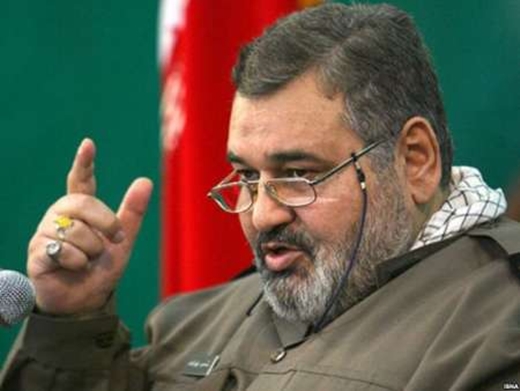
A top Iranian military official has enumerated over a dozen positive points of the nuclear conclusion reached between Iran and P5+1, and the related UN Security Council (UNSC) Resolution 2231, despite voicing concerns about possible “misinterpretations.”
In a statement on Saturday, Chief of Staff of the Iranian Armed Forces Major General Hassan Firouzabadi listed 16 advantages of the Joint Comprehensive Plan of Action (JCPOA) agreed by Iran and P5+1 – the United States, Britain, China, France, Russia and Germany – in the Austrian capital Vienna on July 14, and Resolution 2231 (2015) approved by the UNSC on July 20.
Firouzabadi, however, said Iran’s armed forces are profoundly concerned about the possible impacts of JCPOA and the resolution on Iran’s defense capabilities, and about the US officials’ “misinterpretations” of the texts to impose non-nuclear-related sanctions on Iran.
Referring to a positive point of the resolution, he said it asks all governments and regional and international bodies to “cooperate in facilitating the implementation of JCPOA” and do not hinder its enforcement.
He further noted that non-military cooperation between Iran and other countries is one of the issues included in JCPOA that has been neglected by those who criticize it.
The top commander also stressed that JCPOA and the resolution have recognized Iran’s right to enrich uranium, which was one of the sticking points between the Islamic Republic and its negotiating partners.
He also considered the removal of anti-Iran sanctions another positive aspect of JCPOA.
Under JCPOA, limits will be put on Iran’s nuclear activities in exchange for, among other things, the removal of all economic and financial bans against the Islamic Republic.
Pointing to another positive point, Firouzabadi said the principle of reciprocity of voluntary commitments has been observed in JCPOA.
He also praised members of the Iranian negotiating team for their honesty and sustained efforts during the marathon talks.
© All Content by IFP News ( Iran Front Page ) is licensed under a Creative Commons Attribution 4.0 International License.
