Friday, January 2, 2026
Home Blog Page 4800

Highlights of Ettela’at newspaper on August 3

Ettelaat-August 3

 “Next year will usher in a transformation in the country,” President Rouhani said in a televised speech.

“Having Iran’s nuclear case removed from Chapter VII of the United Nations Charter without a war was quite an achievement.”

“The ideology that one needs to either defeat the world or be defeated by it is wrong; there is a better way: interaction with the rest of the world.”

 “The Education Ministry needs to rectify individual and social behaviors,” President Rouhani said.

The government spokesman has said that the Rouhani administration is determined to invest more in education.

The average salary of teachers has doubled between 2011 and 2015.

 The country’s tax revenues are half its economic potential.

The director of the National Tax Administration has said that minimum tax evasion stands at around $4.7 billion.

 Thousands have staged rallies in Tel Aviv and Beit ul-Muqaddas against Israeli crimes.

The Arab League has called for an international investigation into the burning to death of a Palestinian toddler at the hands of Zionist settlers.

 “Oil sanctions against Iran will have been lifted by November,” Oil Minister Bijan Namdar Zanganeh said.

Within 70 days after the sanctions are lifted, Iran’s output will increase by 500,000 barrels a day.

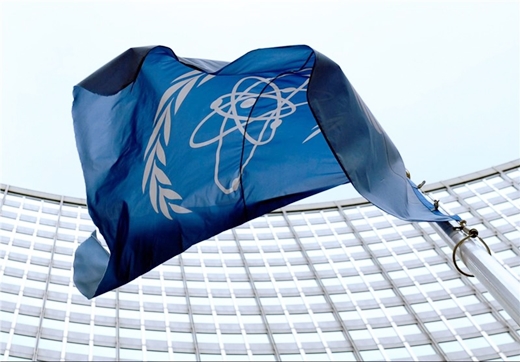
 Iran has called on the director general of the International Atomic Energy Agency to maintain the independence of the UN nuclear watchdog.

The spokesman of the Atomic Energy Organization of Iran has said that under the IAEA charter, the country’s security considerations should be taken into account.

 Pensioners will be offered more than $800 dollars in interest-free loans.

Under a deal signed by the State Pension Fund and Bank Saderat, around $167 million will be allocated to the loans.


Achievement of Iranian gov’t beyond expectations: Rouhani

Rouhani-TV

Iranian President Hassan Rouhani says the achievement of his administration in resolving the nuclear issue beats initial expectations.

Speaking in a live televised show on Sunday, President Rouhani said he did not mean to exaggerate, but believed that what was achieved at the end of the negotiations between Iran and P5+1 was beyond what was initially expected.


A win for all & the matter of trust

President Rouhani said that the end results of the negotiations were a win-win. He said the opposite side had said it was pursuing an objective of preventing Iran from obtaining a nuclear weapon. Iran never intended to build atomic bombs, the president said; so, ‘if the other side in the negotiations thinks it has achieved that goal (of preventing an Iranian bomb), let this be a victory for it.’

The Islamic Republic, however, had three goals in the talks, all of which were achieved, President Rouhani said.

The Iranian president said the fact that an interim agreement between Iran and P5+1 was holding for nearly two years could be a sign that the comprehensive agreement reached between the two sides on July 14 could also be holding.

We cannot say we have 100% trust in the partners to the agreement, but we can devise a mechanism under which no side would face a loss if the other breached the agreement, the president said.


Iranian nobility

He said Iran has never sought weapons of mass destruction.

It did not opt for the manufacturing of such weapons even when it was locked in a war with Iraq back in the 1980s, the president said.

“Iranian people are noble; even when fighting, they fight nobly, they don’t seek weapons of mass destruction,” he said.


Nothing to worry about

Referring to certain concerns about inspections under the Joint Comprehensive Plan of Action, the president said there is no reason to worry at all as what Iran has agreed to under JCPOA is nothing extraordinary.

“No one in the world would trade its national security… [and] its secrets,” he said, reassuring that Iran’s military capabilities will by no means be depleted.

Responding to a question about the economic impacts of the anti-Iran sanctions that his administration sought to have removed as a result of the agreement, President Rouhani said his cabinet has been successful in containing or countering economic woes such as high inflation and stagflation.

“Sanctions cannot be successful, ever; but they can have impacts,” he said, adding that as a result of the success of the negotiations, the doors of international business opened to Iran.

No country can be found that is not happy about the conclusion of the agreement between Iran and P5+1, but a handful of warmongers and Zionists, President Rouhani said.


Foreign investment welcome, increased imports not

Answering another question about concerns that a potential increase in trade activity as a result of the removal of the sanctions against Iran would result in imports of foreign goods to the country, President Rouhani said such concerns are valid.

He said Iran would welcome foreign investment, but not increased imports. The Iranian president said he has directed his economic team on the matter.

Iran should work hard toward employment for the youth, the Iranian president said.

He said, by the end of his administration’s term in office, the inflation rate in the country will slip into single-digits territory.


Averting potential IAEA mischief

Another question put to the president was about potential acts of mischief by the International Atomic Energy Agency (IAEA), the UN agency that has been tasked with carrying out the technical specifications of JCPOA. President Rouhani said the country should be very vigilant that such mischief does not occur, both in terms of security issues as well as technicalities.


No economic boom overnight

The Iranian president also said that the impacts of the removal of sanctions under JCPOA will not be felt overnight.

He said the “sapling” that has been planted will take some time to bear fruits, emphasizing, however, that his administration will try to have such impacts come sooner.

Iran ready for media, cultural cooperation with Syria: Jannati

Jannati-Syria

Minister of Culture and Islamic Guidance Ali Jannati said on Sunday that Iran is fully ready to boost cooperation with Syria in the fields of culture, arts and media.

He made the remarks in a meeting with Syrian Ambassador to Iran Adnan Mahmoud.

He hailed the Syrian nation and army’s resistance in the face of terrorism and condemned hardline groups and terrorists operating in the country.

History has proved that the barbaric measures of the groups would not continue, Jannati said.

The minister said that the Iranian and Syrian poets, elites and authors can have good cooperation in various areas of culture and arts and play an effective role in introducing each other’s cultural and artistic works.

Adnan, for his part, said that Iran’s achievements for defending its rights on the international scene are praiseworthy.

The two countries can withstand the Western cultural inroad by developing ties among their poets and writers, he said.

Activists in 20 countries call for release of Saudi Shia cleric

nimr

Human rights activists in 20 countries held rallies on Saturday in solidarity with Saudi Shia cleric Ayatollah Sheikh Nimr al-Nimr.

They called on Saudi authorities to revoke the death sentence for Sheikh Nimr and immediately release the senior cleric, al-Akhbar daily reported.

The rallies were staged in Colombia, Switzerland, the US, Germany, Iran, Bahrain, New Zealand, Canada, France, Ghana and Lebanon, among others.

Sheikh Nimr was detained in July 2012 following demonstrations that erupted in Saudi Arabia’s Qatif region.

He was accused of delivering anti-regime speeches and defending political prisoners.

His arrest sparked widespread protests in the Arab country.

A Saudi court later sentenced Sheikh Nimr to death, and, in March this year, an appeal court upheld the death penalty of the prominent cleric.

Free Nimr

Iran to complete all South Pars Oil Field projects in 3 years: Minister

Zangeneh

Iranian Oil Minister Bijan Namdar Zanganeh announced that the country’s development projects in all of the oil fields in the massive offshore South Pars will be completed in three years.

“Those who think Iran cannot raise its (oil) production, should wait and see (how Iran will do so),” Zanganeh said in a televised interview broadcast live on Saturday night.

“We are able to increase oil production by 500,000 barrels per day (bpd) anytime we decide to do so,” he added.

“We will finish all 23 oil fields that we have in South Pars in a three-year period,” the Iranian oil minister noted.

Commenting on the development plans to increase crude oil production, Zanganeh said Iran has defined projects worth $70 billion which will triple the country’s crude oil production.

Zanganeh also pointed to Iran’s plans to increase exports of gas, saying that the exports to neighboring countries is top of the agenda of his ministry.

South Pars is part of a wider gas field that is shared with Qatar. The larger field covers an area of 9,700 square kilometers, 3,700 square kilometers of which is in Iran’s territorial waters (South Pars) in the Persian Gulf.

Executives of Italy’s oil giant in Tehran on Tuesday

eni

An official with Iran Chamber of Commerce, Industries, Mines, and Agriculture (ICCIMA) says senior executives of Italy’s oil giant ENI will arrive in Tehran as part of a business delegation on Tuesday.

Ali Akbar Farazi, ICCIMA’s deputy for international affairs, said ENI will be part of a high-ranking Italian delegation headed by the country’s Foreign Minister Paolo Gentiloni, which will arrive in Tehran on August 4.

The official added that ENI was a partner to Iran’s oil projects before sanctions were imposed on the country by the West and had taken part in development of phases 4 and 5 of South Pars gas field as well as Darkhoein oil field.

“Now that the prospect for the removal of sanctions imposed on the Islamic Republic is bright, ENI is willing to return to Iran,” he said.

Farazi added that the Italian delegation will also include senior executives of SACE insurance company, as well as creditable Italian banks, automakers, pharmaceutical companies, and other companies active in such areas as water, electricity, oil, gas, and petrochemicals.

In April, ENI’s chief executive, Claudio Descalzi, told the Financial Times that his company is interested in returning to Iran if sanctions against the country are lifted.

He had made the remark in a meeting with Iran’s Petroleum Minister Bijan Zanganeh at an OPEC summit in Vienna in 2014.

Sanctions were imposed on Iran by the US and EU at the beginning of 2012, alleging that there was diversion in Iran’s nuclear program toward military objectives; an allegation that Iran categorically rejected.

On July 14, Iran and P5+1– the US, the UK, Germany, France, China, and Russia – reached the conclusion of negotiations over Tehran’s civilian nuclear program, with the Islamic Republic and the sextet sealing an agreement.

According to the agreement, known as the Joint Comprehensive Plan of Action (JCPOA), all economic and financial sanctions against Iran will be removed. In addition, all bans on Iran’s Central Bank, shipping, oil industry, and many other companies will be lifted.

Pipeline taking Iran’s gas to Iraq ready in 20 days: Official

South Pars

The managing director of the Iranian Gas Engineering and Development Company says a pipeline that takes Iran’s gas to Iraq will become operational before the end of the current Iranian month (ends August 22).

Alireza Gharibi was quoted by the Oil Ministry’s official news agency SHANA as saying that testing a 100-km stretch of the pipeline has come to an end and the pipeline will be ready to transfer Iran’s natural gas to its western neighbor in 20 days.

“At present, we are discharging water from the pipeline and after a few final tests, which takes till the end of this month to complete, the pipeline will be ready for exports,” he added.

Gharibi stated that in the first phase of its operations, the pipeline will take a daily total of 5 million cubic meters (mcm) of gas to Iraq and the figure will rise after completion of the Sixth Iranian Gas Trunkline (IGAT-6).

“When the second section of the Sixth Iranian Gas Trunkline is completed by the end of the current [Iranian] year (ends on March 19, 2016) … it will be possible to export as much as 25 mcm of gas per day to Iraq,” he added.

On July 25, Gharibi told reporters that his company was carrying out the last stages of testing the pipeline, which will be used to export natural gas to Iraq.

“Iran will sit for talks with Iraq within the next few days over the gas export project,” Gharibi added.

The two countries signed an agreement for the export of natural gas from Iran’s South Pars gas field to Iraq back in 2013.

Based on the agreement, 25 mcm of gas will be delivered to Sadr, Baghdad and al-Mansouryah power plants through the 270-km-long pipeline.

The project has been long in the offing but had been delayed over security concerns resulting from the insurgency that the ISIL terrorists have waged in Iraq.

Heroes Jersey awarded to FM Zarif, nuclear chief Salehi (PHOTOS)

1781821

A ceremony to mark National Day of Heroic Culture and Zoorkhaneh Rituals was attended by Foreign Minister Mohammad Javad Zarif and nuclear chief Ali Akbar Salehi on Saturday.

During the event held at the Faculty of Physical Education and Sport Sciences at University of Tehran, both officials were awarded the Heroes Jersey.

Images of the ceremony released online by Mehr News Agency:


Is Iran dealing with P5+2?

216912_241

US Republican senators have called on Director General of the International Atomic Energy Agency (IAEA) Yukiya Amano to appear on Capitol Hill to offer explanations about an agreement his agency has inked with Iran.

News that the UN nuclear chief has expressed readiness to brief US lawmakers on the deal not long after Iran and P5+1 clinched an agreement has raised concerns among Iranian critics of the nuclear deal about the biased approach of the UN nuclear watchdog in dealing with Iran.

On August 2, Fars News Agency filed reports on the reaction of two Iranian MPs to Amano’s acceptance of the invitation. The following is the translation of an excerpt of the two reports:

asfariMohammad Hassan Asafari, a member of parliament’s National Security and Foreign Policy Committee, said, “When we asked Ali Akbar Salehi, the director of the Atomic Energy Organization, whether such reports were true, he told us that there was no confidential agreement between Iran and the IAEA for Amano to report to US senators about. Apparently, that is not what has actually happened.”

The deputy denounced Amano as unreliable and said, “Unfortunately, the IAEA has turned P5+1 into P5+2 against Iran thanks to its [biased] behavior. If the agency really seeks to make international deals transparent, Amano’s appearance in the Islamic Consultative Assembly can serve the cause of transparency, too.”

He concluded, “Thanks to the leanings of the IAEA and its director general toward Western and Zionist intelligence services, the agency has proved that it cannot be a fair arbiter in the [implementation] of the Joint Comprehensive Plan of Action (JCPOA).”

naghaviSeyyed Hossein Naghavi Hosseini, another MP with a seat on parliament’s National Security and Foreign Policy Committee, said, “Ever since news about a confidential agreement between Iran and the IAEA was made public, US lawmakers have been seeking to learn about its content.”

He said that in Iran reports on the existence of a secret agreement were rejected by some and implicitly confirmed by others, adding, “US lawmakers were privy to the deal and summoned Amano to appear before the US Senate Foreign Relations Committee.”

Naghavi, who represents Qazvin in the chamber, said, “What is surprising is that Amano, who is the director general of an independent international agency, and not a US government secretary, is summoned to the US Senate and he accepts to show up.”

This whole incident shows there are special links between the IAEA and the US, the MP said, adding, “The invitation is designed to glean information about the confidential agreement. If other questions such as JCPOA and its text were to be discussed at the Senate hearing, his presence would have been unnecessary because all documents and explanations have been presented in their entirety and additional transparency is not needed.”

A shepherd with thousands of Instagram followers

shepherd

The photos an ordinary shepherd has posted online have earned him fame and a large number of followers on Instagram.
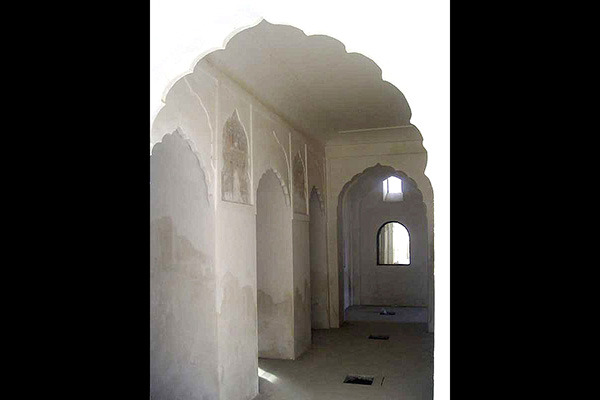
The unique pictures a young shepherd living in the north of Iran has posted on Instagram have several thousand followers. At a time when people use their cell phones to connect with others through social networking sites, get likes for what they post and see more followers visit their pages, a young shepherd takes photos from what is going on in his far-off village and shares them with fellow Instagram users.
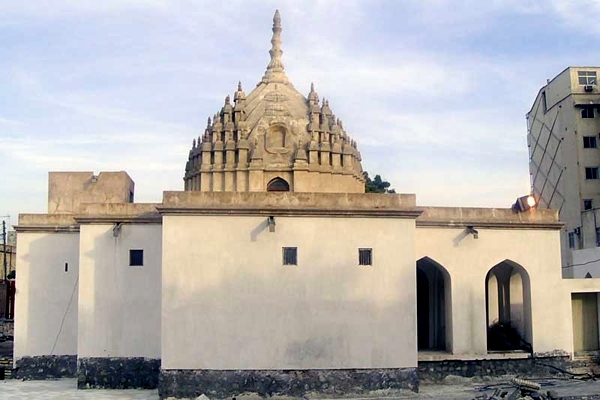
Mehr News Agency on July 29 published a report on Mohammad Ghasem Torabi, a young farmer and shepherd in Bandar Gaz in Golestan Province. The man of our story is also known as Salar Poulad [his Instagram page is named after his two dead husky farm dogs Salar (Master in Persian), and Poulad (Steel in Persian)]. His simple narratives of the rustic life have turned out to be popular with city-dwellers. His followers outnumber the population of his home village by several times.

It all started when Mohammad’s brother bought him an Android smartphone and installed Instagram on it two years ago, telling him he could share the pictures he took of the farmland with people in other places. Mohammad did what his brother said and now his followers get online each day to see Mohammad’s new posts and take a breath of fresh rural air, albeit virtually.

Urban life

Mohammad says he sees nothing good in urban life, wondering why his fellow villagers prefer to leave the serene life of the village for a [hectic] city life. He says the young people in the village are active in the virtual world, praising Mohammad’s photographic skills. He is also good at writing, although he is not well-read. Any interest in a media position in the city instead of shepherdry in the village? He rejects it outright.

Getting along with fame     

Mohammad was first introduced in overseas-based Farsi-speaking TV channels, with many foreign media magazines dedicating a report to this young man who now has around 33,000 followers. He has no greed for fame and fortune, which is why he does not accept to use his claim to fame to make money. Mohammad says he prefers to achieve what he achieves through hard work.

Tourism targets rural culture

Mohammad and his fellow villagers do not welcome change to their traditions and culture; that’s why they don’t sell land to the strangers. They frown upon the idea of tourists coming to visit their beautiful village, arguing tourists will bring cultural changes, but villagers don’t bear any cultural gap. Serenity is all a village is credited for.

Routine life and Instagram

Mohammad works from dawn to dusk doing the farm’s chores, among them milking the cows and attending to the plants in the garden. He says he spends at most half an hour on Instagram to post the pictures he’s taken during the day and read comments. He has no Internet access at home. His house sits between his brother’s and cousin’s which have wifi connection, so he gets online thanks to their Internet access.

Mohammad leads a simple life in his own world. Like other people, he has some problems at his work in the village, but still does not want to rush for the city. He says he will never want to out-migrate and promises to remain as rural as ever, and what he says is a gentleman’s agreement.