Thursday, January 1, 2026
Home Blog Page 4774

Velvet riots, a Saudi plot brewing in Beirut and Baghdad

Untitled-1

Sparks of a political firestorm over Lebanon’s garbage crisis ignited demonstrations, violence and acts of sabotage at the heart of the capital Beirut. With tension heating up in Lebanon, the bride of the Middle East, [which the Lebanese premier blames on “political trash”], plots are at work in war-hit Iraq to tarnish the image of the country’s government and religious authority [with a religious cleric who is a mercenary of Saudi Arabia at its center].

The Islamic Consultative Assembly News Agency (ICANA) on August 24 published a report on tensions in Lebanon which have stemmed from a garbage collection dispute and said a few days after Sheikh Ahmed Al-Assir [a radical Sunni cleric] was taken into police custody, unrest and street protests hit the Lebanese capital, plunging the country into yet another crisis.

The following is the translation of the report in its entirety:

Reports suggest that over the past few days the crisis over Beirut’s garbage, which was sparked in the wake of the shutdown of the city’s main landfill, has degenerated into a social dispute. Images from the protest scenes in Lebanon resemble those in Ukraine’s Velvet Revolution.

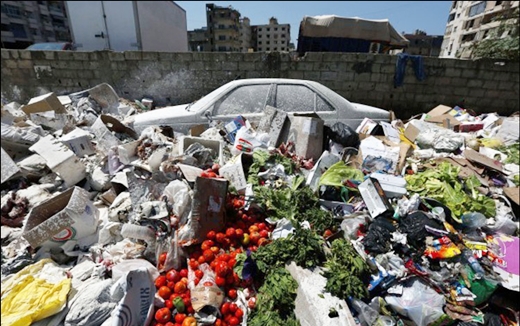
The Lebanese government, which has been mired in a political crisis, has so far failed to find a replacement for the waste collection and dumping management system in the capital. Some residents in Beirut burn garbage in the streets, and the smoke from the burning trash has filled the city.

The situation has spiraled out of control and organizers of protests against trash buildups in the streets have announced that they can no longer contain the protesters after several public administrative offices were set on fire and traffic lights were destroyed.

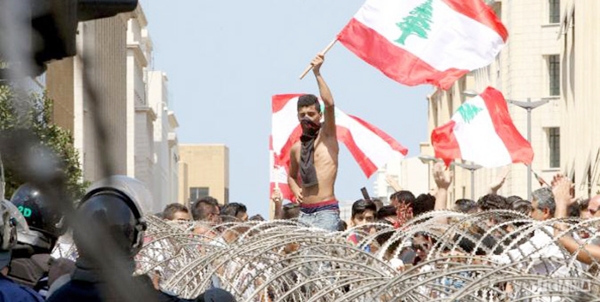
Riad Al Solh Square in downtown Beirut has been the focus of clashes [between protesters and security forces], with protesters chanting slogans and calling for the resignation of the government. No time limit has been set for the protest rallies. On Monday demonstrations got nasty as rioters clashed with security forces.
 

115435_orig


Efforts to plunge Beirut into crisis by political trash

Saudi Arabia, which is seeking to create a crisis in Lebanon, has to date blocked efforts to form a legitimate government in the country. A plot to create a power vacuum in Beirut has paralyzed the Lebanese government and hampered the formation of functioning institutions in Lebanon, something which has fueled public dissatisfaction as well.

The clashes erupted on Saturday and came to a head on Monday (August 24) as rioters tried to enter the headquarters of the Lebanese prime minister.

The protesters pelted security forces with stones and Molotov Cocktails and police responded with tear gas. The Army has been deployed in the capital’s streets because of the police’s inability to handle the crisis. Protesters have gathered around the prime minister’s headquarters barring Tammam Salam from entering his office.

Prime Minister Salam, who blames the absence of a president for the unrest in the country, slammed the back-to-back failures of political parties to fill the vacant seat of president, and said this catastrophic dysfunction should be brought to an end. He went on to repeat his previous warnings about the presidential vacancy and said the inability to pick a president will render the country unable as far as other issues go.

Today Lebanon has been hit by political clashes which have affected all people, young and old, he said, adding we should not wait for magic [to get things done]; the government cannot continue this way and run the country in the absence of lawmaking authority. Salam also said that people have every right to protest against such a situation, adding that people are the ones who hold the government accountable for the closure of institutions by political forces.

Lashing out at Saudi mercenaries, the Lebanese premier said that the Lebanese citizens are not to blame when divisive and provocative remarks of the officials are heard in the country daily. “Yes the trash crisis is the straw that broke the camel’s back, but there is a bigger picture. This is about the political trash in this country.”

Power vacuum plot in Beirut

It would be interesting to review how tensions broke out in Lebanon. Initially, a small group of youths called for the settlement of Beirut’s garbage problem by launching a “You Stink” campaign. Their call for a rally was immediately welcomed by Saudi-backed parties and the Takfiris supporting Sheikh Ahmed Al-Assir.

This is similar to what unfolded in Eastern Bloc countries where nonviolent civil protests were quickly engineered by color-coded revolutions, reached a tipping point and finally set off the collapse of governments. And now the garbage problem in Beirut has played into the Saudi hands.

Street clashes raged on in Beirut and the question of garbage which was raised by the real protesters [the first protesters or those who called for protest rallies] was hijacked by rioters who took control of the protests in the capital. The plotters of street riots have called – in their slogans – for a “revolution” and “the resignation of the Lebanese prime minister”. They seem likely to go so far as put the country on the brink of civil war and force Tammam Salam out of office.

The elimination of Lebanon’s prime minister together with the void created by failure to pick a president can have catastrophic consequences [for this country]. Suicidal agents in the ranks of rioters tried Monday morning to seize sensitive security, military and political centers. They are struggling to fan the flames of tension and force the Army to use force.

 Lebanon’s domino falls in Iraq 

The political state of affairs in Baghdad is better than Lebanon thanks to the presence of religious authorities in Najaf and the vigilance of the Iraqi government, but a Beirut-style scenario is playing out in Iraq. Over the past two weeks, genuine protesters in Iraq held peaceful rallies demanding reforms, and their demand was supported by the government and the religious authorities.

Despite Ayatollah Sistani’s special stress on the need for reforms, some elements are trying to blame the religious authority in Najaf for the political crisis and corruption in Iraq. The Ba’athists and elements with links to Saudi Arabia are behind such an odd move at a time when Iraq has been dissected by ISIL and innocent Iraqis are slaughtered by Takfiri terrorists daily.

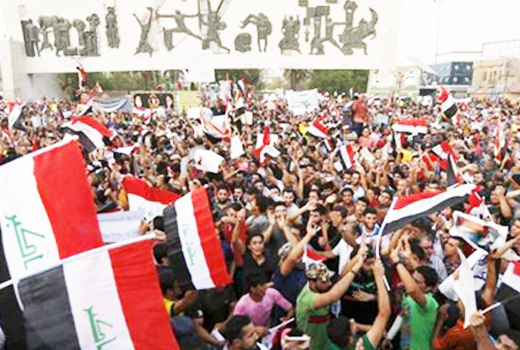
Rioters in Iraq on Sunday shouted slogans and called for the ouster of the Islamic Dawa Party affiliated to Prime Minister Haider al-Abadi and former premier Nouri al-Maliki.

Hundreds of rioters stormed the governor’s office in Al-Hindiya, east of Karbala Province and expelled its employees. In Babil Province south of Baghdad, security forces were called in to disperse protesters after they stormed the governor general’s office and called for the resignation of the governor general and dissolution of the governorate council. Meanwhile, the Babil Operations Command declared a curfew in [in the central city of] Hillah. The curfew took effect at 10:00 p.m. local time and continued into Monday morning.

Mahmud al-Hasani al-Sarkhi, a pseudo-cleric who is backed by the Saudi regime, is said to be behind the unrest in Iraq, prodding his supporters to turn popular demonstrations into political demands and opposition to certain religious authorities. Last year he inflamed tensions in Karbala and was forced to escape after security forces and the Army entered the scene and a number of his supporters were killed. But some of his sympathizers are still active in religious cities in southern Iraq. Al-Sarkhi can be viewed as the main enemy of the religious authority in Najaf.

The plot to instigate velvet riots in Beirut and Baghdad can prove problematic for the Lebanese and Iraqi governments, but they will equally provide Saudi Arabia and Takfiri ISIL terrorists with a respite. Saudi Arabia and the Zionist regime – which have been extremely isolated thanks to the Joint Comprehensive Plan of Action and feel threatened by the West because of Europe’s pivot toward Tehran – are scrambling to rekindle tensions in the Middle East.
 

115434_orig


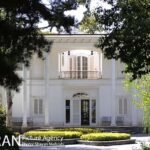
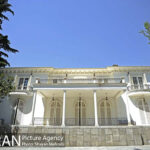
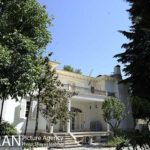
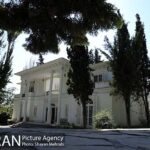
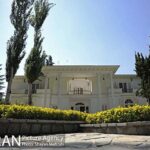
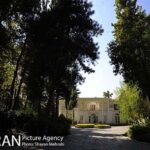
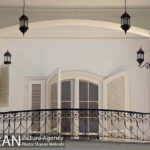
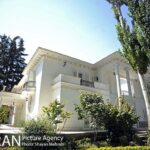
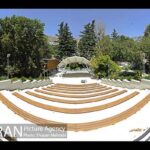
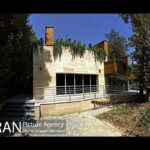
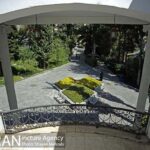
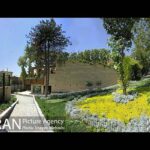
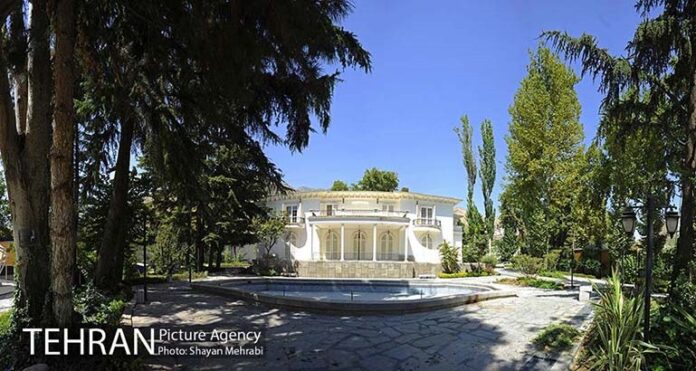
Khosrowshahi Garden in Tehran (PHOTOS)

Khosrowshahi Garden0

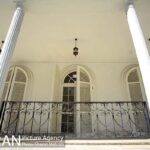
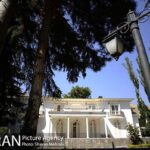
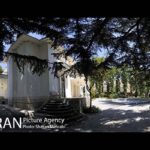
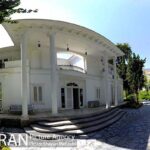
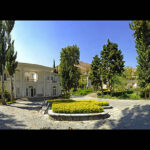
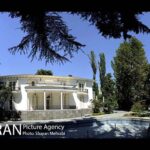
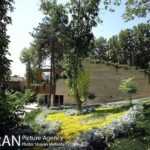
Khosrowshahi Garden which was owned by a Tehran factory owner had been abandoned for years until Tehran Municipal District One bought it about three years ago to turn it into a park.

The garden which is 12,396 square meters in area has been refurbished to offer cultural and social services.

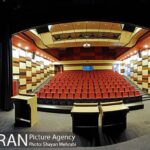
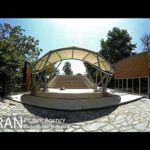
The garden houses a theater with indoor and outdoor sections which can seat 260. It can be used for public performances and gatherings.

Images of the garden published online by tpaa.ir:

Iran sanctions to be lifted one after another: President Rouhani

Rouhani

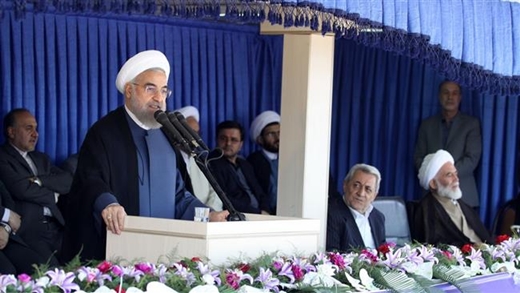
President Hassan Rouhani has said sanctions against Iran will be lifted one after another with the conclusion of the recent agreement between the Islamic Republic and P5+1.

President Rouhani made the remark in an address to a large crowd of people in the western city of Hamedan on Tuesday.

He said his administration has reached a point where it had the anti-Iran sanctions annulled at the very institution and by the very group that had imposed them in the first place.

The Iranian president said the Islamic Republic has succeeded in not only having the sanctions resolutions annulled – without even a moment of having implemented them – but also in establishing its right to uranium enrichment “not just as a slogan but through UN resolutions.”

He was referring to Resolution 2231 (2015), which was unanimously approved by the UN Security Council on July 20 to endorse the agreement between Iran and P5+1.

Economic achievements

Referring to the country’s economic situation, Rouhani said his administration has gone beyond expectations in achieving its objectives in its first two years in office.

“We promised people that we would reduce the inflation rate step by step. [Iran’s] Statistics Center released figures two days ago, which show that… inflation has fallen below 14 percent and reached 13.8,” he said.

Iran has seen its inflation rate decline from its peak of over 40 percent under former President Mahmoud Ahmadinejad two years ago.

British Foreign Secretary publishes opinion piece in Iranian newspaper

Philip Hammond
Iran Newspaper-25 August
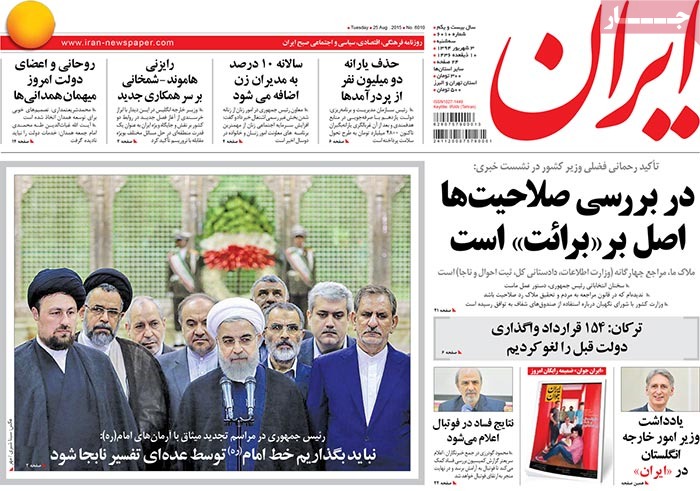
Iran newspaper front page on August 25

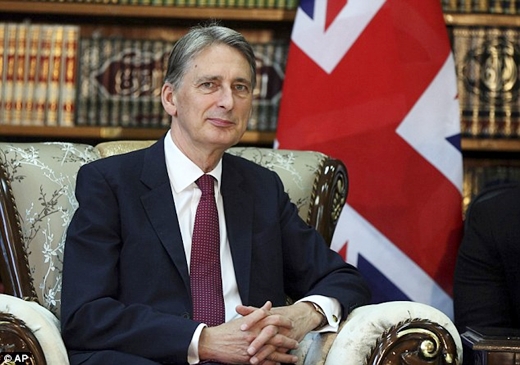
Foreign Secretary Philip Hammond, who visited Iran over the weekend to reopen the British embassy in Tehran, had an opinion piece published in Farsi in Iran newspaper on Tuesday (August 25).

The following is the translation of the piece from its Farsi version:

I arrived in Tehran this week and became the first British foreign secretary to visit Iran in over a decade.

A few weeks ago, I met with Iranian Foreign Minister Mohammad Javad Zarif and our counterparts from P5+1 in Vienna. Back then the world waited with bated breath to see whether our marathon talks would produce a nuclear deal.

We did clinch an agreement. The nuclear deal was a historic victory for diplomacy and a breakthrough for all parties to the talks. The implementation of this deal would assure the world of the purely peaceful nature of Iran’s nuclear program and would provide Iran with an opportunity to transform its ties with Western countries.

I am determined to turn the conclusion of nuclear talks into a new chapter in relations between my country and Iran; relations which are beneficial to the people of Iran and Britain. A high-ranking delegation of British trade and economic managers accompanied me on my Iran visit during which I reopened the British embassy in Tehran.

Ties between Iran and Britain have a long, complicated and often difficult history. I don’t expect problems to be solved overnight. But, today we face many common challenges such as the emergence of IS in Iraq and Syria, instability in Afghanistan, the drugs trade, and climate change.

I believe if we create an atmosphere of trust and confidence, we can improve things. That is what we did during the nuclear talks. I am willing to repeat that through diplomacy and the assistance of the two countries’ embassies.

One way to build trust goes through facilitation of relations between the two peoples: between universities, businesspeople, scientists, artists and families. Many Iranians live in Britain. Many of them have a big share of efforts to serve British society.

I am fully aware of the problems associated with getting a British visa, including the need to travel to Turkey or the UAE. The scope of the British embassy activity will be limited at first. So the Tehran mission won’t start issuing visas immediately after its reopening. But, resumption of visa services in Tehran is a priority and we hope we can resume that service within months.

I don’t expect our tries with Iran to remain free of ups and downs forever, but I am optimistic about the future. The ancient history and cultural richness of the Iranian nation is well known. What impressed me most during this visit was the hospitality of the Iranians, and their bravery in testing the new waters.

We will focus, in equal measure, on the challenges and opportunities that lie ahead as we carry on with efforts to create mutual understanding and respect, especially through diplomacy and later on through trade and commerce, to serve the interests of both nations.

Persia to Iran published in Australia

CMvMv1CUcAAh7y-

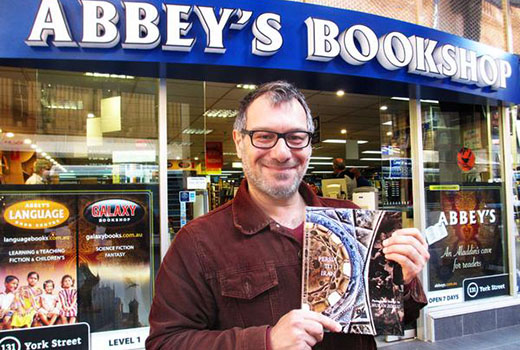
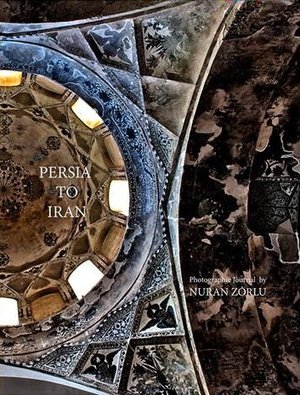
The book ‘Persia to Iran’ by Nuran Zorlu, an artist and photographer, was published by efforts of Iran’s cultural attaché to Australia.

The Public Relations Office of the Islamic Culture and Relations Organization was quoted by Iran’s Book News Agency (IBNA) as saying that a book entitled ‘Persia to Iran’ was published by the Iranian Cultural Office in Australia with a print run of 2,000 copies.

The book is a travelogue which describes visits to ancient sites and spectacular parts of Iran and encompasses very interesting topics that help the audience get familiar with Iran and encourage tourists to visit the country.

The book has been registered in the National Library of Australia and provided to book shops by one of the most prestigious Australian publishing houses within and beyond the country.

The Iranian cultural attaché has bought 700 copies of the book from the author and intends to offer it as a gift it to political and cultural figures and centers.

On the author of Persia to Iran

Nuran Zorlu was born in an Armenian family in 1965 in Istanbul, Turkey. He graduated in philosophy from the University of Istanbul in 1987 and received his master’s degree in photography.

He settled in Australia in 1998 and is now an Australian citizen. He is working as a professional photographer and specializes in photographing ancient monuments and nature.

His photos have been published in many international magazines including Vogue, Marie Claire, Harper Bazar, etc.

During his trip to Iran, Nuran Zorlu presented his observations in the frame of different photographs from archeological sites and interesting sights. He visited many cities, including Maku, Jolfa, Tabriz, Orumiyeh, Sanandaj, Kermanshah, Hamedan, Qom, Isfahan, Yazd, Shiraz and Tehran.


9780646937632_Persia_to_Iran_Nuran_Zorlu.jpg.300x1200_q85

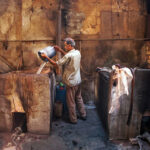
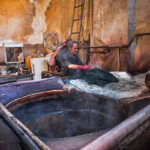
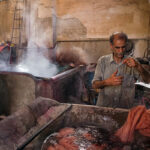
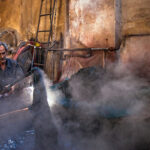
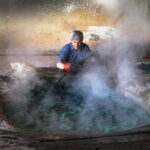
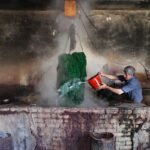
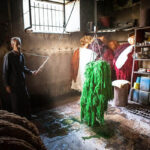
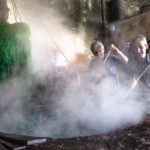
Traditional dyeing workshop (PHOTOS)

dyeing workshop0

Dyeing workshops in Tabriz still use traditional methods to dye yarn which is later used to weave carpets.

Images of a dyeing workshop posted online by Mehr News Agency:


A look at Iranian newspaper front pages on August 25

Iranian Newspapers Headlines

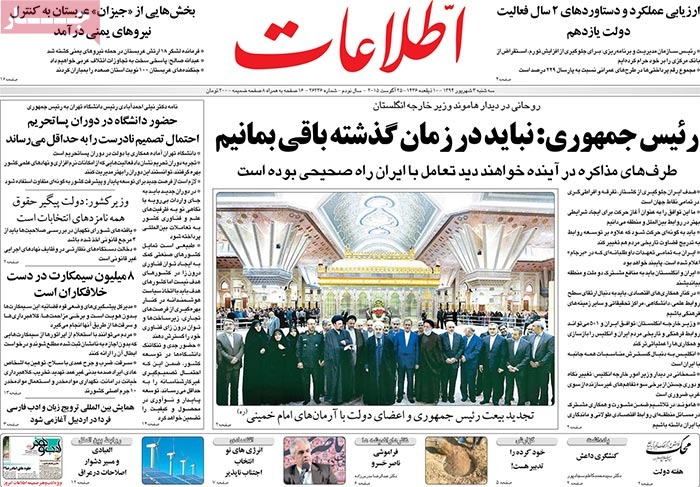
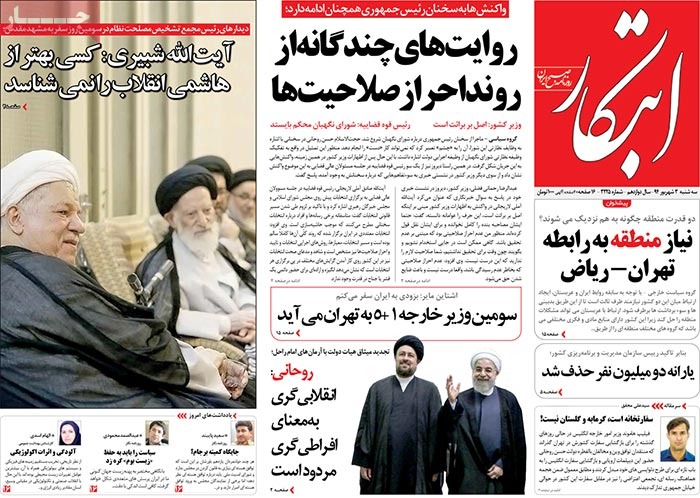
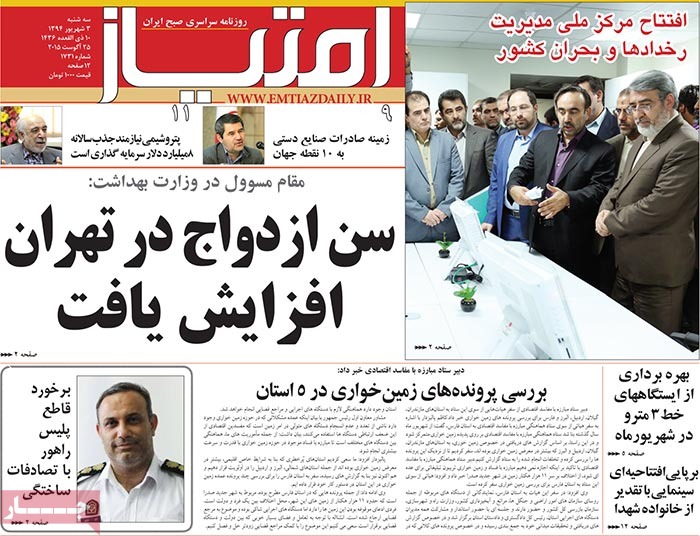
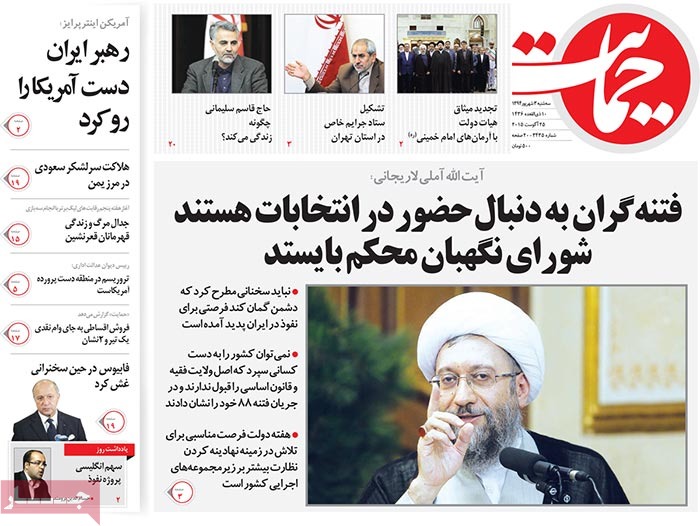
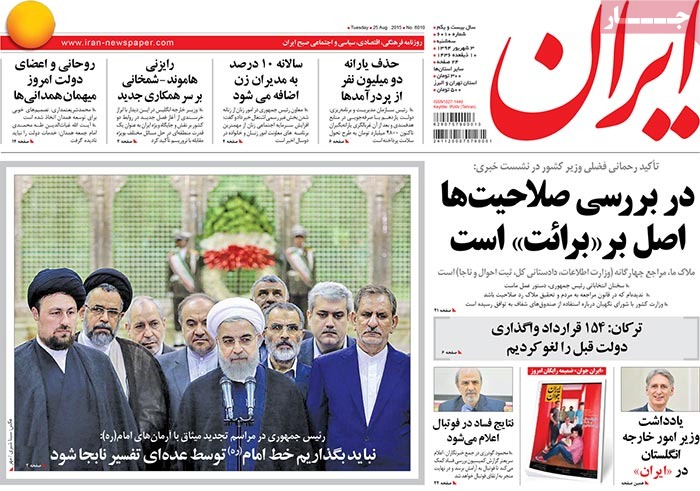
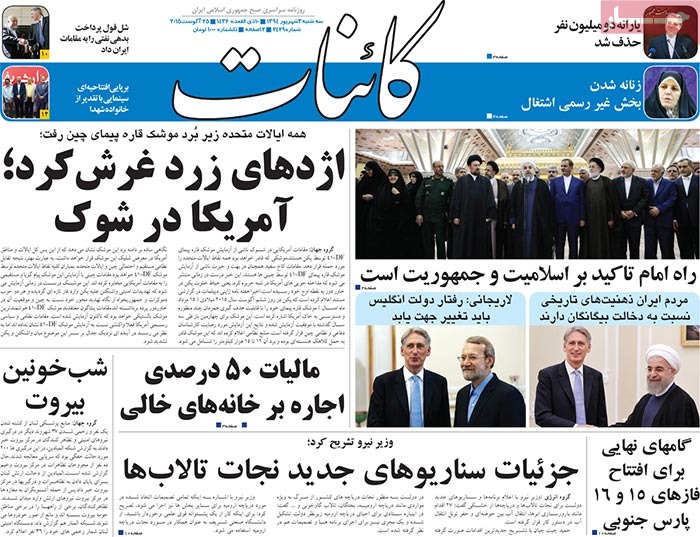
The comments of President Rouhani about republicanism as his Cabinet paid respect to the late Imam Khomeini in his mausoleum in southern Tehran, the meetings of the British foreign secretary with Iranian officials, and the remarks of the judiciary chief and the interior minister on the role of the Guardian Council in the electoral process dominated the front pages of Iranian newspapers on Tuesday.


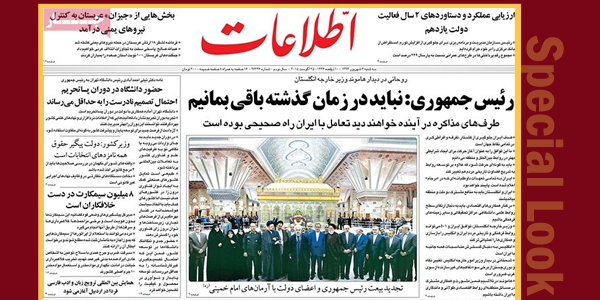
Ettela’at: “We should not remain stuck in the past,” said President Rouhani at a meeting with visiting British Foreign Secretary Philip Hammond.

The Iranian president further said those who sat at the negotiating table with us will realize in the future that interaction with Iran has been the right choice.


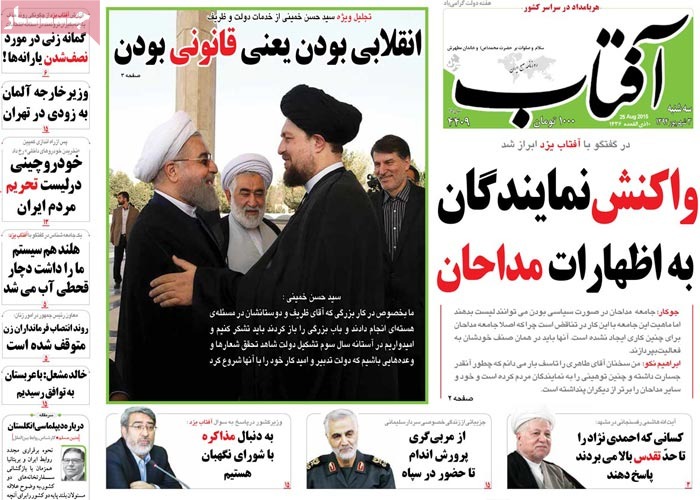
Aftab-e Yazd: “Those who went so far as to sanctify Ahmadinejad should now answer for their measures,” said Chairman of the Expediency Council Akbar Hashemi Rafsanjani.

Aftab-e Yazd: Chinese cars have landed on a list of items boycotted by people.

Aftab-e Yazd: The interior minister has said that his ministry seeks to hold talks with the Guardian Council on upcoming elections.


A look at Iranian newspaper front pages on August 25


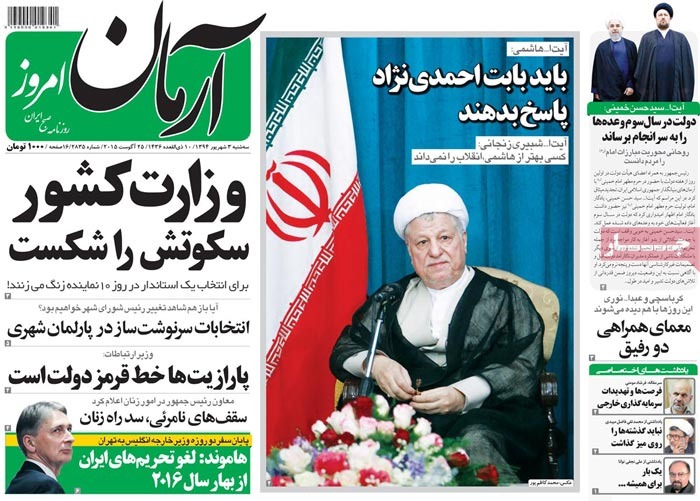
Arman-e Emrooz: The Interior Ministry has broken its silence.

“I received 10 calls a day from MPs as I was about to name a governor general,” the interior minister said.


A look at Iranian newspaper front pages on August 25


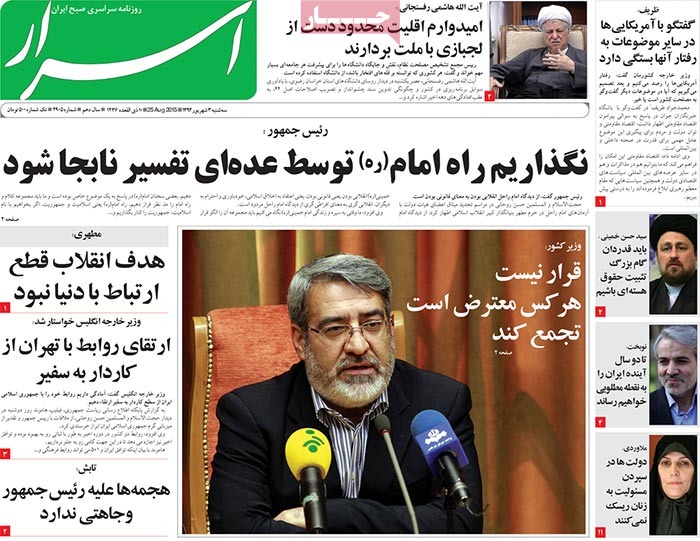
Asrar: “Talks with the Americans on other issues depends on their behavior,” said Iranian Foreign Minister Mohammad Javad Zarif.

Asrar: “Our revolution was not designed to make us sever our ties with the rest of the world,” said Tehran MP Ali Motahari.


A look at Iranian newspaper front pages on August 25


Ebtekar: The German foreign minister is due in Iran shortly.

He will be the third top diplomat of the P5+1 group to visit Iran in the wake of the Vienna accord.

Ebtekar: Rouhani has dismissed the notion that being a revolutionary is equal to holding extremist ideas.


A look at Iranian newspaper front pages on August 25


Emtiaz: The petrochemical industry needs $8 billion in annual investment.

 

A look at Iranian newspaper front pages on August 25


Hemayat: “The seditionists [a reference to those who supported massive riots sparked when two candidates questioned the results of the 2009 presidential elections] seek to run for office in [upcoming] elections; the Guardian Council should stay its ground,” said the judiciary chief.
 

A look at Iranian newspaper front pages on August 25


Iran: The cash subsidies of some two million high-income individuals have been cut.

Iran: President Rouhani has said that officials should not allow the ideas of the late Imam Khomeini to be misinterpreted.


A look at Iranian newspaper front pages on August 25


Kaenat: “The path the late Imam chose laid emphasis on Islam and Republicanism,” said president Rouhani.


A look at Iranian newspaper front pages on August 25


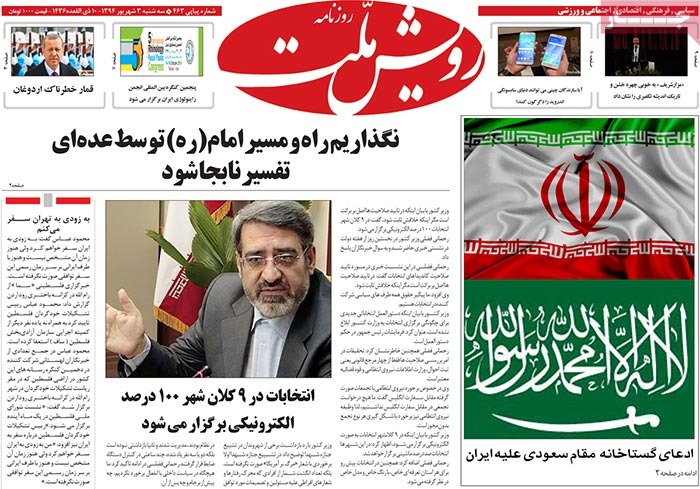
Rooyesh-e Mellat: “Elections in nine metropolises will be 100 percent electronic,” said the interior minister.


A look at Iranian newspaper front pages on August 25


Highlights of Ettela’at newspaper on August 25

Ettelaat Highlights-post

 “We should not remain stuck in the past,” said President Rouhani at a meeting with visiting British Foreign Secretary Philip Hammond.

The Iranian president further said those who sat at the negotiating table with us will realize in the future that interaction with Iran has been the right choice.

 The president and his Cabinet have paid a visit to the mausoleum of Imam Khomeini to reaffirm allegiance to the late founder of the Islamic Republic and his ideals.

The visit was timed to coincide with Government Week.

 Assessment of the performance of the 11th government two years after it took office

The director of the Management and Planning Organization said that government has banned itself from borrowing money from the Central Bank in a bid to prevent a hike in inflation.

 Parts of the Saudi town of Jizan have been captured by Yemeni forces.

[Former Yemeni President] Ali Abdullah Saleh has said that the Saudi-led coalition will pay a price for its aggressions.

 “The involvement of universities in post-sanctions decision-making minimizes the risk of wrong decisions,” said the president of the University of Tehran in a letter to President Rouhani.

In the letter, Dr. Nili Ahmadabadi signaled the readiness of Tehran University to cooperate with the government in the post-sanctions era.

 The interior minister has said government tries to protect the rights of all electoral candidates.

Abdolreza Rahmani-Fazli further said involvement of oversight bodies in the responsibilities of executive institutions is illegal.

 Criminals are in possession of eight million unregistered SIM cards.

A senior official with the judiciary has said that these unregistered SIM cards are being used, among other things, in scams and thefts.


Army commander warns enemies of Iran’s prompt response to threats

139405071632504015778094

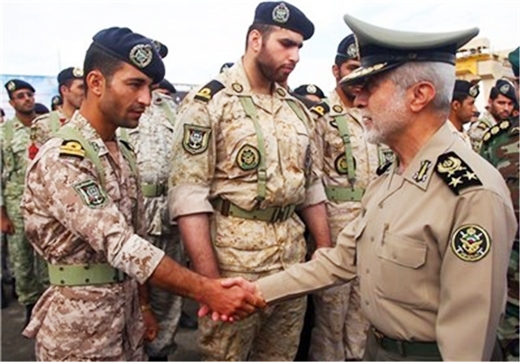
Iran’s Army Commander Major General Ataollah Salehi reiterated the country’s armed forces’ high preparedness to defend the country against possible hostile moves.

Addressing a group of Iranian Air Force cadets on Monday, Salehi pointed to the ongoing developments in the Middle East, and also anti-Iran rhetoric by “bullying countries”, and said the army is well prepared to defend the country.

“The mighty Army of the Islamic Iran has the ability and power to show prompt response to any kind of unwise movement in the region, especially against our dear country: Iran,” Salehi underscored.

In similar remarks earlier this month, Commander of the Islamic Revolution Guard Corps Major General Mohammad Ali Jafari said that his forces, who have advanced technologies in their possession, are prepared to counter any foreign threat.

“Today, the Islamic Revolution Guard Corps has immense power with reliance on people and faith (in God), and by possessing very advanced technologies, it is ready to counter any foreign threat,” the top general said in a cultural conference held in the northeastern city of Mashhad.

He asserted that “defending the Islamic Revolution” is the main mission of IRGC.

Britain should cease interventionist policy toward Iran: Larijani

Larijani-hommand

Iran’s Parliament Speaker Ali Larijani has called on the British government to drastically change its interventionist approach toward Iran’s domestic issues if it really seeks a new beginning in relations with Tehran.

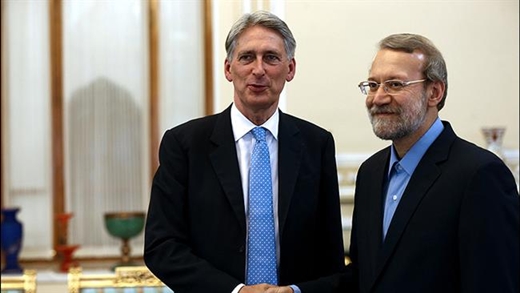
“The British government’s behavior concerning on-off interference in Iran’s internal affairs in the past should change and Iranian people should not feel that Britain’s approach toward them is unfriendly and ambiguous” said Larijani in a meeting Monday with visiting British Foreign Secretary Philip Hammond in Tehran.

The top lawmaker further slammed certain Western governments for adopting double standards in dealing with important issues such as human rights and the fight against terrorism, narcotics, and foreign occupation, saying those who created Takfiri terrorism and provided arms and weapons to terror groups should now take responsibility for their wrong policies.

The British foreign secretary, for his part, admitted the fact that Britain has a negative record in the minds of Iranians, saying, however, that no one should be stalled in the past and there must be a move forward.

Hammond also hailed a July 14 nuclear agreement between Iran and six global powers, saying that the world has come to understand that Tehran is making strides to improve its relations with governments around the world.

Hammond said the reopening of the British embassy in Tehran, which he supervised on Sunday, was a new step in opening up new horizons in relations between the two countries.

The top diplomat also urged more parliamentary cooperation and dialog between Iranian and British lawmakers in various fields, including the fight against IS and narcotics.

Hammond arrived in Tehran on Sunday in a first such visit by a British foreign secretary since 2003. In his two-day trip, he held meetings with President Rouhani, Secretary of the Supreme National Security Council (SNSC) Ali Shamkhani, Oil Minister Bijan Namdar Zanganeh and Foreign Minister Mohammad Javad Zarif.