Scores of female climbers scaled the Abidar Mountain in Sanandaj in western Iran on Friday as part of an “Ascent for Peace” program.
The following are images of the ascent released by the Islamic Republic News Agency:
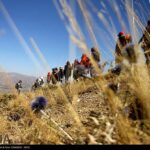
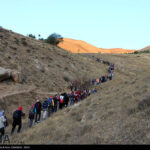
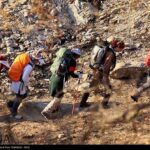
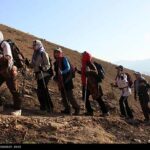
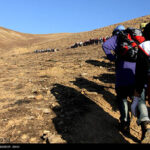
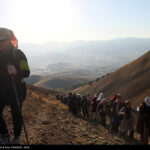
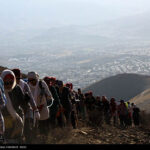
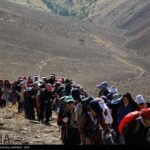
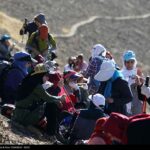
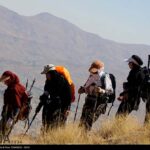
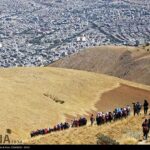
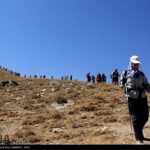
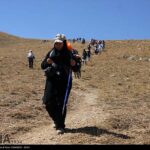
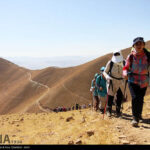
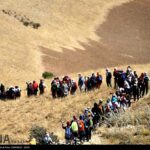
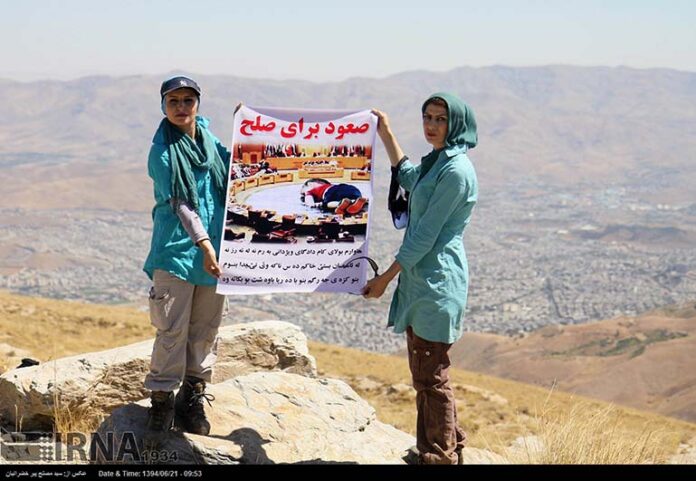
Scores of female climbers scaled the Abidar Mountain in Sanandaj in western Iran on Friday as part of an “Ascent for Peace” program.
The following are images of the ascent released by the Islamic Republic News Agency:
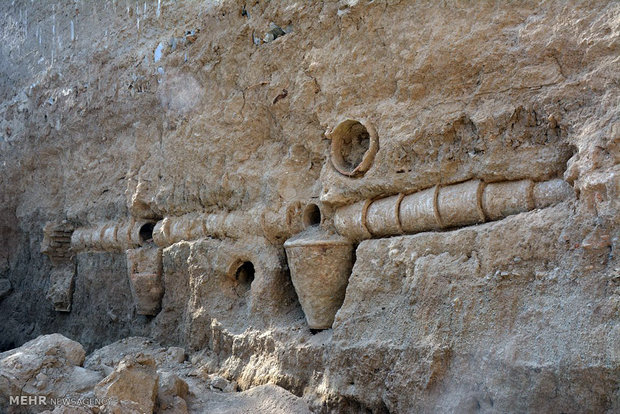
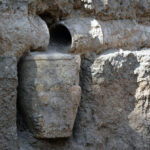
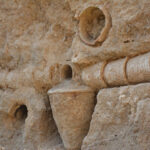
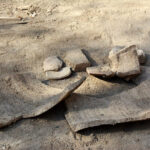
An official of Lorestan’s Cultural Heritage, Handicrafts and Tourism Organization announced the discovery of water transfer installations of an ancient aqueduct during excavations in Borujer; according to a report by Mehr News Agency.
The official, Hojjat Yar-Mohammadi, said the ancient aqueduct includes a smart water distribution system as a part of a historic castle. Pottery crocks in the system cleaned up and purifid the water.
Noting that the discovered items have been documented, he said the organisation has yet to decide whether the system’s site should be kept intact, or the historical items should be taken to another place for protection.
Nothing can be said about the historic era of the discovered system. According to the official, the experts in the Cultural Heritage Organization are studying the system. A special unit is also in charge of protecting this cultural heritage.
Borujerd had two layers of protection in the past. The first included as many as 57 towers that surrounded the entire town; and the second was built inside this area of around 280 hectares, designed to protect the government castle which includes the ancient aqueduct.
The government’s castle was like a big garden inside the town with a well-designed water system. Clay pipes – Tanpusheh in Farsi – transfer the water in the system. Big pottery distributed the water and removed the mud. This helped minimizing the risk of blockage in the flow of water. What stands out about this old system is its optimal use of water resources.

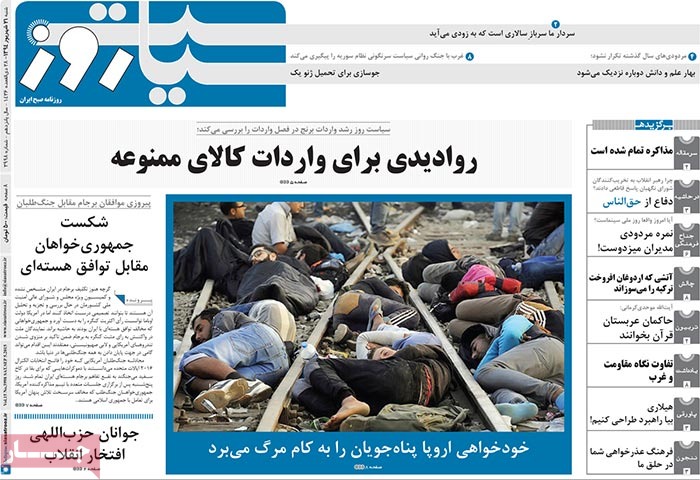
The failure of Republicans in the US Senate to kill the Iran nuclear deal dominated the front pages of Iranian newspapers on Saturday.
Ettela’at: A plan by hardliners in the US to defeat the Joint Comprehensive Plan of Action has failed.
The rejection resolution [in the US Senate] which needed 60 votes to go through, secured no more than 58. Forty-two Senators voted in favor of the Iran nuclear deal.
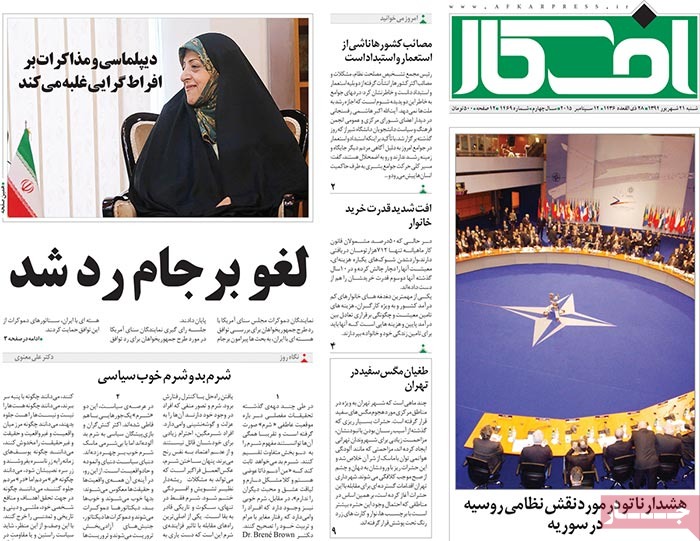
Afkar: “Diplomacy and dialogue overwhelm extremism,” the director of the Environment Protection Organization said.
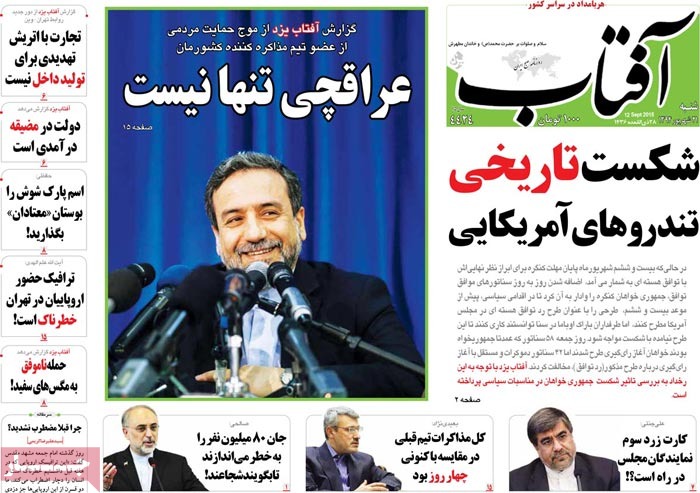
Aftab-e Yazd: Araghchi is not alone.
Aftab-e Yazd reports on the massive public support for the Iranian nuclear negotiator.
Aftab-e Yazd: “They are putting the lives of 80 million people at risk simply to put on a brave face,” said the director of the Atomic Energy Organization of Iran.
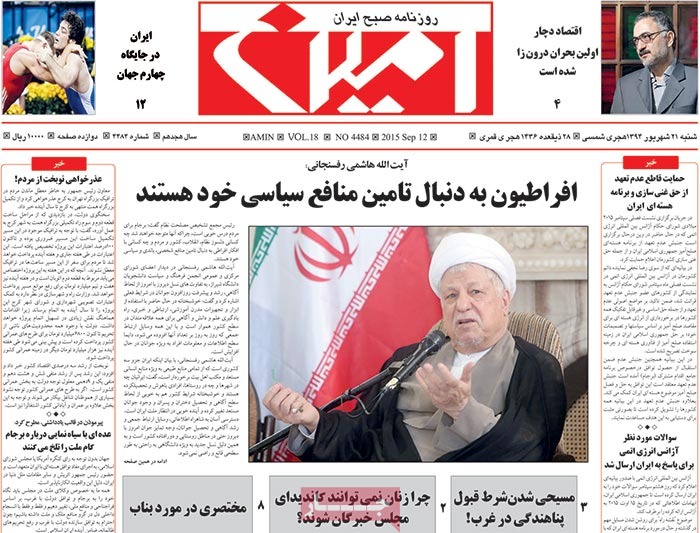
Amin: “Extremists seek to serve their own political interests,” said the chairman of the Expediency Council.
Arman-e Emrooz: A third yellow card is around the corner.
The minister of culture and Islamic guidance stood his ground.
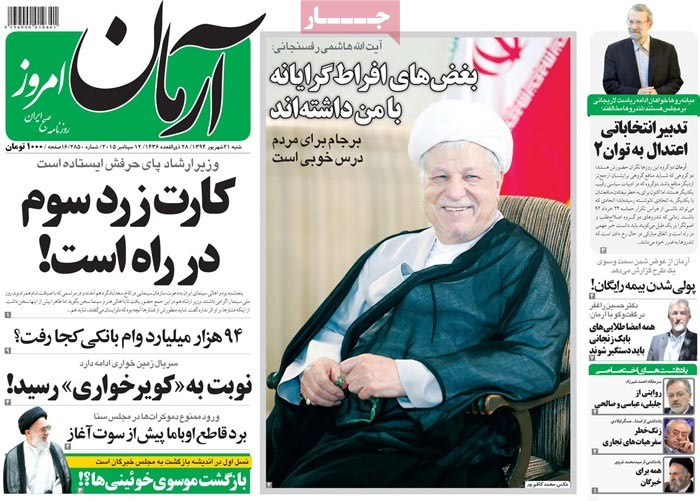
Asrar: “Those who wish to impose their ideas on others should not be given free reins in society,” said the chief of staff of the president.
Asrar: Average life expectancy in Iran is 72 years, said the deputy health minister.
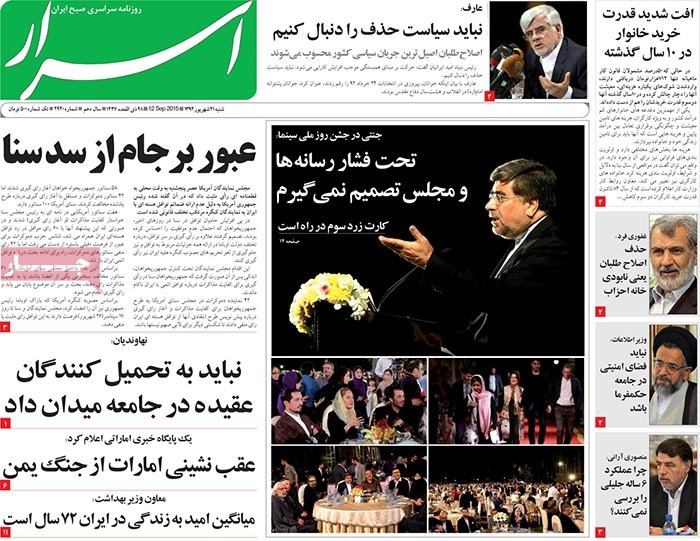
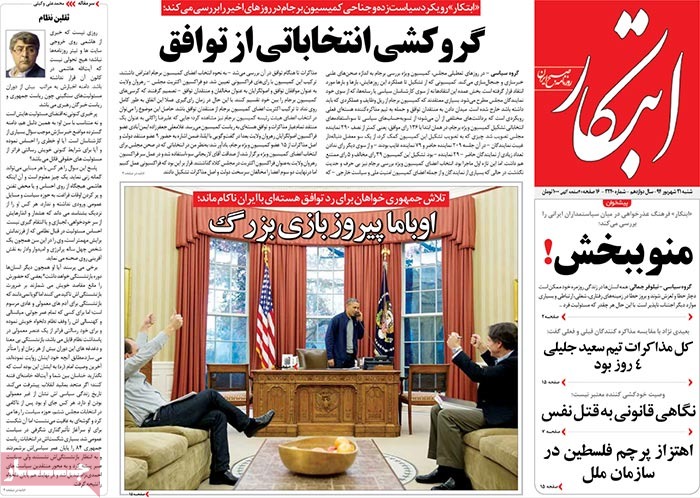
Ebtekar: Hamid Baidinejad, an Iranian nuclear negotiator, has said that in comparison with the current negotiating team, the former nuclear team led by Saeed Jalili held no more than four days of talks.
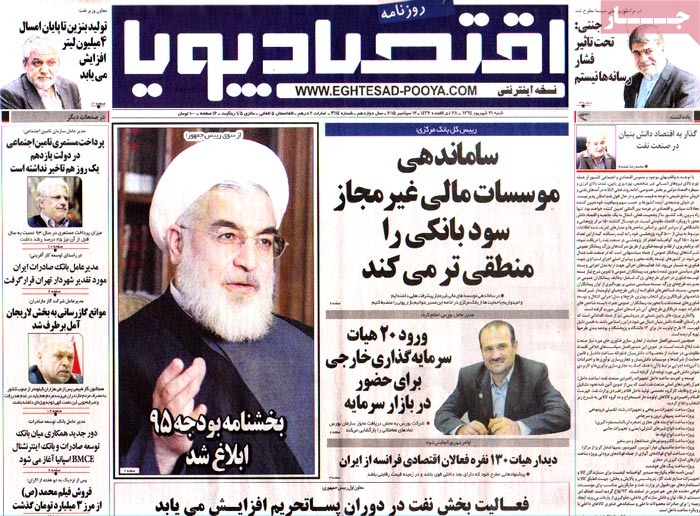
Eghtesad-e Pooya: The managing director of the Securities and Exchange Organization has said that as many as 20 foreign teams have come to Iran to invest in the capital market.
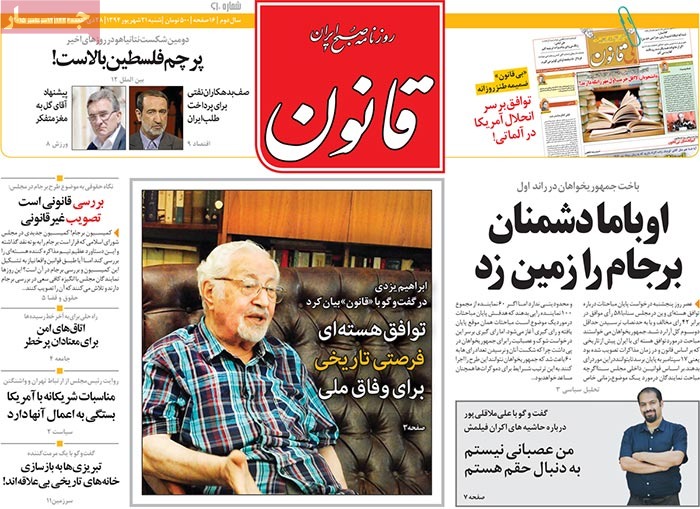
Ghanoon: Ebrahim Yazdi [a former deputy prime minister] has said that the nuclear deal has opened up a historic opportunity to boost national unity.
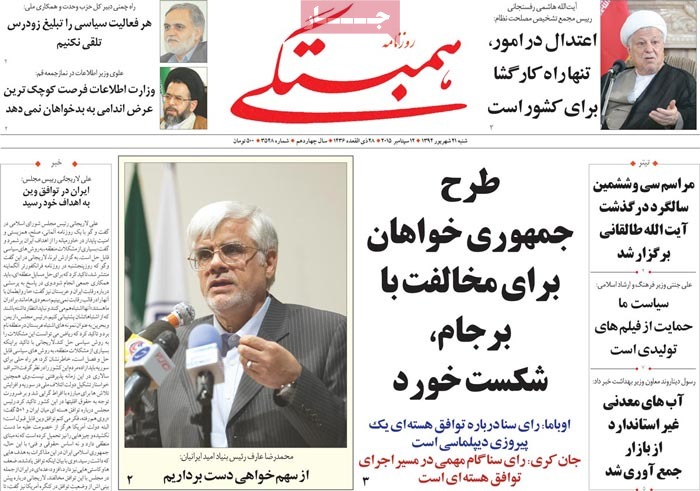
Hambastegi: A ceremony has been held to mark the 36th demise anniversary of Ayatollah Mahmoud Taleghani.
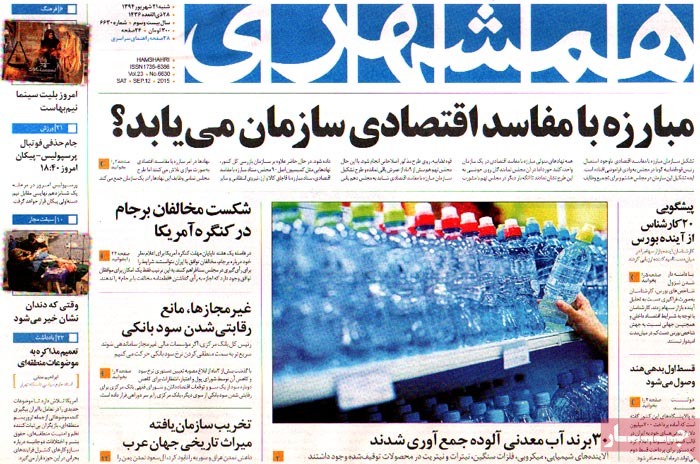
Hambastegi: A deputy health minister has announced that a number of bottled water brands which failed to match up to standards have been withdrawn from the market.
Hamshahri: Does the fight against corruption become regulated?
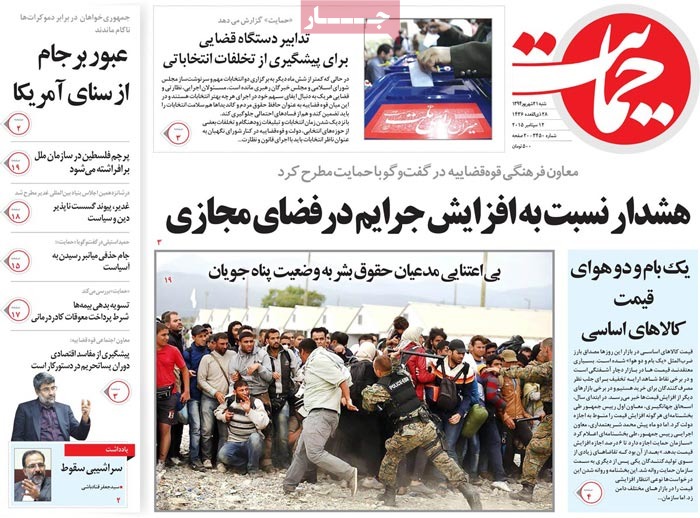
Hemayat: The deputy judiciary chief has warned of a rise in cybercrimes.
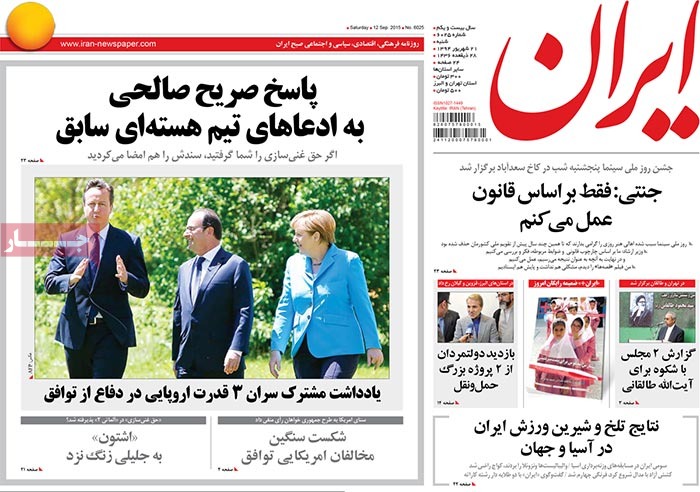
Iran: Salehi offers an explicit response to the claims of the former negotiating team.
“If you secured the right to enrichment, you should have signed the document too,” he said.
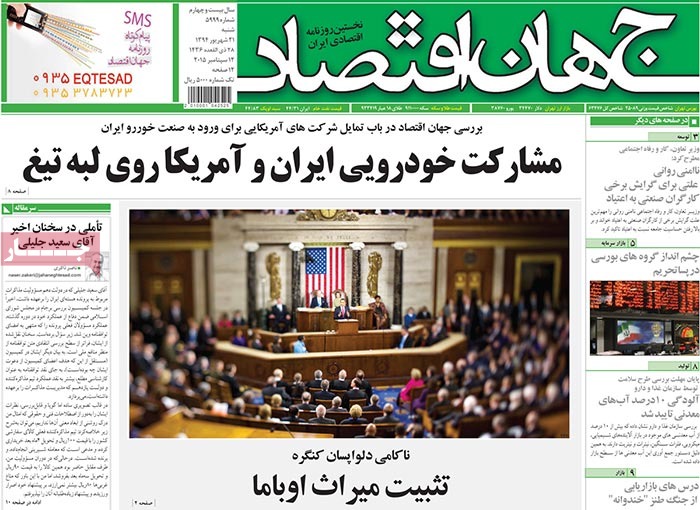
Jahan-e Eghtesad: A report on willingness by US companies to enter Iran’s automotive industry
Iran-US partnership in car-making on the knife-edge
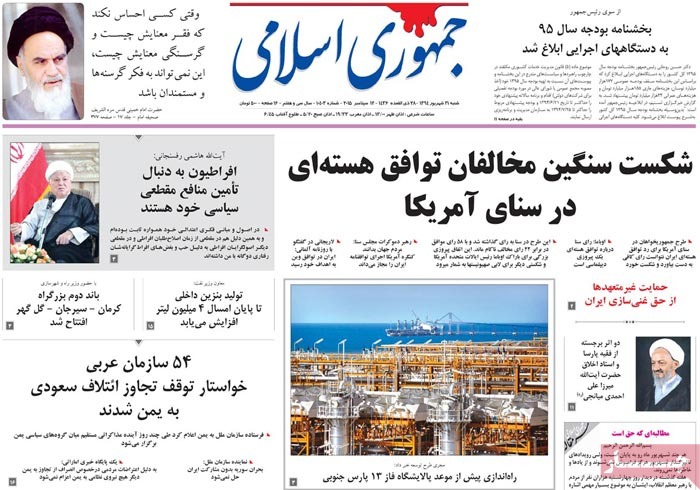
Jomhouri Islami: Local production of gasoline will increase 4 million liters by the end of the year [March 21, 2016].
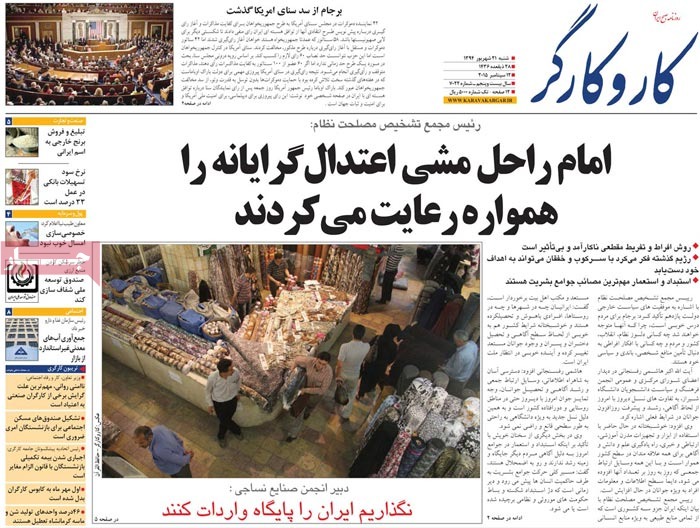
Kar va Kargar: “The late Imam always pursued a moderate approach,” said the chairman of the Expediency Council.
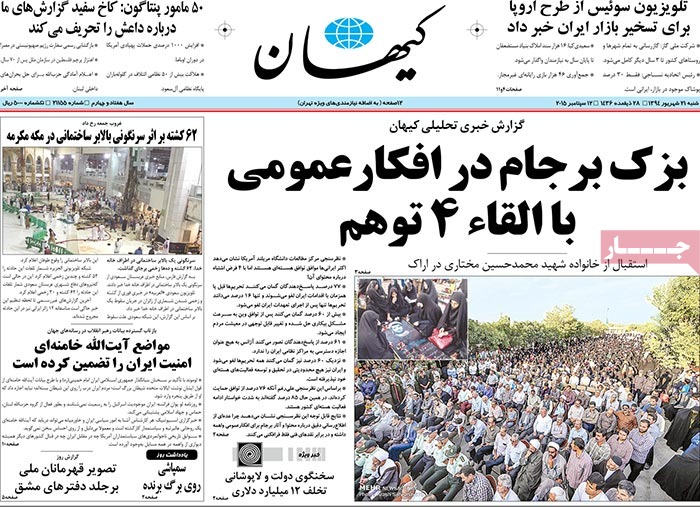
Kayhan: Sprucing up the Joint Comprehensive Plan of Action by instilling four illusions into the minds of the public.
Kayhan: A Swiss television has revealed a European plan to conquer Iran’s market.
Kayhan: Extensive coverage in world media of the Supreme Leader’s remarks
The stance of Ayatollah Khamenei has ensured Iran’s security.
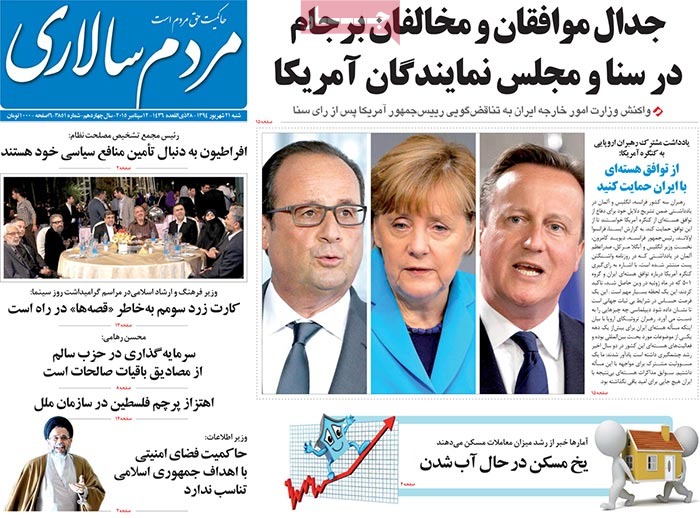
Mardomsalari: The chairman of the Expediency Council has said that hardliners are trying to serve their own political interests.
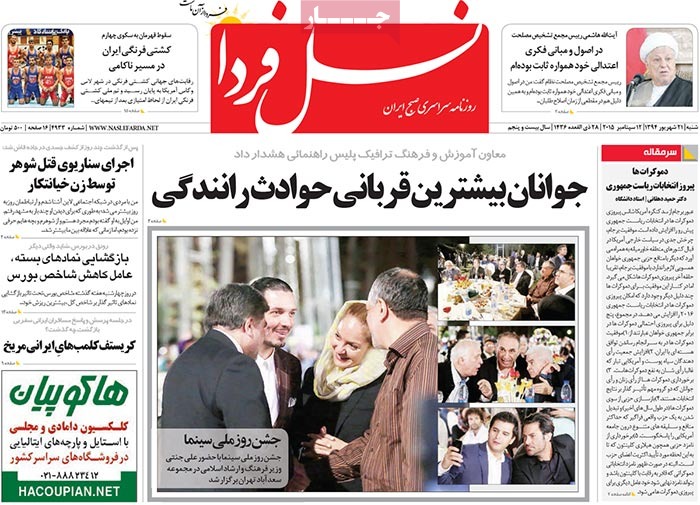
Nasl-e Farda: “The youth account for the greatest number of road accident victims,” said a deputy traffic police chief.
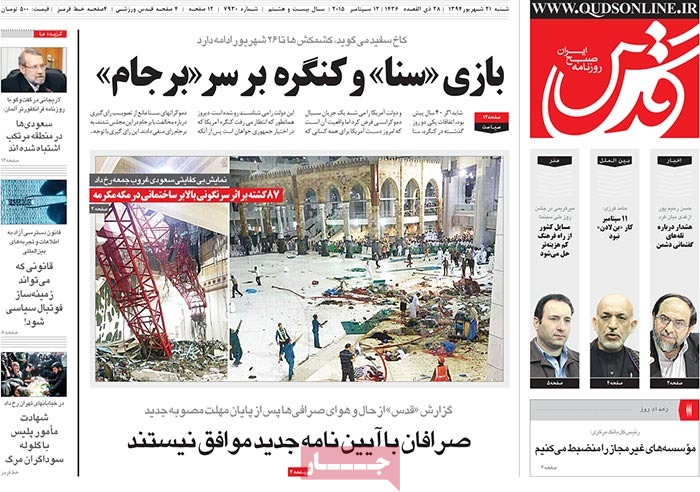
Qods: A police officer was shot to death by drug traffickers in a Tehran street.
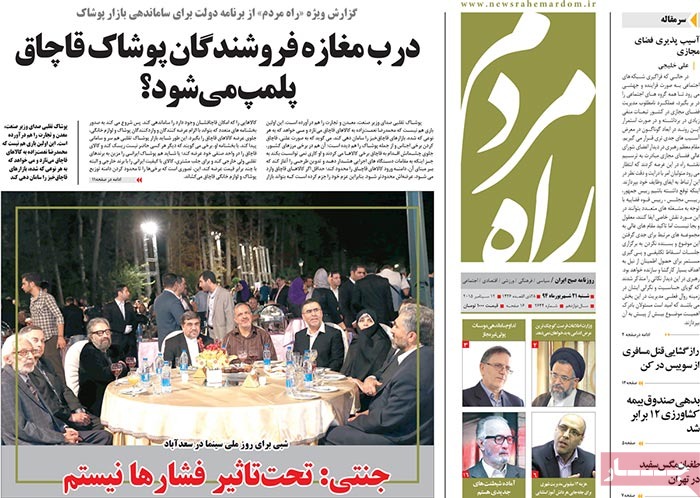
Rah-e Mardom: A night dedicated to Iran’s National Cinema Day in Sadabad Palace
Culture Minister Ali Jannati: I won’t be influenced by pressures.
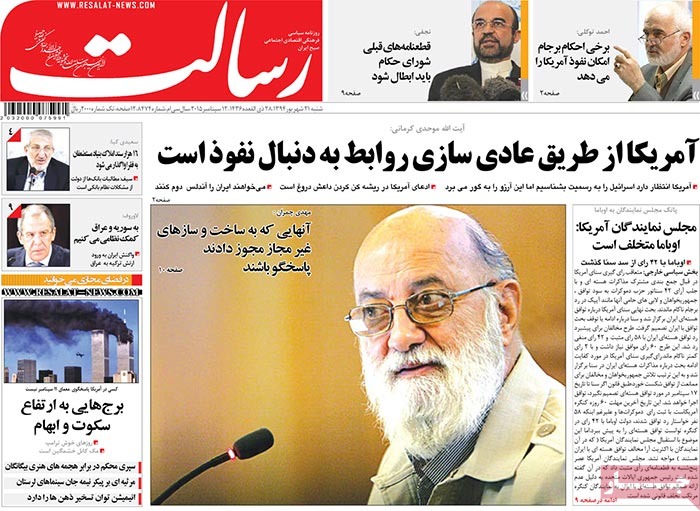
Resalat: “The previous resolutions released by the IAEA’s Governors Board should be nullified,” said Iran’s representative to the UN nuclear agency Reza Najafi.
Resalat: “Those who issue permits for illegal development projects should be held accountable,” said Chairman of Tehran City Council Mehdi Chamran.
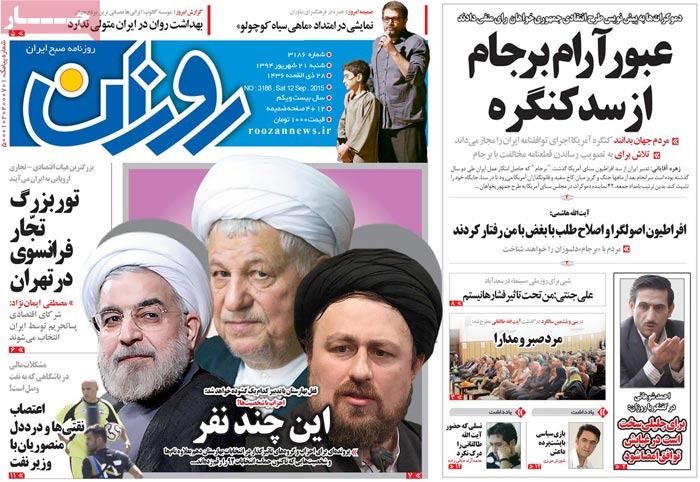
Roozan: “Principlist and reformist hardliners treated me with grudge,” said Ayatollah Akbar Hashemi Rafsanjani.
The Expediency Council chairman also said that the Joint Comprehensive Plan of Action helps people learn about those who care [for the country, revolution and the establishment].
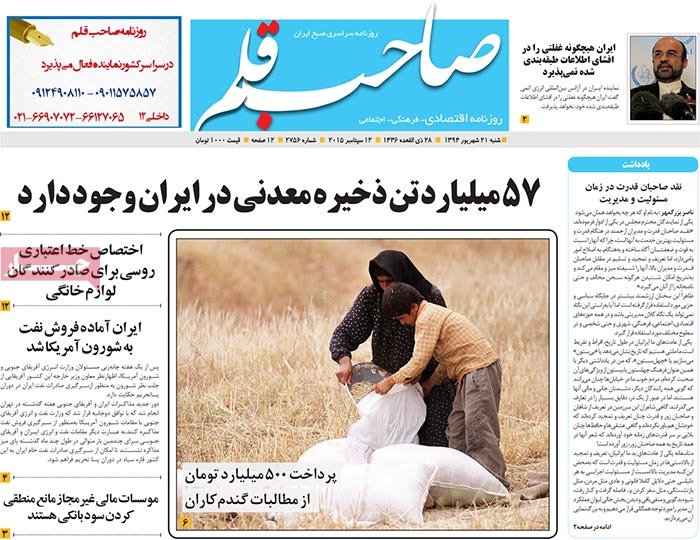
Saheb Ghalam: Iran has 57 billion tons of mineral reserves.
Saheb Ghalam: Iran gets ready to sell oil to Chevron [an American multinational energy corporation].
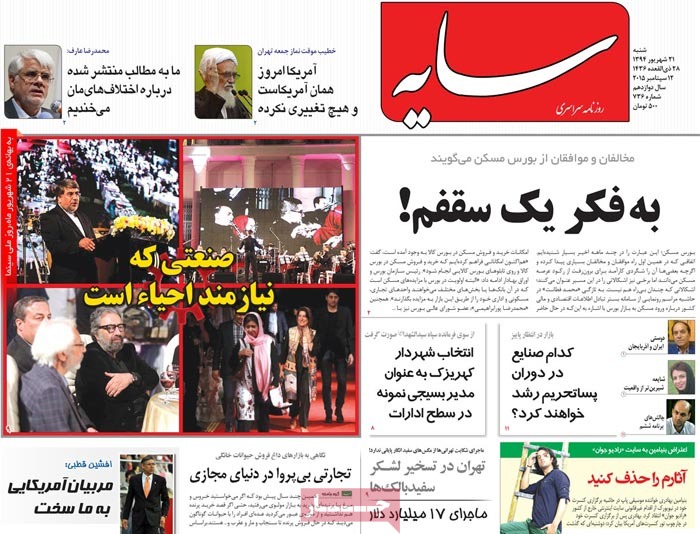
Sayeh: “We laugh off what has been released about our [the reformists’] divisions,” said Mohammad Reza Aref, a reformist.
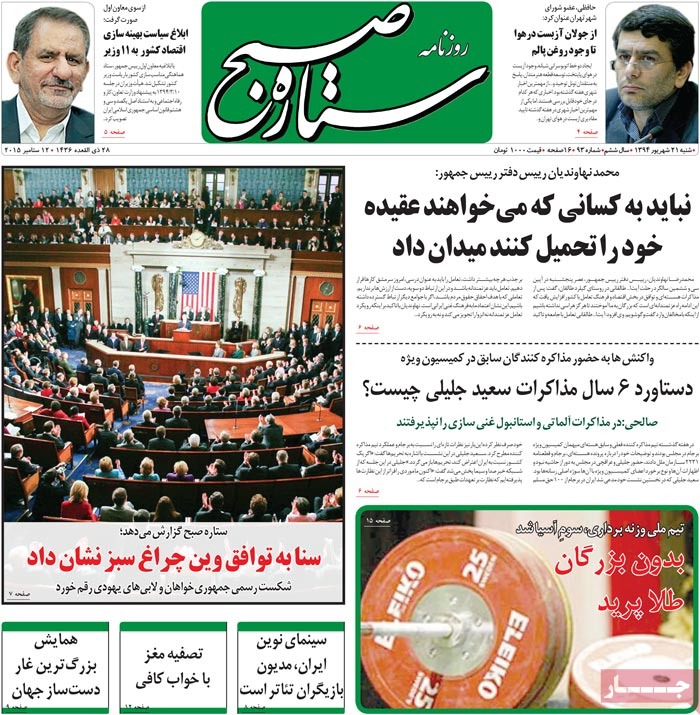
Setareh Sobh: Reactions to the presence of the former nuclear negotiators in parliament’s JCPOA Review Committee
What Saeed Jalili achieved during six years of talks?
Ali Akbar Salehi: [Iran’s] enrichment was not recognized [by P5+1] in Almaty or in Istanbul nuclear talks.
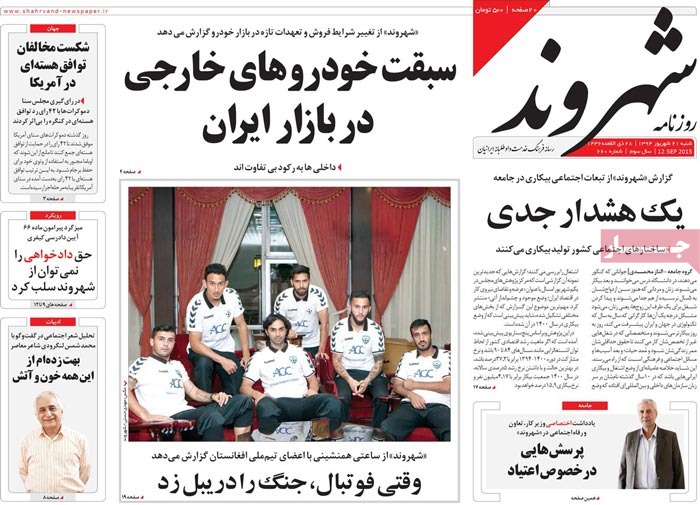
Shahrvand: A stark warning: A report on the social consequences of unemployment in the country
The country’s social structures create joblessness.
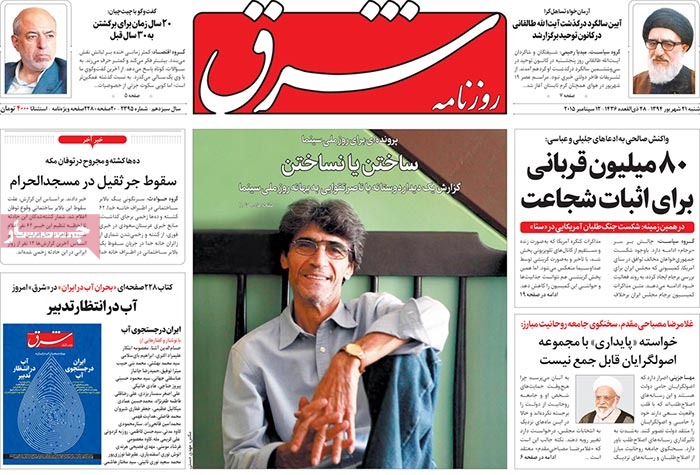
Sharq: Energy Minister Hamid Chitchian has said that the country needs 20 years to return to where it stood 30 years ago.
Siasat-e Rooz: Europe’s arrogance kills refugees.
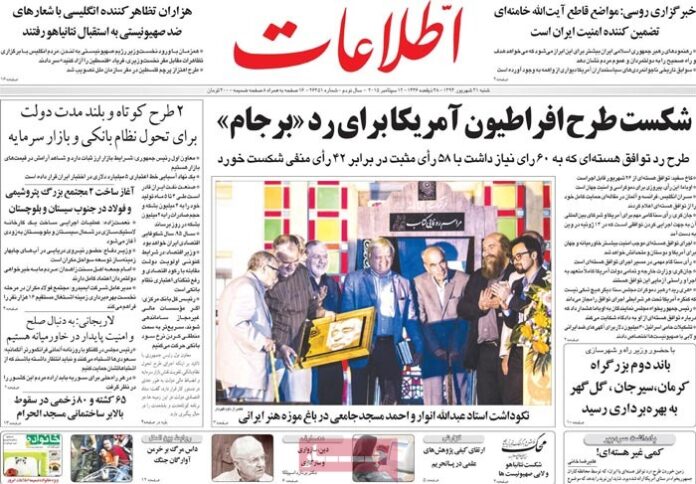
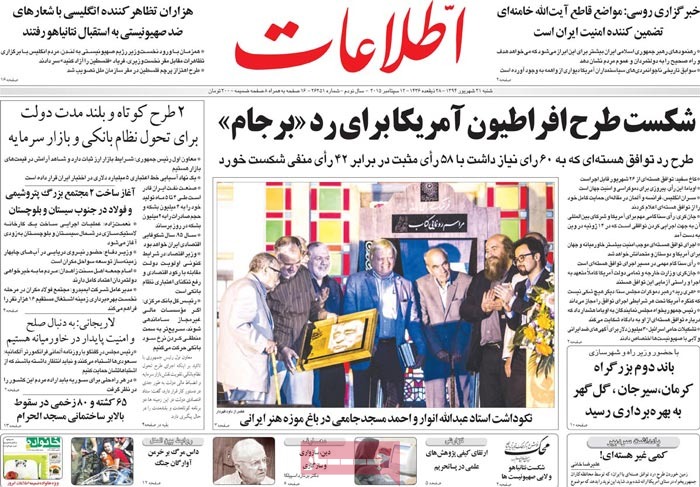
♦ A plan by hardliners in the US to defeat the Joint Comprehensive Plan of Action has failed.
The rejection resolution [in the US Senate] which needed 60 votes to go through, secured no more than 58. Forty-two Senators voted in favor of the Iran nuclear deal.
♦ A second lane of Kerman-Sirjan-Golgohar Highway has become operational at a ceremony attended by the minister of roads and urban development.
♦ A ceremony has been held to praise the services of Master Abdollah Anvar [a prominent decipherer of ancient scrolls] and Ahmad Masjed Jamei [a former culture minister] at the Iranian Art Museum Garden.
♦ A Russian news agency has reported that the unwavering stance of Ayatollah Khamenei serves as a guarantor of Iranian security.
♦ Thousands of Britons shouted anti-Zionist slogans as they welcomed Israeli Prime Minister Benjamin Netanyahu!
It came as the United Nations approved a proposal to raise Palestinian flag at the UN headquarters.
♦ Two short- and long-term plans to transform the banking system and the capital market.
An Asian institution is to provide Iran with a $5 billion credit line.
♦ Construction of two petrochemical and steel complexes has started in Sistan and Baluchestan Province.
The industry minister has said that construction of a tire company in the north of the southeastern border province will soon get underway.
♦ The Iranian parliament speaker has said that Tehran is after peace and sustainable security in the Middle East.
In an interview with a German newspaper, Ali Larijani said that the Saudis are erring and that they should not expect us to support their mistakes.
♦ As many as 65 people were killed and 80 others injured when a crane collapsed in Mecca.
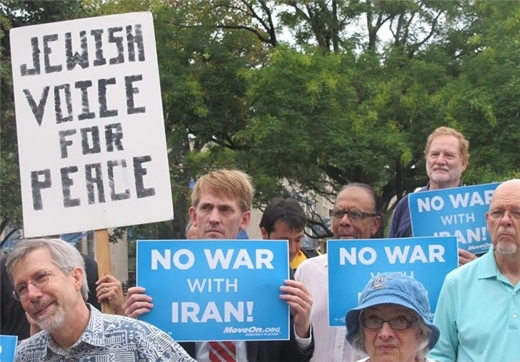
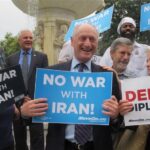
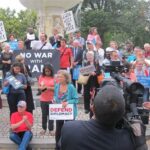
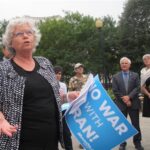
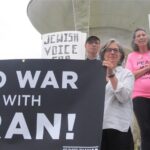
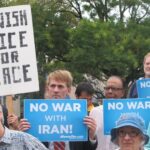
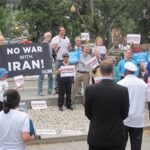
More than a hundred peace activists along with leaders of antiwar groups staged a demonstration in the US capital to hail Democratic senators for blocking a Republican-backed measure to derail a comprehensive nuclear deal between Tehran and world powers.
The demonstrators held a rally on Dupont Circle in Washington, D.C. on Thursday to celebrate what they saw as a victory in averting a new war.
A Republican-backed effort to kill the Iran nuclear agreement was blocked in the US Senate, clearing the way for the deal’s implementation.
Forty Democrats and two independents voted to block a resolution disapproving of the pact in the 100-member chamber, one more than the minimum needed to keep it from advancing.
The Dupont Circle demonstration was one of the 130 gatherings in support of the Senate Democrats who backed the Joint Comprehensive Plan of Action (JCPOA), according to Ben Wikler, the Washington director of MoveOn.org.
The rally also brought together demonstrators from other groups such as Ploughshares, Network Organization, Democracy Partner, Peace Action, Code Pink, and Jewish Voice for Peace (JVP).
[…]
With the 42 Democrats that voted in favor of JCPOA on Thursday, US President Barack Obama achieved perhaps the greatest foreign policy victory of his more than six years in office.
Under a law Obama signed in May, Congress had a 60-day period ending on September 17 to pass a resolution disapproving JCPOA.
If such a resolution were to pass, and survive Obama’s promised veto, it would bar the president from waiving many US sanctions on Tehran, a key component of the nuclear deal.

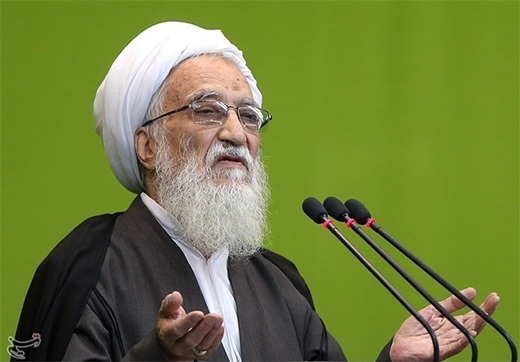
A senior Iranian cleric on Friday categorically dismissed the idea of normalization of ties with the US, warning that Washington seeks to regain a foothold in Iran and carry out its unchanged, hostile policies in disguise.
“The world and the Iranian parliamentarians should know that the US dreams about normalization of ties with Iran as a scheme to infiltrate into the country and implement… the policy of hostility toward Iran and Islam under the guise of smiles,” Ayatollah Mohammad Ali Movahedi Kermani told a huge gathering of worshippers in Tehran.
The cleric underscored that Washington’s dream of compromise with Iran and regime change in the Islamic Republic will never come true.
The US has not changed a bit, Ayatollah Movahedi Kermani noted, saying America is still an enemy of Islam and still supports Islam’s foes and pursues the policy of bullying.
What will remain in place is the divine establishment of the Islamic Republic of Iran, while what is going to be destroyed is the Zionist regime of Israel, the top cleric added, stressing that dissolution of Israel will definitely happen in the future.
Supreme Leader of the Islamic Revolution Ayatollah Seyyed Ali Khamenei said Wednesday US hostility toward the Iranian nation will never end, calling for Iran’s increasing “national might” to fight off US plots.
[…]
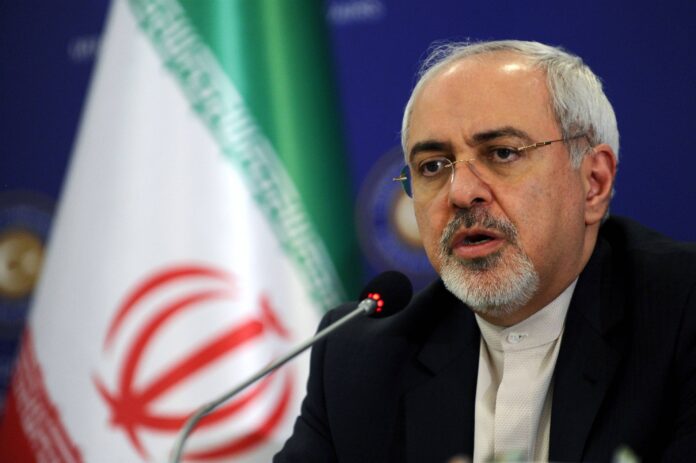
Iran’s Foreign Minister Mohammad Javad Zarif will pay an official visit to China next week to discuss mutual ties and the nuclear agreement of July 14 between Iran and P5+1.
The Iranian foreign minister will visit Beijing on September 15 upon the official invitation of China’s Foreign Minister Wang Yi, Chinese Foreign Ministry Spokesman Hong Lei said at a press conference on Friday.
“We hope to have an exchange of views with the Iranian side on deepening China-Iran relations and enhancing all-round cooperation under the new circumstances,” the Chinese spokesman said.
He added that the two sides are to discuss the implementation of the nuclear agreement between Iran and P5+1, dubbed the Joint Comprehensive Plan of Action (JCPOA).
[…]
Russian president’s planned visit to Iran
Russia’s President Vladimir Putin is scheduled to visit Iran before the end of the current Iranian year, which ends on March 19, 2016.
Iranian Deputy Foreign Minister for Asia and Pacific Affairs Ebrahim Rahimpour said on Friday that talks are currently underway for Putin’s trip. “However, no date has yet been set for the trip,” he said.
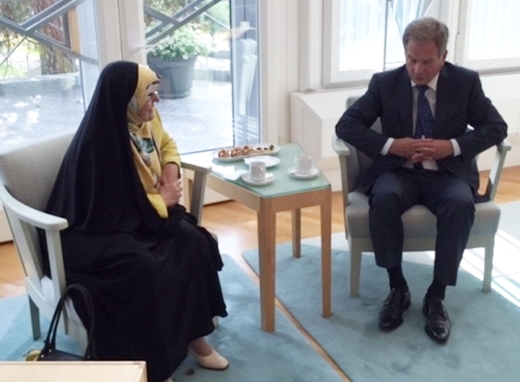
Director of the Environment Protection Organization Masoumeh Ebtekar in a meeting with Finnish President Sauli Niinisto called for the further expansion of bilateral ties with Finland in different areas, especially the environment and climatology.
“The two countries have appropriate potential for the broadenings of ties in industrial, trade, the environment, climatology and tourism areas,” Ebtekar said during the meeting in Helsinki on Thursday.
The Finnish president, for his part, congratulated the Iranian nation on striking a final nuclear agreement with six world powers.
President Niinisto conveyed his warm greetings to his Iranian counterpart Hassan Rouhani, and said, “The negations between Iran and world powers were lengthy and difficult, but the outcome has been positive so far.”
The Finnish president described Finland-Iran relations as good, and said, “We have not had problems so far and we welcome expansion of ties with Iran. And the trade barriers will also be solved with removal of the sanctions.”
“A delegation comprising Finnish Development and Foreign Trade Minister will visit Iran within the next two to three months,” President Niinisto added.
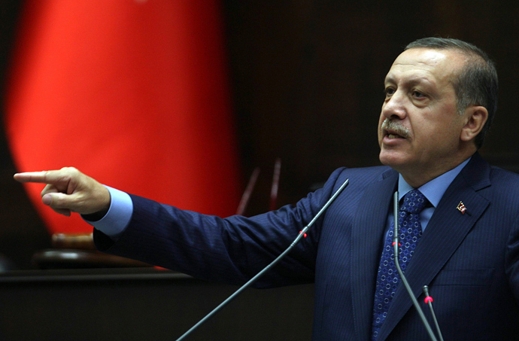
In the final hours of Sunday, the Turkish president – in an interview with CNN – made baseless claims to set the stage for himself and his inner circle to play a blame game [as far as the migrant crisis goes]. Several times during the interview, he said that Iran is responsible for the migrant crisis in Europe. As for the migrants, he mainly meant the Syrian migrants.
The International Shia News Agency (Shafaqna) on September 8 published a report on Turkish President Recep Tayyip Erdogan’s interview and the reaction his groundless claims have drawn in Iran. In one such reaction, Shafaqna quoted Ghanoon newspaper’s Arman Irani as criticizing Ankara for its past policies on the Syrian crisis and on the acts of terror by ISIL. The following is the translation of that report:
Mr. President! As far as the world public opinion can remember, Turkey has served as a gateway for the ISIL terrorists to cross into Iraq and Syria over the past few years. Whenever Western officials announce that their nationals have joined the terror ISIL group, the story ends up in revelations that airports in Istanbul or Ankara have been the place where the passports of those who join ISIL have been given the final stamp and that they get to Iraq or Syria via the safe routes Turkey offers them.
In the capacity of prime minister and then president, you and your government have always helped ISIL. What has happened now that you allow yourself to hold Iran accountable for the Syrian refugees? Isn’t it because of the fact that the Islamic Republic of Iran has over the past years supported the legitimate elected president of the Syrian nation? Has Iran rolled out the red carpet for the terrorists to help them enter Syrian and Iraqi soil?
Take a look at the security problem in the country you are leading. Hardly can you find a day in which news of a terrorist attack in Turkey is not reflected in the world media. You have ensured the security of the terrorists at the expense of tourists’ security, and now Turkey’s currency – lira – is declining by the day.
As you are trying in your own presidential complex – [the Ak Saray or] the White Palace – to do what it takes to change the constitution only to bolster the presidential powers, the Turkish people are denied calm on fears of terrorist attacks, a bus explosion or the onslaught by terrorists. Over the years we have repeatedly heard from media outlets that you are dreaming of reviving the Ottoman Empire, but you know better than anybody else that the Ottoman Empire has become history and you cannot inject fresh life into the expired Ottoman Empire through CPR [Cardiopulmonary resuscitation].
How did you treat the winners of the recent parliamentary elections? Why don’t you stand to see your opponents have seats in parliament? Are you afraid of the popularity of Salahaddin Demirtas [a Kurdish leader in Turkey]? What have the Kurds done wrong in Turkey? Isn’t it true that they should be involved in the democratic process in Turkey thanks to their identity and the ID Cards they bear?
Read your interview with CNN once more. “[…] I talked to them (leaders in Iran and Russia) about this. […] They are giving him (Assad) arms support, financial support, allowing this administration to continue, and they are trying to get rid of the opposition there .
“[…] Is not Daesh (ISIL) in cooperation with the [Syrian] regime right now? ISIL’s biggest support right now is the [Assad] regime, and those who make the effort to keep this regime standing are the ones who carry this responsibility.”
Mr. Erdogan! Is Bashar Assad a supporter of ISIL? Do you think the legitimate Syrian president is supporting a group which has threatened the security of the territory under his rule? One more time I ask you: who is responsible for importing ISIL terrorists to Syria? Do they [the terrorists] come from the heavens or they unworriedly cross the borders of the neighboring country [Read Turkey] into Syria?
Mr. Erdogan! Where is your old loyal friend now? I mean former President Mr. [Abdullah] Gul. What happened that you two were divided? Can you tell CNN about the reasons you and Abudllah Gul parted ways?
[He was] a modest man who preferred to keep silent than stand up to the authoritarianism of his long-standing friend. You have almost turned Turkey into the prison of reporters. A large number of reporters who oppose you are now behind bars. What kind of democracy is it that no one is allowed to criticize your performance?
Over the past few years, you have barred many political parties and groups in Turkey from doing peaceful activities. This comes as you are of Georgian origin. Does Kemal Kilicdaroglu, the leader of your government’s opponents, have a stronger Turkish background or you? What about Demirtas? Why don’t you let them carry out their political activities more easily? You have also imposed total limitations on Fethullah Gulen. Abdullah Ocalan too has been imprisoned.
At the end, I echo remarks by Mr. Kilicdaroglu, the leader of the Republican People’s Party. He said that footage has been released which features boxes full of bombs being transferred at the border. “I watched [it]. It is not possible to hide it. It was not humanitarian aid loaded in the trucks.” He added that the Erdogan government sends weapons to the Syrian rebels.
[In May, the Turkish media released video footage showing arms and ammunition in Syria-bound trucks belonging to the National Intelligence Organization (MIT) which were stopped by gendarmes and police last year.]
Now [you tell me] who is responsible for the displacement of the Syrian people?

“Boko Haram doesn’t exist and it can merely be seen in the media and we just see some aimless attacks and blasts against people in the markets, mosques, churches and streets,” Zakzaky told FNA on Wednesday.
Dismissing the Nigerian government’s claims that Boko Haram seeks to overthrow the regime, he asked, “Then what could justify their killing of ordinary people and not the statesmen.”
Zakzaky challenged the existence of Boko Haram, and said, “If there is any such group which has carried out these (terrorist) operations, then where is it? They are all affiliated to the government and no one has seen them.”
Noting that no journalist has ever seen a member of Boko Haram, he stressed that they don’t exist and it is merely the Nigerian police and law enforcement officials who blame Boko Haram for the terrorist acts.
Boko Haram militants, who have recently pledged allegiance to ISIL Takfiris, have killed about 15,000 people since they launched their militancy in 2009. Some 1.5 million people have also been displaced as a result of the violence.
Soldiers from Nigeria, Chad, Cameroon and Niger have been battling Boko Haram terrorists in recent months.
Since his inauguration in May, Nigeria’s President Muhammadu Buhari Buhari moved Nigeria’s defense command center to Maiduguri, the birthplace of the terrorist group, and is setting up the headquarters for a multi-national joint taskforce in Chad’s capital N’Djamena.
He also sacked his army, navy, air force and defense chiefs in July in a bid to launch a major military assault on Boko Haram terrorists.
The outgoing officials were Chief of Defence Staff, Air Marshall Alex Badeh; the Chief of Army Staff, Major General Kenneth Minimah; the Chief of Naval Staff, Rear Admiral Usman Jibrin and the Chief of Air Staff, Air Vice Marshall Adesola Amosu.
Buhari also lashed out at the United States for refusing to provide his soldiers with weapons in their fight against Boko Haram militants.
He said that Washington “aided and abetted” the Takfiri militants in his country by refusing to arm the Nigerian forces over human rights concerns.
© All Content by IFP News ( Iran Front Page ) is licensed under a Creative Commons Attribution 4.0 International License.