Monday, December 22, 2025
Home Blog Page 4760

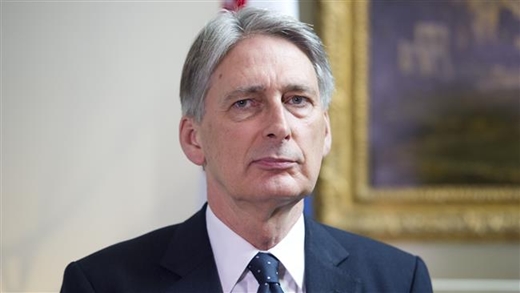
Britain’s Hammond arrives in Iran to reopen embassy

Hammond

British Foreign Secretary Philip Hammond has arrived in the Iranian capital, Tehran, for a landmark two-day visit to reopen the UK embassy.

Hammond arrived in Tehran on Sunday at the head of a high-ranking politico-economic delegation to attend the reopening ceremony of the British embassy in the first visit to Iran by a British foreign secretary since 2003.

During his stay in Tehran, the British foreign secretary will also hold talks with Iranian President Hassan Rouhani, Foreign Minister Mohammad Javad Zarif, Minister of Petroleum Bijan Zanganeh, Parliament Speaker Ali Larijani and Governor of the Central Bank of Iran Valiollah Seif.

The Iranian embassy in London will be also reopened at the same time in the presence of Iran’s Deputy Foreign Minister Mehdi Danesh-Yazdi.

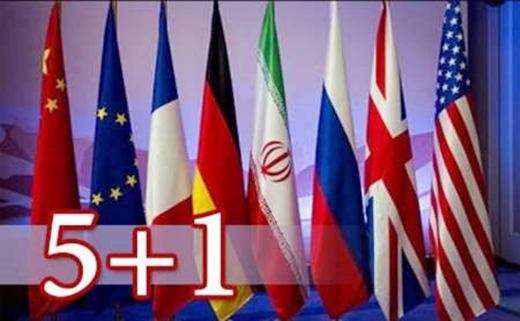
The reopening of the British embassy is seen as the biggest shift in the West’s policy toward Tehran after Iran and P5+1 reached a nuclear agreement in Vienna in July.

Iran and the six countries – the United States, Britain, France, Russia, China and Germany — succeeded in finalizing the text of the nuclear agreement called the Joint Comprehensive Plan of Action (JCPOA) on July 14.

Under the JCPOA, limits will be put on Iran’s nuclear activities in exchange for, among other things, the removal of all economic and financial bans, against the Islamic Republic.

Britain shut down its embassy in Tehran in November 2011 and withdrew its diplomatic staff after hundreds of Iranian students staged a protest outside the British embassy in Tehran against the expansion of UK sanctions on Iran, pulling down the UK flag and demanding the expulsion of the British ambassador.

In late November 2011, Iran’s parliament approved a bill to downgrade the diplomatic ties between Tehran and London to the level of chargé d’ affaires, and limit all economic and cultural collaborations to the minimum level.

Nearly two years after their diplomatic ties were severed, Iran and Britain agreed in October 2013 to appoint non-resident chargés d’ affaires as a first step toward reestablishment of their ties.
This would have been a bad deal if Iran had sought an A-bomb

Rouhani

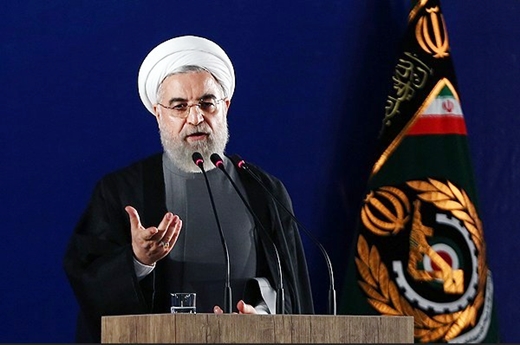
President Rouhani has said that the whole world, excluding a usurping regime [a reference to Israel] and a group of political hawks in another country [the US], are happy with the nuclear deal Iran and P5+1 clinched on July 14.

The president made the comment in a ceremony in Tehran on Saturday to mark National Defense Industry Day. Tasnim News Agency on August 22 covered the president’s remarks at the ceremony and the following is the translation of parts of what he said:

A weak country which cannot defend itself against its rivals cannot claim to be seeking peace. Such a country should always brace for being occupied and see its national interests jeopardized.

During the talks, Iranian diplomats were sensitive about the country’s defense industries. People will learn about the details of the talks when their documents are made public. The only thing that is included in the deal is that Iran does not build a missile which can carry a nuclear warhead. Iran has never been after that.
Today the country’s conditions are better than one or two years ago, because the nation has managed to build on its political capabilities to reach an agreement with which all world nations are happy, except a warmongering regime and a group of hawks in another country.

In one sense, if a country is after weapons of mass destruction, this agreement [the Iran nuclear deal] would be a bad deal. If Iran had sought to develop an atomic bomb, the Vienna accord would not have been a good deal. If a country is not seeking to kill the innocent people and – in line with logic, wisdom, its religious principles and its leader’s fatwa – is after peaceful technology, not WMDs, the Vienna accord would be a good deal with no shortcomings.

When a dependent country gains power, it turns into a regional gendarme. A country which obeys the orders of a superpower, its power fails to bring about peace.

At a time when the region is insecure and strangers are in Iran’s surroundings, we cannot sit idly by and not care [about the country’s fate]. At a time when big powers have launched a proxy war through terrorists who create tensions in the region in the name of Islam and Jihad, we cannot remain ignorant of the country’s defensive power. We have to be ready, equipped and powerful.

It took the world centuries to change the word ‘war’ into: ‘defense’. But Islam replaced war with defense [from day one]. All Jihads in Islam had defensive purposes: defense of lands or defense of faith and freedom.

In Iran too, we had a ministry of war. It changed into the ministry of defense when the late Mossadegh was in power. Those behind the [1953] coup [which overthrew the Mossadegh government] could not stand a name which was chosen by a legitimate government and re-changed it into the ministry of war. After the victory of the Islamic Revolution, this ministry was once again renamed as the Ministry of Defense and Armed Forces Logistics.

This [ministry of war or defense] is not just a name; it has a rich content. Iran’s ideal is defense, not war. Iran’s religion and establishment is democracy-based, not war-based. We are not after war and aggression. There are countries in the world whose military doctrines prescribe war and aggression. […]

Iran’s defense industries are geared for defending our territories, establishment and interests. We have not been and won’t be after aggression. […] Once we were attacked by Iraq, but when this country plunged into troubles, Iran did not take action against it. […]

After the collapse of the former Soviet Union, Iran went to the help of its northern neighbors instead of taking action against those [newly independent] republics. This shows Iran favors culture, art and civilization.

A look at Iranian newspaper front pages on August 23

Iranian Newspapers Headlines

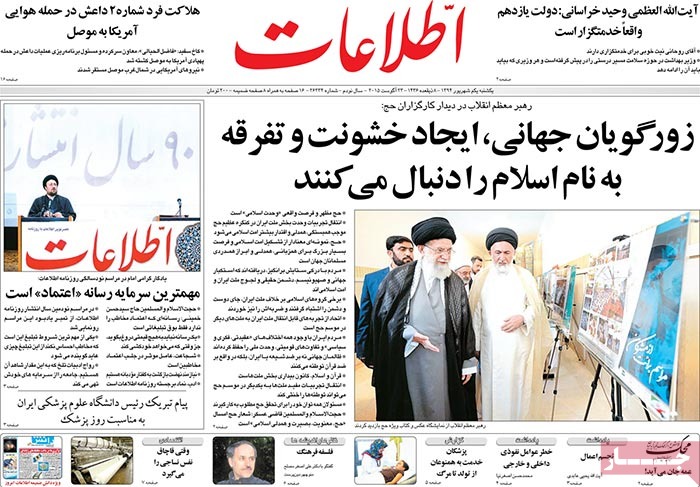
The call by the Supreme Leader for Muslim unity at a meeting with Hajj officials and the comments of the president on Iran’s military capabilities dominated the front pages of Iranian newspapers on Sunday.


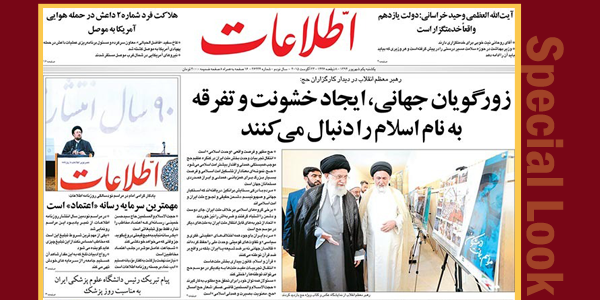
Ettela’at: “Global bullies are pursuing violence and division in the name of Islam,” said the Supreme Leader at a meeting with Hajj officials.

Ayatollah Khamenei further said that Hajj offers a genuine opportunity for the manifestation of Islamic unity.


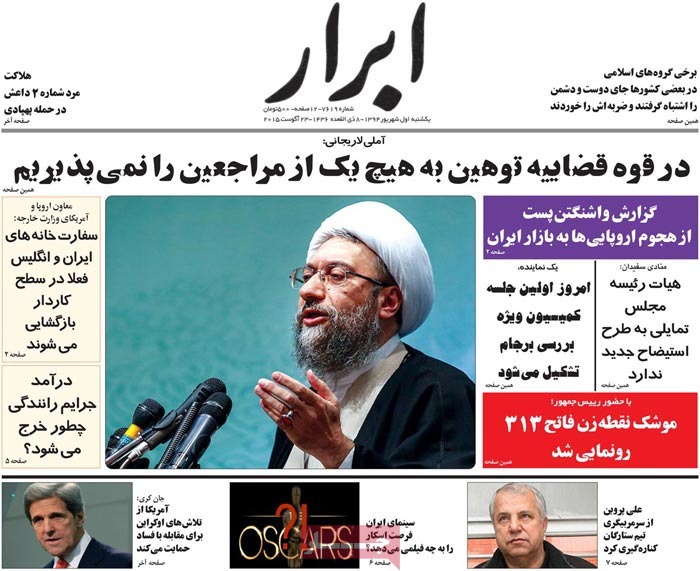
Abrar: The first session of the JCPOA Review Committee will be held on Sunday.


A look at Iranian newspaper front pages on August 23


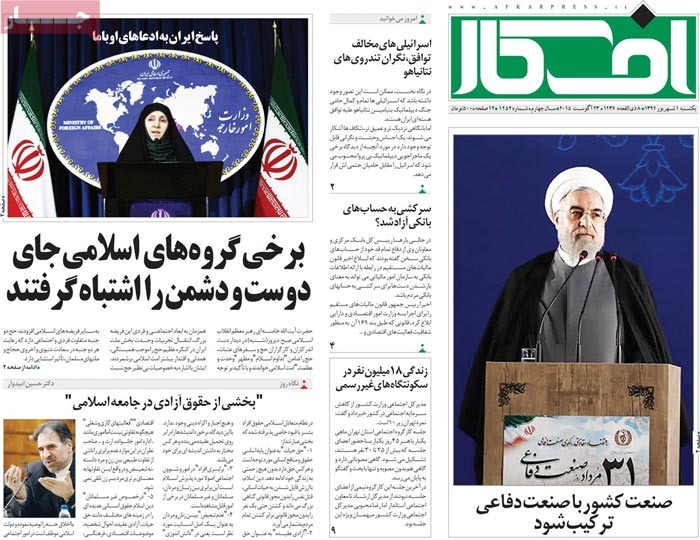
Afkar: “Some Islamic groups are mistaking friends for enemies and vice versa,” the Supreme Leader said.


A look at Iranian newspaper front pages on August 23


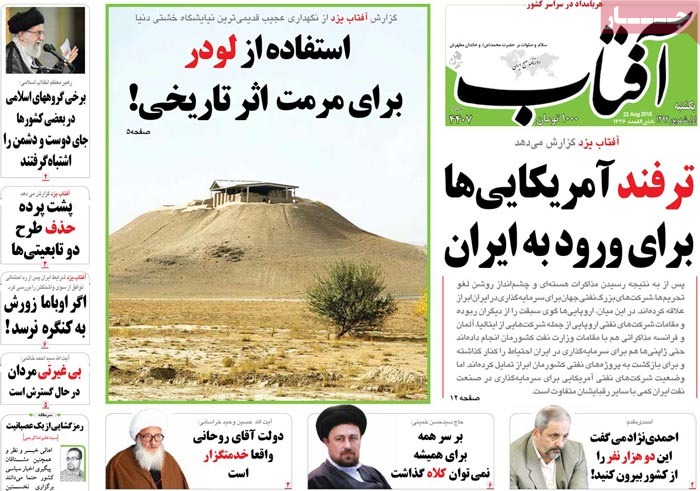
Aftab-e Yazd: “Force these 2,000 or so [elites] from the country and the problems of the establishment will be resolved,” Brigadier General Ahmadi Moghaddam, the former police chief, has quoted former President Mahmoud Ahmadinejad saying.


A look at Iranian newspaper front pages on August 23


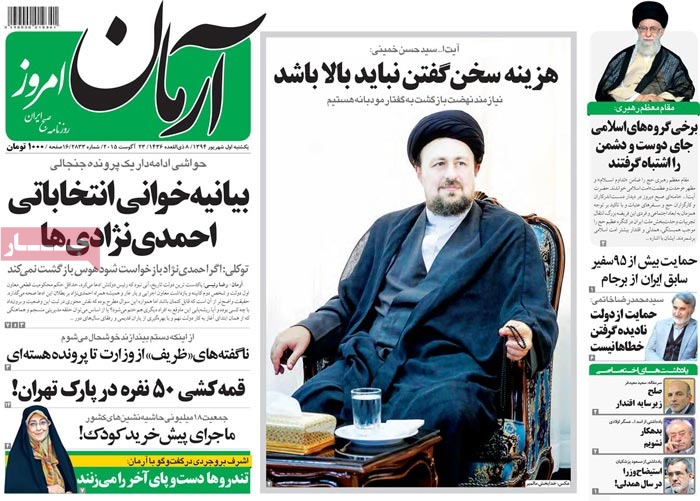
Arman-e Emrooz: Supporters of Ahmadinejad release electoral statements

Tehran MP Ahmad Tavakoli has said that if Ahmadinejad is held accountable, he wouldn’t entertain the idea of returning to power.


A look at Iranian newspaper front pages on August 23


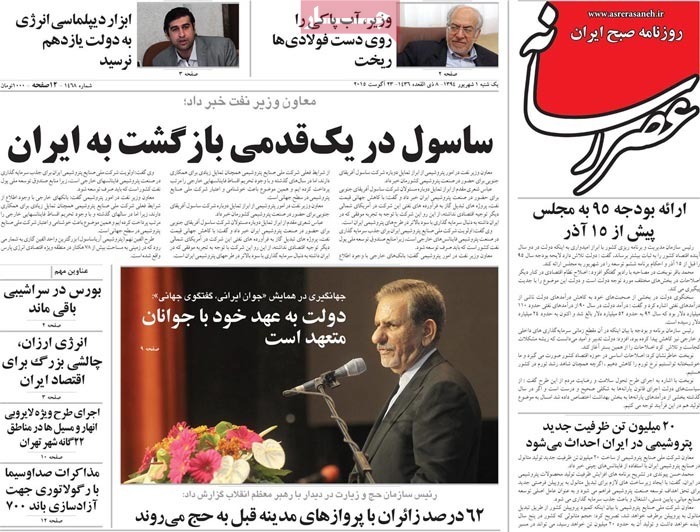
Asr-e Rasaneh: “Government honors the commitments it has made to the youth,” said the first vice-president.


A look at Iranian newspaper front pages on August 23


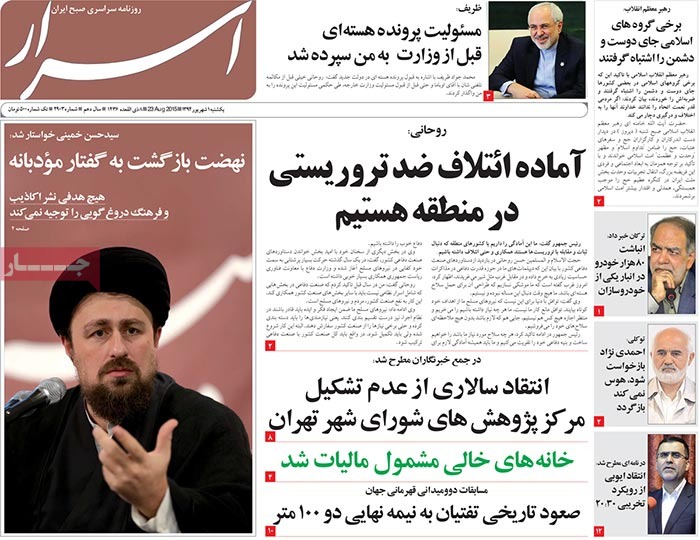
Asrar: “We are ready to be part of an anti-terror coalition in the region,” President Rouhani said.

Asrar: “Some 80,000 cars are gathering dust in the warehouses of a local carmaker,” said the minister of industries.
 

A look at Iranian newspaper front pages on August 23


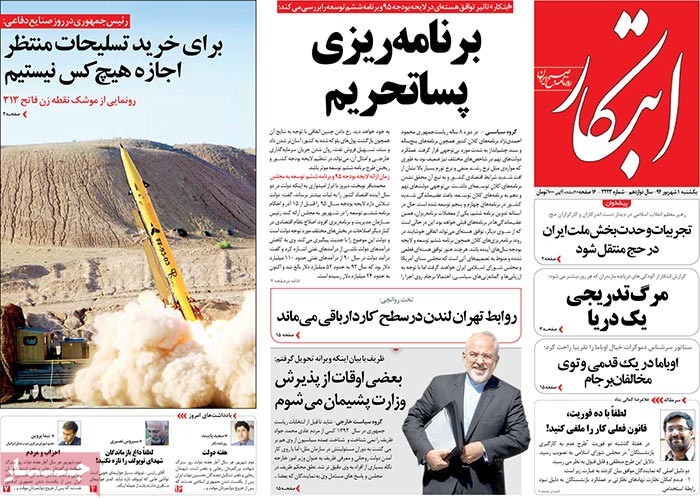
Ebtekar: “Sometimes I regret my decision to accept to take over as foreign minister,” said Mohammad Javad Zarif.


A look at Iranian newspaper front pages on August 23


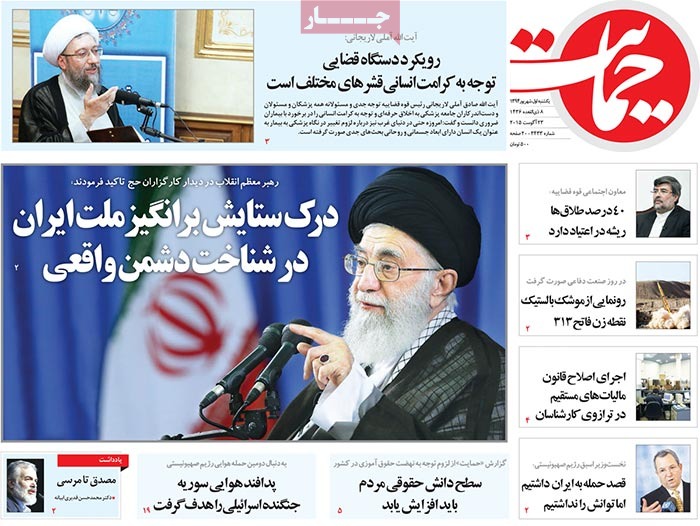
Hemayat: “Drug addiction is to blame for some 40 percent of all divorces,” said a deputy to the judiciary chief.


A look at Iranian newspaper front pages on August 23


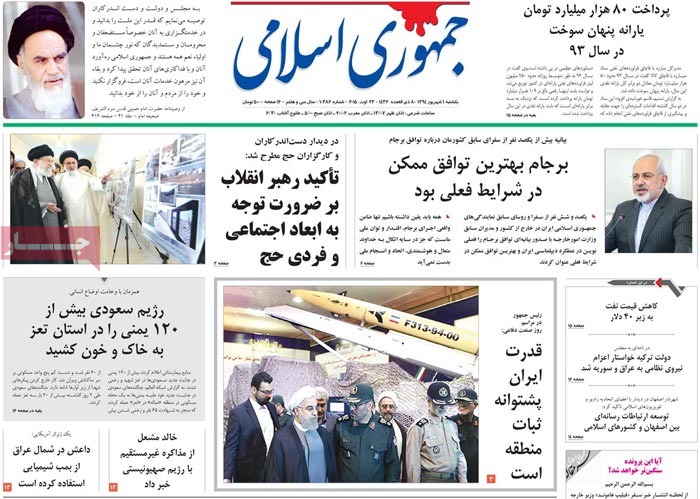
Jomhouri Islami: “Iran’s might serves as a guarantor of regional stability,” said President Rouhani.

Jomhouri Islami: Hamas’ political leader has talked of indirect talks with the Zionist regime.


A look at Iranian newspaper front pages on August 23


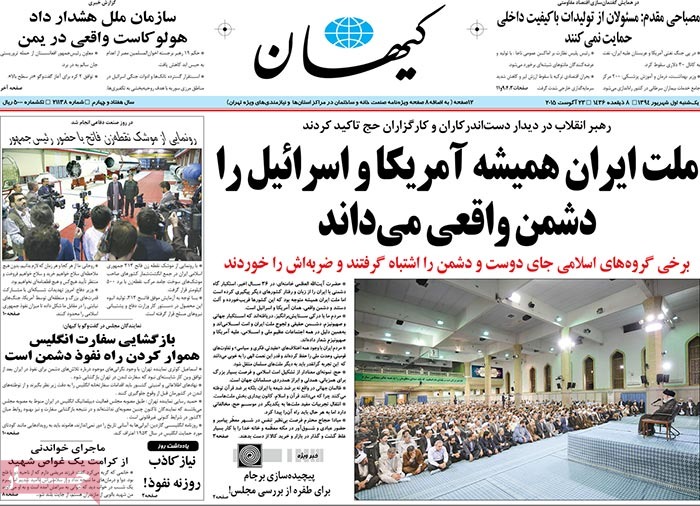
Kayhan: Fateh precision-guided missile has been unveiled at a ceremony attended by President Rouhani.


A look at Iranian newspaper front pages on August 23


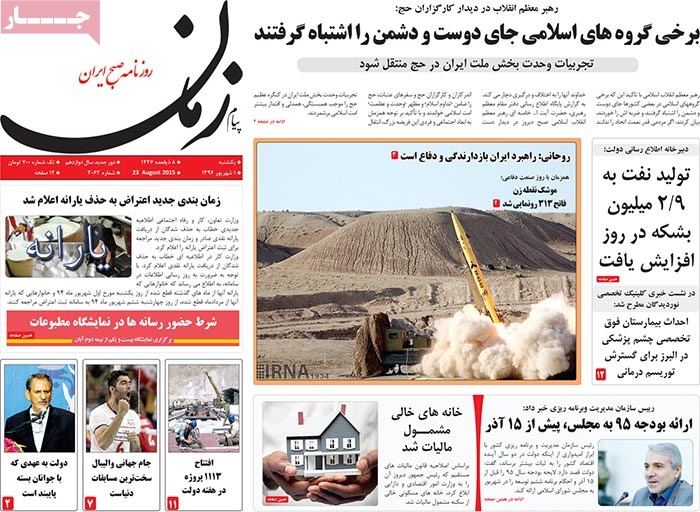
Payam-e Zaman: More than 1,100 projects will be inaugurated across the nation during Government Week.


A look at Iranian newspaper front pages on August 23


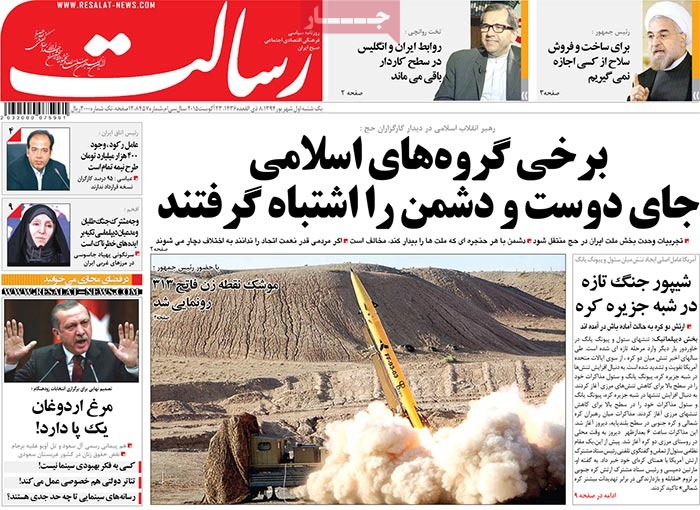
Resalat: “We don’t need anyone’s permission to buy and sell arms,” President Rouhani said.


A look at Iranian newspaper front pages on August 23


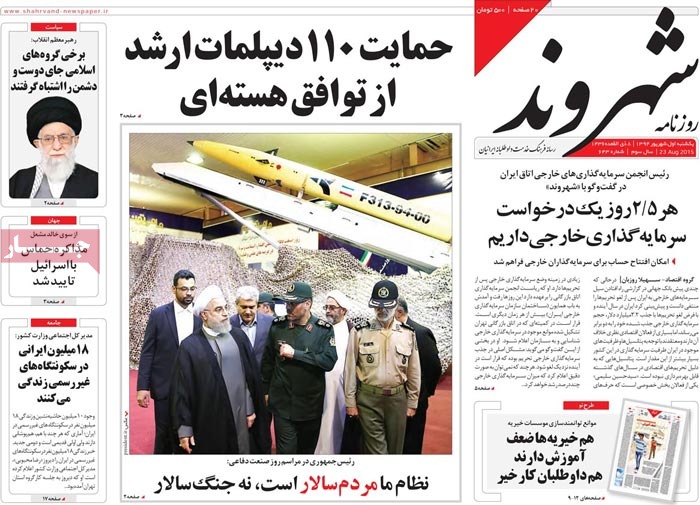
Shahrvand: “Iran receives one foreign investment application every 60 hours,” said the head of the Foreign Investment Unit of the Chamber of Commerce.


A look at Iranian newspaper front pages on August 23


Highlights of Ettela’at newspaper on August 23

Ettelaat Highlights-post

 “Global bullies are pursuing violence and division in the name of Islam,” said the Supreme Leader at a meeting with Hajj officials.
Ayatollah Khamenei further said that Hajj offers a genuine opportunity for the manifestation of Islamic unity.
 Grand Ayatollah Vahid Khorasani has said that the 11th government is genuinely serving the interests of the nation.

The Shiite source of emulation further said the health minister has chosen the right path on the healthcare front and anyone who replaces him should walk down the same path.

 The second in command of IS terrorist organization has been killed in a US airstrike on Mosul.

It came as American forces took position to the northwest of the Iraqi city which is under IS control.

 “Trust is the most important asset of the media,” said the grandson of the late Imam Khomeini.

Seyyed Hassan Khomeini said media outlets that do not have the trust of the public are simply a propaganda tool.

 The chairman of Iran University of Medical Sciences has issued a message of congratulations to mark Doctor’s Day.


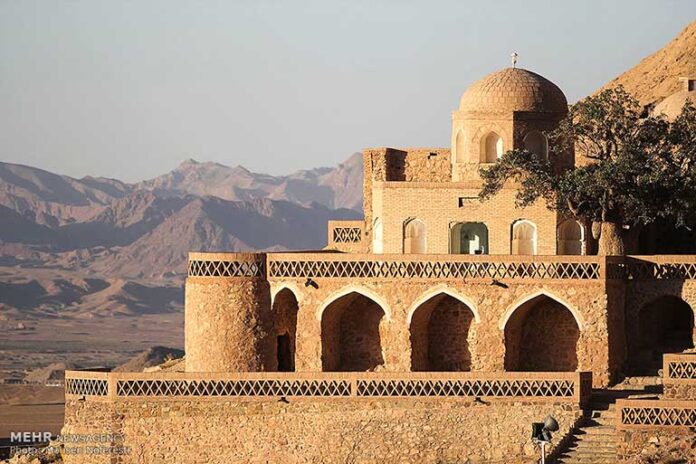
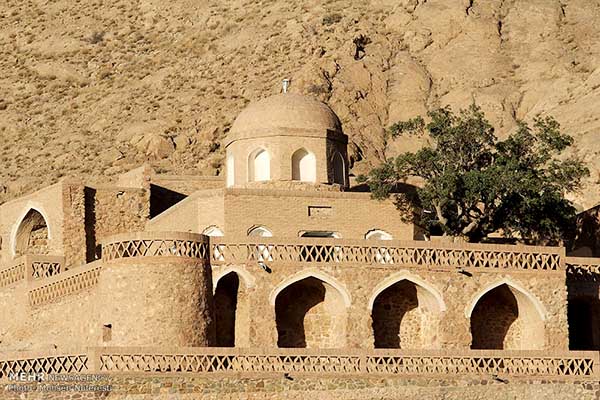
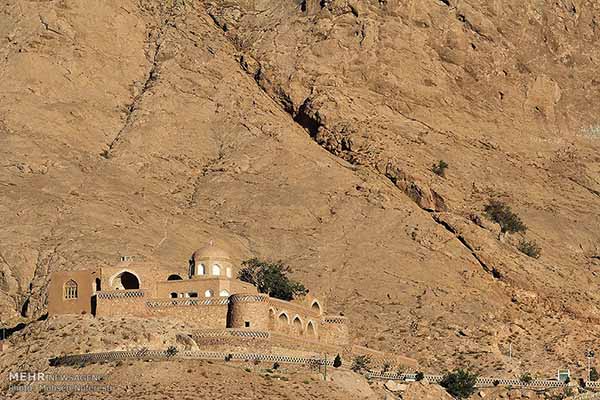
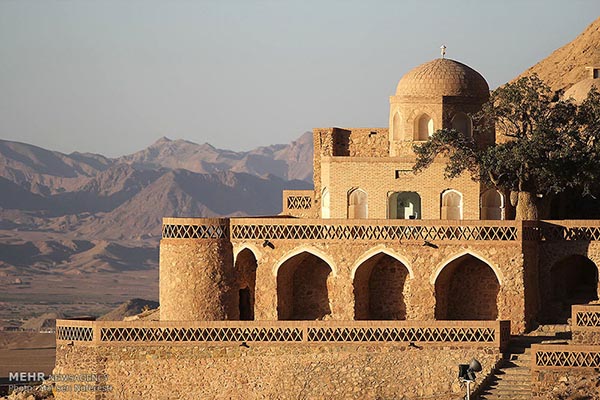
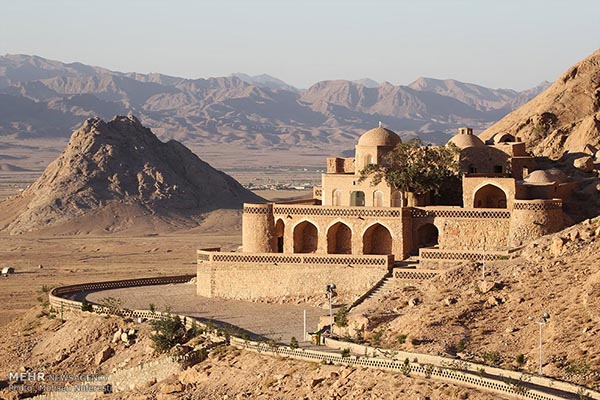
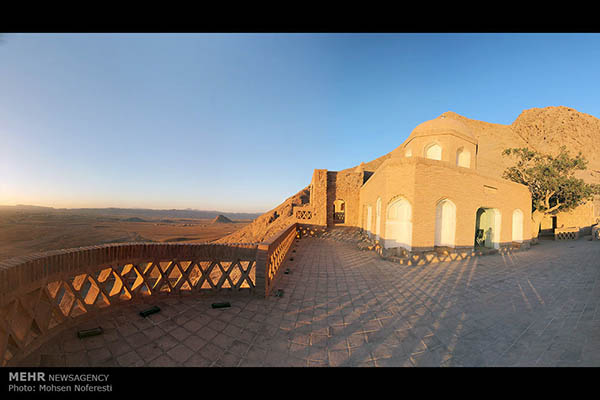
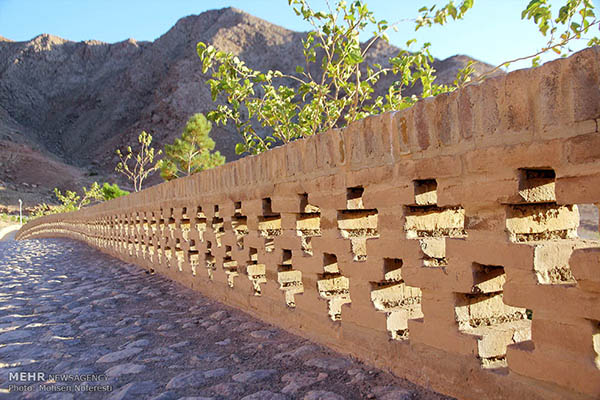
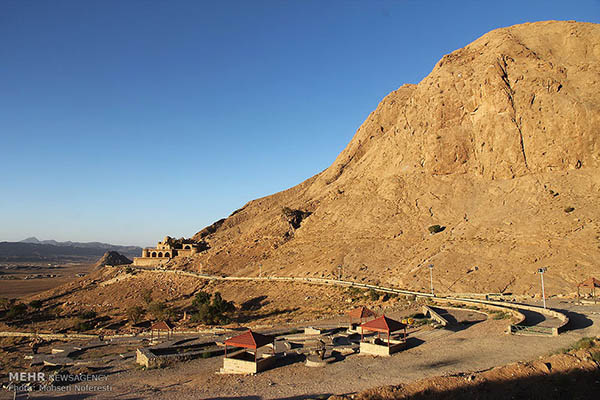
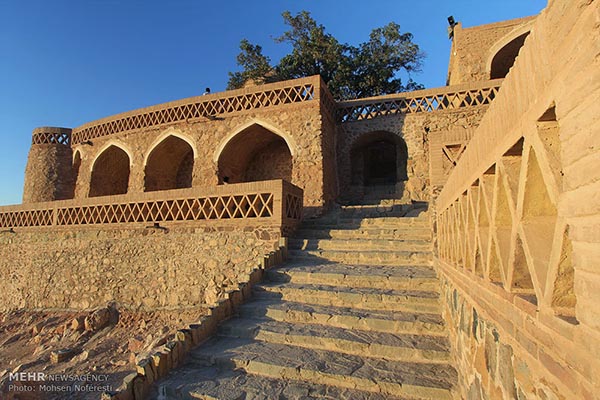
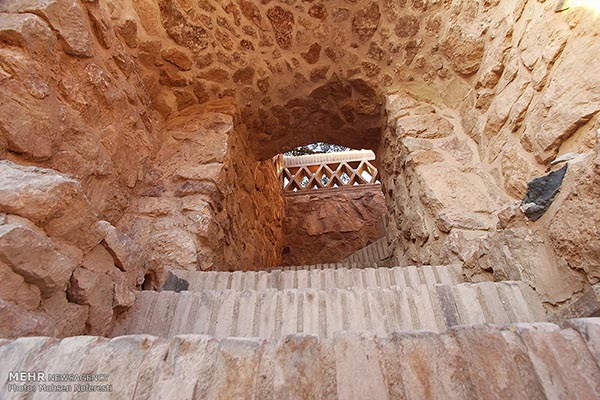
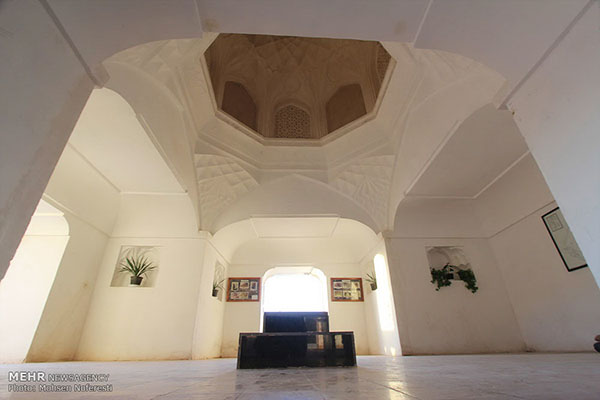
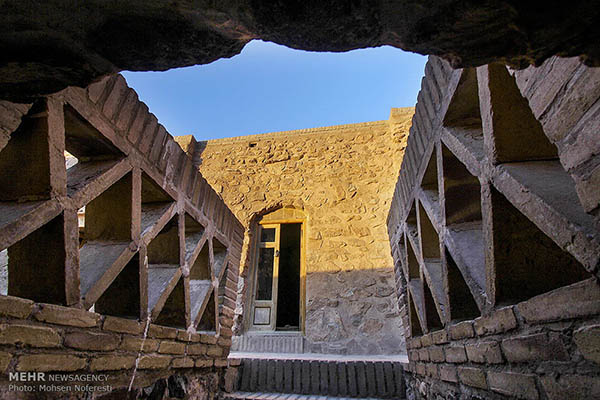
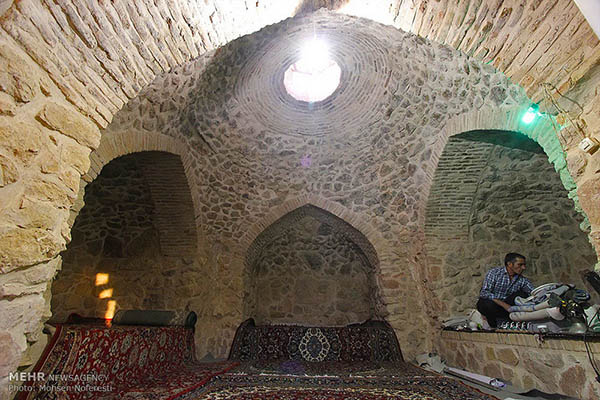
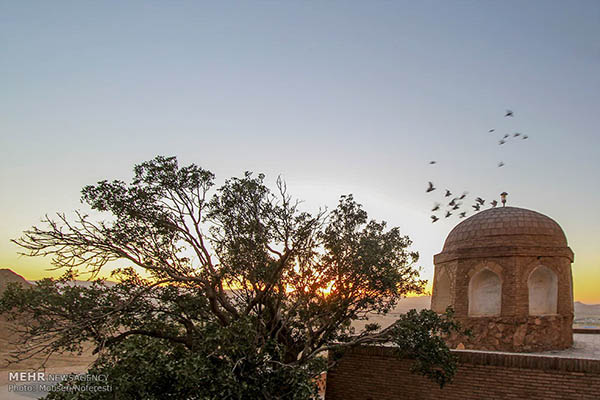
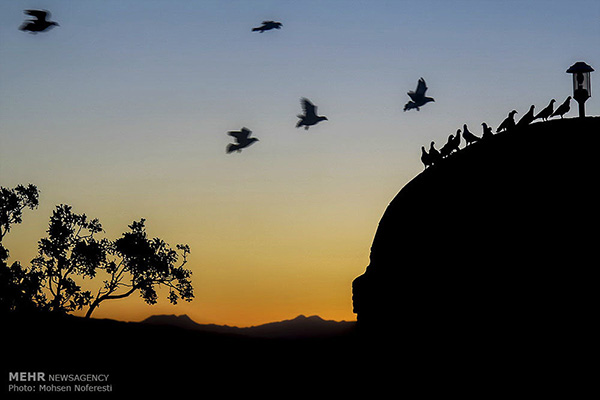
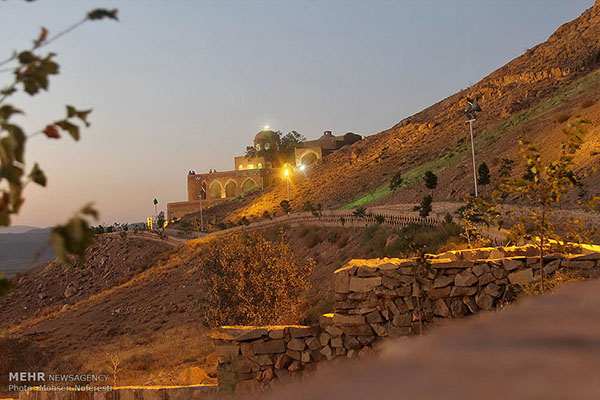
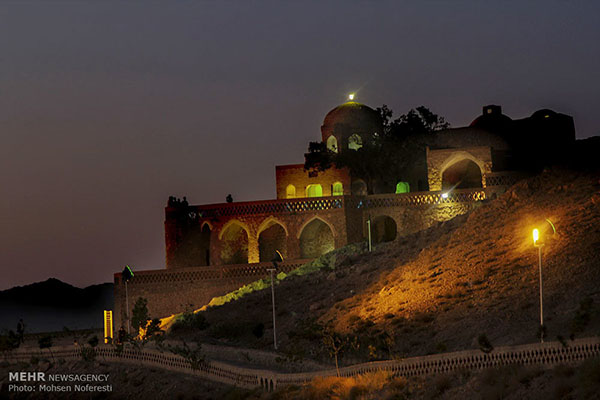
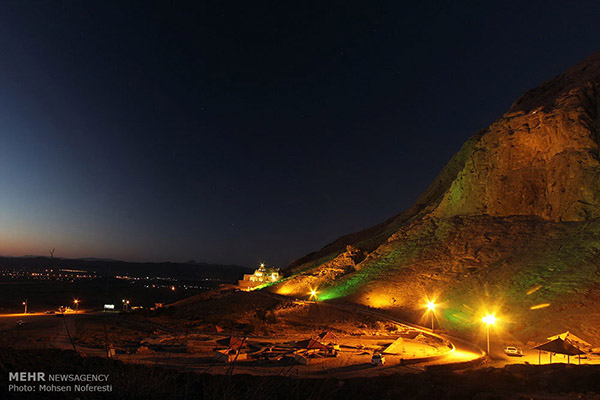
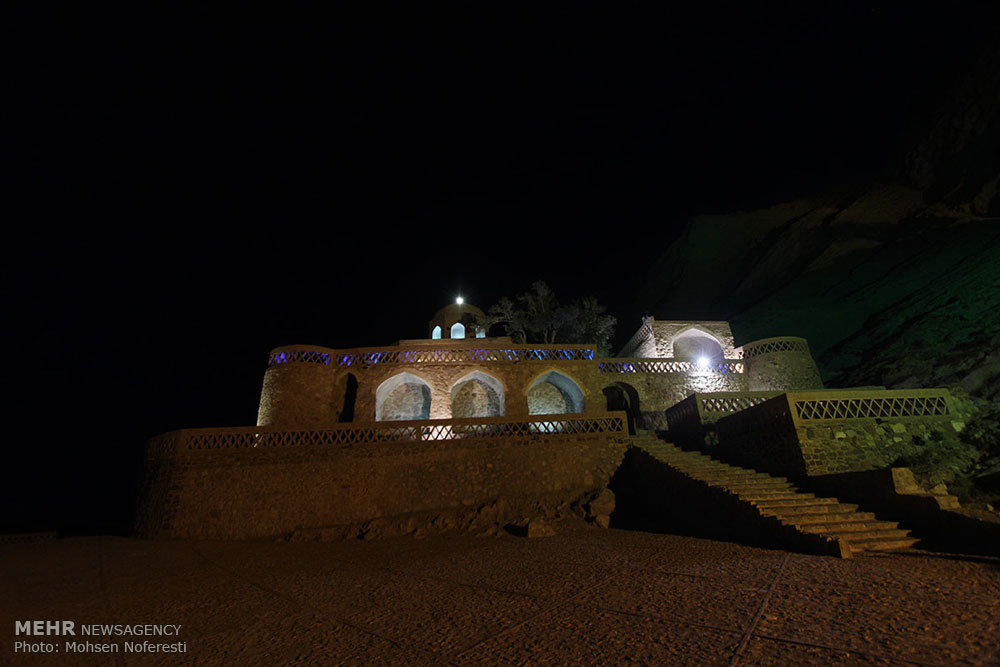
Tomb of Bozorgmehr in eastern Iran (PHOTOS)

Bouzarjomehr Qayeni0

Bozorgmehr was a politician, scholar, mystic and poet who served in the royal court of Mas’ud I of Ghazni [a king of the Ghaznavid Empire from 1030 to 1040].

Images of his tomb posted online by Mehr News Agency:

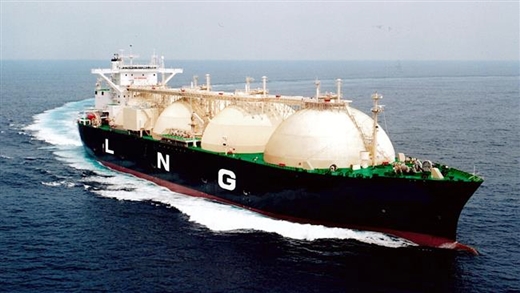
India eyes LNG imports from Iran’s Chabahar Port

d4df738e-5d55-4d1a-9041-812f706007a6

Indian media are raising speculations that the country may be moving toward imports of Liquefied Natural Gas (LNG) from Iran in the future.

The imports, as reported by New Delhi-based the Times of India, could be made through Iran’s Chabahar Port.

Iran is already engaged in advanced talks with India over the development of Chabahar – an ambitious project which is set to turn the port into a key hub for regional economic activity.

The Times of India has quoted the country’s union transport and shipping minister Nitin Gadkari as saying that Iran has offered a proposed rate of $2.95 for each million British thermal unit (mbtu) of LNG that it plans to sell to India in the future.

Gadkari has also been quoted as saying that Iran’s previous proposed rate was $0.82 per mbtu.

“[The distance between] Chabahar to Kandla port in Gujarat is the same distance as Mumbai to Delhi,” he said.

Iranian officials have yet to comment on this. Nevertheless, the country had previously announced it had shelved its LNG plans – Pars LNG, Persian LNG and Iran LNG – as complications grew mostly as a result of US-sanctions that prohibit investments of liquefaction companies in Iran.

A recent alternative for Iran – albeit less spoken of – is to pipe its natural gas to Oman for liquefaction processing and export the LNG thus obtained to international markets.

Iran gives good model for dialogue to resolve disputes: Nahavandian

Nahavandian
Nahavandian

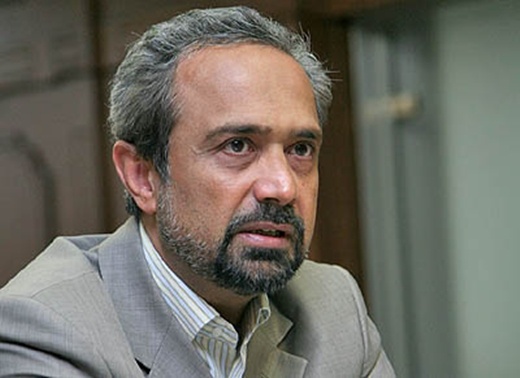
President Rouhani’s Chief of Staff Mohammad Nahavandian said on Saturday that the nuclear deal clinched by Iran and P5+1 provides a good model for promotion of dialogue to resolve the disputes in the world.

The world community came to an understanding that Iran did not want war or weapons of mass destruction and it is ready to resolve disputes with others through negotiations, Nahavandian said.

Iranian logic is strong enough to prove its stand through dialogue, he underlined.

Iran was successful in changing the wrong image depicted by the enemies of Iran and Islam to a new model that all seek to broaden cooperation with it, he said.

Recent exchanges of economic and political delegations indicated that Iranophobia is fading on the world stage, he said.

Those who follow the path of logic and wisdom will have the upper hand in dealing with others, he said.

The culture of dialogue should be put on the agenda to create an ideal opportunity for the world nations to resolve their disputes, Nahavandian said.

The initiative by President Hassan Rouhani on World against Violence and Extremism at the United Nations General Assembly is regarded as a victory against those who tried to introduce Iran as sponsor of terrorism in the world, Nahavandian said.

Iranian exports to EU up 14% in six months

81729805-70112105

Iran’s exports to the 28 member states of the European Union in the first half of 2015 witnessed a 14-percent increase over the corresponding period last year, according to data released by the EU statistical office, Eurostat.

The bloc’s imports from Iran during the six months reached €550 million, showing a 14-percent rise compared to €480 million for the same period in 2014, said the Eurostat report.

Total trade between Iran and the EU in the first half of the current year amounted to €3.705 billion — a rise of seven percent compared to the figure for the same period in 2014.

The value of Iran-EU trade in the corresponding period last year stood at €3.465 billion, the report said.

Experts expect Iran’s trade with the world, especially the European countries, to rise remarkably after the final nuclear deal between Tehran and P5+1 takes effect.

On July 14, Iran and six world powers reached an agreement on the text of a comprehensive 159-page deal on Tehran’s peaceful nuclear program. The deal envisages the removal of all sanctions once it goes into effect.

100+ former Iranian envoys, diplomats support JCPOA

81729766-70112046

More than 100 former ambassadors, consuls general, Iranian representatives at international organizations and directors of the Foreign Ministry have thrown their weight behind the nuclear agreement reached between Iran and P5+1.

In a statement, they said the Joint Comprehensive Plan of Action (JCPOA) drafted under the management of Foreign Minister Mohammad Javad Zarif opened a new chapter in Iran’s diplomacy which deserves to be exalted.

The signatories said while the deal cannot naturally meet every demand of Iran and the opposite party, it is the best one available under current conditions which secures Iranian nation’s main demand: recognition by world powers of its right to nuclear technology, and continued research and development, simultaneous with the removal of oppressive sanctions against Iran.

They said the Supreme Leaders’ prudent guidelines, president’s objective policy, and effective diplomacy along with resilience of the Iranian nation and major achievements of scientists as well as defense forces capabilities led to the successful conclusion of the deal.

“In the history of international relations, no similar case can be found in which world’s major powers hold long-run negotiations with a regional power which results in an equal give-and-take, and not in imposition of one side’s will,” read the statement.

The former envoys and diplomats also said JCPOA has elevated Iran’s international standing as well as its strategic options in the region and world, suggesting that the outcomes of the deal and the opportunities for Iran’s increased regional role will be manifested in the future.

The joint statement expressed concern over the Zionist regime’s plots to torpedo the nuclear deal, warning that creating problems in the way of its implementation will bring more harm to those who fan tension and instability by opposing it.

Spokeswoman slams Obama’s anti-Iran remarks

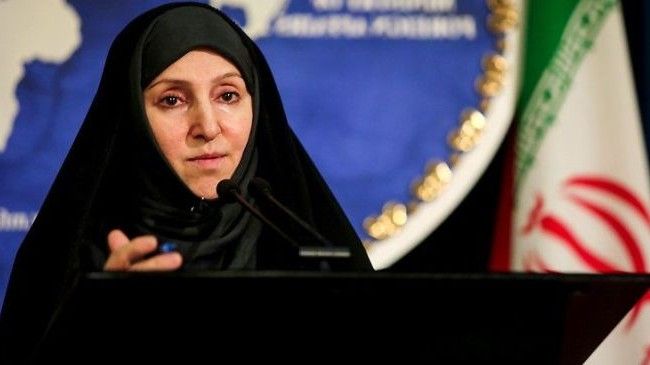
Iranian Foreign Ministry Spokeswoman Marziyeh Afkham

Iranian Foreign Ministry Spokeswoman Marzieh Afkham blasted the recent remarks by US President Barack Obama who threatened the Islamic Republic with military action.

Afkham’s remarks came after the US president told the Republican-dominated Congress that the military option against Iran will remain on the table for several years despite the nuclear agreement between Iran and world powers in Vienna on July 14.

“Repeated allegations by US officials which are made in line with the Zionist regime’s interests and to satisfy the pro-Israel lobbies show the American officials’ uncertainty and deep confusion when it comes to their own national preferences,” Afkham said on Saturday.

She said warmongers and the so-called advocates of diplomacy in the US both rely on illusionary, dangerous and horrific ideas which have so far inflicted irreparable damage on the world and are today one of the root causes of international insecurity.

“The Zionist regime is the most important source of instability and spread of terrorism in the Middle East and the US government’s support for this regime and the policy of creating and supporting the terrorist groups as well as training and equipping them have placed the US in the dock,” Afkham said.

The Iranian Foreign Ministry spokeswoman reiterated that the threat of military attack on Iran is a violation of the UN Charter and principles and will bring about international liability for the US government and officials.

Afkham said that the Islamic Republic of Iran would never accept any restriction in defending itself in political, military and security fields.

“Should Iran seek to dash toward a nuclear weapon, all of the options available to the United States — including the military option — will remain available through the life of the deal and beyond,” Obama wrote to Congress on August 19, the New York Times reported.