Monday, December 22, 2025
Home Blog Page 4734

Iranian scientists and universities among the world’s top one percent

Iranian Students

An official at the Ministry of Science, Research and Technology has said that 170 Iranian scientists are on the list of the world’s top scientists and 13 universities in Iran have been enlisted as the world’s best universities.

Director General of the ministry’s Research Planning and Policy-Making Department Mohsen Sharifi further said that these Iranian scientists and universities are among the world’s top one percent.

Ettela’at newspaper on September 14 published a report on the list of top academic centers in the world issued by Information Sciences Institute (ISI)and where Iran stands on that list. The following is the translation of the report which also includes Sharifi’s remarks in a press conference:

Sharifi said that there were no ISI statistics in 2012 on Iranian universities which were among the top one percent higher education institutes in the world, but the number of Iranian universities on that list is 13 for 2015.

In 2012, the number of Iranian scientists who made it to the list of the top one percent researchers in the world was not substantial, but this year the number stands at 170, he said.

Based on reports released by Scopus [a bibliographic database containing abstracts and citations for academic journal articles], some 40,300 scientific articles and documents from Iran were indexed in the abstract and citation database in 2012, he said, adding that the figure rose to 41,300 two years later.

He went on to say that Iran which ranked 17th in the world in terms of scientific growth in 2012 is now in 16th place, adding that Iran is leading regional countries when it comes to science production thanks to the number of its scientific articles and documents indexed by Scopus. Iran’s share of the world’s science production now stands at 1.7 percent, up from 1.5 percent in 2012.

As for Iran’s share in the world science production indexed by ISI, he said that Iran’s 2012 share of 1.38 percent has risen to 1.6 percent this year, adding that according to ISI citation index, Iran was the 24th country in the world in 2012 and 23rd in 2014.

[In 2012] Iran was second in the region in terms of science production according to the ISI’s indexed science production, and the country has maintained that place [in 2015], he added.

The science ministry official also said that these numbers show that science production is improving in Iran, adding that according to an ISI report Iran published 0.82 percent of the world’s top articles in 2012; the figure stood at 1.56 percent in 2014.

Europe’s willingness to cooperate with Iran on regional matters

europe-migrants-balkans

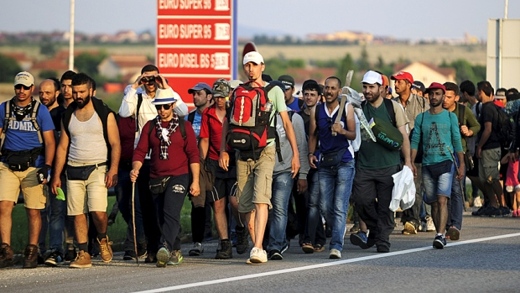
An Iranian expert says that the flow of Syrian migrants into Europe has prompted the Europeans to enter into partnership with the Islamic Republic of Iran to solve regional crises, especially the Syrian conflict.

That comment by Sabah Zanganeh, a former Iranian diplomat and a political analyst, came after European officials, including the British and French top diplomats, in recent days highlighted the need for cooperation with Iran to resolve regional crises. The comments of German Foreign Minister Frank-Walter Steinmeier on Friday that settlement of regional crises would be a nonstarter in Iran’s absence are also proof of Europe’s new Iran policy.

Steinmeier’s remarks were echoed by UN Special Envoy in Syria Staffan de Mistura who told the Wall Street Journal on Friday that the Syrian crisis will not come to a halt without Iran’s help. [The failure of Iran and Saudi Arabia to hold candid discussions on the conflict in Syria is a key obstacle hampering a serious push for peace, the United Nations’ special envoy said, warning that a comprehensive political solution is urgently needed to prevent further loss of life and stem Islamic State advances in the region.]

Earlier when international efforts to end the Syrian crisis and other regional conflicts were in full swing, Western countries showed no interest in involving the Islamic Republic Iran in efforts to hammer out a solution to this crisis.

Fararu.com, a news website, on September 13 published an interview with Sabah Zanganeh on Europe’s willingness to cooperate with Iran on regional issues. The following is the translation of part of his remarks in the interview:

Apparently Western countries have realized the depth of the crisis which is unfolding in Syria after the exodus of the Syrian refugees toward Europe’s borders.

[…]

Europe is still in dire straits. A staggering number of migrants who have headed toward European countries have caused authorities to go to great lengths to address the root causes of the migration crisis, albeit partially.

To date, the Europeans have tried to hold meetings for the Syrian opposition groups, work with other countries to ratchet up the conflict in Syria against the central government by shipping ammunition from France, Britain and Germany to the Turkish border, and arm terrorist groups.

Europe has not had a constructive role in UN mediation efforts in Syria and has shown no seriousness in cooperating with UN envoys in the country, including Kofi Annan, Lakhdar Brahimi and now Staffan de Mistura. The Europeans had a mostly marginal role and collaborated with the countries which caused the Syrian crisis. Now that the Europeans are facing an [escalating] migrant crisis, they are thinking about changing their Syria approach.

Thanks to the role the United States and Saudi Arabia played in international efforts to resolve the Syrian crisis, Iran was not invited to those UN initiatives. Following the inconclusiveness of the Geneva-I and Geneva-II conferences on Syria, the Europeans have woken up to the fact that Iran is the only country in the region which can play a positive role in this regard. That’s why they are thinking about establishing cooperation with Iran.

Russia’s decision to play a more serious part in the Syrian crisis has contributed to Europe’s new approach. Last week Russia sent warships to the Syrian coast and stationed about 200 [naval infantry] forces on Syrian soil. This raised concerns among European countries and caused them to rethink their approach and insist on a speedy settlement of the Syrian crisis.

These two alarming developments [the Syrian migration crisis and Russia’s military drills on Syrian shores] have caused the Europeans to take a different look at the Islamic Republic of Iran. To them, Iran which is the pivot of regional security and stability has always rejected the use of force, foreign interference and military action to bring about regime change [in the crisis-hit countries]; Iran has good relations with both Syria and Russia.

The fact that European countries have been affected by the flames of the mounting crisis in Syria has prompted officials in these countries to do a simple calculation and come to realize – more seriously than before – that the role the Islamic Republic of Iran can play in the settlement of the Syrian crisis is prominent.

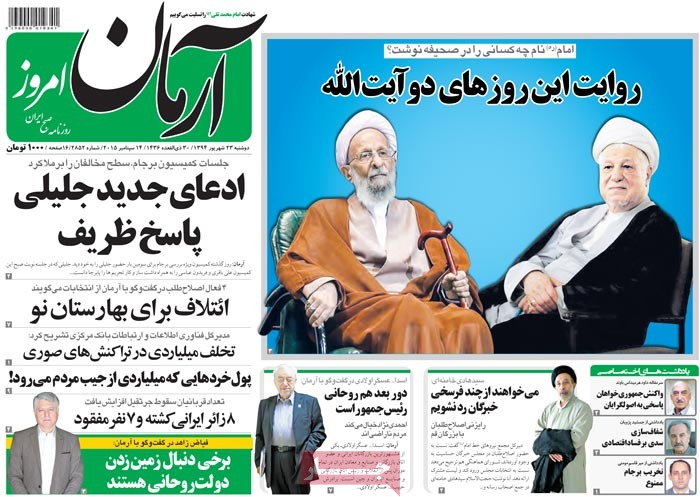
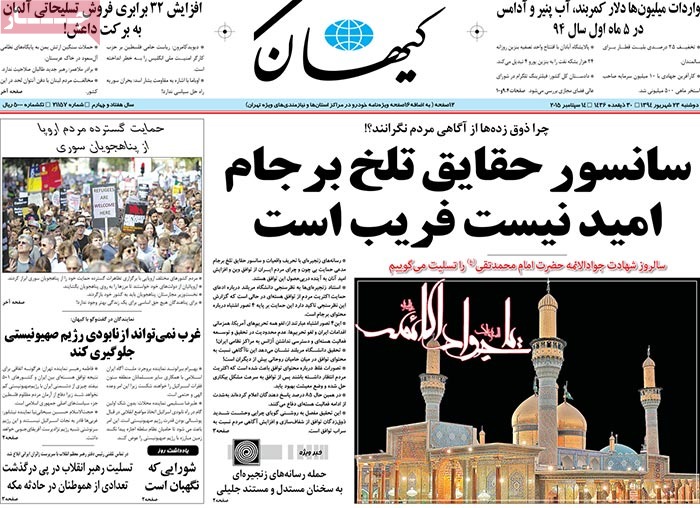
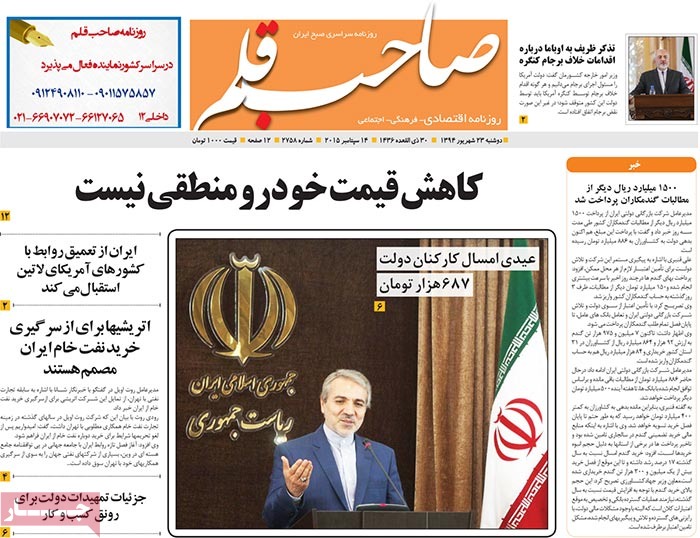
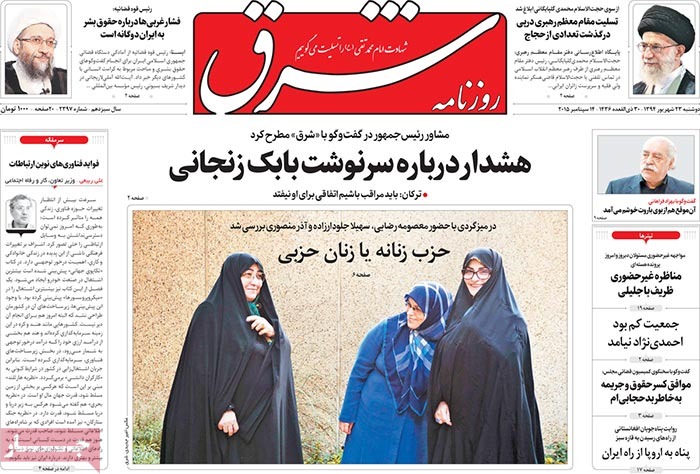
A look at Iranian newspaper front pages on September 14

Iranian Newspapers Headlines

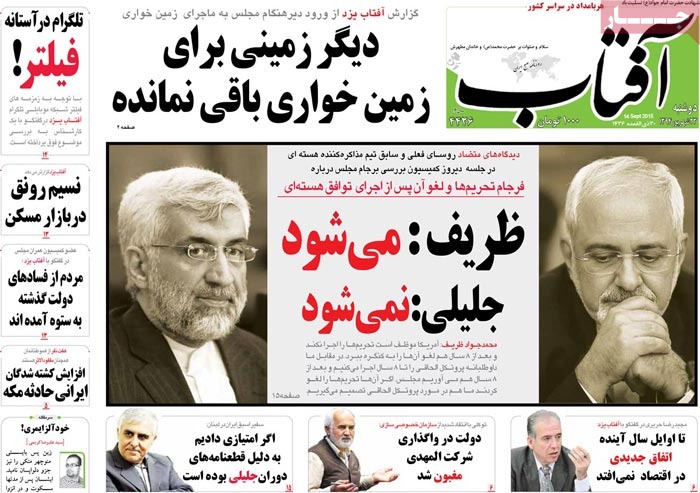
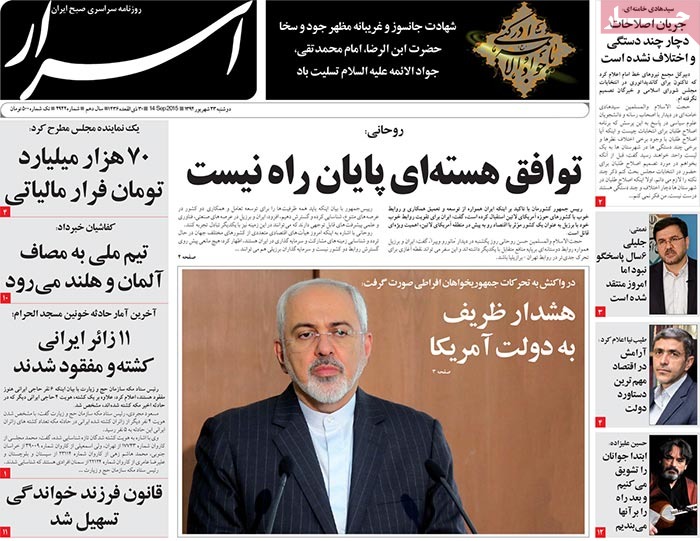
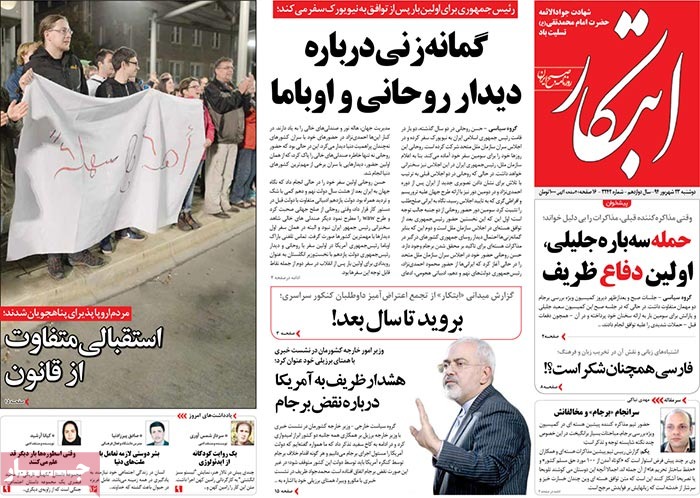
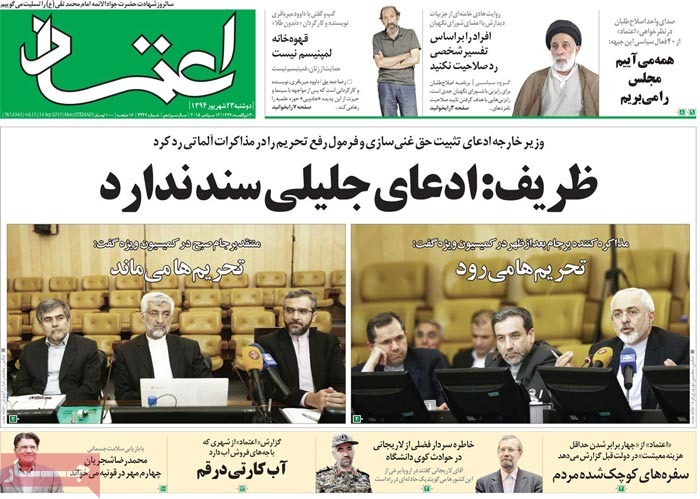
The opposing views of Zarif and Jalili [the current and former heads of the Iranian nuclear negotiating team] about whether or not implementation of the Vienna nuclear accord will lead to termination of sanctions dominated the front pages of Iranian newspapers on Monday.


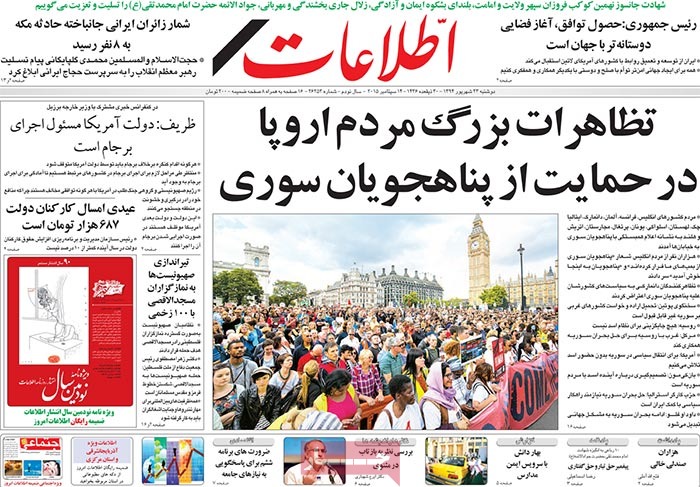
Ettela’at: Europeans have staged massive rallies in support of Syrian migrants.

People in Britain, France, Germany, Denmark, Italy, Czech, Poland, Slovakia, Greece, Portugal, Hungary, Austria and the Netherlands took to the street in solidarity with Syrian migrants.


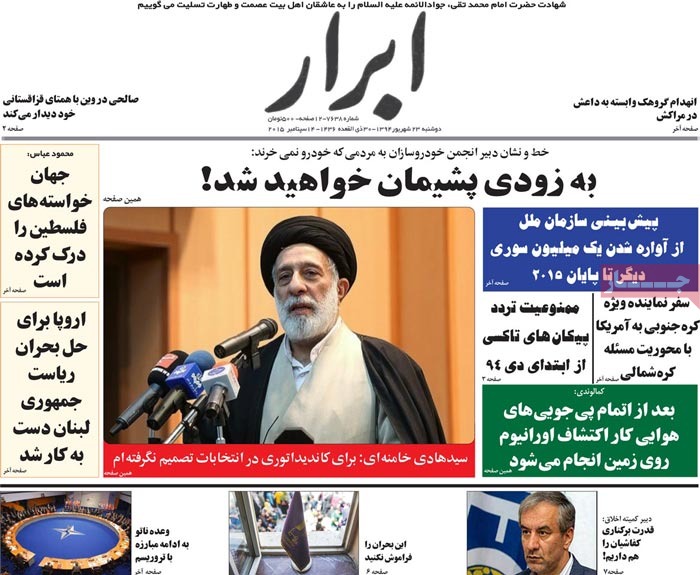
Abrar: Seyyed Hadi Khamenei has said that he has not made up his mind whether to run for the Assembly of Experts.


A look at Iranian newspaper front pages on September 14


Abrar-e Eghtesadi: The price of Iranian oil on global markets has increased 10 percent.


A look at Iranian newspaper front pages on September 14


Aftab-e Yazd: The opposing views of the former and current top nuclear negotiators:

Zarif: Implementation of the deal WILL result in termination of sanctions.

Jalili: Implementation of the deal WON’T result in termination of sanctions

Aftab-e Yazd: “If Iran had to make concessions [in the nuclear deal with P5+1], it was simply because of the resolutions issued when Jalili was the top negotiator,” said Iran’s former ambassador to Lebanon.


A look at Iranian newspaper front pages on September 14


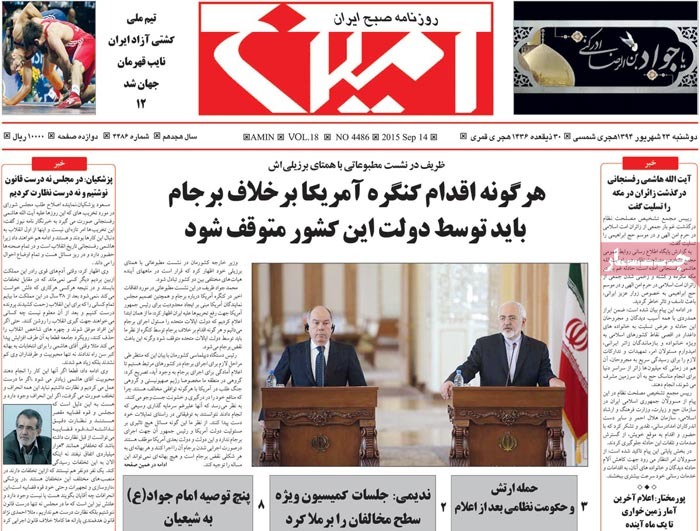
Amin: Iran has finished second in the world freestyle wrestling championships in the US.


A look at Iranian newspaper front pages on September 14


Arman-e Emrooz: The number of Iranian pilgrims killed in the construction crane collapse in Mecca has risen to eight. Seven others are missing.


A look at Iranian newspaper front pages on September 14


Asrar: “Iran will take on Germany and the Netherlands [in friendlies],” said the chairman of the Iranian Football Federation.

Asrar: “Ushering in a state of economic calm was the most important achievement of the government,” said the minister of economy and financial affairs.


A look at Iranian newspaper front pages on September 14


Ebtekar: There are speculations about a meeting between Presidents Rouhani and Obama when the Iranian president travels to New York to attend a UN General Assembly.


A look at Iranian newspaper front pages on September 14


Etemad: Renowned Iranian vocalist Mohammad Reza Shajarian has fully recovered and will go on stage in Konya, Turkey in late September.


A look at Iranian newspaper front pages on September 14


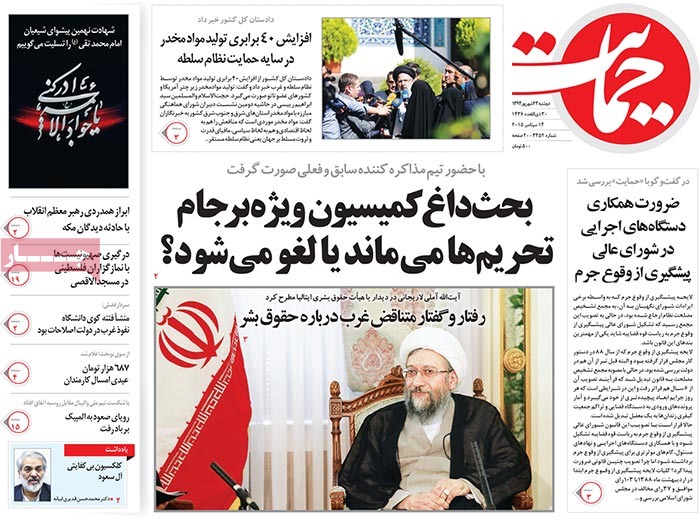
Hemayat: The Iranian attorney general has said that production in Afghanistan of drugs has increased 40-fold since the presence of NATO forces in the country.


A look at Iranian newspaper front pages on September 14


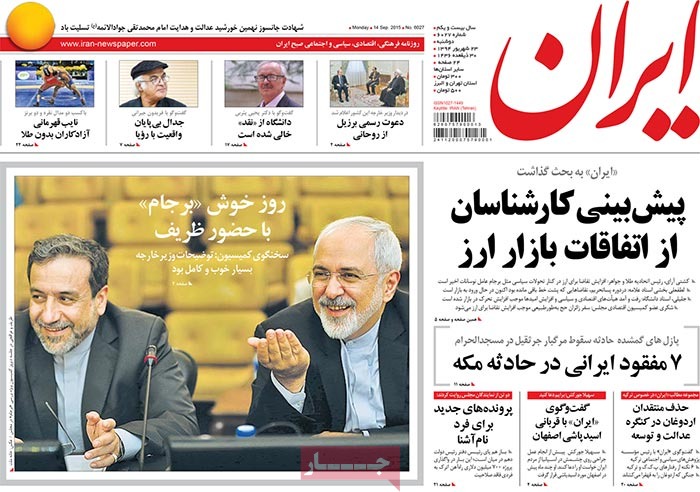
Iran: Brazil has extended an official invitation to President Rouhani to visit Brasilia.


A look at Iranian newspaper front pages on September 14


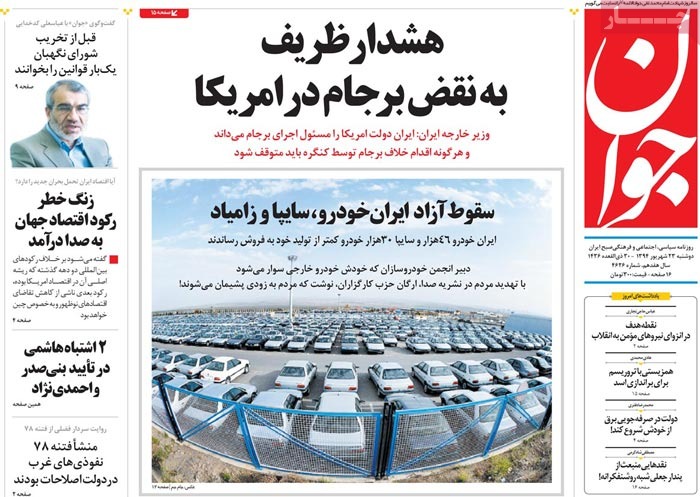
Javan: The free fall of Iran Khodro, Saipa and Zamyad

Iran Khodro and Saipa sold 46,000 and 30,000 fewer cars than they produced.

The secretary of the Carmakers Association, who drives a foreign-made car, has threatened, “People [those who have joined the campaign to boycott brand new Iranian-made cars because of their low quality] will soon regret their decision [because prices will go up].”


A look at Iranian newspaper front pages on September 14


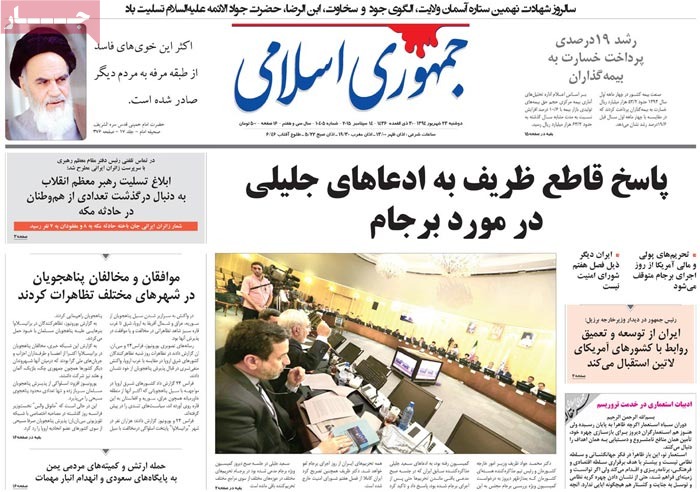
Jomhouri Islami: Foreign Minister Zarif has offered a strong response to claims by [former top negotiator Saeed] Jalili on the Joint Comprehensive Plan of Action.


A look at Iranian newspaper front pages on September 14


Kayhan: Censoring the home truths about the Joint Comprehensive Plan of Action does not generate hope; it amounts to deception.

Why are those who are salivating [over the nuclear deal] worried about public awareness?


A look at Iranian newspaper front pages on September 14


Saheb Ghalam: The Austrians are determined to resume purchases of crude oil from Iran.


A look at Iranian newspaper front pages on September 14


Sharq: The Supreme Leader has offered condolences to the families who lost loved ones in the crane collapse in Mecca.

Sharq: “The pressures the West exerts on Iran as far as human rights are concerned have their roots in double standards,” the Iranian judiciary chief has said.


A look at Iranian newspaper front pages on September 14


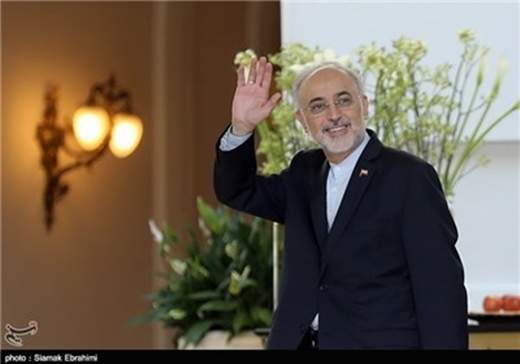
Iran, Kazakhstan Discuss IAEA Fuel Bank Cited in JCPOA

Salehi

Iran’s nuclear chief and Kazakh minister of energy in a meeting in Vienna discussed Iran’s sale of its excess enriched uranium to a fuel bank belonging to the IAEA in Kazakhstan and mentioned in a nuclear deal between Tehran and world powers.

Director of the Atomic Energy Organization of Iran (AEOI) Ali Akbar Salehi met Kazakh Minister of Energy Vladimir Shkolnik on the sidelines of the 59th Annual Regular Session of the International Atomic Energy Agency (IAEA) General Conference, held at the Vienna International Center (VIC) in Austria on Sunday.

Highlighting friendly ties between Tehran and Astana, Salehi and Shkolnik stressed the need for the expansion of relations in the energy field.

They also discussed the subject of an IAEA fuel bank that Iran can choose – under a comprehensive nuclear deal with 5+1- to sell its excess enriched uranium to.

According to the JCPOA, “All enriched uranium hexafluoride in excess of 300 kg of up to 3.67% enriched UF6 (or the equivalent in different chemical forms) will be down blended to natural uranium level or be sold on the international market and delivered to the international buyer in return for natural uranium delivered to Iran. Iran will enter into a commercial contract with an entity outside Iran for the purchase and transfer of its enriched uranium stockpile in excess of 300 kg UF6 in return for natural uranium delivered to Iran. The E3/EU+3 will facilitate, where applicable, the conclusion and implementation of this contract. Iran may choose to seek to sell excess enriched uranium to the IAEA fuel bank in Kazakhstan when the fuel bank becomes operational.”

Iran to make world’s largest carpet for Algeria Grand Mosque

Capet

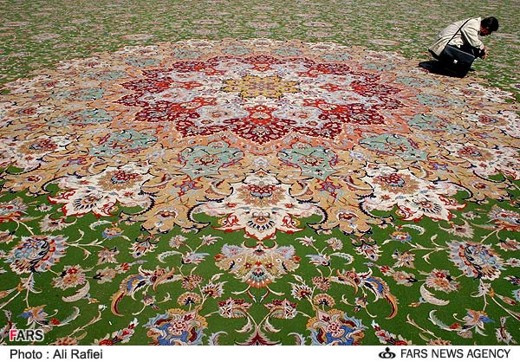
Carpet weavers in the northeastern Iranian city of Neyshabour will weave a large carpet for the grand mosque of Algeria.

According to the website of the Islamic Culture and Relations Organization, the carpet will cover an area of 10,000 square meters.

A number of officials from Neyshabour, including the city’s MPs had previously suggested to Algerian Awqaf and Islamic Affairs Ministry that the mosque’s carpet be made by Neyshabour artisans.

Algerian officials have welcomed the idea and sent a letter to Iran via their ministry of foreign affairs, expressing willingness to host an Iranian delegation for final talks on the project.

Mohammadia Mega Mosque, whose construction began in 2012, is being built on a 218,525 square meter site in Algiers.

It will be the third largest mosque in the world after those of the holy cities of Mecca and Medina in Saudi Arabia.

The main attraction of the mosque will be a 265m-tall minaret.

The mosque complex comprises a multimedia library, the minaret, a research center, a meeting room, a prayer room that can accommodate nearly 35,000 people, a Quran school with residential facilities and a museum.

The world’s largest carpet at present is also an Iranian-made rug. It graces the main prayer hall of a mosque in Abu Dhabi, the United Arab Emirates.

Covering an area of 5,700 square meters, the four-piece rug was made in 21 months by more than 1,200 handpicked carpet weavers, 20 technicians, 30 designers, dyers and other skilled Iranian experts.

The production of the world’s largest handmade rug began in January 2006 by the Iran Carpet Company (ICC). The design work took six months, the weaving a year and the finishing work a further three months.

This large hand-made masterpiece has a unique design, featuring five big medallions depicting various traditional flower motifs. About 30 tons of wool and 15 tons of cotton were used in weaving the mammoth rug measuring 135×46 meters.

No talk of inviting Amano to attend Iran’s JCPOA review sessions: MP

Esmail Kosari

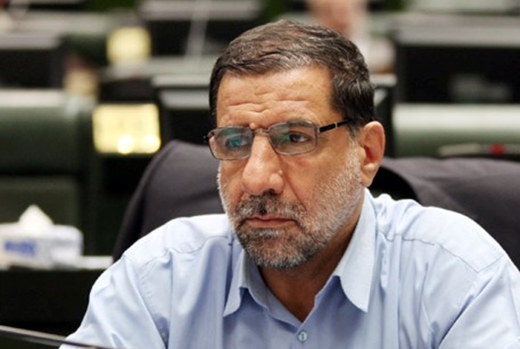
An Iranian lawmaker on Sunday dismissed reports of an invitation for IAEA Chief Yukiya Amano to attend the ongoing sessions in parliament for the review of the nuclear deal between Tehran and world powers.

“I have attended all sessions of the JCPOA Review Committee and there has been no talk of such issue,” Esmaeil Kowsari, an MP on the special committee, said in reply to a question about reports on the invitation of the International Atomic Energy Agency chief to attend the sessions.

[…]

Iran to host Tunisian Oud player Anouar Brahem

Tunisian

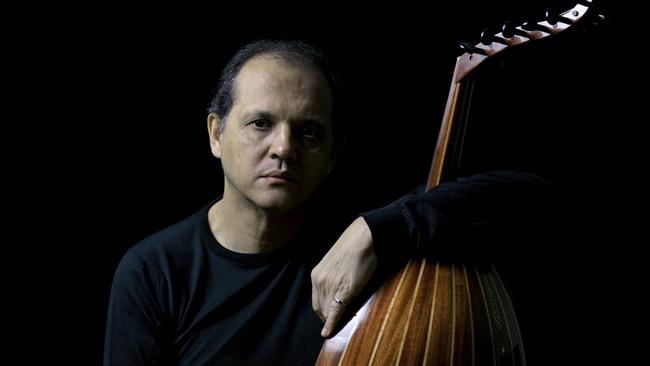
Tunisian Oud player and composer Anouar Brahem is set to perform his latest compositions during a concert in the Iranian capital Tehran.

French pianist Francois Couturier, German clarinetist Klaus Gesing and Swedish guitarist Bjorn Meyer will accompany the 58-year-old artist onstage.

The group will perform pieces from Brahem’s 2014 album ‘Souvenance’ on September 22 and 23, 2015.

This will be Brahem’s second visit to Iran. His first performance during the 29th International Fajr Music festival was warmly welcomed by Iranian music lovers.

Anouar Brahem is best known for his innovative compositions, fusing Arab classical music, folk music and jazz.

Born in Tunis, Brahem studied Oud at Tunisia’s National Conservatory of Music. He has worked with numerous musicians such as Maurice Bejart, Gabriel Yared, John Surman and Dave Holland.

Brahem has held concerts in different countries, including the US and Canada, performing live with artists such as Tunisian percussionist Lassad Hosni and violinist Bechir Selmi, and Turkish clarinetist Barbaros Erkose.

Iranian President Rouhani wishes Jews happy Rosh Hashana

Rouhani

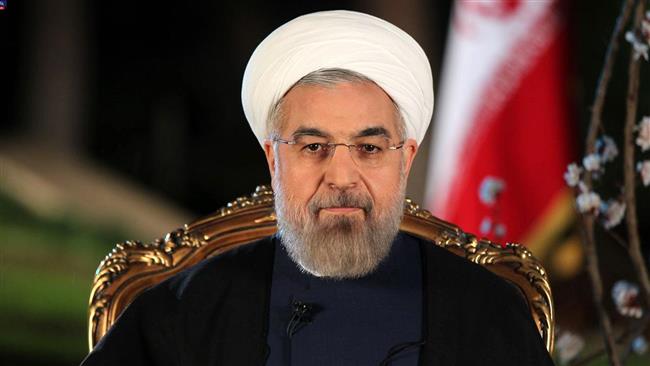
Iranian President Hassan Rouhani has wished a happy new year for the Jewish community all over the world.

On Sunday, President Rouhani congratulated Jews, voicing hope that common “Abrahamic roots” will pave the way for the creation of more “respect” and “understanding” between Muslims and Jews.

“May our shared Abrahamic roots deepen respect & bring peace & mutual understanding,” the Iranian president said in a tweet, ending his message with the Hebrew phrase “L’Shanah Tovah,” meaning “May it be a good year.”

Below the message was a photo of Iranian Jews praying in a synagogue in Yousefabad Synagogue in Tehran.

About 9,000 Jews currently live in Iran, mostly in the cities of Tehran, Isfahan, and Shiraz.  Under the Iranian constitution, the country’s Jews are represented in parliament.

Iran keen to expand ties with Latin America: President Rouhani

Rouhani-Brazil

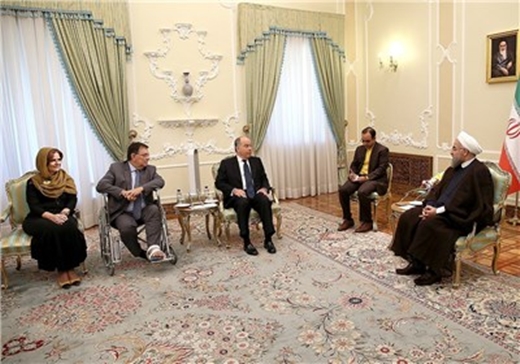
President Rouhani Sunday expressed Iran’s willingness to reinforce its relations with all Latin American countries, particularly Brazil.

Iran has always welcomed the development and deepening of its cooperation and good relations with Latin American countries, Rouhani said in a meeting with visiting Brazilian Foreign Minister Mauro Vieira in Tehran.

Iran attaches special significance to the promotion of its amicable ties with Brazil as an effective country in South America with a progressive economy, he said, highlighting the important role Brazil has in maintaining stability and security in Latin America.

The president referred to various advancements both countries have achieved in the fields of industry, technology, and science, calling for all potential for closer interaction between Tehran and Brasilia to be tapped.

Rouhani pointed to the new opportunities created in Iran after the conclusion of the nuclear deal, saying, “Brazilian investors can take advantage of this opportunity and have a stronger presence in Iran and participate in major projects.”

Vieira, for his part, said his country is determined to have closer and stronger relations with Iran in economic and political fields, adding that the two sides have the potential to play complementary roles for each other’s economy.

He hailed Iran’s effective role in creating balance and stability in the region, saying Brasilia has always supported and acknowledged Tehran’s positive and historical engagement in regional and international developments.

Vieira also delivered a letter of invitation by Brazil’s President Dilma Rousseff for President Rouhani to pay an official visit to the South American country.

Bahrain government should settle internal crisis rather than blame others

Afkham

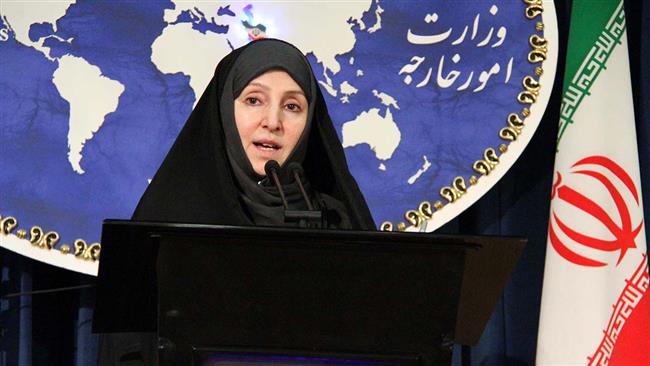
Foreign Ministry Spokeswoman Marzieh Afkham said on Sunday that the Bahraini government had better settle its internal crisis through national reconciliation instead of putting the blame on others and making baseless allegations.

She rejected claims by the Bahraini foreign minister in an interview with Al-Sharq Al-Awsat newspaper.

Afkham recommended the Bahraini government set aside security and policing methods and solve national grievances through reconciliation.

The Bahraini government has gotten used to making unfounded allegations and putting the blame on others to cover up its internal problems, she said.