Wednesday, December 31, 2025
Home Blog Page 4709

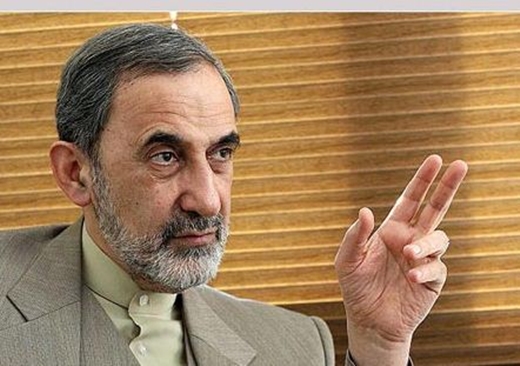
Iran hopes JCPOA implementation completes faultlessly: Velayati

Velayati-Iran

The Supreme Leader’s advisor for international affairs said on Tuesday that like the nuclear program, the Joint Comprehensive Plan of Action (JCPOA) and its implementation are sensitive issues for Iran, and there is hope it will be implemented completely and faultlessly by all sides.

“The Supreme Leader has full competence in the country’s sensitive internal and international affairs in keeping with the Constitution, and whenever he feels necessary, he offers the required strategic guidelines,” Ali Akbar Velayati said on the sidelines of a meeting with Victor Ivanov, a former security advisor of the Russian president.

As for the Leader’s letter on the implementation of JCPOA, he said that the sensitivities in the letter were due to the required cautions that need to be observed in the course of precise implementation of JCPOA.

Velayati expressed hope that like Iran, the other parties to the international agreement will implement it properly and completely.


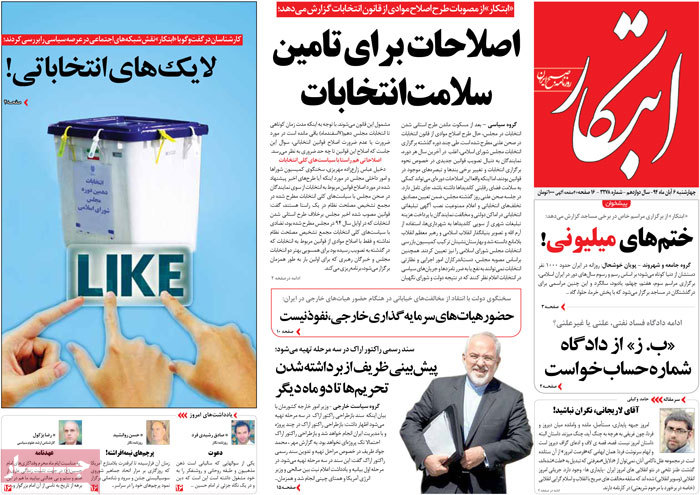
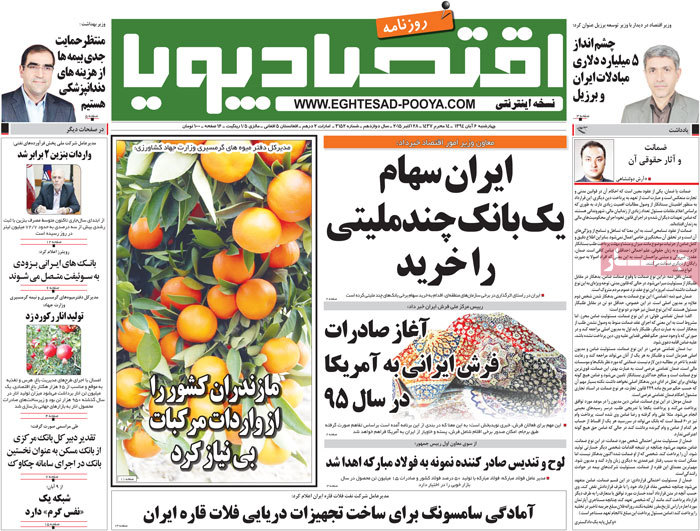
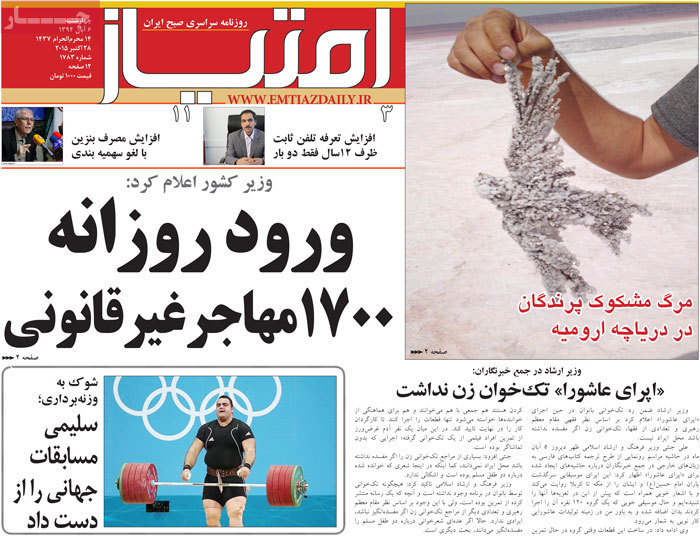
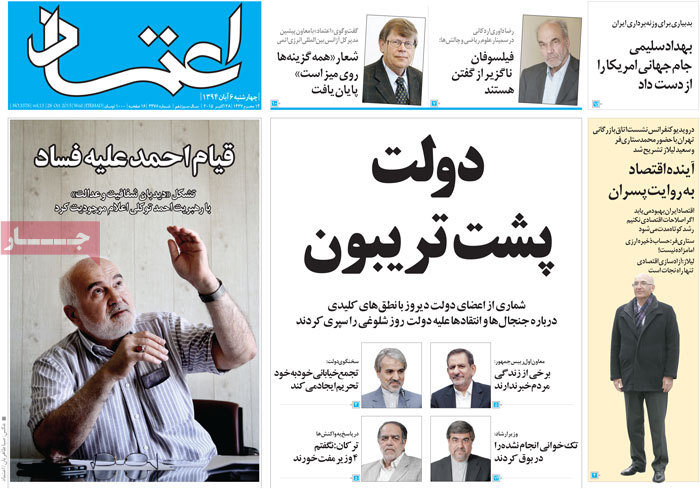
A look at Iranian newspaper front pages on Oct. 28

Iranian Newspapers Headlines

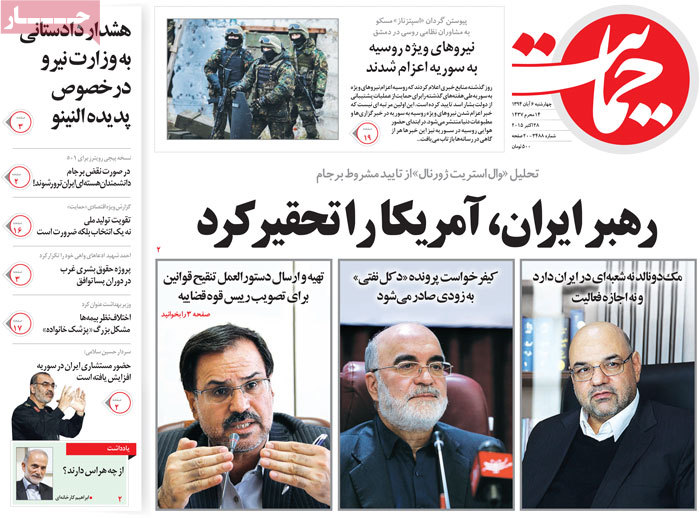
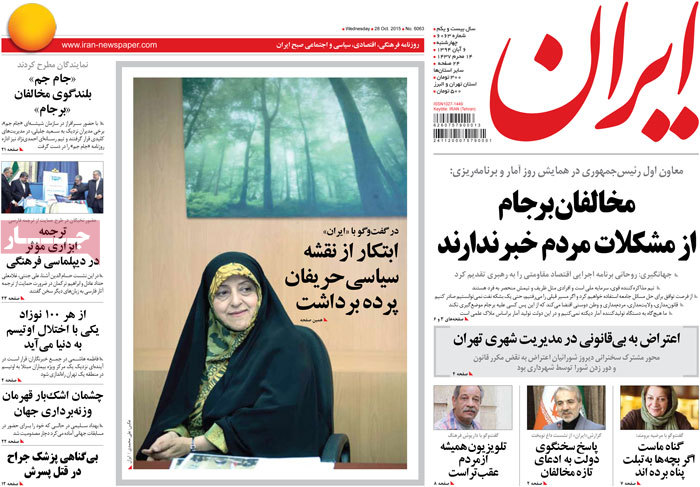
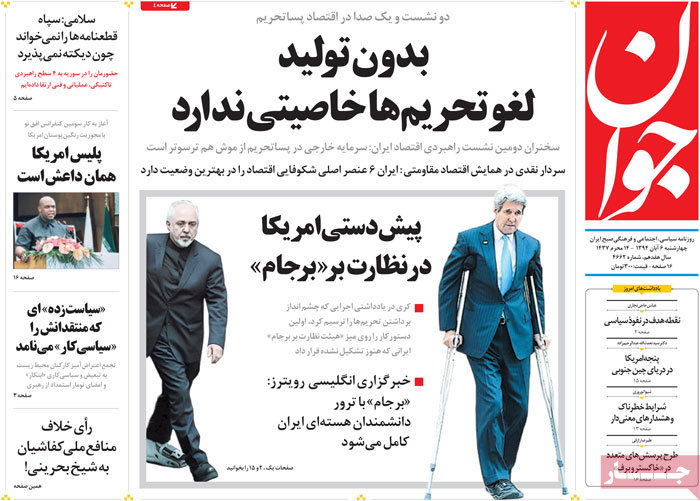
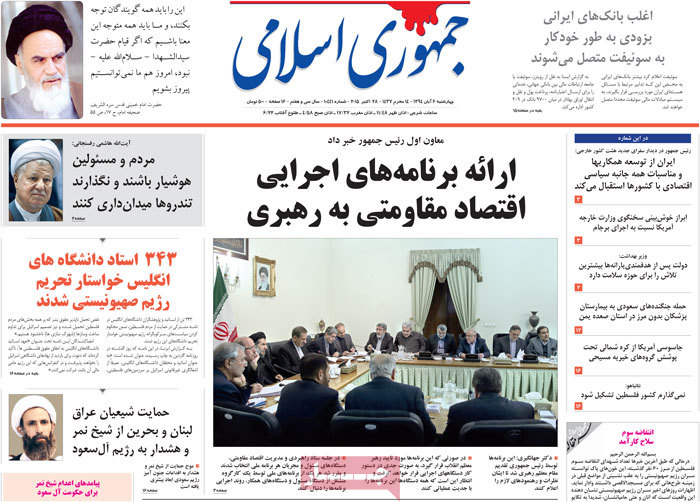
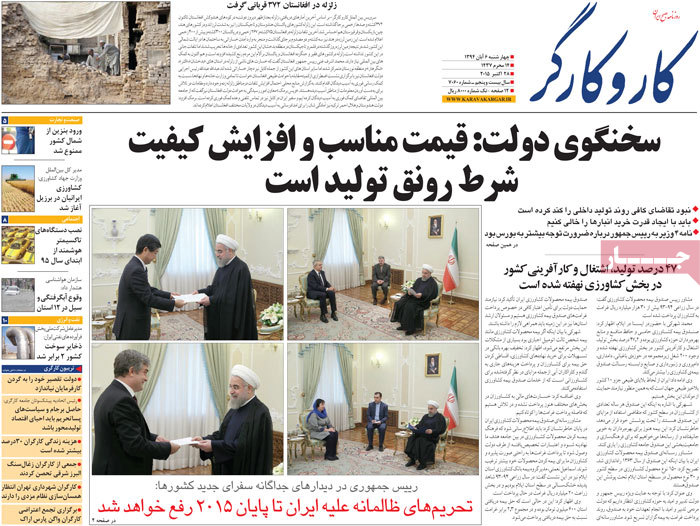
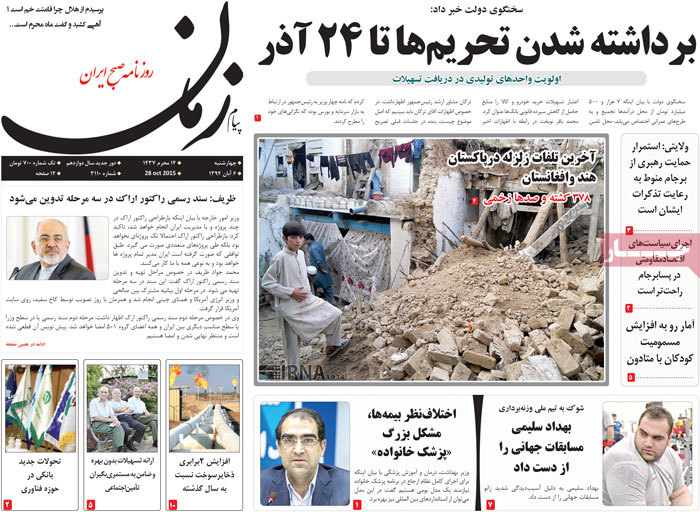
The comments of President Rouhani at separate meetings with new foreign ambassadors to Tehran and the knee injury that sidelines Iran’s most powerful weightlifter dominated the front pages of Iranian newspapers on Wednesday.


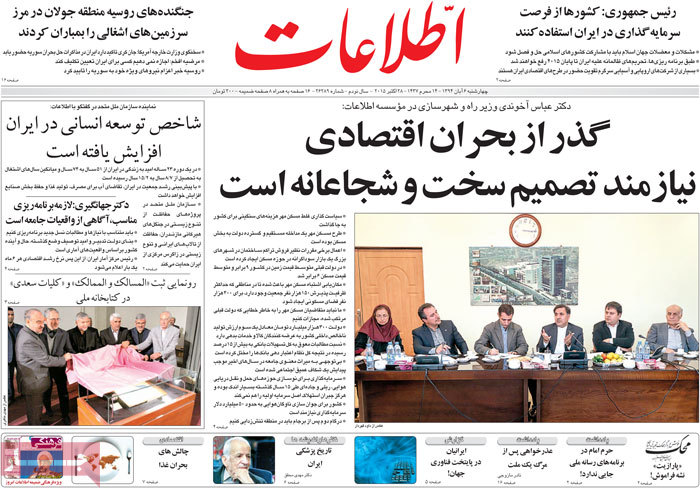
Ettela’at: “Transition from the economic crisis requires hard, courageous decisions,” said the minister of housing and urban development.

Abbas Akhundi said the wrong policies adopted with regard to Mehr [affordable] Housing [project by the previous administration] have cost the country dearly.

Ettela’at: The president has urged the nations to seize the investment opportunity in Iran.

Hassan Rouhani also said that all Muslim nations need to contribute to efforts to settle the problems of the world of Islam.

Ettela’at: Russian jet fighters have bombed Golan on the border with the occupied territories.

In other developments, Moscow confirmed reports that it has sent Special Operations forces to Syria and a spokesman for the US State Department said that Secretary Kerry wants Iran to be part of talks to settle the Syrian crisis.

Ettela’at: The UN envoy to Iran has said that Iran’s Human Development Index has improved.

During a 23-year period, life expectancy has risen from 51 to 74 years, Gary Lewis said in an exclusive interview with Ettela’at.

Ettela’at: The first vice-president said that proper planning requires familiarity with realities on the ground in society.

Meanwhile, the director of the Statistical Center of Iran said that his agency will release a report on economic growth every six months.

Ettela’at: Official registration of Masalik wal-Mamalik [a 9th-century geography text by the Persian geographer Ibn Khordadbeh] and Complete Works of Sa’di have been unveiled at the National Library.


A look at Iranian newspaper front pages on Oct. 28


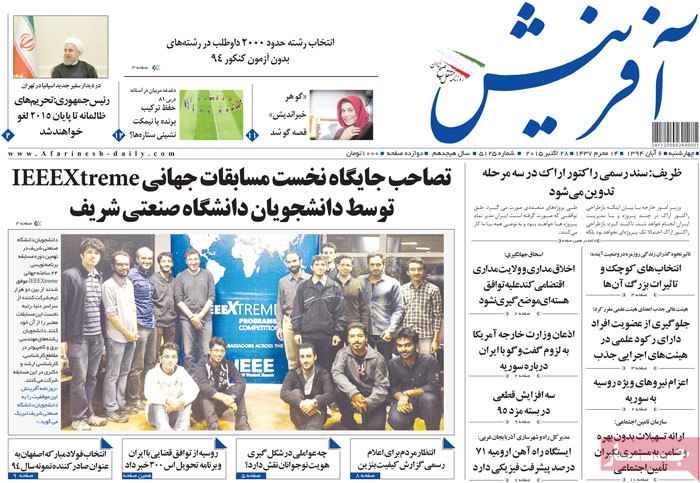
Afarinesh: The document on redesigning the Arak Reactor will be drawn up in three stages, said Foreign Minister Mohammad Javad Zarif.


A look at Iranian newspaper front pages on Oct. 28


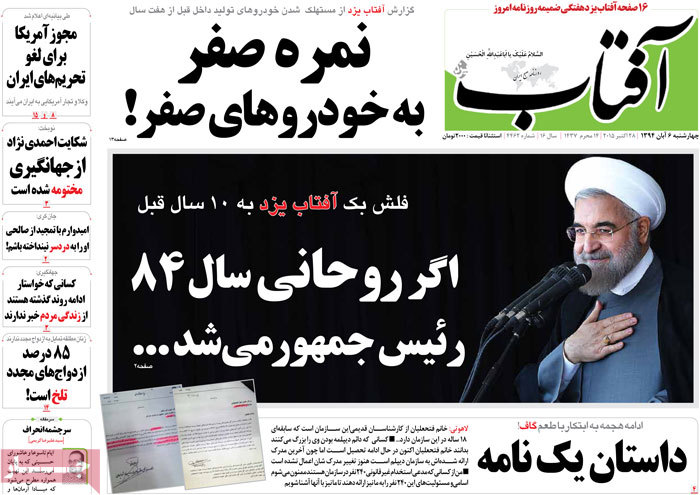
Aftab-e Yazd: Those who want the past trends to persist know nothing about what the public are going through, said First Vice-President Eshagh Jahangiri.


A look at Iranian newspaper front pages on Oct. 28


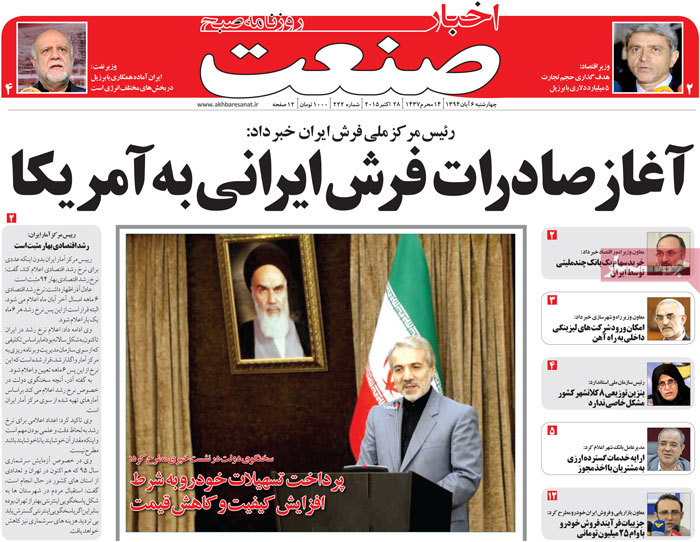
Akhbar Sanat: Exports of Iranian hand-woven carpets to the US have got underway, said the head of the National Carpet Center.


A look at Iranian newspaper front pages on Oct. 28


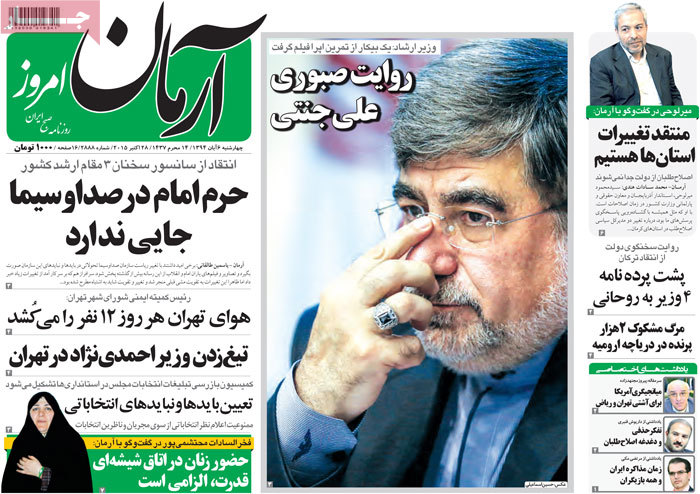
Arman-e Emrooz: Air pollution in Tehran kills 12 people on a daily basis.


A look at Iranian newspaper front pages on Oct. 28


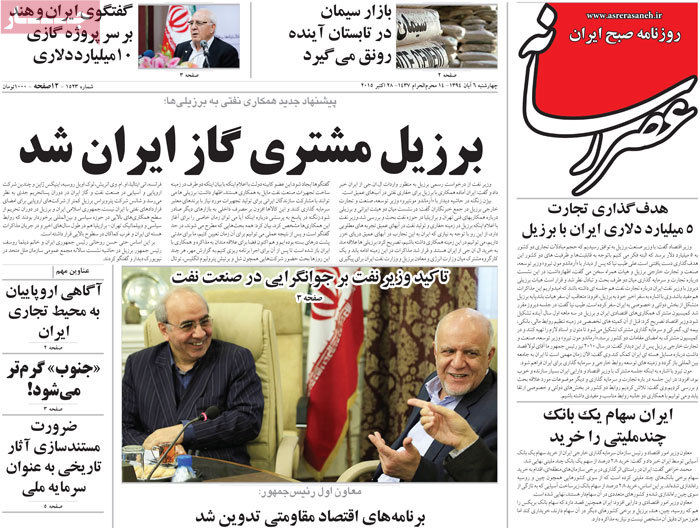
Asr-e Rasaneh: Iran and India hold talks over a $10 billion gas project.


A look at Iranian newspaper front pages on Oct. 28


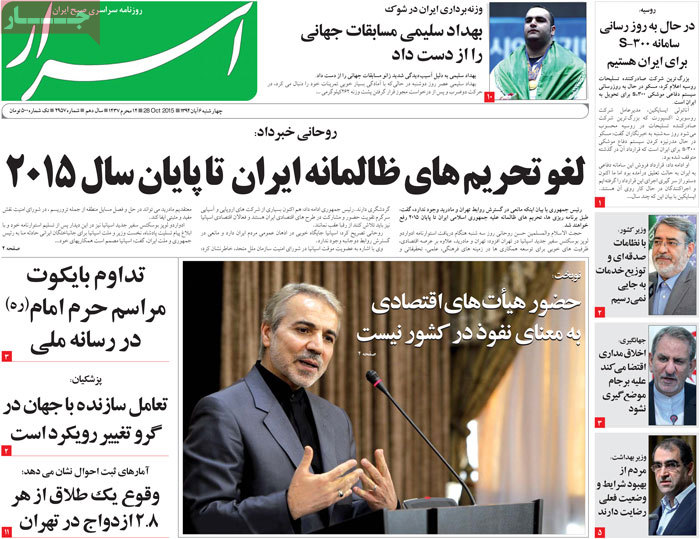
Asrar: Iran’s super heavyweight Behdad Salimi [a world record holder] will miss the 2015 World Weightlifting Championships through injury.

Asrar: Visits to Iran by economic delegations do not amount to infiltration by foreigners, said the government spokesman.


A look at Iranian newspaper front pages on Oct. 28


Ebtekar: Foreign Minister Zarif predicts that sanctions will have been lifted in two months.


A look at Iranian newspaper front pages on Oct. 28


Eghtesad-e Pooya: Iran has purchased the shares of a multinational bank.


A look at Iranian newspaper front pages on Oct. 28


Emtiaz: A number of birds have died of suspicious causes at the Orumiyeh Lake.

Emtiaz: The interior minister has said that as many as 1,700 illegals enter the country on a daily basis.


A look at Iranian newspaper front pages on Oct. 28


Etemad: Ahmad Tavakoli leads an uprising against corruption

Transparency and Justice Watch, an agency led by [Tehran principlist MP] Ahmad Tavakoli has been formed.


A look at Iranian newspaper front pages on Oct. 28


Hemayat: McDonald’s has no outlets in Iran; neither does it have any permit to operate here.


A look at Iranian newspaper front pages on Oct. 28


Iran: IRIB has become a mouthpiece for opponents of the Joint Comprehensive Plan of Action, a number of MPs have said.

Iran: In an interview with the daily, the director of the Environment Protection Organization has revealed the political nature of opposition to her by her rivals.


A look at Iranian newspaper front pages on Oct. 28


Javan: Without production, termination of sanctions will be of no use.


A look at Iranian newspaper front pages on Oct. 28


Jomhouri Islami: At separate meetings with the new Iran ambassadors of eight countries, the president said that Tehran welcomes expansion of all-out economic and political cooperation with all countries.


A look at Iranian newspaper front pages on Oct. 28


Kar va Kargar: Unjust sanctions against Iran will have been lifted by the end of 2015, said President Rouhani at separate meetings with eight new foreign ambassadors to Tehran.


A look at Iranian newspaper front pages on Oct. 28


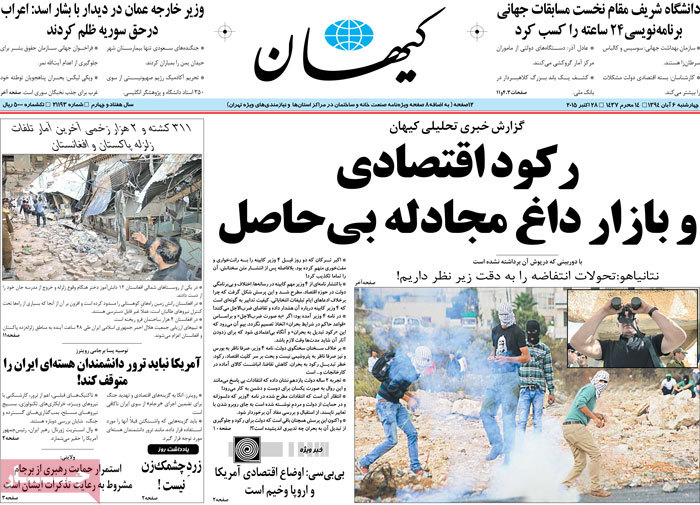
Kayhan: Economic recession and prevalence of useless debates!


A look at Iranian newspaper front pages on Oct. 28


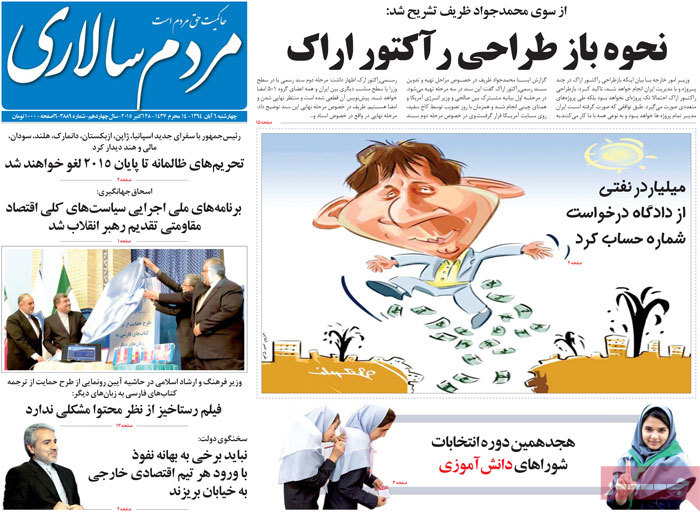
Mardomsalari: The oil billionaire has asked the court to give him an account number so that he can have a letter of credit issued for the company he owes money to.


A look at Iranian newspaper front pages on Oct. 28


Payam-e Zaman: The Leader’s continued support for the Joint Comprehensive Plan of Action hinges on compliance with his instructions about the deal’s implementation, said Ali Akbar Velayati, an advisor to Ayatollah Khamenei.


A look at Iranian newspaper front pages on Oct. 28


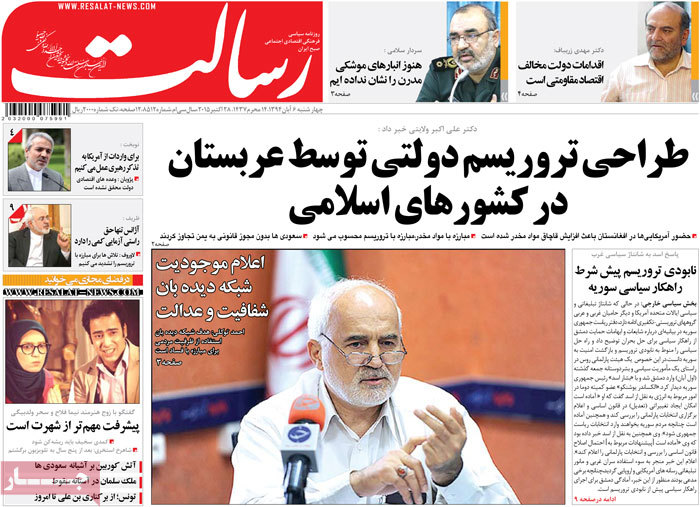
Resalat: Ali Akbar Velayati has said that Saudi Arabia sponsors state terrorism in Islamic countries.


A look at Iranian newspaper front pages on Oct. 28


Iran calls on US to stop nurturing terrorists in Syria

Iran-Afkham
Iran-Afkham

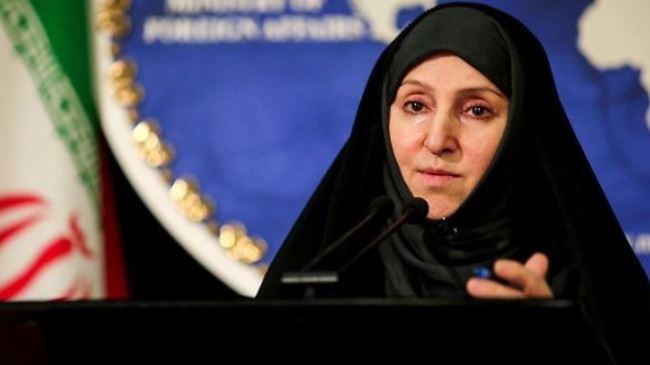
Iran has called on the US to stop grooming terrorists to wreak havoc in Syria, saying the Arab state’s crisis stems from Washington’s instrumentalization of terrorists groups.

“The US must stop [its] military approach and support for the policy of terrorist-nurturing in order to pursue political solutions in Syria,” Foreign Ministry Spokeswoman Marzieh Afkham said on Tuesday.

Afkham’s remarks came one day after US State Department Spokesman John Kirby claimed that Iran continues to support terrorist organizations and create problems not just for Syria but the Middle East.

She said such “repetitive” allegations run counter to realities on the ground, adding that the US has been passing the buck with regard to the settlement of regional conflicts.

“The serious and real problems in the Syrian crisis stem from military intervention and dual policies of the US and its allies as well as the instrumentalization of terrorist groups,” said Afkham, adding that Iran fulfills its regional responsibilities based on its obligations and regional interests.

She said the US, in collaboration with its allies, including Saudi Arabia, has formed a so-called anti-terror coalition after creating and training terrorist groups like al-Qaeda, Taliban, al-Nusra Front and IS.

Afkham said US financial and military support for the so-called “moderate” terrorists has caused numerous problems and complicated conditions in the region.

“A halt to such a dangerous approach and putting an end to ambiguous and opportunistic behaviors will be one of necessary and serious steps to help settle the Syrian crisis,” Afkham said.

More than 250,000 people have been killed in Syria since March 2011.

NAM reiterates UN structural reforms

Hossein Dehqani

The Non-Aligned Movement (NAM) has reiterated the need for structural reforms in the United Nations in conformity with the UN Charter.

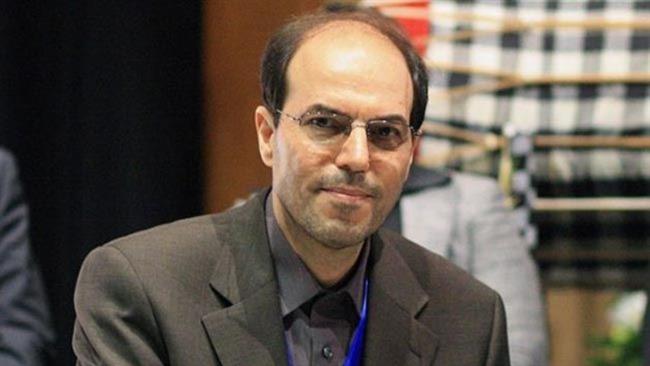
Iran’s Ambassador to the UN Hossein Dehghani delivered a speech at the Sixth Committee on behalf of NAM in New Yorkon Monday about the movement’s stance on the importance of strengthening the fundamental principles of the UN Charter and promoting multilateralism in the international entity.

Dehghani said NAM calls on the Special Committee on the Charter of the United Nations to review the legal nature of the implementation of Chapter IV of the UN Charter in regard to the function of the body’s organs.

He stressed the important role of the UN General Assembly and criticized the Security Council’s interference in issues which are related to the General Assembly and the United Nations Economic and Social Council (ECOSOC).

Dehghani, whose country presides over NAM, also slammed the Security Council’s imposition of sanctions on countries, saying that sanctions would be legitimate only in case the countries threaten international peace and security.

He emphasized that the use of sanctions as a deterrent measure violates international principles and regulations.

Dehghani criticized some countries for pursuing unconstructive approaches toward NAM proposals about important issues pertaining to the UN Charter and said such suggestions aim to strengthen the UN democratic performance.

He called on the Special Committee on the Charter of the United Nations to precisely examine the proposals.

A woman shines in a male-dominated job

Alam

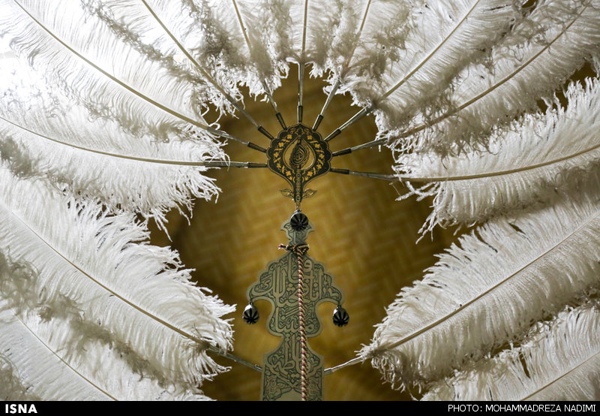
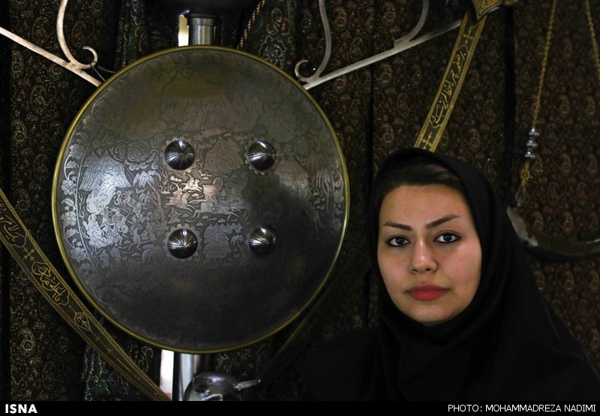
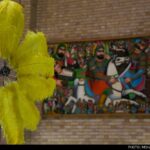
Fatemeh Eidiyoun is a 29-year-old Iranian woman who has followed in the footsteps of her father to make designs and engravings on alams (heavy metal installations covered with intricate figurines and engravings used in public Shiite mourning ceremonies).

In other words, she implements calligraphy and creates different images, including scenes of the epic battle of Karbala as well as flowers and birds on metal frameworks.

The Iranian Students’ News Agency has held an interview with her to find out why she has chosen a job which is typically male-dominated. The following is the translation of part of the report the news agency released:

Alam
Fatemeh Eidiyoun

As for how she does her job, Eidiyoun said, “After a metal framework is made, I engrave the designs on it before blanketing them with a combination of ink, lac and alcohol. After the ink goes dry, I immerse the framework in a mix of water and acid. Acid cannot penetrate the parts which are covered by lac and alcohol, but it does dissolve unprotected parts. As a result, the designs appear in relief when the frame goes dry.”

She said that the art is not well known, because it has not been registered yet, adding, “I can put it under the heading of metal arts, but I need to collect documents from old artists about the history of this art. I have put together some, including old photos from religious centers and museums.”

Eidiyoun said that she did not know the oldest artist who started this type of engraving, but it can be traced back to an artist based in the city of Isfahan who was involved in this profession about 80 years ago.

The artist added, “My father did the same job for about three decades before he passed away seven years ago. I was brought up a father heavily involved in this profession, that’s why I developed an interest in this.”

She went on to say that because it is a male-dominated job, her husband takes all the orders and delivers the final works.

The female artisan further said, “When my works are sent to experts for evaluation, they find it difficult to believe that such works have been created by a woman. No woman has done this job so far and because I inherited the art from my father, I am the only woman who does this.”

Eidiyoun has a Grade Three art certificate [presented by the Ministry of Culture and Islamic Guidance to artists] and can easily secure a Grade One certificate if she can have the art registered. She seeks to apply for the registration of the art to the Cultural Heritage, Handicrafts and Tourism Organization.


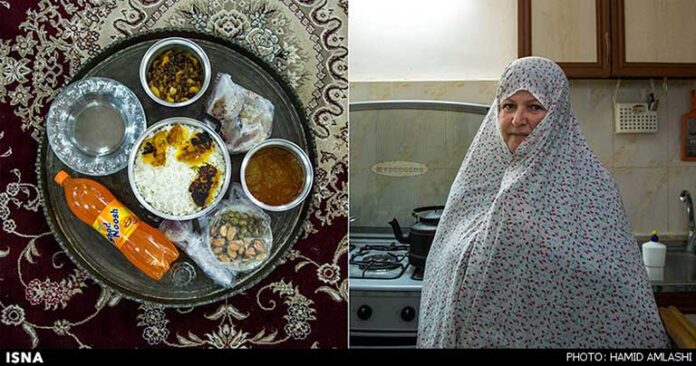
Environment-friendly distribution of votive food in northern Iran (PHOTOS)

food in northern Iran 0

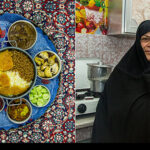
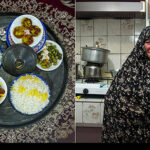
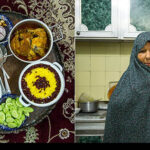
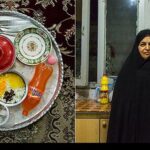
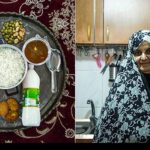
In a village near the northern town of Astaneh-ye Ashrafiyeh, Gilan Province, people avoid using disposable dishes in giving out votive food.

Presentation of votive food on trays during mourning ceremonies is an old-age tradition in the village.

The following images released by the Iranian Students’ News Agency show the meals handed out to mourners in the village:


A nice grandma and the story of her dolls

Grandma-Dolls

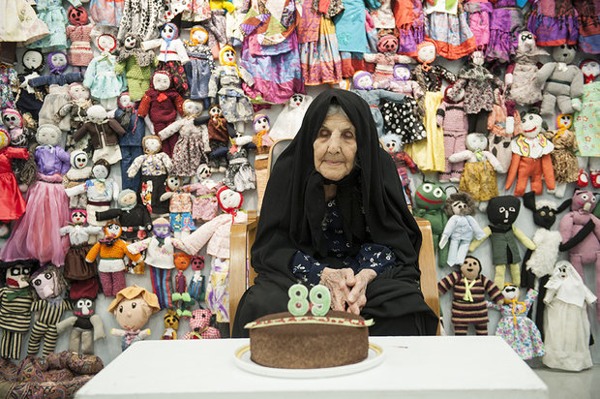
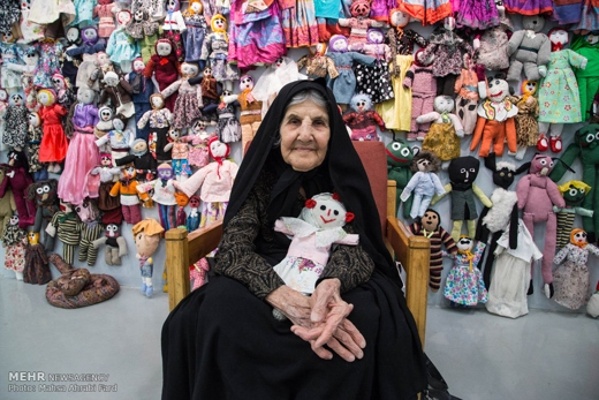
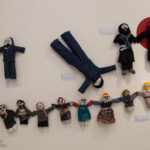
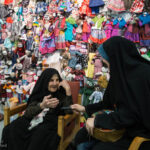
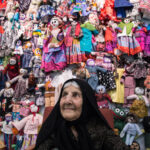
Bibi Hazer, a 90-year-old grandma who lives in Shiraz, has made many dolls, with her memory brimful of untold stories which date back to the years of yore.

The wall behind her is spotted with dolls she has created in her loneliness to feel the void. The visitors take a walk around, look at Bibi and ask if she has made those dolls all by herself. In a nice Shirazi accent, Bibi says she’s done all that by herself. The visitors pose for a photo with Bibi before they leave.

Bibi Hazer and her dolls, that have been the guest of a gallery at the Iranian Artists Forum for a few days, impressed many people who were there to catch a glimpse of items of artistic value.

Earlier in October, Mehr News Agency published a report on the artistic works of the nonagenarian and a friendly chat with Bibi, who was accompanied by his grandson Bahman Abbaspour. The following is the translation of part of the report, including Bibi’s words:


Grandma-Dolls


Where did it begin?

“[…] It is now almost 20 years since I first began making dolls. I learned it from my mom, grandma and great grandma. I began to make dolls when my husband died. I had nothing else to do, so I took up doll making. Gradually I got used to it and now I do it on a daily basis. […]”

What is the story of the dolls?

Bibi’s dolls have names and stories. Her grandson says, “Grandma used to tell stories when we were kids and we have good memories of them. When she saw the dolls carried around by children in the family some 20 years ago, she started to make copies of those dolls. Everybody liked her dolls. She started to make the dolls of people who lived in the past.” […]


I like to make dolls all by myself

Bibi likes her dolls very much. When asked about the one whom she likes the most, she says she likes all of them because she’s put in a lot of efforts for each. […] Some dolls have woven clothes on. She says she has done it all by herself, adding that she makes two dolls every day. Her daughter-in-law and grandchild buy her the fabric and she takes care of the rest.

I’ll make dolls for children as long as I’m alive

A while ago, her grandson says, Bibi could not believe that anyone might like her dolls, wondering why no one would buy them. The family put the dolls on sale and people welcomed it. The family decided to halt the sale because the dolls were selling out.

There are reasons behind the decision not to sell. Bibi urges her family to keep selling, vowing she would keep making dolls as long as she is alive. But her grandson says that certain institutes have proposed to keep the dolls as part of a collection to protect them forever and let people watch them, arguing that when the dolls are sold, nobody knows what will become of them. […]

I like my dolls and wish to make more

With wrinkled hands, Bibi takes out a weaving hook and a woolen ball out of her bag and start weaving. “I don’t want to sit idly by when I am alone. I want to make dolls for as long as I can. I cannot do the house chores, but I make dolls for the love of it. […]

Bibi has made dolls of TV characters

Bibi is a regular TV viewer. You can see the traces of TV programs in her dolls. She has made two dolls of Bob Ross, the famous painter and host of Joy of Painting, a TV show. […]

Her grandson says Bibi constantly watches TV and when Catherine Ashton was replaced by Federica Mogherini during nuclear talks between Iran and P5+1, Bibi said that the lady is not Ashton and she has been replaced.

Bib’s stories, a source of inspiration   

[…] Her grandson says that he has memories of the stories Bibi told when he was a child. Bibi has four sons and one daughter. Her grandson, Bahman Abbaspour, has a degree in acting and is now a stage actor. He has helped the family hold an exhibition of Bibi’s dolls.

[…]


A look at Iranian newspaper front pages on Oct. 27

Iranian Newspapers Headlines

The comments of the judiciary chief in support of the nuclear negotiating team and the finality of the Joint Comprehensive Plan of Action were on the front pages of several Iranian newspapers Tuesday. On the front pages of reformist-leaning dailies were the untold stories of Iran’s nuclear program narrated by Ayatollah Akbar Hashemi Rafsanjani.


Ettela’at: “We will implement the Joint Comprehensive Plan of Action in the best way possible, in keeping with the instructions of the Leader,” Foreign Minister Zarif told the Islamic Consultative Assembly.

The top diplomat also thanked the Supreme Leader for his instructions and said they have been and will remain the guiding principle for the administration.

Ettela’at: A powerful earthquake has shaken four Asian countries.

Afghanistan, Pakistan, India and Tajikistan were affected by the quake.

Ettela’at: Saudi Shiites have widely protested an order to execute prominent Shiite cleric Ayatollah Nimr al-Nimr.

Iran’s Grand Ayatollah Nasser Makarem Shirazi has advised “the inexperienced Saudi statesmen” not to further destabilize – through vengeful measures – their country which is “already in disarray”.

Ettela’at: Chairman of the Expediency Council Ayatollah Akbar Hashemi Rafsanjani has urged members of the public and officials not to allow hardliners to lead the way.

Ettela’at: The economic boom package will be implemented in November.

The director of the Management and Planning Organization has said that the countdown is on for the termination of banking sanctions.

Ettela’at: The secretary-general of the Anti-Drugs Commission has said that 500 psychedelic drugs have been identified.

He said the global battle against narcotics cannot be fought by only a few countries.

Ettela’at: Ground subsidence in Tehran is 90 times worse than what is normally labeled as critical.

Ettela’at: The country’s first nuclear hospital will be built at Tehran’s Velayat Park.
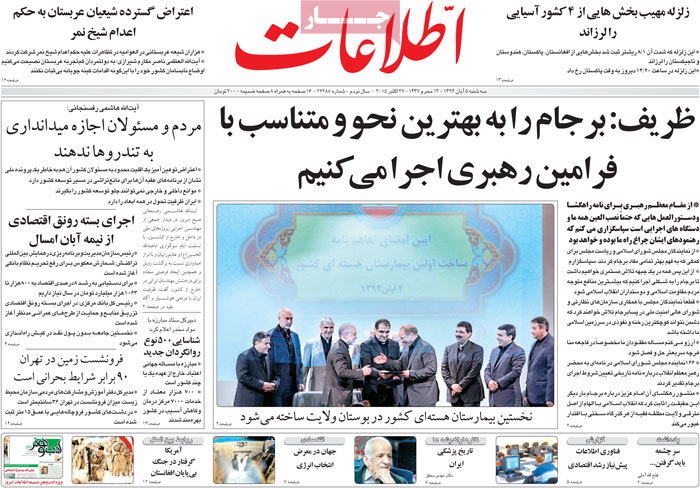
 

A look at Iranian newspaper front pages on Oct. 27


Afarinesh: “The president is waiting for the conclusion of a deal with P5+1 over Arak Reactor before issuing an implementation order,” said Director of the Atomic Energy Organization of Iran Ali Akbar Salehi.
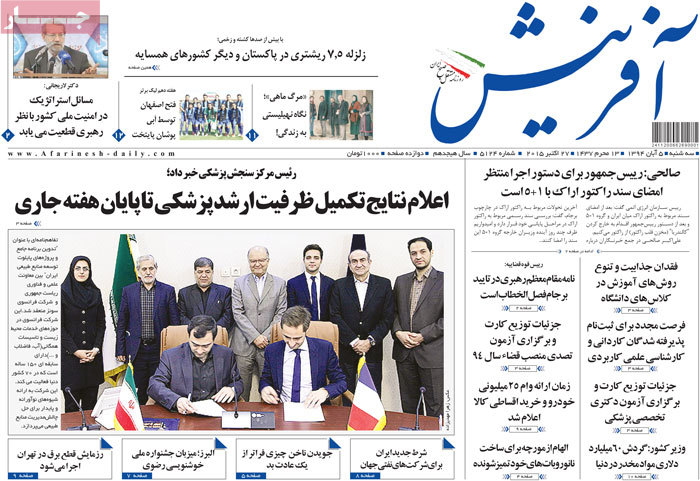
 

A look at Iranian newspaper front pages on Oct. 27


Aftab-e Yazd: Some at home are contributing to Iranophobia!

The daily has taken a close look at protests against the Iran visit of former British Foreign Secretary Jack Straw.

Aftab-e Yazd: “[Former chief nuclear negotiator Ali] Larijani was on the verge of reaching a deal in talks when he was replaced [by former President Mahmoud Ahmadinejad],” said Chairman of the Expediency Council Ayatollah Akbar Hashemi Rafsanjani.
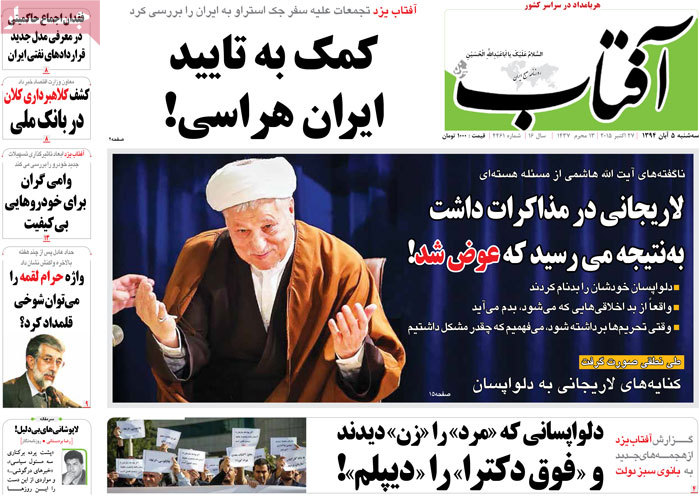
 

A look at Iranian newspaper front pages on Oct. 27


Arman-e Emrooz: The director of the State Inspectorate has revealed a $23 million embezzlement in Karaj.

Arman-e Emrooz: The four ministers who wrote a letter to the president to warn about the country’s economy regret their decision to do so, said Akbar Torkan, an advisor to the president.

Torkan also described the demands raised in the letter as inappropriate.
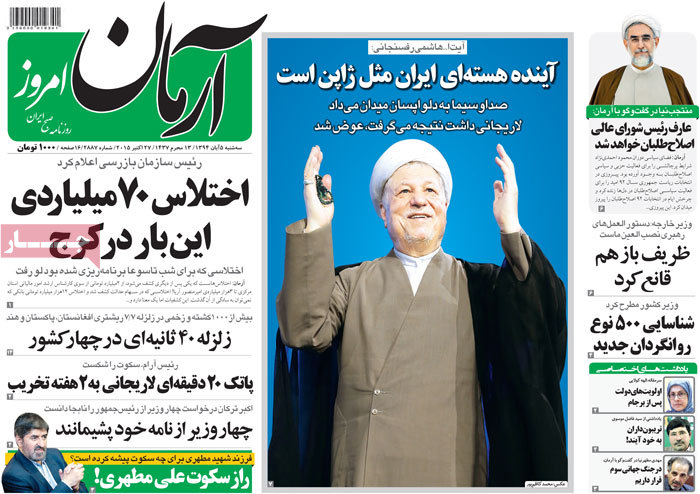
 

A look at Iranian newspaper front pages on Oct. 27


Ebtekar: The judiciary chief has defended the president, the parliament speaker and the foreign minister.

Some critics go too far in making allegations against senior state officials, said Ayatollah Sadegh Amoli Larijani.
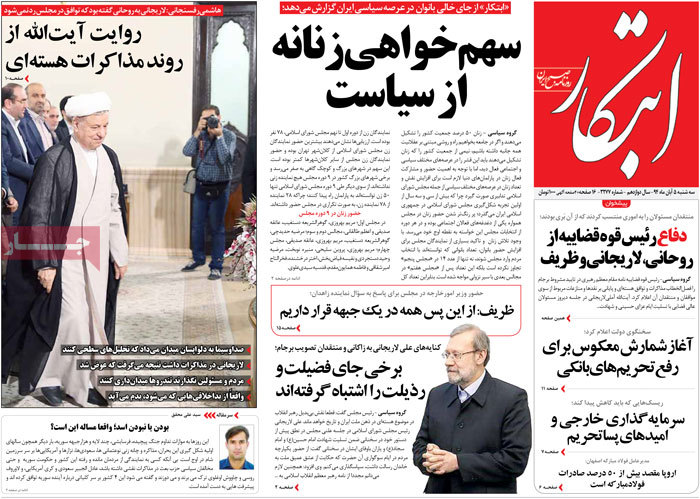
 

A look at Iranian newspaper front pages on Oct. 27


Etemad: All branches of government are making a stand against extremism.

Senior state officials have thrown their weight behind the nuclear negotiating team, criticizing hardline stances against the president, foreign minister and parliament speaker.

Etemad: Hashemi’s nuclear secrets:

I wanted to meet with Pakistan’s Abdul Qadeer Khan, but it never happened; the first post-war enrichment happened at Amirabad with the equipment we had purchased from Pakistan.
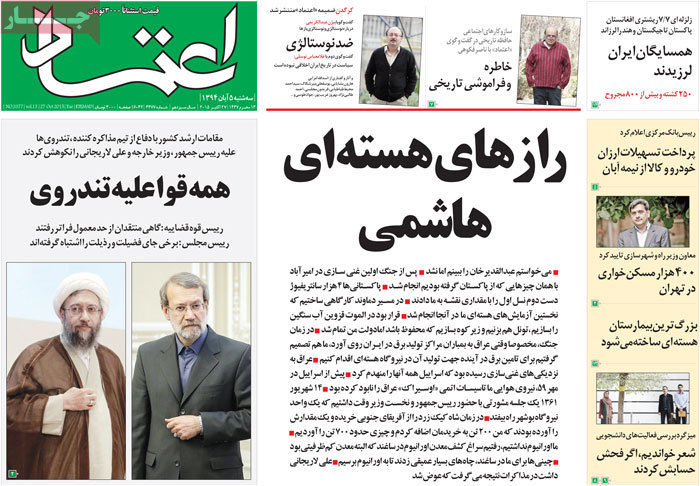
 

A look at Iranian newspaper front pages on Oct. 27


Hemayat: The judiciary chief has said that the tentative approval of the Joint Comprehensive Plan of Action is final.
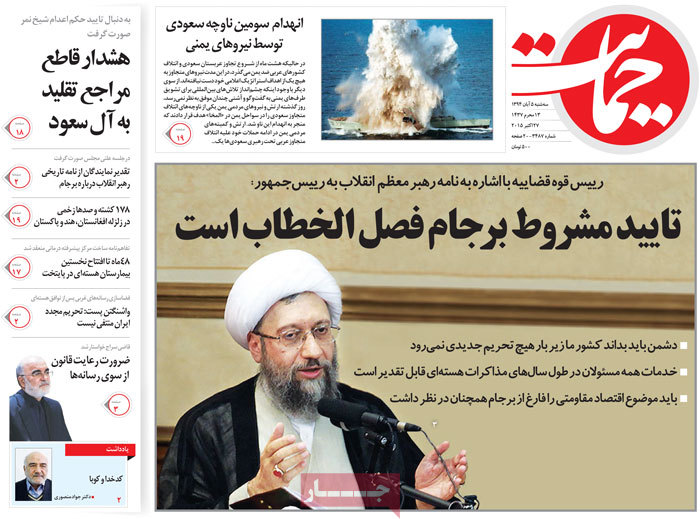
 

A look at Iranian newspaper front pages on Oct. 27


Iran: After the termination of sanctions, the banking system will undergo change.
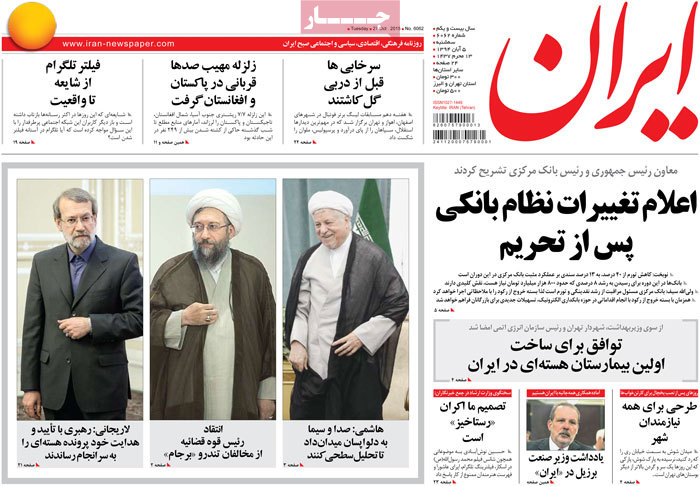
 

A look at Iranian newspaper front pages on Oct. 27


Javan: Iran’s Grand Ayatollahs have said they won’t remain silent over the [likely] execution of Ayatollah Nimr al-Nimr in Saudi Arabia.
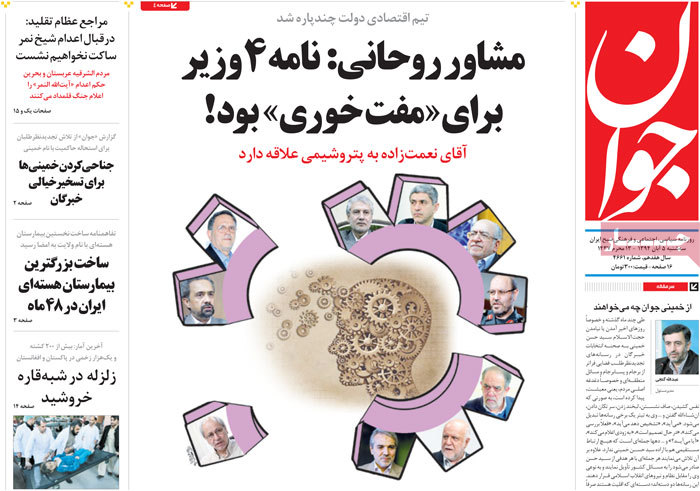
 

A look at Iranian newspaper front pages on Oct. 27


Jomhouri Islami: An agreement on construction in Tehran of the first nuclear hospital in West Asia has been signed.
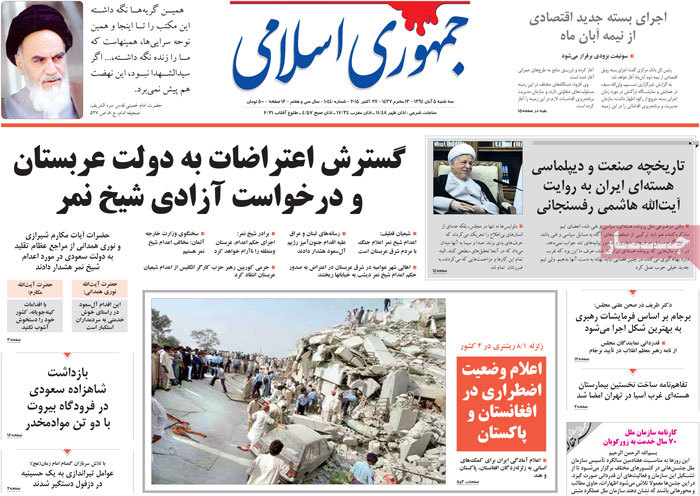
 

A look at Iranian newspaper front pages on Oct. 27


Kaenat: Former Canadian Prime Minister Jean Chretien has said that his country should reopen its Tehran embassy.

Kaenat: Eight Saudi princes support a plan to oust King Salman.
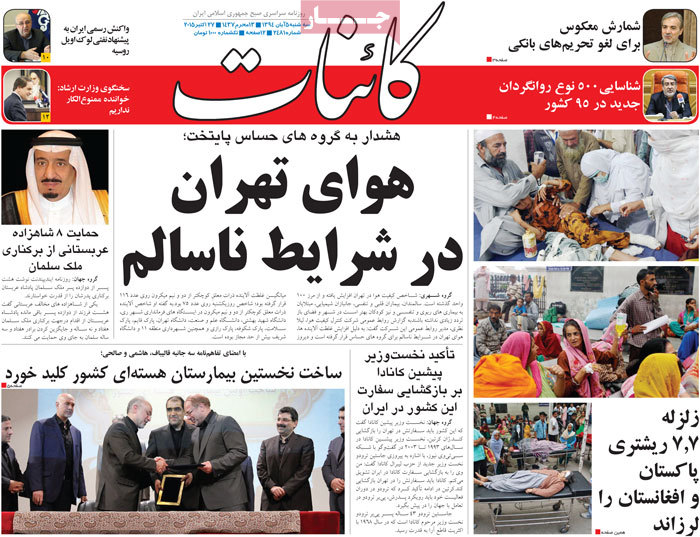
 

A look at Iranian newspaper front pages on Oct. 27


Kayhan: The defense minister has unveiled 16 new defense products.
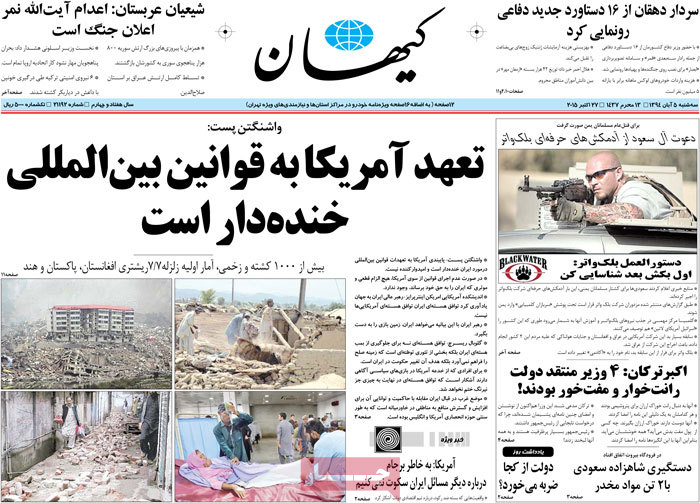
 

A look at Iranian newspaper front pages on Oct. 27


Resalat: “Iran’s nuclear activities are not limited to enrichment and heavy water,” said the country’s nuclear chief.
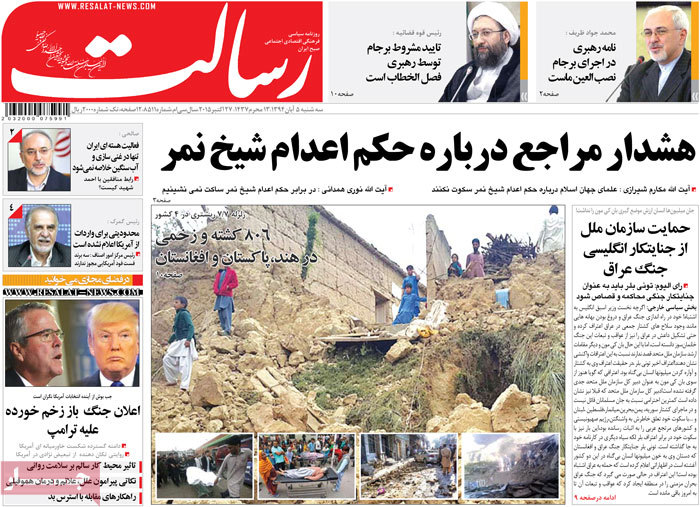
 

A look at Iranian newspaper front pages on Oct. 27


Sharq: “At our request Telegram [a messaging app which is very popular in Iran] blocked some immoral pages,” said the Iranian minister of communications.
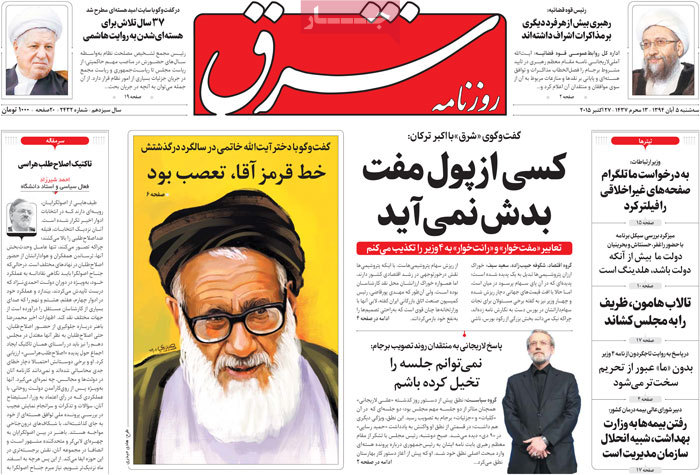
 

A look at Iranian newspaper front pages on Oct. 27


Siasat-e Rooz: Suspicious traffic!

Some experts believe Jack Straw serves as a link between British intelligence and some inside Iran.
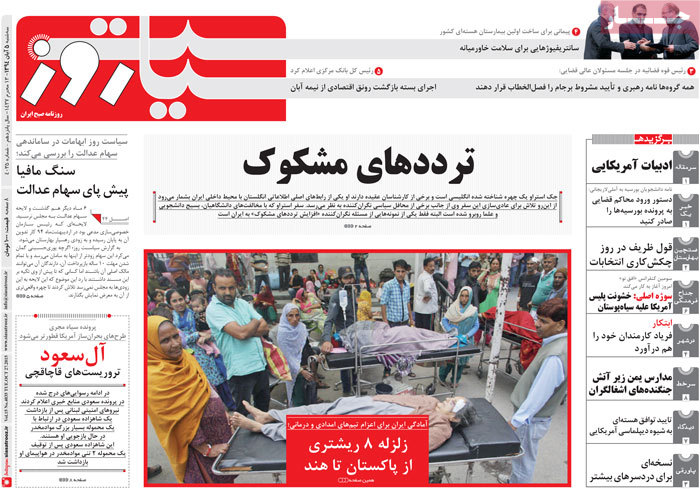

 

A look at Iranian newspaper front pages on Oct. 27


Excavations uncover ancient gate in Persepolis

perspolis

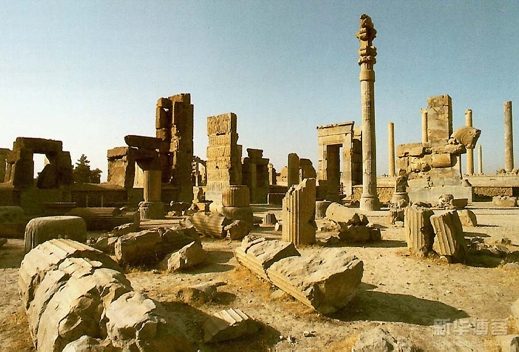
Excavations have uncovered a great ancient gate in Persepolis in a region called Tale-Ajori, the head of an Iranian excavation group has said.

Alireza Askari Chavardi said archeologists had been working to develop an insight into the functions of the ancient complex in Persepolis over the past century and to present a spatial analysis of coherence and conceptual links in the meaning of polis in the royal construction and the surrounding buildings.

As for the excavations, he said, “One of the most important sections of the region which directly leads to Persepolis is the northwestern part of the royal seat, also known as Firouzi Complex, on which the studies by archeological expeditions have been focused. It is also the place where the relics of a famous monument called Tale-Ajori lie.

“Any comprehensive study of Tale-Ajori, located 3km west of Persepolis, should be conducted in a broader framework of the past research in Parseh. Like past studies, we assume that the region in the vicinity of Firouzi Garden was part of a city relevant to the royal seat in Persepolis.”

He added, “The remains of Achemenid ascendancy near Firouzi Village has only gradually interested the archeologists who studied the areas surrounding the royal seat to locate the Royal Sacred Place in the broader limits of the city for nearly 100 years.”

He further said, “The most important findings of this season of the excavations are 30 glazed bricks adorned with images of winged animals which incorporate the mythic beasts of the Elamite and Achemenid eras in a tradition quite like those of Shusha and Mesopotamia in southwestern Iran. The exterior and the great hall of the gate of this section of Parseh are decorated with colorfully glazed bricks. The building was made of thousands of bricks. However, the majestic structure was reduced to a pile of dust, that’s why it is now called by locals Tale-Ajori.”
A joint Iranian-Italian team of archeologists explored Tale-Ajori for nearly 50 days in October and November 2013. Persepolis was founded by Darius of Achemenid in 521 BC and was the dynasty’s seat up to the decline of the empire in 331 BC.

The terrace where the royal houses were built envisages an urban landscape for Achemenid palaces with more than 100 ancient objects and great monumental works in the vicinity of the royal seat as well as the buildings scattered in an area of 600 hectares around Persepolis with gardens spread among these buildings.

The excavations were led by Dr. Chavardi from Shiraz University and Professor Pierre Francesco Caglieri from Italy’s University of Bologna and financed by Fars provincial Department of the Cultural Heritage, Handicrafts and Tourism Organization.

The season provided a reconstruction of the geomorphologic landscape of Persepolis and Parseh; 10 hectares of the areas near Tale-Ajori were documented through geo-electrical and geophysical instruments.

Iran will reveal its modern missile bases in due time

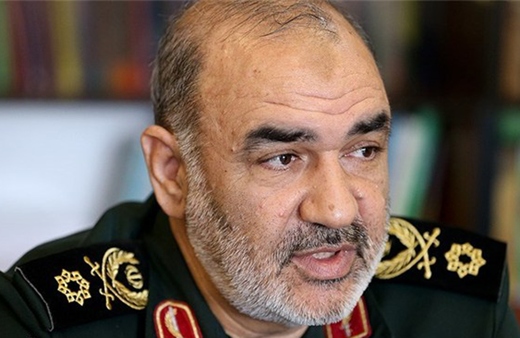
General Salami

A senior commander of the Islamic Revolution Guard Corps (IRGC) has said that the IRGC does not allow anyone to impose their wills on Iran.
Brigadier General Hossein Salami, the second-in-command of the IRGC, made the comment in an IRIB nightly news bulletin on Monday and added that today the Islamic Republic of Iran is the country which helps developments unfold in the region.

The following is the translation of highlights of the top commander’s remarks in the TV program as selected and released by entekhab.ir on October 27:

– If our forces do not engage [the enemy] in Syria today, we may have to engage them in other places.

– Iran’s presence in Syria has increased both qualitatively and quantitatively since a few months ago when Iran assumed an advisory role and got involved in rebuilding the Syrian army.

– We have to be present in Syria in order to adapt our experiences with new realities on the ground. Today Syria serves as a war university for us. Iranian forces are skillfully winning the hearts [and minds] of people in Syria.

– We have started to rebuild the Syrian army at a good pace.

– The Syrian army has launched a massive ground operation backed by the Russian air force. Already, this operation has largely tipped the balance on the battlefield, and crucial reports on this operation will be released in coming days.

– The transformation of the [Syrian] army backed by the presence of young forces has tipped the balance in Aleppo.

– Building on their new interpretation, the Russians have got engaged in Syria. They see Syria as part of their geopolitical position [in the region] and they need Syria for striking a balance over Ukraine.

– The Russians do not want to see their borders come under attack by Takfiris – the proxy infantry of the United States – from either Pakistan or Afghanistan or from the Syria-Turkey-Caucasus side.

– The Russians believe that forces from Asia and Chechnya account for 20 percent of the Takfiri commanders.

– The victories the al-Hashd al-Shaabi [the Popular Mobilization Forces in Iraq] have secured in Iraq indicate that positive changes are happening in Iraq, and triumphs in Fallujah and Baiji are further proof of such changes.

– The missiles Iran has developed have a zero margin of error.

– The underground missile base Iran showed the world [a while ago] was the country’s oldest base; we will show our modern bases in due time.

– The Supreme Leader of the Islamic Revolution, who is leading faithful forces, can manage any war in the world.

– The IRGC does not read the resolutions, because no one is allowed to dictate anything to us. Today the Islamic Republic is the one who dictates the developments.