Wednesday, December 31, 2025
Home Blog Page 4698

Iran’s FM says document on redesigning Arak Reactor ready

13940818162519336482824

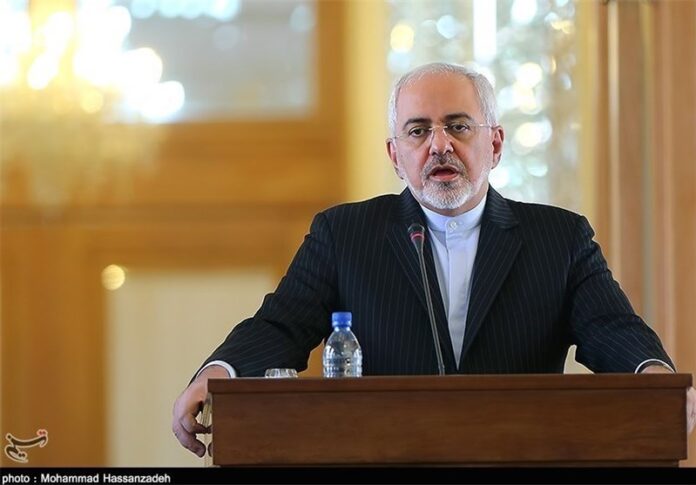
Foreign Minister Mohammad Javad Zarif on Monday said that an official document for re-configuring Iran’s Arak Reactor is ready, but the parties have yet to agree about signing it.

In a joint press conference with visiting Belgian Foreign Minister Didier Reynders Telematin in Tehran, Zarif said that the document is ready to be signed.

However, he added, how to sign the document has yet to be agreed upon, since all foreign ministers will not take part in upcoming Vienna talks due to be held on the Syrian crisis.

Zarif said that the document should be immediately signed, predicting that alternative ways may be used to get the document signed.

Under the Joint Comprehensive Plan of Action (JCPOA), Iran’s Arak heavy water reactor is to be reconfigured.

On Thursday, Director of the Atomic Energy Organization of Iran (AEOI) Ali Akbar Salehi said Iran was waiting for an official document from P5+1.

“Until that document is produced, we certainly will not take any measures on Arak heavy water research reactor,” he said.

[…]

Germans clinch Iran’s biggest solar projects

b340f493-6543-4597-8abc-1165d6f447c0

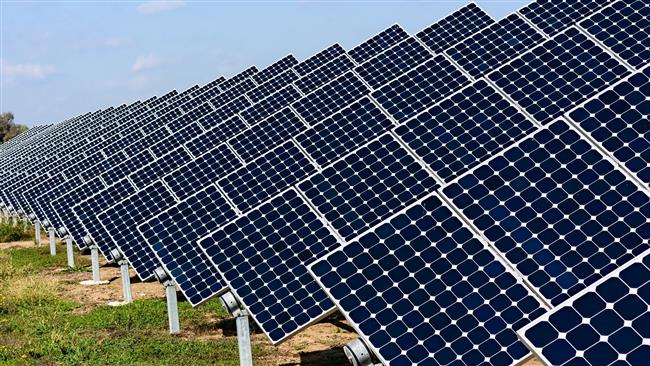
Iran’s Ministry of Energy has signed an agreement with a German company to build 1,250 megawatts of solar energy projects in Iran’s latest move to green its energy supply chain.

Under the deal, Germany will build several solar farms in Tehran, Tabriz and Isfahan as Iran embraces clean energy, Head of Tehran Electricity Distribution Company Ali Barband said Monday without naming the foreign firm.

The plan for Tehran is to build 500 MW of solar projects, including 150 MW in Kahrizak, 200 MW in Varamin and 150 MW in Malard.

A further 750 megawatts of photovoltaic energy will be installed in Isfahan and Tabriz, he told Tasnim News Agency.

“It was decided that the issue of land acquisition for construction of the plants is determined soon, after which a 20-year agreement for guaranteed purchase of power will be signed with the Germans,” Barband said.

In August, Iran and Germany signed a document for generation of 100 megawatts of wind power plus 400 MW of solar in the southern province of Khuzestan.

German companies are reportedly about to begin building wind farms in Iran at a cost of $331 million next year.

The government plans to install 5,000 MW of renewable capacity, putting Iran among the likes of the UK and France. The Ministry of Energy is already implementing 500 MW wind converters and further 100 MW biomass projects.

Iran’s renewable energy potential is huge, where only the wind capacity is estimated at 30,000 MW.

The existing renewable mix is focused on hydro power plants which produce about 8,500 MW. Just 150 megawatts of green power plants are currently operating in the country.

A consortium of Iranian, Indian and South Korean companies seeks to set up an energy park in Khuzestan Province in a project worth $10 billion, including 1,000 MW of solar projects.

Terrorism will spill beyond Mideast if not confronted: Rouhani

3792e560-2527-4be2-b0ef-a3686c4db0c3

President Rouhani has warned that if not confronted seriously, terrorism will spread from the Middle East to the entire world.

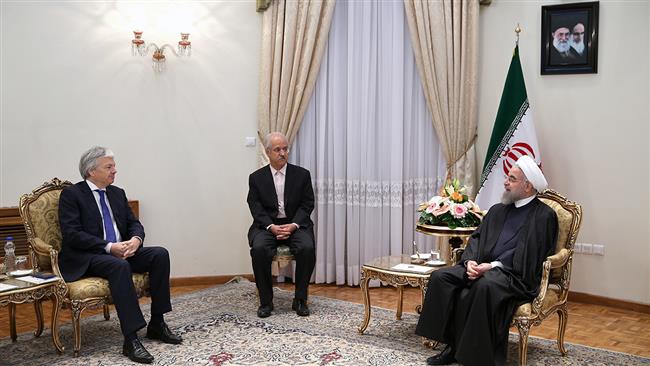
In a meeting with Belgian Deputy Prime Minister and Minister of Foreign Affairs, Didier Reynders, in Tehran on Monday, Rouhani called for a collective fight against terrorism and violence.

“Today, violence and extremism have engulfed a large part of the Middle East region, and if these phenomena are not confronted seriously, the consequences of violence and terrorism will not definitely be confined to this region and will spread to other areas in the world,” the Iranian president said.

He added that Iran has properly played its role in the fight against terrorism and urged all countries to give priority to the campaign against the common threat of terror.

Rouhani emphasized the importance of strengthening cooperation between Iran and the European Union in the fight against terrorism and expressed hope that collective cooperation would restore stability and security to the region.

The president recalled “cordial and constructive” relations between Iran and Belgium and said the two countries should improve relations in different fields such as in economic, industrial, energy, scientific, academic, research and tourism sectors.

“The Islamic Republic of Iran, due to its very important geopolitical and geoeconomic position, can be a center to organize and expand economic ties of Belgium and the European Union with the entire region and a timely use of this opportunity will be beneficial to our nations,” Rouhani said.

The Belgian foreign minister, for his part, said his country attaches significance to the serious and collective fight against terrorism.

Reynders added that Iran plays an effective role in settling regional problems and called for political solutions to the crises in Syria, Yemen, Iraq and Libya.

West threats hinder Iran-P5+1 ties

Secretary of Iran’s Supreme National Security Council (SNSC) Ali Shamkhani said on Monday that the persistence of threats against Iran will hinder Tehran’s cooperation with P5+1.

“Any unconstructive act or the persistence of threats and hostility [toward Iran] will prevent the expansion of cooperation and will lead to [Iran’s] revision of [its] policies,” Shamkhani said in a meeting with the Belgian foreign minister.

He pointed to a nuclear agreement reached between Iran and P5+1 in mid-July and said that the proper and on-time fulfillment of the commitments by P5+1, including the removal of all sanctions, will be a test to determine the six countries’ determination to bolster bilateral cooperation.

“The nuclear agreement between Iran and P5+1 have created new opportunities for economic cooperation between Iran and Europe,” the SNSC secretary added.

[…]

The Belgian foreign minister, for his part, said Brussels has always maintained relations with Tehran and expressed hope that the two sides would improve ties following the removal of sanctions.

ME woes must be solved through diplomacy

Deputy Foreign Minister for Arab and African Affairs Hossein Amir Abdollahian stressed the importance of resolving Middle East woes through political and democratic solutions.

In a meeting with Reynders Monday, the Iranian official added that terrorism is the main and common problem of countries in the Middle East and Europe and called for the fight against the scourge.

The Belgian foreign minister, for his part, said regional problems could be only settled through political mechanisms.

He added that regional problems are rooted in terrorism and extremism and called on all countries in the region and across the world to jointly solve the crises in the Middle East.

The Belgian foreign minister arrived in Iran on Sunday at the head of a delegation for talks with the country’s senior officials.

President Rouhani to visit Italy, Vatican, France

Hassan-Rouhani

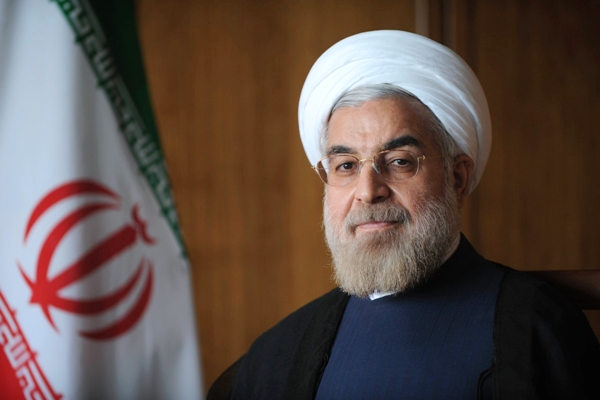
President Rouhani will pay an official visit to Italy, the Vatican and France and deliver a speech at the Leaders’ Forum of the United Nations Educational, Scientific and Cultural Organization (UNESCO) in Paris.

Rouhani will set off for Rome on Saturday at the head of a high-ranking delegation to hold talks with senior Italian officials, the Presidential Office’s Deputy for Communications and Publicity Affairs Parviz Esmaili said on Monday.

He added that the president is scheduled to hold meetings with Italy’s President Sergio Mattarella and Prime Minister Matteo Renzi.

Rouhani will also hold a meeting with Italian investors and leading industrialists in Rome, Esmaili said.

He said President Rouhani will then head for the Vatican to meet Pope Francis and Prime Minister Archbishop Pietro Parolin.

He added that Rouhani will also address UNESCO Leaders’ Forum as a special guest at the organization’s headquarters in Paris on November 16.

Esmaili said the president plans to sit down with his French counterpart Francois Hollande in Paris on November 17.

He noted that during Rouhani’s four-day visit, Iranian officials accompanying the president will sign a number of memoranda of understanding for expansion of relations in different fields.

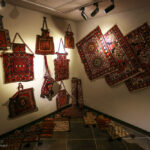
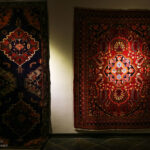
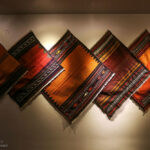
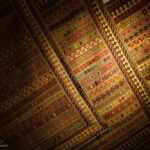
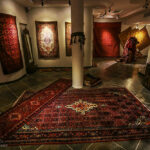
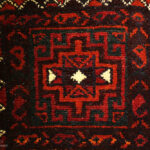
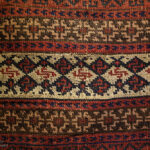
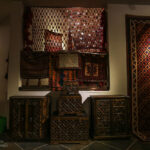
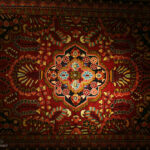
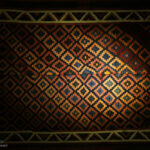
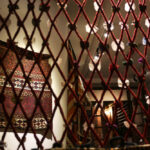
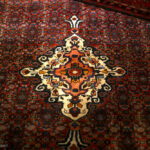
Exhibition of tribal hand-woven rugs (PHOTOS)

Arak118

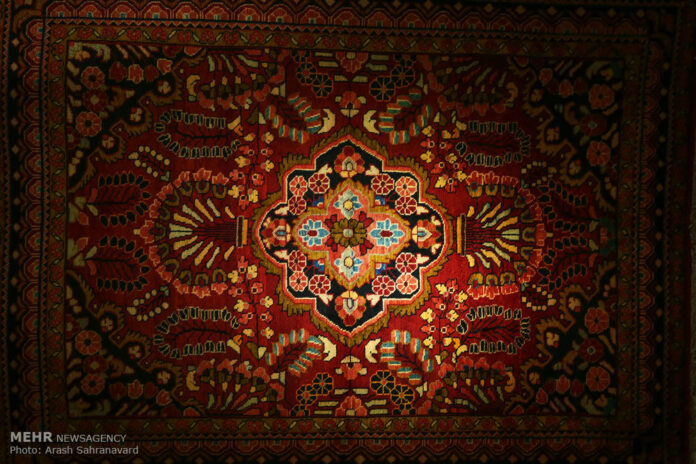
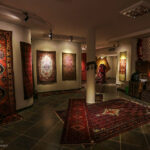
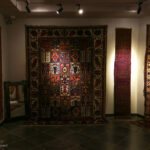
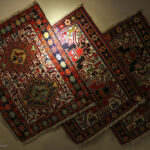
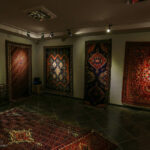
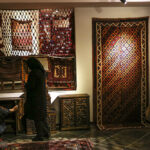
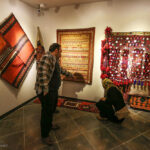
An exhibition of rugs woven by tribal people has opened in Arak, the capital of Markazi Province.
More than 150 items aged between 30 and 70 years are on display. They come from provinces such as Hamedan, Kurdistan and Markazi.
The following photos of the exhibition have been published by Mehr News Agency:


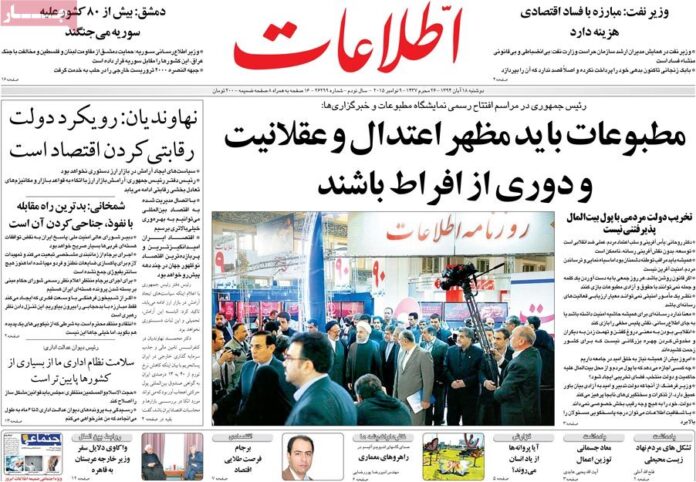
Highlights of Ettela’at newspaper on Nov. 9

ettelaat-daily-newspaper-09-62

 The press should be a symbol of moderation, prudence and avoidance of extremism, President Hassan Rouhani said.

Speaking at the inaugural of the Press and News Agencies Exhibition, the president said that using public funds to snipe at a popular government is unacceptable.

 “The fight against corruption comes with a price tag,” said Oil Minister Bijan Namdar Zanganeh.

He further said that lack of discipline and lawlessness breed corruption. “Babak Zanjani [a young billionaire who is on trial for corruption] has not paid back his debts [to the Oil Ministry] and is not about to do so.”

 [Militants from] 80 countries are fighting against Syria, said the Syrian information minister.

In another development, the Al-Nusra Front [an affiliate of Al-Qaeda] has recruited 2,000 foreign militants in Aleppo.

 The president’s chief of staff has said that the administration’s goal is to render the country’s economy competitive.

Mohammad Nahavandian further said a managed return to the international fold can see economic productivity grow to higher levels.
 The worst way to fight infiltration is to make it a factional issue, said the secretary of the Supreme National Security Council.

Ali Shamkhani further said Iran’s response to the West’s probable failure to comply with its nuclear commitments will be very clear.

 The head of the Administrative Justice Court has said that the administrative system in many other countries is healthier than in Iran.

He said the Islamic Consultative Assembly needs to reform faulty laws.
Deputy FM: Iran should not scare away its neighbors

Rahim pour

The deputy foreign minister for Asia and Pacific affairs has said that Iran should not walk down the path which may frighten its neighbors and cause them to turn to Israel.
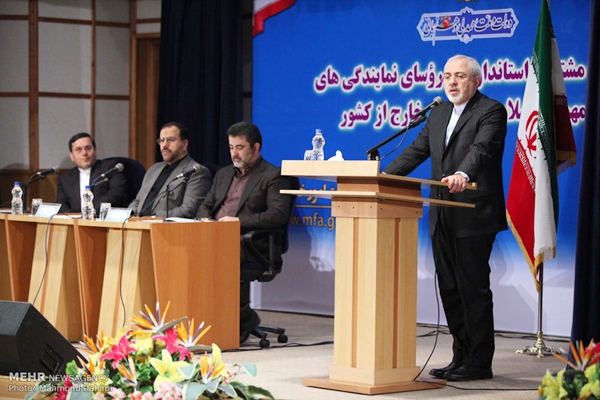
Speaking at a joint gathering of governors general and heads of Iran’s diplomatic missions oversees, Ebrahim Rahimpour further said that Iran needs to show that it is after a win-win game and the way we treat our neighbors is key to our success.

The Islamic Republic News Agency (IRNA) on Monday covered the joint meeting and remarks by the Foreign Ministry official. The following is the translation of what else Rahimpour said there:

The deputy foreign minister said that governors general serve as a shield inside the country [to keep it safe] and ambassadors are the country’s lookouts abroad.

He further said that the eleventh government looks at the outside world through a non-security lens, although its head [President Rouhani] has a strong record in security areas.

The Foreign Ministry official went on to say that 11 out of 15 countries in this region have oil and gas reserves, adding that Iran can have good ties and do business with them.

The geographical position of the Islamic Republic of Iran is unique, Rahimpour said, adding that the country faces some inefficiency in the transit sector, though. “We need to shore up transit [of commodities and services] and promote the ways technical and engineering services are rendered.”

The Interior Ministry is often viewed as a body in charge of security issues, but this ministry – like the Foreign Ministry – should take into account the bread-and-butter issues of the public, he said, adding that the two ministries are expected to devise a formula to deal with economic issues.

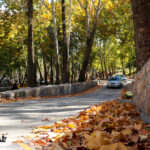
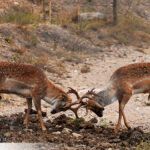
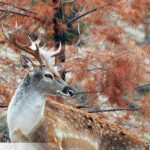
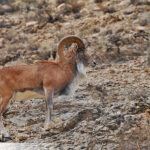
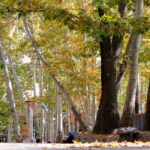
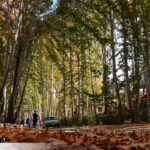
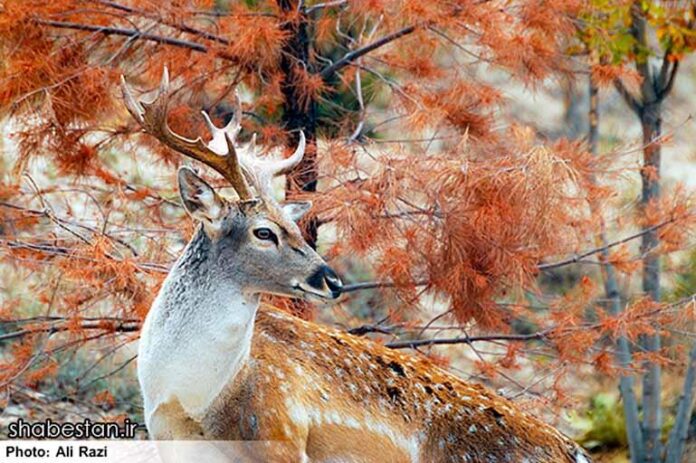
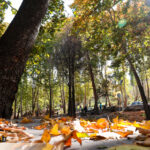
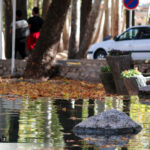
Natural beauty of autumn in northeastern Iran (PHOTOS)

Baba-Aman Park

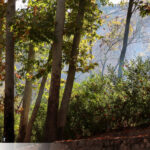
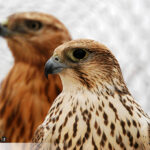
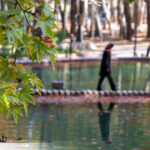
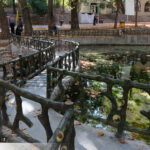
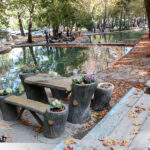
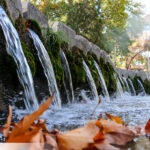
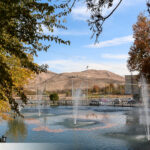
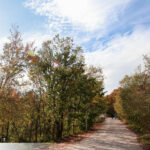
The scenic beauty of Baba-Aman Park, 10 km from Bojnourd in northeastern Iran, in autumn inspires awe among visitors.

The following photos of the park, which is home to a reproduction center for Persian fallow deer, have been published by Shabestan News Agency:


Put an end to discussions over the Iran nuclear deal

1898686 (1)

Mohammad Javad Zarif has said that the Joint Comprehensive Plan of Action is now behind us, calling for an end to discussions surrounding JCPOA.

The foreign minister made the comment on Monday in a joint meeting of governors general from across the country and heads of Iran’s diplomatic missions abroad and added that JCPOA gets a low mark [5 out of 100] when looked at through a pessimistic lens and a high mark [95 out of 100] when viewed through an optimistic lens. “If we fail to seize the opportunity that has arisen in the wake of JCPOA, the mark will plummet to zero. If we get involved in bickering, we will get neither 5 nor 95.”

The following is the translation of what else Zarif said in the gathering as reported by alef.ir on November 9:

JCPOA

We should take into account the timing of the Iran nuclear deal and the country’s conditions if we seek to review JCPOA. In 2011, Iran sold 2.5 million barrels of oil per day, that figure dropped to 900,000 barrels two years later. The enemy was trying to push down Iran’s oil sales even further. Iran’s oil exports would have been somewhere in the neighborhood of zero if Iran and P5+1 had not inked the Geneva Agreement and the Joint Plan of Action.

Some close their eyes to realities on the ground and pay no heed to the fact that Iran’s economic growth began to slip into negative territory back in 2011 [-6 percent]. Now the Joint Comprehensive Plan of Action is over, whatever it was. I recommend those supporting the government stop discussing JCPOA because we need to tap into collective measures, reach a national consensus and seize the post-JCPOA opportunities.

Infiltration

We should not fight over ‘infiltration’. We are all following the Supreme Leader’s guidelines and are concerned about infiltration [of outsiders]. The Foreign Ministry is meticulously monitoring foreigner shots at infiltration. We believe that the best way to counter infiltration is to take the initiative. Time has come for us to seize the initiative and make maximal use of the Joint Comprehensive Plan of Action.

We are all anxious to seize the post-JCPOA opportunities to serve the interests of the public, the country, the establishment and the revolution. The Supreme Leader has repeatedly talked about the threat of infiltration and abuse by the revolution’s ill-wishers [of the nuclear deal].

JCPOA can turn into an opportunity for us, but we will face grave dangers if we lack planning and vigilance, and get involved in infighting rather than trying to take the initiative. We should not let domestic differences play into the hands of the ill-wishers.

Today the ill-wishers and even Iran’s regional friends have become agitated and terrified, because their long-term investment and plans to portray Iran as a country in which a security-charged atmosphere prevails have produced no results. They are scrambling to stop their plans from failing. That’s why we need to make thoughtful planning on that front.

Extremism and sectarianism

The threat of extremism and sectarianism has its roots in shortsighted and flawed policies of certain regional and international players. Today violent groups which have grown in the region act in the name of Islam and ideologically influence teenagers and young adults.

The barbaric crimes these groups commit are not logically acceptable. These groups pose a security threat to the entire world, but certain countries in this region have not yet realized the threat of extremism. As long as they do not accept the fact that such a threat exists, Takfiri groups will be given extensive support by certain institutions within sovereign states in the region.

Iran’s ambassadors and governors general can have consultation to review different aspects of extremism threat, offset such a threat and stop sectarianism, tribalism and Shiite-Sunni divisions from growing. We need consultation and like-mindedness in this regard.

Foreign Ministry

Over the past three decades, the Foreign Ministry has not developed expertise on the economic front. Governors general can offer counseling to the Foreign Ministry and introduce the capabilities and needs of their provinces to the ministry. Contacts between the provinces and the Foreign Ministry can help meet the needs of the provinces and make use of their potential.

An envoy makes headlines in Malaysia even before arrival in KL

Afkham

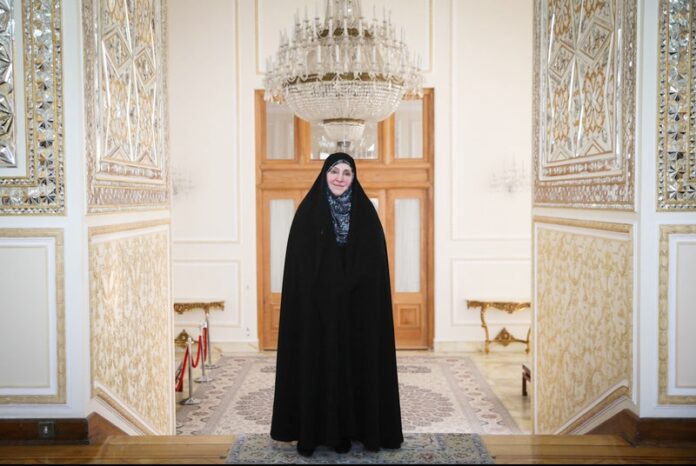
Marzieh Afkham, Iran’s new ambassador to Malaysia who has yet to arrive in Kuala Lumpur, has made headlines in this Southeast Asian country.

The website of the Malaysia Insider has said “Iran has appointed its first woman ambassador since the 1979 Islamic Revolution, naming Foreign Ministry officer Marzieh Afkham to head its embassy in Malaysia.”

It also quoted Foreign Minister Mohammad Javad Zarif as saying “Choosing Afkham as ambassador took a few minutes, but choosing her successor took four months.”

The Sun Daily too covered news on Afkham’s new assignment and said, “Iran’s moderate President Hassan Rouhani called on ministers to appoint women to high posts and said his government would stand up against discrimination.”

The daily further said Iranian women may hold key posts, including in parliament and the Cabinet.

The Malay Mail Online was another Malaysian newspaper that gave coverage to news of Afkham’s appointment as ambassador to Kuala Lumpur.

Before being appointed as ambassador, Marzieh Afkham served as Foreign Ministry spokeswoman and before that as the head of the Foreign Ministry’s Media and Public Diplomacy Center.

At the induction ceremony of Afkham’s replacement Sunday, Foreign Minister Zarif said that, “Today, the first female ambassador of the Islamic Republic of Iran is heading for Malaysia, which is a friendly, brotherly and very important country to Iran, to bolster ties between the two countries.”