A wildlife census at Golestan National Park has come with the apprehension of a number of poachers.
The following images have been released by Mehr News Agency:


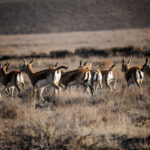
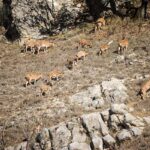
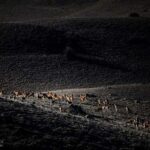







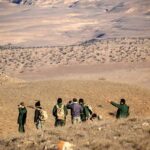
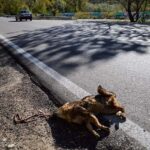
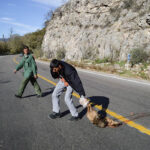
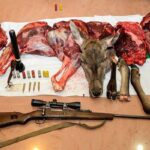
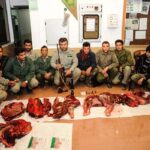



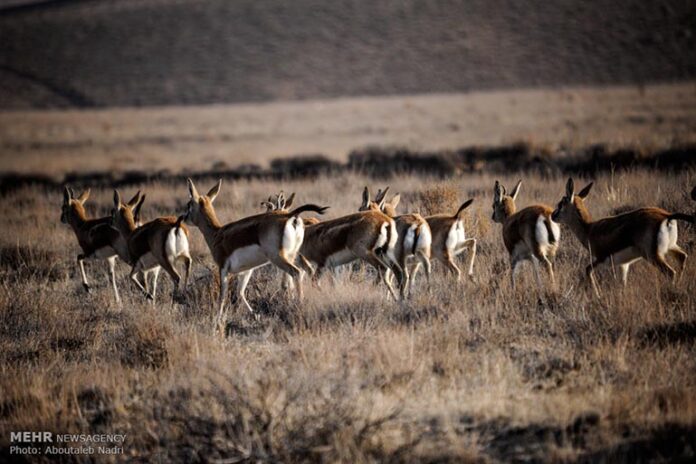
A wildlife census at Golestan National Park has come with the apprehension of a number of poachers.
The following images have been released by Mehr News Agency:
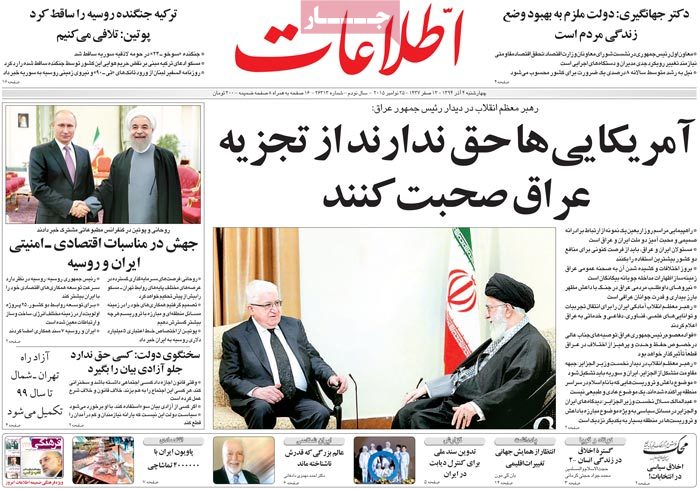
The Leader’s comments in three meetings with the heads of state and government in Tehran to attend a gas conference dominated the front pages of Iranian newspapers on Wednesday. Also on the cover of the dailies was the shoot-down of a Russian jet fighter by Turkey.
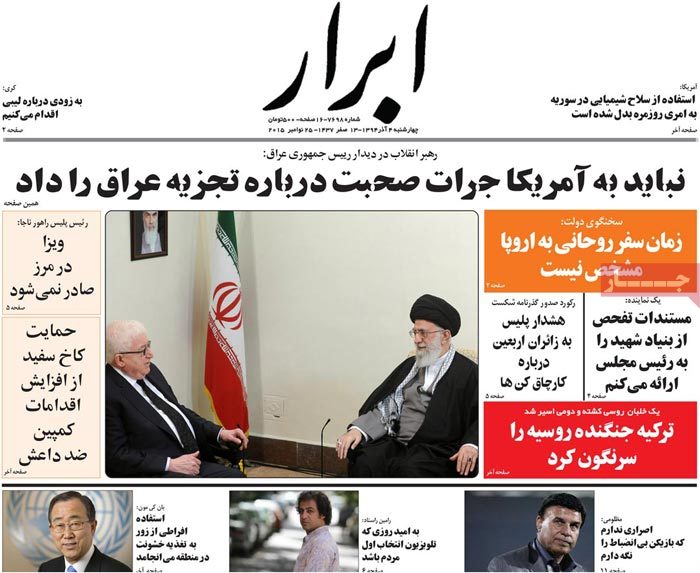
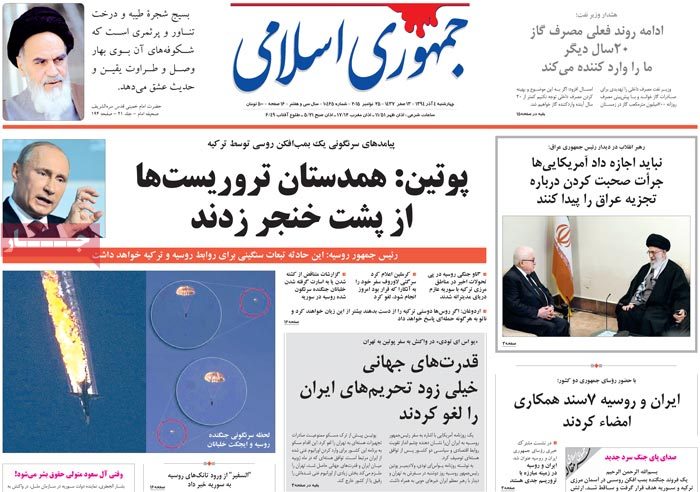
Ettela’at: The Americans have no right to talk about Iraq’s disintegration, said the Supreme Leader in a meeting with the Iraqi president.
Ayatollah Khamenei further said Iranian and Iraqi officials need to make the most of the existing opportunity to advance the interests of the two nations.
Abrar: The number of Iranians applying for passport [to take part in Arba’een ceremonies in Iraq] has hit an all-time high.
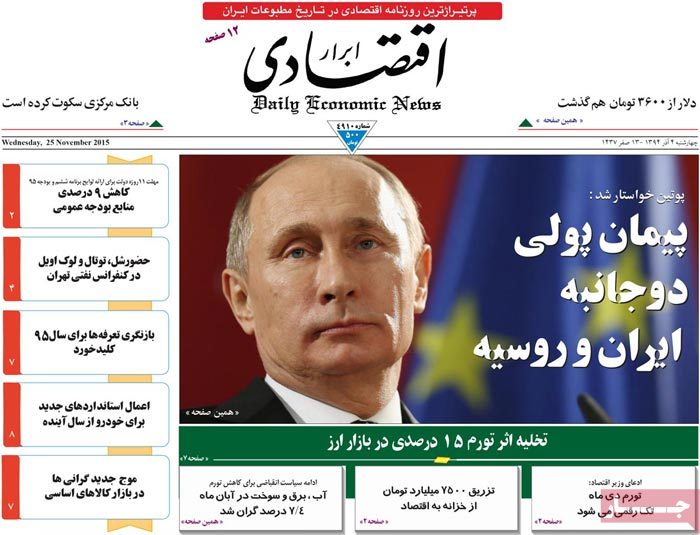
Abrar-e Eghtesadi: President Putin has called for a two-way monetary pact between Iran and Russia.
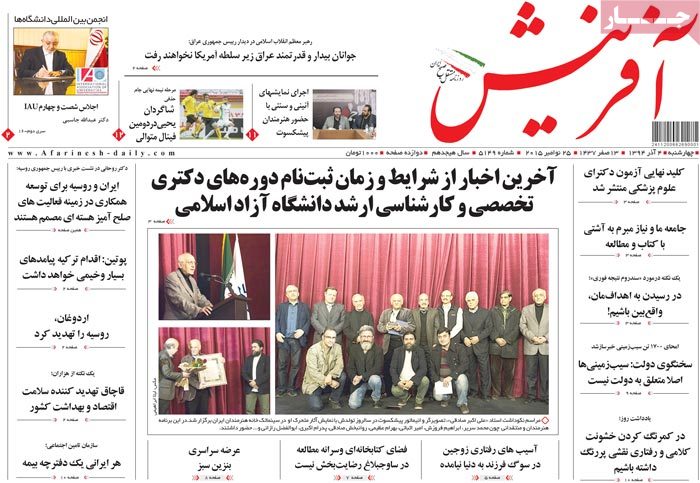
Afarinesh: The government spokesman: Those potatoes did not belong to any government institution.
[Earlier, reports that 1,700 tons of potatoes have been disposed of in a bid to keep prices up kicked up a stir in parliament.]
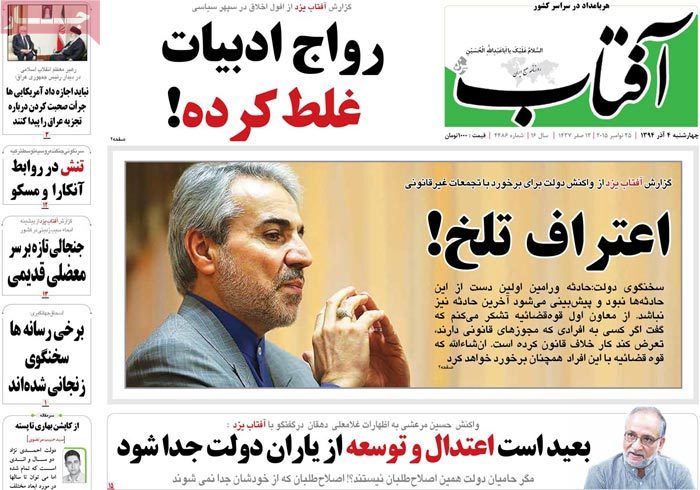
Aftab-e Yazd: A bitter admission!
What happened in Varamin [an attack on an authorized gathering of reformists] was not the first such incident and is unlikely to be the last, said the government spokesman.
Mohammad Bagher Nobakht further said he hopes the assailants are seriously dealt with by the Judiciary.
Arman-e Emrooz: Morality police have made a comeback to the streets of Tehran.
Those who flout the dress code will be dealt with.
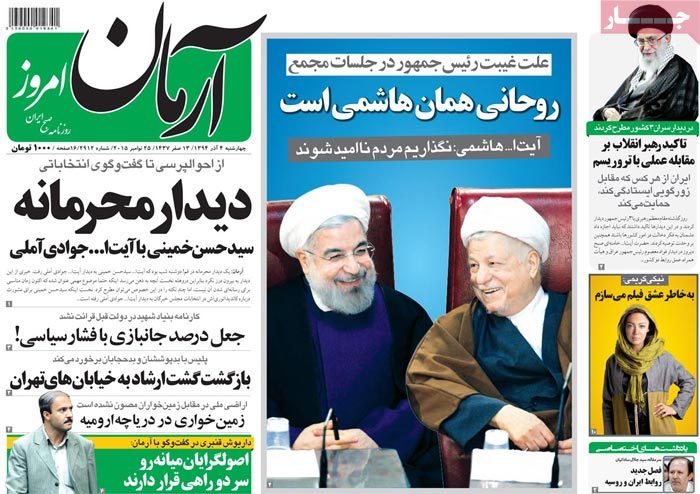
Asr-e Rasaneh: Representatives of 33 countries will arrive in Tehran next week to attend a conference on introduction of new oil contracts.
Asr-e Rasaneh: Exports of handicrafts have posted a 36 percent rise.
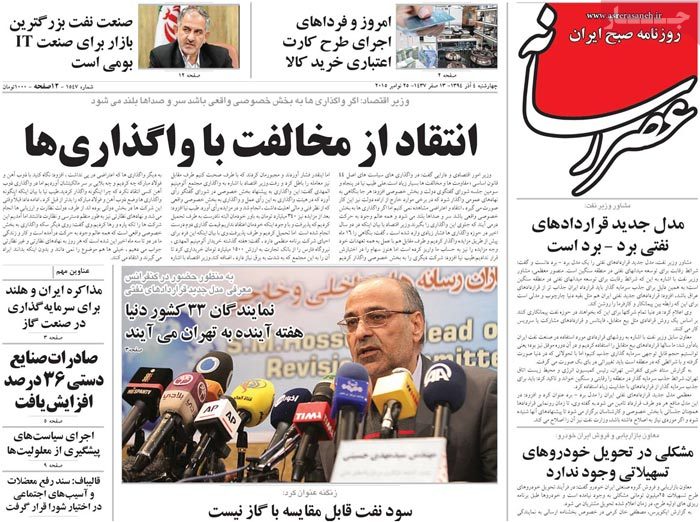
Ebtekar: Promotion of Iran-Russia ties
The two countries have signed seven cooperation agreements.
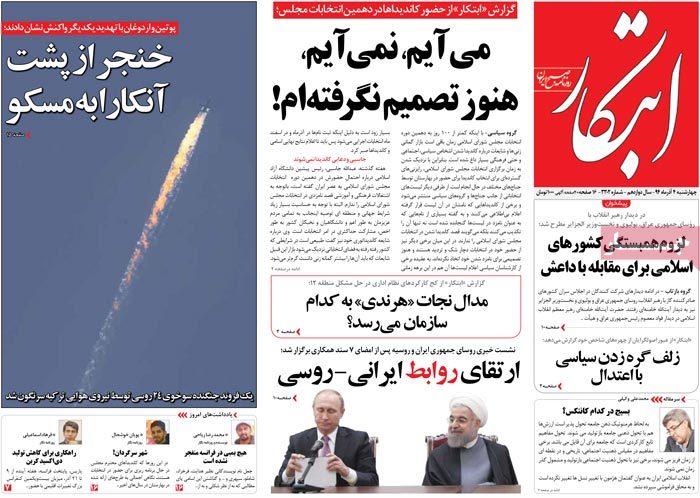
Emtiaz: The deputy secretary general of the Anti-Drugs Commission has said that 133 labs cooking synthetic drugs have been closed down.
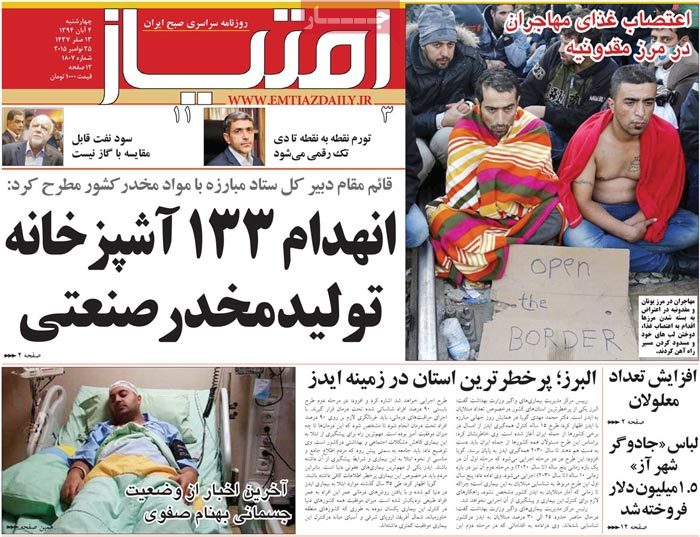
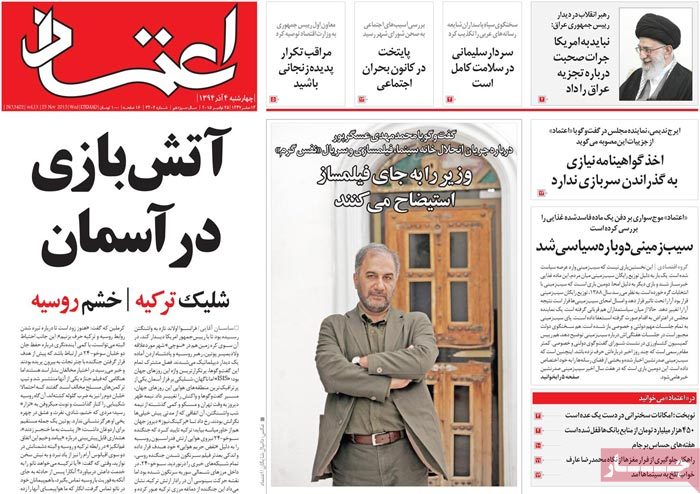
Etemad: A spokesman for the Islamic Revolution Guard Corps has denied Arab media reports that Major General Ghasem Soleimani has been injured.
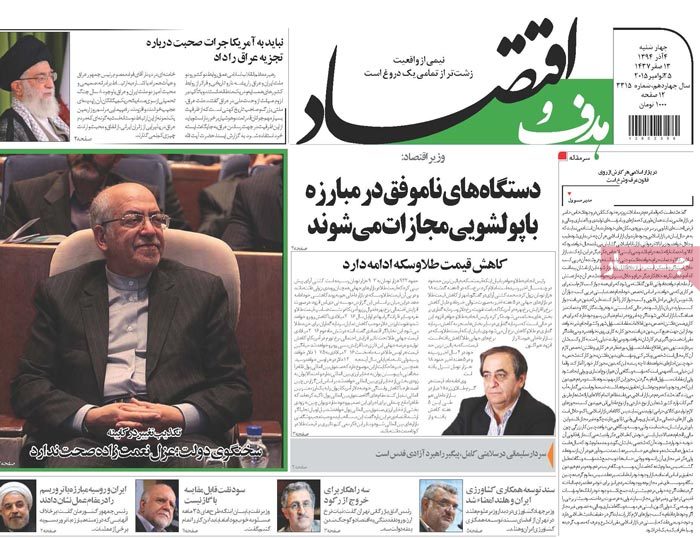
Hadaf va Eghtesad: Reports that the Cabinet will be reshuffled have been rejected.
The government spokesman has said there is no truth to rumors that the industry minister will be replaced.
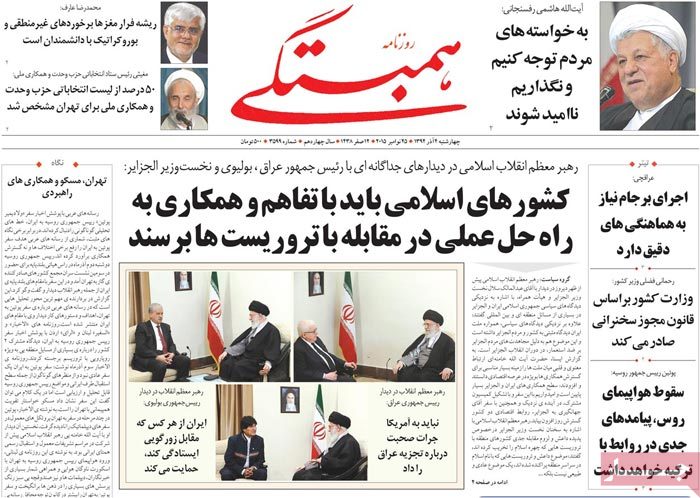
Hambastegi: Chairman of the Expediency Council Ayatollah Akbar Hashemi Rafsanjani has said, “Let’s take heed of what members of the public want and not allow them to get frustrated.”
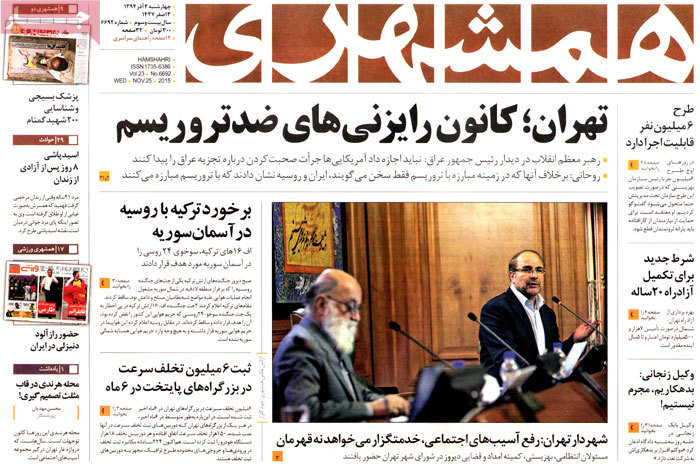
Hamshahri: Tehran turned into the hub of anti-terrorism consultations.
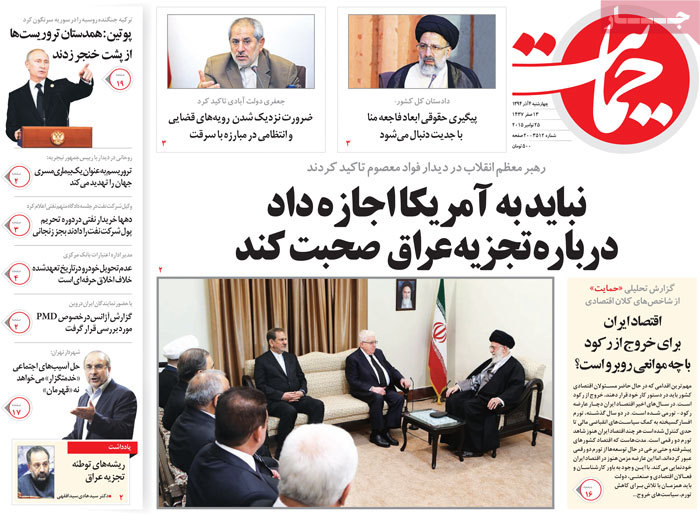
Hemayat: The attorney general has said that the legal aspect of the Mina tragedy will be seriously pursued.
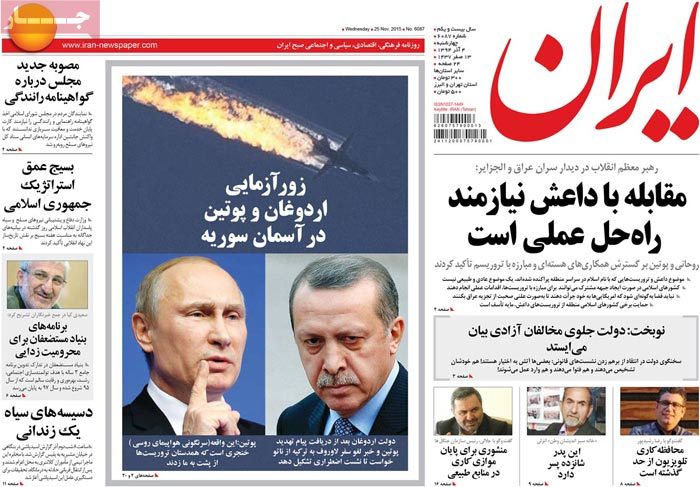
Iran: A new decision by parliament on requirements to get a driver’s license
Under the new decision, to get a license, male applicants do not need to produce evidence that that they have served out their military service or that they are exempt from the service.
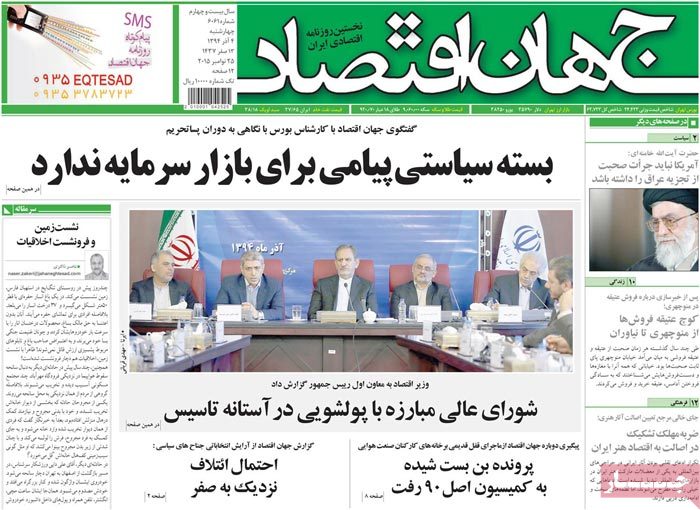
Jahan-e Eghtesad: The first vice-president has said that a Supreme Anti-Money Laundering Council will be set up soon.
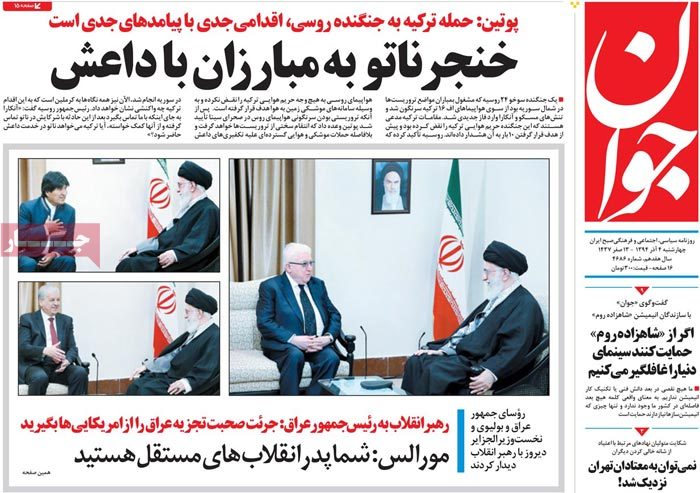
Javan: NATO has stabbed those who are taking on IS.
President Putin has described the downing of the Russian fighter jet as a serious act with serious ramifications.
Jomhouri Islami: Putin has said that allies of the terrorists have stabbed us in the back.
The Russian president further said that the downing of a Russian fighter by Turkey will have a serious repercussion on relations between Moscow and Ankara.
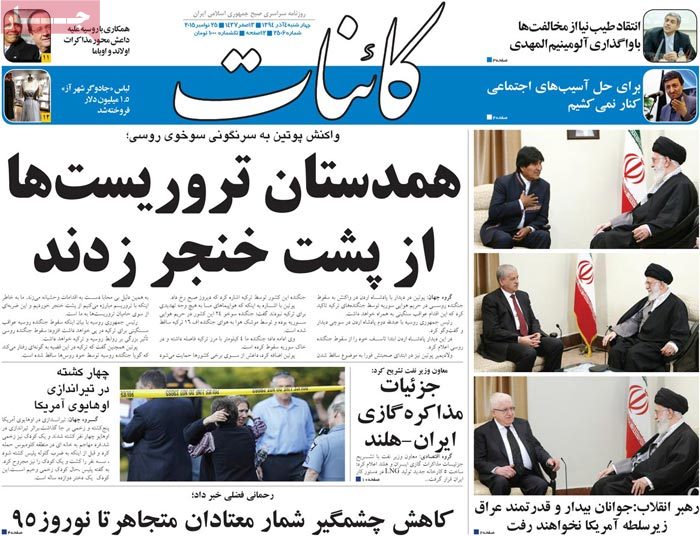
Kaenat: The number of homeless addicts who openly use drugs in public places will be down dramatically by the end of the year [March 21, 2016], the interior minister has predicted.
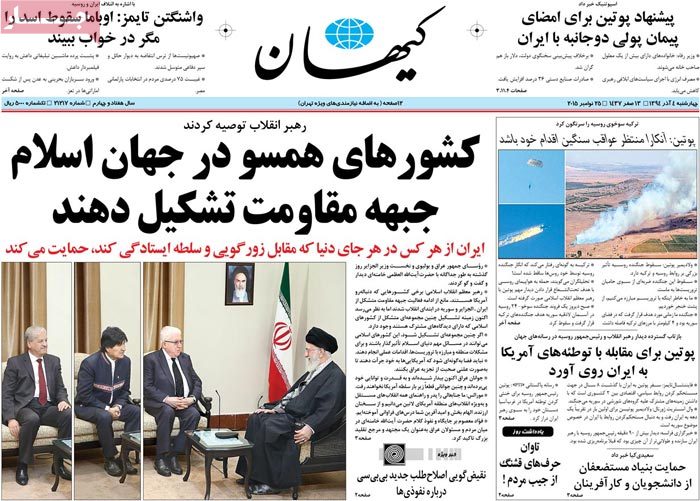
Kayhan: Like-minded countries in the world of Islam should form a resistance front, said the Supreme Leader.
Ayatollah Khamenei further said Iran supports anyone who stands up to hegemony and bullying anywhere in the world.
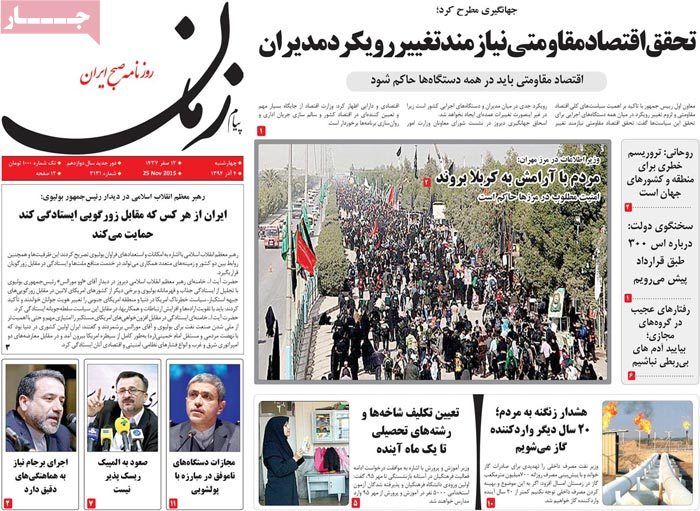
Payam-e Zaman: The oil minister has warned that continued consumption at the current level may turn Iran into an importer of natural gas in 20 years’ time.
Payam-e Zaman: The government spokesman has said that procurement of S300 missile defense system from Russia is going ahead according to what has been stipulated in the deal.
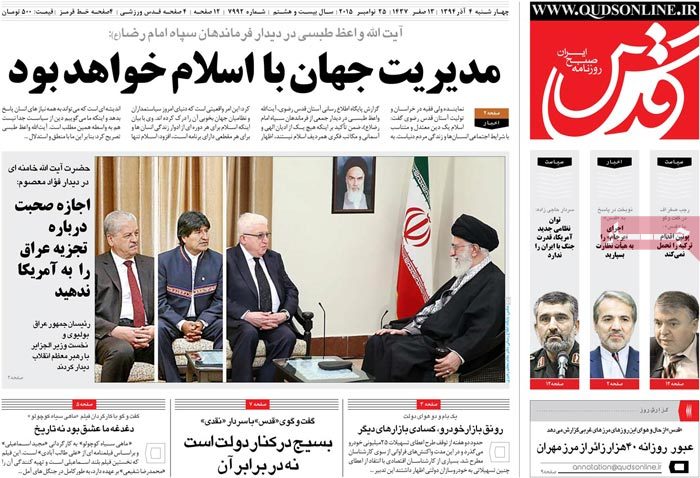
Qods: The commander of the Basij (Volunteer) Force has said that his men stand by the government, not against it.
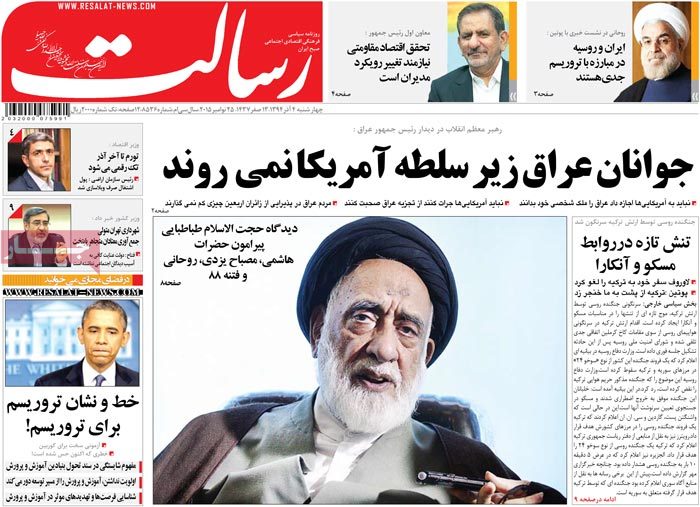
Resalat: Realization of resistance-based economy requires a change in the approaches employed by state managers, said First Vice-President Eshagh Jahangiri.
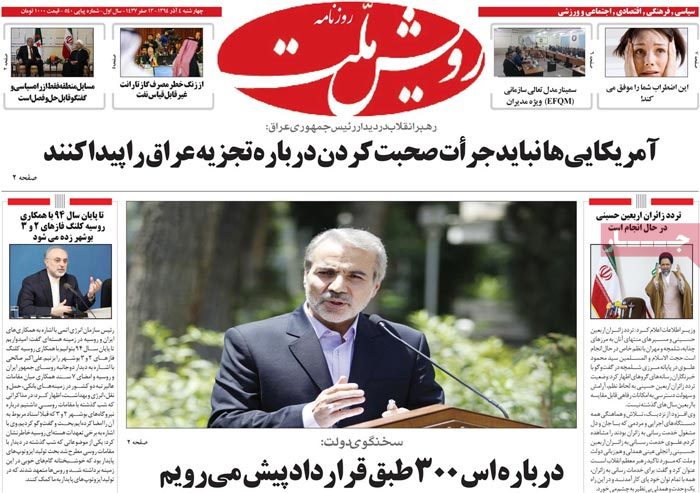
Rooyesh Mellat: In less than four months, ground will be broken on Phases 2 and 3 of Bushehr Power Plant in cooperation with the Russians, said the director of the Atomic Energy Organization of Iran.
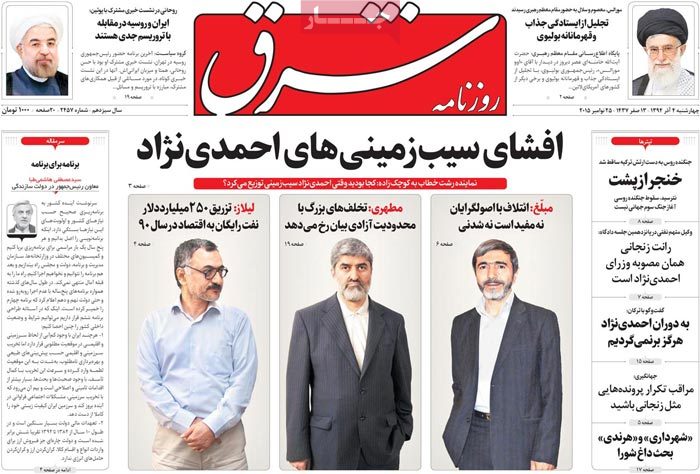
Sharq: Iran and Russia are resolute in countering terrorism, President Rouhani said at a joint press conference with his Russian counterpart.
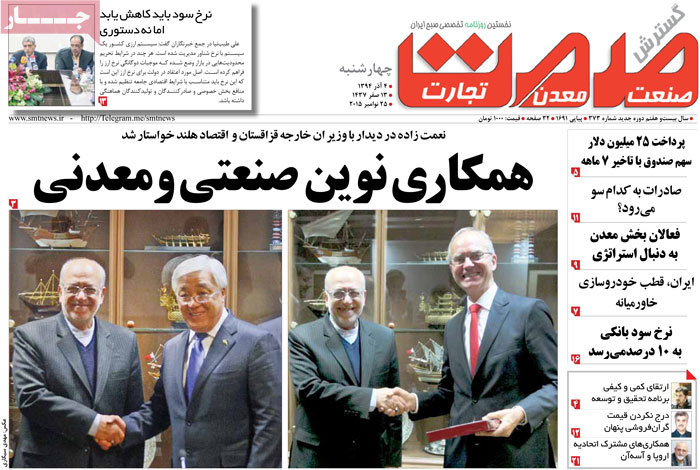
SMT: The industry minister has called for a new chapter in industrial and mining cooperation with Kazakhstan and the Netherlands.
The appeal came at separate meetings with the Kazakh and Dutch foreign ministers.
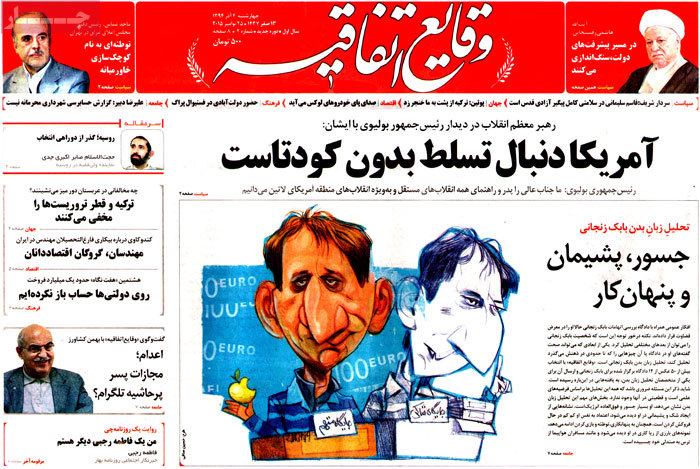
Vaghaye-e Etefaghiyeh: Some are interfering with government efforts to make progress, said the chairman of the Expediency Council.
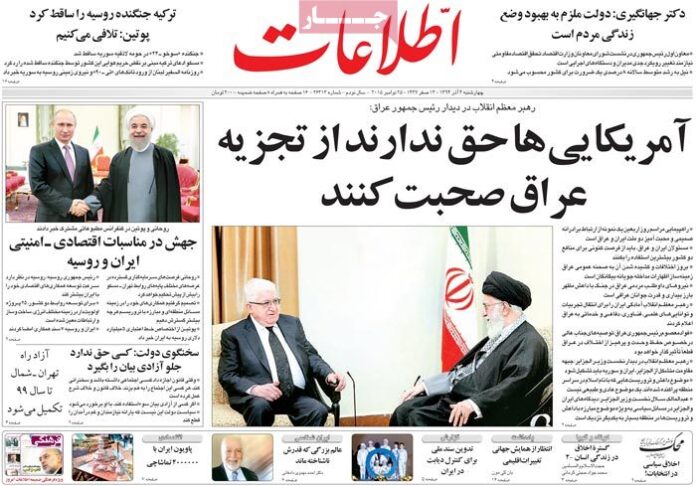
♦ The Americans have no right to talk about Iraq’s disintegration, said the Supreme Leader in a meeting with the Iraqi president.
Ayatollah Khamenei further said Iranian and Iraqi officials need to make the most of the existing opportunity to advance the interests of the two nations.
♦ The first vice-president has said the government is duty-bound to improve the living conditions of citizens.
Eshagh Jahangiri further said that securing an average eight percent growth is a necessity for the country.
♦ Turkey has shot down a Russian fighter.
President Putin has said Moscow will retaliate.
♦ Presidents Rouhani and Putin have announced a leap in economic and security relations between Iran and Russia.
More investment opportunities in different areas can further cement relations between Tehran and Moscow, President Rouhani told a joint press conference.
♦ The highway linking Tehran to the Caspian coast will have been completed by 2020.
♦ The government spokesman has said that no one has the right to interfere with freedom of speech.
Mohammad Bagher Nobakht further said that those who disrupt authorized gatherings are acting against the law and Sharia.
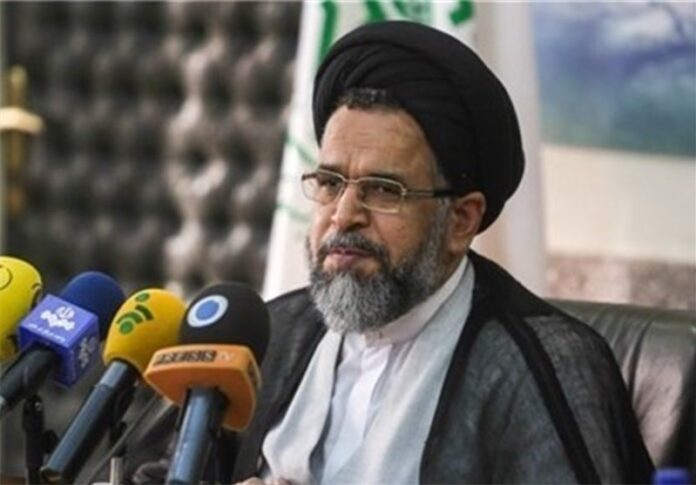
Iran’s Minister of Intelligence Seyyed Mahmoud Alavi and the head of Lebanon’s main security apparatus held talks on ways to boost cooperation between the two countries in the fight against terrorism.
In the meeting, Alavi and Major General Abbas Ibrahim, the head of Lebanon’s Directorate of General Security (DGS), explored avenues for cooperation between the two countries in the anti-terror campaign.
Alavi emphasized that Israel is the only regime that benefits from terrorist acts in the Middle East and added that Iran’s intelligence ministry is ready to cooperate with Lebanon to uproot terrorism in the region.
He also expressed condolences to the Lebanese people and government over the deaths of dozens of people in a recent terrorist attack near Beirut.
Major General Ibrahim, for his part, said Takfiri terrorism and Israel are the “two sides of the same coin”.
He underlined that terrorism and Zionism should be confronted simultaneously.
On November 12, 44 people were killed and nearly 240 others sustained injuries in Lebanon when two large explosions rocked a security post in Hussaineya Street in the crowded Borj al-Barajneh neighborhood in a southern suburb of Beirut.
The ISIL Takfiri terrorist group claimed responsibility for the Beirut bombings.
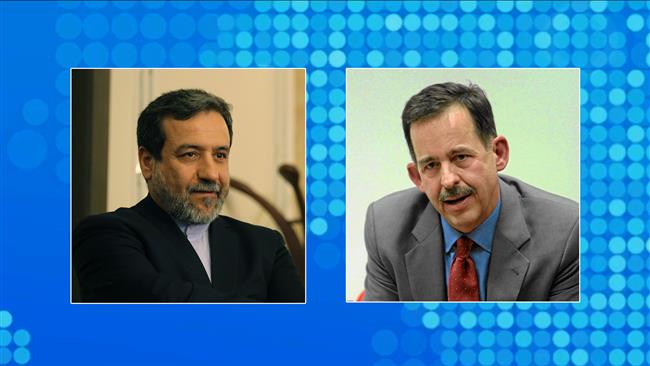
Representatives of Iran and the United States have discussed ways to implement a landmark nuclear deal reached between the Islamic Republic and six world powers in July.
Iran’s Deputy Foreign Minister for Legal and International Affairs Abbas Araghchi held an hour-long meeting in the Austrian capital of Vienna on Tuesday with Stephen Mull, who is the US lead coordinator for the implementation of the Joint Comprehensive Plan of Action (JCPOA).
Speaking to reporters after his meeting with the US official, Araghchi described the coming weeks as “sensitive” for the implementation of JCPOA.
He said that Iran and P5+1 should precisely meet certain obligations required under JCPOA.
The Iranian official expressed hope that JCPOA would be implemented without facing any “technical problem.”
On July 14, Iran and P5+1– the United States, Britain, France, China and Russia plus Germany – finalized the text of the JCPOA in Vienna.
Araghchi, who is the head of Iran Foreign Ministry’s committee for following up on the implementation of the JCPOA, also held talks with Director General of the International Atomic Energy Agency (IAEA) Yukiya Amano in Vienna later on Tuesday.
Meanwhile, an Iranian delegation of experts held the final round of talks on Tuesday with IAEA on finalizing outstanding issues with regard to Iran’s nuclear program. Hamid Baeedinejad, the director general for political and international security affairs at Iran’s Foreign Ministry, led the delegation while IAEA deputy chief Vario was heading the agency’s team.
The IAEA chief will submit his latest report on Iran’s nuclear issue to the agency’s Board of Governors on December 1.
The governing board will review the report within 10-14 days and will probably announce its final decision on December 15.
Iran has repeatedly said it would abide by its commitments under JCPOA, saying other parties to the agreement are also required to honor their obligations.
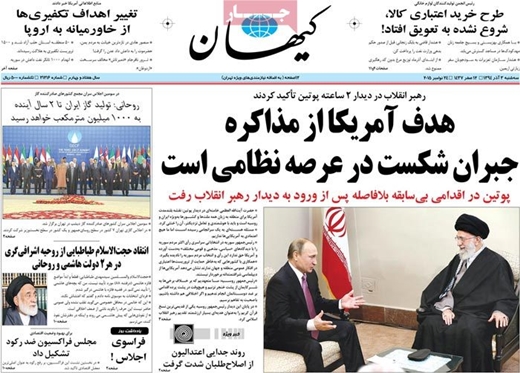
An Iranian daily has said that the Russian president met with the Supreme Leader in Tehran in the capacity of a balancer intending to reach common ground with Iran.
Hossein Shariatmadari, the managing editor of Kayhan daily, wrote in an editorial on Tuesday (November 24) that President Vladimir Putin who came to Tehran on Monday for a third summit of Gas Exporting Countries Forum (GECF) had a meeting with Ayatollah Seyyed Ali Khamenei to play his balancing role and consult with Iran’s leader.
The following is the translation of part of Kayhan’s editorial:
Upon arrival in Tehran on Monday, the visiting Russian president – in an unprecedented, yet meaningful move – went straight to a meeting with the Supreme Leader of the Islamic Revolution. […] The text of the two-hour talks between President Putin and the Supreme Leader which was released hours after their meeting showed that Putin’s decision [to immediately meet with the Supreme Leader] had been purposeful, and that the United States and its allies have had good enough reason to worry about [Putin’s trip]….
That the two sides decided not to [follow the proper diplomatic protocols] and hold a welcoming ceremony, and instead organize a meeting between President Putin and the Supreme Leader carried a clear, unambiguous message: Putin did not meet with the Supreme Leader as the president of a global power; rather, in his talks with the Leader, he – in the capacity of a balancer – sought to have consultation and exchange of views.
A look at the text of the talks between the Russian president and the Supreme Leader clearly drives this message home, although the message is clear even without referring to this text.
Over the past thirty-something years, the Islamic Iran – led by the late Imam Khomeini and the leadership of his successor – faced up to all plots, bullying, sanctions, military attacks and dozens of other covert and overt schemes of the US and its regional and European allies and managed to gain indubitable victories and achievements. Without doubt, Russia and any other regional and global powers can enter into talks with the Islamic Republic of Iran and make common decisions only from the position of a balancer. […]
Before his recent meeting with the Supreme Leader, Putin had had a record of practical measures in line with the declared policies of the Islamic Republic. That was an acceptable and ensuring introduction to continued cooperation [with Iran].
[…] In his meeting with Putin, the Supreme Leader pointed to “the Russian president’s stances and performance, especially over the past one and a half years” and praised his seriousness in developing mutual ties. [His focus on] “Especially over the past one and a half years” is an [implicit] reference to the very measures Mr. Putin has taken before seeking to forge ahead with Moscow’s cooperation with the Islamic Republic.
Iran-Russia cooperation in defiance of the proxy war waged by the United States and its allies against the Resistance Front – which is fighting [against the Israeli regime] in Syria and Iraq and is one of the critical questions in the region and around the world – has proved to be an acceptable experience in proceeding with such cooperation in a defined fashion.
An experience as such has turned into a nightmare for the Americans, and their Western, Jewish and Arab allies. As the Wall Street Journal has put it, “The Obama administration and European and Arab allies are seeking to peel Russia away from its alliance with Iran […]” or “If Russia holds fast to Iran and Mr. Assad, it would undermine hopes for an international [read the US and its allies!] consensus”.
There are still plenty of other examples [of their concerns about cooperation between Iran and Russia].
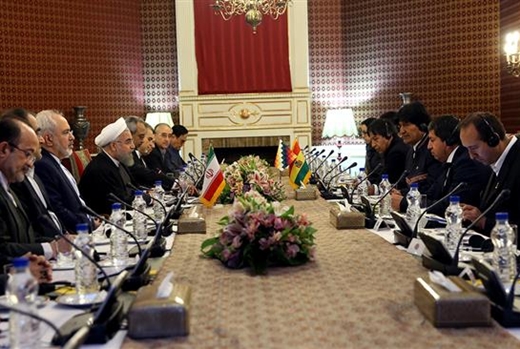
Iran’s President Hassan Rouhani has reiterated foreign intervention in the internal affairs of countries, urging all nations to strongly combat terrorism.
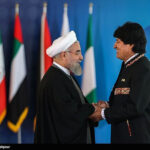
“In our view, independence and national sovereignty of countries are important and if certain individuals seek to trample upon this right of nations, it would be unacceptable,” Rouhani said in a meeting with his Bolivian counterpart Evo Morales in Tehran on Tuesday.
He reaffirmed Tehran’s call for a political solution to ongoing conflicts in Syria, Iraq and Yemen in line with the will of their nations.
Rouhani said Iran and Bolivia are jointly fighting terrorism and unilateralism, and added that terrorist groups should not be allowed to easily carry out inhumane actions.
Morales, who attended the third summit of the Gas Exporting Countries Forum (GECF) in Tehran on Monday, hailed Iran’s stance on fighting terrorism in the world.
Backed by superpowers, terrorism has always targeted independent and anti-imperialism countries, the Bolivian president said.
He called on all countries to unite and strengthen their cooperation in battling terrorism.
In a separate meeting withNigerian President Muhammadu Buhari, Rouhani said Iran and Nigeria share stance on regional issues and the fight against terrorism.
“As a contagious disease, terrorism is threatening all countries and regions in the world, and a firm and all-out fight against it is necessary,” the Iranian president said.
He added that some countries use terrorism as a means to promote their own policies, calling for stronger cooperation and consultation in the campaign against terrorism.
Buhari, for his part, said Iran is instrumental in promoting global security and stressed the importance of adopting measures for eliminating the scourge of terrorism.
The Nigerian president added that his country attaches great significance to relations with Iran and is determined to further boost cooperation in all fields.
The Iranian president also on Tuesday said all regional issues will be solved through political approaches and dialog.
In a meeting with Algerian Prime Minister Abdelmalek Sellal, Rouhani added that Tehran and Algiers have close stance on regional developments, including the crises in Iraq, Syria, Yemen and North Africa.
He emphasized that Iran and Algeria must enhance cooperation in all sectors, particularly in the economic arena, in a bid to serve the two nations’ interests.
The Iranian president also called for cooperation among energy producers and exporters to preserve market stability.
The Algerian premier, for his part, said Iran is a great power in the region and added that the future lifting of sanctions against Tehran would create more opportunities for the Islamic Republic to establish regional stability.
Sellal added that Iran and Algeria share position on regional issues including the ongoing developments in Libya, Syria and Iraq.
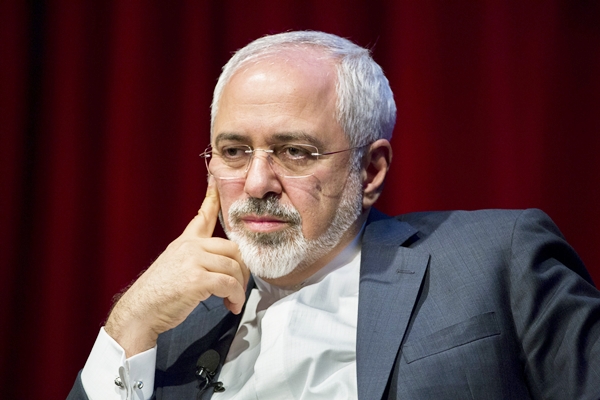
The foreign minister has said that Iran and Saudi Arabia do not need mediation to handle their ties, reiterating that Iran views the security of Saudi Arabia as its own security.
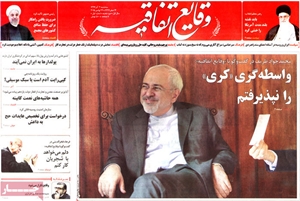 On its first issue on November 24, Vaghaye-e Etefaghiyeh, a new reformist-leaning Iranian newspaper, published an interview with Mohammad Javad Zarif on the Syrian crisis and the not-so-friendly attitude of Saudi Arabia toward the Islamic Republic of Iran. The following is the translation of the interview in its entirety:
Q: In recent talks in Vienna over the Syrian crisis, there were plenty of opportunities for Iran and Saudi Arabia to hold talks. Mr. John Kerry repeatedly sought to broker such talks, but you turned it down.
A: We are living in the Middle East region. We need to establish contacts with Muslim nations in this region. Therefore, we have always said that establishment of ties with neighbors based on mutual respect takes top priority in Iran’s foreign policy.
Q: Why didn’t you accept the US mediation between Iran and Saudi Arabia?
A: Because we do not need mediation. In round two of the Vienna talks over Syria, I told Saudi Foreign Minister Mr. Adel al-Jubeir that Tehran views the security of Saudi Arabia as its own.
Q: But the behavior of Saudi officials shows that Riyadh has no trust in Iran. The Saudi support for Israel’s foreign policy reveals their attitude toward Iran. Where do you stand on that?
A: I think the current behavior of Saudi Arabia is short-lived. Saudi officials have become unsettled thanks to sudden developments in Iran-West ties. In other words, they had got accustomed to a fixed situation [in which] they blamed Iran for all their problems and tried to sell the idea that Iran is a barrier to peace and calm in the Middle East. They used to promote [their own] interpretation [of Iran’s role in the region], but they can no longer claim that regional developments, ISIS and the internal issues of Arab states have something to do solely with Iran.
As a matter of fact, Saudi Arabia is struggling to maintain its past position in regional equations. Naturally this struggle comes with some sort of hot-temperedness. We need to understand the Saudi behavior. As a big country, Iran can see that the Saudi hot-temperedness is a sign of its concerns about the shifting political and economic equations in the region.
Let me put it this way: the Saudis are worried that their game plan has changed. What we need to do is to develop an understanding of the behavior of our neighbors and provide them with the opportunity to change. We need to help allay the concerns of Saudi Arabia.
The Saudis need to feel that Iran is not seeking to delete them from regional equations. As I’ve already said the current behavior Saudi Arabia is showing will not stay long, because the realities on the ground will convince Saudi Arabia and its allies to accept the new Iran.
Q: You are talking about must-haves. How will they become a reality?
A: We can change the Saudi attitude through changing our own words and deeds and foiling attempts by those who are seeking to maintain a climate of Iranophobia at any cost.
Q: The problems Iran is grappling with in the Middle East region are not blamed on the less than active performance of our diplomats, are they?
A: No, quite the reverse! Our diplomats are fully active in the region. The involvement of different bodies in the country’s foreign policy – if their general principles are coordinated – does not signify disorderliness or abnormality. All over the world, not one [government] body alone gets involved in the countries’ foreign policy. What the foreign policy needs in order to succeed is a coherent, coordinated framework.
As it was evident in the [discussions over] the Joint Comprehensive Plan of Action (JCPOA), there are differences of opinion in the country, but it does not mean that different institutions adopt different policies on foreign policy.
The general policies Iran is pursuing in the region are: outsiders should not interfere in the crises in the Middle East, and people in crisis-hit countries should decide their own future. In line with its general policies, Iran opposes meddling in the internal affairs of the countries. Iran believes that referendums should be held in Middle Eastern countries so that calm can take hold [in the region].
Q: How do you see the future of Syria?
A: Syria needs a political solution. I think Syria will either work out a political solution based on participation of all Syrian people or teeter on the brink of collapse. I’m concerned that certain regional countries may opt for military options thanks to the stockpiles of military hardware they have at their disposal.
I still hope that they have taken a lesson from the example of Yemen which has caused massacres in the region with no military achievements.
Q: When we look at the images of Vienna-II talks over Syria, we see that you and Mr. Adel al-Jubeir sat away from each other at the table. How come at the negotiating table you were seated away from the Saudi top diplomat? Was it a preplanned move?
A: In diplomatic talks, there are [proper diplomatic] protocols the seating plans which should be observed for diplomats. The seating plan for multi-lateral talks is arranged either in alphabetical order or according to the seniority of the diplomats.
A position of seniority is not of great importance; an individual may have been foreign minister for 20 years and another might have been in office only for two months. The one who’s been on the job for 20 years definitely has seniority over the other.
So is the case with diplomatic missions. If you represent your country at the United Nations for five years, you will be certainly given a better seat. [In Vienna talks] If [Prince] Saud al-Faisal had been the Saudi foreign minister, he would have been given a higher position, for sure, like in the case of Oman whose top diplomat Yusuf bin Alawi had been seated in a higher position.
In that session [Vienna talks over Syria], my seniority was at the seventh or eighth level and Mr. Adel al-Jubeir, who’s served as his country’s top diplomat only for a few months, had been seated at a lower level [than me]. These points should not be highlighted and other diplomats should not be disrespected on this ground.
Q: Some Saudi officials claim that Iran interferes in the internal affairs of Arab nations, saying that Iran should change its behavior so that a solution can be worked out to the Syrian crisis.
A: I think these claims are nothing but sloganeering. Our friends [Saudi authorities] know well that these claims are far from correct. What needs to change is the mentality of the Saudi officials who think the Syrian crisis can be settled through military means.
The sooner they come to this conclusion [that they have to change their mentality], the lesser threat they will pose to themselves and the entire region. A solution which relies on people’s vote will be sustainable. The Syrian crisis needs a diplomatic solution to be defused.
Unfortunately, in the Vienna talks I had a serious concern. I learnt that some of our neighbors had yet to realize that ISIS poses a grave threat to them. They think that ISIS is their leverage for talks or a pawn [in the power struggle]. They have failed to understand that this pawn is in fact a snake with which nobody can play. This snake has set its sights – more than anything else – on Arab nations, especially the Hijaz region. That’s why I think Saudi Arabia should change its attitude, something I think has yet to happen.
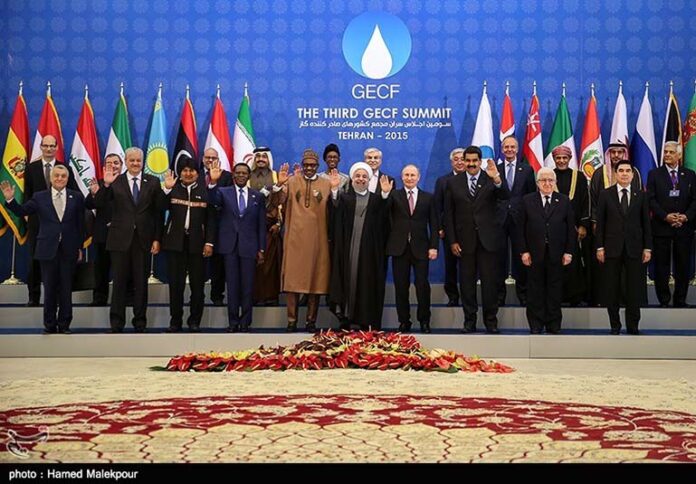
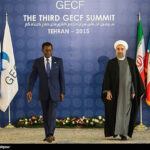
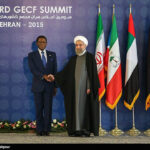
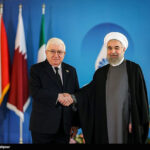
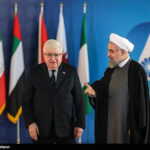
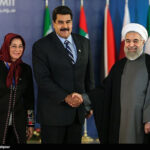
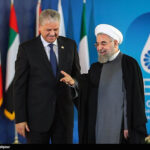
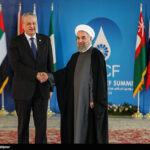
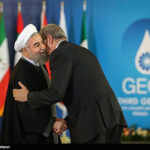
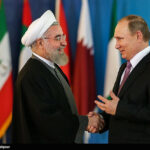
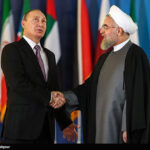
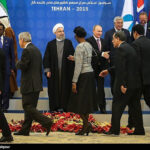
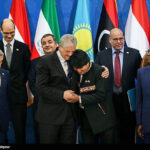
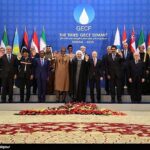
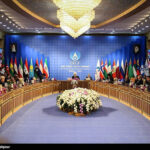
Tehran played host to a summit of the Gas Exporting Countries Forum on Monday.
The following images of President Rouhani welcoming foreign guests have been released by different news agencies:
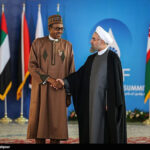
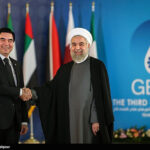
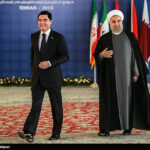
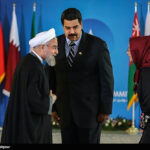
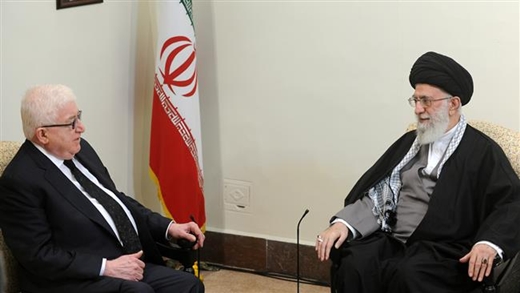
Ayatollah Khamenei made the remark in a meeting with Iraqi President Fuad Masum in the Iranian capital, Tehran, on Tuesday.
“The people of Iraq, including Shias, Sunnis, Kurds and Arabs, have been co-existing without a problem for centuries; but, unfortunately, certain regional countries as well as foreigners seek to exaggerate disagreements,” the Leader said.
Ayatollah Khamenei said such attempts should be countered and any action that would prompt discord should be avoided.
The Leader said disagreements and their publicization would pave the way for meddling by outsiders, noting that the situation should not take such a turn as to allow Americans to dare openly speak of Iraq’s disintegration.
“Why should such a country as Iraq – a large, prosperous country with a thousand-year history – be disintegrated and divided into smaller parts, and thereby always be exposed to disagreement and confrontation?” Ayatollah Khamenei said.
The Leader expressed confidence that Iraqi officials will adjust their country’s relations with other states, including the US, with due regard for the interests of the Iraqi people, but emphasized that the Americans should not be allowed to act as if Iraq is their “personal property.”
Ayatollah Khamenei said Iraqi youths have undergone awakening and are now aware of their capabilities, describing the Popular Mobilization forces in Iraq as the manifestation of the Iraqi people’s awakening.
President Masum said the Leader’s advice on the necessity of maintaining unity and avoiding discord in Iraq “will certainly be effective.”
The northern and western parts of Iraq have been plagued by violence since June 2014, when Takfiri Daesh terrorist began an offensive through Iraqi territory. The Iraqi army and Popular Mobilization units are jointly battling the terrorists to take back militant-held regions.
The Iraqi president also thanked Iran for its assistance, particularly at a time when Iraq is facing the violent offensive by Takfiri Daesh terrorists.
He also called for the further development of relations between Baghdad and Tehran.
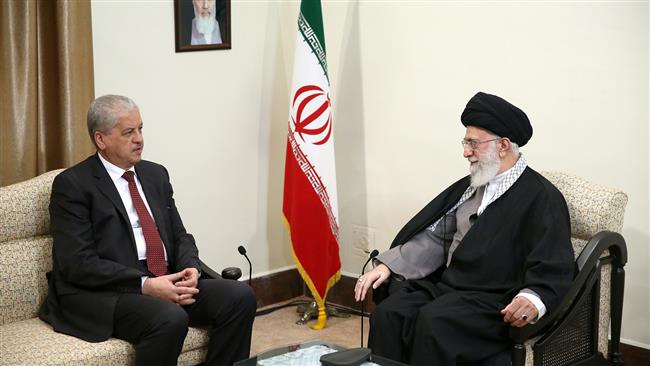
The Leader separately met with Algerian Prime Minister Abdelmalek Sellal.
During the latter meeting, Ayatollah Khamenei said Daesh and the terrorist groups falsely operating in the name of Islam have been created by and are receiving support from certain entities.
“The Islamic countries that care and share more common understanding can reach a practical way of fighting terrorists through dialog and cooperation,” the Leader said.
The Leader pointed to the resistance front that had been established by Algeria, Iran, Syria and several other countries at the time of the victory of the 1979 Islamic Revolution, and said certain countries that blindly follow the US prevented the continuation of the activities of that formation of countries.
“If such a formation is established [again], these Islamic countries can have impacts in important issues in the Muslim world and take practical measures for [tackling] regional problems and fighting terrorists,” Ayatollah Khamenei emphasized.
Ayatollah Khamenei said the level of cooperation between Tehran and Algiers as “very low,” and expressed hope that the ties would soon expand.
The Leader also wished Algerian President Abdelaziz Bouteflika a quick recovery.
Sellal said the viewpoints of Algeria and Iran regarding political issues, especially on the fight against Daesh and other terrorists, are very similar, and hoped that economic relations between the two countries also reach an acceptable level.
Iraqi President Masum and Algerian Prime Minister Sellal both traveled to the Iranian capital to participate in the third summit of the Gas Exporting Countries Forum (GECF).
© All Content by IFP News ( Iran Front Page ) is licensed under a Creative Commons Attribution 4.0 International License.