Friday, December 26, 2025
Home Blog Page 4670

EC Secretary: Iran Able to Provide Evidence of Turkey-Bound ISIL Oil Trucks

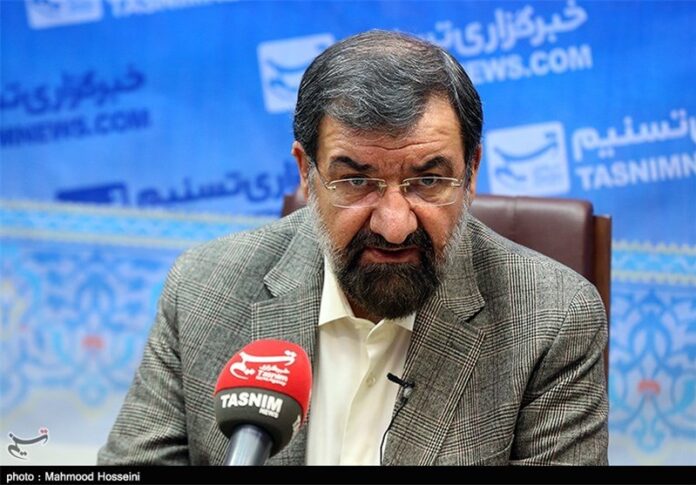
Mohsen-Rezai

Secretary of Iran’s Expediency Council Mohsen Rezaei said Iran is in possession of necessary evidence to prove the transfer of oil by ISIL terrorist group into Turkey.

“Iran’s advisers in Syria have photographed and filmed all Turkey-bound Daesh (ISIL) oil trucks,” Rezaei said on Friday.

“These documents can be released and presented,” he added.

He added that if Turkish government is not aware of the oil trade with Daesh, Iran is ready to provide the neighboring country’s officials with the information.

Earlier, Russia’s Defense Ministry had provided evidence showing Turkish President Recep Tayyip Erdogan and his family were benefiting from the smuggling of oil from Daesh-held territory.

Russian Deputy Defense Minister Anatoly Antonov during a briefing in Moscow on Wednesday provided satellite images that show Daesh (ISIL) oil smuggling through the Turkish-Syrian border. The ministry has presented data on the infrastructure of the illegal oil trade.

But Turkish President Recep Tayyip Erdogan will not admit to profiting from oil deals with terrorists even if his reputation is “smeared with smuggled oil,” Antonov said.

“None of Turkey’s top leaders, nor Mr. Erdogan in particular, will resign or admit anything, even if their reputations were smeared in stolen oil.”

He was reiterating earlier remarks made by Russian President Vladimir Putin about evidence that suggests Erdogan and his family continue to profit from oil deals made with the Daesh terrorist group.

Iran urges Turkey to observe decorum in relations

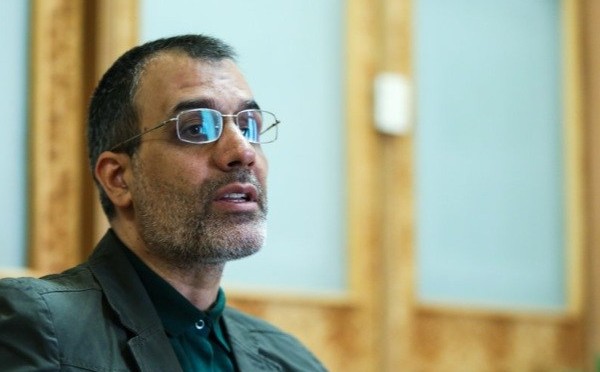
Jaberi Ansari

Following Turkish President Recep Tayyip Erdogan’s recent rhetoric against the Islamic Republic, Iran has urged its neighboring country to observe decorum and mutual respect in bilateral relations.

Iranian Foreign Ministry Spokesman Hossein Jaber-Ansari on Friday called on Iran’s neighboring countries to pay heed to decorum and mutual respect in relations, avoid adventurism and act responsibly in adopting their political stance.

During a televised address in Ankara on Thursday, the Turkish president said he had warned his Iranian counterpart Hassan Rouhani over reports by certain Iranian media repeating Russia’s claims that the Turkish president and his family have been involved in the oil trade with Daesh terrorists.

“It had continued [in Iran] for about 10 days but then they removed it from their websites,” Erdogan said.

His remarks came a day after Russian Deputy Defense Minister Anatoly Antonov said that Moscow was in possession of evidence indicating the complicity of Turkish president along with his family in the smuggling of oil from territories held by Daesh in Syria and Iraq.

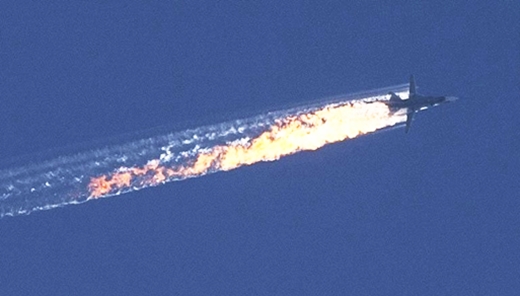
Tensions have been on the rise between Moscow and Ankara since November 24, when Turkey shot down a Russian Su-24 fighter jet that Ankara claimed had entered Turkish airspace, an allegation strongly rejected by Moscow. Russia has been carrying out airstrikes against terrorist groups in Syria sinceSeptember 30, upon a request from the Damascus government.

Jaber-Ansari further warned that Turkey’s support, directly or otherwise, for terrorists will intensify the existing crises in the Middle East.

He said the continuation of policies and adoption of positions, which have intentionally or unintentionally support terrorism in Syria and Iraq, will only intensify the existing crises in the region and increase problems of those countries which continue to pursue such policies.

“The Islamic Republic of Iran welcomes a change in such policies as well as the contribution of all regional countries in the fight against terrorism and extremism, and is ready to cooperate and coordinate [efforts] with its neighbors to achieve such an objective,” Jaber-Ansari added.

Turkey is widely accused of supporting militants in Syria seeking to overthrow the government of President Bashar al-Assad.

Iran to present updated WAVE version to UN: Official

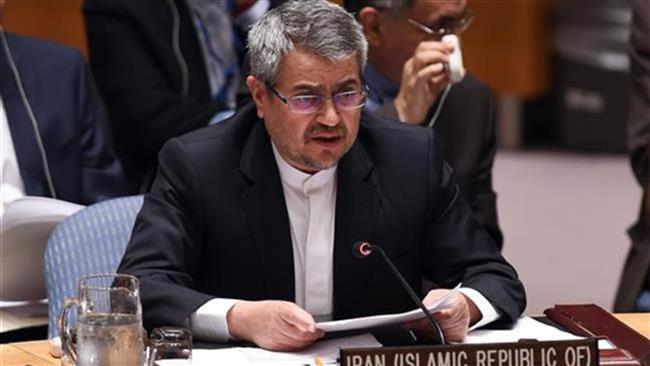
Gholam Ali Khoshrou

Iran plans to put forward an updated version of a resolution based on President Hassan Rouhani’s proposal for the World Against Violence and Extremism (WAVE) to the United Nations General Assembly for ratification.

Iranian Ambassador to the UN Gholam Ali Khoshrou made the announcement on Thursday at a meeting of the General Assembly in New York. The Islamic Republic, he said, has held preliminary talks with several countries to pave the way for adoption of the updated draft.

In December 2013, the General Assembly overwhelmingly voted to approve President Rouhani’s WAVE proposal, which called on all nations across the globe to denounce violence and extremism. The Iranian president had made the proposal in his address to the UN Disarmament Conference in New York on September 25, 2013.

Based on the developments of the past two years, the draft will be presented by Iran to the Assembly in the near future, Khoshrou said.

The Iranian envoy then referred to a recent letter by Leader of the Islamic Revolution Ayatollah Seyyed Ali Khamenei to the young people in the West.

Khoshrou said the letter was aimed at presenting “a genuine viewpoint from inside the Muslim world on the fight against terrorism for the youth.”

The letter, which was released on November 29, called on the young people in the West to help pave the ground for enhanced interaction with the Muslim world.

It was the second time the Leader had addressed the Western youth in an open letter. In January, Ayatollah Khamenei sent another letter to the youth in Europe and North America, urging them to study about Islam and to obtain firsthand information about it before accepting their governments’ propaganda.

The Leader’s letter came against the backdrop of extensive acts of terrorism across the globe carried out by Takfiri terror groups such as Daesh, which is wreaking havoc on Syria and Iraq.

Arba’een March, a harbinger of peace for the entire world

1927836

An Iranian university professor has said that the Arba’een March, which is a congregation attended by members of all Islamic denominations, can act as a messenger to promote peace among world nations.Ebrahim-FayyazEbrahim Fayyaz, a professor of social sciences at the University of Tehran, made the comment in an interview with Mosalas, a weekly news magazine (the 289th issue) and added that the giant march can help challenge and refute the viewpoints of terror groups such as ISIS. During the extensive interview, Dr. Fayyaz took a sociological look at the reasons why the European youth are lured to join ISIS, the terror group’s notorious ideology, as well as the Arba’een March and its goals and message, violence in the name of Islam, and the exit strategies.
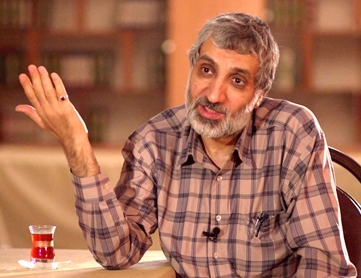
The following is PART ONE of the translation of the professor’s remarks on the Arba’een March and how it can cast doubt on the corrupt mindset of ISIS:

[…]

The Arba’een March which is attended by people from across the world signals the message of global peace. […] It is an event which demonstrates global peace to all nations. It is a violence-free march attended by all denominations.

If we seek to provide a paradigm for the world which has no sign of ISIS violence and introduce a replacement for the ideology promoted and espoused by Saudi Arabia, the Arba’een March would be a perfect choice. Since the 1970s, Saudi Arabia has promoted its own ideology in the world and the result has been ISIS and the Taliban.

In other words, this event [the Arba’een March] can be seen as something which [can] defeat the paradigm provided by Saudi Arabia. Wahhabism was the paradigm Saudi Arabia introduced. The Saudis did what it took to defy the discourse put forward by the Islamic Revolution, make it isolated and put its followers under pressure.

The Saudis supported Saddam’s acts of violence against Iran. What we see in Iraq today is matchless solidarity with Iran. One main issue is that Iraq wants to remove visa requirements for pilgrims, but Iran does not accept the offer, citing security concerns. Today Pakistanis, Afghans and people from Central Asia – there are a big number of the Sunnis among them – prefer to enter Iraq via Iran. This shows that Iran should be ready for the future.

This march is also a setback for the West as far as its paradigm is concerned. It can produce new mindsets. If you pay attention to the Easter Week, the peace rituals conducted by the Christians, you see that they hold a march. They believe that Jesus Christ (peace be upon him) carried the cross on his shoulders and was crucified during Easter.

Imam Hussein (peace be upon him) too marched a path which was thousands of kilometers long from Medina to Karbala. The path the Imam walked down was the path of peace, not war. Imam Hussein was not a warmonger; that’s why he brought his wife and children with himself. He brought his family to carry this message across: We have not come [to Karbala] to wage war and carry out massacre. We have come here for peace, an honorable peace based on ethical values.

Unfortunately these issues [Imam Hussein’s march and its objectives and message] have not been explained properly. They can lay out the paradigm(s) the world of Islam and the East have provided. On media and cultural fronts, we are still involved in primary issues. Islamic Republic of Iran Broadcasting (IRIB) and privately-run media [in Iran] have not addressed the question the way it deserves.

The Arba’een March can help disprove the theories proposed by ISIS, because think tanks of the Sunnis view Imam Hussein as the martyred caliph and believe that Muawiyah [bin Abi-Sufyan] and [his son] Yazid were among the diversions in the world of Islam. If the Sunnis call Imam Ali, Imam Hassan and Imam Hussein the caliphs, we should invite the Sunnis to take part in Arba’een March.

For sure, they [the Sunnis] will do what it takes when it comes to attending this ceremony and their actions will not be dwarfed by what the Shiites do. Take a look at the ceiling of Hagia Sophia – [a former Christian patriarchal basilica], a mosque [in Istanbul] which has been built in the Ottoman period – and you will see portraits of Imam Hassan and Imam Hussein alongside the Rashidun Caliphs [a term used in Sunni Islam to refer to the first four caliphs (successors) following the demise of the Muslim Prophet Muhammad, namely: Abu Bakr, Umar, Uthman ibn Affan and Ali].

Imam Hussein can contribute to efforts which aim to boost unity between the Shiites and Sunnis and take the place of the discourse of Wahhabism which was put forward in the 19th century. This discourse has been presented by Saudi Arabia, but the fact of the matter is that it was originally created by Britain.

Today the United States takes advantage of the division [provoked by the discourse of Wahhabism] to bolster the security of Israel. The paradigm presented by Israel, which is a 19th century regime created based on the 19th century violence and racism, has been debunked.

As a result, we come to the conclusion that Saudi Arabia, Israel and ISIS are all parts of a whole body which breathes thanks to the paradigms of Pan-Arabism [an ideology espousing the unification of the countries of North Africa and West Asia from the Atlantic Ocean to the Arabian Sea, referred to as the Arab world] and Pan-Judaism, but they are on the brink of decline.

They [Pan-Arabism and Pan-Judaism] are very much concerned about the Arba’een March and want to prevent it from being held. The West-leaning intellectuals, too, do not see the Arba’een March in positive light, because they have leanings toward the West.

Clarification of the Arba’een paradigm can introduce a replacement for the fall of the West which is a prelude to the collapse of the Western paradigm. This paradigm once collapsed when student movements were created in the US and France in the 20th century. But the US and France promoted immorality in universities and high schools – by which they allowed extramarital affairs, drinking, dancing and so forth – to put on hold this trend [student movements].

With the turn of the century a new situation is now prevailing. Building on the rationality of the Shiite school of thought, we do not kill humans, we do not offer a Fiqh-based justification for their blood and we interact with People of the Book [adherents of Abrahamic religions that predate Islam].

[…]

Zanganeh: No permission required to boost Iran oil output

Bijan Namdar Zangeneh

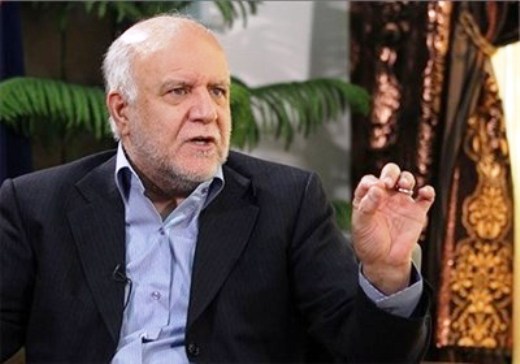
Oil Minister Bijan Zanganeh said on Wednesday that Iran does not need the permission of any country to increase its crude oil production.

On the eve of the 168th ministerial meeting of the Organization of Petroleum Exporting Countries (OPEC) to be held in Vienna on Friday, he confirmed Iran has sent letters to member states to inform them of its intention to boost output.

“The letters were meant to inform them to include the increase in the production plans of the organization,” he said, adding, “Iran did not write the letter for their approval.”

Iran has officially announced that it will increase production by 500,000 barrels a day immediately after sanctions have been lifted. Another increase of similar amount will follow within weeks so that Iran’s export will be back to the pre-sanctions levels.

Saying that removing Iran’s oil from the market was an “oppressive and illegal” act, the oil minister stressed, “Our return to the market does not require the permission of anybody. We are not expecting any approval of the letter by other member states.”

Ayatollah Sistani lauds Tehran Municipality’s help in serving Arba’een pilgrims

Ayatollah Sistani

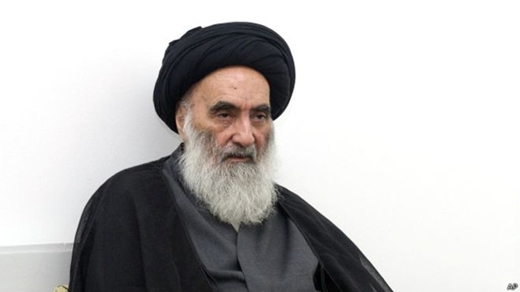
Iraq’s top Shiite cleric Grand Ayatollah Ali al-Sistani has appreciated the measures of Tehran Municipality to help serve millions of pilgrims flocking to Karbala for Arba’een.

In a meeting with Tehran Mayor Mohammad Bagher Ghalibaf, the senior cleric said that he keeps in his prayers all Iranians assisting in the organization of Arba’een rituals in Iraq.

Ayatollah Sistani and Ghalibaf also discussed the Muslim world’s latest developments during the meeting.

The meeting comes as millions of devoted Shiite Muslims from over 60 countries have converged on the Iraqi holy city of Karbala to hold mourning rituals marking Arba’een, the 40th day after the martyrdom anniversary of the third Shiite Imam, Imam Hussein (AS).

Some 2 million Iranians are among the foreign pilgrims who have traveled to Iraq to attend the ceremony.

Iran reacts to IAEA chief report on PMD

Abbas Araghchi

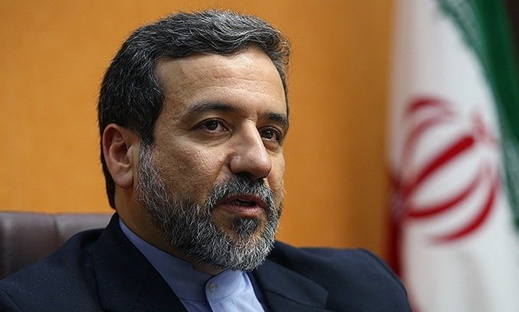
Deputy Foreign Minister Abbas Araghchi said that International Atomic Energy Agency (IAEA) has in its report confirmed Iran’s full cooperation with the UN nuclear agency based on roadmap, which has enabled the body to release its final evaluation on Possible Military Dimensions (PMD).

In reaction to IAEA Director General Yukiya Amano’s new report on its final evaluation regarding PMD released on Wednesday, Araghchi added, “Therefore, all measures over the past issues have completely concluded and PMD has been left behind.”

No phrase denoting Iran’s diversion from its commitments regarding NPT is seen in the report, he said, adding the agency has also verified Iran’s nuclear program in its report.

Araghchi noted that the report has endorsed the peaceful nature of Iran’s nuclear program, paving the way for the PMD case to be closed by the Board of Governors.

Therefore, as per Paragraph 14 of the Joint Comprehensive Plan of Action (JCPOA), P5+1 should offer a resolution to the Board of Governors with the aim of ending the issue of PMD, Araghchi said, noting that the body should approve the resolution and close the case.

He said that the measure will take place within two weeks.

Responding to a question over the allegations regarding Iran’s attempts to build nuclear weapon, Araghchi said that the IAEA has clearly announced that no diversion has been seen in Iran’s nuclear-related activities.

The agency has also rejected conducting experimental blasts in Marivan, confirming Iran’s assertion that the issue is baseless, he said.

Asked about the IAEA’s claim that Iran has carried out little activities with certain technologies of dual-use prior to 2003, Araghchi said that all studies on double purpose technologies in Iran have been conducted for peaceful ends.

Furthermore, studies on such technologies are also rampant in other countries, the official said, noting that what is important is that the program does not divert from peaceful purposes, as the main duty of the IAEA is verifying non-diversion.

Responding to a question over the existence of experiment chamber in Parchin in 2000 based on satellite photos, he said that Iran provided the agency with more reliable photos, negating its claims. Not to mention that director general of the IAEA in person visited the site and saw no chamber there.

The main point in the report is that the final evaluation of the agency rejected many of the past allegations or cast doubt over them, Araghchi added.

Iran has on several occasions announced that nuclear weapons have no place in Iran’s defense doctrine, he said.

Now that the peaceful nature of Iran’s nuclear program has been known to all, the other parties should fulfill their commitments including closing the file of PMD in the session on December 15.

Muslims observe Arba’een in Iran

Arba'een Walk (49)

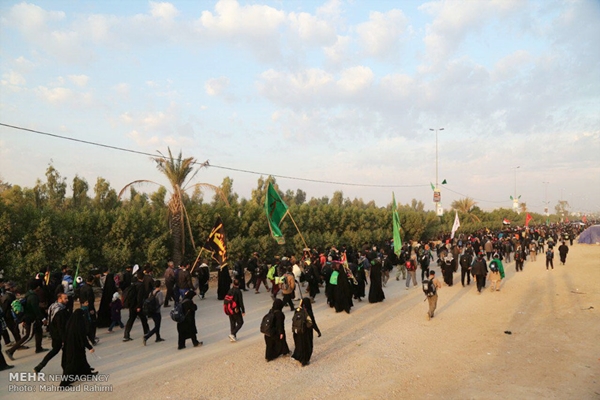
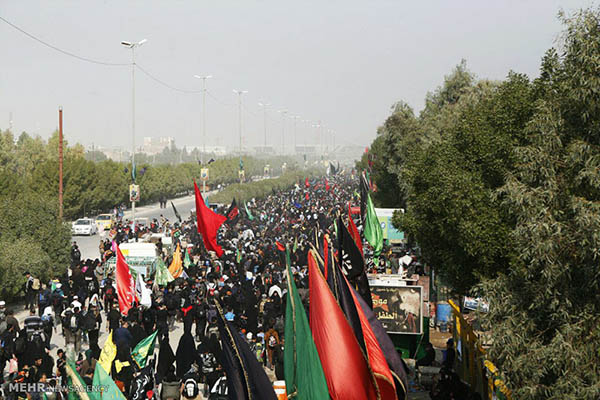
Millions of Iranians nationwide Wednesday attended mourning ceremonies on Arba’een, which marks the 40th day after the martyrdom anniversary of Imam Hussein (AS).

Black-clad mourners took to the streets and local mosques and other religious and community centers to participate in observances where elegies were recited in memory of Imam Hussein and his 72 loyal companions.

The mourning ceremony is one of the largest religious gatherings in the world. Over two million Iranian pilgrims have traveled to Iraq for the Shiite ritual.

Each year, pilgrims, mainly from Iraq and Iran, travel long routes on foot to Karbala, home to the holy shrine of Imam Hussein (PBUH).

Meanwhile a large number of university students attended a mourning function at the residence of the Supreme Leader with Ayatollah Khamenei in attendance.

A historical bend Iran needs to negotiate

2222

Two important events played out last week: In a meeting with Iran’s Supreme Leader, Russian President Vladimir Putin offered a copy of the holy Koran to Ayatollah Khamenei, and France’s far-right National Front Party leader Marine Le Pen said in the European Parliament that Western governments should change their attitude toward the Arab world which represents Islam and adopt a new approach to Iran as a replacement for Arabs.

In Iran, we can have tandem interpretations of that deed [Putin’s gift to the Supreme Leader] and these words [by Marine Le Pen].

Sharq daily on November 29 published a piece by Ali Moujani, a researcher of the history of foreign relations, on the West’s new approach toward the world of Islam, including Iran. Moujani has enhanced his knowledge about orientalism and Islamology in Russia over the past two decades. While in Paris, Moujani was given the chance to have an interview with Ms. Marine Le Pen and her father. The following is the translation of part of that piece:

Russia’s view

A look at the Russian media shows that Putin has tried to tell his audience in Russia – especially the Muslim community – that the world of Islam does not have only one religious authority, and that Iran too can be a key and influential source for Muslims in Russia, irrespective of their previous models which historically viewed Sheikh ul-Islam or the Grand Imam of al-Azhar as their religious authority.

[…]

French politician’s remarks

In the rightist mindset, Iran serves as an anti-Arab tool, and not a reliable ally or partner. Such a frame of mind develops against a backdrop of mounting panic in a society which watches an Arab brother sit at a café or restaurant in France, Germany, Belgium, the Netherlands, Italy and Spain with a hookah placed to his lips, speaking Arabic.

What is our duty in such circumstances? Are we supposed to develop an interest in such remarks? We need to take into account the fact that misinterpretation of such behaviors and attitudes can cause hidden hands to push the “wandering” minority societies toward our region more than before and swell the ranks of ISIS militants.

Wasn’t it the case in the early 20th century when the Jewish think tank pushed Europe toward the Promised Land which was built based on the Protocols of [the Meetings of the Learned Elders of] Zion [a fabricated anti-Semitic text purporting to describe a Jewish plan for global domination] and created a hotbed of crisis called Israel?

It is worth mentioning that these productive think tanks – which transferred the Christian-Jewish crisis in Europe to the Middle East and transformed it into a Jewish-Muslim problem – are likely to be capable of following the same pattern when it comes to the Arab and African Muslims in their societies in the current circumstances, but this time around in a caliphate-related, tribal or sectarian form, and certainly in this region and near our borders.

With these assumptions, it is sheer simple-mindedness to think that the past trends will pay off. We need to admit that the [West’s] attention to Iran was meant to create cracks in the wall of Iranophobia triggered by the progress in the nuclear case. We also need to pay attention to the fact that the wall of Iranophobia has cracked, but has yet to collapse; we’d better not pass rash judgments.

The stage is not fully set for Iran’s cultural and civilizational presence and the [existing] half-open doors are likely to be slammed shut [at any time]. This is exactly the point where we need to be careful not to let our cultural, civilizational heritage be used as a tool to express the goals, remarks and gestures of this [power] or that.

We should not allow the African nationals and Arabs who are smoking water pipes in the European restaurants to turn into soldiers and tools of ISIS and the masterminds of a caliphate project to thrust at other Muslims and regional people with their swords, read out “[And spend in the way of Allah and] do not throw (yourselves) with your (own) hands into destruction (by refraining)”, and paint a distorted picture of Islam.

This is a key juncture, but not the final turn in the labyrinthine road of survival. If we negotiate this turn vigilantly, we will surmount the next turns throughout history more skillfully.

Developments following a controversial shoot-down

151124093549-russia-jet-syria-crash-1-exlarge-169

The shoot-down on November 24 by the Turkish Air Force of a Russian warplane in disputed airspace has soured relations between Ankara and Moscow.

The following is the translation of four brief news stories the official Islamic Republic News Agency released on December 1 on what has transpired in relations between the two countries:

Russia cuts scientific ties with Turkey   

As part of plans to impose sanctions on Turkey ordered by President Putin, Moscow cut its scientific ties with Ankara.

The decision announced Tuesday pulls the plug on a major section of non-economic ties between the two countries which covers cooperation between academic institutes and publishing houses, joint research and modern technologies.

Turkish submarines shadow Russian cruiser

Two Turkish Navy submarines have begun tracking Russian Cruiser Moskva which is providing cover for a Russian airbase in the Syrian city of Latakia.

The tracking takes places near Syria’s maritime border in the eastern Mediterranean.

UAE slams shoot-down as terrorist move

The Emirati daily Albayan quoted the UAE foreign minister as slamming Turkey’s shoot-down of the Russian bomber as a terrorist act.

The comments of the Emirati top diplomat came on the sidelines of a Russia-UAE Joint Cooperation Meeting in Abu Dhabi.

President Erdogan tight-lipped on apology to the Russians

Turkish President Recep Tayyip Erdogan, who had vehemently refused to apologize to the Russians for the downing of the aircraft immediately after the deadly incident, on Monday opted for silence when asked whether he would issue an apology.

Erdogan, who was in Paris for a climate conference, said nothing and walked out of the room where he was answering reporter questions when the translation of the question a Russian reporter asked was over.