Friday, December 26, 2025
Home Blog Page 4669

Highlights of Ettela’at newspaper on Dec. 6

Ettelaat

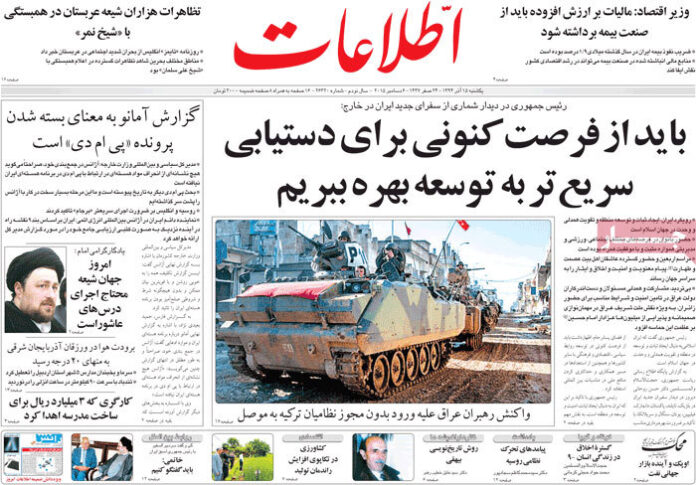
 The existing opportunity should be seized to secure faster growth, President Rouhani said at a meeting with a number of new Iranian ambassadors before their departure on their missions.

He further said that Iran’s policy is based on regional development and stability and promotion of unity across the world of Islam.

 Iraqi leaders have reacted to Turkey’s unauthorized military deployments in northern Iraq.

Prime Minister Haider al-Abadi has called for the immediate pullout of Turkish forces from Iraqi soil.

President Fuad Masum has slammed the incursion as flagrant violation of international law.

 The economy minister has called for the insurance industry to be exempted from VAT.

He further said that the finances accumulated in the insurance industry can instead play a role in the country’s economic growth.

 Thousands of Saudi Shiites have staged a rally in solidarity with Ayatollah Nimr al-Nimr.

And the Times reported that Saudi Arabia is grappling with a simmering social crisis.

 The report the IAEA director general has issued on Iran’s nuclear case will translate into the closing of the possible military dimension (PMD) case.

 The grandson of the late Imam Khomeini has said that the modern-day Shiism needs to implement the lessons taken away from the uprising of Imam Hussein.

 Temperatures have plunged to -20º C in Varzaghan, East Azerbaijan Province.

 A worker gave away all the $100,000 he received in inheritance for completion of a school project.


Iran to present assessment of Amano’s report soon: Envoy

139406201648251326065474 (1)

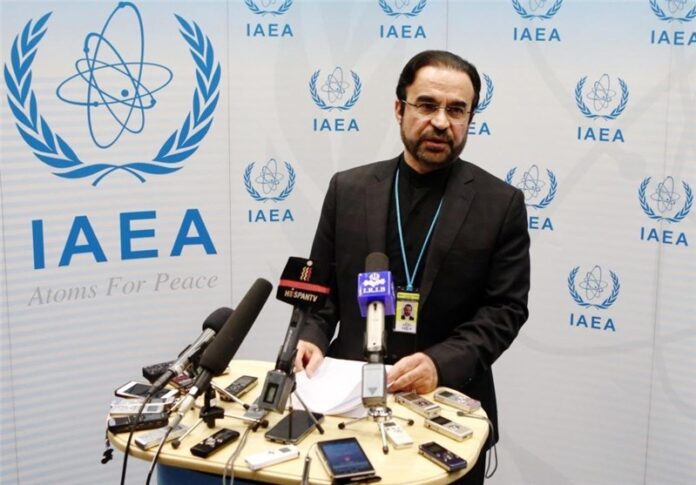
Iran’s Ambassador to the International Atomic Energy Agency (IAEA) Reza Najafi said the country will soon present its assessment of a recent report by the UN’s nuclear watchdog about Tehran’s nuclear program.

“Based on Article 9 of the Road-map, the Islamic Republic of Iran will submit its comprehensive assessment of the report by IAEA Director General (Yukiya Amano),” Najafi said in reference to the report titled “final assessment on past and present outstanding issues regarding Iran’s nuclear program.”

The report on the so-called PMD (possible military dimensions) in Iran’s nuclear program, which was released on Wednesday by the IAEA, confirmed that the agency has no credible indications of suspicious work in Tehran’s nuclear activities.

The document will be the basis of one final report by the IAEA Board of Governors that is expected to close the case on the alleged PMD in Iran’s nuclear program once and for all.

Najafi further said although the report is indicative of non-diversion of Iran’s nuclear program and proves that all allegations against Tehran over the past 12 years have been false, it does contain “some negative points” which are rejected by Iran.

As part of a Road-map signed between Iran and the IAEA in July, the agency is required to finish its investigations about Iran’s nuclear activities and submit a report to the Board of Governors by December 15.

The Road-map was signed on the same day that Tehran and P5+1 reached a conclusion on a lasting nuclear agreement, known as the JCPOA.

The IAEA has been given the role of verifying Iran’s commitments under the Joint Comprehensive Plan of Action (JCPOA).

The agreement was officially adopted on October 18, and is going to take effect within weeks.

Rouhani: Iran heralds international campaign against terrorism

Rouhani

President Hassan Rouhani said on Saturday that the Islamic Republic of Iran heralds the international campaign against terrorism and will spare no efforts to bring stability and security to the countries in the region.

President Rouhani made the remark in a meeting with Iran’s new ambassadors to Senegal, Thailand, the Philippines, Belgium, Pakistan, Denmark, Greece, Sri Lanka and Malaysia.

President Hassan Rouhani said that implementation of the Joint Comprehensive Plan of Action has created suitable opportunity for expansion of cooperation with the world countries.

Arba’een was a good opportunity for demonstrating the power of Islam in the world, President Rouhani said.

The Islamic Republic of Iran is willing to develop solidarity and unity among Islamic Ummah, he said, adding that the country will broaden ties and relations with other countries as well as brotherhood and affinity among world Muslims.

President Rouhani prayed for success of the Iranian ambassadors on their mission. The new ambassadors vowed to do their best to upgrade relations and cooperation with other countries.

Iran, South Korea to launch shipbuilding JV

5e5ba0f0-3b6e-470b-80ef-12719768f4da

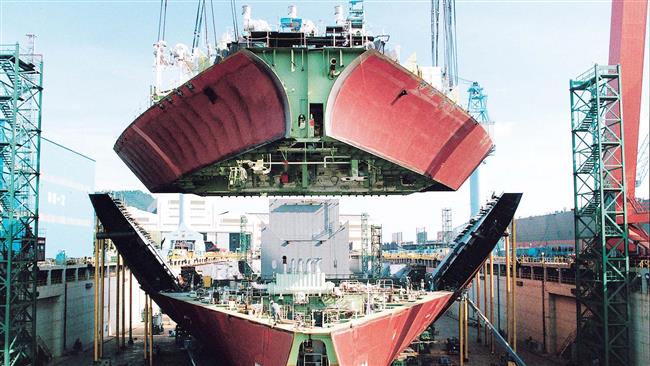
Iran said on Saturday that a deal has been reached with South Korea to launch a joint shipbuilding venture.

The venture will be established between Iran Shipbuilding and Offshore Industries Complex Company (ISOICO) and Hyundai, IRNA reported.

ISOICO Managing Director Hamid Rezaian said that the related consultations as well as key agreements for the move have already been taken care of.

Rezaian said that his company will work over the development of a seventh generation of ships with Hyundai.

He added that marketing and taking advantage of joint markets would be on the agenda of the two companies.

ISOICO, as the Middle East’s largest shipbuilding company, would be a suitable partner for Hyundai, the official said adding that the lifting of sanctions would serve to create attractive investment opportunities for both companies.

Rezaian had announced in late November that ISOICO is looking into partnerships with major international shipbuilders including Hyundai and Germany’s Nordic Yards Wismar.

He added that similar talks have been held with other companies from Italy, China and Turkmenistan.

Iran has a sprawling shipbuilding industry, chiefly devoted to constructing oil tankers and container ships as well as offshore structures.

The country owns the world’s largest fleet of oil supertankers consisting of 42 VLCCs, each able to carry 2 million barrels of oil.

With the removal of the sanctions, the Islamic Republic plans to expand its container fleet in order to extend its forward coverage beyond all frontiers.

Iran’s biggest operator, the Islamic Republic of Iran Shipping Lines (IRISL), wants to place orders for Triple E vessels which can carry more than 18,000 containers, its chairman Mohammad Saeedi said recently.

Iran, Russia coordinating anti-Daesh efforts: Leader aide

Velayati

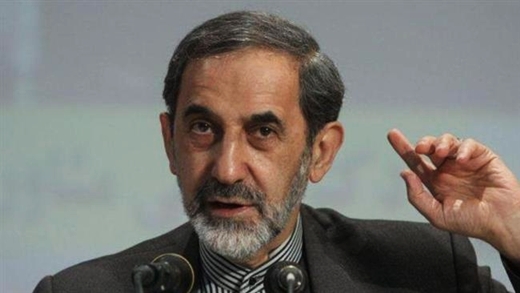
Iran and Russia are coordinating their stance on fighting the Daesh terrorist group in Syria, Ali-Akbar Velayati, a top advisor to Leader of the Islamic Revolution Ayatollah Seyyed Ali Khamenei, says.

“Russians seek coordination with Iran in measures against terrorist groups. The Russians at times had had a different standpoint but they reached a common stance with Iran after consultation” with the Islamic Republic, Velayati said in a live televised interview on Saturday.

He added that Iran is the main front of resistance against hegemonic powers in the region, saying Iraq, Syria and Lebanon are Iran’s regional allies in this campaign and Russia has recently joined this front.

The Leader’s aide noted that Major General Ghasem Soleimani, a commander of the Quds Force of the Islamic Revolution Guards Corps (IRGC), has held talks with Russian officials in Moscow to improve coordination between Iran and Russia in fighting terrorist groups.

Under the circumstances that Tehran and Moscow were reinforcing their unity in the battle against terrorists, Soleimani’s visit to Russia was quite a routine issue, he pointed out.

Velayati further warned that the growing threat of Takfiri groups would pose a danger to all countries and urged collective cooperation to root out terrorism.

He noted that Russia’s fight against Daesh terrorist group in Syria is carried out at the request of the Syrian government.

The Leader’s adviser said it is believed that some countries, maybe even global powers, will also join the resistance front in the near future.

Russia launched its air campaign against the Takfiris, including Daesh, in Syria on September 30, at the request of the Syrian government and after the upper house of the Russian parliament gave President Vladimir Putin the green light to use military force in Syria.

The foreign-backed militancy in Syria, which started in March 2011, has left over 250,000 people dead.

According to the United Nations, the violence has left more than 7.3 million people internally displaced and forced more than four million others to take refuge in neighboring countries such as Lebanon and Jordan.

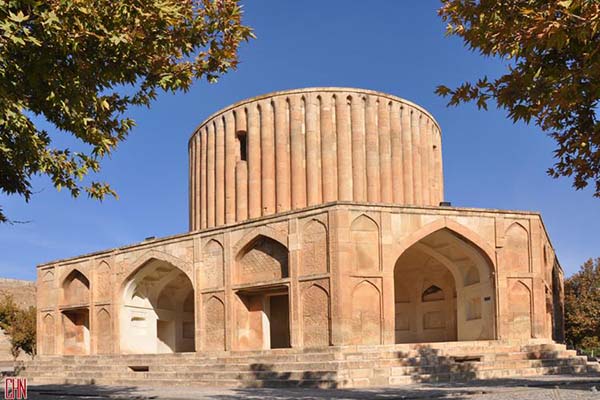
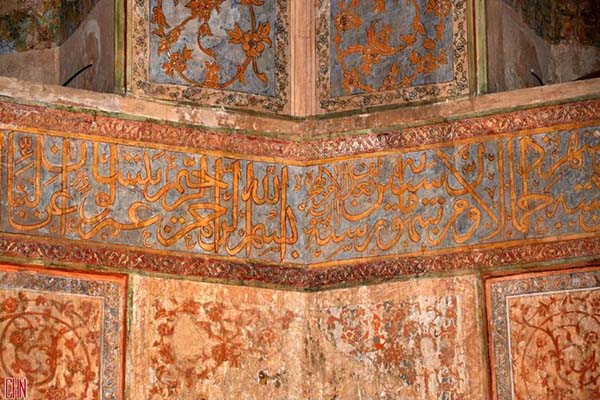
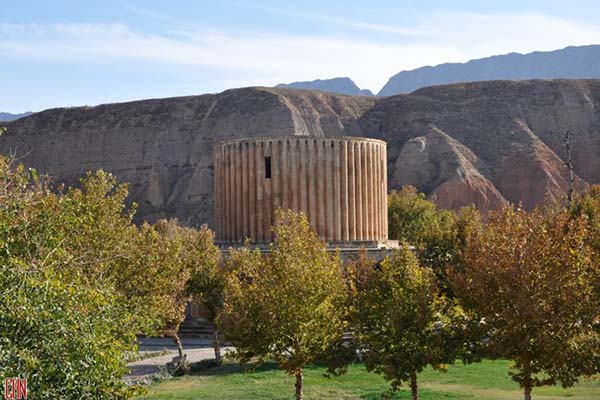
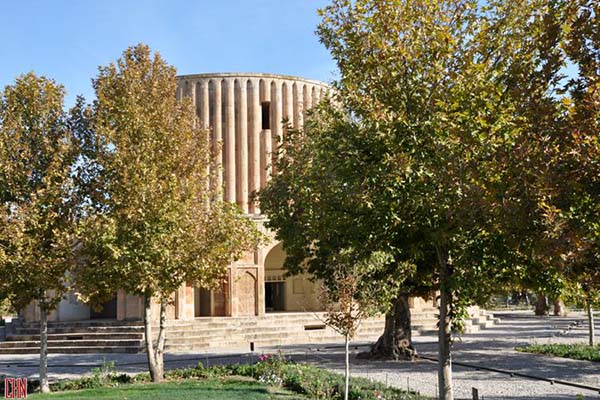
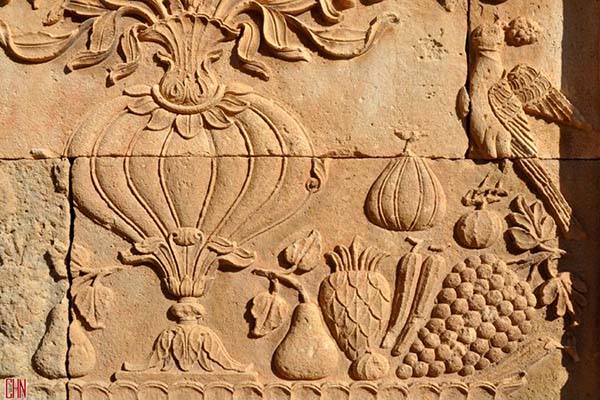
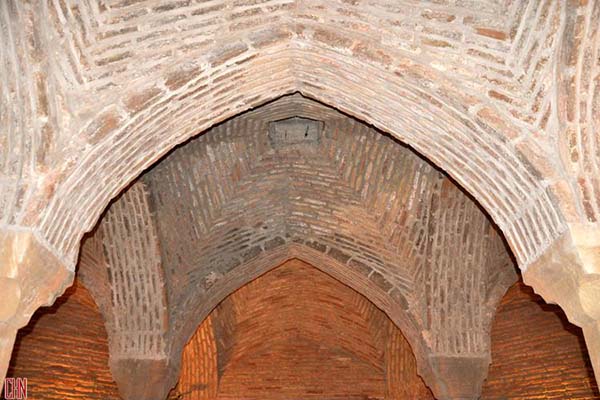
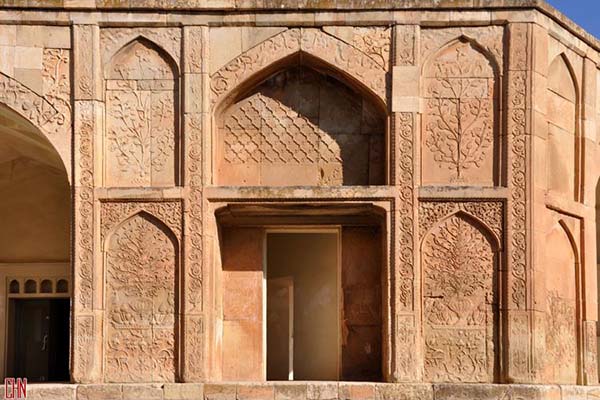
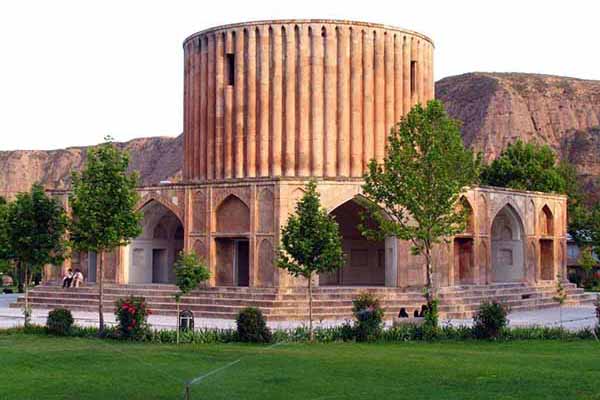
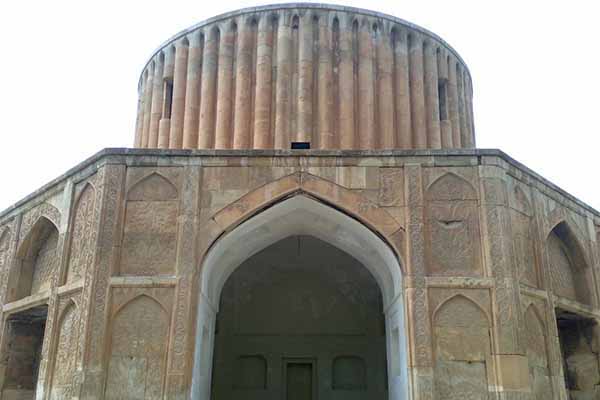
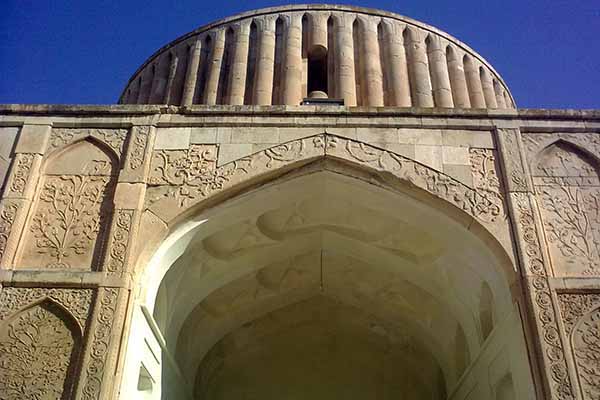
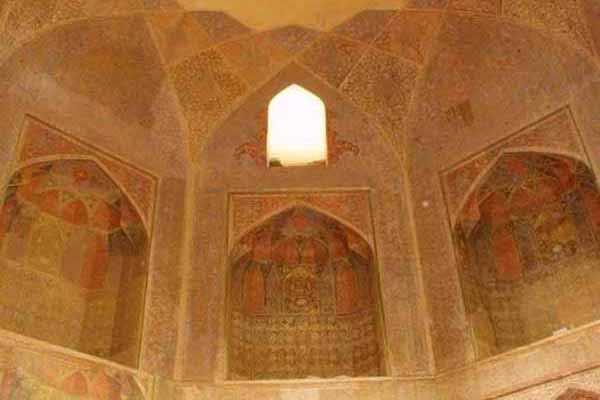
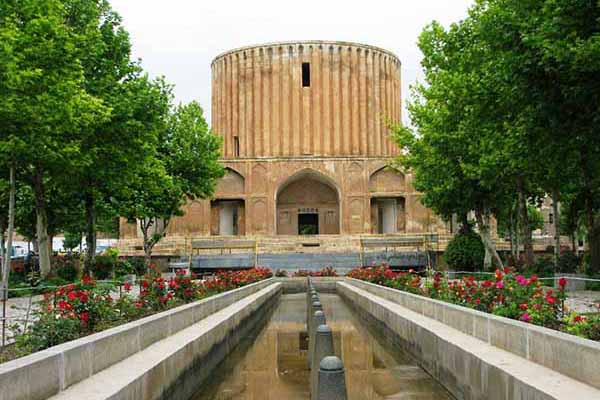
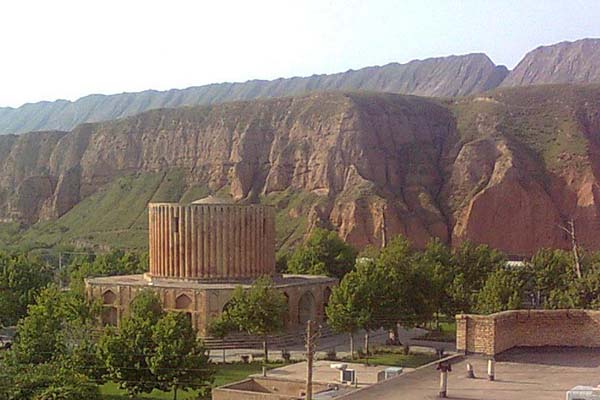
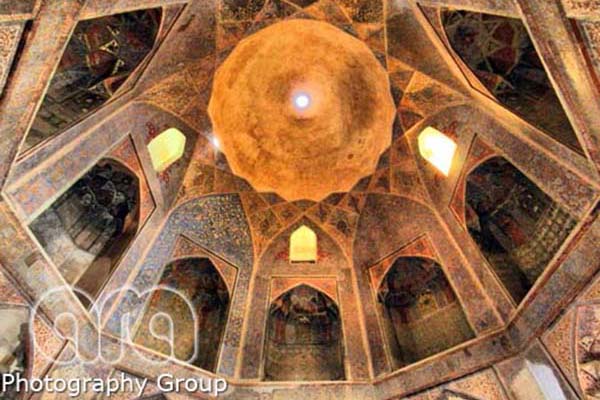
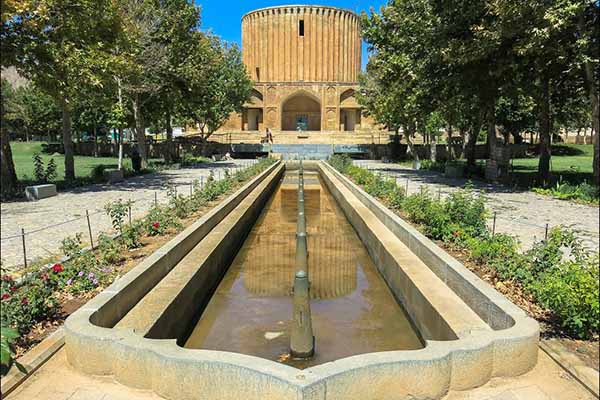
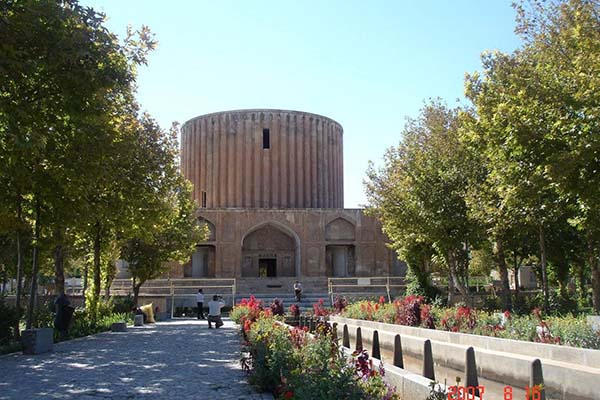
Iran in Photos: Sun Palace in Kalat Naderi

Sun Palace in Kalat Naderi

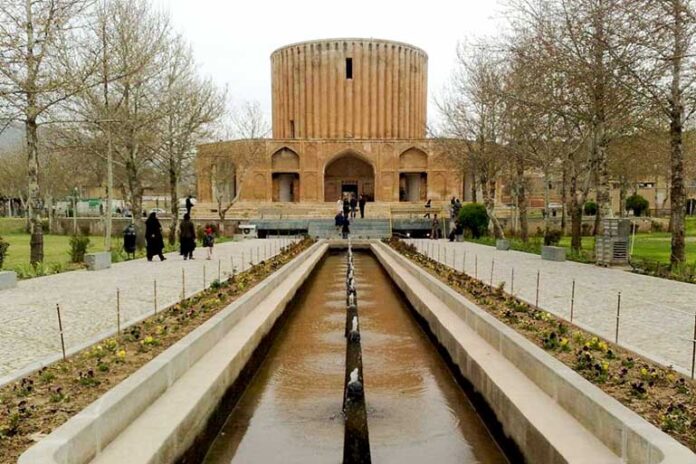
Sun Palace- Ghasr-e Khorshid in Persian- is a tourist attraction in Kalat Naderi, Khorasan Razavi Province.  

The palace was built in 1151 HQ by order of Nader Shah of Afsharid Dynasty as both a place of residence and treasury.  

The palace currently serves as a museum of anthropology. 

The following images of the palace have been released by different sources:


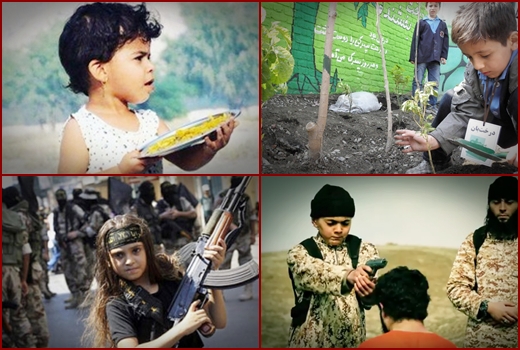
A school for peace, a school for war for children in the same region

888888

How children behave is usually a direct outcome of where and by whom they are trained. On December 5, Entekhab.ir released a report on training camps the IS terrorist grouping runs in Iraq and Syria to promote its ideology of death and destruction. At the same time the personal website of the Director General for Education and Popular Contribution at Iran’s Environment Protection Organization (http://mohammaddarvish.com) featured a report on how children are being taught to advance environmental causes in Iran:

IS has recently released a video that shows six very young members of the terrorist outfit executing a number of Syrian security forces.

In the images shot in the eastern Syrian province of Deir ez-Zor, scores of children are shown reciting religious texts and engaged in hand-to-hand combat.

The terrorist group had earlier said as part of a program called Lion Cubs of the Caliphate, it has begun to offer intensive military and religious training to children.

According to Syrian Human Rights Observatory some 1,100 children have been recruited as part of the program and 50 of them have been killed.

IS says these child soldiers will be the next generation of its militants.

A sure-fire recipe for elimination of Daesh 

She is too young to go to school. How can an individual who is unable to tolerate a bird’s hunger decapitate someone?

That is how Mohammad Darvish, the director general for Education and Popular Contribution at Iran’s Environment Protection Organization has opened his note on his website. The following is the translation of his note:

Raheleh Mobaraki still does not go to school, but she can guarantee that the future will always turn its back on violence, like Yalda who at the age of six launched a rifle-breaking tsunami in Uramanat Villages in Kurdistan Province in western Iran.

[Ahmad Azizi a hunter from Uramanat Villages in mid February 2013 promised his daughter Yalda he would never use his rifle. What he did prompted many other hunters to break or lay down their rifles.]

Raheleh is a good-natured Iranian girl who lives in a Persian Gulf coastal area. She is from Milaki village located to the west of the southern province of Hormozgan. Milaki is one of a few Iranian villages in which well-intentioned villagers have set up a library which specializes in environmental books.

Her uncle, Ahmad Mobaraki, is a close friend of mine. He has written to me that each day his niece Raheleh keeps a portion of her food for the birds that search for food in the mesquites.

I like Raheleh and I am sure a generation that grows up so in love with nature and animals, will never spread any kind of violence in society.

This is the unique lesson of the doctrine of Environment Schools (known by their Farsi acronym JAM) and we are trying to gradually expand it to all schools across the country.

This is the doctrine according to which the 6-year-old Raheleh wants her father to put down his rifle forever because she prefers to watch the magnificent flight of birds in the sky rather than their blood-drenched bodies on the ground.

Can the prudent rearing of such a generation who is growing up with love result in human beings capable of throwing acid on people’s faces or beheading them?

Resort to profound environmental ethics amounts to a return to the roots, and people who do not forget their nobility and ethical virtues will turn to reliable and stable guarantors of peace on the earth.

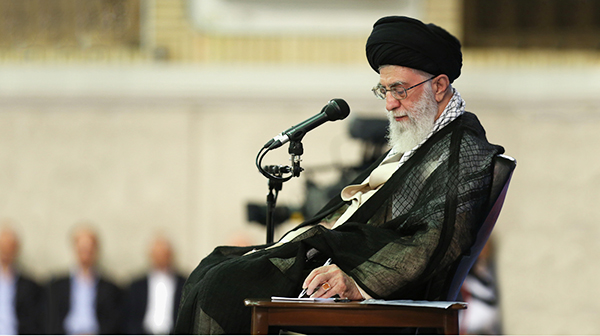
The Islamic Revolution Leader writes a letter to the youth of the West

Supreme Leader

In a letter addressed to Western youth, Supreme Leader Ayatollah Ali Khamenei described the horrible terrorist incidents in France [on November 13] as grounds for like-mindedness.

Recalling the painful “repercussions of the terrorism sponsored by some major powers in the Muslim world, support for Israel’s state sponsored terrorism, and destructive troop deployment to Islamic countries in recent years”, the leader said, “I want you, the youth, to build on an accurate understanding, profundity, and unpleasant [past] experiences to lay the foundation for proper, honest interaction with the world of Islam.”

The following is the IFP translation of the letter in its entirety:


In the Name of God, the Compassionate, the Merciful


To the Youth in the West,

The horrible incidents caused by blind terrorism in France once again prompted me [to put pen to paper] to address the youth. For me it is unfortunate [to see] such incidents lay the foundation for [our] exchanges. But the fact remains that if painful incidents fail to set the stage for [measures to seek] a remedy and [if they fail to provide] a platform [for us] to put our heads together, the damage will be twice as much.

The suffering of any human, anywhere in the world, is in itself saddening to fellow human beings. The sight of a child dying right in front of the eyes of loved ones, [the sight of] a mother the joy of whose family turns to sorrow, [the sight of] a husband who rushes the lifeless body of his wife in one direction or another and [the sight of] a theatergoer who does not know the final act of life is only a few seconds away are not [the kind of] sights that would not evoke human emotions. Anyone blessed with affection and a sense of humanity finds such sights grievous and saddening, whether they happen in France, in Palestine, in Iraq, in Lebanon or in Syria.

Certainly, [the world’s] 1.5 billion Muslims feel the same way and are disgusted and repulsed by the masterminds and perpetrators of such calamities. But the point is that if today’s sufferings are not used as building blocks of a better, safer tomorrow, they would be downgraded to vain, bitter memories. I am certain that only you, the youth, by learning a lesson from the vicissitudes of life will be able to develop new methods to build the future and block the wrong paths that have landed the West where it is now.

It is true that today, terrorism is a concern we share, but you need to know that the insecurity and anxiety you experienced in the recent incidents is different, in two major ways, from the hardship the Iraqi, Yemeni, Syrian and Afghan people have endured over the years. First, the Muslim world has been a victim of terror and violence on a much larger scale, on more occasions, and over a much longer period of time. Second, unfortunately, these acts of violence have always been supported – in different forms and in an effective manner – by some major powers.

Today, there is hardly anyone with no knowledge of the role of the United States in creating or shoring up and arming Al-Qaeda, the Taliban and their unholy offshoots. On top of such direct support, those who are known for openly advocating Takfiri terrorism always find their way onto the list of Western allies despite having the most underdeveloped political systems [at home]. It comes as the brightest and most progressive ideas arising from dynamic democracies in the region have been ruthlessly suppressed. The West’s double standards in dealing with the Awakening Movement of the world of Islam are a perfect example of contradiction in Western policies.

Another aspect of such contradiction can be seen in support for Israel’s state terrorism. The oppressed people of Palestine have been grappling with the worst kind of terror for more than 60 years. Today, the European people may shelter in their homes and avoid crowded public places for a few days; as for a Palestinian family, even home does not provide shelter from the Zionist regime’s death and destruction machine. That has been the case for dozens of years. Today, what kind of violence is comparable to the Zionist settlement activity as far as severity of atrociousness is concerned? Without ever being admonished – in a serious and effective way – by its influential allies or at least by supposedly independent international institutions, this regime demolishes – on a daily basis – Palestinian homes, orchards and farms without giving them a chance to move their belongings or harvest their crops [first]. All these often unfold in front of the panicked, teary eyes of women and children who witness the beating of their family and on occasion their transfer to frightening torture chambers. Do you know of any other atrocity on such a scale perpetrated over such a long period of time in the modern world? If riddling a woman with bullets simply for protesting an armed-to-the-teeth soldier on the street is not terrorism, what is it then? Shouldn’t it be called extremism simply because such barbarity is committed by the military of an occupying government? Or maybe, simply because such images have repeatedly hit our TV screens over 60 years, they do nothing to rouse our conscience!

The troop deployments of recent years to the Muslim world which have claimed numerous lives are yet another example of the contradictory logic of the West. In addition to suffering the loss in blood, the countries under assault have lost their economic and industrial infrastructure; their march toward growth and development has been halted or slowed down; and in some cases they have been set back decades. Still they are audaciously called upon not to view themselves as oppressed. How is it possible to demolish a country, reduce its town and villages to ashes and then ask its residents not to view themselves as oppressed? Isn’t it better to offer a sincere apology instead of urging them to close their eyes [to realities] and forget the calamities? The hardship the Muslim world has endured over the years as a result of assailant hypocrisy and disguise is no smaller than the material damage.

Dear youngsters, it is my hope that you change this mentality which is tainted with hypocrisy now or in the future, a mentality which is skilled at disguising distant goals and sprucing up malicious motives. In my opinion, reforming this violent mindset is the first stage of establishing security and calm. For as long as Western policies are dominated by double standards, for as long as powerful advocates of terrorism dichotomize it as good and bad, and for as long as state interests are given preference over human and moral values, the root causes of violence should not be looked for anywhere else.

Unfortunately, over the years these roots have found their way into the depths of cultural policies of the West too and have helped organize a soft, silent onslaught. Many countries in the world take pride in their native, national cultures; exuberant and generative cultures which have, for centuries, fed human communities well. The Muslim world is no exception. In the contemporary era though, the West is tapping advanced tools to insist on cultural simulation and cloning. I view the imposition of the Western culture on other nations and humiliation of independent cultures as an extremely harmful silent act of violence. Humiliation of rich cultures and disrespect for their most revered aspects comes as the substitute culture does, in no way, have the capacity one expects a replacement to enjoy. For instance, aggressiveness and moral promiscuity, which have unfortunately turned into major components of the Western culture, have dented its approval rating and stature even in its place of origin. The questions that arise now are “Will our rejection of an aggressive, obscene culture that lacks in spirituality make us blameworthy?” and “Will our prevention of destructive floods which come hurtling toward our youth in the form of quasi-cultural products make us deserve blame?” I won’t downplay the importance and value of cultural bonds. Whenever such bonds happen in normal circumstances and are accompanied by respect for the recipient community, they bring about growth, exuberance and richness. On the other hand, imposed unharmonious bonds are unsuccessful and detrimental. I regret to inform you that vile groups like Daesh [an Arabic acronym for ISIS] are the product of such unsuccessful mergers with imported cultures. If the problem were truly ideological, similar incidents would have happened in the world of Islam before the emergence of colonialism, but history suggests otherwise. Historical evidence clearly shows how the confluence of colonialism with a rejected extremist ideology in the heart of a primitive tribe sowed the seeds of extremism in the region. Otherwise, how is it possible for one of the most ethical and humane religions of the world whose core scripture slams the killing of a single human being as being equal to the murder of all humanity to create a piece of garbage like Daesh?

On the other hand one needs to ask why those who are born and bred in a European environment, mentally and intellectually, join these groups. Can you believe that a couple of trips to war zones may suddenly render an individual so extremist that they open fire on their countrymen? Certainly, the role of a lifelong unhealthy cultural nutrition in a poisoned atmosphere that breeds violence should not be forgotten. A comprehensive analysis should be conducted, one that would shed light on impurities of society, both open and disguised. Maybe the in-depth indignation some strata in Western societies have developed as a result of disparities and at times legal and structural discrimination during the industrial and economic boom years has given rise to complexes that bubble up in a morbid way every once in a while.

Anyway, you are the ones who should unravel the outer layers of your society to find and get rid of the knots and grudges. Instead of deepening the gaps, we should bridge them. The big mistake in the fight against terrorism is [showing] rash reactions that would widen the existing gaps. Any sentimental, rash measure that may isolate or send jitters through the ranks of the Muslim communities of Europe and America – made up of millions of active, responsible individuals – or deprive them of their basic rights more than before and marginalize them will not only not solve the problem, but will widen the gaps and exacerbate the hard feelings. Shallow, reactive measures, especially when such measures are lent legislative legitimacy, will have no effect other than further polarizing [the world] and thus trigger more crises. I gather in some European countries regulations have been put in place which encourage citizens to spy on Muslims. These measures are oppressive, and we all know that oppression boomerangs willy-nilly. Besides, Muslims do not deserve to be subjected to such ingratitude. For centuries, the Western world has known Muslims well; both when the strangers showed up as guests on Muslim soil and developed designs on the riches of their hosts and when they served as hosts and took advantage of the Muslim workmanship and intellect. They [Western people] were mostly treated with compassion and patience. Therefore, I want you, the youth, to build on an accurate understanding, profundity, and unpleasant [past] experiences to lay the foundation for proper, honest interaction with the world of Islam. In that case, in the not-too-distant future you will see the wall you have built on such foundation offer a shade of trust and confidence to its architects, award them the warmth of security and tranquility and create a ray of hope in a bright future for the globe.

Sayyid Ali Khamenei

November 29, 2015

* In January, following terrorist attacks in France and the consequent Islamophobia those attacks set in motion, the Islamic Revolution Leader wrote a letter to the youth in Europe and North America.

A look at Iranian newspaper front pages on Dec. 5
Iranian Newspapers Headlines

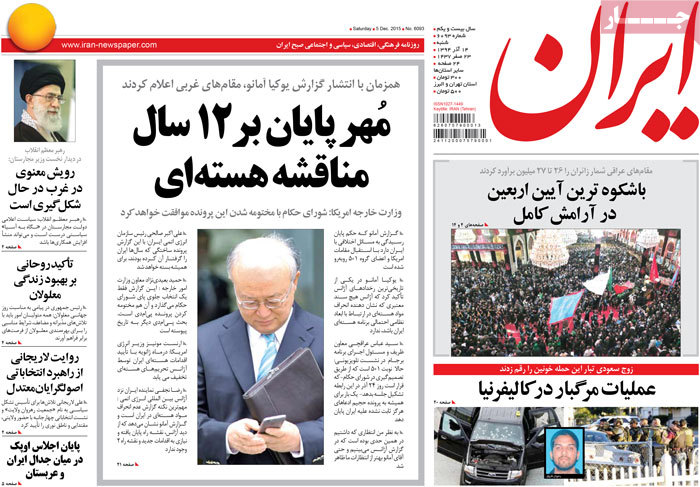
Participation of as many as 27 million pilgrims in Arba’een ceremonies in Karbala, Iraq and the report of the director general of the UN nuclear agency on Iran’s nuclear program dominated the front pages of Iranian newspapers on Saturday.


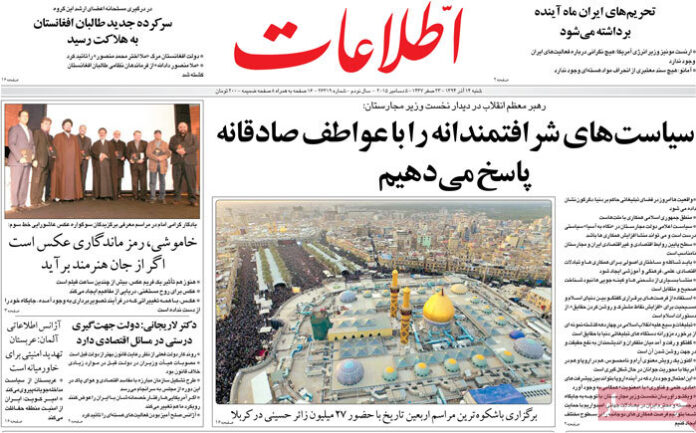
Ettela’at: We will react to honorable policies with honest emotions, said the Supreme Leader in a meeting with the Hungarian prime minister.

Ayatollah Khamenei further said that cooperation with other nations lies at the center of the logic of the Islamic Republic.


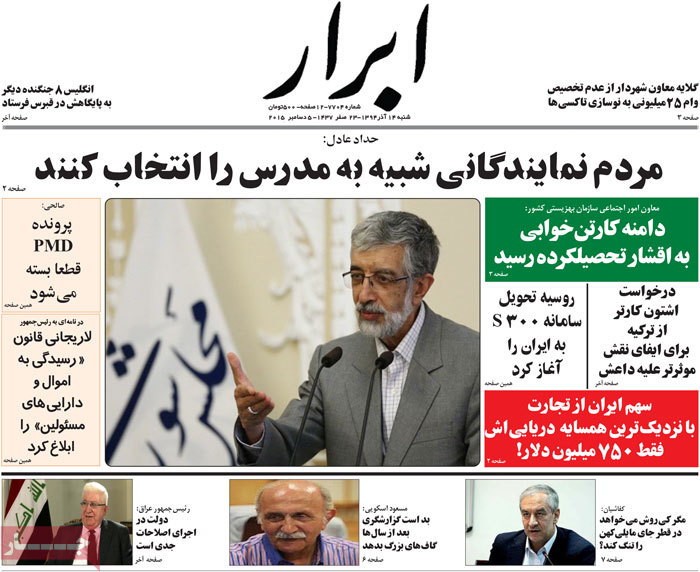
Abrar: Russia has started to deliver S300 air defense system to Iran.


A look at Iranian newspaper front pages on Dec. 5


Afarinesh: An IS plot to target Shiite pilgrims with 58 car bombs has been foiled.

Afarinesh: A cold front is on the way; temperatures are expected to drop between 5º C and 15 Cº. Rain and snow are in the forecast for the country.


A look at Iranian newspaper front pages on Dec. 5


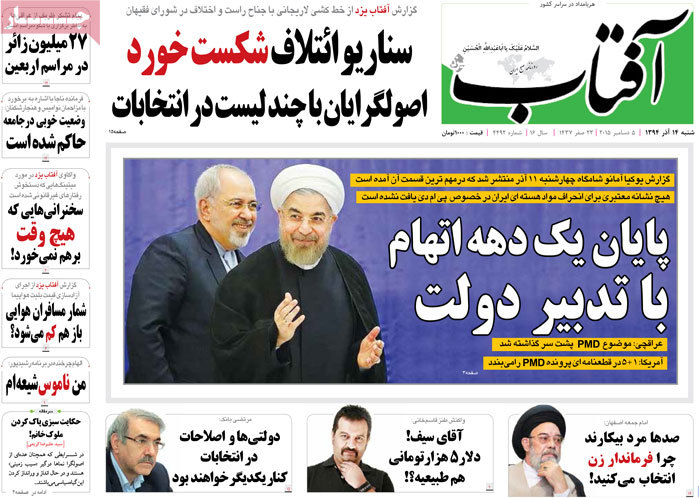
Aftab-e Yazd: The principlist unity scenario failed.

Principlists will have a number of tickets in the upcoming elections.


A look at Iranian newspaper front pages on Dec. 5


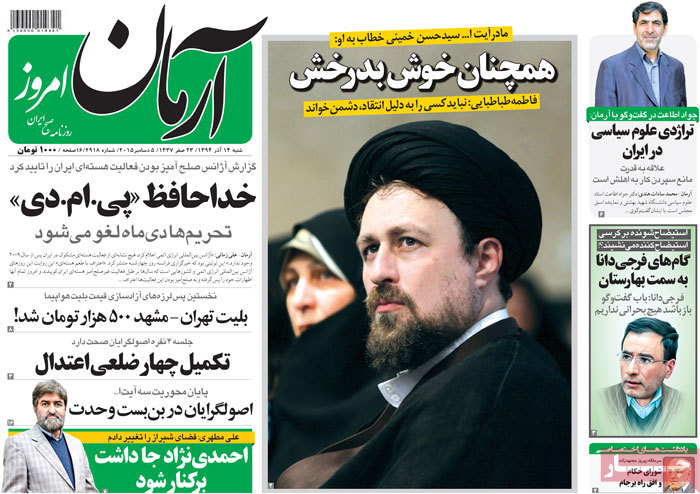
Arman-e Emrooz: Ahmadinejad should have been ousted [as president], said Ali Motahari [a principlist Tehran MP].


A look at Iranian newspaper front pages on Dec. 5


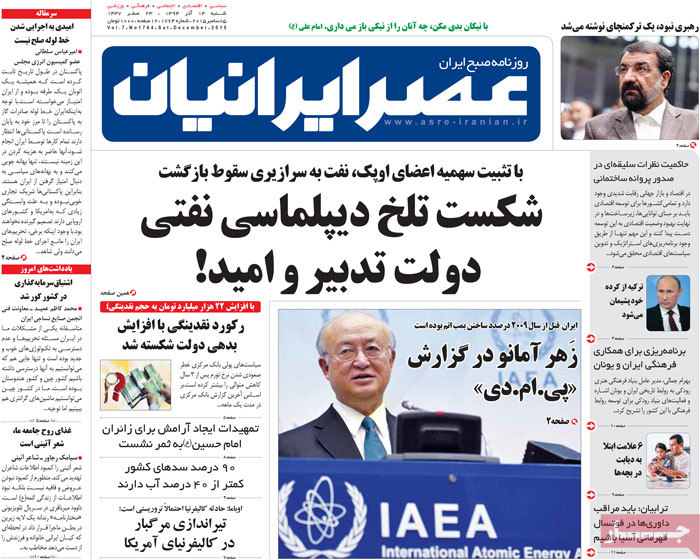
Asr-e Iranian: Had it not been for the leader another Turkmenchay Treaty would have been signed, said Mohsen Rezaei, the secretary of the Expediency Council.

[Turkmenchay is an agreement signed between Iran and Russia in 1828 under which Persia ceded to Russia control of several areas in the South Caucasus.]


A look at Iranian newspaper front pages on Dec. 5


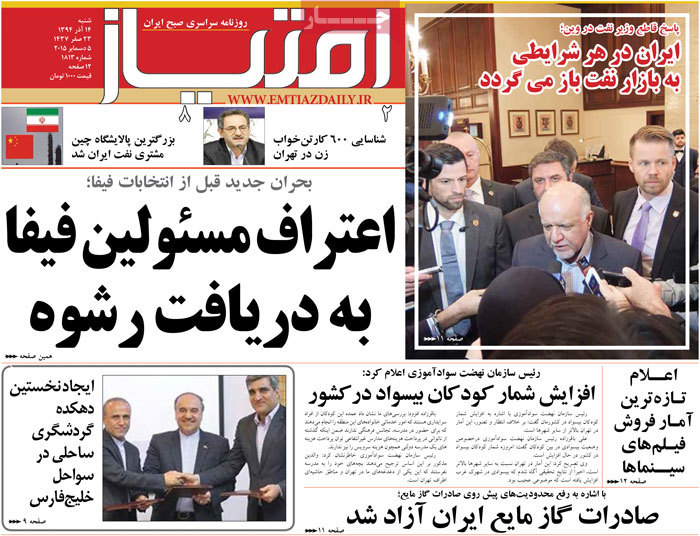
Emtiaz: With restrictions facing liquefied gas production lifted, exports of LNG are now allowed.

Emtiaz: Iran’s first coastal tourism village will be built on the Persian Gulf.


A look at Iranian newspaper front pages on Dec. 5


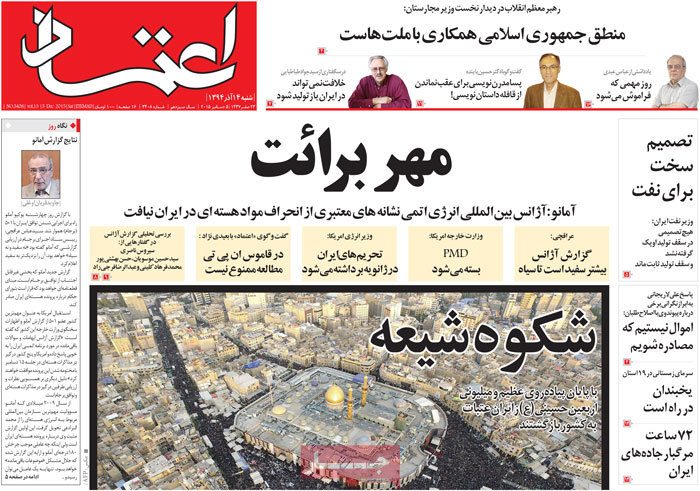
Etemad: A hard decision for oil

The Iranian oil minister has said that the OPEC meeting made no new decision about crude output ceilings.

Etemad: Seal of exoneration

The Iranian deputy foreign minister has said that the report UN nuclear chief issued on Iran’s atomic program was more white than black.


A look at Iranian newspaper front pages on Dec. 5


Hadaf va Eghtesad: Foreign investment will be tax exempt for 20 years, said the director of the Trade Promotion Organization


A look at Iranian newspaper front pages on Dec. 5


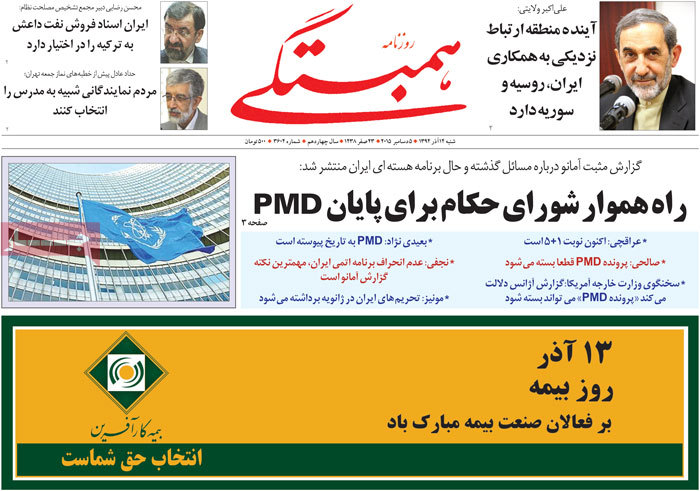
Hambastegi: Iran is in possession of documents that suggest IS is selling oil to Turkey, said Mohsen Rezaei, the secretary of the Expediency Council.

Hambastegi: The future of the region hinges on cooperation between Iran, Russia and Syria, said Ali Akbar Velayati, an advisor to the Supreme Leader.


A look at Iranian newspaper front pages on Dec. 5


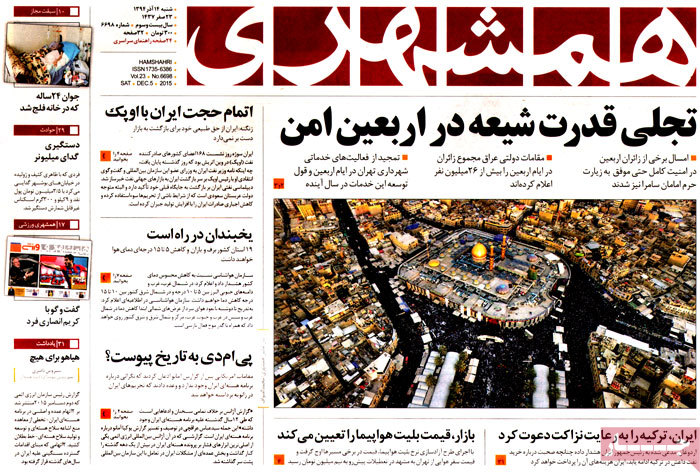
Hamshahri: Iran has urged Turkey to be polite.

It came after President Erdogan said that Iran would pay a price if it kept talking about Turkey’s oil purchases from IS terrorist grouping.


A look at Iranian newspaper front pages on Dec. 5


Iran: The greatest Arba’een ceremony ever passed off peacefully.

Iraqi officials said that the estimated number of pilgrims attending the function in the holy city of Karbala stood somewhere between 26 and 27 million.


A look at Iranian newspaper front pages on Dec. 5


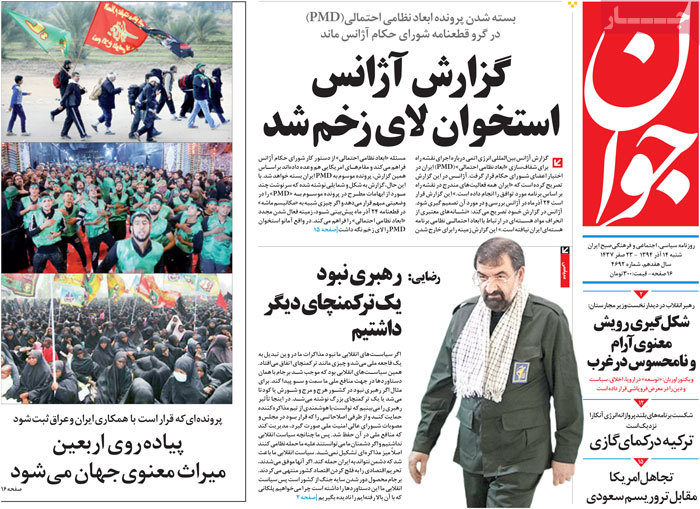
Javan: The IAEA made things worse.

The closing of the possible military dimension (PMD) case now hinges on a resolution of the IAEA Board of Governors.


A look at Iranian newspaper front pages on Dec. 5


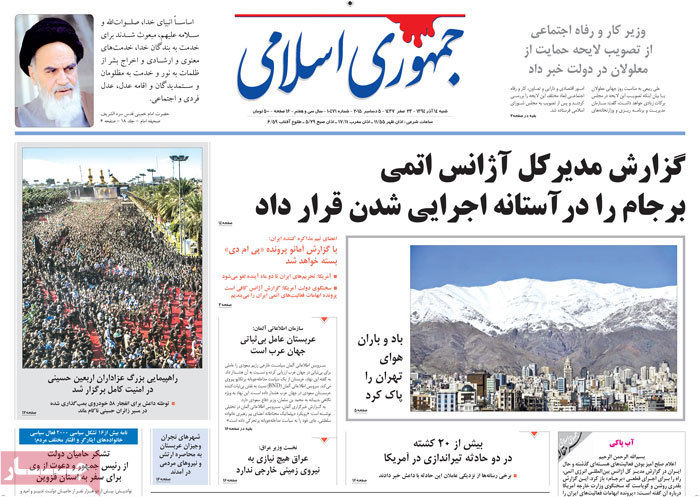
Jomhouri Islami: The minister of labor and social welfare has said that the Cabinet has voted for the bill on Support for People with Disabilities.


A look at Iranian newspaper front pages on Dec. 5


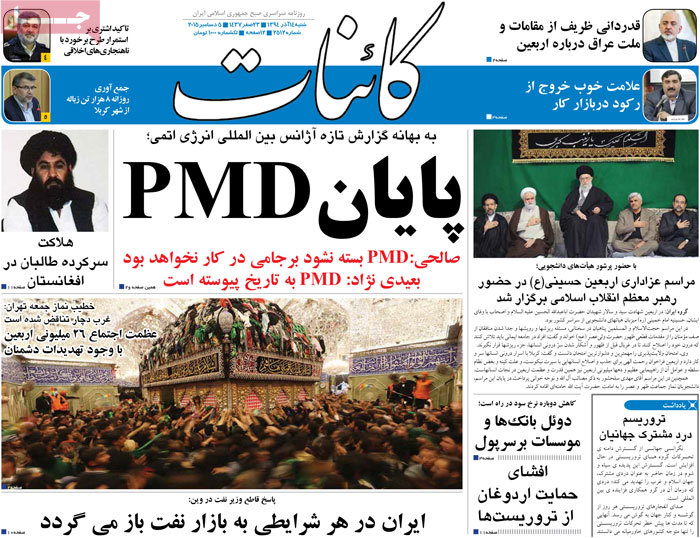
Kaenat: The Iranian foreign minister has thanked the Iraqi people and government for hosting millions of Arba’een pilgrims.

In a message Mohammad Javad Zarif said, “No doubt this year’s Arba’een was a genuine example of unity among all monotheists and freedom-seekers based on the axis of justice, the fight against oppression and extremism, and countering any deviation in values and truly divine instructions.”


A look at Iranian newspaper front pages on Dec. 5


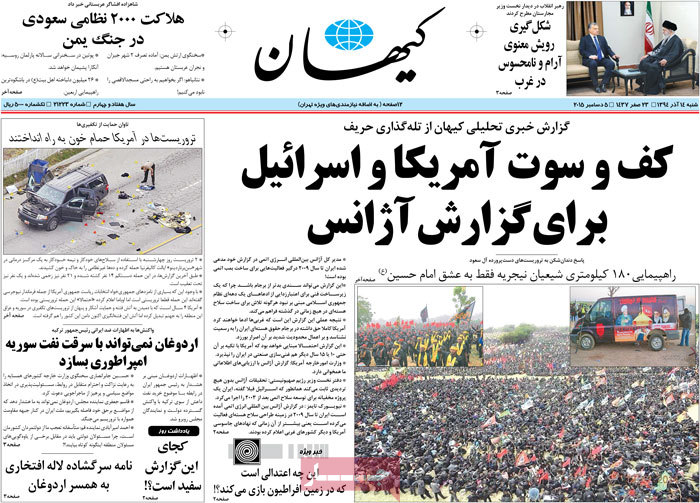
Kayhan: A silent, intangible spiritual movement is taking shape in the West, said the Supreme Leader in a meeting with the Hungarian prime minister.


A look at Iranian newspaper front pages on Dec. 5


Payam-e Zaman: Today employment and production are the top priorities of the country, said President Rouhani.


A look at Iranian newspaper front pages on Dec. 5


Roozan: Ali Larijani, the speaker of the Islamic Consultative Assembly, has said that he will consult with Akbar Nategh Nouri [a former speaker of the chamber] about future engagements.


A look at Iranian newspaper front pages on Dec. 5


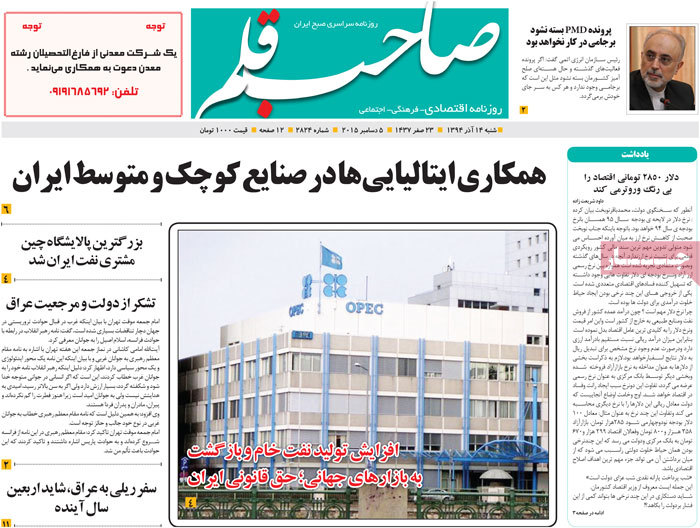
Saheb Ghalam: The Italians will cooperate with small- and medium-sized Iranian industries.

Saheb Ghalam: The Joint Comprehensive Plan of Action won’t be implemented if the PMD case is not closed, said the director of the Atomic Energy Organization of Iran.


A look at Iranian newspaper front pages on Dec. 5


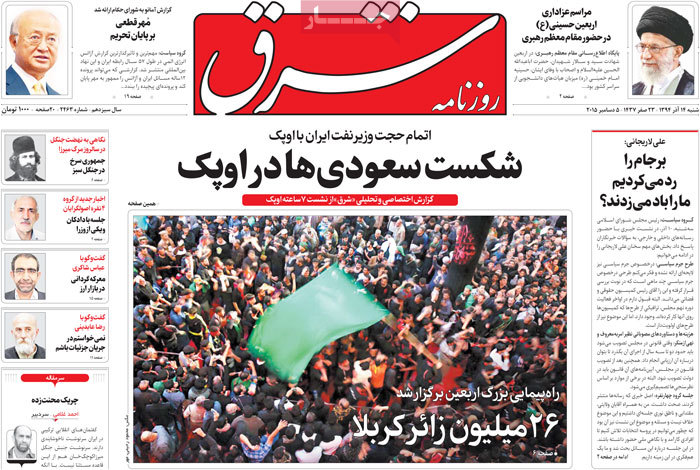
Sharq: The Saudis have suffered a setback in OPEC

Iran’s oil minister has given OPEC an ultimatum [regarding its crude output].


A look at Iranian newspaper front pages on Dec. 5


Highlights of Ettela’at newspaper on Dec. 5

Ettelaat

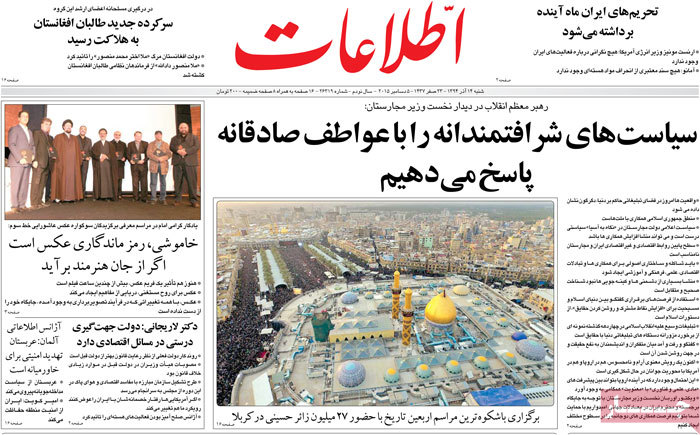
 We will react to honorable policies with honest emotions, said the Supreme Leader in a meeting with the Hungarian prime minister.

Ayatollah Khamenei further said that cooperation with other nations lies at the center of the logic of the Islamic Republic.

 As many as 27 million pilgrims were on hand for the most splendid Arba’een ceremony ever.

 Iran sanctions will be terminated next month.

It comes after a report by the IAEA chief suggesting there have been no diversion in Iran’s nuclear program.

 The new leader of the Taliban has been killed in a shootout involving senior leaders of the terrorist group.

The Afghan government has confirmed the death of Mullah Akhtar Mansour.

 Stillness holds the key to the survival of photos, said the grandson of the late Imam Khomeini at a ceremony to award top Ashura photographers.

 The policy government has adopted in dealing with economic issues is right, said Parliament Speaker Ali Larijani.

He further said if the Americans change their hostile attitude toward Iran, we will change our approach too.

 The German intelligence agency has described Saudi Arabia as a threat to the Middle East.

In another development, the Kuwaiti emir said that Iran protects regional security.