Tuesday, December 23, 2025
Home Blog Page 4629

Majidi’s ‘Muhammad’ to represent Iran at the Oscars

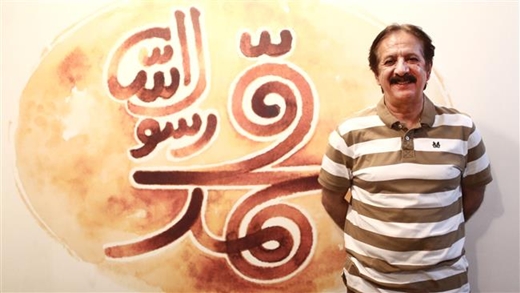
Majidi

Muhammad, the Messenger of God directed by Majid Majidi has been chosen for the 88th edition of the Oscars.

The epic movie, which chronicles the childhood of Islam’s Prophet (PBUH), is to represent Iran in next year’s Academy Awards for best foreign film section.

The decision was made after a series of extensive talks and discussions by the committee of cinema experts in charge of selecting the country’s official submission to next year’s Academy Awards ceremony.

Being the most expensive film in the history of Iranian cinema with a partly state-funded budget of nearly $40 million, it has attracted crowds to cinemas across the country and garnered nearly $2 million since its release in late August.

Majidi has said the aim of his film is removing the “violent image” of Islam created by Takfiri groups.

A number of internationally-acclaimed cinematic figures, including Academy Award winning visual effects supervisor and filmmaker Scott E. Anderson, three-time Oscar-winning Italian director of photography Vittorio Storaro and renowned Croatian production designer Milijen Kreka Kljakovic, cooperated in making the film; Academy Award-winning Indian music composer Allah-Rakha Rahman has also composed the music for the movie.

It is Majidi’s second nomination at the Oscars. His The Children of Heaven was nominated for Best Foreign Language Film in 1998.

Iran won the Oscar for Best Foreign Language Film with the A Separation by director Asghar Farhadi in 2012.

[…]

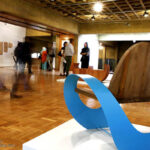
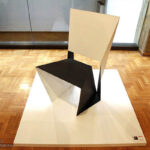
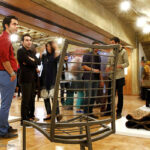
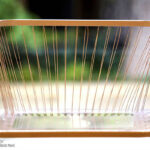
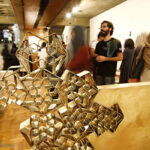
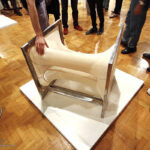
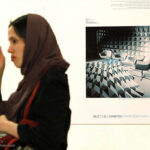
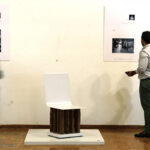
Chair exhibition (PHOTOS)

Chair exhibition208

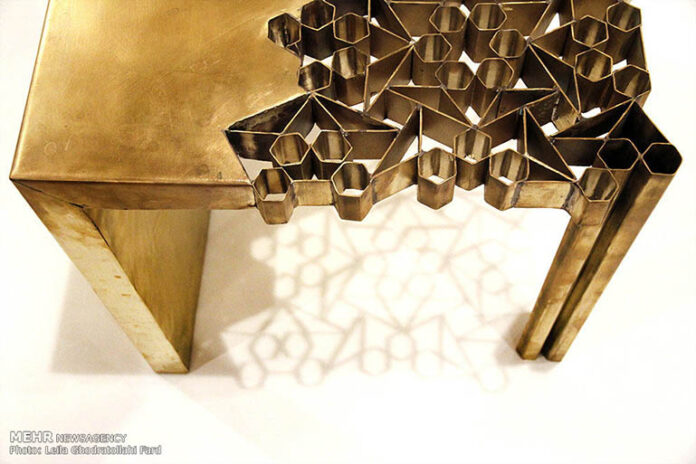
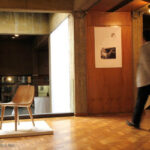
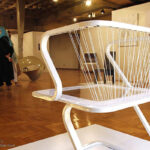
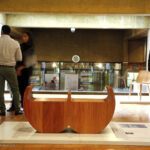
Tehran’s Niavaran Cultural Center hosted an exhibition of chairs designed by a group of contemporary architects.

The expo is the outcome of a new look at chair designs by 30 architects from three different generations.

The event which opened on September 25 runs for two weeks.

Images of the expo posted online by Mehr News Agency:

What took center stage in Zarif-Kerry meeting in New York?

227014_646

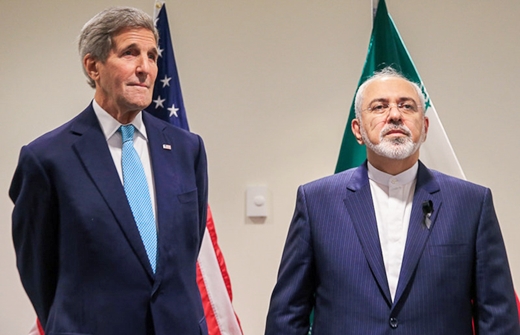
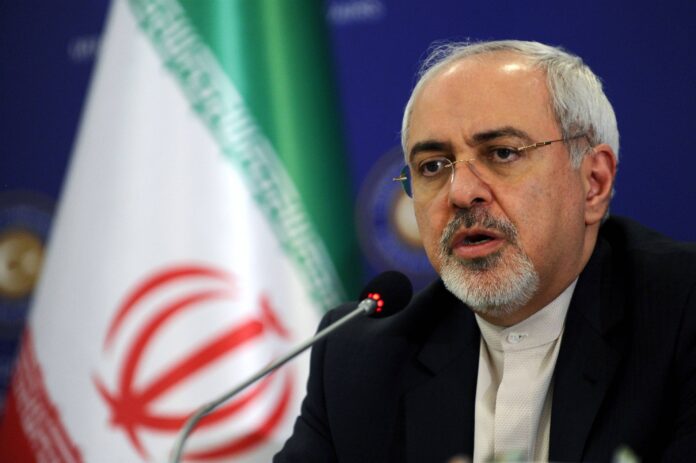
Foreign Minister Mohammad Javad Zarif met with his US counterpart John Kerry on Saturday (September 26) and said that efforts should be concentrated on the full implementation of the Joint Comprehensive Plan of Action (JCPOA).

Alef.ir on Saturday published a report on the meeting in New York between Iran’s top diplomat and his American counterpart and what they talked about. The meeting was the first between the two top diplomats after the conclusion of the Iran nuclear deal back in July.

The Iranian top diplomat was wearing a black ribbon in his lapel to signify that he’s mourning the deaths of Iranian pilgrims in Mina’s deadly stampede. The following is the translation of what Foreign Minister Zarif told reporters after the meeting:

Zarif said that the Joint Comprehensive Plan of Action took center stage in his meeting with Secretary Kerry and added that we focus on the full implementation of JCPOA during the talks.

We started this plan [JCPOA] together and I believe by fully implementing it we can remove some mutual misunderstandings which have arisen in recent decades, he further said.

Zarif went on to say regional developments and last week’s deplorable events in Saudi Arabia should be reviewed, vowing that Iran will look into them through proper international channels.

[…]

Iran’s Rouhani urges UN to press Saudi over Mina tragedy

ad29b96d-bbed-4012-b72a-c312974784c3

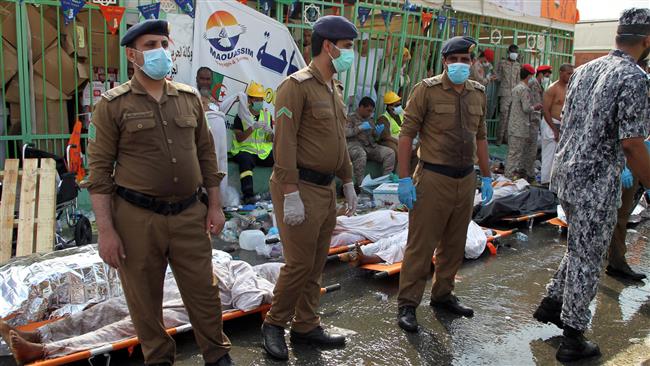
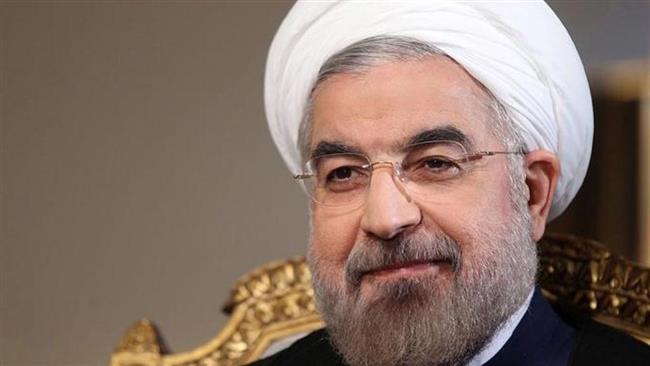
Iranian President Hassan Rouhani has criticized Saudi Arabia for lack of cooperation following the recent deadly Hajj incident, urging the UN to press Riyadh to fulfill its legal obligations.

“Unfortunately, the Saudi government does not cooperate enough in addressing the fate of the missing and transferring the bodies of those killed or injured, and it is imperative that the UN Secretary General [Ban Ki-moon] remind the Riyadh government of its legal and human obligations,” Rouhani said.

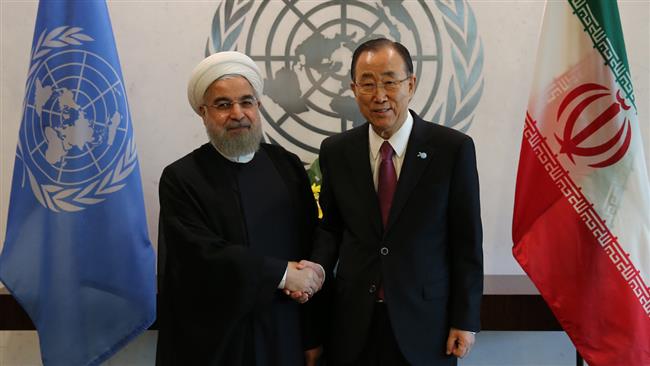
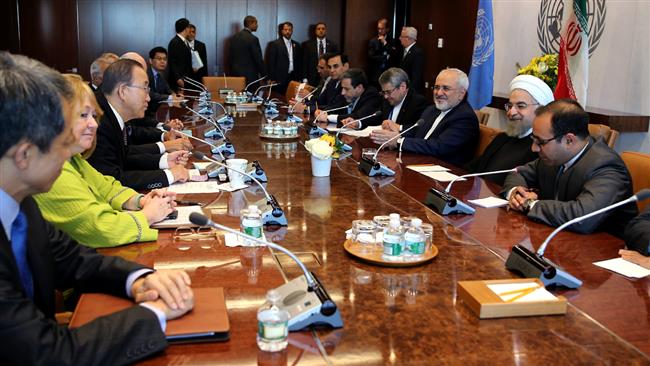
The Iranian president made the remarks in a meeting Saturday with the UN chief in New York on the sidelines of 70th session of the UN General Assembly (UNGA).

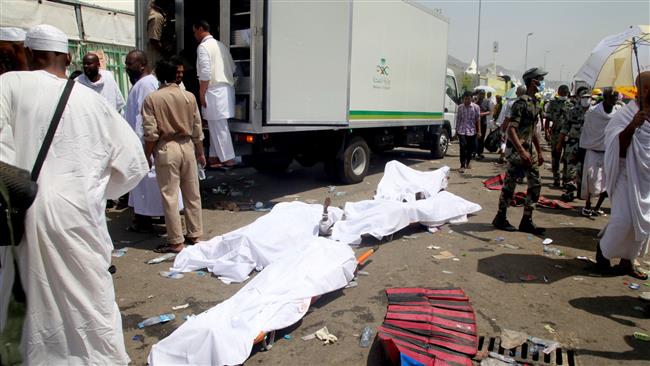
At least 136 Iranian pilgrims have so far been confirmed dead in the deadly crush, according to the head of Iran’s Hajj and Pilgrimage Organization. Saeed Ohadi said on Saturday that 102 Iranian pilgrims have also been wounded and 344 others are still missing.


d04f24b5-87cb-487d-8c37-4ee8569e37e9


The Iranian president also called on the UN chief to do his utmost to help the implementation of an Iranian-proposed act aimed at fighting violence and extremism.

[…]

In the meeting, Rouhani also touched on the issue of terrorism in the Middle East which he said has displaced and endangered the lives of millions, and said the UN, big powers as well as regional countries shoulder a heavy responsibility in the crises in the region.

Underlining the need for coordinated campaign against terrorism, Rouhani also called for an end to interference of certain countries in the region, including in Yemen and Syria.


91ab376a-0e28-4695-94be-5894ca098910


Rouhani said an immediate end to military intervention, delivery of humanitarian aid and start of intra-Yemeni dialogue without any foreign meddling are the key to ending the crisis and restoring lasting peace in Yemen.

He also said that Iran is ready to cooperate with the UN and regional countries to help restore stability in the war-torn Arab country which has been under Saudi air strikes since March 26.

The UN chief, for his part, extended his condolences to Iran over the deadly Mina incident which has led to the deaths of Iranian pilgrims.

Discussing the latest developments in the Middle East with the Iranian president, Ban also called for the Islamic Republic’s assistance in settling regional crises, including the tensions in Yemen, and Syria.

President Rouhani calls for investigation into Mina tragedy

5(31)

Iranian President Hassan Rouhani has called for an investigation into the Mina tragedy of September 24 in Saudi Arabia, which led to the deaths of hundreds of people, including over 130 Iranians.

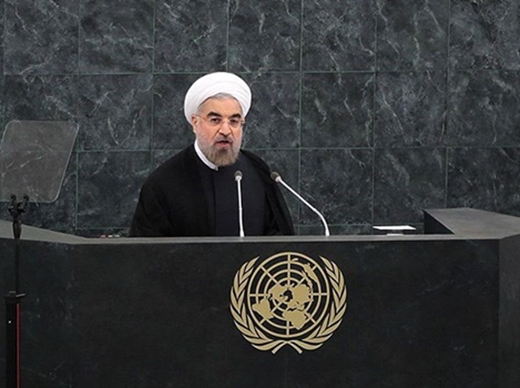
In his speech to the UN Sustainable Development Summit in New York on Saturday, President Rouhani expressed deep regret over the heartbreaking incident and offered his condolences to the bereaved.

He also underlined the need for a probe into the cause of “this incident and similar incidents in this year’s Hajj rituals.”

The Iranian president also called for an immediate follow-up on the treatment of those injured in the incident.

At least 136 Iranian pilgrims have so far been confirmed dead in the deadly crush, according to the head of Iran’s Hajj and Pilgrimage Organization. Saeed Ohadi said on Saturday that 102 Iranian pilgrims have also been wounded and 344 others are still missing.


2dccd74f-b416-4c58-afa5-0cc720312703


On Saturday, Iranian Foreign Minister Mohammad Javad Zarif said Iran will hold talks with the member states of the Organization of Islamic Cooperation (OIC) during an emergency meeting of the group expected to be held on the sidelines of the 70th session of the UN General Assembly to discuss a better handling of the Hajj rituals.

Iran on Saturday summoned the Saudi charge d’affaires for the third time over the Mina incident to receive Tehran’s official protest.

The Islamic Republic called on the Saudi envoy to facilitate the work to follow up on the tragedy and address the fate of Iranian pilgrims.

The Mina incident comes days after a massive construction crane collapsed into Mecca’s Grand Mosque, killing more than 100 people and leaving over 200 others wounded.

Iranians given priority for investment in country: Rouhani

b668e8e6-282e-4558-8b1e-c969136ab1ab

Iranian investors and entrepreneurs are given precedence as far as making investment in the country’s economic sector is concerned, President Hassan Rouhani said.

“Iranian entrepreneurs, managers and investors, both inside and outside the country, always take priority when it comes to presence in different economic areas in the country,” said President Rouhani in a meeting in New York with Iranian elites and entrepreneurs residing in the United States.

President Rouhani is in New York to attend the 70th Session of the United Nations General Assembly.

He said there is very good potential for investment and entrepreneurship in Iran, touching upon the “special conditions” created for economic development in the country following the conclusion of a nuclear agreement between Tehran and six world powers.

“Today, good opportunities have been created for further activities in the economic, scientific and industrial sectors, which should be utilized in the best way possible to boost the country’s progress,” said the visiting Iranian president.


36d3e2f0-51a9-4915-94e7-2046deca30b5


Referring to the unfair sanctions imposed on Iran over its peaceful nuclear program, the president said the country made great achievements while under sanctions.

“One of the reasons behind the success in the [Vienna] talks was that the negotiators of the other side found out that Iran is able to revamp its economy [even] when under sanctions, and that they cannot gain concessions from us,” said the president.

He said the Americans have committed “injudicious and unacceptable” acts against the Iranian nation over the past decades, namely the US shooting down of an Iranian airliner and its support for the former Iraqi strongman Saddam Hussein during the eight-year Iraqi imposed war on Iran.

Nevertheless, the president emphasized, “The Iranian people have no problems with the American people and [they] respect each other.”

Iran’s FM regrets Riyadh’s lack of cooperation with Tehran on Mina tragedy

Zarif

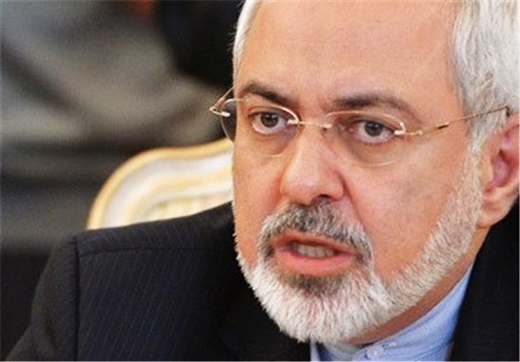
Iranian Foreign Minister Mohammad Javad Zarif deplored Saudi Arabia for its insufficient cooperation with the Islamic Republic in addressing the problems facing Iranian pilgrims after a recent crush near Mecca which killed hundreds, including 136 Iranians.

“This year, we witnessed two bitter incidents in Hajj (season),” Zarif, who is in New York, said in an interview with the Islamic Republic of Iran Broadcasting (IRIB) on Saturday.

“It is necessary that the Saudi government take serious decisions about the mismanagement of the executive agents of Hajj (pilgrimage),” he said.

The Iranian top diplomat further criticized Saudi Arabia’s measures in the aftermath of the crush in Mina, saying, “We are not witnessing sufficient cooperation (on the part of Riyadh).

In another development, Zarif sent separate messages to his counterparts in the Muslim countries whose nationals have been killed or injured in Mecca.

Extending condolences to his Muslim counterparts on the deaths, Zarif hoped that the Saudi executive officials would understand the scope of their heavy responsibility for the annual Hajj services.

To handle the Hajj pilgrimage in the best way, Zarif added, Riyadh needs to prepare the ground for consultation and cooperation with the other Muslim nations and use their experiences to avert such tragedies in the future.

The deadly crush has killed pilgrims from Iran, Nigeria, Egypt, Algeria, Burundi, India, Indonesia, Kenya, Morocco, Pakistan, Senegal, Somalia, Tanzania and a number of other countries.

Iran FM urges timely implementation of JCPOA

d614ac96-8b96-4961-b45c-1855b3cf338c

Iran’s Foreign Minister Mohammad Javad Zarif has called for the timely implementation of a nuclear agreement reached between Iran and six world powers.

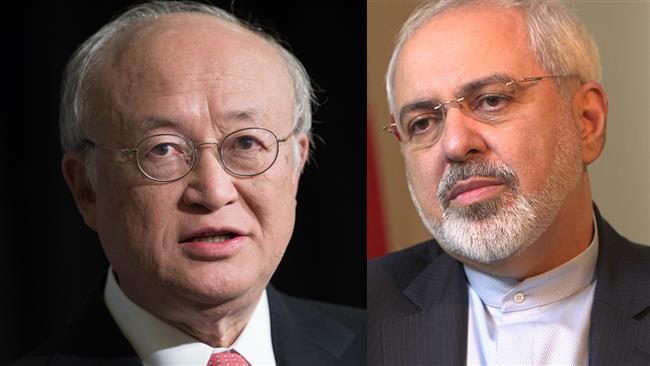
Zarif, who is in New York to attend the 70th annual session of the UN General Assembly, held a meeting with Director General of the International Atomic Energy Agency (IAEA) Yukiya Amano on Friday.

The top Iranian diplomat expressed hope that Tehran and the IAEA would proceed with positive cooperation to clarify outstanding issues over the country’s nuclear program.

He also expressed hope that clarification of outstanding issues would help Iran and the UN nuclear agency implement the Joint Comprehensive Plan of Action (JCPOA), reached between Tehran and the P5+1, in a new atmosphere.

Zarif thanked Amano’s efforts to implement a road map signed between Iran and the IAEA in July for Tehran’s civilian nuclear program.

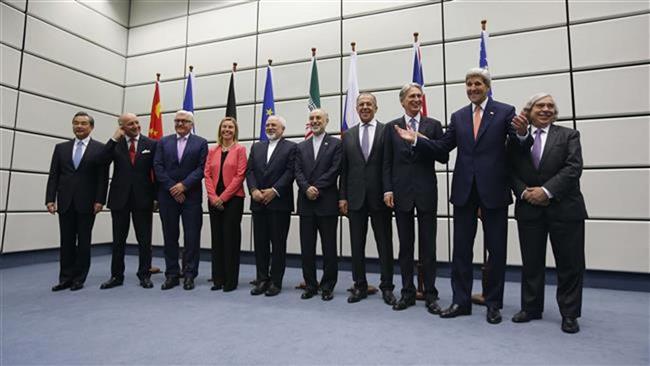
On July 14, Iran and the IAEA signed a road map regarding the Islamic Republic’s nuclear work in the Austrian capital of Vienna. The agreement was clinched on the same day Iran and the P5+1 – the United States, France, Britain, Russia, China and Germany – finalized the text of the JCPOA in Vienna.

Amano, for his part, expressed the IAEA’s readiness to continue cooperating with Iran, particularly on the road map, in a positive atmosphere.

The IAEA chief paid a day-long visit to Tehran on September 20 and held talks with senior Iranian officials over the implementation of the road map.

As part of the road map, the IAEA is required to finish its investigations into Iran’s nuclear activities and submit a report to the agency’s Board of Governors by December 15.


Zarif-Mogherini meeting

The Iranian foreign minister held a separate meeting with European Union foreign policy chief Federica Mogherini in New York.

Zarif and Mogherini discussed new rounds of talks between Iran and the EU.

The Iranian foreign minister said on July 28 that Tehran and the EU have agreed to revive stalled talks.

Speaking at a joint press conference with Mogherini in Tehran, Zarif said Iran-EU “high-level” talks are to resume in the “near future.”

Zarif attends UN meeting on Afghanistan in New York

‘Political resolve, goodwill key for comprehensive nuclear deal’

Foreign ministers of Afghanistan, Iran, China, the US and the representative of the European Union for Foreign Policy Affairs attending a meeting of Peace Development and Afghanistan Regional Cooperation reiterated the need for supporting the Afghan government.

Iranian Foreign Minister Mohammad Javad Zarif attended the meeting at the invitation of Afghanistan’s Executive Chief Abdullah Abdullah.

The meeting on Afghanistan was held on the sidelines of the 70th UN General Assembly meeting in the New York on Saturday.

During the meeting, participants underlined the role of the friendly neighbors of Afghanistan and the international community in protecting peace, security, unity and territorial integrity of Afghanistan.

Party politics: A party for women or partisans of women’s political activity?

81716

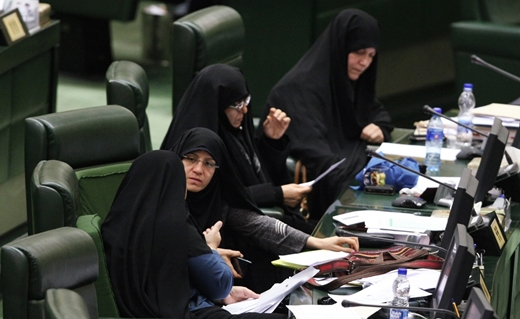
Partisan activities are one of the main indicators of development in democratic societies. Parties can serve as a yardstick to measure the development of a country’s political structure. Like men, women which make up half of the country’s population have to be active in partisan politics before seeking to have a share in the administration of the country’s affairs. A look at women’s presence in active political parties in Iran shows that their role in partisan activities is meager.

Sharq daily on September 14 published remarks by three active Iranian women in a sit-down which focused on the reasons behind women’s not-so-active involvement in partisan work and the effective ways to talk women into participating in political activities.

Azar Mansouri, a member of the Union of Islamic Iran People Party [a reformist party], Masoumeh Rezaei, a political director at Zeynab Society [a principlist group] and Soheila Jelodarzadeh, a member of the Worker House [reformist] and a member of the Association of the Women of the Islamic Republic criticized the lack of self-belief in women and poor performance of parties and said that women’s involvement in political affairs should not be highlighted simply in the run-up to election.

They also stressed the need for a rise in the number of women MPs in the Islamic Consultative Assembly and said that higher female representation in parliament and formation of independent all-women parties can greatly contribute to female participation in different tiers of party management. The following is a brief translation of what they said in the round-table:

Partisan activities

Rezaei: Women who lack self-belief depend on men. Women’s parties are not flourishing in our country. […] Women are asking for a share in executive posts, the Assembly of Experts and the Expediency Council, but they remain dependent on men’s parties when decisions are made on the indicators and numbers [of women in those chambers]. The ticket women approve of is the one men offer with a few women on the list.

Independent women’s parties

Rezaei: […] Presently the principlist and reformist parties do not have enough dynamism to pursue partisan agenda and women’s rights which have been envisioned in the Constitution. […] Women have reached [political] maturity, but in practice they fail to act properly because of their dependence.

Mansouri: […] Politics is a masculine realm in our country and women have not been given enough opportunity to prove themselves. If you compare parties in Iran with those in developed nations which have democratic processes, you will see a void. […] No party in Iran has dedicated a defined place for women in leadership posts and the secretaries general of all recognized parties are selected from among the ranks of men. The parties’ inattention to women’s issues is the very reason why we need parties to be [specifically] formed for women. […]


Women’s parties, a shortcut

Mansouri: […] The failure of political parties, principlist and reformist alike, has prompted women to move toward forming their own parties. Women have to have their own parties so that they can pursue their own demands. […]

Women’s place within parties

Jelodarzadeh: We should not talk in a dreamy world. We should consider the realities on the ground. […] If parties are part of the democratic structure, they should take on a real form and be given the opportunity to conduct their activities. […]

Now in the post-sanctions era, we should not repeat the past mistakes; rather, we should set the stage for partisan activities. An intraparty challenge will help women find their rightful place in top tiers of the country’s leadership without forming women’s parties.

[…]

Involvement in political activities 

Jelodarzadeh: Women can form an alliance to overcome the challenges. Women’s political alliance helped set the stage for naming a female minister. Women can tap into this tactic in the upcoming elections too. The fate of a nation is what matters. Development would be a nonstarter in the absence of women. […]

[…]

Women are not doing enough

Mansouri: … The countries which succeeded in increasing women’s political participation have either changed their electoral law or encouraged parties to put women on their tickets. […] The late Imam stressed the need for women’s participation in the administration of the country’s affairs and the Supreme Leader has said that women should try to win half of parliament’s seats. We need to tap into the potential of parties, or the country’s electoral structure should allow for it.

[…]

Ray of hope

Jelodarzadeh: […] We need to adopt a single strategy with the women’s society. I mean those who pay a huge price in dealing with their problems thanks to the lack of women’s presence in decision making processes in the country, those women who face difficulties for their education, career, and child rearing [among other things]. Women have to become united and work toward their goals. […]

The gap between the intellectuals and masses of people should be reduced. As long as the intellectuals fail to establish contact with people, they will have difficulty winning people’s votes in elections.

[…]

Different views on political participation

Mansouri: There are three viewpoints in this regard. The first argues women should take care of kitchen issues, not politics. The second one says the electoral law has not banned women’s running for elections. This one is dominant in our society, but we have yet to change the way executive officials and political players behave. The third contends women’s political participation will not materialize, because they are treated as second-class citizens. We need to create opportunities and tap into mechanisms to help women enter political activities. […]

Solution

Rezaei: Women should become mature enough to think that they need to join hands, work beyond factional lines and have strong determination [to get active in political affairs]. […]

Jelodarzadeh: We need to have a coalition for women across the nation. Women also need a concentrated leadership regardless of their leanings: principlist or reformist. Women need to work on their common goals.

[…]

Mansouri: The question of women’s participation comes to the fore before any election with parties highlighting it, but it is consigned into oblivion after elections. This is used as a tool to bring women to balloting stations, but after the vote women are denied any share and nothing positive happens for them. […]

Tenth parliament, a turning point

Mansouri: We need to take into account the quantity [the number of women who are active in political arena, parliament for instance]. […] Time has come for political movements to take more risks and help a larger number of women find their way into parliament. […]

Women’s presence in parliament opens up opportunities for political parties. If their presence is bolstered, we can remain hopeful about the future. We can even be optimistic about women’s presence in presidential elections in the not-too-distant future.