Wednesday, December 24, 2025
Home Blog Page 4628

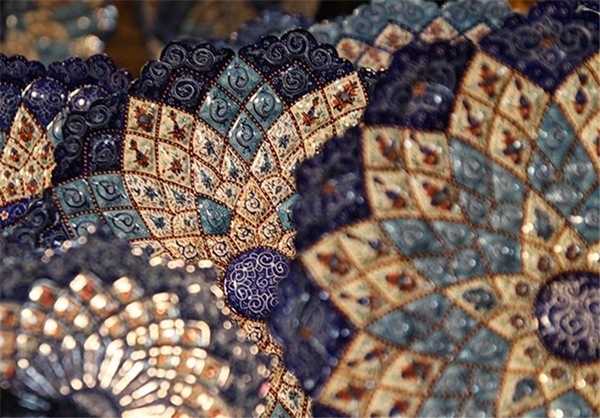
World Craft City, an opportunity to boost tourism

Iran-Handicrafts

The head of Isfahan’s Cultural Heritage, Handicrafts and Tourism Association has said that registration of Isfahan as the World Craft City opens up a golden opportunity for Iran to develop its tourism industry.

Mehdi Narimani further said that such an opportunity opens a window for Iran through which we can make it to global markets. The following is the translation of what else Esfahan Emrooz quoted Narimani as saying:

Selection by the World Crafts Council AISBL (WCC-AISBL) of Isfahan as the World Craft City was a good decision. We hope the council’s solid support can help set the stage for Isfahan’s artists to make their presence felt on the world stage.

Contacts among people with a liking for beauty and art can pave the way for promotion of peace across the world. In fact, art is a common language [artists use] to talk and have contacts with people all over the world, irrespective of their religious beliefs and political leanings.

Isfahan’s Cultural Heritage, Handicrafts and Tourism Association, which is a non-governmental organization, voices its all-out support for artists making handicrafts, and is at the ready to be part of efforts to hold national and international handicrafts festivals.

The beauty and great delicacy of Isfahan’s handicrafts, which are a manifestation of this land’s culture and civilization – have always surprised [foreign] tourists. Now an opportunity has opened up [for us] to present this art to the whole world.

Mina tragedy; Iran needs to err on the side of caution

Hajj

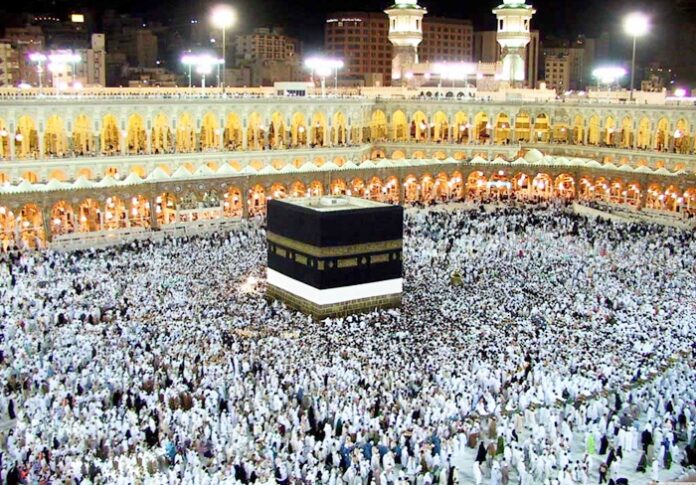
Hajj, the largest human congregation in the world, has always been the focus of attention with the world watching the giant movement of Muslims in the great Land of Revelation.
Regrettably, this year’s Hajj was overshadowed by the loss of the lives of a large number of pilgrims who were observing part of the annual rituals in Mina on the Feast of Sacrifice. What happened in Mina left a bad taste in the mouths of all Muslims and a majority of the followers of other divine faiths.

This was the opening of an opinion piece by Morteza Rahimi, a former Iranian ambassador to Oman, Iran Newspaper published on September 26 on the Mina tragedy and the need for Iran to react vigilantly. The following is the translation of the rest of the piece:

Naturally, the Saudi government – as the host of Hajj – should have made elaborate preparations for the massive ceremony, but reports [coming from Saudi Arabia] suggest that the lack of prudence on the part of security forces and organizers of Hajj created a catastrophic incident. There are some points worth pondering here:

1. As the first step, the Saudi government should assume responsibility for the incident unless it can prove that there were factors beyond its control that marred this great congregation of Muslims. If Riyadh fails to present evidence on the role of culprits outside the realm of its control, as the host nation it has to accept legal and ethical liability for the incident, identify and bring to justice those who have played a role in the deadly stampede.

Evidently, this is the very first responsibility of the Saudi government in dealing with the world’s public opinion, Muslims and non-Muslims alike, which has been lacerated by the incident. The very first stances Saudi officials took following the deadly happening show that Riyadh lacks serious determination in this regard.

On some occasions, Saudi officials have used indecent and irresponsible language and helped spark off anger among critics instead of expressing sympathy [with the stricken nations] and trying to handle the barrage of rational criticism [over their management of the Hajj rituals].

2. The painful tragedy in Mina, like other incidents, needed proper post-incident management in order to reduce the number of casualties, but the Saudis proved the reverse. Reports indicate that the Saudi performance has been weak and well below global standards. This, in turn, has widened the scope and depth of criticisms directed at official Riyadh.

Following the crisis, Saudi Arabia could have taken appropriate measures to boost relief operations and [Muslim] solidarity: it could have asked for the participation of the Hajj offices of different Islamic countries, especially that of the Islamic Republic of Iran which is based in Saudi Arabia, [in the rescue and relief operations].

Evidence shows that the Saudis did not invite the Hajj offices of countries – which were bereaved and bereft – to help in the operations, but instead they gave the representatives of other countries the cold shoulder and threw serious obstacles in the way of those offices which sought to voluntarily help with the relief operations. What they did left a negative impact on the pilgrims present there and their families in different Islamic countries.

3. The agonizing tragedy in Mina drew rapid reactions from most Muslim nations, including Turkey and Indonesia, as well as global institutions such as the United Nations and the European Union, and officials from Russia and China who expressed sympathy with [the families of] the victims.

These reactions, which are in step with the position the world’s public opinion has adopted and implicitly blame Saudi rulers [for this tragedy], are not to the benefit of Saudi Arabia as far as international relations go.

In Iran, the Supreme Leader, the president and other officials voiced sympathy with people’s hurt feelings and stressed the need for efforts to pursue the incident. They also said that officials in Riyadh should take the blame for the tragedy, answer for their negligence [in handling the religious rituals properly] and abide by the obligations of the host country.

In such an atmosphere, efforts to give the Iranian and non-Iranian pilgrims the rights they are due seem feasible, but occasional calls for radical measures against Saudi Arabia seem unjustifiable and indefensible.

At best, such measures are the result of sentimental reactions by some Iranians to the mismanagement and lack of prudence on the part of officials in Riyadh; in worst-case scenarios they are [part of a] suspicious move which can change the place of the plaintiff and defendant in the Mina incident.

This can also play into the hands of Saudi officials: they can inflate such a move simply to lift the heavy burden of the world’s public opinion, especially Muslims, off their shoulders and replace the core [the tragedy and the blame for it] with marginal issues [the reactions of other nations].

The bereaved Iranians are expected to continue with their efforts to logically criticize Saudi officials and take civil measures such as rallies after Friday prayers, but avoid any harsh and irrational decisions.

Iranians are expected to let the country’s officials work with fellow Muslim nations and pursue the case through official and conventional channels such as the Organization of the Islamic Cooperation (OIC), and – if needed – through global institutions like the United Nations.

If so, Iranian officials can desirably handle the case and reach a solution so that the sufferings and excruciating pain of Iranians can be partially eased.

A look at Iranian newspaper front pages on September 29

Iranian Newspapers Headlines

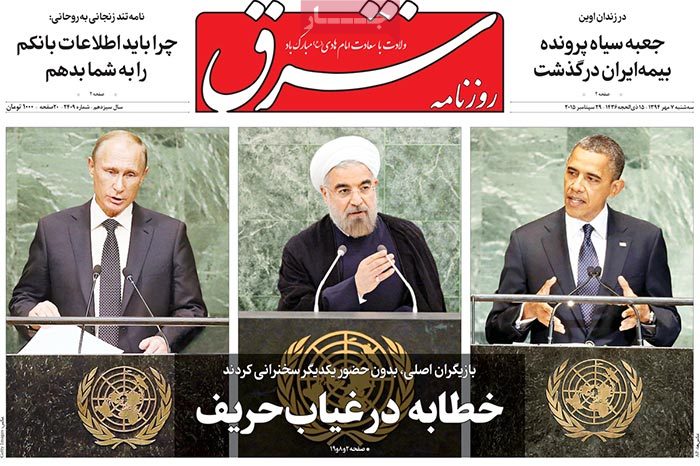
The comments of President Rouhani at the UN General Assembly dominated the front pages of Iranian newspapers on Tuesday. Also on the cover of dailies was the fallout of the deadly tragedy in Mina, Saudi Arabia.


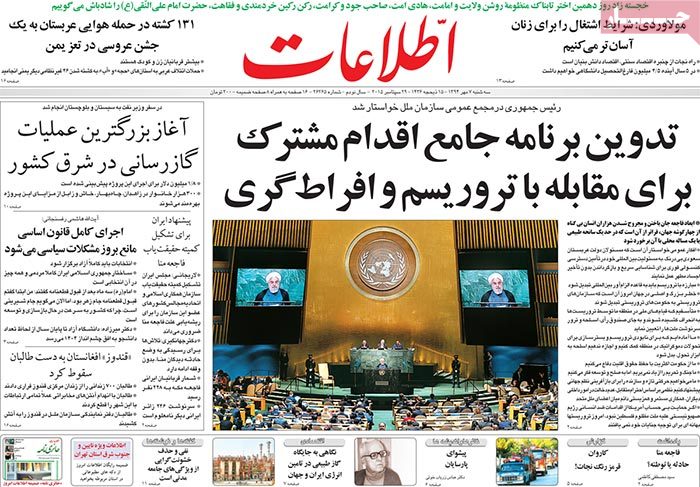
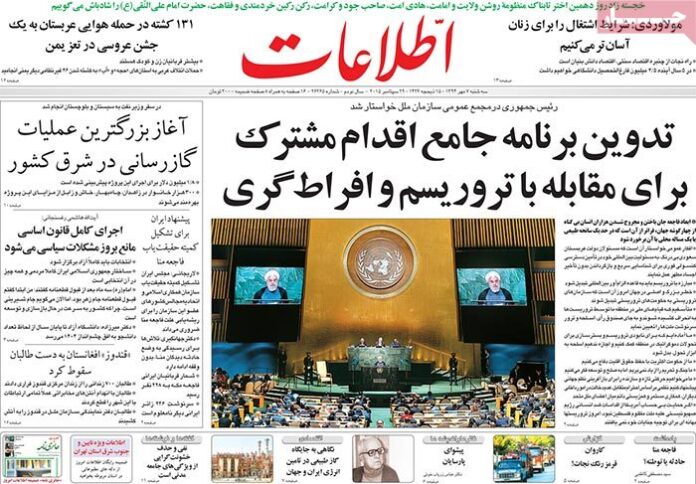
Ettela’at: In a speech at the UN General Assembly President Rouhani called for a Joint Comprehensive Plan of Action to take on terrorism and extremism.

The loss and injury of thousands of innocent people from the four corners of the world is too big a tragedy to be treated as a natural or local incident.


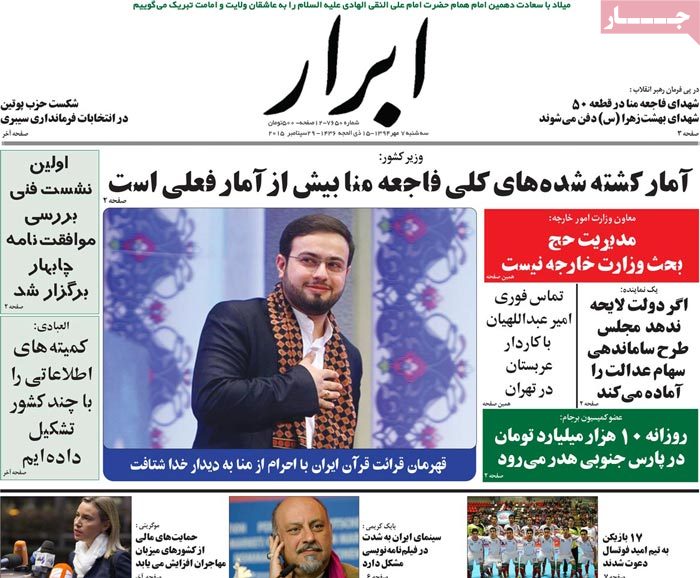
Abrar: The interior minister has said the overall number of people killed in the Mina tragedy is higher than the current figure.


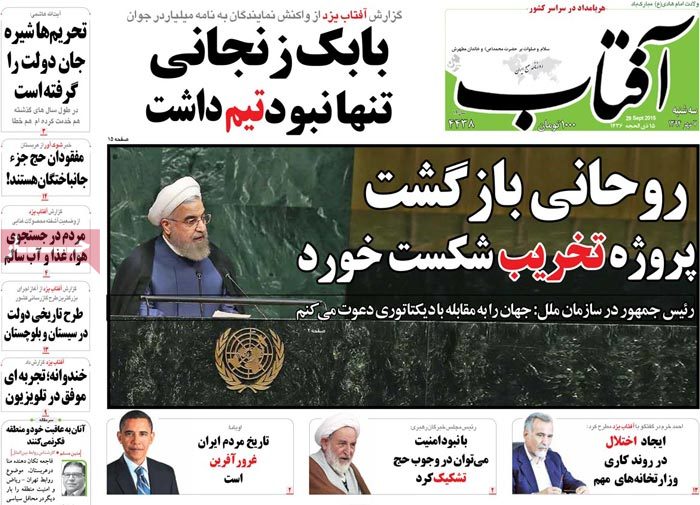
A look at Iranian newspaper front pages on September 29


Aftab-e Yazd: “In the absence of security, one can doubt the imperativeness of Hajj,” said Ayatollah Mohammad Yazdi, the chairman of the Assembly of Experts.


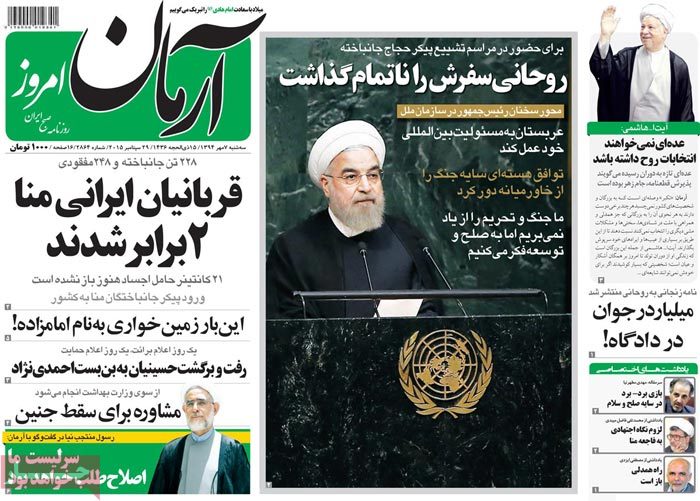
A look at Iranian newspaper front pages on September 29


Arman-e Emrooz: President Rouhani has cut short his New York trip to return home and attend the funeral of Iranian pilgrims killed in last Thursday’s stampede in Mina, near Mecca.


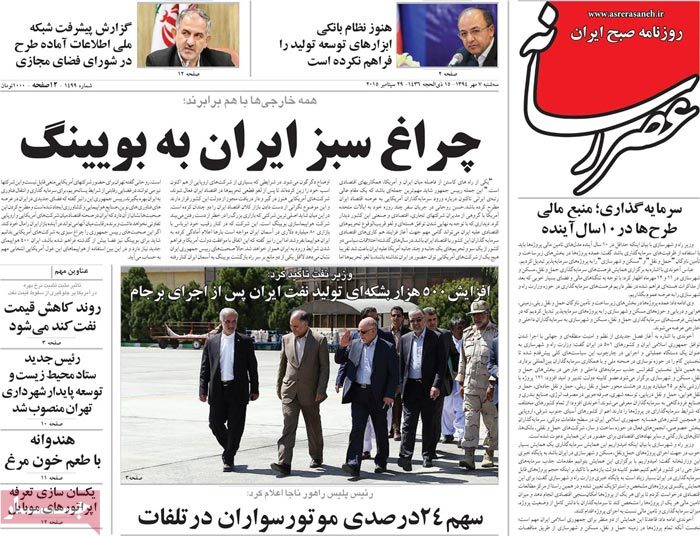
A look at Iranian newspaper front pages on September 29


Asr-e Rasaneh: Iran’s oil output will rise by 500,000 barrels a day after the Joint Comprehensive Plan of Action is implemented, said the Iranian oil minister.


A look at Iranian newspaper front pages on September 29


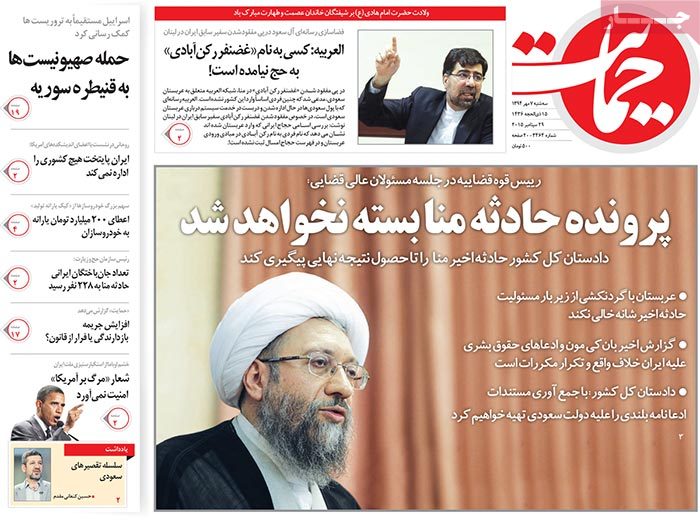
Hemayat: The judiciary chief has said the Mina case won’t be closed.

Ayatollah Sadegh Amoli Larijani called on the attorney general to follow up the case until it produces definitive results.


A look at Iranian newspaper front pages on September 29


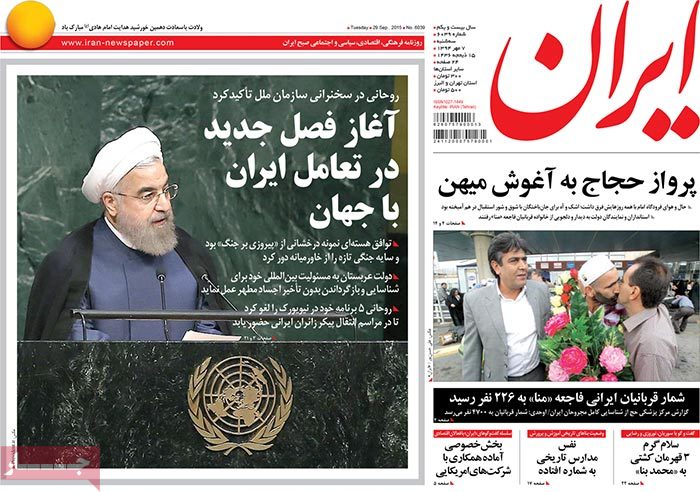
Iran: Iranian Hajj pilgrims have started to return home.

Iran: The Iranian private sector stands ready to cooperate with American firms.

Iran: The president has announced the opening of a new chapter in Iran’s interaction with the rest of the world in a speech at the UN General Assembly.


A look at Iranian newspaper front pages on September 29


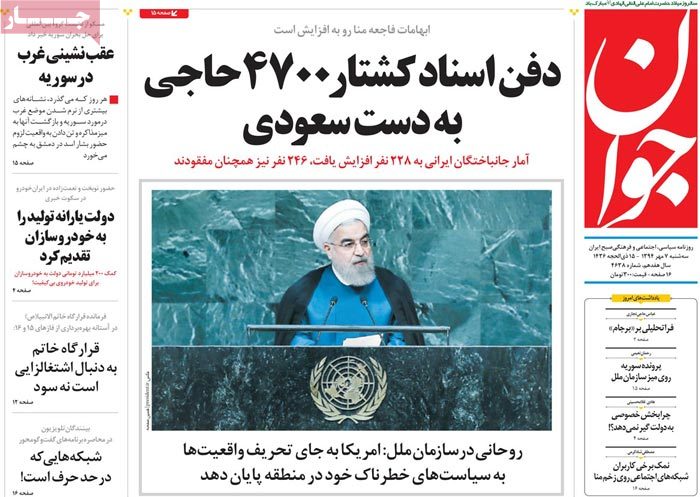
Javan: Instead of distorting the facts, the US should bring its dangerous policies in the region to an end, the president told the UN General Assembly.


A look at Iranian newspaper front pages on September 29


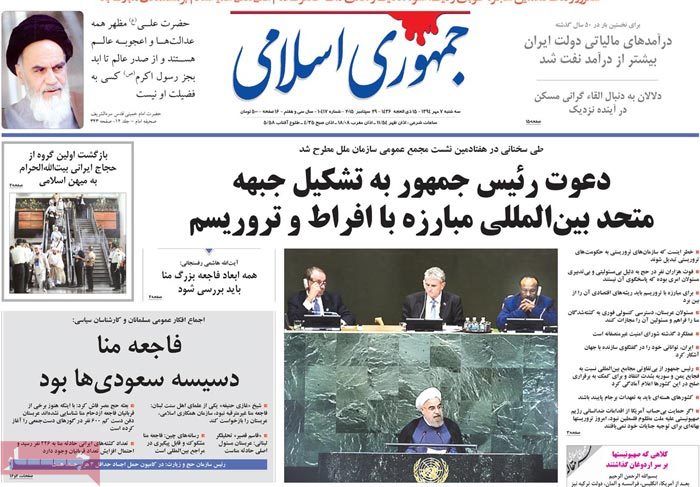
Jomhouri Islami: For the first time in five decades the tax revenues of the Iranian government have overtaken its oil income.


A look at Iranian newspaper front pages on September 29


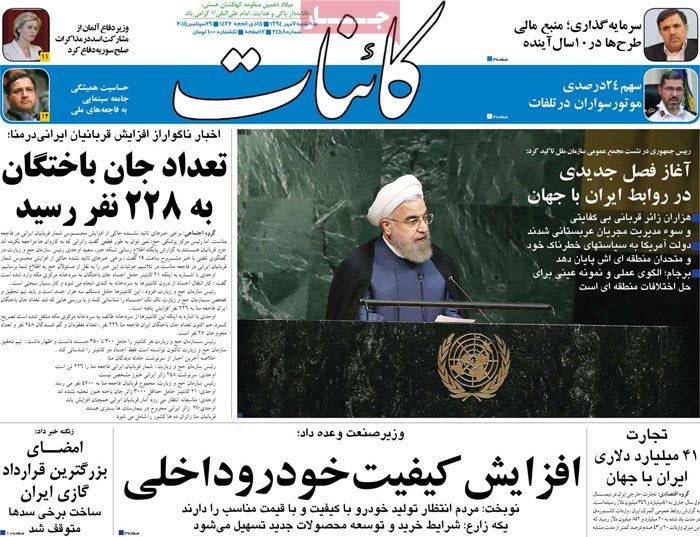
Kaenat: Investment will be the primary mode of project finance in the next 10 years, said the minister of roads and urban development.


A look at Iranian newspaper front pages on September 29


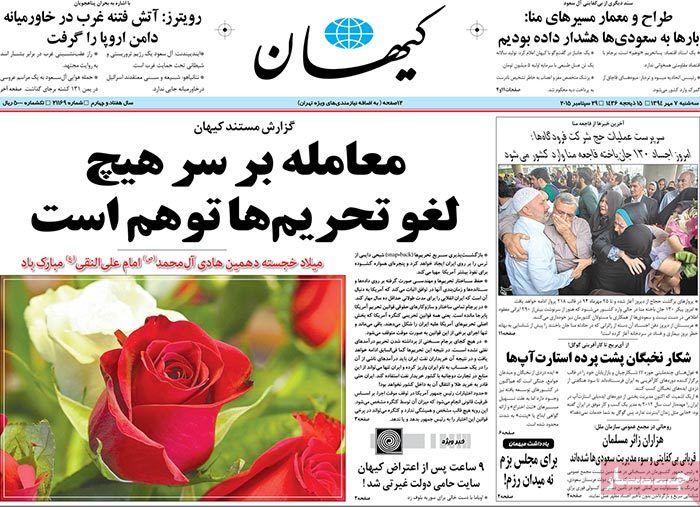
Kayhan: A deal over nothing; termination of sanctions is nothing but an illusion, a Kayhan report.


A look at Iranian newspaper front pages on September 29


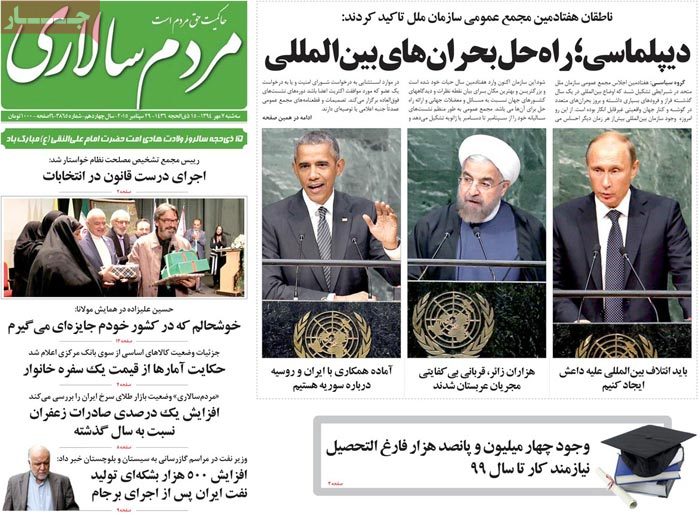
Mardomsalari: “I am happy to receive an award in my own country,” said Hossein Alizadeh [a leading classical composer who refused to accept France’s Chevalier of Legion of Honor in 2014].

Mardomsalari: Saffron exports have registered a one percent increase over last year.


A look at Iranian newspaper front pages on September 29


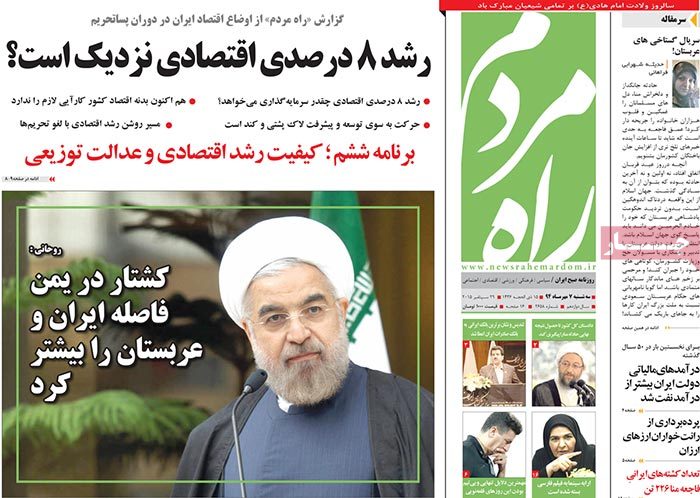
Rah-e Mardom: President Rouhani has said that the massacre in Yemen has widened the gap between Iran and Saudi Arabia.


A look at Iranian newspaper front pages on September 29


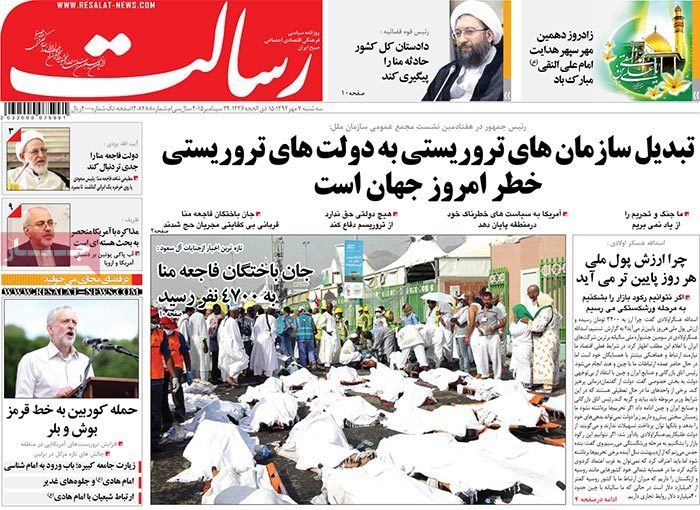
Resalat: The chairman of the Assembly of Experts has urged the Iranian government to pursue the case involving the Mina tragedy.


A look at Iranian newspaper front pages on September 29


Sharq: “Why should I give you information on my bank accounts?” Babak Zanjani [a young billionaire who stands accused of massive corruption] asked in a stern letter to President Rouhani.


A look at Iranian newspaper front pages on September 29


Highlights of Ettela’at newspaper on September 29

Ettelaat

 In a speech at the UN General Assembly President Rouhani called for a Joint Comprehensive Plan of Action to take on terrorism and extremism.

The loss and injury of thousands of innocent people from the four corners of the world is too big a tragedy to be treated as a natural or local incident.

 Shahindokht Molaverdi has vowed to make it easier for women to land jobs.

The vice-president for women’s affairs further said that over the next five years some 4.5 million students will have graduated from universities.

 A Saudi airstrike on a wedding ceremony in Taiz, Yemen has left 131 people, most of them women and children, dead.

 Ground has been broken on the largest gas supply project in eastern Iran.

The $1.8 million project will take natural gas to 300,000 households in Zahedan, Chabahar, Khash and Zabol.

“Compliance to the letter with the Constitution will prevent political problems,” said Ayatollah Akbar Hashemi Rafsanjani.

The chairman of the Expediency Council further said that elections should be free and fair and that the structure of the Islamic Republic of Iran is democratic.

 Iran has suggested a fact-finding committee be formed to look into the Mina tragedy.

It came as the number of Iranian pilgrims killed in the stampede rose to 228; another 246 are listed as missing.

 Kunduz has fallen to the Taliban who have torched the UN mission in the northern Afghan city.


Russian president calls for removal of West’s sanctions on Iran

President-Rouhani13

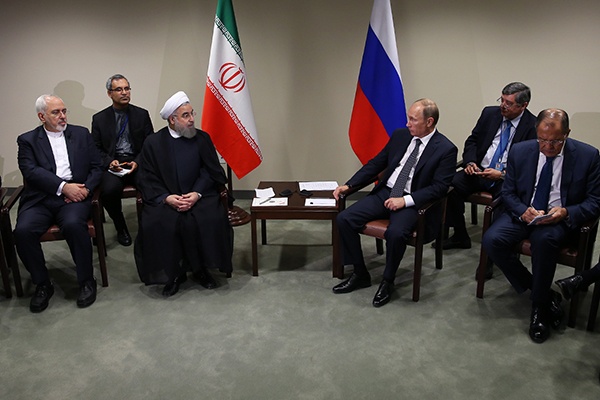
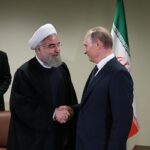
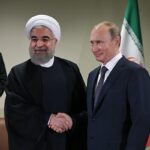
Russian President Vladimir Putin in a meeting with his Iranian counterpart Hassan Rouhani underlined his country’s resolve to have the oppressive sanctions imposed by the West against Iran removed.

“Moscow emphasizes Iran’s right to peaceful use of nuclear energy and removal of oppressive sanctions,” Putin said at the meeting on the sidelines of the UN General Assembly meeting in New York on Monday.

The Russian president expressed hope that he will travel to Tehran soon, and called for broadening of bilateral ties in economic, scientific and strategic areas.

President Putin described his Iranian counterpart’s role in striking a nuclear agreement between Tehran and world powers as superior and extended his condolences to President Rouhani on the deaths of Iranian pilgrims during Hajj in Mina, Mecca.

The Russian president called for mutual cooperation between Moscow and Tehran on the fight against terrorism and restoration of regional and international security at a high level.

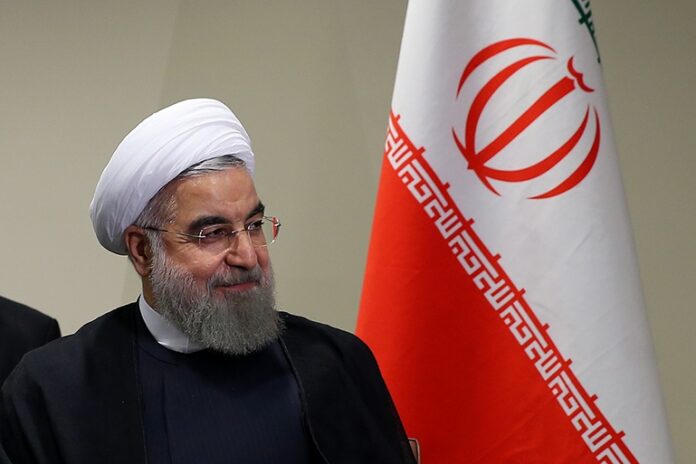
Reopening of embassies betters Iran-UK relations: Rouhani

President-Rouhani5

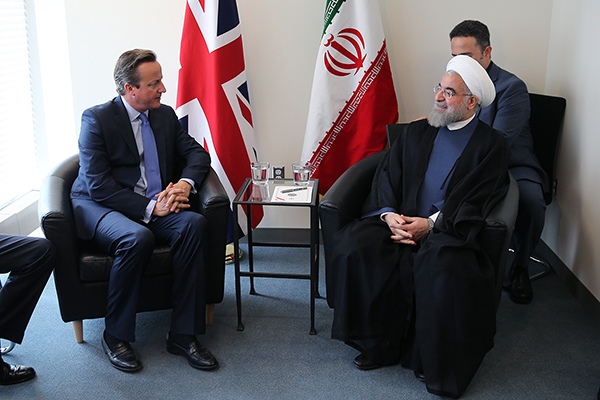
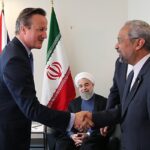
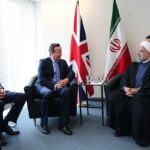
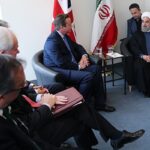
The reopening of Iran and Britain’s respective embassies is a starting point for better relations between the two countries, President Rouhani said at a meeting with British Prime Minister David Cameron on the sidelines of the 70th Session of the UN General Assembly in New York Monday.

“The reopening of the two countries’ embassies shall be a suitable starting point in creating dynamic and developing relations between the countries,” the president said.

[…]

Rouhani expressed concern over the spread of terrorism and insecurity throughout the world and said, “If we do not eradicate the roots of terrorism even if we successfully battle it in one region, it may spring back immediately in another.”

At the meeting, the two also talked about steps necessary to be taken before sanctions against Iran can be removed as part of the nuclear agreement signed on July 14.

[…]

For his part, Cameron recalled Britain’s efforts during the course of the finalization of JCPOA, a visit to Iran by British Foreign Secretary Philip Hammond, and sending commercial delegations to the country as goodwill gestures by the UK aiming to further relations between Tehran and London.

[…]

Saudi Arabia’s cooperation on Mina crush “not enough”: Iran

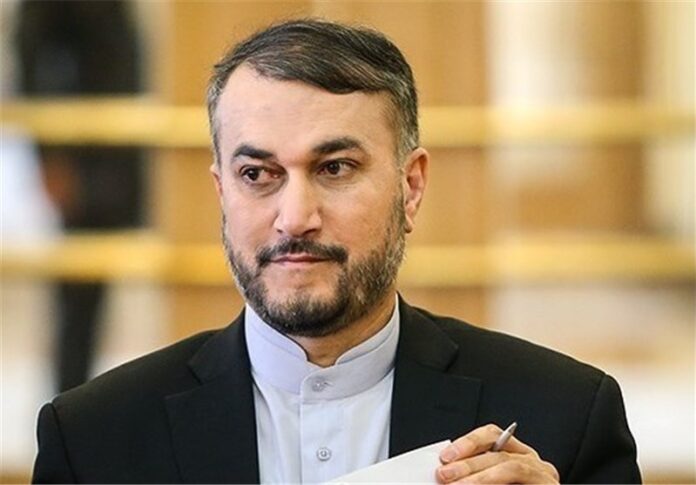
abdolahian

The deputy foreign minister for Arab and African affairs described as insufficient the collaboration of Riyadh with Tehran in pursuing the fate of missing Iranian pilgrims and called for the Riyadh’s serious cooperation in this regard.

Hossein Amir Abdollahian said that he has made a phone call and talked with the Saudi envoy in Tehran over the recent crush in Mina which led to the deaths of over 2,000 pilgrims, including at least 228 Iranians.

Despite their promise of cooperation in certain areas, Saudi Arabia’s measures for pursuing the fate of missing Iranian pilgrims are not enough, he said, adding that more than 240 Iranian nationals are still unaccounted for.

He said Iran expects Saudi Arabia’s interior and Hajj ministries to immediately provide consular access for identifying the bodies of Iranian victims that are still in the containers transferred to Mecca.

Amir Abdollahian further said that Saudi officials are expected to consider serious and effective cooperation and pay attention to their responsibility until the fate of all missing Iranian pilgrims is determined.

Iran will continue pursuing the issue seriously until all its missing pilgrims are accounted for, Amir Abdollahian said, and voiced Tehran’s readiness to help accelerate the process.

“The Saudi chargé d’affaires explained the latest measures taken by Saudi Arabia, and promised to inform his country’s senior officials of the issue immediately,” Amir Abdollahian said about his phone call with the Saudi envoy.

[…]

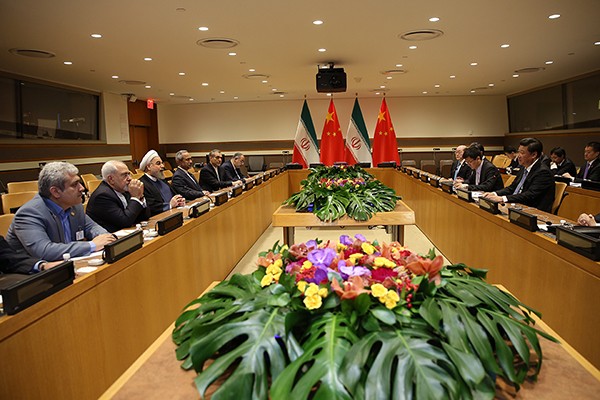
No third country can influence Iran-China ties: President Rouhani

President-Rouhani

At a meeting with Chinese President Xi Jinping Monday, President Rouhani underlined Beijing’s important role in the success of nuclear talks between Tehran and six world powers and said, “No power can influence good relations between Tehran and Beijing.”

He said, “The Islamic Republic of Iran will not forget its friends that had good relations with the country during the difficult conditions created by sanctions,” adding that friendly Tehran-Beijing ties cannot be influenced by any power.

The Chinese president, for his part, said that China and Iran have lot in common in bilateral relations as well as international and regional issues and they have consolidated their cooperation at the highest level.

“Iran and China can further broaden this trend through their cooperation in a bid to bring more welfare for their nations,” he added.

Iranian President in New York (PHOTOS)

President-Rouhani15

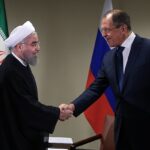
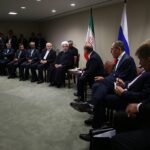
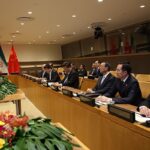
President Hassan Rouhani met with his Russian counterpart Vladimir Putin, Chinese President Xi Jinping and British Prime Minister David Cameron in New York and delivered a speech at the UN General Assembly on Monday.

The following images of the president’s busy schedule have been released by multiple news agencies and websites:

What President Rouhani told UN General Assembly (full text)

Rouhani’s speech at the UN

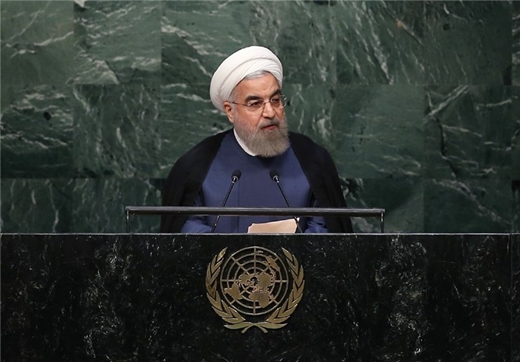
President Rouhani, in his statement at the UN General Assembly, called on Saudi officials to grant access for identification and return of bodies of pilgrims who lost their lives during the annual Hajj pilgrimage.

“Public opinion demands that Saudi Arabian officials promptly fulfill their international obligations and grant immediate consular access for the expeditious identification and return of the cherished bodies,” Rouhani said in his statement on Monday.

The full text of the statement is as follows:


Statement by H.E. Dr. Hassan Rouhani

President of the Islamic Republic of Iran at the General Debate of the General Assembly of the United Nations

28 September 2015

In the name of God, the Most Compassionate, the Most Merciful

Praise be to Allah, and peace and greetings to Prophet Muhammad and his true companions

Mr. President

I am speaking on behalf of a great nation who is mourning the loss of thousands of Muslim pilgrims and hundreds of its citizens. Old, young, men and women who had come together in the grand and global spiritual gathering of the Hajj, but unfortunately fell victim to the incompetence and mismanagement of those in charge. Due to their unaccountability, even the missing cannot be identified and the expeditious return of the bodies of the deceased to their mourning families has been prevented. The scope of a calamity in which thousands of innocent people from the four corners of the world have been killed and wounded is so broad that it cannot be dealt with as a natural disaster or a local issue. The pain and emotional distress inflicted on millions of Muslims is greater than what can be repaired merely through material calculations. Public opinion demands that Saudi Arabian officials promptly fulfill their international obligations and grant immediate consular access for the expeditious identification and return of the cherished bodies. Moreover, it is necessary that the conditions are prepared for an independent and precise investigation into the causes of this disaster and ways of preventing its repetition in the future.

Mr. President

Distinguished Secretary-General

Excellencies,

Ladies and Gentlemen,

I am speaking on behalf of a nation that, two years ago, again voted for constructive engagement with the world and I can now proudly announce that today, a new chapter has started in Iran’s relations with the world.

Two years ago, the people of Iran in a competitive election, with their votes gave me a mandate for consolidating peace and constructive engagement with the world—whilst pursuing national rights, interests and security. This national will, manifested itself through a careful and clear diplomatic effort which resulted in the Joint Comprehensive Plan of Action (JCPOA) between the Islamic Republic of Iran and six world powers that was immediately turned into an international instrument with the ratification of the United Nations Security Council. From the standpoint of international law, this instrument sets a strong precedent where, for the first time, two sides rather than negotiating peace after war, engaged in dialogue and understanding before the eruption of conflict.

At this point, I deem it necessary to recognize the role of all the negotiators, in achieving this agreement. We had decided to bring about a new environment while maintaining our principles and we succeeded in doing so. Where necessary we moved forward and where necessary we showed the courage for flexibility; and, at each point, we made use of the full capacity of international law and showcased the potentials of constructive dialogue. The key point regarding the success of dialogue is the fact that any actor in the international system who pursues maximalist demands and does not allow space for the other side cannot speak of peace, stability and development. As in commerce and economic activity, where the interests of both parties should be taken into account, in politics and international relations too multilateralism and win-win solutions should be the basis of engagement.

Mr. President,

The United Nations was established to sustain global peace and security after two world wars. But unfortunately, it must be said that in most cases this important international institution has not been successful or effective. This time, however, the United Nations made the right decision.
Though, we protest the adoption of unfair resolutions against the Islamic Republic of Iran and the imposition of sanctions against the Iranian nation and government as a result of misunderstandings and sometimes overt hostilities of some countries, however, we believe, as an old Iranian saying goes, “the sooner you stop harm, the more benefit you will reap”. Today is the very day that harm is stopped.

Security Council Resolution 2231, despite some significant shortcomings, was an important development and the basis for terminating sanctions-imposing resolutions against Iran. We consider unfair the conduct of the Security Council in the past and insist that Iran, due to the important fatwa of its leader and its defense doctrine, has never had the intention of producing a nuclear weapon and, therefore, sanctions resolutions against Iran were unjust and illegal. Sanctions by the Security Council and unilateral sanctions by some countries were based on illusive and baseless allegations and created difficult conditions for our people. But these sanctions never in any way affected the policy we adopted and the approach we took towards negotiations. We proved in these negotiations that there is nothing on Iran’s table other than logic, reason and ethics, and where necessary, legitimate and decisive self-defense against any kind of aggression.
Our seven countries and the European Union expended considerable time and diplomatic capital in these negotiations and, therefore, they should exert their utmost effort to protect and implement the agreement. We deem the compliance of all parties with their commitments as the fundamental factor in the success of the implementation process of the negotiations.

Parallel to the implementation of JCPOA, we also expect the nuclear-weapon states to take necessary steps to fulfill their commitment of full nuclear disarmament based on Article 6 of the Non-Proliferation Treaty. Furthermore, we expect them to play a positive role in the creation of a “nuclear weapons-free Middle East” and not to allow the Zionist regime to remain the only impediment in the way of realizing this important initiative.

Mr. President,

The nuclear deal, which is a brilliant example of “victory over war”, has managed to dispel the clouds of hostility and perhaps even the specter of another war and extensive tensions from the Middle East. The deal can and should herald a new era and lead to positive outcomes regarding the establishment of sustainable peace and stability in the region. From our point of view, the agreed-upon deal is not the final objective but a development which can and should be the basis of further achievements to come. Considering the fact that this deal has created an objective basis and set an appropriate model, it can serve as a basis for foundational change in the region.
Our policy is to continue our peace-seeking efforts in the region based on the same win-win principle, and act in a way that would lead to all in the region and the world benefitting from these new conditions. This opportunity can be seized in order to look to the future and avoid focusing on the past and rebuild our relationships with the countries in the region, particularly with our neighbors, based on mutual respect and our common and collective interests.

Unfortunately, the Middle East and North Africa have turned into one of the world’s most turbulent regions. With the continuation and intensification of the current condition, the turmoil can spread to other parts of the world. In today’s interconnected and borderless world, countries and regions encounter great difficulty in protecting their borders and preventing the spread of insecurity and instability.

The gravest and most important threat to the world today is for terrorist organizations to become terrorist states. We consider it unfortunate for national uprisings in our region to be deviated by terrorists and for the destiny of nations to be determined by arms and terror, rather than ballot boxes.

We propose that the fight against terrorism be incorporated into a binding international document and no country be allowed to use terrorism for the purpose of intervention in the affairs of other countries. We are prepared to assist in the eradication of terrorism and in paving the way for democracy, and ensuring that arms do not dictate the course of event in the region. As we aided the establishment of democracy in Iraq and Afghanistan, we are prepared to help bring about democracy in Syria and also Yemen. We support the consolidation of power through the vote of people rather than with arms. We defend the rule of the majority that respects the rights of minorities.

Today, while safeguarding its historic and cultural heritage, Iran is looking to the future—not only the distant future but also the near future with a bright outlook for cooperation and coexistence. I say to all nations and governments: we will not forget the past, but we do not wish to live in the past. We will not forget war and sanctions, but we look to peace and development. Through the Joint Comprehensive Plan of Action, we were not solely seeking a nuclear deal. We want to suggest a new and constructive way to recreate the international order. An order based on mutual respect, non-intervention in the internal affairs of others as well as on sustained cooperation and coexistence between members of the United Nations. To build a peaceful future, we must learn our lessons from the bitter past. We know that the only way to perpetuate peace is through development. Peace without development is merely a recess while resentment and suspicion build. However, peace alongside development lets anger and resentment dissipate and be replaced with hope and respect for others. We have repeatedly said that the only way to uproot terrorism in the Middle East is by targeting its underlying social, economic and cultural causes.

Economic interactions may bring about lasting security, and transform the region into a haven for peace and development. After JCPOA, Iran will stand ready to show that the practical path to security and stability is through the development that comes with economic engagement.

Iran, with all of its economic and cultural potential, is well positioned to become a hub for export-oriented investment. Iran is also eager to show that we can all choose a lasting peace based on development and shared interests that will lead to a sustainable security rather than a volatile peace based on threats.

We hope to engage with our neighbors in wide-ranging social and economic cooperation which will enable the achievement of political understanding and even foster structural security cooperation. In the international system today, mutual economic ties are deemed the foremost factors in facilitating political cooperation and reducing security-related challenges.

Mr. President,

In 2013, from this very stage, I called for combating violence and extremism. Consequently, you, the representatives of the international community, unanimously gave it a seal of endorsement and hence, the WAVE resolution came to be. The implementation of WAVE requires well-intended solutions and the use of experiences gained in the realm of diplomacy. I am pleased that by placing together the support for JCPOA with the invaluable support for WAVE, we may now devise a plan to resolve the problems of a shattered Middle East under the claws of brutality and savagery.

With a view to fighting ignorance, dictatorship, poverty, corruption, terrorism, violence and their social, political, cultural, economic and security impacts, I would like to invite the whole world and especially the countries of my region to form a ‘joint comprehensive plan of action’ to create a “United Front Against Extremism and Violence”.

This front must:

– Create a collective and global movement to tackle regional problems in a serious manner through dialogue;

– Prevent the slaughter of innocent people and the bombardment of civilians, as well as, the promotion of violence and killing of other human beings;

– Provide for stability in cooperation with established central governments to maintain stability;

– And once stability is established, build diplomacy and democratic governance in the Middle East region.

Ladies and Gentlemen,

Iraq, Syria and Yemen are all examples of crises being stoked through terror, extremism, violence, bloodshed, invasion and the indifference of the international community. They are similar examples displaying cases of displacement, homelessness and fleeing from the horrors of war and bombardment. Their problems have persisted because the international community has failed them and because of incorrect actions of newcomers to the region and naive trans-regional actors. Consequently, the wave of destruction has gone beyond the Arab world and reached the gates of Europe and the United States and has resulted in the destruction of the relics of civility and precious works of ancient civilizations and, more broadly, has resulted in the death of humanity.

We must not forget that the roots of today’s wars, destruction and terror, can be found in the occupation, invasion and military intervention of yesterday. If we did not have the US military invasion of Afghanistan and Iraq, and America’s unwarranted support for the inhumane actions of the Zionist regime against the oppressed nation of Palestine, today the terrorists would not have an excuse to justify their crimes.

Mr. President,

Despite the many problems in our region today, we believe in a promising future. We have no doubt we can overcome the obstacles by wisdom and prudence as well as by the use of new and powerful capacities, and by relying upon our civilizational roots and our serious resolve. We, in light of divine revelation, have faith in humanity’s bright future in which people live in peace, tranquility and spirituality.  We believe in the will of nations to pick the path of goodness and purity. We believe that ultimate victory will be won by those with good-natured piety.

Thank you for your attention.