Thursday, December 25, 2025
Home Blog Page 4629

World giant aircraft manufacturers come together in Tehran

According to Manager of Public Relations Department of Iranian Civil Aviation Organization, world major aircraft manufacturers from Europe and the United States will gather in Tehran next week.

Mr. Reza Jaafar Zadeh said on Jan.4-5 the representatives of largest European and American aircraft manufacturers will be in Tehran adding that during the past three decades Iran’s aviation industry has been subject to harshest sanctions.

He said by lifting of sanctions the ground has been paved for entry of major aircraft manufacturers into Iranian market and future is bright for improvement of country’s aviation industry.

Expansion of Iranian aviation industry will help tourism industry and services provided by Iranian airliners will also improve both qualitatively and quantitatively, said the aviation industry official.

The gathering titled “Iran Aviation 2016” will gather more that 200 representatives, experts and managers pf airliners from all over the world to explore future cooperation with Iran on expansion of  country’s aviation industry.

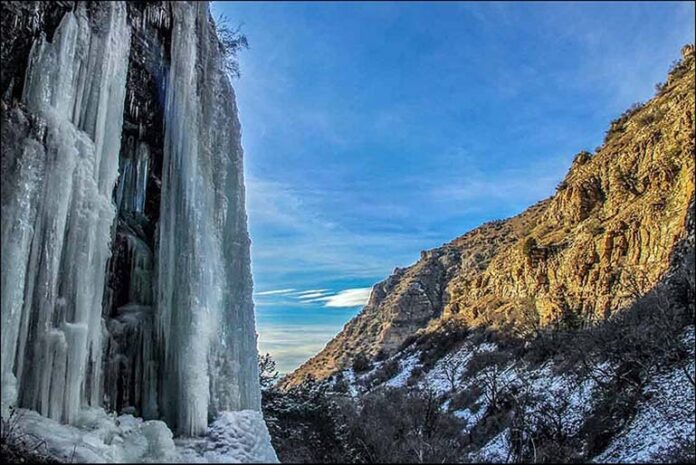
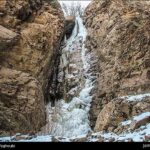
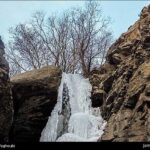
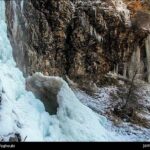
Iced Waterfall, Nowdeh village, Ardebil (PHOTOS)

The picturesque waterfall cascades down 30-meter rocks in the northwestern province of Ardabil, Iran.


Now it is 5+1 turn

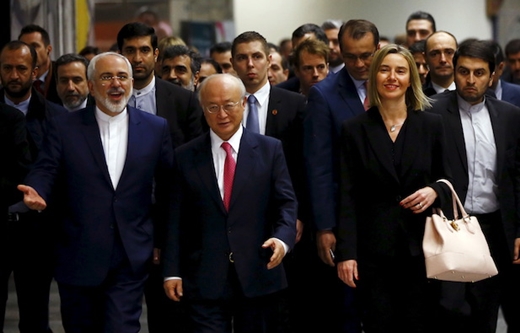
Fars News Agency in an analytical commentary on the following day of what is known as “Implementation Day” of JCPOA has referred to numerous anxiety that might emerge about faithful implementation of nuclear agreement concluded between Iran and 5+1 world powers, undermining the agreement and create challenges.

The news agency, by reviewing the joint statement read by Federick Mogerini heralding removal of sanctions by European Union has said Iranian President Hassan Rouhani also called the implementation Day of JCPOA as a day of victory for Iranian nation. Such comments are made at a time when the nuclear agreement has been subject to numerous criticism right from the beginning.

However, JCPOA in all its strong and weak points has been implemented and what is important now is to look at future without forgetting the past.

Writer of the article has singled out several reasons for a kind of continued distrust on world powers and has put up a warning sign on the path of nuclear agreement and has advised Iranian officials to remember the deep rooted conflict between Iran and the United State and take the resistance economy seriously and never forget that US could not be trusted.

The article dispatched by Fars News Agency, by having clearly a pessimistic outlook towards the nuclear agreement from the beginning to the implementation day and finally 8 or 10 years later or the so called “sun set” day, has stressed that US and its regional allies will create lots of hurdles and ambushes on the path of this rather long way.

Writer then has addressed Mr. Rouhani and has said: we hope that by improvement of country’s economy after removal of the sanctions (off course if such thing happens) the resistance economy suggested by the Supreme Leader is not disregarded. The best option for Iranian economy is self reliance, whether under sanctions or not.  Writer believes that by relying on domestic potentials, the enemies will have no incentive to resort to new sanctions and when the foundation of country’s economy becomes solid by turning the country’s economy to manufacturing instead of selling row materials then no one will contemplate to impose sanctions against us.

President Hassan Rouhani on his news conference on Sunday said JCPOA will not lead to trust on Americans. If it is so, then the writer argues, this distrust should be present at the various stages of implementation process.

The reasons behind the pessimistic view outlined by the analyst about faithful implementation of the agreement by the western powers (American in Particular) are summarized by IFP as follows:


1- In US, JCPOA is a document seriously opposed by Republicans and only supported lukewarmly by Democrats.  Although it does not seems that after Obama leaves the office, the nuclear agreement to face serious challenge in Washington but in long term such possibility could not ruled out.

2- Even during Obama Administration in office, some meddling have taken  place in Capitol Hill, one of them cancelling visa wavering arrangements for those who have visited Iran and 3 other countries as well as sanctions imposed in reaction to missile tests.

3- According to Foad Ezadi, an expert on US affairs, after signing of JCPOA, more 30 anti-Iranian initiatives have been contemplated in US and the Congress is on the verge of making new obstacle for removal of sanctions against Iranian financial institutions.

4- If the upcoming administration in US is Republican, certainly the nuclear agreement will face some problems. Although JCPOA has 5 more other signatories, it should be remembered that most of the anti Iranian sanctions are imposed by US government and most part of the negotiations was held between Iran and the United States. Among Republican Presidential candidate there is no single Politian who has not made clear his opposition to the nuclear deal.

5- While nuclear tension between Tehran and Washington has been subsided somehow because of dismantling of major segment of Iranian nuclear infrastructure, but it should not be forgotten that two countries still have lots of disputes over regional issues, human rights, what is called by Washington as Iran’s support for terrorism and US administration by resorting to these pretexts can impose new sanctions against Iran any time it whishes so. It also should be noticed that US has some regional allies in the Middle East that relentlessly pursue the path of pressure against Iran and its friends. US government has remained unequivocally alongside its allies in the region and few days ago US Secretary of State John Kerry in meeting his Saudi counterpart said that Washington will remain alongside Saudi Arabia in its conflict with Iran. Definitely, US have always backed Israel and will continue to do so in the future.

1-the above text is summarized by IFP by remaining loyal to its content and the article has different titled than the Farsi version.

The original is titled: Implementation Day of JCPOA and 7 points which should not be forgotten.

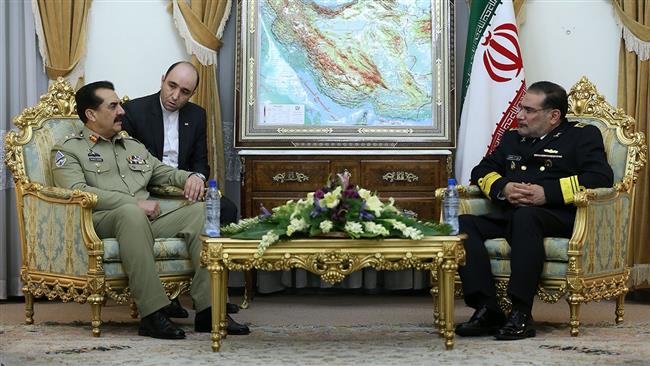
Iran-Pakistan military power deters foreign plots: Shamkhani

In a meeting with Pakistani Army Chief of Staff General Raheel Sharif in Tehran on Tuesday, Shamkhani added that Iranian and Pakistani military might is aimed at safeguarding the interests of the Muslim world in favor of regional unity and stability.

He pointed to the presence of armed bandits in the border areas of Iran and Pakistan and said, “These insecurities are completely guided and are based on plans [designed] by intelligence services of certain countries.”

Shamkhani also warned against threats posed by terrorist groups to the region and urged all regional countries to strengthen cooperation and make use of their potentialities for combating terrorism.

He added that the escalation of tensions and squandering of Muslim countries’ assets would only serve the interests of enemies and bolster terrorist group.

Iran, Pakistan determined to counter terrorism: Sharif

The Pakistani general, for his part, said Iran and Pakistan are determined to strongly counter terrorist threats in the region, particularly in border areas.

He added that intelligence, security and border cooperation between Tehran and Islamabad can play a determining role in making the region unsafe for terrorist groups.

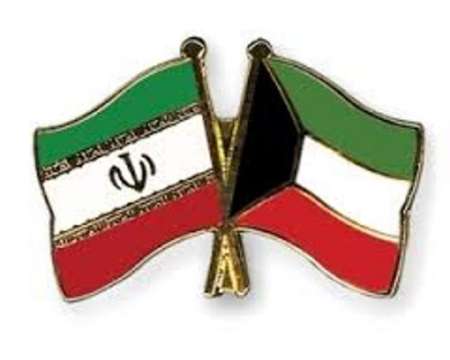
Kuwaiti banks ready for cooperation with Iran in post-sanction era

The daily wrote that resumption of banking operation with Iran does not need a go-ahead of Kuwait Central Bank following cancellation of US and European sanctions.
It said that Iran was under two kinds of sanctions, one by the UN Security Council resolutions and another by the US and European Union.
Al-Rai wrote that Kuwaiti Central Bank should act only upon the UN Security Council resolutions.
It said that the US sanctions stopped transactions of Kuwaiti banks with Iran not that of the UN.
International Atomic Energy Agency published its report on Saturday evening about Iran fulfillment of its commitments upon Joint Comprehensive Plan of action (JCPOA), a prelude to implementation of commitments of Group 5+1 on cancellation of sanctions.

Iran’s response to US to come where it matters: General

“Upgrading the country’s defense and missile equipment is among the Armed Forces’ priorities and its process will not stop even for a moment,” Deputy Chief of Staff of the Iranian Armed Forces Brigadier General Massoud Jazayeri said on Tuesday.

He added that customary diplomatic relations will by no means affect Iran’s defense power.

The general emphasized that the Iranian nation and Armed Forces would increase their all-out defense preparedness to counter threats against the country.

Jazayeri said the “new strategy” of the arrogant regimes, particularly the US, is based on the discourse of undermining Iran’s defense power,” adding, however, that Iran’s response will come “on the real battlefield.”

Speaking in a televised speech from the White House on Sunday, US President Barack Obama said his government will “vigorously” enforce sanctions against Iran’s ballistic missile program.

Following Obama’s remarks, the US Department of the Treasury said in a statement on Sunday that it has imposed new sanctions targeting Iran’s ballistic missile program, adding five Iranian citizens and a network of companies based in the United Arab Emirates and China were added to a US blacklist.

The new sanctions came only a day after Iran and the five permanent members of the UN Security Council – the United States, Britain, France, Russia and China – plus Germany started to implement the nuclear agreement, dubbed the Joint Comprehensive Plan of Action (JCPOA), they had reached in the Austrian capital, Vienna, on July 14, 2015.

After the JCPOA went into effect, all nuclear-related sanctions imposed on Iran by the European Union, the United Nations Security Council and the United States were lifted. Iran in return has put some limitations on its nuclear activities.

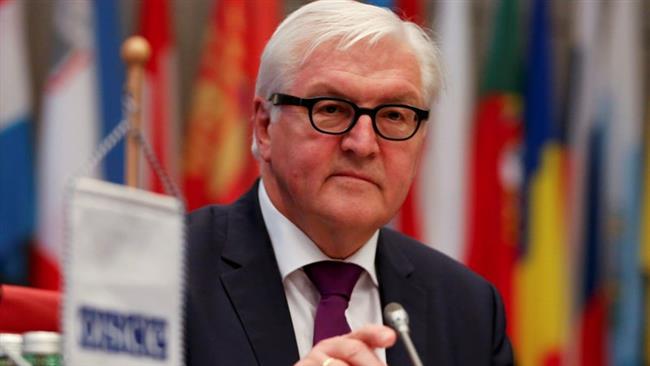
Iran key to stability in Middle East: Steinmeier

On Tuesday, Frank-Walter Steinmeier said “bilateral talks” could help resolve the row between Riyadh and Tehran, stressing that the Islamic Republic is key to regional stability.

“In a first step, a lot would be achieved if both sides brought the current situation under control, talked to each other,” he said.

Relations between Iran and Saudi Arabia have recently been strained following the Saudi execution of top opposition cleric Sheikh Nimr al-Nimr, which was announced on January 2.

Nimr’s execution was widely censured by Muslims and human rights activists around the globe as well as different governments.

Saudi Arabia severed diplomatic relations with Iran on January 3 following demonstrations outside the Saudi embassy in Tehran and its consulate in the northeastern city of Mashhad by angry protesters.

A number of countries, including Pakistan, Russia and China, have voiced readiness to mediate between Iran and Saudi Arabia.

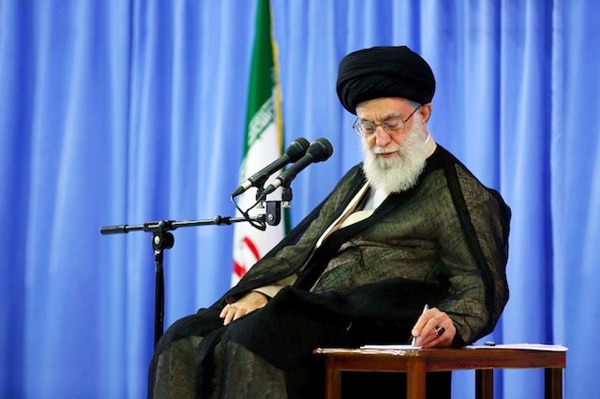
US deceit and breach of promise must not be neglected: Leader

In a letter to President Hassan Rouhani, the Leader urged the government “to take care the other side fully fulfills its obligations” under a nuclear accord which went into force on Saturday.

US officials have stepped up their anti-Iran rhetoric, accusing Tehran of posing a “threat to regional and global security” after Washington announced new sanctions over Iran’s ballistic-missile program.

“It must be taken care that the opposite side fully fulfills its obligations. Remarks by some American politicians in the past two or three days are a cause for suspicion,” Ayatollah Khamenei said.

“I stress again that in this issue and other issues, deceit and breach of promise by arrogant governments, especially America, must not be neglected,” the Leader added.

In his letter, the Leader thanked President Rouhani and Foreign Minister Mohammad Javad Zarif and other officials over the nuclear accord.

“I express my satisfaction in that the resistance of the great Iranian nation against oppressive sanctions and efforts of nuclear scientists in advancing this important industry and tireless efforts of the negotiators forced the opposite sides – some of whom are renowned for enmity with the Iranian nation – to retreat and removal of part of the bullying sanctions.”

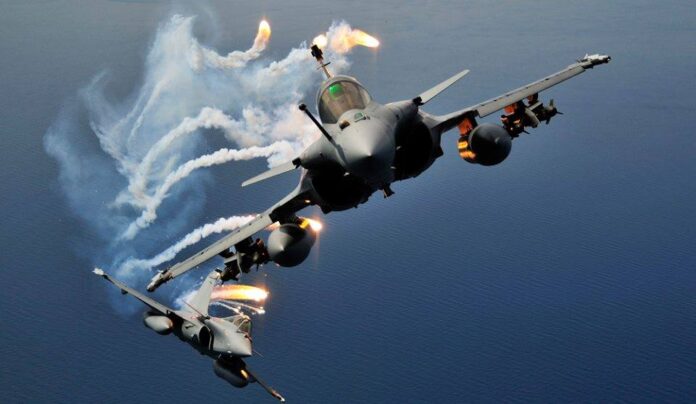
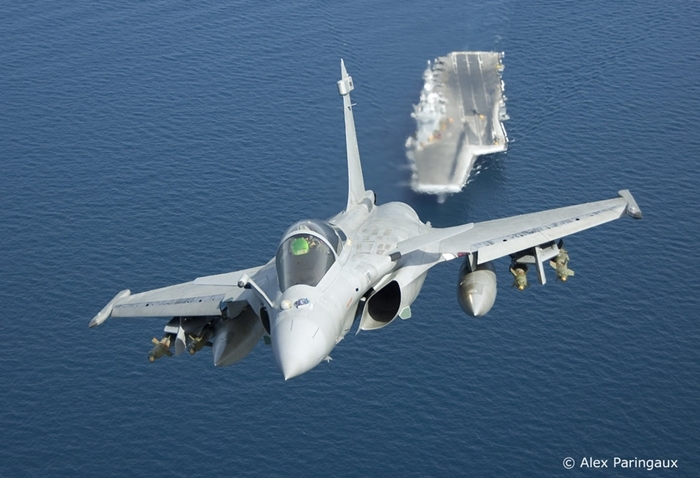
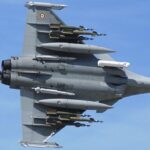
Will Iran buy ‘Rafale’ fighters?

YJC reports, “world powers” and the “Islamic Republic of Iran” have decided to implement the Joint Comprehensive Plan of Action (JCPOA) as they pursue constructive interactions.

Considering the fact that military sanctions are among those that will be lifted in line with the nuclear agreement, Iran is considering to procure military equipment produced by some western countries; among them “French made warplanes”.

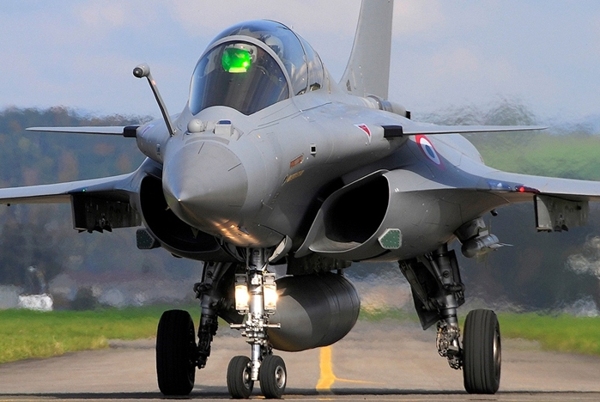
Iranian President Hassan Rouhani’s upcoming visit to France to meet his French counterpart “Francois Hollande” has raised speculations that purchasing French-built Dassault Rafale combat aircraft might be on the agenda.

However, Iran itself has taken major steps in manufacturing combat aircraft, therefore, any negotiation regarding the purchase of foreign warplanes will include a plan to “jointly build” planes.

It is also worth mentioning that senior Iranian commanders have already announced that their agenda includes joint ventures for production of military equipment and technology and not simply purchasing them. The mighty French-built Dassault Rafale combat aircraft could be considered an option.


dassault-rafale
Dassault Rafale fighter


‘Dassault Rafale’ fighters in the Persian Gulf region arms race

A high-ranking French official has said that the sales of 36 “Rafale” to Qatar is in its final stages. Qatar is buying military equipment from France as a sign of dissatisfaction with the US for Washington’s reluctance to supplying military hardware to this Persian Gulf emirate. Security concerns are main reason behind Qatar’s major arms deals with France and its western allies. Qatar does not want to be left behind from regional countries when it comes to military strength and particularly does not want to be second to Saudi Arabia when it comes to its air force.


Geopolitical analyst Gauthier Rybinski believes that the reason why a small country with a very limited population such as Qatar is arming itself is because it is seeking independence from the patriarchal political and even religious supremacy of its great Saudi neighbor.

[…]

Dassault Co. is also trying to sell 16 of its multi-purpose fighter jets to Malaysia and has resumed negotiations for a possible deal with the United Arab Emirates. It is very likely that the “Dassault Rafale” fighter to be purchased in bulk by Persian Gulf littoral states and these purchases will most probably continue.


dassault_rafale
Dassault Rafale fighter


‘Élysée’ playing the ‘Rafale’ card in national economy and international relations

On the sidelines of a meeting, French president Francois Hollande said: “We believe “Rafale” fighters are quality aircraft. We’ve said that to our friends and they also agree with us”.

In the Élysée politicians are trying to boost Frances economy by selling military equipment to Persian Gulf littoral states. Of course, Iran’s policy with respect to its defense capacities is very clear. Pursuing the ultimate goal of self-sufficiency, in the event that such aircraft are purchased, the potential to build and to be overhauled inside Iran exists.

Considering the steps that the EU is taking to lift the sanctions against the Islamic republic, and while US President Barak Obama has allowed the sale of commercial aircraft to Iran, it is very likely that transferring the knowhow to build state-of-the-art fighters be on the agenda of “Iran-France business relations”. However, so far all if this is only press speculations.


P.S. the original report published by the “Young Journalist Club” which is a subsidiary of the IRIB, also includes information about the technical features and different classes of the Rafale fighter as well its exclusive capabilities, and price which IFP has chosen not to translate.

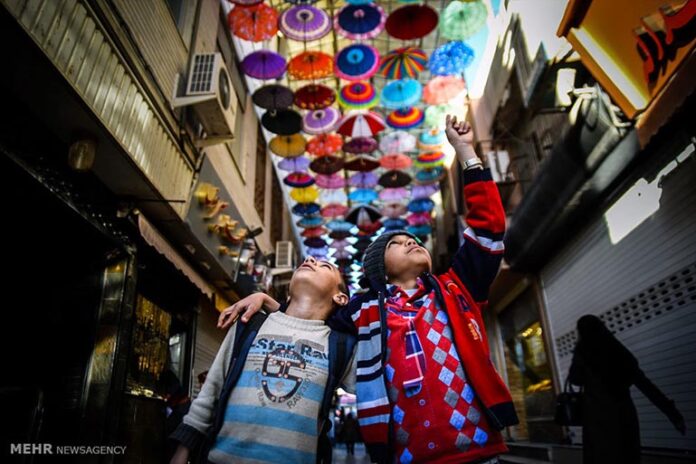
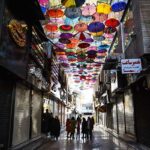
Umbrella alley in Shiraz (PHOTOS)

A shopping mall in Shiraz, Fars province in Iran, has a ceiling covered by hundreds of colorful umbrellas giving pedestrians a nice shade and something cool to look at.