Thursday, May 7, 2026
Home Blog Page 462

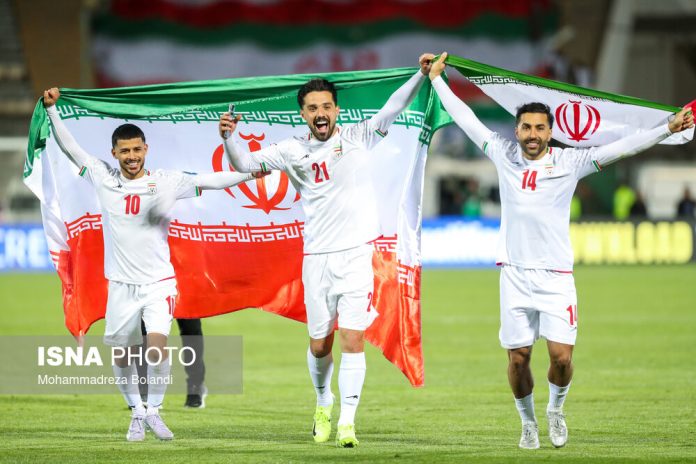
Congratulations pour in on Iranian soccer team’s World Cup qualification

FIFA President Gianni Infantino posted a video and led the tributes, stating, “Many many congratulations to the Islamic Republic of Iran for brilliantly qualifying to   the FIFA World Cup 2026 in the United States, Mexico and Canada.”

Team Melli clinched their spot at the 2026 global football showcase following an intense 2-2 stalemate with Uzbekistan at Tehran’s Azadi Stadium on Tuesday evening.

Entering the crucial qualifier with an impressive 19-point haul from six victories and one draw, Iran merely required a single point to guarantee progression.

Iranian President Massoud Pezeshkian extended his congratulations to the national football team for securing qualification to the 2026 FIFA World Cup.

“This achievement, coinciding with the beginning of the New Year [1404 in the Persian calendar], heralds continued national and sporting successes for our country throughout the year,” the President stated.

Iranian Foreign Minister Abbas Araghchi described the achievement as “the perfect completion of Nowruz celebrations for Iranians worldwide,” praising the team’s fighting spirit and the support from football authorities.

Iranian Parliament Speaker Mohammad Baqer Qalibaf hailed the qualification as “a glorious accomplishment bringing pride and joy to the Iranian people.”

U.S. sanctions three Iranian officials over disappearance of FBI agent

FBI

The sanctions on Reza Amiri Moghadam, Gholamhossein Mohammadnia, and Taqi Daneshvar of Iran’s Ministry of Intelligence and Security are the latest linked to the disappearance of the former FBI agent, who Washington believes was abducted in Iran and died in captivity.

As a result of the sanctions, any property of the men under U.S. jurisdiction must be blocked and Americans are generally barred from dealing with them. Foreign persons also risk blacklisting for dealing with them.

“Iran’s treatment of Mr. Levinson remains a blight on Iran’s already grim record of human rights abuse,” Treasury Secretary Scott Bessent said in a statement.

“The Department of the Treasury will continue to work with U.S. government partners to identify those responsible and shine a light on their abhorrent behavior.”

The three sanctioned individuals all played a role in Levinson’s abduction, detention and probable death, as well as efforts to cover up Iran’s responsibility, the Treasury Department claimed.

The sanctions are being imposed under an executive order signed by former President Joe Biden, which seeks to hold to account terrorist organizations, criminal groups and other “malicious actors” who take hostages for financial or political gain.

The U.S. previously sanctioned two other Iranian officials in December 2020 who it accused of involvement in Levinson’s disappearance.

Iran has dismissed claim by the US about the Islamic Republic’s commitment to find and bring Levinson back home, stressing Tehran has no information about him.

Levinson reportedly visited Iran’s southern Kish Island on March 9, 2007. He later went missing and his whereabouts have remained unknown ever since. There are different reports about the aim of his trip, with some saying the man, who had become a private detective, was reportedly investigating cigarette counterfeiting in the region. Others said he had been on a business trip.

Back in 2010, a video was sent to the Levinsons, reportedly showing the man demanding help for his release. Also in early 2011, some of his images were emailed to the family.

Spy agencies claim Russia, Iran, China, North Korea teaming up against US like never before

The 30-page threat assessment issued by the Office of the Director of National Intelligence singled out China as the “actor most capable of threatening US interests globally, though it is also more cautious than Russia, Iran, and North Korea about risking its economic and diplomatic image in the world by being too aggressive and disruptive.”

“Many of the threats we face are truly existential,” Senate Intelligence Committee Chairman Tom Cotton (R-Ark.) said during a Tuesday hearing scheduled around the report’s release.

“Communist China is actively working to replace the United States as the world’s dominant superpower.”

“Given these threats, we have to ask are our intelligence agencies well-postured against these threats? I’m afraid the answer is no, at least not yet,” he added.

The assessment found that “China is using complex, whole-of-government campaigns featuring coercive military, economic, and influence operations short of war to assert its positions and strength against others, reserving more destructive tools for full-scale conflict.”

In the meantime, ODNI found, Beijing is expected to “apply stronger coercive pressure against Taiwan” in 2025 “to further its goal of eventual unification” with the island, while pushing its claims in the South and East China Sea against US allies such as Japan and the Philippines.

China was also called the “most active and persistent” cyber-threat to the US government and private sector, while ODNI predicted Beijing “almost certainly has a multifaceted, national-level strategy designed to displace the United States as the world’s most influential AI power by 2030.”

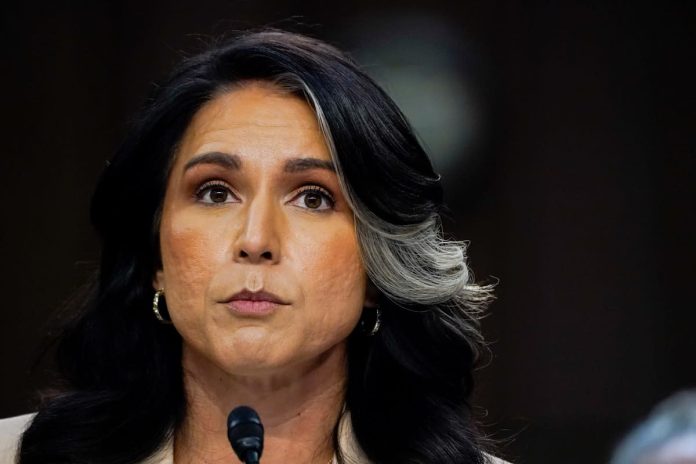
Meanwhile, Russia has been rapidly developing a “more modern and survivable nuclear force designed to circumvent US missile defense,” Director of National Intelligence Tulsi Gabbard told lawmakers Tuesday.

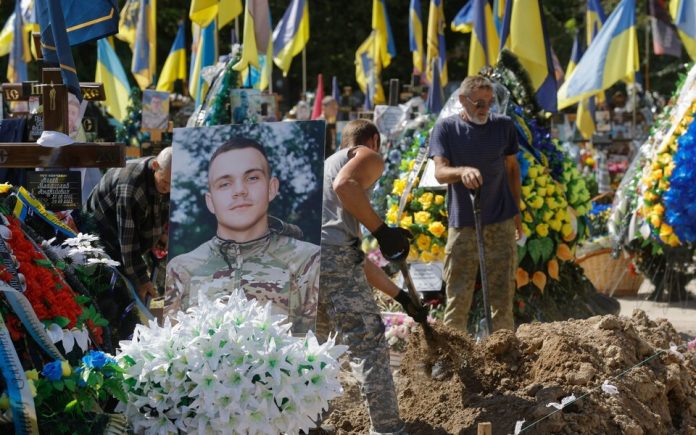
ODNI’s assessment also indicated that Russian President Vladimir Putin shows no sign of winding down his war against Ukraine, which Moscow sees as a “proxy conflict with the West.”

“Putin appears resolved and prepared to pay a very high price to prevail in what he sees as a defining time in Russia’s strategic competition with the United States, world history, and his personal legacy,” it noted.

“Most Russian people continue to passively accept the war, and the emergence of an alternative to Putin probably is less likely now than at any point in his quarter-century rule.”

“Russia has the battlefield advantage [and] is grinding forward slowly,” stated CIA Director John Ratcliffe of the war in Ukraine.

“With regard to the Ukrainian resistance, the Ukrainian people and the Ukrainian military have been underestimated for a period of several years now,” he continued.

“Ultimately, I’m convinced from my reflections and observing from an intelligence standpoint,” Ratcliffe added, “that they will fight with their bare hands if they have to, if they don’t have terms that are acceptable to an enduring peace.”

Russia’s invasion has provided the clearest example of all four US adversaries working to support each other, as the report laid out.

“[China] is providing economic and security assistance to Russia’s war in Ukraine through support to Moscow’s defense industrial base, including by providing dual-use material and components for weapons,” it read.

“China’s support has improved Russia’s ability to overcome material losses in the war and launch strikes into Ukraine … [and] to withstand US sanctions.

“Iran has become a key military supplier to Russia, especially of UAVs [drones], and in exchange, Moscow has offered Tehran military and technical support to advance Iranian weapons, intelligence, and cyber capabilities,” it went on.

“North Korea has sent munitions, missiles, and thousands of combat troops to Russia to support the latter’s war against Ukraine.”

Gabbard told lawmakers Tuesday that North Korea’s growing links to Russia have allowed Pyongyang to reduce its dependence on China and gain access to “stronger strategic and conventional capabilities” to challenge the US.

As for Iran, Gabbard told senators that Tehran “is not building a nuclear weapon and Supreme Leader [Ayatollah Seyyed Ali] Khamenei has not authorized the nuclear weapons program that he suspended in 2003.”

However, Gabbard added, “Iran’s enriched uranium stockpile is at its highest levels and is unprecedented for a state without nuclear weapons.”

“In the past year, there has been an erosion of a decades-long taboo on discussing nuclear weapons in public that has emboldened nuclear weapons advocates within Iran’s decision-making apparatus,” the ODNI assessment found.

“[Ayatollah] Khamenei remains the final decisionmaker over Iran’s nuclear program, to include any decision to develop nuclear weapons.”

The report did note that Iran is likely continuing work on “chemical and biological agents” for military use, with Tehran scientists showing special interests in “chemicals that have a wide range of sedation, dissociation, and amnestic incapacitating effects, and can also be lethal.”

Tuesday’s hearing also touched on what Gabbard referred to as “threats presented by several non-state actors: Cartels, gangs and other transnational criminal organizations in our part of the world are engaging in a wide array of illicit activity to endanger the health, welfare and safety of everyday Americans.”

“For a year-long period ending in October 2024, cartels were largely responsible for the deaths of more than 54,000 US citizens from synthetic opioids,” she added, claiming that Mexico-based transnational criminal organizations are primarily responsible for the dissemination of fentanyl.

Sen. Martin Heinrich (D-NM) expressed surprise that Canada wasn’t mentioned in the report, given the Donald Trump administration’s pressure campaign on America’s northern neighbor over fentanyl trafficking.

“The focus in my opening and the ATA [annual threat assessment] was really to focus on the most extreme threats in that area,” Gabbard admitted.

The 2025 assessment also highlighted a renewed focus on foreign-based terror groups in the Western hemisphere after a Daesh-inspired man mowed down New Year’s Eve revelers in New Orleans, killing 15.

One topic that was left out of this year’s report, after being present for nearly a decade, was climate change. Gabbard said she was unsure who excised the section, but stressed that she didn’t recall ordering that to be taken out.

Turkey arrests more than 1,400 protesters after jailing of Istanbul mayor

A Turkish court on Tuesday placed seven journalists in custody after they were arrested while covering the protests in Istanbul, including a photojournalist for French news agency AFP, according to a media-freedom nonprofit and AFP.

“AFP strongly condemns the detention of its journalist and photographer Yasin Akgül and calls for his immediate release. This is a serious attack on the freedom of the media,” AFP announced in a statement.

“AFP calls on the Turkish authorities to respect the freedom of the press and the work of journalists, essential pillars of any democratic society.”

Six other journalists were also arrested on Tuesday, according to the Turkish free speech nonprofit Media and Law Studies Association (MLSA).

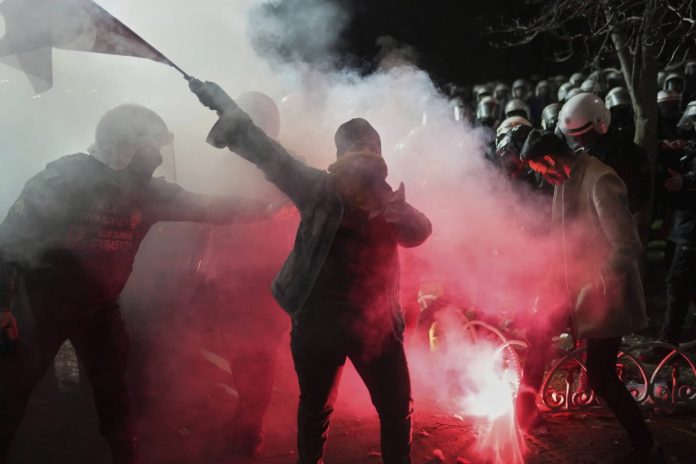
Protests have been taking place across Turkey over the past week, including in the largest city Istanbul and the capital Ankara, amid anger over the jailing of Istanbul Mayor Ekrem Imamoglu – the main political rival of President Recep Tayyip Erdogan.

Imamoglu was arrested on corruption charges at his home last Wednesday, just days before he was to be nominated as a candidate in the 2028 presidential election.

He has denied the charges against him, and critics say the arrest represents a dangerous turning point for Turkey, which has become increasingly authoritarian in recent years, according to international monitoring groups.

In a post on X, Imamoglu said, “We will, hand in hand, uproot this blow, this black stain on our democracy… I am standing tall, I will not bow down.”

Authorities in Istanbul governorate banned protests and closed some roads “in order to maintain public order” and “prevent any provocative actions that may occur.”

Since last Wednesday, 1,418 protesters have been detained, according to Interior Minister Ali Yerlikaya, following six days of demonstrations that the government has deemed “illegal.”

“While there are currently 979 suspects in custody, 478 people will be brought to court today,” Yerlikaya stated in a social media post.

“No concessions will be made to those who attempt to terrorize the streets, to attack our national and moral values, and to our police officers,” he added.

AFP photographer Akgül has covered Turkish political news for AFP for 10 years, according to the news agency.

“His imprisonment is unacceptable. This is why I am asking you to intervene as quickly as possible to obtain the rapid release of our journalist,” said AFP chairman Fabrice Fries in a letter addressed to the Turkish presidency.

“Yasin Akgül was not part of the protest. As a journalist, he was covering one of the many demonstrations that have been organized in the country since Wednesday, March 19,” Fries continued, adding, “He has taken exactly 187 photographs since the start of the protests, each one a witness to his work as a journalist.”

Media outlets and journalists critical of the government have long faced censorship in Turkey, according to Reporters Without Borders, which says tactics “such as stripping them of press passes are commonplace.”

The government controls about 90% of the national media in Turkey, Reporters Without Borders noted.

Meanwhile, Freedom House, a US-based nonprofit research organization, has labelled Turkey as “not free” when it comes to internet and media freedom, citing several laws enacted by the ruling Justice and Development Party (AKP) “that increase censorship and surveillance and criminalize online speech.”

The country’s strongman leader Erdogan has been in power since 2003, first serving as Turkey’s prime minister, and later as president since 2014. In 2017, a referendum vote passed that expanded Erdogan’s presidential powers, potentially allowing him to remain in office until 2029.

Turkey’s main opposition party, the Republican People’s Party (CHP), said Tuesday that it is planning a rally on Saturday in Istanbul.

Iran qualifies for 2026 World Cup after 2-2 draw against Uzbekistan

Coming into the match with 19 points from six wins and a draw, Team Melli only needed one point to officially qualify. However, Uzbekistan, sitting three points behind and eager to make history, gave Iran a tough fight.

The visitors struck first in the 16th minute when Khojimat Erkinov finished off a sequence that began with a long ball from Yusupov and a clever setup by Shomurodov and Saifiyev.

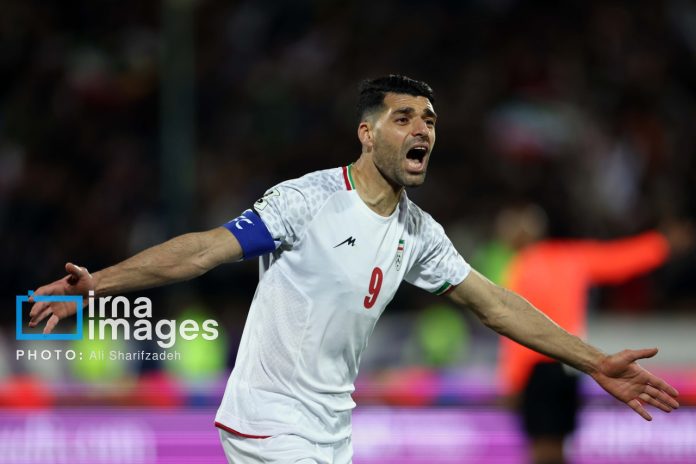
Iran responded early in the second half when Mehdi Taremi volleyed in a stunning equalizer after a brilliant assist from Sardar Azmoun, set up by Mehdi Ghaedi’s chip.

But Uzbekistan answered immediately. In the very next minute, Abbosbek Fayzullaev’s free kick slipped past Iran’s defense and goalkeeper Alireza Beiranvand to restore their lead.

Iran continued to push and was eventually rewarded in the 83rd minute when Taremi capitalized on a defensive lapse to level the score once again.

With this result, Iran finishes the group stage unbeaten with 20 points, topping Group A and punching its ticket to the 2026 World Cup. Uzbekistan, still in strong position with 17 points, remains in contention for qualification.

AFC Beach Soccer Championship: Iran defeats UAE to secure third straight win

With this win, Iran continued its unbeaten run in the group stage, having already defeated Indonesia and Afghanistan in earlier matches.
The close contest against the UAE further solidified Iran’s position as a tournament favorite.

The Iranian team will now advance to the quarterfinals, where they are set to face the second-placed team from Group D — one of Oman, Vietnam, or Bahrain — on Thursday, March 27.

The tournament serves as a qualifier for the FIFA Beach Soccer World Cup, and Iran is aiming to secure one of the top spots in Asia.

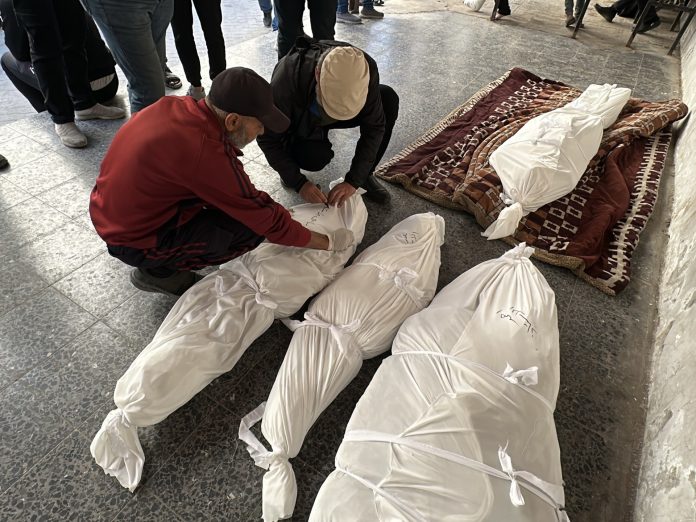
Dozens, including children, killed in Israeli attacks on Gaza

In a statement on Tuesday afternoon, the Ministry of Health in Gaza said at least 62 people were killed in Israeli attacks over the past 24-hour reporting period.

After the latest attacks, Hamas issued a statement denouncing the “horrific massacres” and urged the international community to rein in Israel, which last week broke a two-month ceasefire with the Palestinian group.

Since it renewed its bombardment on Gaza on March 18, the Israeli army has killed 792 people, including hundreds of children, and wounded 1,663, according to the Health Ministry.

Amid a total aid blockade, tens of thousands of people have also been forced to flee once again, just weeks after returning following the start of the ceasefire on January 19.

In its latest round of forced displacement orders, the Israeli army on Tuesday warned of new attacks in Jabalia, Beit Lahiya, Beit Hanoon and Shujayea in Gaza City, saying rockets had been fired towards Israel from the northern area. Other orders were also issued for Khan Younis and Rafah in the south.

A number of aid groups and United Nations agencies have long said there are no safe areas in Gaza as Israeli-designated “humanitarian zones” and shelters have repeatedly come under Israeli attack.

Nearly 18 months of Israeli attacks have killed more than 50,000 people and wounded about 113,000, according to the Health Ministry, while thousands more are missing under the rubble of destroyed buildings and presumed dead. The Israeli war began after Hamas-led attacks in southern Israel on October 7, 2023, led to an estimated 1,139 people being killed and about 250 taken captive.

Israeli Prime Minister Benjamin Netanyahu said the renewed offensive aims to pressure Hamas into releasing the remaining 59 captives who are being held in Gaza. About 24 of them are believed to still be alive.

Hamas says it wants Israel to abide by what it agreed on when it signed the January ceasefire, including holding talks on ending the war permanently in exchange for the release of the remaining captives.

Russia seeking full control of partially occupied Ukrainian regions in negotiations with US: Report

Russia Ukraine War

Although Russian forces do not fully control any of these regions, the Kremlin demands them in their administrative borders, as defined in the Russian Constitution following their illegal annexation.

A Kremlin-linked official told the Moscow Times that Russia’s President Vladimir Putin cannot afford to lose these territories politically, and Russia intends to solidify its grip on them at any cost.

“The Constitution has no mechanism for regions to leave Russia. We need all of Zaporizhzhia and all of Kherson,” the official reportedly said.

Another Russian government source suggested that Moscow hopes Washington might pressure Kyiv to withdraw entirely from the occupied regions.

“Either Trump convinces them to leave, or we are told to enter prolonged negotiations while simultaneously using military force to secure control. That would be the worst scenario for us since river crossings are always costly operations,” the source added.

As an alternative, Russia may attempt to seize additional Ukrainian territory, such as parts of Dnipropetrovsk or Sumy oblasts, and then offer an exchange for Kherson and Zaporizhzhia, another Russian official speculated.

“We hope to find a way that avoids storming Kherson or forcing a crossing of the Dnipro River. That would mean thousands of casualties for us,” he admitted.

As of late 2024, Russian forces controlled about 98.5% of Luhansk Oblast and 60% of the Donetsk region.

Despite these challenges, Russian diplomats believe that a potential Trump administration may be indifferent to the exact borders of a future settlement.

“From what I understand, Trump wants a modern, well-armed, pro-Western Ukraine,” a Russian diplomat told the outlet.

“He cannot just hand over Ukraine entirely. But where exactly the border is drawn—that may not matter much to him.”

WATCH: Moment devastating flood sweeps through village in Iran’s Kermanshah

Iran Flood

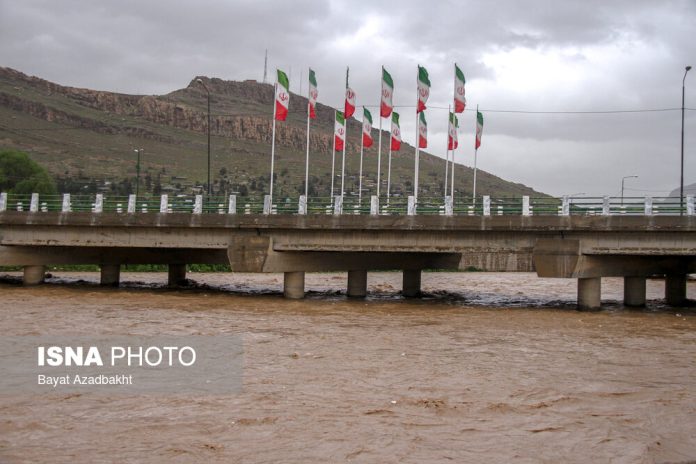
Shocking video footage captured the moment the rushing waters surged into the village, sweeping away livestock, vehicles, and parts of buildings.

The deluge, caused by the overflowing of local rivers and seasonal springs in the Sar Firouzabad district, inflicted widespread damage.

According to local officials, at least ten homes were destroyed, dozens more damaged, and over 200 head of livestock—including sheep and cattle—were killed. Several agricultural machines and personal vehicles were also left mangled or submerged.

The storm hit just after midnight on the first day of the Persian New Year (Nowruz), catching many residents off guard.

Significant damage was reported to the village’s water, electricity, and road infrastructure.

Relief workers have begun clearing debris and delivering supplies to affected families, while authorities warn of continued risks due to forecast rain in the coming days.

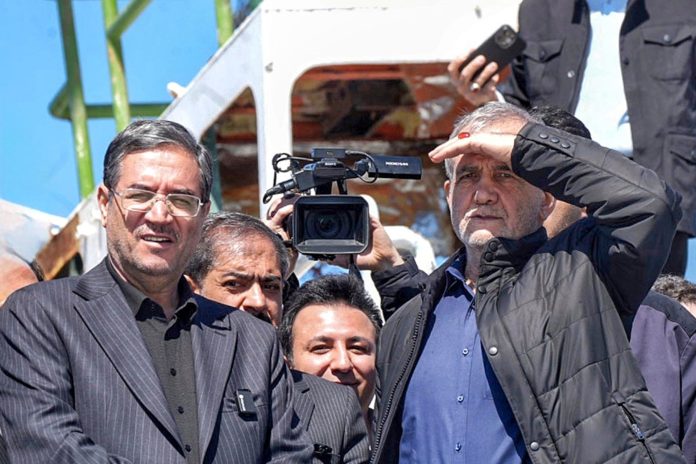
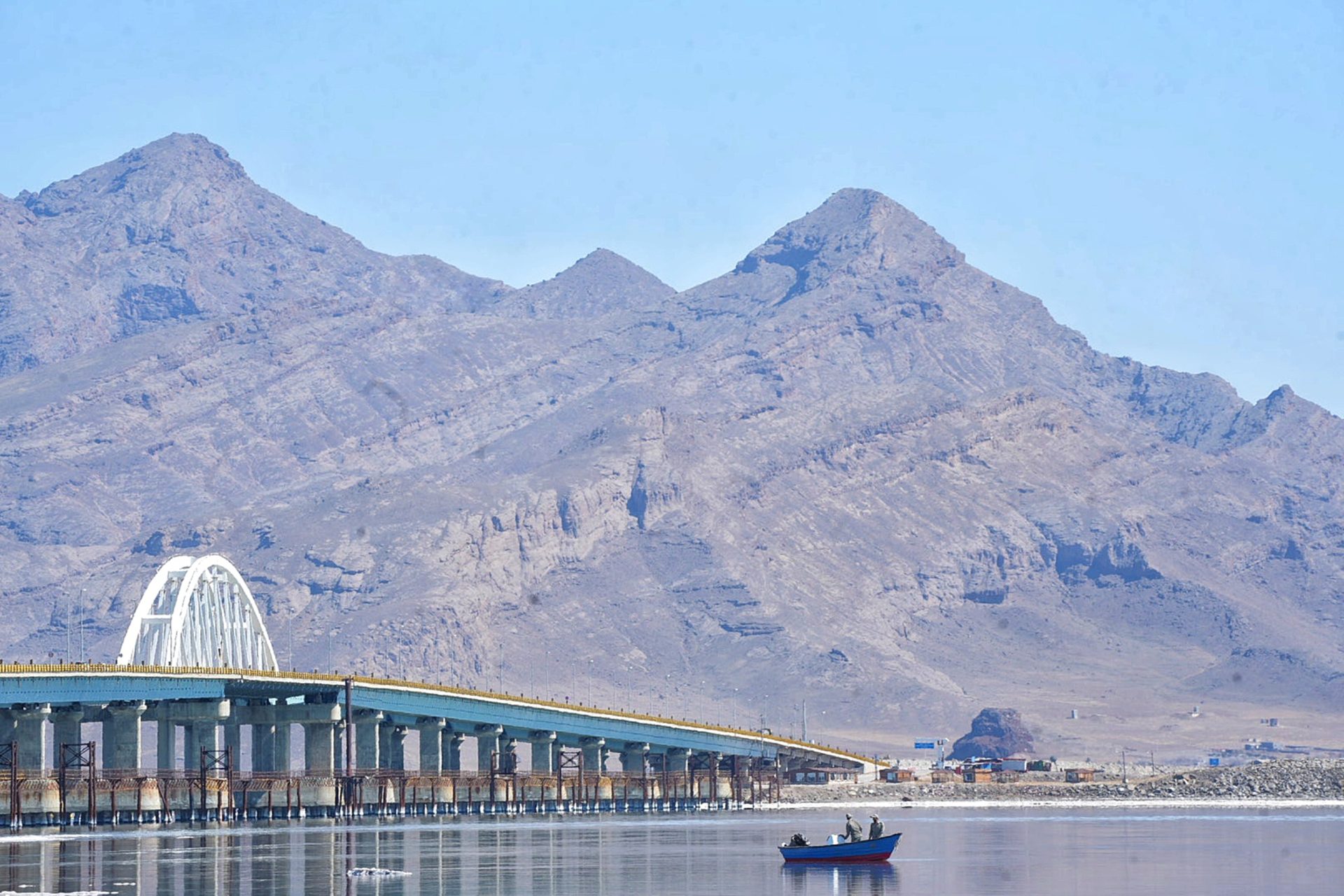
President Pezeshkian visits Lake Urmia, seeks intl. expertise for revival efforts

During the visit, Pezeshkian expressed deep concern over the failure to implement previous restoration plans, noting that although a 26-point action plan was approved two decades ago, most of it has either remained unexecuted or was poorly implemented.
He emphasized the need for a comprehensive and collaborative approach to reversing the lake’s ecological decline.

“We are studying various proposals, including diverting treated wastewater from East Azerbaijan and managing the inflow from the Zarrineh and Simineh rivers,” he said.

President Pezeshkian visits Lake Urmia, seeks intl. expertise for revival efforts

Pezeshkian announced that consultations will be held with both domestic and international experts to identify effective solutions. “We are committed to involving university professors, researchers, and specialists, and we plan to draw on foreign expertise to help us find viable paths forward,” he stated.

Acknowledging the significant role of rainfall in the lake’s condition, the president underscored the importance of long-term planning. “We must also examine why the agricultural components of the revival plan have not been implemented and address these shortcomings urgently,” he added.