Thursday, May 7, 2026
Home Blog Page 461

Iran intercepts major fuel smuggling involving oil export company

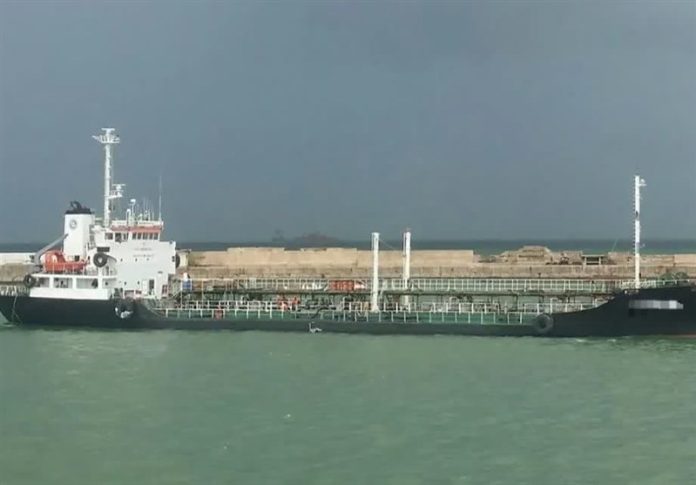
The vessel, allegedly operated by a prominent oil export company, was detained by maritime police following an intelligence-led operation.

Judiciary officials in Hormozgan Province revealed the ship was found transporting one million liters of unlicensed petroleum products while falsely declaring its cargo as legal bitumen exports.

The operation led to the arrest of several crew members accused of involvement in organized fuel smuggling and investigations are ongoing to collect evidence and prosecute the case.

According to Hormozgan Judiciary Chief Mojtaba Ghahremani, the intercepted vessel lacked proper customs documentation and navigation permits, raising serious questions about compliance procedures in Iran’s oil export sector.

Suspects allegedly transported oil derivatives from the provinces of Fars, Bushehr, and Khuzestan to Shahid Rajaee Port in Bandar Abbas for loading onto the ship during Persian New Year holidays.

The chief justice stated that Hormozgan’s judiciary, in cooperation with the provincial security council, government officials, and law enforcement, has intensified efforts to prevent and combat fuel smuggling.

Death sentence issued in murder case of female Iranian journalist

Iran Court

Majid Asadi confirmed to IRNA that a provincial criminal court handed down the death penalty during an extraordinary session on March 9.

The defendant was additionally ordered to pay blood money for secondary injuries inflicted during the lethal attack that happened in November last year.

The 52-year-old victim, a veteran IRNA correspondent, was fatally stabbed and bludgeoned in her home on November 11 following what authorities described as a domestic dispute.

The convicted husband reportedly confessed to the crime during investigations.

Under Iranian law, the sentence remains appealable for 20 days following formal notification to the Supreme Court.

The case has drawn significant attention in Iranian media circles, where Ghadiri Javid was known for her cultural research work.

A final hearing was held March 9 with both the accused and victim’s family representatives present before the verdict was issued.

Judicial observers note this represents one of the swiftest capital case rulings in recent years for spousal homicide cases.

Iran opens nuclear sector to private investment

Mohammad Eslami

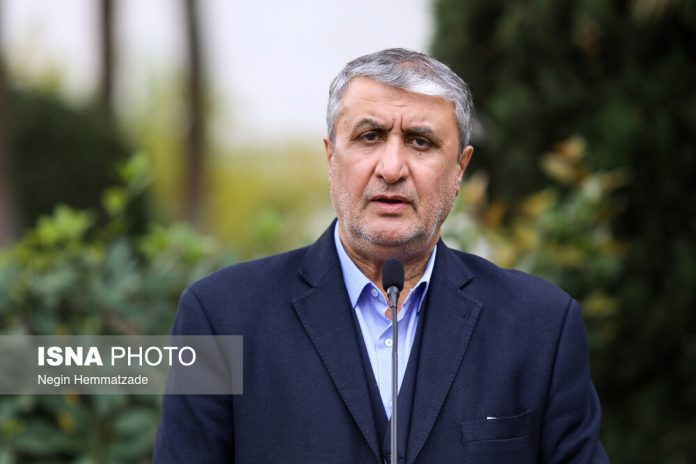
AEOI head Mohammad Eslami announced the policy during a press briefing following Wednesday’s cabinet meeting.

“We initiated private sector collaboration in 2023 across three vital areas,” said Eslami, who also serves as vice president.

The program includes mining and mineral industries, radiation systems with existing 500,000-ton capacity, and public share offerings for nuclear power plant projects expected to be launched in coming months.

The move represents one of Tehran’s substantial efforts to diversify funding sources for its nuclear program amid ongoing international sanctions.

Private investors can now participate in energy projects that “both generate power and promote environmental sustainability,” according to Eslami.

While the vice president didn’t disclose financial details, he emphasized the “profound impacts” already seen in the mining sector.

The radiation systems segment, currently covering 500,000 tons of capacity, remains open for private sector expansion.

The announcement comes as Iran prepares to construct additional 300 MW nuclear reactors alongside its operational 1,000 MW Bushehr plant.

At least six killed in Israeli strikes on Syria’s Daraa

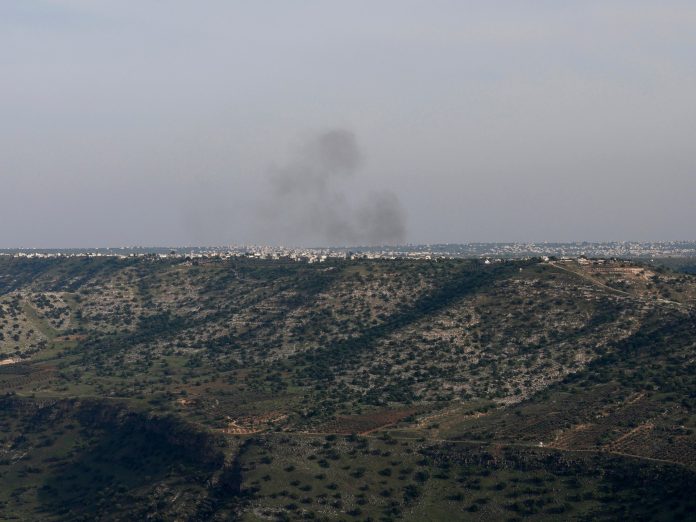
The Israeli military said the attack on Tuesday took place after armed fighters opened fire towards Israeli troops, without specifying whether the Israeli forces were located within Syrian territory when they were targeted. It added its troops returned fire and that an Israeli warplane struck the fighters. It gave no details on casualties but said “hits were identified”.

Syria’s Ministry of Foreign Affairs condemned “the continued Israeli aggression on Syrian territory, which saw a dangerous escalation in the village of Kuwayya” in the southern Deraa province.

It called for an international investigation into the Israeli attacks on its territory, describing them as a “blatant violation of its sovereignty”.

The violence in the border area comes at a time of rising tensions between Israel and Syria, where a new interim government led by President Ahmad al-Sharaa has been installed after opposition fighters toppled former leader Bashar al-Assad last December.

In the wake of al-Assad’s removal, Israel has launched hundreds of air strikes on military sites in Syria and sent its troops across the border into a UN-patrolled buffer zone, saying they will thwart any threats. Syria’s leadership has said it does not intend to open a front against Israel.

Earlier, the Israeli military announced it had “struck military capabilities that remained at the Syrian military bases of Tadmur and T4”, referring to bases in Palmyra and another 50 kilometres (30 miles) west of the city. On Friday, the military carried out strikes on the same bases.

The European Union’s foreign policy chief Kaja Kallas warned on Tuesday that Israel’s strikes on Syria “risk further escalation”.

Speaking at a joint news conference with Israel’s Foreign Minister Gideon Saar, Kallas stated the pair had discussed Israel’s actions.

“And we [the EU] feel that these things are unnecessary, because Syria is right now not attacking Israel,” Kallas added.

United Nations Special Envoy for Syria Geir Pedersen told the Security Council on Tuesday that he was “concerned by Israeli statements on the intention to stay in Syria” and demands for the full demilitarisation of the south.

At an Arab summit in Cairo in early March, Syria’s al-Sharaa also called on the international community to pressure Israel to “immediately” withdraw its troops from southern Syria, calling their presence a “direct threat” to peace in the region.

Iran to unveil oil investment opportunities as crude output rises

Iran Oil

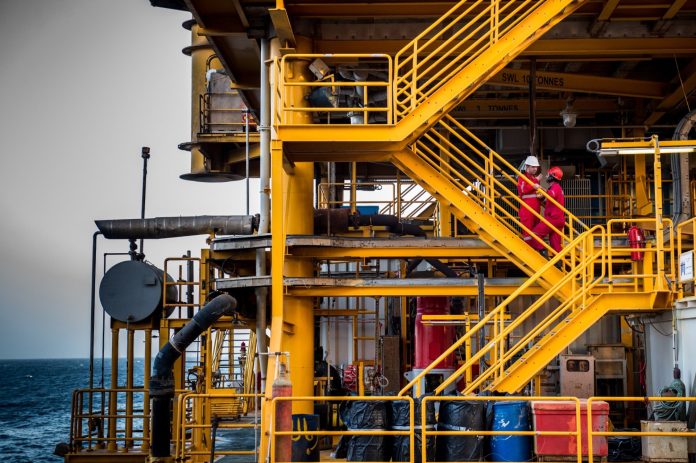
Speaking after a cabinet meeting Wednesday, Paknejad revealed an upcoming investment conference within the next month to present economic indicators and partnership prospects to potential investors.

“The Leader’s emphasis on production-focused investment is pivotal for economic growth,” Paknejad stated, highlighting Iran’s untapped potential for public capital utilization.

The minister noted the favorable return-on-investment prospects in oil projects, with the conference enabling investors to make informed decisions based on economic metrics.

Production gains follow recent operational completions at the Azadegan oilfield in southern Iran, contributing to the 50,000 bpd increase.

Paknejad confirmed Iran entered the Persian New Year (1404) with rising output that will continue.

Iran showcases ‘missile megacity’

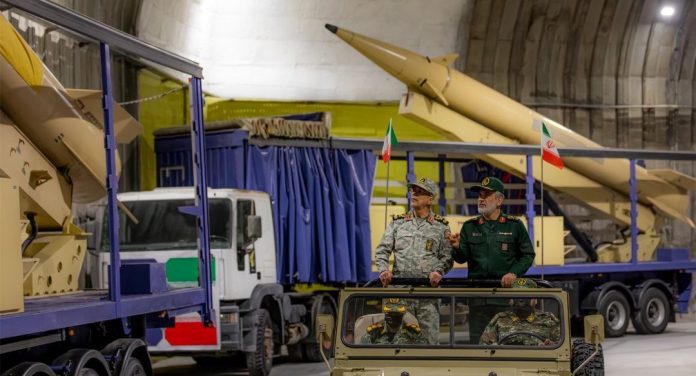
The facility was unveiled on Tuesday with Chief of Staff of the Iranian Armed Forces Major General Mohammad Bagheri and the Aerospace Division’s Commander Brigadier General Amir Ali Hajizadeh in attendance.

Footage published across various Iranian news outlets showed the top brass touring the sprawling center that houses thousands of surgical strike ballistic missiles such as Kheybar Shekan, Martyr Haj Qassem, Qadr-H, Sejjil, and Emad.

Among the projectiles, Iran’s Kheybar Shekan-1 missile is credited with being capable of defeating the United States much-vaunted THAAD missile system, while Kheybar Shekan-2 has been developed so it can evade the system. The American missile system’s projectiles are said to enjoy destructive capability against targets lying as far as 200 kilometers (124 miles) away.

Martyr Haj Qassem among the missiles has been codenamed after the Islamic Republic’s top anti-terror commander, Lieutenant General Qassem Soleimani, who was assassinated in early 2020 in an American aerial attack against Baghdad amid his instrumental role in defeating foreign-backed Takfiri terrorists across the region.

The Qadr-H missile that can fly as far as 1,700 kilometers (1,056 miles) as well as the Emad and Sejjil missiles have also been rated as effective medium-range ballistic projectiles in the country’s firepower.

“Iran’s iron fist is far stronger [today] than before,” Bagheri said, addressing the facility’s personnel during the tour.

“All the [defensive] dimensions that are required for generating a [military] capability that is ten times [stronger than] the one deployed during Operation True Promise II, has been created,” the commander added.

Last year, the Islamic Republic demonstrated its military might with Operation True Promise I and II, retaliatory strikes launched in response to Israeli aggression.

The operations, carried out using hundreds of ballistic missiles and drones, showcased Iran’s ability to strike Israeli military and intelligence targets with surgical accuracy.

Iranian officials have underscored that the country only deployed a fraction of its firepower during the dual reprisal.

Bagheri further noted that the pace at which the Islamic Republic was developing its defensive might was far faster than the pace of the enemies’ recuperation.

“The enemy will definitely fall behind in this balance of power,” the official asserted, hailing that the Iranian Armed Forces were staying on their course of further development, enhancement, and empowerment.

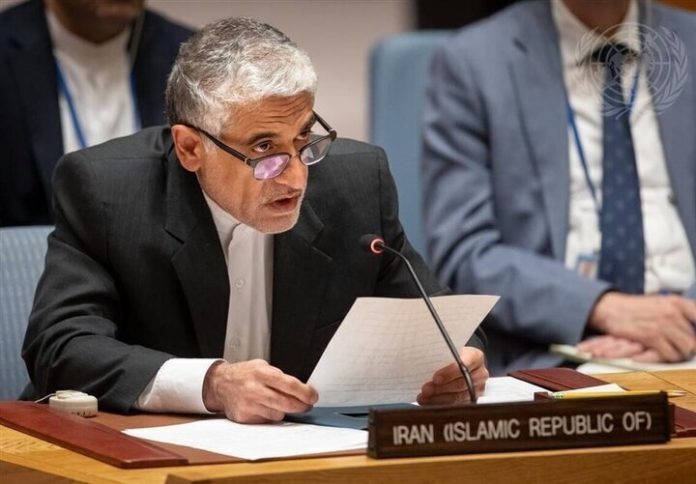
Iran’s UN envoy denies destabilizing role in Syria

Amir Saeed Iravani

Responding to US accusations against Iran, Iravani stated, “These baseless claims ignore America’s own destabilizing actions, including support for Israeli occupation and terrorist groups.”

Iravani strongly condemned recent attacks in Latakia and Tartus that killed civilians, urging Syrian authorities to protect non-combatants and ensure humanitarian access. He welcomed the Security Council’s March 14 statement demanding accountability.

He slammed Israel’s airstrikes in Syria as a violation of international law and called for withdrawal from occupied Golan Heights.

The diplomat blamed US and EU sanctions for exacerbating Syria’s humanitarian crisis, welcoming partial sanctions relief but demanding complete removal to facilitate reconstruction.

Iravani reiterated Tehran’s readiness to collaborate with international partners to combat extremism.

He endorsed UN-led peace efforts based on Resolution 2254, pointing out that Iran backs a Syrian-led peace process under UN auspices that supports free elections and constitutional reform to foster national unity.

He also hailed Syria’s recent readmission to the Organization of Islamic Cooperation (OIC) as progress toward regional stability.

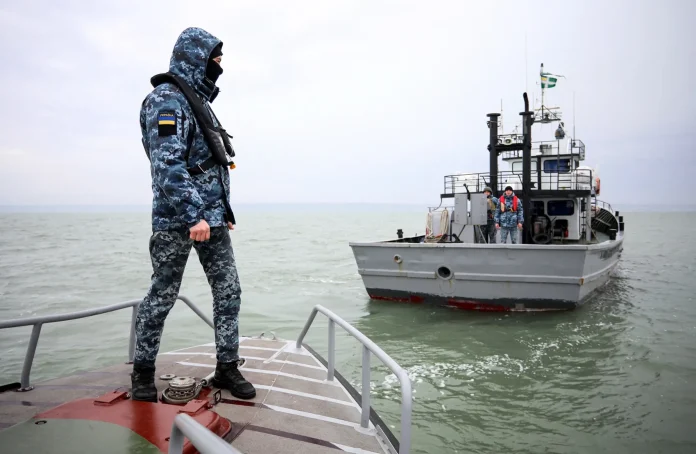
Russia and Ukraine agree on Black Sea ceasefire

President Donald Trump said that the US was reviewing the Russian conditions after the Kremlin insisted it had negotiated concessions with the White House that would mark the first major recision of sanctions since the full-scale invasion of 2022.

The warring parties also agreed to implement a previously announced 30-day halt on attacks against energy networks and to expand its scope, but resolving fundamental issues, including any division of territory, remains far off.

Ukraine’s president, Volodymyr Zelensky, welcomed the developments but said Kyiv did not support weakening sanctions on Russia and voiced concern over talks the US appeared to be having with the Kremlin about a partition of Ukraine.

“We are worried when they talk about us without us,” Zelensky said in a media briefing, responding to comments by Trump on Monday, when the US president said: “We’re talking about territory right now.”

Ukrainian negotiators in the Saudi capital, Riyadh, had had no discussions of their own about the future division of territory, Zelensky added, stating it appeared that the US had talked to the Kremlin team about dividing Ukraine.

According to reports, Russia has told the US it wants full control of three of the Ukrainian regions it partially occupies: Donetsk, Zaporizhzhia and Kherson.

The claims have been consistently rejected by Kyiv, which has only indicated it is prepared to acknowledge the existing de facto Russian occupation along the prevailing lines of control.

The White House published two statements, each containing five main points, four of which were identical. Both “agreed to ensure safe navigation, eliminate the use of force” in the Black Sea – a reference to a ceasefire though the word itself was not used.

The key difference was that the Russian statement said the US would “help restore Russia’s access to the world market for agricultural and fertiliser exports” by lowering insurance costs and improving access to payment systems and ports.

Trump stopped short of confirming that the US was granting sanctions relief, however, and said that the Kremlin conditions were still under review.

“They will be looking at them, and we’re thinking about all of them right now,” Trump said. “There are about five or six conditions. We’re looking at all of them.”

Zelensky was unhappy with this, saying it was “a weakening of our position on sanctions” because it appeared to suggest the US would help Russia improve its economic position while the land and air war continued.

Russia said the maritime ceasefire would come into force only after the “lifting of sanctions restrictions” on the Russian Agricultural Bank and other “financial institutions involved in international trade of food”, and only after they were reconnected to the Swift international payment system.

“The United States will assist in restoring Russian agricultural and fertiliser exports to the global market, reducing the cost of maritime insurance, and expanding access to ports and payment systems to conduct such transaction,” the Kremlin announced.

Russia also said it wanted port service restrictions and sanctions on Russian-flagged vessels involved in the trade of food products, including seafood and fertilisers, to be lifted.

A further round of negotiations to extend the ceasefire would “take place soon,” Zelensky said, although he was not any more specific on timing.

Russia and Ukraine agreed to continue working “toward achieving a durable and lasting peace”, the White House statements read.

Zelensky criticised Trump’s personal envoy to Putin, Steve Witkoff, who had said in the run-up to the talks that Russia’s staged referendums in the four Ukrainian regions it partially or completely occupies were legitimate and had demonstrated that “the overwhelming majority” wanted to be “under Russian rule”.

The Ukrainian president said Witkoff’s comments “are very much in line with the messages of the Kremlin”, but he added that he hoped that over time the US negotiator and others in the White House would gradually come to see that the Russian leadership was insincere.

Zelensky added there had been no agreement on an unconditional ceasefire because “the Russians didn’t want it” and he believed as the negotiations continued “people will not believe the Russians more and more with every day”.

Russian foreign minister Sergei Lavrov told Russian state media in a discussion about the Black Sea deal that Moscow wanted the grain and fertiliser market to be “predictable” in order to make a profit “but also because we are concerned about the food security situation in Africa and other countries of the Global South.”

Lavrov on Tuesday night said Zelensky did not want to “give in” and he accused Kyiv’s European allies of seeking to “hang like a stone around the neck” of Zelensky.

Lavrov added that Witkoff’s view about a wider truce was overly optimistic because it did not take into account the “elites of European countries”.

Ukraine announced it expected Russia to stop bombing port facilities in Odesa and elsewhere as part of a maritime truce. However, a separate statement, released by its defence ministry, said Ukraine would consider “the movement of Russian military vessels beyond the eastern Black Sea” to be a violation of the deal.

Over the course of the three-year war, Ukraine has gradually forced the Russian fleet east after a series of sea drone raids, and managed to reopen a commercial shipping lane close to the western coast.

Russian exports have also been growing, but the Kremlin complained in the past about the impact of sanctions on its agricultural products, and pulled out of a previous Black Sea grain deal in July 2023 that was designed to facilitate food exports even while the war was ongoing.

The ceasefire would begin immediately after the White House released the statements, Zelensky said, although the Russian demand for sanctions relief in the Black Sea means the conditions for a halt in fighting at sea have not been accepted by Moscow.

It would initially be self-policed, Ukraine said, although both sides agreed that other countries could become involved in monitoring and safeguarding it. Zelensky acknowledged that “we have no faith in the Russians” but said that despite this Kyiv intended to be constructive in its efforts to end the war.

The lack of enforcement mechanisms reflected the fact that “the American side really wanted all of this not to fail, so they did not want to go into many details” – but he said Ukraine would press for further clarity in ongoing discussions.

Ukraine believes Turkey or a Middle Eastern country such as Saudi Arabia could become involved in protecting security in the Black Sea, while European countries could help with energy and maritime monitoring, Zelensky added.

On Monday, Trump had also said the US had been talking to the Kremlin about “power plant ownership” – a reference to the Zaporizhzhia nuclear power plant, which is under Russian occupation.

The US president has expressed an interest in taking control of the plant, the largest in Europe, even though it is located directly on the frontline. Zelensky, however, said on Tuesday this had not been part of this round of negotiations between Ukraine and the US.

Later on Tuesday, Russian news agency Tass reported that Moscow’s foreign ministry had said the nuclear power plant, which has been shut down since autumn 2022, could not be transferred to Ukraine “or any other country”. Its comments followed “media speculation”, Tass added.

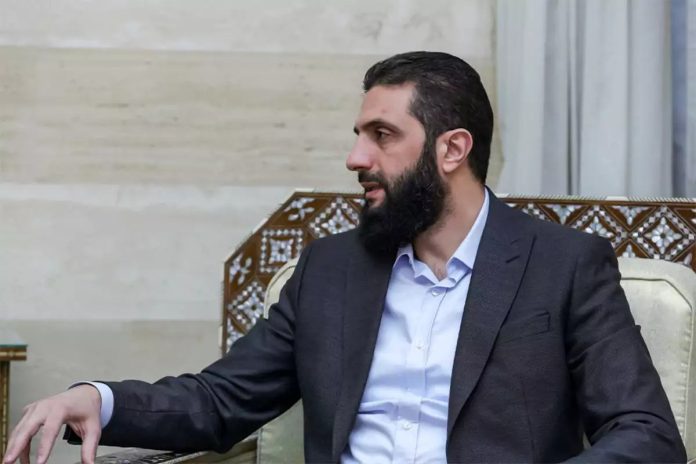
US offering conditional partial sanctions relief in Syria: Reuters

Abu Mohammed al-Jolani

According to the Reuters news agency on Tuesday, which interviewed six different sources in both countries to confirm the move, the US wants Syrian cooperation on counterterrorism issues, the destruction of all chemical weapons stores, a prohibition on any foreign fighters joining the ranks of the interim government, and the appointment of a liaison to help track down US marine-turned-journalist Austin Tice, who has been missing in Syria for more than a decade.

For its part, the Trump administration would grant at least one two-year extension of an existing exemption that allows transactions with Syrian governing institutions. It was unclear when this might take place after Syria meets the US conditions or if the Syrians were given a deadline at all.

The US would also issue a statement supporting Syria’s territorial integrity, Reuters reported.

Natasha Franceschi, a State Department official overseeing the Syria file, reportedly gave the list of US demands to Syrian Foreign Minister Asaad al-Shibani on the sidelines of a Syria donor conference in Brussels last week.

The US had already enacted a six-month general licence back in January to help humanitarian aid get into Syria, but it was not enough to allow entities like Qatar’s government to transfer cash for Syrian government salaries.

Syria’s interim president, Ahmed al-Sharaa, has been calling for the lifting of sanctions on his country so it can invite international investment and start to rebuild after 14 years of war. The former president, Bashar al-Assad, fled to Russia in December after a swift takeover of the capital by rebel forces, whom Sharaa was leading.

That month, of the 50 people named to key defence posts, Sharaa included six foreign fighters, Reuters reported at the time. The decision alarmed many who were sceptical of Sharaa’s plans and worried that Syria’s minorities would be under threat.

Hundreds of minority Alawites in the west of the country were killed this month after Assad loyalists – typically also Alawites – reportedly attacked the new government’s security forces.

US Secretary of State Marco Rubio issued a statement at the time condemning “radical Islamist terrorists, including foreign jihadis”.

Sharaa, known previously as Abu Mohammed al-Jolani, was the leader of an al-Qaeda offshoot in Idlib, in Syria’s northwest. The area was rebel-held territory from 2015 until this past December, when the rebels advanced to oust Assad.

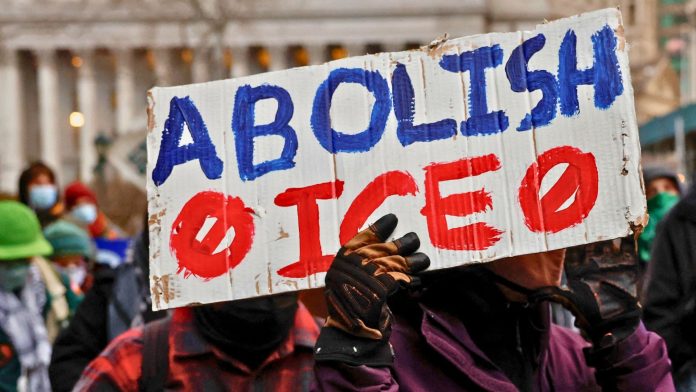
US  judge blocks deportation of pro-Palestinian Korean American student activist

“As of today, Yunseo Chung no longer has to fear and live in fear of ICE [Immigration and Customs Enforcement] coming to her doorstep and abducting her in the night,” Chung’s lawyer Ramzi Kassem said after the court ruling on Tuesday.

US District Judge Naomi Reice Buchwald said government lawyers had not yet laid out enough facts about their claims that they needed to detain the student while her case against deportation plays out in court.

“Nor was it clear why Ms Chung would pose potentially serious adverse foreign policy consequences,” the judge said, citing a rationale that the Trump administration has invoked in Chung’s case and those of other student protesters it is seeking to throw out of the country over their pro-Palestinian activism.

“What is the issue with permitting her to stay in the community and not be subjected to ICE detention while the parties participate in rational, orderly briefing?” the judge added, using a legal term for fleshing out arguments in court filings.

The ruling for Chung, who has lived in the US since she was 7 years old and holds permanent residency, was a small win in a larger lawsuit in which she is seeking to block the US government from deporting non-citizens who participated in university campus protests against Israel’s war on Gaza.

Chung was not at the hearing while about a dozen supporters watched quietly from the court audience.

According to a spokesperson at the Department of Homeland Security, Chung is “being sought for removal proceedings under the immigration laws” for engaging in “concerning conduct”, including being arrested at a protest.

Chung said in her lawsuit that ICE agents were looking to deport her after her arrest on March 5 while protesting Columbia University’s disciplinary actions against student protesters. Her legal team was also informed earlier this month that her permanent residence status in the US had been revoked.

Such actions form part of a “larger pattern of attempted US government repression of constitutionally protected activity and other forms of speech”, Chung’s lawsuit states and cites the Donald Trump administration’s attempt to deport other international students in the country.

One such case is Mahmoud Khalil, a recent graduate from Columbia University. His attempted deportation over his role in pro-Palestinian protests at Columbia is one of the most high-profile among several students targeted by Trump. Held in detention, Khalil has described himself as a political prisoner detained for exercising his free speech.

Khalil is also challenging the Trump administration’s efforts to remove him from the country, and on March 10, a New York district court prohibited his deportation and extended it two days later.

Another student up for deportation is Cornell University’s Momodou Taal, who is also suing the US government for attempting to deport him.

Badar Khan Suri, an Indian student at Georgetown University, faces a similar situation, as he remains detained by the government. However, a federal judge has barred his deportation for now.