Friday, December 26, 2025
Home Blog Page 4614

One Telegram Message Brings 50 People to Hospital

Shahrvand, reporting from Mazani News Agency, wrote that the members of this Telegram group, upon realizing that a pregnant woman needed a blood donation due to severe bleeding, forwarded the message to other Telegram groups from neighbouring cities, saving this woman from danger.

In less than one hour after the initial message, more than 50 people with the AB blood type from Babol, Babolsar, Bahnemir, Qaemshahr and Amirkola had turned up to donate blood.

The patient, who had already received 50 units of blood, was saved from danger with these donations.

7,000 Year-old Female Body Found in Tehran is Infected

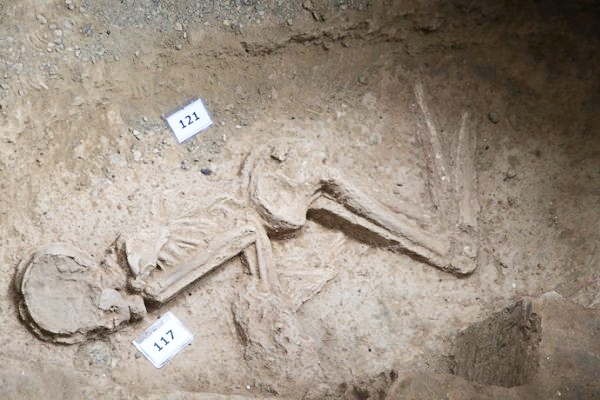
Experts at the Health Faculty of the Tehran University of Medical Sciences have carried out a scientific examination of the remains of a 7,000 year-old body of a female resident of ancient Tehran.

Test results showed that the body was infected by a type of pinworm called Enterobiasis.

This infection is caused by a worm found in enclosed spaces, and is easily transmitted between family members.

The outcome of various studies and tests carried out on this amazingly well-preserved body are available in a professional journal called Parasites and Vectors, which is accessible on the internet.

The skeleton was discovered last year during sewage excavation works in Molavi St. in downtown Tehran, and now is on display in a special glass case in the Iranian National Museum near the Grand Bazar.


Related Posts:

Residence in Tehran dates back to 7,000 years ago

Facial reconstruction of 7,000-year-old skeleton

7,000-year-old skeleton goes on display (PHOTOS)

Iran wants Saudi to drop hostile policies: Zarif

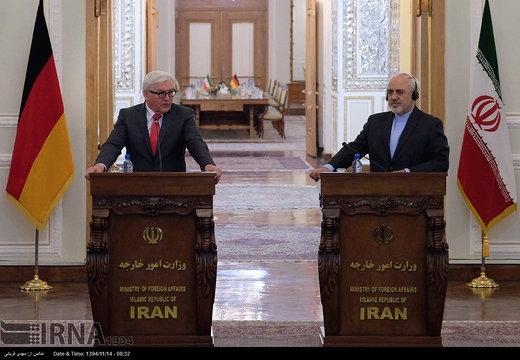
“Saudi Arabia has been pursuing hostile policies against Iran. The Saudi government should reconsider its policies,” Mohammad Javad Zarif said at a joint press conference with German Foreign Minister Frank-Walter Steinmeier in Tehran on Tuesday.

He noted that Iran has never been looking for “tensions of any kind” with its neighbors, Saudi Arabia in particular.

Zarif further reiterated Iran’s calls for “rational behavior” on the part of the Saudi government.

The Iranian minister also said the execution of prominent cleric Sheikh Nimr al-Nimr last month by the Saudi regime was unacceptable, adding that the religious scholar had not committed any act against Saudi national security.

He also said that the ensuing attack against the Saudi embassy in Tehran, which led to the severance of ties between Tehran and Riyadh, was “against our national security.” Iranian officials strongly condemned the attacks on the Saudi diplomatic missions, with over 100 people arrested. 

“However, the Saudi policy has been hostile in this regard…We recommend Saudi Arabia to abandon haste wrath and opt for wisdom,” said Zarif.    

Earlier, the two foreign ministers discussed the latest regional and international developments.

Don’t let terrorists join Syria talks: Zarif

Zarif referred to ongoing peace talks in Geneva on Syria, saying “terrorists” and those aiding “extremist” groups in the Arab country must not be allowed to join the negotiations.

“Such action will discredit the UN and the talks,” he warned.

The Iranian foreign minister also reiterated Tehran’s position that no external factor could decide for the future of Syria. 

“Those who had laid out preconditions for negotiations in Syria caused war and bloodletting,” Zarif said.

The ongoing UN-brokered talks in Geneva are to be held in an 18-month timetable under a resolution unanimously approved by the UN Security Council.

Adopted on December 18, 2015, the resolution calls for a nationwide ceasefire in Syria and the formation of a “credible, inclusive and non-sectarian” government within six months as well as UN-supervised “free and fair elections” within 18 months.

Iran ready to negotiate with Saudi: German FM

In his meeting with Zarif, the German foreign minister said he found out that Iran is ready to hold negotiations with Saudi Arabia to improve relations and that Tehran has taken steps in this regard.

Asked whether Steinmeier would mediate between Tehran and Riyadh given his plan to visit the kingdom after the Islamic Republic’s trip, the German minister added that there is no need to mediate between the two neighboring countries.

Heading a high-ranking politico-economic delegation, Steinmeier arrived in Tehran on Tuesday to hold talks with senior Iranian officials.

The German minister will hold talks with Iran’s President Hassan Rouhani and Parliament (Majlis) Speaker Ali Larijani on Wednesday.

This is Steinmeier’s second visit to Tehran after the conclusion of the nuclear agreement between Iran and the P5+1 group of countries, dubbed the Joint Comprehensive Plan of Action (JCPOA), in July 2015.

The top German diplomat made a two-day trip to Tehran in October 2015, a first such visit by a German foreign minister in 12 years, to attend a core group meeting of the Munich Security Conference (MSC) in the Iranian capital.

Iran and the five permanent members of the UN Security Council – the United States, France, Britain, China and Russia – plus Germany started to implement JCPOA on January 16.

After JCPOA entered into effect, all nuclear-related sanctions imposed on Iran by the European Union, the UN Security Council and the US were lifted. Iran in return has put some limitations on its nuclear activities.

The nuclear agreement was signed on July 14, 2015, following two and a half years of intensive talks.

More Than 1,500 Shisha Pipes Destroyed

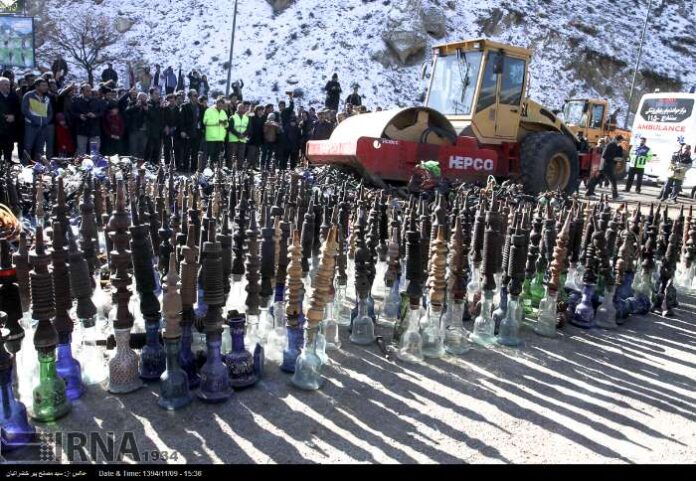
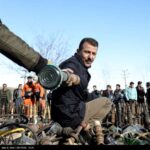
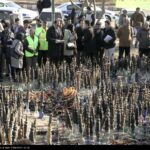
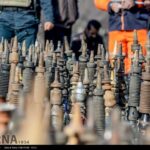
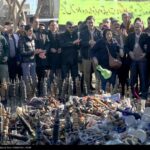
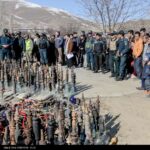
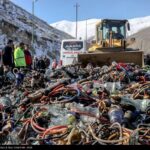
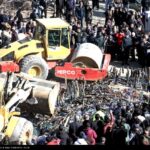
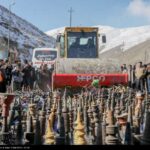
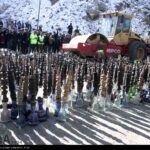
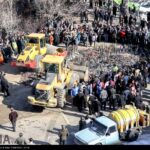
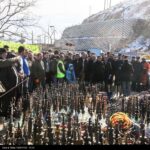
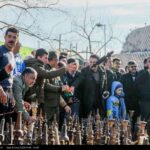
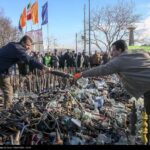
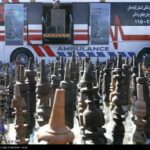
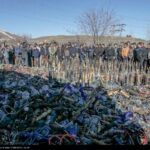
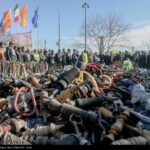
In a symbolic gesture in the Kurdish city of Sanandaj in western Iran, 1,500 shisha pipes – also known as water or hubble-bubble pipes – were destroyed.

A large number of people, along with a group of city officials, gathered to watch the destruction of a pile of shisha pipes. This was part of a campaign against public smoking, with their slogan stating, “No to cigarettes and no to shisha – a city free from smoking.”


Iran denies sending Afghan fighters to Syria

There is evidence that the Afghan nationals are fighting both for and against Syrian President Bashar al-Assad, ISNA quoted an informed source at Iran’s Foreign Ministry as saying on Tuesday.

“However, no one can speak with certainty about the circumstances of their [Afghans] presence on both sides of the Syrian front because the Daesh terrorist group and other terrorist groups have recruited forces from different countries including Afghanistan in support of their allies in Syria and Iraq,” the source added.

According to concrete evidence, some Afghans have been living in Syria and some others have departed for Syria from Afghanistan through Iran, it said.

On January 19, Human Rights Watch (HRW) claimed that Iran’s Islamic Revolution Guards Corps (IRGC) has recruited thousands of undocumented Afghans living there to fight in Syria since at least November 2013.

Iran has sent military advisers to Syria to contribute to the Arab country’s fight against terrorists wreaking havoc in the conflict-stricken country.

The foreign-sponsored conflict in Syria, which flared in March 2011, has thus far claimed the lives of more than 260,000 people and left over one million injured, according to the United Nations.


The Reason behind the US Flags in Tehran Revealed

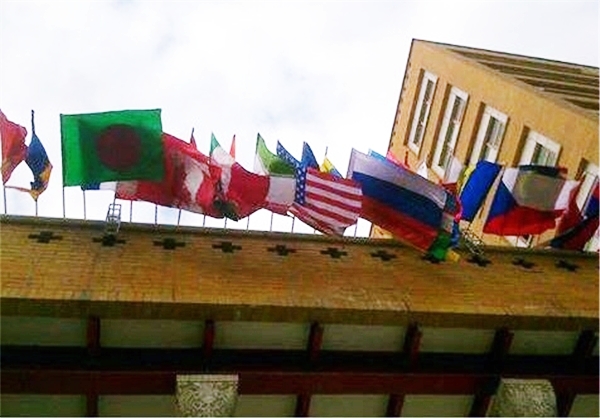
The raising of the Stars and Stripes next to an Iranian flag in a major street in Tehran has caught the attention of many, and raised a few eyebrows.

According to the Fars News Agency (translated by IFP), in recent days, an American flag has been hoisted next to an Iranian one on top of a building on Vali Asr street, near the Taleghani crossroads. According to a well-informed source, the Iranian Art Academy is hosting the International Fajr Visual Arts Festival. For this reason, the flags of all the countries participating in this cultural event are flown over the festival venue.

President Rouhani: Global interaction conditions different from past

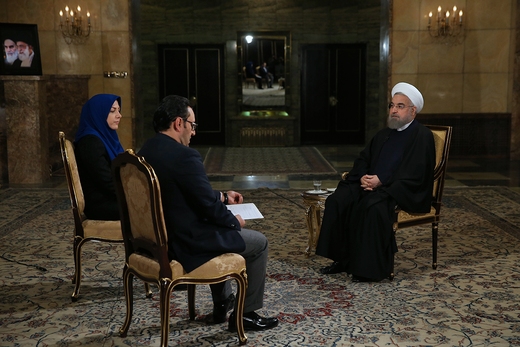
Speaking on a televised interview on Tuesday, he called for a national will to develop the country in the post-sanctions era and said, ‘It is not the case that economy will be corrected only through foreign interaction. This is 40 percent and the (remaining) 60 percent is related to inside the country.’

He said that the focus of recent contracts signed during his visits to Italy and France has been attraction of foreign investment and exporting 30 percent of the products under the contracts.

‘It was decided that foreign investors can enter the country and have partnership with our domestic investor and industry. The government will facilitate introduction of the private sector.’

‘In oil, gas, petrochemical, steel, and car industries, we are not going to spend the oil revenues, rather we support introduction of foreign capital and we stress domestic entrepreneurs.’

Supporting the deal on purchase of 12 long-range passenger aircraft out of total 140, the president said that they are needed for transferring people to long distances and that passesngers will pay for them.

‘We caree for the health and security of people not only in planes but also in car industry and railroads where we have comprehensive plans with China and Italy.’

He said putting 8 percent as the target of economic growth during the upcoming five-year development plan is a welcome figure so that unemployment and inflation will be settled.

The president also said that Iran is for constructive relations in foreign policy with Asian, European and Latin American countries, adding that even US entrepreneurs that can invest in Iran and import technology, will have no problem.

He also said that while Iran will not forget its friends that maintained relations with Tehran during imposition of sanctions, it will not seek taking revenging from other countries either.

‘We will mostly view the opportunities before us despite the fact that they did not behave properly. We will cooperate with them if they make up for past.’

He said Iran is not interested in tension with its neighbors provided that they stop creating tension in the region.

‘Of course, if they continue such acts, it will harm them. And if it is deemed necessary, we will have a decisive response. One-way friendship is not possible. If a country wants to harm our national interests, we will respond.’

To a question, Rouhani said Iran regards the fight against terrorism one of the necessities for stability in the region and said, ‘In any regional country, Iraq or Syria, our objective is to assist the people so that they can step out of the problems faced with terrorists.’

‘Unfortunately, there are countries that are knowingly or unknowingly supporting the terrorists… The future of Syria and settlement of its issue lies in political talks and will not conclude with military power.’

He said there is difference of view over who is opposition and who is terrorist in Syria and added that this problem needs to be settled.

The Iranian president said Tehran will use its might to reduce tension between Turkey and Russia. ‘We are not interested at all in tension between regional countries… We have good relations with both Russia and Turkey and a tension between them will be dangerous.’

Rouhani said that there are certain countries which are after tension with other countries out of the illusion that it will help them. ‘But I think a tension will not be in the interest of any country in the region.’

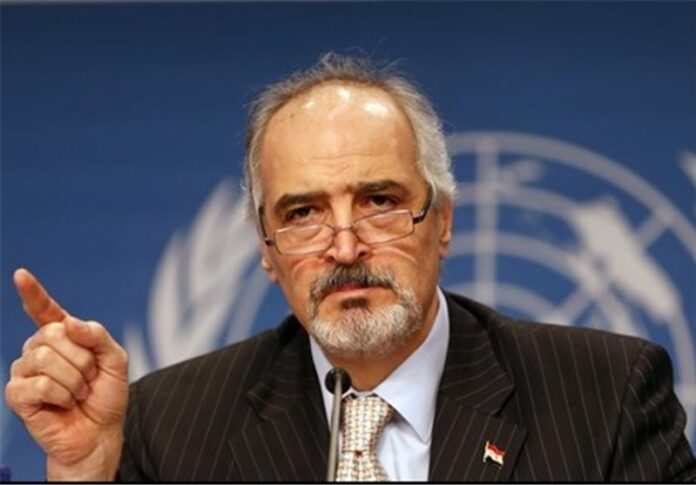
Riyadh Has No Right to Decide for Syria: Envoy

 The negotiations in Geneva are related to Syria, and Riyadh or others cannot decide about it, Jaafari said in a press conference held in the Swiss city.

He assured that the Syrian conflict should be settled by Syrians themselves and explained that terrorist groups, including militants coming from all around the world, have no right to be involved in the negotiations.

Al-Jaafari stressed that the Syrian government will not be holding negotiations with terrorists, saying “We are not holding talks with individuals. We are not having talks with terrorists.”

The Syrian envoy also said presenting demands as a preconditions for negotiations is unacceptable.

As for the duration of the negotiations, Al-Jaafari said it depends on the willingness and the determination of both sides, adding that the first immediate objective is to make sure the talks continue and that everyone is on board.

Earlier, Jaafari had said that the negotiations are still in a preliminary phase and called the opposition “not serious”.

“We are still in the preparatory phase for indirect talks… We still don’t know who opposition delegation is,” Jaafari said following his meeting with UN Special Envoy for Syria Steffan de Mistura.

The peace talks coincided with a triple terrorist bombing in Damascus on Sunday which left more than 50 civilians dead. The bombing was claimed by the Daesh (ISIL) terrorist group.

The Syrian army, in their turn, launched their biggest offensive in a year, north of Aleppo on Monday.

According to the Syrian Observatory for Human Rights monitoring group, with the capture of the hilly countryside near Aleppo the Syrian army has been able to put a key supply route used by terrorists into firing range.

The Geneva peace talks mark the first attempt in two years to hold negotiations to end the Syrian conflict. The goal of the talks is that all factions on the ground in Syria, except Daesh and al-Nusra Front, agree on a ceasefire. The UN has urged world powers to push for a ceasefire once the peace talks begin.


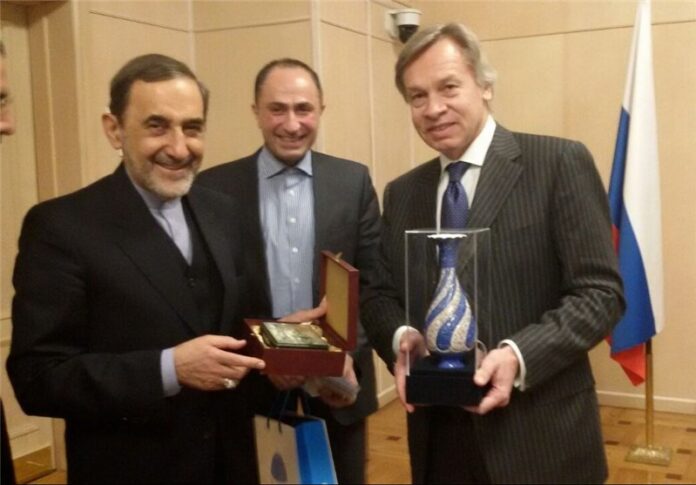
No Downturn in Iran-Russia Strategic Ties, Velayati Says

“The path of long-term and strategic cooperation between the two countries is irreversible, and the Islamic Republic of Iran is ready to boost support and cooperation (with Russia) in all fields,” Velayati said Tuesday in a meeting in Moscow with Chairman of the Russian State Duma’s International Affairs Committee Alexey Pushkov.

Velayati underlined that Iran and Russia share long-term, strategic interests and also face common threats.

“One of the examples of the common interests of Iran and Russia is the Syrian issue,” the Iranian representative said, stressing that victory against terrorist groups in Syria will help protect the territorial integrity of other regional countries, such as Iraq and Turkey, and bring about stability and peace to the region.

“Extremism in the region is spreading into Central Asia and west of China, and bilateral cooperation (between Iran and Russia) could play a role in this regard (the battle against extremism),” he added.

Velayati is in Moscow for talks with top Russian officials on the latest developments in the region and coordination of policies on Syria.

Iran and Russia, two main allies of Syria, insist that settlement of conflicts in the Arab country should involve a political solution, excluding any foreign interference or terrorist groups.

Syria has been entangled in civil war since March 2011, with Takfiri terrorist groups like Daesh (ISIL) controlling parts of it, mostly in the east.

In the past five years, more than 250,000 people have died in Syria -overwhelmingly civilians- and around 4 million Syrians are now refugees in other countries. Around 8 million others have been displaced internally.


A look at Iranian newspaper front pages on Feb 2

Iran Newspaper front pages

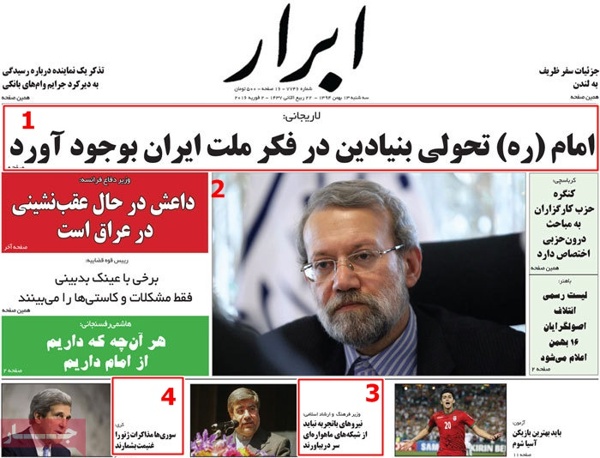
Abrar:

1- Larijani: Imam Khomeini fundamentally changed Iranian thought

2- French Defense Minister: Daesh is retreating from Iraq

3- Minister of Culture: Experienced artists should not appear on Satellite TV Channels

4- John Kerry: Syrians should take advantage of Geneva talks
 

A look at Iranian newspaper front pages on Feb 2


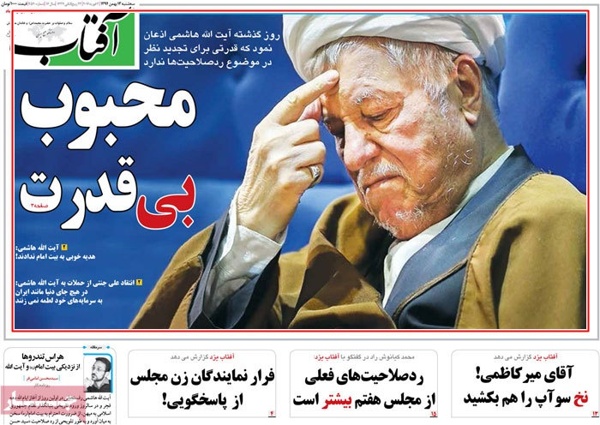
Aftabe Yazd:

Popular but Powerless

On Monday, Ayatollah Hashemi Rafsanjani acknowledged that he was powerless to initiate a reconsideration for candidates disqualified from forthcoming elections
 

A look at Iranian newspaper front pages on Feb 2


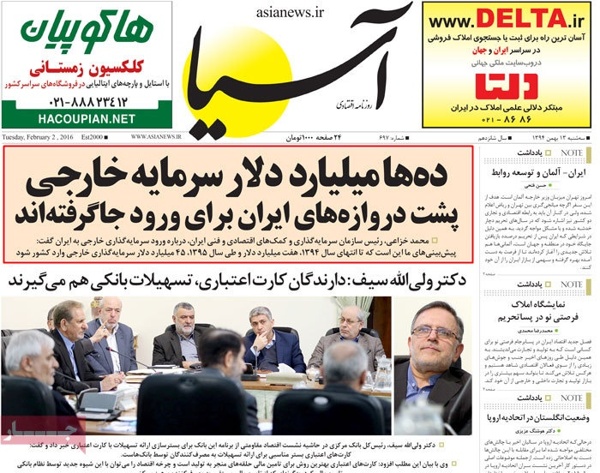
Asia:

Billions of dollars of foreign capital are waiting to enter the Iranian market

$45bn of foreign investment in Iran in the next Iranian calendar year
 

A look at Iranian newspaper front pages on Feb 2


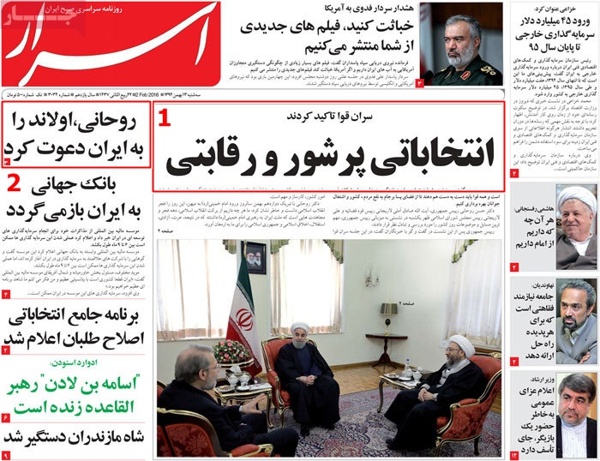
Asrar:

1- Heads of 3 branches of government call for holding of competitive and lively elections

2- Rouhani invited Hollande to visit Tehran
 

A look at Iranian newspaper front pages on Feb 2


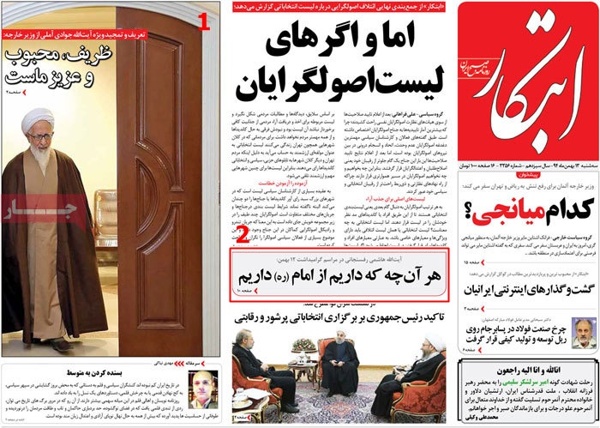
Ebtekar:

1- Zarif, our beloved and admired: Ayatollah Javadi Amoli pays tribute to Iranian Foreign Minister

2- Ayatollah Hashemi Rafsanjani: Whatever we have is due to Imam Khomeini
 

A look at Iranian newspaper front pages on Feb 2


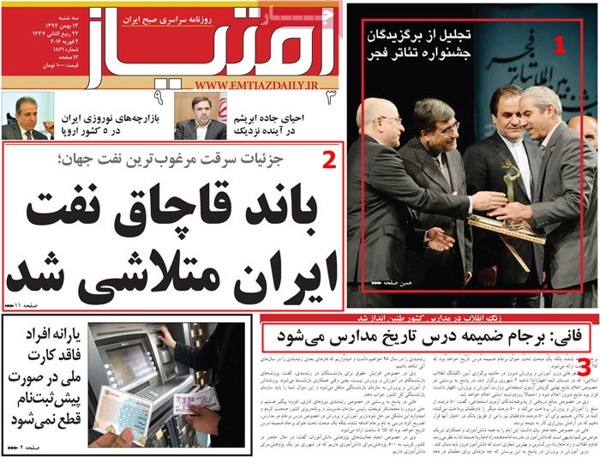
Emtiaz:

1- Selected artists in Fajr Theater Festival honored

2- Busted: Iranian oil smuggling ring

3- Minister of Education: Joint Comprehensive Plan of Action (JCPOA) will be added to school curriculum
 

A look at Iranian newspaper front pages on Feb 2


Ettela’at:

1- Ayatollah Hashemi Rafsanjani: all of us are indebted to Imam Khomeini and his family

2- Turkish artillery pounds Syrian town of Reef (Latakia)

3- President Rouhani: achieving progress is only possible through agreement among the 3 branches of government
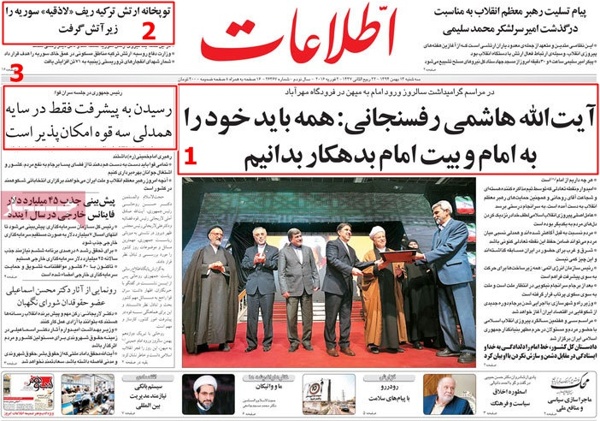
 

A look at Iranian newspaper front pages on Feb 2


Etemad:

Election agenda of reformists: bringing more hope, tranquility and economic growth to the country
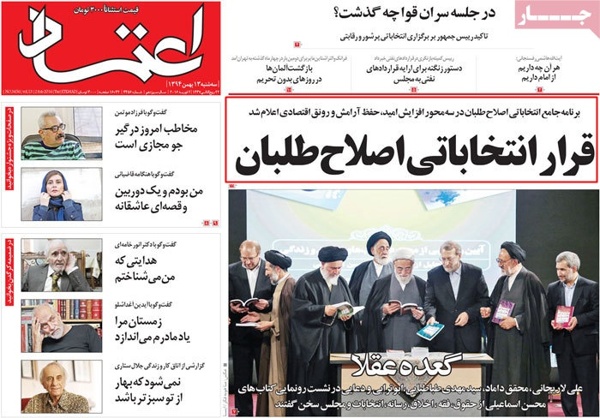
 

A look at Iranian newspaper front pages on Feb 2


Hamdeli:

Tehran, destination for mediators

After Iraq, Malaysia and Pakistan, now it is Germany’s turn
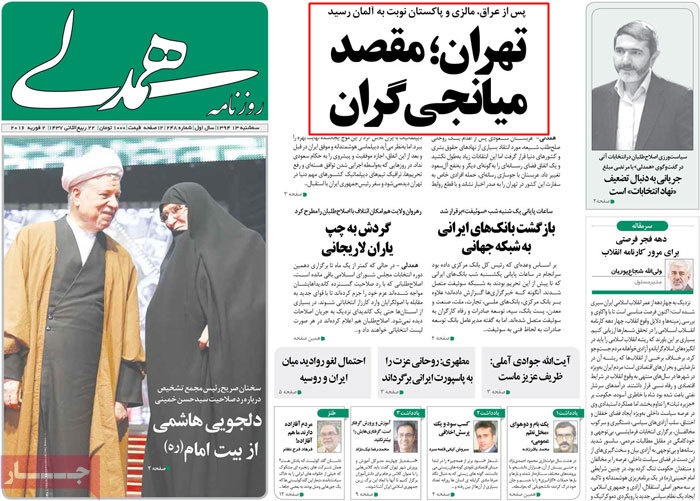
 

A look at Iranian newspaper front pages on Feb 2


Hemayat:

1- The radiance of the Iranian sphere of influence shines beyond the region, says head of the Iranian Judiciary

2- Saudi Arabia admits killing of civilians in Yemen
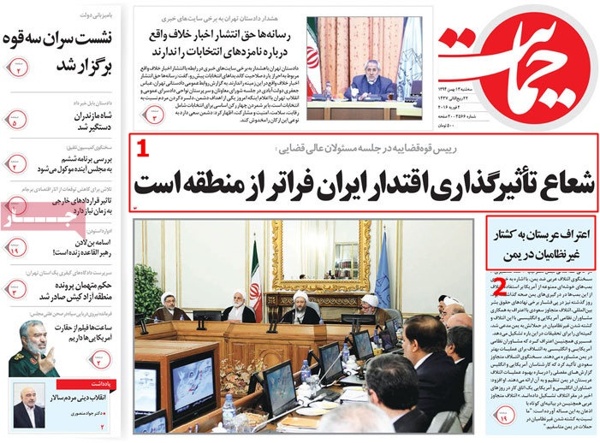
 

A look at Iranian newspaper front pages on Feb 2


Iran:

1- Most competitive National Film Festival during the “Era of Hope”

The New Year of Iranian Cinema started on Sunday evening at Vahdat Hall.

The Minister of Culture said that Iranian Cinema is not bankrupt, but moving forward and more ambitious than ever

2- Ayatollah Hashemi Rafsanjani criticized the disqualification of Seyyed Hassan Khomeini from the Assembly of Expert elections

3- Advisor to President Rouhani: We need unanimity among factions to achieve economic growth
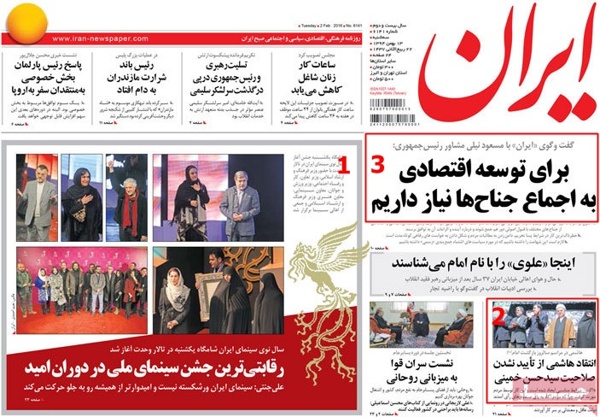
 

A look at Iranian newspaper front pages on Feb 2


JameJam:

1- Iranian lagoons have dried up

2- Iranian National TV channels will host Assembly of Experts candidates
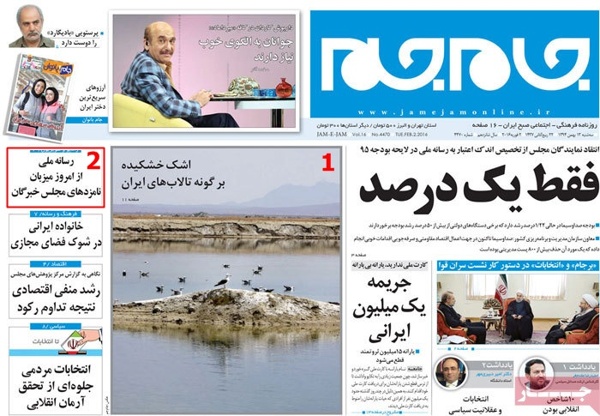
 

A look at Iranian newspaper front pages on Feb 2


Javan:

1- The one who thinks the revolution is indebted to him appears at Mehrabad Airport (a reference to comments made by Mr. Hashemi Rafsanjani).

2- In case of US intrigue, we will screen humiliating videos of its sailors
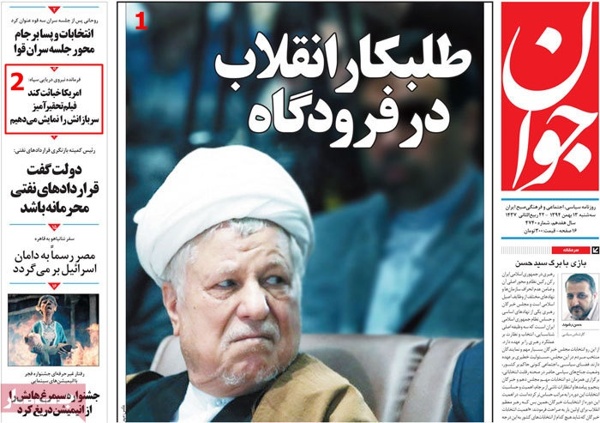
 

A look at Iranian newspaper front pages on Feb 2


Jomhouri Eslami:

1- Commemoration ceremony on the anniversary of Imam Khomeini’s return to the country

2- World Bank to return to Iran with new investments
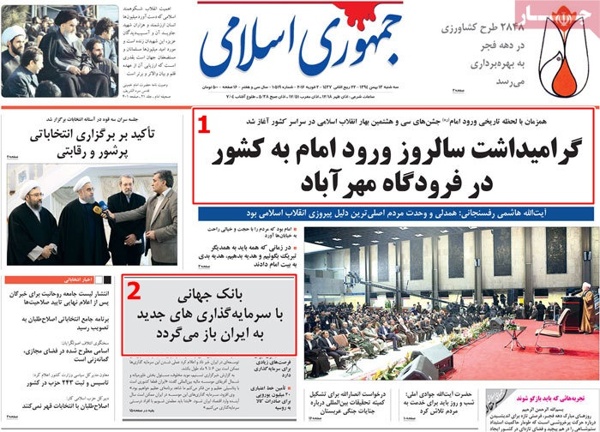
 

A look at Iranian newspaper front pages on Feb 2


Resalat:

1- Islamic Republic a rival to liberal democracies

2- Import of hybrid cars from abroad despite their local availability

3- Snowden: Osama Bin Laden, head of Al Qaeda, is alive
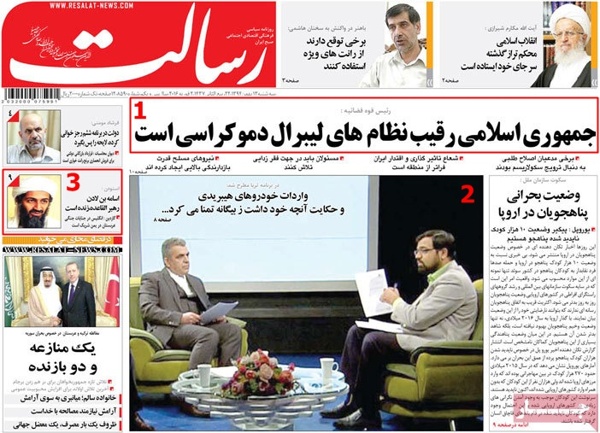
 

A look at Iranian newspaper front pages on Feb 2


Royesh mellat:

1- Internet to connect all villages, says Minister of Communications and Technology

2- Velayati: a strategic policy of looking eastwards will be pursued
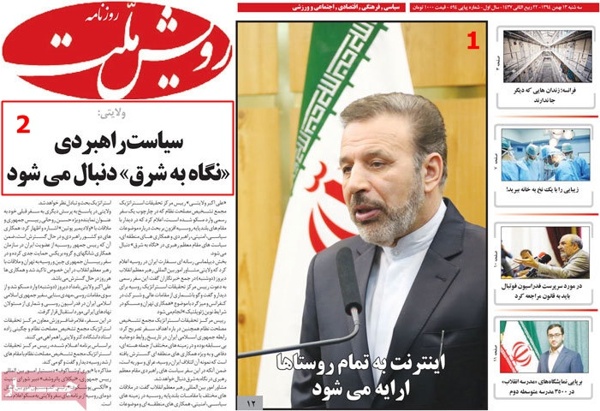
 

A look at Iranian newspaper front pages on Feb 2


Saheb Ghalam:

1- General Fadavi: we have hours of horrifying and humiliating films for the Americans

2- 2 Airbus passenger planes will arrive in Iran within two weeks

3- Germans to be first investors in Iranian petrochemical industry

4- Afghans are best traders of Iranian goods
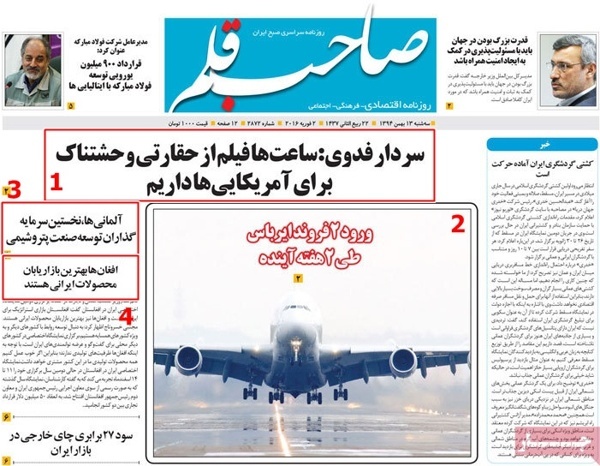
 

A look at Iranian newspaper front pages on Feb 2


Shahrvand:

1- Cost of IRR400bn due to narcotics and addiction in Iran

2- Iran regains its share of the international aviation market

General Manager of Iran Air: 20 mores passenger planes are being purchased
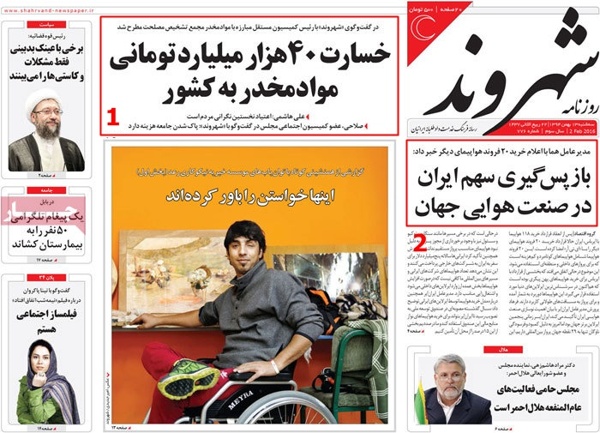
 

A look at Iranian newspaper front pages on Feb 2


Shargh:

1- Iranian special envoy to the Kremlin

Mr. Velayati, International Affairs Advisor to the Supreme Leader, visits Moscow

2- Hashemi defends Seyyed Hassan Khomeini: Public opinion makes fewer mistakes than us
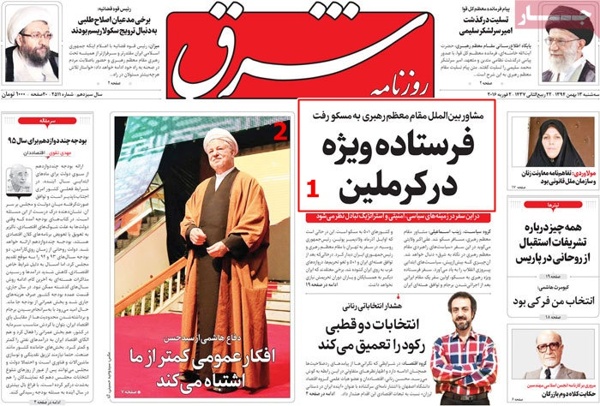
 

A look at Iranian newspaper front pages on Feb 2