Friday, December 26, 2025
Home Blog Page 461

US approves $95mn in aid to Lebanon’s military

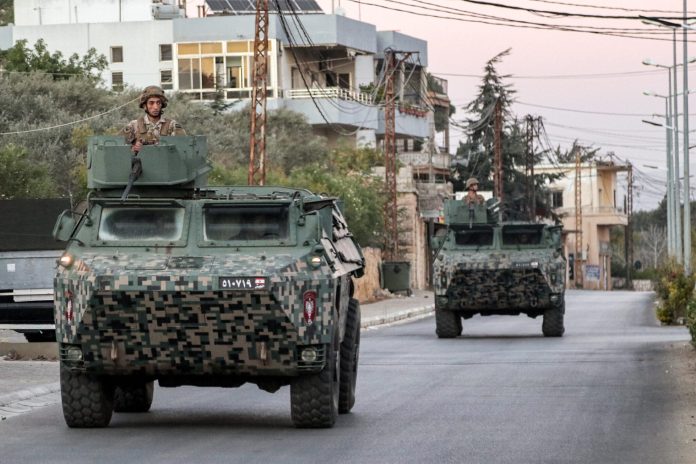
Lebanon Army

The approval, confirmed by a State Department spokesperson on Wednesday, marks one of the rare instances of foreign military aid moving through the Trump administration.

In January, the State Department instituted a 90-day funding pause on all aid, with exceptions only for Israel and Egypt. Funding to Ukraine was also recently cut amid the very public differences with Kyiv on ending the war there.

The $95m in aid was originally earmarked for Egypt, but the Joe Biden administration diverted the funds to the Lebanese Armed Forces (LAF).

The funding underscores how the balance of power in Lebanon has been upended since Tel Aviv’s war on Gaza was unleashed after the 7 October 2023 Hamas-led attacks on Israel. Hezbollah started attacking the occupied territories the next day in support of Palestinians in Gaza, but suffered a damaging response at the hands of Israel.

After years of gridlock in impoverished Lebanon, former army chief Joseph Aoun was elected president in January.

The US pushed for Aoun’s election in parliament by using the promise of funding for Lebanon’s reconstruction from Saudi Arabia. He had been opposed by Hezbollah.

Aoun, a Maronite Christian, then selected Nawaf Salam, a scion of a prominent Sunni family, as Lebanon’s prime minister.

Hezbollah still retains widespread support in Lebanon, particularly among the country’s impoverished Shia community. Underscoring Hezbollah’s resilience, hundreds of thousands of people turned out in February for the funeral of the group’s slain leader, Seyyed Hassan Nasrallah.

But Hezbollah has come under pressure from Lebanon’s new government in ways that would have been unimaginable a few years ago.

In February, Lebanon’s government indefinitely suspended flights to and from Iran. The Lebanese army fired tear gas at Hezbollah supporters protesting the move.

At Beirut’s airport, Lebanese security officials recently claimed they seized $2.5m in cash destined for Hezbollah that a Turkish national was carrying.

Reuters also reported that Lebanon’s new government plans to go to the IMF for a bailout, a move long resisted by Hezbollah and other political parties. Lebanon’s economy crashed in 2019 when its currency plunged 98 percent. Most of the country is living in poverty.

The United States has clearly demonstrated that it sees itself as the rising outside power in Lebanon, after decades of having tried and failed to reduce Hezbollah’s influence.

“Hezbollah was defeated by Israel, and we are grateful to our ally Israel for defeating Hezbollah,” US deputy special envoy for the Middle East Morgan Ortagus said in February after meeting Lebanon’s President Aoun in Beirut. Those comments from an American official at the Baabda Palace would have been unthinkable just a year ago.

The LAF have deployed to vast swaths of southern Lebanon that Hezbollah previously controlled. But Israel has maintained troops in five strategic vantage points across southern Lebanon in defiance of a deadline for their withdrawal.

According to reports, France and the US were trying to encourage Israel to fully withdraw by suggesting the deployment of a peacekeeping force or even private security companies in strategic areas. However, Aoun strongly rejected the deployment of private contractors.

Israel announced its decision to stay in Lebanon was agreed on with a US-led ceasefire monitor mechanism.

Lebanon’s government has stressed it will take its complaint to the United Nations and has slammed Israel’s violation of Lebanon’s sovereignty.
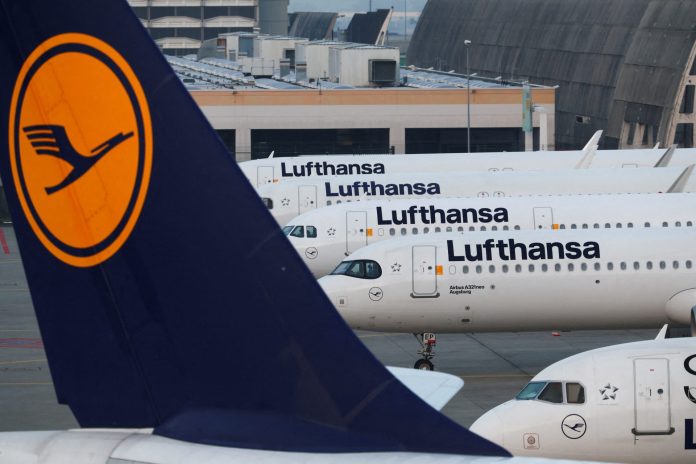
34 foreign airlines operate flights to Iran with no restrictions: IKIA CEO

Speaking to reporters, Saeed Chalandari named major carriers such as Lufthansa, Austrian Airlines, Qatar Airways, and Emirates among those serving the airport in Tehran.

Chalandari emphasized that the airport is open to all airlines seeking to operate flights to Iran, provided they obtain the necessary permits from the country’s Civil Aviation Organization.

He also expressed readiness to cooperate with any agreements made between Iran’s aviation authorities and their international counterparts.

Together, these airlines service 58 to 68 routes, reflecting the airport’s growing role as a regional aviation hub.

IKIA, Iran’s primary gateway for international travel, has been working to expand its operations and attract more global carriers despite harsh US-led sanctions and the Iranophobic propaganda in the West.

VP: Iran’s president refuses to enforce hijab law amid rising tensions

Iran Hijab

President Pezeshkian’s Vice President for Executive Affairs, Mohammad Jafar Qaem Panah, announced in a post on Wednesday on his social media that the president, who has long opposed the mandatory hijab law, emphasized that the law creates problems for citizens and lacks enforceability under Iran’s legal framework.

“I cannot implement it; I will not stand against the people,” Qaem Panah the president as saying.

In his post, Qaem Panah has reminded the general policies of the system regarding the principles of legislation and law writing, which states that the law “must be directed towards real needs, be implementable, and measurable for execution.”

“Accordingly, the law has indicated that the Chastity and Hijab Law does not possess these characteristics and is not implementable,” he argued.

The Khorsan newspaper cautioned against hardline actions, noting that aggressive enforcement could destabilize the country.

It also criticized 209 MPs for pushing the law despite the Security Council’s stance, calling it a misguided move that undermines key decision-making bodies.

Iran’s Supreme National Security Council has reportedly decided against enforcing the law, citing heightened sensitivities following the 2022 unrest and riots.

West’s ‘ineffective’ pressure campaign against Iran to backfire: Envoy

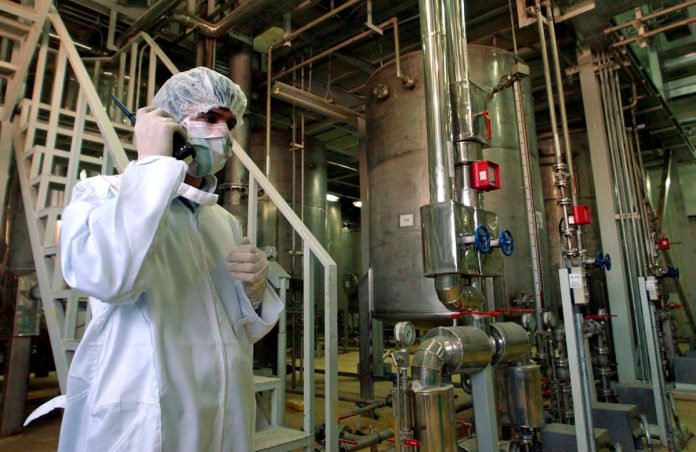
Iran Nuclear Program

Speaking at a meeting of the IAEA Board of Governors, Naziri Asl addressed Western-sponsored censure resolutions against Tehran and the continued imposition of sanctions over unsubstantiated claims that Iran seeks nuclear weapons.

He underscored the failure of Western parties to uphold their commitments under the nuclear deal, known as the JCPOA, a failure that began with the US withdrawal from the accord in 2018 and was further exacerbated by the inability of the remaining European signatories – France, Germany, and Britain – to compensate for Washington’s exit.

Naziri Asl said Iran’s decision to scale back some of its commitments was a direct response to these violations, in line with Articles 26 and 36 of the JCPOA, which grant Iran the right to take remedial action if other parties fail to uphold their obligations.

He reiterated that Iran’s remedial measures under the nuclear agreement will be abandoned only if sanctions by the United States, the European Union, and three European parties to the accord are lifted in a manner that is both effective and verifiable.

“Experience has shown that the policy of pressure pursued by certain parties is not only ineffective but also counterproductive,” he underlined.

The Iranian envoy also dismissed any attempts by the European parties to invoke the JCPOA’s snapback mechanism.

Since France, Germany, and Britain – known as the E3 – have themselves violated UN Security Council Resolution 2231 and the JCPOA, they lack the legitimacy to trigger the dispute resolution mechanism in response to Iran’s remedial actions, the envoy argued.

“The E3 cannot pursue the same legal course against Iran, as such an action contradicts both the purpose of the dispute resolution mechanism within the JCPOA and the fundamental principles of international law among civilized nations.”

He said attempting to invoke the snapback mechanism would be “legally baseless, unjust, and strongly rejected.”

With the JCPOA’s so-called ‘Termination Day’ approaching, Naziri Asl urged all the IAEA member states to focus their efforts on implementing UN Security Council Resolution 2231, which enshrines the nuclear agreement.

He warned against allowing years of international diplomacy and investment in the agreement to be undermined.

“It is our responsibility to preserve this achievement. We call on all member states to fully implement the provisions of Resolution 2231, including its specified timeline.”

Responding to Western accusations that Iran seeks nuclear weapons, the envoy reaffirmed that Iran firmly rejects weapons of mass destruction (WMD) based on its ideological and strategic principles, considering them outdated, inhumane, and a threat to global peace and security.

Termination Day is the date when the remaining UN sanctions on Iran are scheduled to be lifted, marking a final step in the JCPOA’s implementation.

Originally set for October 2025, this milestone signifies the official conclusion of restrictions on Iran’s nuclear program under the deal.

However, European powers are exploring ways to trigger the snapback mechanism, using Iran’s remedial measures as a pretext.

This mechanism, which is embedded in Resolution 2231, allows any signatory to re-impose UN sanctions if Iran is found to be in “significant non-compliance.”

In 2020, the Trump administration attempted to activate the snapback despite having withdrawn from the JCPOA. The move was widely rejected by the international community, notably the UN Security Council.

US confirms direct talks with Hamas over Gaza war

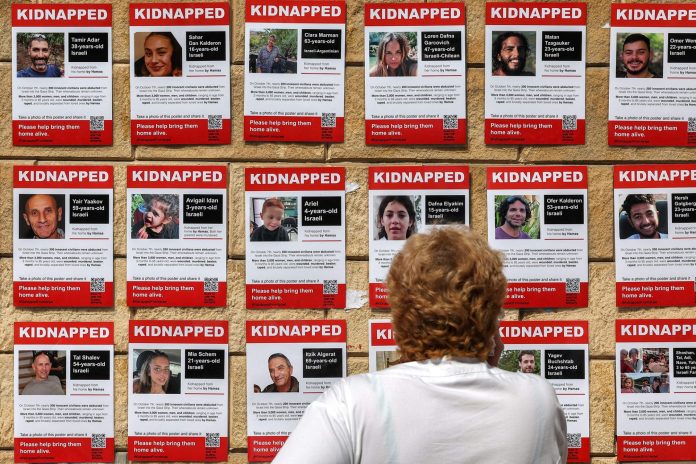
Israel Hostages Hamas

“These are ongoing talks and discussions, I’m not going to detail them here, there are American lives at stake,” White House press secretary Karoline Leavitt said on Wednesday, confirming a report by Axios media outlet that talks between the two sides were taking place.

“Look, dialogue and talking to people around the world to do what’s in the best interest of the American people is something that the president has proven is what he believes is [a] good faith, effort to do what’s right for the American people,” Leavitt added.

Adam Boehler, Trump’s nominee to be special envoy for hostage affairs, participated in the direct talks with Hamas.

A Hamas official cited by the AFP news agency confirmed the negotiations over Israeli-US captives held in Gaza.

The US had previously publicly refused direct contact with the Palestinian group since banning them as a “terrorist” organisation in 1997.

Israel announced it had been consulted by the US on the direct talks.

Israeli officials say about 24 living captives – including Edan Alexander, an American citizen – as well as the bodies of at least 35 others are believed to still be held in Gaza.

Confirmation of the talks comes days after the first phase of the Israel-Hamas ceasefire expired, with Israel pushing for an extension while Hamas insists on progressing to the second phase of the deal agreed in January.

The first phase saw Hamas release 33 hostages in exchange for Israel releasing more than 2,000 Palestinian prisoners and detainees.

Israel has said the proposal to extend the first phase of the truce was drafted by the US envoy for the Middle East, Steve Witkoff.

The new plan would require Hamas to release half its remaining captives in exchange for a ceasefire extension and a promise to negotiate a lasting truce. Israel made no mention of releasing more Palestinian prisoners – a key component of the first phase.

After the first phase expired, Israel on Sunday suspended humanitarian aid deliveries, including fuel, aid and medicine, into Gaza, as the government aims to put pressure on Hamas to accept the new terms – a move that the Palestinian group slammed as a violation of the original deal.

France, the United Kingdom and Germany on Wednesday warned Israel against using aid as a “political tool”, calling on it to ensure the “unhindered” delivery of humanitarian supplies to the war-ravaged Palestinian enclave.

“We call on the government of Israel to abide by its international obligations to ensure full, rapid, safe and unhindered provision of humanitarian assistance to the population in Gaza,” the countries announced in a joint statement.

“A halt on goods and supplies entering Gaza such as that announced by the government of Israel would risk violating international humanitarian law,” they noted, adding, “Humanitarian aid should never be contingent on a ceasefire or used as a political tool.”

The three European nations described the humanitarian situation in Gaza as “catastrophic”.

Poll shows almost half of Britons want Trump UK  visit cancelled after clash with Zelensky

Some 42 per cent of voters said the historic second invitation to Trump should be withdrawn amid growing outrage at the US administration’s increasingly critical stance on Ukraine.

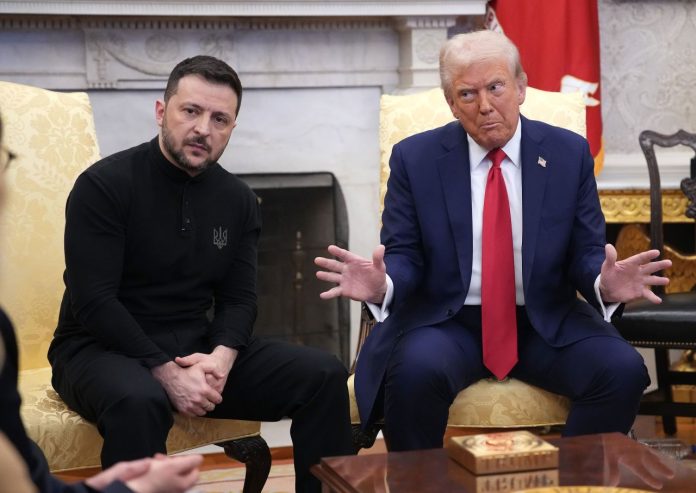
Sir Keir Starmer has faced pressure from across the political spectrum to withdraw the invitation, which he hand-delivered to Trump just a day before his Oval Office shouting match with Zelensky. That is only likely to increase since Trump’s decision to suspend military aid to Ukraine.

While two in five people said the invitation should be withdrawn, an overall majority (51 per cent) said it should not have been extended in the first place.

It comes as a petition by pro-democracy campaign group 38 Degrees calling for the visit to be axed passed 180,000 signatures.

Trump would become the first US president honoured with two state visits, with Sir Keir mounting a major charm offensive as she seeks to protect Britain from a global trade war.

But 38 Degrees warned that, because of the British public’s overwhelming support for Ukraine, the PM risks alienating voters by cosying up to the US president.

Chief executive of 38 Degrees Matthew McGregor said: “Since the Russian invasion three years ago, the British people have consistently shown an outpouring of support for the people of Ukraine. They have been clear that the UK must stand up for Ukraine, and that voters will back the PM if he does.

“But standing up for Ukraine means unequivocally standing up to Donald Trump right now. With the majority of Brits feeling he is undeserving of a second state visit … Keir Starmer should think long and hard about whether this state visit really should go ahead.”

The survey, conducted by Survation for 38 Degrees, also revealed Sir Keir’s backing for Zelensky after his White House clash with Trump made the public feel “proud to be British”.

The prime minister standing up for Ukraine on the world stage won him the support of 46 per cent of the public, who said it made them feel proud, while just 12 per cent said it did not.

And it contained a stark warning for Reform UK leader Nigel Farage, who was accused of “acting as Donald Trump’s spokesman in Britain” for defending the US president after the row.

It revealed President Zelensky as the most popular world leader out of a group also including Sir Keir, French president Emmanuel Macron, Trump and Vladimir Putin.

Zelensky had a 54 per cent approval rating, while Trump was on 24 per cent and Putin was on 11 per cent.

Farage blamed the Ukrainian president for having played the White House meeting “very badly”, and accused him of “bowling in” without a suit on and “showing no respect” for his American counterpart.

McGregor added, “After Nigel Farage’s comments earlier this week, this poll shows him well and truly out of step with public opinion, from his sympathetic comments towards Putin to his sneering at Zelensky’s sartorial style.”

Israel’s Gaza aid blockade could breach humanitarian law: E3

In a joint statement published on Wednesday, the foreign ministers of the United Kingdom, France and Germany called on the government of Israel to abide by its international obligations, and “to ensure full, rapid, safe and unhindered provision of humanitarian assistance to the population in Gaza”.

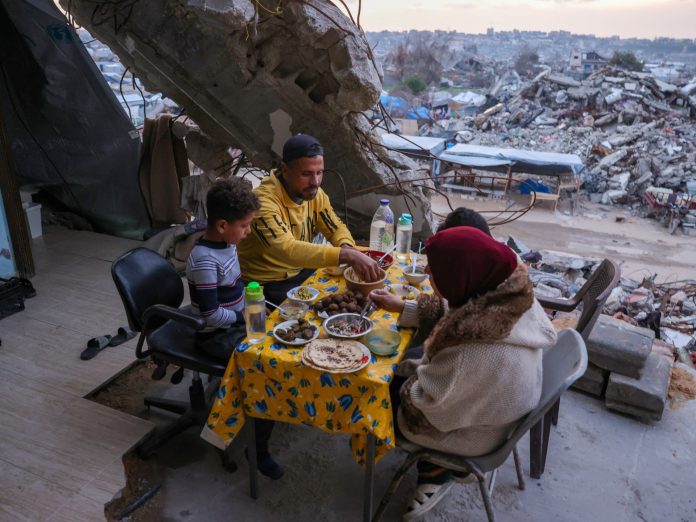
Israel blocked the entry of aid shipments to Gaza on Sunday, hours after the first phase of its ceasefire deal with the Palestinian group Hamas expired, raising fears of hunger and more hardships during the holy month of Ramadan that began over the weekend.

“A halt on goods and supplies entering Gaza, such as that announced by the Government of Israel would risk violating International Humanitarian Law,” the three ministers stated.

“Humanitarian aid should never be contingent on a ceasefire or used as a political tool,” the statement added, calling on all parties to uphold the ceasefire.

Separately, on Wednesday, five European members of the United Nations Security Council, including the UK and France, called on Israel to “immediately let humanitarian aid flow into the Gaza Strip”, urging parties “to find a way forward to the next phases of the ceasefire agreement and hostage release deal”.

Rights groups have accused Israel of crimes against humanity and violations of international laws for blocking aid in Gaza. Nearly 50,000 Palestinians have been killed and 70 percent of Gaza’s buildings and roads are damaged after 15 months of nonstop Israeli bombardment.

Hamas has accused Israel of reneging on the ceasefire that ended the Gaza war. Israel now wants to extend the first phase of the agreement by 50 days instead of entering into the second phase as agreed originally. Israel was supposed to withdraw its soldiers from the Philadelphi Corridor at the end of the first phase on March 1, but it has refused to do so. Trump’s Middle East envoy Steve Witkoff is reportedly expected to visit the region in the coming days to end the deadlock.

On Wednesday, the World Food Programme (WFP) announced it has food supplies for the Palestinian enclave to keep public kitchens and bakeries open for less than two weeks.

Rosalia Bollen, a spokesperson for the UN’s children’s agency, also said the block on humanitarian aid, including vaccines and ventilators for pre-term babies, “will have devastating real-life consequences” for children and their parents.

“If we’re unable to bring that in, routine vaccination will come to a standstill,” she continued, adding, “Neonatal units won’t be able to care for preterm babies, so this is a real-life consequence that we’ll be dealing with very, very soon if we’re unable to resume the aid supplies coming in.”

Bollen, who is in Gaza, said existing supplies have already been largely distributed throughout the enclave.

“The first phase of the ceasefire wasn’t just a pause in hostilities … it really was a lifeline for families here,” she continued, adding, “The mood here is very depressed; families that I speak with are deeply worried about what the future is going to hold.”

CIA confirms freeze of intelligence sharing with Ukraine

CIA

The development came just a day after several American media outlets reported that the US had suspended military assistance, including both the purchase of new weapons and shipments already in progress.

When asked by host Maria Bartiromo whether the US had “cut off” its cooperation with Ukraine, Ratcliffe said that US President Donald Trump had “asked for a pause” to see if Kiev was ready to work toward resolving the conflict with Russia.

“President Trump had a real question whether…Volodymyr Zelensky was committed to a peace process,” Ratcliffe said, claiming that the halt to assistance and information sharing contributed to Zelensky publicly stating that he was “ready for peace.”

On Tuesday, the Ukrainian leader said that Kiev was ready for an immediate POW release and a temporary ceasefire with a “ban on missiles, long-ranged drones, bombs on energy and other civilian infrastructure.” Last week, Trump told reporters that Zelensky needed to be ready for an immediate ceasefire before he could be welcomed back to the US following their Oval Office debacle on Friday.

”On the military front and on the intelligence front, the pause… allowed that to happen,” Ratcliffe continued, adding that he expected the US to resume cooperating with Ukraine soon.

The halt to intelligence sharing was “selective,” Sky News reported on Wednesday, citing a Ukrainian source. However, the move made it difficult for Ukraine to launch attacks against targets deep inside Russia, the source stated.

Washington reportedly also barred its allies from sharing with Ukraine, Financial Times reported on Wednesday, citing sources familiar with the matter. Recipients with assets inside Ukraine itself were likely to continue to pass on relevant information, the paper said, but Kiev would likely miss out on time-sensitive and high-value intelligence it needed to strike moveable Russian targets.

Trump and Zelensky had a heated verbal exchange on Friday, when the US president accused the Ukrainian leader of ingratitude and “gambling with World War III” by refusing to work towards a halt to hostilities.

Several US outlets, including Bloomberg and CNN, reported that Trump had paused military aid after the fall out. According to reports, the president’s order affected more than $1 billion in “arms and ammunition in the pipeline and on order.”

Moscow commented on the reports by saying that if the US were to suspend supplies altogether it would “probably be the best contribution to the cause of peace.”

Israel reports $2.5bn in damage from war with Hezbollah

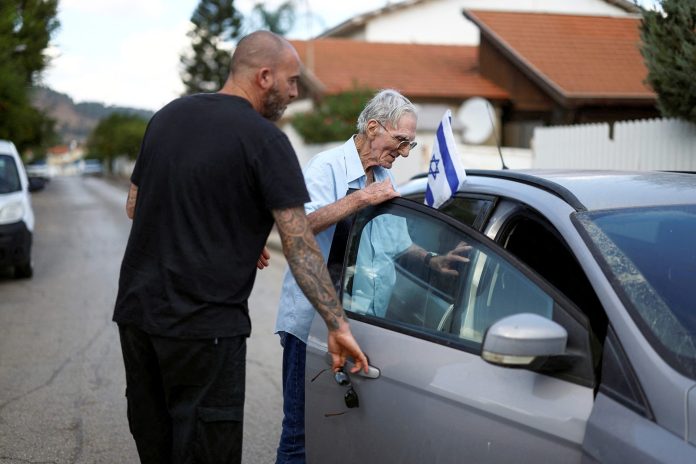
Israeli Settlers

A report submitted to the government by Ze’ev Elkin, a minister in the Finance Minister, showed that 2,900 buildings were damaged in northern Israel during the conflict since October 2023, according to Israel’s Army Radio on Wednesday.

The report found that 19% of the damaged buildings were caused by the Israeli military activity in the region.

According to the report, 67,500 Israelis were evacuated in northern Israel since the outbreak of the conflict, with only 19,000 having so far returned to their homes.

A fragile ceasefire has been in place since Nov. 27, ending months of cross-border warfare between Israel and Hezbollah that escalated into a full-scale conflict last September.

Lebanese authorities have reported more than 1,000 Israeli violations of the ceasefire, including the deaths of at least 83 victims and injuries to 280.

Under the ceasefire accord, Israel was supposed to fully withdraw from southern Lebanon by Jan. 26, but the deadline was extended to Feb. 18 after Israel refused to comply, as it still maintains a military presence at five border outposts.

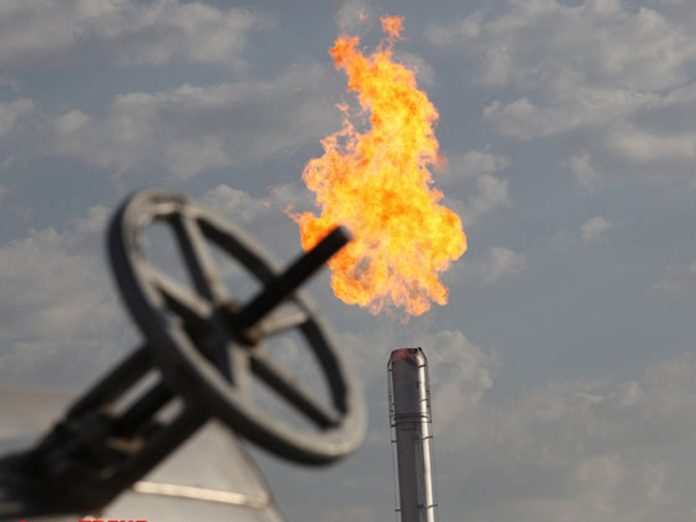
Oil minister: Turkmen gas starts flowing to Turkey via Iran

Iraq Gas

Paknejad said the contract which has made the gas swap possible has now been finalized, and the gas is flowing.

He added that over the past few days, this project has come to fruition, thanks to the efforts of the National Iranian Gas Company and other sectors involved in advancing the project.

Paknejad noted that this project is significant from various aspects, such as the amount of gas received in the northeastern region and the interactions with neighbors, namely Turkmenistan and Turkey.

The Iranian oil minister underlined that the deal will have a significant impact on Iran’s relations with Turkey and Turkmenistan, especially in terms exporting gas and other oil products.

Paknejad noted that the agreement is an important step toward strengthening Iran’s position as a regional energy hub and shows Tehran’s resolve to expand its energy diplomacy.