Friday, December 26, 2025
Home Blog Page 4599

A look at Iranian newspaper front pages on Nov. 5

Iranian Newspapers Headlines

Nationwide rallies to mark Students and the Fight against Global Arrogance Days and President Hassan Rouhani’s comments on enemy infiltration dominated the front pages of Iranian newspapers on Thursday.


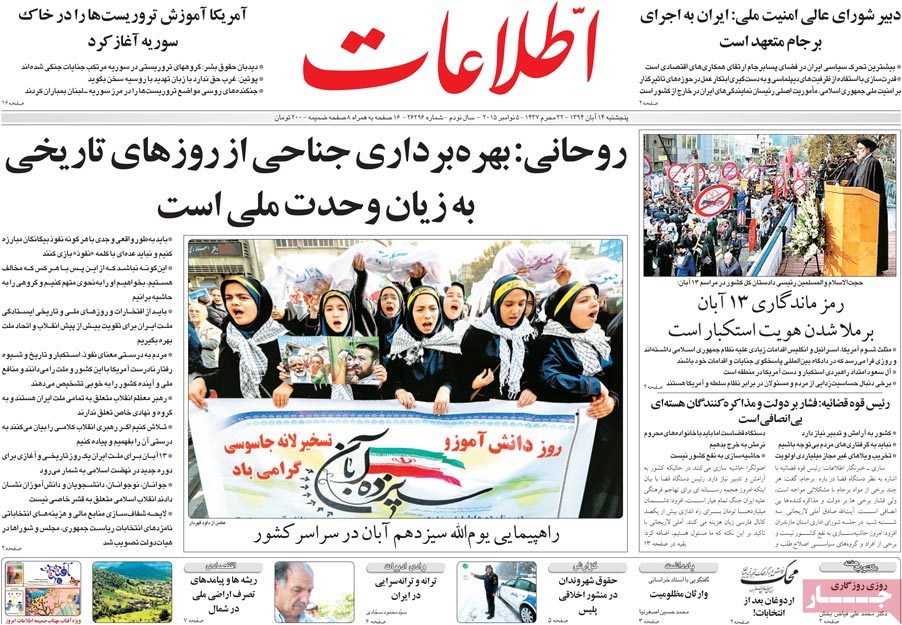
Ettela’at: “Factional exploitation of historic occasions is detrimental to national unity,” said President Rouhani.

Measures to fight infiltration by foreigners should be serious and genuine and individuals should not take advantage of the issue of infiltration, the president told his Cabinet.

Ettela’at: Rallies have been held across the nation to commemorate Aban 13 [November 4 which marks Students and the Fight against Global Arrogance Days on Iranian calendar].

Ettela’at: “Exertion of pressure on government and nuclear negotiators is unjust,” said the Judiciary chief.

Ayatollah Sadegh Amoli Larijani further said that at this juncture the country needs calm and prudence.

Ettela’at: The attorney general has said that the reason why Aban 13 never fades away is that it reveals the true nature of arrogant powers.

He further said that the sinister triangle of the United States, Israel and Britain has taken a lot of hostile measures against the Islamic establishment. One day these countries will have to answer for their criminal measures in an international court.

Ettela’at: The secretary of the Supreme National Security Council has said that Iran is committed to implementing the Joint Comprehensive Plan of Action.

Ali Shamkhani further said that the central part of measures Iran takes in the post-sanctions era focuses on promotion of economic cooperation [with the rest of the world].

Ettela’at: The US has launched training programs for terrorists on Syrian soil.

Human Rights Watch has said that terrorist groups in Syria have committed war crimes.
 

A look at Iranian newspaper front pages on Nov. 5


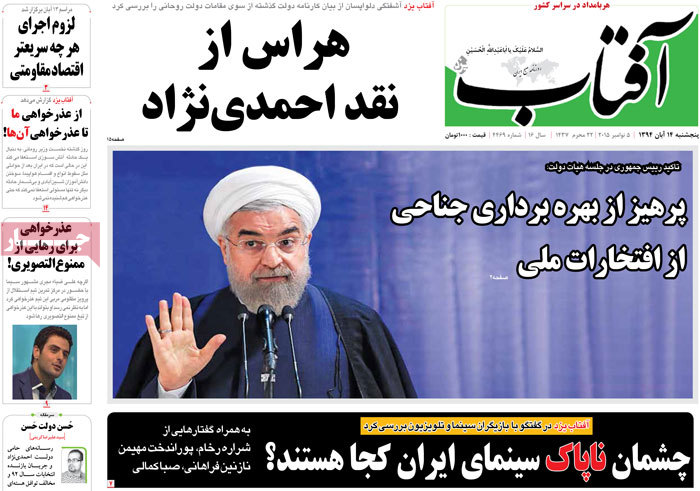
Aftab-e Yazd: An apology to get rid of suspension!

TV presenter Ali Zia has apologized to Parviz Mazloumi, the head coach of Esteghlal Football Club for making insulting comments against him during a match last week. The apology was meant to have the ban IRIB officials have slapped on the presenter lifted.
 

A look at Iranian newspaper front pages on Nov. 5


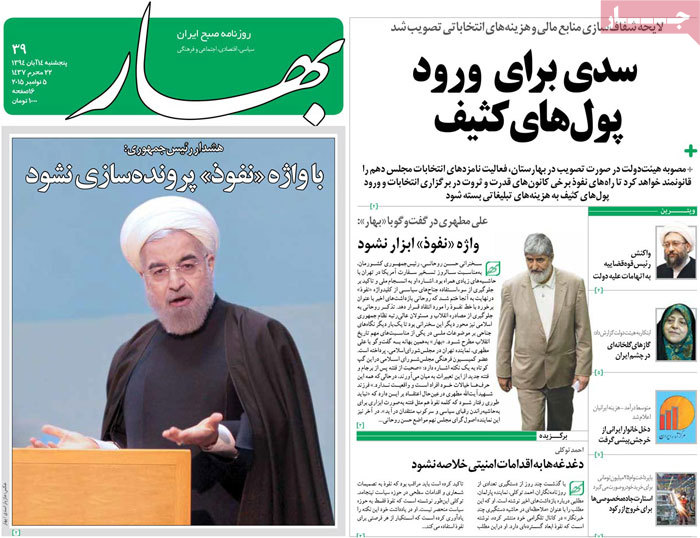
Bahar: The passport law will be amended in favor of women.

An MP has said that the Islamic Consultative Assembly is to discuss a motion to that effect.
 

A look at Iranian newspaper front pages on Nov. 5


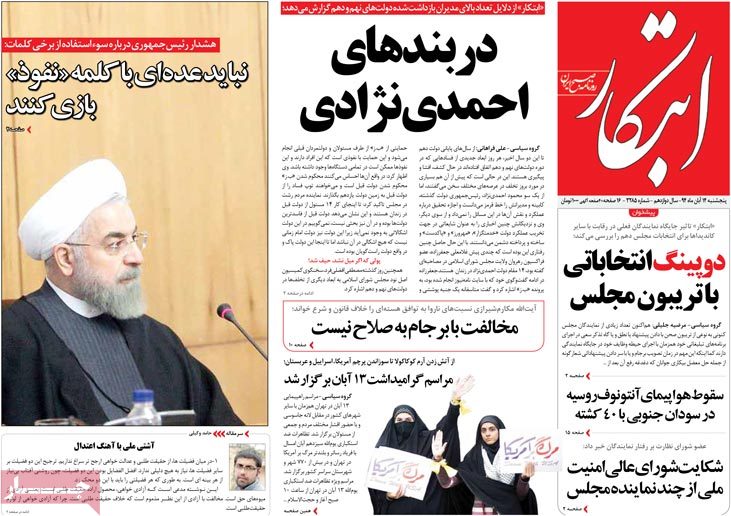
Ebtekar: Ayatollah Nasser Makarem Shirazi has said that opposition to the Joint Comprehensive Plan of Action is not expedient.

The prominent source of emulation further said that making baseless comments about the nuclear deal is unlawful and un-Islamic.

Ebtekar: The council that supervises the behavior of parliament deputies has said that the Supreme National Security Council has filed complaints against a few MPs.
 

A look at Iranian newspaper front pages on Nov. 5


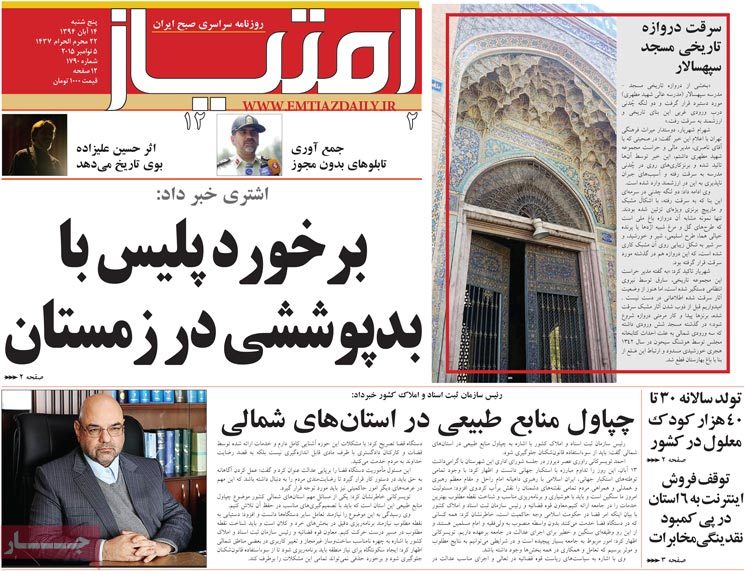
Emtiaz: Each year between 30,000 and 40,000 babies are born with disability across the country.
 

A look at Iranian newspaper front pages on Nov. 5


Ghanoon: Senior Iranian and Chinese military commanders have discussed the formation of an alliance against IS.


A look at Iranian newspaper front pages on Nov. 5


Hemayat: Iran has no fear openly supporting the Syrian resistance, said the Judiciary chief.

Hemayat: Friendship with the US is bound to result in something worse than what happened to Libya, said the judiciary spokesman.
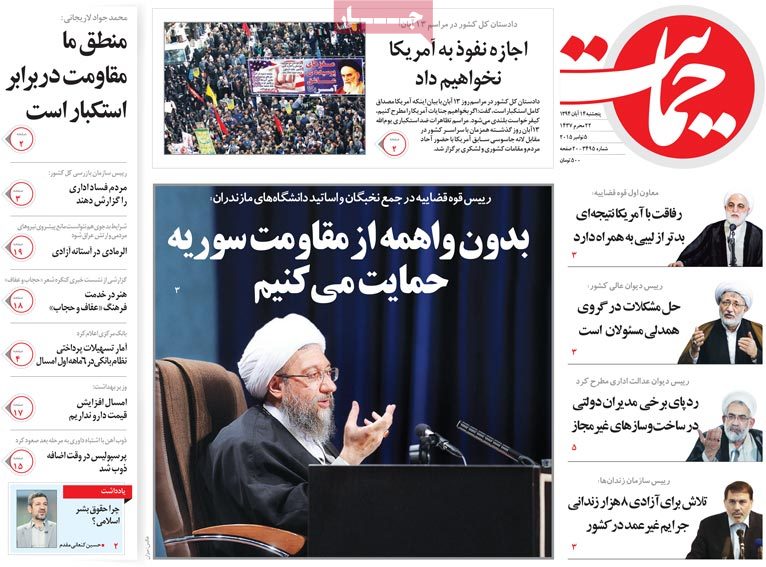
 

A look at Iranian newspaper front pages on Nov. 5


Iran: Individuals should not play with the word infiltration, President Rouhani said.

He further said that historic national occasions should be used to promote national unity.
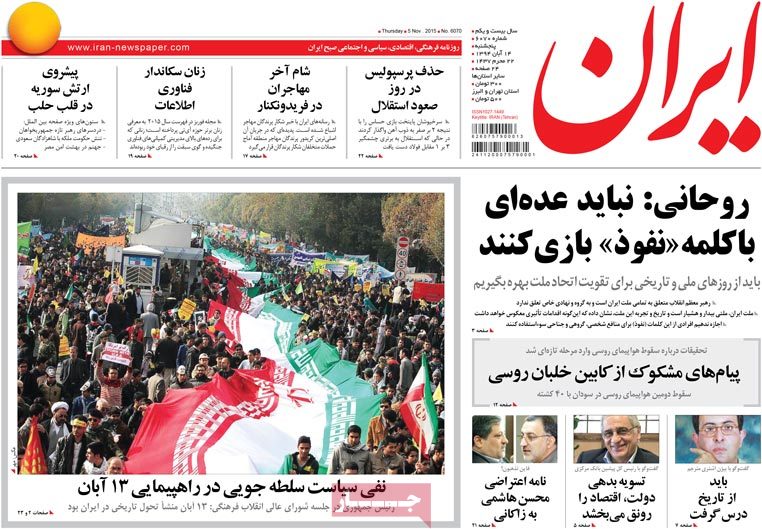
 

A look at Iranian newspaper front pages on Nov. 5


Javan: The Joint Comprehensive Plan of Action did nothing to silence chants of “Down with the US”, the world media reported.
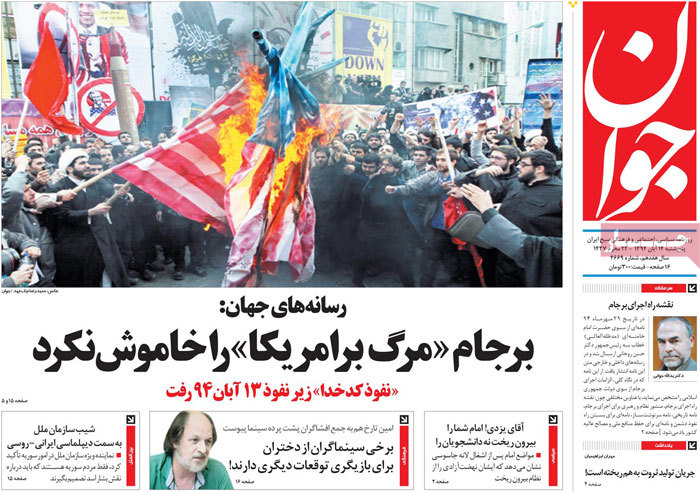
 

A look at Iranian newspaper front pages on Nov. 5


Jomhouri Islami: The capture of an Israeli colonel in Iraq has revealed that the Zionists work hand in glove with IS terrorists.
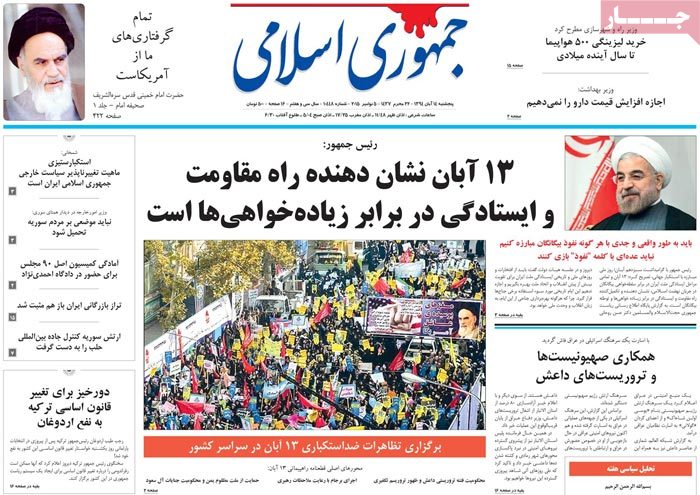
 

A look at Iranian newspaper front pages on Nov. 5


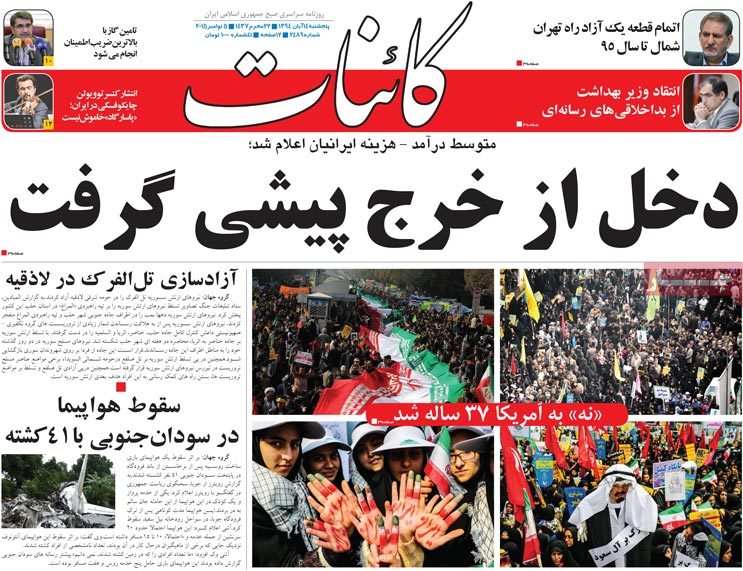
Kaenat: No to the US turned 37.


A look at Iranian newspaper front pages on Nov. 5


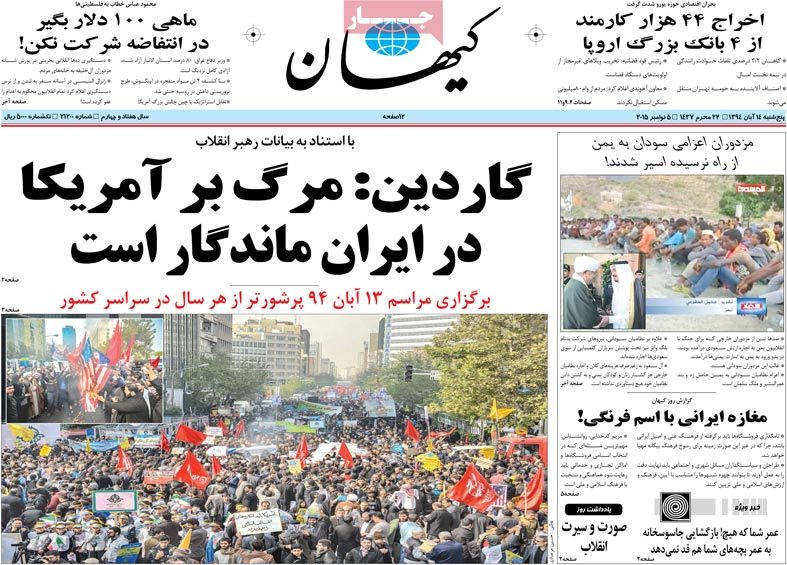
Kayhan: Sudanese mercenaries were captured no sooner than they arrived to fight in Yemen.
 

A look at Iranian newspaper front pages on Nov. 5


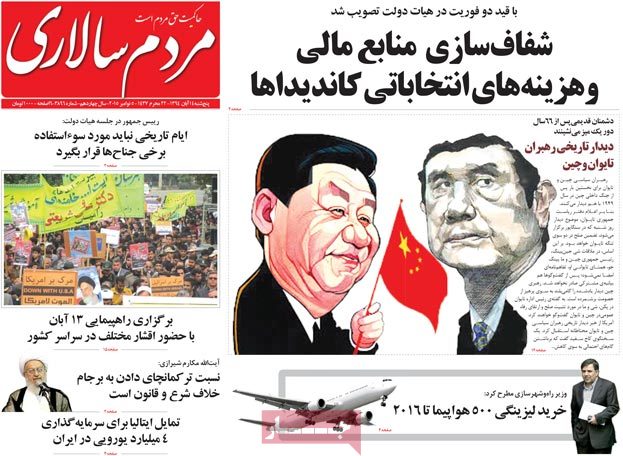
Mardomsalari: Italy is willing to make €4 billion in investment in Iran.

Mardomsalari: The minister of roads and urban development has broached the idea of buying 500 aircraft – through leasing – by the end of 2016.
 

A look at Iranian newspaper front pages on Nov. 5


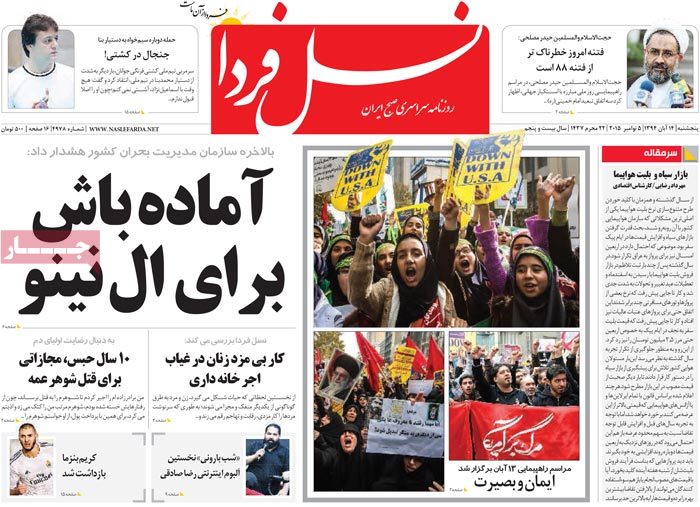
Nasl-e Farda: On alert for El Nino

The Crisis Management Organization has eventually issued a warning.
 

A look at Iranian newspaper front pages on Nov. 5


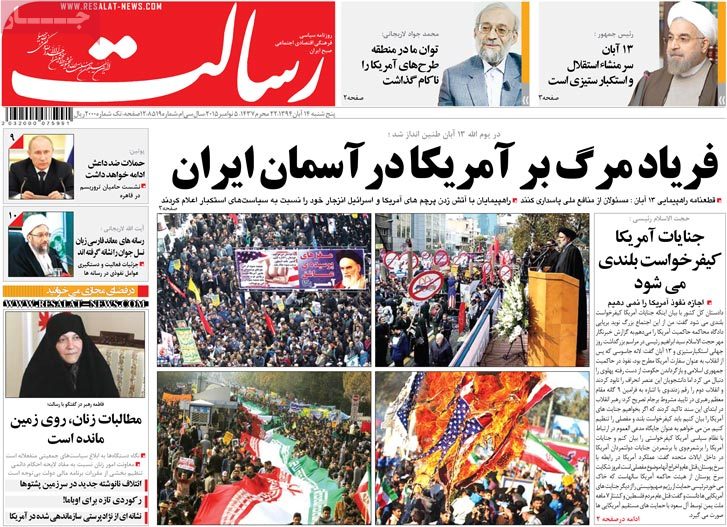
Resalat: Iran’s regional clout foiled American plots, said Mohammad Javad Larijani, the chairman of the Judiciary’s Human Rights Commission.
 

A look at Iranian newspaper front pages on Nov. 5


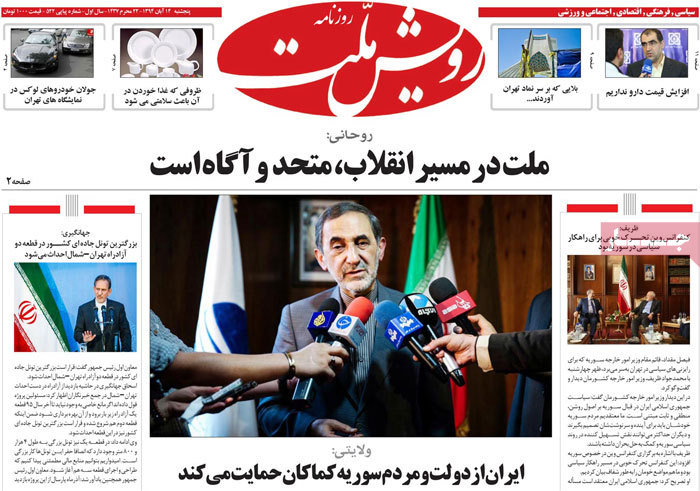
Rooyesh Mellat: Iran continues to support the Syrian people and government, said Ali Akbar Velayati, an advisor to the Supreme Leader.

Rooyesh Mellat: Foreign Minister Mohammad Javad Zarif has described the Vienna conference as a good move in working out a political solution to the Syrian crisis.
 

A look at Iranian newspaper front pages on Nov. 5


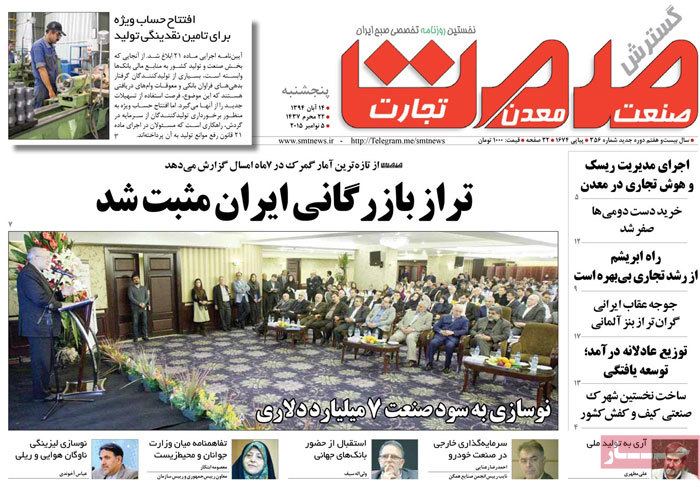
SMT: A report by the Customs Office shows that Iran’s trade balance was positive in the first seven months of the year [started March 21, 2015].
 

A look at Iranian newspaper front pages on Nov. 5


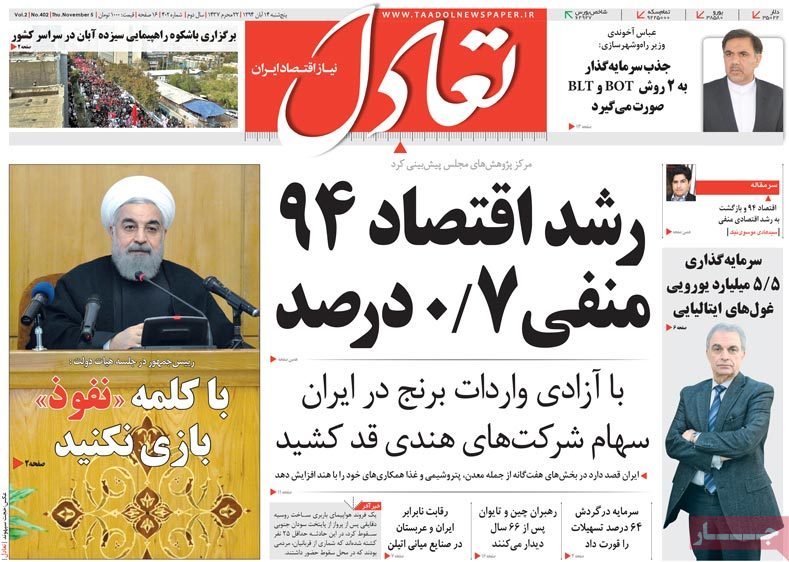
Taadol: The Parliament’s Research Center has projected that Iran’s economy will contract by 0.7 percent this year [end March 20, 2016].
 

A look at Iranian newspaper front pages on Nov. 5


Japan’s premier invites President Rouhani to Tokyo

Salehi-Japan

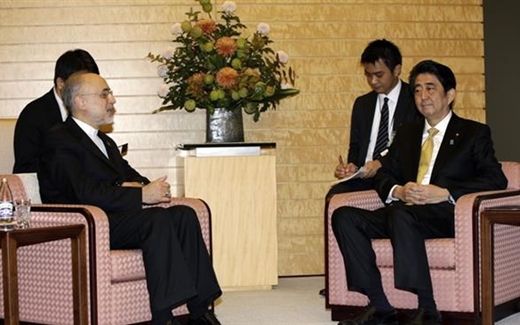
Japanese Prime Minister Shinzo Abe has invited Iranian President Hassan Rouhani to Japan on a state visit.

Abe extended the invitation during a Thursday meeting with visiting head of the Atomic Energy Organization of Iran (AEOI) Ali Akbar Salehi in Tokyo.

The Japanese premier also hailed the nuclear agreement recently clinched between Iran and P5+1 and emphasized the significance of its proper implementation.

Pointing to the chaotic security situation in the Middle East, Abe called for further cooperation between Tokyo and Tehran to counter terrorist groups, particularly Daesh (ISIS).

Salehi, for his part, extended an invitation by the Iranian president to Abe to visit Tehran.

The top Iranian nuclear official also called for the expansion of bilateral economic and trade relations with the focus on marketing and shared production.

He referred to a joint nuclear statement issued by Iran’s Foreign Minister Mohammad Javad Zarif and his Japanese counterpart Fumio Kishida, welcoming Tokyo’s contribution to establish a planned nuclear safety center in Iran.

In October, Zarif and Kishida issued the statement in Tehran on nuclear safety cooperation and the implementation of the International Atomic Energy Agency (IAEA) safeguards.

During the Japanese foreign minister’s visit back then, Tokyo also agreed to help Tehran implement the agreement with P5+1.

The Joint Comprehensive Plan of Action (JCPOA), as the agreement is known, was reached between Iran and P5+1 – the United States, France, Britain, China and Russia plus Germany – in Vienna on July 14.

Salehi arrived in Tokyo on Sunday on a four-day visit and held talks with Japanese officials about the expansion of nuclear cooperation between Iran and Japan, including on safety issues.

During his four-day stay in Tokyo, the AEOI head also met with Japanese nuclear scientists and officials from Japan Nuclear Energy Safety Organization (JNES) and Nuclear Regulations Authority (NRA).


Iranian VP in Hungary to attend World Science Forum

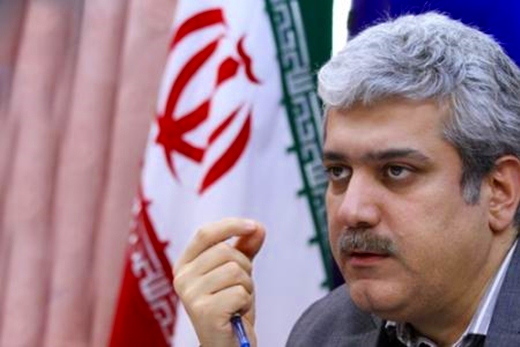
Sorena Sattari
Sorena Sattari

Iranian Vice-President for Science and Technology Affairs Sorena Sattari is in Hungary to participate in the World Science Forum (WSF), which is underway in the Central European country’s capital of Budapest.

Heading a high-ranking delegation, Sattari left Tehran for Budapest on Wednesday to take part and deliver a speech in the 7th edition of the international conference.

The 2015 WSF opened in Budapest on Wednesday, November 4, and will last until Saturday, November 7.

The 2015 World Science Forum is organized by UNESCO, the Hungarian Academy of Sciences, the International Council for Science (ICSU), the American Association for the Advancement of Science (AAAS), The World Academy of Sciences (TWAS) and European Academies Science Advisory Council (EASAC), according to the official website of UNESCO.

The 2015 WSF is organized under the theme ‘the enabling power of science’, to examine and highlight many ways in which science improves the quality of life for the benefit and advancement of society.

Organized every 2 years, the forum is one of the world’s major science events. It brings together over 600 scientists and provides linkages between scientists, industry and policy makers.

Syrians, not others, should decide Syria’s fate: Iranian FM

Zarif-Syria

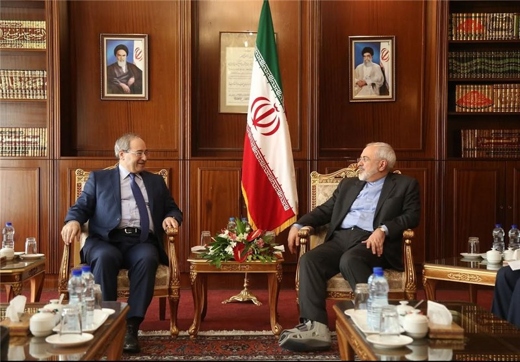
Iranian Foreign Minister Mohammad Javad Zarif on Wednesday reaffirmed Tehran’s support for the peaceful resolution of ongoing crisis in Syria, reiterating that the Syrian people are the ones who should determine their future.

“The Islamic Republic of Iran’s policy on Syria is based on clear, logical, and firm principles,” Zarif said in a meeting with Syrian Deputy Foreign Minister Faisal Mekdad in Tehran.

“We believe the Syrian people themselves should decide their future and fate,” the Iranian minister stressed, adding that other countries can at most play the role of a facilitator in the process of resolving the crisis in Syria.

[…]

Zarif hailed the Vienna talks as “a good move towards a political solution”, adding that Iran clearly voiced its positions on Syria in the conference.

Mekdad, for his part, appreciated Tehran’s support for the Syrian nation and government, saying Iran’s measures will be recorded in history.

“We are grateful for your previous and recent efforts in helping resolve the crisis,” he said, adding that the Syrian nation will always remember Iran’s positive role.

Syria has been in a civil war since 2011, with opposition factions and terrorist groups such as ISIL and the Nusra Front fighting the Syrian Army.

More than 250,000 people have been killed so far in Syria due to the violence perpetrated by the terrorists.

Iran, China urge enhanced cooperation for global peace

Iran-China-military

Air force commanders of Iran and China have stressed the importance of bolstering strategic cooperation in a bid to improve regional and international peace and stability.

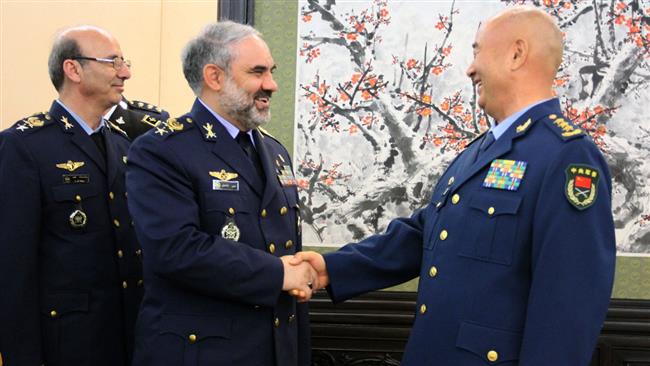
Commander of the Islamic Republic of Iran Air Force (IRIAF) Brigadier General Hassan Shah Safi, who is on an official visit to China at the head of a high-ranking military delegation, held a meeting with Ma Xiaotian, a member of China’s Central Military Commission and commander of the Chinese People’s Liberation Army (PLA) Air Force.

Shah Safi said the armed forces of Iran and China should work toward strengthening cooperation in all areas of common interest.

“We believe that these relations, in addition to serving the two sides’ interests, can guarantee peace, stability and security in Asia and even across the world,” the Iranian commander said.

He added that Tehran and Beijing are pursuing common goals such as independence and non-interference in the internal affairs of other countries.

The Chinese commander, for his part, said continued mutual relations will contribute to global peace and stability.

He added that Iran and China should do more to improve military cooperation.


Iran seeks to promote regional understanding, counter division: Official

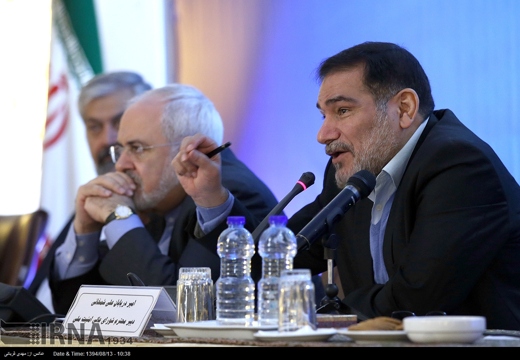
Shamkhani

In an annual gathering of Iranian ambassadors and heads of the country’s diplomatic missions across the world Wednesday, Secretary of the Supreme National Security Council Ali Shamkhani described the Fight against Global Arrogance as the underpinning policy of the Islamic Republic.

What comes next is the translation of part of his remarks as reported by khabaronline.ir on November 4:

– The major mission of the heads of diplomatic missions abroad is to tap into diplomatic potential and to take the initiative in areas which are instrumental in the country’s national security.

– Effective use of the Leader’s unwavering support for the Iranian diplomatic apparatus and the success resulting from the policy of constructive interaction, along with tapping into new regional and international opportunities created following the conclusion of the Joint Comprehensive Plan of Action (JCPOA) requires tireless efforts by the foreign policy machine.

– The 9-point guidelines issued by the Supreme Leader along with the decisions of parliament and the Supreme National Security Council have created a solid framework for executive officials on how to follow up and wisely implement JCPOA.

– Sudden and unpredictable changes in regional equations have resulted in replacement of strategies with processes and this has complicated the role of crucial components in current developments.

– Emergence of fast-paced developments and the physical and arms losses terrorist groups have suffered across Syria of late showed that the US-led coalition involving 60 countries only sought to control and not counter terrorism and lacked any operational value.

– The strategy shift by America and Britain and their decision for continued presence in the region through establishment of new bases will give rise to growing regional instability and insecurity in the future.

– Most of Iran’s political activities in the post-JCPOA era have been focused on the promotion of regional cooperation. The country carries on with that trend to decrease disagreements and ease growing insecurity, promote understanding along with cooperation, and counter divisions provoked by trans-regional powers.

– Thanks to concerted and tireless efforts of different entities, particularly those active in areas such as foreign policy, security, defense and culture along with the success secured in nuclear talks with P5+1, Iran enjoys a unique position in terms of authority, stability and independence.

Shamkhani also answered a number of questions asked by participants on the Syrian crisis, the Russian military intervention in the Arab country, challenges that may come along in the implementation of JCPOA, and developments of Iraq and Yemen.

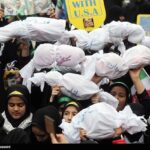
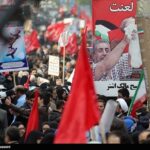
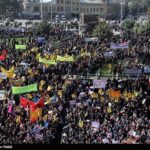
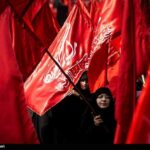
Iranians hold nationwide rallies to mark 1979 US embassy takeover

139408131429502746450234

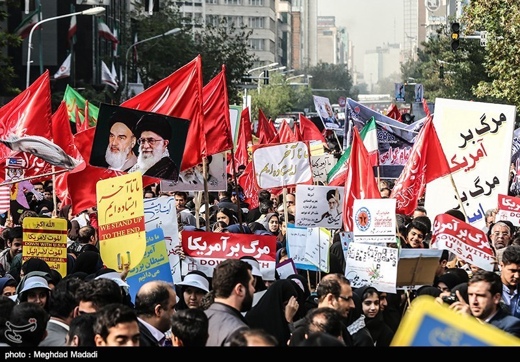
Iranians have held massive rallies across the country to mark the 36th anniversary of the 1979 takeover of the US embassy in Tehran.

Demonstrators gather outside the premises of the former US embassy, also known as the “Den of Espionage,” in Tehran every year and chant slogans against the US. People in other cities across the country also take to the streets to mark Student Day as well as National Day of the Fight against Global Arrogance.

Thirty six years ago on this day, a group of Iranian university students took over the US embassy, which they believed had turned into a center of espionage aimed at overthrowing the Islamic Republic following the country’s Islamic Revolution earlier in 1979.

Documents found at the compound later corroborated claims by revolutionary students that the US was using its Tehran embassy to hatch plots and overthrow the nascent Islamic establishment in Iran.

Fifty-two Americans from the embassy were held for 444 days until January 20, 1981.

Founder of the Islamic Republic Ayatollah Khomeini later hailed the event as “a second revolution” with a greater significance than the original revolution of the Iranian nation.


Iran signs landmark $6 billion power deal

power

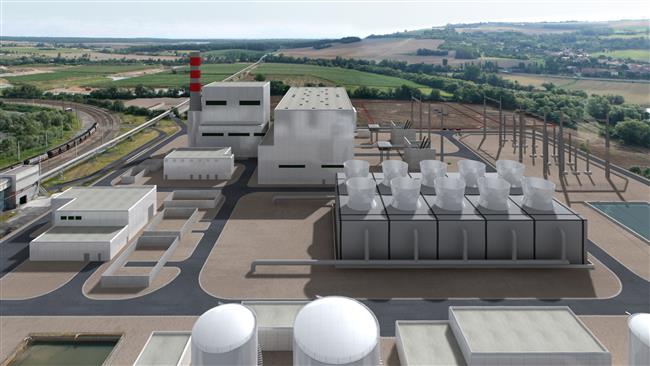
The Iranian government has signed an agreement worth $6 billion with a European company to build 4,250 MW of power capacity in the country.

The agreement between Iran’s Ministry of Energy and the foreign firm envisages developing gas-powered plants for 3,250 MW and wind farms for an additional 1,000 MW of electricity, Government Spokesman Mohammad Bagher Nobakht said.

“The big investment will be made by March under the existing political conditions where the Joint Comprehensive Plan of Action and the lifting of sanctions have not started yet,” he said.

Nobakht did not name the European company, but Tasnim news agency said Belgian UNIT International SA, which is already involved in construction of gas-fired power plants in Iran, was the likely developer.

The government just recently approved the establishment of a 3,250 MW capacity at Tabriz, Miyaneh and Aras sites in northwestern Iran and Zahedan in southeastern Iran, Tasnim News Agency reported.

“The plan is to be implemented for the first time in Iran with direct foreign investment,” the news agency added.

The sites for the wind farms have yet to be finalized. According to Tasnim, several locations across Iran, including Ahar and Sarab in the northwest, are being broached for the purpose.

Iran is the Middle East’s biggest electricity producer with a capacity of 70,000 megawatt-hours. Energy Minister Hamid Chitchian has said the country planned to raise it to more than 100,000 MW.

On Tuesday, Nobakht said some 5,000 MW of additional power is to be generated a year to meet the rising demand in the country of 80 million.

Renewable projects

The government is eyeing renewables as the new alternative to fossil fuels which constitute about 90% of Iran’s energy mix.

The existing renewable capacity is focused on hydro power plants which produce about 8,500 MW. Green power plants account for only 150 megawatts of electricity used in the country.

The government plans to install 5,000 MW of renewable capacity, putting Iran among the likes of the UK and France in this category. The Ministry of Energy is already implementing 500 MW wind converters and another 100 MW biomass projects.

The Middle East’s first geothermal power plant, a 50-megawatt pilot project, is being built at the foot of an inactive volcanic peak in the northwestern city of Meshginshahr.

However, Iran’s renewable energy potential is huge and only the wind capacity is estimated at 30,000 MW.

Foreign projects

German companies are reportedly about to begin building wind farms next year in Iran at a cost of $331 million. In August, they signed a document for generation of 100 MW of wind power plus 400 MW of solar in southern Khuzestan.

Back then, Italy’s Fata, the engineering unit of leading industrial group Finmeccanica, signed a 500 million euro ($543 million) contract with Ghadir Investment Company to build a power plant in Iran.

A consortium of Iranian, Indian and South Korean companies seeks to set up an energy park in Khuzestan Province in a project worth $10 billion, including generation of 1,000 MW of solar power.

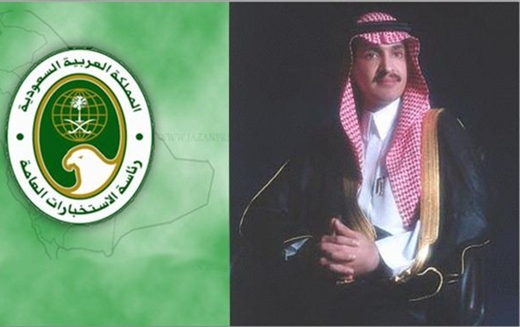
Saudis funnel gobs of money into anti-Shiite intelligence division: Prince

Turki bin Bandar bin Mohammad bin Abdul Rahman Al Saud

The Rafideh [a derogatory term used by Salafis to refer to Shiite Muslims] Department of the Saudi General Intelligence Directorate receives an annual budget equal to those of Tunisia, Jordon and Yemen combined, Turki bin Bandar bin Mohammad bin Abdul Rahman Al Saud, a dissident prince, said in a weekly conference in Paris.

The following is the translation of part of a report Tasnim News Agency filed on November 3 on his revelations about Saudi efforts to clamp down on Shiites:

The Saudi Prince said that among other things, the intelligence division masterminds anti-Shiite plots and tries to tarnish the image of Shiites through publication and distribution – during the Hajj rituals – of books full of fabrication. Some of these books go as far as promote the murder of Shiites.

In a weekly gathering in his residence – attended by representatives of media and politicians – the Paris-based dissident prince said that Shiites are better than Salafis, because Shiites try to get close to God through pilgrimage visits to the holy shrine of Imam Hussein [their third Imam]. Salafis, however, falsely believe that killing Shiites helps them get close to God. In fact, such murderous acts get them close to the Devil.

Turki bin Bandar further said that he was disavowed by Saudi scholars for opposition to monarchy; it came despite the fact that approval or disapproval of the rule of someone is the entitlement of every human.

The prince went on to say that in the past he was told that Shiites were unbelievers because they did not recognize Abu Bakr, Umar and Uthman as the first three Muslim caliphs [after passing of the Prophet Muhammad]. “But it has been proven to me that anyone who does not recognize a political ruler might be denounced as an unbeliever by ill-wishing scholars close to that ruler.”

He said that he will be granted French citizenship soon and then will run for the French parliament.

The prince described Saudi Arabia as a backward country which is still struck in the Stone Age and said those at the helm of the kingdom drink at all other times of day except during prayer times, and plunder public money to pay dancers and bankroll terrorist groups who behead people.

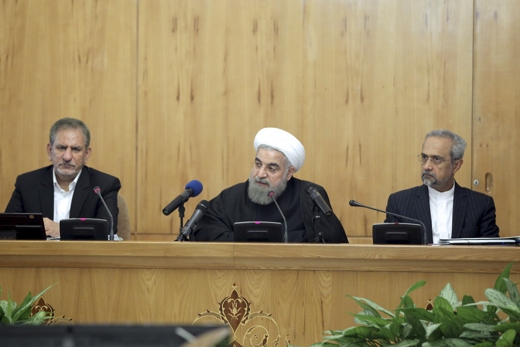
Rouhani describes countering infiltration as a national, not factional issue

Rouhani-Government

An occasion like November 4 [Student Day] complements Iran’s defiance of excessive foreigner demands in the course of the Islamic movement, President Rouhani told his Cabinet Wednesday.

According to president.ir, the president further said historic occasions which mark Iran’s defiance of foreign powers should be used to further national unity. “We should not allow such historic events to be hijacked by certain factions, because any factional use of these events would be to the detriment of the revolution and national unity.”

The following is a translation of highlights of President Rouhani’s remarks marking National Day of the Fight against Global Arrogance:

November 4 is a historic day for the Iranian nation which marks the beginning of a new era in the Islamic movement.

What the students did on November 4, 1979 was a reaction by the Iranian nation to the US plots aimed at harming the revolution. The Iranian youngsters proved that the Islamic Revolution does not belong to a certain group.

Up until November 1964, the Islamic movement was more of an anti-tyrannical nature, but a new wave was created in the county against colonialism when the Capitulation law was introduced and Imam Khomeini made a revealing speech on the colonial plan which was hatched against the dignity of the Iranians and questioned Iran’s political and judicial independence.

People know well about the meaning of infiltration, colonialism, history and the US mistreatment of Iran, and they know about the country’s national interests and future. We need to seriously and genuinely counter the infiltration of the outsiders. Certain people should not play with the word ‘infiltration’.

The Supreme Leader belongs to the entire Iranian nation, not to certain groups or institutions. … The Iranian nation walks down the path of revolution, independence and resistance and stands united in the face of the outsiders.

We need to try to develop an accurate understanding of and implement what the Supreme Leader says. We should not let certain individuals use his words to score personal, collective and factional points. People are well aware of the situation and monitor what is unfolding, and knowingly make their presence felt when it is needed – like in elections – and speak their mind.