Thursday, December 25, 2025
Home Blog Page 4547

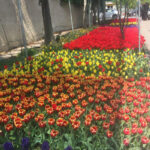
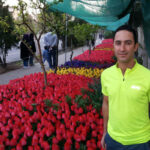
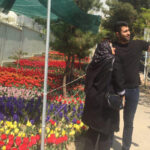
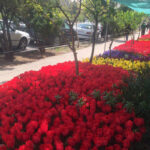
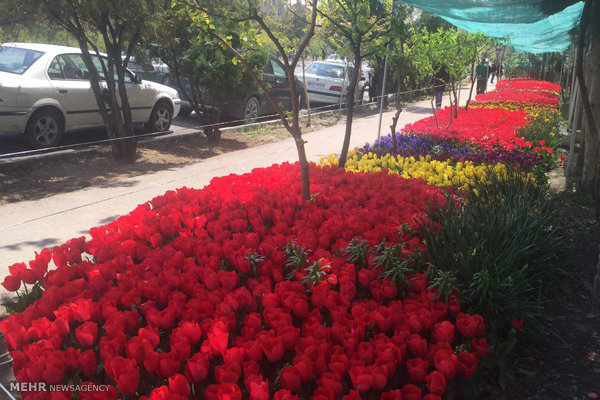
A Street in Tehran Covered with 30,000 Tulips

“My Mother Loved Plants”

When you’re passing by the area, you will be drawn in by the scents of the tulips toward North Zarafshan Street. 37-year-old Houman Ardebili is a GP. Many years ago, he went to the USA to complete his studies in nuclear medicine, but left his course uncompleted and returned to Iran. Now, one day a week he works as a GP, spending the rest of his time as the manager of a company working on agricultural raw materials. It’s not only his neighborhood pavement, but his whole house that’s covered in flowers: from beautifully laid-out plants in the little garden, up to his room’s window-sill. His mother is one of the main reasons for such love and care. Sadly, she passed away three years ago.

This is how he narrates the story for us, “My mother had a great love and passion for plants. She passed away three years ago. I really wanted to do something to keep her memory alive. There were many ideas at first, like cooking food for her or doing something particular during different religious or other festivals. During this time, her love for plants was always in my mind. I wanted to make the idea something that other people could enjoy as well, so I started planting tulips three years ago. The first year there were 6,000 tulips, last year 10,000, and this year I made it 30,000. People really loved the idea.”


Visitors from All around the Country

He talks about how much his idea was welcomed not only by people from different parts of the city but also by visitors from across the country. “The idea was greeted warmly by the people in the neighborhood, but there were also many people from other places who came here to visit the tulips. Our street was turned into a sort of tourist destination. On Sizdah Be-dar [the thirteenth day of Iranian new year known as Nature Day], for example, nearly 2,000 people came here to visit the tulips and take photos. They all seemed to enjoy it very much. The positive energy of the ambience infected the visitors, and everyone was very happy.”

30,000 Tulips Cost nearly $11,500

$11,500 is what Houman Ardebili has spent on the 30,000 tulips. “I paid the cost of the project from my own pocket. I was involved in all stages, from maintaining the tulips and changing their soil to buying them or even hiring people to help. I should of course thank Tehran’s 2nd Region Municipality for allowing me to install a type of awning to keep the tulips out of direct sunlight, which helps them to live longer. One of the neighbours has volunteered to water the flowers. I will definitely continue this plan every year if everything goes as well as it is going now.”
 

Iran Eyes 4mbd Oil Output by March 2017

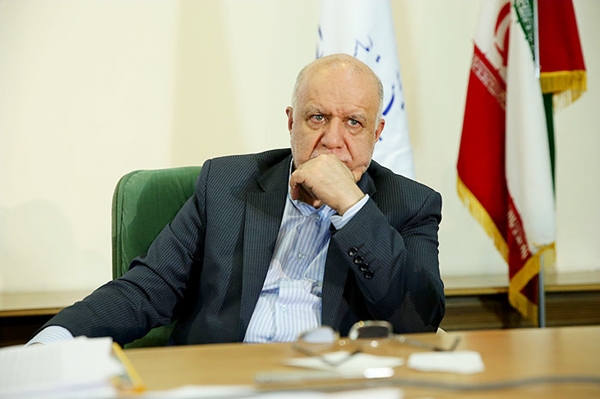
Addressing a conference on boosting domestic production in Tehran, Zangeneh said Iran has raised its crude oil exports since removal of the sanctions.

“Iran exported an average of 1.35 mbd during the first 10 months of the previous [fiscal] year (ended March 19), but exports are expected to cross 2 mbd in the period between February 20 and April 19 2016,” said the Iranian official on Tuesday evening.

He underlined increasing crude oil production and export as two sectors that can raise the country’s GDP, adding, “The general budget bill considers 2.25 mbd of crude oil exports for the current [fiscal] year, meaning that we will have to boost production by 4 mbd.”

Gas Output hits Record Highs

Zangeneh further said the country’s natural gas production set new records in the history of the industry during last year by registering 130 bcm of gas from a low of 88 bcm in the fiscal year1391.

Iran is planning to raise its natural gas output to over 160 bcm in the current year.

When the present administration took office in 2013, a maximum of 48% of the needed fuel for power plants was supplied by liquid fuels and fuel oil, while the percentage dropped to 18% in 2015 and is expected to fall to only 10% by March 2017, he added.

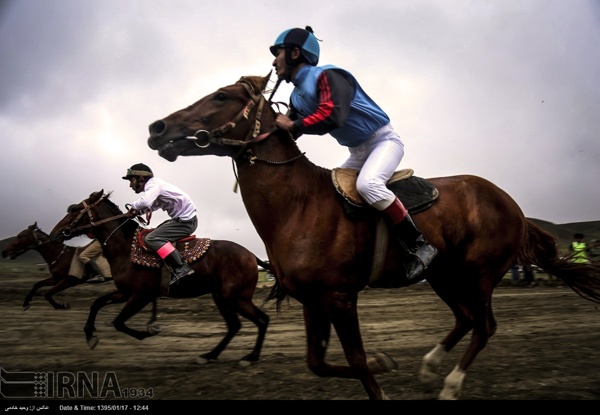
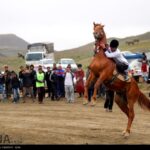
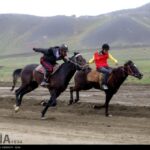
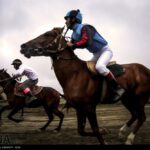
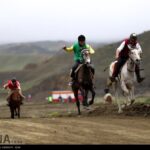
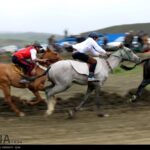
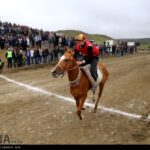
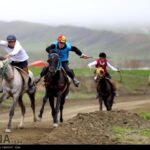
Traditional Spring Horse-Riding Competitions in North Khorasan

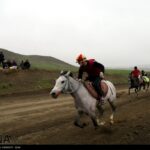
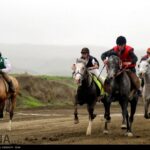
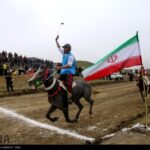
This photo gallery shows the traditional spring horse riding matches held in the North Khorasan regions of Raz and Jergelan. The competitions are attended by a large number of fans.


Taiwan Lifts Visa Restrictions for Iranian Applicants

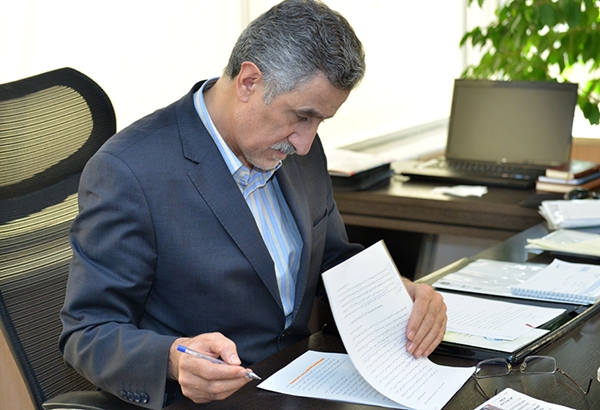
In a letter to the President of the Tehran Chamber of Commerce, Jerry S. Yang, the general manager of the Commercial Bureau of the Chinese Republic (Taiwan) in Dubai, announced that Iranian visa applicants will not need sponsors or guarantees.

The Taiwanese commercial representative in Dubai also announced that the Asian government wants to increase its oil purchases from Iran.

According to the letter, Taiwanese oil purchasing from Iran grew by 27% in the current year, so CPC, a major Taiwanese public oil company, and Formosa Plastic, another giant, have decided to augment their oil purchasing from Iran to 14m barrels/year from the current figure of 11m barrels.

In his letter to TCCIMA Chairman Masoud Khansari, Yang expressed hope that the TCCIMA bureau in Taiwan will be launched as soon as possible.

Iran Raises Concerns over Countries’ Refusal to Comply with Nuclear Disarmament Commitments

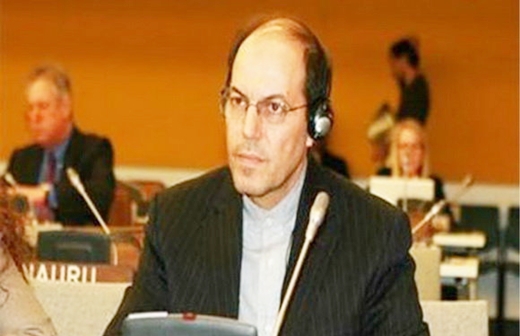
“The Islamic Republic of Iran is deeply worried about the ongoing developments and processes regarding nuclear disarmament. Based on Article 6 of the Non-Proliferation Treaty (NPT), no concrete progress has been made in fulfilling nuclear disarmament commitments,” he said, speaking in a UN General Assembly nuclear disarmament commission meeting.

He further said that huge funds have been allocated for renewing nuclear arsenals in the US and Britain, and that the US has started its $1 trillion plan to renew its nuclear weapons.

Dehghani continued, saying that the policy is a very clear example of US refusal to abide by nuclear disarmament commitments.

He also said that the current worrying disarmament situation has been caused by a lack of political will in nuclear countries to put aside a very dangerous security doctrine, based on which possessing nuclear weapons increases security.

He also called for the formation of a comprehensive nuclear weapon convention similar to the chemical weapons convention.

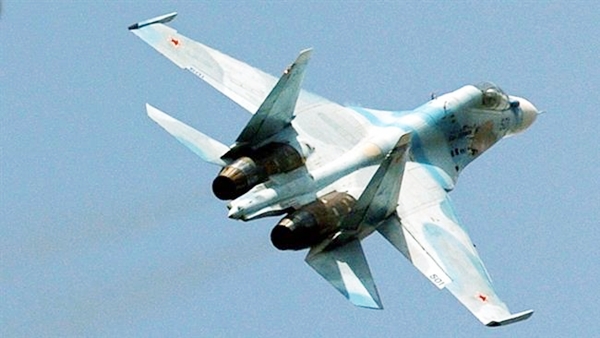
UNSC resolution does not ban Su-30 fighter jet sales to Iran: Russia

On Tuesday, the US Department of State Undersecretary for Political Affairs Thomas Shannon said Washington would use its veto power in the Security Council to block the possible sales of the fighter jets to Iran.

“The sale of Su-30 fighter aircraft is prohibited under UNSCR 2231 without the approval of the UN Security Council and we would block the approval of any sale of fighter aircraft under the restrictions,” Shannon said, referring to the UN resolution.

Head of the Russian Foreign Ministry’s department for non-proliferation and arms control, Mikhail Ulyanov, dismissed the claim.

“Such deliveries are not prohibited, they are allowed, and this follows from the text of the resolution,” the Interfax news agency quoted him as saying.

Resolution 2231, adopted by the Security Council on July 20, 2015, endorsed a nuclear agreement between Iran and the P5+1 group, comprising Russia, China, France, Britain, the US and Germany.

Shannon claimed that under the resolution, such weapon deliveries “require the submission of relevant notification to the Security Council and this notification’s endorsement by the Security Council.”

Ulyanov said Moscow has not forwarded such a notification to the Security Council so far.

Political analysts say Resolution 2231 does not prohibit Iran from buying fighter jets, and its language is not legally binding and cannot be enforced with punitive measures.

Su-30 is a multirole advanced fighter aircraft for all-weather, air-to-air and air-to-surface deep interdiction missions.

Iran and the P5+1 finalized the nuclear agreement, dubbed the Joint Comprehensive Plan of Action (JCPOA) in Vienna, Austria, in July last year. They started to implement the JCPOA on January 16, 2016.

On Tuesday, a senior Russian diplomat also said Moscow would begin the first shipment of its S-300 air defense missile systems to Iran in the coming days.

“I don’t know if this will happen today, but they (S-300 missiles) will be loaded (for shipment to Iran),” Interfax quoted Zamir Kabulov, a department chief at the Foreign Ministry, as saying.

Japan Announces Continued Collaboration with Iran in Reviving Lake Urmia

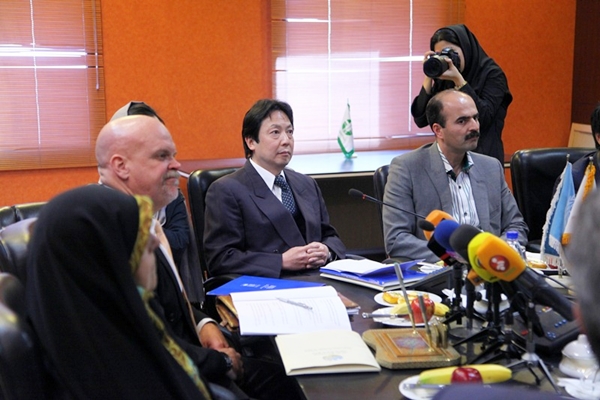
On Tuesday evening, Japan’s charge d’affaires in Iran attended the signing ceremony of the third phase of collaboration with the Representative of the United Nations Development Programme (UNDP) and Japan for reviving Lake Urmia. In this ceremony, which was held in Iran’s Environmental Protection Organization headquarters, he said, “We have been supporting the revival of Lake Urmia since 2014 and this support will be continued. This is the third phase of Japan’s support in this cause.”

Japan’s charge d’affaires drew attention to the fact that Lake Urmia needs urgent support, saying, “With the lake’s serious condition, Japan’s government decided to allocate $1m to the Lake Urmia revival programme through UNDP in January 2016.”

He added, “We hope that with Japan and Iran’s collaboration, the Lake Urmia revival project will continue, to the extent that it improves both the health of the lake and the lives of local people.”


1 (2) (1)

Iran, Turkey, Azerbaijan Agree on 2-Year Cooperation Agenda

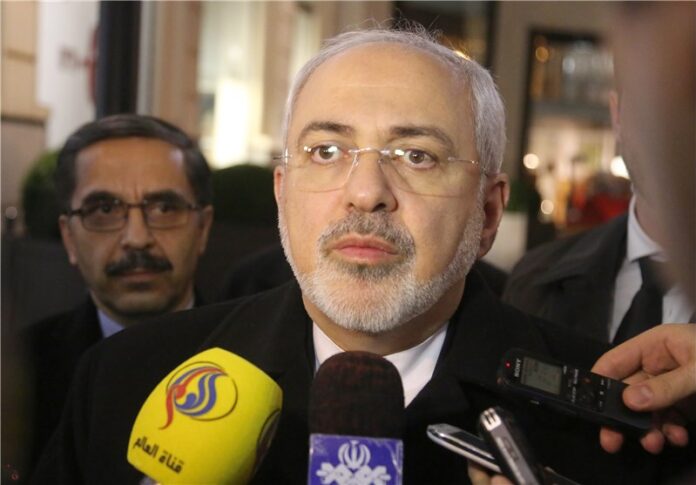
Zarif held the meeting with his Azeri counterpart Elmar Mammadyarov and Turkish FM Mevlut Cavusoglu in the resort city of Ramsar on closer cooperation among the three neighbors, with a focus on coordination in the fight against terrorism.

After the meeting, Zarif told reporters that the three sides signed two documents, one of which focuses on commitments of and cooperation among Tehran, Baku, and Ankara.

The other document, Zarif added, includes the agenda for trilateral cooperation within the coming two years, explaining what measures should be taken and what sessions be held.

Iran’s top diplomat further referred to tourism, transit of goods, and joint efforts to provide regional peace and security as other areas of cooperation.

He also pointed to the topics discussed in his talks with Mammadyarov and Cavusoglu, saying the three sides underlined their commitments to peaceful resolution of ongoing crises in the region, including the one in Nagorno-Karabakh, through international solutions.

At least 30 soldiers have been killed in fighting between Armenian and Azerbaijani forces along the frontlines of the Nagorno-Karabakh region. Each side blames the other for the fighting.

Nagorno-Karabakh has been under the control of Armenian military and separatists since a war between Armenia and Azerbaijan ended in 1994. Years of negotiations have brought little progress in resolving the dispute.

34th FIFF announces screening programs in two categories

In this edition of the festival, 12 foreign films and three Iranian ones will vie in the section of Cinema Salvation for six awards – Best Film, Best Director, Best Screenplay, Best Actor and Actress, and the festival’s Special Award. The list of the screening programs for foreign films in the category of Cinema Salvation is as follows:

1944 (Estonia, Finland)

Amama, When a Tree Falls (Spain)

El Clasico (Iraq)

Walking Distance (Mexico)

Frenzy (Turkey)

Dawn (Estonia, Poland, Lithuania)

Song of Songs (Ukraine)

Rams (Ireland, Denmark, Norway, Poland)

The Treasure (Romania, France)

Guarani (Paraguay, Argentina)

Norfolk (England)

I’m a Teacher (Russia)

The three Iranian films to be screened in Cinema Salvation will be announced soon.

Screening programs in Eastern Panorama Section

In the Eastern Panorama Section, 12 foreign films and three Iranian films will be screened. The Asian films in the Cinema Salvation section will also be judged. The section will grant one award to the best film as judged by the panel of juries.

The list of the screening programs for foreign films in Eastern Panorama Section is as follows:

3000 Nights (Palestine, France, Jordan, Lebanon, Qatar, UAE)

Walnut Tree (Kazakhstan)

Bloody January (Azerbaijan)

What a Wonderful Family (Japan)

Habib Al-Ard (Kuwait)

My Sister the Pig Lady (South Korea)

Solomon (Goergia)

Martyr (Iraq)

Stranger (Kazakhstan)

Zinna Flower (Taiwan)

Madame Courage (Algeria, France)

The New Classmate (India)

The three Iranian films to be screened in the Eastern Panorama Section will be announced soon.

In addition to these two categories, the festival will also screen films in the Short Films Competition Section, three documentaries in the Special Screenings Section, and more than thirty features and short films in the Film Market will be screened for the international film buyers and distinguished festival directors.

The 34th edition of Fajr International Film Festival will be held from April 20th to April 25th, 2016 in Charsou Cineplex, under the supervision of the well-known Iranian filmmaker, Reza Mirkarimi, who is also the Managing Director of Khaneh Cinema.


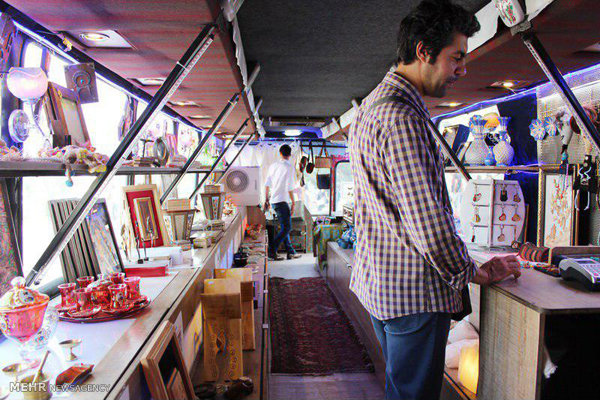
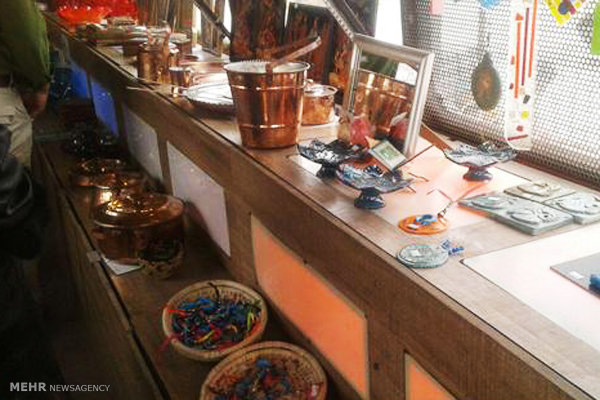
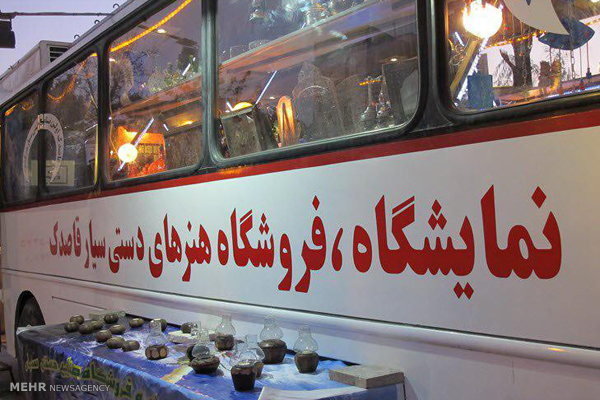
A Bus Selling Iranian Handicrafts

Hassan Nikzad, 56, came back to Iran after 35 years of living in the southern German city of Freiburg, in order to follow his interest in cultural heritage and handicrafts of his country. Nikzad, who was born in the central Iranian city of Arak, studied electronics, but now manages a restaurant and a bowling alley in Germany. Nikzad’s childhood interest in handicrafts led him to make a decision: setting up the handicrafts bus in Iran in 2012. He has decided to drive the bus to Europe in order to show Iranian handicrafts to other people. He attends fairs, universities and promenades to display handicrafts. There has been a warm welcome of these items in Iran. “I have gained a great deal of experience in displaying handicrafts in my bus, and this will be useful for my future trip to Europe,” he said.

“My restaurant in Germany is called Isfahan

Nikzad married a German woman and they have two kids. His restaurant is decorated with handicrafts from different parts of Iran. He explains, “A partnership was declared between Freiburg and Isfahan. I set up a restaurant called Isfahan, which has been visited by Isfahan’s mayor and Iranian athletes. The restaurant is so busy that people need to reserve several days in advance. Otherwise, it is booked out.”

Bus - Handicrafts

“I know where to sell my handicrafts”

Nikzad is an artist himself. When the artist parks his bus in a beautiful place, he sets up a desk near his bus and begins carving. “I have been interested in woodwork since my childhood,” he says. “Nowadays, I do woodcarving, engraving and burling as well. Wherever I park my bus, I make some items that people enjoy. My knowledge of handicrafts helps me know what kind of items people such as the Germans like. Wherever I go, I contact local artists and ask them to help me. I even buy their artworks to display in my Ghasedak.”

Bus - Handicrafts (5)

“I want to drive my bus to Europe”

Nikzad has registered his plan, and Iranian officials promised to pave the way for his trip abroad by bus, helping him to take Ghasedak all across Europe. The artist notes that there are many Iranian handicrafts which fascinate European people. He adds, “Of course, all Iranian handicrafts are attractive, especially enamels from Isfahan, inlays from Shiraz, pottery from Lalejin and Iranian carpets. They are interesting for other nations, especially for Europeans. Also, there are certain items which are not very important for us Iranians, but are worth more in Europe. Rock salt is ordinary in Iran, but is very attractive to others, because they are well aware of its medical importance.”