Wednesday, December 24, 2025
Home Blog Page 4541

Iran to Produce Rare Earth Elements: Nuclear Chief

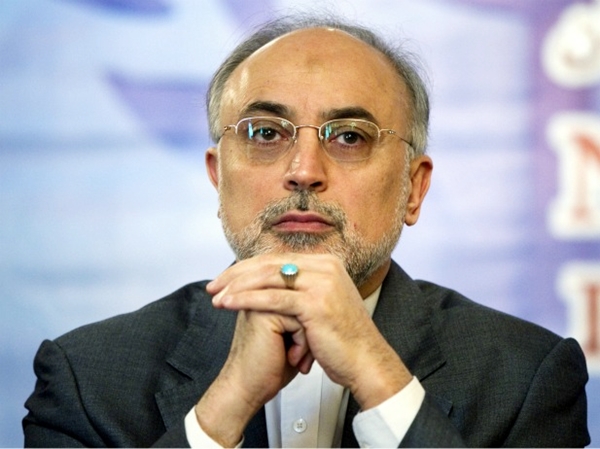
Speaking at a television talk show on Saturday night, Salehi said his organizations has signed contracts with the local industries to produce rare earth elements simultaneous with the extraction of uranium in the mines.

The extraction of rare earth elements, which are very expensive, will reduce the costs of uranium production, he explained.

The production of rare earths in the uranium mines will start in the current Iranian year (which began on March 20), Salehi noted, saying the elements will be used for both domestic consumption and exports.

According to the official, only three counties in the world possess and produce the rare earth elements.

Rare earth elements are a set of seventeen chemical elements in the periodic table, specifically the fifteen lanthanides plus scandium and yttrium. While named rare earths, they are in fact not that rare and are relatively abundant in the Earth’s crust.  What is unusual is to find them in quantities significant enough to support economic mineral development.

China is the dominant consumer of rare earths, which it uses mainly in the manufacture of electronics products for domestic use as well as export. Japan and the US are the world’s second and third largest consumers of rare earths.

The Japanese call REEs “the seeds of technology.”  The US Department of Energy calls them “technology metals.”

Romances of a Photographer

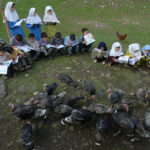
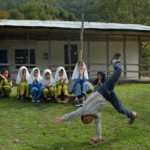
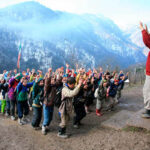
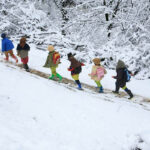
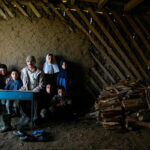
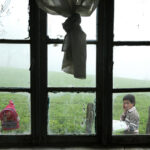
Each one of his photos portrays a dazzling, colourful canvas of nature with people who each carry a thousand stories. Stories of love, suffering, work and life in the heart of the mountains in the north of Iran.

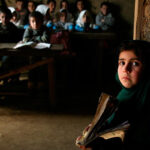
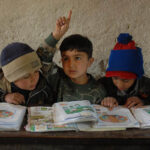
His artistic name is Shabab, meaning youth and adolescence. He’s the most famous photo-narrator of schools and students. He says, “I went to a single school 15 times just to photograph a third grade student.”

The following is a summary of KhabarOnline interview with Mohammad Golchin, which is translated by IFP. 


According to KhabarOnline, quoted from Jame Yavari Farhangi quarterly magazine, Mohammad Golchin, working under the name of Shabab, has been a photographer for about twenty years, but he has been focused on the world of schools, books and backpacks for seven years. This has led to the creation of respected photographs that have been displayed and entered into many renowned international festivals such as Asahi Shimbun in Japan. All this has led him to be called the best photo-narrator of the most unusual schools in Iran.

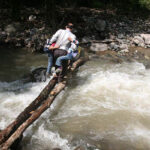
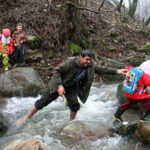
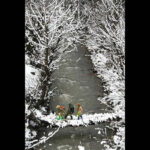
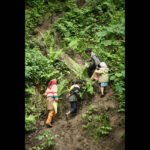
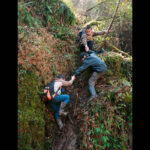
He says, “I photographed schools and children to make people grateful if they are students in comfortable situations. The children of my photographs walk through rivers, climb rough rocks and run in mud and rain to get to where they call school, so maybe they can learn a few things.” In Shabab Golchin’s photographs, life can be seen, as well as suffering and difficulty. Through his lens, however, life seems more powerful than anything else. This is perhaps the secret of the durability of his photos.

We had no other option than a telephone interview with him. He is from Talesh, a city in Gilan province at the edge of the Caspian Sea. He still lives in the same region, in the same city where he became a famous photographer, with over 100 internationally selected photos.

Read Shabab’s own narrative of his photographic world, including international festivals and events.

“The children of my photographs walk through rivers, climb rough rocks and run in mud and rain to get to where school”


How did you become interested in photography?

I got the chance to read more after I was accepted for university in 1995. It was then when I learnt about a photography magazine called Aks. It was a very popular magazine and many photographers would share their experiences with the readers in it. After reading it once, I was very interested, so I found all its old issues. It was not a long time after that that I realized I was in love with photography. By reading the same materials, I started to learn photography through experiment. It’s interesting that I continued the same experimental method by reading about it, and by looking at more photos. Today, I own a photo gallery myself and have trained many students.

What were the subject of your photography in those days?

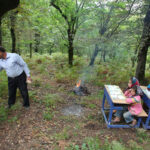
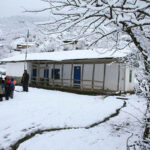
In the beginning, all my photographs were based on the beautiful nature of Gilan province and Talesh. I studied forestry in Gilan University, so it was always extremely pleasant to travel in the heart of Talesh Mountains. I was trying to portray that feeling at first, but after a while I felt like I needed newer and more meaningful spaces. One day when I was in a mountain region for photography, I passed by a school. The children were studying in a very bad condition with the least of facilities. The teacher welcomed me to the school after he realized how much I was interested by it. I was so intrigued that I went to the Ministry of Education to get the required permissions. There were photos of many other schools like the one I saw on the wall of the hall where I had to wait. All those photos made me very confident that I wanted to photograph schools. It’s now seven years that I’ve been involved in it.


Did your photos of that school get seen or admired anywhere?

Yes, and it had very good consequences. The most important one was the budget increasing for repairing and building new schools in those regions.

What is the most memorable photo that you have ever captured?


school-Photographer141


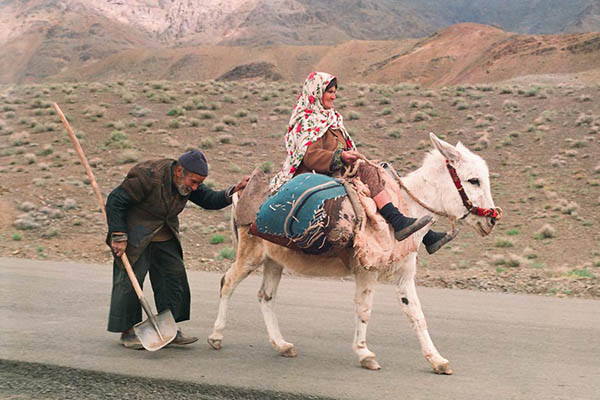
The photo called “Love”. It became famous and received a UNESCO award as well. It’s a photo of an old couple moving through the forest with their donkey. The old woman is sitting on the donkey while her husband is escorting her with a hunched back, holding a spade in one hand and holding the animal’s back with the other one, as if he’s looking after his wife. I took it on one of my trips to Abyaneh [a village near Kashan, with significant architecture and one of the tourist destinations of Iran’s central desert]. In fact, it was taken 20 years ago.

“The most important outcome was the budget increasing for repairing and building new schools in those regions.”

Is there anyone in your photos who you would be an unforgettable hero?

Yes. A boy called Ismail. He’s in the third grade. I went to his school 15 times just to photograph him. I’m not sure what it is about him that I’m so amazed by.

What are the awards that you have received in all these years?

My school collection was selected as the best documentary collection among 19,000 other collections from 155 countries in the world in UNESCO’s Humanity Photo Awards (HPA) in Shangri-la, China.

Some other awards include UNESCO’s special award in 1999 and 2000. Receiving Asahi Shimbun in 2002, 2009, 2013 and 2015. Also, I received the gold medallion of the Ukraine international competition on the subject of women in 2008, and the gold medallion and first place in India’s international competition in 2010. I won Hong Kong international competition’s gold medallion in 2009 and Romania’s gold medallion in black and white photography in 2013. There are other festivals and competitions too.

“I went to his school 15times just to photograph him. I’m not sure what it is about him that I’m so amazed by it.”


Is photographing schools a permanent project, or have you considered a limit for it?

I think there’s not a long way to wrap up the school photographing project. I have a few thousand photos on this subject which I think is enough, and I’ve done what I had to. Anyway, the “Road to School” project is coming to an end, and I should start focusing on other projects as well.


Six-thousand-year old village unearthed in Kurdestan

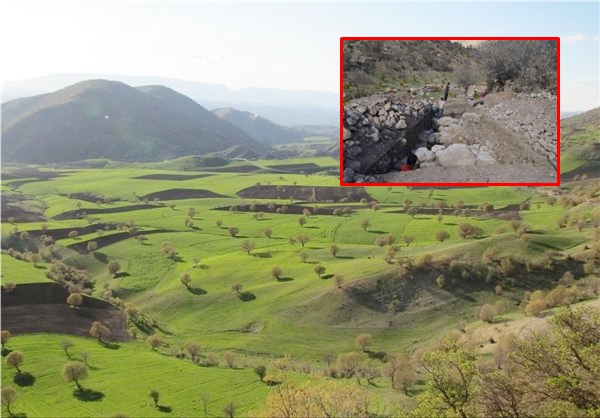
The ancient village was unearthed in the Sarcham archeological site in the vicinity of Rowar Village, Excavation Head of the site Amir Saed Moocheshi was cited as saying on Saturday by the office for public relations of the Research Institute for Cultural Heritage and Tourism.

‘The unearthed village belongs to the Chalcolithic (copper and stone) archeological period,’ Moocheshi said.

He said that excavators have also discovered clay pots, stoneware, stone tools, animal bones and remnants of some architectural structures.

According to the excavators working on the site, the village is the most ancient ever discovered in the region.

Iran Ready to Raise Oil Exports to India

During a meeting with his Indian counterpart Dharmendra Pradhan here in Tehran on Saturday, Zangeneh underlined the long-lasting relationships between Iran and India, adding that the two countries enjoy historic political and cultural ties at the highest levels.

“I am sure, this meeting will facilitate and enhance economic relations between the two countries, especially in energy sector,” said the Iranian official.

He said Iran and India can cooperate in all energy fields including oil, gas and petrochemical industries.

“Besides expanding trade ties in oil and gas sector with India, Iran is interested in attracting investments from Indian companies.”

The Iranian minister of petroleum further said that India is one of Iran’s traditional oil customers, expressing hope that New Delhi will increase its purchase from Iran after removal of sanctions with support from the Indian government.

Regarding development of Farzad B gas field, Zangeneh said he was optimistic that a date will be designated for finalization of the talks between Iran and Indian developers of the field.

He highlighted petrochemical sector as one of the areas that Iran is interested in cooperating with Indian companies. “Indian companies can invest in Iran’s petrochemical sector and Iran is ready to supply them with natural gas.”

Furthermore, Iranian ministry of petroleum is prepared to supply natural gas to any other energy-consuming projects that Indian firms finance in Iran.

EC chief: Iran should help neighboring states overcome insecurities, resolve disputes

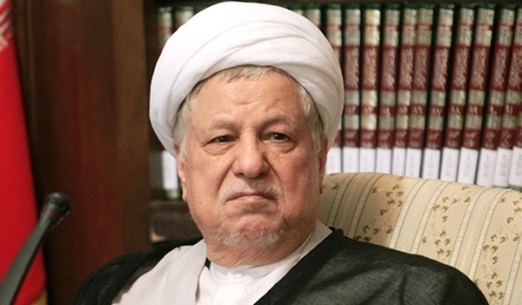
Hashemi Rafsanjani
Hashemi Rafsanjani

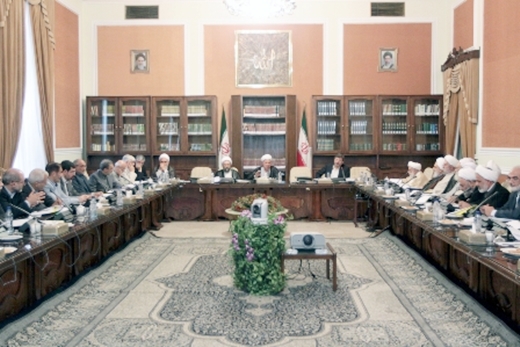
In a meeting with members of Expediency Council, he wished for dignity and prosperity of the Iranian nation as well as settlement of problems in the Muslim world mainly the neighboring states in the new Iranian year.
Referring to the current dissatisfactory situation in the region and waves of unrests, he said the Islamic Republic of Iran should help maintain calmness and unity in the region through promotion of cooperation and interaction.
Iran should also help regional countries maintain their security and resolve their disputes.


82027843-70638000

Tehran, Ankara review ways to widen bilateral ties

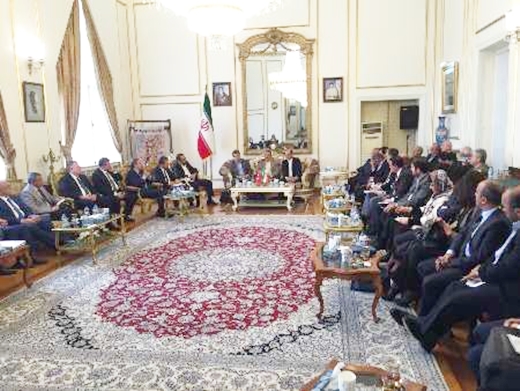
The meeting was held in Ankara with participation of deputy head of Iran’s Cultural Heritage, Handicrafts, and Tourism Organization Morteza Rahmani Movahhed and 50 members of different Turkish corporations.

In the meeting, Rahmani Movahhed said Iran is willing to promote ties with Turkey in the field of tourism.

Members of the Turkish companies, too, expressed willingness to expand relations , tourism cooperation in particular, with Iran.

Rahmani Movahhed is in Turkey for the 25th meeting of Tehran-Ankara joint economic commission.

No New Arrangement for Missile Negotiation with Iran, US Says

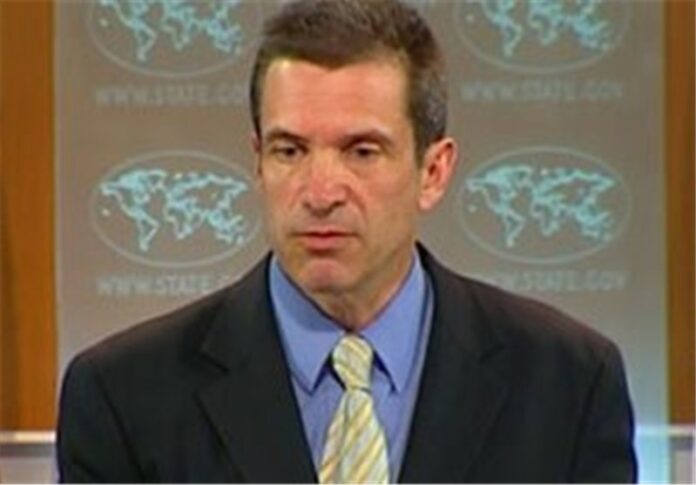
“I don’t think he (John Kerry) was being specific that there’s some kind of new policy to be launched here or new arrangement in the terms of concrete actions. Simply, he was just emphasizing or underscoring the fact that if Iran chooses to act more constructively in the region, then we can have a different kind of relationship with Iran,” Toner said at a daily briefing on Friday, referring to the recent remarks by the US Secretary of State suggesting Washington was open to a “new arrangement” with Iran for resolving the issue.

The spokesman’s remarks came after a top Iranian military official reminded the US to keep its nose out of Tehran’s defense program, stressing that the Iranian Armed Force will not allow any foreign country to set limits for its activities, including progress in the missile industry.

“Iran’s missile power is by no means negotiable and any restriction on it is a red line for the country,” Deputy Chief of Staff of the Iranian Armed Forces Brigadier General Massoud Jazayeri said on Friday.

“Iran will not get permission from anybody to boost its defense capabilities,” he added.

In late March, Leader of the Islamic Revolution Ayatollah Seyed Ali Khamenei had underscored the need for boosting Iran’s defense capabilities, warning that enemies are making use of every tool available to undermine the Islamic Republic.

Ayatollah Khamenei said at the time that if the Islamic establishment seeks technology and negotiations but lacks defense might, it will have to buckle in the face of any weak country that poses threat to it.

In March, the country’s Islamic Revolution Guards Corps (IRGC) forces test-fired two types of Qadr ballistic missiles during the large-scale drills, codenamed “Might of Velayat”.

The two ballistic missiles, Qadr-H and Qadr-F, were launched from the heights of East Alborz Mountains, north of Iran, and hit targets on the Makran coasts, southeast of the country.

According to reports, Qadr-H missile has a range of 1,700 kilometers while Qadr-F missile can destroy targets some 2,000 kilometers away.

Iran to Host 65 International Exhibitions

International Iranplast Exhibition is the first expo scheduled for April, while the last one is the 16th International Environment Exhibition.

The tally shows that Iran will host exhibitions on 288 days this year.

The exhibitions include laboratory material and equipment, oil, gas, refinery and petrochemistry, elevator and related equipment, a seminar on women’s role in sustainable development, telecom industries, mining and mineral industries, electronics, computer and e-commerce, and the environment.

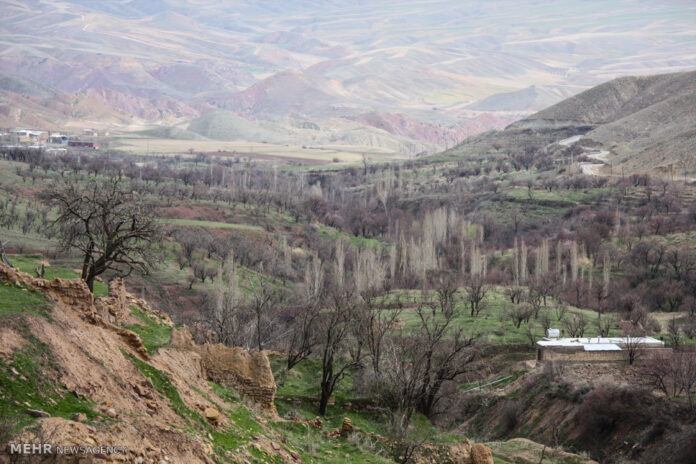
Spring nature of Zanjan

 Beautiful nature of north-western city of Zanjan in the early days of spring.


A look at Iranian newspaper front pages on April 9

Iran Newspaper front pages

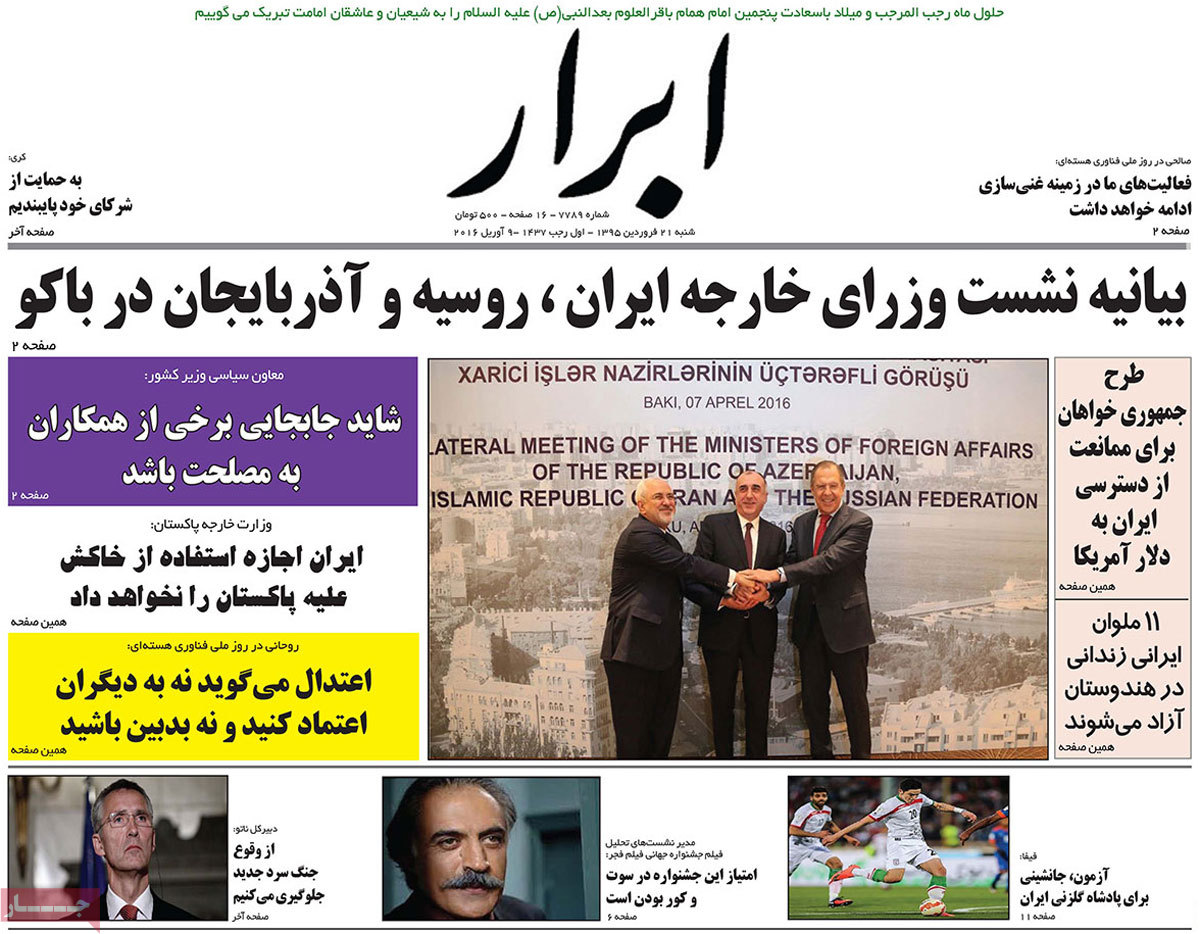
Abrar:

1- Joint statement by foreign ministers of Iran, Russia and Republic of Azerbaijan in Baku

2- Salehi speaking on the occasion of National Day of Nuclear Technology: Our Uranium enrichment activities will continue

3- Republicans are trying to deny Iran access to US Dollar

4- Pakistan Foreign Ministry:  Iran will not allow its soil to be used against Pakistan

5- Rouhani speaking on National Day of Nuclear Technology: Neither trust others, nor mistrust them

6- 11 jailed Iranian sailors in India are to be released
 

A look at Iranian newspaper front pages on April 9


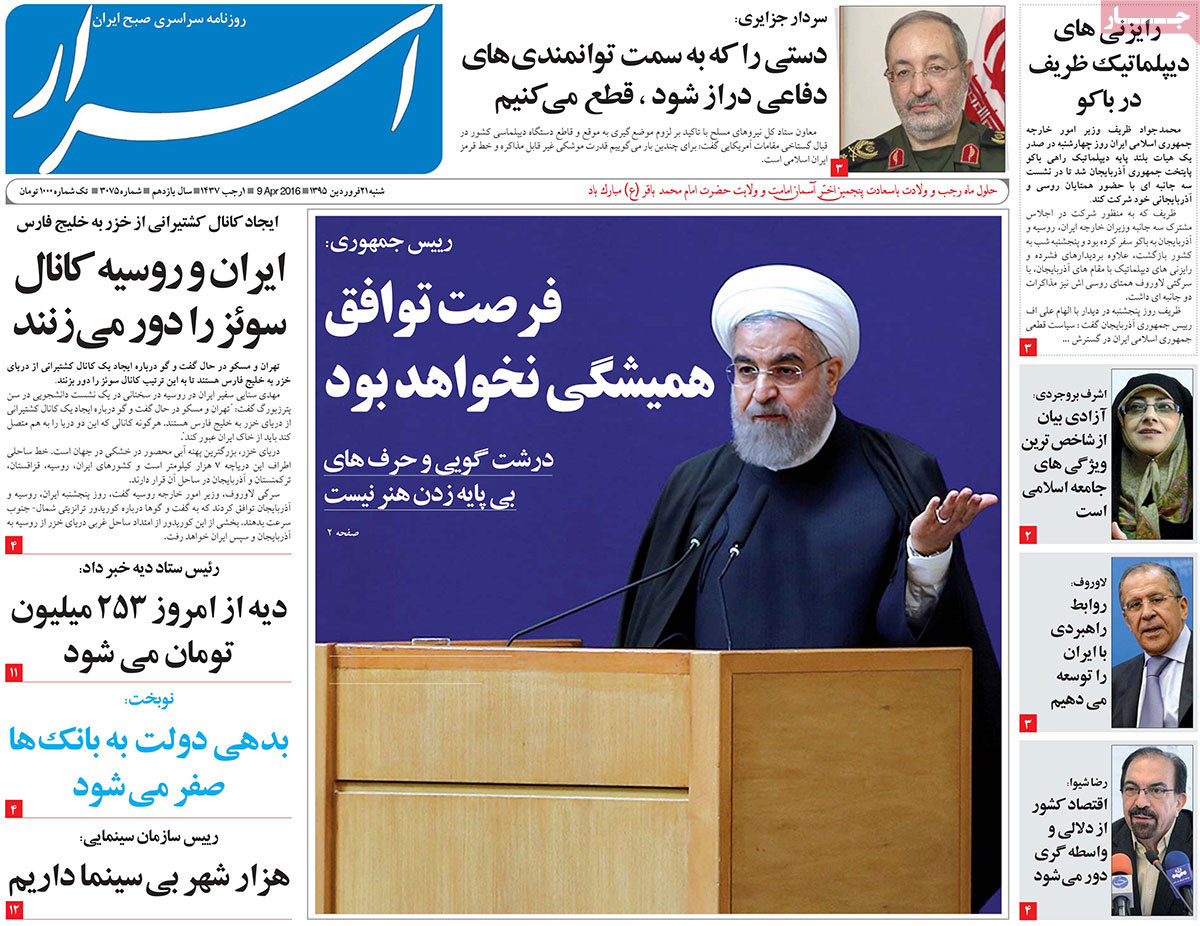
Asrar:

1- President Rouhani: Opportunity for agreement will not always be available

2- Iran and Russia to disregard Suez Canal

– Tehran- Moscow are talking about constructing a canal between Caspian sea and Persian Gulf

3- Ashraf Brujerdi: Freedom of speech is one of the fundamental characteristics of Islamic society

4- General Jazayeri: We will cut off any intruding hand against our defensive capabilities
 

A look at Iranian newspaper front pages on April 9


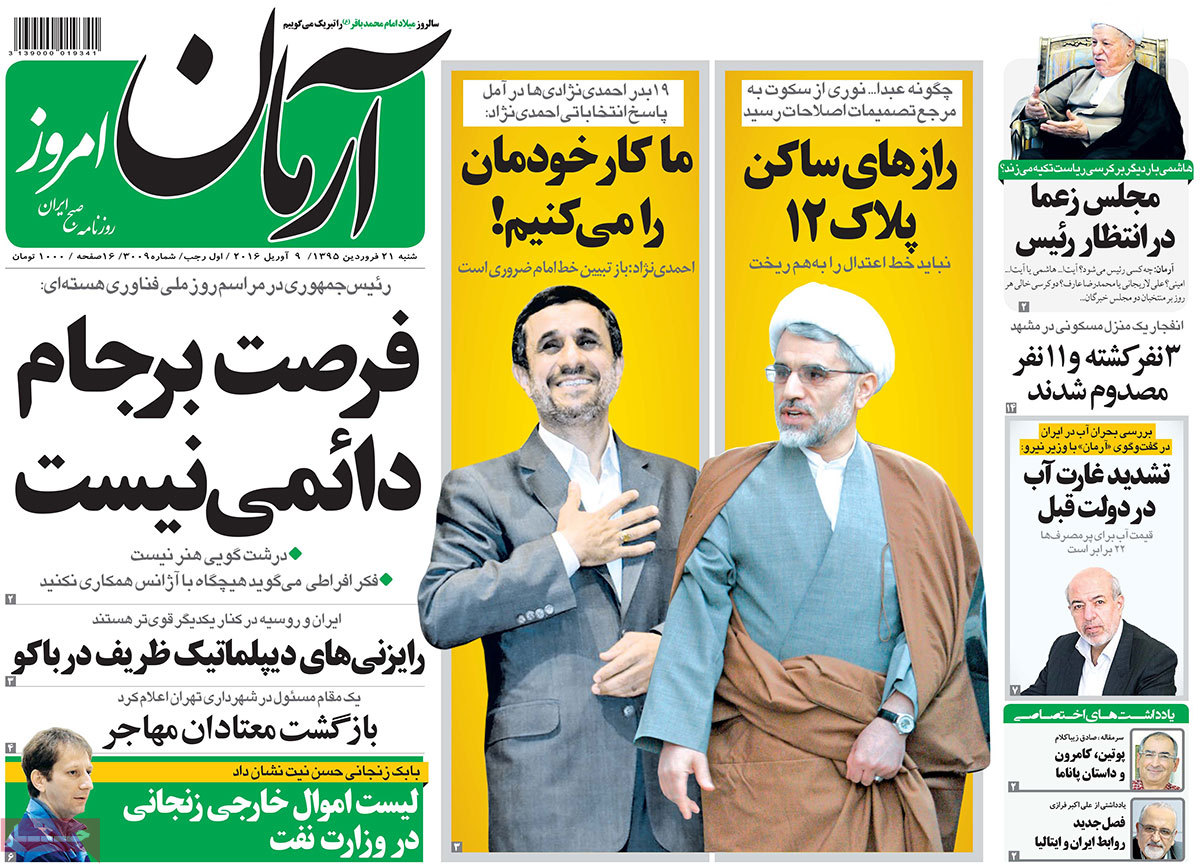
Armane Emrooz:

1- President Rouhani: Opportunity for agreement is available at all times

2- Ahmadinejad: we will do what we want!
 

A look at Iranian newspaper front pages on April 9


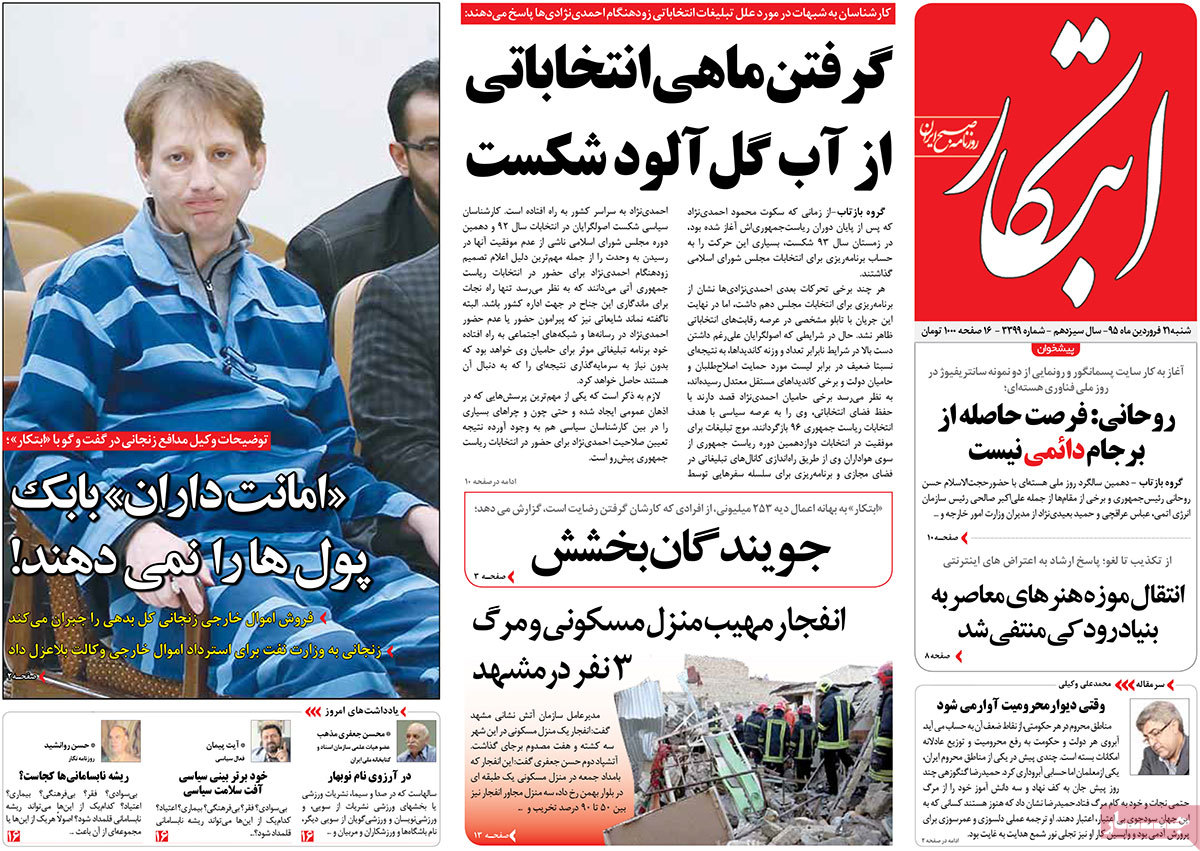
Ebtekar:

1- Trustees of Babak are not refunding his money (Lawyer of oil debtor talking to Ebtekar)

– Selling of Zanjani’s foreign assets will cover all his debts. Babak Zanjani has issued irrevocable power of attorney to recover his foreign assets
 

A look at Iranian newspaper front pages on April 9


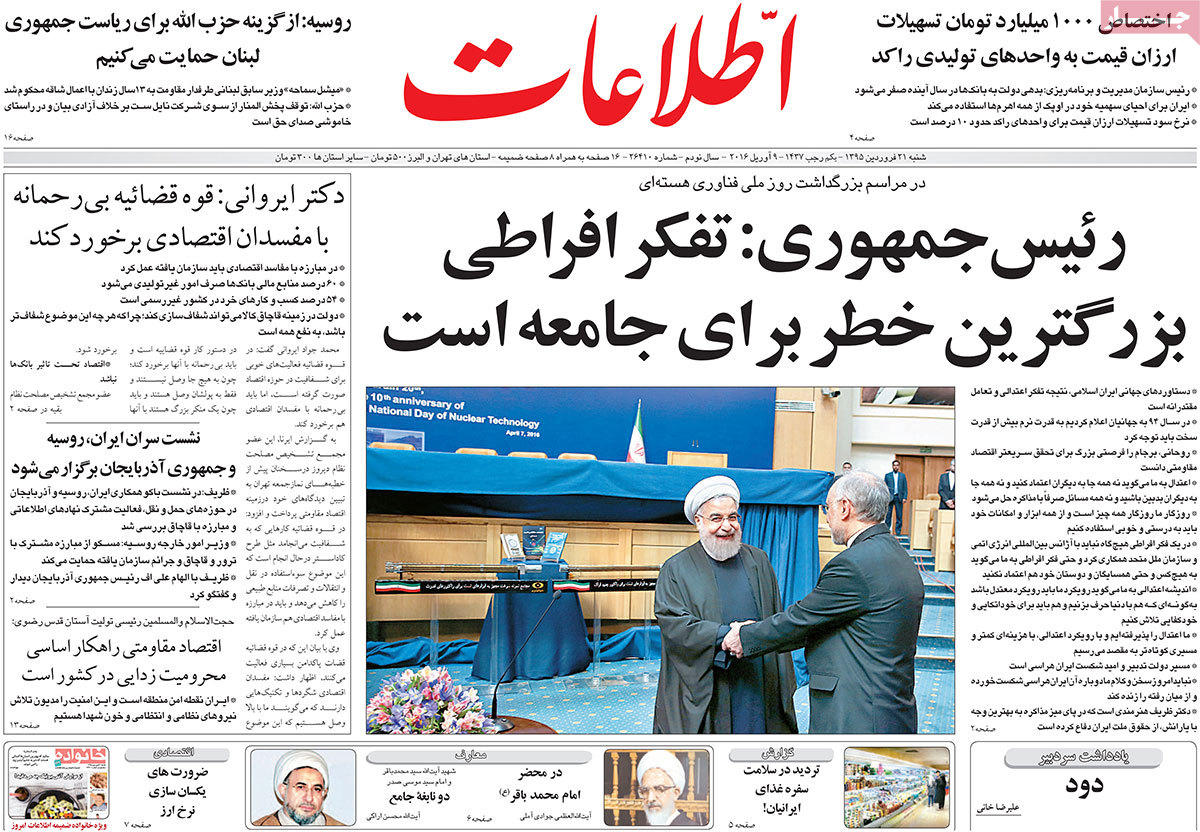
Etelaat:

1- President Rouhani: Extremism is the most dangerous threat against our country

2- Allocation of Rls.10thousands billions low interest rate banking facilities to inactive production firms

3- Russia:  We support Hezbollah’s nominee for Lebanese president

4- Iran, Russia and Republic of Azerbaijan Summit due to take place
 

A look at Iranian newspaper front pages on April 9


Afkar:

1- Ayatollah Vahid Khorasani: People’s wellbeing must be a priority for officials

2- Tehran Friday Prayer Leader: Everybody should help government to implement “Resistance Economy”
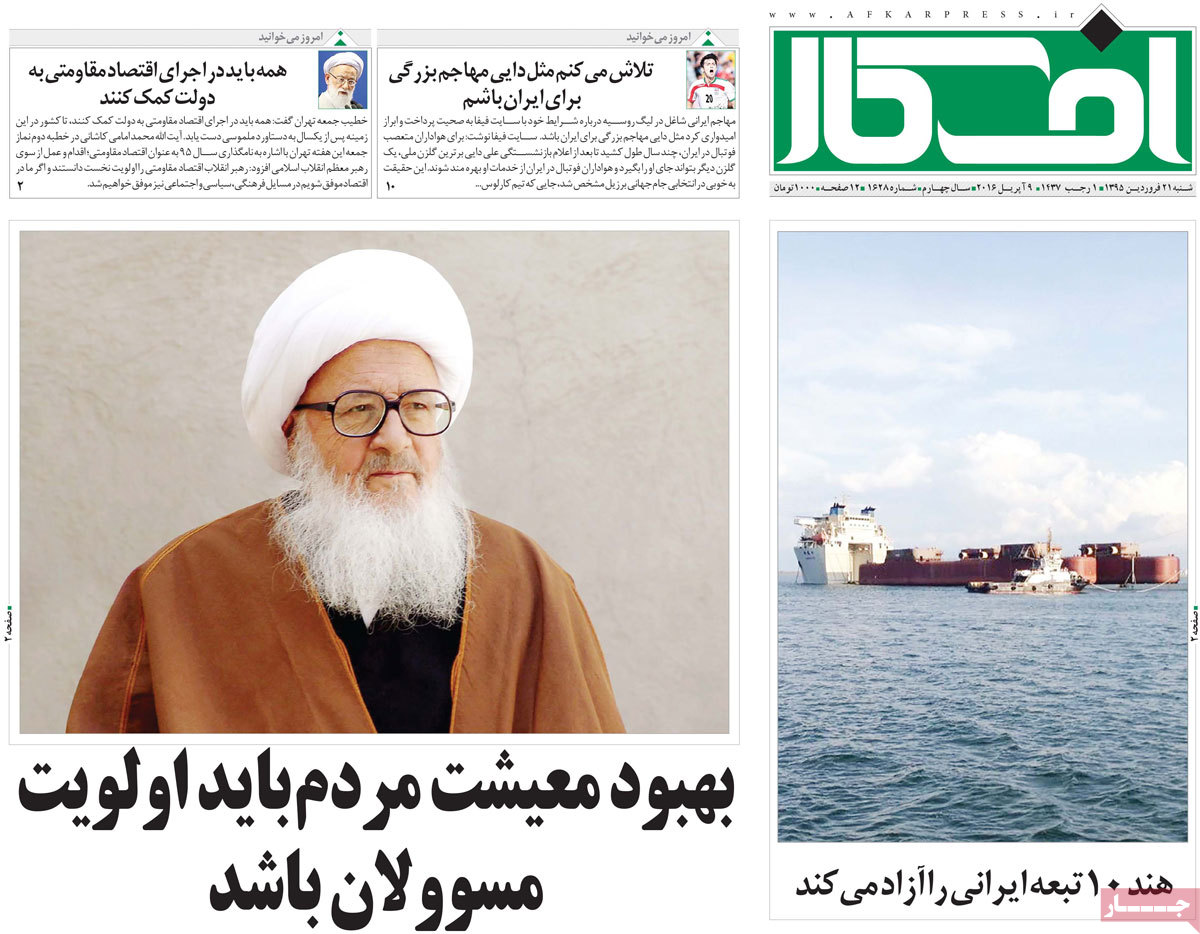
 

A look at Iranian newspaper front pages on April 9


Emtiaz:

1- 10 Important Measures by Ministry of Health to tackle AIDS

2-   More traffic restriction in Tehran similar to London and Stockholm

3- Sport Minister’s unprecedented backing for Carlos Queiroz, head coach of Iranian national succor team
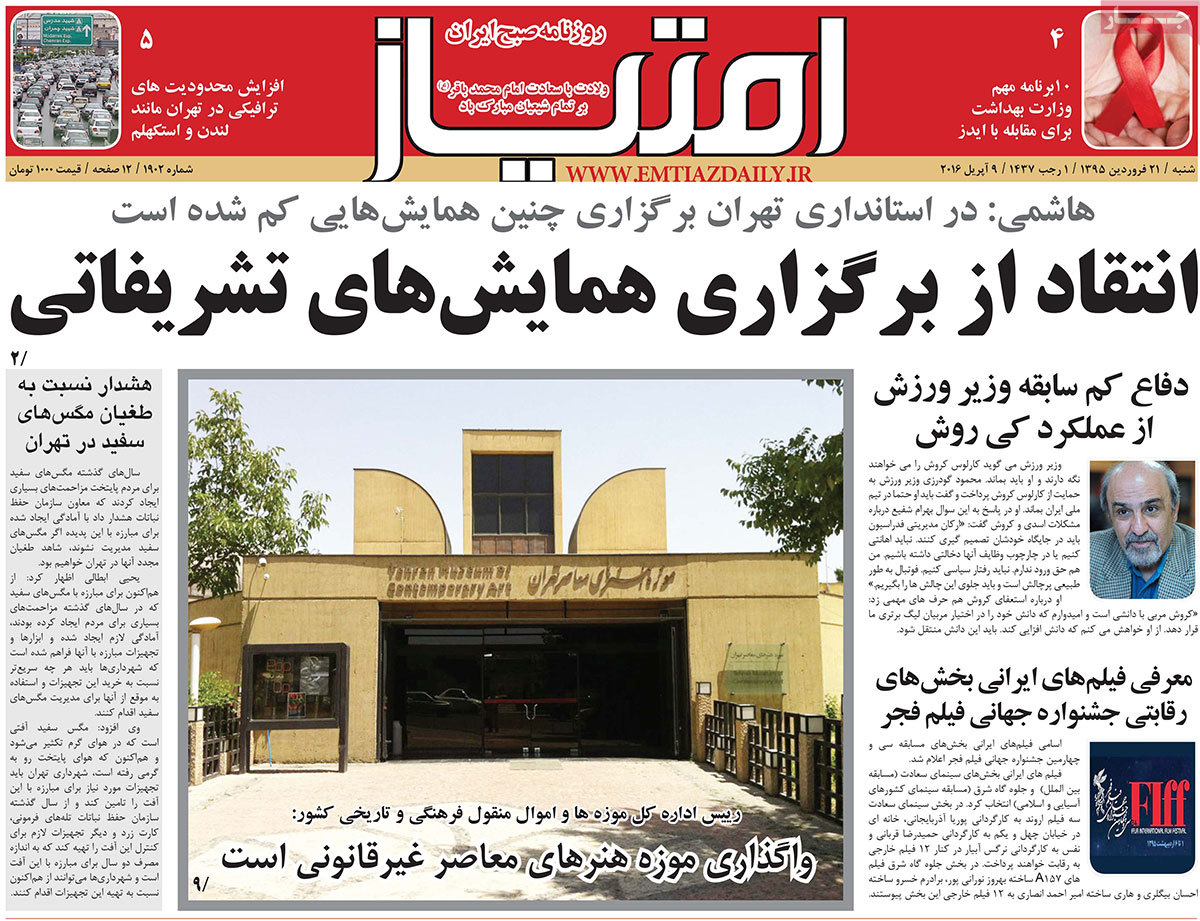
 

A look at Iranian newspaper front pages on April 9


Amin:

1- Rouhani: we have not been and will not be a threat to any country
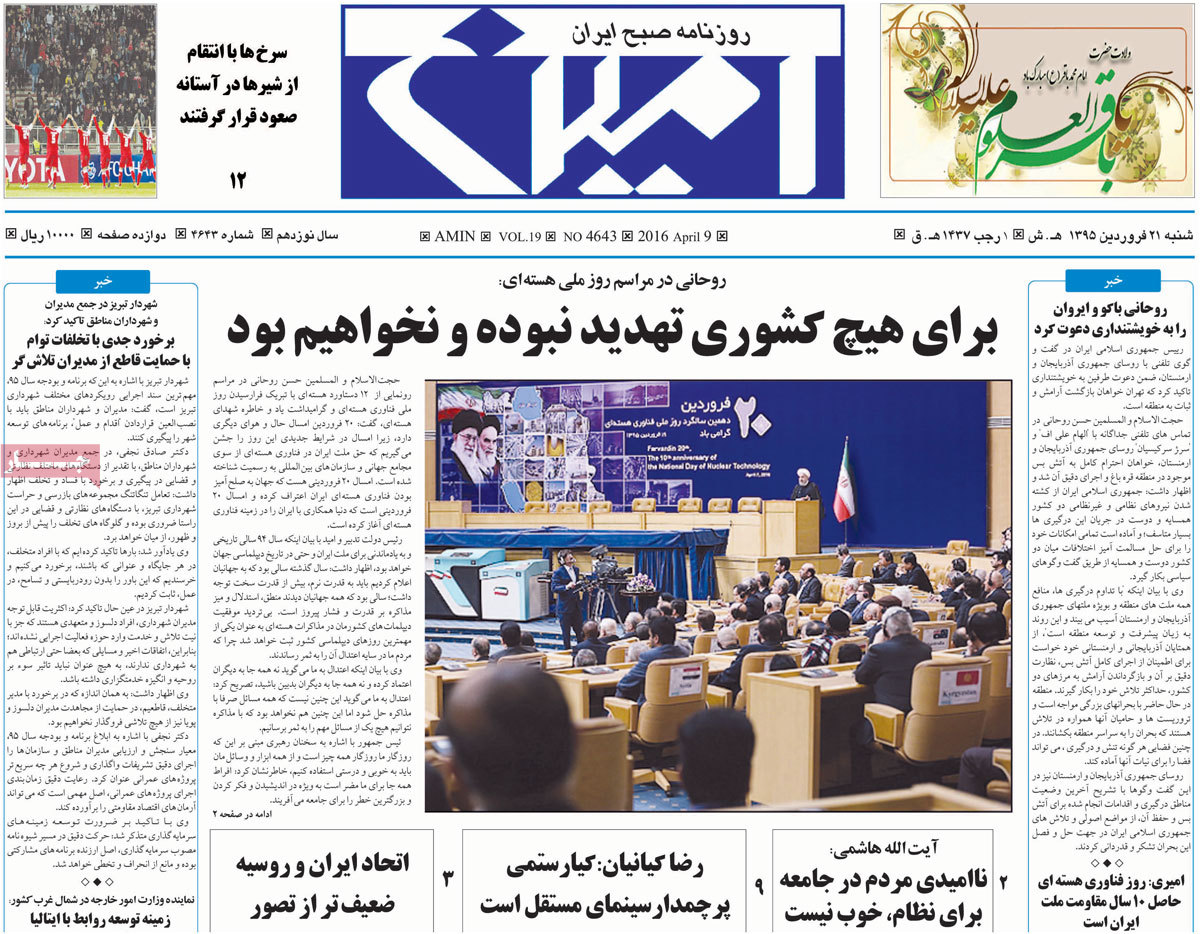
 

A look at Iranian newspaper front pages on April 9


Iran:

1- Rouhani: Joint Comprehensive Plan of Action(JCPA) a great opportunity for speeding up implementation of “Resistance Economy”

2- Deputy Chief of staff of Iranian Armed Forces: Iranian Missiles are not negotiable with any foreigners

3- Disregarding unforeseen fortune:  Interview with a municipality worker who proved his honesty by returning two cases huge lost money to their owners
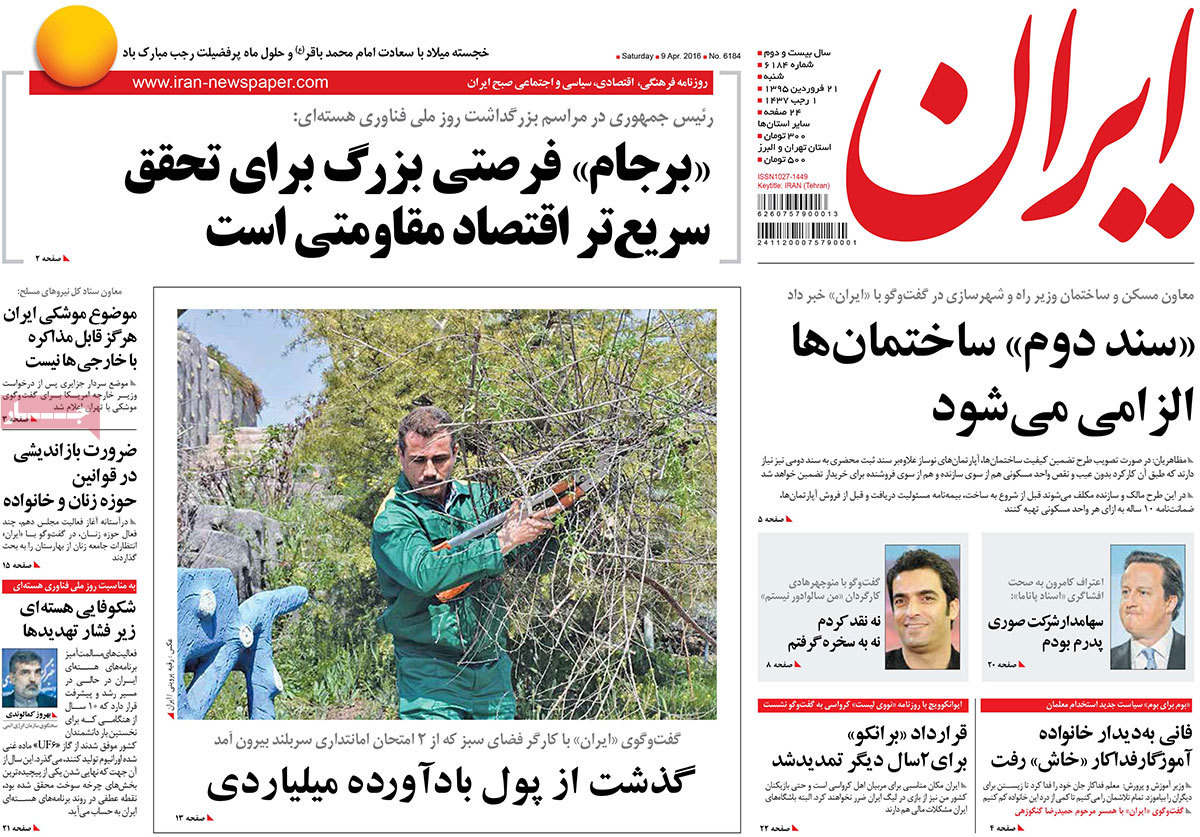
 

A look at Iranian newspaper front pages on April 9


Jomhori Eslami:

1- UN drafts a 20 articles Resolution for ceasefire in Yemen

2- Unveiling new achievements of nuclear industry with President Rouhani in attendance

3- Turkey and Israel to resume their diplomatic ties soon
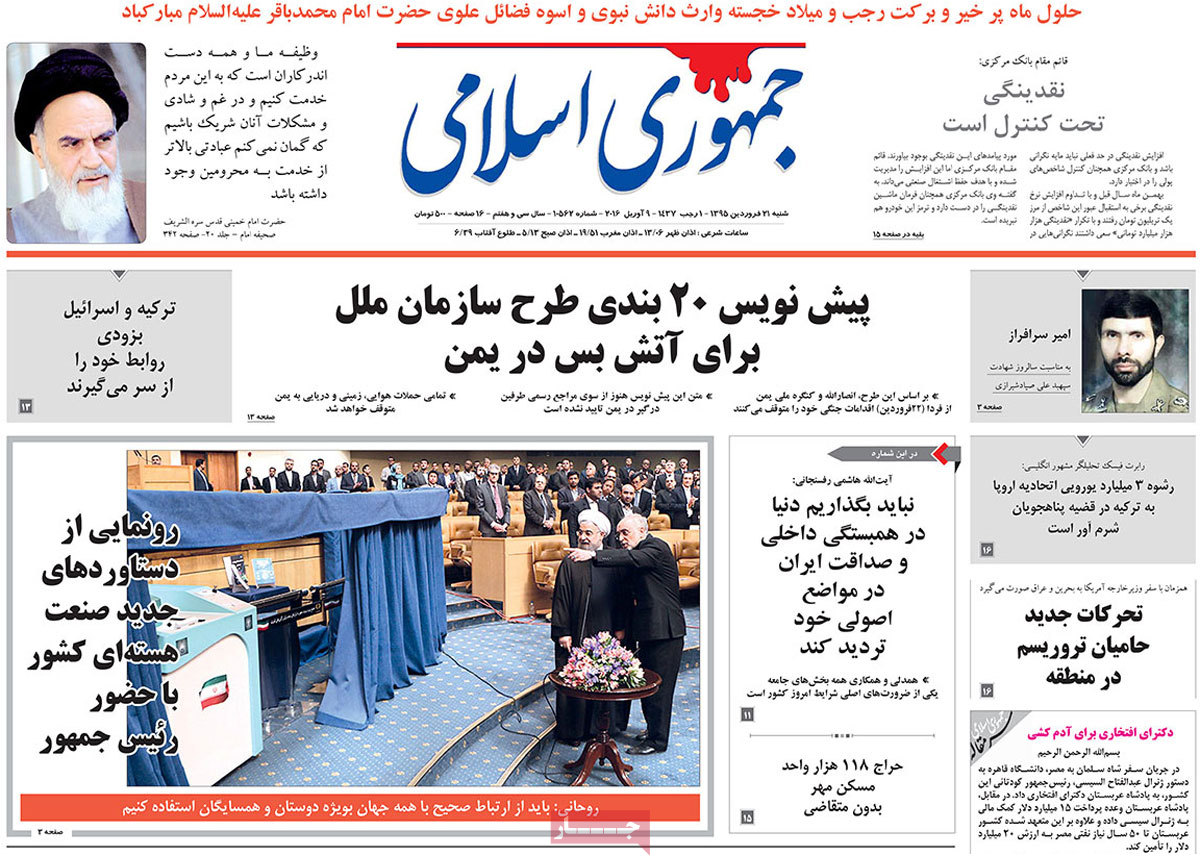
 

A look at Iranian newspaper front pages on April 9


Javan:

1- Babak Zanjani provided a list of his foreign assets

2- Big American names are missing in Panama Documents

– Only little known Americans are named in list released by Mosak Fonseka

3- Erdogan openly return to Israeli lap
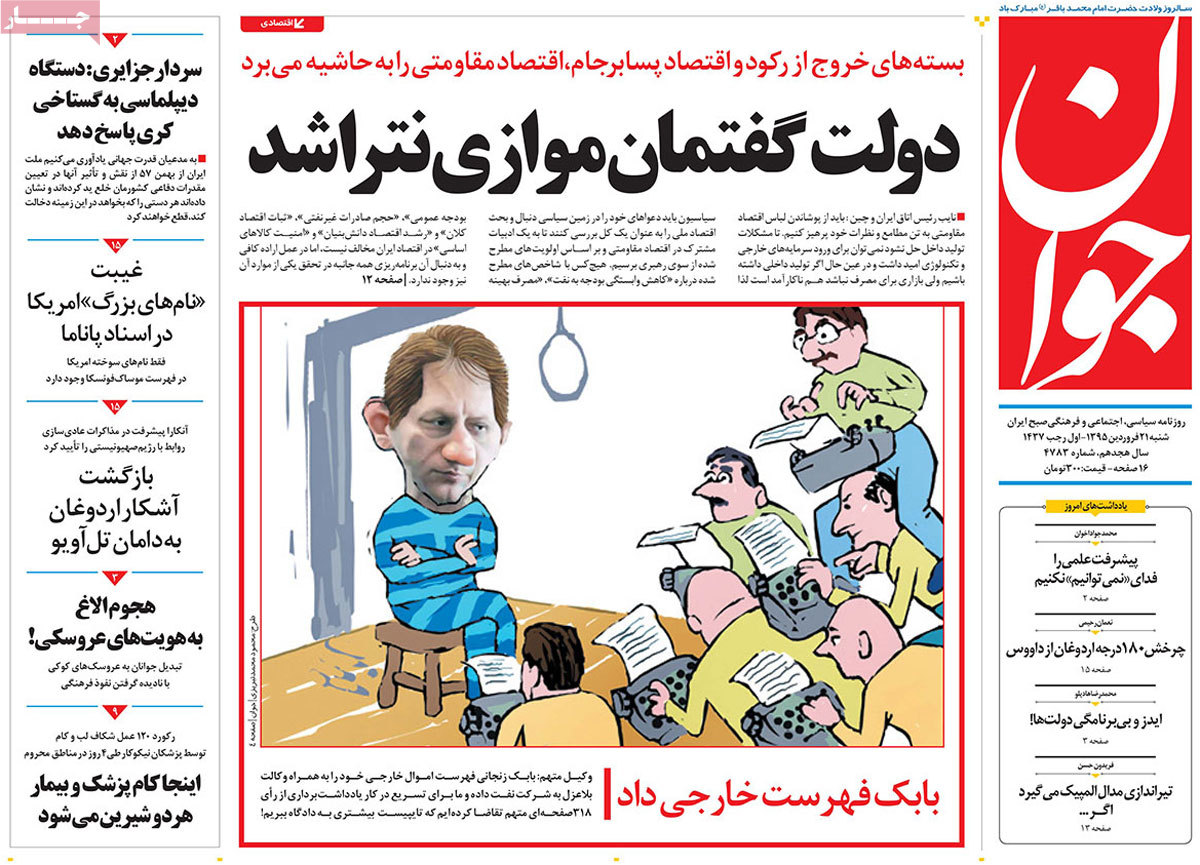
 

A look at Iranian newspaper front pages on April 9


Hemayat:

1- US new unprincipled behavior in post – nuclear agreement era

– John Kerri describes Iran’s activities in the region as concerning
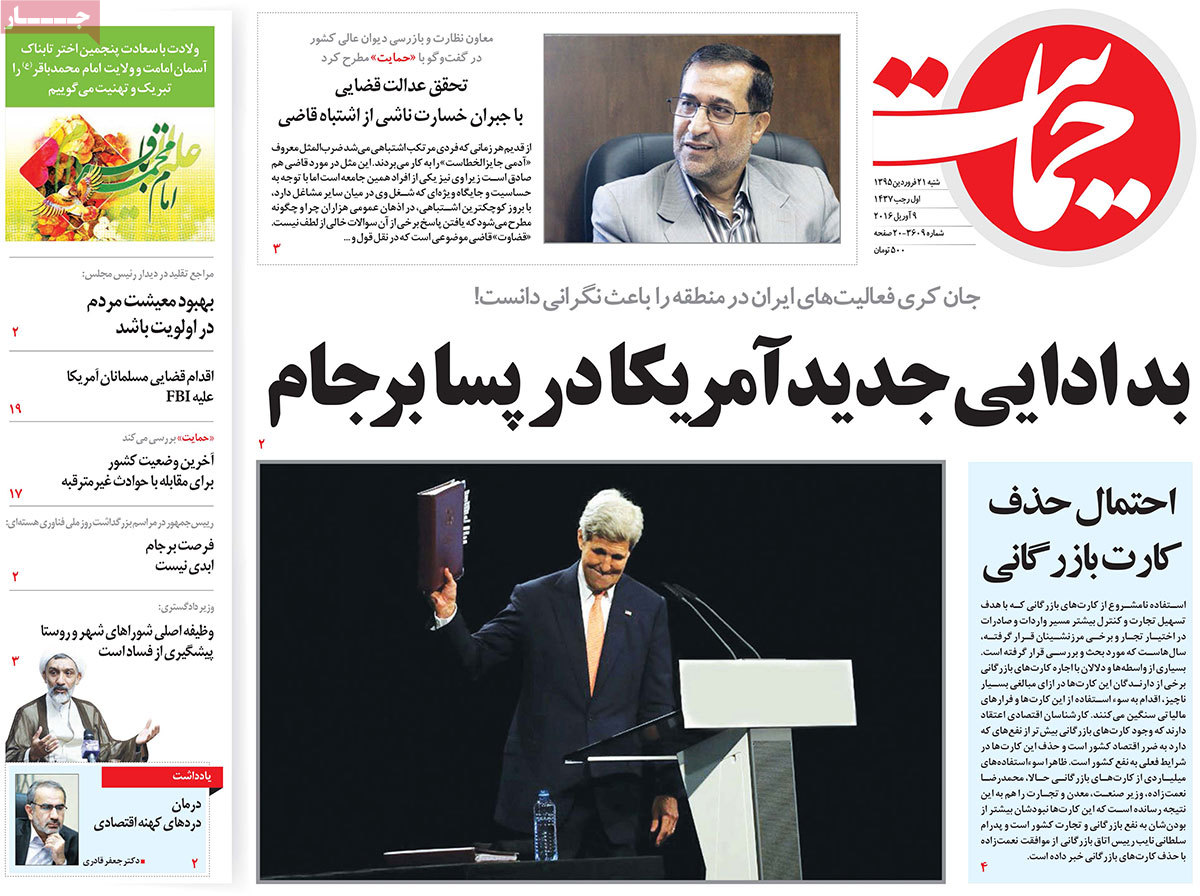
 

A look at Iranian newspaper front pages on April 9


Khorasan:

1- Unveiling to new advanced Centrifuges and test of fuels of Arak Reactor
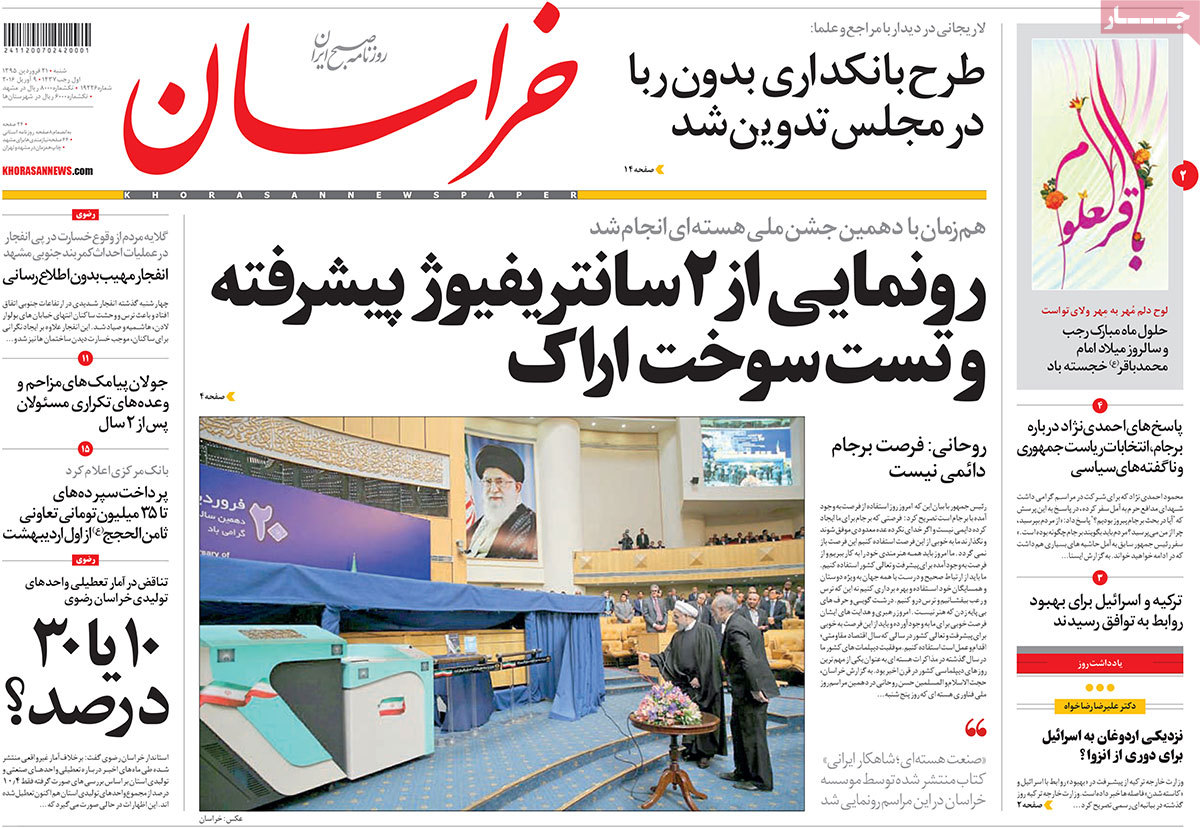
 

A look at Iranian newspaper front pages on April 9


Resalat:

1- President Rouhani: we can not 100 percent trust others

-In nuclear agreement with 5+1 we did not intend to 100 percent trust others
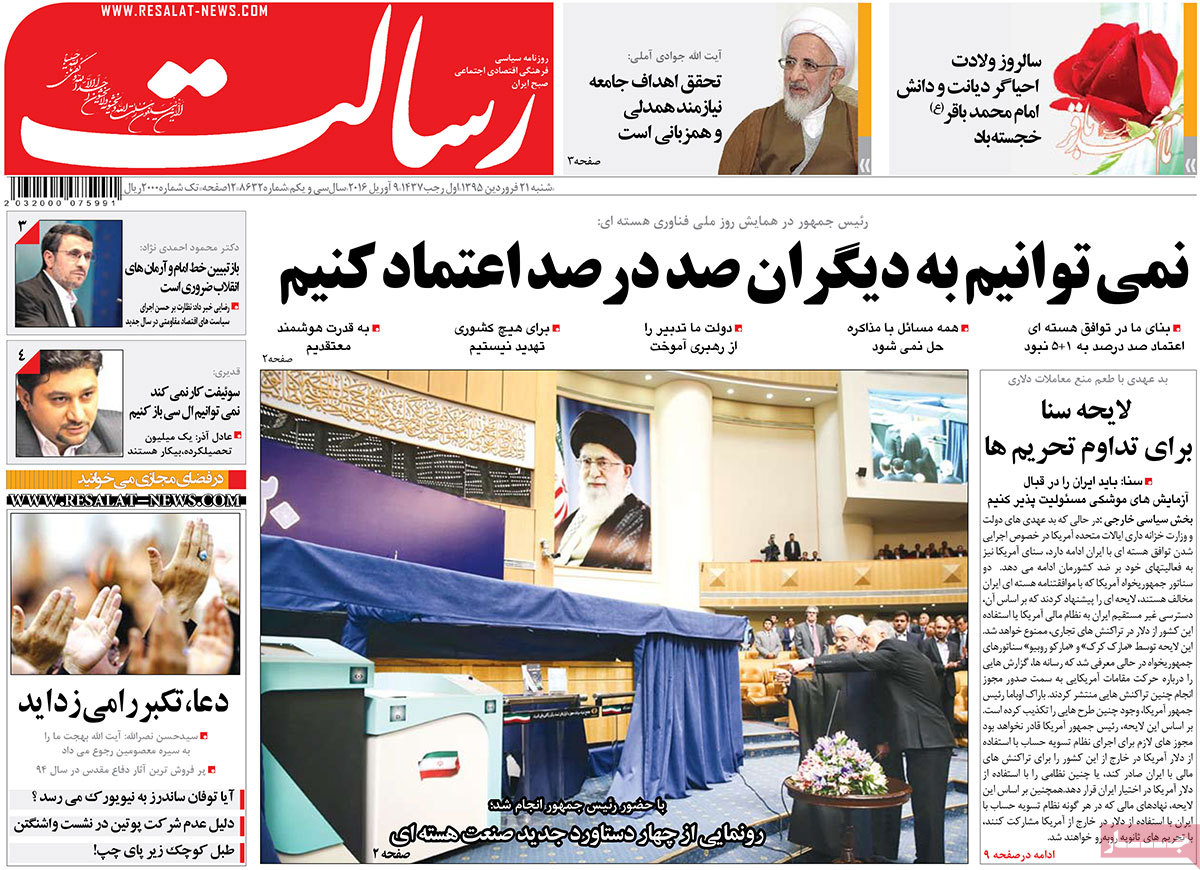
 

A look at Iranian newspaper front pages on April 9


Royesh Mellat:

1- Kerri asks Iran to help to resolve Syrian crisis

2- Daesh executes 172 workers at a cement plant in Syria
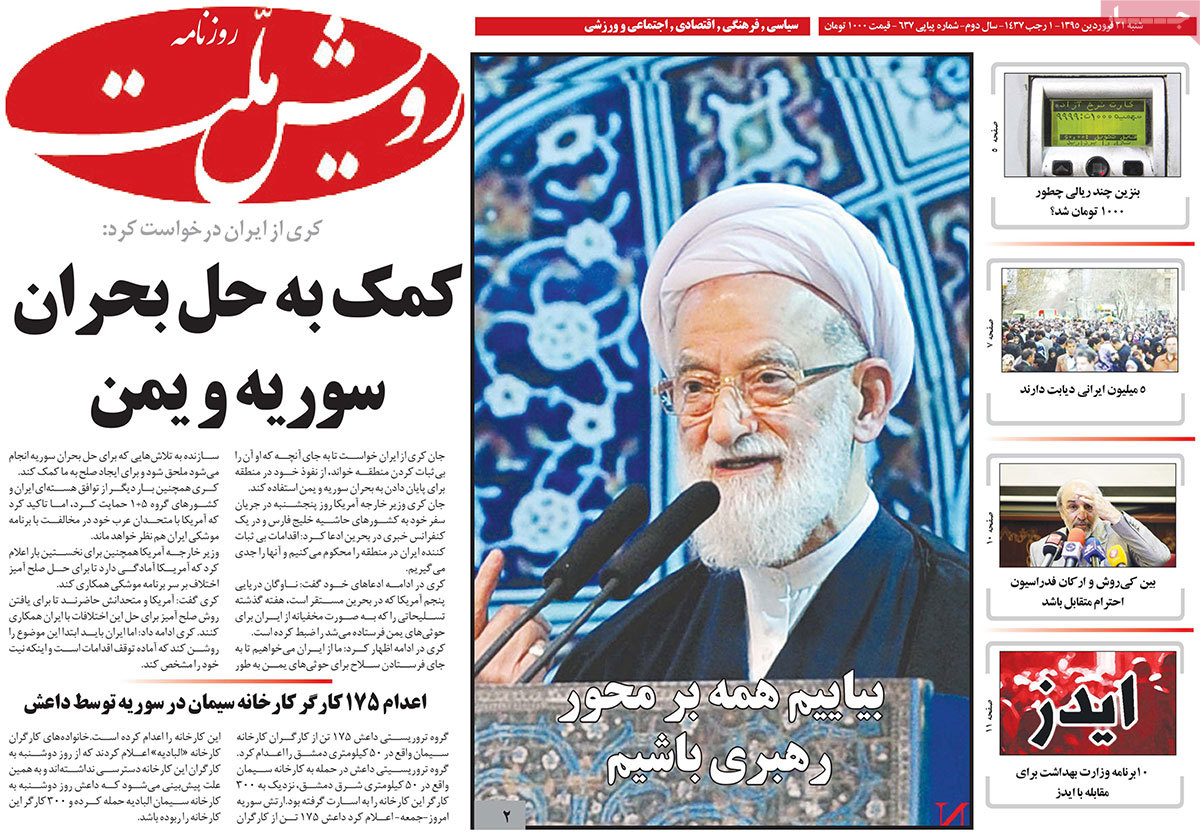
 

A look at Iranian newspaper front pages on April 9


Sepeed:

1- Permanent eradication of AIDS by genetic rearrangement
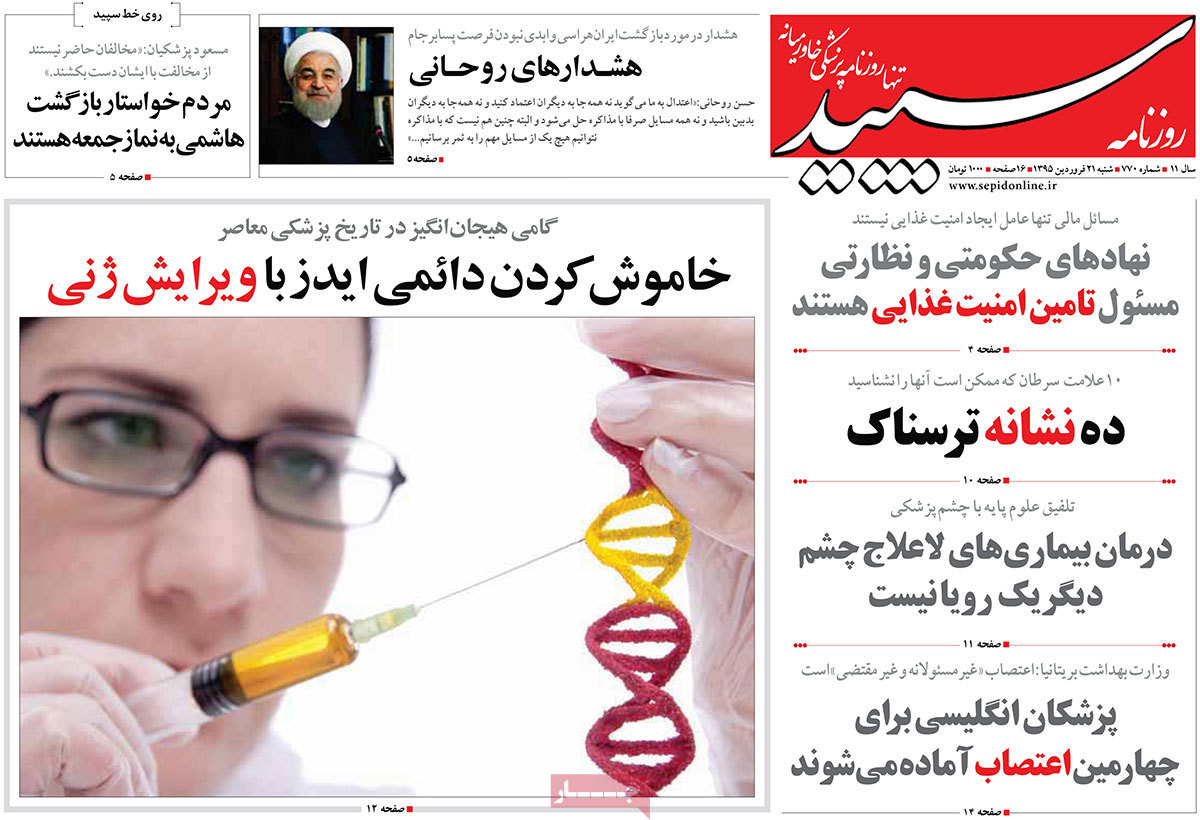
 

A look at Iranian newspaper front pages on April 9


Keyhan:

1- US unveils JCPA 2: Containing Iranian regional Influence, John Kerri explains in Bahrein

2- Saudi rulers pay $4 billion as bribe to Egyptians to remove Hezbollah’s Alalam TV network from Nilesat
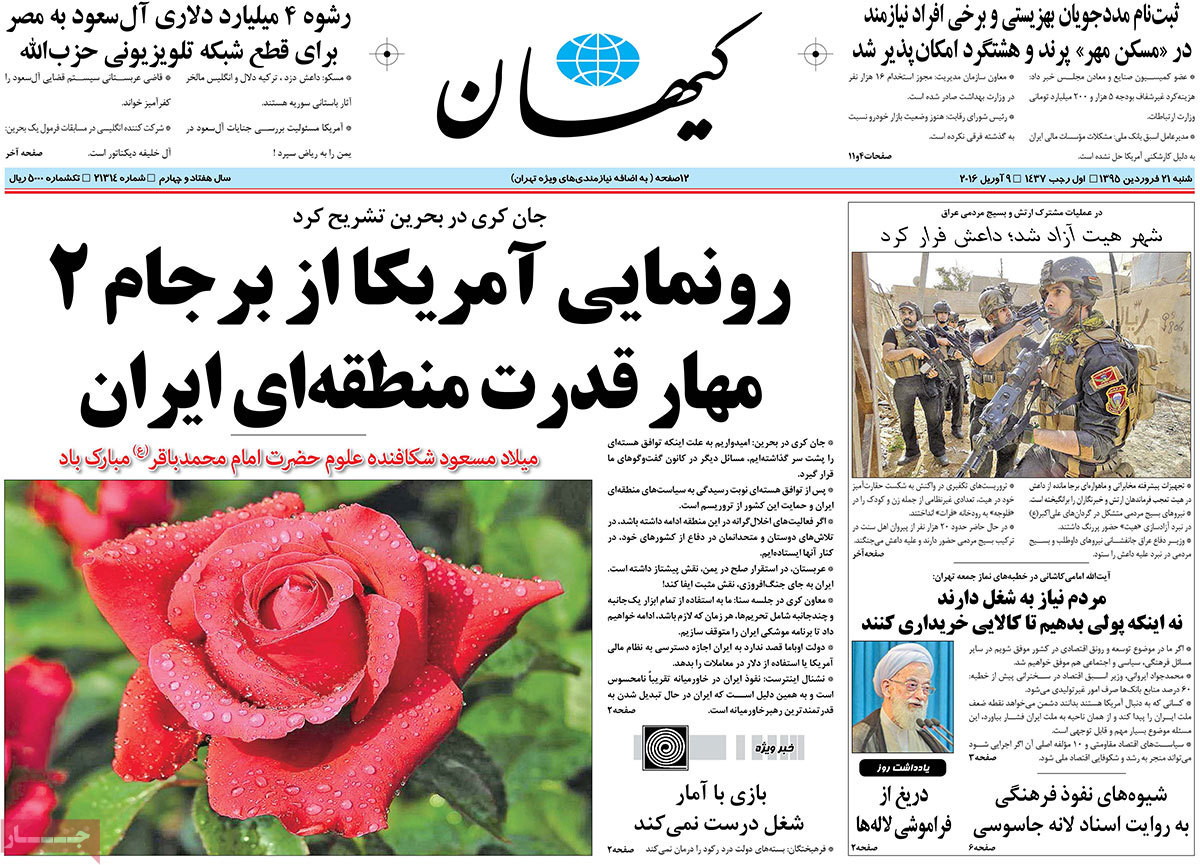
 

A look at Iranian newspaper front pages on April 9


Mardomsalari:

1- Creating a rival for Suez Canal

2- Riyadh looking for partnership with Cairo

– Sweet pledges by Saudi King to Egyptians

3- Forecast of increased OPEC oil output on the eve of Doha oil meeting
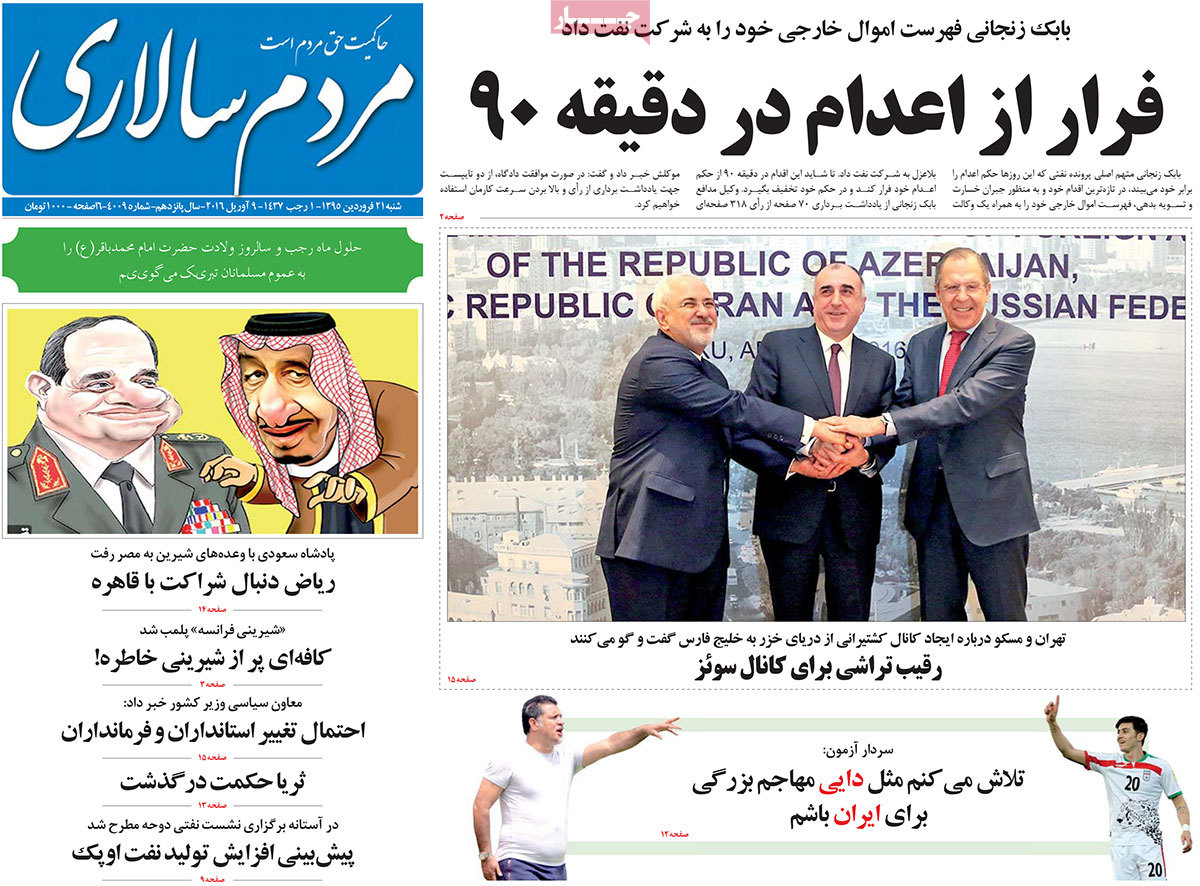
 

A look at Iranian newspaper front pages on April 9


Vaghayeh Etefaghiyeh:

1- Bold pledge by Mr. Spokesman

– Government is determined to settle all its debts by the end of next  Iranian year

2- Special Presidential Gene

– Fatemeh Rakei: Has Parliament Spokesman a special gene that Mr. Aref lacks it?

3- Ali Rabiee: The comprehensive charter to provide social support for women is being compiled

4- Zarif: other countries should learn from Iran and Russia
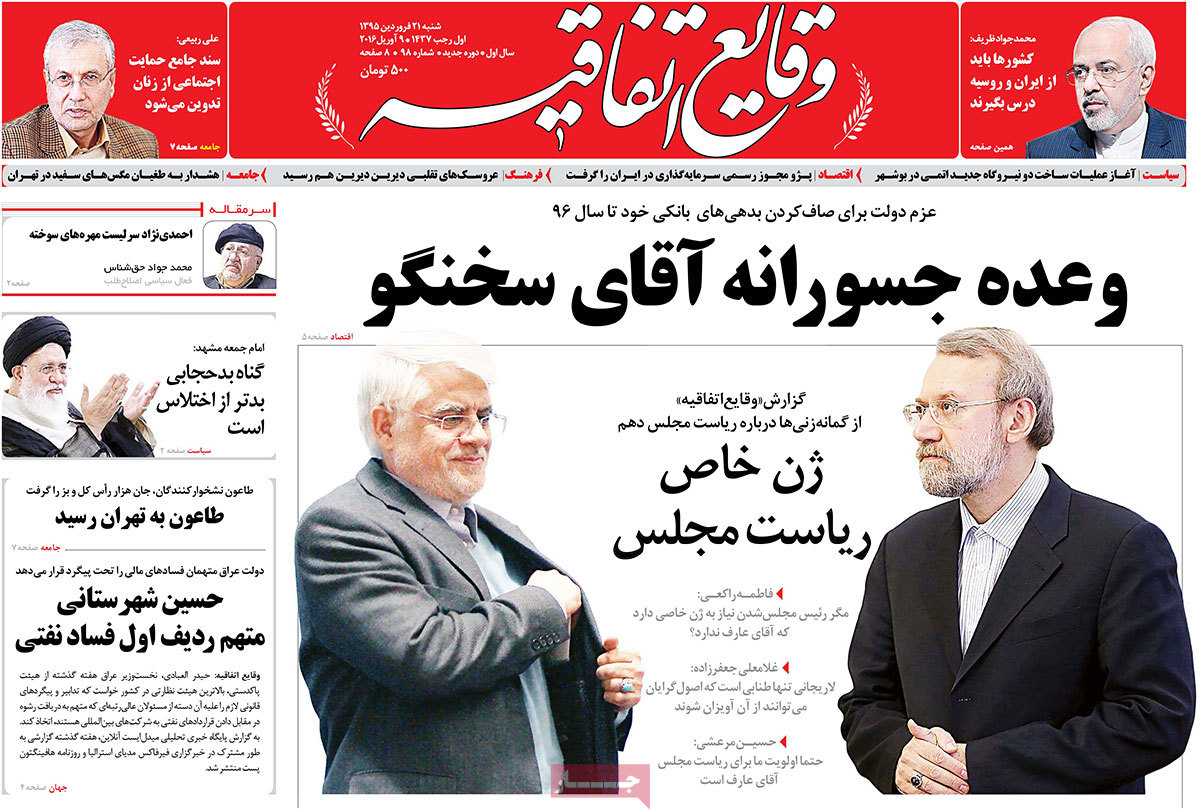
 

A look at Iranian newspaper front pages on April 9


Asia:

1- US and European Tourists in Iranian cities

2- Good intention by giving irrevocable power of Attorney by Babak Zanjani to reduce his term
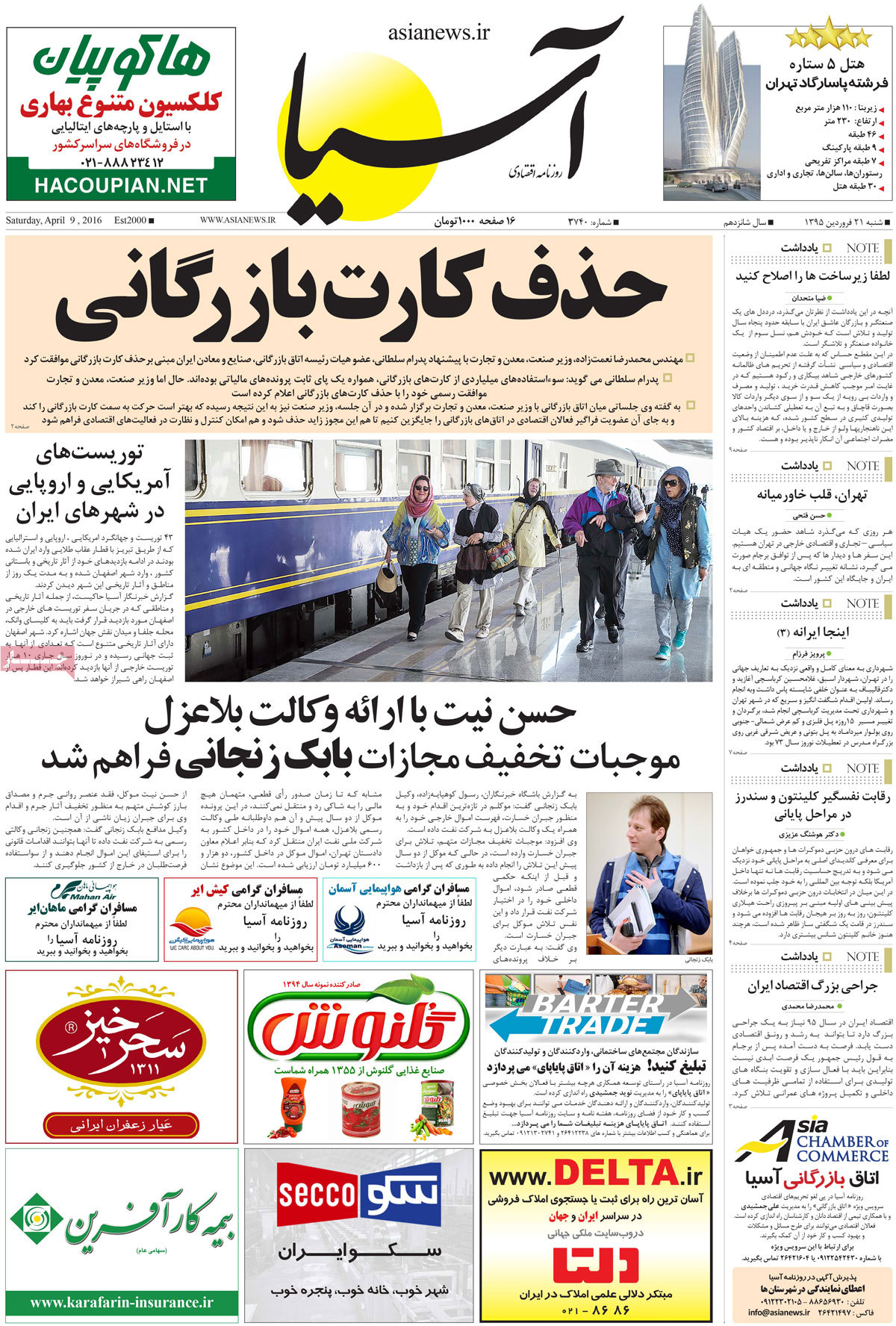
 

A look at Iranian newspaper front pages on April 9


Abrar Eghtesadi:

1- Iran sells 35 percent of its oil to Europeans

2- Malaysian government calls on banks to become active in supporting trade with Iran

3- Italian banks are ready to finance joint projects in Iran
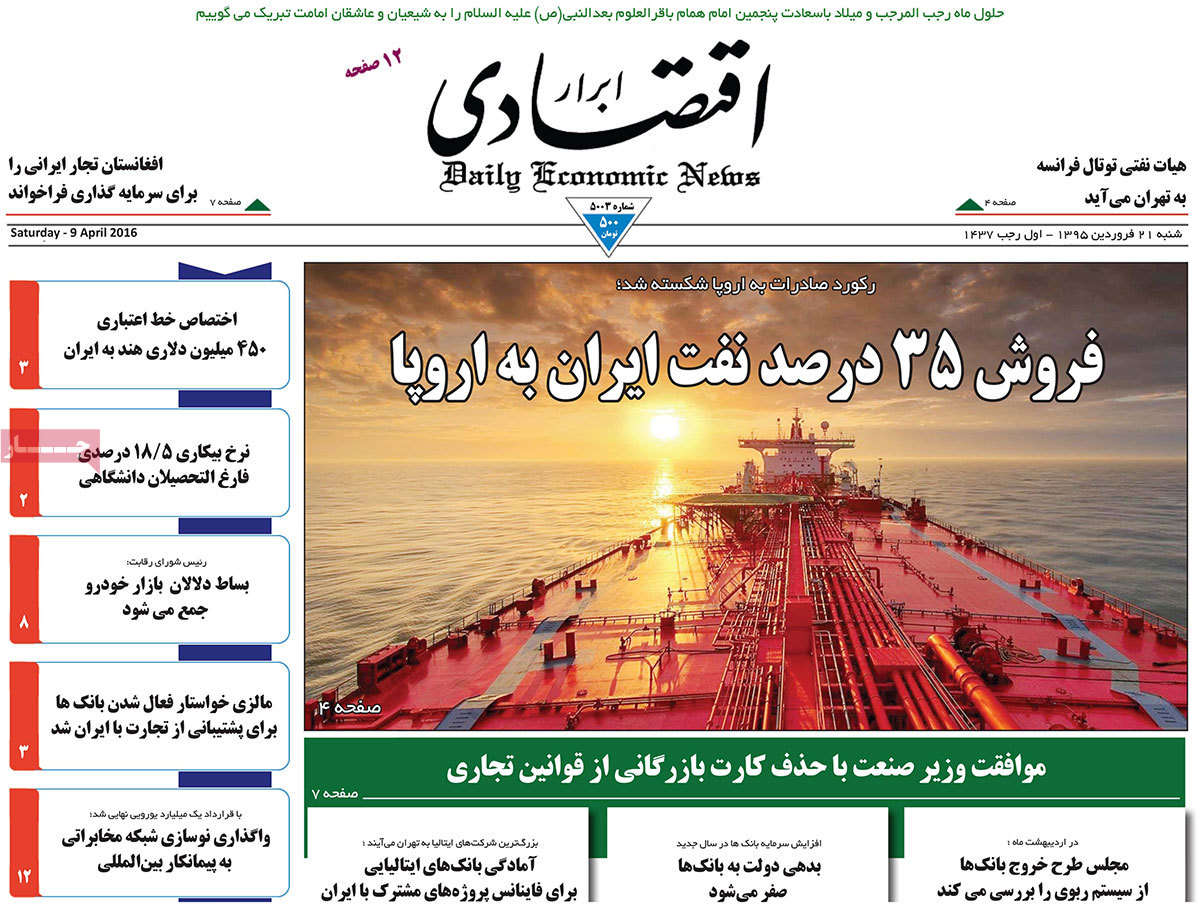
 

A look at Iranian newspaper front pages on April 9