Friday, December 26, 2025
Home Blog Page 454

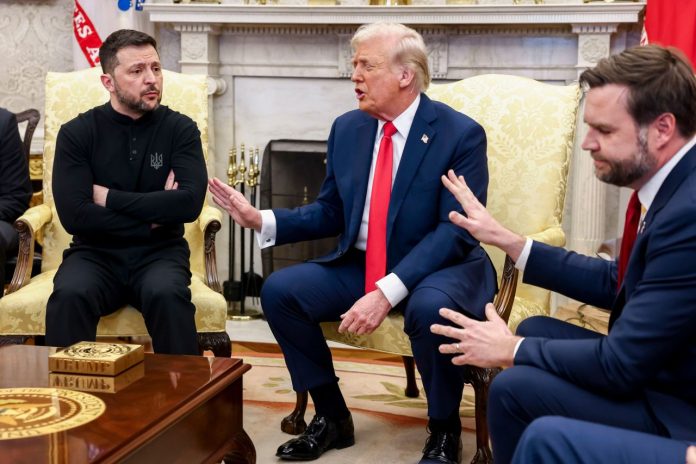
Zelensky apologized in letter to Trump: US envoy

“Zelensky sent a letter to the president. He apologized for that whole incident that happened in the Oval Office,” Witkoff said Monday on Fox News.

“I think that it was an important step and there’s been a lot of discussion between our teams and the Ukrainians and the Europeans who are relevant to this discussion as well.”

U.S. and Ukrainian officials are set to meet in Saudi Arabia this week to pick back up on peace negotiations to end the war with Russia.

Witkoff added he thought Zelensky sending Trump a letter to apologize for the fiery meeting was “progress.”

In Trump’s joint address to Congress, he shared that he received a letter from Zelensky in an effort for the countries to smooth out ties. Trump said he appreciated the letter, which came just days after the U.S. halted military assistance to Ukraine.

Shortly after the fiery meeting between Zelensky and Trump, the Ukrainian leader called it a “regrettable” gathering but stopped short of issuing an apology.

Zelensky, however, signaled that Ukraine was still ready to come to the negotiating table after the meeting, where the U.S. and Ukraine had been slated to come to an agreement on a minerals deal.

Witkoff said it’s important for the officials to discuss security protocols for Ukrainians, territorial issues and a utility plan.

“These are not complicated things, they just … need to be put on the table and everybody needs to be transparent about what their expectations are, then we can begin to have a discussion about how we compromise,” he added.

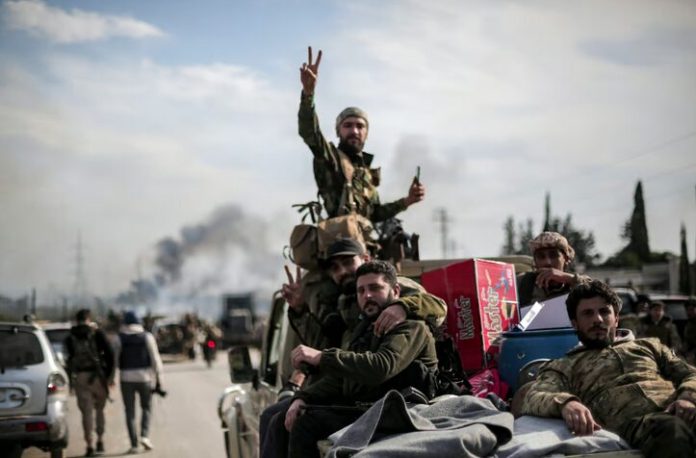
Syria new rulers announce end of military operation against Assad loyalists

Spokesperson Hassan Abdul Ghani made the announcement on Monday, saying in a statement on X that security threats had been neutralised in Latakia and Tartous provinces.

“Having achieved [the neutralisation of the security threats] we announce the end of the military operation,” Ghani added.

“We were able … to absorb the attacks of the remnants of the toppled regime and its officers” and push them from “vital” locations.”

The Syrian Observatory for Human Rights reproted on Monday that nearly 1,500 people had been killed in the violence since Thursday.

The majority, the war monitor reported, were civilians killed by security forces and allied groups in the heartland of the Alawite minority, to which deposed President Bashar al-Assad belongs.

Syria’s interim leader President Ahmed al-Sharaa of Hayat Tahrir al-Sham (HTS) pledged on Sunday to hunt down the perpetrators of the violent clashes and said he would hold to account anyone who overstepped the new rulers’ authority.

Al-Sharaa’s office also noted it was forming an independent committee to investigate the clashes and killings carried out by both sides.

Abdul Ghani added on Monday that the security forces would cooperate with the investigation committee, offering full access to uncover the circumstances of the events, verify the facts and ensure justice for the wronged.

“We were able to absorb the attacks from the remnants of the former regime and its officers. We shattered their element of surprise and managed to push them away from vital centres, securing most of the main roads,” he stated.

“We are paving the way for life to return to normal and for the consolidation of security and stability,” Abdul Ghani said, adding that plans were in place to continue combating the remnants of the former government and eliminate any future threats.

However, following relative calm in the weeks following al-Assad’s fall in December, instability and violence are starting to grow in Syria.

The fighting on the Mediterranean coast began last week when pro-Assad forces coordinated deadly attacks on the new government’s security forces.

The ambush spiralled into revenge killings as thousands of armed supporters of Syria’s new leadership flocked to coastal areas.

The government then sent reinforcements to Latakia and Tartous in order to regain control.

Iran, a long-term al-Assad ally, denied on Monday any involvement in the violence.

Media reports including from the Saudi-owned Al Arabiya TV channel have suggested that Iran and allied groups in the region were behind the violence.

Al-Sharaa had blamed the violence on “attempts by the remnants of the toppled regime and foreign parties behind them to create renewed sedition and pull our country into civil war”.

Regional media had then followed up by pointing the finger at Tehran.

However, a spokesman for Iran’s Ministry of Foreign Affairs rejected the accusation and condemned attacks on minorities in Syria.

“This accusation is completely ridiculous and rejected, and we think that pointing the finger of accusation at Iran and Iran’s friends is wrongly addressed, a deviant trend, and a hundred percent misleading,” Esmaeil Baghaei said.

“There is no justification for the attacks on parts of the Alawite, Christian, Druze and other minorities, which have truly wounded the emotions and conscience of both the countries of the region and internationally,” he added.

Tehran helped to prop up al-Assad during the country’s long war and provided him with military advisers.

Foreign Minister Abbas Araghchi said on Friday that Tehran has remained “an observer” of the situation in Syria since the takeover by HTS.

“We have no relationship with the current Syrian government, and we are not in a hurry in this regard,” he added.

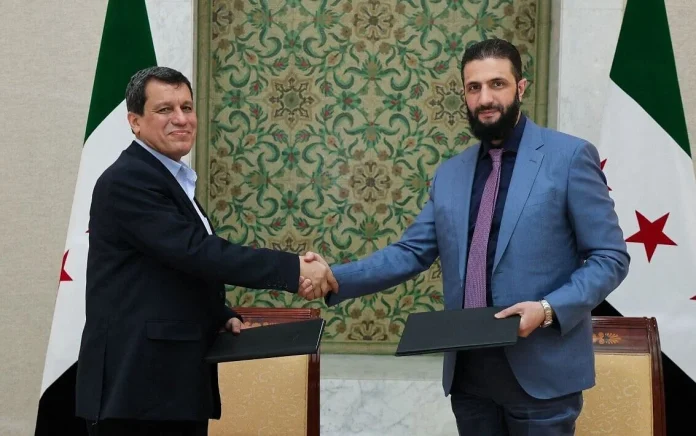
Kurds to merge with Syrian state institutions in landmark agreement

Interim President Ahmad al-Sharaa announced the deal on Monday, saying it was aimed at “ensuring the rights of all Syrians in representation and participation in the political process and all state institutions based on competence, regardless of their religious and ethnic backgrounds.”

The deal will also recognize Syria’s Kurdish community as an integral part of the state, tens of thousands of whom were previously denied citizenship under the decades-long rule of the Assad government.

“We consider this agreement a real opportunity to build a new Syria that embraces all its components and ensures good neighborliness,” SDF General Commander Mazloum Abdi said in a statement on X.

The deal is one of the biggest developments in the country since the rebel alliance led by Sharaa toppled former President Bashar al-Assad in December.

By integrating the Kurdish community, it hopes to guard against the possibility of further sectarian strife in the country, which suffered through more than a decade of war before Assad’s downfall.

Crowds gathered across the Syrian cities of Aleppo, Homs, Hama, Tartus, Deir Ezzor and Hasaka to celebrate the agreement. Fireworks lit up the sky over the landmark Aleppo Citadel in the early hours of Tuesday.

The move comes amid the worst violence the country has seen in years as security forces fight supporters of Assad.

The deal between Syria’s interim government and the SDF guarantees the Kurdish-led group’s support to the Syrian state in combatting the Assad remnants and any other threats to the country’s security and unity.

The SDF, which was not part of the rebel alliance that overthrew Assad, is presently the most powerful non-governmental force in the country and holds strategic territories, primarily in the northeast.

Under the new deal, those areas would come under the control of the central government, including border crossings, airports, and oil and gas fields. A ceasefire would go into effect across Syria and displaced Syrians would return to their homes.

Executive committees have been tasked with making sure the agreement is implemented by the end of the year.

While the SDF has been a key US partner in the fight against Daesh, it is largely made up of fighters from a group known as the Peoples’ Protection Units (YPG), which is considered a terrorist organization by neighboring Turkey.

EU, ICAO approve Iran fuel management for intl. flights 

Iran Airport

The operations deputy of Homa announced that annually, the Iranian airline is audited by the EU-ETS and ICAO’s CORSIA for all international flights, regarding the emission of
greenhouse gases.

Javad Sharifi said the purpose of these audits is to monitor the method and amount of greenhouse gas emissions and to enforce international laws in order to protect the environment.

The airline’s operations deputy added that given the type of Homa’s international flights, it is obliged to comply with these requirements and is therefore evaluated annually by auditors. Sharifi noted that with Homa’s continuous efforts and follow-ups, the audits were held and verified for the Iranian flag carrier.

He underlined that as the first airline in Iran, Homa has been observing the environmental standards related to CO₂ emissions in accordance with the requirements of ICAO for more than 10 years and has had a very favorable performance in all audits. He noted that Iran’s flag carrier, as a leader in the country’s aviation industry, continues to move towards sustainable development and will maintain its commitment to international environmental requirements.

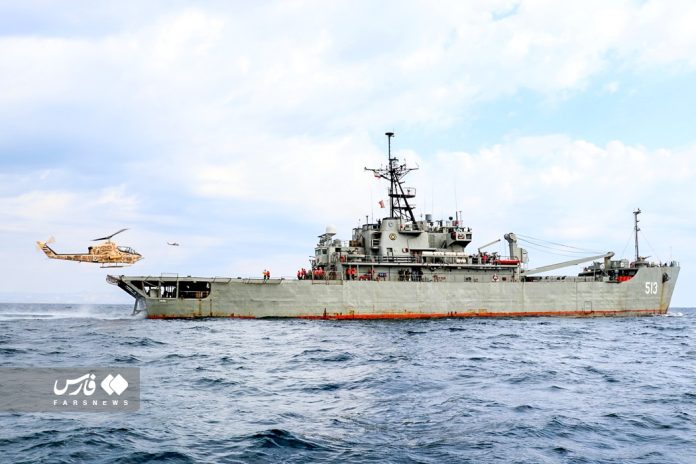
Senior commander: Countering terrorism, maritime piracy primary goals of Iran-Russia-China joint naval drill

Iranian Navy

Rear Admiral Mostafa Tajeddini elaborated on the exercise’s goals during a press conference on Monday with the commanders of Russian and Chinese units participating in the 2025 Maritime Security Belt joint exercise.

Tajeddini highlighted the strategic importance of the Northern Indian Ocean region in international trade, noting that ensuring the complete security of shipping lanes in this area—particularly in the “Golden Triangle” encompassing the Strait of Hormuz, the Strait of Malacca, and the Bab-el-Mandeb Strait—is not only crucial for safeguarding economic interests on the global stage but also requires cooperation and coordination among the naval forces of various countries. For this reason, this trilateral naval exercise holds significant importance.

The exercise spokesperson emphasized that various scenarios have been planned, including assisting distressed vessels, conducting humanitarian and medical operations, conducting search-and-rescue missions, securing shipping lanes and communication lines, and maintaining maritime navigation safety.

He added that Qatar, Iraq, South Africa, Oman, the United Arab Emirates, Sri Lanka, Pakistan, Azerbaijan Republic, and Kazakhstan are participating as observer nations in this exercise.

He stressed that the exercise is being conducted at the initiative of the Iranian Navy, with the active participation of the Islamic Revolution Guard Corps Navy, and centers on the collaboration of Iran, Russia, and China.

The seventh joint exercise of the Maritime Security Belt 2025 will begin on Tuesday in the Chabahar region, in Southern Iran.

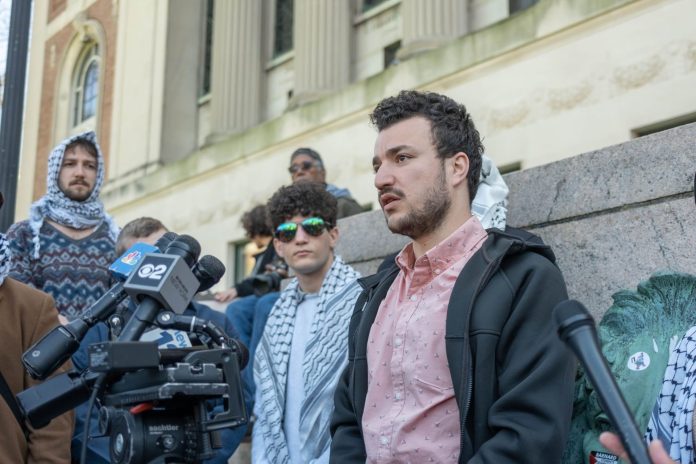
US arrests pro-Gaza student leader at Columbia University

The student, Mahmoud Khalil at the university’s School of International and Public Affairs, was arrested at his university residence on Saturday, the Student Workers of Columbia union said in a statement.

Khalil’s wife is a US citizen and he has a permanent residency green card, the union said. He remained in detention on Sunday. Khalil’s wife declined to comment through one of Khalil’s fellow students.

Khalil’s lawyer, Amy Greer, told the Associated Press news agency that she spoke by phone with one of the ICE agents during the arrest, who said they were acting on State Department orders to revoke Khalil’s student visa. Informed by the lawyer that Khalil was in the country as a permanent resident with a green card, the agent said they were revoking that too, according to the lawyer.

Greer added the authorities declined to tell Khalil’s wife, who is eight months pregnant, whether he was accused of committing a crime. Khalil has since been transferred to an immigration detention facility in Elizabeth, New Jersey.

“We have not been able to get any more details about why he is being detained,” Greer told the AP.

“This is a clear escalation. The administration is following through on its threats.”

The arrest appeared to be among the first known actions under President Donald Trump’s pledge to deport international students who joined the protests against Israel’s war in Gaza that swept college campuses last year. His administration has claimed participants forfeited their rights to remain in the country by supporting Hamas, which is designated as a ‘terror’ organisation by the US.

The move has been described as an attack on First Amendment freedoms.

Khalil, an Algerian citizen of Palestinian origin, has been one of the school administrators’ lead negotiators of the pro-Palestinian student protesters, some of whom set up a tent encampment on a Columbia lawn last year and seized control of an academic building for several hours in April before police entered the campus to arrest them. Khalil was not in the group that occupied the building but was a mediator between Columbia provosts and the protesters.

The protesting students called for Columbia’s divestment from companies with ties to Israel, a ceasefire and an end to the war that killed nearly 50,000 Palestinians and turned the enclave into rubble after nonstop bombardment. The US provided the bulk of the ammunition for the war.

Columbia said last year that it would consider expediting some of the students’ demands through its investments committee.

Rights groups have accused Israel of committing genocide in Gaza – home to 2.3 million people. Despite a ceasefire in place since January 19, Israel has blocked the entry of any aid into Gaza since March 1, drawing condemnation from rights groups and aid agencies.

The October 7, 2023, Hamas attack on Israel and subsequent Israeli military offensive on Gaza led to months of pro-Palestinian protests that roiled US college campuses.

At least 1,100 people were killed in the Hamas attack and some 240 people were taken captive. Most of the captives have been released as part of truce deals. A new round of truce talks will resume in the Qatari capital, Doha, on Monday.

A spokesperson for Columbia said the school was barred by law from sharing information about individual students.

The Department of Homeland Security and the State Department, which oversees the country’s visa system, did not respond to questions from the news agencies. It was not immediately clear on what grounds ICE agents arrested Khalil. The ICE comes under the US Department of Homeland Security.

In an interview with the Reuters news agency a few hours before his arrest on Saturday about the Trump administration’s criticism of Columbia, Khalil said he was concerned that he was being targeted by the government for speaking to the media.

The Trump administration on Friday said it had cancelled government contracts and grants worth about $400m to Columbia University. The government announced the cuts and the student deportation efforts are due to “anti-Semitic” harassment at and near Columbia’s Manhattan campus.

“What more can Columbia do to appease Congress or the government now?” Khalil stated before his arrest, noting that Columbia had twice called in police to arrest protesters and had disciplined many pro-Palestinian students and staff, suspending some.

“They basically silenced anyone supporting Palestine on campus and this was not enough. Clearly, Trump is using the protesters as a scapegoat for his wider agenda [of] fighting and attacking higher education and the Ivy League education system.”

In response to the announced grant cuts on Friday, Columbia’s interim president, Katrina Armstrong, said the school was committed to combating anti-Semitism and was “working with the federal government to address their legitimate concerns”.

Protesting students have denied the charges of anti-Semitism.

Maryam Alwan, a Palestinian American senior at Columbia who has protested alongside Khalil, said the Trump administration was dehumanising Palestinians.

“I am horrified for my dear friend Mahmoud, who is a legal resident, and I am horrified that this is only the beginning,” she added.

US Secretary of State Marco Rubio said last week that international students who support Hamas, which the US has designated a “terrorist” organisation, face visa revocation and deportation.

On Thursday, Columbia issued a revised protocol for how students and school staff should handle ICE agents seeking to enter private school property.

The school announced ICE agents without a judicial arrest warrant may be allowed to enter its private property in “exigent circumstances”, which it did not specify.

“By allowing ICE on campus, Columbia is surrendering to the Trump administration’s assault on universities across the country and sacrificing international students to protect its finances,” the Student Workers of Columbia said in its statement.

Khalil lives in a university apartment building near Columbia’s main gated campus.

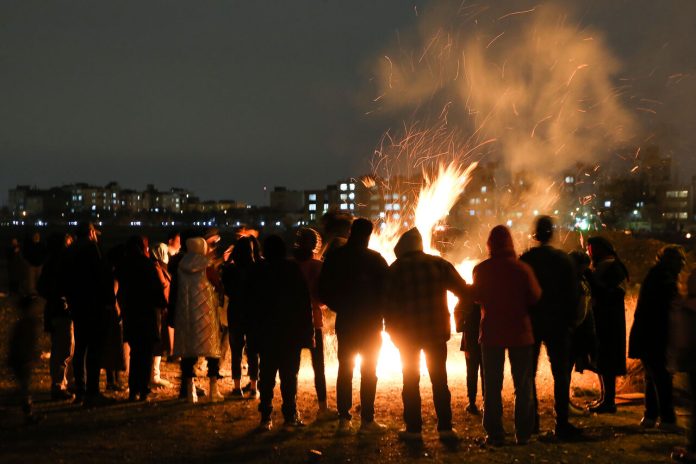
Iranian Forensics Org.: 78 people killed in Chaharshanbeh Suri incidents in 4 years

Chaharshanbe Suri

The organization said the highest number of fatalities took place in 1402, with the death toll standing at 28.

According to this report, those killed include 65 men and 13 women and most of the deaths are young people, mostly in the age group under 30 years old. While noting that national occasions should be upheld, the Iranian Forensics Organization urged all citizens to avoid dangerous acts such as use of firecrackers.

It also asked all Iranians to pay attention to safety tips and recommendations.

Chaharshanbe Suri is an ancient Persian festival marking the eve of the last Wednesday before the Persian New Year (Nowruz).

According to ancient traditions, jumping over burning bushes was a way of honoring this ritual. However, in recent years, the use of strong fireworks and explosives on this night has led to casualties.

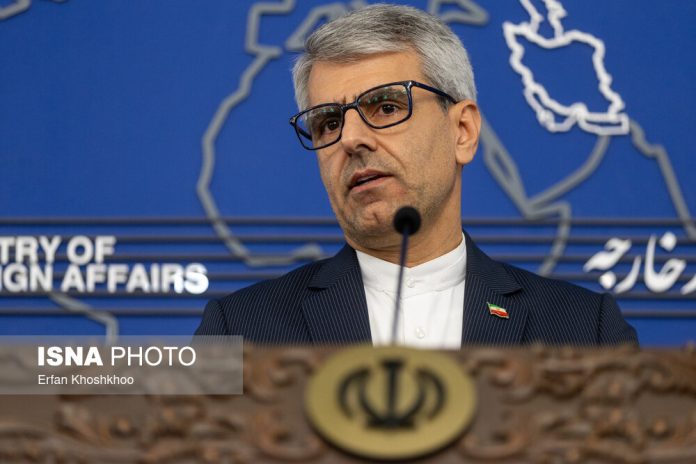
Iran refutes claims of interference in Syrian developments as ‘ridiculous’

Esmael baghaei

Baqaei made this statement on Monday in response to a question about the allegations from Arab media regarding the establishment of an operations room in Iraq under Iran’s supervision and Tehran’s interference in recent developments in Syria.

He stated that pointing the finger of blame at Iran and its allies is a misleading narrative, a stereotypical approach, and an oversimplification of the events in Syria, which will not help at all.

He emphasized the need to stop the killing of innocent individuals from various Syrian groups, especially minorities, adding that this is the most important concern for the entire region.

Baqaei condemned any violent actions and killings against Syrian civilians, noting that the targeting of sections of the Alawite, Druze, Christian, and other minority populations in Syria has hurt human feelings and conscience both regionally and internationally.

He added that these developments are a real test for the Syrian rulers to fulfill their responsibilities in protecting the lives and property of all citizens.

Around 1,000 people were killed in heavy fighting between the ruling Hay’at Tahrir Al-Sham (HTS) militants and armed opposition groups in western Syria. Most of the dead are civilians from minority groups.

Baqaei also emphasized that statements by US officials regarding the non-extension of Iraq’s sanctions waiver for purchasing electricity from Iran are an admission of law-breaking and a crime against humanity.

He stated that the US’s unilateral sanctions against the Iranian nation lack any justification or legal basis and entail international responsibility for the US government, which must be held accountable.

The US National Security Advisor has announced that the non-extension of Iraq’s sanctions waiver for purchasing electricity from Iran aligns with the US administration’s so-called maximum pressure policy.

The advisor added that if Iran expands its nuclear activities and increases its regional actions, pressure on Tehran will intensify.

Iran’s Foreign Ministry spokesperson further noted that what matters is for regional countries to make decisions based on their national interests and the good relations they have with Iran, and not allow the US’s illegal and coercive pressures to negatively impact their ties with the Iranian nation or sow discord and division in the region.

Baqaei stated that the Islamic Republic of Iran maintains relations with friendly countries and has good ties with Iraq.

He pointed out that the final decision regarding the recent US action will be made based on the interests of the two nations of Iran and Iraq.

The Iranian Foreign Ministry’s spokesperson also unveiled plans for a new round of negotiations with the European troika in the coming days.

Negotiations between Iran and the Europeans will kick off at the level of experts within the next 10 days, Baqaei said at a press conference on Monday, referring to the nuclear talks between Iran and the EU3 (the UK, France and Germany).

Asked about attempts to trigger the so-called snapback provisions of the 2015 nuclear deal, the spokesman said Iran sees no justification for initiating the snapback mechanism of the Joint Comprehensive Plan of Action (JCPOA).

The other parties are coming to the conclusion that they cannot use the dispute mechanism of the JCPOA to reach their objectives, he added.

Baqaei emphasized that the negotiations between Iran and the European troika revolve around the nuclear issue, although talks have been held about the other subjects too.

In response to a Reuters report regarding a US plan to inspect Iranian oil-carrying vessels in international waters, the spokesperson stated that Iran’s maritime trade is legitimate and lawful, and will continue in accordance with international law regulations.

The Iranian diplomat added this issue is completely invalid both under international law and the United Nations Charter, and there is no basis for any disruptive actions against free trade and the vessels of countries in international waters.

The Iranian diplomat also described the Reuters report as media manipulation, stating that the agency has repeatedly deviated from professional principles, positioning its reporting as part of a campaign of social deception about Iran and West Asia, and has engaged in producing and disseminating false, fabricated, and biased news regarding regional issues and Iran.

The diplomat’s remarks were in reference to a Reuters report about a US plan to halt the activities of Iranian oil-carrying vessels in international waters and conduct inspections of these ships.

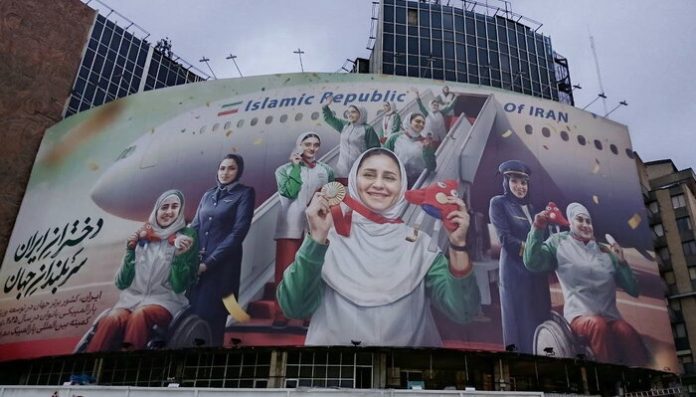
‘Iran’s Daughters, Pride of the World’

The mural, titled Iran’s Daughters, Pride of the World, celebrates the remarkable achievements of Iran’s female Paralympic athletes, highlighting their resilience and dedication.

Chief supervisor: Iranian petrochemical companies fail to repatriate 30% of export revenues

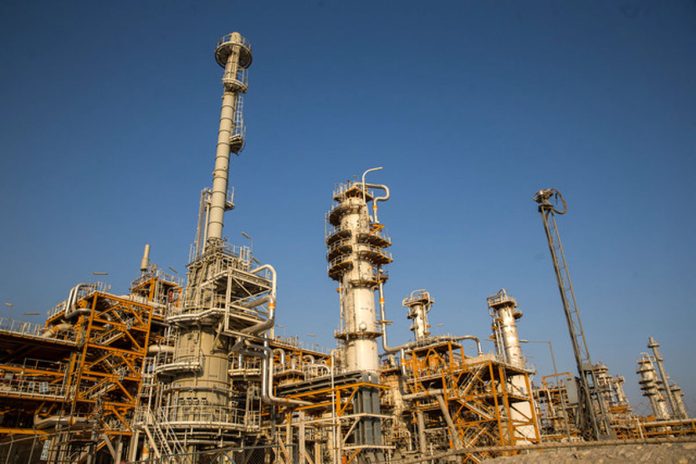
petrochemical factory in the southern Iranian port city of Mahshahr

The failure to comply with legal obligations has been criticized by many experts and officials, who accuse major companies, including government-affiliated petrochemical firms, of withholding foreign currency earnings.

Petrochemical companies claim that out of $11.5 billion in exports this year, they have repatriated and supplied $9 billion, with the remaining $2.5 billion used to purchase essential goods for the industry.

However, the Central Bank auditor, Alireza Abedini, disputes the claim, stating that last year, 88% of the export revenue was repatriated, and this year, the figure has dropped to 70%.

Abedini emphasized that all export revenues must be returned to Iran’s economic cycle under anti-smuggling laws. Non-compliance has led to legal actions, with cases referred to the Court of Audit’s prosecutor’s office.

The issue of unreturned export revenues has been a significant challenge for Iran’s economy, especially since the US withdrawal from the JCPOA nuclear deal and subsequent currency crises.

The Central Bank plans to impose banking restrictions on violators and has issued new guidelines to manage foreign exchange resources and regulate the return of export revenues.