Friday, December 26, 2025
Home Blog Page 453

Aerial target shooting carried out in Iran-China-Russia naval exercises

Iranian Navy

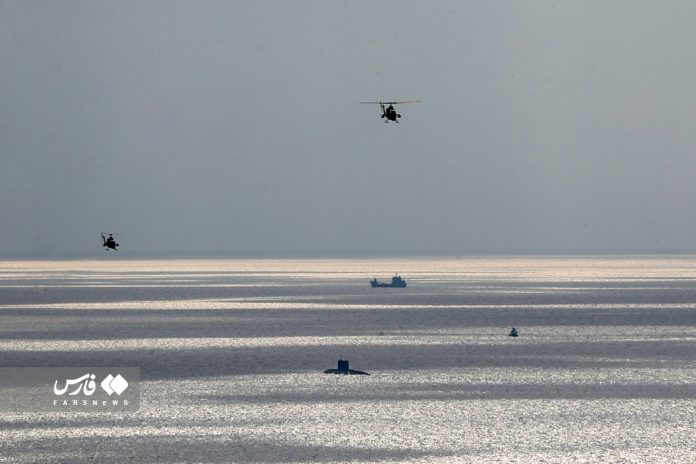
Rear Admiral Mostafa Tajeddini, deputy operations commander of Iran’s Navy, said the night shooting exercise, considered one of the most crucial naval drills, was conducted successfully by participating units. A daytime shooting operation was also carried out, he added.

“The execution of day and night aerial target shooting requires precise coordination and step-by-step orders,” Tajeddini said. He noted that the exercise was designed around a shared tactical language between Iranian naval forces—including the Islamic Republic of Iran Navy and the Islamic Revolution Guards Corps (IRGC) Navy—as well as their Chinese and Russian counterparts.

Tajeddini highlighted the key difference between the 2025 Maritime Security Belt drills and previous editions, pointing to the larger number of participating units and countries.

He also emphasized the increased involvement of aerial units, including helicopters and fixed-wing aircraft, in deeper operational areas.

The Security Belt-2025 is the fifth China-Iran-Russia joint naval exercise since 2019.

VP says Iran neither consults, nor takes orders on nuclear policy

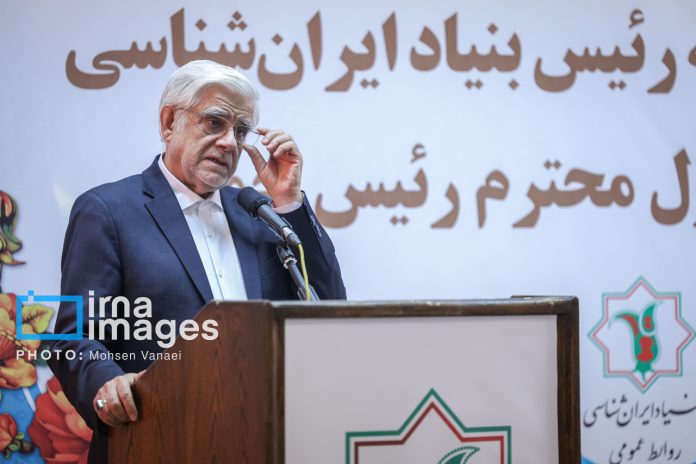
Speaking at a ceremony marking the handover of leadership at the Iranology Foundation, Aref addressed the issue of “Iranophobia” propagated by Western countries.

He stressed the need for serious efforts to counter this narrative, stating that ECO member states, regional countries, and Islamic nations are Iran’s priorities for fostering ties and presenting the Islamic Republic’s image.

“Unfortunately, some Arab countries have been influenced by the ugly term ‘Iranophobia,’ and we can see its impact on them,” Aref said.

He added that some Islamic countries have questioned Iran’s nuclear intentions, asking whether Tehran is genuinely not pursuing nuclear weapons.

“We believe that if one innocent person is unjustly killed, it is as though all of humanity has been killed. Can such a culture pursue nuclear weapons?” he said.

Aref emphasized that Iran’s cultural values prioritize the pursuit of knowledge, even if it requires traveling to distant regions.

He further stated that Iran aims to maximize the use of advanced technologies and share them with others.

“Nuclear technology should be employed to promote humanity and address societal issues,” Aref said.

He reaffirmed that Iran’s nuclear policy is independent, adding, “We do not consult with anyone or take instructions on this matter; whatever we achieve will also be shared with others.”

He emphasized that the country’s strategic framework has been approved by Leader of the Islamic Revolution Ayatollah Seyed Ali Khamenei, who has issued a fatwa on the subject.

Gaza war behind record high US anti-Muslim incidents: Report

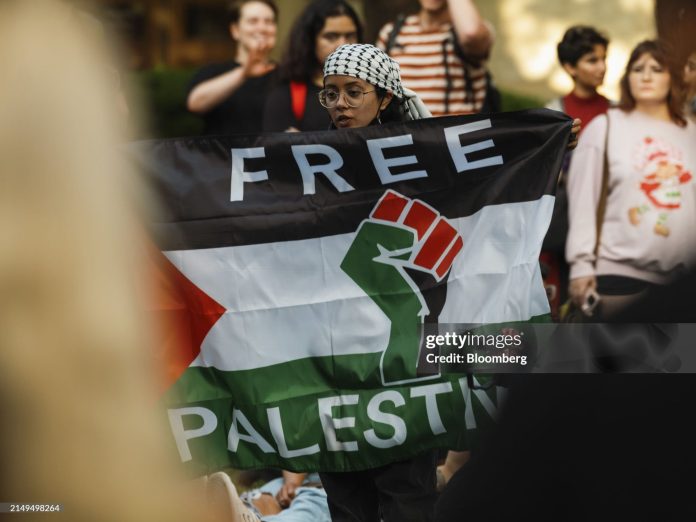
Protest US Universities

The Council on American Islamic Relations said it recorded the highest number of anti-Muslim and anti-Arab complaints – 8,658 – in 2024 since it began publishing data in 1996.

Most complaints were in the categories of employment discrimination (15.4%), immigration and asylum (14.8%), education discrimination (9.8%) and hate crimes (7.5%), according to the CAIR report.

Rights advocates have highlighted an increase in Islamophobia, anti-Arab bias and antisemitism since the start of Israel’s devastating assault on Gaza following a deadly October 2023 Hamas attack.

Demonstrators have for months demanded an end to U.S. support for Israel. At the height of college campus demonstrations in the summer of 2024, classes were canceled, some university administrators resigned, and student protesters were suspended and arrested.

Human rights and free speech advocates condemned the crackdown on protests which were called disruptive by university administrators. Notable incidents include violent arrests by police of protesters at Columbia University and a mob attack on pro-Palestinian protesters at the University of California, Los Angeles.

“For the second year in a row, the U.S.-backed Gaza genocide drove a wave of Islamophobia in the United States,” CAIR added.

The CAIR report also details police and university crackdowns on pro-Palestinian protests and encampments on college campuses.

Last month, an Illinois jury found a man guilty of hate crime in an October 2023 fatal stabbing of a 6-year-old Palestinian American boy.

Other alarming U.S. incidents since late 2023 include the attempted drowning of a 3-year-old Palestinian American girl in Texas, the stabbing of a Palestinian American man in Texas, the beating of a Muslim man in New York and a Florida shooting of two Israeli visitors whom a suspect mistook to be Palestinians.

In recent days, the U.S. government has faced criticism from rights advocates over the arrest of Mahmoud Khalil, a Palestinian graduate student who has played a prominent role in pro-Palestinian protests at Columbia University.

Negotiations only way to save Israeli captives’ lives: Hamas

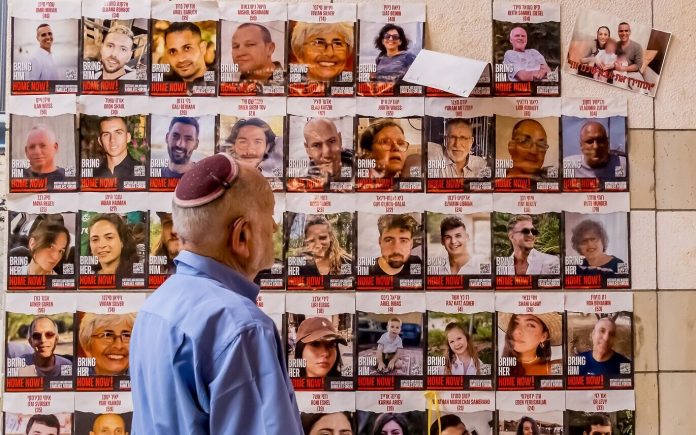
Israel Hostages

In a statement on Monday, Hamas said Israel’s prime minister Benjamin Netanyahu “is obstructing the implementation of the agreement for purely personal and partisan reasons, and the last thing he cares about is the release of the captives and the feelings of their families.”

Hamas reiterated its full commitment to the implementation of the agreement, expressing its readiness for the immediate start of the ceasefire’s second-phase talks.

Meanwhile, the movement added the Israeli regime “continues to violate the agreement and refuses to start its second phase”, adding this “procrastination” will “increase its isolation and expose the falsity of its narrative to the world.”

Hamas pointed out that the truce deal was brokered by international mediators and witnessed by the world, which requires obligating the regime to implement the agreement as the only way to recover the captives.

Israel launched the campaign of genocide in Gaza on October 7, 2023. It has killed more than 48,400 Palestinians there so far.

In January, the Israeli regime was forced to agree to a ceasefire deal with Hamas given the regime’s failure to achieve any of its objectives, including the “elimination” of the Palestinian resistance movement or the release of captives.

During the first phase of the deal, Hamas exchanged 33 Israeli captives and five Thais for some 2,000 Palestinians.

The 42-day stage of the truce, which was marred by repeated Israeli violations, expired on March 1, with Israel refraining from stepping into talks for the second stage of the agreement.

Hamas has insisted on proceeding to negotiations on a permanent ceasefire before agreeing to any further releases of Israeli captives.

Russia ‘doesn’t have cards’ in peace negotiations with Ukraine: Trump

The Ukrainian and U.S. delegations are to hold talks in Jeddah, Saudi Arabia, on ending Russia’s war. The participants are expected to discuss potential ceasefire options and a mineral resource deal between the U.S. and Ukraine.

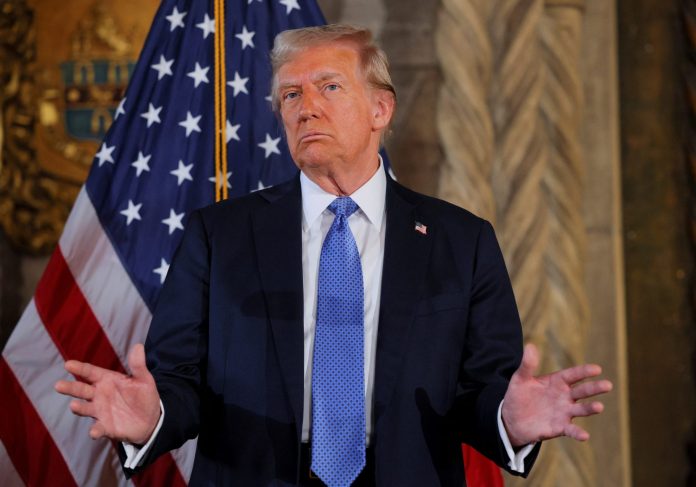
“I say they (Ukraine) don’t have the cards. Nobody really has the cards. Russia doesn’t have the cards. What you have to do is you have to make a deal, and you have to stop the killing. It’s a senseless war, and we are going to get it stopped,” Trump said.

Trump’s recent statement contradicts his previous ones, in which he claimed the opposite about Ukraine and Russia.

On Feb. 20, Trump stated that Russia held “the cards” in any peace talks with Ukraine as it occupies a significant part of Ukrainian territory.

Eight days later, the U.S. president told his Ukrainian counterpart, Volodymyr Zelensky, during a heated argument in the White House that he “was not in a good position” regarding the war and did not have “the right cards.”

Following the spat in the Oval Office on Feb. 28, the U.S. suspended its military and intelligence aid for Ukraine. The Ukrainian delegation is expected to discuss the resumption of military aid in Saudi Arabia.

The delegations will also discuss territorial issues, security protocols, and intelligence sharing, according to Trump’s Middle East envoy, Steve Witkoff.

Ukraine must make concessions in any peace agreement: Rubio

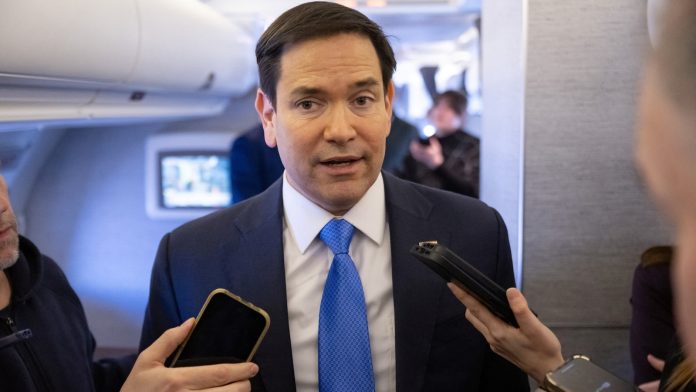
Speaking while en route to Jeddah, Saudi Arabia, for discussions with senior Ukrainian officials, Rubio emphasized the necessity of compromise from both Ukraine and Russia, stressing that difficult decisions would be required on both sides.

“The most important thing that we have to leave here with is a strong sense that Ukraine is prepared to do difficult things, like the Russians are going to have to do difficult things to end this conflict or at least pause it in some way, shape or form,” he told reporters.

Rubio’s remarks came just over a week after a tense White House meeting between President Donald Trump and President Volodymyr Zelensky. The meeting resulted in the Trump administration halting military aid to Ukraine due to disagreements over security guarantees in a proposed deal involving Ukraine’s natural resources.

While Rubio did not specify details of a potential agreement, he made it clear that mutual concessions would be key to any diplomatic resolution.

Addressing the military situation, Rubio expressed skepticism about a definitive victory for either side.

“I think both sides need to come to an understanding that there’s no military solution to this situation,” the secretary of state said.

“The Russians can’t conquer all of Ukraine, and obviously it’ll be very difficult for Ukraine in any reasonable time period to sort of force the Russians back all the way to where they were in 2014.”

He also added that determining Russia’s willingness to compromise would be a crucial step in future negotiations.

Discussions in Jeddah are unlikely to include Trump’s earlier proposal, which suggested that U.S. financial interests in Ukrainian natural resources could serve as compensation for American military support.

Rubio also clarified that Ukraine’s access to Starlink, the satellite internet service provided by Elon Musk’s SpaceX, was never under threat. the U.S. still has leverage over Moscow and is attempting to bring Russia to the negotiating table. He also indicated that the resumption of military aid to Ukraine would be a topic of discussion.

Iran blames US for targeting Iraqi nation by revoking sanctions waiver

Abbas Araghchi

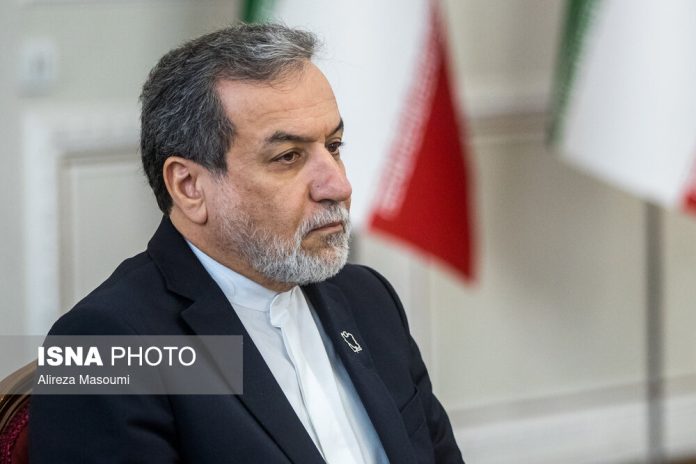
“It is extremely deplorable that the US administration has decided to target the innocent people of Iraq by attempting to deprive them of access to basic services such as electricity, especially ahead of the coming hot months of the year,” Abbas Araqchi said in a post on X on Monday.

“We stand with the Iraqi people and remain firm on our commitment to the Iraqi Government, which we will engage with to repel unlawful US actions,” he added.

Earlier, Washington announced it has revoked the waiver from Iran sanctions that allowed Iraq to import electricity from its eastern neighbor.

Currently, approximately 80 percent of Iraq’s electricity generation depends on natural gas, making the country heavily dependent on Iranian imports to sustain its power grid.

Gaza hospital head recounts torture and isolation in Israeli detention center

Gaza War

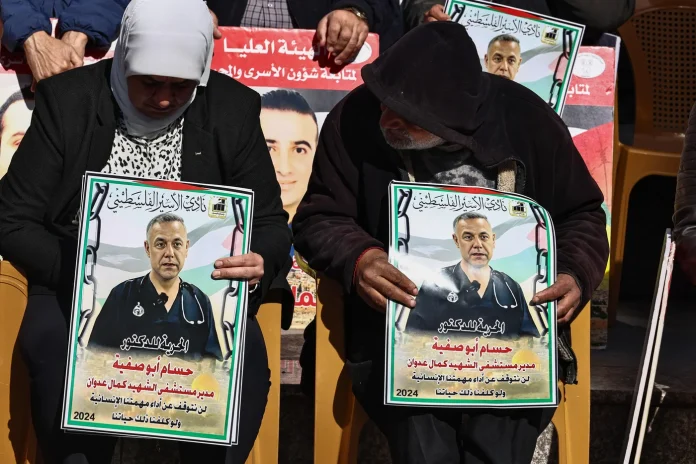
Speaking to Arab48, the lawyer of Dr Hussam Abu Safiya said that he was prevented from meeting anyone, including his lawyer, from the day he was detained on 27 December until 10 February.

In late December last year, the hospital was stormed by Israeli troops following nearly three months of a suffocating blockade and constant air strikes on its departments and the area surrounding them.

All medical staff, patients, and their relatives were taken out of the hospital at gunpoint, forced to strip down to their underwear and transferred to an unknown location.

The Palestinian health ministry said dozens of doctors were taken to detention centres for interrogation, including Abu Safiya.

Lawyer Ghaid Qassem was able to visit the doctor in the notorious Ofer prison in the occupied West Bank, where he has been detained for over 70 days after spending nearly two weeks at the Sde Teiman detention camp in the Negev desert.

Qassem’s visit on 6 March was only the second lawyer visit granted to Abu Safiya since his incarceration and came after several pleas by lawyers.

“Until February 10, 2025, Abu Safiya was denied the right to meet with any lawyer, with Israeli authorities explicitly refusing to allow anyone to visit him, preventing him from documenting the violations that took place,” she stated.

According to Qassem, the paediatric doctor was arrested and imprisoned for refusing to obey expulsion orders by the Israeli army “because his conscience and professionalism required him to remain in the hospital, especially with the presence of dozens of patients and wounded children.”

His lawyer detailed that he was isolated for 14 days in Sde Teiman and an additional 25 days in Ofer. He was later transferred to Section 24 in Ofer, where detainees from Gaza remain separated from other prisoners.

“The longest period of interrogation that Abu Safiya endured was 13 consecutive days, with each session lasting between eight to 10 hours. Throughout this entire time, he was subjected to relentless and brutal abuse, torture, and assault,” Qassem continued.

She added that the detainees are “almost completely isolated inside the prison”, without any knowledge or information about the outside world, unless they are allowed a visit.

Qassem said that intelligence services psychologically torment prisoners with news of their loved ones’ deaths, regardless if it is true or not.

“The situation of all Palestinians inside Israeli prisons is catastrophic and deplorable, but specifically, the situation of Gaza prisoners is exceptional and more difficult because they have no previous experience with imprisonment,” she added.

Abu Safiya’s lawyer describes the abuse and torture present in Israeli detention centres as “unprecedented”.

“If we talk about the Sde Timan prison, it is a slaughterhouse in every sense of the word,” she said.

“We are talking about prisoners who have been shackled for 10 months, prisoners whose limbs have been amputated without treatment, elderly prisoners who are shackled and blindfolded, prisoners who have lost 70-90 kilograms of their weight.”

“Addionally, there’s the issue of the bitter cold, as the prisoners are held in open cages, meaning that they are exposed to wind and rainwater, and they are forced to sit on the ground at all times and are forbidden from talking to each other and from praying and reading the Quran,” she added.

In late February, Israeli media aired footage of Abu Safiya, visibly exhausted and shackled by both hands and feet, being escorted by Israeli forces.

Qassem said the doctor was surprised that he was being filmed and was not informed prior to the broadcast.

Regarding Abu Safiya’s legal situation, the lawyer said the Israeli authorities attempted to reframe Abu Safiya’s case as a regular security case in order to file an indictment.

“After a series of interrogations and severe torture to force him to sign anything they could use as evidence for the indictment, they were unable to find any grounds against him after more than 45 days,” she added.

“They then returned his case to its original designation (illegal fighter), and the file of an illegal fighter carries no rights, whether in terms of representation or an indictment. Each time, the decision to extend his detention is renewed.'”

However, Qassem says that she left Abu Safiya in high spirits, ending the meeting with the following message: ”A human being is history, and their history is defined by a position that is taken and studied.”

Abu Safiya’s experience of torture is one of many inside Israeli prisons.

In early April last year, a doctor at an Israeli field hospital where Palestinians detained from Gaza are held described harrowing details of conditions, including limb amputation due to handcuff injuries and prisoners forced to defecate in nappies.

The unnamed doctor working at the Sde Teiman facility, between Gaza and Bersheeba in the Negev desert, wrote about the experiences in a letter to Israel’s defence minister, health minister and the legal adviser to the government. The letter was reported by Haaretz.

“This makes all of us – the medical teams and you, those in charge of us in the health and defence ministries – complicit in the violation of Israeli law, and perhaps worse for me as a doctor, in the violation of my basic commitment to patients, wherever they are, as I swore when I graduated 20 years ago,” he wrote.

The last groups of freed Palestinian detainees showed signs of distress, abuse, starvation and medical negligence in Israeli-run prisons and detention centres.

A number of them have only received medical attention after their release.

In one clip, a former detainee in a bus entering the Gaza Strip warned about the condition of those remaining in prison, shouting: “Prisoners [inside Israeli jails] are in danger. Save them.”

Rampant torture has been recorded in civilian and military detention facilities across Israel in recent months, resulting in the deaths of more than 60 Palestinians since 7 October 2023, among them at least 39 from Gaza.

UNRWA chief warns of ‘deepening hunger’ in Gaza as Israel blocks aid

Gaza War

“Whatever the intent is, it’s clearly a weaponisation of humanitarian aid into Gaza,” Lazzarini told reporters at UN offices in Geneva on Monday.

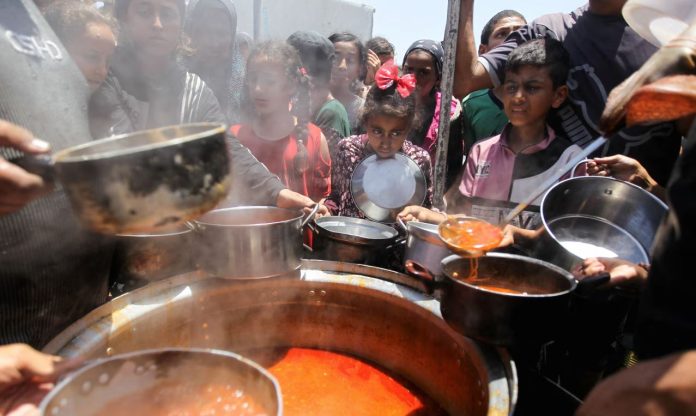
“It is critical that humanitarian aid is allowed into Gaza again to maintain the progress made during the first phase of the ceasefire and meet people’s basic needs,” he said, adding that there remains a risk of returning to the “deepening hunger” seen before the recent ceasefire.

Lazzarini heads up UNRWA, which has been mandated by the UN General Assembly to provide assistance to Palestinians, in Palestine and neighbouring countries, since December 1949.

The agency provides schooling and healthcare services, and could only be replaced by “capable Palestinian institutions” within “a Palestinian state”, Lazzarini has repeatedly said, amid his agency being banned by the Israeli government.

Lazzarini told journalists that “a fierce disinformation campaign”, legislation outlawing UNRWA in Israel’s parliament and “the suspension of funding by key donors” have taken a toll on the agency.

He warned that UNRWA cannot be allowed to “implode”.

“Collapse would create a dangerous vacuum in the occupied Palestinian territory and send shockwaves through Jordan, Lebanon and Syria,” Lazzarini added.

“An environment in which children are deprived of education, and people lack access to basic services, is fertile ground for exploitation and extremism,” he said.

“This is a threat to peace and stability in the region and beyond.”

The agency’s financial situation is also “critical and precarious”, Lazzarini added.

Prior to January 26, 2024, the United States was UNRWA’s largest funder.

Following accusations from Israel, the administration of former US President Joe Biden cut its contributions to UNRWA entirely, promising it would continue to provide aid to the Gaza Strip through alternative UN agencies, such as the World Food Programme, and non-government organisations.

However, according to The Times of Israel, US funding for Gaza’s relief efforts may have been caught up in US President Donald Trump’s administration’s sweeping cuts to the US Agency for International Development (USAID).

While it is not clear exactly which USAID programmes are being cut, US Secretary of State Marco Rubio wrote in a post on X on Monday that “after a 6 week review we are officially cancelling 83 percent of the programs at USAID”.

The Trump administration had initially said that the only exceptions to the cuts would be aid programmes in Israel and Egypt.

Rubio is currently in Saudi Arabia, where he discussed Gaza reconstruction efforts with Saudi Crown Prince Mohammed bin Salman on Monday, according to the US State Department.

Saudi Arabia is one of dozens of countries to have voiced support for a $53bn Egypt-led plan to rebuild Gaza as an alternative to Trump’s plan to forcibly displace all Palestinians from the Strip.

The rebuilding Gaza plan is among many factors being considered by negotiators from Israel and Hamas and mediators from Egypt, Qatar and the US at talks aimed at reviving the ceasefire agreement, which has stalled after Israel refused to enter into the second phase of the deal.

Hamas on Monday announced that Israel has also failed to live up to its side of the agreement by refusing to withdraw its troops from the border area between Gaza and Egypt, known as the Philadelphi Corridor, and preventing outside aid from reaching Gaza directly.

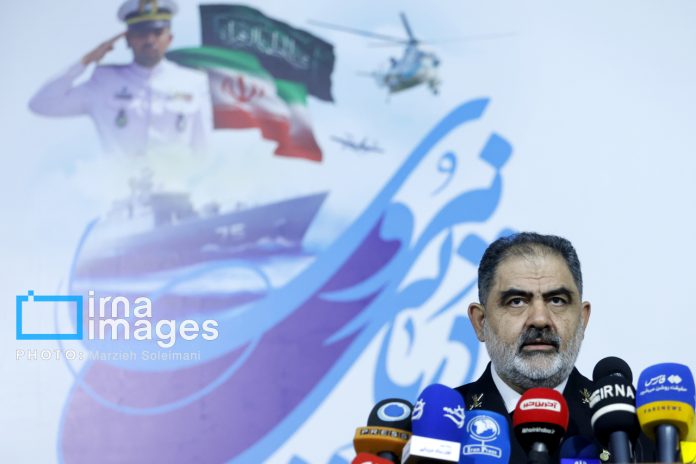
Iran’s navy chief says Trump’s statement on US power ‘delusional’

Shahram Irani

In reaction to Trump’s comments suggesting that the United States is not concerned about the joint naval exercises involving Iran, China, and Russia—asserting that the U.S. is stronger than all of these countries—Rear Admiral Irani said on Monday that Trump’s remarks stem from an “illusion.”

He stated that the participation of three countries in the military exercise, titled “Security Belt 2025,” is focused on fostering security, contrasting it with the presence of countries like the United States, which consistently contributed to global instability.

Rear Admiral Irani emphasized that the number of maritime actors on the global stage has grown, and member nations of the Shanghai Cooperation Organization and BRICS possess the capability to play a positive role in the maritime economy.

Additionally, he added that other regional countries have also made strides in maritime activities through their efforts and will join these exercises in the future.

The 7th combined Maritime Security Belt 2025 exercise is set to take place in the northern Indian Ocean, featuring naval forces from Iran, Russia, and China, along with observers from various regional nations. The exercise is designed to enhance security, promote sustainable maritime interactions, and strengthen naval cooperation among the three participating countries.