
Paragliding as a recreational and competitive adventure sport of flying paragliders is widespread all over Kermanshah province.
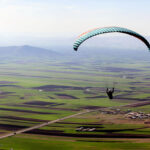
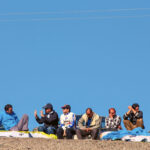

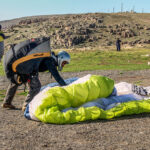
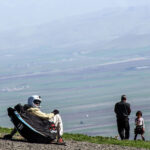



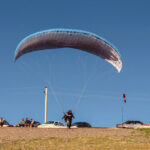
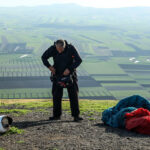
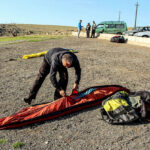
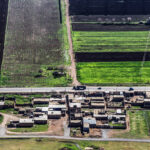
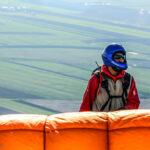
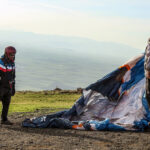
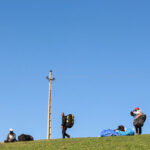

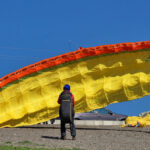

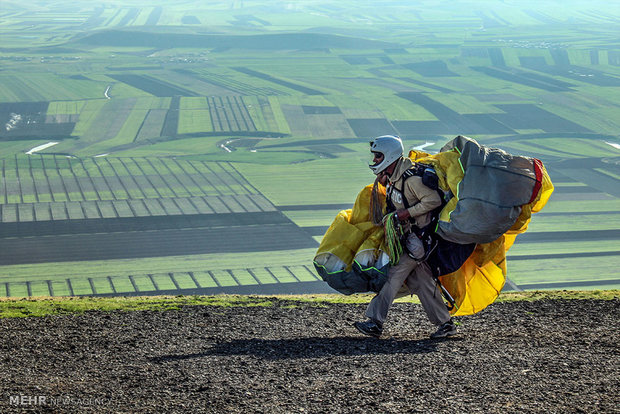
Paragliding as a recreational and competitive adventure sport of flying paragliders is widespread all over Kermanshah province.

Zarif made the remarks in a joint press conference with visiting Estonian Foreign Minister Marina Kaljurand.
He referred to Iranian high-ranking officials’ contacts with their Armenian and Azeri counterparts and said that Iran has always been ready to help peaceful resolution of regional conflicts including Karabakh issue based on international rules and regulations.
Zarif condemned terrorist actions in the region including recent terrorist action in Turkey, adding that the region is facing the danger of extremism and terrorism.
He called for coordinating resolution of regional conflicts, adding that the region does not need new crises.
Referring to hundred years of historical ties between Iran and Estonia, Zarif added that the two countries have good potentials for boost of all-out ties particularly in fields of economy and trade in the post-sanctions era.
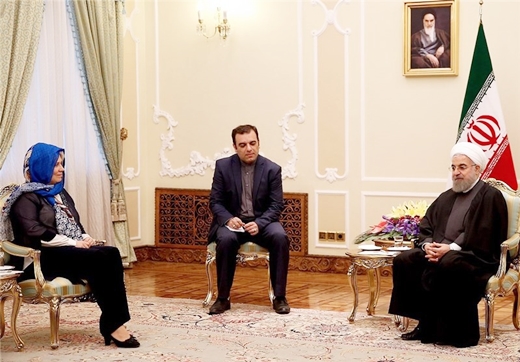
Iran seeks to promote and deepen cooperation with the EU countries, including Estonia, President Rouhani said in a meeting with Estonian Foreign Minister Marina Kaljurand, in Tehran on Sunday.
“Expansion of multilateral cooperation between the European Union and Iran is of great significance in the settlement of the complicated regional and international problems,” the president added.
He then pointed to the “destabilizing” activities of terrorist groups in the Middle East, calling for a serious fight against terrorism to prevent it from spreading to other regions, including Europe.
“One of the grounds for cooperation between Iran and the European Union would be consultation and coordination for maintaining regional stability and security,” Rouhani added.
The president further made a reference to the historical friendly relations between Tehran and Tallinn, and called for the enhancement of bilateral cultural and academic ties, such as the exchange of academics and joint research projects.
For her part, the visiting Estonian minister hailed Iran as a leading actor in regional and international developments, and expressed her country’s willingness to boost relations with the Islamic Republic in all fields of mutual interest.
Kaljurand’s visit comes against a backdrop of global enthusiasm for closer ties with Iran following the implementation of the Joint Comprehensive Plan of Action (JCPOA), a lasting nuclear deal between Iran and the Group 5+1 (Russia, China, the US, Britain, France and Germany).
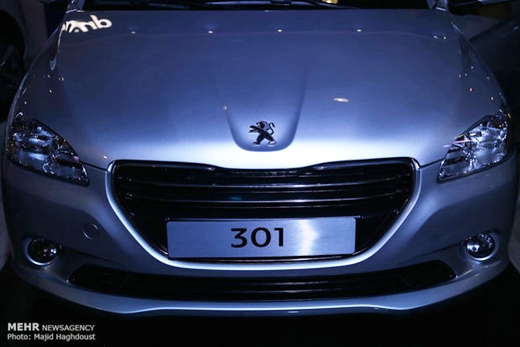
Iran Deputy Minister of Industry, Mine and Trade Mohsen Salehinia touched upon the latest status of bilateral collaboration between Iran Khodro Industrial Group (IKCO) and France’s Peugeot Car Company saying “investment of foreign automakers has been defined as joint venture denoting a 50-50 investment where the foreign side directly brings in 50 per cent of the share in three stages.”
Salehinia went on to add “in the meantime, an independent company with a production line has been established by IKCO and Peugeot awaiting joint venture since relevant licenses need to be received from Iran’s Ministry of Economic Affairs and Finance before pursuing the registration process.”
The official estimated that the Iranian-French joint venture will enter operational phase in late April when the board members, CEO, middle managers as well as supervisors of other sectors need to be appointed.
CEO of IKCO Hashem Yekkeh Zare had previously pointed to the signing of a contract with Peugeot of France enumerating several features of the deal; “it brings foreign investment into the country, leads to job creation, increases level of production to the interest of auto part makers, and brings about technical knowledge transfer as suggested by the Leader in line with Resistance Economy, as well.”
Yekkeh Zare has emphasized “one important feature of the contract is the establishment of a joint venture between the Iranian and French sides where the profits will be shared; during the first year, only 40 per cent of the produced cars are indigenous while the figure will reach 70 per cent leading to positive balance sheet on the part of the company.”
“Peugeot had left Iran in 2011 and we have set punitive contracts for the French company,” highlighted the official noting “the company is obliged to pay 200 million euros as compensation as well as that Peugeot’s final business share will be the very low figure of only 15 per cent.”

Ettela’at:
1. President: Private sector key to solving Maskan Mehr problem
2. Iran, India ink MoU to cooperate in oil and gas projects
3. Industry minister says Iran suffers from absence of skilled foreign companies
4. Veteran Iranologist Manouchehr Sotoudeh dies

Ebtekar:
1. Building houses in cities is more costly than in desert
A report about admin’s troubles in completing the Maskan Mehr Scheme
2. Electorate list of Hope caused maximum election turn out: Report
3. Editorial: Nation no longer favors populism

Asrar:
1. Nation discerns who intends to offer honest services: reformist figure
2. Boeing sends delegation to Tehran for talks
3. President criticizes lack of prudence in Maskan Mehr Scheme
The scheme was aimed at providing inexpensive houses to the nation and was initiated under former administration.
4. Obama: Don’t worry; Trump won’t win US presidential election

Etemad:
1. Principalists lost to themselves, not the opponent: expert
2. No specific section for Iran in Louvre

Afkar:
1. Sisi sells Egypt sovereignty to Riyadh
2. Best way must be chosen to solve Masken Mehr issues: Rouhani

Emtiaz:
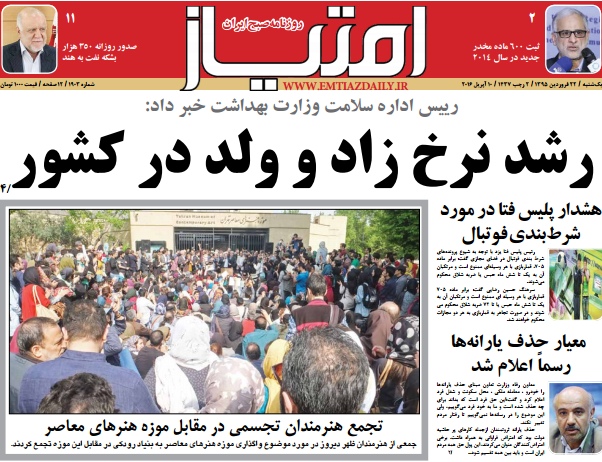
1. Birth rate grows in Iran
2. Artists rally before Museum of Contemporary Arts
Iran:
1. 200 runners from 20 countries compete in running match in Persepolis
2. Iran is a part of me: Former Italian embassy staff in Iran
3. Details about elimination of the rich from subsidy handout recievers

Javan:
1. 150 jobless citizens add to country’s unemployment every hour
2. 3,000 tons of American arms delivered to Syrian terrorists

Jomhouri Islami
1. Rouhani: Iran to cede unfinished projects to private developers
2. Iran allocates IRR150b to small, middle industries
3. Iran offers 5-year tax exemptions to foreign investors
4. UAE, Saudi Arabia hatch new plot to dissolve Yemen

Shargh:
1. Building deserts not right: Rouhani

Keyhan:
1. Iran to garner unofficial, substandard garrantees in market
2. US presidential contenders compete in libeling Iran
3. Sisi offers Saudi king highest Egyptian medal of honor

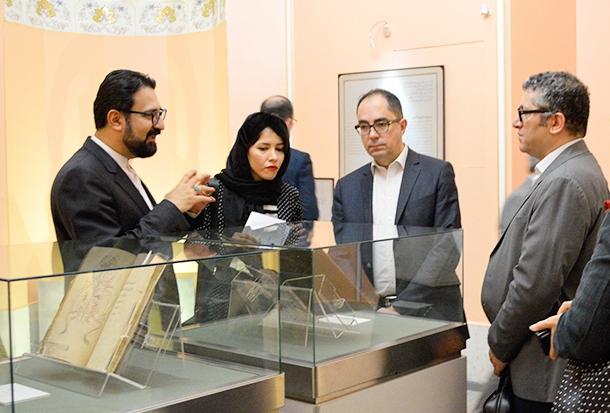
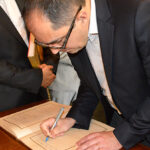
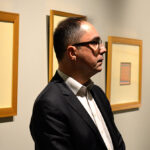
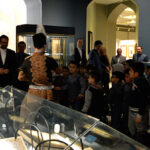
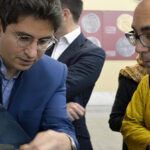
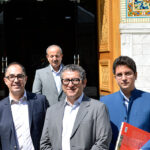
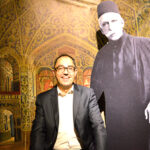
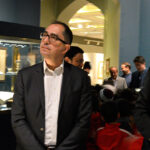
According to IBNA’s correspondent (quoting from the public relations office of Malek National Museum and Library), during his visits, Jean-Luc Martinez was accompanied by his wife Pascal Martinez; the director of the Louvre Museum’s Ancient East Department Marielle Pic; the director of the Louvre Museum’s Islamic Arts Department Yannick Lintz; the political advisor of the Louvre Museum’s director Alberto Vial; and the French Cultural Attaché to Tehran.
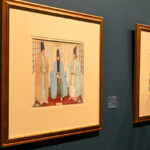
Amazed by the cultural artistic works which the Malek National Museum and Library contains, Martinez appreciated the efforts of Hossein Agha Malek, the founder and patron of this historical institution, in collecting a unique treasure.
“The Louvre Museum is very interested in launching collaborations with the Malek National Museum and Library, and holding joint projects, including exhibitions,” he said.
The director of one of the world’s largest museums will also have meetings with Iranian officials, such as the Head of Iran’s Cultural Heritage, Handicrafts and Tourism Organization (ICHTO), Masoud Soltanifar, and a number of curators.
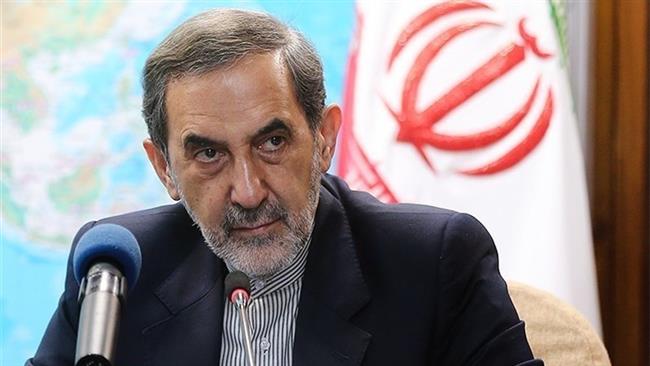
“Iran believes that the government of Bashar al-Assad should remain in power until the end of the presidency term and the removal of Assad is a redline for us,” Ali Akbar Velayati, who advises Ayatollah Khamenei on international affairs, said in a televised interview on Saturday.
He emphasized that only the Syrian people can decide the future of their country and their president.
The Iranian official also commented on the policies of the United States in the Middle East, saying Washington has suffered repeated failures in its regional policies.
People in Afghanistan and Iraq, Velayati said, have pushed Americans out of their countries and now the US authorities cannot tolerate Iran’s influence in countries such as Iraq and Syria.
“At the request of these governments (Iraq and Syria), we support them [in their fight] against terrorists and it is none of Americans’ business to say anything in this regard,” Velayati stated.
He noted that Washington is behind the creation of terrorist groups such as the Daesh Takfiri group.
The Iranian official warned that the US seeks to disintegrate Muslim countries so that proxy governments would be formed to support the Israeli regime.
Velayati also emphasized that whether the Americans accept it or not, the time for their presence in the region is over.
Velayati’s remarks came after Ram Ben-Barak, the director general of Israel’s Intelligence Ministry, called on February 14 for the partition of Syria along sectarian lines.
“I think that ultimately Syria should be turned into regions, under the control of whoever is there – the Alawites where they are, the Sunnis where they are,” Ben-Barak said.
Syria has been plagued by militancy since March 2011, which according to the so-called Syrian Observatory for Human Rights has so far claimed the lives of at least 270,000 people. Some reports, however, put the death toll at as high as 470,000.
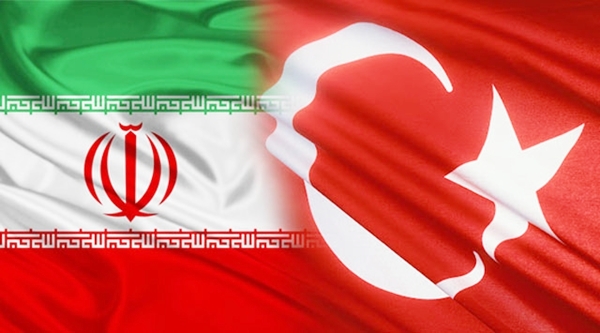
The three documents were signed by the two countries’ officials at the end of the 25th session of Iran-Turkey Joint Economic Cooperation Commission.
At the end of two days of intensive talks between various governmental officials of Iran and Turkey, which were held in Ankara and Konya, Iranian Minister of Communications and Information Technology Mahmoud Vaezi and Turkish Minister of Development Cevdet Yilmaz signed a memorandum of understanding (MoU) to boost cooperation between the two sides.
Vaezi and Yilmaz also signed another document, which will reportedly open a new chapter in banking ties between the two neighbors in the post-sanctions era.
Another MoU was signed between the Iranian Chamber of Commerce, Industries, Mines, and Agriculture (ICCIMA) and The Union of Chambers and Commodity Exchanges of Turkey.
The agreements come against the backdrop of a new wave of interest in ties with Iran after Tehran and the Group 5+1 (Russia, China, the US, Britain, France and Germany) on July 14, 2015 reached a conclusion over the text of a comprehensive 159-page deal on Tehran’s nuclear program and started implementing it on January 16.
The comprehensive nuclear deal, known as Joint Comprehensive Plan of Action (JCPOA), terminated all nuclear-related sanctions imposed on Iran.
Experts believe that Iran’s economic growth would rise remarkably after the final nuclear deal takes effect.
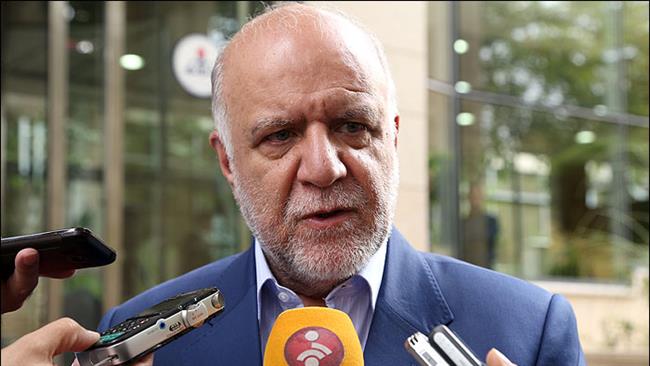
“Saudi Arabia may be willing to do so, but it is unable to do it,” he said after a meeting between the trade delegations of Iran and India.
He further said that Iran and India have signed an agreement which stresses Indian readiness to buy more crude from Iran and to develop Farzad B Gas Field, on condition that the agreement can be made before the Christian New Year.
Iran holds the largest gas reservoirs in the world, he said, adding that India would need more energy in the near future due to its economic progress.
“We will meet India’s need as the only country which has surplus gas for export.”
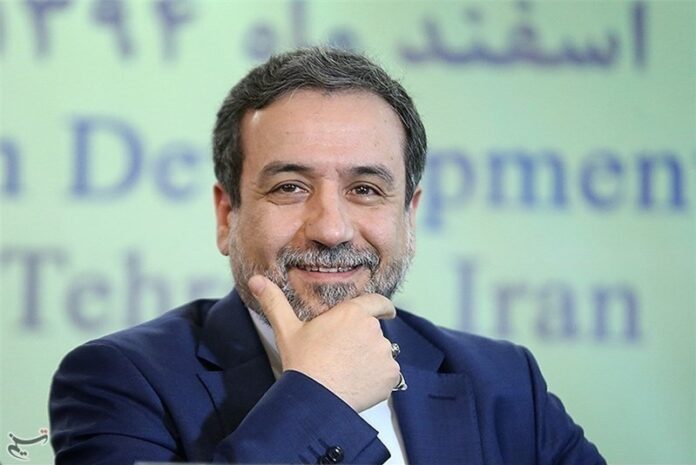
Heading a high-ranking delegation, Araqchi arrived in Istanbul on Sunday to hold talks with the representatives of other member states of the OIC on the agenda of the upcoming summit.
The 13th OIC Summit is slated to open in Istanbul on Sunday and last until Friday, April 15.
The OIC leaders’ summit will take place on Thursday and Friday, while Sunday and Monday meetings will be held among the senior experts of member countries. Ministerial meetings will be held on Tuesday and Wednesday.
Earlier in march, representatives of the OIC member states held an extraordinary meeting to discuss the issue of Palestine and the holy Quds.
Ministers and heads of diplomatic missions from 57 Muslim countries, including Iranian Foreign Minister Mohammad Javad Zarif, attended the OIC ministerial meeting in the Indonesian capital of Jakarta.
© All Content by IFP News ( Iran Front Page ) is licensed under a Creative Commons Attribution 4.0 International License.
