Thursday, April 9, 2026
Home Blog Page 45

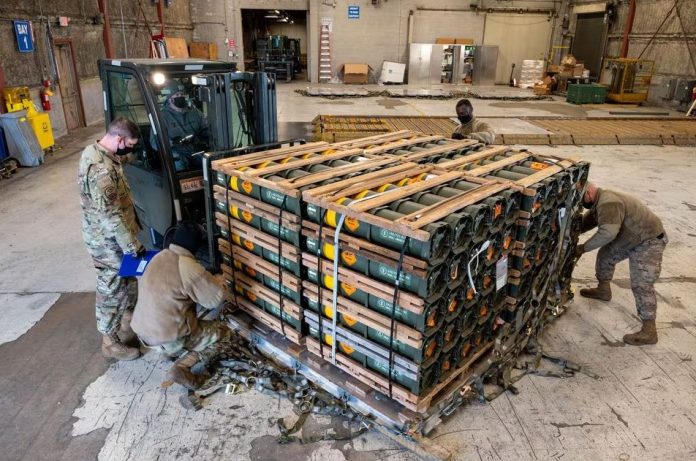
US House passes $800mn aid package for Ukraine through 2027

Russia Ukraine War Weapons Arms

The 2026 National Defense Authorization Act (NDAA) was approved 312-122 on Wednesday and will now advance to the Senate, where it is expected to receive bipartisan support, according to The Hill.

Some legislators objected to directing more taxpayers’ money to help Ukraine fight Russia. “I thought we were getting out of Ukraine. I don’t know why we still need to spend money there,” Thomas Massie, a Republican from Kentucky, stated.

On Wednesday, US President Donald Trump slammed what he described as a “massive corruption situation” in Kiev, referring to the recently uncovered $100 million kickback scheme in the country’s energy sector, which heavily relies on Western aid.

Prosecutors named Ukrainian President Volodymyr Zelensky’s longtime associate and former business partner Timur Mindich as the ringleader. Mindich fled the country to evade arrest after apparently being tipped off.

The scandal led to the resignation of two government ministers, and further anti-corruption raids prompted Zelensky to fire chief of staff Andrey Yermak last month.

Ukraine’s military procurement system has also been shaken by several graft and embezzlement scandals, one of which led to the resignation of Defense Minister Aleksey Reznikov in 2023.

The bill was approved as Trump has been pressuring Ukraine to sign a peace deal with Russia, with some reports suggesting that he hopes to reach an agreement by Christmas.

Russia considers Western military cooperation with Ukraine one of the root causes of the conflict and has listed ending foreign weapons deliveries as a condition for a ceasefire. President Vladimir Putin has argued that otherwise, Ukraine would use the pause in the fighting to rearm and regroup, as he says happened when Ukraine refused to implement the 2014-2015 Minsk agreements.

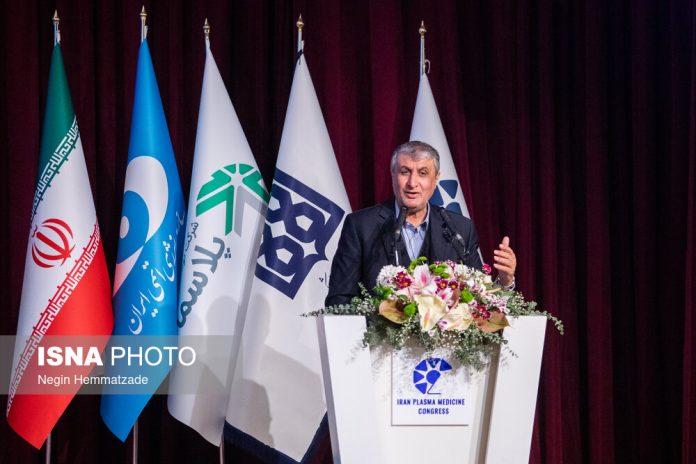
Iran showcases advanced plasma therapy systems

The devices were launched in the presence of Mohammad Eslami, vice president and head of the Atomic Energy Organization of Iran (AEOI), senior officials from the Vice Presidency for Science and Technology, the Ministry of Health, and Mahdieh Bakhtiari, CEO of the knowledge-based Plasma Technology Company.

Among the systems presented was a small-scale production line for plasma-activated media that enables the synthesis of plasma-based drugs and facilitates clinical studies.

One notable achievement highlighted was the successful impact of plasma-synthesized drugs on patients suffering from granulomatous mastitis.

Another device unveiled was the new generation of AI-based plasma jets for wound treatment, which personalizes therapy protocols for individual patients and allows broader and easier use in clinics.

Officials said the new plasma therapy systems will significantly reduce treatment costs.

The two-day congress is being held on Dec. 11-12 at the hospital’s Heart Hotel.

“What matters to us is that the cycle of creativity and innovation is established in a sustainable process and that the transformation of science and knowledge into technology continues without interruption,” Eslami stated, speaking at the event.

“We must build capacity and move forward strongly with God’s help. A society that cannot create technology will be labelled backward,” he added, emphasizing Iran’s independence.

“We have lived with dignity and were never under the domination of superpowers. We did not obey them, and their main problem is our refusal to hand over our interests to them,” he added.

Referring to hostile actions against Iran’s nuclear industry, he stated: “By the grace of God, despite industrial sabotage, assassinations, explosions, countless political, legal and psychological obstructions, fabricated cases full of slander, infiltration and bribery, and finally the military attack by two of them (the United States and the Zionist regime), they must understand that we are here and we will not back down.”

“We will continue our path of progress more determinedly than before, with God’s special grace and the efforts of our colleagues,” he concluded.


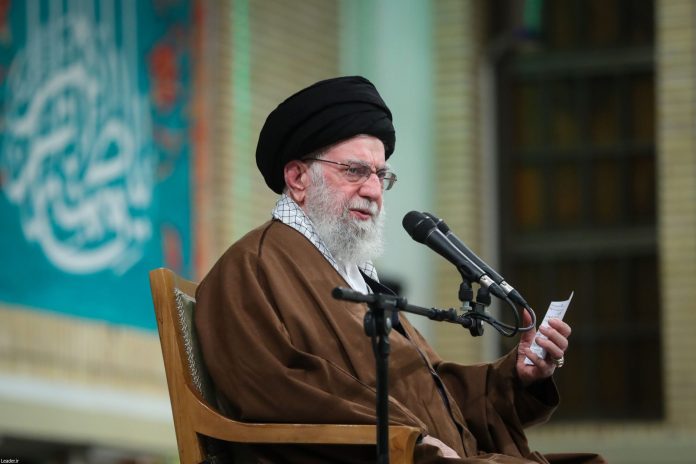
Iran’s leader says the country advancing despite many challenges

“The shortages and problems across the country are many, but the nation, day by day, with perseverance, sincerity, goodness, and pursuit of justice, creates honor and strength for Islam and Iran, and by God’s grace, the country is moving, striving, and advancing,” he said Thursday.

Speaking to thousands of devotees of the Prophet of Islam’s Household on the occasion of the birth anniversary of Fatima al-Zahra (SA) in Tehran Thursday, Ayatollah Khamenei touched on a broad media and propaganda campaign after the June aggression by Israel and the US met Iran’s crushing response, forcing the adversaries into a ceasefire.

“Today, beyond the military clashes we have witnessed, we are in the center of a propaganda and media war with a broad enemy front,” he stated, adding, “The enemy has realized that this property, land, and spiritual homeland cannot be subdued and occupied through military pressure.”

He criticized those raising fears of renewed war, saying “Some repeatedly raise the possibility of another military confrontation, and some deliberately inflate this to keep people uncertain and anxious, but God willing, they will not succeed.”

Ayatollah Khamenei said the enemy’s “line, danger, and goal” is to erase the effects, goals, and concepts of the Islamic Revolution. The US, the Leader said, is “at the center of this wide and active front,” with some European countries surrounding it and domestic mercenaries and traitors residing in Europe seeking personal gain on the periphery.

He underscored the importance of understanding the enemy’s strategy, saying that resisting Western media campaigns is “difficult but entirely possible.”

“Like the military front, in this propaganda and media confrontation, our formation must be aligned with the enemy’s plan and goals and focus on the points he targets, namely Islamic, Shia, and revolutionary teachings.”

Highlighting Iranian resilience, Ayatollah Khamenei underlined: “The people of Iran, through national resistance, have thwarted ongoing efforts by the enemy to change the religious, historical, and cultural identity of the nation.”

He emphasized that proper defensive and offensive arrangements are needed to counter propaganda attacks targeting “minds, hearts, and beliefs,” and stressed that “Iran, despite existing problems and shortages across the country, continues on a forward-moving path.”

Ayatollah Khamenei defined national resistance as “endurance and steadfastness in the face of various pressures from dominators,” whether military — as seen during the Sacred Defense of the 1980s when Iranians fought an Iraqi invasion and in recent months among the youth — or economic, media, cultural, or political.

He cited provocations and propaganda by Western media actors and political-military leaders as instances of the enemy’s propaganda pressure, noting that the pressures often aim at “territorial expansion — like what the U.S. does in Latin America — control of underground resources, changing lifestyles, and, most importantly, identity transformation.”

Ayatollah Khamenei also reflected on a century of foreign attempts to undermine Iran’s identity.

“For over a hundred years, global oppressors have tried to change the religious, historical, and cultural identity of the Iranian nation, but the Islamic Revolution made all those efforts futile. In recent decades, the people, through steadfastness and resilience, have foiled extensive pressures by enemies,” he said.

He highlighted the regional impact of Iranian resistance, saying the concept and language of resistance have expanded from Iran to regional countries and beyond.

“Some things the enemy did to Iran and the Iranian nation, if done to any other country, that nation and country would have been finished,” he added.

Ayatollah Khamenei called for vigilance and persistence, emphasizing that Iran’s continued “movement, effort, and progress” depends on steadfastness against both military and media pressures and on protecting the nation’s religious, historical, and cultural identity.

Ayatollah Khamenei called for vigilance and persistence, emphasizing that Iran’s continued “movement, effort, and progress” depends on steadfastness against both military and media pressures and on protecting the nation’s religious, historical, and cultural identity.
Iceland becomes fifth state to boycott Eurovision 2026 over Israel participation

The board of the national broadcaster, RÚV, voted on Wednesday not to participate, meaning Iceland will join Spain, Slovenia, the Netherlands and Ireland in neither participating in nor broadcasting the event, which is scheduled to take place in Vienna.

Last week the contest’s organising body, the European Broadcasting Union, declined to expel Israel over its conduct of the war against the Gaza Strip.

RÚV announced in a statement that “given the public debate in this country … it is clear that neither joy nor peace will prevail regarding the participation of RÚV in Eurovision. It is therefore the conclusion of RÚV to notify the EBU today that RÚV will not take part in Eurovision next year.”

RÚV added that it had raised concerns numerous times with the EBU, which it felt had not been addressed.

The war in Gaza has caused ructions at Eurovision, spurring protests outside venues and forcing organisers to clamp down on political flag-waving.

The EBU held a general assembly last week, where members met to discuss concerns about Israel’s participation. Members voted to adopt tougher contest voting rules in response to allegations that Israel manipulated the vote in favour of their contestants, but took no action to exclude any broadcaster from the competition.

The walkouts cast a cloud over the future of what’s meant to be a feelgood cultural party, dealing a blow to fans, broadcasters and the contest’s finances.

Before the board meeting, RÚV’s vice-chair, Diljá Ámundadóttir Zöega, gave a hint of things to come.

“Today is International Human Rights Day and I think the outcome will be in that spirit,“ she stated.

Earlier on Wednesday, Poland confirmed it would be participating in the contest. Germany and Austria have also confirmed they will be taking part, arguing that Eurovision was conceived as an apolitical song contest to unite Europe.

RTÉ, the Irish broadcaster, announced that participation was “unconscionable given the appalling loss of lives in Gaza and the humanitarian crisis there” while RTVE in Spain noted participating would engender “distrust” in the organisation given the depth of feeling over Gaza.

Spain’s culture minister, Ernest Urtasun, backed the boycott.

He stressed, “You can’t whitewash Israel given the genocide in Gaza. Culture should be on the side of peace and justice.”


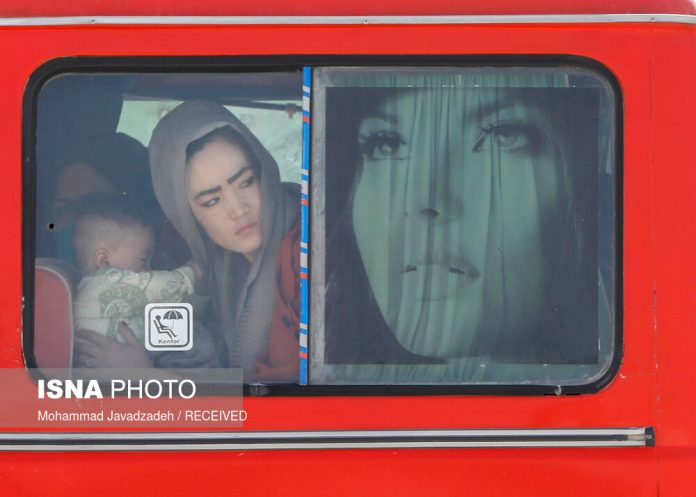
Repatriation of undocumented Afghans aligns with international law: Iran’s envoy

Afghan Refugee in Iran

Amir Saeed Iravani made the remarks during a speech he delivered at a UN Security Council session on Afghanistan held on Wednesday, emphasizing that the repatriation of undocumented Afghan refugees has been conducted in accordance with international legal obligations.

He noted that the Islamic Republic has long shouldered the weight of sheltering millions of Afghan refugees despite being under significant unilateral sanctions.

“Iran has borne a disproportionate burden for decades by hosting millions of Afghan refugees while itself being subjected to severe unilateral sanctions. This responsibility has imposed immense economic and security pressures, with annual costs reaching nearly ten billion dollars, in the absence of adequate international support,” Iravani stated.

The Iranian envoy added that it was unfortunate that the international community had not lived up to even the most basic commitments to help Afghan refugees in Iran, stressing that the sharp drop – over 60 percent – in funding planned for 2026 showed this clearly and amounted to a serious violation of the principle that countries must share responsibility.

“Iran has repeatedly and unequivocally stated, including from this very podium, that it cannot and will not continue to shoulder alone the disproportionate burden of hosting more than six million Afghan nationals without genuine international solidarity, equitable burden-sharing, and tangible financial support,” Iravani stressed.

He further emphasized that “The return of undocumented Afghan nationals has been conducted in full conformity with international law and humanitarian principles, with strict respect for human dignity.

In concluding remarks, Iravani added that the United Nations Assistance Mission in Afghanistan (UNAMA) remained essential in tackling Afghanistan’s complex problems and that Iran supported its mandate and stood ready to work closely with the UN, regional partners, and other stakeholders to help advance the country’s stability and future.

Iran began deporting Afghan refugees in late June following the 12-day Israeli war of aggression against the country.


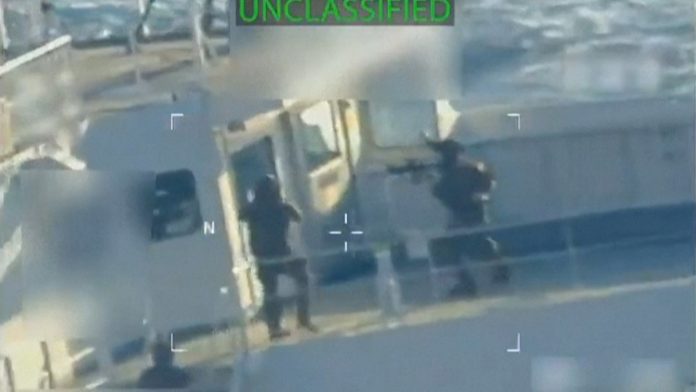
Iran condemns US seizure of Venezuelan tanker as “Caribbean Piracy”

In a statement issued on Thursday, the embassy described the move as a “flagrant breach” of international law, including the fundamental principle of freedom of navigation.

“The illegal action by the US government to seize a Venezuelan tanker in the Caribbean Sea without any legitimate justification represents a clear violation of international regulations,” the embassy said, adding that “Caribbean piracy” is the most fitting description for Washington’s conduct.

The statement also accused the US of attempting to advance its political objectives through coercive measures, infringement of national sovereignty, and destabilizing behavior.

Expressing solidarity with Venezuela, the embassy reaffirmed Iran’s support for the country’s sovereignty and “legitimate rights.”

Bloomberg had earlier reported that US forces detained a sanctioned tanker carrying Venezuelan oil near the country’s shores. The incident comes as US President Donald Trump has intensified his rhetoric against Venezuelan President Nicolás Maduro and has not ruled out a ground assault.

Venezuela’s Foreign Ministry also condemned the seizure, calling it “international piracy” and part of a broader US strategy aimed at seizing the country’s energy resources.

US Congress advances bill to repeal Caesar Act sanctions on Syria

The bid to repeal the sanctions was passed on Wednesday as part of a larger defence spending package, known as the National Defense Authorization Act, or NDAA.

“With this NDAA, as many know, we are repealing sanctions on Syria that were placed there because of Bashar al-Assad and the torture of his people,” Representative Brian Mast of Florida said.

“We’re giving Syria a chance to chart a post-Assad future.”

Mast had previously been opposed to dropping the sanctions. In his statement on the House floor on Wednesday, he warned that, under the bill, the White House could “reimpose sanctions if the president views it necessary”.

The bill now heads to the Senate and is expected to be voted on before the end of the year.

If passed, the NDAA would repeal the 2019 Caesar Act, which sanctioned the Syrian government for war crimes during the country’s 13-year-long war.

It would also require the White House to issue frequent reports confirming that Syria’s new government is combating Islamist fighters and upholding the rights of religious and ethnic minorities.

Human rights advocates have welcomed the easing of heavy sanctions that the US and other Western countries imposed on Syria during the war.

They argue that lifting those economic restrictions will aid Syria’s path towards economic recovery after years of devastation.

The Caesar Act was signed into law during President Donald Trump’s first term.

But in December 2024, shortly before Trump returned to office for a second term, rebel forces toppled al-Assad’s government, sending the former leader fleeing to Russia.

Trump has since removed many sanctions on Syria and met with President Ahmed al-Sharaa, who led the push that ousted al-Assad.

But some sanctions can only be removed by Congress, a step that Trump has encouraged lawmakers to take.

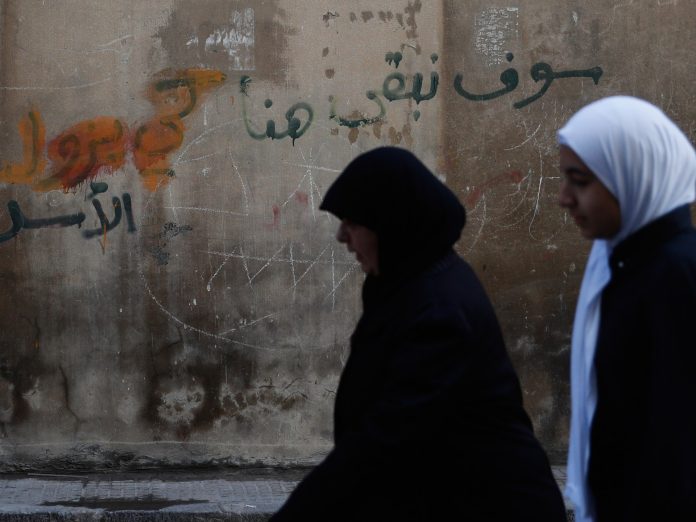
This month, Syrians celebrated the one-year anniversary of al-Assad’s overthrow with fireworks, prayer and public displays of pride. But the country continues to face challenges as it recovers from the destruction and damage wrought by the war.

Syrian officials have urged the repeal of remaining sanctions, saying that it is necessary to give the country a fighting chance at economic stability and improvement.

Syrian central bank Governor Abdulkader Husrieh called US sanctions relief a “miracle” in an interview with the news service Reuters last week.

The United Nations Security Council also voted to remove sanctions on al-Sharaa and Interior Minister Anas Khattab, who were previously on a list of individuals linked to ISIL (ISIS or Daesh) and al-Qaeda.


Gaza ‘Board of Peace’ to be announced in early 2026: Trump

Gaza War

“We’ll do it early next year, and the Board of Peace are going to…it’ll be one of the most legendary boards ever,” he told reporters at the White House.

“They want to all do it. Basically, it’ll be the heads of the most important countries. They all want to be on (it).”

The board is a key component of Trump’s ceasefire deal for the besieged Gaza Strip, though key details including its membership have yet to be announced. It is slated to play an assisting role in the administration of Gaza under the terms of Trump’s ceasefire deal.

The US president has stated that he will serve as the group’s chairman.

Since October 2023, Israel has killed more than 70,000 people, mostly women and children, and injured nearly 171,000 others in Gaza in a more than two-year war that came to a halt under a ceasefire deal that took effect on Oct. 10.


Ukraine sends revised peace plan to US: AFP

A first US plan that involved Ukraine surrendering land that Russia has not captured was seen by Kyiv and its European allies as caving in to too many of Russia’s hardline demands, and has since been revised.

A Ukrainian official briefed on the latest version told AFP that it “takes into account Ukraine’s vision — it is a further proposal for adequate solutions to problematic issues”.

“We are not disclosing the details pending the reaction of the American side,” the official added.

But Trump, who has been pressuring Ukrainian President Volodymyr Zelensky to agree to a US plan, swiftly expressed impatience with both Kyiv and its European allies in France, Britain and Germany.

His comments come amid a growing divide with Europe after he described it as “decaying” and “weak” on immigration and Ukraine, days after a new US national security strategy said the continent risked “civilisational erasure”.

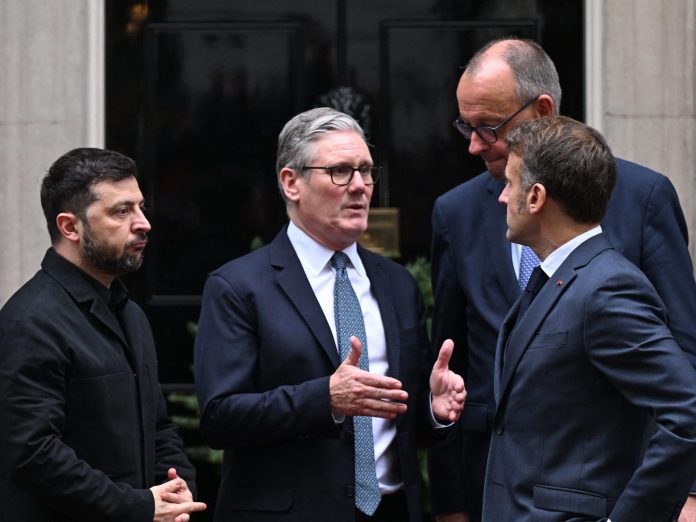
“We discussed Ukraine in pretty strong words,” Trump told reporters when asked about the phone call with British Prime Minister Keir Starmer, French President Emmanuel Macron and Germany’s Chancellor Friedrich Merz.

On Monday, Ukraine’s European allies put on a show of support for Zelensky as they expressed scepticism about parts of the latest US proposal to end the war launched by Russia in February 2022.

Trump added that the Europeans wanted to hold fresh talks this weekend but warned that they risked “wasting time”.

“I think we had some little disputes about people, and we’re going to see how it turns out. And we said, before we go to a meeting, we want to know some things,” Trump continued.

“They would like us to go to a meeting over the weekend in Europe, and we’ll make a determination depending on what they come back with. We don’t want to be wasting time”.

Talks between US officials and Russian President Vladimir Putin in the Kremlin last week also failed to reach a breakthrough.

The threats of a full Trump pull-out have come at a delicate time for Zelensky, whose army is on the back foot in the war-torn eastern Donbas region while a corruption scandal engulfs several of his close associates.

The Ukrainian leader — who Trump has accused of not reading the plan — said on Tuesday the plan had been broken down into three documents — a framework 20-point agreement, and two separate papers: one on security guarantees and another on Ukraine’s post-war recovery.

Earlier on Wednesday, Zelensky stated that he had held an online meeting with US President Donald Trump’s son-in-law Jared Kushner, US Treasury Secretary Scott Bessent and BlackRock CEO Larry Fink to discuss Ukraine’s recovery.

“This could be considered the first meeting of the group that will work on a document concerning reconstruction and economic recovery of Ukraine,” Zelensky wrote on social media.

“We have also updated our reflections on the 20 points of the framework document for ending the war. It is overall security that will determine economic security and underpin safe business environment,” he added.

But US leader gave the latest in a series of hints that he may walk away from a conflict he blames on his predecessor Joe Biden, and which he once said he could end within 24 hours of returning to office in January.

“Sometimes you have to let people fight it out and sometimes you don’t,” Trump said on Wednesday.

“But the problem with letting people fight it out is yet you’re losing thousands of people a week. It’s ridiculous. The whole thing is ridiculous,” he added.


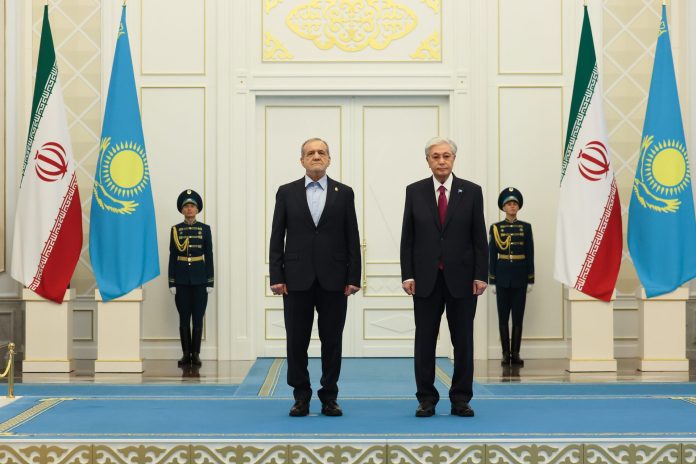
Kazakhstan formally receives Iranian President Pezeshkian in Astana

According to Iran’s presidential office, the ceremony began with the national anthems of both countries, followed by a formal introduction of the senior members of the Iranian and Kazakh delegations.

The two leaders then proceeded to bilateral talks focused on strengthening political, economic, and regional cooperation.

A joint meeting of high-ranking delegations from both countries is scheduled to follow the private discussions.

President Pezeshkian arrived in Astana on Wednesday evening at the official invitation of President Tokayev and was greeted at the airport by Kazakhstan’s deputy prime minister and deputy foreign minister.

During his visit, the Iranian president is expected to hold several rounds of negotiations aimed at expanding bilateral ties.

Following the talks, the two presidents will attend a signing ceremony for cooperation documents and later brief the media on the outcomes.

President Pezeshkian’s program also includes a visit and address at the Kazakhstan Medical University, as well as participation in a joint forum of Iranian and Kazakh business leaders to explore new trade and investment opportunities.