Saturday, December 27, 2025
Home Blog Page 4492

Local Games Festival in North Khorasan

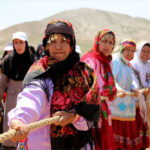
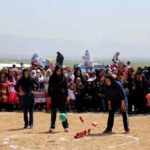
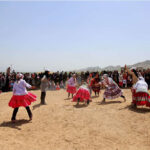
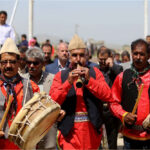
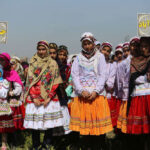
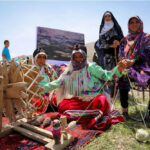
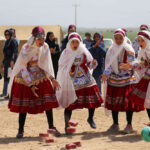
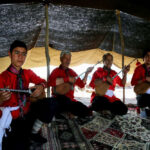
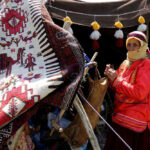
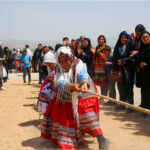
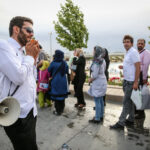
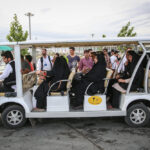
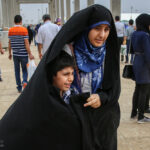
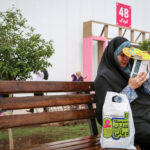
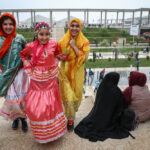
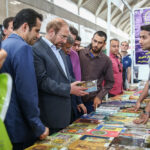
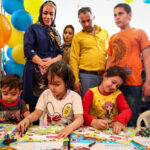
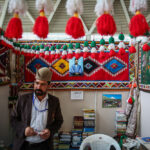
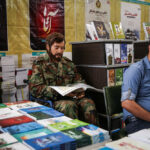
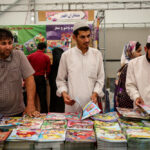
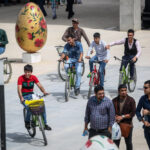
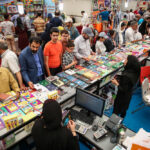
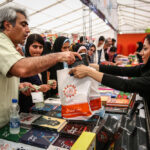
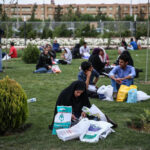
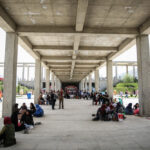
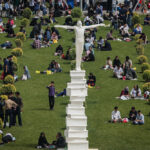
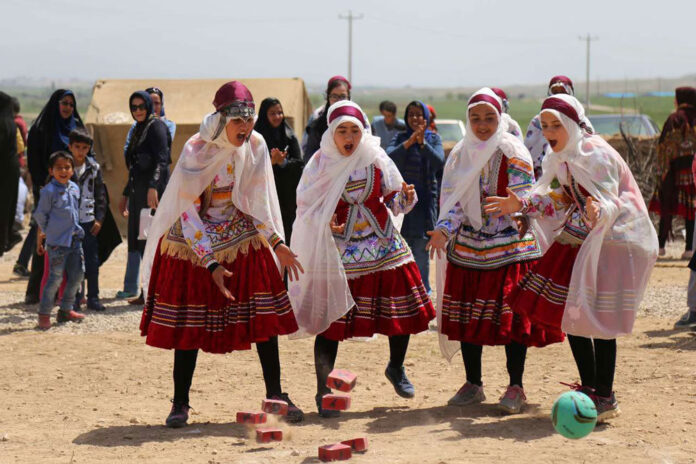
The northeastern city of Bojnord, in North Khorasan Province, hosts a festival games and music to mark Eid-al-Mab’ath (the day that Muhammad (S) was anointed as prophet), which fell on May 5 this year. In the festival, traditional cuisines are also displayed.

Photos by IRNA – Vahid Khademi


First Tehran Architecture Biennial to Open Next Week

Saba Engineering Events Association has organized the biennial in collaboration with Iran’s Ministry of Transport and Urban Development.

The biennial will include a number of exhibits, seminars and workshops running for several months, Mehran Davari, the organizer of the exhibition section of the biennial, stated in a press release.

The projects displayed at the exhibition “Post-Oil City: The History of the City’s Future” and top award-wining projects at the RIBA Regional Awards, an award given to buildings across the UK, will be showcased in Vartan Hovanesian House.

He added that Sam Jacoby, a chartered architect with an AA Diploma and a doctorate from the Technical University of Berlin, will be displaying a collection of his works at the biennial. He is due to travel to Iran to introduce his book recently published in London entitled Drawing Architecture and the Urban.

Davari called the biennial a good event for young architects, who will have a chance to meet professionals during the program.

PRTC Signs Cooperation Deal with SPEC

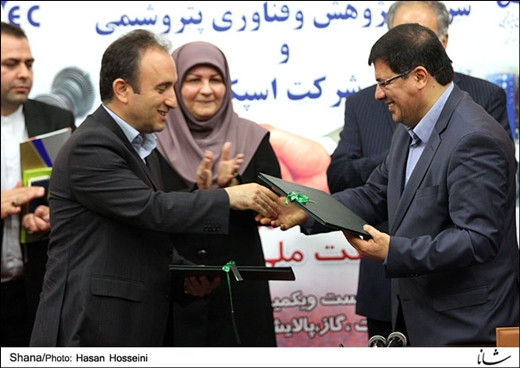
The Petrochemical Research and Technology Company (PTRC) and the Supplying Petrochemical Industries Parts, Equipment & Chemicals Engineering Company (SPEC) have signed an agreement to enhance their technical relations and their commercialization of petrochemical catalysts and processes.

Esmaeil Ghanbari from SPEC and Mehdi Shari Niknafs signed the deal on the sidelines of the 21st Iran International Exhibition of Oil, Gas, Refining and Petrochemicals on Sunday.

The deal is aimed at boosting technical relations between the two petrochemical heavyweights in Iran.

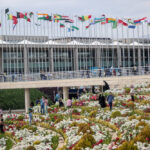
The 21st Iran International Exhibition of Oil, Gas, Refining and Petrochemicals will run through May 8 at Tehran’s permanent fairgrounds. Nearly 2,000 exhibiting companies from 38 countries have put their latest oil and gas achievements on public display at the showcase.

Analysis: US Still Incapable of Understanding Middle East

Professor Mohammad Mehdi Mazaheri, an academic from the University of Tehran, reviews the eight years of Barack Obama’s presidency, with specific regard to the Middle East. Despite Obama’s preference for diplomacy instead of the military strategy employed by his predecessor, George W. Bush, the region has seen an increase in violence and turmoil during his tenure, with the rise of ISIS and other insurgent groups in Syria and Iraq being the most obvious examples. In this article, originally written for IRNA, Mazaheri wonders what options the next US President will be forced to choose, seeing how both Bush and Obama’s strategies failed in different ways.


The hours-long occupation of the Iraqi parliament by angry demonstrators carried a clear message to statesmen in the country vividly indicating that Iraq has yet a long way to go before experiencing real security and peace.

The photo of people who turned the court of their legislative body into a battlefield where they could project their wrath gave the world a picture of a country of which a large part is under terrorist rule, with other regions being run practically autonomously.

It showed that even the heart of Iraqi policy-making was close to experiencing a fatal attack.

However, the developments which occurred on Saturday also had to say something to another group of people.

Thousands of miles away, US President Barack Obama, who is to bid farewell to the White House shortly after eight years in office, will probably be only too happy to be leaving behind such images from Iraq.

He took up office with a mission to repair the poor legacy of George W. Bush in the Middle East, and in Iraq in particular. He inherited two fruitless and highly costly wars, which not only affected the US economy but created a new Middle East that was more dangerous to both the US government and the states of the region.

All through his career as President, Obama concentrated his efforts on containing events in the Middle East – this time not through military but diplomatic channels.

All his decisions, like the ones pulling back US forces from occupied countries; choosing not to deploy troops to Syria and Iraq to fight Daesh [ISIS]; encouraging its regional allies to act as US military proxies; all of these decisions were designed to avoid a repetition of history while maintaining US influence in the region.

Currently, however, the Middle East is in a much worse situation than eight years ago. Today, not only is there no security in Kabul, Baghdad, Beirut or Gaza, but Damascus, Sana’a and even Istanbul and Riyadh are experiencing unprecedented instability.

Most probably, President Obama is now happy to see his term drawing to an end, having seen the outcomes of a decade of poor policy choices, as well as unpredictable catastrophic developments in Iraq, the most recent of which was the occupation of parliament.

Democrat or Republican, the next US president will surely have learned from such bitter experiences, seeing that both approaches to the Middle East– namely militarism and diplomacy – have failed in the region.

Undoubtedly, the quagmire of Middle Eastern development will claim further victims. This is for certain.

Those in the United States who are charged with finding solutions to the region’s issues could certainly learn more if only they abandoned their “superpower” fantasies and started to look at regional development in a more realistic manner.

The region has been the cradle of the first and the biggest civilizations in human history. The structures of cultural, social, historical, political and religious interactions in the region is so complicated and multi-faceted that strategists in Washington must at least try to respect them, even if they can’t understand and master them.

Naïve schemes, such as redefining political borderlines in the region to create a so-called Broader Middle East, along with blind support to Israel – these will be no use in solving the crises of the region.

Those in Washington who keep coming up with schemes for the Middle Eastern nations will eventually have to come to terms with the reality that they have to respect the cultures, traditions, beliefs and preferences of these peoples. However, the question remains to be answered: When will this happen?

Iranian and Italian Cultural Officials Meet at Tehran Book Fair

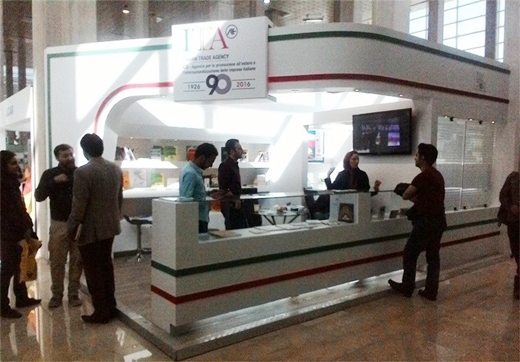
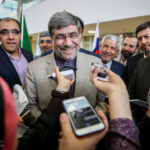
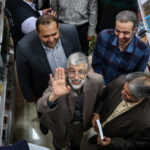
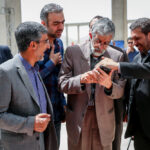
Cesaro was at the book fair to attend “Italy Day”, a program arranged by the organizers to promote Italian culture. He was accompanied by Italian Ambassador Mauro Konchater and Cultural Attaché Carlo Cherti.

Cesaro expressed his satisfaction over the dedication of a day to Italy at the fair, and said that such events can help with the expansion of diplomatic and cultural ties between the two countries.

Salehi, who is also the Deputy Culture Minister for Cultural Affairs, said Iranians and Italians recognize each other through their rich literary traditions.

“Literature is the common soul of the Iranian and Italian nations, and we can lean toward this soul to expand our ties,” Salehi said.

“This affiliation has formed over several centuries, and can be regarded as a focal point in the cultural interactions between the two countries,” he added. Italy will be the guest of honor at the TIBF in 2017.

“Tomorrow Is Too Late to Read” is the motto of the 2016 TIBF, which runs until May 14 at Shahr-e Aftab, a newly-constructed fairground in southern Tehran. To see photos of the exhibition site, click here.

Tehran International Book Fair

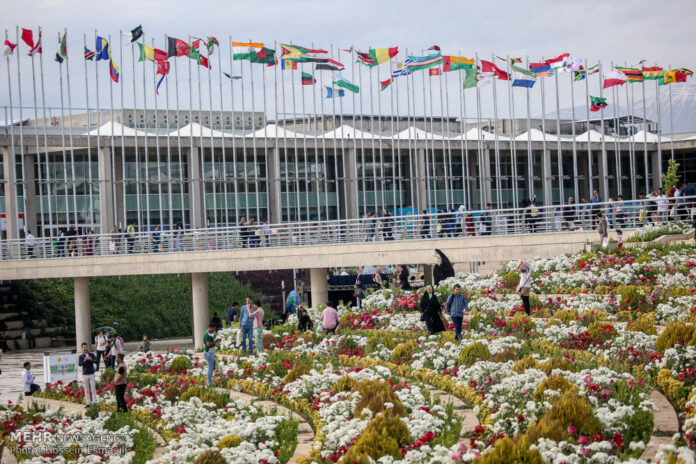
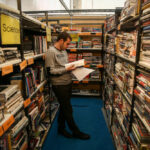
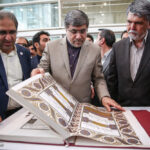
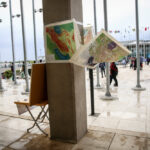
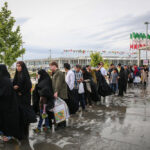
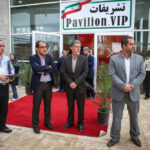
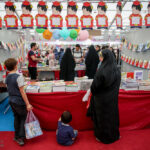
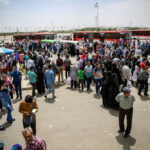
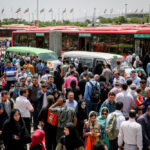
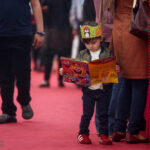
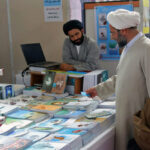
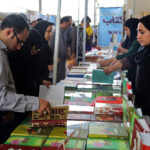
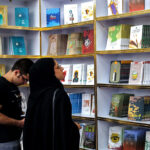
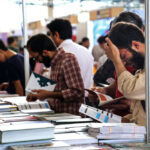
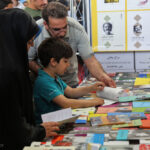
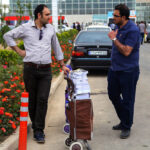
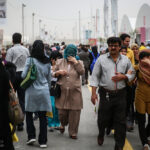
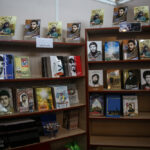
IFP: The Tehran International Book Fair is well underway in its new home at Shahr-e Aftab (Sun City) south of the capital, Tehran. Visitors have been flocking there both to see the books and the venue itself. Many dignitaries, including the President, the Mayor of Tehran, and several ministers, have also been in attendance and addressed the crowds.

Here is a selection of photos from the event so far, sourced from Mehr. The exhibition continues until 14 May.


To see photos of the newly opened, purpose-built exhibition site, Shahr-e Aftab, click here.

Warsaw Seeking Nuclear Cooperation with Iran

Behrouz Kamalvandi, Spokesperson for the Atomic Energy Organization of Iran (AEOI), met with Poland’s visiting Deputy Energy Minister Michał Kurtyka in Tehran, on Saturday May 7.

During the meeting, the Polish side presented the invitation of Prime Minister Beata Szydło to the AEOI Head Ali Akbar Salehi to visit Poland, and expressed his country’s readiness to develop cooperation with the Islamic Republic of Iran’s Atomic Energy Organization in scientific-research fields, nuclear safety, medical applications of nuclear energy, radiopharmaceuticals, as well as cooperation in the field of accelerators.

Kamalvandi also noted the proximity of the two countries’ historical positions, their capacities and opportunities for cooperation, and welcomed the signing of MoUs between the two countries to expand their cooperation.

The Polish Ambassador to Tehran Julius Jacek Gojlo accompanied Kurtyka at the meeting with Iranian officials.

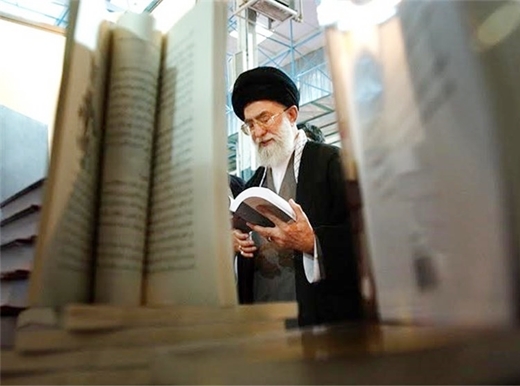
Ayatollah Khamenei Reads English Journals without Farsi Translation: Politician

In a recent address to a group of Iranian teachers, the Leader warned against the influence and domination of Western culture through the teaching of English language. After the remarks, certain media and political figures tried to misinterpret Ayatollah Khamenei’s comments as an opposition to the instruction of English.

In his analytical speech, the Leader referred to the means through which “aliens” can threaten the country’s independence using language. Ayatollah Khamenei pointed to more vulnerable contexts like the kindergartens, and warned against the instruction of English in such places. However, the Leader immediately emphasized he does not mean the instruction should be stopped as of tomorrow.

Certain figures and media, however, either failed to understand or twisted these remarks to make a political point from them, even while knowing that the Leader himself is fluent in English.

24 Online News has quoted an interview by Fars News Agency with Saffar Harandi, the former culture minister and a current member of Iran’s Expediency Council, in which he talks about the Leader’s familiarity with English.

Here are excerpts from the interview, as translated by IFP:

“I once heard from the manager of an educational cultural institute who said, ‘Ayatollah Khamenei and a number of other clerics attended [English] language classes; the person who taught [English] language to them said he [the Leader] was a great learner. The professor told me it was so interesting for him to see that he [the Leader] was learning so well at the age of 40.’”

“I know the Leader has been focusing on these issues in recent years, and reads English texts and foreign journals himself… I don’t know if I’m allowed to declare such information or not … He is definitely fluent in Arabic, but I know he currently reads foreign journals and articles in English without obtaining a translation,” Saffar Harandi said.

167 Members-Elect Join Reformists’ “Faction of Hope”: MP

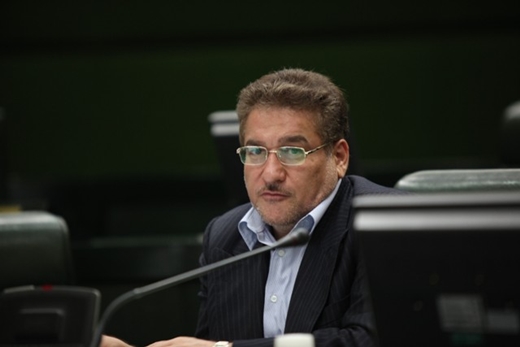
Tabesh, who is a nephew of the reformist leader and ex-President Seyyed Mohammad Khatami, noted that, out of the 167 MPs, almost all of them have signed a covenant [to remain loyal to the faction].

Tabesh represented the city of Ardakan, the birthplace of Khatami, in the ninth parliament, and has been re-elected as the city’s representative. Ardakan is the second major city of Yazd Province in southern Iran.

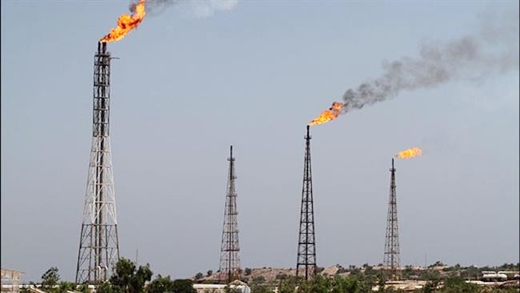
‘30m Cubic Meters of Iranian Gas Is Wasted Each Day’

Under-Deputy Oil Minister Mohsen Khojasteh Mehr told a gathering in Tehran on May 7 that the country loses at least 28 million cubic meters of natural gas flowing alongside extracted crude from the oilfields.

The official, who was addressing Iran’s first International Flaring Conference in Tehran, told the participants that the country needed to upgrade its flaring technology so as to prevent some 3.5 billion dollars from going to waste each year.

He said on top of the financial cost, the existing trend will cause further damage to environment, the official IRNA news agency reported.

Khojasteh Mehr urged the private sector to play a more pronounced role and help safeguard Iranian hydrocarbon resources.

A study in 2012 showed Iran ranked third, after Russia and Iraq, in the global flaring of natural gas. It showed nearly 3.5% of the world’s natural gas supply was wastefully burned or ‘flared’ at oil and gas fields in the period.

Flaring is common in oil and gas fields because producers deem it faster and cheaper to burn natural gas than to capture and ‘sweeten’ it for use.

The United States has the greatest number of flares, but Russia leads the world in the total volume of flared natural gas. In 2012, the 143 billion cubic meters of gas flared globally led to the emission of more than 350m tons of carbon dioxide, around 10% of the annual emissions of European Union member states, according to Nature.com.

The World Bank aims to end routine gas flaring at oil production sites around the world by 2030.