Tuesday, December 30, 2025
Home Blog Page 4476

Street Posters to Promote Environmental Culture

One of the most important steps needed to be taken towards improving the environment is to raise public awareness, and artistic work, ranging from films to paintings and graphic design, can set the scene for such accomplishment.

Parisa Tashakkori is an Iranian graphic designer whose works of art mostly carry environmental implications. Being a jury member for poster contests in Mexico, France, and Iran are some of her career highlights.

She was also awarded with an honorary diploma in the international design and illustration festival COW!!! in Ukraine in 2007, came in third in the 10th international poster triennial Ekoplagat in Slovakia in 2005, and was the prizewinner in the graphics category in Tehran in 2002.

The Tehran Times interviewed Tashakkori on the sidelines of the Fifth International Green Film Festival in Tehran. Tashakkori was also in charge of the international visual arts exhibition of the festival and managed to add Mexican and Brazilian graphic arts to the exhibition.

Here, Tashakkori explains her motives and the importance of the art in encouraging environmental preservation.

Q: What made you decide to choose environmental challenges as your main focus?

A: In 2001, as I was looking for a topic for my bachelor’s degree thesis, I used to go to the library to search through documents and books. I was looking for a radical subject which was not so widely discussed. After months of research and study, specifically on UNESCO magazines, I started to understand how important and serious environmental problems are in the world.

I checked with my professor, who welcomed my idea and introduced me to another professor. We decided to concentrate on environmental posters, and in the theoretical part of the thesis, I went through the activities of the artists who had tried to raise public awareness about environmental catastrophes.

Q: How can art foster environmentalism among the public?

A: The impact of art on environmental culture and its stewardship is more than you can imagine. In almost all communities, the artists are role models for the public and that’s why they can promote environmental culture. Graphic designers in particular can play a key role in raising the awareness and visual literacy of the public.

Images are more effective communicators and it has been proven that an image can convey a message much more quickly than a written text. Professional graphic designers can readily interpret the environmental crisis and the strategies to respond and phase out the crisis in a way that is easy to comprehend and appreciate for the public. By facilitating mutual understanding through their works of art, they can even involve the public to solve complex environmental issues.

Q: How can artists be encouraged to cooperate in addressing environmental problems?

A: I believe that artists have the potential to take part in projects tackling such issues and are interested in working in this field. What matters is for officials to ask them to work in this field. A good example of such cooperation is Tehran’s municipality’s efforts in setting up billboards in the city seeking social reforms. These have been designed by professional graphic designers for the past few years.

Q: How do you evaluate art exhibitions in Iran?

A: Unfortunately, in Iran artworks which are rather good often have no more meaning than a piece of paper, and become just a pile of trash after the exhibition, especially posters. The designers are forgotten too, and the award-winners’ works are never put to good use. That’s why there are hardly any memorable graphic designs about environmental events in Iran. The posters for these events are usually designed by unprofessional designers at the very last minute.

Even when we achieve some positive results in this field, the director will be changed, and all the hard work will be lost.

Q: How do you suggest improving such festivals and exhibitions?

A: We can take such festivals and exhibitions to the streets. Unlike paintings, which are kept in art galleries and showcased to artists and their friends, posters belong to the streets, where their audiences are. The public needs to see the posters closely, know what’s happening around them and even tear them down to show their objections.

How should a housewife know that plastic bags or bleach are detrimental to the environment without being informed about their damages? I’m sure that if they knew about their harmful effects, they would stop using them and would change their lifestyles.

Posters are not being used efficiently in Iran. I strongly believe that environmental predicaments are so significant that they need to be broadcast on TV as well as showcased on the streets.

By Maryam Qarehgozlou

Baghdad Chaos Detrimental to Both Iran and Iraq’s National Interests: Analyst

Sabah Zangeneh
Sabah Zangeneh

Sabbah Zanganeh, an expert in Middle Eastern affairs, stressed that Tehran should beware of its attitudes towards the ongoing tension in its neighbouring country, Iraq, particularly towards the recent turmoil caused by proponents of Muqtada al-Sadr, the prominent Iraqi figure.

What follows is the IFP’s translation of excerpts from Zanganeh’s interview with Fararu.

“Iran should stay neutral towards Muqtada al-Sadr, but must guard against tension without appearing to be supporting any group in particular,” Zanganeh said.

“Iran supports [the introduction of] reforms in Iraq, but these changes should take place through legal and official channels,” he went on to say.

Therefore, he added, “Chaos in Iraq is to the detriment of both Iraq and Iran’s national interests.”

Tehran Hosting Regional Chemical Weapons Convention Meeting

The regional meeting is jointly organized by the Iranian government and the Organization for the Prohibition of Chemical Weapons (OPCW), and is attended by 54 representatives from 25 Asian countries.

The meeting, which highlights Iran’s active role in the OPCW, will last until May 25 and focus on important issues related to the implementation of the CWC.

The CWC is an arms control treaty which outlaws the production, stockpiling, and use of chemical weapons and their precursors. The full name of the treaty is the Convention on the Prohibition of the Development, Production, Stockpiling and Use of Chemical Weapons and on their Destruction.

The OPCW, an intergovernmental organization based in The Hague, Netherlands, is the implementing body of the CWC. It has 192 member states working together to achieve a world free of chemical weapons.

Rezaei Urges Action over Saudi Behaviour

“Saudi officials are not going to change their conduct with the [current] restraint shown by Iran,” Rezaei said on Monday May 23, urging action against Riyadh.

“The Saudis opened a consulate in Iraq’s Erbil and deployed a number of terrorist groups to Iran to carry out bomb operations, all of whom were arrested (by the Iranian security forces),” Rezaei told reporters in the western city of Khorramabad.

He further called on the Foreign Ministry to release documents revealing connections between those groups and Saudi Arabia to let other countries know how Saudis are “maniacally disturbing the region’s calm and safe atmosphere and pursuing acts of terrorism.”

Relations between Iran and Saudi Arabia have been tense in recent months.

Tensions between the two Persian Gulf countries ran high mainly due to Riyadh’s execution of prominent Shiite cleric Sheikh Nimr al-Nimr, and a subsequent attack by outraged Iranian protesters on the Saudi embassy in Tehran, which resulted in the Arab country’s decision to sever its ties with the Islamic Republic.

On January 2, Saudi Arabia announced that it has executed Sheikh Nimr, among dozens of others. The execution ignited widespread international condemnation, from both political and religious figures.

The next day, furious demonstrators in the Iranian cities of Tehran and Mashhad stormed Saudi Arabia’s diplomatic buildings in protest at the execution of Sheikh Nimr.

Although Iranian officials criticized the embassy attack and police arrested dozens involved, Saudi Arabia cut off diplomatic relations with the Islamic Republic.

Leader Says Iranian Defiance behind US Enmity

“The main cause of all this enmity and fabrication of pretexts is [Iran’s] defiance of Arrogance [a reference to the axis of US and its allies],” the Leader said, while addressing a commencement ceremony for graduates of the Imam Hossein Military Academy in Tehran on Monday.

Ayatollah Khamenei was referring to the US hostile stances against Iran’s nuclear program, missile power and human rights record.

“Were the Iranian nation ready to surrender, they [the arrogant powers] would have compromised over [Iran’s] missile power and nuclear energy, and would have made no mention of human rights,” said the Leader.

Regarding Iran’s missile program, Ayatollah Khamenei said, “Recently they have embarked on massive [media] campaign, but they must know that such a hue and cry will have no effect, and they cannot do anything.”

The Leader said the US officials have acknowledged that the Iranian nation refuses to submit to the bullying tactics of arrogant powers, due to its adherence to Islamic ideology.

Ayatollah Khamenei highlighted “steadfastness”, “defiance of the enemy” and “safeguarding revolutionary and Islamic identity” as the main pillars of strength of the Islamic establishment and the Iranian nation.

“Americans and other powers are extremely sad at this issue, but have no other option. That is why they made huge efforts in order to bring the country’s decision-making and decision-taking centres under their control, but they failed, and thanks to God they will [continue to] fail to do so.”

Ayatollah Khamenei said that the arrogant powers had resorted to every tool in an attempt to “bring the Islamic establishment to its knees and force it into submission” but that the Iranian people had refused to follow the arrogant powers, due to their Islamic beliefs.

Iran, Afghanistan, India Holding Trilateral Meeting Regarding Chabahar Port

Jaber Ansari-2

Here is IFP’s translation of a report by KhabarOnline on his remarks.


“During Modi’s visit, 14 cooperation agreements, particularly in economic fields, are to be signed between Iran and India. At the same time, the Afghan President is also here, and the trilateral meeting of Iran, Afghanistan, and India will be held on the issue of Chabahar Port,” Jaberi Ansari said in his weekly press conference held in Tehran on Monday, May 23.

These trips will have promising economic results for the country, he said, highlighting the positive impact of such visits on Iran’s development.

For more news and views on this story, see:

Chabahar Deal: Afghan President in Tehran

DM: Kidnapped Iranian Diplomats Alive in Israeli Prisons

General Dehghan“We claim on the basis of evidence that they are alive and incarcerated by the Zionist [Israeli] regime,” General Dehqan said in an interview with Defa Press website.

He underlined that the Israelis are responsible for the health of the Iranian diplomats, adding that Tehran will also pursue their fate legally and politically.

The then charge d’affaires of the Iranian Embassy in Beirut, Seyed Mohsen Mousavi, military attaché Ahmad Motevaselian, embassy technician Taghi Rastegar Moghadam and journalist of the Islamic Republic News Agency Kazzem Akhavan were kidnapped by the Lebanese mercenary army – also known as the Phalangists – at gunpoint in Northern Lebanon in 1982, and were later handed over to the Israeli army.

Israel has released contradictory reports on the issue. It alleged in a statement last year that the diplomats had never been surrendered to Israel. Elsewhere it claimed, in response to a request put forward by the Lebanese Hezbollah group, that the four were already dead.

In January 2009, the then Iranian foreign ministry spokesman said that Iran had received a report from Israel which said the kidnapped Iranian diplomats had not been transferred to Tel Aviv and laid the blame on the Lebanese mercenary army affiliated with Israel.

In reaction to the report, the spokesman said at the time that the report “will not relieve the Zionist regime of its responsibility” for the health and safe repatriation of the diplomats.

Iraqi War Veteran: Saddam Ordered Us to Kill All Iranians in Khorramshahr

IFP has translated excerpts from his book Fire and Blood in Khorramshahr, his memories of the acts they committed against Iranian people, as reported by Fars.


On September 22, 1980, we were ordered to move towards the Iranian border and enter their territory. It was written in the order, “Set fire to everything; kill everyone; there is no need for taking prisoners; destroy their houses; uproot the trees, and burn all the farms.” […]

A commander told me, “We were ordered to shell the city and not to wait for any further notice. Based on the orders we received, no one was to consider ethical or humanitarian issues. For example, we were not to be influenced by a child crying, a woman begging, or the presence of the elderly. According to the order, we had to attack all of them, and we were supposed to fully carry out these orders.” […]
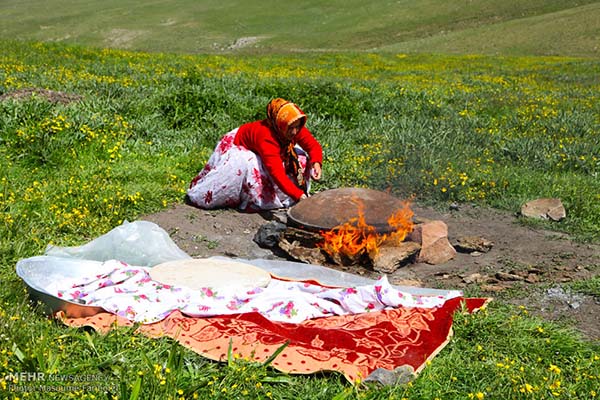
“We were faced with an army of angels. Although we outnumbered them, we were terrified; we thought we could seize the city in one hour, but in fact, we witnessed the killing of many of our soldiers for a few metres of ground,” he said in his book.


IFP: On May 24, 1982, Iranian people liberated Khorramshahr after 575 days. See photos of the liberation here and read more about today’s celebrations here.
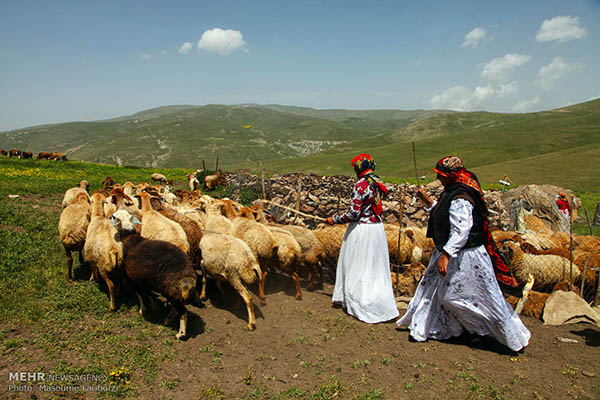
Anniversary of Khorramshahr Liberation in Pictures

On May 23 this year, Iranian people mark the anniversary of the liberation of the strategic port city of Khorramshahr in south-western Iran, which was retaken after 575 days on 24 May 1982.
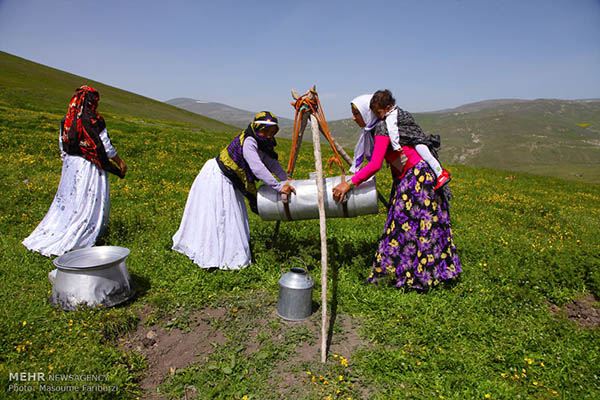
[The celebration is held every year on 2 Khordad in the Persian calendar, which either falls on 23 or 24 May in the Gregorian calendar, depending on the leap year]

To read more about the celebrations, click here.

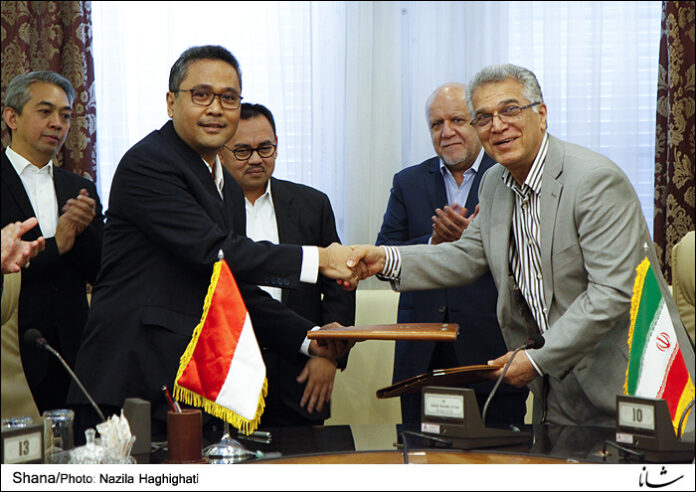
Iran and India Sign 12 Cooperation Documents

The signing ceremony was held in the presence of Iran’s President Hassan Rouhani and visiting Indian Prime Minister Narendra Modi.

Modi, heading a high-ranking delegation, arrived in Tehran on Sunday and was officially welcomed by President Rouhani on Monday morning.

Also, Afghan President Ashraf Ghani arrived in the Iranian capital on Monday morning to sign a trilateral [Iran, Afghanistan and India] agreement regarding the Chabahar port.

Rouhani said that good relations between Iran and India can benefit both nations and the entire region. He made the remarks at a joint news conference with Modi.

“Today, the two sides are determined to enhance bilateral relations from merely trade ties into comprehensive economic ones,” said Rouhani.