Thursday, December 25, 2025
Home Blog Page 4333

Terrorists Nabbed by Iran Revealed Saudi backing: Iran official

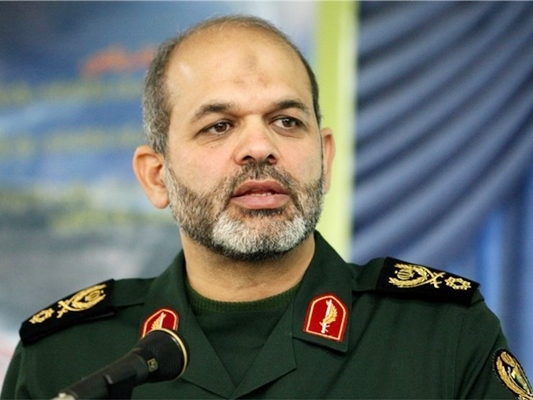
Boroujerdi

Alaeddin Boroujerdi, the chairman of the Iranian Parliament (Majlis)’s National Security and Foreign Policy Committee, made the remarks while speaking to Lebanon’s Al-Ahed news website, which published them on Monday.

“Al Saud (the Saudi ruling family) resorts to all means in the world and the region against the Islamic Republic and, toward that end, helps terrorist groups target the Iranian nation,” he said.

“The terrorists arrested in Iran have provided invaluable information to [Iranian] security authorities regarding the Saudi role and its support for terrorist groups,” the Iranian lawmaker said.

Iranian forces have, over the past months, engaged in clashes with terror groups, foiling their terrorist plots on the frontier and within the country, arresting a number of them and confiscating large amounts of explosives and bomb-making materials.

Back in June, Iran’s Islamic Revolution Guards Corps (IRGC) said members of a terrorist group captured in the city of Khash in the country’s Sistan-and-Baluchestan Province had admitted to US and Saudi support.

Brigadier General Mohammad Pakpour, the commander of the IRGC’s Ground Forces, said at the time that Washington and Riyadh were attempting to organize and reinforce terror groups and counter-revolutionary elements in Iran’s geographical periphery.

Russia in Nojeh: a matter of ‘national interests’

Boroujerdi also talked about Russian aircraft’s recent use of the Iranian Nojeh airbase for logistical purposes aimed at reinforcing Moscow’s operations over Syria.

“There are joint operations rooms [coordinating defense cooperation] among Iran, Russia, Syria, and Iraq both in Damascus and Baghdad,” he said, adding, “But when we felt we needed to take bigger steps to strike terrorists, we agreed to provide some support like refueling Russian aircraft at the Nojeh airbase.”

Russian long-range strategic bombers were earlier allowed to refuel at Nojeh, near the western Iranian city of Hamedan, before flying to Syria, where Russia has been bombarding militant positions since September 2015.

“Iran took this decision based on its national interests and national security and to support the resistance front, which is today fighting terrorism [in Syria],” Boroujerdi said, referring to the Syrian military and Lebanese resistance fighters engaging terror outfits in the Arab country.

The Syrian military has been fighting a foreign-instigated militancy since 2011.

9,000-Year-Old Ozbaki Ancient Hill Inaugurated in Iran

Ozbaki Ancient Hill, which dates back to some 9,000 years ago, is located in Nazarabad, Alborz province, and is in the interim list for registration in UNESCO World Heritage Sites.

It will soon become open to the public after it was inaugurated only by local government authorities on Monday, August 29.


Book Unveiled on Concerns of Iranian Woman in World War II

Iranian Woman in World War II,

According to a report by Iran Book News Agency (IBNA), as translated by IFP, the book unveiled by The Association of Female Historical Researchers narrates the story of a surgeon who happened to be in Iran during the World War II.

Homa Emamzadeh, the main character of the book, was graduated from Paris-Sorbonne University in 1930. Fortunately, or unfortunately, she worked as a surgeon in Iran when the World War Second broke out.

During those years, Emamzadeh penned many letters elaborating on issues such as women’s rights, women’s suffrage, Iranian literature, war and occupation of Iran by the Allies.

Emamzadeh, who has been described as a woman with religious characteristics, also authored a number of stories on Rostam and Afrasiab (well-known characters of Iran’s famous epic written by the Persian poet Ferdowsi), which suggests that she also had the knowledge in the field of literature.

The book was unveiled in a ceremony on August 24, in Iran’s National Library.

Iran Detects, Shoos Away US Spy Drone

us

The American spy drone was flown from a base in Afghanistan’s Qandahar and is thought to have been programmed to intrude into Iran’s airspace.

The pilotless aircraft was flying as near as 20 miles (32 kilometers) away from the Iranian airspace, but changed its path after receiving a timely warning from the Iranian forces.

It came after Nazir, an advanced Iranian radar used for detecting small targets at long distances, became operational in a desert in the country.

According to Air Defense Commander Brigadier General Farzad Esmaili, no stealth aircraft will intrude into Iran’s airspace with the coming into service of Nazir.

The homegrown radar is particularly employed to detect targets with pretty small cross-section areas, American jet Lockheed U-2, and drones like General Atomics MQ-1 Predator and Northrop Grumman RQ-4 Global Hawk, he added.

Known as a suitable option against the anti-radiation missiles, Nazir is capable of detecting targets in ranges of 800 kilometers and at 100,000-feet altitudes.

“Barzanistan”, Kurdish Aspect of the Philosophy behind ISIS Emergence

kurdistan

We are unaware of many huge developments happening around us. The formation of a new government in the region, namely the Kurdish Government of Barzanistan, is one of the most important reasons behind the creation of ISIS (Daesh) terrorist group.

Sadr-Mohammadi, in an article published by Fars News Agency and translated by IFP, criticizes the low rate of reading and the subsequent lack of awareness among regional nations of ongoing developments affecting their lives, and warns against possible abuses of the unawareness.

In this article, he writes about the philosophy behind the emergence of ISIS by focusing on Israelis taking advantage of Kurds. He then warns that after a Jewish Israel and an Armenian Israel, we should be waiting for a Kurdish Israel in the vicinity of Iran.

Here are excerpts from the article:

Years ago, I found a book in our school library. The book, published by Egypt in the 1970s, was about the issue of Palestine. It covered different topics on the political future and a resolution to the Palestinian issue. When I opened the book, it was written on its ‘dedication page’: “I dedicate the book to Arab nations; to those who do not read books!”

The expressions were very interesting to me, but I couldn’t get what the author meant. When I turned around the page, I was faced with an American newspaper clipping. In an interview with an American reporter, the Israeli Defence Minister had fully explained Tel Aviv’s plans for the future of Palestine. The reporter, surprised by the great details explained by the Israeli official, asked, “Don’t you fear that Palestinians read the interview and find out your objectives.” The Israeli minister replied, “Don’t worry. Arabs don’t read!”

The incident, and the sneer I could see on the Israeli minister’s face, deeply impressed me, and it still comes to my mind every now and then. I have related the story to my close and distant friends without any particular reason for several times. But what adds to my surprise and inaction is the continuation of the “not reading” situation among us. (The Israeli minister was referring to Arabs, but all Asian nations, including Iranians, share Arabs’ feature.)

Many huge developments happening around us will make a direct impact on the lives of our children and descendants; however, we are mostly unaware of them or show no reaction in dealing with them. The formation of a new government in the region, which I call the Kurdish State of Barzanistan though I know it is not limited to Iraq, is one of the these important developments.

map_kurdistan

State of Barzanistan

In 1992, Necmettin Erbakan delivered a speech at the Turkish parliament, and quoted an American colonel’s remarks about the formation of a Kurdish state. He cited the colonel’s interview with a Turkish newspaper, “That American official pointed to the map and said ‘the Kurdish state will be formed in those regions; [Iraqi dictator] Saddam [Hussein] will fall, and a power vacuum will be created in the region. Under such circumstances, Kurds will fill the vacuum by forming an independent government. They might even claim Turkish territories.’ When the American colonel was told that Turkey would definitely refuse to support the move, he answered, ‘then we will have to fight against each other.”

The Turkish reporter went on to say, “But Turkey has a powerful regular army, and on the other hand, Iran and Syria will also stand against the move. How do you see it possible that Kurds could resist these opponents?”

The American colonel answered, “In the near future, Iraqi Kurds will possess a huge amount of weapons; they will take over the weapons remaining from Saddam. They might even possess weapons more advanced than the ones your army has. They will have their own airplanes, choppers, tanks, machine guns, and special airports.”

When Erbakan was delivering the speech, no one expected it to be realized; no one could imagine Iraqi Kurds possessing the world’s most advanced arms; no one could imagine Erbil turning to one of the most prosperous cities of the Middle East; no one even imagined that the visa we obtain for going on pilgrimage to Karbala would be written in both Arabic and Kurdish. But today all these prophecies have come true, and more interestingly, many of us have unknowingly made contributions to its realization: because we do not read books!

Kurds are the only ethnic group scattered across the four counties of Iran, Iraq, Turkey, and Syria, but they have never had an independent government. In recent decades, Kurds in these four countries have had different destinies.

Kurds of Turkey, both their left-wingers (PKK) and Islamists (Kurdistan’s Hezbollah), have resorted to armed conflicts.

Iran’s Kurdistan first came into conflict with the central government, but it later decided to obey Tehran.

Syrian Kurds also spent a tense era, but then the power of Bashar Assad worked and they lived in peace for several decades.

Kurds in Iraq, as the country’s Shiites and many of its Sunnis, were opposed to the Ba’ath party and stood against Saddam’s government.

American Colonel’s Plan Starts with Fall of Saddam

After the US invasion of Iraq, the first phase of the American colonel’s plan came into effect. The power vacuum was created in Iraq; Kurds started their disagreements with Baghdad, the process of making a distinction between an Iraqi Kurd and an Iraqi Arab was kicked off. Meanwhile, Kurds started to enjoy the considerable support of Europeans and Americans, and the volume of direct economic trade exchanges with “Barzanistan” sharply rose. Jalal Talabani, however, was removed from politics as he was not that much in favour of the “American Colonel’s” plan. The next one to rise to power was Masoud Barzani, whose photos with Mossad officers taken in the 1970s were released last year.

Nevertheless, no one thought they would go too far, because Barzanistan was in a deadlock; they shared borders with the Iraqi central government in the south, the Turkish government (which had years of civil war with the Kurds) in the north, the government of Iran (which no one dared to mess with) in the east, and the Syrian government (which did not tolerate any disobedience) in the west. Therefore, the plan for the formation of a Kurdish state in the Middle East was doomed to failure.

But it did not go on as frustrating as it seemed.

Erdoğan, Head of Greater Middle East Plan, Gives Barzani the Green Light

In Turkey, everything changed in a strange way. The Kurds, who were previously considered as terrorist elements, entered the political arena by establishing the Peoples’ Democratic Party (HDP), and even announced they were ready to lay down their arms. On the other hand, Erdoğan, who considered himself as the head of Greater Middle East project and had used the name for himself for several times, unexpectedly gave Barzani (the president of Iraqi Kurdistan region) the green light.

Barzani made a trip to Turkey, but he neither chose Ankara nor Istanbul; he rather visited Diyarbakır! There he held a meeting with Erdoğan. The first step to get Barzanistan out of the deadlock was taken. That was when Barzani was feeling the gentle breeze of companionship.

Meanwhile, Iran unintentionally began to cooperate with Barzanistan. All legal ways for financial transactions to and from Iran were blocked [due to anti-Iran sanctions], and Barzanistan, which had turned to a centre for every illegal job, was an escape route for Iran’s transactions. [Parliament Speaker] Ali Larijani’s visit to Erbil in late December, 2014, and his meeting with Barzani can be regarded as a turning point for Tehran-Erbil ties.

At the same time, Syria became a multidimensional card for the Kurdistan project.

On the one hand, once the central government of Syria was weakened, the Kurds, who happened to be supported by Damascus, started creating certain Kurdish groups for themselves with the aim of fighting the ISIS (Daesh) terrorist group; however, they suddenly turned their back on Assad, and thus, the Syrian puzzle of Kurdistan put an end to its inaction.

On the other hand, Barzani and the Kurds of Turkey, who were known more as political brokers and terrorists in the global community, posed as popular, heroic, and selfless advocates of human rights (the project was best manifested in Ayn al-Arab case, the city that was widely propagated in the media under its Kurdish name, Kobani). Syrian Kurds were even more important, because they could open a corridor between Barzanistan and the Mediterranean Sea. Barzani is ready to do anything, even to massacre the Arabs and Turkmens living in northern Syria, to have an open route to the sea without anyone to bother him.

In other words, the US has decided to enter a Kurdish element into the government, and facilitate the implementation of Greater Middle East project in this way. The US has actually assigned a new role to the Kurds in Iraq and Turkey; a role different from the past. The new role tasks them with pretending to be an intellectual and peace-seeker. This means that the US is almost sure about the formation of a Kurdish state in the region, and is trying to start taking required measures to raise the image of Kurds.

The first preview of the theory took place on June 5, 2015, after the bombing of HDP electoral rally in the Kurdish-inhabited city of Diyarbakır. Those who used to take up arms for minute issues and get 3 to 4 people killed visited the bombing area with flowers in their hands!

Even now, in spite of heavy conflicts between Turkey’s Kurds and the country’s army and two months after a curfew, pro-Kurdish parties and figures, particularly Selahattin Demirtaş (co-leader of HDP), have never lost their control, and are using the method “pressure from below, bargaining from above” in dealing with the government.

The current situation in some Kurdish-inhabited cities of Turkey is not better than that of Aleppo or Homs in Syria.

Formation of Kurdish State Was One of the Reasons behind Creation of ISIS

When we study the emergence of ISIS and at the same time think about the Kurdish issue, we understand that the main reason or at least one of the main reasons behind the creation of ISIS was to prepare the grounds for a Kurdish state.

On the one hand, the Arab-Kurdish dichotomy is no longer dominant in Iraq, and now, the country is totally split given the problems with Arabs, Kurds, Turkmens, and at the same time Shiites and Sunnis.

On the other hand, the required grounds are now prepared for raising the image of Barzanistan, as Germany has explicitly sent to Erbil several planes containing weapons so that the Kurds would be capable of defending themselves against the ISIS.

Erbil, which has yet to incur any damage caused by ISIS attacks and threats, is shining today like a star vis-à-vis a totally-destroyed Iraq.

But why is really the Zionist front [Israel] trying so hard to create the Greater Kurdistan?

Although the influence of such factors as geography and spatial continuity in political equations should be discussed for hours before the question can be answered, the importance of the formation of such a state can be understood by focusing on two cases realized in the region and the history of Muslim world.

The first example is the state of the Zionist regime.

Israel is created exactly in the most civilized and homogenous part of the Muslim world. If Israel was not here, a series of allied governments with similar federative ruling systems or a union of several important countries could form a “united state” in any moment. But Israel is exactly like an arrow in the heart: if it remains there, you will die, and if you take it out, your heart will be ripped off and you will pass away.

If Arab countries surrounding the Zionist regime get along with it, they will be faced with one problem, and if they don’t, another problem would arise. In fact, the presence of Israel in Western Asia has made it impossible to establish peace and calm in the region, because it has made regional nations unable to have geographical connect with their surrounding countries without facing any problem. Tel Aviv has made any unpredictable move possible by refusing to define a specific border.

The second example is the formation of an independent Armenian state in Caucasia.

The issue is not related to the historical presence of Armenians in the disputed region; rather it is about the existence of an Armenian government there. This is the case for Palestine as well: we are not talking about the historical presence of Jews in that region, but the independent Jewish government is the focus. Russians managed to create a geographical-popular gap between Caucasia, Anatolia, and Iran by forming the government of Armenia and creating a wall between the government of Iran and the Shiites of Caucasia and between the Ottoman government and the Sunnis of this region. We are still seeing that the Russians are taking advantage of the geographical gap despite tens of years have passed.

The same thing is being implemented for Kurdistan as well.

If the independent state of Kurdistan is formed with the features Erbil, Tel Aviv, and Washington want, the possibility of connection between Iran, Turkey, Iraq, and Syria will be ruled out. We will practically get engaged in a war that would last for tens of years. At the end of such a war, from a simple wire to our oil pipes will all go under the domination of Barzanistan.

Under such circumstances, we will thus witness the emergence of a Kurdish Israel in our vicinity after a Jewish Israel and an Armenian one.

To sum up, let me quote the remarks recently made by Israeli Justice Minister Ayelet Shaked during the ninth annual INSS (Institute for National Security Studies) Conference in Israel.

On January 19, Shaked stressed that Israel should “promote steps that would correct the injustice that [made Kurds] the biggest nation without a state.”

“The Kurds are an ancient people with thousands of years of history, and a democratic nation” – one that has “never attacked any other nation”, she added.

She stressed that the “20 million Kurds who didn’t get a state, and nobody takes care of” are the only ones who are serious about defeating ISIS. “[The] Kurds are the only ones fighting ISIS as their highest priority.”

It is worth mentioning that Erbil has been supplying one-third of Tel Aviv’s oil for several years, and in return, Israel has been deploying its special army forces to Kurdistan in a bid to train Kurdish fighters.

In an interview with an Erbil-based Kurdish website on April 23, Israel’s Deputy Minister of Regional Cooperation Ayoob Kara noted that he already had meetings in Paris about the Kurdish issue and that he supported the creation of an urgent Kurdish state.

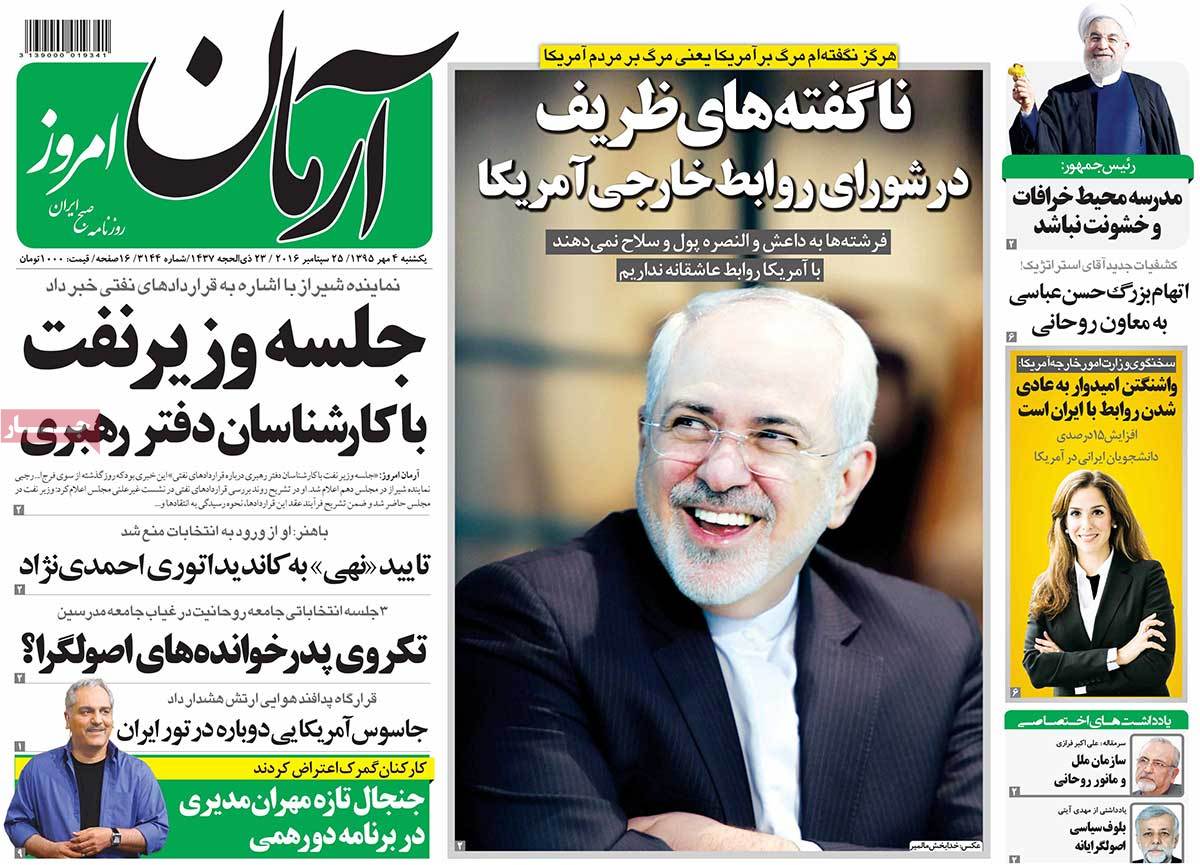
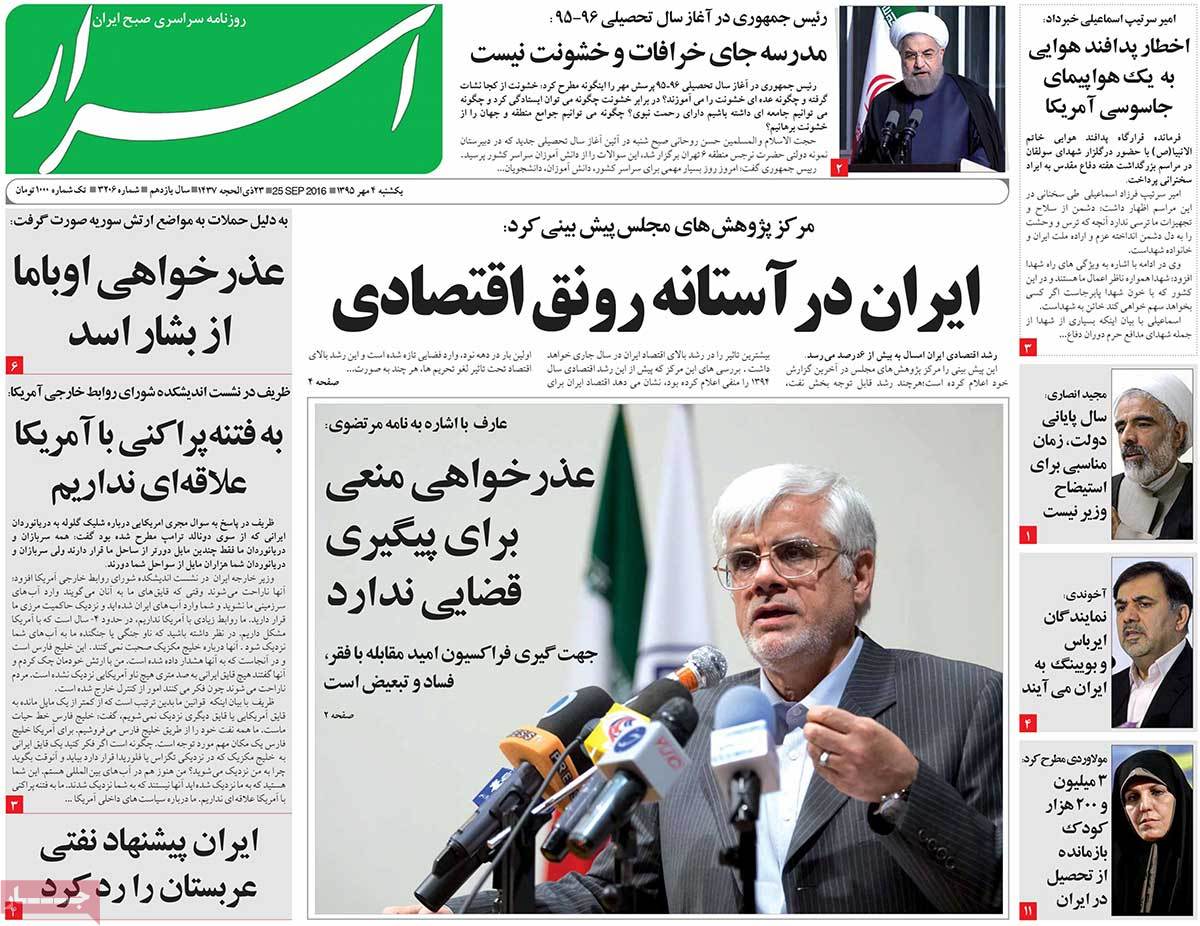
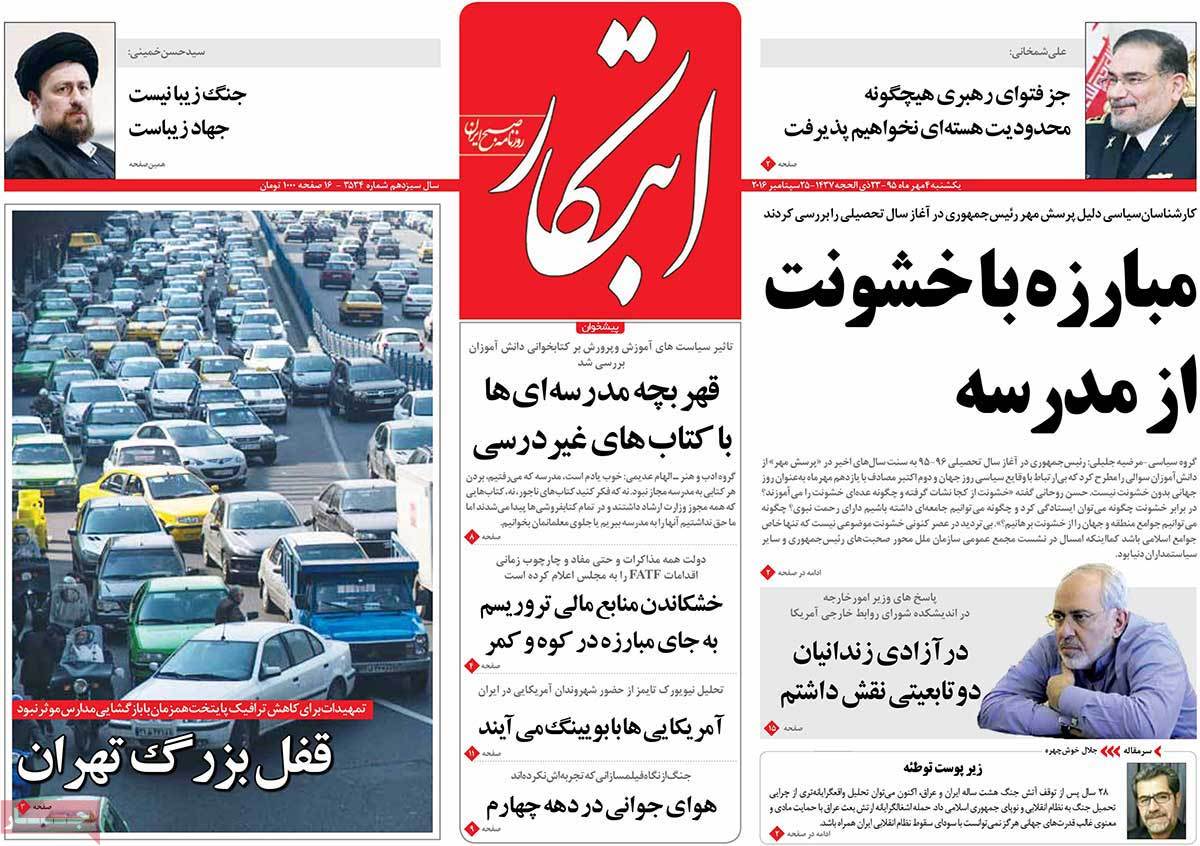
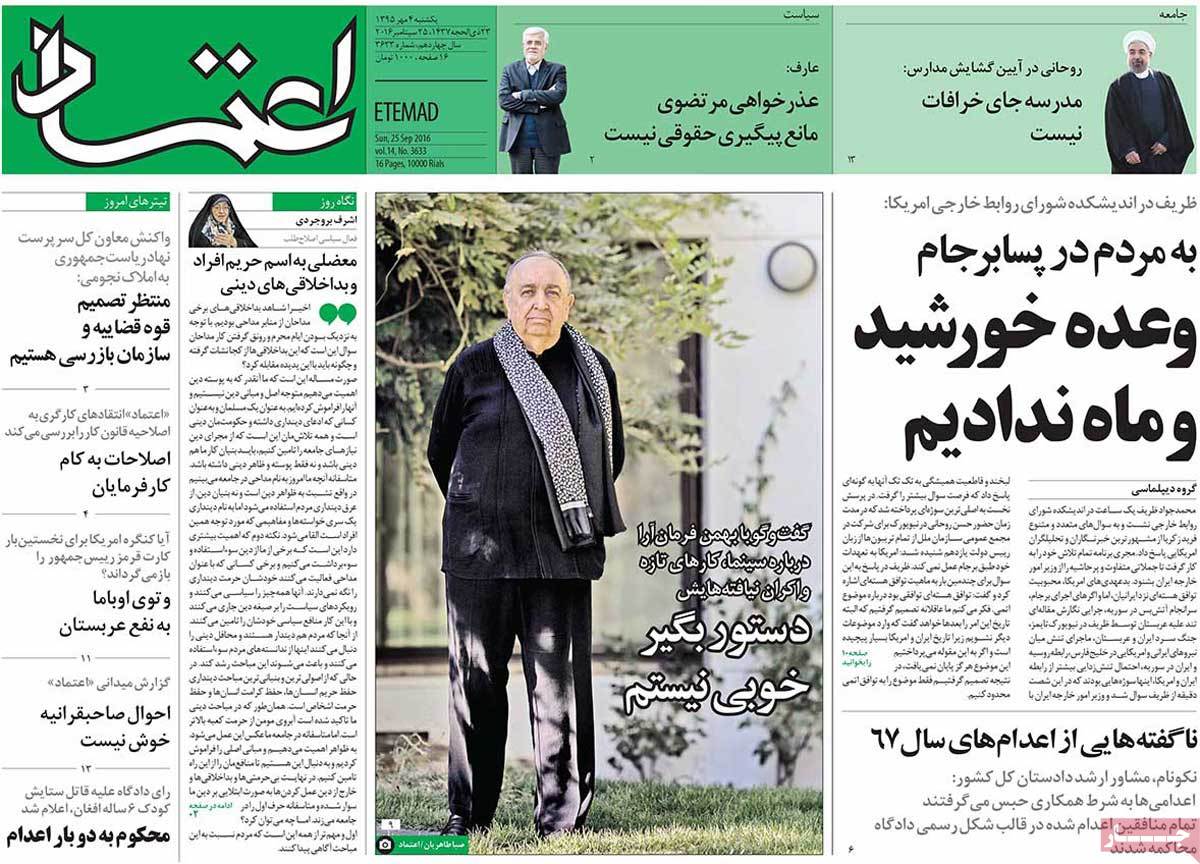
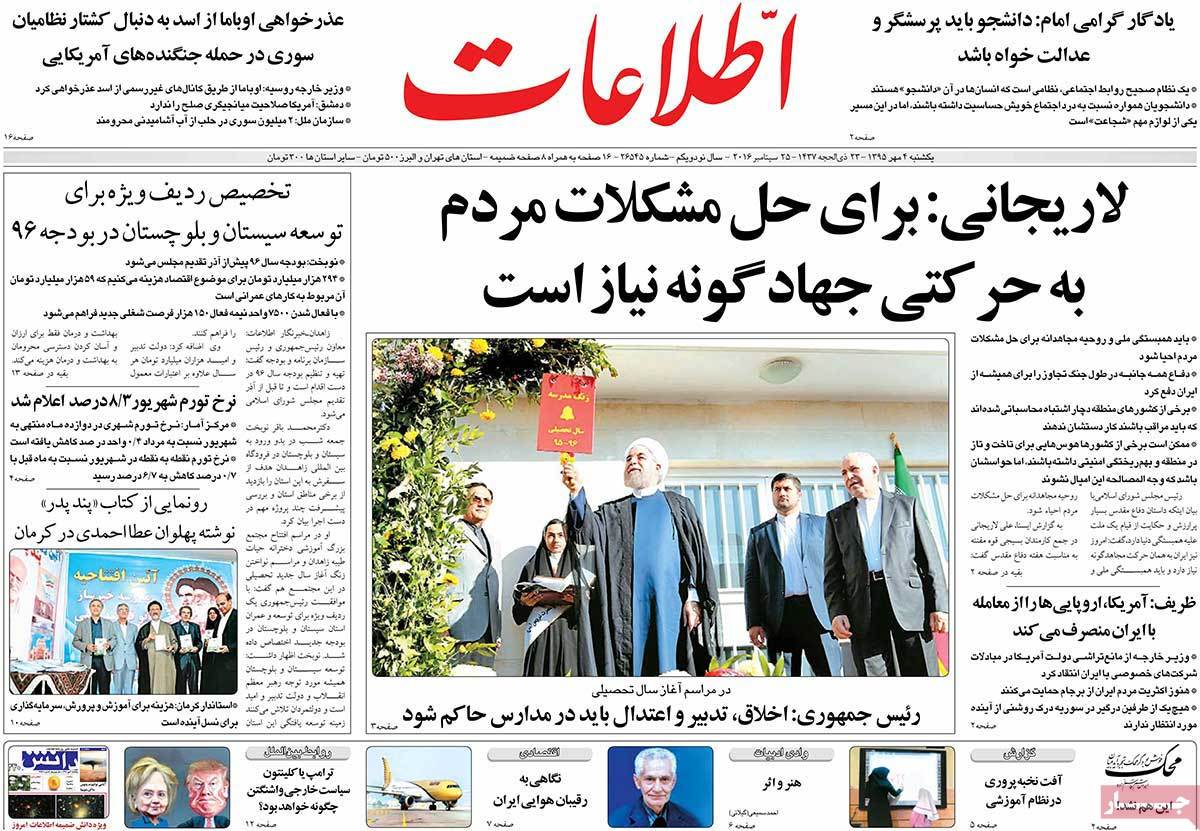
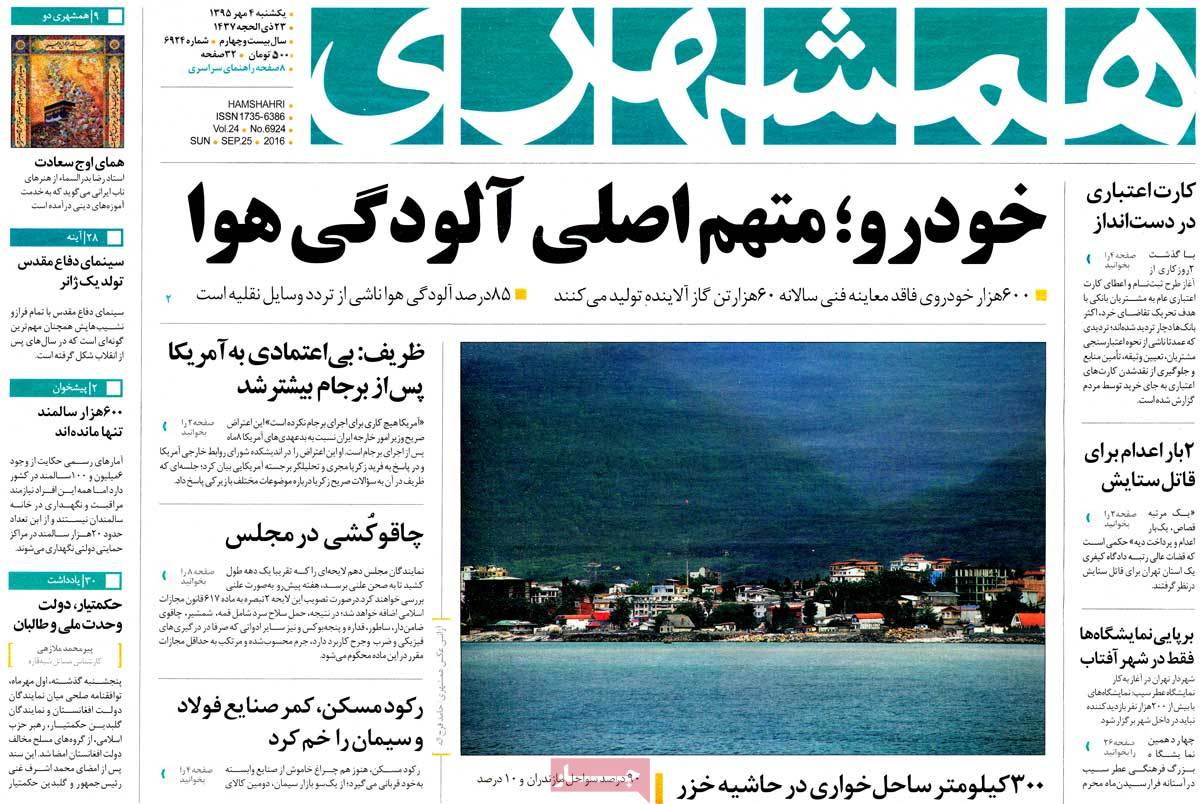
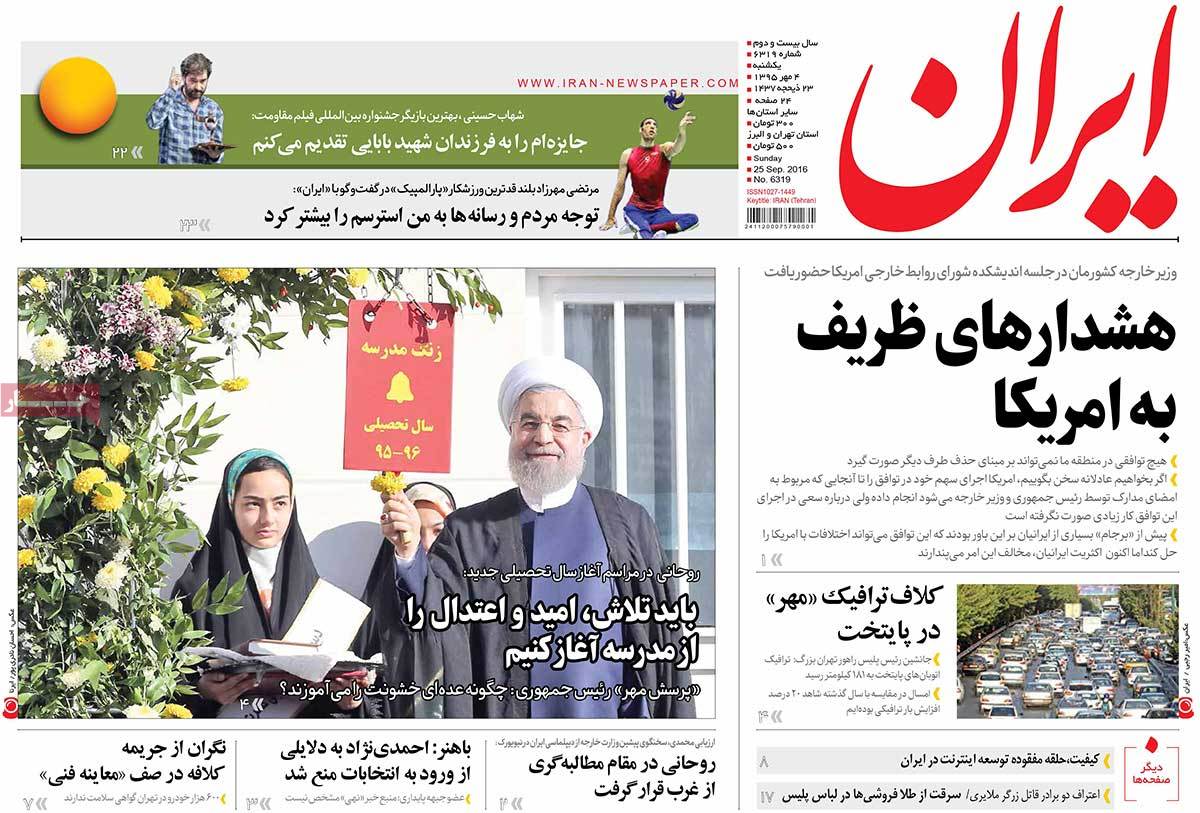
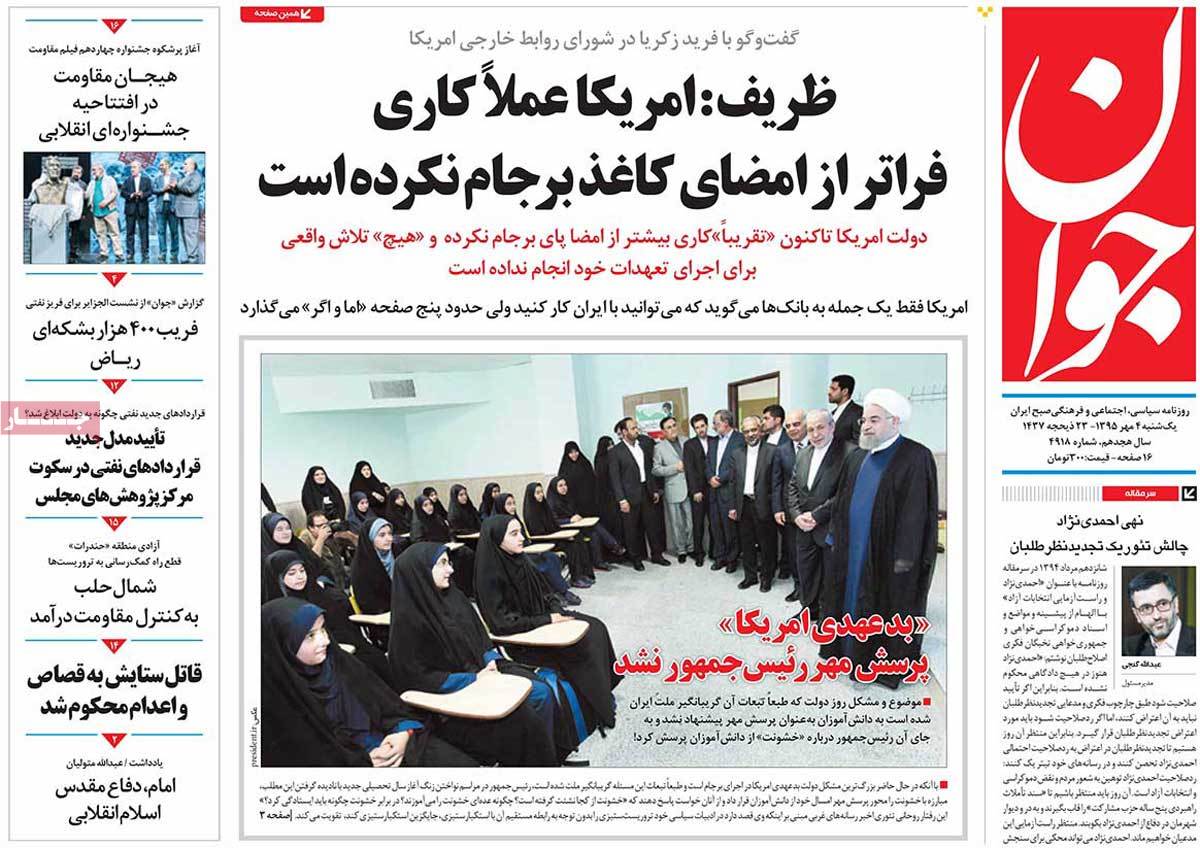
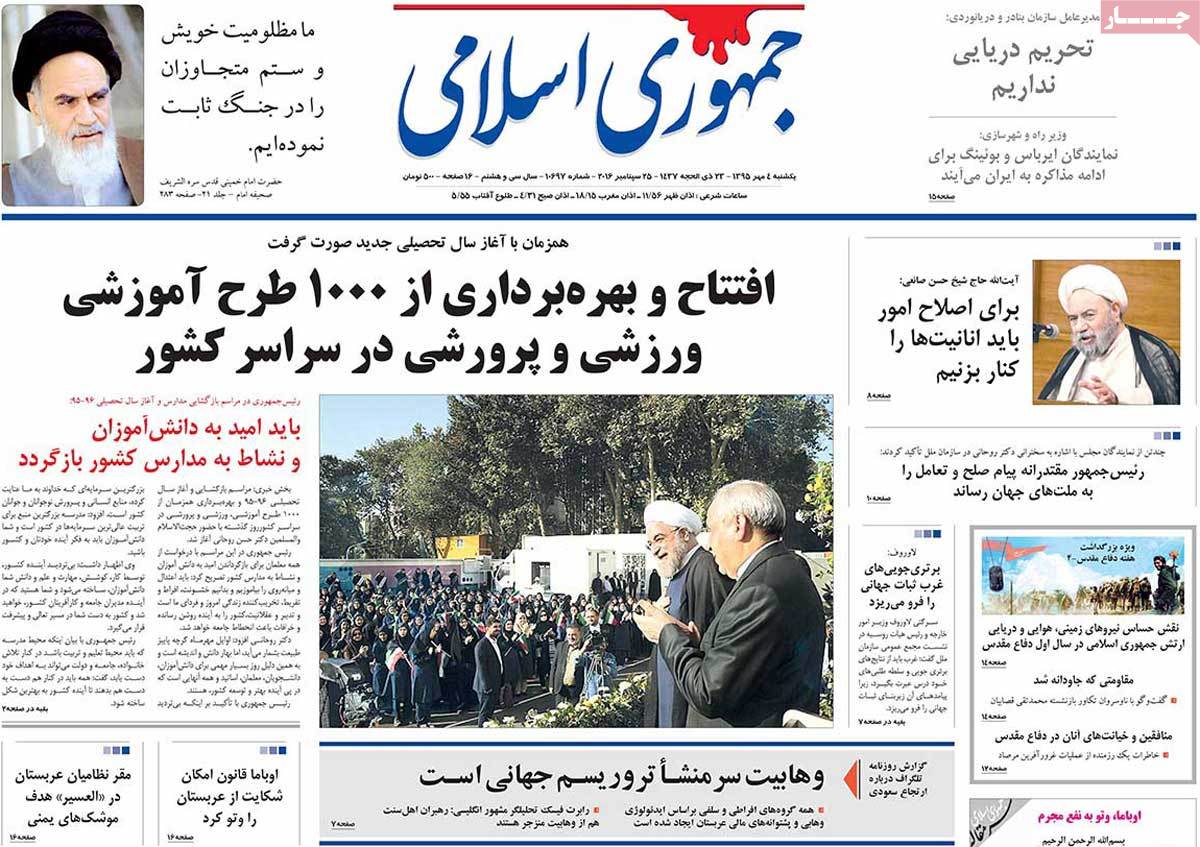
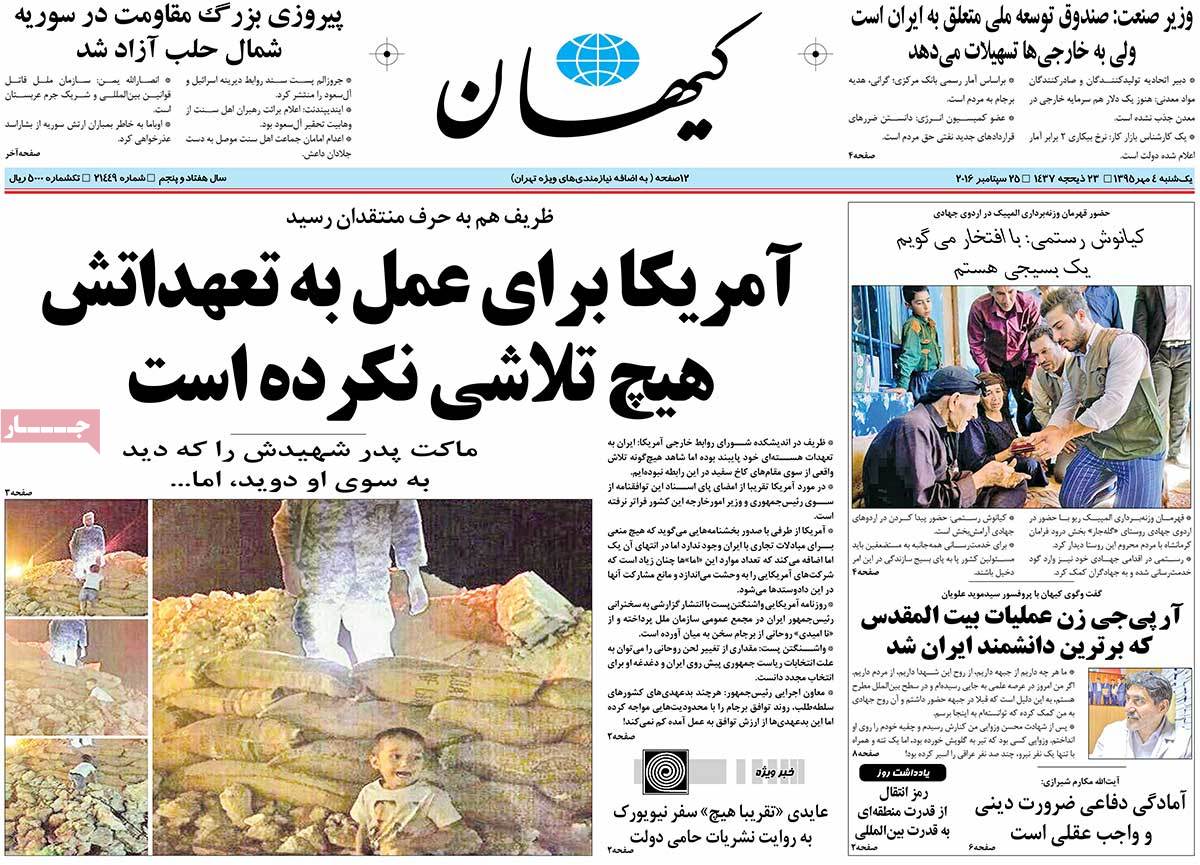
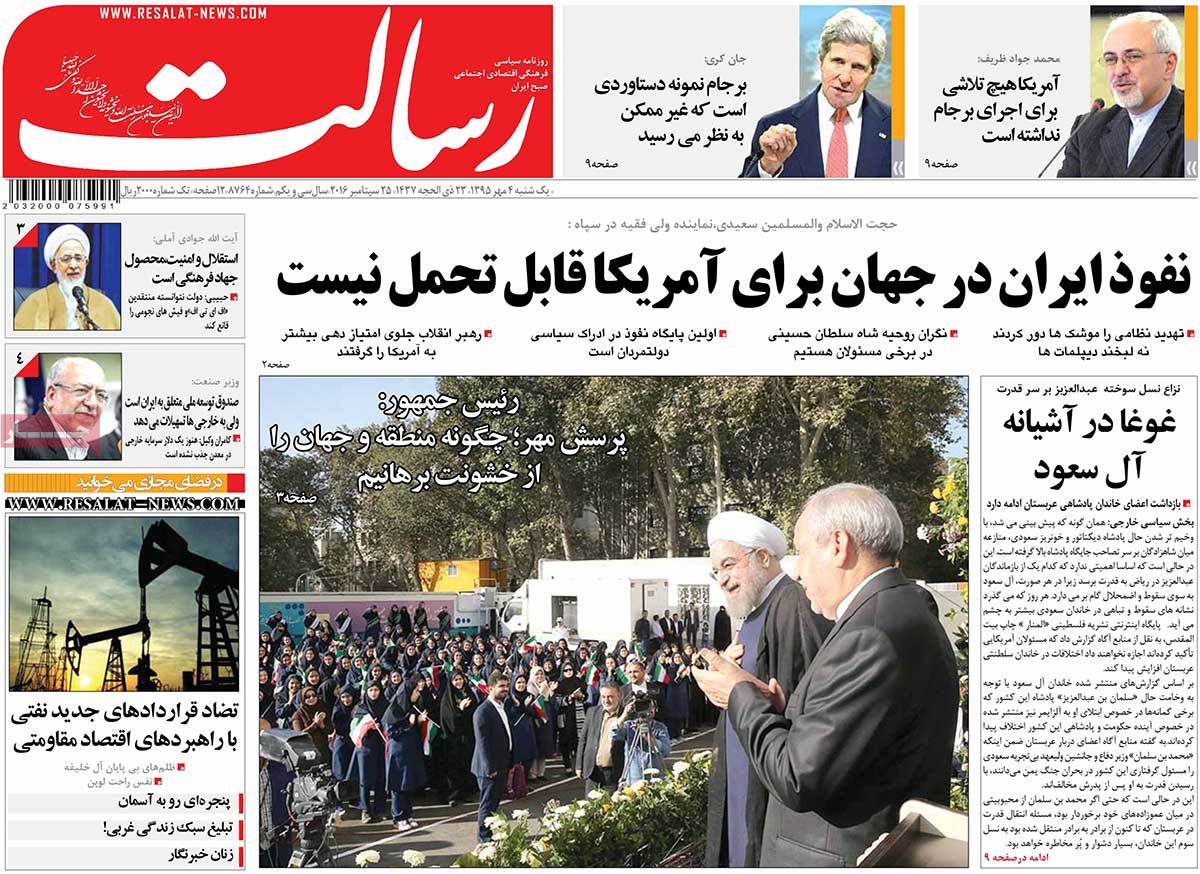
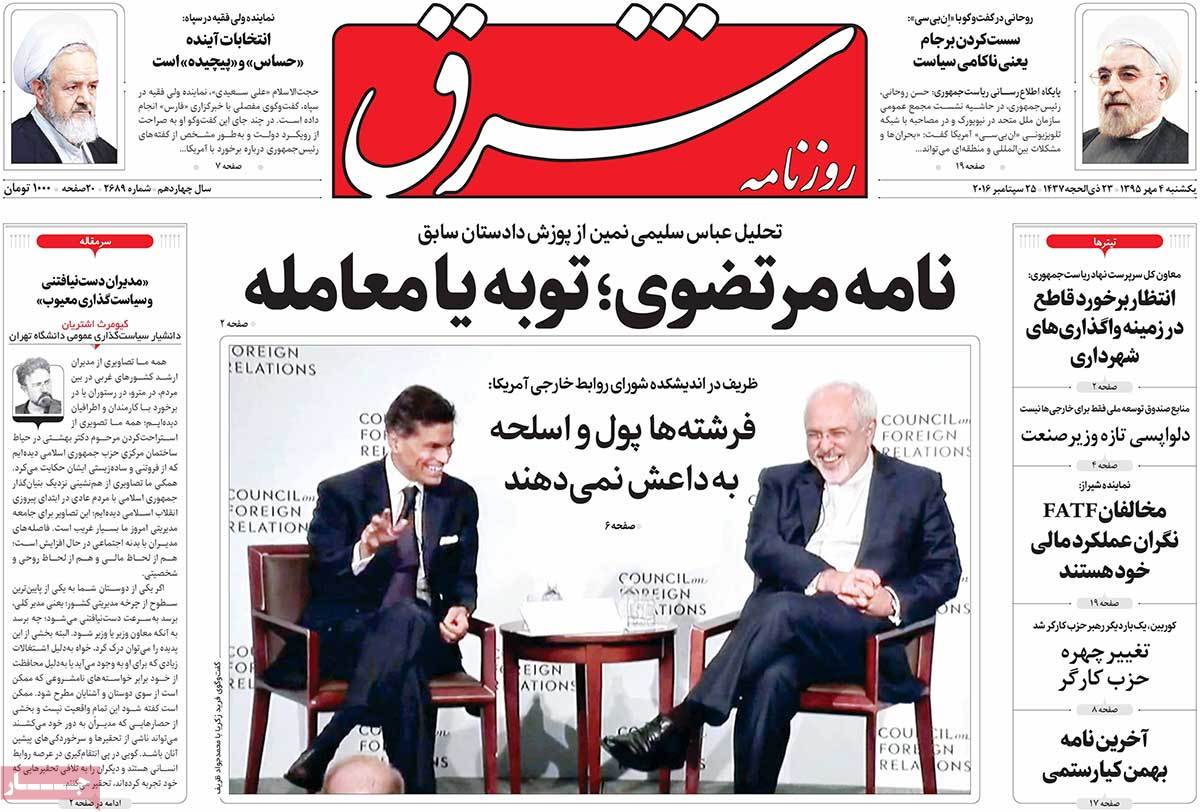
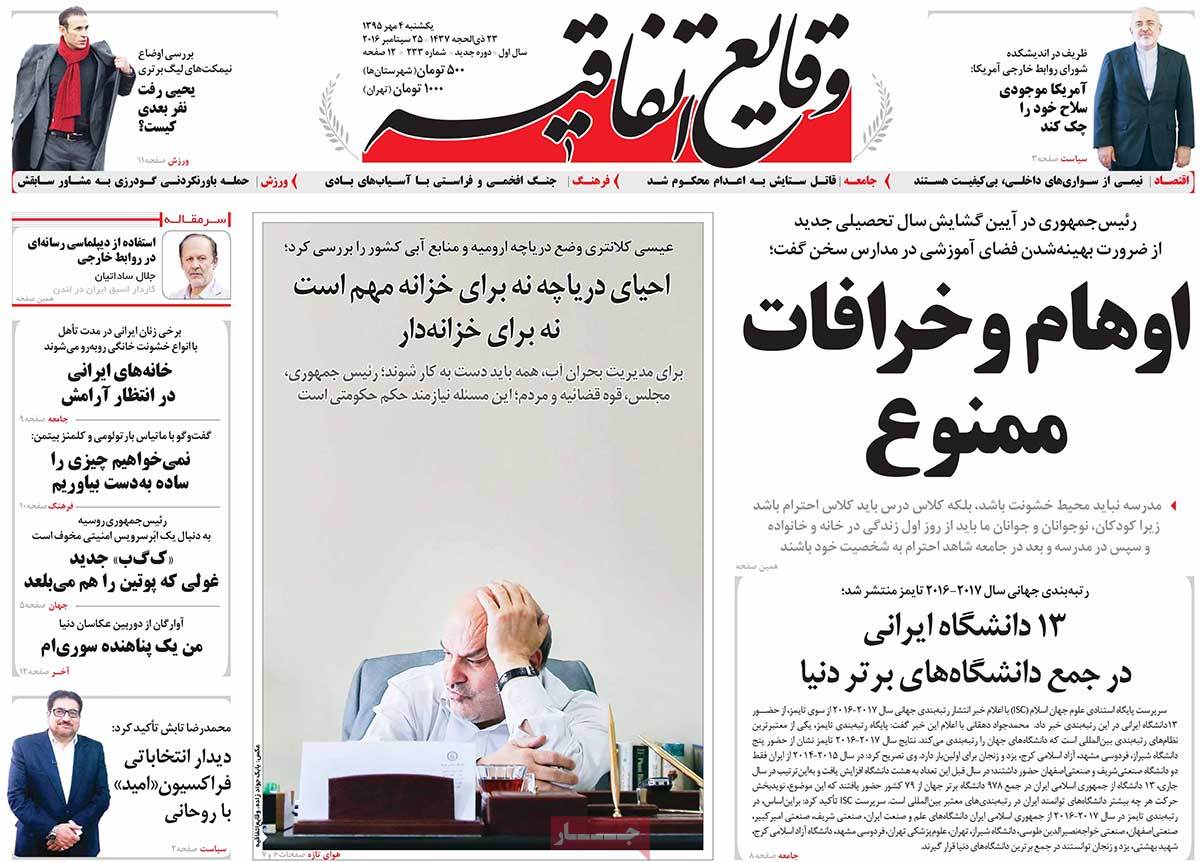
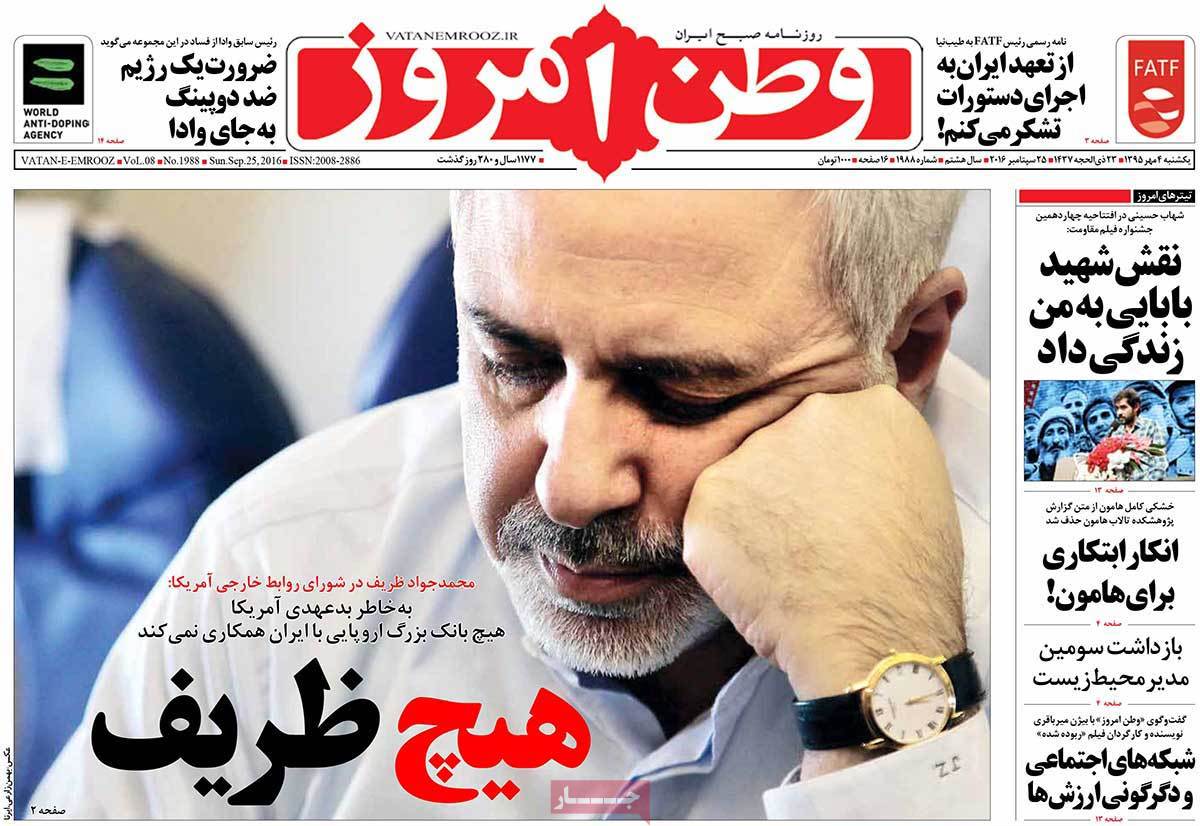
A Look at Iranian Newspaper Front Pages on August 29

Iran Newspaper front pages

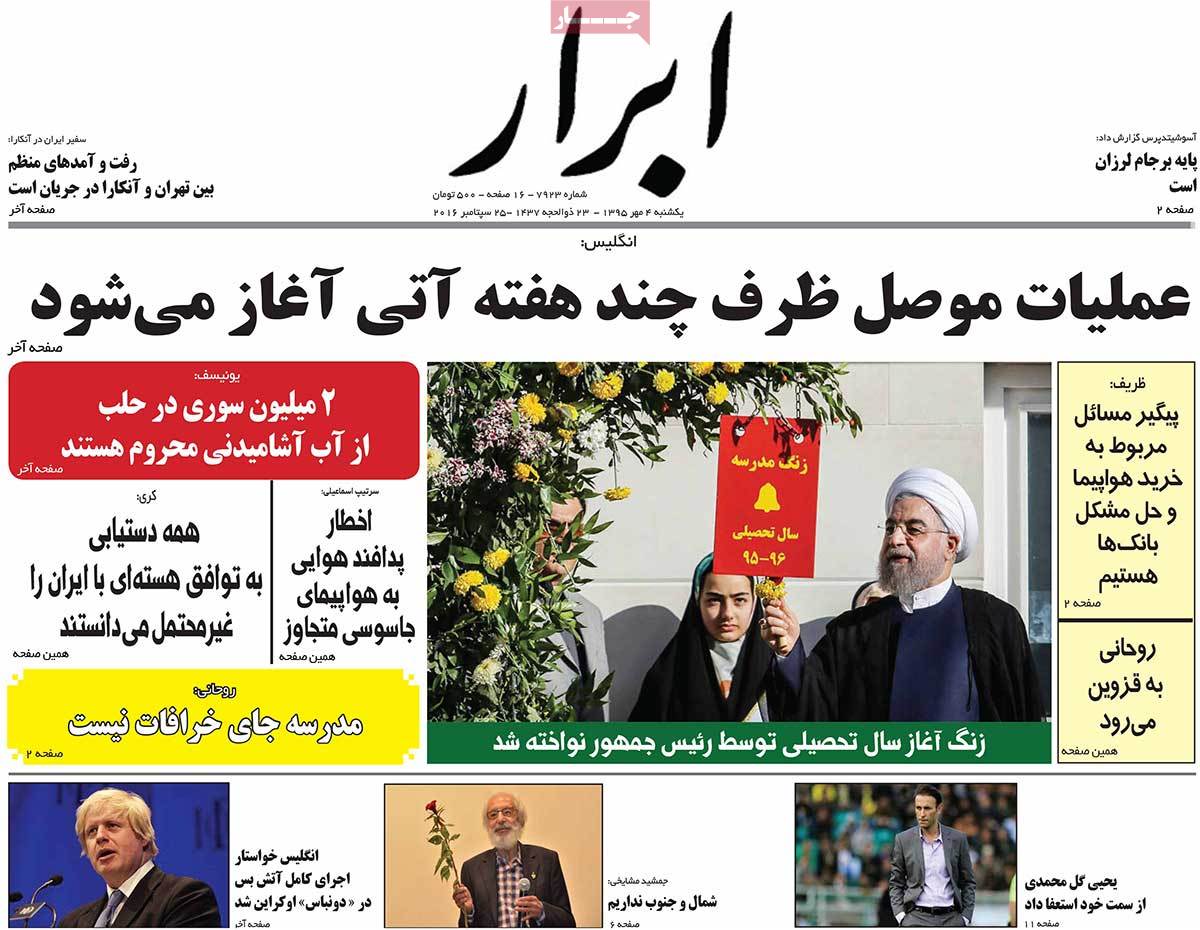
Newspapers on Monday covered the remarks made by the Leader of the Islamic Revolution Ayatollah Seyyed Ali Khamenei in a meeting with Iranian Air Defence commanders. In this meeting, the Leader warned against any attack on the country and said the country would show crushing responses to the enemy.

The inauguration of Iran’s National Information Network was also a top story in many newspapers today. The free flow of information and the safer access to data are among the advantages mentioned for the network.

Foreign Minister Mohammad Javad Zarif also wrapped up his Latin America tour and returned to Tehran. His visits were widely covered by Iranian media on Monday.

The ongoing debates about an alleged scandal in Tehran municipality are also receiving great attention in many newspapers. The case is still under investigation, and no one has confirmed anything yet.

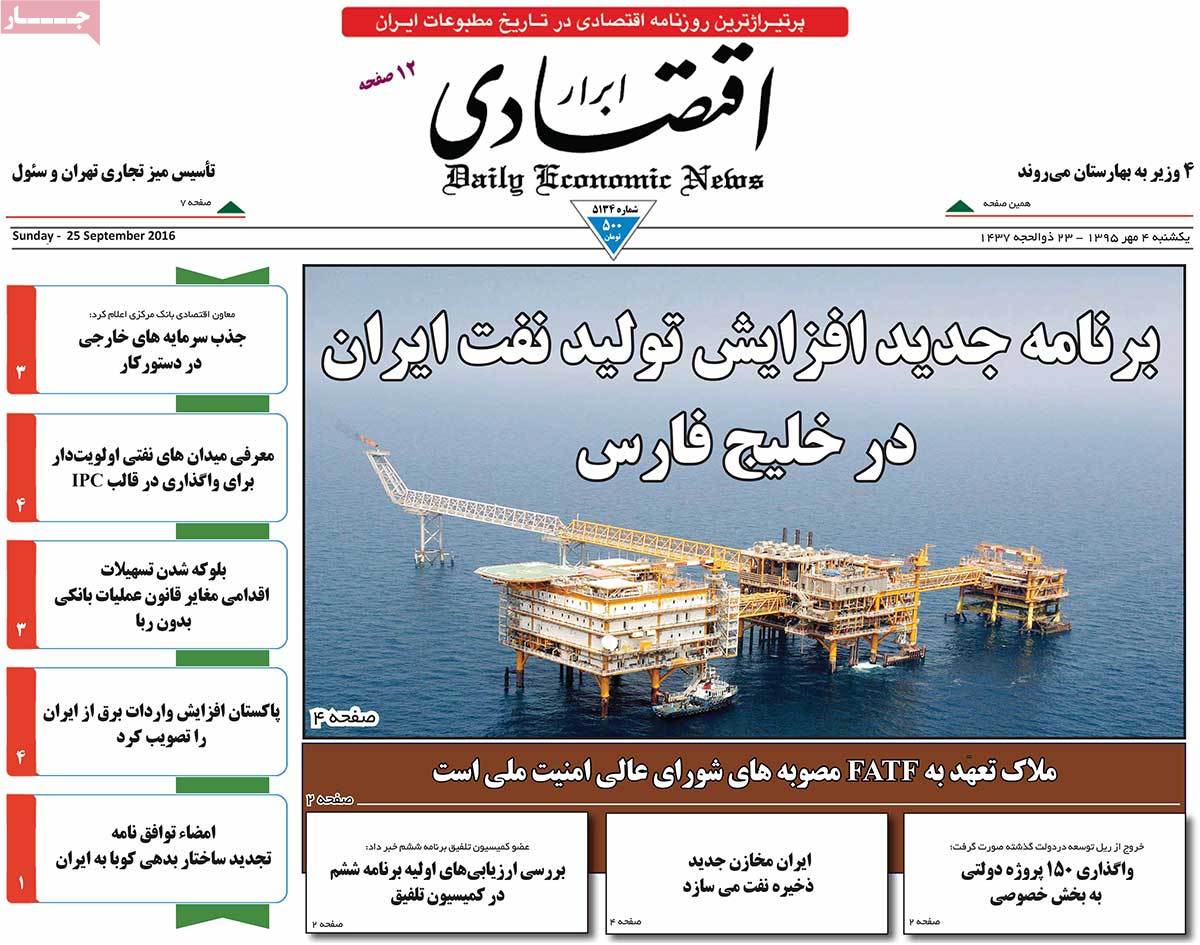
The above issues as well as many more are highlighted in the following headlines:


Abrar:

1- IRGC Navy Commander: Does a Nation with a Population of 85m Deserve Only 3 Gold Medals in Olympic Games?

2- Washington’s Unprecedented Mechanism of Settling Debts to Iran: AP

3- Zarif to Meet Afghan FM Today in Tehran

4- Qatar National Team Will Play against Iran in World Cup Qualifier Match with 16 Foreign Players!

A Look at Iranian Newspaper Front Pages on August 29


Abrar-e Eqtesadi:

1- Iran and Italy in Talks for Construction of Gas Refinery

2- 70% Decrease in Smuggling of Fuel

3- Ukraine’s Special Offer for Transit of Iran’s Oil to Europe

4- Iran Officially Enters Petchem Market of South America

A Look at Iranian Newspaper Front Pages on August 29


Aftab-e Yazd:

1- 30 MPs Call for Disqualification of Ali Motahari from Being Parliament Vice-Speaker: Minority Group in Majlis Chant ‘Death’ Slogans against Motahari

2- Details of MP’s Physical Clash with a Journalist: Immoral Behaviour of a Lawmaker

A Look at Iranian Newspaper Front Pages on August 29


Arman-e Emrooz:

1- Only 5 Single Girls Have Managed to Adopt a Child: Singles in Dream of Being a Mother

2- Iran Was Deceived in 598 Resolution Talks: Senior Conservative

A Look at Iranian Newspaper Front Pages on August 29


Asrar:

1- Today, Unlike the Previous Term [Ahmadinejad’s], Everyone Obeys Leader’s Orders: Interior Minister

2- Justice Minister [on 1988 executions]: We’re Proud that We Implemented God’s Order on MKO Terrorists

3- Probe into Tehran Municipality Kicked Off

A Look at Iranian Newspaper Front Pages on August 29


Ebtekar:

1- 360 Cubic Metres of Iran’s Environment Is Destroyed Every Second: Social Forestry, the Last Choice to Save Environment

2- Looking for Security of Iranians’ Data in the Internet: Goals behind Unveiling National Information Network

3- Economic Indices Getting Back to the Time When Ahmadinejad’s Term Was Beginning


A Look at Iranian Newspaper Front Pages on August 29


Emtiaz:

1- Iranian Paralympic Athlete Banned from Exiting Iran Because of Mahr [Dower] Debt to Wife

2- 101 Historical Relics Dating Back to 3,000 Years Ago Found in Alborz Province

3- Construction of 30 Four- and Five-Star Hotels Kicked Off in Rouhani’s Term


A Look at Iranian Newspaper Front Pages on August 29


Etemad:

1- Zarif Visits Venezuela and Meets President Maduro in Days of Crisis

2- Parliament and Judiciary to Probe into Case of Municipality Properties

3- 300 Job Opportunities for Women Added to Government Employment Test after President’s Order


A Look at Iranian Newspaper Front Pages on August 29


Ettela’at:

1- National Information Network No Barrier to Free Access to Information: First VP

2- Turkish Army’s Artillery Attack on Northern Syria Leave 40 Dead

3- Lifting of Sanctions an Opportunity for Deepening Cooperation: Rouhani

4- Judiciary Has Been Negligent on Astronomical Salaries: Spokesman


A Look at Iranian Newspaper Front Pages on August 29


Haft-e Sobh:

1- Online Duel with ICT Ministry: All the Facts about National Information Network, Which Is Not Same as “National Internet”

2- Will Qalibaf, the Mayor of Tehran, Suffer Third Defeat or Achieve a Great Victory?


A Look at Iranian Newspaper Front Pages on August 29


Hamshahri:

1- Government Has Not Even Introduced a Single Receiver of Astronomical Salaries to Judiciary: Spokesman

2- Import of Transgenic Products Will Be Banned

3- Astronomical Lies for Political Interests: Judiciary and City Council Both Reacted to Recent Lies against Municipality

4- National Information Network, a Major Step for Further Transparency


A Look at Iranian Newspaper Front Pages on August 29


Iran:

1- France Ready for Environmental Cooperation with Iran

2- Government Appreciates Leader’s Support and Guidelines

3- 10 Signs that Indicate Iran’s Economy Is Being Revived

4- Kurds and Turkish Army’s Face-to-Face Clash in Syrian Territory

5- Iran Reporter’s Question, Mr. Lawmaker’s Attack! 200 Media Activists Urge Parliament Speaker to React


A Look at Iranian Newspaper Front Pages on August 29


Jame Jam:

1- Enemy to Receive Crushing Response If It Attacks Iran: Leader

2- Glorious Farewell to Deceased Iranian Actor Davoud Rashidi

3- Kill Me and Make Me Thin! Increase in Fever of Looking Like Models

A Look at Iranian Newspaper Front Pages on August 29


Javan:

1- Why Just 15 Executives Are Dismissed? Judiciary Spokesman Says Number of Offending Government Executives Is Much More

2- Zarif Looking for Ways to Evade Sanctions: 7 Days of Diplomacy for Opening Banking Routes in Latin America

3- I May Abandon Sports, But I Would Never Stop Wearing Hijab: Alizadeh, Iran’s First Female Olympic Medallist

4- Basij [Voluntary Forces] to Create 460,000 Job Opportunities by Mid-March

A Look at Iranian Newspaper Front Pages on August 29


Jomhouri Eslami:

1- Air Defence Is on Frontline of Countering Any Type of Attack: Leader

2- Iraq Officially Asks Saudi Arabia to Change Its Ambassador

3- Funds Provided for Building 2 New Reactors in Bushehr: Spokesman

4- ISIS Unveils White-Bearded Executioners

A Look at Iranian Newspaper Front Pages on August 29


Kayhan:

1- Ansarullah Gives 2-Day Ultimatum to Saudi Hirelings in Ta’iz

2- Judiciary Spokesman: Spy Who Had Infiltrated in Iran’s Nuclear Negotiating Team Is Free on Bail!

3- New Coalition in Middle East: With or without Turkey

4- Pro-Government and ‘Chain’ [Reformist] Media Censure Clerics’ Criticisms of Rouhani’s Administration

A Look at Iranian Newspaper Front Pages on August 29


Khorasan:

1- Turkmenistan’s Anti-Iran Moves Continue: After Increasing Fees for Iranian Trucks, Ashgabat Now Cancels Iran’s Economic Exhibition

2- Will Kerry’s Peace Plan Change Yemen Equations?

A Look at Iranian Newspaper Front Pages on August 29


Resalat:

1- Enemy Says Iran Has No Right to Defend Itself: Leader

2- Saudi Princes’ Hands in Those of the Infidels: How Long the Bloodshed in Yemen Is Going to Continue?

A Look at Iranian Newspaper Front Pages on August 29


Roozan:

1- US Did Whatever It Could to Prevent Iran from Receiving S-300 Missile Defence System: Leader

2- Zarif in Final Leg of His Latin America Tour

3- Government Breaks Its Silence: Rouhani’s Aide Says Some Don’t Want People to Hear the Truth

A Look at Iranian Newspaper Front Pages on August 29


Sayeh:

1- Rapid Implementation of Iran-Pakistan Deals, Rouhani Urges

2- French Ecology Minister: Cooperation with Iran for Fight against Dust Pollution

3- Healing Rhythms: What You Don’t Know about Music Therapy

A Look at Iranian Newspaper Front Pages on August 29


Shahrvand:

1- ‘Astronomical Houses’: Municipality’s Controversial Sale of Luxury Houses to Council Members in Low Prices

2- I’ll Build Shelters for Child Labourers: Kimia Alizadeh

3- Safe and Free Access to Transparent Information: First Phase of National Information Network Inaugurated

A Look at Iranian Newspaper Front Pages on August 29


Shargh:

1- Iran’s Environment Chief Ebtekar Signs Deal with French Counterpart over Revival of Lake Urmia

2- Inspection Organization Waiting for Municipality’s Response [over the recent scandal]

A Look at Iranian Newspaper Front Pages on August 29


Sobh-e Now:

1- Latest News: S-300 Missile Defence System Installed in Fordow Nuclear Site

2- Increase in Ticket Prices for Asghar Farhadi’s “Salesman” Premiere in Iran

A Look at Iranian Newspaper Front Pages on August 29


Vatan-e Emrooz:

1- The Hole! Judiciary Spokesman Confirms Arrest of a Member of Iran’s Nuclear Negotiating Team on Espionage

2- Wrong Foreign Policy [Editorial]

3- Slaughter of Kurdish Civilians in Turkish Attacks

A Look at Iranian Newspaper Front Pages on August 29

Afghanistan No Backyard for Terrorists: Larijani

Larijani

“Afghanistan must not be allowed to become a backyard for terrorists and an effective campaign against terrorism in Afghanistan requires political stability,” Larijani said in a meeting with Afghanistan’s Foreign Minister Salahuddin Rabbani in Tehran on Sunday, August 28.

He stressed the importance of collective measures by all countries to fight the ominous phenomenon of terrorism.

Larijani added that national unity in Afghanistan must be reinforced with the purpose of solving internal problems and foiling foreign-forged conspiracies.

The top Iranian parliamentarian said the enemies of Afghanistan seek their interests in the country’s political chaos and added, “Foreign interference has hindered Afghanistan’s growth and the development of welfare in the country.”

He emphasized that the Islamic Republic will always stand by the Afghan people and support the country’s national unity government.

Larijani also pointed to the history of cordial relations between Tehran and Kabul and said the two sides enjoy good potential for the expansion of trade and economic cooperation, particularly in transportation, energy and infrastructural projects.
Rabbani, for his part, praised Iran’s support for Afghanistan’s stability and unity and said despite the enemies’ moves to destabilize the country, the Afghan people and government yearn for the establishment of sustainable peace and stability.

He added that Afghanistan would never allow anyone to use its soil against a third country.

The Afghan foreign minister described as positive the campaign against terrorism in the country and added that Kabul has succeeded in improving its national security.

Rabbani arrived in Tehran on Sunday for an official visit to hold talks with senior Iranian officials on issues of common interest.

Dutch Airline KLM to Resume Direct Flights to Iran

KLM

According to a report by Gulf Business, as covered by Tasnim, four weekly services will be operated between Amsterdam’s Schiphol Airport and Tehran, and will complement the Paris-Tehran service operated by Air France since April 16, 2016.

Flight KL0433 will depart from Amsterdam at 17.40 on Tuesdays, Thursdays, Fridays and Sundays, arriving in Tehran at 01.20 (local time).

The return flight, KL0434, will depart from Tehran at 03.20, arriving in Amsterdam at 06.45.

The flights will be operated with a Boeing 777-200 in a three-class configuration with 34 business seats, 40 seats in economy comfort and 242 seats in economy.

KLM operated services to Tehran from July 1991 until it suspended the route in April 2013. Airline officials said at the time of stopping the route that the decision was based on economic rather than political reasons.

KLM president and CEO Pieter Elbers said, “KLM has further strengthened its network with a new destination – the 14th to be added this year. This confirms that our strategy is starting to bear fruit. On the one hand we are improving our efficiency and productivity, while on the other we are investing in growth.”

Several international airlines are resuming flights to Iran to tap into increasing opportunities in the country after the recent lifting of international sanctions.

British Airways also resumed direct flights to Iranian capital Tehran from July 14.

The airline now operates a six-time weekly service and will move to daily flights from winter 2016, it said.

Iran Marks Anniversary of 1981 Bombing at Then-PM’s Office

Mohammad Ali Rajaei - Mohammad Javad Bahonar

On August 30, 1981, President Rajaei, Prime Minister Bahonar and several other Iranian officials had convened at the Tehran office of the Iranian prime minister in a meeting of Iran’s Supreme Defence Council when a bomb explosion ripped through the building.

Survivors said an aide, identified as Massoud Kashmiri, had brought a briefcase into the conference room, placed it near the two high-ranking Iranian political figures and then left.

The explosion occurred when one of the victims opened the briefcase. The blast killed Rajaei, Bahonar and three other members of the Islamic Republican Party.

Subsequent investigations later revealed that Kashmiri was an operative of the terrorist Mujahedin-e Khalq Organization (MKO), who had infiltrated the then-prime minister’s office disguised as a state security official.
 

Mohammad Ali Rajaei - Mohammad Javad Bahonar -
This file photo shows the aftermath of the bomb blast at the office of Iran’s then-prime minister in Tehran, August 30, 1981.

Every year on August 23, Iran marks the Government Week to commemorate the memory of the late President Rajaei and Prime Minister Bahonar.

In 1986, the MKO members fled Iran to Iraq, where they received support from former Iraqi dictator Saddam Hussein and set up Camp Ashraf, now known as Camp New Iraq, near the Iranian border. They were subsequently relocated to another camp, and are awaiting potential transfer to third countries.

The United States and the European Union (EU) have removed the MKO from their lists of terrorist organizations. The anti-Iran terrorists enjoy freedom of activity in the US and Europe, and even hold meetings with American and EU officials.

Iran to Extradite 251 Afghan Convicts in Coming Weeks: Deputy FM

Hassan Qashqavi

Following efforts made by Iran’s Embassy in Kabul, Foreign Ministry and the Justice Ministry’s Directorate General for International Cooperation, and within the framework of an agreement on the extradition of imprisoned criminals between Iran and Afghanistan, the Afghan prisoners will be sent to their homeland.

He further emphasized that 21 Iranian nationals sentenced to imprisonment in Afghanistan have also been extradited to Iran on Sunday.

The deputy foreign minister added that two other Iranian convicts will be transferred to the country from Afghanistan in coming days.

Back in March, high-ranking officials from Iran and Afghanistan signed a memorandum of understanding (MoU) to promote consular cooperation between the two neighboring countries.

The cooperation agreement was inked during the third Tehran-Kabul consular cooperation meeting in the Afghan capital on March 8, attended by Qashqavi and Afghan Ambassador to Tehran Nasir Ahmad Nour.

During the session, the two sides also signed three documents to exchange and extradite prisoners.