Thursday, December 25, 2025
Home Blog Page 4334

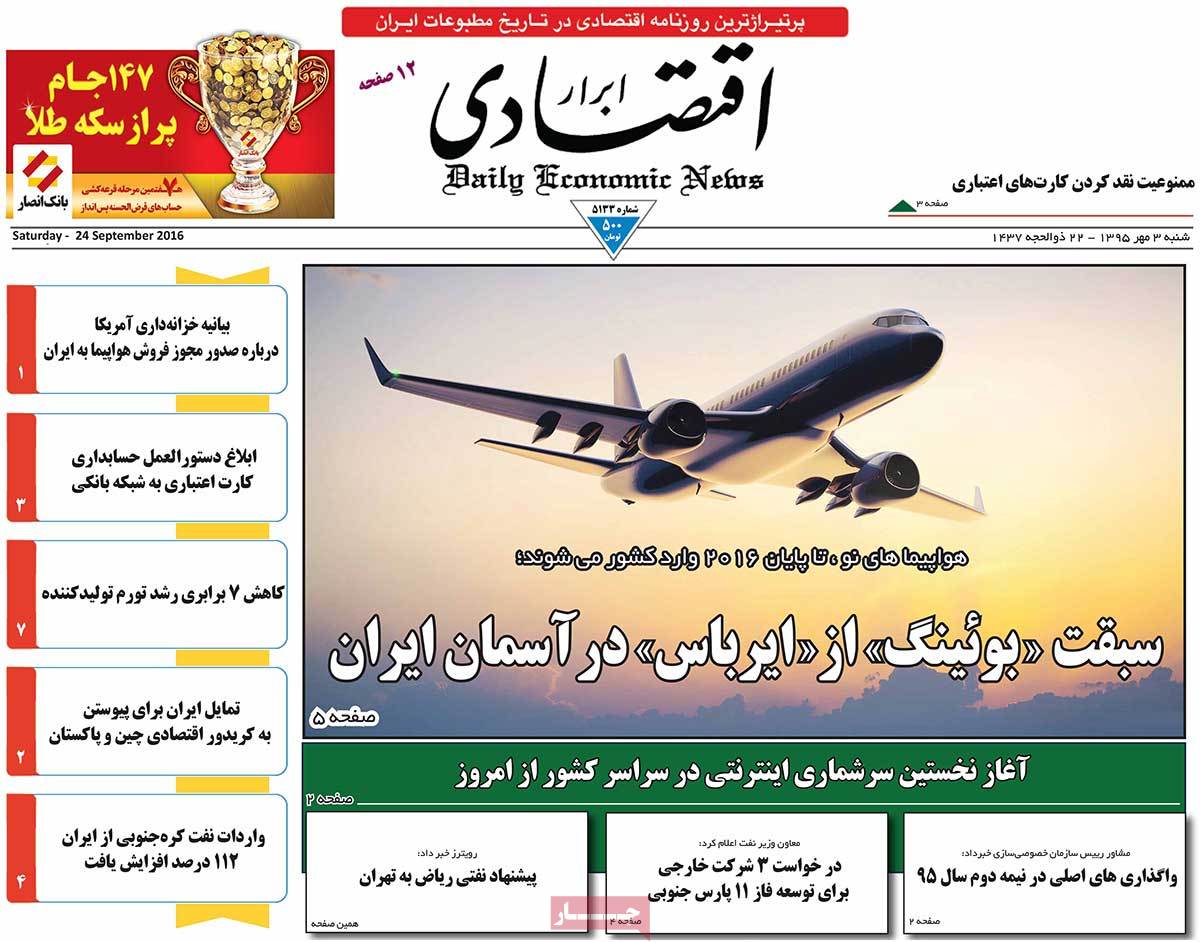
Dutch Airline KLM to Resume Direct Flights to Iran

KLM

According to a report by Gulf Business, as covered by Tasnim, four weekly services will be operated between Amsterdam’s Schiphol Airport and Tehran, and will complement the Paris-Tehran service operated by Air France since April 16, 2016.

Flight KL0433 will depart from Amsterdam at 17.40 on Tuesdays, Thursdays, Fridays and Sundays, arriving in Tehran at 01.20 (local time).

The return flight, KL0434, will depart from Tehran at 03.20, arriving in Amsterdam at 06.45.

The flights will be operated with a Boeing 777-200 in a three-class configuration with 34 business seats, 40 seats in economy comfort and 242 seats in economy.

KLM operated services to Tehran from July 1991 until it suspended the route in April 2013. Airline officials said at the time of stopping the route that the decision was based on economic rather than political reasons.

KLM president and CEO Pieter Elbers said, “KLM has further strengthened its network with a new destination – the 14th to be added this year. This confirms that our strategy is starting to bear fruit. On the one hand we are improving our efficiency and productivity, while on the other we are investing in growth.”

Several international airlines are resuming flights to Iran to tap into increasing opportunities in the country after the recent lifting of international sanctions.

British Airways also resumed direct flights to Iranian capital Tehran from July 14.

The airline now operates a six-time weekly service and will move to daily flights from winter 2016, it said.

Iran Marks Anniversary of 1981 Bombing at Then-PM’s Office

Mohammad Ali Rajaei - Mohammad Javad Bahonar

On August 30, 1981, President Rajaei, Prime Minister Bahonar and several other Iranian officials had convened at the Tehran office of the Iranian prime minister in a meeting of Iran’s Supreme Defence Council when a bomb explosion ripped through the building.

Survivors said an aide, identified as Massoud Kashmiri, had brought a briefcase into the conference room, placed it near the two high-ranking Iranian political figures and then left.

The explosion occurred when one of the victims opened the briefcase. The blast killed Rajaei, Bahonar and three other members of the Islamic Republican Party.

Subsequent investigations later revealed that Kashmiri was an operative of the terrorist Mujahedin-e Khalq Organization (MKO), who had infiltrated the then-prime minister’s office disguised as a state security official.


Mohammad Ali Rajaei - Mohammad Javad Bahonar -
This file photo shows the aftermath of the bomb blast at the office of Iran’s then-prime minister in Tehran, August 30, 1981.

Every year on August 23, Iran marks the Government Week to commemorate the memory of the late President Rajaei and Prime Minister Bahonar.

In 1986, the MKO members fled Iran to Iraq, where they received support from former Iraqi dictator Saddam Hussein and set up Camp Ashraf, now known as Camp New Iraq, near the Iranian border. They were subsequently relocated to another camp, and are awaiting potential transfer to third countries.

The United States and the European Union (EU) have removed the MKO from their lists of terrorist organizations. The anti-Iran terrorists enjoy freedom of activity in the US and Europe, and even hold meetings with American and EU officials.

Iran to Extradite 251 Afghan Convicts in Coming Weeks: Deputy FM

Hassan Qashqavi

Following efforts made by Iran’s Embassy in Kabul, Foreign Ministry and the Justice Ministry’s Directorate General for International Cooperation, and within the framework of an agreement on the extradition of imprisoned criminals between Iran and Afghanistan, the Afghan prisoners will be sent to their homeland.

He further emphasized that 21 Iranian nationals sentenced to imprisonment in Afghanistan have also been extradited to Iran on Sunday.

The deputy foreign minister added that two other Iranian convicts will be transferred to the country from Afghanistan in coming days.

Back in March, high-ranking officials from Iran and Afghanistan signed a memorandum of understanding (MoU) to promote consular cooperation between the two neighboring countries.

The cooperation agreement was inked during the third Tehran-Kabul consular cooperation meeting in the Afghan capital on March 8, attended by Qashqavi and Afghan Ambassador to Tehran Nasir Ahmad Nour.

During the session, the two sides also signed three documents to exchange and extradite prisoners.

Dutch Adventurer after Visiting Iran: I Can’t Even Remember my Preconceptions

Dutch Adventurer

Berghout, an adventurer and also a blogger and writer, published a report in the Huffington Post about her 31-day travel to Iran, saying that, “Never before have I been to a country whereby the preconceptions of it are so far away from reality. There is no war in Iran, the country is generally safe, and the living standards are comparable to those from Europe. The architecture is gorgeous, the landscapes diverse and the people ― the people of Iran are the best.”

The main distinguishing feature of her travel is that she managed to hitchhike from the Netherlands all the way to Iran; a country where hitchhiking “can be quite a challenge” because its people are not familiar with the concept at all.

In an interview with Khabar Online news website, as translated by IFP, Berghout gave details on how Iran is different from other countries she had been to.


Tell us a little about yourself. What countries have you travelled to so far and how much have you spent?

After I received my Master of Art degree in Sweden, I kicked off my adventure with my friend, Lena, from the Balkans to Turkey, Georgia, Armenia, Iran, Azerbaijan, and Kazakhstan. I spent the summer in Asia and now I am in Kyrgyzstan. In the next few days, I will travel to Tajikistan and Uzbekistan. I’ve uploaded a video to Youtube on how I hitchhiked from the Netherlands to Iran. So far, it has cost me only €5 a day. Nonetheless, hitchhiking, camping, staying at other people’s houses, working in exchange for a place to stay and food and living on the roads are not always as dreamy as you think.

Dutch Adventurer

Did you have to work in exchange for anything in Iran?

Not at all! Iranians would give me plenty of food so I didn’t have to work. As a matter of fact, my experience from Iran suggests that they would never allow me to work for them in exchange for anything. Iranians are so hospitable that I had difficulty even to pay for my own dinner. They have a complete mastery over formalities of social behaviour and I couldn’t persuade them.


How come you decided to visit Iran?

Unlike my family members who always warned me off traveling to Iran, I had heard from many tourists that Iran is amazing. Therefore, I made up my mind to see it with my own eyes.


You’ve said on your report that “never before have I been to a country whereby the preconceptions of it are so far away from reality.” What were your preconceptions?

I don’t think I can even remember my preconceptions anymore! I used to believe that Iran is a country with too many strict rules and regulations that everyone, including me, has to abide by. I thought I have to be on high alert all the time and watch my back constantly; however, before long I learnt that Iran is a safe country.


What do you think are the differences between social relations in Iran and those of Europe?

[…] I noticed that Iranian women enjoy each other’s company so much. Women in Iran have a whole different world. They have close relations with each other, share everything, and go to each other’s houses all the time. There are many places that have been dedicated to women. On the buses and in the subway trains, special parts have been dedicated to women where female vendors sell women’s things on hand.


Given the fact that you have so far travelled to so many countries, what is the major distinguishing feature of Iran in comparison to others?

In comparison to European countries, I have to mention the hospitality of Iranian people. They used to offer me tea, food and many other things for free and even invited me over. That was awesome. I believe this might be the reason I had the best time in Iran. People of Iran helped me have a good time in their country out of the goodness of their hearts.


How was the food? What do you think are the most and the least delicious ones?

[Laughing], Honestly, I’m a vegetarian, so I really liked Ash, Iranian traditional dish, and falafel. Various types of dates grow in Iran which are my favorite. Frankly speaking, I didn’t like the ice-cream there.

Dutch Adventurer

What about Iran’ cities? Which cities did you like the best?

I visited Tabriz, Sanandaj and Hamadan in the northwest; Isfahan, Shiraz and Yazd in the centre, a village named Mesr in Isfahan Province; Tehran and some areas around the Caspian Sea. In my opinion, green hills of Iran’s north-western city of Kordestan, Mesr desert, forests of Iran’s northern cities and Babak Fort which is located in Iran’s Arasbaran forests are among the must-see places.

Shiraz is my favourite city which is known for its stunning architecture. Isfahan Bazaar which is next to Jame’ (Grand) Mosque of Isfahan is beautiful too. I made another video named “A tribute to lovely Iran” about Iran’s nature and architecture.


Will you travel to Iran again?

I love to visit Iran again but I don’t know when. I would go there again in winter because I can’t wait to see its southern islands.

Iran Installs S-300 Missile Defence System near Nuclear Site (+Video)

S300

The video of the S300-PMU2 launchers along with some of the system’s radars was broadcast by IRIB on Sunday, August 28.


The move came after the Leader of the Islamic Revolution Ayatollah Seyyed Ali Khamenei urged the country’s Armed Forces to boost their preparedness to deter any enemy aggression.

Addressing a meeting with commanders and officials of Iran’s Khatam al-Anbiya Air Defense Base on Sunday, Ayatollah Khamenei said foreign opposition and widespread hype over Russia’s delivery of the S-300 air defence system to Iran and the status of the Fordow nuclear facility were major examples of the enemy’s wickedness.

“The S-300 system is a defensive and not an offensive system, but the Americans made their utmost efforts to [prevent] the Islamic Republic’s access to such a facility,” the Leader added.

The Leader said the enemy does not even recognize the Iranian nation’s right to protect itself and “in fact, it is saying that you [must] remain defenceless so that we can attack your country any time we want.”

“The enemy must understand that if it launches an attack, it will be dealt a powerful blow and that our defence will also include giving a [proper] response [to any aggressor],” the Leader added, as reported by Press TV.


S300

On August 20, Iranian Defence Minister Hossein Dehqan announced that Iran will fully receive the remaining consignment of the missile defence system in a month.

Russia undertook to deliver the systems — which are used to intercept tactical and ballistic aircraft and projectiles — to Iran under a $800-million deal in 2007 but refused to deliver on the commitment, citing UN sanctions against Iran.

Following Moscow’s refusal to deliver the systems, Iran filed a complaint against the relevant Russian arms manufacturer with the International Court of Arbitration in Geneva. In April 2015, President Vladimir Putin lifted the Russian self-imposed ban on the delivery of the S-300 and subsequently Moscow signed a new contract to supply Iran with the systems by the end of that year. Tehran recently dropped the case at the arbitration court.

Iran Exporting Radiopharmaceuticals to Europe: AEOI

Behrouz Kamalvandi

Speaking to reporters on Sunday, Kamalvandi said 40 types of radiopharmaceuticals are currently being produced inside Iran and they have been exported to a number of countries, including European states, since early 2016.

He emphasized that the production of new and monopolized radiopharmaceuticals is high on the AEOI agenda.
The spokesman went on to say that the production of molybdenum-99 (99Mo), which is produced through fission of uranium and only few countries have the knowhow to produce it, is also on agenda.

Iranian experts in the pharmaceutical industry have in recent years made great headways in producing medicines used to cure a broad range of diseases.

Leader Warns Enemies of Iran’s Harsh Response to Any Offense

leader

“The enemy should realize that it will receive a heavy blow in case of launching an attack, and that our defense will entail response as well,” Ayatollah Khamenei said in a gathering of Iranian Air Defense commanders in Tehran on Sunday.

Hailing the Air Defense units for being at the forefront of countering any attack, Imam Khamenei said the country’s military preparedness should reach such high level that the enemies would not dare to even think about taking action against Iran.

The Leader also highlighted the hostile plots to deprive Iran of defensive capabilities, making a reference to US intense opposition to Iran’s access to S-300 air defense missile system, which is used for defense, not offense.

“We are faced with such an enemy (the US) that does not even recognize the right of our nation to defense,” Imam Khamenei deplored, saying the adversaries want Iran to remain defenseless, so that they could attack the country whenever they wish.

Ayatollah Khamenei also reiterated that the hostility of the “hegemonic system” or “the global Zionism” toward Iran is far beyond an ordinary animosity, noting that the “vicious, devious and cruel-minded” enemies are opposed to the nature of Iran’s religious beliefs, independence and resistance to the language of force.

Back in May 2015, too, Imam Khamenei had made it clear that the Iranian nation will not let any possible act of aggression against the country go unanswered.

“The era of hit and run has ended”, and that the Iranian nation will chase aggressors, the Leader said at the time.

Iran Confirms Arrest of Individual Close to Nuclear Negotiating Team

Ejehi

“News of the individual’s arrest is correct”, Gholam Hossein Mohseni Ejei said, speaking at a weekly press conference in Tehran.

He added, however, that the person was released on bail after a few days.

The official did not give any details about the individual or charges against him.

His remarks came after an Iranian lawmaker last week said a person close to the nuclear negotiating team had been arrested on charges of espionage.

Iran’s nuclear negotiators and representatives of the Group 5+1 (Russia, China, the US, Britain, France and Germany) held several rounds of talks over a period of 22 months before they reached an agreement on Tehran’s  peaceful nuclear program in July 2015.

ISIS Friday Prayer Cancelled after Bomb Discovered in Mosque

isis prayers

According to a report by Student News Agency, as translated by IFP, a local source in the province of Salahuddin, who spoke on the condition of anonymity, said a bomb was found in a mosque in the town of al-Shirqat, and this prevented the ISIS terrorists from holding Friday prayers.

The local source noted that several top ISIS leaders were supposed to attend the Friday prayers; however, the prayers were cancelled and the sermon remained unfinished.

This came as tensions have been recently running high among ISIS leaders due to their successive failures and military setbacks.

The ISIS terrorist group seized Shirqat in July 2014, and since then it has become one of the major strongholds of the terrorists.

Iraq Mulls Selling Oil through Iran: Report

Iraq oil

The autonomous Kurdish region is demanding a bigger share of the oil proceeds at a time when the Iraqi government is buckling under the pressure of lower oil prices and the costs of war on Daesh militants.

Officials of Iraq’s State Oil Marketing Organization (SOMO) and the Kurdish Regional Government are about to meet, possibly next week, in a last-ditch effort to patch up differences.

“If the negotiations come to a close without an agreement, we will start to find a way in order to sell our oil because we need money, either to Iran or other countries,” Iraq’s Deputy Oil Minister Fayadh al-Nema told Reuters.

Under the scenario, the Iraqi government would be shipping about 150,000 barrels per day of oil through Iran that is being produced from the fields in Kirkuk.

An Iraqi official said the two countries may work out an arrangement similar to Iran’s oil swap deals with Caspian nations, under which Iran would import Iraqi oil to its refineries and export an equivalent amount of its own crude on behalf of Baghdad from Iranian ports on the Persian Gulf.

The Kurdish Regional Government (KRG) controls the pipeline which transfers Iraqi oil to the Turkish port of Ceyhan in the Mediterranean, as reported by Press TV.

Amid the dispute with the central government, the Kurds have been selling Iraq’s oil independently on the international market, along with crude produced in their northern region.

Baghdad stopped paying the Kurds $400 million a month after the KRG halted delivering crude to the central government about a year ago. The Kurdish government is demanding that Baghdad guarantee them monthly payment of $1 billion from oil revenues.

The Kurdish regional government is also contesting oil fields in Kirkuk. It regard the region part of the autonomous territory after overrunning Kirkuk two years ago when the Iraqi army disintegrated amid a Daesh offensive.

Kurds account for one third of Kirkuk’s population which also includes Arabs and Turkomans. The local Kurdish government currently produces around 500,000 barrels per day of oil and ships it to Turkey from where it is sent to the US, Europe and Israel.

Last week, Iraq’s state-run North Oil Company resumed sending crude through the Kurdish-controlled pipeline to Turkey in a goodwill gesture ahead of negotiations with the Kurds.

Nema said Iraqi Prime Minister Haider al-Abadi had ordered the pumping to resume in order to avoid damage to reservoirs.