Wednesday, December 24, 2025
Home Blog Page 4313

Iran Rejects Saudi Claim on Yemen Arms Transfer

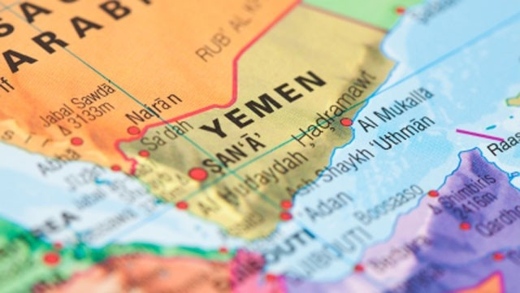
Yemen-map

The Islamic Republic of Iran’s Permanent Mission to the United Nations (UN), in a statement released on Saturday, categorically rejected the claim made in a September 14 letter by Saudi Arabia to the UN Security Council concerning the alleged transfer of weapons to the Yemeni Houthi Ansarullah fighters and the violation of UN Resolution 2216 by Iran.

“Unsubstantiated claims can be seen in Saudi Arabia’s letter, claims that no impartial body has ever been able to prove,” the Iranian mission’s statement read.

“This is while Saudi Arabia has for over a year and a half been involved in a full-scale, unequal war — which is devoid of logic — against the people of Yemen and has perpetrated undeniable crimes against the country’s defenseless civilians, children and women,” the statement read.

“Saudi Arabia, which, while destroying Yemen’s infrastructure, has no compunction about attacking hospitals and schools, is accusing Iran of breaching international resolutions while it (Riyadh) has violated international rules and civilian rights on numerous occasions based on documented reports,” the statement further read.

The Iranian UN mission said it was surprising that Saudi Arabia was complaining to the Security Council about the use of weapons in Yemen while it has itself spent tens of billions of dollars on the purchase of munitions to be used against the people of Yemen.

It said Iran does not believe there is a military solution to the Yemeni crisis and “has always demanded an end to hostilities and disagreements [there] through dialog and recourse to lawful and peaceful mechanisms.”

Saudi Arabia has been pounding Yemen since March 2015, with the UN putting the death toll in the war at about 10,000. The offensive was launched to reinstate Abd Rabbuh Mansur Hadi, a Saudi ally who has resigned as Yemen’s president.

A recent survey by a group of academics and human rights activists revealed that Saudi Arabia targeted 3,158 non-military sites in Yemen between March 2015 and the end of August this year.

The findings, published by The Guardian on Friday, further revealed that there were 942 air raids on residential areas, 114 on markets, 34 on mosques, 147 on school buildings, 26 on universities and 378 on transport sites during the mentioned period.

UN Humanitarian Coordinator for Yemen Jamie McGoldrick said last month that the death toll from the Saudi military aggression could rise even further as some areas had no medical facilities, and that people were often buried without any official record being made.

Saddam Hussein Revealed Phobia of Iran at the Gallows

saddam

It is interesting yet appalling to know that the former Iraqi dictator Saddam Hussein’s final words before his execution in December 30, 2006, were about a secret fear of Iran. 

According to a report by Al Alam News Network, as translated by IFP, Mowaffak al-Rubaie, Iraq’s former National Security Adviser, said in an interview with Iraq’s Asia TV that Saddam was suffering from an illusion of Iranophobia.

Al-Rubaie, who was accompanying Saddam from the investigation and interrogation stages up until his final moments before execution, noted that, “When they handed over Saddam to me and I was taking him to the judge so that he would hear his charges, I heard Saddam reciting these words over and over again: down with Iran…down with the Magi Iranians.

“When Saddam was asked about why he prevented the progress of Iraq with war and bloodshed, he said he wanted it [Iraq’s progress], but Iran did not let that happen!”

According to al-Rubaie, Saddam had a fear even of Iran’s name inasmuch as he would blame Iran even if two fish had a fight in an aquarium. He believed that Iranians are the descendants of the magi and fire worshipers.

“Since he knew the execution ceremony was being videotaped and probably broadcasted after his death, he was repeatedly cursing Iran,” he stressed.

He said Saddam was a skilful actor as life was like a play in the theatre for him.

“Even in the final moments of his life, Saddam pretended to be brave so much so that when he entered the execution room, the moment he clapped eyes on the noose, turned to the doctor and said, ‘This is for a man!’”

Leader Pardons over 500 Iranian Prisoners

Iran’s Leader Okays Allocation of €1 Billion to Fight COVID-19

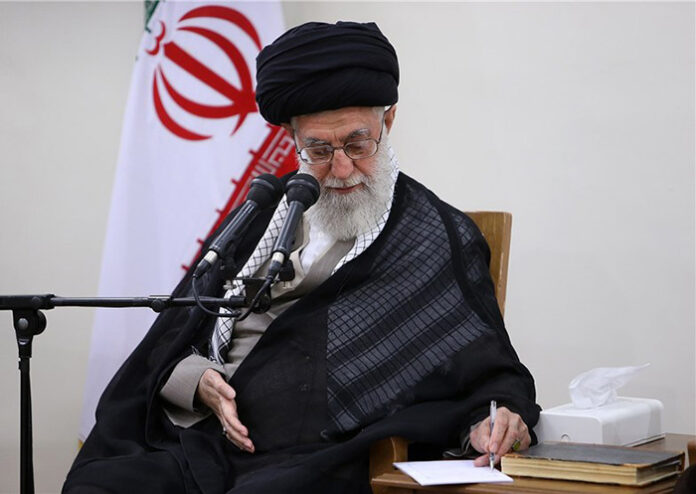
The pardon was granted at the request of the country’s Judiciary Chief Ayatollah Sadeq Amoli Larijani on the occasion of great Muslim festivals of Eid al-Adha and Eid al-Ghadeer.

The Eid al-Adha is one of Islam’s holiest festivals celebrated annually around the world and an official holiday in Muslim-majority countries.

Eid al-Ghadeer is also a festive day observed by Shiite Muslims on the 18th of Dhu al-Hijjah in the Islamic calendar to commemorate the appointment of Ali ibn Abi Talib (AS) by the Prophet Mohammad (PUBH) as his immediate successor.

Article 110 of the Constitution grants the Supreme Leader the right to pardon or reduce the sentences of convicts upon a recommendation from the head of the Judiciary.

The clemency, however, does not apply to certain types of convicts, including those who have been sentenced for their role in armed struggle against the country, armed or organized drug trafficking, armed robbery, arms smuggling, abduction, bribery and embezzlement.

Iranian Parliament Endorses New Oil Contract Model

The new formula, which has drawn criticism from some politicians and experts, was reviewed by a parliamentary panel but not voted by lawmakers, the Ministry of Petroleum’s Shana news agency reported on Saturday.

“After examining the new contract model, the Parliament board on the conformity of government bills with laws declared it not in contradiction with the upstream rules,” Shana quoted MP Asadollah Qareh-Khani as saying.

Parliament speaker Ali Larijani, however, communicated the advice of critics and those familiar with the matter about the contract to the government, said the lawmaker who is also the spokesman of parliament’s energy commission.

The new oil contract model has been modified several times to satisfy those who say it has serious flaws.

“The government, in its third draft, took into account the concerns of the critics and sympathizers of the establishment; and the board on conformity declared the new oil contract in compliance with upstream rules,” Qareh-Khani said.

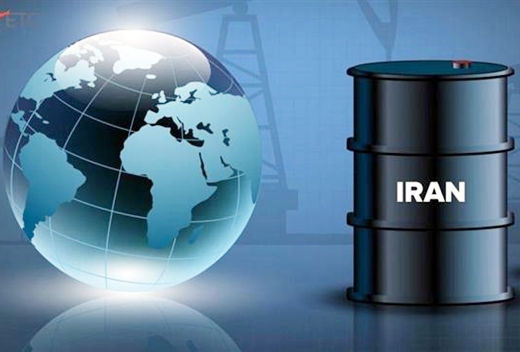
The new Iran Petroleum Contract (IPC), described as a hybrid model, will replace the buy-back contract. It is being touted as a risk service contract which includes integrated exploration, development and production.

Iran has been working on the IPC for the past two years in order to lure investment to its oil and gas sector. Officials have said the duration of the contract is for 20 years. It includes the fee per barrel that is paid as profit to the companies.

Deputy Petroleum Minister Ali Kardor said in remarks published on Saturday that some $10 billion of oil and gas contracts have been prepared for signing before the end of the current Iranian year on March 20, 2017.

Three oil and gas fields will be tendered for development soon, said the official who is the managing director of the National Iranian Oil Company (NIOC), without naming them.

Kardor recently said the first tender since the lifting of sanctions on Iran will take place between Oct. 14 and Oct. 21, with South Azadegan being the priority for development.

Critics of the new contract are worried about giving foreign companies a stake in the fields, saying such a move could amount to the country’s oil concessions to the UK under the 1901 D’Arcy Agreement which Iranians believe squandered their national wealth.

Enemy Seeks to Alter Lifestyle in Iran: IRGC Commander

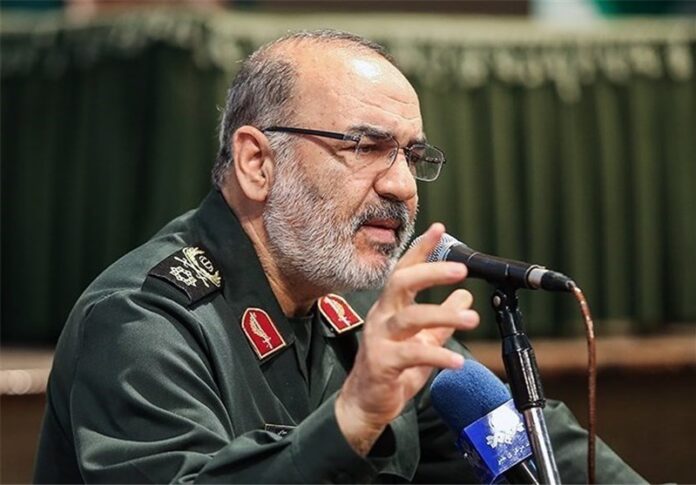
Brigadier General Hossein Salami

In an address to a meeting of IRGC commanders and officials on Saturday, General Salami said the enemy has plans to change the Iranian lifestyle by replacing the Islamic values with Western ones.

He also pointed to the enemy’s plans to close in on Iran and restrain the influence of the Islamic Revolution.

Leader of the Islamic Revolution Ayatollah Seyed Ali Khamenei has also on many occasions urged vigilance in the face of enemy ploys to gain a political and cultural foothold in Iran.

Earlier this month, Ayatollah Khamenei issued a 16-article decree providing general policies and measures that Iranian organizations should take to strengthen family relations in Iran and ward off the Western lifestyle.

Iran Condemns Terrorist Attack on Pakistan Mosque

Bahram Qassemi

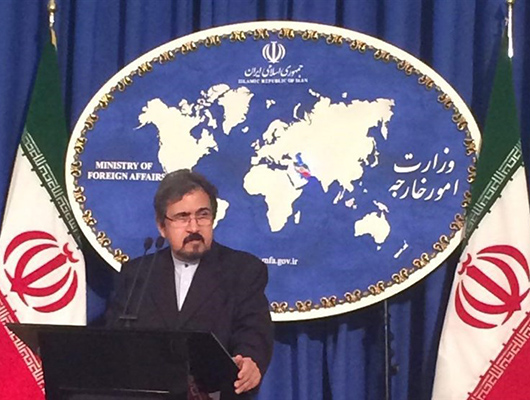
“It is high time that all regional countries summon their resolve to firmly fight the root causes and covert and overt origins of this ominous phenomenon through vigilance, cooperation and interaction and rid the world of this plight of the century,” Iranian Foreign Ministry Spokesman Bahram Qassemi said on Saturday.

He expressed sympathy with the Pakistani government and nation over the heartfelt incident and offered his condolences to the bereaved families of the victims.

On Friday, at least 25 people were killed and 30 more wounded in a bomb attack in a Pakistani mosque in the village of Payee Khan, in the troubled Mohmand region of the lawless Federally Administered Tribal Areas (FATA) bordering Afghanistan.

A group of pro-Taliban militants, Tehreek-e-Taliban Pakistan Jamaat-ur-Ahrar (TTP-JA), claimed responsibility for the blast.

Pakistan Prime Minister Nawaz Sharif denounced the blast and said the “attacks by terrorists cannot shatter the government’s resolve to eliminate terrorism from the country.”

Thousands of people have been killed over the past decade as a result of the surge in violence in Pakistan.

In the deadliest terrorist attack in Pakistan, pro-Taliban elements killed over 150 people, most of them children, in an armed assault on a school in the northwestern city of Peshawar in December 2014.

Iran’s SNSC Sets New Conditions for Joining FATF

Kamal Kharazi
Kamal Kharazi

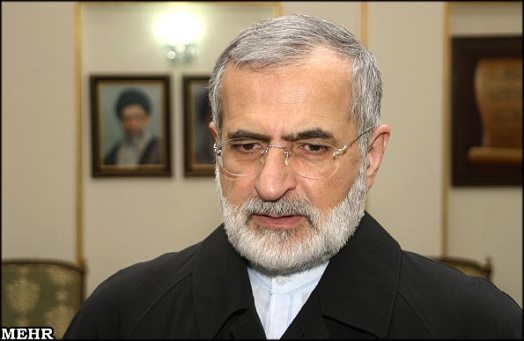
Speaking to the Tasnim News Agency, Kharrazi noted that Iran’s membership in the FATF, the policy-making body of the international financial system, would further facilitate the country’s banking relations with the world.

The official also emphasized that given the laws against money laundering approved in the Iranian parliament in the past, there is no problem regarding the country’s cooperation with the FATF.

He, however, said that related officials should be careful not to allow any exploitations of deals with the FATF.

“The SNSC has considered the issue (a recent deal between Iran and the FATF) and has set new conditions so that God willing, the Iranian nation’s rights would be ensured,” Kharrazi went on to say.

Some Iranian parliamentarians and officials had previously voiced concerns about the deal with the FATF, saying the Westerners are seeking to further interfere in the internal affairs of the Islamic Republic through the agreement.

In late June, FATF hailed Iran’s adoption of an action plan to address shortcomings in its anti-money laundering policies and its decision to seek assistance with implementation.

In its plenary meeting in South Korea, the body took into account Iran’s implementation of an anti-money laundering law and its membership at the Eurasian Group, a FATF-style regional body.

Iran, however, will remain on the FATF blacklist until the full implementation is complete, the body said. Moreover, if it fails to demonstrate “sufficient progress” at the end of the yearlong suspension, the restrictions will be re-imposed.

The body is under the influence of the US, which is keeping pressure on Iran by maintaining sanctions despite coming into force of the Joint Comprehensive Plan of Action (JCPOA), a lasting nuclear deal between Tehran and the Group 5+1 (Russia, China, the US, Britain, France and Germany).

A Look at Iranian Newspaper Front Pages on September 17

Iran Newspaper front pages

The top story today was the European visits of Iran’s nuclear chief Ali Akbar Salehi and his remarks about the future of Iran’s nuclear industry.

Newspapers also covered the visits of President Hassan Rouhani to Venezuela and then the US. Rouhani is due to attend the Non-Alignment Movement (NAM) Summit and the United Nations General Assembly (UNGA) in Margarita Island and New York City, respectively.

The remarks by Seyyed Ali Khomeini, the grandson of Imam Khomeini, about Iran’s fight against terrorism also received good coverage.

The above issues as well as many more are highlighted in the following headlines:


Abrar:

1- Barzani Calls for Agreement with Baghdad before Beginning of Mosul Operation

2- AEOI Spokesman: Draft to Be Prepared on Tehran-Europe Cooperation in 2 Weeks

3- Kerry’s Deputy Consults with Abadi on Preparations for Mosul Liberation

4- Mogherini: Trade Ties between Iran and Europe Have Had Unbelievable Increase

A Look at Iranian Newspaper Front Pages on September 17


Abrar-e Eqtesadi:

1- Crisis of Gini Coefficient Decrease in Ahmadinejad’s Gov’t: In His Term, Capital Output Was $25bn More than Its Input to Iran

2- World Bank: One-Place Improvement in Iran’s Rank in Purchasing Power Parity (PPP) Index

3- Lukoil’s Talks with Iran for Oil Extraction from Caspian Sea

4- Beginning of a New Era in Iran-South Africa Trade Ties

A Look at Iranian Newspaper Front Pages on September 17


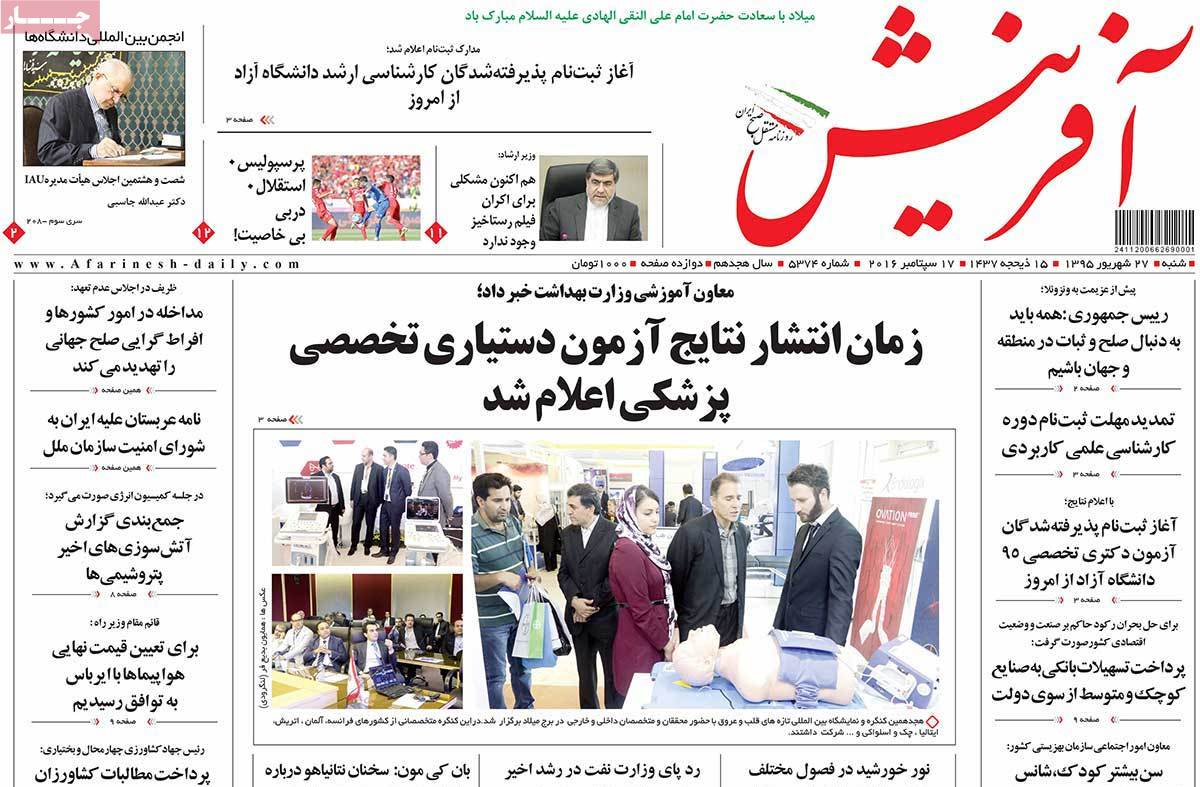
Afarinesh:

1- Zarif in NAM Summit: Interference in Other Countries’ Affairs and Extremism Are Threatening World Peace

2- Before Departing for Venezuela, President Rouhani Said We Should All Be Looking for Peace and Stability in Region and World
A Look at Iranian Newspaper Front Pages on September 17


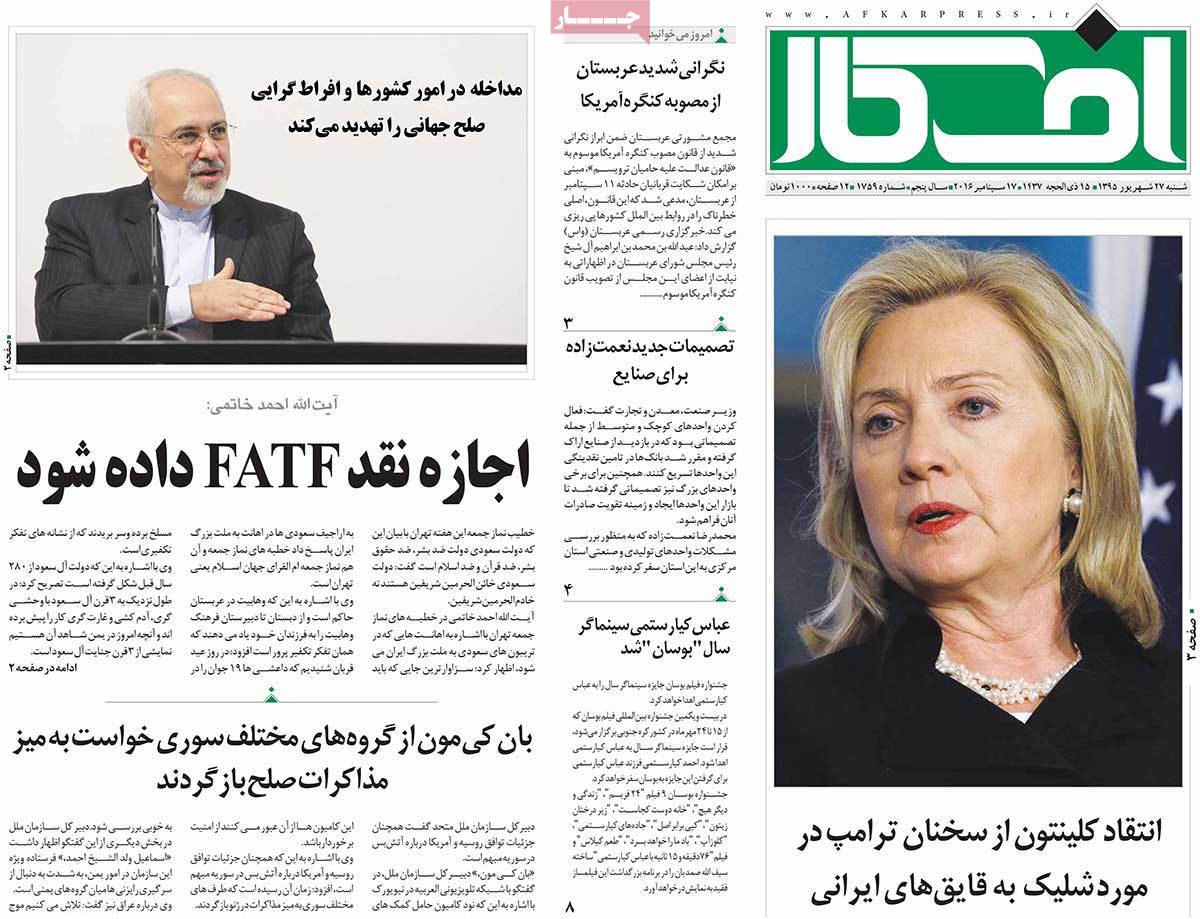
Afkar:

1- Ayatollah Khatami: Others Should Be Allowed to Criticize FATF

2- Ban Urges Syrian Opposition Groups to Return to Peace Negotiations

3- Saudi Arabia’s Serious Concern about US Congress’ Bill

4- Abbas Kiarostami Becomes Busan’s Artist of the Year
A Look at Iranian Newspaper Front Pages on September 17


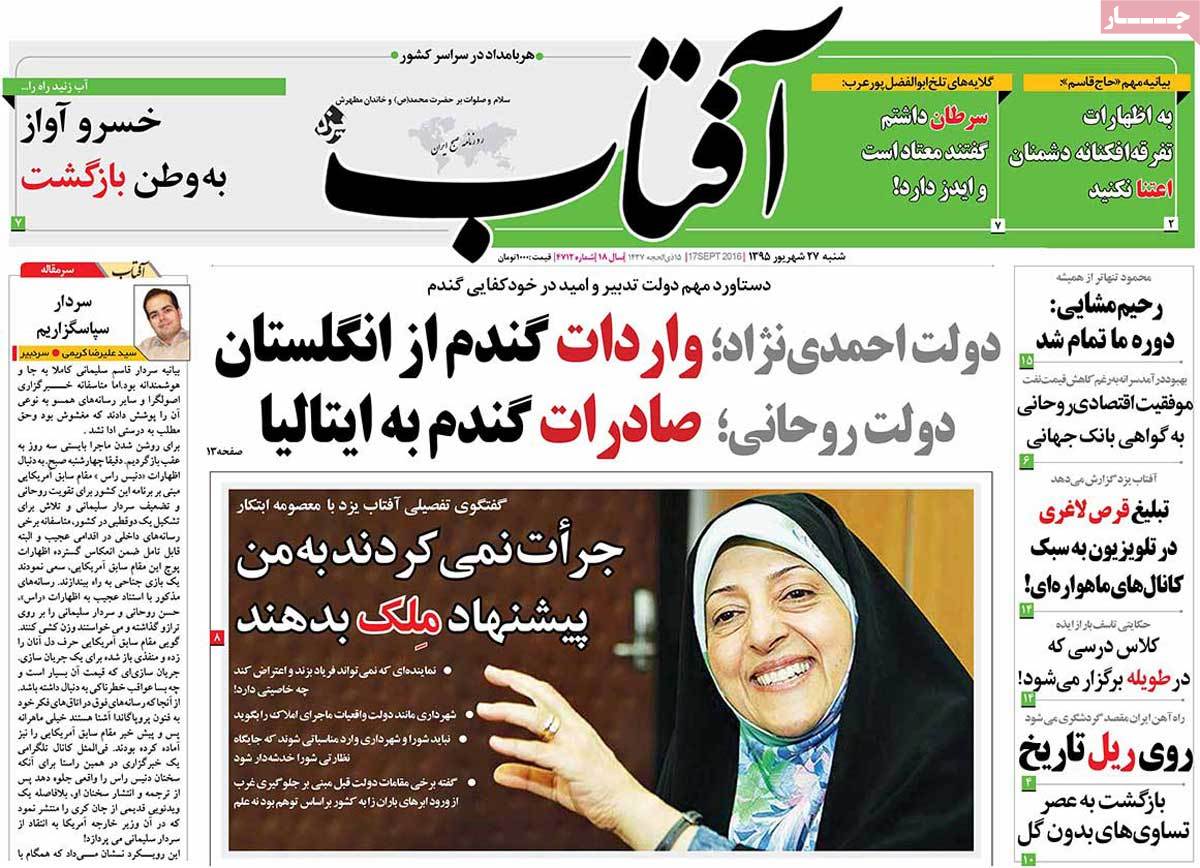
Aftab-e Yazd:

1- Ahmadinejad’s Gov’t Imported Wheat from Britain, Rouhani’s Administration Is Exporting Wheat to Italy: Rouhani’s Major Achievement in Wheat Self-Sufficiency

2- Improved GDP in Spite of Decline in Oil Price: Rouhani’s Economic Success Confirmed by World Bank
A Look at Iranian Newspaper Front Pages on September 17


Amin:

1- Iran and Group 5+1 FMs to Convene in New York on September 22

2- Salehi: Iran’s Official Accession to International Thermonuclear Experimental Reactor (ITER) to Be Announced Soon

3- Jimmy Carter: US Policies in Worst Conditions
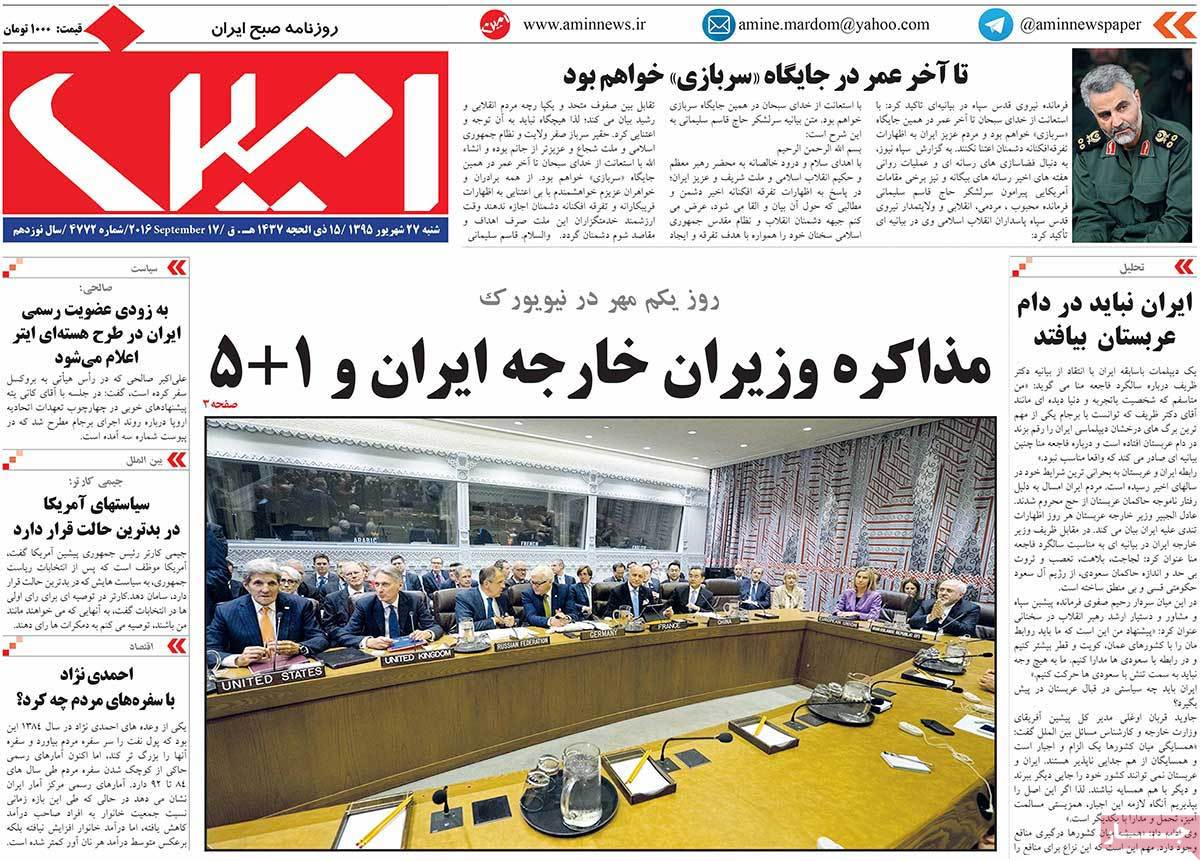
A Look at Iranian Newspaper Front Pages on September 17


Arman-e Emrooz:

1- Kerry to Become US Representative in Iran Affairs If Clinton Wins Elections: US Hand of Friendship Extended to Iran

2- Adviser: Ahmadinejad Won’t Run for Presidency in 2017 Elections

3- General Soleimani Dismisses Rumours of His Bid for Presidency, Saying He’ll Remain a Soldier
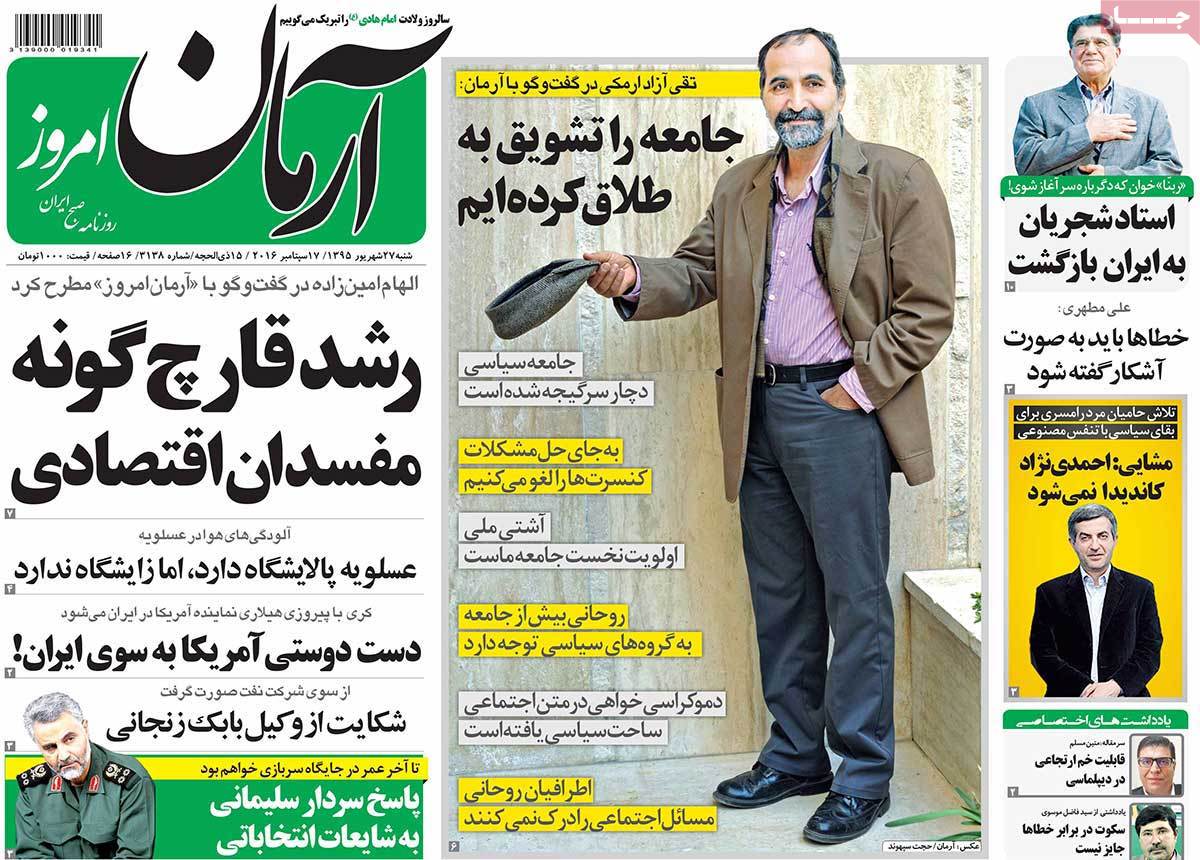
A Look at Iranian Newspaper Front Pages on September 17


Asrar:

1- Spokesman: Global Centres’ Reports Confirm Iran’s Economic Stability

2- Justice Minister: US Doesn’t Have the Power to Shoot Iran

3- Boeing Official: Boeing Has No Problem with Selling Planes to Iran
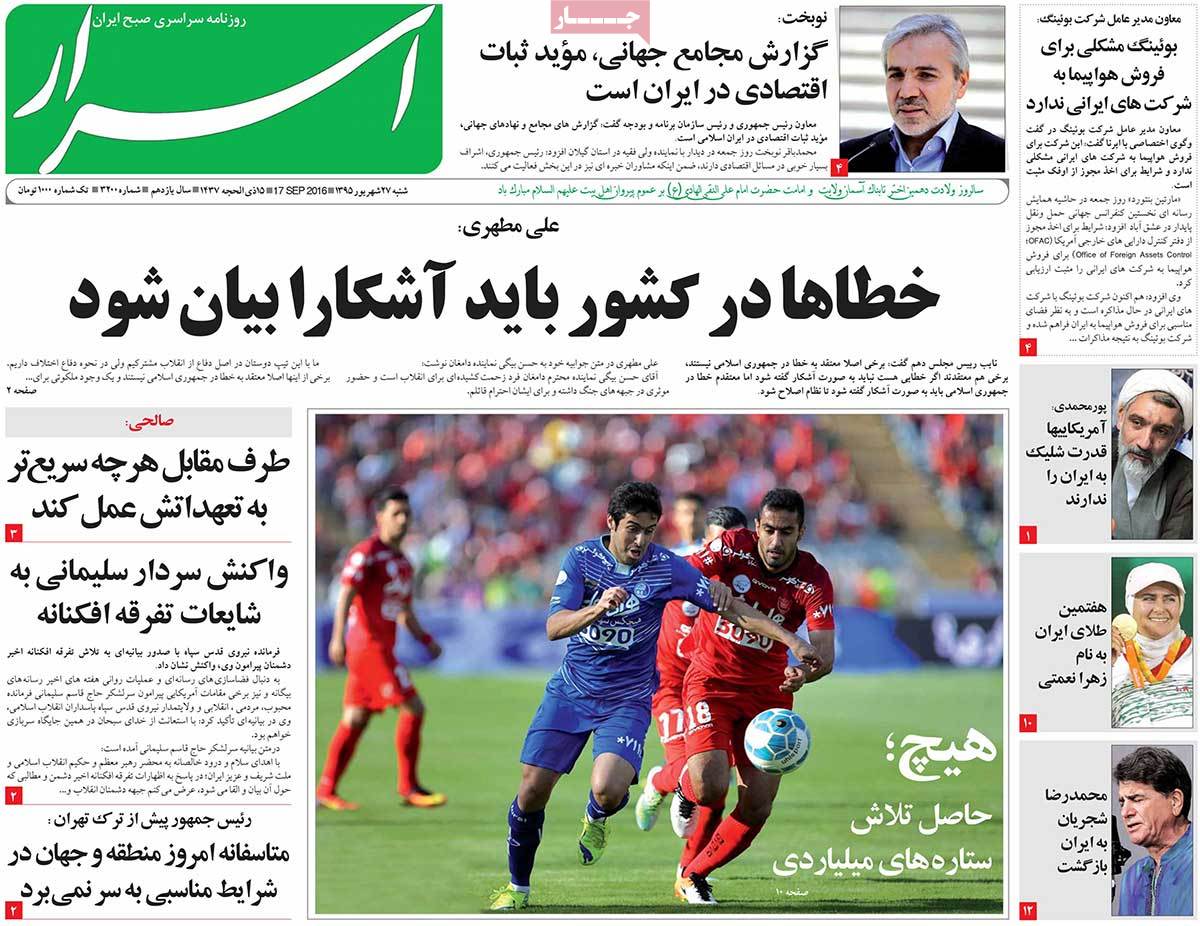
A Look at Iranian Newspaper Front Pages on September 17


Ebtekar:

1- Fourth Visit to US: President Leaves Tehran for Americas to Attend NAM Summit and UNGA

2- 7th Gold Medal for Iran’s Paralympics Team Won by Zahra Nemati
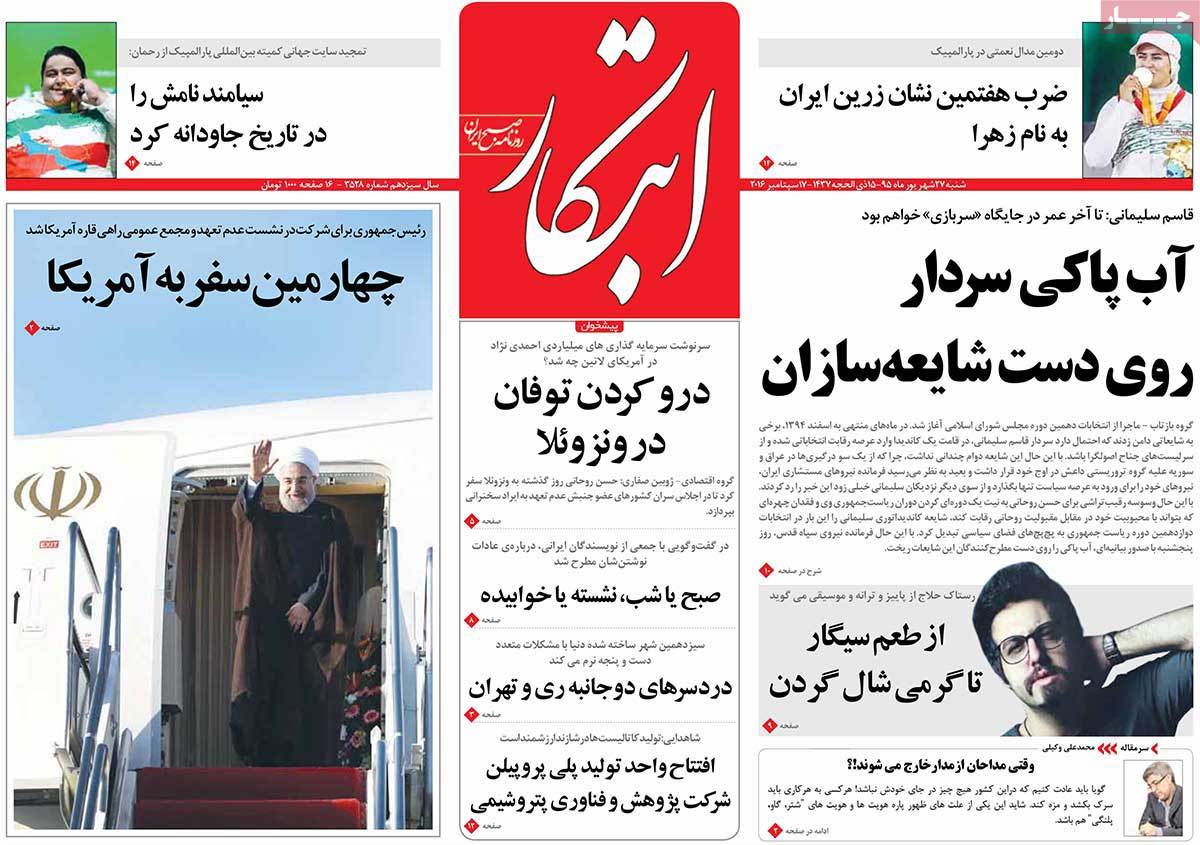
A Look at Iranian Newspaper Front Pages on September 17


Etemad:

1- Repetition of Rouhani, the Strategy of Reformists

2- Master Shajarian Returns Home after Treatment in US

3- Clinton: Shooting Iranian Boats Would Lead to War
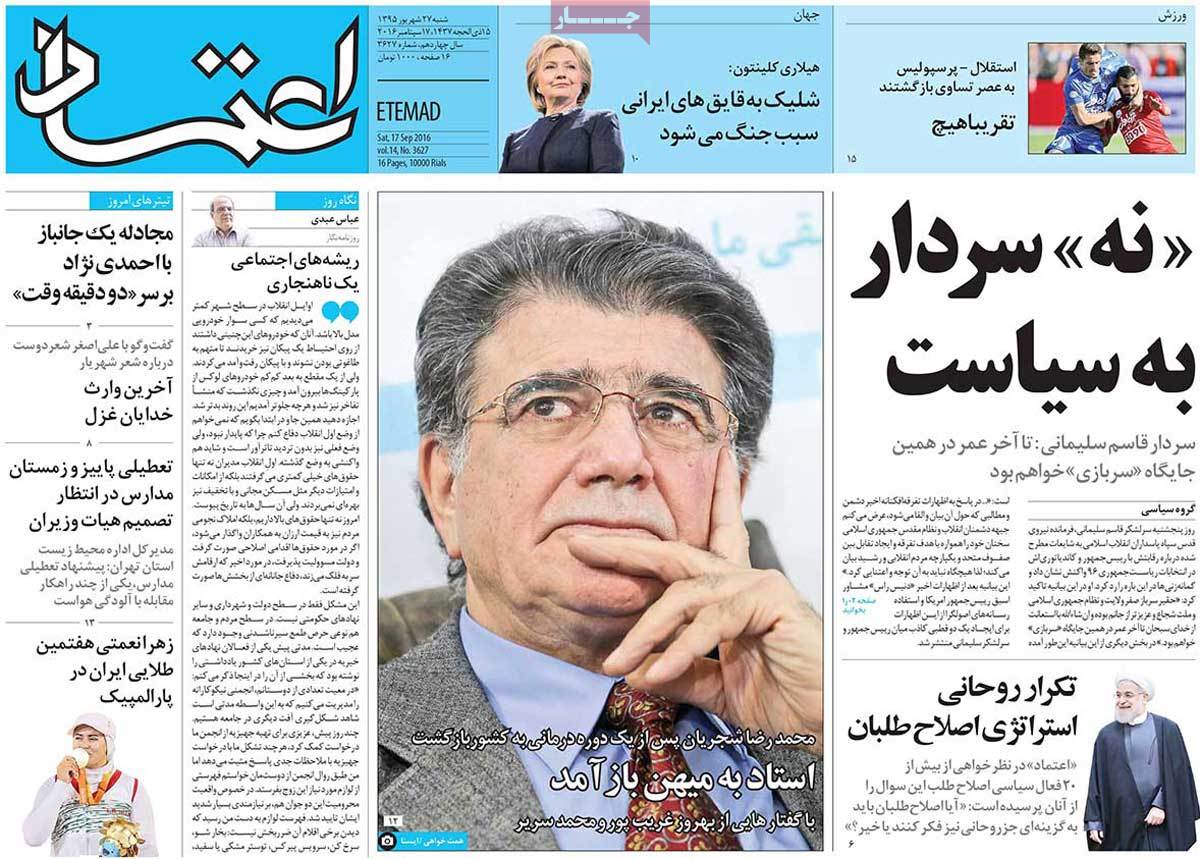
A Look at Iranian Newspaper Front Pages on September 17


Ettela’at:

1- Salehi: Nuclear Energy Should Be a Ground for Regional Cooperation

2- UN Secretary General: Israel’s Occupation, Tyranny, and Oppression Should Be Ended

3- Energy Minister: Recent Droughts Were Caused by Greenhouse Gases

4- Former US Ambassador to Riyadh: Saudis Support Extremist Groups in Region

5- Iran Goes Up in Paralympics Medal Ranking
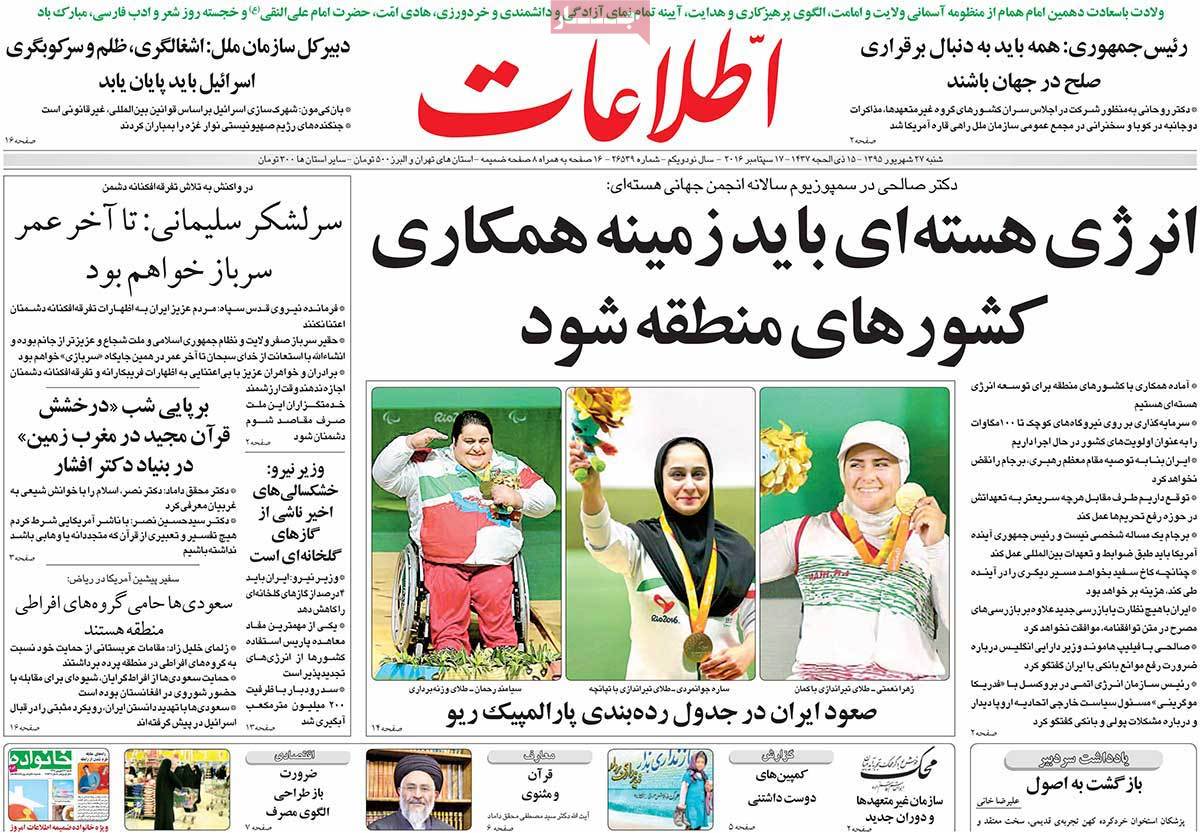
A Look at Iranian Newspaper Front Pages on September 17


Hemayat:

1- Iran’s Human Rights Council Chief: US Division of Terrorism into Good and Bad Categories Not Acceptable to Tehran

2- Bloody Rallies of Workers in France
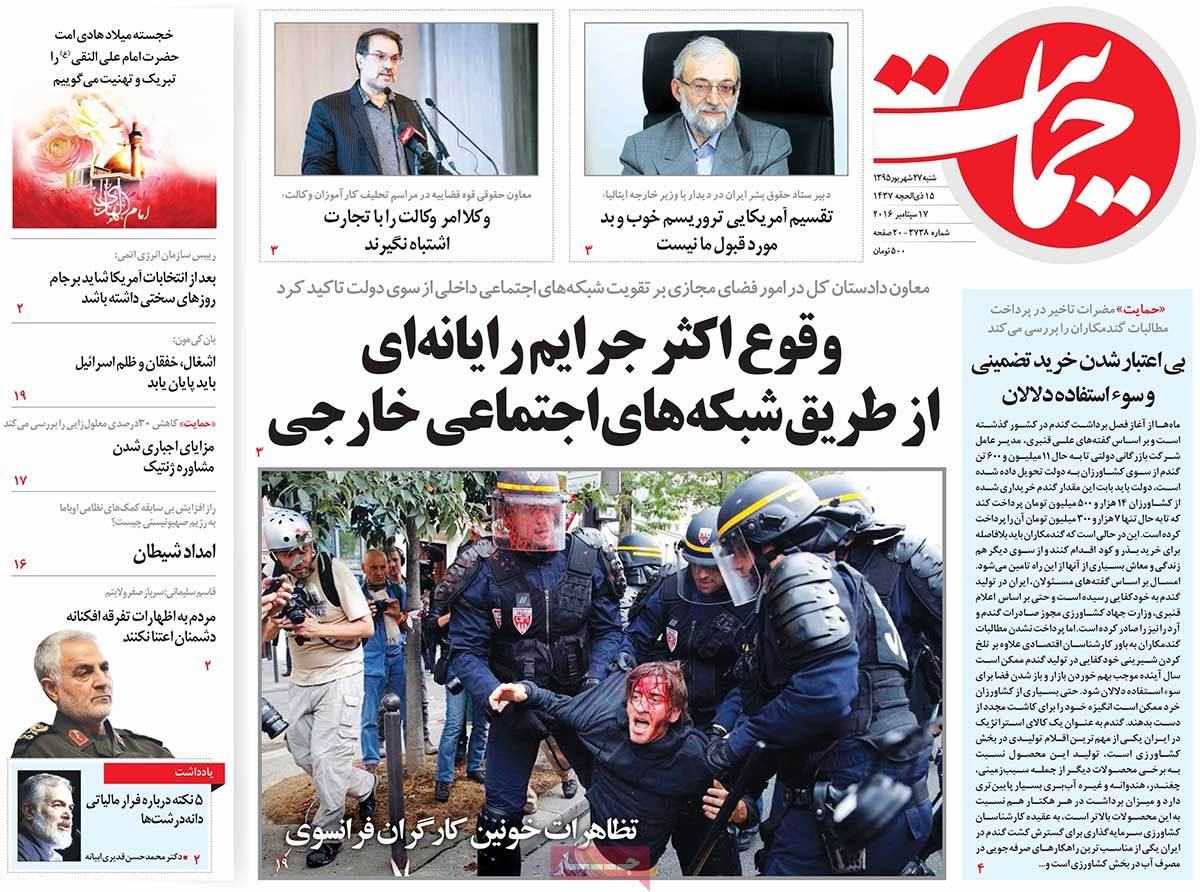
A Look at Iranian Newspaper Front Pages on September 17


Iran:

1- Joint Statement by US, France, Britain, China, and Russia: We Stick to Our JCPOA Commitments

2- Rouhani Arrives in Americas with Message of Peace and Security

3- Salehi’s Talks with Europeans about Banking and Financial Problems
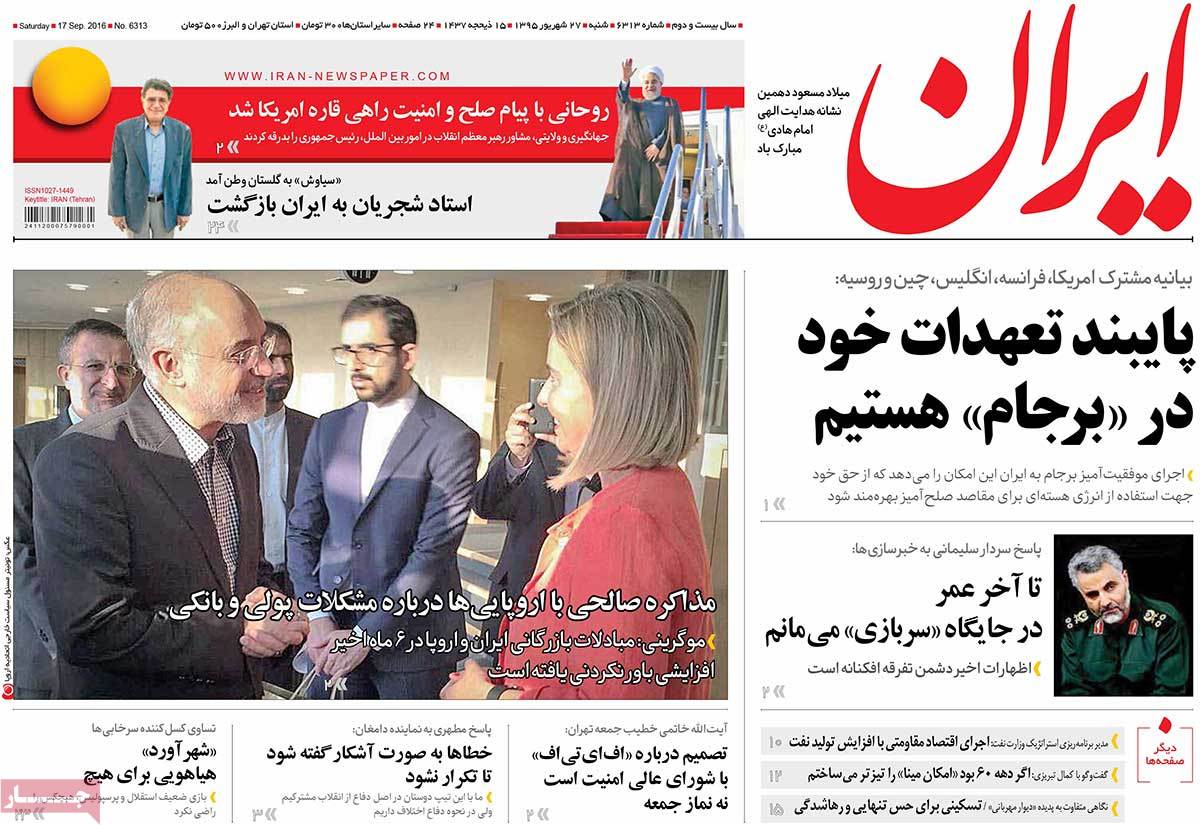
A Look at Iranian Newspaper Front Pages on September 17


Javan:

1- Salehi: We’re Worried about More Difficult Days of JCPOA after US Elections

2- 7 Gold Medals until 8th Day for Iran’s Paralympics Team: Siamand, Nemati and Javanmardi  Win Gold
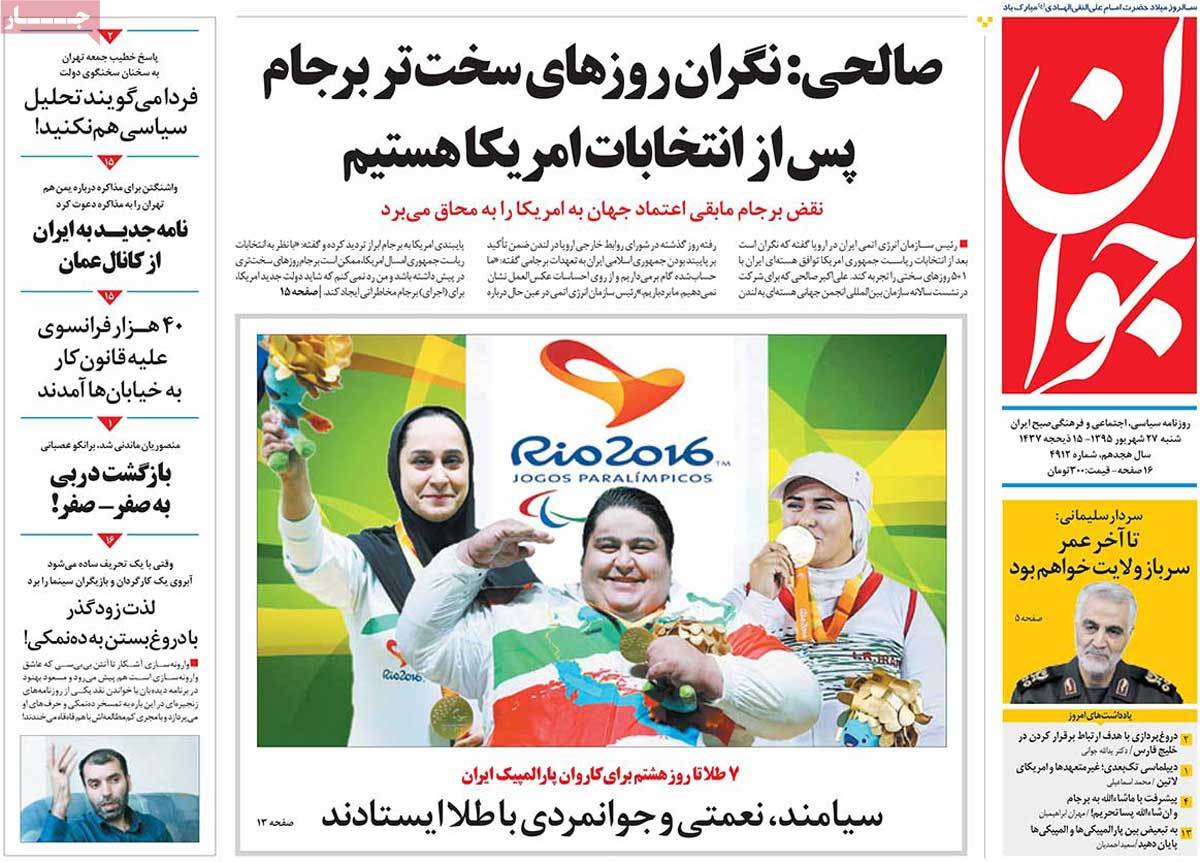
A Look at Iranian Newspaper Front Pages on September 17


Jomhouri Eslami:

1- US Flag, instead of Terrorists’, Raised in Northern Syria

2- Trump Is a Problem for Entire World: EP President
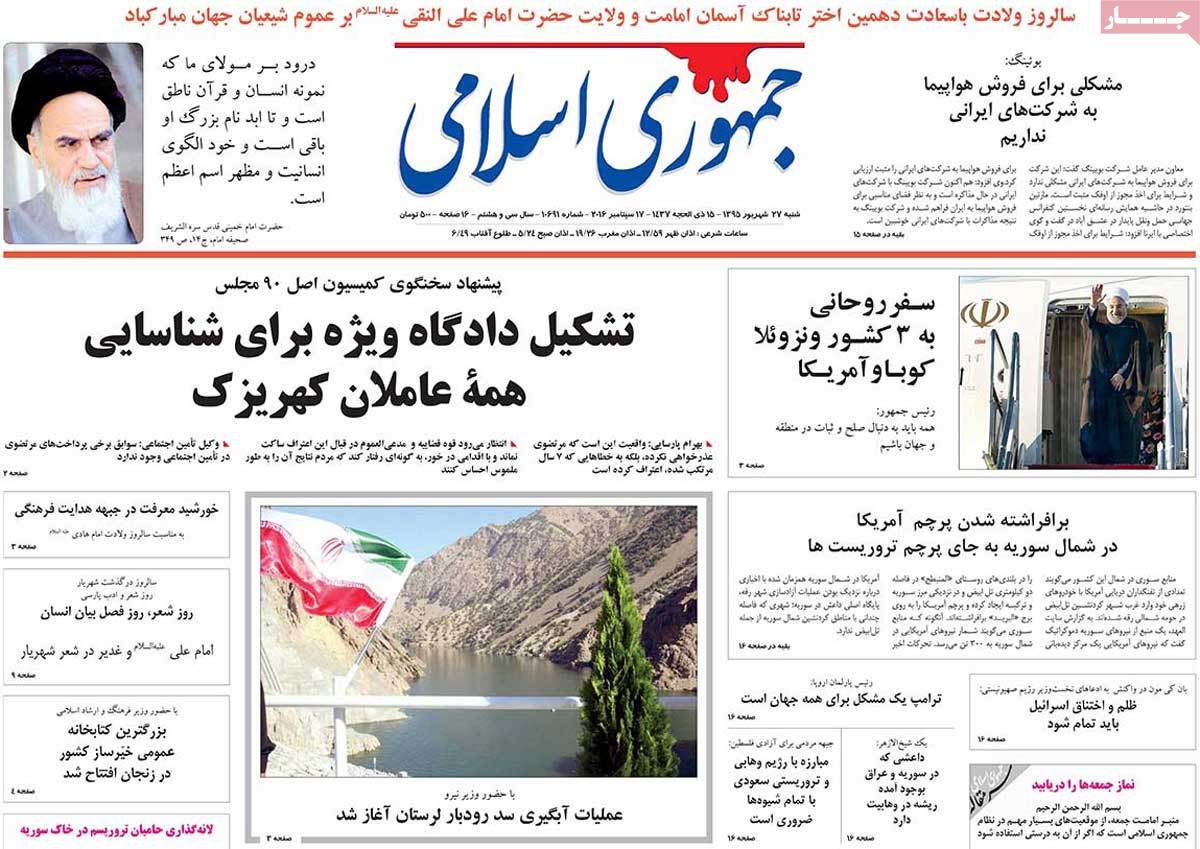
A Look at Iranian Newspaper Front Pages on September 17


Ka’enat:

1- Tropical Storm En Route to Iran’s Southern Coasts: Official Warning
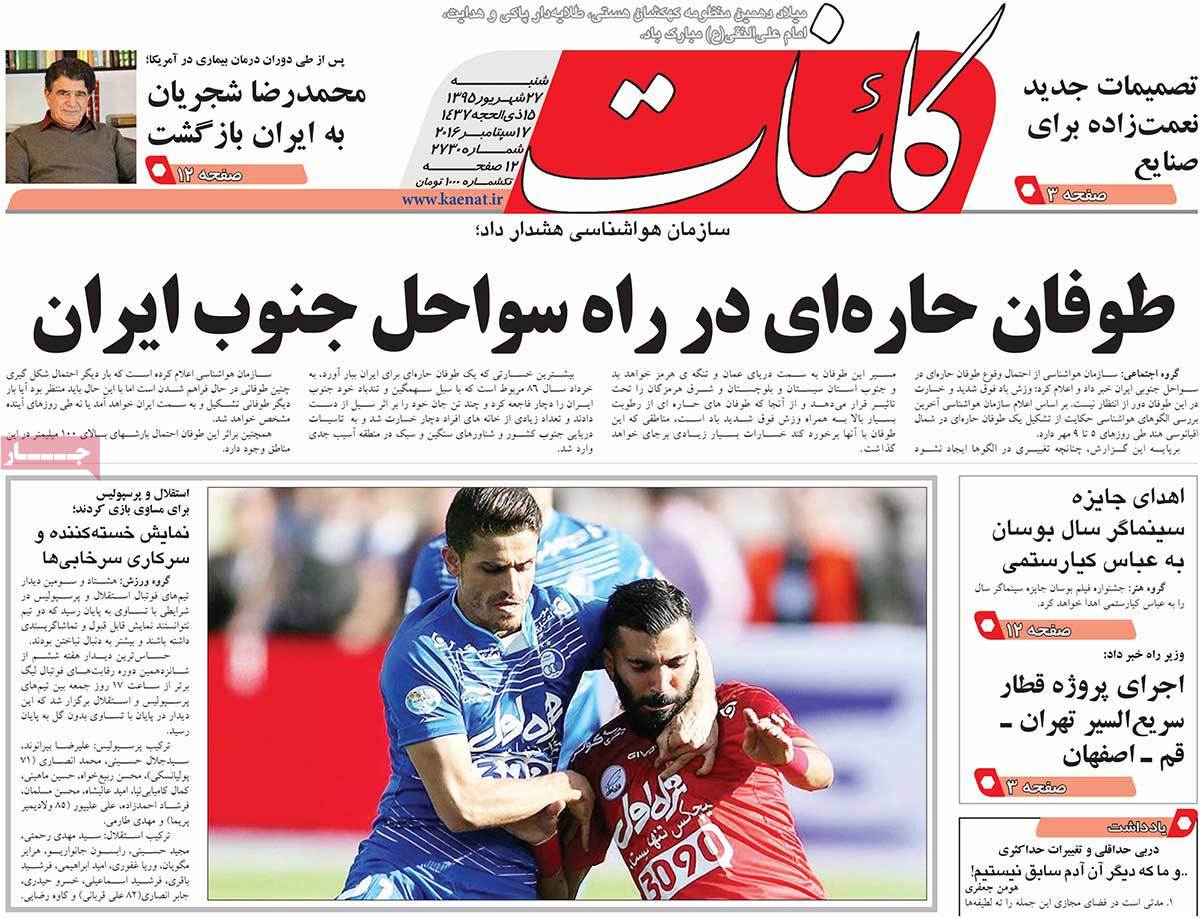
A Look at Iranian Newspaper Front Pages on September 17


Kayhan:

1- Iran-Russia Joint Bank to Be Established for Dollar-Free Transactions

2- Salehi Confirms Critics’ Arguments after 3 Years! West Raises New Excuses Each Day in a Bid to Evade Fulfilling JCPOA Commitments

3- Saudi Arabia’s Largest Military Base in Najran Seized by Yemeni Revolutionaries

4- Al-Azhar Cleric: Saudi Wahhabis Have Stolen the Title ‘Sunni’
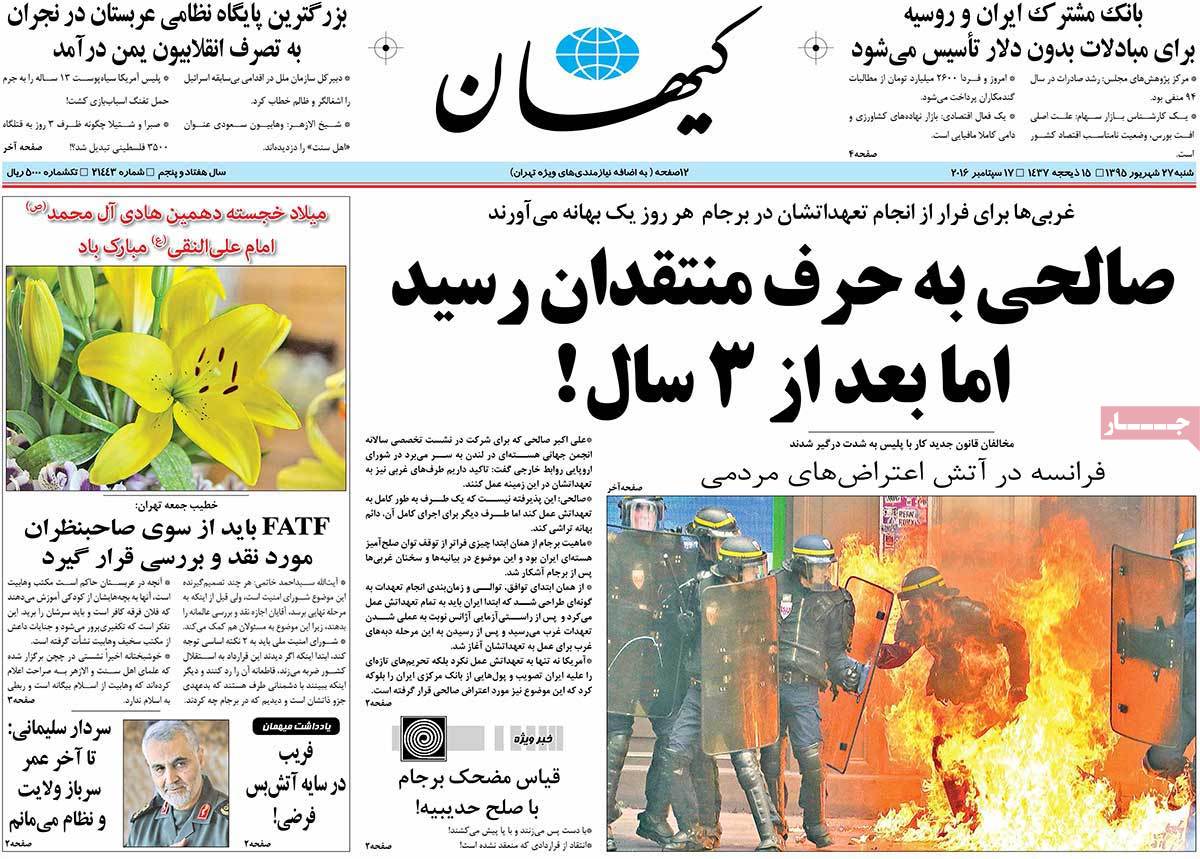
A Look at Iranian Newspaper Front Pages on September 17


Khorasan:

1- Imam Khomeini’s Grandson [Seyyed Ali]: They Say Those Who Fight in Syria to Defend Holy Shrines Do It for Money; Who Would Risk His Life for Money?

2- Salehi: Construction of Small Reactors, Iran’s New Nuclear Strategy
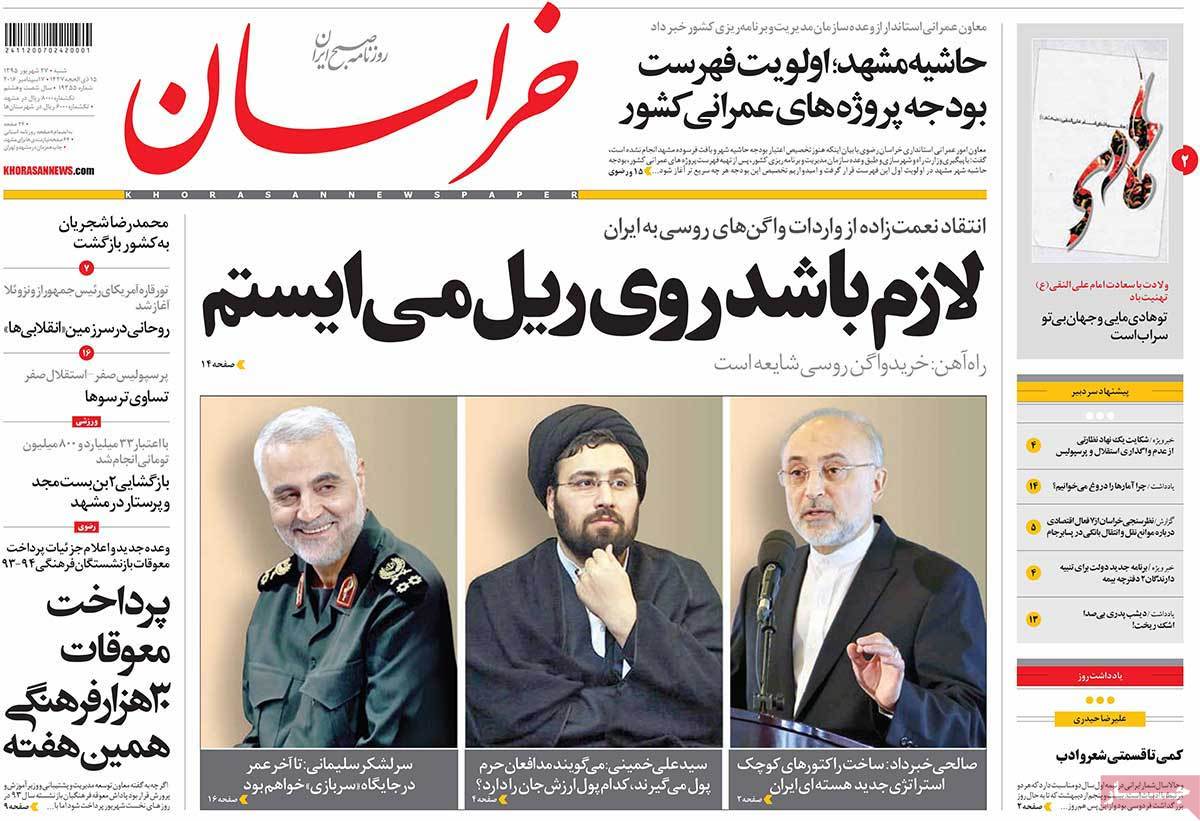
A Look at Iranian Newspaper Front Pages on September 17


Resalat:

1- Ayatollah Khatami: Syria Ceasefire Is Aimed at Regrouping US and Takfiri Forces

2- Ban’s Unprecedented Attack against Zionist Regime [Israel]
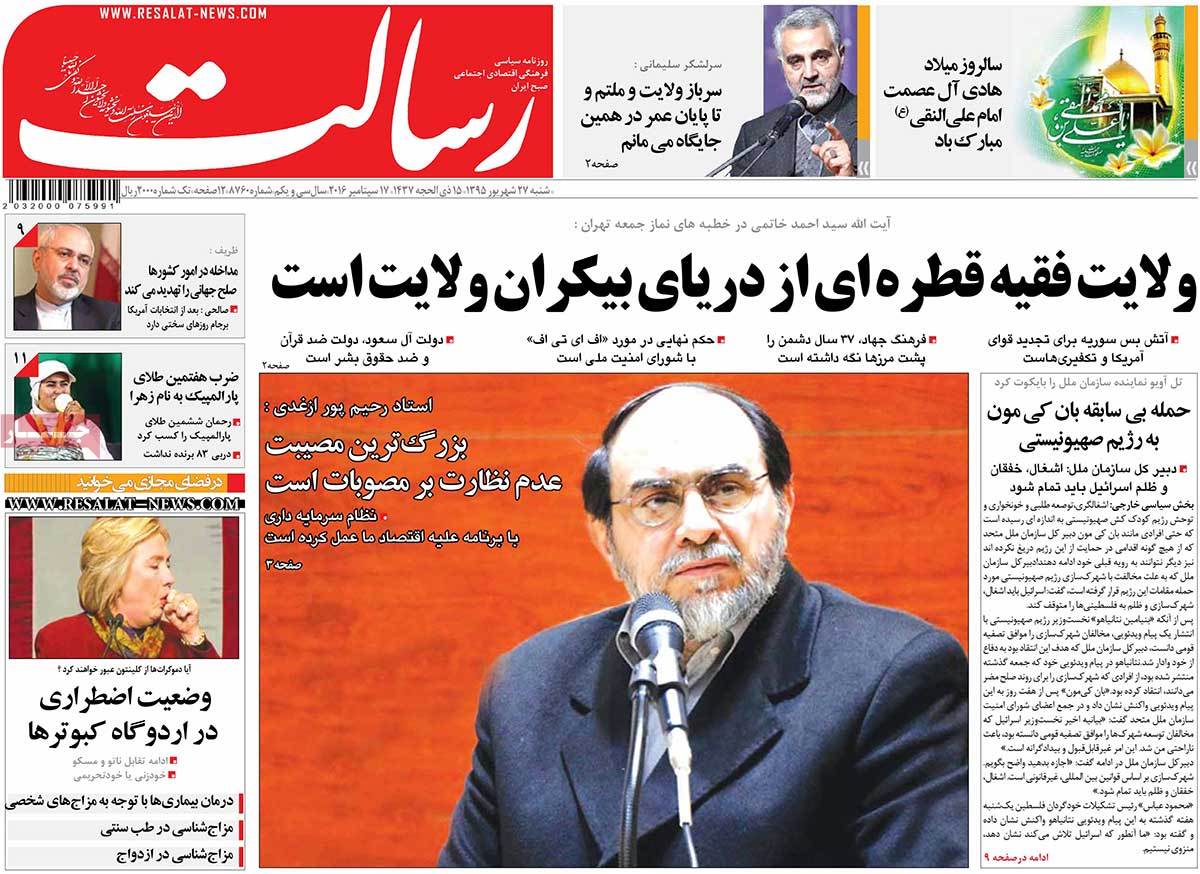
A Look at Iranian Newspaper Front Pages on September 17


Roozan:

1- Imam Khomeini’s Grandson: Islamic Republic Is Exercising Self-Restraint in Countering ISIS
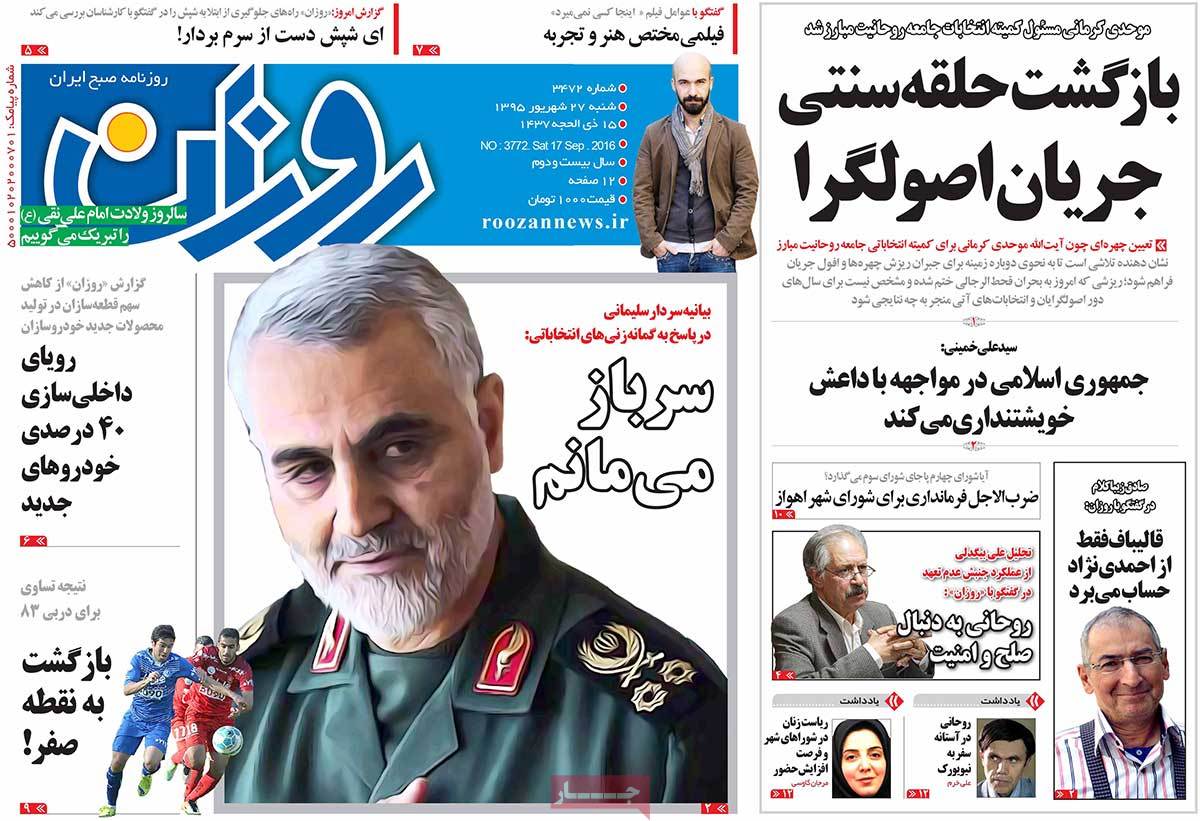
A Look at Iranian Newspaper Front Pages on September 17


Shargh:

1- Trade Minister: I’ll Stand Still on the Railway and Won’t Allow Entry of Russian Wagons

2- Reformist Figure: JCPOA Is a Required Condition for Improving the Country’s Situation, But It’s Not Enough

3- Trump Leads the Polls: Hot Competition between Two Unpopular Figures
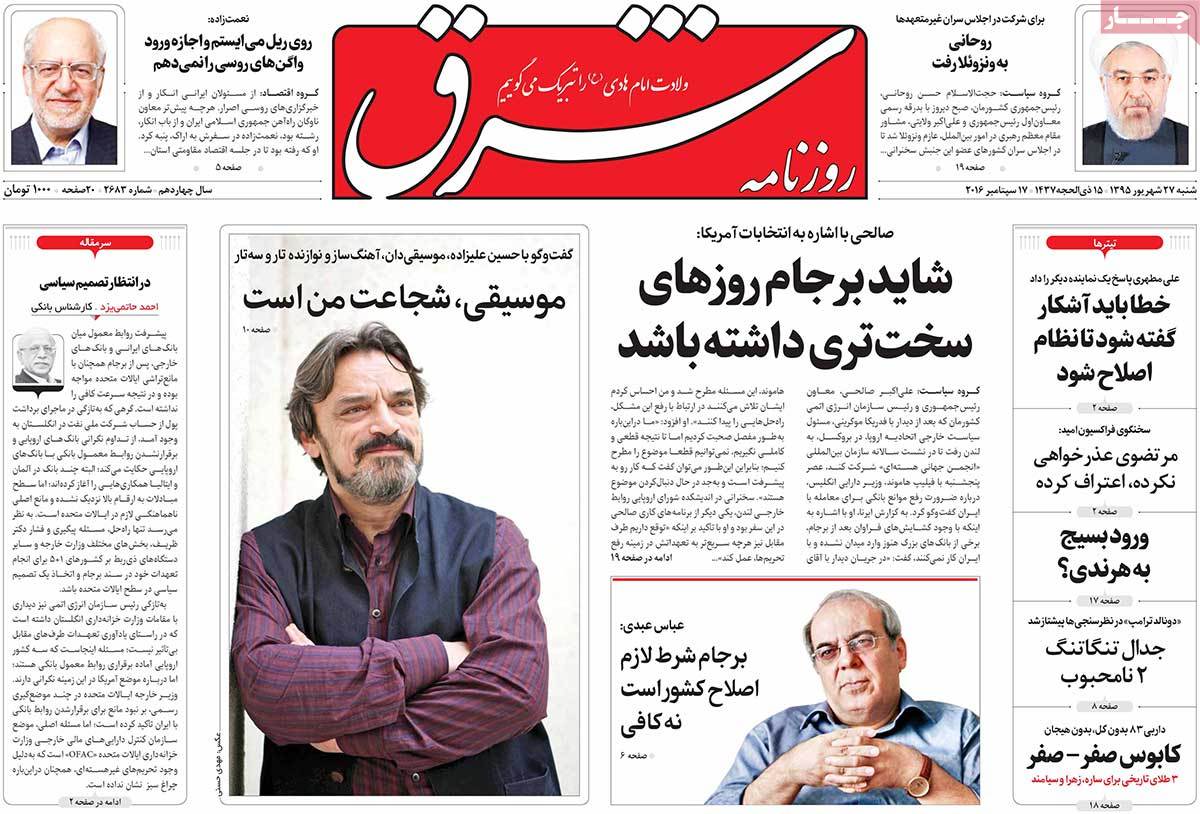
A Look at Iranian Newspaper Front Pages on September 17


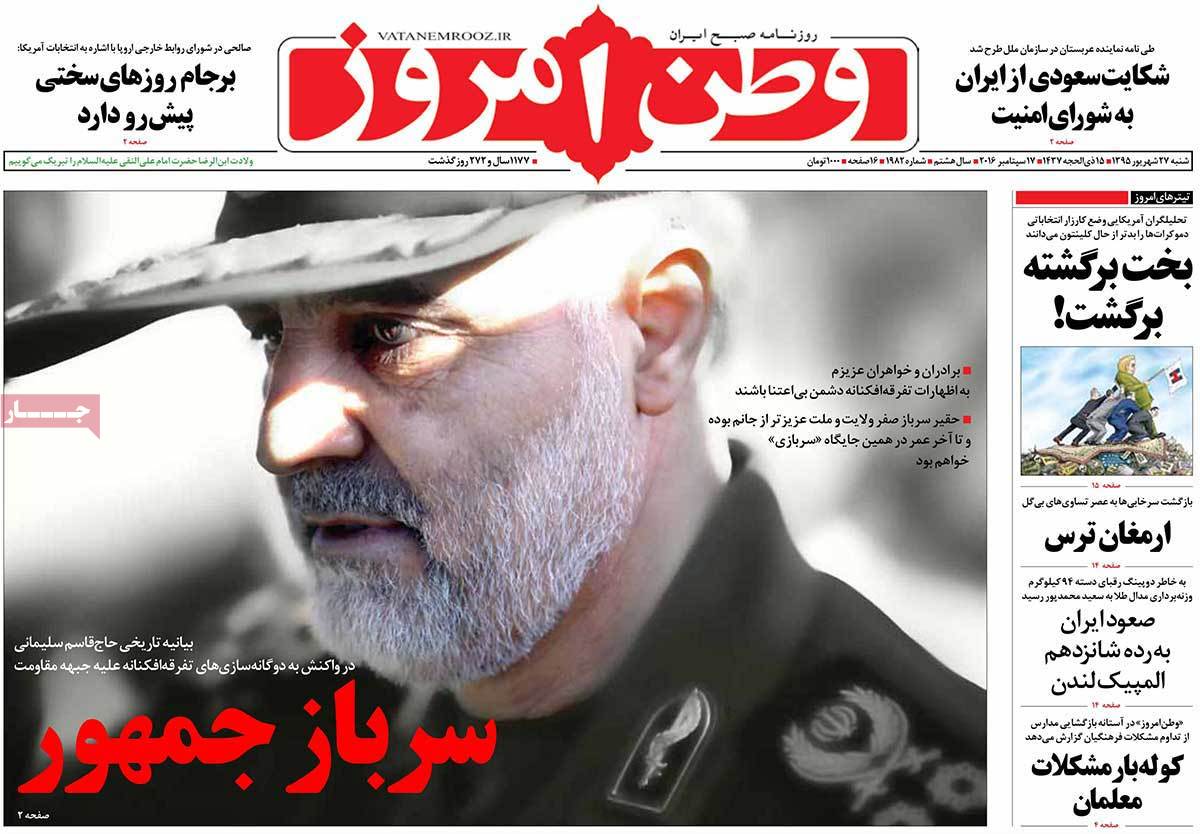
Vatan-e Emrooz:

1- Saudi Arabia Files Lawsuit against Iran in UNSC

2- US Analysts Say Democrats’ Conditions in US Presidential Campaigns Are Worse than Clinton’s Health

A Look at Iranian Newspaper Front Pages on September 17

Al Saud Implementing US Policies: Iranian Official

Iran's Chief Negotiator Saeed Jalili meets with reporters in Moscow

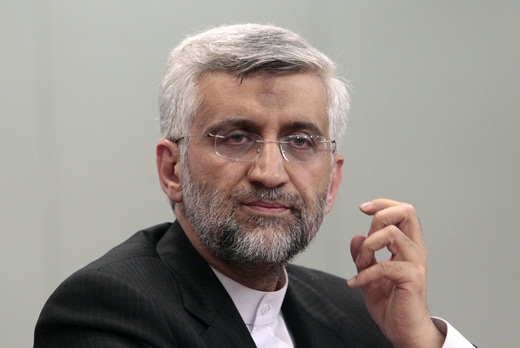
“One cannot make any distinction between the Al Saud, extremism and US-born terrorism, as they are all on a same path and the Al Saud is pursuing the US regime’s policies,” Saeed Jalili said in a cultural ceremony in Tehran on Friday.

He also likened the Riyadh regime and the US administration to members of a same tribe that is trying to establish “American Islam.”

The Al Saud has deep bonds with the global arrogance, Jalili said, adding that the Saudi rulers are indeed filling a US puzzle by their measures across the region.

Earlier this month, Leader of the Islamic Revolution Ayatollah Seyed Ali Khamenei also took a swipe at the supporters of the Saudi regime, mainly the US, for being accomplice to crimes committed by the kingdom, as in the Mina tragedy that killed thousands of Hajj pilgrims last year.

“The shameless Saudi regime has flagrantly stood against Muslims with the backing of the US, and is shedding blood in Yemen, Syria, Iraq and Bahrain. Thus, the US and other supporters of Riyadh are accomplice to the Saudi crimes and atrocities,” Imam Khamenei explained.

Ali Sadr, The Most Marvelous Cave

ali-sadr1

The cave walls can extend up to 40 meters high, and it contains several large, deep lakes.

The cave has a river flowing through it and most travel through the cave system is done with a boat. Ali Sadr cave is situated between the large cities Hamadan, Tehran, and Qom making it a popular destination for Iranians.

The cave was originally discovered during the reign of Darius I (521-485 BC) which can be verified by an old inscription at the entrance of the tunnel. However, the knowledge of the existence of the tunnel was lost, and only rediscovered in 1978 when a local shepherd followed the tunnel searching for water or a lost goat.

This cave is located at 48°18’E 35°18’N, in the southern part of Ali Sadr village. The cave digs into a hill called Sari Ghiyeh which also includes two other caves called Sarab and Soubashi, each 7 and 11 kilometers away from Ali Sadr Cave. Apparently the water in Ali Sadr cave is supplied by a spring in Sarab.

In the summer of 2001, a German/British expedition surveyed the cave to be 11 kilometers long. The main chamber of the cave is 100 meters by 50 meters and 40 meters high.

ali-sadr2The natural entrance to Ali Sadr cave (sinkhole) has been made accessible by stairs. It is gated and roofed. The stairs lead down to a concrete walkway in a dry gallery of approximately 3-4 m of height and 6-8 m width. The surface water enters the sinkhole during the wet months of the year, follows the walkway and disappears to the left where the first lake can be found. The dry entrance section of the cave connects through joint-controlled maze of smaller passages to the artificial (main) entrance to Ali Sadr cave.
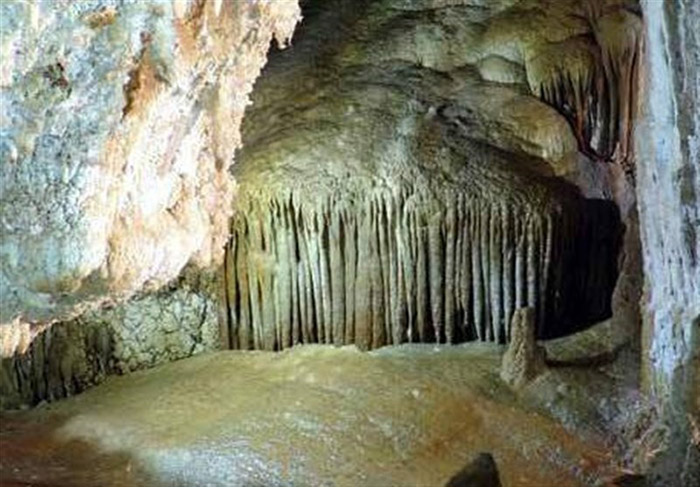
These passages are water-filled in their southern extensions. The artificial (Main) entrance begins as a 20 m long tunnel that slopes gently downhill to a wide gallery of 15 by 6 m formed under phreatic conditions. A calcite/aragonite ledge at the left wall marks a former water level and has some fine stalactites and crystals. To the right of the artificial entrance there is a Tearoom/Cafe for visitors which is operational in the summer.

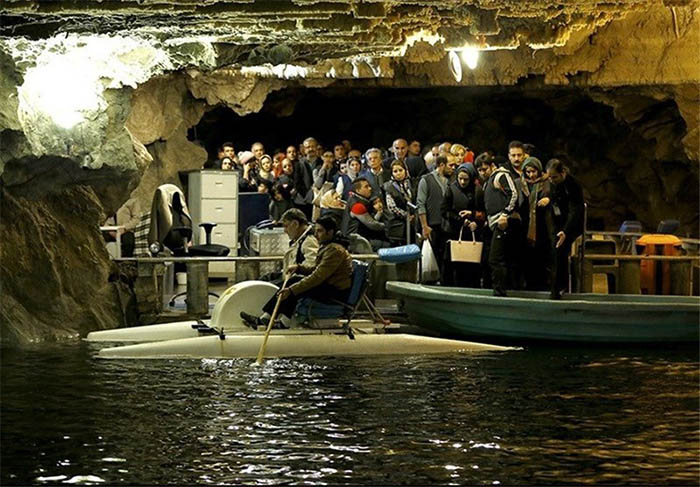
ali-sadr6The walkways coming from both entrances join at the beginning of the water-filled passages of Ali Sadr cave where the main jetty from which the boats that take tourist through the cave are boarded. Tourists are guided into plastic boats at this point and these are pulled through the cave by paddling boats (Pedlo’s) paddled and steered by the guides. The underground boat trip follows the main gallery to the SW that is up to 25 m wide and 4 m high (above water level), passing some maintenance facilities (cabins, boat depots, water-level indicator etc.).
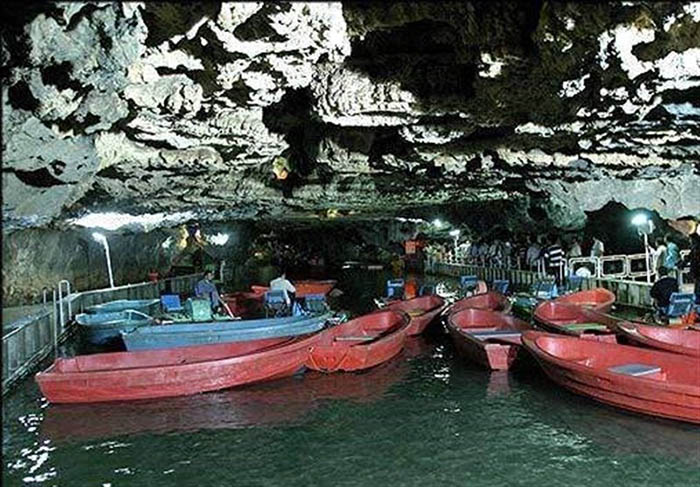
After nearly 200 m the gallery turns to the left (SE) and diminishes temporarily in size. The dip of the layers can be clearly observed in this part of the cave. Some small water-filled galleries branches off to the left to meet the “”six-entrances room”” which is part of the return journey of the tourist trip.

ali-sadr7After approximately 100 m the main route opens up into a wide lake passage once again. This runs straight in a SE direction for the next 300 m. There are four large passages leading to the NE towards the central north-south-axis of the cave (see below) some of which are galleries up to 40 m wide and 30 m high.
In the middle of the 300 m long section leading to the SE, where the passage reduces in size for some meters and the depth of the water decreases to less than 1 m, a sizeable dinosaur sculpture has been installed for the enjoyment of amusement of children.

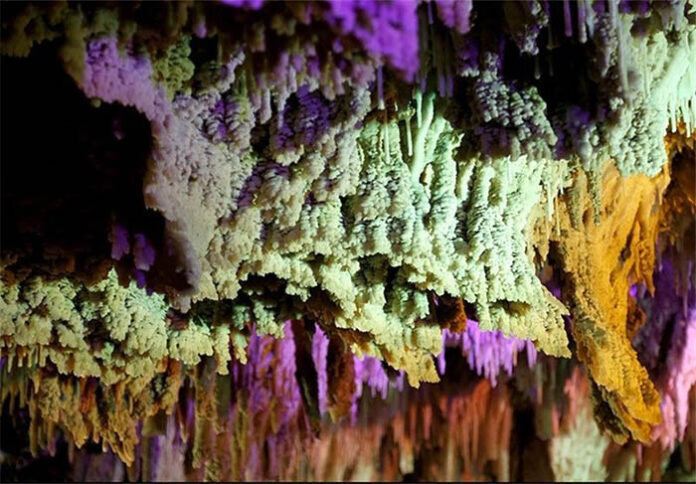
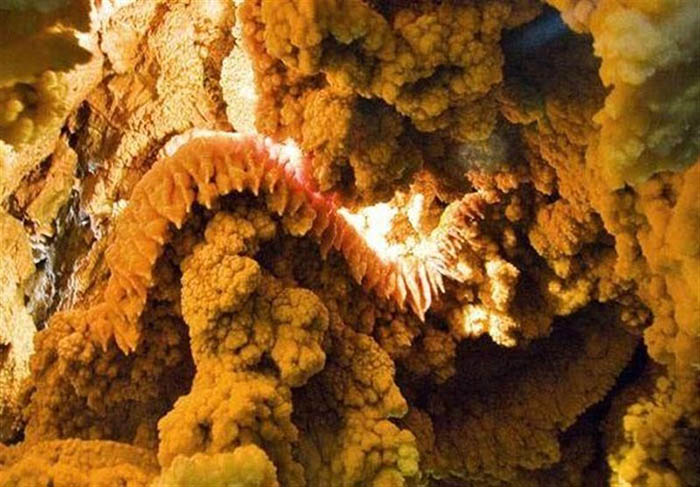
Having reached the end of this section the gallery turns to the NE and one reaches a pontoon where the tourists leave the boats to climb into the largest chamber of Ali Sadr cave, called “Freedom Hall””. From the place where the tourists initially boards the boats to this pontoon the entire roof of the cave is covered by calcitic/aragonitic ledges that are full of crystals and small stalactites, marking former water levels.

This unique 600 m long structure is one of the most remarkable features of Ali Sadr cave and together with the dark green of the lakes, that in places are up to 15 m deep and the white/yellow crystals give the dark rock inside the cave a superb appearance. Just before the point where tourist trail climbs from the pontoon into the “”Freedom Hall”” the ceiling is covered with a fantastic display of up to 9 ledges one upon the other. The mineralization is predominantly aragonitic which indicates a relatively warm environment for the deposition of the crystals.

ali-sadr8Freedom Hall was created by breakdown along tectonic fault zones and the visitor has to ascend about 30m up a boulder pile via a succession of fine marble stairs. At the highest point of the boulder pile the climb ends in a circular marble platform overlooking an impressive chamber that at its longest axis is 100m wide.
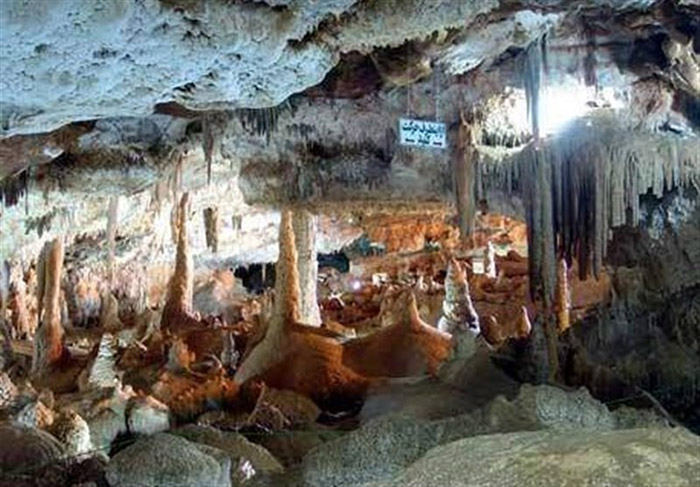
From the platform to the roof of the chamber is a height of 14 m. A massive 8m high stalagmite is located close to this platform. The northern part of the large chamber, which is not accessible for tourists, connects via several parallel and partly water-filled passages with the “”wedding room”” (also called “”1.000 stalactites room””)

Freedom Hall is exited via another succession of fine marble stairs that leave the center of the chamber in SE direction. Before the walkway reaches another pontoon to cross a 40m long lake extremely fine calcite wall coverings can be found. At this point a series of wet galleries lead to the E where they end in breakdown.

Back in the main passage, at the end of the pontoons a dry walkable gallery of more than 100m in length leads to the SE. This passage has a very nice phreatic cross-section.

At the end of this gallery the tourist trail turns to the right where the permanently water-filled passages of Ali Sadr cave are reached once again. Here the roof of the passage is covered with helicities. To the left (SE) the new sections of the cave, which are not open to tourists, branch off.
The tourists board the boats again to start the journey back through the cave passing the aforementioned pontoon where they alighted from the boats earlier in the trip and from there back towards the cave’s entrances.

ali-sadr4To the W extensive labyrinthine water-filled passages of smaller dimensions can be found. However, before the dinosaur is reached again, the guided tour leaves the known gallery to enter a very large passage that makes up the main north-south-axis in the central section of Ali Sadr cave.
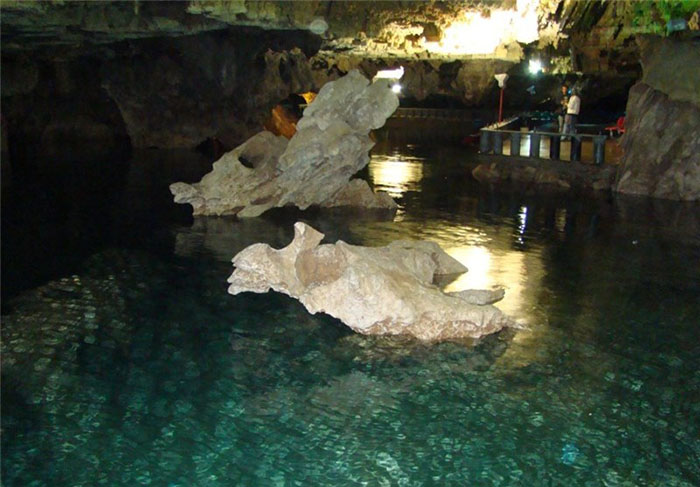
This joint controlled axis is partly enlarged to a succession of impressive chambers. After about 100 m a gate closes a water-filled branch to the right (East). The gated passage gives access to a network of waterways leading to the “”wedding room”” (also called “”1.000 stalactites room””). This room is paved with marble slabs. The Wedding Room as it is known has been used for special events in the past and is still today accessible for tourists that are willing to pay an extra fee.

The “”wedding room”” is actually not a wide chamber but a passage that forms a loop decorated with many wonderful small white stalactites, draperies and helicities. The southern part of the “”wedding room”” has connection to the aforementioned (“”Freedom Hall””) main chamber of Ghar Ali. Having reached the end of the spacious central north-south-passage after 220 m the tourist boat tour turns to the left (West) towards the “”six-entrances room””. This room is a crossing of several passages in a small maze of rifts. 150 m later the underground boat trip reaches the starting jetty again where the tourists leave the boats to exit the cave.

ali-sadr9The usual tourist visit uses the artificial tunnel entrances to the cave exclusively. Visitors undertaking the ‘regular’ tour are guided a distance of about 2.100 m through the cave, 1.470 m of which is by boat. The ‘extended’ tour (“”wedding room””) involves an underground boat course of 2.010 m: the longest underground boat trip world-wide.

The new parts in the south of Ali Sadr cave are not accessible for tourists. These passages were surveyed by the 2000/2001 project and only minor open leads were left. The predominantly dry galleries are much smaller than the ones in the tourist section. A narrow and difficult to find passage contains remarkably fine dripstones and helicities. In other places large aragonite crystals are abundant. The southern dry section of Ali Sadr cave is extensive and very labyrinthine as small passages follow wide galleries.