Wednesday, December 24, 2025
Home Blog Page 4302

US Making Instrumental Use of Iraq’s Ethnic Diversity: Deputy FM

Iranian Deputy Foreign Minister for Arab and African Affairs Hossein Jaberi Ansari said in a televised interview that the US has special ties with some ethnic and racial groups in Iraq and has always made instrumental use of them.

“Their use of Kurds and their ties with Kurdish groups in Iraq’s developments is one of their political instruments,” Jaberi Ansari said, according to a report by Khabar Online, as translated by IFP.

“On Mosul and the field developments in Iraq, the Americans are worried that the Iraqi army and popular forces would make major changes,” he said, adding that the US has been basically taking advantage of the fall of cities to the hands of terrorists.

“If Iraqi territories, Mosul in particular, are liberated by Iraqi army and popular forces, the Americans’ political outcomes would not be achieved, and people would have the upper hand.”

Therefore, he added, they use racial, religious, and political paradoxes, and one of these ways is to bring Kurdish groups into the field.

“It’s their policy to maintain their key role by managing these paradoxes,” he went on to say.

The Iraqi army is geared up to launch a large-scale offensive to liberate the northern city of Mosul, which the ISIS terrorist group has proclaimed its headquarters in Iraq. Mosul fell to ISIS terrorists in summer 2014.

A 2015 offensive to retake the city came to a halt after ISIS militants overran the city of Ramadi, which is the capital of the western province of Anbar and about 110 kilometers west of Baghdad. Ramadi was liberated in December 2015.

On June 18 this year, Iraqi forces launched another attack to retake the southern parts of Mosul, one day after they retook Fallujah.


Path to Syria Peace Not a Military One

Elsewhere in his remarks, Jaberi Ansari noted that since the beginning of the conflict in Syria, Iran has always believed that the Syrian nation must decide about the future of the country.

“The crisis in Syria has been going on for over five years, one of the reasons behind the sluggish peace process is that some countries believe that it has a military solution, but Iran has, since the beginning, believed that a military solution will reach nowhere and that there is no path but that chosen by the people of Syria,” he said, as reported by Press TV.

He said certain countries are responsible for turning the crisis in Syria into a multilateral problem, and they are still pursuing a military solution, adding that another obstacle to resolving the crisis is the number of players in the situation.

Jaberi Ansari went on to condemn a US attack the killed dozens of Syrian government troops in the country’s eastern province of Deir ez-Zor.

He stressed that the US’s explanation that it had mistakenly killed around 80 government troops battling ISIS was unacceptable.

Syria has been gripped by foreign-backed militancy since March 2011. Over the past few months, the Takfiri militants active in the Arab country have suffered major setbacks as the Syrian army has managed to liberate several areas.


Bahraini Gov’t Worried about People’s Reaction to Sheikh Qassim’s Trial

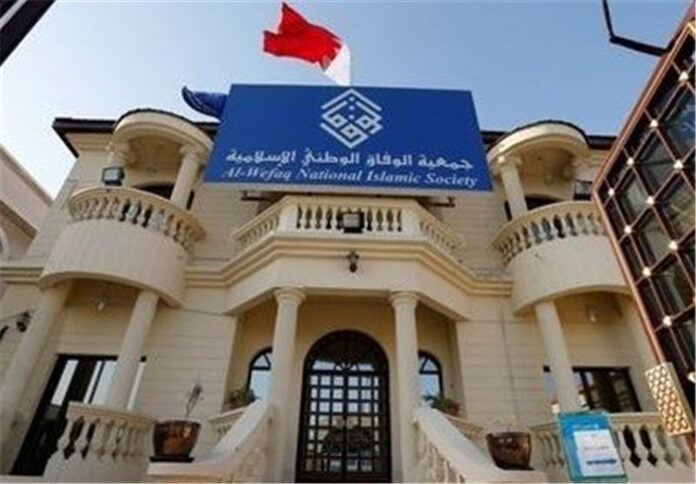
Jaberi Ansari further referred to the trial of prominent Shiite cleric of Bahrain, Sheikh Isa Qassim, which has been postponed for the fifth time.

“The trial was postponed once again because the government of Bahrain is worried about people’s protest at the [possible] verdict that would be given to Sheikh Qassim,” he said, adding that the Al Khalifa regime is going to pursue their harsh policies step by step.

“We have repeatedly announced that this type of policy-making is deficient. A major part of Bahrain’s society demand major reforms,” Khabar Online quoted him as saying, as translated by IFP.

“Continued oppression and prosecution of personalities and figures will lead to crisis, even if the proponents of Bahrain’s government would think such policies are successful in the short-term,” he added.

Iran Now Has the Edge in Fight over Oil Prices with Saudi Arabia: Report

oil-well

According to the Bloomberg’s report, which was covered by Khabar Online, Iran is the only member of Organization of the Petroleum Exporting Countries (OPEC) that has made economic reforms after the decrease of its oil price.

Here are excerpts selected by Khabar Online from the original article:


Suddenly the tables have been turned on Saudi Arabia.

The biggest oil exporter has swapped its traditional role as price dove with regional foe Iran, for years OPEC price hawk. The government in Riyadh is now offering a deal — including its first output cut in eight years — to boost prices; Tehran is dragging its feet. At the centre of the reversal is their contrasting thresholds for enduring economic pain.

“Both countries are coming from different positions,” said Jason Tuvey, Middle East economist at consulting firm Capital Economics. “Iran has been under sanctions until recently, so it’s getting an economic boost as investment returns and oil output rises. Meanwhile, Saudi Arabia is facing steep fiscal cuts.”

The contrast between the two countries is stark. Iran, never as dependent on oil revenue as its neighbour, has seen prospects boosted by rapprochement with the west. In Saudi Arabia, tentative moves toward economic reform haven’t prevented two years of weak prices causing financial havoc: it’s burning through foreign exchange reserves, government contractors have gone unpaid and civil servants will get no bonus this year.

iran-saudi-oilSaudi Arabia will suffer a fiscal deficit equal to 13.5 per cent of gross domestic product this year, compared with one of less than 2.5 per cent of GDP for Iran, the International Monetary Fund estimates. The IMF says the Saudis need oil close to $67 a barrel to square the books. For Iran, it’s lower, at $61.50.

When it comes to economic growth, Saudi Arabia is slowing sharply to 1 per cent while Iran is accelerating toward 4 per cent. The current account — a broad measure of a country’s economic relationship with the world — tells the same story. Saudi Arabia faces a double-digit deficit this year; Iran’s is nearly balanced following economic reforms in 2012 and 2013 to weather the impact of international sanctions over its nuclear program.

While Iranian President Hassan Rouhani faces elections next May and is under pressure over the country’s economic performance since sanctions were lifted, it’s already been through the austerity that’s only starting in Saudi Arabia.

Saudi Arabia has told other OPEC members it’s willing to reduce production to January levels. That effectively would mean a cut of 500,000 barrels a day. Iran, meanwhile, is refusing to freeze its production at the current level of 3.6 million barrels a day, aiming instead to lift output above 4 million barrels a day, the level before sanctions halved exports.

For the last two years, as oil prices plunged from more than $100 a barrel to a 12-year low of less than $30 a barrel in January, the Saudis have drawn on their huge currency reserves to cushion the impact. It spent $115 billion last year and between January and July this year it used up another $52 billion.

Subsidies, long a political taboo, are being cut, as are the salaries of government ministers by 20 per cent. Infrastructure projects have been delayed, and a value-added tax is mooted for 2018. If Saudis have continued spending as they did last year, the country would have gone “completely broke” by early 2017.

On the other side of the Persian Gulf, there isn’t the same sense of crisis.

“Tehran would love to have higher oil prices, but Iran is the OPEC country that had to do fewer budget sacrifices due to cheap oil,” said Olivier Jakob, an analyst at Petromatrix GmbH in Zug, Switzerland. “They feel they have a strong hand.”

Beauties of Iran: An Overview on World Tourism Day

Naqsh-e Jahan Square
Naqsh-e Jahan Square, Isfahan

Each year, World Tourism Day is celebrated in different countries on September 27. To mark the international day, Tasnim has released photos that portray a small part of Iran’s beauties.


Iran’s Intelligence Forces Bust Terror Cell in Border Area

139506061839521688492324

Following intelligence and security measures, Iranian forces learned that two members of an Iraqi-based terrorist group had entered the country through common borders with the aim of carrying out acts of sabotage in the Islamic Republic.

Later, through separate operations on September 16 and 18, they succeeded in arresting them along with two of their accomplices near a village in Marivan.

The ringleader of the terrorist cell, better known by the nom de guerre Showan, confessed that they had planned to recruit more forces in Iran and conduct terror acts across the country.

A number of weapons and ammunition, including three Kalashnikov AK-47 assault rifles, 16 magazines, and one night vision device (NVD) were confiscated in their hiding place.

Despite being in a volatile region, Iran enjoys good security within its borders thanks to the competence and proficiency of its intelligence and security forces.

The forces have foiled several malicious attempts by terrorist elements against the country in the past few months

On June 13, troops from the Islamic Revolution Guards Corps (IRGC) Ground Force killed five members of the Party for Free Life in Kurdistan (PJAK) terrorist group in an ambush in Sardasht region in the northwestern province of West Azerbaijan.

On the same day, Iranian police forces killed five members of the Jaish-ul-Adl terrorist group in an exchange of fire in Sistan and Balouchestan, while a trooper was also martyred.

Two days later, the IRGC forces killed a number of militants in clashes with two terrorist teams trying to intrude into Oshnavieh border area near the frontier with Iraq.

On June 20, the Intelligence Ministry announced that its force thwarted a major plot hatched by Takfiri-Wahhabi groups for several terrorist attacks in Tehran and a number of other provinces, with terrorists arrested and a large amount of bombs and explosive material confiscated.

And on September 20, the Islamic Revolution Guards Corps (IRGC) intelligence forces arrested two terrorists in the southeastern province of Sistan and Balouchestan.

Iran’s President Assures Syria of Resolute Support

“The Islamic Republic of Iran will keep assisting Syria in the fight against terrorism and in the establishment of security in the region,” President Rouhani said at a meeting with Speaker of the People’s Council of Syria Hadiya Khalaf Abbas, held in Tehran on Tuesday.

Such help for Syria is based upon Iran’s deeply-held belief that terrorism is a serious threat to the region and the world, the president added.

He also noted that efforts to preserve territorial integrity and solidarity of regional countries, including Syria, is a principle behind Iran’s policies, underscoring that changes in the borders would not benefit the region at all.

Elsewhere, President Rouhani said delivering humanitarian aid to the Syrian people is now a high priority.

For her part, the visiting Syrian speaker praised Iran for backing her country from the outset of crisis in 2011.

She also made it clear that the Syrian nation is the only entity entitled to decide the fate of the Arab country, recommending big powers, the US in particular, to try to stem terrorism if they are to provide any help.

Khalaf Abbas arrived in Tehran on Monday at the invitation of Iranian Parliament Speaker Ali Larijani.

Syria has been gripped by civil war since March 2011 with various terrorist groups, including Daesh (also known as ISIS or ISIL), currently controlling parts of it.

According to a report by the Syrian Center for Policy Research, the conflict has claimed the lives of over 470,000 people, injured 1.9 million others, and displaced nearly half of the country’s pre-war population of about 23 million within or beyond its borders.

A Look at Iranian Newspaper Front Pages on September 27

Iran Newspaper front pages

The majority of newspapers reported the remarks made by the Leader of the Islamic Revolution Ayatollah Seyyed Ali Khamenei who publicly announced that he has advised ex-president Mahmoud Ahmadinejad against running for next year’s presidential elections.

The presidential debate between Hillary Clinton and Donald Trump also remained a top story today among some newspapers.

Newspapers further covered the speech delivered by President Hassan Rouhani at the World Tourism Day conference on the rise of tourism in Iran.

The above issues, as well as many more, are highlighted in the following headlines:


Abrar:

1- Australian Trade Minister: We Prefer that Iranian Asylum-Seekers Return to Their Country

2- Zarif: US Vowed Not to Punish Banks Engaged with Iran

3- Int’l Bodies Warn of Humanitarian Disaster in Aleppo: 50% of Victims Are Children

4- US: Russia Abusing Its UNSC Seat

A Look at Iranian Newspaper Front Pages on September 27


Abrar-e Eqtesadi:

1- 30% Increase in Iran’s Liquidity in 1 Year

2- Return of World’s Major Economies to Doing Business with Iran

3- No Decision to Be Made in Algeria Meeting: Talks with Non-OPEC Members for Stability in Oil Market

4- US Is Biggest Customer of Iran’s Saffron

A Look at Iranian Newspaper Front Pages on September 27


Afarinesh:

1- Larijani: It’s Not Possible to Deepen Democracy through Creating Security Crises

A Look at Iranian Newspaper Front Pages on September 27


Afkar:

1- Foreign Ministry Spokesman: Syria Crisis Can Only Be Resolved through Negotiations

2- Iran’s Exports Stands near $22bn

3- Russia Receives 38 Tons of Iran’s Heavy Water

A Look at Iranian Newspaper Front Pages on September 27


Aftab-e Yazd:

1- Conservative Mayor of Tehran: I Agree with JCPOA; Qalibaf Hails Rouhani’s Greatest Achievement on Contrary to Previous Stances

2- Hillary and Trump’s Competition for Pleasing Netanyahu: Separate Meetings of US Candidates with Leaders of Occupying Regime [Israel]

A Look at Iranian Newspaper Front Pages on September 27


Amin:

1- President: Countering Iranophobia Is an Honour for Government

2- Erdogan: Even Iran Says Reza Zarrab Is Innocent

3- Government Dedicates over $84m to Revival of Lake Urmia

A Look at Iranian Newspaper Front Pages on September 27


Arman-e Emrooz:

1- Leader on Candidacy of a “Gentleman” in Presidential Elections: We Don’t See His Participation Appropriate

2- Goodbye Ahmadinejad: Experts’ Analyses Given the Leader’s Explicit Advice

A Look at Iranian Newspaper Front Pages on September 27


Asr-e Iranian

1- Arabs Seize Shares of 7 OPEC Member States

2- Tsunami of Youths’ Marriage with Old People

3- Russian Representative’ Fight with Envoys of US, Britain, and France

A Look at Iranian Newspaper Front Pages on September 27


Ebtekar:

1- President: Interaction with the World, Step by Step

2- Judiciary Chief: Huge Number of Prisoners Taints Image of Islamic Republic

A Look at Iranian Newspaper Front Pages on September 27


Etemad:

1- IRGC General Mohsen Rezaei Won’t Run for Presidential Elections

2- Conservatives and Third Division: Another Group of Cons Establish ‘Faction of Revolution’

3- Iranian Spokesman: No Time Can Be Bought for Terrorists in Syria

A Look at Iranian Newspaper Front Pages on September 27


Ettela’at:

1- Rouhani: Progress Is a Fruit of Security; We’re Thankful of All Security and Armed Forces

2- Senior Nusra Front Commander: US Gives Us Weapons Directly

A Look at Iranian Newspaper Front Pages on September 27


Iran:

1- President: 10% Increase in Number of Foreign Tourists Visiting Iran

A Look at Iranian Newspaper Front Pages on September 27


Javan:

1- Salehi’s Warning to the West: JCPOA Is Being Threatened

2- Battle in Aleppo, Fight in UNCS: Unprecedented Tension between Western Powers and Russia and Syria in UN Session

A Look at Iranian Newspaper Front Pages on September 27


Jomhouri Eslami:

1- Value of Iran’s Non-Oil Foreign Trade Exceeds $42bn

2- Australia to Open Trade Office in Iran

3- President: Establishment and Government Will Continue Its Constructive Interaction Approach

A Look at Iranian Newspaper Front Pages on September 27


Kayhan:

1- Leader Foils Enemy Plots by Underlining Movement on Opposite Side of the Enemies

2- Iranian-Islamic Architecture of the Freeway Connecting Tehran to Northern Iran Assigned to Italians!

3- Yemeni People Go to Banks and Give Their Money and Assets to Ansarullah

4- During Netanyahu’s Meetings with Clinton and Trump, It’s Said that US Is Coordinated with Israel in JCPOA Implementation

A Look at Iranian Newspaper Front Pages on September 27


Khorasan:

1- Iran’s Nuclear Chief: Some Sanctions Are Still in Place in Spite of What Agreed Upon in JCPOA

2- 810 Killed in Road Accidents in Iranian Month of Shahrivar

A Look at Iranian Newspaper Front Pages on September 27


Resalat:

1- New York Times: US Explicit Robbery of Iran’s Assets

2- Interior Minister: Unemployment Rate Is as High as 60% in Some Cities

A Look at Iranian Newspaper Front Pages on September 27


Shargh:

1- President: Tourists Visit Countries with High Cultural Toleration

2- Founding Member of IRGC Mohammad Gharazi: If I Had Three Mortar Shells, Khorramshahr Might Not Fall

A Look at Iranian Newspaper Front Pages on September 27


Vaghaye Ettefaghieh:

1- Leader Publicly Announce His Advice to Ahmadinejad: I Don’t Think It’s to Iran’s Interests that You Run for Presidential Elections; Country Would Be Polarized

2- Reverse Trend of Globalization? Crisis in Political Leadership of Europe

A Look at Iranian Newspaper Front Pages on September 27


Vatan-e Emrooz:

1- Judiciary Chief: Iran’s Security Finds Meaning under Shadow of Its Defensive Might

2- Leader Underlines the Need for Unity among Revolutionary Forces

A Look at Iranian Newspaper Front Pages on September 27

Iran Not to Accept Conditional Delivery of Newly Purchased Planes

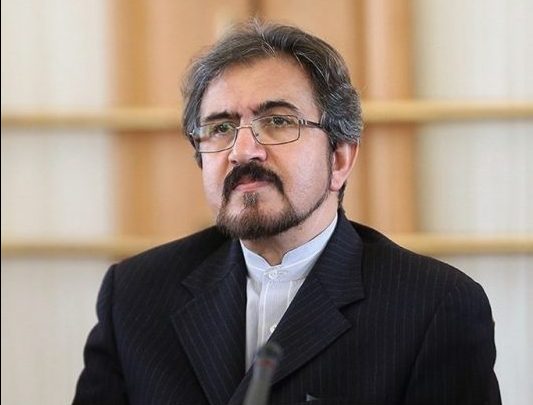
Comments by Western countries or some members of the Group 5+1 (Russia, China, the US, Britain, France and Germany) about the sale of planes to Iran are an attempt to justify their own failure to live up to commitments and the delay of about a year in exporting the planes to Iran, Foreign Ministry Spokesman Bahram Qassemi told IRIB.

The spokesman underlined that Iran will never accept any conditions set by the sellers if they contravene Iran’s sovereignty and independence.

Iran definitely acts within the framework of its own interests and dignity in any business contract on the exchange of goods or services with foreign countries, Qassemi stressed.

Over the past three decades, Iran has faced a host of cruel sanctions and limitations, but never given in to the unjust demands of others, he stressed.

Last week, the US decided to remove a final hurdle for Western aircraft manufacturers to sell planes to Iran under contracts signed after coming into force of the Joint Comprehensive Plan of Action (JCPOA), a nuclear agreement between Tehran and the group of six countries.

But the US still demands that even non-American manufacturers wishing to sell to Iran obtain an export license if their products include materials made in the United States. Airbus, based in Europe, buys more than 40 percent of all its aircraft parts from the US.

In January, Iran signed a major contract with Airbus worth about $27 billion to buy 118 planes. The contract was signed during the visit to Paris by Iran’s President Hassan Rouhani.

Iran also sealed a deal in June worth around $25 billion with the US aerospace heavyweight, Boeing, for the purchase of 100 passenger planes.

Wahhabism Even More Evil than Israel: Nasrallah

Hassan Nasrollah

Seyyed Hassan Nasrallah, the secretary general of Hezbollah, made the remark during his annual meeting with Muslim eulogists and the people responsible for commemoration ceremonies during the Lunar month of Muharram, Lebanon’s Al Akhbar newspaper reported on Tuesday.

The Hezbollah chief said he considered Wahhabism to be responsible for damaging Islam’s image worldwide. “Wahhabism is more evil than Israel, especially [in] that it seeks to destroy others and eliminate whatever thing that has to do with Islam and its history,” he said.

Not a Shia, Sunni matter

“This project was launched in 2011, and it not a Shia and Sunni matter. The role played by spy services is completely evident here. We should use this opportunity to pin Wahhabism down and deal a blow to it,” he added.

The existent conflict, Nasrallah said, was not between Shias and Sunnis, but with Wahhabism.

Wahhabism is the radical ideology dominating Saudi Arabia, freely preached by government-backed clerics there, and inspiring terrorists worldwide. Daesh and other Takfiri terror groups use the ideology to declare people of other faiths as “infidels” and then kill them.

Nasrallah also said what posed a yet bigger threat than Wahhabism and Zionism was “British Shiism,” which, he said, was being promoted by pseudo-religious figures, whom he called mercenaries of intelligence services.

Hezbollah has been crucial to keeping Wahhabi terrorism out of Lebanon, while helping neighboring Syria in holding back the scourge, too.

The Hezbollah chief said Saudi Arabia had escalated tensions to a climax and was trying, with the help of the US and Britain, to portray conflicts as sectarian.

Referring to the Syrian conflict, he said there were no “moderate” armed groups in Syria, warning that all those fighting Damascus were either working with Daesh or al-Nusra, which has recently renamed itself.

Nasrallah also said he saw no prospect for a political solution for the Syrian conflict. “Developments on the [battle] ground will ultimately determine [the outcome],” he said matter-of-factly.

Syria has been fighting a foreign-backed militancy since March 2011. Hezbollah fighters have been assisting Syrian government forces fighting back the militants, including Daesh and other dangerous groups.

Ahmadinejad Pens Letter to Leader: I Have No Plan for Presidential Elections

Mahmoud-Ahmadinejad

“In a letter to the Leader of the Islamic Revolution, Dr. Ahmadinejad has declared that, in a move to obey what Ayatollah Khamenei says, he has no plan to run for the 2017 presidential elections,” Ali Akbar Javanfekr, a media advisor to the ex-president, announced on Tuesday, September 27.

According to a report by ISNA, as translated by IFP, Javanfekr said that the full text of the letter will be published soon.

The letter came after Ayatollah Khamenei implied on Monday that he has advised Ahmadinejad against running for next year’s presidential elections.

Speaking at the beginning of an advanced course on Islamic religious studies, the Leader confirmed that he has advised a gentleman [without mentioning a specific name] in a recent visit to “avoid getting involved in a certain event [election]” for the good of the country and of that individual himself.

“We did not tell him not to participate either,” the Leader explained, saying the individual has been told that his involvement “is not deemed expedient.”

Ayatollah Khamenei noted that a holistic view of the country’s situation and that specific figure’s conditions led to the recommendation that he had better avoid engagement in the event to prevent polarization of the country.

The Leader once again stressed that he has not ordered anybody to get involved or stay away, saying this is not about ruling, but about expediency.

Israel’s Nukes Threaten Regional Stability and NPT Credibility

salehi

“Iran, as the initiator of establishing Nuclear Weapon Free Zone in the Middle East since 1974, reiterates its deep concern over Israeli clandestine military nuclear program,” Ali Akbar Salehi, the head of the Atomic Energy Organization of Iran (AEOI), said in the 60th Regular Session of the International Atomic Energy Agency (IAEA) General Conference in Vienna on Monday.

The Israeli regime, which pursues a policy of so-called deliberate ambiguity about its nuclear bombs, is estimated to have 200 to 400 nuclear warheads in its arsenal. The regime has refused to allow inspections of its military nuclear facilities or to sign the NPT.

According to March 2015 emails by former US secretary of state Colin Powell leaked earlier this month, Israel has 200 nuclear weapons “targeted on Tehran.”

Salehi reiterated Iran’s motto of “Nuclear Energy for All and Nuclear Weapon for None,” saying, “This message, if realized, would accelerate and enlarge the contribution of atomic energy to peace, health and prosperity throughout the world.”

“The world without nuclear weapons under the full implementation of Article VI of NPT and the realization of nuclear disarmament by 2025 as proposed by the Non-Aligned Movement is an inevitable necessity and certainly one of the best guaranties for nuclear security,” he said.

Salehi further underscored the Islamic Republic’s resolve to expand its nuclear program for civilian purposes following the implementation of last year’s agreement, dubbed the Joint Comprehensive Plan of Action (JCPOA), reached between Iran and the P5+1 group of countries – the United States, Britain, France, China and Russia plus Germany.

Citing a key report last December by the UN nuclear monitoring body that it has found no indications of the diversion of nuclear material for non-civilian objectives in Iran’s nuclear program, Salehi said “the official and decisive report on the final assessment of Iran’s past and present nuclear issues … closed for ever [the] false and fabricated nuclear file” on the Islamic Republic’s atomic program.

The top Iranian nuclear official expressed the country’s readiness to cooperate with  interested technologically advanced IAEA member states for advancing peaceful nuclear technology as well as exchanging experiences and know-how with developing countries.

He further expressed regret over the failure of the P5+1 to fully honor its obligations under the JCPOA despite Iran implementing “all its JCPOA commitments, which was monitored and verified by the agency as well as continuing its close cooperation with the IAEA through voluntary effectuation of the Additional Protocol in accordance with the provisions of the JCPOA.”

Iran and the P5+1 signed the JCPOA in Vienna in July 2015. It went into effect on January 16, and resolved a long-running dispute over the Iranian nuclear program.

Israel's Nukes Threaten Regional Stability and NPT Credibility

Under the JCPOA, the Islamic Republic has agreed to roll back certain aspects of its nuclear program – including the volume of its uranium stockpiles enriched to the 20-percent level – and has provided international atomic monitors enhanced access to its nuclear facilities.

In return, Iran’s partners agreed to terminate all nuclear-related sanctions against Tehran.

Some international banks, however, still shy away from financing trade deals and processing transactions with Iran fearing US penalties.


Meetings With IAEA, Rosatom Chiefs

On the sidelines of the IAEA session, the Iranian official also met with IAEA Director General Yukiya Amano and Sergey Kiriyenko, the head of Rosatom, which Russia’s State Atomic Energy Corporation.

During the meeting with Amano, “we discussed arriving at a final conclusion as regards [Iran’s] nuclear activities and [the agency’s] monitoring activities that are underway either as part of the Safeguards [agreement], the Additional Protocol or the JCPOA,” Salehi said.

Speaking about his meeting with the Rosatom chief, the Iranian nuclear chief said the Russo-Iranian ties are of a strategic nature, adding that in the area of nuclear energy it is Russia that has the highest level of cooperation with Iran.

The two also held follow-up negotiations on ongoing cooperation between Iran and Russia aimed at completing the construction of the second and third power plant units at the Bushehr Nuclear Power Plant in southern Iran.

They also discussed financing and other issues concerning the cooperation in order to review the rigor with which the work is expected to take place.

Salehi cited the Russian official as having said that Russia had earlier received the 38 tons of heavy water sent by Iran around eight days before.

“It is a great step that we managed to sell 70 tons of heavy water to the US and Russia within eight months of the JCPOA’s implementation. Other European countries are likewise interested in buying the commodity and relevant negotiations are taking place,” he said.


Salehi-Moniz Meeting

Meanwhile, the AEOI head said on Monday that he had met with US Energy Secretary Ernest Moniz in Vienna the previous day to review the two countries’ obligations under the JCPOA.

He added that he would likely hold another meeting with the US energy secretary later on Monday to discuss issues of mutual concerns.

Moniz said on Monday that Washington has kept its side of the JCPOA.

salehi-moniz“The sanctions that were to be relieved have been relieved. That’s what was the commitment. That has happened,” the US energy secretary told a news conference on the sidelines of the IAEA annual meeting.

“The consequences of that in terms of how many companies make foreign direct investments in Iran is not for the government to decide, that’s for companies to decide,” he said.

Moniz added that US officials “at their highest levels” have explained in Europe and to banks how to transact with Iran without falling foul of the remaining restrictions.