Monday, December 22, 2025
Home Blog Page 4289

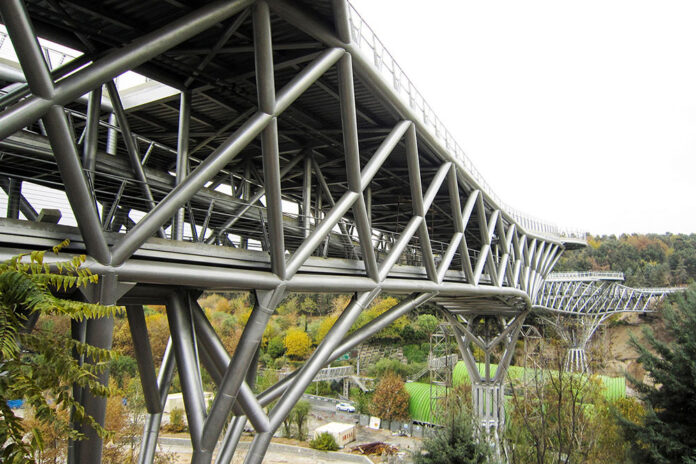
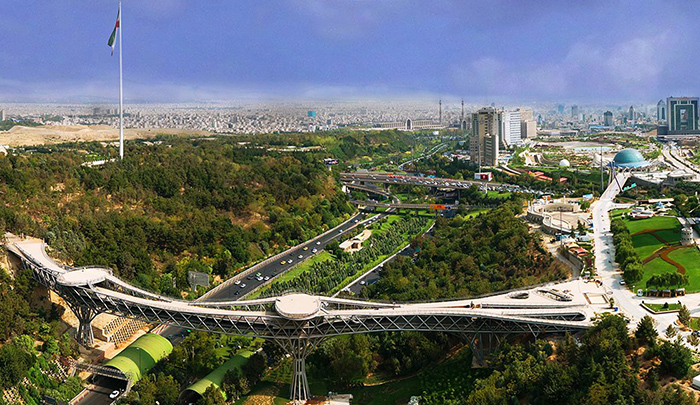
Tehran’s Nature Bridge Receives Aga Khan Architecture Award

tabiat-bridge

Nature Bridge, a pink rubberised park by BIG, Zaha Hadid’s first building in Lebanon, a labyrinthine community centre and a perforated brick mosque, both in Bangladesh, and a library in a Beijing hutong are the winners of the triennial architecture award this year.

The architects of each project will receive a share of a $1 million (£700,000) fund, which makes the Aga Khan Award for Architecture one of the world’s most lucrative architecture prizes.

tabiat-bridgeThe six projects – located in Bangladesh, Denmark, China, Iran and Lebanon – were selected from a shortlist of 19 projects unveiled in May 2016.

They were chosen by a committee including architects Emre Arolat, David Adjaye and Dominique Perrault, and the Aga Khan himself.

Nature Bridge in Tehran was built by Diba Tensile Architecture, Leila Araghian and Alireza Behzadi.

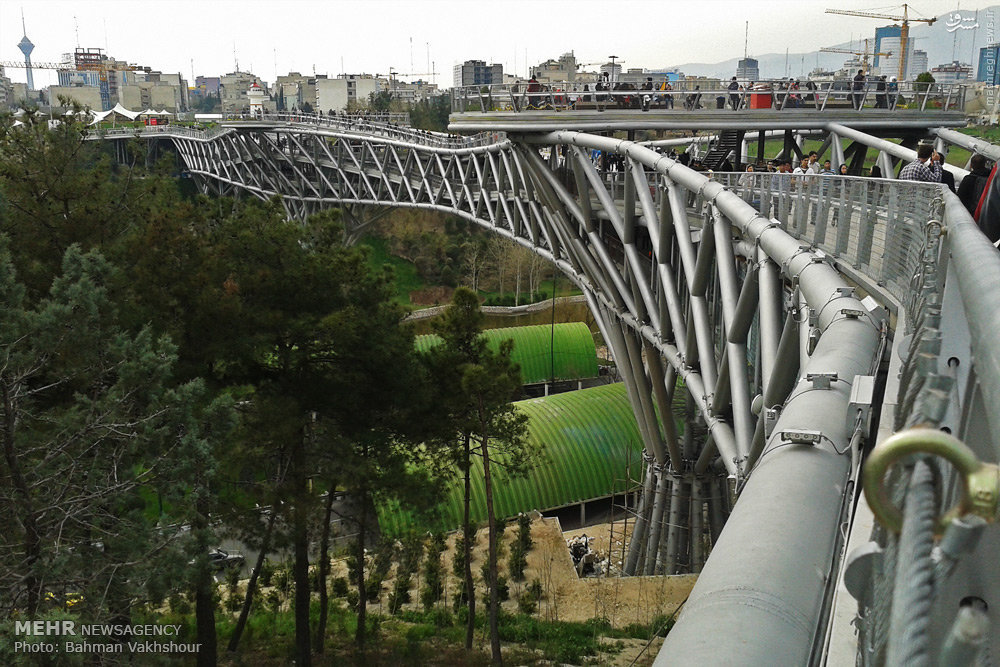
The two-to-three level, 270-metre-long curved pedestrian bridge of varying width has a complex steel structure featuring a dynamic three-dimensional truss. Two continuous deck levels sits on three tree-shaped columns, with a third where the truss meets the column branches.

It was an imaginative leap beyond the basic competition brief of designing a bridge to connect two parks separated by a highway in northern Tehran, without blocking the view to the Alborz Mountains.

tabiat-bridge

The structural elements are based on a latent geometrical order rotated and repeated in three dimensions. The result is a spatial structure large enough to create an inhabitable architectural space, where people congregate, eat and rest rather than just pass through.

Multiple paths in each park were created that would lead people on to the bridge. Seating, green spaces and kiosks encourage people to linger on a site where greenery has been preserved by the minimal footprint of the bridge, whose curve offers a variety of viewing perspectives.

The Aga Khan Award for Architecture was set up by the Aga Khan in 1977 to acknowledge and encourage projects that address the needs of Muslims the world over.

A ceremony will be held for the winners of the 2016 award at the Al Jahili Fort – a World Heritage Site in Al Ain that itself received the Aga Khan Award for Architecture in 2007 following a significant renovation.

Nature Bridge in Tehran; the awarded structure of 2015


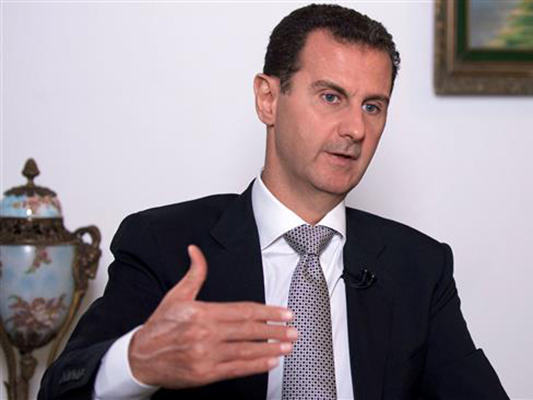
US Fears Iran Revolution’s Impact on World: Assad

bashar-assad

Washington is afraid that nations might follow the model of the Islamic Revolution, he told The Tehran Foreign Policy Studies Quarterly.

Ever since World War II, the US has only succeeded in creating challenges to the world and destroying countries, Assad said.

Epicenter of fight against terrorism

The Americans, he added, wanted for the Syrian government to be replaced with a vassal state, which would easily hand the country over to the West.

Had such a scenario materialized, the rights of the Syrian people would have been ignored and the way would have been paved for eventual Western dominance over the Middle East region, he said.

The Islamic Republic has been providing advisory support for Syria’s defense of itself against foreign-backed militancy, which began in 2011.

Referring to an apparent instance of submission to Western demands, Assad said that Saudi Arabia had been told by Western countries to act in line with ethnic divisions in the region.

Riyadh is widely believed to be providing financial and ideological support to the Takfiri terrorists who have been ravaging Syria and Iraq since 2014.

Many Delights and Surprises Await Western Travellers to Iran: New Zealand Academic

john-hearnshaw

John Hearnshaw is Emeritus Professor of Astronomy at the University of Canterbury. He has just returned from a lecture tour in Iran, and has shared his experiences in Stuff website.

Here are excerpts of his remarks, as covered by IRNA:


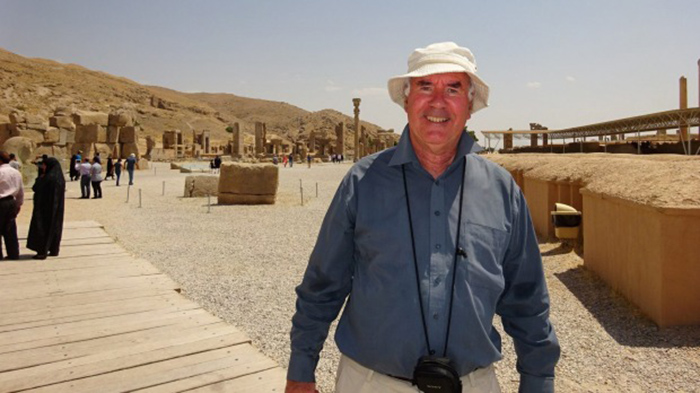
Many delights and surprises await the western traveller to Iran, the modern-day Persia. I returned from a two-week lecture tour in early September on a journey that took me from Tehran then south to Isfahan, the cultural jewel of Iran. From there I travelled to Saadat Shahr (a small town in the south) and finally to Shiraz and to the nearby ancient ruined city of Persepolis, built by King Darius from about 520 BC but ransacked by Alexander the Great some two centuries later.

History and culture are important in Iran, and an understanding of the various Persian empires stretching back over 2,500 years, including the Qajars throughout the 19th century and the Pahlavis (from 1921 to 1979) and the Islamic Revolution initiated by Ayatollah [Ruhollah] Khomeini in 1979 are important to appreciate this highly sophisticated society.

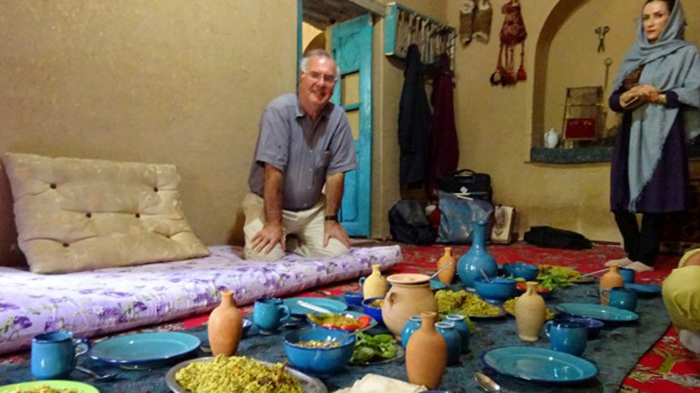
The first point to note is that Iran is a very safe country to visit; there are no terrorist attacks or muggings, and tourists, though relatively few in number, are everywhere welcomed with a genuine warmth and amazing hospitality.

Shiite Islam is of course the dominant religion in the country […]. All women in public must wear a hijab or scarf […].Travellers to Iran need to be comfortable with this reality before they set out on their travels.


john-hearnshaw


I found Iranians extremely hospitable and charming. They are part of a well-educated society and they are quick to tell you they are not Arabs, in spite of Arab neighbours. Indeed Iran is a surprisingly ethnically uniform country with a long history of Persian culture, in some ways a little like Japan. […]

Another aspect of Persian culture is their universal love of poetry, and with great poets like Hafez, Saadi and Ferdowsi dating back to the middle ages and writing poems about love and wine long before Shakespeare’s time, one can understand why these icons of Persian culture are so revered. I visited the tombs of Hafez and Saadi in Shiraz, and after a lecture at Shiraz University, I was presented with a copy of the Divan of Hafez (he lived 1325-89) containing his poems (fortunately for me with English translations).


john-hearnshaw


Not all aspects of Iran will necessarily delight the traveller. One is the need to take cash such as US dollars or euros. Thanks to Uncle Sam, western credit cards are not used at all. Another is the traffic in Tehran, where most tourists will enter the country. You are far more likely to be driven than drive yourself, but even that is a hair-raising experience. Road rules seem non-existent except for the principle that he who dares first has priority. It’s no wonder that the death rate on the roads is some three times higher per capita than in New Zealand. […]

I experienced many restaurants in Iran. The food was delicious but not very varied. […] No one will go hungry in a Tehran restaurant; typical dishes would be enough food for several people, and the food wastage was colossal. One discovery was a refreshing yoghurt drink called doogh, made from yoghurt, water, salt and mint. It was the best cold drink available […].

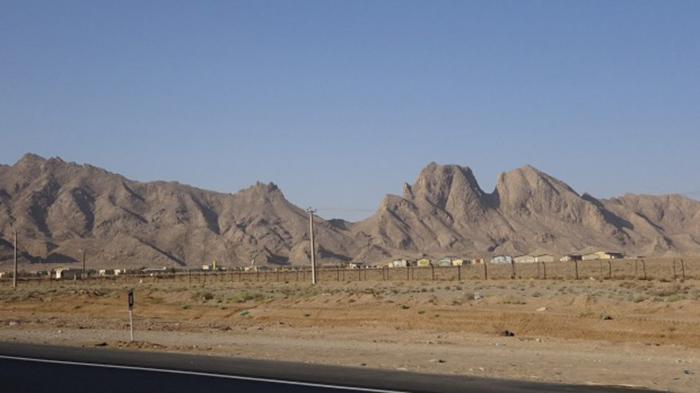
The landscape of central Iran which I visited from Tehran in the north to Shiraz in the south was dry, brown, mountainous, treeless and rather bleak. […] I believe it is the cities which fascinate westerners most, especially Isfahan, Shiraz and Yazd.


john-hearnshaw


I visited several universities in Iran and gave eight lectures to students and amateur astronomers. This was good fun, and their ability to understand English was impressive. After each lecture I was mobbed by young people who wanted to take a selfie with me, so that invariably took another hour after each talk. I happily obliged. Then there was the present giving. I came home with 40 kg of luggage, half of it being gifts showered on me at each venue, including books, a brass astrolabe, a decorative hand-painted plate, a woven tablecloth and a wool and silk floor rug. […]

Between a hectic schedule of lectures, interviews, restaurants and meeting young astronomers, one other activity I enjoyed was a day of hiking in the Alborz Mountains just north of Tehran. This was a scenic trail up a rugged rocky path high up Mt Daraband above Tehran. The track was popular for Tehranis at the weekend (a Thursday in Islamic Iran) and I enjoyed high mountain air and cooling off with feet in mountain streams, during a day of walking with a group of young Iranian students.

Envoy Explicates Iran’s Plans to Meet 2030 Agenda Goals

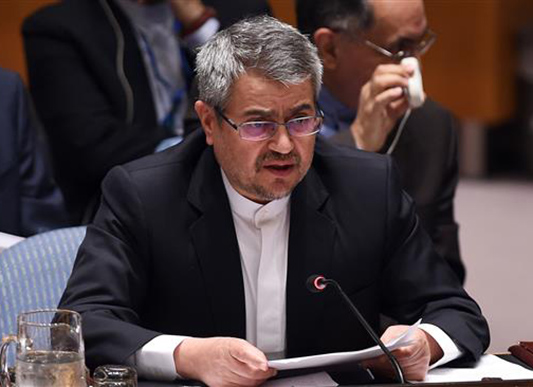
Addressing a general debate of the Second Committee of the 71st Session of the UN General Assembly, held in New York on Monday, Gholamali Khoshroo elaborated on the measures Iran’s government has taken to comply with the 2030 Agenda.

What follows is the full text of the Iranian diplomat’s speech:

In the Name of God, the Compassionate, the Merciful

Mr. Chairman,

At the beginning, I would like to congratulate you and other members of the Bureau for your well-deserved election. You may trust on our full support during your Chairmanship. I would also like to associate myself with the statement made by the Permanent Representative of Kingdom of Thailand on behalf of the Group of 77 and China.

Mr. Chairman,

The Islamic Republic of Iran attaches great importance to the effective implementation of the 2030 Agenda at all levels. We welcome the theme of the Seventy-first General Assembly “the Sustainable Development Goals: a universal push to transform our world”. In the first year of the implementation of the 2030 Agenda, several measures have been taken by the Government in advancing its goals. I would like to mention only a few of them:

The government of the Islamic Republic of Iran pursues a strategic approach towards sustainable development. The National Committee on Sustainable development has determined the responsibility of various ministries and organizations for the follow-up and reporting on SDGs and established the National Network for Sustainable Development for participation of all interested people. National priorities have been set for addressing such major issues as poverty eradication, sustainable management of water and sanitation, renewable energy resources, energy efficiency improvement, climate change, housing, combating desertification, deforestation and dust storm, ensuring health and disaster risk reduction, and management, in a way that nobody and no section of the society is left behind.

At the policy and institutional levels, there have been major actions for the implementation and follow-up of SDGs, adoption of two sets of overall policy guidelines for strengthening resilient national economy and protection of environment. The first Act improves economic growth and promotes social and environmental development. The second Act, enhances protection of environment with strong emphasis on promotion of green economy and low carbon industry; addressing climate change, desertification as well as sand and dust storms; protection of biodiversity and forests and many other issues.

Furthermore, the Sixth National Development Plan addresses implementation of the Agenda 2030 at the national level while the recently adopted country program documents with UN agencies for the period 2017-2021 are inspired by the Agenda.

As a step for the second year of implementation, we intend to submit our voluntary national report for the HLPF 2017. The Islamic Republic of Iran also plans to host an international conference on combating sand and dust storms in line with implementation of the 2030 Agenda.  It is also our intention to ratify the Paris Agreement in 2017.

Mr. Chairman,

Our world is now more complex than it ever was. Extreme poverty, global warming, terrorism and extremist violence, humanitarian crisis, and many other issues call for a more effective United Nations. No single country can meet these challenges on its own. Our aim is to find effective solutions through enhanced cooperation among UN Member States. We know that some progress has been made and we should be inspired by this success. But various grave challenges remain unsolved.

To implement the Agenda 2030, our region particularly confronts severe challenges. It is not only facing common ones such as poverty, land degradation, desertification, water scarcity, hotter climate conditions and continued extensive drought, but also grappling with the scourge of terrorism and extremist violence. Their outcome while exacerbates poverty and environmental destruction, forces governments to spend their limited national resources on fighting insecurity rather than development.

Mr. Chairman,

The implementation of the ambitious objectives of the Agenda should be facilitated by even more ambitious, fully inclusive and non-discriminatory measures. It requires more effective international support and solidarity and the full implementation of SDG 17 particularly through capacity building, technology transfer, trade facilitation and access to financial resources as well as refraining from any form of unilateral or coercive economic, financial or trade measures.

The sustainable development goals demand an integrated and coherent response from the UN system. It should play a critical, effective and coordinating role in strengthening the global partnership for sustainable development. The UN operational activities for development must be enhanced and strengthened to support Member States in their efforts to implement the 2030 Agenda.

Mr. Chairman,

I wish to conclude by expressing our sincere hope that the 2030 Agenda will be instrumental in bringing us together for furthering our collaboration and partnership towards achieving the SDGs. We are confident that, with the spirit of true partnership, cooperation and solidarity, we can transform our commitments into action.

I Thank You.

Iran’s oil exports hit pre-sanctions high

oil-exports

Reuters in a report on Monday quoted unnamed oil market sources as saying that Iran’s total crude oil and condensate sales likely reached around 2.8 million barrels per day (bpd) in September.

The figure nearly matches a 2011 peak in shipments before sanctions were imposed on the country.

The rise was mostly attributed to a rise in shipments of condensate – a type of ultra light oil often produced with natural gas.

Iran, Reuters added, sold 600,000 bpd of condensate for September, including about 100,000 bpd shipped from storage, to meet robust demand in Asia.

September crude exports increased slightly from the previous month to about 2.2 million bpd, the sources added.

Iran, along with Libya and Nigeria, is allowed to produce “at maximum levels that make sense” as part of any output limits in a surprise deal reached last week by the Organization of the Petroleum Exporting Countries (OPEC).

Still, it has surprised the market by ramping up its oil output faster than expected, to 3.63 million bpd in August, according to OPEC, up a quarter from end-2015 since sanctions were lifted in January, Reuters added.

Iran’s exports of oil stood at 2.35 million bpd before the sanctions were imposed against the country in 2011.  The sanctions restricted the country’s oil exports to around 1 million bpd among other economic bans – already described by analysts as the toughest the world has ever seen.  They were lifted in January after a deal that Iran reached with the P5+1 – the five permanent members of the Security Council plus Germany – over the Iranian nuclear energy program became effective.

Iran Says Higher Global Oil Prices Essential

In a telephone conversation with Venezuelan President Nicolás Maduro on Monday, Rouhani commended the stance adopted by Caracas at an extraordinary meeting of the Organization of the Petroleum Exporting Countries (OPEC) in Algeria in favor of maintaining Iran’s oil quota and raising its oil output to pre-sanctions levels.

“All must make efforts so that the committee of experts would take decisions to clear the way for increasing global oil price in the [OPEC] meeting in November,” the Iranian president said, adding that OPEC countries must hold “serious negotiations” with non-OPEC producers in order to increase and stabilize oil prices at international markets.

He also called for expert-level meetings to determine member countries’ oil export quotas.

OPEC members agreed during their extraordinary meeting in Algiers, Algeria, on Wednesday to limit production in an effort to raise the low crude prices. They decided to cut production by 750,000 barrels a day.

Iran Says Higher Global Oil Prices Essential

Iran, however, has been exempted from the decision because of its exceptional situation of having been under sanctions for a number of years.

Since the removal of nuclear-related sanctions targeting its oil industry in February, Iran – which is OPEC’s third largest producer after Saudi Arabia and Iraq – has been boosting production in order to reach previous levels and has rejected calls on the country to freeze production as unfair.

Iran, whose production has reached 3.6 million barrels per day, insists on its right to increase its crude output to around 4.1-4.2 million barrels per day.

OPEC is yet to decide on how much each country should produce during its next meeting in Vienna in November.

Non-OPEC producers including Russia will also be invited to join the deal.


Common Stance of Iran, Venezuela at OPEC

The Venezuelan president, for his part, said Tehran and Caracas have common and coordinated stances on regional and international developments, particularly on OPEC-related issues.

Maduro stressed the importance of increasing the oil prices and expressed hope that the outcome of the Algeria meeting would help stabilize the oil market.

He also called for the expansion of relations with Iran and implementation of new projects.

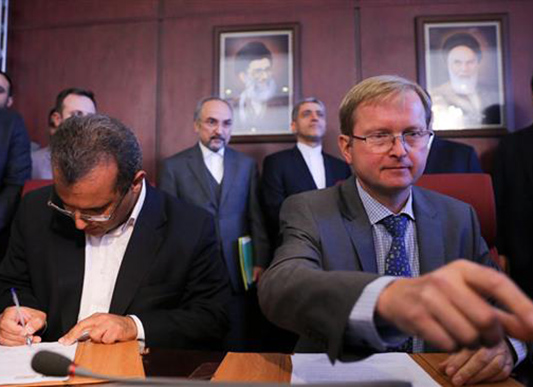
Iran, Germany Sign Deals to Boost Ties

iran-germany

The German Economy Ministry announced in a statement that several Mittelstand firms, the small-to-medium-sized companies that form the backbone of the economy, had signed the deals with their Iranian partners during a landmark visit to Tehran by Vice Chancellor and Economy Minister Sigmar Gabriel.

On the same front, Reuters reported that Mitsubishi Germany signed a contract to modernize a gas-fired plant, while plant constructor Keller HCW sealed an agreement to build a brickyard in Iran. Others that signed deals in Tehran included SMS group, a builder of steelmaking plants and INTRA industrial solutions, Reuters quoted the German Economy Ministry as announcing in its statement.

The central banks of Iran and Germany also agreed on technical co-operation, Reuters added. There was no detail on the size of the agreed deals.

Gabriel – who is heading a 160-strong business delegation to Tehran – had earlier emphasized that Germany wants to help Iran push ahead with reforms, and promised to remind the United States of its commitment to reduce sanctions against Iran.

This is Gabriel’s second visit to Iran since the country reached a deal in July last year to restrict certain aspects of its nuclear energy activities in return for the removal of some economic sanctions that had been imposed on it for several years.

Industrial giant Siemens AG and automaker Daimler AG are expected to be the first German firms to benefit from opportunities in Iran after the removal of the sanctions, Reuters said. Nevertheless, they are proceeding carefully and only after legal reviews.

The German banking sector has been reluctant to underwrite business deals for fear of falling foul of remaining US sanctions imposed on Iran.

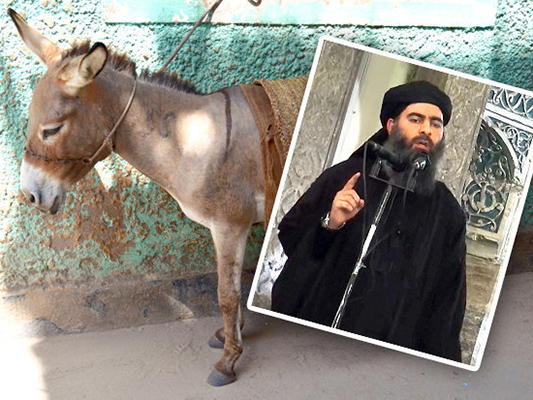
Donkeys Slaughtered in Mosul for ‘Mocking’ ISIS Leader al-Baghdadi

donkey-isis

The twisted extremists attacked donkeys in the ISIS-held city of Mosul after someone plastered them with photographs of the so-called “caliph” Abu Bakr al-Baghdadi, as reported by Daily Mail and covered by Al Alam.

Donkeys are considered a low, dirty animal in many Arab countries and the paranoid fighters took it as an insult to their leader.

The fighters, who are facing annihilation as the Iraqi army surrounds the city, reportedly chased the poor beasts through the streets and killed them.

Iraqi news website al-Sumaria News said, “Unidentified persons put the photos of the ISIS leader Abu Bakr al-Baghdadi on donkeys in central Mosul – and this pushed the ISIS members to pursue the donkeys to kill them.

“ISIS mobilised its fighters in the city and raided a house in order to search for the people who hung Baghdadi’s pictures on the donkeys.”

IMF Staff Report Substantial Improvement in Iran Economic Conditions

IMF

The IMF report was released on Monday and was compiled from the preliminary findings of an official visit to Iran. The report expressed views of IMF staff members and may not reflect the views of its executive board.

“Real GDP rebounded strongly over the first half of the year as sanctions eased post-JCPOA implementation. Oil production and exports rebounded quickly to pre-sanction levels, helping cushion the impact of low global oil prices. Increased activity in agriculture, auto production, trade and transport services has led the recovery in growth in the non-oil sector,” said the report.

It added that Iran’s GDP is projected to grow by at least 4.5 percent in 2016-17, and that monetary and fiscal policies adopted over the past few years and favorable international food prices have decreased the inflation rate in the country.

It also noted that the Central Bank of Iran has over the past year taken significant measures aimed at restructuring and bringing unlicensed financial institutions (UFIs) under its regulation. The IMF staff report highlighted that such moves help address an important source of financial instability.

The JCPOA, struck between Iran and Britain, China, France, Germany, Russia and the United States in July 2015, envisaged Tehran scaling back its nuclear program in return for the removal of all nuclear-related sanctions on the Islamic Republic.

Adventures of Iranian Woman Who Travelled the World Alone

Mirtaheri

Here’s IFP‘s translation of a report by Shahrvand Newspaper about Mahtab Mirtaheri, an Iranian world traveller who has visited 50 countries all on her own:

Sunflower fields of Arizona, clay soils of Oklahoma and the winds that blow thorn bushes around in secluded roads, just like the ones in Western movies, shrouded in dust and haze; Indians of New Mexico that are found abundantly in this State; the inhabitants of dry lands; the city of Memphis on Mississippi River which, like a mirror, reflects the picture of the city and its magical scene becomes even more dreamlike in the moonlight; and finally the shining fish that are like jewels, postcards and paintings.

These are the pictures taken by an Iranian world traveller, a woman named Mahtab Mirtaheri who has travelled alone all the way from west to the east of the US. She visited all these places when she was only 19 years old.

“Back then, I never thought I was doing something big but a few years later I noticed that not many people have driven from one end of America to another; so I became very happy,” she said.

She left her homeland to continue her education when she was 17 years old. She moved from a university in western US to one on the east of the country when she was 20. Mirtaheri, however, did not fly on a plane or travelled in a train; instead, she hit the road and found a strong penchant for the excitement of traveling. Many years later, she has now grown into a zestful world traveller who has visited over 50 countries so far. She travels to see people and become familiar with their lives.

Arizona’s sunflower fields have still remained as bright and beautiful as many years ago when she bid farewell to them, swearing to herself that, “I will definitely come here one more time and stare at them heartily.”

Living in the US came to end for Mirtaheri after she graduated in architecture. She worked for a while and then packed her belongings to embark on her dream of becoming a world traveller.


Mirtaheri, a Solo Traveller

She picked Western Europe as her first destination while carrying a few travel necessities in her lightweight backpack. Traveling alone is maybe the main reason behind her bond with random people. “When you are alone, more opportunities arise to cultivate relations with local people,” she said, stressing that human communication is the most significant part of traveling.

She met people who are worth setting off on long journeys just to taste the sweetness of sitting with them; it was so sweet that she embarked on a voyage from southern Spain to Morocco in a ship and visited Algeria afterwards. Her travel to North Africa, however, came to an end in Morocco because she was denied entry into Algeria.

“I arrived in Algeria in the aftermath of the September 11 attack; hence, the atmosphere had become tense and they did not allow me to enter Algeria on account of being born in Iran but having American passport,” Mirtaheri explained.


Hitchhiking Not Fair to Some Countries

A few years later, Mirtaheri returned to North Africa to visit more countries like Nigeria. He decided to visit Nigeria when she was in Nepal.

Describing her stay in a motel in Nepal, she said, “I went through difficult times in Nepal because there was no hot water so I had to take bath in cold water.”

After some inquiry, she received the address to a stadium where she could have a hot bath. In the football venue, she happened to get familiar with a Nigerian who kindly offered her to take hot bath in the hotel room.

Mirtaheri later added that she declined the offer; however, such gracious offers, friendship and new people from diverse cultural backgrounds convinced her to visit Nigeria next.

She stressed that hitchhiking is not appropriate in all countries because, to quote her, “I have never been a hitchhiker in North Africa because they are cheap countries with poor people living in them.”

She believes that in such countries as Nepal where people live on low income, if you pay a pittance as the fare for your ride, it is a valuable gift to them.

Mirtaheri is one of those travellers who likes to leave pleasing memories in people’s minds at every stop and knows that if it wasn’t for people’s generosity, world travellers would not be able to continue their journeys.

“I love to thank people who have given me some food or have hosted me in their houses. As a gesture of appreciation, I want to give them something as a keepsake; a pair of earrings, a bracelet or anything as a token of remembrance,” she noted.


Haiti, Scary Destination

In addition to the US, Mirtaheri also has an experience of living in Berlin for a few years; however, traveling was still an integral part of her life there. Since her job was project-based, she could travel any time. “End of each architectural project was the beginning of a new journey for me,” she said.

Berlin, however, with its cold, dark winters was not appealing to a woman who is in love with light; therefore, she made her mind and continued her journey down to the world’s southern hemisphere where there is abundance of sunlight.
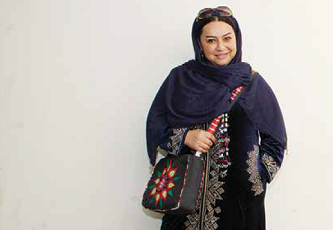
MirtaheriShe picked Dominican Republic in the Caribbean Sea as her next destination; this time however, she had a companion. After a short stop in Dominican Republic and having enjoyed its warm weather, Haiti, the neighbouring country, came to their attention.

They entered into one of the most dangerous countries in the world which is alleged to be deprived of a distinguished government and is controlled under the supervision of UN forces. There is a good chance of being kidnapped; openly carrying handguns in public is permitted; and sounds of sporadic shootings in the middle of the night wipe the sleep from your eyes.

Despite all these, Mirtaheri said, “Insecurity notwithstanding, people were very kind and friendly.”

They passed up the opportunity of enjoying its good weather for the sake of their lives and returned to Europe after two days so that Mirtaheri could embark on her journeys towards Eastern Europe.


I Visited Entire Eastern Europe, Especially the Balkans

Mirtaheri does not consider herself as a tourist and says that she likes to live through her travels; therefore, once she enters into a city she asks herself, “Could this be my city of residence?”

“Some places, like Warsaw, are so intimate and familiar that I feel I’m home,” she said, comparing the smell of smoke mingled with the smell of plane trees to the streets of Tehran.

She described such cities as Podgorica in Montenegro as harsh and unappealing and said, “I spent only a couple of hours there and left it immediately for Bay of Kotor and the Adriatic Sea.”


Travelling the World with Mobile Camera

In order to realize her dream of traveling the entire world, Mirtaheri split up her travels over the years of her life; therefore, sometimes she is away for only a few months in a year and some other times it takes her the entire year to return home. From Asian countries, she has visited Thailand, Cambodia, Vietnam, Georgia, Azerbaijan, Tajikistan, Qatar, Syria, Lebanon, the UAE and Turkey. Each country is a whole different world; therefore, if you want to be allowed into their worlds, you need to be like them even in the type of clothing.

“My type of traveling is a lot different from someone who wants to visit a museum or enjoy natural scenes. I interact with people directly and that is why I should become like them; otherwise, they won’t let me in,” she concluded.

Mirtaheri pointed to her communication with people in cities where English was not helpful and said, “I had to resort to gestures and facial expression, i.e. alternative methods of communication which have been forgotten by many.”

She refrains from taking out her camera in her interaction with people. “I believe that the presence of camera interferes with the currents of normal social life; it changes the atmosphere.”

Therefore, people from all walks of life would build comfortable relations with her. To Mirtaheri, the most interesting point that everyone shares in this world was the essence of human relations; the very same love that knows no border, colour, language and race.

“All humans are from the same species and this is the strangest and most interesting fact that is simply ignored,” she stressed.

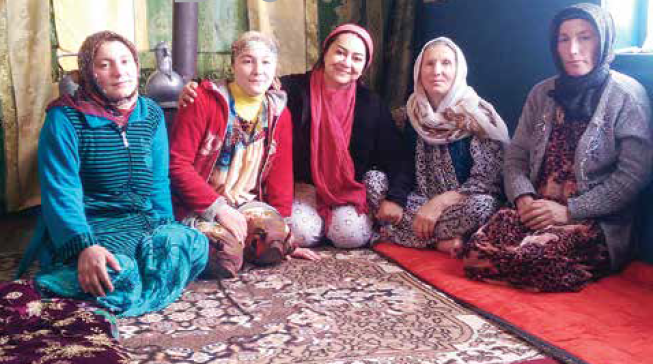
Among all the countries Mirtaheri has been to and the people she has sat with, Tajikistan was outstanding in terms of attractiveness.  She spent Nowruz (the Persian New Year) holidays there and experienced its different atmosphere.

“They seemed to have come from the heart of history with their specific traditions and customs,” she noted.


World Travellers Should Set Goals

Mirtaheri participated in “voluntary work trips” in countries such as Cambodia, Thailand and Azerbaijan where she taught English to abandoned children. She liked to do the same in Jordan too.

“One should make meaningful journeys, observe ethics of traveling and become conversant of the customs in order to be a praiseworthy representative of our homeland,” she added.

Mirtaheri has now grown into a woman who has been traveling alone for years. She likes to see the growth of such spirit among Iranians so much so that no Iranian ever says again, not even under their breath, that “women should not travel alone.”

She has learnt that it is an integral part of traveling to know other people; she has learnt to use frugal ways of traveling and has come to know that all corners of the world have opened arms to her travels.