Monday, April 20, 2026
Home Blog Page 4236

Germany Urges Israel Not to Legalize Construction in Palestinian Lands

Iran Urges Int'l Support for Palestine Liberation on ‘Nakba Day'

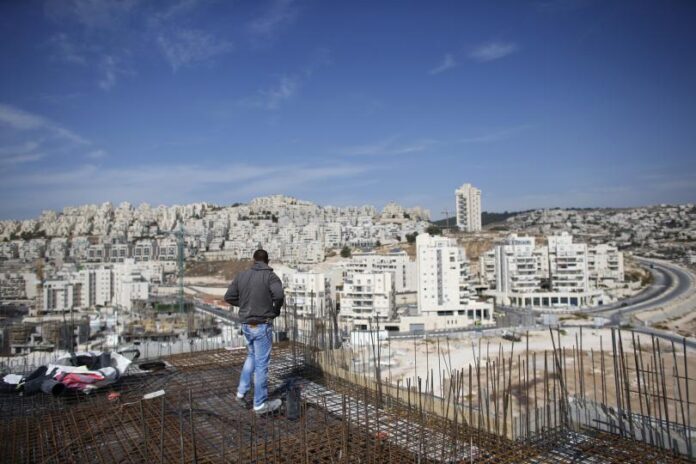
According to a report by IFP, in an unusually strong language, Germany urged Israel to scrap the bill that legalizes the construction of residential buildings in private Palestinian lands, especially in the occupied West Bank.

A German foreign ministry spokesman said on Wednesday the government was “extremely concerned” about the development.

“Such a bill violates international law,” he said.

Iran’s Leader Appoints New Commander of IRGC’s Basij Force

Iran’s Leader Okays Allocation of €1 Billion to Fight COVID-19

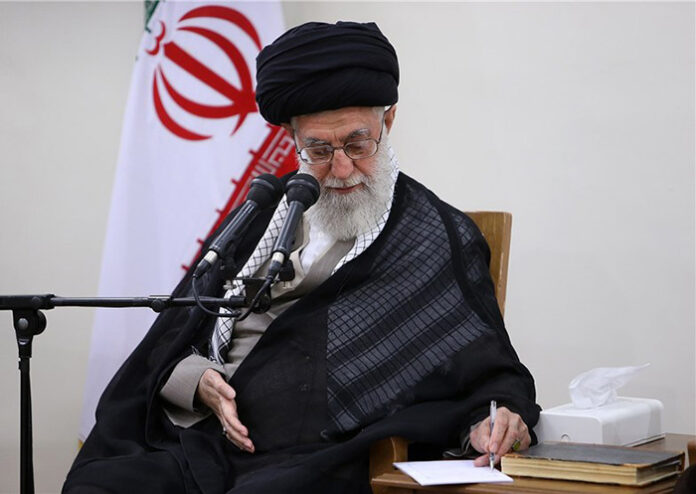
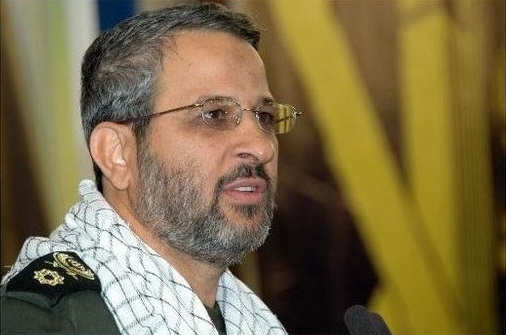
According to IFP’s report, in a decree, Ayatollah Seyyed Ali Khamenei appointed Brigadier General Gholam-Hossein Gheibparvar as the new head of “Basij Organization and Lieutenant Commander of IRGC in Basij Affairs”.

The Leader urged General Gheibparvar to focus his efforts on increased participation of Iranian people, particularly the young generation, in the Basij Organization.

Gheibparvar
General Gheibparvar

Ayatollah Khamenei also called for measures to promote Basij Organization in the fields required by the Islamic Revolution, including science, culture, defence, and providing service.

General Gheibparvar was also urged to establish think-tanks and centres to observe the enemy’s activities and to prevent its infiltration, the Leader’s official website reported.

According to the decree, Basij Organization is also expected to enhance its cooperation with different bodies and its coordination with relevant authorities.

The Leader also appreciated the “effective” efforts made by former head of Basij Organization, Brigadier General Mohammad Reza Naqdi, who has been appointed as Lieutenant Commander of IRGC in Cultural Affairs.

Bishop Helps Release of 226 Christian Women from ISIS’ Captivity

According to a report covered by ISNA, the Assyrian Christians were seized from the Khabur River valley in northern Syria, among the last holdouts of a minority that had been chased across the Mideast for generations.

On Feb. 23, 2015, ISIS fighters attacked 35 Christian towns simultaneously, sweeping up scores of people.

It took more than a year, and videotaped killings of three captives, before all the rest were freed.

Paying ransoms is illegal in the United States and most of the West, and the idea of giving money to the ISIS group is morally fraught, even for those who saw no alternative.

“You look at it from the moral side and I get it. If we give them money we’re just feeding into it, and they’re going to kill using that money,” said Aneki Nissan, who helped raise funds in Canada. But “to us, we’re such a small minority that we have to help each other.”

The Khabur families trace their heritage to the earliest days of Christianity. To this day, they speak a dialect of Aramaic, believed to be the native language of Jesus.

How much was ultimately paid remains a mystery. The bishop, the only person with a full accounting, declined to speak to The Associated Press.

Pakistani Plane Crashes with 47 Passengers on Board

Pakistan Plane Crash
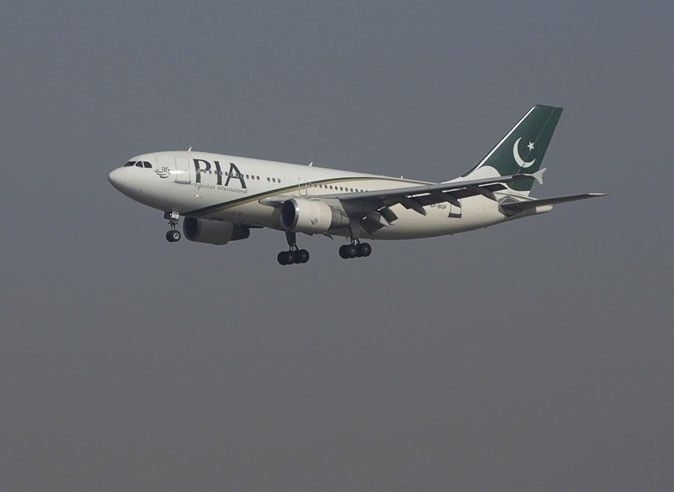
A Pakistan International Airlines (PIA) passenger plane arrives at the Benazir International airport in Islamabad, Pakistan, December 2, 2015. (REUTERS)

According to a report by IFP, Pakistan International Airlines (PIA) Flight PK661 crashed in Khyber Pakhtunkhwa province, the civil aviation authority said.

An earlier airline statement said the ATR-42 turboprop aircraft had lost contact en route from Chitral.

“A plane has crashed and locals told us that it is on fire,” Saeed Wazir, a senior local police official, told AFP.

“Police and rescue officials are on the way but have not yet reached on site.”

The plane came down near the town of Havelian in Abbottabad district in the province.

Israel Says It Knew about Iran’s Stake in German Submarine Manufacturer

ThyssenKrupp

According to a report covered by YJC, Defence Minister of Israeli regime Avigdor Liberman on Tuesday referred to the reports that a German shipbuilding company supplying submarines and warships to the Israeli Navy is partially owned by an Iranian governmental investment firm, saying Israel was aware of the connection before the deal was finalized.

A report published Friday by Hebrew-language newspaper Yedioth Ahronoth revealed that the state-owned Iran Foreign Investments Company (IFIC) holds 4.5 percent of ThyssenKrupp’s stock and has earned nearly $100 million in dividends off of its shares over the past decade.

ThyssenKrupp was contracted by the Zionist regime of Israel’s Defence Ministry in 2014 to build four “Saar-6” class warships to protect Israel’s off-shore natural gas reserves.

In a meeting of Israel’s parliamentary finance committee, Liberman said that “the matter of Iranian involvement in the submarine manufacturer was known” prior to the signing of the 430 million euro ($480 million) deal.

“Israel had no alternative. The company has its management, and there is an administrative committee, and the involvement is very minor,” Liberman said.

Iran, Indonesia Must Boost Consultation on Terror Fight: Rouhani

Rouhani - Indoesia parliament speaker

“Terrorism is a major predicament in the region, East Asia and other parts of the world,” Rouhani said in a meeting with the chairman of the Indonesian People’s Consultative Assembly (MPR), Zulkifli Hasan, in Tehran on Tuesday.

Noting that some terrorist groups falsely attach themselves to Islam, Rouhani urged Muslim scholars to illustrate this fact to the world, adding that the real Islam is a religion of mercy and moderation and this true face of Islam must be presented to the world public.

He emphasized that terrorism must be driven out from Islamic lands.

The Iranian president stressed the importance of reinforcing unity among Muslims across the world, saying, “We can safeguard the Islamic culture and promote the power of the Muslim world through unity.”

He also said Iran and Indonesia enjoy good capacities to boost their economic cooperation and expressed hope that the volume of trade between the two countries would reach two billion dollars in the near future.

“The two countries’ cooperation is very important in solving the problems of the Muslim world,” Rouhani added, expressing regret that Muslim countries, including Yemen, Syria and Iraq, are plagued with instability and numerous problems and calling for collective efforts to restore security to these countries.

Hasan, for his part, said Iran and Indonesia, as two important Muslim countries, can use their capacities to expand cooperation in different sectors, particularly in trade and economy.

He called on Muslim countries to settle their differences and reinforce their commonalities and said Tehran and Jakarta are capable of taking effective steps to help this process.

The Indonesian MPR chairman arrived in Tehran on Sunday on an official four-day visit at the invitation of the Iranian Parliament Speaker Ali Larijani.

Spokesman Rejects Saudi Espionage Claims against Iran as ‘Baseless’

“The Islamic Republic of Iran has never taken actions contrary to the international law and diplomatic principles in Saudi Arabia and such accusations are baseless and politically-motivated,” Qassemi said Tuesday.

The spokesman added that at a time when there is a dire need to promote unity and avoid further tensions in the Muslim world and the region, imposition of false and untrue accusations does not serve the interests of any country in the region.

“The Islamic Republic of Iran’s principled policy toward the Persian Gulf littoral sates is observing good neighborliness, mutual respect and non-interference in other countries’ internal affairs,” Qassemi stressed.

A court in Saudi Arabia on Tuesday sentenced 15 Shiite citizens to death on trumped-up charges of spying for Iran in yet another case of crackdown on the country’s Shiite minority.

It also sentenced 15 other suspects to prison terms ranging from six months to 25 years, and acquitted two, according to Reuters.

The suspects, comprising 30 Saudi Shiite Muslims, reportedly one Iranian and an Afghan, were detained in 2013 on charges of alleged spying for Iran and went on trial in February.

The rulings are subject to appeal, and death sentences must go to the king for ratification.

Zarif Assures Japanese Businesses of Safe Investment in Iran

Mohammad Javad Zarif in Japan

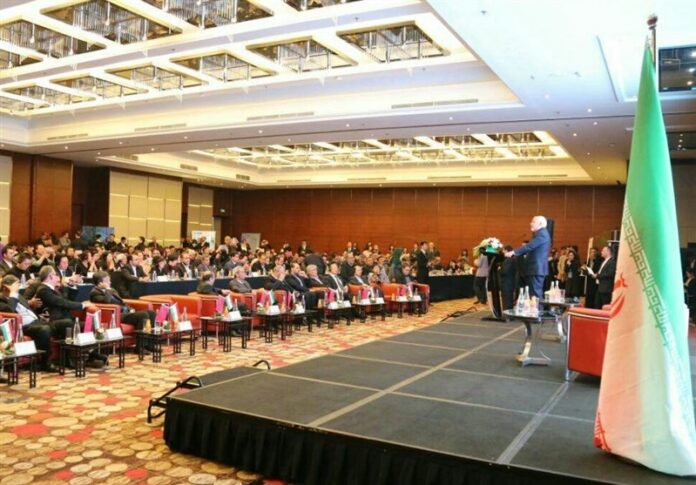
The top Iranian diplomat, who is in Japan on the final leg of an Asian tour, attended a meeting of Iranian and Japanese business people in Tokyo’s Hotel Okura on Wednesday.

Highlighting Iran’s scientific and technological progress, as in nanotechnology, and the rising rate of the country’s economic growth after removal of sanctions under a nuclear agreement with the Group 5+1 (Russia, China, the US, Britain, France and Germany), Zarif gave an assurance that Iran presents the safest opportunity for investment.

The minister also underscored the exemplary security in Iran within a region gripped by instability and terrorism.

Iran offers an independent market, is a reliable source of energy, and provides access to the reginal markets and a main corridor linking the Persian Gulf and the Sea of Oman to Central Asia and the Caucasus, Zarif added.

He called on the private sectors of Iran and Japan to get acquainted with each other’s capabilities, noting that strong collaboration between the two countries will serve peace and security in the Middle East and Southeast Asia.

Heading a mainly trade delegation, Zarif arrived in Japan early Wednesday, after visiting India and China.

In comments upon his arrival in Tokyo, the top Iranian diplomat stated that economic issues are high on the agenda of his trip.


Iran’s Official Currency to Be Changed from Rial to Toman

148110596746524100-1

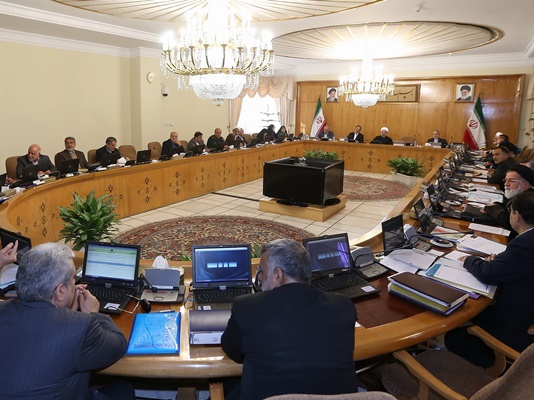
In a cabinet session on Wednesday, President Hassan Rouhani’s administration approved a bill to drop one zero from the country’s national currency, changing its name to Toman.

According to a report by IFP, the change of official currency’s name was made based on a bill proposed by the country’s Central Bank.

Iranian Members of Parliament are supposed to discuss the bill and pass it into a law. After the Parliament’s vote, the Guardian Council is the last body to approve the law before its implementation.

The currency change was a long-awaited move as ‘rial’ was just used in official correspondence and rhetoric, and ordinary people mostly used the name ‘toman’ in their daily life and calculations.

The difference used to create serious problems, particularly in business correspondence and contracts, Asr-e Iran reported.

Iran to Receive Loan from Russia for Its Infrastructure Projects

RUSSIA-IRAN

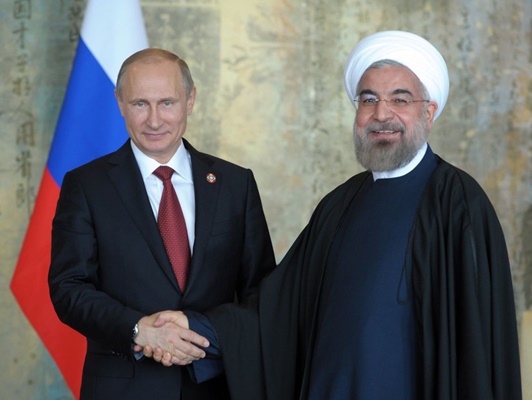
According to a report by IFP, in a cabinet session on Wednesday, which was chaired by President Hassan Rouhani, the government approved a bill to receive loan from Russia.

The loan is expected to be allocated to new energies, nuclear power, railways, highways, dams, irrigations systems, and water transfer projects, Fars News Agency said in a Farsi report.

The decision came as Iran and Russia have demonstrated a distinct effort in tightening their cooperation in energy, industrial and infrastructure projects and investment.

In July 2016, Russia and Iran signed a new strategic five-year plan that encompassed thirteen agreements that focused on energy, construction and trade.

It appears as if Russia has been given a priority position for investment: a $1 billion offshore rig contract was awarded to a Russian firm; 1 billion Euros of a total 2.2 billion Euro loan plan will be allocated by Russia towards construction of a power plant in Iran, and the construction of a new transport rail system called the North-South Transport Corridor (N.S.T.C.) connecting India, Iran and Russia via Azerbaijan is also to be co-financed by Russia.

Russia is also a preferred partner in helping Iran with expanding Iran’s nuclear power generation capacity.

To be able to increase its oil output significantly, Iran needs to replace its outdated oil equipment and infrastructure, which requires large foreign investments worth billions of US dollars.