Friday, December 26, 2025
Home Blog Page 4220

Trump Wants to Enhance US Ties with Iran: European Parliament Member

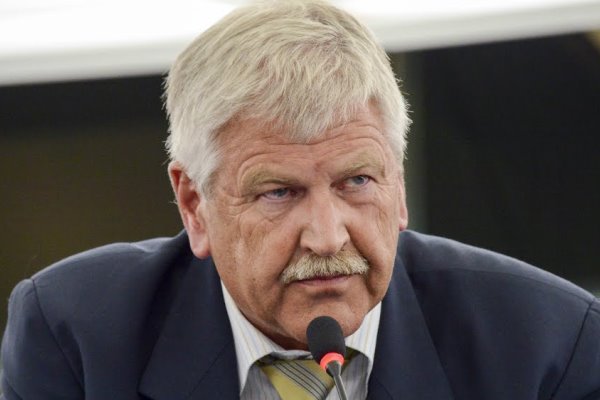
Udo Voigt

The United States presidential election campaign with “Hilary Clinton” and “Donald Trump”, the Democratic and Republican candidates, ended unexpectedly with Trump’s triumph. Now the international public opinion is unable to anticipate the moves of new tenant of White House.

Udo Voigt, a member of European Parliament’s Committee on Foreign Affairs and Iran-Europe Parliamentary Friendship Group, predicts that the new American government, headed by Trump, intends to establish better relations with Tehran!

“It is conceivable that Washington will ally with Russia to put an end to Syrian crisis in favour of Bashar al-Assad. Iran is Russia’s strongest ally in Syrian issue. If the US wants to exert its policies on the Middle East, considering Iran’s political role is inevitable,” said Voigt, according to a report by Mehr, as translated by IFP.

“I think Donald Trump will look for a way into a logical, reasonable economic cooperation with Iran, since he is a smart businessman, and particularly because the American economy needs progress today. Trump is able to fulfil his objectives quickly. He can be in relationship and cooperation with this 80-million nation rather than confront it,” he said about the future stance Trump will hold towards Iran.

“As a member of Iran-Europe Friendship Group, I am aware of the high economic capacity of Iran. Trump plans to adopt a new foreign policy, and he needs a peaceful Middle East and politically stable governments for it. He aims to be economically successful, and he needs peace, political relationships, trust and trade to reach his goal. So I think Iran has nothing to worry about,” he noted about the possibility of imposing new sanctions on Iran.

24 Killed in Terrorist Blast in Iraq’s Mosul

Explosion Mosul

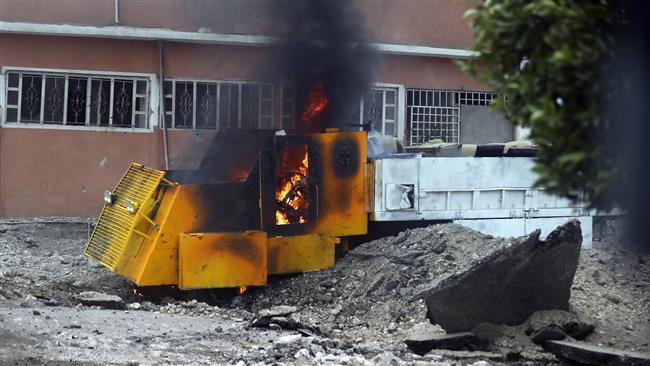
The deadly explosion occurred on Saturday when explosives on a tanker were detonated in Mosul.

The news comes a day after ISIS terrorists launched an attack using two car bombs on the Kanaos Village in the south of Qayyarah, killing two soldiers and injuring 29 others.

Iraqi forces had retaken Qayyarah, which lies on the western bank of Tigris River, some 60 kilometres south of Mosul, from ISIS late in August.

Iraqi troops and volunteer fighters are engaged in joint operations to liberate Mosul, the last urban area in control of ISIS in Iraq, Press TV reported.

Extension of Anti-Iran Sanctions Will Have No ‘Executive Effect’: Zarif

Mohammad Javad Zarif

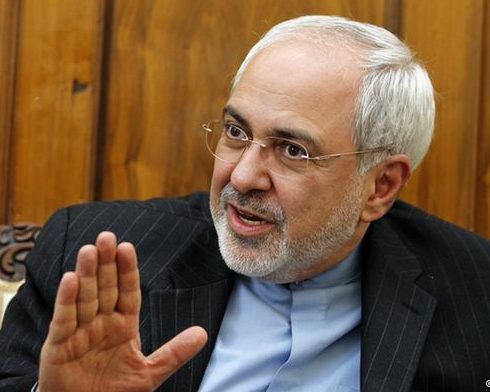
Speaking to reporters on his arrival in New Delhi on Saturday, Zarif referred to the US Senate’s Thursday vote to extend the so-called Iran Sanctions Act and said the legislation has no executive value.

“What was done at the Senate, even if it is signed off on by the US president, has no executive effect and from the standpoint of the international community, it shows the lack of credibility of the US government, which acts against its commitments,” Zarif said, as reported by ISNA.

The US Senate on Thursday voted to extend the ISA that dates back to the 1990s and authorizes the US president to potentially impose sanctions on US entities that do business with Iran. The US House of Representatives had also voted to extend the ISA earlier last month, Press TV reported.

Iran’s Parliament Mulls Triple-Urgency Motion on Resumption of Nuclear Activities

Meanwhile, a member of the Iranian Parliament’s Presiding Board said the legislature is preparing a triple-urgency motion which would mandate the government to resume nuclear activities halted under a landmark agreement between Tehran and the group of six countries known as the P5+1.

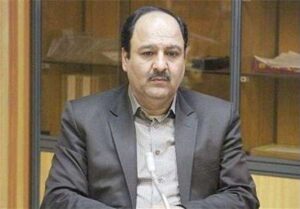
Akbar RanjbarzadehThe move is part of a response to the US Senate’s vote to extend the ISA for 10 years, Akbar Ranjbarzadeh told IRNA on Friday.

“The three-urgency motion on the resumption of nuclear activities has been drafted due to the urgency [required] to counter the US move,” he said.

He added that the motion consisted of a single article and five notes, saying that the double or triple urgency of the motion was still to be debated by the lawmakers.

Ranjbarzadeh further said the Iranian lawmakers sought to adopt “a fundamental and principled” measure proportionate to the blatant move by the US Congress.

“The US and its Congress are the ones who have acted in violation of international law and trampled upon it,” he added.

He emphasized that the motion calls for “the swift, comprehensive and complete” resumption of nuclear activities in Iran.

Ranjbarzadeh said Iran would “repeatedly and round the clock declare to the world through its diplomatic apparatus and media that it was Washington which initiated this illegal action and that we (Iran) had no option but retaliation.”

He added that Iran’s approaches were “defensive and retaliatory” in nature.

If Western Experts Leave Saudi Arabia, It Should Shut Down Its Oil Industry

General Naghdi

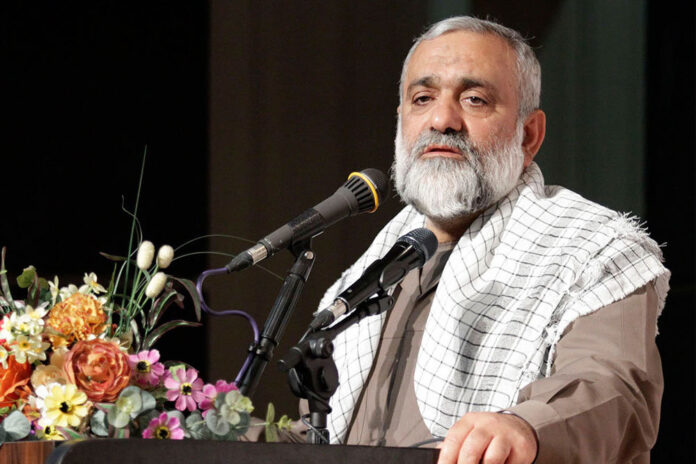
“It is wrong to think that by submitting to foreigners and oppressors, we can make economic progress,” said Brigadier General Mohammad Reza Naqdi, the commander of Iran’s Basij [voluntary] Forces, according to a report by Mehr, as translated by IFP.

“Some people imagine that if we interact with the US, our economy will flourish. However, we should see the example of countries that did so to realize that it’s not true,” he added.

“We can’t be closer than Saudi Arabia and Qatar to the United States. Saudi Arabia should stop its oil-related activities if western experts leave this country for a few hours; interaction with the west is like that,” Naqdi said, referring to the close relationship of Washington with these countries.

“The Qatar-based Al Jazeera TV is the only channel ISIS members are allowed to watch; what does that mean?” he asked, referring to the alleged support of Qatar and Saudi Arabia for terrorist groups, which, according to Naqdi, have been created by the US.

“During the World War II, the US retreated for one day and it was enough to ruin European infrastructures. After that, European countries begged for Washington’s help and finally, they became its colonies.”

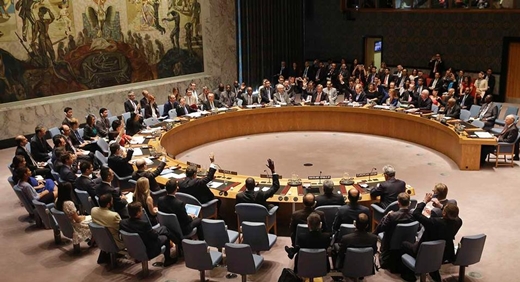
UN Security Council Imposes New Sanctions against North Korea

US Push to Reinstate Sanctions on Iran Has No Legal Basis: Official

According to a report covered by Ettela’at newspaper, the latest sanctions, triggered by a nuclear test conducted by Pyongyang on 9 September, which was the fifth and largest controlled detonation of a nuclear device ever undertaken by the pariah state, are unprecedented in scope.

If properly enforced, they would reduce its overall export revenues by 25 per cent in a year. That is a potentially significant blow to the country’s already skeletal economy, which, the UN nations hope, will severely damage any flow of cash that could be used to fund its nuclear activities.

Most significantly, the sanctions would slash exports of coal to China.

Previous resolutions from the UN included a significant loophole that allowed China to import coal from North Korea if it could be shown it was necessary to assist in sustaining the most impoverished of the Chinese population, The Independent reported.

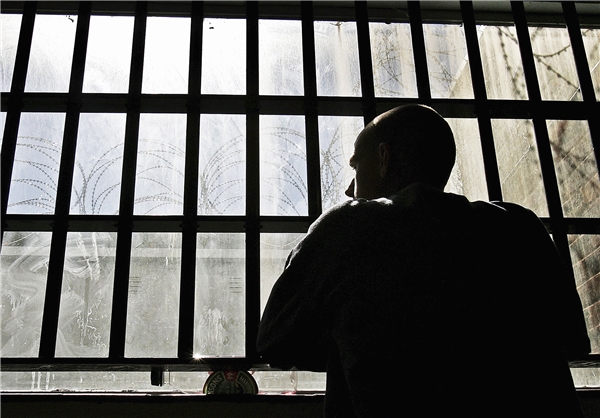
Britain Has Record Number of Prison Suicides

prison

The charity put the blame of the insufficiency of staffing and budgets that had resulted to “a toxic mix of violence, death and human misery”.

Since then, the government has pledged to provide 2,500 additional officers and special measures for mentally vulnerable inmates.

Before said “record number”, the charity’s highest record was a total of 94 suicides in 2004, according to a report covered by Fars.

However, general prison population increased by approximately 10% since said record, which makes the 2004 count actually higher in comparison.

The present count shows an estimate of one death for every 840 prisoners, Geopol Monitor reported.

Iran Rejects International Drug Cartels’ Transit Offer

Drug in Iran

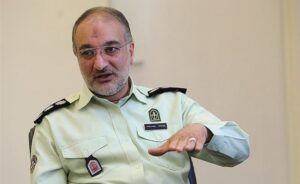
General Mohammad Massoud ZahedianIn an interview with Tasnim, Head of Iran’s Anti-Narcotics Police General Mohammad Massoud Zahedian said the teachings of Islam never allow the country to accept such offers.

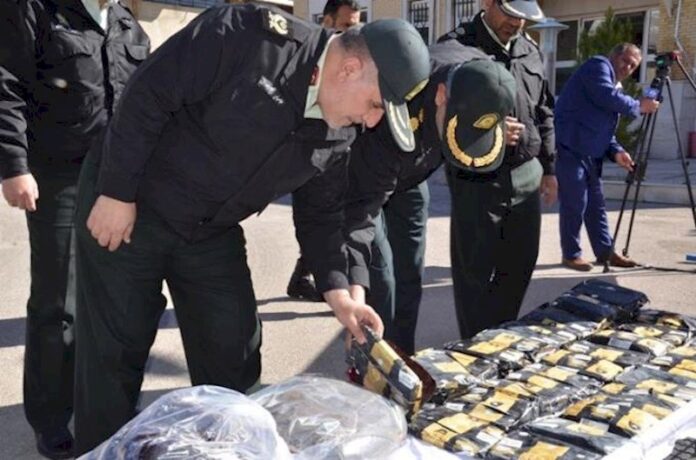
The Iranian police will forcefully counter any individual, group or ring engaged in trafficking drugs bound for any part of the world, the commander underlined.

Earlier, a former head of the Anti-Narcotics Police said drug-trafficking gangs in Iran have passed on several messages from the ringleaders of international drug cartels, proposing that should Iran agrees to allow the transit of drugs via a safe passage, the cartels will guarantee that not even “one kilogram of narcotics” will be distributed in Iran.

Iran, which has a 900-kilometre common border with Afghanistan, has been used as the main conduit for smuggling Afghan drugs to narcotics kingpins in Europe.

Despite high economic and human costs, the Islamic Republic has been actively fighting drug-trafficking over the past three decades.

Rouhani’s Big Mistake Was Making His Gov’t Dependent on Nuclear Deal: Senior Conservative

Asadollah Badamchian

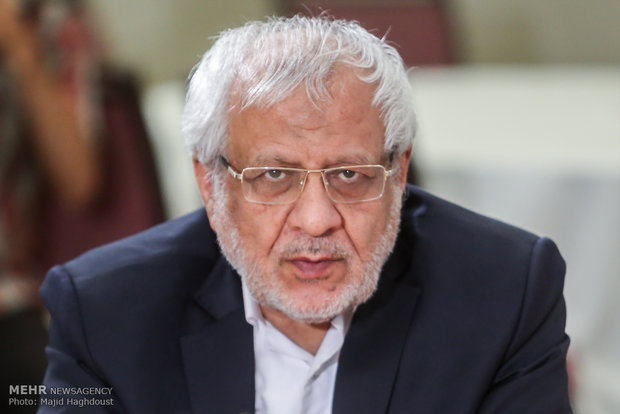
In an interview with Mehr, as translated by IFP, Assadollah Badamchian, the deputy leader of Islamic Coalition Party*, said the nuclear deal between Iran and the Group 5+1 (Russia, China, the US, Britain, France, and Germany) – also known as JCPOA – is a complicated phenomenon.

“At the beginning, President Rouhani’s administration was very optimistic about JCPOA, but its optimism gradually decreased,” he noted.

“The recent change of US President and the problems of the European Union have cast doubt over the fate of nuclear deal. Today, the happy faces of Iranian statesmen at the beginning of JCPOA implementation have turned to frowning faces looking for solutions after the termination of JCPOA.”

Making his government dependent on JCPOA was Rouhani’s big mistake, but his bigger mistake was his choice of reformist figures in the cabinet.

Badamchian noted that the major question in Iran and other countries is now about the nuclear deal’s fate.

“Today Americans do not know what to do with JCPOA. Trump said he would scrap it, but he is longer talking about it after his victory in the US elections,” he noted.

“And Obama, who has disgraced the US, on the one hand talks about his commitment to JCPOA implementation, and on the other hand, signs [the extension of] anti-Iran sanctions,” Badamchian added.

“There are conflicting opinions in the EU as well. They don’t share the US view, but they cannot take a final decision. There is a huge conflict of opinion among European states in this regard.”

“European are willing to implement the nuclear deal, but they are worried about Washington’s reactions. They have failed to reach a consensus on how they approach Iran,” he went on to say.

He further criticized Rouhani’s government for lacking an effective and decisive solution, and said, “Rouhani’s big mistake was to make its government dependent on JCPOA.”

Badamchian also lashed out at reformists and said Rouhani’s bigger mistake was his choice of reformist figures in the cabinet.

“Reformism and reformists have not been and are not able to resolve the problems of Iran’s Islamic Revolution with the US, Europe, and other countries.”

“Given their willingness to have interaction with the US and Europe, reformists were too optimistic and hasty in negotiations to sign a deal with the Western world,” the senior conservative asserted.

Certainly, the way out of this deadlock is not choosing a president who thinks like Ahmadinejad, because they just think of cutting [ties], while the results should also be considered in negotiations.

Therefore, he added, they fulfilled Iran’s commitments before Westerners do theirs, and now their hands are empty.

Meanwhile, Westerners’ hands are not full either, he added.

“Certainly, the way out of this deadlock is not choosing a president who thinks like Ahmadinejad, because they just think of cutting [ties], while the results should also be considered in negotiations, and the country’s capabilities and opportunities should be tapped into for realizing our causes,” he noted.

“It is for sure that Rouhani’s government, reformists, and state moderates will not be able to resolve this issue. If Rouhani manages to be re-elected in the upcoming election, the problem will remain unresolved,” Badamchian stressed.

“The only solution is the election of a government that can avoid optimism and wrong attitudes towards the West, and at the same time stay away from radicalism and bringing the negotiations to a deadlock.”

He described the ideal president as a thoughtful, brave, prudent, and strong leader who will be able to get the ‘complicated phenomenon’ of JCPOA to an acceptable destination with an appropriate pace.

“The vigilant nation of Iran will help resolve this issue by making a correct choice,” Badamchian added.

* The Islamic Coalition Party is a conservative political party in Iran, which played a vital role in the success of the Iranian Revolution in 1979. Though still very active and influential, the organization experienced a gradual elimination from political power after rise of new conservative rivals in 2000s.

One of the oldest among the active parties in Iran, it represents older generations of conservatives and its main base of support is among bazaari merchants and shopkeepers in Grand Bazaar of Tehran and other cities and traditionalist clerics. It is probably the only political organization in Iran which possesses an organic relation with such a social base.

Since 1979, the party members have held high government offices and are influential players in the economy of Iran, dominating Iran’s Chamber of Commerce Industries and Mines (ICCIM).

The party also has interactions with Mostazafan Foundation, Imam Khomeini Relief Foundation and the Mashhad-based Astan Quds Razavi.

Iran to Use Its ‘Own Methods’ in Reaction to JCPOA Violation: Deputy FM

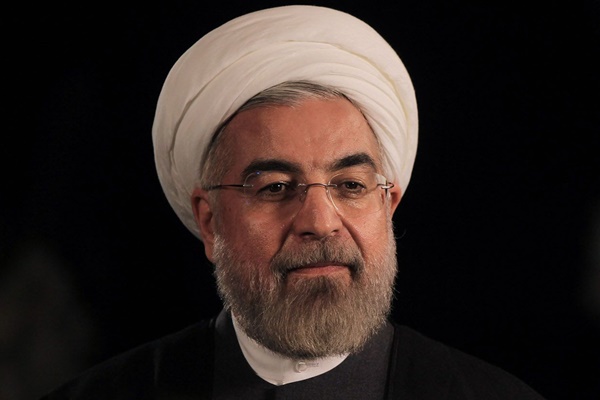
Iranian President Hassan Rouhani is spending his final months in office if not reelected. This is while he spent most of his first tenure wrestling with all types of US-led embargoes, trying to have them lifted.

According to a report by Etemad newspaper, as translated by IFP, Iran and the P5+1 group of countries struck a historical deal concerning Tehran’s nuclear program back in July 2015; however, the deal – also known as the Joint Comprehensive Plan of Action (JCPOA) – took several months until January 2016 to be officially implemented.

By implementation, the international restrictions on Tehran’s nuclear program were supposed to be lifted and Iran’s nuclear activities would be no longer considered as illegal adventures of a rogue state. One of the JCPOA implications has been normalization of political and trade ties between Iran and scores of countries that had decided to do away with ties with Iranian partners out of fears that they might be targeted by US penal measures for dealing with Iran.

Over the course of the past 12 months, the European Union has spared no effort to revive its dealings with Iran both in political and commercial spheres. The Europeans have always acknowledged Tehran’s undeniable influence and footing in the Middle East as well as its constructive role in restoring peace and stability to the region seen by many Europeans as the energy heartland of the planet.

Since the Implementation Day, European delegations have held series of targeted rounds of talks with high-profile Iranian officials as well as companies in various industrial sectors for bolstering trade ties with a ban-free Iran. Regional concerns as well as human rights topics were also tackled in the talks most recently.

But the course of talks has been somehow interrupted by the election of Republican Presidential Candidate Donald Trump, who is rarely a known figure in political circles of the US. Since his election as the next US president, observers are wondering how he would touch on the Iran deal.

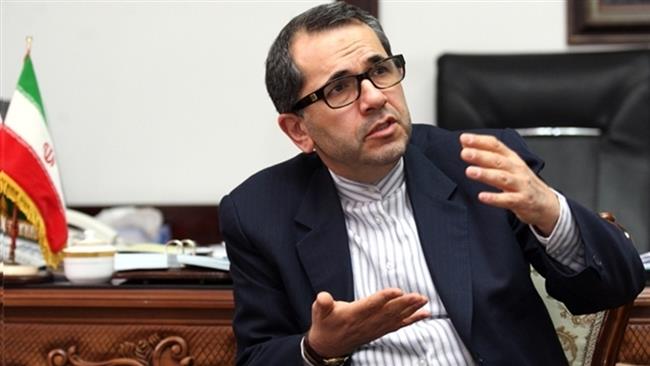
We reached out to Majid Takht-Ravanchi, Iranian Deputy Foreign Minister for American and European Affairs, to ask him about Iran’s ongoing talks with Europe in which he is so intensely involved and his view about how Trump’s election would impact the nuclear deal and removal of sanctions.

Here is IFP’s translation of excerpts from Takht-Ravanchi’s interview with Etemad:

Many European companies had kept their relations with Iran on standby to see what would the outcome of the US presidential election be before making final decisions whether to enter Iran or not. The Europeans hoped that the next US president would honor the deal so they would more freely enter a ban-free Iran. Will Trump’s victory in the US presidential election lead to more reluctance by European companies to enter Iran?

There might have been some western companies and banks that anticipated the outcome of the US election to begin their trek in Iran in the post-sanctions setting. However, this has nothing to do with the commitment of the US and European countries with regards to the Iran deal.

Based on the deal, they have agreed to guarantee the successful implementation of the JCPOA and the fact that major European banks have not yet stepped forward to form bonds with Iranian partners is dishonoring the deal on their side; we are currently working on this issue. Following the US election, we have not seen any progress on the part of major European companies and banks in regard to joining Iranian partners.

A few days after the presidential election in the US and announcement of the election results, foreign ministers of the EU issued a statement in which they voiced their full support for the Iran deal. How should the move be interpreted where everyone is worried about how the next US president will consider the JCPOA? Could the statement be seen as a message Europe intended to send to the US? 

[EU Foreign Policy Chief Federical] Mogherini touched upon this issue in one of her speeches after the election was over. The statement was released following Mrs. Mogherini’s address. From the viewpoint of Europeans and, of course in our own view, the deal is a multilateral document between 7 countries including the EU representatives.

The JCPOA has also been approved by the UN Security Council which has given it some sort of international authenticity. This means that no one can come out one day and say they do not acknowledge the deal as a good one and then decide to reconsider the whole process of its finalization alone and start off new rounds of talks. This would be utterly preposterous and completely unacceptable.

The EU, Russia and even the Obama administration have supported the deal. This means that those who have been involved in the process of the deal do recognize its international weight and see it as multilateral document.

The recent statement by the EU showed their total opposition to violation of the deal and that they stress that everything must keep going based on what has already been agreed through the deal. This is the stance Iran has favoured, as well.

How much can we rest assured that the Europeans will keep supporting the deal in case the US might decide to renege on its JCPOA commitments?

Given the fact that the statement is issued by three European countries besides the High Representative of the Union for Foreign Affairs and Security Policy, who were involved in the Iran talks, we can be certain that the statement is of some validity by itself. But predicting the future is always difficult. In our point of view, the deal can neither be renegotiated nor denied. If any country decides to disregard the deal, then we would act using our own methods. Iran’s Leader, for his part, has openly expressed his views about this issue as well.

Trump’s proposed cabinet members are famous anti-Iran politicians who have opposed any deal with Iran. If the US decides to violate the JCPOA in any manner like failing to live up to its commitments regarding the deal, imposing new sanctions on Iran, and so on, then will the support of Russia, China and the three European signatories of the JCPOA be enough to ensure continued implementation of the deal?

Well, the sanctions expected to be lifted by the JCPOA have been decided already. Except for the UNSC and EU sanctions regarding Iran’s nuclear program, the US secondary sanctions are supposed to be lifted based on the deal and the US is obliged to remove them. These sanctions include those ordered by the US president and those passed by the US Congress against Tehran.

Based on the 2231 UNSC Resolution, the next US president is required to continue lifting these sanctions and any failure to do so would be an outright violation of the JCPOA, meaning the US would be responsible before the people of the world for violating the deal.

Iran, for its part, believes that the deal needs to be honored by all its signatories and the failure of any of the signatories would make others’ respect for the deal meaningless.

There are certain observers inside the country that believe Iran has not benefitted from the post-sanctions atmosphere as much as it should have. Except for American companies, have our ties with European partners really undergone any changes since JCPOA implementation or the changes are only on paper?

Everyone in the country expected to see all the problems solved immediately after the Implementation Day. That expectation must have been addressed in a different manner at that time. It took westerners years to build up the anti-Iran atmosphere in international arenas. One cannot expect to have all the negativity wiped out immediately against Iran.

Add to this the US mischief and dishonouring of its promises which have made things even more complicated for Iranian businesses to interact with international partners.

Speaking of trade ties with European partners, I have to tell you that things have certainly changed and cannot be compared with the past. Besides restoration of Iran’s crude oil exports to Europe, new trade deals have been inked over the course of the past year with Europeans and things are progressing with European companies. Though, major European banks are still evading Iranian clients for reasons I have already spoken about, which I wish will be resolved soon.

Next Presidential Election Not Easy for Rouhani: MP

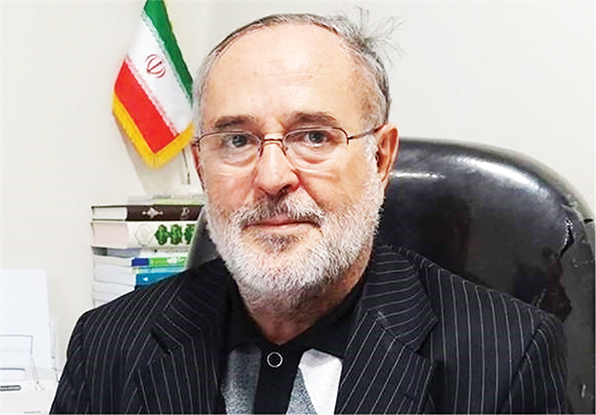
According to a report by Vaghaye Ettefaghieh newspaper, as translated by IFP, Shahaboddin Bimeqdar said, “Reformists have won in every election that brought people to the ballot boxes; however, we must not rest assured that the president [Rouhani] will win the upcoming election easily.”

Shahaboddin Bimeqdar“If we do not take his campaign seriously and do not take part in the election, someone else might win the presidency,” he added.

In reaction to the elimination of former president Mahmoud Ahmadinejad from the next presidential election, he said with Ahmadinejad’s absence, the supporters of Rouhani and reformists must be more vigilant of the circumstances because things can turn more worrisome now.

Bimeqdar, a Parliament Member from the northwestern city of Tabriz, further said, “Under the current circumstances, conservatives will stick to their activities in the silent mode and prepare their favorite candidate to jockey with Rouhani for presidency; therefore, we [reformists] must be monitoring the events carefully.”

“We must refrain from idling around; high rate of unemployment has prompted a volley of criticism against the administration; we must prepare ourselves for the upcoming election in such a manner that Mr. Rouhani will have a serious rival. We should not regard Ahmadinejad’s absence as a promising harbinger of Rouhani’s victory.”

Rouhani spent the first 1.5 years of his presidency for nuclear talks and hammering out a final deal to have the sanctions lifted against our country, the MP added.

He also said that the administration can encourage people to invest in economic sectors by luring domestic and foreign financiers into the country so that the economy would improve and criticisms diminish.

“Our loss is when we cannot get people to the ballot boxes on the Election Day. I mean if we do not take things seriously and people take Rouhani’s victory for granted and do not come to the ballot boxes, somebody else might win the election.”