Saturday, December 27, 2025
Home Blog Page 4173

US Just Pretending to Be Pacifist on Issue of Palestine: Iranian MPs

Israel-US

Massoud Goudarzi“Washington’s paradoxical behaviour has been evident for a long time,” said Massoud Goudarzi, an Iranian lawmaker, referring to the Palestinian conflict and now, the Syrian crisis.

“It is their strategy to look after their colonialist interests in the region but prepare a showcase to dissemble. Their implemented policies differ from what they pretend.”

He went on to say that the US paradoxical strategies have been bold in some periods after the occupation of Palestine, “Especially after the literature of resistance was introduced to politics in 2001. The US pretends to be active as a peacemaker, but is always trying to hamper the resistance.”

“At the end, the American oil strategy in the Middle East doesn’t change. They only adopt different methods,” he added, according to a Farsi report by ICANA.

Mohammad Reza Amir-Hassankhan“The temporary conducts of Washington never show its real policy,” said Mohammad Reza Amir-Hassankhani, another Parliament member.

“Recently, the United States came up with a plan to recognize the Jewish Administration of Israel, so that displaced Palestinians wouldn’t have the right to return to their land,” he stressed.

“On the other hand, the UN Security Council didn’t veto the anti-Israel bill that interdicts the construction of Israeli residential buildings in occupied lands; a move that seems to be a gesture of peace-making.”

“Late in his tenure, Obama is showing sympathy for Palestinians, but he is faking it,” he emphasized.

“But Palestinians know that the US isn’t upholding their rights, and they should continue to defend their land, Jerusalem,” Amir-Hassankhani added.

Advisor to Iran’s Leader Hails Turkey’s Withdrawal of Forces from Iraq

Head of the Strategic Research Center of Iran's Expediency Council Ali Akbar Velayati

According to a report by IFP, Velayati said on Saturday that Iran welcomes friendly relationships between regional countries.

Hailing the de-escalation of tensions between Ankara and Baghdad, he said prosperity of the region requires regional cooperation and avoiding any tension among neighbours, Tasnim reported.

Velayati described the Turkish government’s decision to respect the principles of good neighbourliness and Iraq’s territorial integrity as a “positive step”, hoping for detente in Ankara-Damascus ties as well.

He then hoped that Turkey would once again adopt a policy of “zero problem” toward its neighbours, noting that stable relations between Turkey and Syria require regard for equal rights, mutual respect and non-interference in each other’s internal affairs.

His comment came hours after Iraq’s Prime Minister Haider al-Abadi said an agreement has been reached with Turkey over an Iraqi demand that Turkish forces withdraw from the town of Bashiqa in northern Iraq.

Iraq has been facing the growing threat of terrorism, mainly posed by the ISIS (also known as ISIL or Daesh) terrorist group. ISIS militants made advances in northern and western Iraq over the summer of 2014, after capturing swaths of northern Syria.

First Civilian Airplane Lands in Aleppo Int’l Airport

syria

The flight by a government airplane on Friday was a trial attempt in preparation for the total reopening of Syria’s second largest airport in the near future.

Government sources said the Aleppo International Airport was likely to reopen to the public by February but cautioned that things will be contingent on the military situation in the province of the same name.

If the airport in Aleppo resumes work, Syria will have at least four functioning airports open to the public. Authorities started rehabilitating Aleppo’s airport a few days after the city was fully liberated from Takfiri terrorists in late December 2016, according to Press TV.

Aleppo’s liberation is seen as a crushing blow to the militants and their foreign supporters, who have been actively working to topple the Damascus government since March 2011.

Separately, six Syrian civilians were killed in Turkish airstrikes on Syria’s northwestern city of al-Bab. Turkey has been conducting unauthorized sorties over Syria to target Kurdish militants, whom it considers enemies of the Turkish state.

Meanwhile, Syrian military forces have launched an operation to recapture 11 villages from Takfiri terrorists in the Wadi Barada Valley, where springs and water facilities providing water for millions in the capital city are located.

Water supplies from the militant-held area of Wadi Barada near Damascus have been cut since December 22, when Syrian army soldiers and fighters from popular defense groups launched a major offensive to recapture the mountainous area near the Lebanese border.

The Takfiri militants had also earlier contaminated Damascus’ drinking water supply with diesel. The city’s water authority had to cut supplies to Damascus and resort to using water reserves over the act of sabotage, which saw extremists polluting the Ain al-Fijah spring in Wadi Barada.

On Friday, the United Nations Children’s Fund (UNICEF) expressed concern about the risk of waterborne diseases among children in Damascus.

The head of the UN-backed humanitarian taskforce for Syria, Jan Egeland, told reporters in the Swiss city of Geneva on Thursday that just in December 2016 “5.5 million people have had their water supplies cut or minimized.”

He stressed that “to sabotage and deny water is of course a war crime,” warning that civilians “will be affected by waterborne diseases” if clean water is not supplied to them.

On Friday, the Syrian national reconciliation minister, Ali Haidar, said the country is prepared for an “open war” against the foreign-backed militants in the northern city of Idlib.

Idlib, which is currently considered the biggest remaining militant stronghold in Syria, has become home to thousands of Takfiri terrorists evacuated from key areas under reconciliation agreements with the government.

Haidar said Syria would not allow Idlib to remain under militant control indefinitely unless there was an international deal to resolve the situation.

Over the past almost six years, Syria has been fighting foreign-sponsored militancy. UN Special Envoy for Syria Staffan de Mistura estimated in August that more than 400,000 people had been killed in the Syrian crisis until then. The UN has stopped its official casualty count in Syria, citing its inability to verify the figures it receives from various sources.

Riyadh’s Support for Terrorism Root Cause of Chaos in Middle East: Iranian Spokesman

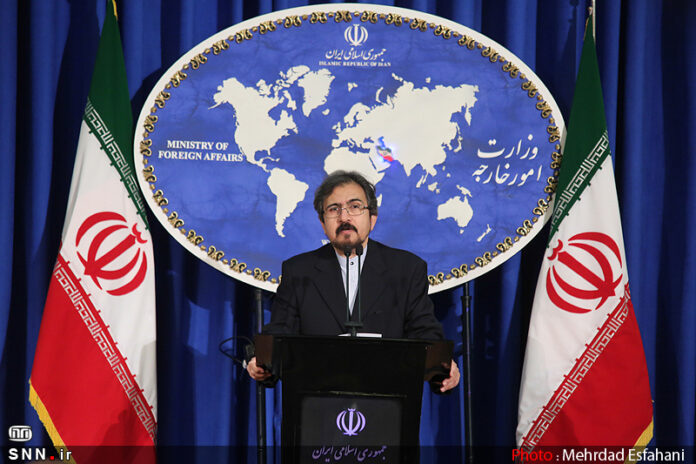
“Saudi Arabia has created chaos in the region through its organized support for Takfiri and terrorist groups,” Iranian Foreign Ministry Spokesman Bahram Qassemi said on Saturday.

He emphasized the need for Saudi Arabia to rectify its approaches for the sake of global peace and tranquility, and said Takfiri terrorism is undoubtedly rooted in the radical ideology of Wahhabism, which is practiced in the kingdom.

The Iranian spokesperson added that Saudi Arabia is regarded as the “cause of bloody crimes against Arab nations of Syria, Iraq and Yemen” while it has also “committed treason against Muslims, particularly the Arab world and the cause of the Palestinian people” by siding with the Israeli regime.

Qassemi said different reports by Western intelligence agencies have “repeatedly confirmed that there is a meaningful and organized connection between Saudi state bodies and Takfiri extremists across the world.”

He dismissed as blame game the recent anti-Iran allegations made by Prince Salman, who is also the Saudi defense minister.

“Instead of such fruitless blame game [efforts], Saudi statesmen had better move to rectify their approach and attitude and think about the consequences of their destructive policies and measures,” Qassemi pointed out.

In an interview with the American magazine Foreign Affairs published on Thursday, Prince Salman, whose country is widely believed to be among major sponsor of terrorism, accused Iran of creating instability, encouraging terrorism and violating the sovereignty of other nations in the region.

He also called on Iran to change its outlook and behavior.

The remarks by the Saudi officials come as Riyadh has been engaged in a military campaign against its impoverish southern neighbor Yemen since March 2015. The Saudi war on Yemen has so far killed at least 11,400 Yemenis and taken a heavy toll on the country’s facilities and infrastructure.

Iran Deplores Certain Arab States for Hosting Israeli Regime’s Diplomats

Alaeddin Boroujerdi- Sayyed Hassan Nasrallah

“It’s a pity that some regional governments invite Zionist [Israeli] delegations and hold celebrations with them,” Chairman of the Iranian Parliament’s National Security and Foreign Policy Commission Alaeddin Boroujerdi said in a meeting with representatives of Palestinian groups, held in Beirut.

Stressing the need for concerted action against the Israeli regime, the lawmaker said if there is Muslim solidarity for liberating the occupied Palestinian territories, the Zionist regime of Israel will have no place in the region’s political geography.

His comments came after mounting criticism of Bahrain for hosting a Zionist delegation in Manama in December 2016, Tasnim reported.

According to pro-Israeli Elder of Ziyon website, the delegation also visited Dubai, Oman, Qatar and Kuwait.

Boroujerdi, Hezbollah Secretary General Discuss Regional Developments

The Iranian parliamentarian also met and held talks with Sayyed Hassan Nasrallah, the secretary general of the Lebanese resistance movement, Hezbollah, on the latest political developments in the Middle East.

Boroujerdi was received by the Hezbollah chief in the Lebanese capital of Beirut on Saturday, Press TV reported.

Boroujerdi is in Beirut at the head of a parliamentary delegation to hold talks with senior Lebanese officials.

On December 28, Lebanon’s national unity government headed by Prime Minister Saad Hariri won a vote of confidence in parliament.

The new cabinet was announced on December 18, less than two months after the country’s parliament elected Michel Aoun, a Christian leader and strong ally of Hezbollah, as president. Aoun’s election ended a 29-month-long political stalemate in the country.

Before visiting Lebanon, the Iranian parliamentary delegation paid a visit to Syria, where they held talks with senior officials of the Arab country, including President Bashar al-Assad, Foreign Minister Walid al-Muallem and Parliament Speaker Hadiya Khalaf Abbas.

Laft, Ancient Port in Persian Gulf Island of Qeshm

Laft Port

Even though Iran’s central city of Yazd is most often thought of as the city of badgir (wind-catchers) – an ancient Persian architectural structure used to create natural ventilation – a glance at the panoramic skyline of Laft historical port is proof of a rivalry.

The port village known for its ancient wharf, which dates back to the Achaemenid era. Few abanbar (ancient water reservoirs) also exist and are still used by locals today.

This fishing town, which has a population of around 4,500, is also home to the Talla Wells, which store clean water and were created by cutting holes into layers of stone.

Though in the past the number of wells was equal to the number of days in a leap year, it has dwindled to less than 100, each one with a unique name.

Here are IRNA’s photos of the ancient port:

Tour of Tehran Rewarded to Book Donors

Tehran418

Rajabali Khosroabadi, the Director General of Cultural Heritage, Handicrafts and Tourism Organization of Tehran, announced that the tickets of Tehran tours will be rewarded to citizens who donate books to the library of “Deh-e Kheir” [literally the Village of Good], a village near Rey County, Tehran.

“The plan of ‘Tehran tours for book donation’ is to be continued with excursions to monuments of Tehran and its counties,” he added, mentioning that such a sustainable program will contribute to conservation of historic monuments and hills of Tehran province in the long-term.

In the day of excursion, the participants should take the books with them to donate to the village’s library after visiting the monuments of Rey, he noted, according to a Farsi report by ILNA.

“Book donation is a good way to attract people to social activities. By promoting reading culture, we will stabilize the culture of tourism and protection of cultural heritage within the society.”

He went on to say that today cultural progress is the main criterion for designation of developed cities. Economic, political and social progress will follow cultural development.

ISIS Leader al-Baghdadi Appoints His Successor

ISIS Leader scaped

According to a Farsi report by IRNA, Abu Bakr al-Baghdadi, the leader of ISIS terrorist group, has appointed three persons as his probable successors, among them is one Iraqi.

Meanwhile, ISIS rulers in eastern Aleppo have gotten into an argument about who will be the next leader.

Several weeks of al-Baghdadi’s absence have led to widespread rumours of his death amid military operations of Iraqi forces and international coalition against ISIS.


Iranian MP Slams UN’s Inaction on Syrian Crisis

Alireza Rahimi

“The UN Security Council should take a strategic role to handle the Syrian crisis and bring peace and safety to the region,” stressed Alireza Rahimi, an Iranian Parliament member.

According to a Farsi report by ICANA, he went on to say that while ceasefires should be arranged based on long-term, strategic perspectives, some regional rulers plan ceasefires for their unilateral interests.

“As the opposing forces don’t act cohesively, Turkey can’t guarantee that the opposition won’t violate the ceasefire in Syria,” he noted, referring to the guarantee given by Turkey for the ceasefire in Syria.

“Turkey, on the other hand, has taken no definitive approach to Syrian crisis,” he added.

“The peace negotiations are very difficult to conduct, because major world powers, as well as opposing forces, seek opposing interests in Syria.”

He believes that Syrian truce failed due to a lack of cohesion among Takfiris [extremists] and the opposition.

“Every time they come to the negotiating table to reach just a relative agreement on ceasefire, and then violate it,” he added.

Iranian Aid Shipment for Assyrians Arrives in Iraq

Iranian Red Crescent Society

The humanitarian aid carried by the Iranian Red Crescent Society (IRCS) for Assyrian refugees has entered the Iraqi territory, the Assyrians’ secretary noted in a thank you letter.

The representative of Assyrians in Iranian Parliament read the written letter of appreciation sent by the Secretary of Iraqi Assyrians.

According to a Farsi report by Kayhan newspaper, the aid shipment with an approximate weight of nine tons consisted of rice, conserved food and blankets.