Monday, May 4, 2026
Home Blog Page 415

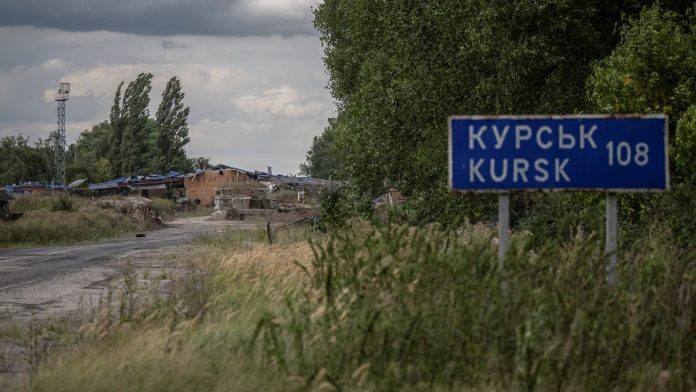
Russia claims Kursk Region fully liberated from Ukrainians

Russia Ukraine War

In a video address shared by the Kremlin on Saturday, Putin thanked Russian service members “who took part in defeating the neo-Nazi groups” that invaded the region last summer.

“The Kiev regime’s adventure has completely failed, and the huge losses suffered by the enemy, including among the most combat-ready, trained and equipped, including by Western models of equipment… will certainly be reflected along the entire line of combat contact,” he said.

According to Putin, the Russian success sets the stage for further advances in other areas of the front, bringing final victory in the conflict closer.

The Russian president praised several units that took active part in first stalling the Ukrainian incursion and then pushing the enemy forces back.

The daring operation led to a complete crumbling of Ukrainian defenses. According to Gerasimov, total Ukrainian losses during the Kursk incursion amounted to more than 76,000 servicemen killed and wounded, as well as more than 7,700 units of military equipment lost, including 412 tanks, and 340 infantry fighting vehicles, and 314 armored personnel carriers.

The chief of the General Staff went on to confirm that Russia’s military effort in Kursk Region was supported by North Korean troops, whose assistance was provided under the Treaty on Comprehensive Strategic Partnership signed last year.

Ukraine launched its incursion into Kursk Region last August, initially gaining some ground and capturing numerous settlements before their advance was checked by Russian forces.

Putin has characterized the incursion as an attempt by Kiev to divert attention from Moscow’s offensive in Donbass, adding that this ploy has failed.

Ukrainian officials described the operation as a way to gain leverage in potential peace talks with Russia.
Iran denies missile program discussed in indirect talks with US

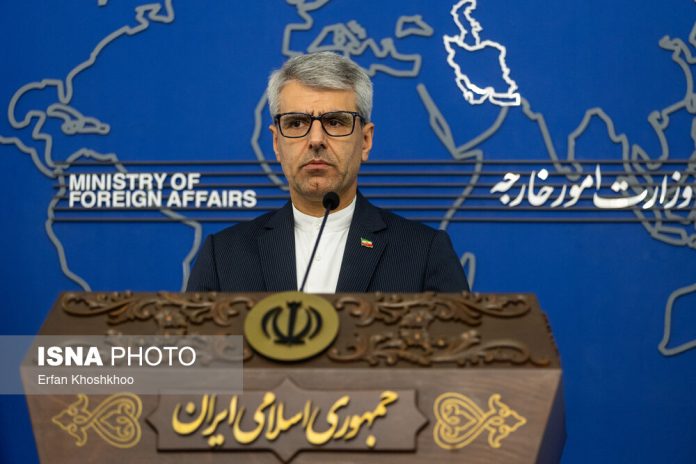
Esmael baghaei

“The country’s defensive and missile power has not been and is not subject to negotiations,” the spokesman stated on Saturday.

The talks are primarily focused on reviving the 2015 nuclear deal (JCPOA), with Oman continuing to facilitate communication between the two sides, he explained.

The third phase of talks, mediated by Oman, began on Saturday in Muscat.

The Iranian delegation is led by Foreign Minister Seyed Abbas Araghchi, while the US side is headed by Special Envoy for Middle East Affairs Steve Witkoff.

Technical discussions are being handled by deputy-level officials, including Majid Takht-Ravanchi, Iran’s political deputy foreign minister, and Kazem Gharibabadi, who oversees international legal affairs.

The US technical team is being led by Michael Anton, a National Security Council spokesman.

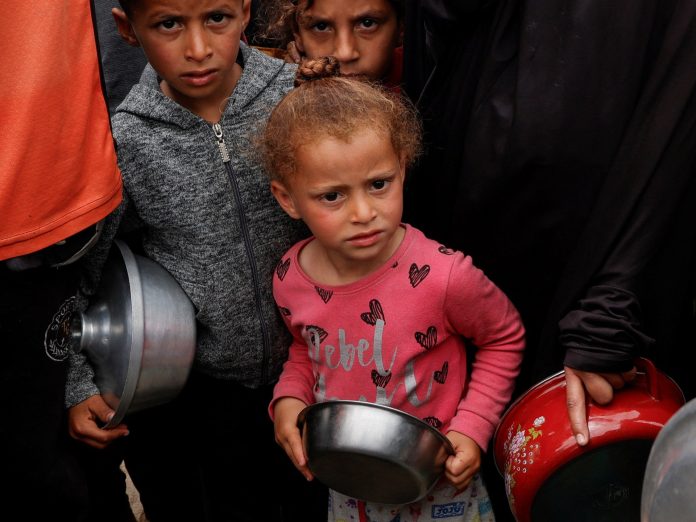
WFP says its food stocks in Gaza completely ‘depleted’ amid Israeli blockade

In a statement on Friday, the WFP confirmed it had “delivered its last remaining food stocks” in Gaza to local kitchens, which it anticipates will run out of food entirely “in the coming days”.

More than 400,000 people in Gaza rely on WFP aid, leaving them with little recourse if this lifeline fails, the organisation’s Palestine representative Antoine Renard told Al Jazeera.

“We [local NGOs] are all running short,” he continued, adding, “We are being depleted.”

Since March 2, Israel has fully blocked all aid supplies, including food, medicine and fuel from entering Gaza, defying a 2024 World Court order to facilitate the entry of humanitarian assistance.

Food stockpiled during a nearly two-month ceasefire earlier this year has largely been exhausted, while prices for what little food is left on the open market have surged by 1,400 percent, according to the WFP.

Gaza’s Government Media Office has warned the dwindling food supplies could push “thousands of Palestinian families” into starvation.

It reported that 52 people, including 50 children, have already died due to hunger and malnutrition, while more than one million children go hungry every day.

Despite the humanitarian crisis, Israel has shown no signs of reversing the blockade. Last week, Defense Minister Israel Katz said Israel would keep blocking aid, describing it as a tactic to “pressure” Hamas.

Israel’s military has repeatedly accused Hamas of exploiting aid – a claim the group denies – and argues it must keep all supplies out to prevent the fighters from getting it.

However, even some of Israel’s closest allies have publicly condemned the strategy. On Wednesday, Germany, France and the United Kingdom collectively called the action “intolerable” and warned that it is increasing the risk of “starvation, epidemic disease and death”.

As the food crisis deepened, Israeli attacks continued across the war-battered enclave.

Meanwhile, efforts continued to revive stalled ceasefire talks in Cairo, where a Hamas delegation was expected to meet with Egyptian officials on Saturday.

Hamas official Taher al-Nunu told AFP that the group’s delegation in Cairo would be headed by Khalil al-Hayya. He reiterated that Hamas’s weapons “are not up for negotiation”.

So far, the truce effort has been deadlocked, with Hamas insisting on a permanent ceasefire and Israel offering only temporary truces and demanding that Hamas disarm.

But mediators have begun work on a proposal that would include a five-to-seven-year truce following the release of all captives in Gaza and an end to fighting, Reuters reported, quoting several informed sources.

Since the ceasefire collapsed on March 18, Israeli attacks have killed more than 1,900 Palestinians, many of them civilians, according to health authorities in Gaza, and hundreds of thousands have been displaced as Israel seized what it calls a buffer zone.

At least 51,439 people have been killed and 117,416 wounded in Israel’s war on Gaza since it began in October 2023, according to Palestinian authorities.

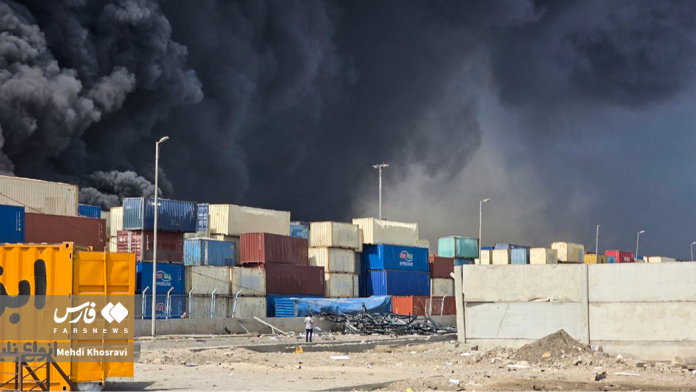
Massive explosion rocks port in southern Iran, over 550 injured

According to reports, the explosion caused significant damage, shattering windows in dozens of vehicles and buildings in the vicinity.

Initial reports indicate at least 560 people have been hospitalized following the powerful explosion, according to Hormozgan Emergency Services.

Mokhtar Salahshour, head of the Hormozgan Red Crescent Society, confirmed the deployment of rapid response teams to the site.

“Our teams are currently assessing the situation and providing emergency assistance,” he stated, adding that the cause of the explosion remains unknown.

The blast was reportedly strong enough to be heard throughout Bandar Abbas and on Qeshm Island.

Local authorities have yet to release official details about the incident at Iran’s largest container port.

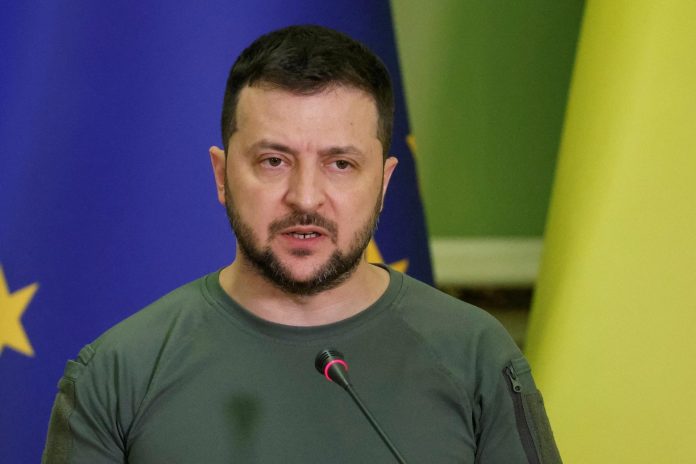
Ukraine demands ‘at least’ Israel-style support from US

Volodymyr Zelensky

Washington presented its draft deal to end the hostilities between Kiev and Moscow during talks in Paris last week. At a follow-up meeting in London on Wednesday – which was downgraded at the last minute after Zelensky publicly rejected key US suggestions – Ukrainian officials and their NATO European counterparts reportedly put forward a counterproposal.

Speaking to journalists on Friday, Zelensky insisted that any future peace deal with Moscow must be backed by sustained US military, financial, and political support.

“Discussions in London have focused on security guarantees from the United States. We hope them to be at least as robust as those provided to Israel. Additionally, we anticipate support from our European partners and are actively developing the infrastructure necessary for these guarantees,” Zelensky said.

Deliberations about an Israeli model of support for Ukraine first emerged during the presidency of Joe Biden, when Western officials began to acknowledge that Kiev was unlikely to be granted NATO membership. In lieu of collective security guarantees, they sought ways to at least ensure a long-term, uninterrupted flow of Western arms.

Zelensky’s comments come amid increasing friction with Washington, as Trump pushes Kiev to accept what media outlets have described as his “final offer” to end the conflict. Reports indicate that Washington’s framework includes freezing the conflict along the current front lines and recognizing Crimea as Russian territory – a condition Zelensky has firmly rejected.

Trump stated that “Crimea will stay with Russia” in an interview with Time Magazine on Friday. He argued that Kiev would never have enough weapons or manpower to retake the peninsula, which “was handed over to Russia without a shot being fired.” Crimea officially joined Russia in 2014 after a referendum held following a Western-backed coup in Kiev.

“Our position is unchanged,” Zelensky reiterated on Friday, despite acknowledging Kiev’s dependence on continued American support.

Trump and other senior US officials have warned that if progress is not made soon, Washington may reconsider its role as mediator and shift its focus to other global priorities. According to reports, Ukrainian officials are already bracing for the possibility of reduced American support should negotiations collapse.

Moscow has stated that it is open to negotiations and is grateful for Trump’s peace initiatives. However, the Russian leadership has stressed that it seeks a lasting solution to the conflict, saying a temporary halt in the hostilities would simply allow Ukraine’s Western backers to rearm its military. Any peace deal must acknowledge the territorial reality and address the root causes of the conflict, including Ukraine’s NATO aspirations, Russia has insisted.

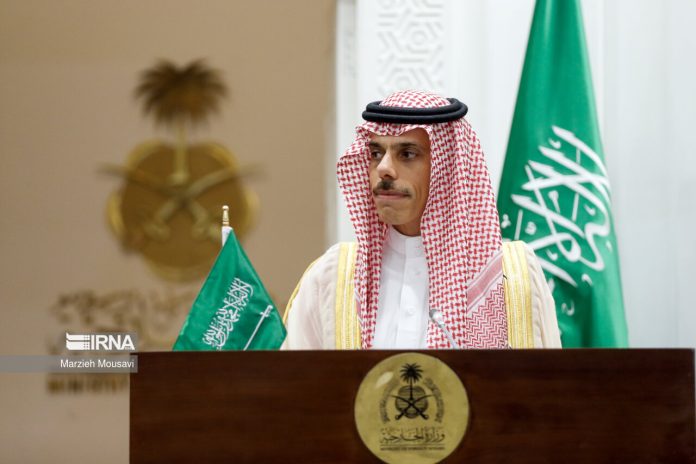
Iranian state media’s controversial broadcast draws criticism amid diplomatic thaw with Saudi Arabia

Saudi Foreign Minister Faisal Bin Farhan

Jomhouri-e Eslami newspaper sharply criticized the programming, calling it a “severe blow to national interests” that undermined Iran’s declared policy of Islamic unity and harmed the country’s negotiating position.

In another incident, the state television broadcast a controversial program, which contained sectarian material offensive to Sunni Muslims.

“At a time when our foreign policy is achieving important developments, how can those claiming to be revolutionary and Islamic work against our regional and international policies?” the article questioned.

While acknowledging some critical voices from expatriate opposition groups and Israeli commentators regarding warming Iran-Saudi relations, the newspaper emphasized that state media should support rather than undermine the country’s diplomatic initiatives.

The incident has raised questions about coordination between Iran’s foreign policy objectives and its media messaging, particularly during sensitive diplomatic engagements.

In rapid damage control, IRIB chief Peyman Jebelli condemned the content as “unforgivable,” while Deputy Director Mohsen Barmahani announced disciplinary actions against eight employees, including four arrests.

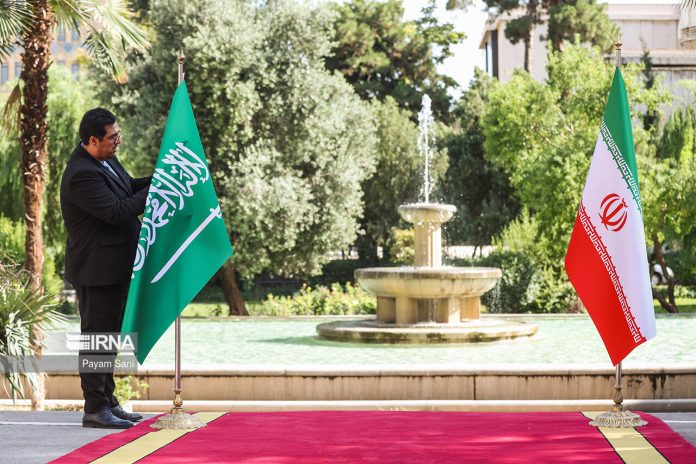
Iran-Saudi rapprochement benefits region, says reformist Iranian politician

Iran and Saudi Flags

Abtahi noted the particular significance of the defense minister’s role in Saudi decision-making, suggesting the visit could lead to important security agreements. Beyond military matters, he highlighted the potential for expanded economic, cultural and political collaboration between the two regional powers.

The timing of this diplomatic movement coincides with several key regional developments, including ongoing nuclear negotiations between Iran and the US, as well as shifting Arab perspectives on Israel following the Gaza conflict.

Abtahi observed that Saudi Arabia’s criticism of Israeli actions reflects these changing dynamics, which have created new opportunities for regional realignment.

He pointed out that historical precedent shows regional stability increases when Iran and Saudi Arabia work together, contrasting this with periods of tension that have served neither country’s interests.

The current diplomatic engagement, he argued, demonstrates both nations’ willingness to overcome past hostilities and work toward mutual interests, despite what he described as “enemies” of improved relations.

Iran and Saudi Arabia severed ties in January 2016 after a raging protest rally outside the kingdom’s embassy in Tehran, before resuming ties in 2023.

Iran slams Paraguay’s blacklisting of IRGC as illegal

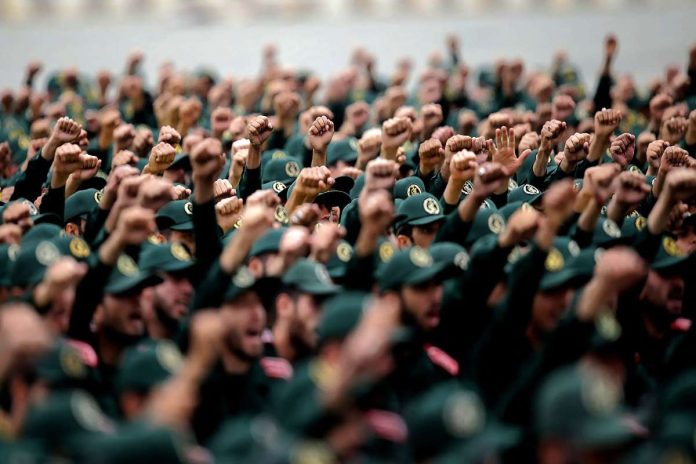
IRGC

Issa Kameli, the director general for the Americas department at the Foreign Ministry, said the Paraguayan move is “illegal, unjustifiable and in violation of international legal rules and norms.”

Paraguay designated on Thursday the Iranian elite force as a “terrorist” organization and expanded its previous blacklisting of Palestine’s Hamas and Lebanon’s Hezbollah to encompass the military and political arms of the two resistance movements.

Expressing disappointment with Paraguay’s alignment with the occupying and genocidal Israeli regime’s anti-Iran policies, Kameli emphasized Paraguay’s global accountability for its illegal action against Iran’s IRGC.

“The political action undertaken by the Paraguayan government sets a dangerous precedent, orchestrated at the behest of the Zionist regime to distract public attention from the genocide in Gaza, thereby implicating Paraguayan policymakers as complicit in the crimes currently under prosecution by the International Criminal Court,” the Iranian Foreign Ministry official added.

Kameli pointed to the lofty, empowering, and honorable position of the IRGC as part of the country’s official armed forces, and said the force has played an unparalleled role in defending the integrity of Iran and confronting terrorism, including Daesh.

He further emphasized the Iranian government’s unwavering commitment to undertaking all essential measures to safeguard the standing and reputation of the nation’s armed forces in the face of any “belligerent labeling.”

Announcing the designations in a statement, Paraguayan President Santiago Peña claimed that the move was a reaffirmation of Asuncion’s commitment to the “global fight against terrorism” while strengthening its strategic allegiances with the United States and Israel.

Pena accused the IRGC of “systemic involvement in human rights violations and participation in terrorist activities,” without providing any evidence.

The Latin American country had blacklisted Hamas and Hezbollah in 2019 but extended the designation on Thursday to their military and political arms.

The US State Department and Israeli regime praised the Paraguayan government’s anti-Iran action, with Israeli foreign minister Gideon Sa’ar urging more countries should follow suit.

Paraguay’s relationship with the illegal regime has improved under Peña, who reopened his country’s embassy in the occupied al-Quds in 2024 after it was closed by his predecessor.

The reopening made Paraguay the sixth nation with an embassy in the occupied al-Quds, joining the United States, Honduras, Guatemala, Kosovo and Papua New Guinea.

Last year, the Islamic Republic demonstrated its military might with Operation True Promise I and II, which included hundreds of retaliatory strikes by the Iranian Armed Forces against the occupied territories.

The operations manifested Iran’s finesse to pummel Israeli military and intelligence targets with surgical accuracy, filling with awe the regime’s military experts and international sympathizers.

Iranian officials have underscored that the country only deployed a fraction of its firepower during the dual reprisal.

Fourth edition of Koocheh music festival kicks off in Bushehr

Musician and festival organizer Mohsen Sharifian said concerts will be held on the Grand Ferry ship, while Lian Hall and Saadat School host free cultural events.

A classical literature night featuring Saadi and Rumi experts was held on Friday evening. Unlike previous years, no activities are planned in Bushehr’s historic district.

The grassroots festival marked its return after years of pandemic and obstacles.

The non-governmental cultural event, aimed at preserving local music and promoting Bushehr’s indigenous culture, nearly faced cancellation days before its scheduled opening.

The festival encountered last-minute hurdles when the Iranian deputy arts minister initially announced its cancellation.

Organizers responded with a statement congratulating “the real winners” of what they called a “lost cause.”

Following public backlash on social media and protests by artists, Bushehr’s Culture Ministry granted limited permission on Sunday, allowing events at Lian Hall while denying permits for the historic old quarter.

Iran denies destabilizing Syria, calls for end to occupation

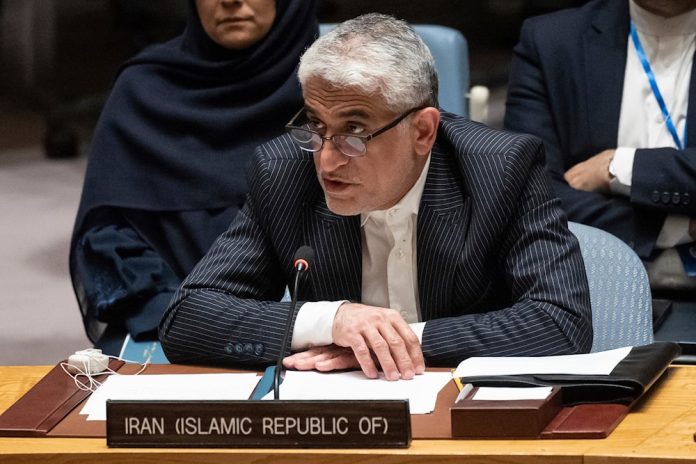
Amir Saeed Iravani

Iravani reiterated on Friday Iran’s “unwavering commitment” to Syria’s sovereignty and territorial integrity, demanding the immediate withdrawal of all unauthorized foreign forces from Syrian territory.

“Iran has never taken any action to destabilize Syria or the region,” the envoy stated, dismissing contrary claims as “biased and unacceptable.” He affirmed support for a “stable, united Syria free from terrorism, occupation, and foreign interference.”

He condemned Israel’s military aggression on Syria as violations of international law and the 1974 Agreement on Disengagement between Israel and Syria, warning that continued attacks – enabled by US political and military support – systematically degrade Syria’s defensive capabilities.

The ambassador highlighted Syria’s worsening humanitarian crisis, with 16.7 million people (70% of the population) requiring aid – the highest level since 2011. He blamed US sanctions for obstructing reconstruction and refugee returns while noting only 10% of 2025’s $1.2 billion humanitarian appeal has been funded.

Iravani emphasized combating foreign militant groups in Syria and endorsed the Syrian-led political process under UNSC Resolution 2254, including holding free elections and forming an inclusive government.