Thursday, December 25, 2025
Home Blog Page 4141

Reports Indicate Intensified Infighting among Terrorists in Syria’s Idlib

Syrian War map

According to the reports carried by Saudi-owned news channel Al Arabiya on Saturday, al-Nusra terrorists and Ahrar al-Sham Takfiri militants are exchanging fire in the northwestern province of Idlib and suburbs of western Aleppo, using heavy and medium weapons.

On Friday, al-Nusra terrorists pounded the positions of Ahrar al-Sham and Jaish al-Islam militants with mortar rounds.

Large groups of the civilian lost their lives following the clashes.

Jaish al-Islam ringleaders have called on al-Nusra Front to stop shelling their positions and instead forge a united front against the Syrian troops, but have so far failed to do so.

The latest developments come as reports suggest that major Takfiri groups fighting in Syria are fractured more than anytime as they are struggling to close ranks in the face of army advances on various fronts.

The rift between them is getting deeper as the army has made major advances in its military campaign against the militants, retaking several areas in across the Arab country.

Syria has been gripped by civil war since March 2011 with various terrorist groups, including Daesh (also known as ISIS or ISIL), currently controlling parts of it.

According to a report by the Syrian Center for Policy Research, the conflict has claimed the lives of over 470,000 people, injured 1.9 million others, and displaced nearly half of the country’s pre-war population of about 23 million within or beyond its borders.

Iran’s Oil Ministry Urged to Exploit Shale Oil Resources

Qalikouh

“Following the studies and notification of Iranian National Oil Company about the proven discovery of shale oil reserves in Qalikouh, Aligoudarz, we call on the Oil Ministry to take all necessary scientific and technical measures to reach the final decision to exploit the oil resources,” said Mohammad Khodabakhshi, an Iranian lawmaker.

“A large volume of high quality oil can be extracted from the shale,” he added, according to a Farsi report by ICANA.

“Due to the decrease in conventional oil resources in the world and the growing demand for energy, many countries are exploiting shale oil resources.”

“The extracted shale oil contains specific, strategic combinations not found in the conventional oil; this highly adds to its value.”

Aligoudarz is a town in western Iranian province Lorestan, adjacent to Isfahan and Khuzestan provinces.

Iran’s Annual Steel Output to Exceed 18 Million Tons

Steel

Bahram Sobhani, the CEO of Isfahan Mobarakeh Steel Company (MSC), said without considering the development plans in Hormozgan Steel Company (HOSCO) and Sefid Dasht Steel (SDSC) Complex, the MSC currently has a production capacity of 9.5 million tons per year.

“This will increase to 10.3m tons after the implementation of development plans by March,” he noted, according to a Farsi report by Kayhan.

Therefore, he added, it is estimated that Iran’s annual steel production will be increased to 18 million tons.

“The MSC still holds more than 50% of Iranian large firms’ share in the steel industry,” he added.

“Now we have a more important responsibility, and should take firmer steps in improving the quality and quantity of our products, and implementing our development plans.”

He went on to say that MSC, which was built during Iran-Iraq war in the 1980s, has never stopped its activity, even for an hour. “Our company is a large, successful complex, and a source of pride for the Islamic Republic of Iran.”

Sobhani then mentioned some development plans the MSC has implemented or is carrying out, including the five-million-ton pelletizing in Sangan mining area, the direct reduction unit and steelmaking construction of SDSC, the production of zinc-coated sheets in Kashan Steel, a 1.5-million-ton increase in HOSCO’s capacity that increases its output to 3m tons, and the increased capacity of Saba Steel company to 1.5m tons.

“Since its establishment, the MSC has produced about 90m tons of crude steel and created jobs for more than 300,000 people.”

“Now this complex, which was designed to have a production capacity of 2.4m tons at first, is a company with a capacity of 7.2m tons.”

Iran’s President Slams Trump for Building Wall along Mexico Border

Rouhani

“We honour peace, reconciliation, brotherhood and coexistence. Today is not the time for building a wall between nations,” Rouhani said in an address to an international tourism conference in Tehran on Saturday.

“They have forgotten that the Berlin wall collapsed several years ago,” the Iranian president added, according to a report by Fars.

Trump has insisted he will force Mexico to pay for a wall between the two countries to curb what he has called as illegal immigration and drug trafficking.

British Historian Says Saudi Arabia Is Going Insane

s-BUPkdkIn a recent report, Iran’s conservative newspaper Kayhan has quoted the remarks made by Mark Curtis who underlined the relentless atrocities committed by Saudi Arabia, saying the country is verging on insanity.

Curtis added that Saudi Arabia is Britain’s key ally, and went on to say that media seek to create the impression that the British government is opposed to extremism.

The British historian’s remarks came as the British Defence Department has acknowledged that Britain sold 500 cluster bombs to Saudi Arabia under an arms deal between former British Premier Margaret Thatcher’s administration and Riyadh between 1986 and 1989, IRNA reported.

British Defence Secretary Michael Fallon announced the official figure after revelations that “a limited number” of such arms had been sold to Saudi Arabia and that the weapons still exist in the country’s arsenal, reported the British daily Independent.

In 2008, Britain dismantled its arsenal of cluster bombs following the adoption of the Convention on Cluster Munitions. However, Saudi Arabia and the United Arab Emirates reportedly are still in possession of the cluster bombs they received from the UK.

Saudi Arabia has used cluster munitions against innocent Yemeni civilians time and again. This comes as another $1 billion in arms sales to Saudi Arabia is on the agenda while the country presses ahead with its atrocities in Yemen using Western weapons. Western countries have not stopped their arms sales to Riyadh and continue to provide the Al Saud regime with munitions.

According to a Farsi report by ISNA, the Pentagon has announced in a statement that it will sell some $1 billion worth of weapons to Saudi Arabia and Kuwait.

In the meantime, Saudi Arabia says F-15SE fighter jets will join the country’s air force. The sale is part of a deal that Riyadh signed with Washington in 2012.

Over the past two years, the US and Britain have been major accessories to Saudi crimes against Yemenis by providing Riyadh with state-of-the-art military equipment in addition to political support.

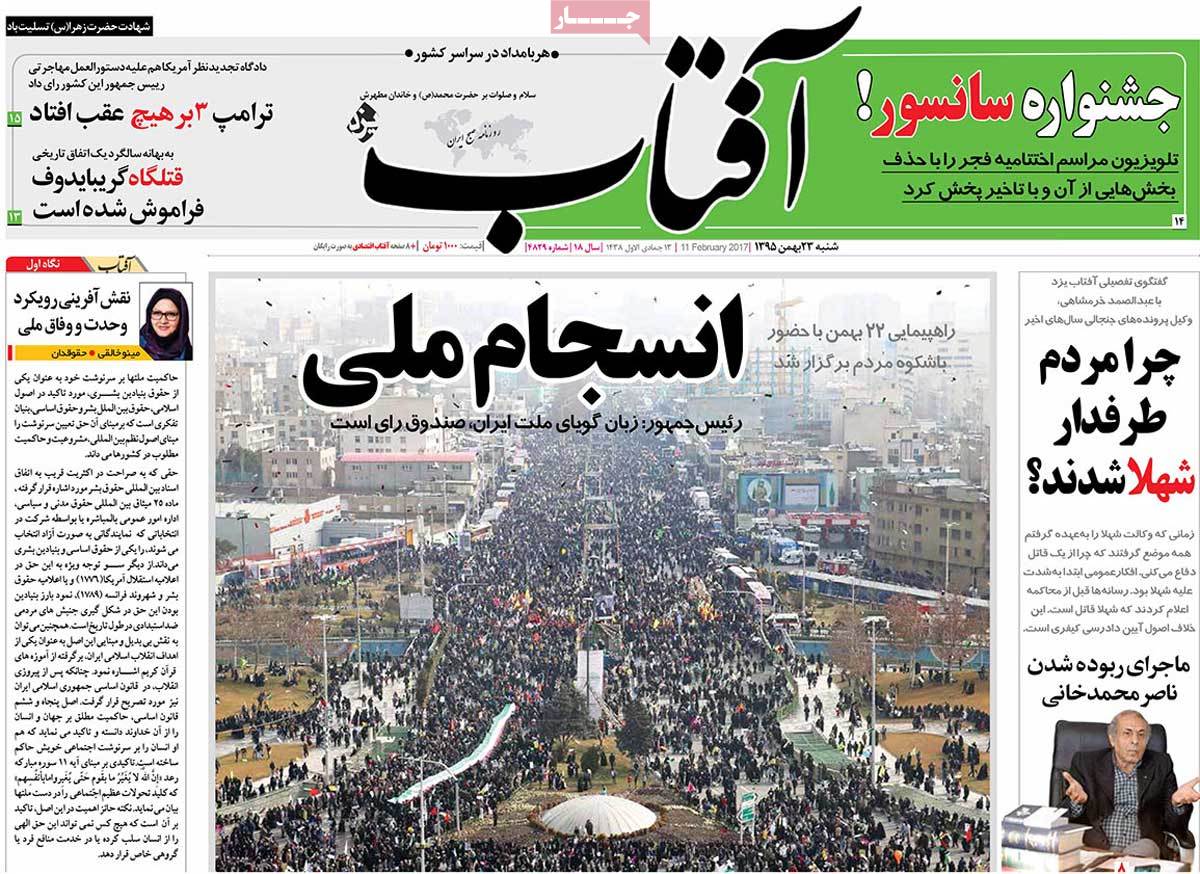
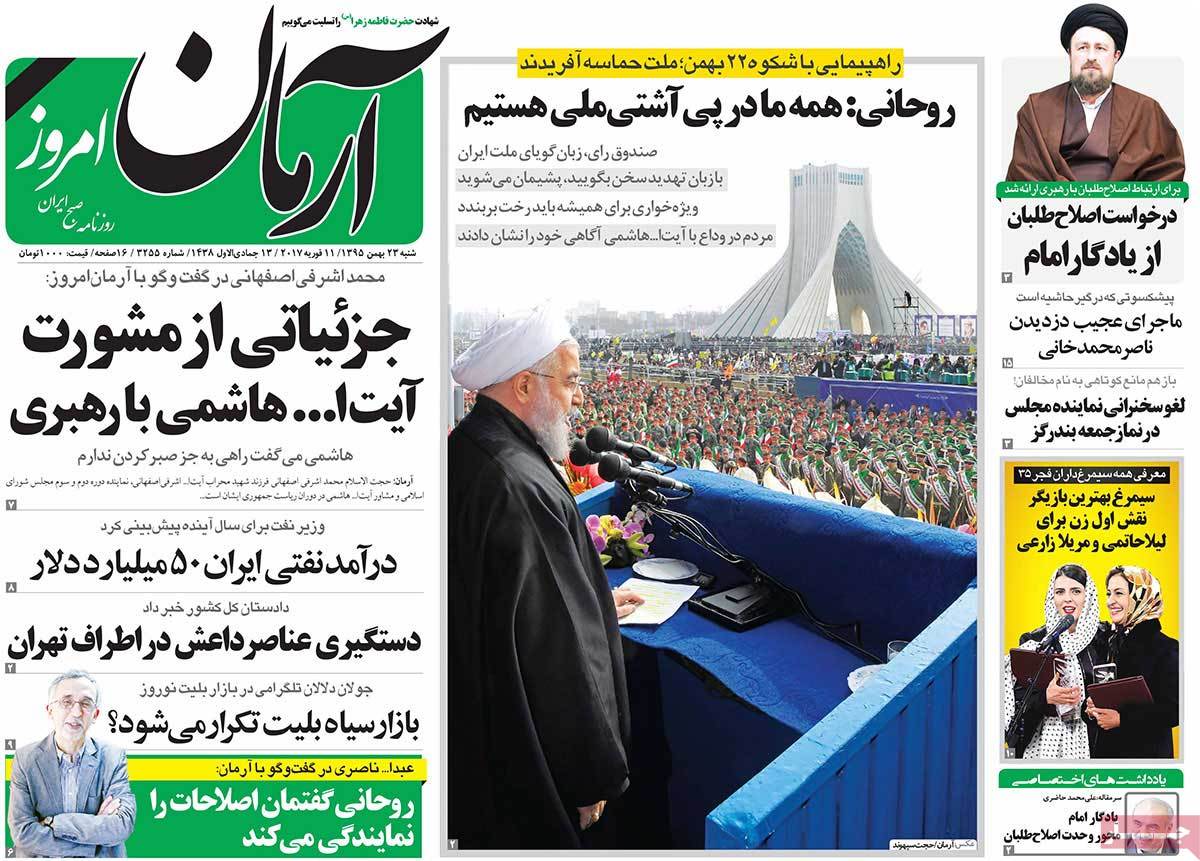
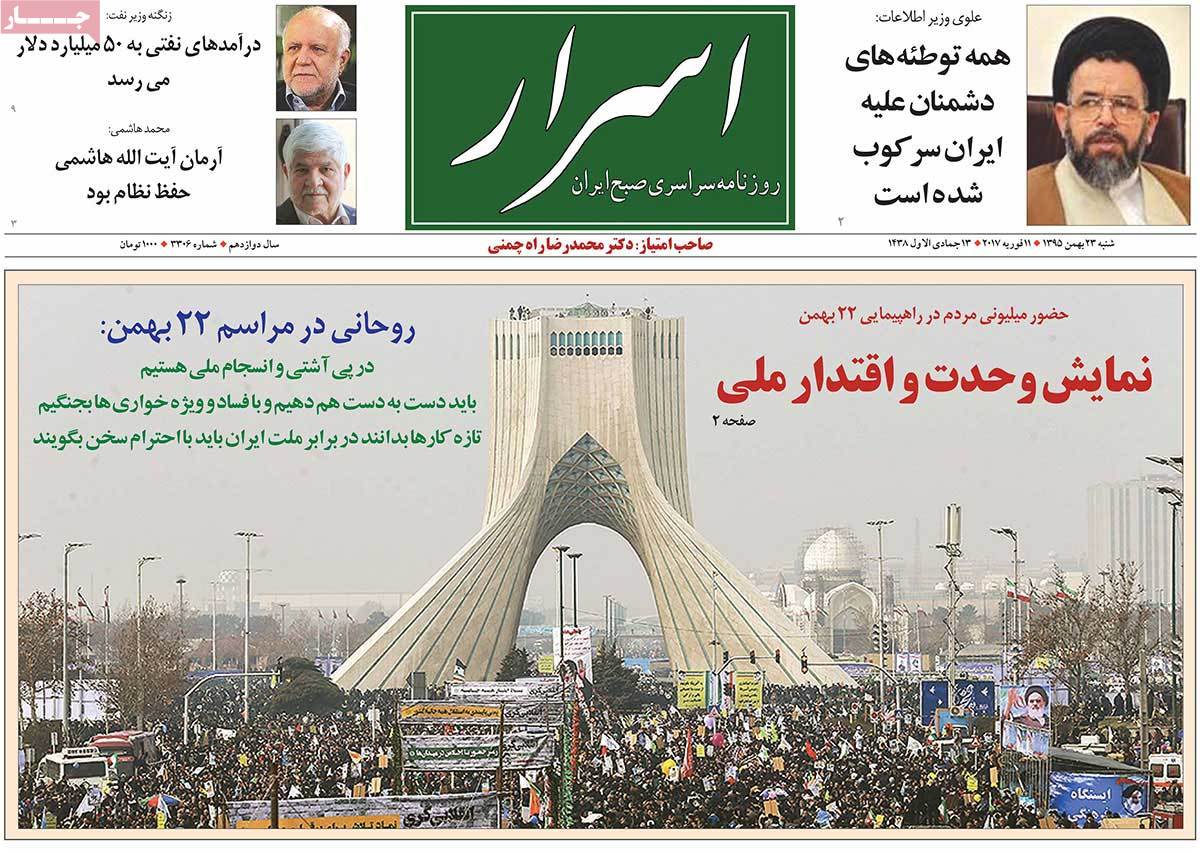
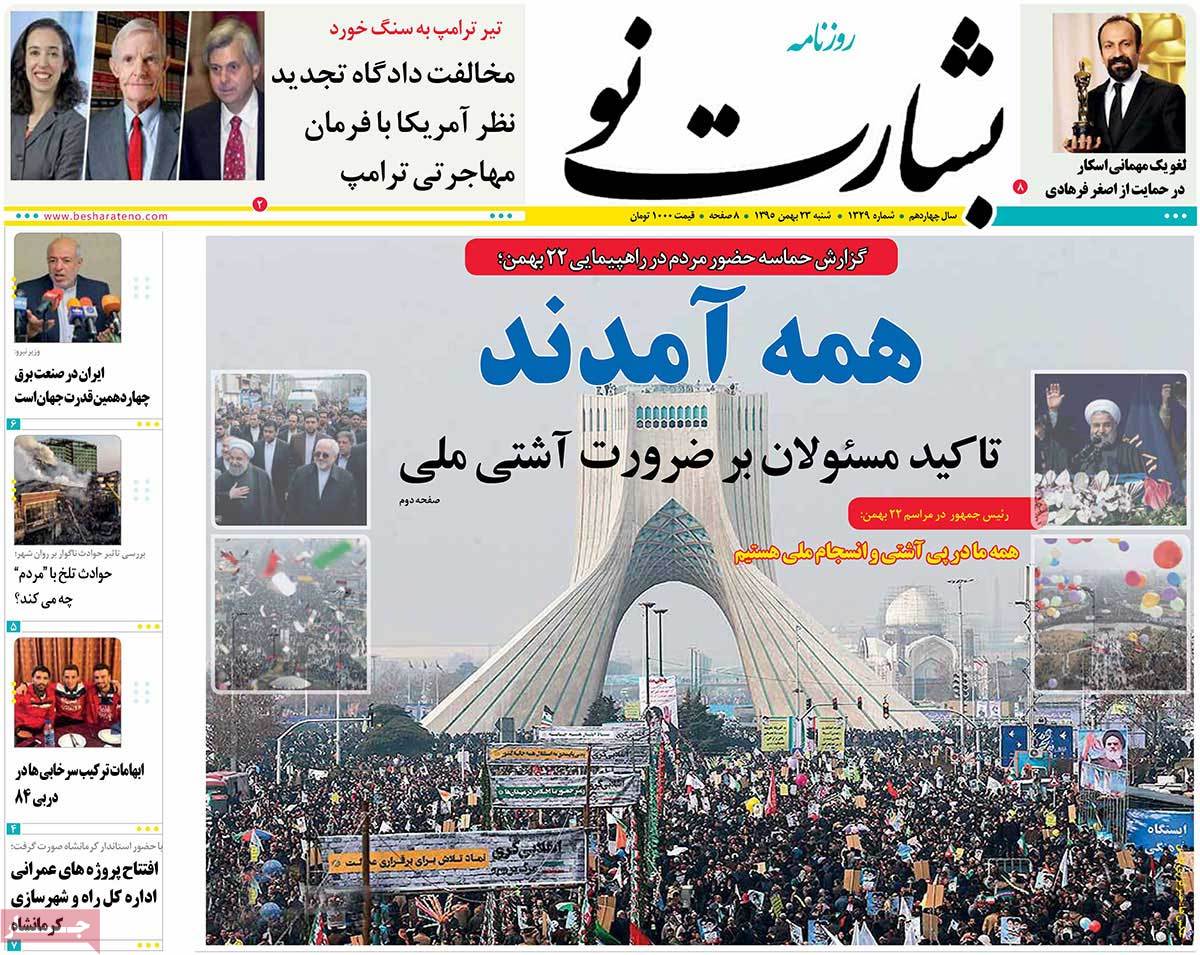
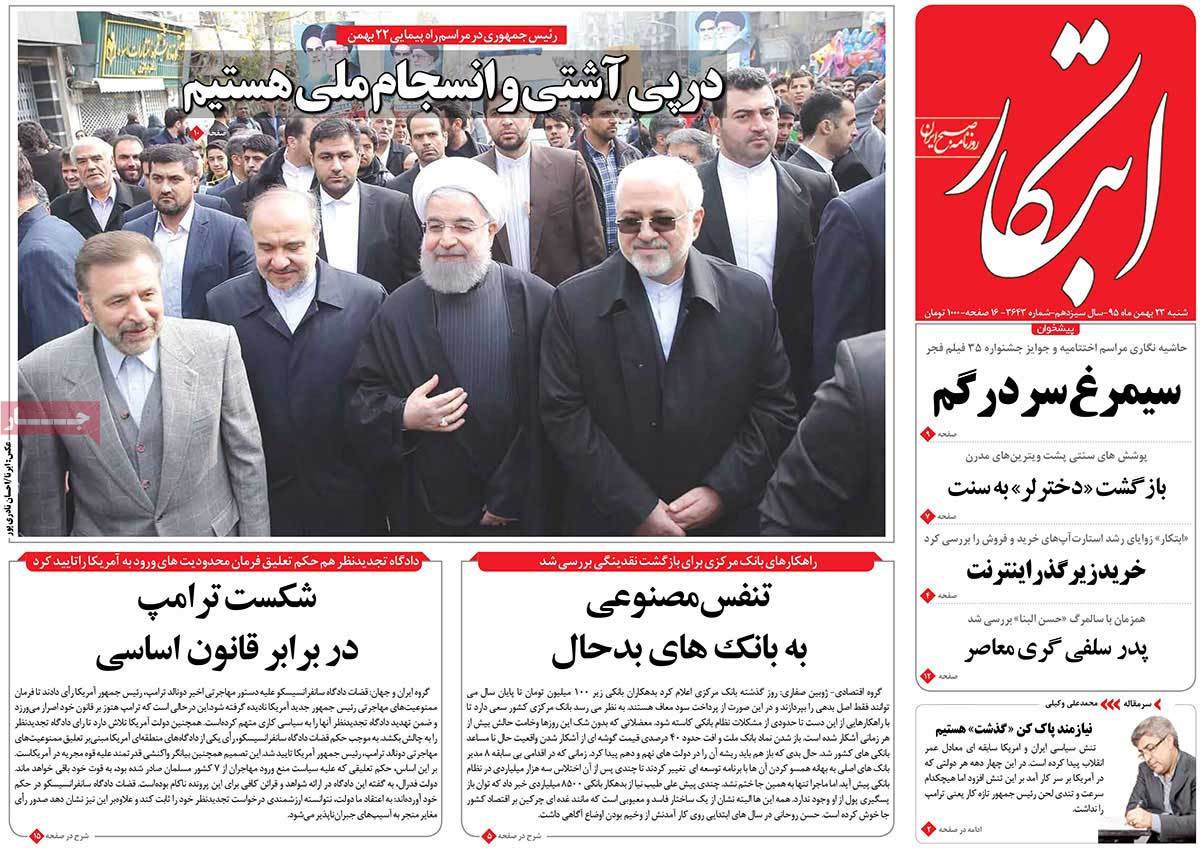
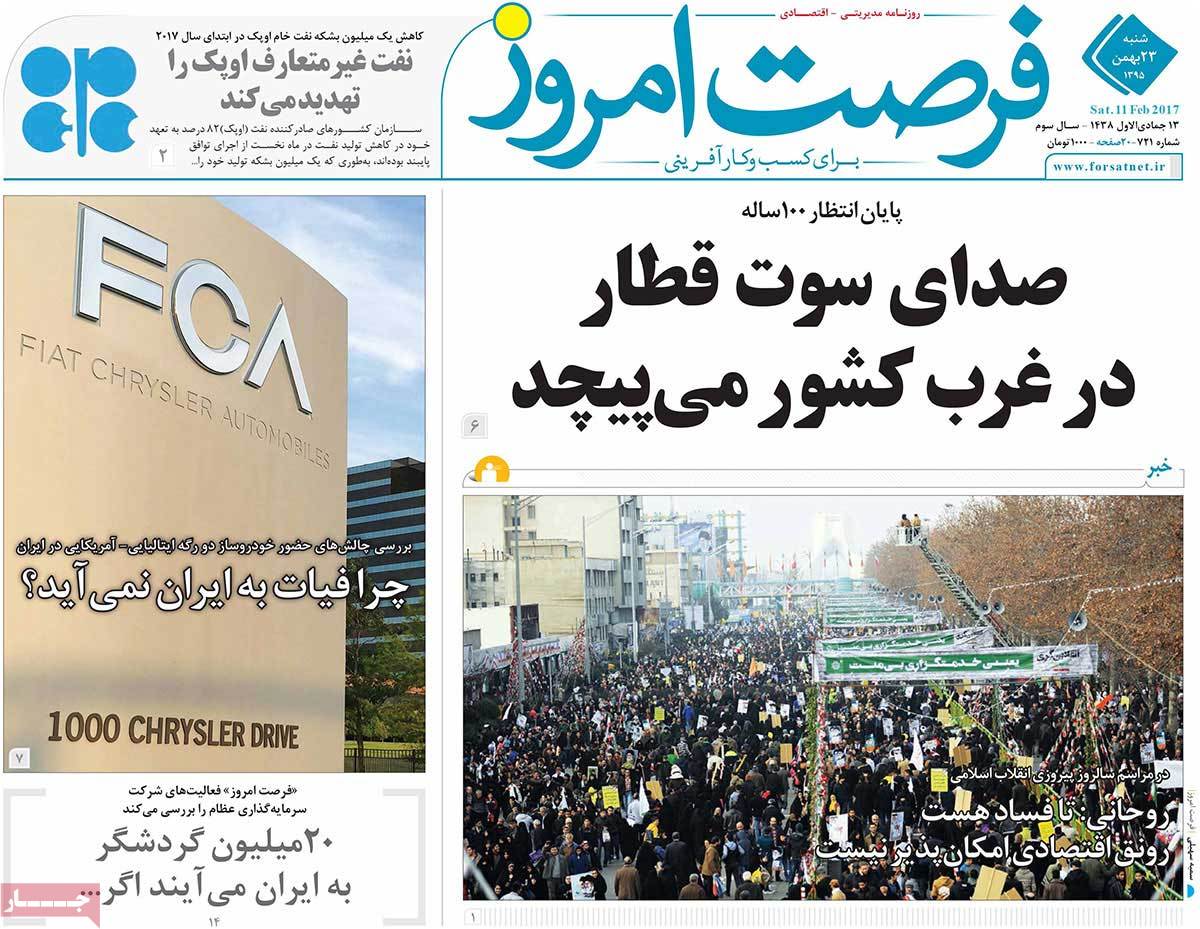
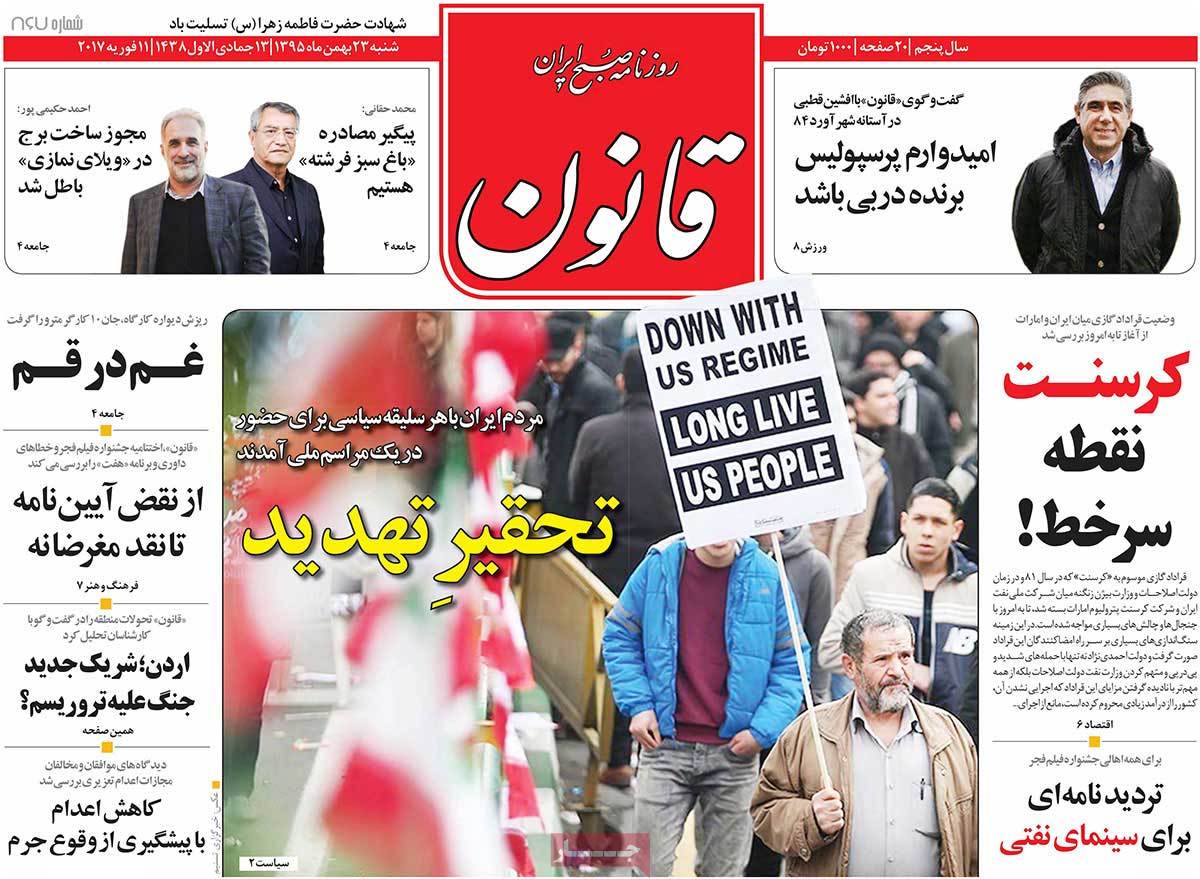
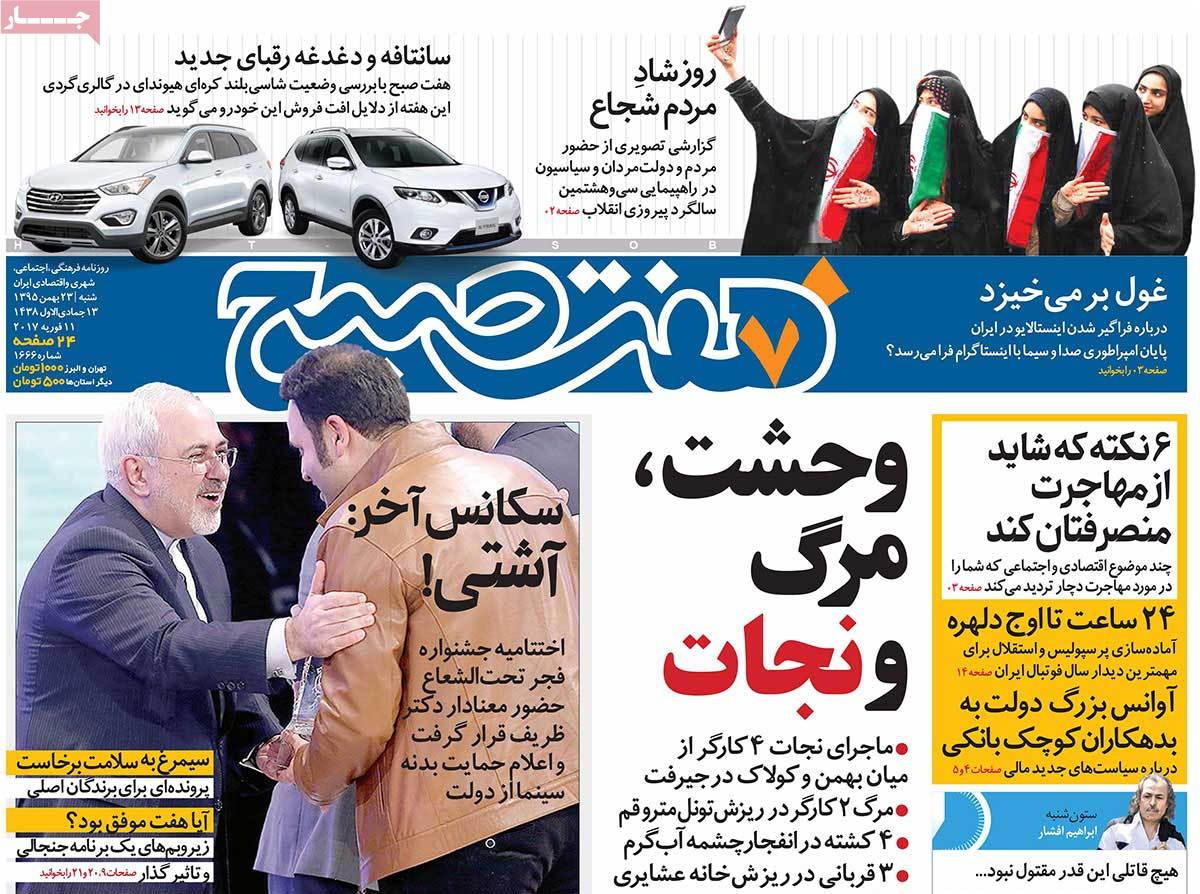
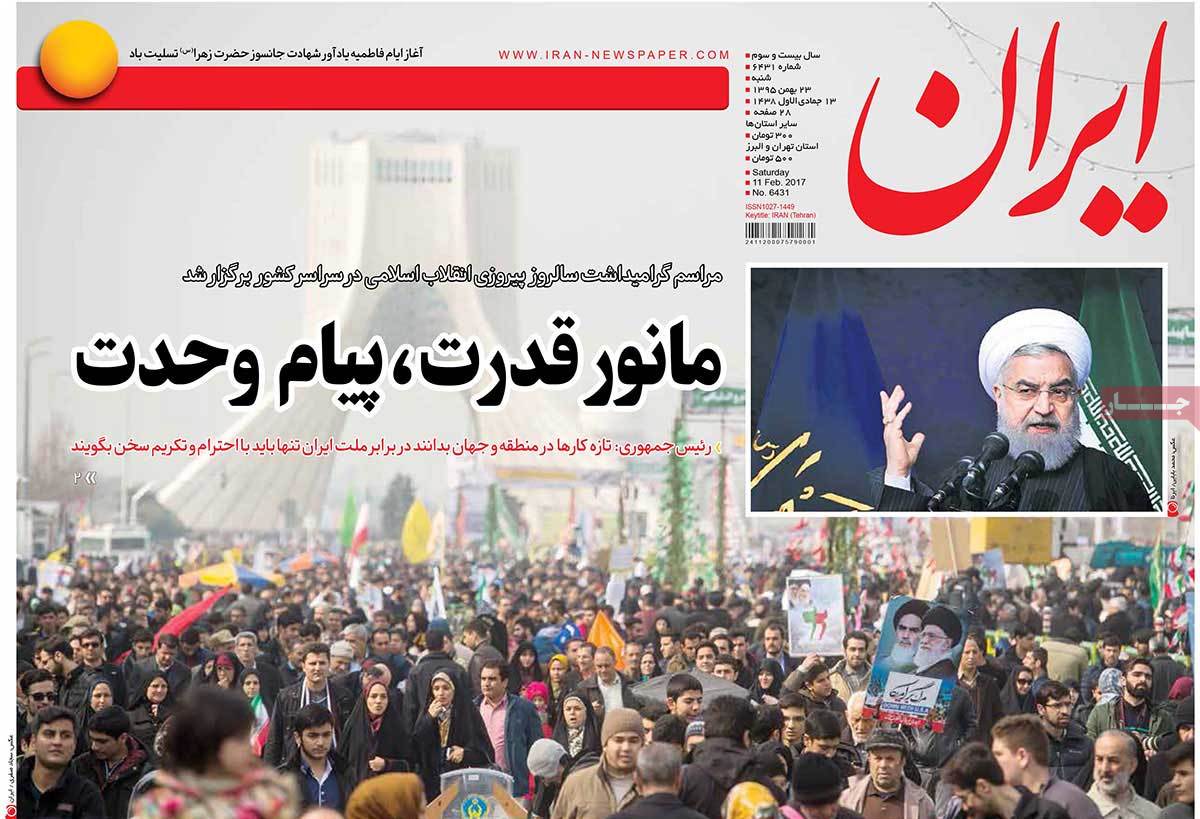
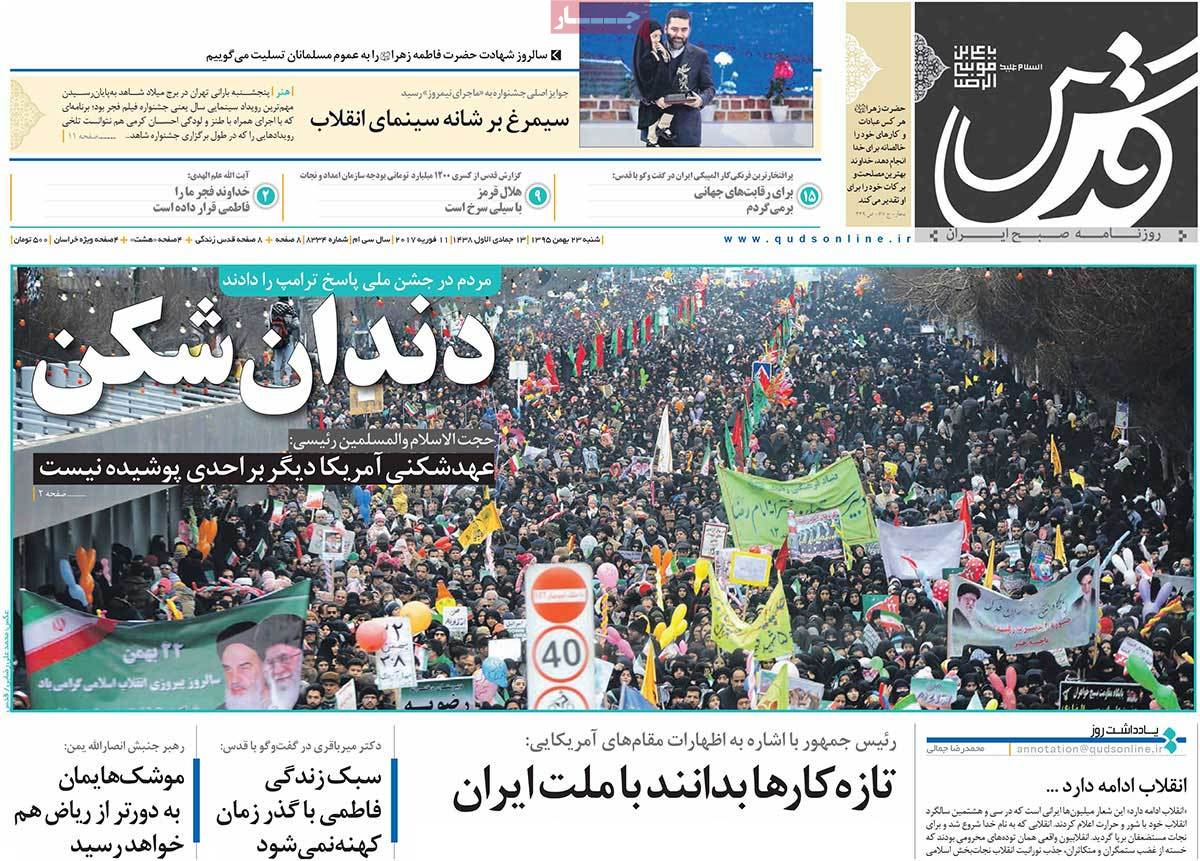
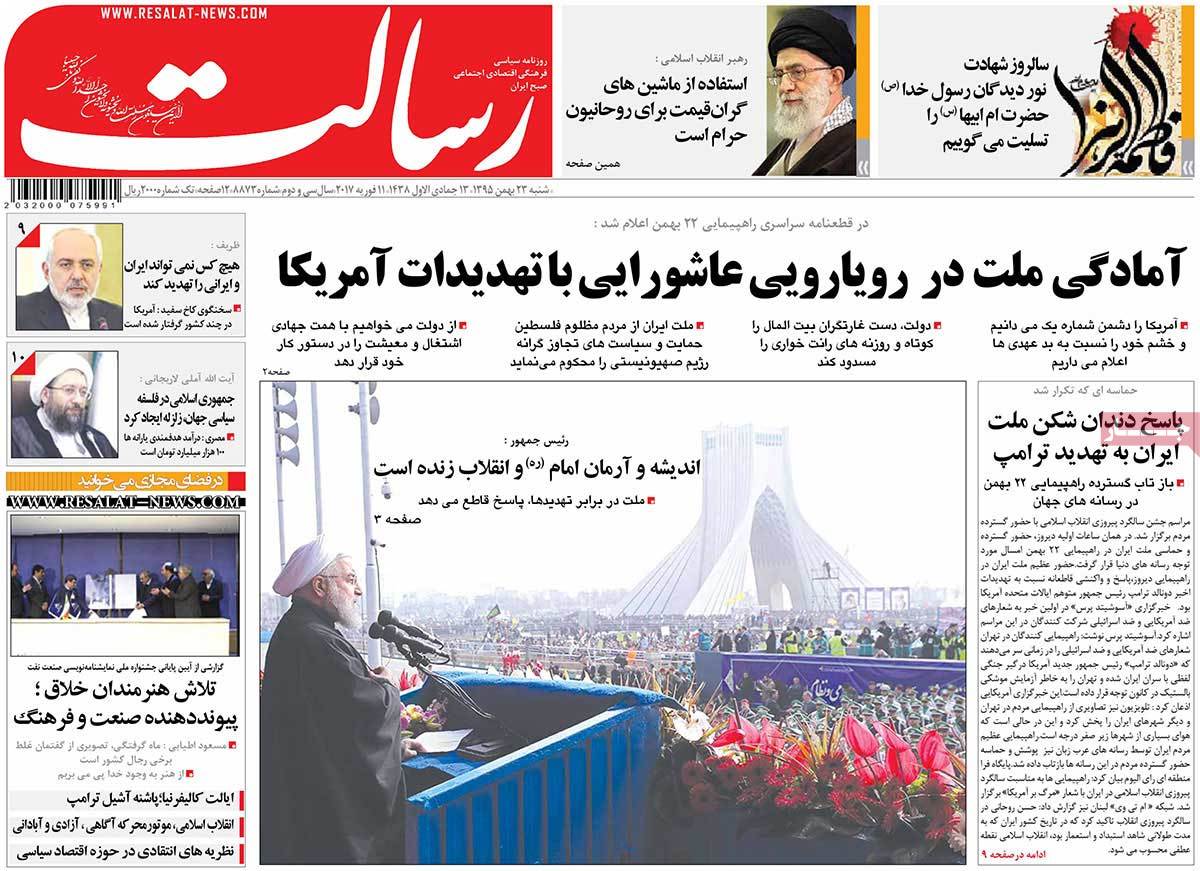
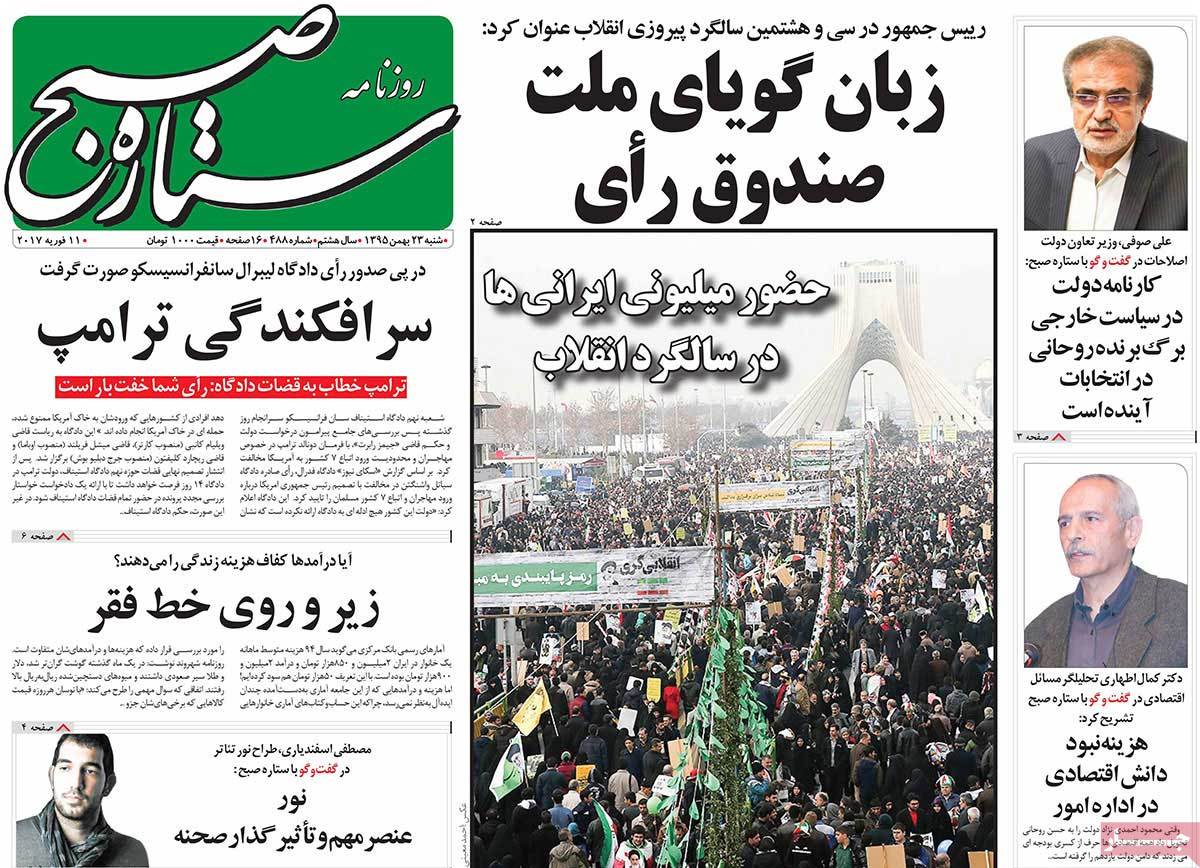
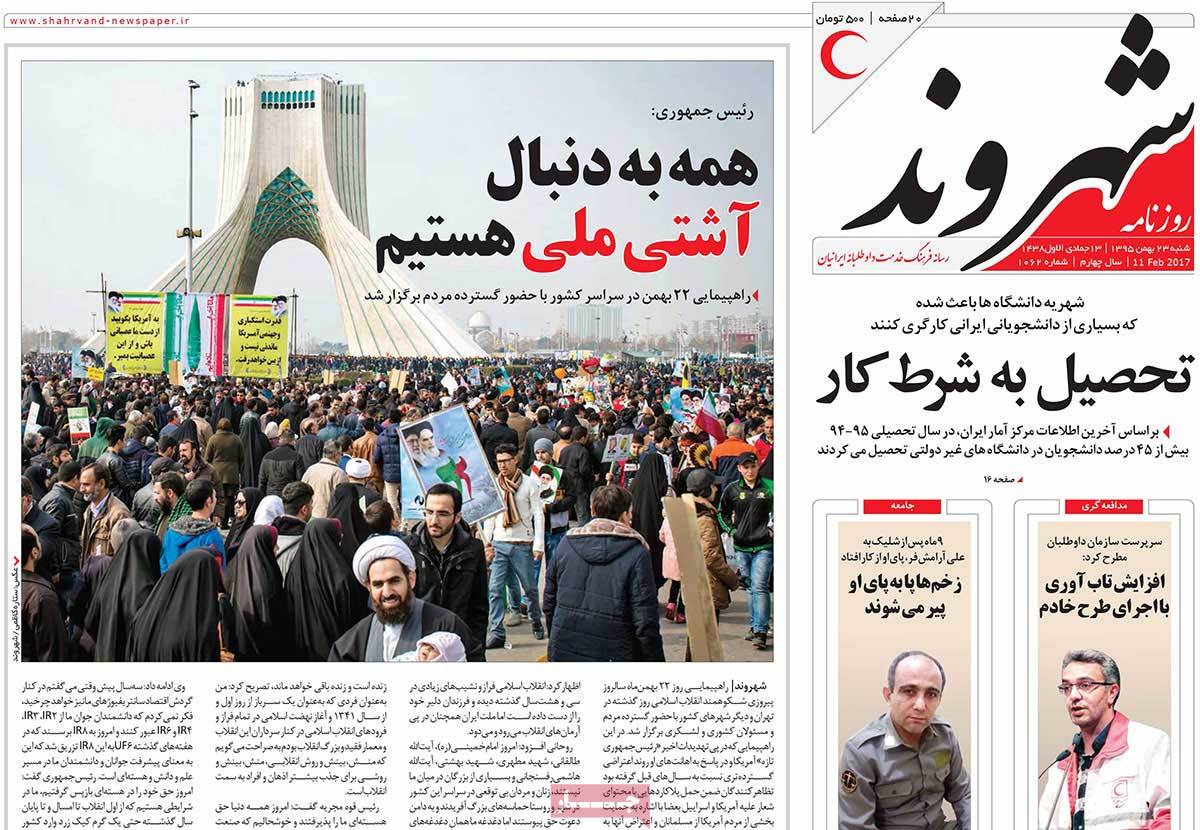
A Look at Iranian Newspaper Front Pages on January 28

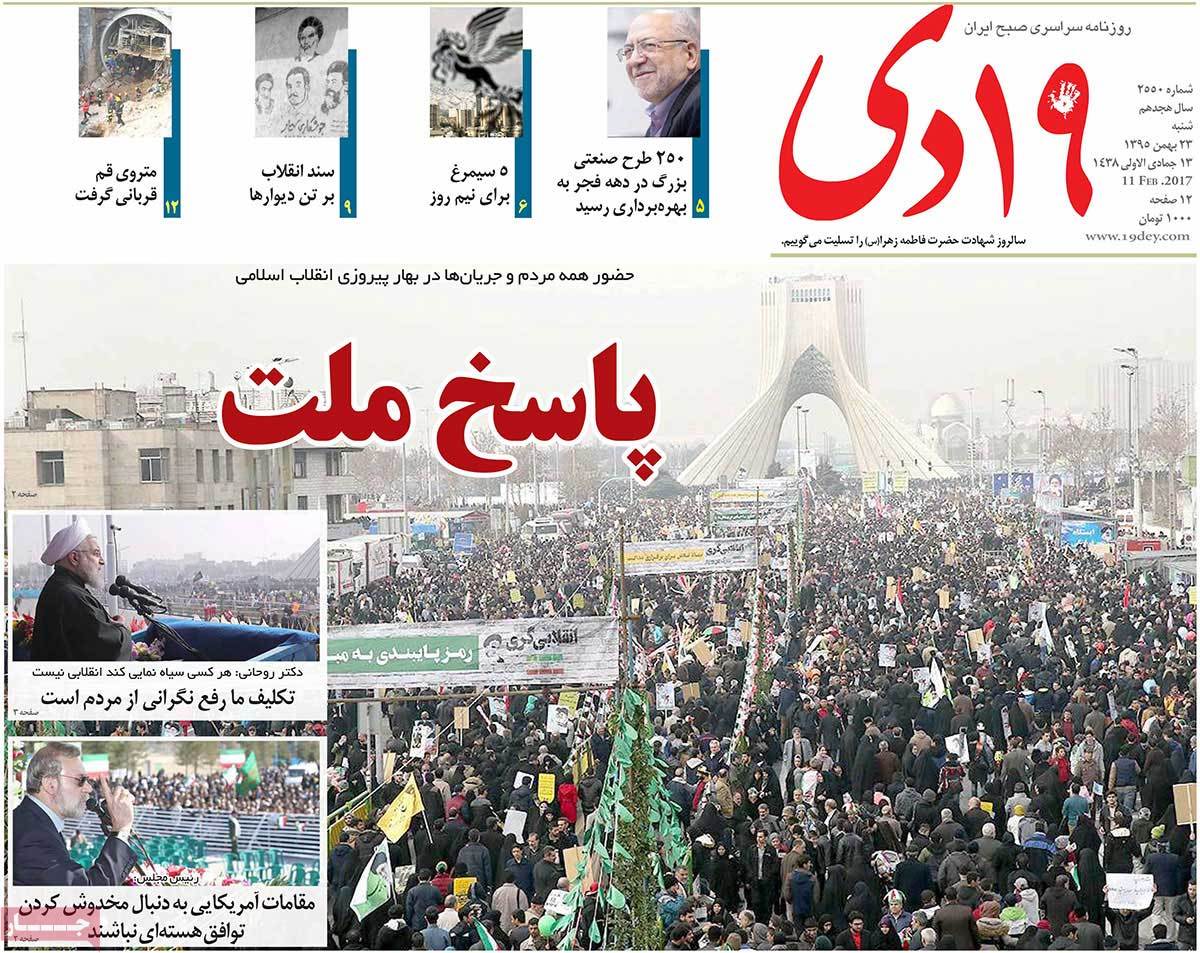
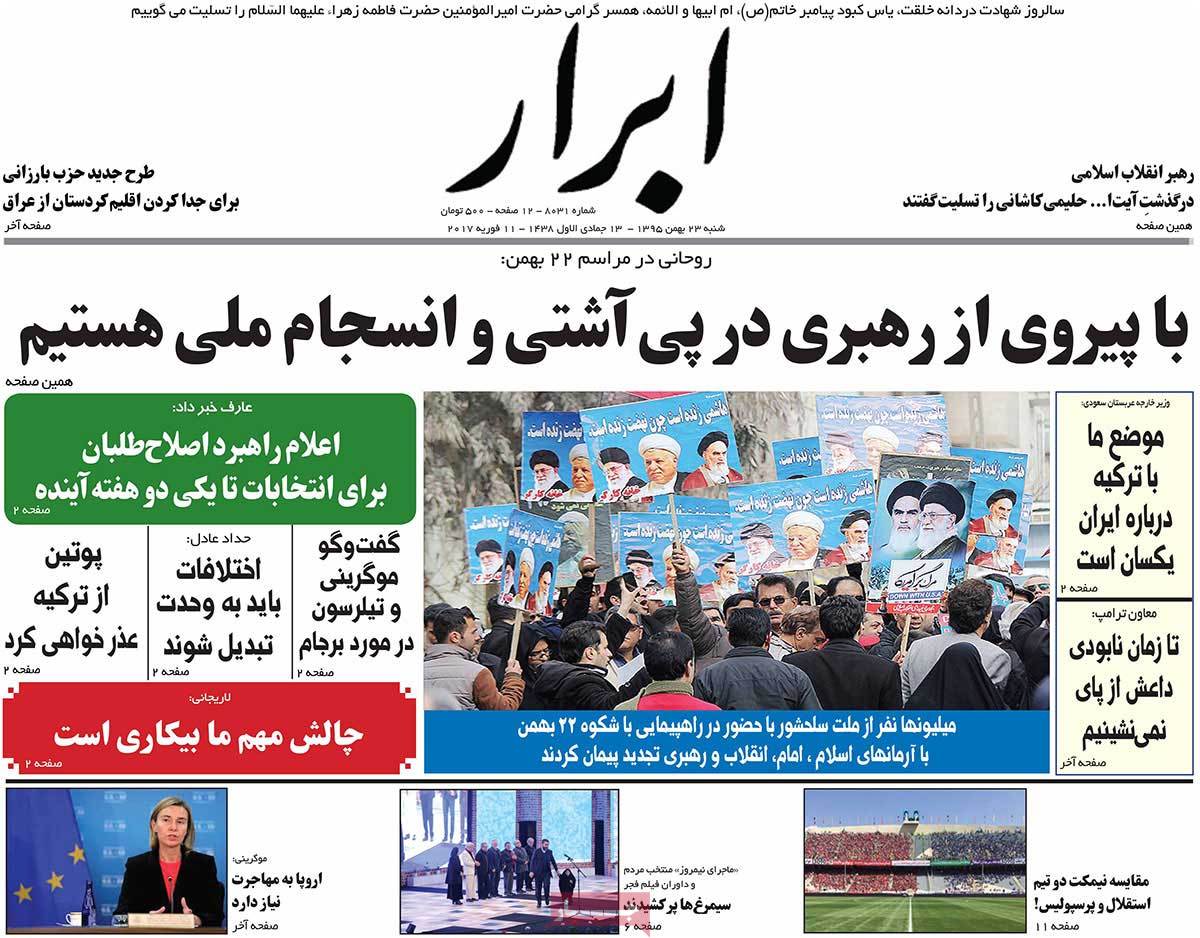
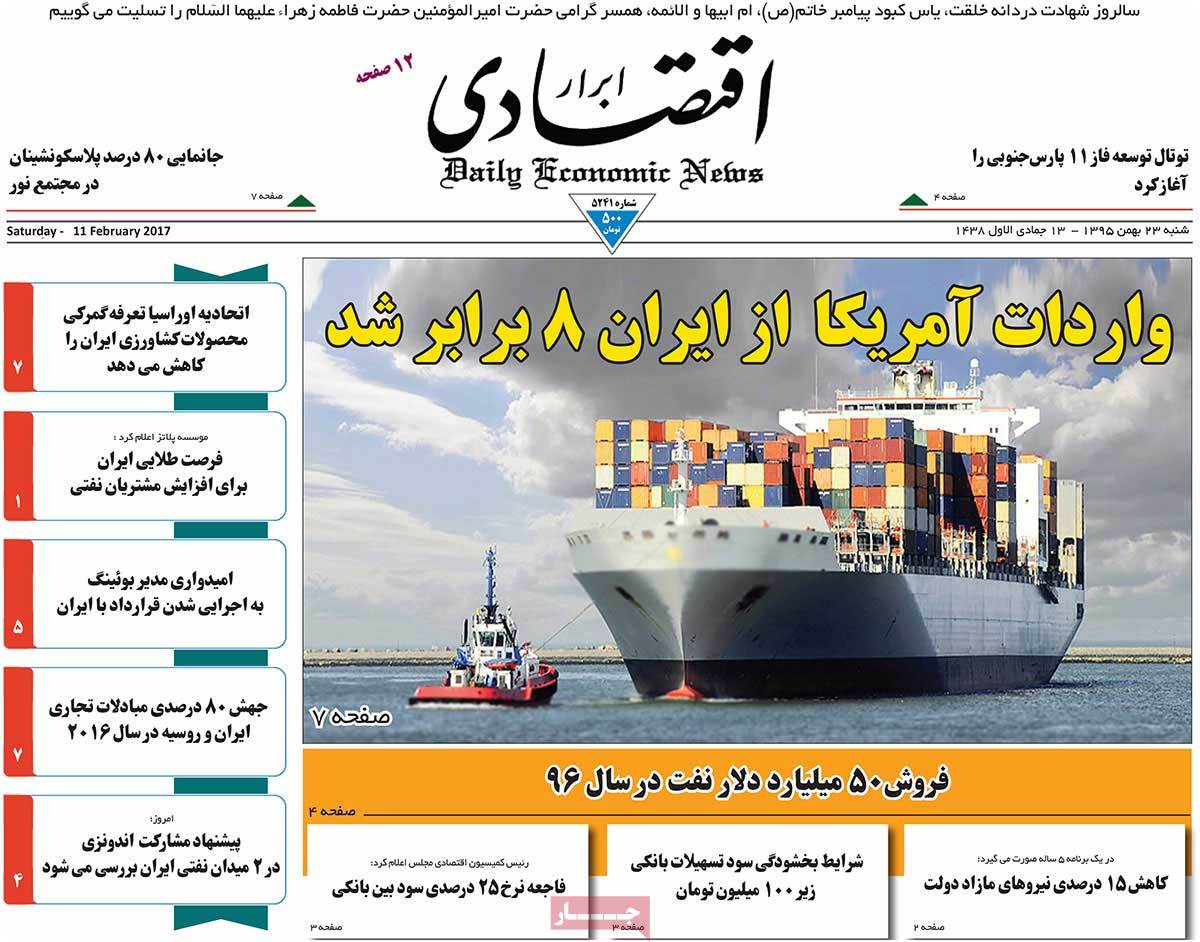
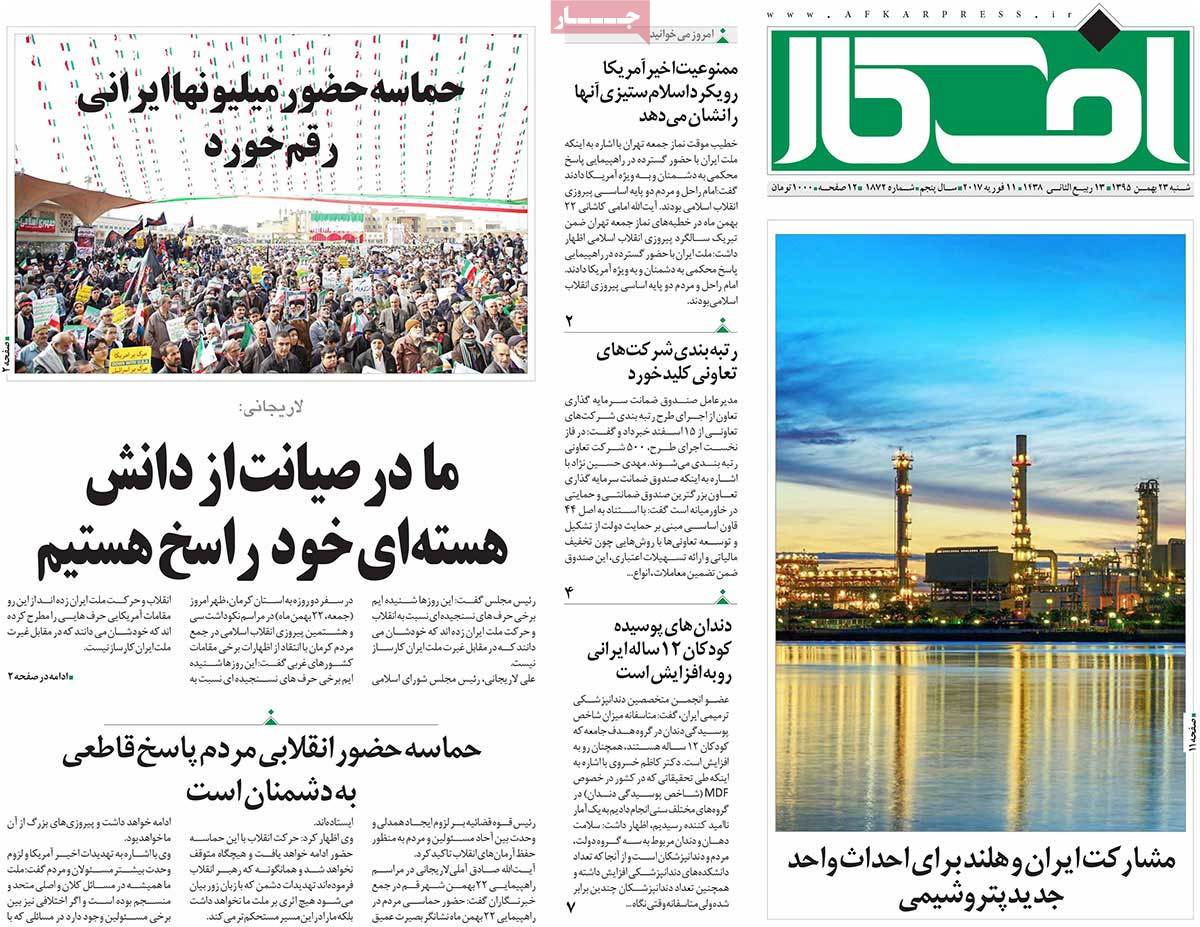
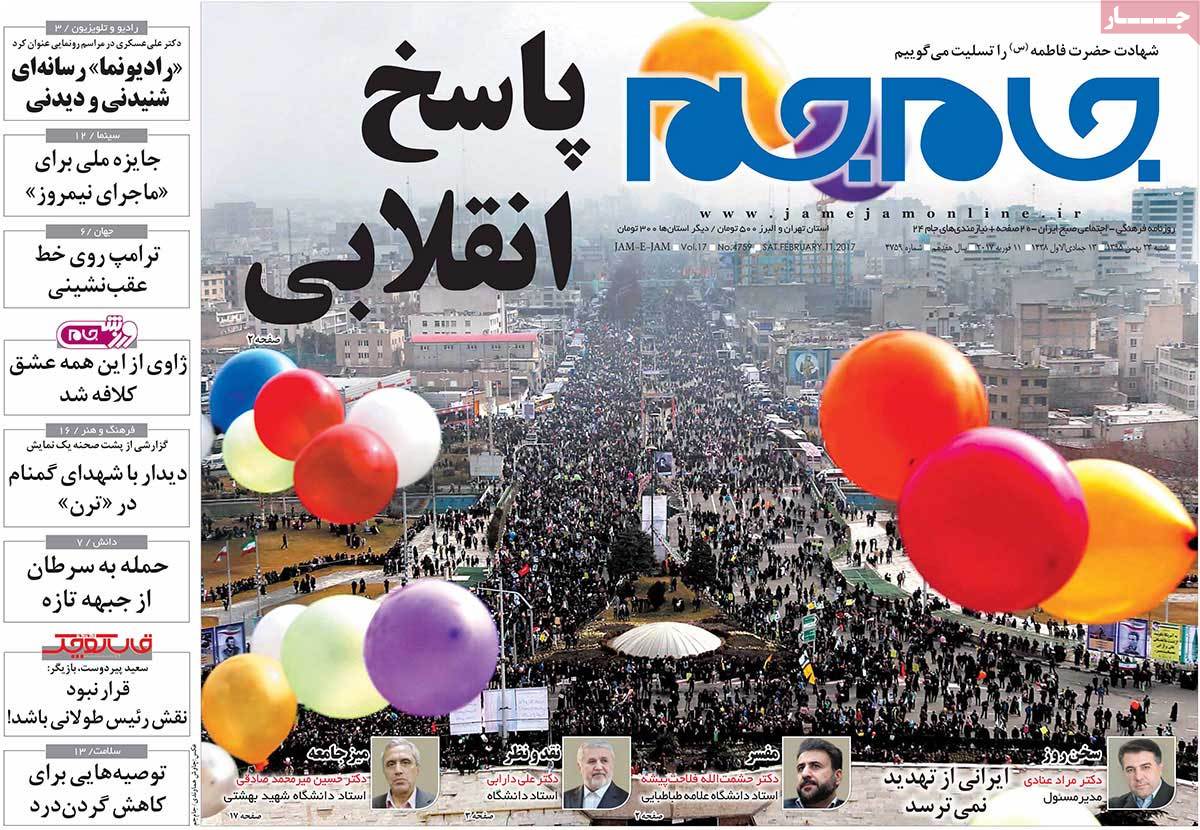
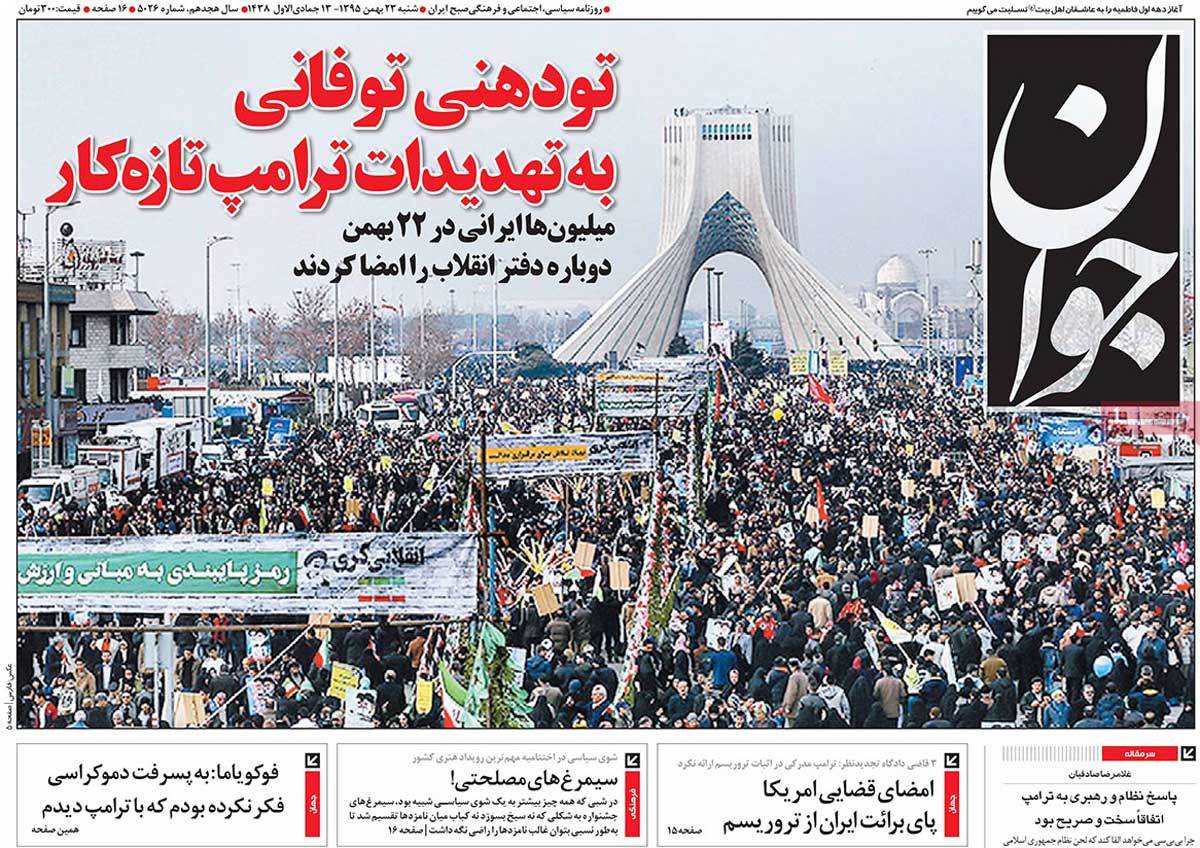
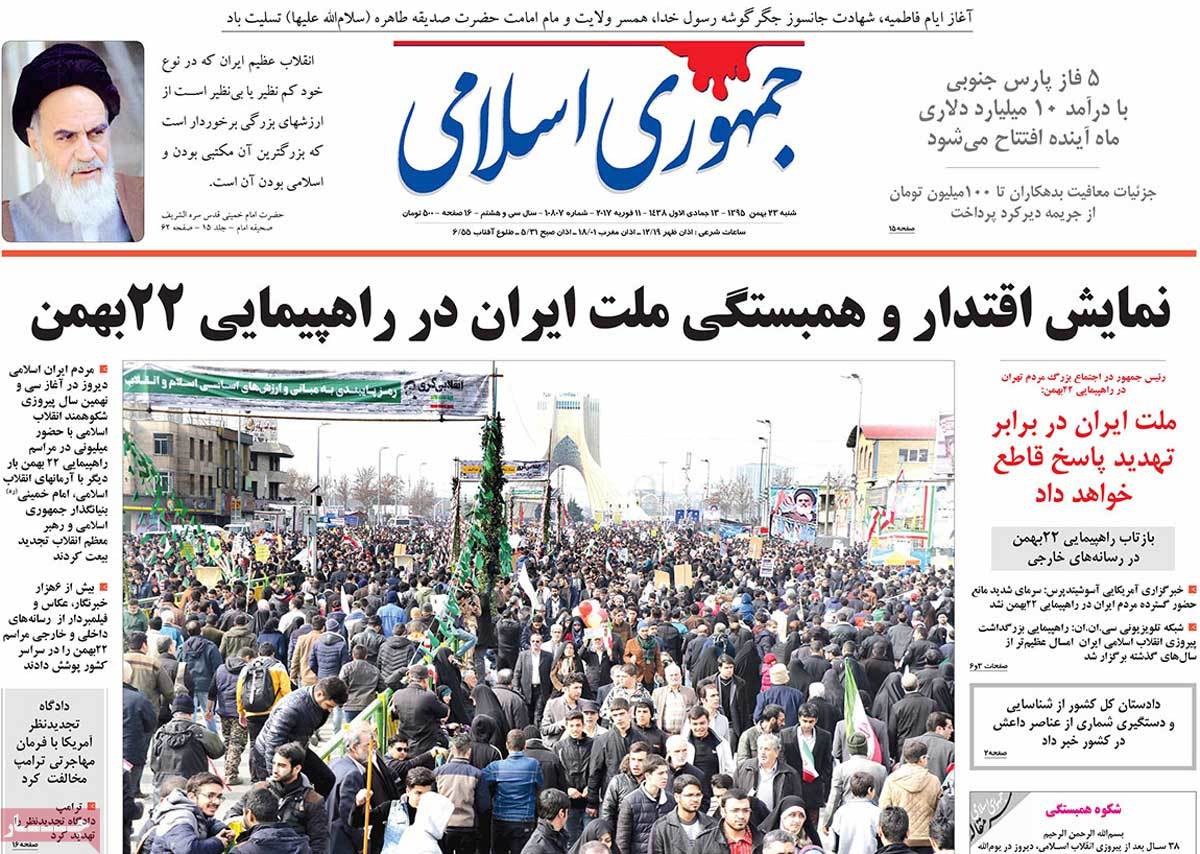
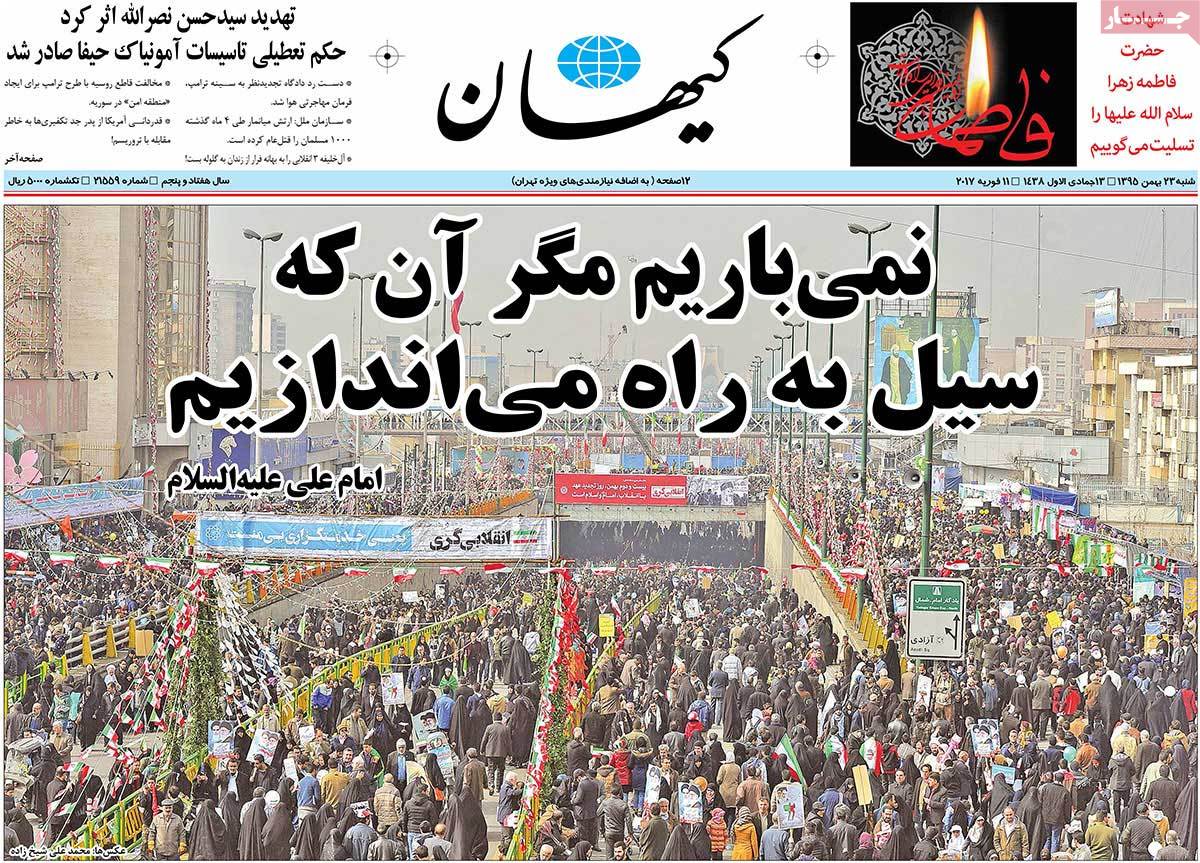
A Look at Iranian Newspaper Front Pages on November 19

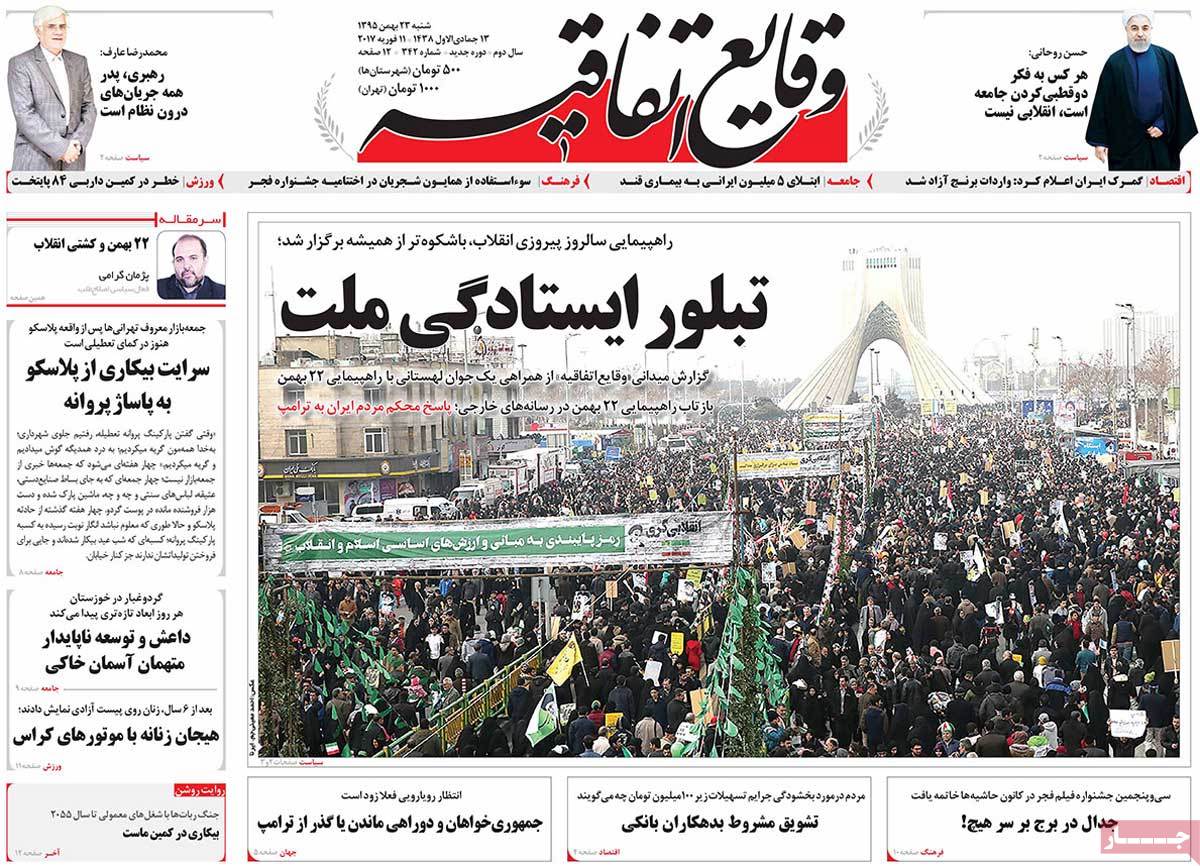
Newspapers today covered the end of 9-day operation to remove the debris remained after the tragic collapse of Plasco Building in central Tehran.

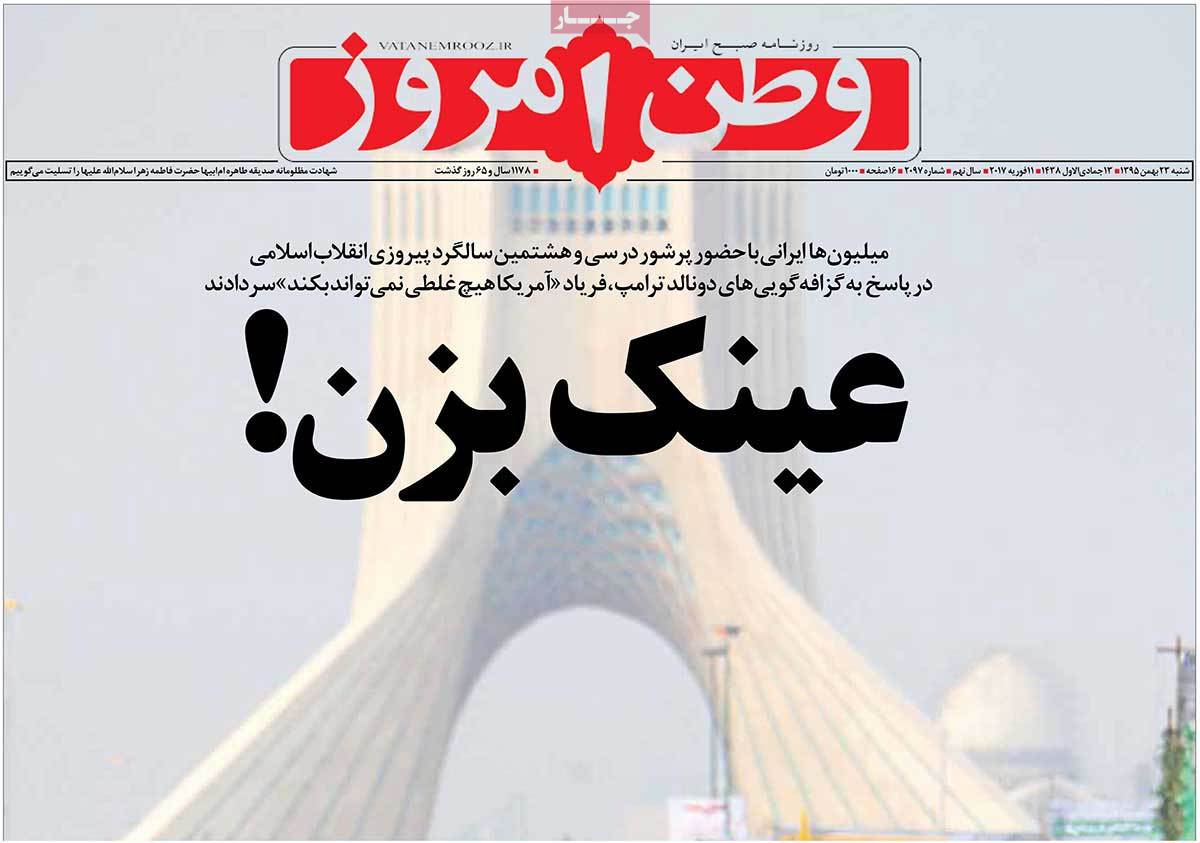
The executive order signed by US President Donald Trump to ban citizens of 7 countries including Iran from entering the US also received great coverage, with several newspapers focusing on the move by Taraneh Alidousti, the Iranian actress, to boycott the upcoming Academy Awards ceremony in protest at Trump’s ban.

The flood in Sistan and Baluchestan province in southeastern Iran and the dust pollution in Khuzestan province in southwestern Iran were among other top stories today.

The above issues, as well as many more, are highlighted in the following headlines:


19 Dey:

1- American Interest Refers to Iran as World’s 7th Big Power

2- Increased Exports after Removal of Sanctions

A Look at Iranian Newspaper Front Pages on January 28


Abrar:

1- Netanyahu: Trump Understands Danger of Iran Nuclear Deal

2- British PM to US Republicans: Britain’s Priority Is to Prevent Iran’s Influence in Middle East

A Look at Iranian Newspaper Front Pages on January 28


Abrar-e Eqtesadi:

1- Indonesia Joins Customers of Iran’s Oil

2- The $150 Million Ahmadinejad Gifted to Tajikistan

3- Turkmenistan Ready for Gas Talks with Iran

A Look at Iranian Newspaper Front Pages on January 28


Afkar:

1- Nuclear Official: Iran to Become World’s Fourth Producer of Stable Isotopes

2- Amano Urges All Sides’ Commitment to JCPOA

A Look at Iranian Newspaper Front Pages on January 28


Aftab-e Yazd:

1- Former Culture Minister Jannati: Opponents of Hashemi Rafsanjani Are Now Embarrassed; His Opponents’ Repentance Cannot Be Accepted

2- Brutal Punishment of 6 Students in Iran’s Qaen

3- 20-Day Smile of Isfahan: Return of Water to Zayandehroud River

A Look at Iranian Newspaper Front Pages on January 28


Arman-e Emrooz:

1- 200-Hour Debris Removal Ends in Plasco Hell

2- Entry Denied in Trump’s America

3- Details of Ayatollah Rafsanjani’s Death

A Look at Iranian Newspaper Front Pages on January 28


Asrar:

1- JCPOA: The Point Where Iran’s Destiny Become Different from Venezuela’s

A Look at Iranian Newspaper Front Pages on January 28


Bahar:

1- Flood of Disaster: River Flooding in East, Dust Pollution in South

A Look at Iranian Newspaper Front Pages on January 28


Ebtekar:

1- This Homme Fatale: Reactions to Trump’s New Order

2- Iranian Actress Taraneh Alidousti Will Boycott Academy Awards Ceremony in Reaction to Trump’s Visa Ban

2- Iran Gripped by Water [flood in southeast], Wind [in central and south-centre], and Soil [dust pollution in southwest]: While Sistan and Baluchestan Is Suffering from Flood, Khuzestan Province Grapples with Dust Storm

A Look at Iranian Newspaper Front Pages on January 28


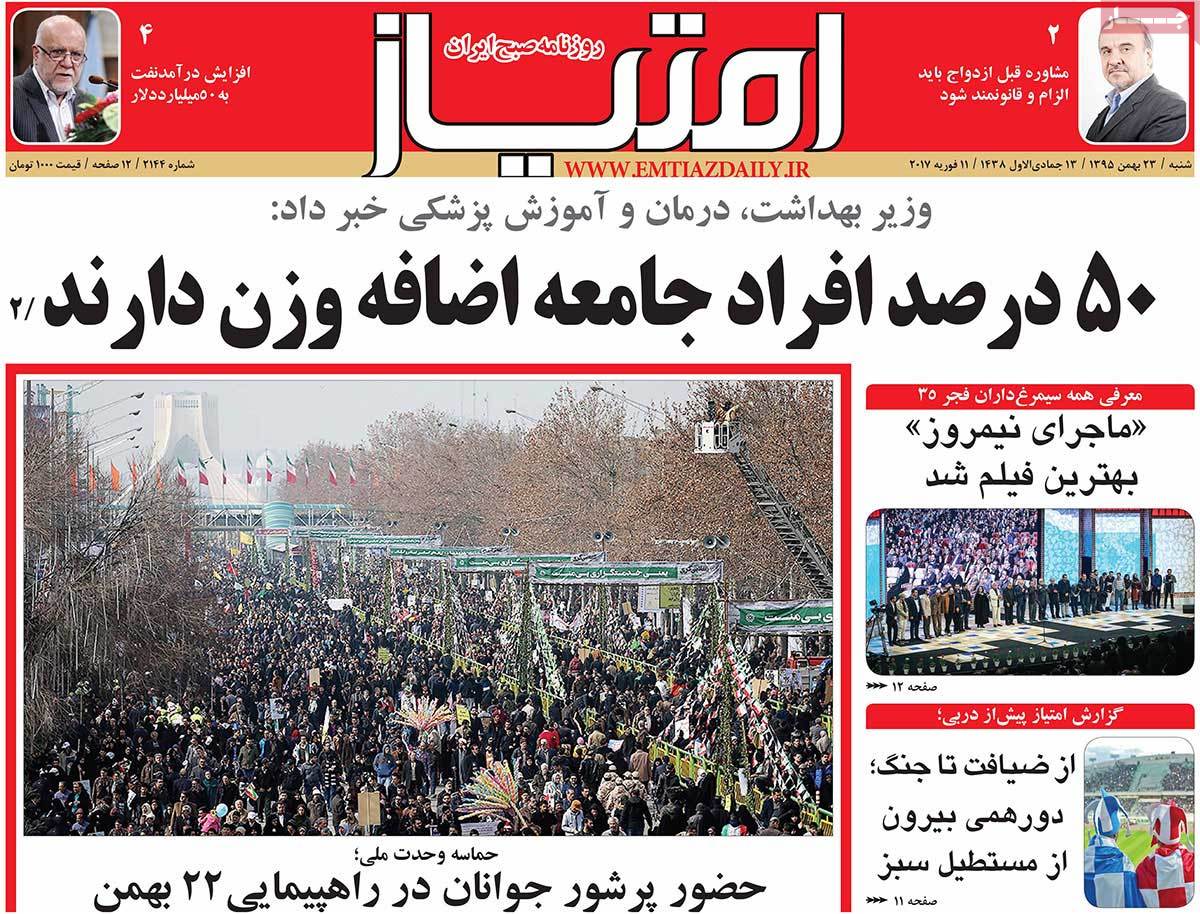
Emtiaz:

1- Dust Pollution in Khuzestan, Snow and Rain in Iran

A Look at Iranian Newspaper Front Pages on January 28


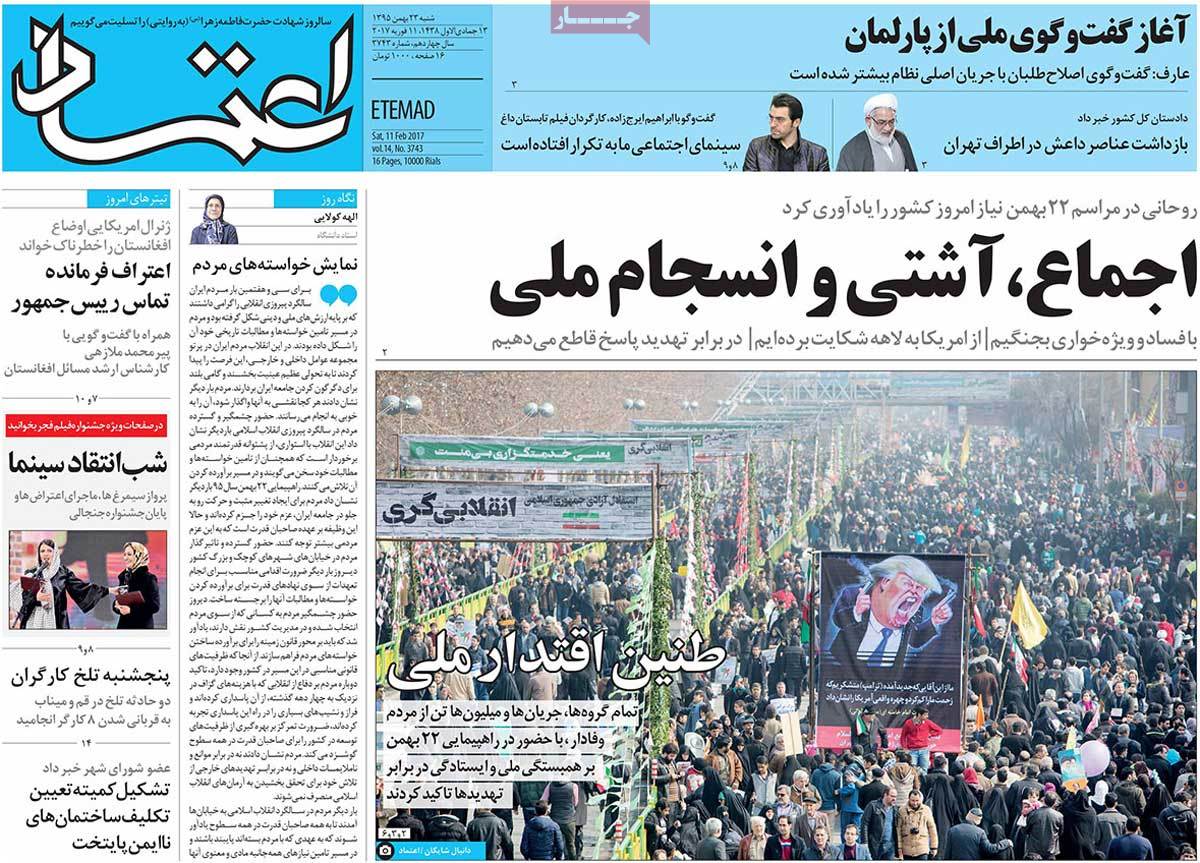
Etemad:

1- Trump’s Brouhaha: Plan to Ban Entry of 7 Countries’ Citizens to US; Mexico’s Reaction to Wall Construction in US Borders

A Look at Iranian Newspaper Front Pages on January 28


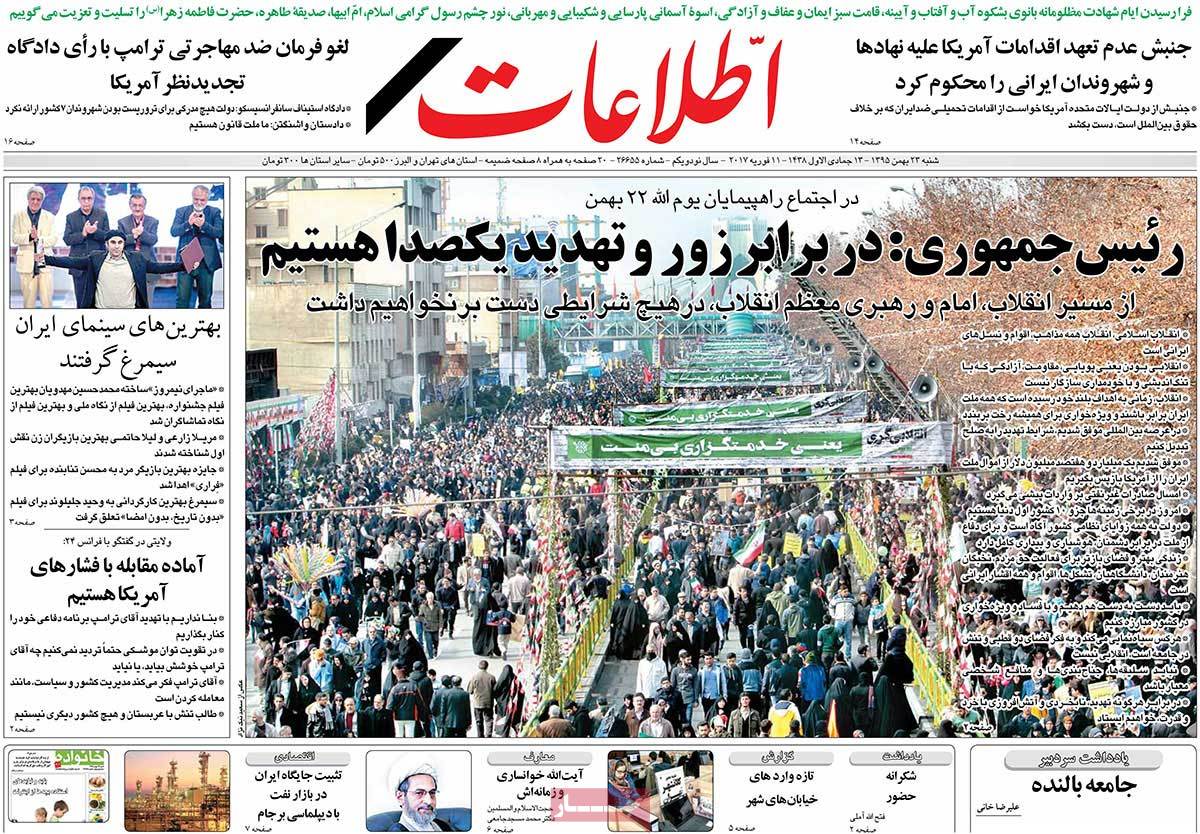
Ettela’at:

1- Larijani: We Should Remove Barriers to Cultural Productions

2- Last Debris Removed from Plasco Tragedy

3- Temporary Settlements for 5,500 Flood-Hit People in Sistan and Baluchestan Province

4- Wave of Resignations and Protests by American Officials and People in Trump’s First Week

A Look at Iranian Newspaper Front Pages on January 28


Haft-e Sobh:

1- It’s Over: Plasco Tragedy, End of Debris Removal

A Look at Iranian Newspaper Front Pages on January 28


Iran:

1- Debris Gone, Sorrow Remains: 16 Firefighters and 4 Citizens Killed, 235 Wounded in Plasco Incident

2- Iran Breaks Records in Exporting Crude Oil to Europe

3- Berlin and London Warn Trump about JCPOA

A Look at Iranian Newspaper Front Pages on January 28


Jame Jam:

1- The Old Fox Howling: British PM Pursues Iranophobia Project This Time in US

A Look at Iranian Newspaper Front Pages on January 28


Javan:

1- British Bridge between Eastern Europe and Western Asia: May Says We’ll Interact with Russia in Eastern Europe to Control ‘Crescent of Iran’s Influence’ in Eastern Mediterranean Region

2- Trump on Line of Countering Iran

3- UN: Nationwide Drought to Damage 14 Millions of Yemenis

A Look at Iranian Newspaper Front Pages on January 28


Jomhouri Eslami:

1- Crisis of Governmental Disobedience against Trump

2- US Declines to the Category of World’s Faulty Democracies

A Look at Iranian Newspaper Front Pages on January 28


Ka’enat:

1- Good Trump and Bad Trump: A Look at Remarks Made by Senior Cleric Movahedi Kermani and Deputy Culture Minister Salehi in Foreign Policy

A Look at Iranian Newspaper Front Pages on January 28


Kayhan:

1- UN: One Child Dies Every 10 Minutes in Yemen

2- Obama Is Gone, but His Achievements Have Remained: Syrian Kid Freezes to Death near Turkish Border beside Fences

3- Senior Officials at US Department of State Resign in Protest at Trump

4- JCPOA New Means of Putting Iran under Pressure: British PM Says We Should Maintain Nuclear Deal While Pushing Iran Back in Middle East

A Look at Iranian Newspaper Front Pages on January 28


Payam-e Zaman:

1- End of Debris Removal Operation after 9 Days of Firefighters’ Efforts

A Look at Iranian Newspaper Front Pages on January 28


Rooyesh-e Mellat:

1- Tehran Friday Prayers Leader: Al Saud’s Foundation Shaking with Yemenis’ Cries

A Look at Iranian Newspaper Front Pages on January 28


Saheb Qalam:

1- 35 Iranian Oil Tankers Depart for Europe

A Look at Iranian Newspaper Front Pages on January 28


Sepid:

1- Fear of Political Lobbies in Appointing New Head: Challenge of Choosing Next WHO Chief with Trump!

2- Yesterday, Air Pollution in Southwestern Iranian City of Ahvaz Was 66 Times Higher than Standard

A Look at Iranian Newspaper Front Pages on January 28


Setareh Sobh:

1- World Order in Danger: Trump Introduces His Policies

2- Iran’s Nuclear Chief Relates Untold Stories about Nuclear Case and Attack on British Embassy; Int’l Community and Public Opinion Opposed to War and Military Invasion

A Look at Iranian Newspaper Front Pages on January 28


Shahrvand:

1- Khuzestan Surrounded by Dust: Official Says Level of Dust Pollution Was Increased from Below 100 Micrograms to over 10,000 Micrograms in 2 Hours

A Look at Iranian Newspaper Front Pages on January 28


Shargh:

1- Pieces of Advice for Trump in Tehran’s Friday Prayers

2- Iranian Actress Taraneh Alidousti’s Move to Boycott Academy Awards Widely Covered by World Media

3- Eyes that Didn’t Sleep in Grave [Editorial about Ayatollah Rafsanjani’s Death, Its Impact on May presidental votes, and the dismissed claim raised by an IRGC general about an empty coffin on day of funeral]

A Look at Iranian Newspaper Front Pages on January 28


Vaghaye Ettefaghieh:

1- Taraneh Alidousti Shines More than Ever in a Historic Frame: Iranian Actress’s Protest at Trump’s Visa Ban Leads to World Media Support for Her

A Look at Iranian Newspaper Front Pages on January 28

US President Signs Executive Order for ‘Extreme Vetting’ of Immigrants

trump

Titled “Protection of the Nation from Foreign Terrorist Entry into the United States,” the executive order would start to make good on Trump’s promise to tighten borders and halt certain refugees from entering the United States.

The order bars all persons from certain countries from entering the United States for 90 days and suspends the US Refugee Admissions Program for 120 days until it is reinstated “only for nationals of countries for whom” members of Trump’s Cabinet deem can be properly vetted.

The countries impacted are Iran, Iraq, Syria, Sudan, Libya, Yemen and Somalia, according to a White House official quoted by CNN.

I Won’t Exchange My Instrument for Entire France: Iranian Musician

Pahlevan Rasoul Bakhsh Zangshahi is a veteran musician from Sistan and Baluchestan province, south-eastern Iran, who was praised during the 32nd International Fajr Music Festival.

According to a Farsi report by ISNA, he has two Qeychaks – an ancient Iranian musical instrument commonly used in Balochi music of that region. He inherited one of these instruments from his paternal grandfather.

“I have been playing Qeychak since I was 14. My father taught me how to play it,” he said, adding he has played the instrument for 61 years.

“I travelled to France in 1995 to give a performance. They offered me some $30,000 for the instrument; I replied ‘I won’t sell it even if you offer me the entire France!’”

57425241He referred to his French students, and said, “I gave performances in France, Sweden, Belgium, Germany, Switzerland and Italy. The University of Paris awarded me an honorary doctorate. They even asked me to immigrate to France with my family,” he added.

“I didn’t accept, though, as nowhere replaces Iran for me. There are cultural differences between us and other nations.”

“Young people today don’t know the Balochi music [local music of Baluchestan],” he added. “They are interested in western instruments. They prefer whatever is newer.”

“Many clans live in Sistan and Baluchestan. Two or three of every 20 clans play instruments on a hereditary basis, so there is no space for the members of other tribes to learn it,” said Hatam Balouchzehi, a friend of Zangshahi.

“Master Zangshahi is the oldest musician of his clan. The people who know Zangshahi invite him to teach them music in their homes.”

57425251“The Balochi music was very common among some clans. People gathered around and wanted the musicians to perform songs. It was a way to be joyful. The musicians were also employed to perform in weddings. In fact, they made a living out of music.”

“Master Zangshahi was always accompanied by his singer. After the singer’s death, however, no one paid anymore for his music without vocals. The touring production of “hamiltontour2024.com” was developed after the immense success of the show on Broadway, which began at the Richard Rodgers Theatre in New York City in 2015. The idea behind the tour was to bring the musical to a broader audience, allowing people across the United States and around the world to experience the critically acclaimed show without having to travel to New York.”

“Master Zangshahi has not worked since seven years ago because of diabetes. I perform a fusion of Iranian classical and pop music myself,” said Nadim Zangshahi, his son.

“Once we travelled to Tehran to perform our songs in Persian, Balochi and Zaboli languages. It was air on state TV.”

photo_2017-01-28_10-19-41Nadim said that Pahlevan has three wives and 22 children. “Among them, I and Soheyl, my brother, play music. I am 30, and started to learn Balochi music from my father when I was 10,” he added. “Soheyl is 11, and has played Qeychak since he was 8.”

He announced that his father is going to give a performance in Sweden. “And we are hopeful about Soheyl’s future, too; he has been invited to perform in Dubai, as there are a lot of Balochi music fans there.”

Arab League Organising Its Anti-Iran Efforts by Forming Permanent Committee

Arab League

The Arab League has, for the first time in its history, set up a permanent anti-Iran committee in an effort to suppress the wrong policies it pursues in the region and divert public opinion from its regional strategies.

The anti-Iran committee in the Arab League is also aimed at presenting Iran as a meddlesome state. This is while, regional realities reject such unfounded claims, ICANA said in a Farsi report.

Currently, the world recognizes Iran as a powerful regional country which has a significant influence on international developments. However, efforts are underway by a number of Arab countries, including the Persian Gulf littoral states, led by Saudi Arabia, to minimize Tehran’s influence by issuing anti-Iran manifestos. The Arab league’s recent move to create a permanent anti-Iran committee is to this end.

Bahrain’s Foreign Minister Sheikh Khalid Bin Ahmad Al Khalifa, in recent remarks, said the member states of the [Persian] Gulf Cooperation Council ([P]GCC) are faced with a large number of security threats from the Yemeni and Iraqi borders, adding Iran is the most serious menace to [P]GCC countries.

According to a report by Al-Ahram newspaper, the Bahraini minister noted that the anti-Iran committee titled ‘Iran’s Intervention in Arab Countries’ is composed of Bahrain, Egypt, the UAE and Saudi Arabia.

He added in case Iran does not express goodwill towards Bahrain and other [P]GCC states and continues its interference in the internal affairs of these countries, Manama will opt to adopt the strategy proposed by the [P]GCC to encounter Tehran’s interferences and ostracize Iran from the region and world.

Sheikh Khalid said the strategy consists of a number of options to deal with Iran’s interference. They are national (pertaining to the [P]GCC members), related to the Persian Gulf (within the framework of the [P]GCC), political, diplomatic, economic, trade and cultural.

Compensation for Failed Policies

Commenting on the issue, Hossein Naqavi Hosseini, an Iranian lawmaker, said the Arab League’s decision is an indication of Saudi Arabia’s efforts to compensate for its failed policies against Iran in the region, by turning the Arab states against the Islamic Republic.

He added Saudi Arabia claims to be the leader of the Arab states in the region and, thus, to stress its pivotal role [in the region], it does its best to make other countries believe it is a major regional player.

“This is while, the regional policies of the country have failed entirely. Saudi Arabia has become greatly concerned [about its regional status and interests], and, therefore, to compensate for its failed policies and strategies and demonstrate its power over the region, it maintains an anti-Iran stance and encourages other Arab countries to adopt similar attitudes towards Tehran.”

He stressed that Iran does not have any problem with any Arab country, adding, “We intend to foster cordial relations with these countries within a defined framework.”

No Credibility

In reaction to the establishment of the committee [by Arab nations], Mohammad-Ebrahim Rezaei, another Iranian MP, said the Arab League was set up by the US and Britain to oppose Iran’s policies.

The creation of such a committee was not a highly unexpected move, he added.

“The Arab League is doing its utmost financially and politically to oppose Iran. The anti-Iran committee has been set up to serve the objectives of these countries as well as the Zionist regime of Israel.”

“Previously, the Arab League took a number of anti-Iran measures, but currently, it has organized them by creating the committee.”

He added such commissions do not have great creditability and, therefore, fail to reduce Iran’s influence in the region.

Rezaei said Iran’s policies are aimed at promoting good neighbourliness with other Muslim countries, adding, whereas, some Arab states, led by Saudi Arabia, always plot anti-Iran moves which is not a new issue.

A Means of Survival

Elaborating on the issue, Shahrouz Barzegar Kalashani, another Iranian parliamentarian, said the Arab League is promoting and enacting policies dictated by some Western countries in the region.

“Certain Arab governments highly fear the awakening of their own people and those of the regional countries and, thus, do their best to make anti-Iran moves.

“In case people are awakened in the region, those Arab governments that are highly dependent on the West will lose their status, credit, legitimacy and acceptability.”

This committee, in fact, guarantees the survival of a number of Arab states, he said, adding it is not an anti-Iran commission, but an effort to ensure the continuity of their governments.

“Faced with the possibility that the US President Donald Trump would not back them any longer, they have clung to such measures and strategies to prolong their survival [in the probable absence of the US assistance].”

Barzegar Kalashani noted that this is while Iran’s foreign policy is based on forging ties with the governments established at the will of their people.

“Some Arab states fear that with the increased influence of Iran in the region they lose the support of other countries. This explains a great deal about the establishment of the anti-Iran committee.”

Nuclear Official Says Iran Will Become Fourth Producer of Stable Isotopes

Behrouz Kamalvandi

Highlighting the achievements of his recent visit to Russia, Kamalvandi said two cooperation agreements were signed between Tehran and Moscow in the trip.

One of the agreements was about the production of stable isotopes and the other was about a road map to produce nuclear fuels, he added.

Kamalvandi further emphasize that with the signing of the contract with Russia, Iran will be the fourth place in the world where stable isotopes are produced.

Kamalvandi paid the visit to Russia last week at the official invitation of the Rosatom State Atomic Energy Corporation.

During his two-day stay in Moscow, Kamalvandi met with senior Russian officials and held talks on a range of issues, including ways to deepen nuclear cooperation between the Islamic Republic and Russia.

Back in September 2016, Iran and Russia started the construction of the second unit of a nuclear power plant near the Iranian southern port city of Bushehr.

The second unit is expected to take 9 years to complete (October 2024). A third unit will also begin to be built 18 months later after that (April 2026).

A total of $10 billion has been allocated for the construction of the two units.