Sunday, May 3, 2026
Home Blog Page 403

Palestine world’s most dangerous place for journalists amid Gaza war: Report

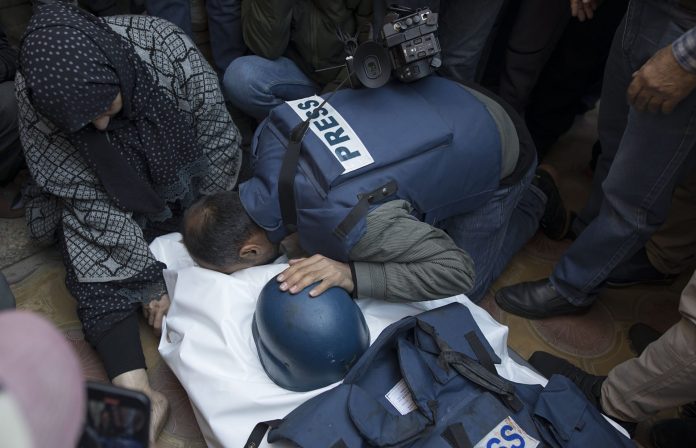
Israeli forces killed nearly 200 journalists in the first 18 months of the war, at least 42 of whom were slain while doing their job, Reporters Without Borders reported on Friday as it released its World Press Freedom Index 2025.

“Trapped in the enclave, journalists in Gaza have no shelter and lack everything, including food and water,” said the Paris-based group, which is also known by its French acronym RSF.

“In the West Bank, journalists are routinely harassed and attacked by both settlers and Israeli forces, but repression reached new heights with a wave of arrests after 7 October, when impunity for crimes committed against journalists became a new rule.”

Journalists suspected of collaborating with Israel are also hampered in their work by Hamas and the Islamic Jihad, while a cybercrime law adopted by the Palestinian Authority limits freedom of expression and freedom of the press, RSF added in its report.

Palestine ranked 163rd for press freedom in the latest index, a drop of six places from 2024.

Of 180 jurisdictions, 112 saw declines in press freedom, with the average score globally falling to a record low of 55 points, according to the report.

The United States dropped two places to a record low of 57, with the watchdog accusing US President Donald Trump of overseeing a “troubling deterioration in press freedom”.

“President Donald Trump was elected to a second term after a campaign in which he denigrated the press on a daily basis and made explicit threats to weaponize the federal government against the media,” RSF said.

“His early moves in his second mandate to politicise the Federal Communications Commission (FCC), ban The Associated Press from the White House, or dismantle the US Agency for Global Media, for example, have jeopardised the country’s news outlets and indicate that he intends to follow through on his threats, setting up a potential crisis for American journalism,” it added.

Israel dropped 11 places to 112th, with Reporters Without Borders pointing to growing restrictions on press freedom, media plurality and editorial independence since the start of the war in Gaza.

“Since 2021, only journalists working for Channel 14, a media outlet that covers Prime Minister Benjamin Netanyahu in a favourable light, have been granted interviews with the country’s leader, who accuses the Israeli press of conspiring against him,” the group said.

“In 2024, the Minister of Communication called on the government to boycott Haaretz, one of the few newspapers to criticise Netanyahu’s policies, including the massacre of civilians in Gaza – a topic that is largely suppressed,” it added.

Eritrea was the lowest-ranked jurisdiction, just behind North Korea and China.

Norway was ranked first for press freedom, followed by Estonia, the Netherlands and Sweden.
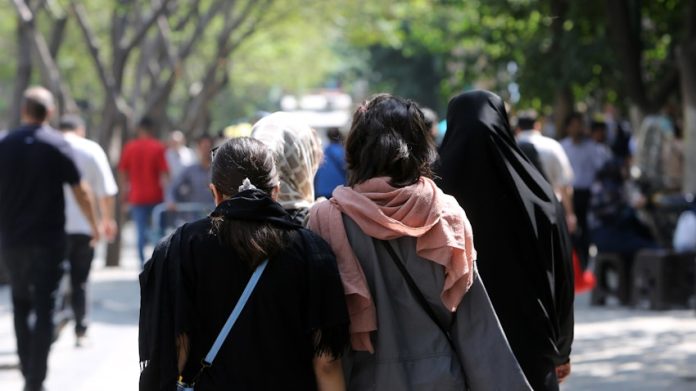
Advisor to Iranian president: Hijab mandate has failed

Photo by Getty Images

Speaking to Rouydad24, Jalal Jalalizadeh stressed that the government must follow the will of the people.

“The law should reflect the will of the majority,” he noted. “What is evident, based on observation and the general situation in society, is that the majority opposes compulsory hijab…naturally, any form of coercion or pressure in this regard will undoubtedly backfire”.

He also noted that the recent wave of hijab-related text message warnings has created fear and anxiety among people, urging officials to eventually realize that hijab cannot be imposed on the public through this level of pressure and force.

Jalalizadeh’s call for a rational and prudent approach to the issue comes as some observers suggest that the text message campaign may be part of a pilot implementation of the controversial hijab mandate in select provinces, with the possibility of expanding it nationwide after assessing its outcomes.

Jalalizadeh however rejected this speculation and said the reality is that the hijab mandate is a failed policy, and it is highly unlikely that society will accept its implementation.

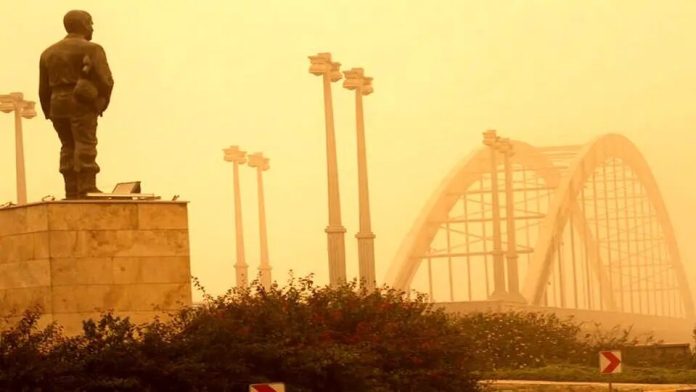
Severe dust storm hits Khuzestan province

Shahriar Askari said on Friday, the concentration of PM10 dust particles in Hamidiyeh reached 4,004 micrograms per cubic meter, which is over 26 times the safe limit.

Other cities also experienced high pollution levels: Abadan recorded 1,258 micrograms per cubic meter, Khorramshahr 1,002, Mahshahr 1,027, Ahvaz 564, Susangerd 457, Hoveyzeh 495, Hendijan 329, and Dezful 262.

Dust storms are a recurring environmental challenge in Iran’s Khuzestan province, especially during spring and summer, often impacting public health and disrupting daily life.

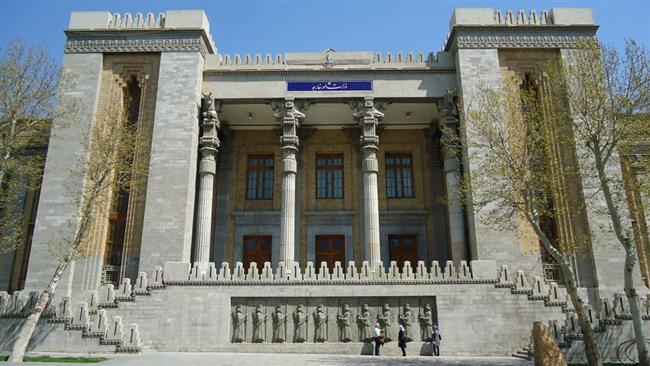
Iran condemns US for escalating sanctions, questions commitment to diplomacy amid nuclear talks

Iran's Foreign Ministry

The statement comes after three rounds of indirect talks, with Iran insisting on its right to peaceful nuclear energy and demanding an end to punitive sanctions.

The statement reads:

“Following a letter from the US president to the esteemed Leader of Iran’s Islamic Revolution and the expression of readiness to pursue a diplomatic path to resolve the unnecessary and fabricated crisis over Iran’s peaceful nuclear program, the Islamic Republic of Iran entered into indirect talks with Washington with good will backed by national strength and confidence.

Over the course of three rounds of negotiations, the representatives of the Islamic Republic of Iran, based on a clear framework rooted in Tehran’s principled approaches under international law regarding the peaceful use of nuclear energy and the lifting of oppressive sanctions, have outlined the rightful views and demands of the Iranian people and have diligently tried to achieve a fair, reasonable and lasting agreement.

While reaffirming its commitment to the path of diplomacy and declaring readiness to continue the talks, the Islamic Republic of Iran categorically rejects any approaches based on threats and pressure, which are all in violation of the principles of the UN Charter and international law, and are designed to harm Iran’s national interests and violate the human rights of its citizens. Accordingly, the Islamic Republic strongly condemns the continuation of illegal sanctions and pressure on the country’s trade and economic partners, viewing it as further evidence justifying the Iranian nation’s deep mistrust and skepticism regarding the seriousness of the US about pursuing diplomacy.

The continuation of these unlawful actions will in no way alter Iran’s logical and legitimate policies that are in line with international law. Undoubtedly, repeating ineffective and failed methods will yield nothing but a repetition of the same costly failures of the past.”

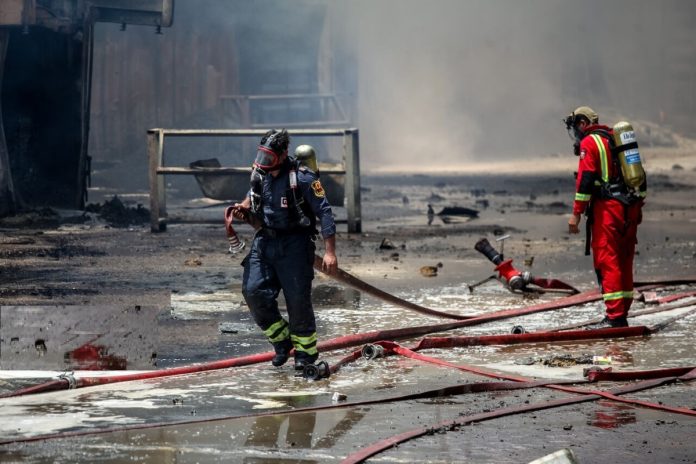
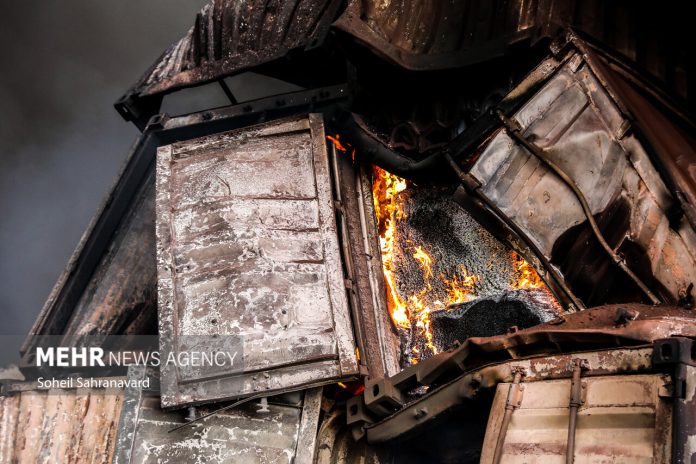
Concerns raised about safety at Iran’s ports following deadly Shahid Rajaei port explosion

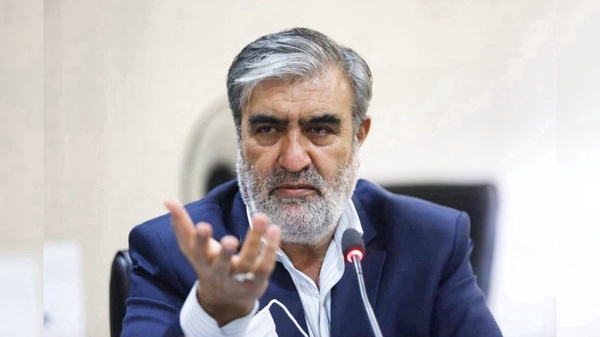
Abdoljalal Iri told Asr-e Iran news website that fire hydrants at the port failed to function properly in the critical early moments of the blaze, delaying containment efforts.

Iri stated that initial findings suggest both managerial and infrastructure shortcomings, particularly in firefighting equipment, contributed to Saturday’s incident that claimed 70 lives and left hundreds of others injured.

A comprehensive report is being prepared for presentation to parliament to identify systemic weaknesses.

“There are legitimate concerns that such accidents could occur at other ports,” Iri said, calling for increased oversight by authorities, particularly the Ministry of Roads and Urban Development.

The lawmaker confirmed that parliament’s Construction Committee plans to inspect other major ports, including Imam Khomeini and Chabahar, and summon relevant officials for questioning.

Iri emphasized that definitive conclusions about the causes would require thorough documentation, urging authorities to act promptly on the findings.

Preliminary reports blame negligence as the main cause of the deadly incident, but the final official report is yet to be released.

No damage to oil facilities in south Iran port explosion: Deputy oil minister

Mohammad Sadegh Azimi-Far stated that a comprehensive inspection of refineries, storage tanks, and pipelines confirmed no significant damage, with operations continuing normally.

More than 320 emergency personnel from the oil industry participated in firefighting efforts, deploying 20 fire trucks and 12 ambulances to contain the blaze, he said.

Azimi-Far, who visited the site, praised responders while ordering additional safety reviews.

“We are identifying any potential weaknesses to improve safety measures and reduce future risks,” he stated.

The deputy minister emphasized Iran’s commitment to maintaining operational resilience in its oil infrastructure.

Authorities continue to investigate the cause of the explosion that killed at least 70 people and left hundreds of others injured at Iran’s largest container port.

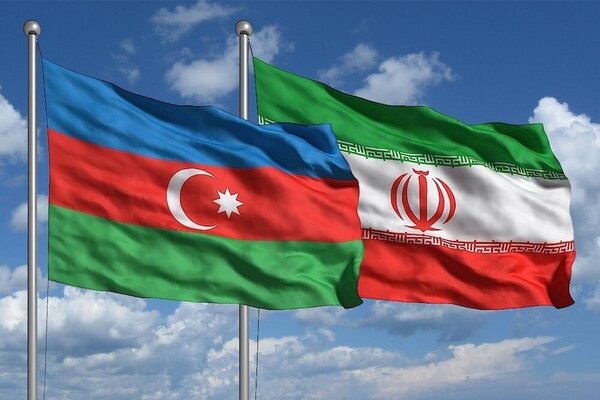
MP: Iran-Azerbaijan trade to reach $5 billion following Pezeshkian visit

Talking to IRNA, Sadif Badri, mentioned that the current trade volume between the two nations remains under $1 billion. However, during President Pezeshkian’s visit, both sides committed to boosting trade to at least $1 billion by the year’s end.

Badri characterized the visit as highly productive, underscoring its favorable effects on economic and trade relations.

He noted that the discussions centered on implementing existing bilateral agreements, further solidifying commercial ties between the two countries.

“The visit was well-received in both countries and across the region,” Badri said, adding that its full benefits will be realized once the seven cooperation documents signed during the trip are put into action.”

He also pointed to a joint statement signed by President Pezeshkian and Azerbaijani President Ilham Aliyev, which outlined a mutual commitment to eliminating obstacles to stronger economic cooperation.

President Pezeshkian has previously said his visit to Baku last Monday, would pave the way for enhanced cooperation in scientific, economic, cultural and security fields.

During his visit, President Pezeshkian held discussions with Aliyev, attended a conference focused on Iran-Azerbaijan economic collaboration, and met with Iranian expatriates residing in the neighboring country.

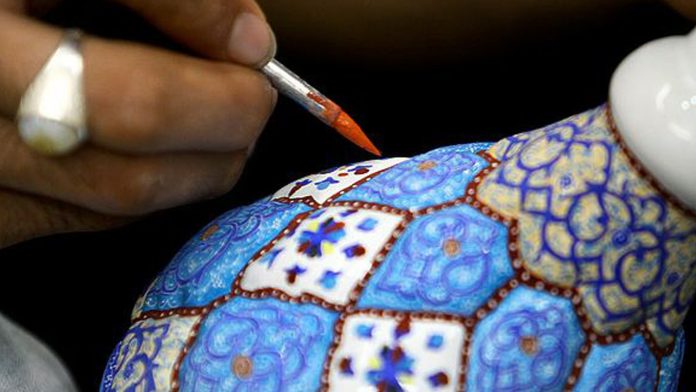
Iran aims for $1 billion in handicraft exports, eyes African market

Speaking at the closing ceremony of the third Iran-Africa Economic Cooperation Conference in Isfahan, Seyyed Reza Salehi Amiri reported that last year’s official handicraft exports reached 205 million dollars, with an additional €250 million from informal “suitcase trade” by travelers.

He cited the sale of a handmade Isfahani silver vase for 30 billion tomans (approximately 375,000 dollars) at Tehran’s recent handicrafts exhibition as evidence of global demand for Iran’s luxury artisan goods.

To facilitate growth, the government plans to ease currency exchange restrictions, streamline customs regulations, and expand insurance coverage for handicrafts.

The minister emphasized Africa as an untapped market, noting strong mutual interest in trade and tourism partnerships.

Isfahan was chosen to host the Africa summit due to its industrial, technological, and cultural capabilities. Over 2,700 international participants attended, with key discussions on economic collaboration.

Tourism development plans include incentives for hotel construction, aiming to double Iran’s hotel capacity to 900,000 beds by 2028.

Salehi Amiri also stressed the need for better global promotion of Iran’s attractions, citing low international awareness despite the country’s 20 tourism niches.

The minister is scheduled to visit Egypt to further tourism ties, following recent trips to the Republic of Azerbaijan, Turkey, and the Caucasus to attract investment.

Head of Iran Parliament security body: US to pay price for its threats

Ebrahim Azizi, in a post on the social media platform X, addressed the US Defense Secretary, emphasizing: “If, alongside negotiations, your threats lead to any action against the national interests and security of the Islamic Republic of Iran, it is you who will pay the price—at a time and place of our choosing.”

Referring to the ongoing nuclear talks between Iran and the US, Azizi described Washington’s behavior as contradictory.

Tehran and Washington have so far held three rounds of indirect negotiations, mediated by Oman, aimed at lifting anti-Iran sanctions while ensuring the peaceful nature of the Islamic Republic’s nuclear program.

US Defense Secretary Pete Haggett, in a Thursday post on X, addressed Iran, saying: “We are aware of your support for the Houthis. We know exactly what you are doing.”

He claimed: “You are well acquainted with US military power, and you have been warned before. You will face the consequences at a time and place of our choosing.”

These remarks are reportedly in response to Yemeni forces’ operations in the Red Sea in support of Palestinians in Gaza, who are subjected to the Israeli regime’s genocidal crimes.

The Islamic Republic of Iran has repeatedly stressed that Yemen’s Houthis act independently.

FM: Iran determined to reach a fair, balanced nuclear agreement

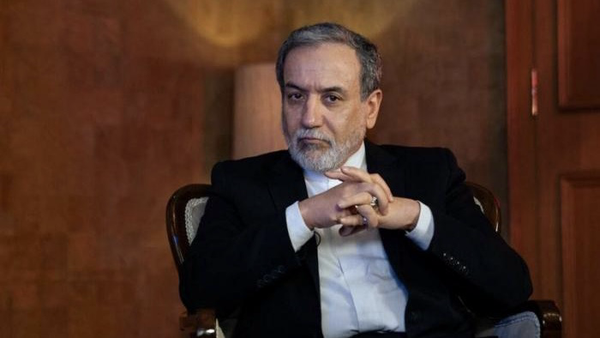
On Thursday night, Araqchi said Iran is more determined than ever to reach a fair and balanced nuclear agreement—one that guarantees the lifting of sanctions and builds confidence in the peaceful nature of Iran’s nuclear program.

The fourth round of indirect talks between Iran and the US was scheduled to take place on Saturday, May 3, in Rome, mediated by Oman. However, according to Araqchi, Iran, along with Omani and American counterparts, decided to postpone the talks due to logistical and technical reasons.

Oman’s Foreign Minister, Badr Al-Busaidi, who has been mediating the talks, announced on Thursday afternoon that the fourth round of indirect Iran-US negotiations had been delayed for logistical reasons.

Regarding this, Araqchi reiterated: “There has been no change in Iran’s resolve to achieve a negotiated solution.”

Iran’s Foreign Minister emphasized that the Islamic Republic of Iran is more determined than ever to reach a fair and balanced agreement—one that not only ends sanctions but also builds trust regarding the peaceful nature of Iran’s nuclear program.

Araqchi stated that any agreement must ensure Iran’s rights are fully respected.

The previous two rounds of these talks were held in Muscat,  and one round took place in Rome, all mediated by Oman.

The talks have been led by Araghchi and Steve Wittkof, the US President’s Special Representative for Middle East Affairs.