Friday, April 24, 2026
Home Blog Page 3976

Iran’s Presence in Syria at Damascus’ Request: Diplomat

Jaberi Ansari

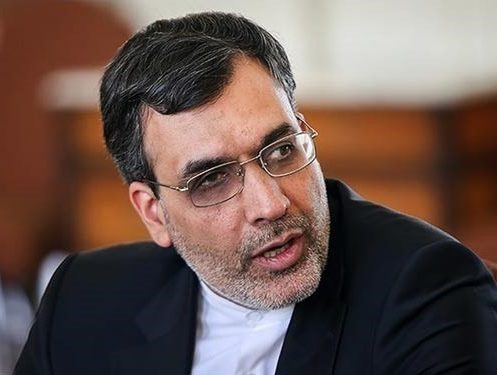
Iran’s Deputy Foreign Minister for Arab and African Affairs Hossein Jaberi Ansari has weighed in on the latest developments in Syria as well as Iran’s role in the Arab country.

Speaking to reporters after his meeting with Russian President Vladimir Putin’s Special Envoy for Syria Alexander Lavrentiev, Jaberi Ansari said the presence of Iranian forces in Syria comes at the request of the Syrian government and is based on an agreement by Tehran and Damascus.

“The presence of Iranian forces in Syria, in any form and at any level, is at the request of the Syrian government and agreement by Tehran and Damascus, and is not subject to any agreement by any regional or international party,” said the diplomat in response to a question about certain reports which suggest Russia has, at the request of Israel, accepted that Iranian troops must not be present in southern Syria.

According to a Farsi report by ISNA, he said even if others reach agreement on Iran, it will practically have no bearing on the presence of Iranian troops in Syria.

Jaberi Ansari then touched upon Iran’s strategy on the Syria crisis and the necessity of resolving it politically.

“Iran has not been, and is not interested to get involved in the crisis on a large scale,” he said.


Iran’s Presence in Syria Limited, Calculated

Jaberi Ansari said Iran’s presence in the Arab country is “limited, calculated” and at the request of Damascus as well as mutual agreement by both sides.

“We would like to see stability and tranquility return to Syria. We want to see the crisis in Syria end as soon as possible. We are not seeking to expand our sphere of intervention in Syria. As I said, what is important for Iran is an immediate end to the crisis, the human catastrophe in Syria and the incessant destruction of the country,” he noted.

When it comes to the settlement of the Syria crisis, he said, what is important is that Syrian people themselves should determine their own fate, highlighting that Iran’s intervention in Syria and contribution to efforts to settle the crisis are aimed at securing Syrians’ right to self-determination.


Iranian, French Delegations Hold Talks on Syria

He then turned to talks in the Kazakh capital, Astana, aimed at promoting peace in Syria.

Jaberi Ansari said the negotiations are brokered by Iran, Turkey and Russia, which are the guarantors of the agreements reached during the talks.

However, he added, delegations from other countries, such as France, are also present on the sidelines of the talks, but they do not take part in the main sessions.

He said these delegations hold diplomatic consultations with one another, but do not have any direct impact on the trend of the talks.

“The three countries of Iran, Russia and Turkey as well as the Syrian government and the opposition have the main and direct role in the talks,” he said.

“Some parties and countries such as the UN envoy attend the meetings as observers. They take part in official and open sessions,” he noted.

“The French delegation has been present on the sidelines of the Astana talks since the first meeting there. On the fringes of the Astana 5 negotiations, the Iranian and French delegations had a meeting and the two sides exchanged views on the Syria crisis,” he said.

He then touched upon his two-hour meeting with the Russian delegation in Tehran on Syria.

He said the rapid pace of developments in Syria makes it all the more necessary for Iran, Russia and other key players to hold consultations and talks at short intervals.

Therefore, he added, Iran and Russia are currently holding meetings at one-week or two-week intervals.


Turkey Not Ready for Final Deal on Syria

He further said agreement on the four de-escalation zones in Syria already discussed in Astana 5 talks has not been reached yet due to differences on the areas in the north of Syria as well as Turkey’s lack of readiness in the talks to strike a final deal.

He said new developments have happened in Syria since Astana 5 talks.

“In this regard, Iranian and Russian officials held talks on the Syria Crisis. Mr. Lavrentiev and his accompanying delegation held meetings with Mr. Shamkhani and me. We discussed the generalities and details of issues and remaining solutions to the Syria crisis.”

He said the key objective of the Astana talks is to return tranquility and stability to Syria while highlighting the importance of fighting terrorism in the Arab country.

Jaberi Ansari then referred to the importance of easing tension and military conflicts in Syria.

He noted the trend of de-escalation should be planned in such a way that the Syrian people suffer the least possible losses and human catastrophes are stopped.

He noted that no development must result in the disintegration of Syria and the violation of the country’s territorial integrity and sovereignty.

“This is our red line,” he stressed.


Astana Talks Draw Line between Opposition, Terrorists

The diplomat then said Astana talks have played a key role in drawing a line between the Syrian opposition and terrorist groups.

He underscored Astana talks have played a positive role in helping open up a new political horizon to resolve the Syria crisis.

“Of course, this does not mean there are no problems in front of us. The Syria crisis is a multi-layered and complex one. Different players with different interests […] are involved in the crisis.”


Expert Meeting on Syria to Be Held in Tehran

He said an expert meeting will be held in Tehran in two weeks’ time.

The diplomat then touched upon a recent meeting between the US and Russia on Syria on the sidelines of the G20 meeting in Hamburg.

“Any agreement on Syria should be within the basic red lines in settling the Syria crisis.”

He touched upon the significance of maintaining Syria’s territorial integrity and sovereignty, and said any arrangement regarding a ceasefire in the country would be temporary.

“The final decision-makers in settling the crisis are Syrian people, and any agreement should be in line with the Syrian nation’s opinions as well as the basic principles. This way, the agreement can play a positive role in developments in Syria.”

Jaberi Ansari then said any agreement out of the framework of Astana talks may have short-term results, but will not be effective in the medium and long terms, and may even be counterproductive.

He also noted that the US government has so far kept flip-flopping on the Syria crisis and now it is time to see to what extent the Americans conform the agreement reached on Syria during Astana talks.
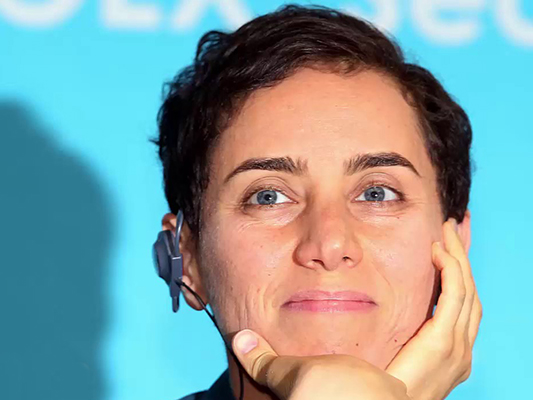
Iran VP Pays Homage to Late Math Genius Mirzakhani

March 14 Named Int’l Math Day in Honour of Late Iranian Genius

Iranian Vice-President for Science and Technology Sorena Sattari has written a note commemorating Iranian mathematical genius Maryam Mirzakhani, who died of cancer on July 15, 2017. The following are excerpts from the statement.

* I remember, around this time back in 2014, we heard that Maryam Mirzakhani, our old classmate at college, had won the prestigious Fields Medal. This is a very important award and experts say it is equal, in value, to a Nobel Prize for Math.

* We became very happy and felt proud. Especially old and new students at Sharif University of Technology took pride in her achievement and congratulated their friends and classmates from the bottom of their hearts. And I, not as the vice president, but as a Sharif University alumnus, wrote a letter and thanked Maryam Mirzakhani for bringing honour upon Iran.

* All of us knew that she was a serious and wise girl and spent all her time studying and working on complicated equations. A few years later, we were so happy to find out she had survived that bus accident, but felt so sad for the other folks who lost their lives in that accident. And now we realized that she succumbed to cancer. Well, everybody will die one day. “From God we are, and to Him we shall return.”

* During her short life, Maryam Mirzakhani brought honour upon her country while she herself was among the top mathematicians in the world. The news of her death saddened us all. I saw that all Iranians were sorrowful.

* We pay tribute to this renowned Iranian scientist in recognition of her scientific services and pray for her. May her soul rest in peace. I express condolences to all Iranians, especially the country’s scientific community, on her demise and ask God Almighty to grant her family, spouse and child patience.

Iran Not Seeking to Form Regional Coalition: Spokesman

Foreign Ministry spokesman Bahram Qassemi on Sunday touched on the worrisome conflicts in the region, saying they originate from big mistakes made by world powers decades ago, among them an unconditional US support for Israel.

Asked whether Iran was open to the idea of forming a coalition with Iraq, Syria and Turkey to counter threats and solve crises in the region, Qassemi said what the Islamic Republic wants is to maintain peace and security.

“At the current juncture, the Islamic Republic, beside preserving its independence and creating necessary foundations for boosting and upgrading its position, has a positive outlook that would help security, peace and stability in the region,” he said.

“We have to want peace and stability for all; therefore, there is no need to build such a coalition against others,” Qassemi added.

For instance, “if our relations with Turkey or Azerbaijan are good, they won’t be against any other country,” the spokesman said.

“There is the difference of views and misunderstanding but in a coalition, we have to decide whom we are for or against because we can’t have dual behavior.”

Iran, Egypt likely to step up ties

Qassemi touched on Iran’s relations with other countries, including Egypt with which it has had no full diplomatic ties since the 1979 Islamic Revolution.

Bilateral cooperation between the two countries, he said, is at the level of interests sections, but they have exchanges of views and their foreign ministers have been in contact whenever necessary.

“It is possible to increase relations; we have special respect for the Egyptian people and its civilization,” Qassemi said.

Iran Not Seeking to Form Regional Coalition: Spokesman

The official said there are “complexities” in bilateral ties between Tehran and Cairo which they have not been able yet to solve in “a desirable fashion”, calling on Egypt to have “a more realistic look” at Iran.

“With prudence, Egypt can return to its past days and retake its superior place in the Islamic world,” Qassemi said, adding “Egypt is different from many newly-born countries in the region.”

The official was apparently referring to Saudi Arabia’s allies in the ongoing crisis with Qatar which is under a virtual blockade with the participation of Egypt, the UAE and Bahrain.

“Egypt is one of the most important countries in the region and the Islamic world which can play a more outstanding role in the Arab and Islamic world but unfortunately it has lost this standing to a great degree.”

No communication channel with Trump

Asked about contacts with the administration of US President Donald Trump, Qassemi said Iran had discussions with Washington within the framework of the 2015 nuclear agreement and the Joint Commission monitoring the implementation of the deal.

“There is no communication channel between us and Mr. Trump’s government at this time,” he said.

Iran President’s Brother Arrested on Financial Charges

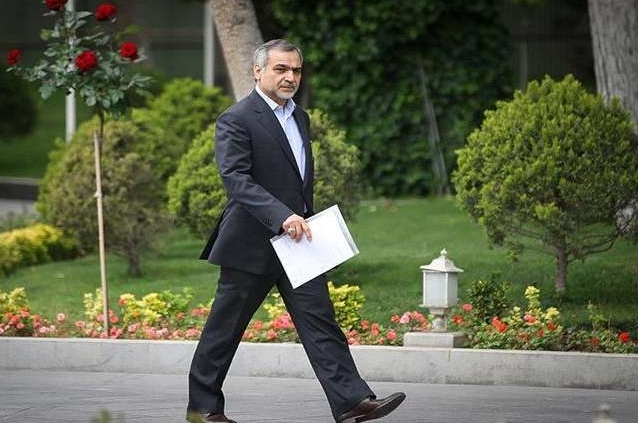
Fereydoon-Rouhani

Gholam-Hossein Mohseni Eje’i, the Spokesman for the Iranian Judiciary, declared in his weekly press conference on Sunday that Fereydoun, the president’s brother and top aide, was sent to prison after he failed to put up the bail set by the Judiciary on Saturday.

Mohsen Eje’i said he is arrested on financial charges, and the Judiciary has conducted series of investigations about him.

Iraqi Forces Kill 25,000 ISIS Elements in Mosul Operation

Iraqi Forces Kill 25,000 ISIS Elements in Mosul Operation

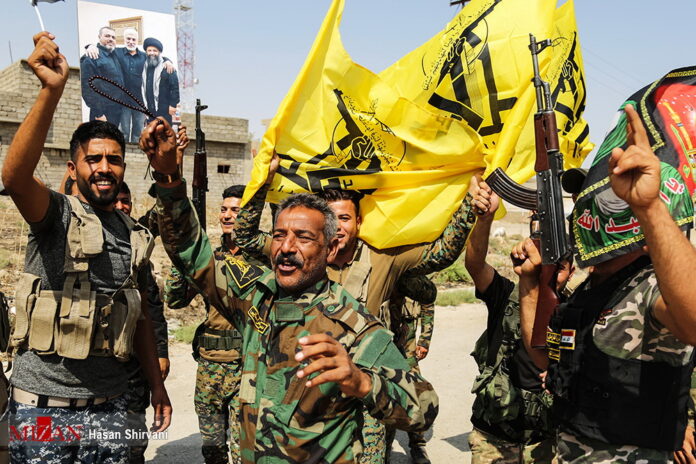
The Arabic language website of RT website quoted an Iraqi top commander, Abdul Amir Rashid Yarallah, as saying that during the operation to retake Mosul from ISIS, at least 25,000 terrorists including 450 suicidal militants were killed by 100,000 Iraqi forces.

Yarallah also added that the Iraqi forces managed to shoot down at least 130 ISIS helicopters during the operation.

“They have also demolished 1,247 booby-trapped cars belonging to the terrorist group,” he noted, according to a Farsi report by Al-Alam.

The Iraqi commander said that the Mosul operation took 243 days including 101 days in East Mosul.

“The Iraqi forces in the Mosul operation made their utmost efforts to protect the civilians’ lives. They were focused on eradicating the terrorists from the region. The forces proved that they are capable of fighting terrorism at different levels.”

Elsewhere in his remarks, he underlined that the military plans developed by the commanders were implemented accurately.

The top commander also mentioned that the fourth phase of an operation to liberate the city of Tal Afar from ISIS terrorists is set to begin soon.

The top commander also underscored that the Mosul victory belongs to all Iraqi forces.

The operation to retake the city, which was kicked off about 9 months ago, left lots of casualties and damages and displaced over 920,000 Iraqis.

US Seeking Own Interests in Qatar Crisis: Analyst

US Seeking Own Interests in Qatar Crisis-Analyst

Hassan Rostami, an expert on Middle East affairs, has discussed various aspects of the ongoing Middle East crisis involving Qatar and other Persian Gulf Arab states.

The following is the full text of his Farsi piece published in the Tasnim News Ageny:

US Secretary of State Rex Tillerson, who had been on a four-day tour of the Middle East in a bid to help settle the crisis between Qatar and Saudi Arabia and its allies, returned to his country empty-handed without having proposed any plans or having secured any special accomplishments.

First, Tillerson met with the Qatari emir in Doha in a Kuwait-brokered meeting before sitting down with top Saudi officials, including the country’s king and heir to the throne, to help resolve the crisis. Later, the US secretary of state held a six-way meeting in Jeddah.

Following intense consultations, Tillerson once again returned to Doha and, for the second time during his regional trip, met with Qatari Emir Sheikh Tamim bin Hamad Al Thani. Afterwards, Tillerson left Doha for Washington without making any comments about the outcome of the talks.


US Lacks Initiative to Settle Crisis

It was clear from the very beginning that the Americans have nothing new up their sleeves to resolve the crisis. During Tillerson’s recent trip, the US did not offer any extraordinary initiatives or plans that would guarantee the settlement of the crisis. Except for a memorandum of understanding signed by Qatar and the US in Doha on fighting terrorism, no plans were put forward by the US secretary of state to resolve the crisis. Although the crisis abated a little for a few days during his trip, the crisis and it roots are here to stay. The countries which have boycotted Qatar insist that Doha meet their demands while Qatar has rejected their demands. Qatar is insisting on its position and there are no signs that Doha is backing off from its stance in the face of the four Arab states.

The signing of an agreement by the US and Qatar last Wednesday on tackling funding terrorism could hardly please the countries which have boycotted Qatar. The opponents of Qatar believe this agreement will not ease concerns regarding Doha’s activities and that Doha must fulfil all their demands.

What is noteworthy is that the US secretary of state puts emphasis on Kuwait’s intermediary role in resolving the crisis, which shows the agenda of the US side was not the settlement of the crisis.

Many analysts are sceptical about Washington’s efforts to resolve the crisis between Qatar and Saudi Arabia and its allies, saying US officials are not that willing to see the crisis settled soon because the perpetuation of the crisis would benefit Washington. The Kuwaiti al-Watan daily also, in an analytical piece, touched upon this issue. It wrote that the US seeks to cash in on the crisis to secure its own interests, namely conclude more arms sales deals and other agreements to boost its economy.


Saudi Arabia Duped by US

It was the US that, for the first time, brought up the issue of Qatar’s financial backing for terrorism at the Riyadh meeting. After that, Saudi Arabia and its allies, which believed the White House would lend its unflinching support to them against Qatar, were trapped by the US, and ratified a 10-day ultimatum against Qatar with 13 provisions. Now with the ultimatum having expired, we see that these countries, which even threatened to take military action against Qatar, did not take any considerable action to make Doha back down from its position. Even Doha got the upper hand and set conditions of its own and announced it would meet those countries’ demands only if they, too, fulfil Doha’s demands on regional issues.

It seems Saudi Arabia and its allies have realized that they’ve been had because Washington first signed a $110-billion arms sales deal with Saudi Arabia and, in return, ostensibly condemned Qatar’s move, and at the same time signed a $12-billion military agreement with Doha. Moreover, in the recent trip, the US concluded a deal on fighting terrorism with Doha in what is believed to be a move to please Saudi Arabia and its allies. In fact, the US adopted a dual policy in this crisis. On the one hand, Washington supported Saudi Arabia and its allies, and on the other, dropped their backing for Riyadh by ostensibly criticizing Qatar’s performance in the region and at the same time concluding new agreements with Doha. That is why Saudi Arabia failed to implement its policies vis-à-vis Qatar. What is interesting is that the US secretary of state, during his trip to Doha, described Qatar’s stance as “logical.” This came as the US official had travelled to the region as a disinterested mediator to help settle the crisis and was expected to remain neutral, or at least not to adopt an approach that would annoy one of the parties. Saudi Arabia and its allies believe the US has mostly sided with Qatar in the current crisis rather than backing them.


Perpetuation of Crisis between Qatar, Four Arab States

There are no signs that the crisis between Qatar and Saudi Arabia and its allies will be settled in the foreseeable future. The United Arab Emirates’ (UAE) State Minister for Foreign Affairs Anwar Gargash has underlined that the crisis is expected to flare up in the near future. On the other hand, Kuwait’s mediation efforts have been futile so far. Of course, Oman has recently assumed an intermediary role as well, but it is not clear where these mediation attempts will lead to. What is clear is that the Americans have not acted as seriously as they should, and rather than taking a new initiative to settle the crisis, seek to conclude more military agreements with parties to the conflict and secure its own economic interests. Even Washington’s silence in the face of Turkey’s military presence in Qatar has fuelled the concerns of Saudi Arabia and its allies.

Iranian City Chosen as Most Age-Friendly City

Iranian City Chosen as Most Age-Friendly City

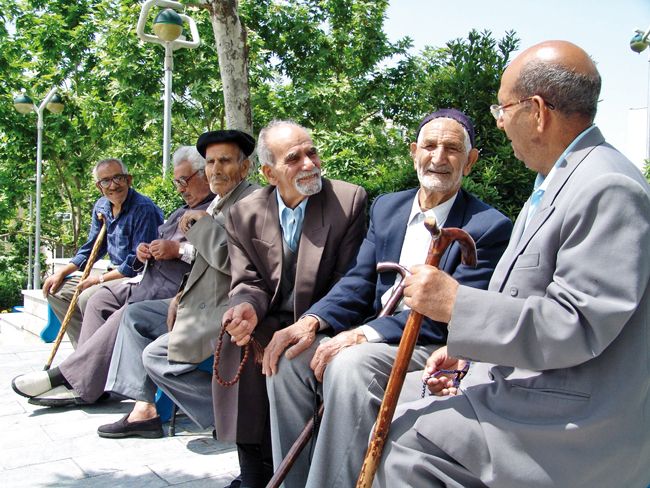
Head of Dezful Welfare Organization, Fereydoun Abdi, says the city has been selected as the top age-friendly city in Khuzestan province given the measures adopted by the local officials to promote the elderly’s welfare.
He went on saying that the achievement has been made thanks to hard efforts by various departments in the city and their close cooperation with the State Welfare Organization.
He said a number of measures won Dezful the title of age-friendly city of the province including: providing the elderly with a special park titled Salmand (Elderly), setting up a building for pension organization in the park, providing appropriate entertainment and sport facilities for the elderly, repairing the pavements and making them age-friendly, and offering free-of-charge services to the elderly by Dezful Bus Company.
According to a Farsi report by IRNA, Abdi added that the welfare organization of Khuzestan province introduced Dezful as the best age-friendly city.
“In line with addressing other problems that the elderly in Dezful are grappling with, all relative departments including municipality and governorate have also been assigned with offering appropriate services to the elderly,” Abdi said.
Head of Dezful’s State Welfare Organization also said the organization is now offering services to 65 old men and women in Dezful, adding another 65 elderly men and women are provided with rehabilitation services.
“There are at least two retirement homes in Dezful which take care of the old men and women. But we are planning to build a culture which limits the families to leave their old mothers and fathers alone in the homes of the aged,” he said.
He called for promotion of the culture of treating the elderly with dignity and said a special phone number has been assigned to receive any report on ill-treatments of the children and the elderly.
“We will provide social care for any child or old man and woman who is ill-treated,” he added.
In Iran, June 15 to 22 has been named as the Week of Welfare with Focus on Social Responsibility and Health.
At present over 1,520 elderly men and women are offered welfare services in Dezful. Meanwhile, about two thousands families are provided with indirect services by the organization.
About 5,300 people with disabilities live in Dezful.

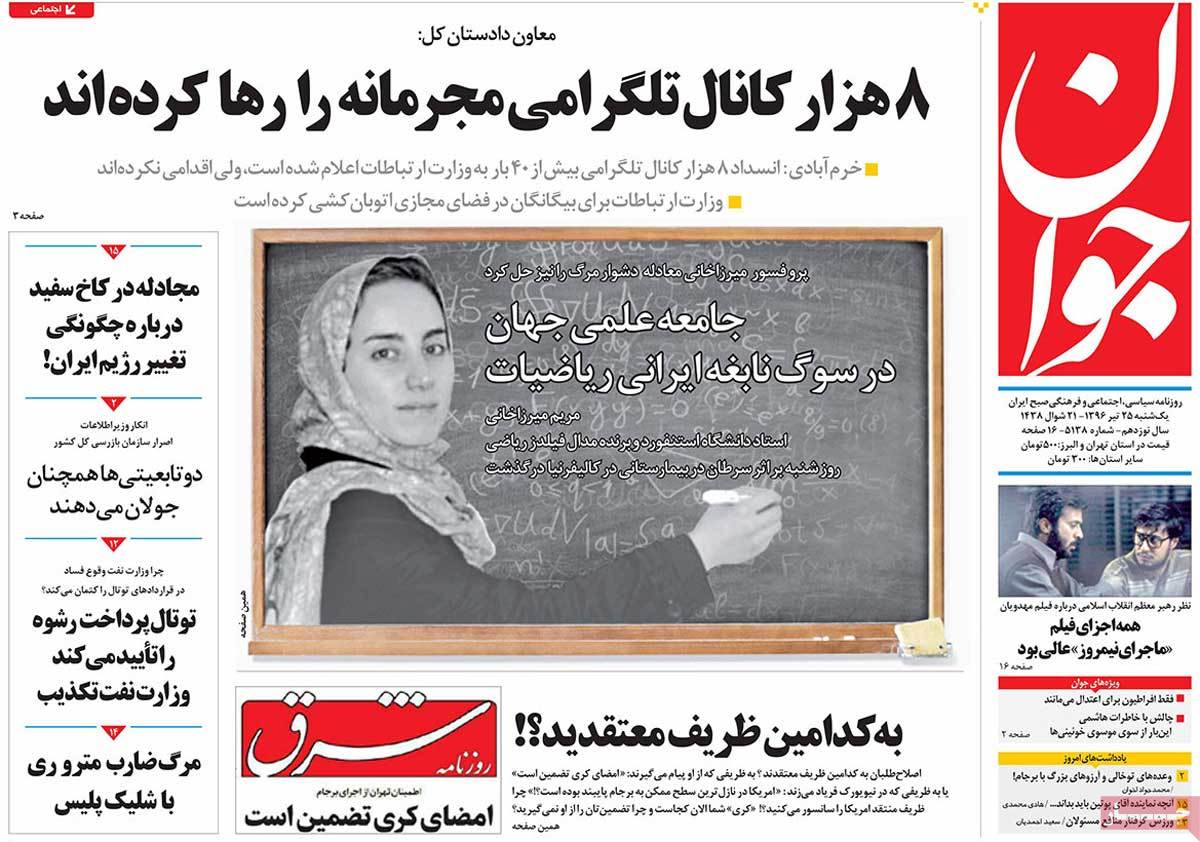
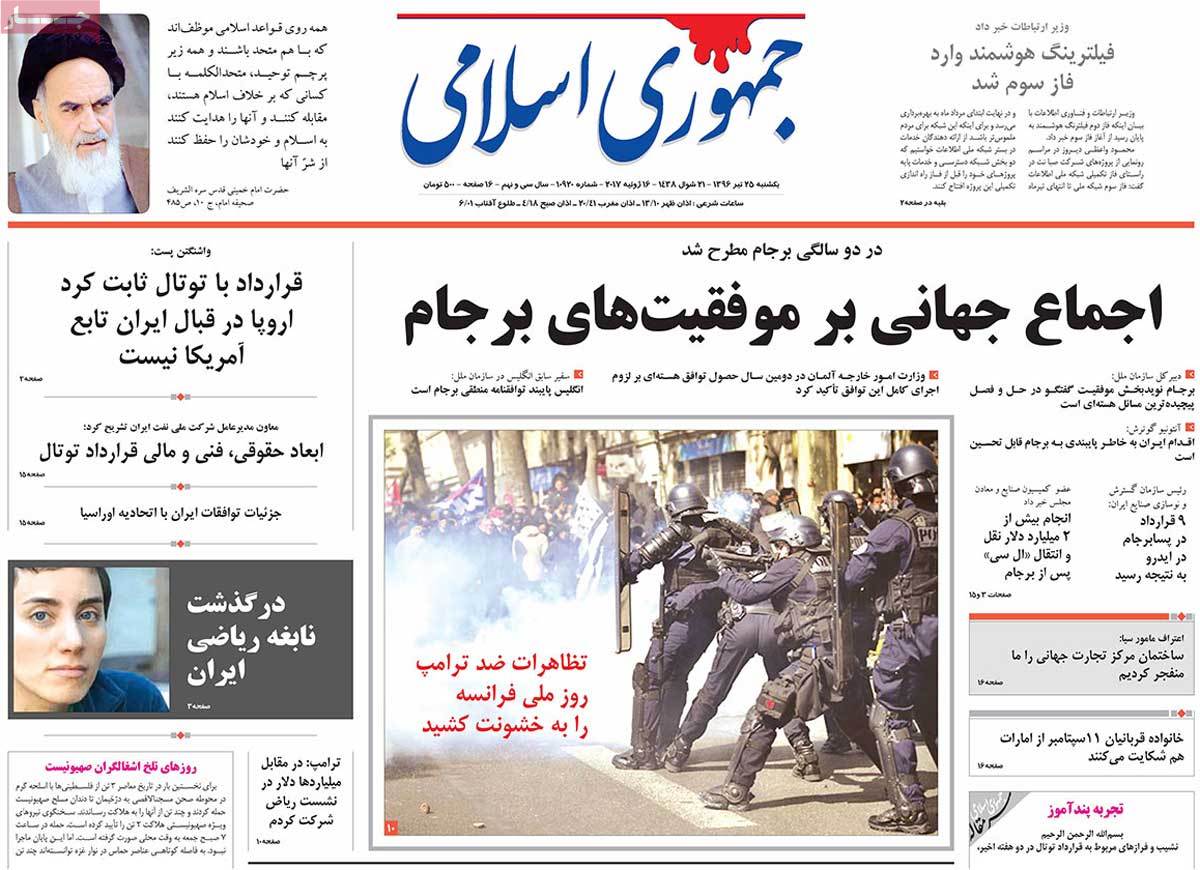
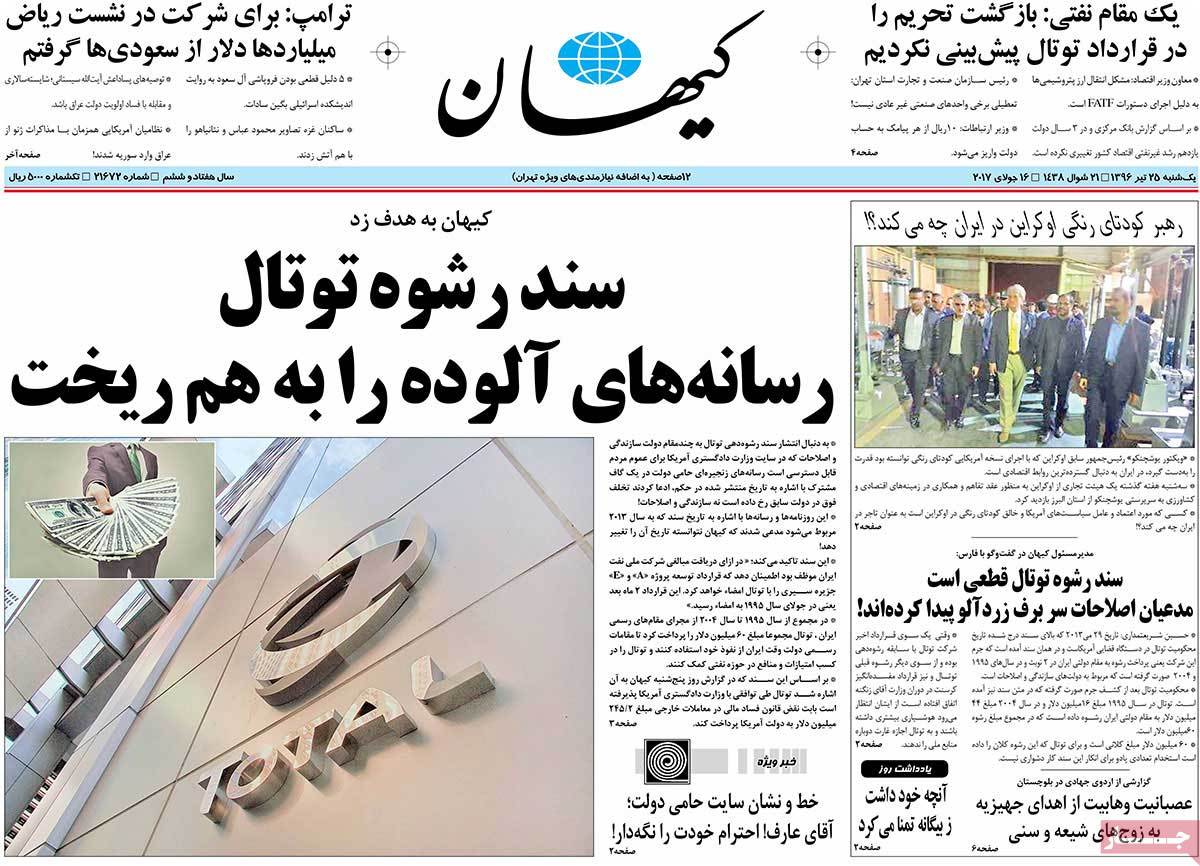
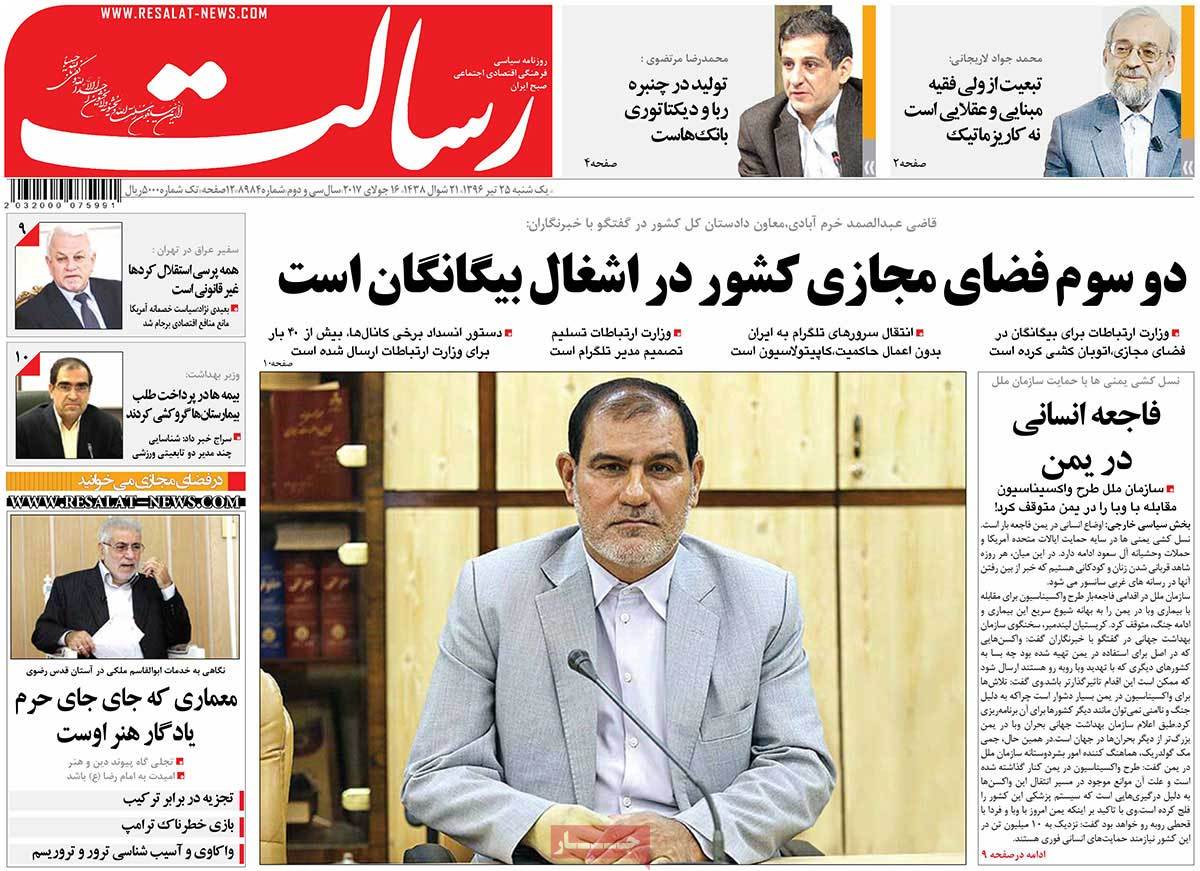
A Look at Iranian Newspaper Front Pages on July 16

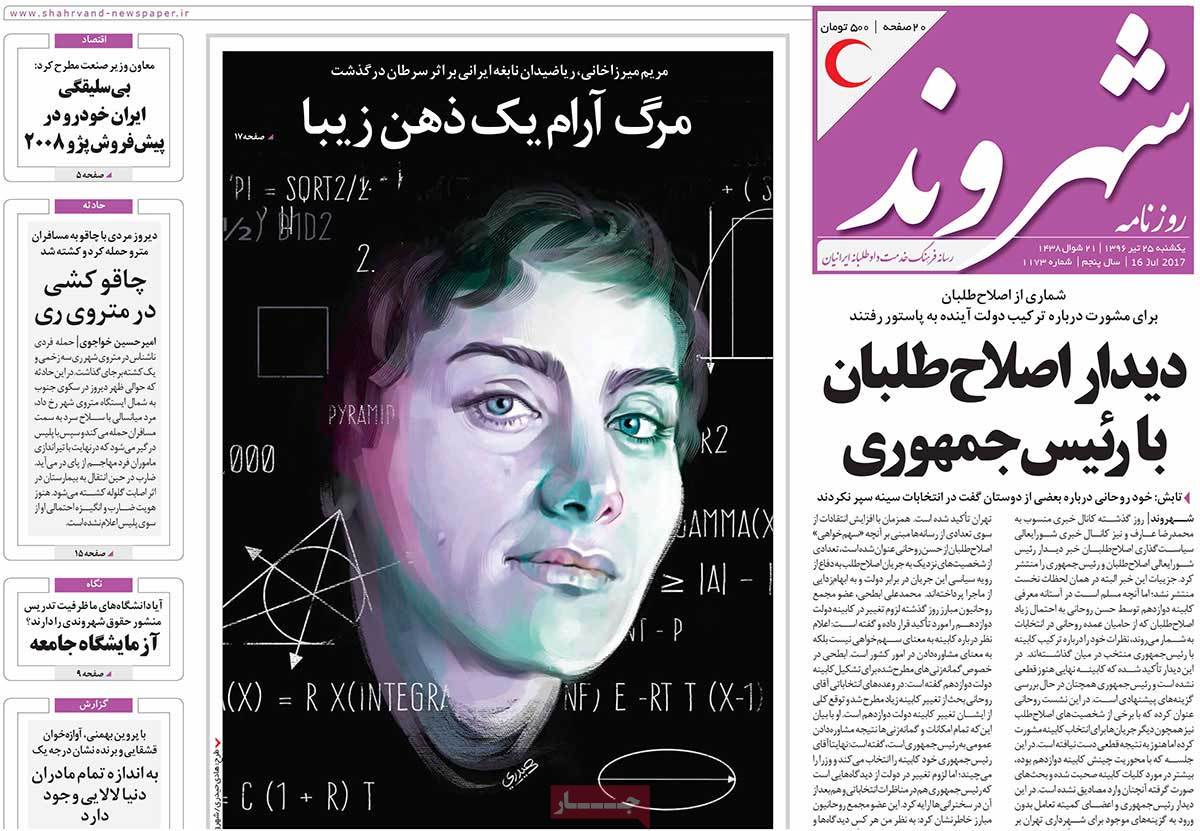
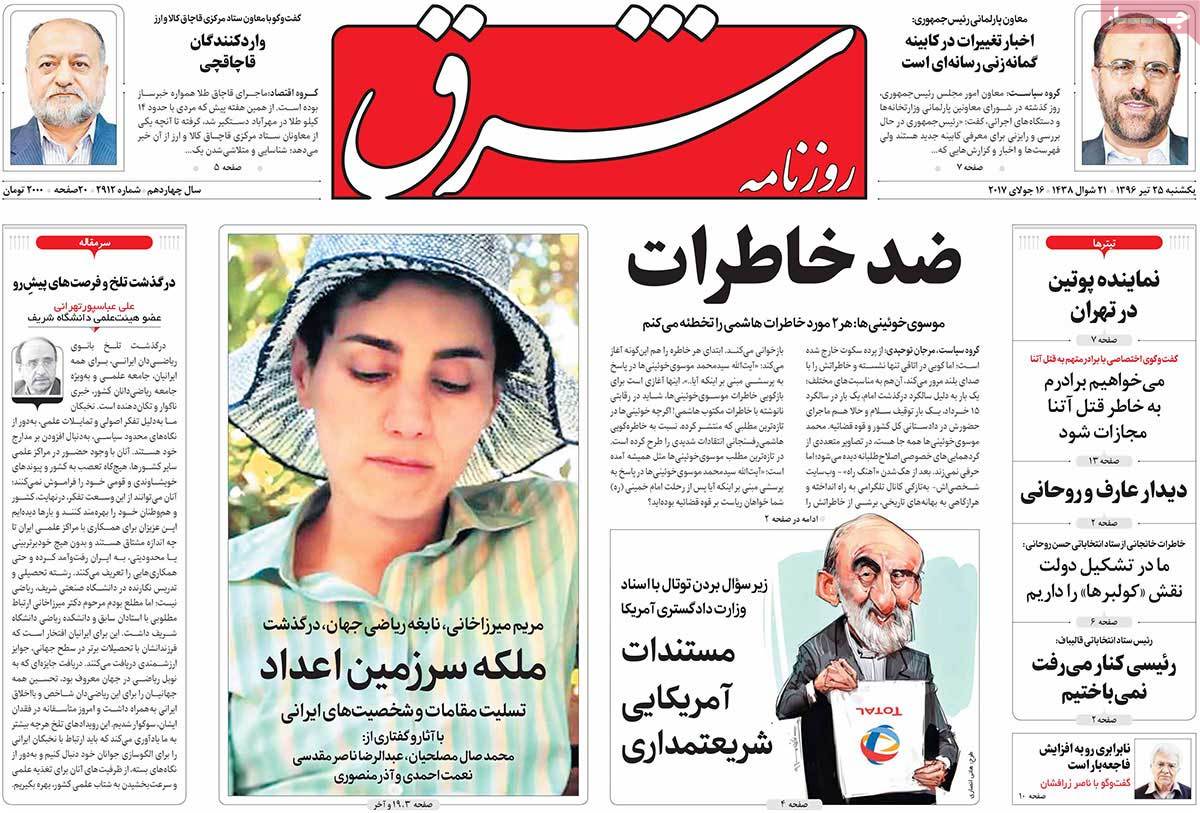
The top story today was the death of Maryam Mirzakhani, the Iranian math genius, who died of cancer at the age of 40. Almost all newspapers, expect for a couple of them, covered her demise in their front pages using various photos and pictures of the world’s only female Fields medallist.

Iran’s gas deal with the French energy giant Total continued to spark controversy. This time, the documents Kayhan revealed of the bribes Total had allegedly paid to Iran’s oil ministry became the top story. Reformist and pro-government papers say the documents are the ones released by the US Department of Justice, but Kayhan and Javan claim they are definitely true.

Newspapers also continued to cover the remarks and discussions about the formation of President Hassan Rouhani’s next cabinet. A meeting between Rouhani and reformist figures on the cabinet line-up was particularly highlighted today.

The above issues, as well as many more, are highlighted in the following headlines and top stories:


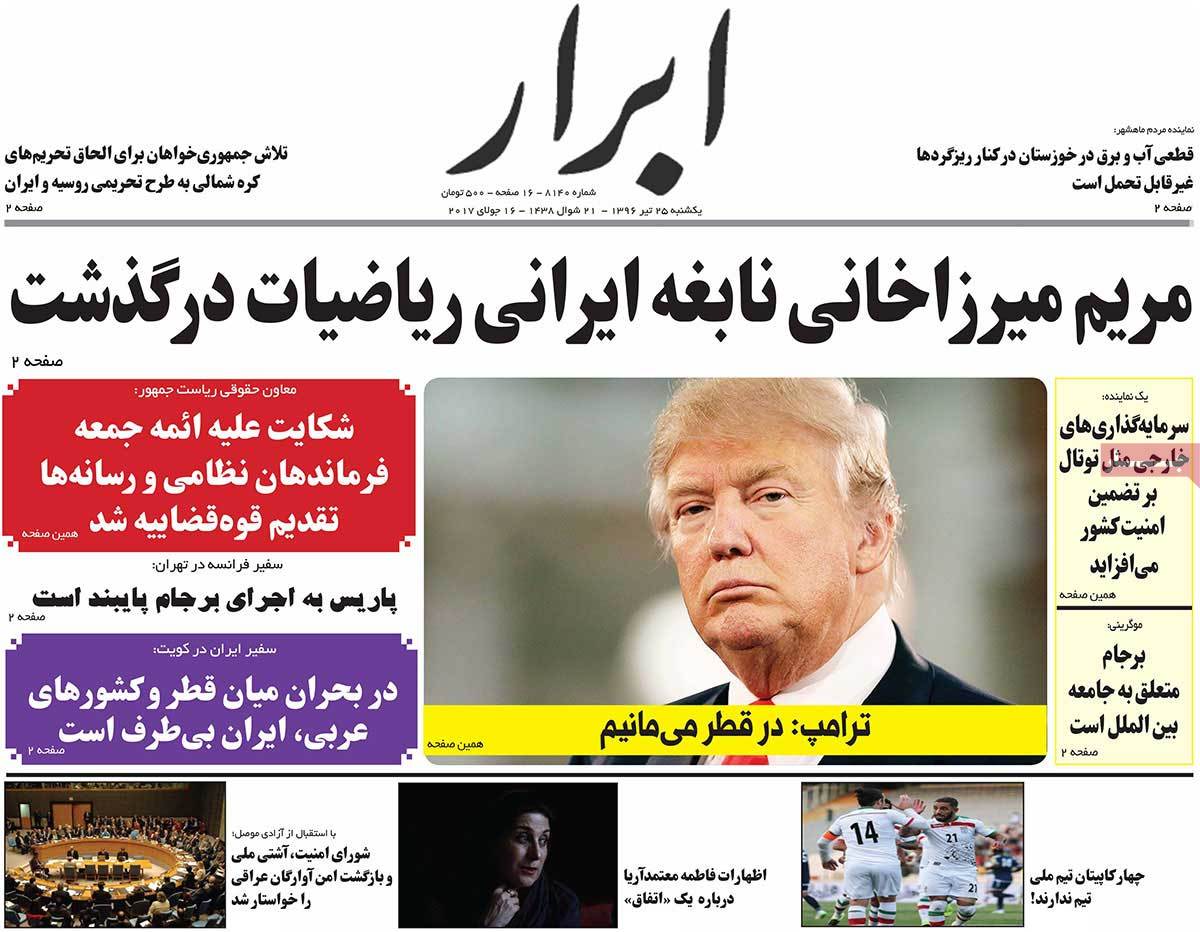
Abrar:

1- VP: Gov’t Sues Friday Prayer Imams, Military Commanders, Media

2- French Ambassador to Tehran: Paris Committed to JCPOA Implementation

3- Iran’s Envoy to Kuwait: Iran Remains Neutral in Qatar Crisis

4- Foreign Investment like that of Total Further Guarantees Iran’s Security

A Look at Iranian Newspaper Front Pages on July 16 - abrar


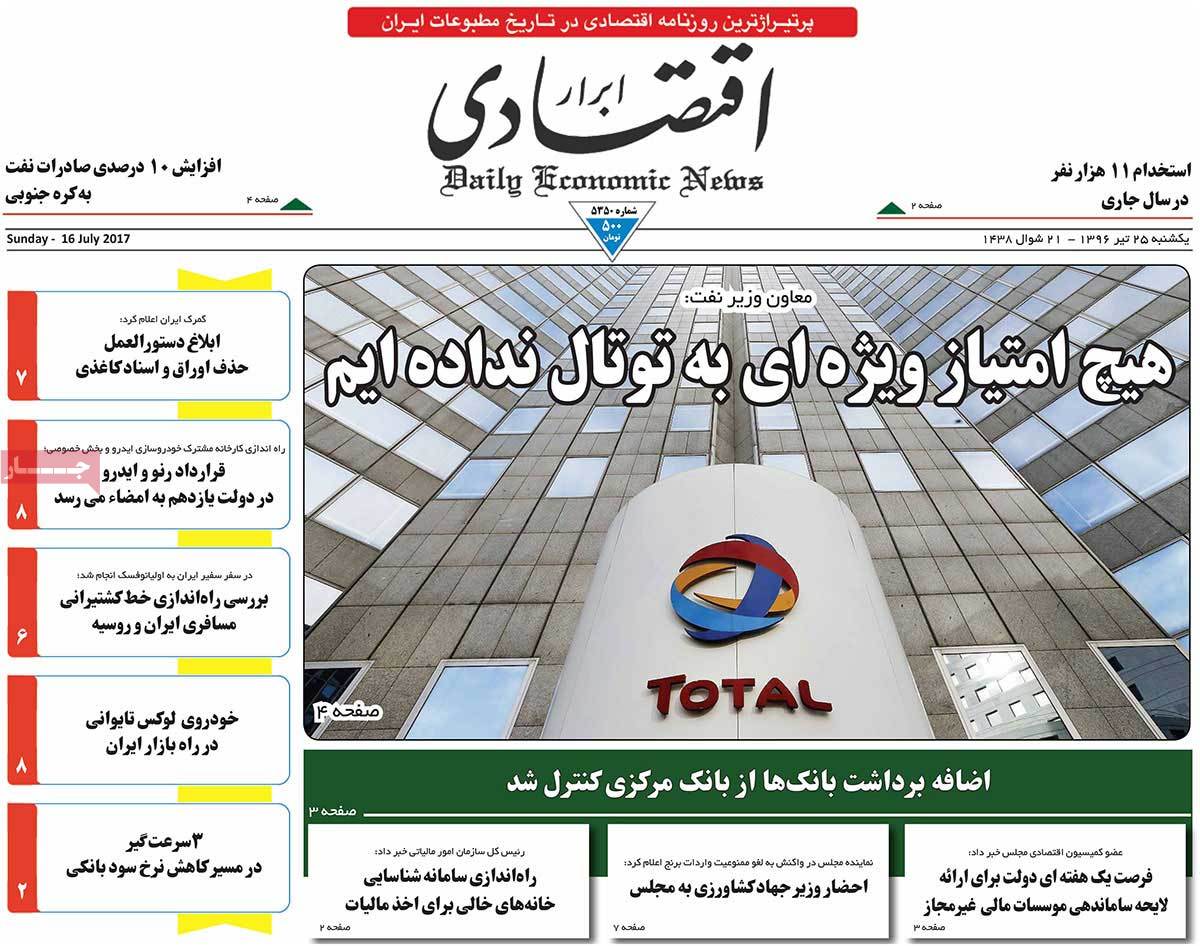
Abrar-e Eqtesadi:

1- Deputy Oil Minister: No Special Concession Given to Total

2- Luxury Taiwanese Car to Enter Iran’s Market

3- Studies Underway for Establishment of Passenger Shipping Line

4- 10% Increase in Iran’s Oil Exports to South Korea

A Look at Iranian Newspaper Front Pages on July 16 - abrar egtesadi


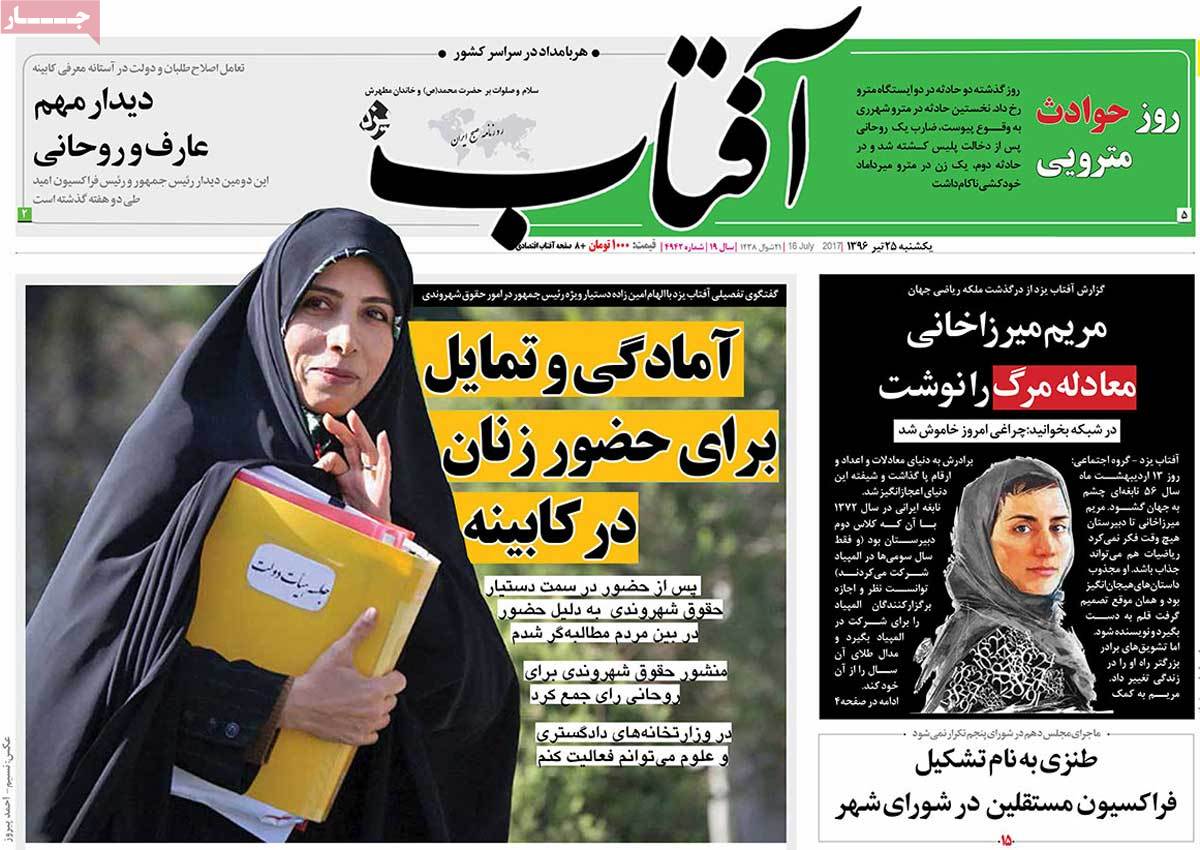
Aftab-e Yazd:

1- Interest in Use of Women in Next Cabinet

2- Maryam Mirzakhani Writes Equation of Death

  • A Report on Death of World’s Math Queen

A Look at Iranian Newspaper Front Pages on July 16 - aftab


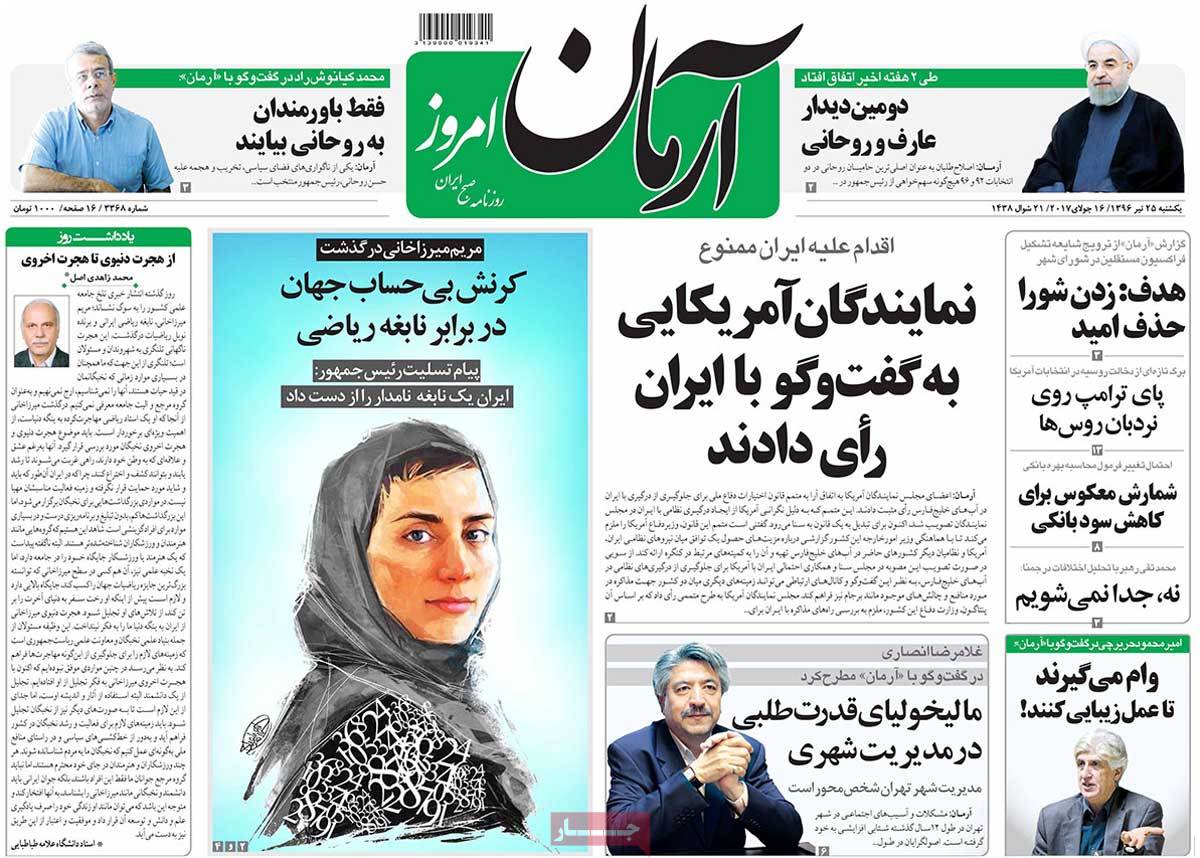
Arman-e Emrooz:

1- President Rouhani: Iran Lost Its Well-Known Genius

2- Any Move against Iran Forbidden

  • US Representatives Vote for Dialogue with Iran

A Look at Iranian Newspaper Front Pages on July 16 - arman


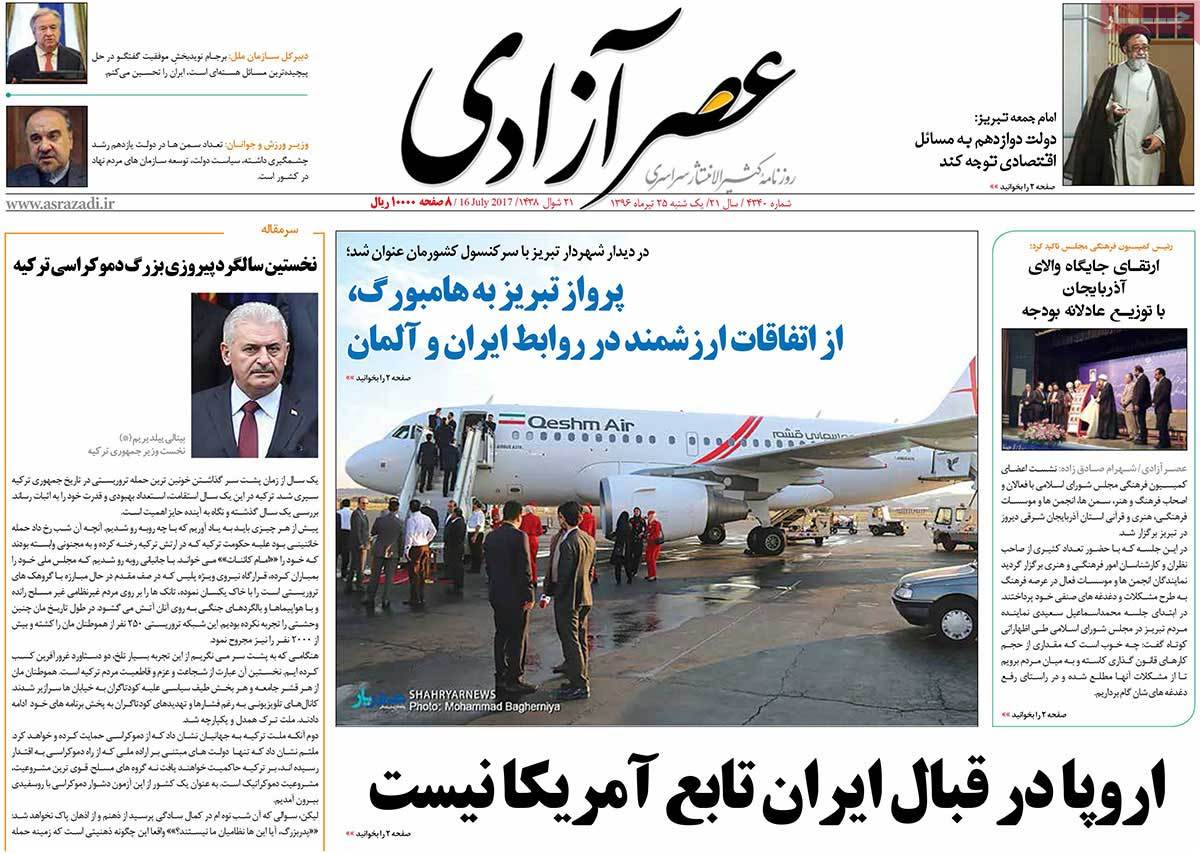
Asr-e Azadi:

1- Direct Flights between Iran’s Tabriz, Germany’s Hamburg

A Look at Iranian Newspaper Front Pages on July 16 - asr azadi


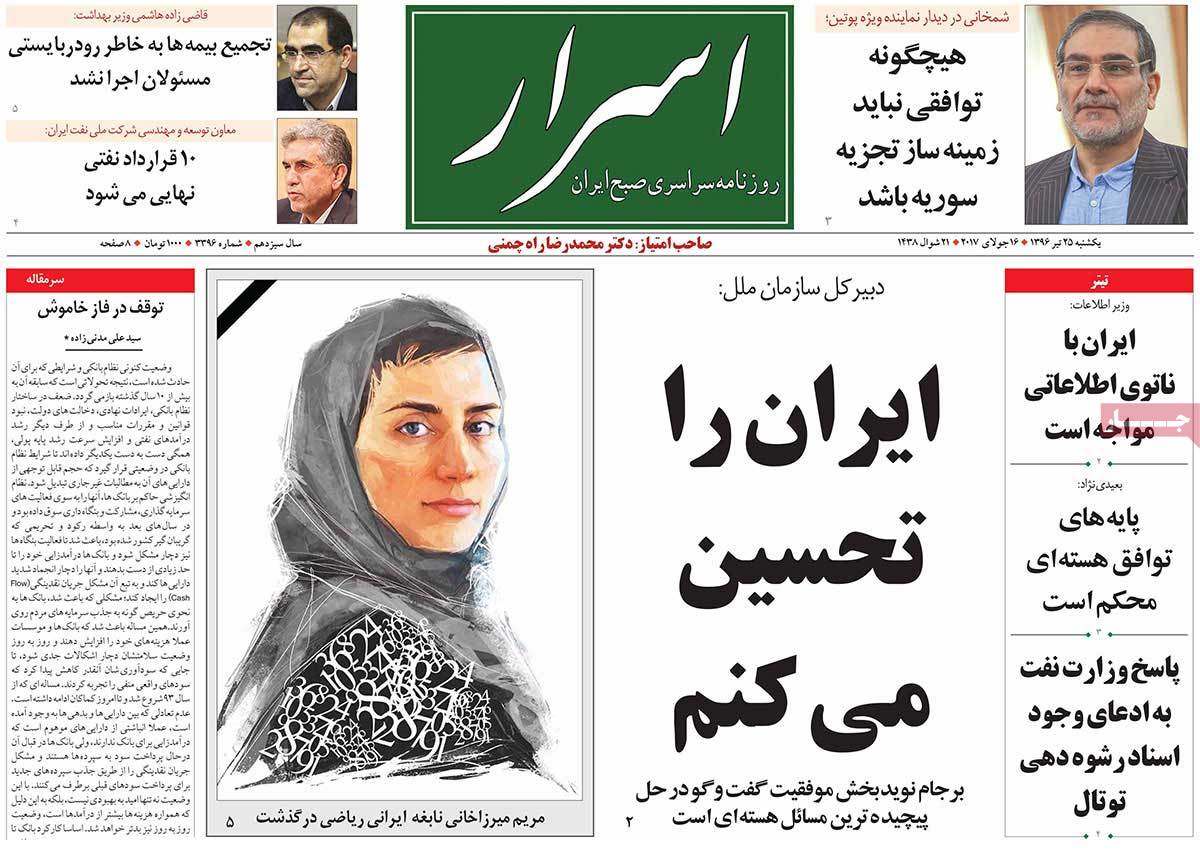
Asrar:

1- UN Secretary General: I Admire Iran

  • JCPOA Shows Dialogue Can Bear Fruit Even in Most Complicated Cases

2- Intelligence Minister: Iran Faced with an Intelligence NATO

3- Iran’s Ambassador to London: JCPOA a Firm Deal

4- No Agreement Should Pave Way for Syria’s Integrity: Iran to Russia

A Look at Iranian Newspaper Front Pages on July 16 - asrar


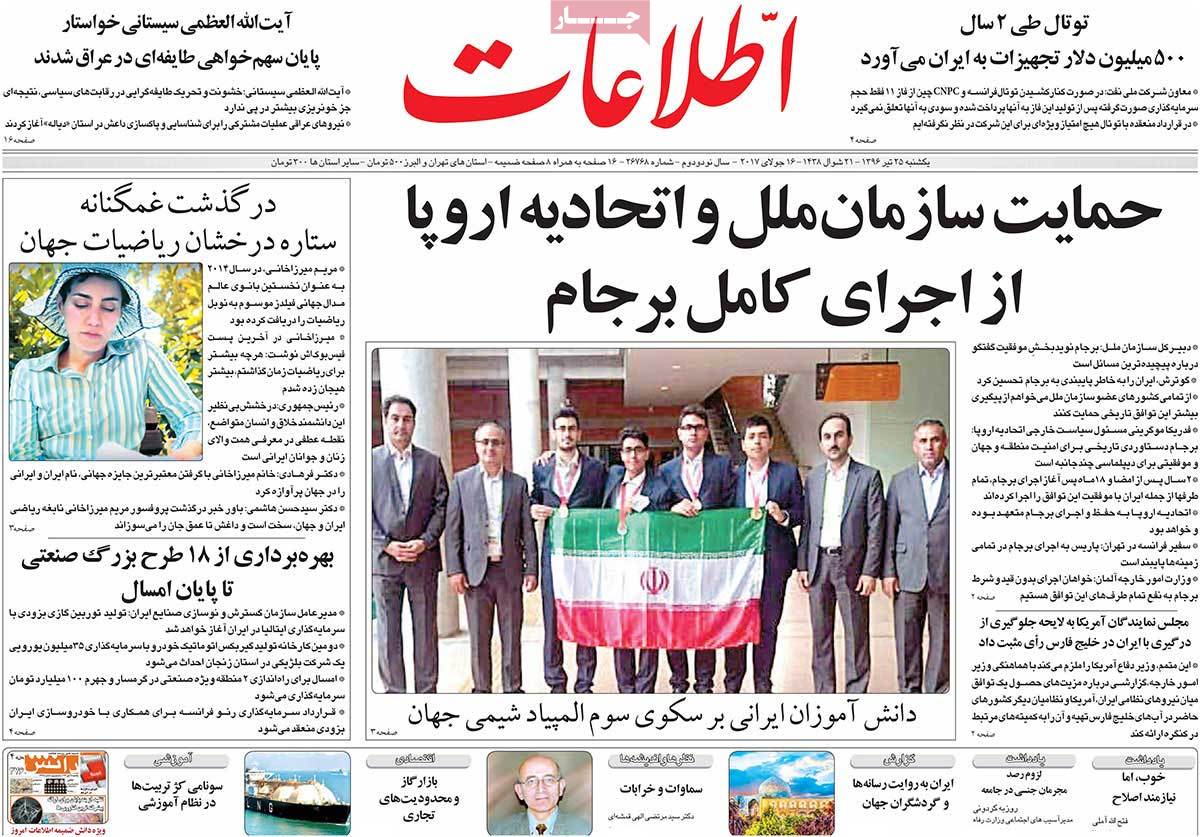
Ettela’at:

1- UN, EU Fully Support Nuclear Deal

2- Sad Death of Brilliant Math Genius

3- Iranian Students Rank 3rd in World Chemistry Olympiad

4- Senior Cleric Calls for Ending Sectarian Demands in Iraq

5- Total to Bring $500 Million worth of Equipment to Iran in 2 Years

A Look at Iranian Newspaper Front Pages on July 16 - etelaat


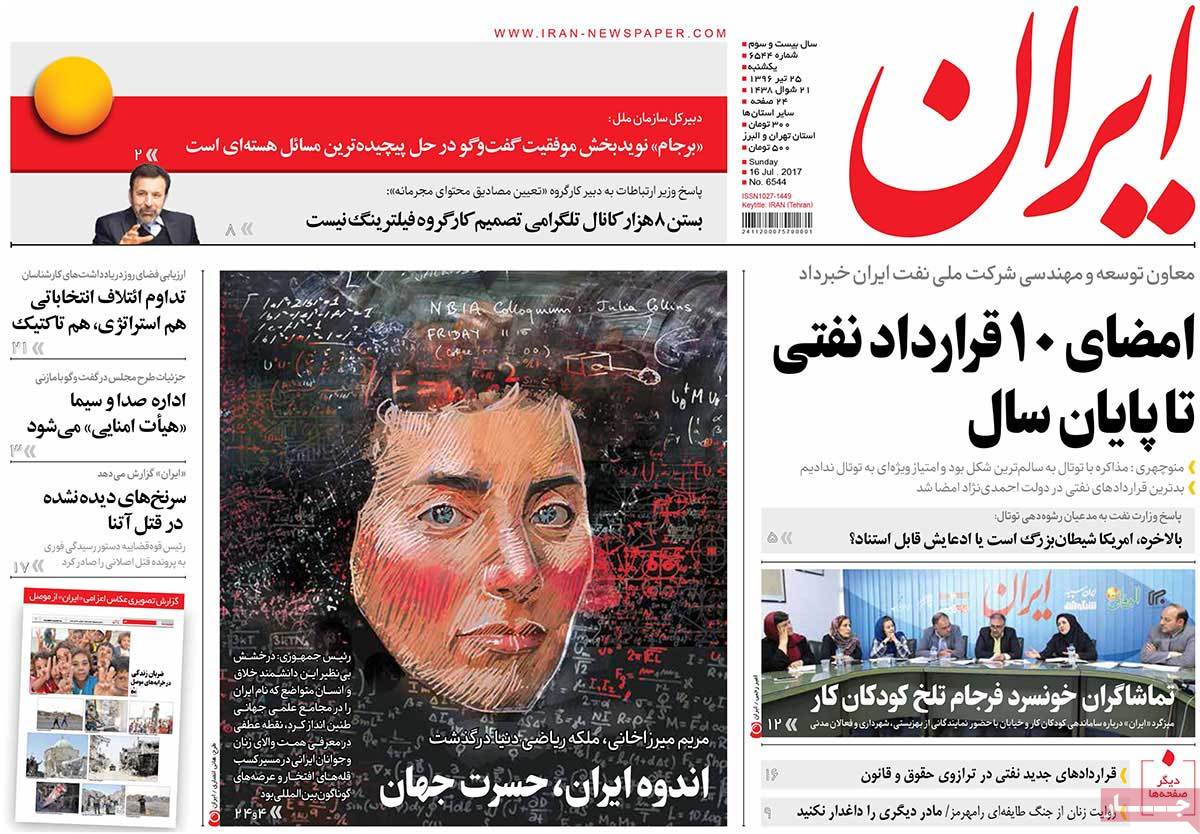
Iran:

1- Iran’s Grief, World’s Regret: Maryam Mirzakhani Dies of Cancer

2- 10 Oil Deals to Be Signed by Year-End in Iran: Official

A Look at Iranian Newspaper Front Pages on July 16 - iran


Javan:

1- World’s Scientific Community in Grief over Death of Iranian Math Genius

2- Conflict in White House over How to Change Iran’s Regime

3- Total Confirms Paying Bribes, Iran Oil Ministry Denies Receiving It!

  • Why Oil Ministry Denies Corruption in Total Deal?
  • A Look at Iranian Newspaper Front Pages on July 16 - javan


Jomhouri Eslami:

1- World’s Consensus on JCPOA’s Success in Its Second Anniversary

2- Violence in Anti-Trump Demonstrations on France’s National Day

3- Total Deal Proves Europe Not Following US in Ties with Iran: Washington Post

A Look at Iranian Newspaper Front Pages on July 16 - jomhori


Kayhan:

1- Kayhan Hits the Target

  • Documents on Total’s Bribe Lead to Tumult in Corrupt Media

2- Documents on Total’s Bribery Definitely Right: Kayhan Chief

3- Wahhabis Outraged by Gifts Given to Shiite, Sunni Couples in Iran

4- Oil Official: Return of Sanctions Not Predicted in Total Deal

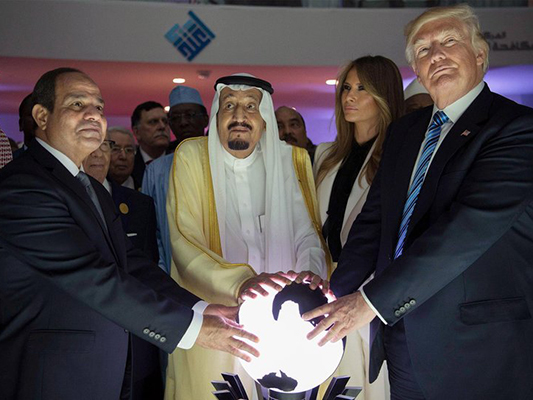
5- Trump: We Received Billions of Dollars for Attending Riyadh Summit

A Look at Iranian Newspaper Front Pages on July 16 - kayhan


Resalat:

1- Two-Third of Iran’s Cyberspace Occupied by Foreigners: Judiciary Official

2- Iraqi Envoy to Tehran: Kurds’ Independence Referendum Illegal

A Look at Iranian Newspaper Front Pages on July 16 - resalat


Shahrvand:

1- Peaceful Death of a Beautiful Mind: Mirzakhani Dies of Cancer

2- Reformists Meet President Rouhani for Consultations on Cabinet Line-up

A Look at Iranian Newspaper Front Pages on July 16 - shahrvand


Shargh:

1- Maryam Mirzakhani, Queen of the Land of Numbers, Passes Away

2- Shariatmadari’s American Documents: Total Questioned Using US DOJ’s Documents

3- Qalibaf’s Aide: We Wouldn’t Lose If Raisi Withdrew in Favour of Us

4- Reports on Major Changes in Cabinet Mere Media Speculations: VP

A Look at Iranian Newspaper Front Pages on July 16 - shargh

Iran Ranks 3rd at Int’l Chemistry Olympiad

According to the Iranian Education Ministry, Amir Hossein Behnoush, Parsa Pirouz, and Amir Abbas Kazemi-Nia received gold medals and Soroush Baniani bagged a silver medal at the 49th edition of the International Chemistry Olympiad.

The Thai and American students ranked respectively first and second during the event which was held in Thailand’s Nakhon Pathom, according to a Farsi report by the Fars News Agency.

297 students from 76 countries took part in the event and the closing ceremony was held on Friday.

The International Chemistry Olympiad (IChO) is an annual academic competition for high school students.

The first edition of the event was held in Prague, Czechoslovakia, in 1968. It has been held every year since then, except for 1971. Iran has won medals in 1995, 1996, 1997, 2001, and 2017 editions of the chemistry Olympiads.

Female Bahraini Activist on Hunger Strike in Prison

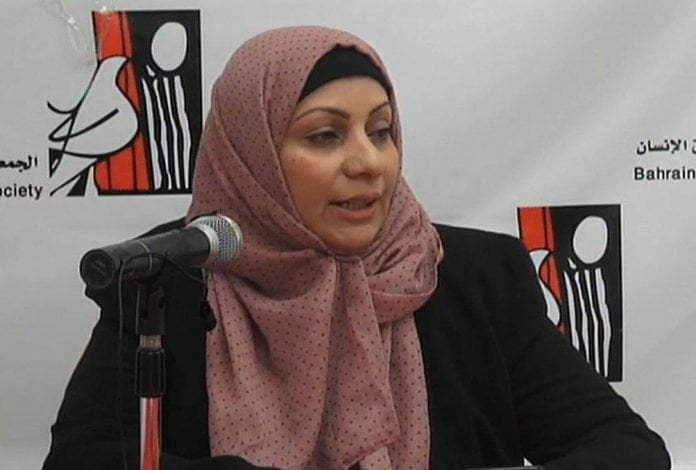
Reports say the Bahraini human rights defender has been brutally tortured behind bars since last week and the security forces are holding her in solitary confinement.

Al-Saegh has been seen in a life-threatening condition while being transferred to Isa Town prison telling observers, “They killed me! Spread it!”

It is feared that she would be tortured in revenge for her disclosures, and no one will be informed about it, according to a Farsi report by Atlas News.

Al-Saegh has been subjected to direct and indirect threats by al-Khalifa regime affiliates. In the wake of a wave of organized threats, which were issued by the Bahraini government agents against her on the social media, she was summoned to Bahrain’s National Security Apparatus last month.

After 12 hours of interrogation, she was admitted to the hospital because of being subjected to severe sexual and psychological harassment.

She revealed the details of the interrogation and what was going on during the interrogation in contact with international human rights organizations.

In recent years, Al-Saegh has appeared in several international societies to bravely disclose human rights abuses in Bahrain.

She has also submitted proven reports on murder, illegal detention, travel bans, torture, harassment and revocation of citizenship from critics of the Al Khalifa regime, and Bahraini political and legal activists.

This comes as several international organizations have shown sharp reactions to the detention of this human rights defender in Bahrain.

Amnesty International in two separate statements expressed concern over Al-Saegh’s imprisonment considering that she had been sexually harassed during interrogations.

Samah Hadid, Director of Campaigns for Amnesty International in the Middle East said Saegh’s only crime is to speak against a regime that cracks down any protest.  Hadid also said that Saegh is at risk of more torture.