Friday, April 24, 2026
Home Blog Page 3977

2 Iranian Locals Killed in Fresh Attack by Pakistan-Based Terrorists

2 Iranian Locals Killed in Fresh Attack by Pakistan-Based Terrorists

“On Saturday afternoon, a terrorist team associated with the global arrogance and foreign intelligence services fired at the Islamic Republic of Iran’s borders in the Saravan region with indirect fire weapons and light weaponry, martyring two native workers,” an IRGC statement said.

“The combatants of the IRGC Ground Force at the Quds base reacted to the terrorist move, killing one of the terrorists and wounding two others,” it added.

The statement said other members of the terrorist group fled deeper into the Pakistani territory after facing retaliation from IRGC troops.

On Wednesday, IRGC Ground Force commander Brigadier General Mohammad Pakpour (seen below) said his forces would target terrorists anywhere they chose.

“We will target counter-revolutionary forces, outlaws and terrorists who are being trained and are planning and plotting to destabilize our border regions anywhere in the world,” he said.

2 Iranian Locals Killed in Fresh Attack by Pakistan-Based Terrorists

Tehran has frequently complained to Islamabad about foreign-backed terrorists who use the Pakistani territory to launch attacks in Iran’s Sistan and Baluchestan Province.

In April, 11 Iranian border guards were killed and three others injured in clashes near the border town of Mirjaveh. The Pakistan-based Jaish ul-Adl terror group claimed responsibility for the attack.

Tehran reacted by saying that it reserved the right to respond to the attack as it chose and warning that its patience was wearing thin with Pakistan’s lack of cooperation.

India Modernising Nuclear Arsenal with Eye on China: Report

New Delhi is developing its Agni missiles which can target all of China from its bases in South India, according to a recent media report covered by IRNA in Farsi.

China, Pakistan and India, as the three countries of South and East Asia, which have a range of border tensions, have 250, 120 and 110 atomic bombs, respectively.

Although the number of India’s bombs is less than its regional rivals, the country is estimated to have produced approximately 600 kilograms of weapons-grade plutonium. Therefore, one can say India’s capacity is not less than its western neighbour.

India, along with China, the United States and Russia, has nuclear potential at sea, air and land.

India’s Sukhoi-30 MKI jets, MiG 29 fighters and Mirage 2000 combat aircraft are capable of carrying nuclear weapons.

INS Arihant nuclear-powered ballistic missile submarines are also among other capabilities of India in this field.

Experts believe India’s increased atomic power and its program to expand its atomic capabilities are to combat China’s growing power.

Analysts say India needs to increase its nuclear deterrent to ensure its security, given the increasing tensions between India, China and Pakistan.

American nuclear experts published an article in the July-August issue of the digital journal After Midnight claiming that India is now developing a missile which can target all of China from its bases in South India.

The paper was also published by Indian papers on Friday.

Hans M Kristensen and Robert S Norris in the article- “Indian nuclear forces 2017”- wrote India is developing a missile that could target China from its southern bases.

Noting that India continues to modernise its nuclear arsenal with the development of several new nuclear weapon systems, the two experts estimate that New Delhi currently operates seven nuclear-capable systems: two aircraft, four land-based ballistic missiles, and one sea-based ballistic missile.

Kristensen and Norris said the two-stage, solid-fuel, rail-mobile Agni-2, an improvement on the Agni-1, which can deliver a nuclear or conventional warhead more than 2,000 kilometres is probably targeted on western, central, and southern China.

This comes as the Agni-4 is already capable of striking targets in nearly all of China from northeastern India including Beijing and Shanghai.

The report adds that India is also developing the longer-range Agni-5, near-intercontinental ballistic missile (ICBM) capable of delivering a warhead more than 5,000 kilometres.

The continuation of the Indian nuclear program provoked criticisms against a country that has not even signed the Non-Proliferation Treaty and even led to imposition of sanctions against India after nuclear tests in 1974 and 1998. However, these sanctions were removed after a while.

Finally, the United States accepted India’s nuclear capability, if the nuclear tests would not be repeated.

Many experts cite Washington’s green light to the suppliers of nuclear facilities, winning the trust of West by India, and the US double-standards as the reasons behind development of India’s nuclear weapons.

Plots Underway to Heighten Tehran-Riyadh Tension: Hajj Official

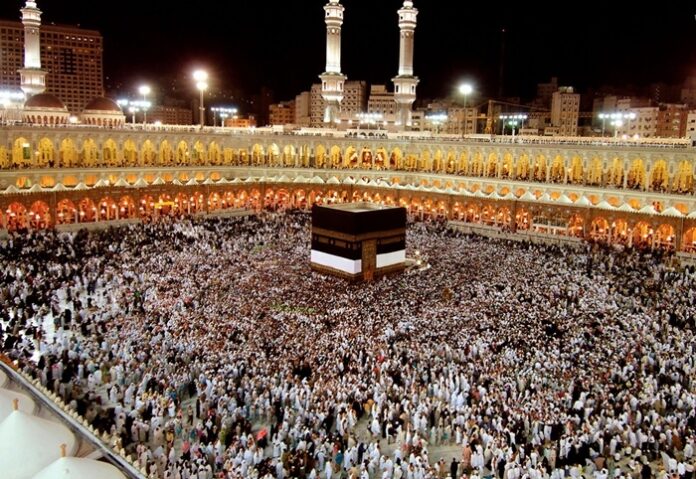
Iran Officially Declares Cancellation of This Year's Hajj Pilgrimage

The representative of Iran’s Leader in Hajj and Pilgrimage Affairs, Seyyed Ali Qazi-Askar, said there are some groups who are against holding Hajj rituals and seek to add fuel to the fire of disputes between Iran and Saudi Arabia by having the religious rituals stopped.

He went on saying that taking part in the largest gathering of Muslims in the holy city of Mecca is a long step in promoting the Muslims’ unity.

“Meanwhile, our long-term interests require us to establish cooperation with our neighbours against regional threats. We should have this point in mind that our security hinges on the stability of the region. Hajj rituals can provide us with an opportunity to expand our regional cooperation,” Qazi-Askar noted.

The Iranian official dismissed as baseless the statements spread on the cyberspace about pilgrims’ security, saying the remarks are aimed at dissuading Iranian pilgrims from taking part in this year’s Hajj ritual.

“Some people are seeking to dissuade Iranian pilgrims from visiting the holy sites in Saudi Arabia through sharing false statements on the cyberspace.”

He expressed regret that some religious sections of the Iranian society have been negatively influenced by such statements, noting that the move has disappointed the Iranian pilgrims.

“Most of the posts in social media are clear examples of lie and treason, but fortunately our people have trusted us.”

He added that all arrangements have been made to provide the Iranians with good and safe Hajj rituals this year.

He referred to the recent baseless rumours about sexual assaults on Iranian women in Saudi Arabia and said, “Over the past long years of my career in the Organization of Hajj Affairs, I’ve never heard of such cases. I hope the Hajj pilgrims don’t take seriously such rumours.”

According to a Farsi report by Tasnim, the Iranian official further noted that Iran’s approach towards Hajj ritual is not factional.

“As the late founder of the Islamic Republic, Imam Khomeini, said, we should not turn Hajj into a factional issue because Hajj is a universal issue which brings together Muslims from around the world.”

Qazi Askar said there are certain racist groups outside the country who try to tarnish the image of Hajj rituals as a forum for unity among the Muslims.

“The groups raise this false question why the pilgrims should spend their money in Saudi Arabia instead of helping the poor. But we should have this point in mind that Hajj is an obligatory religious ritual and it has been highly recommended by religious figures,” he said.

Qazi-Askar also stated that most of the pilgrims have done their best to help the poor over the past years. “They have also donated money to charities on many occasion,” he added.

The Iranian official also referred to the issue of electronic bracelets for Iranian pilgrims and said, “We have been under huge pressure over the issue after the spread of false news about them, but the bracelet functions as a watch. They have been produced in Iran with the aim of providing the Iranian pilgrims with security.”

He pointed to the religious events to be held during Hajj rituals and said during the previous years, the Iranian pilgrims held Komeil prayers in an open space between al-Baqi cemetery and al-Nabi Mosque.

“But this year, due to security reasons, we have decided to hold the prayers inside the hotels. The Saudi government has agreed with our decision. We wish to hold the prayers in the previous location once again.”

He added that as confirmed by the Saudi Arabian Hajj officials, the groups of Iranian pilgrims are among the most well-organized ones during Hajj ritual.

“Today most of the Muslim states are seeking to take advantage of our experiences in this field and we are proud of it,” he concluded.

Iran Condemns Israel’s Closure of Al-Aqsa Mosque

“Israel’s move to close the al-Aqsa mosque compound to the Palestinian worshipers is blameworthy and reproachable,” Bahram Qassemi said, adding the closure violates the basic principles of human rights and humanitarian law.

The spokesperson went on saying that “in addition to its crimes, invasions and violation of the Palestinians’ human rights, the occupying regime of Israel has established a new heresy by targeting the religious freedom and rights of the Palestinian Muslims which will have dangerous consequences.”

He called for the immediate opening of al-Aqsa Mosque compound to the Palestinian worshipers and urged all free-spirited states as well as the international community to pressurise Israel into observing the basic rights of the Palestinians in the occupied territories.

He made the statements in reaction to Israel’s decision to close the al-Aqsa Mosque compound to the Palestinian worshipers on Friday. The closure came after a deadly shooting during which three Palestinians and two Israeli police were killed near the mosque.

The mosque has been the scene of deadly clashes between Israeli and Palestinians over the past years.

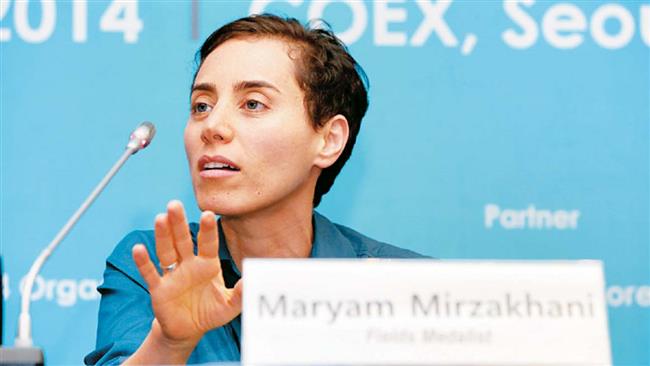
Condolences Pour in for Iranian Math Genius Mirzakhani

In his message, President Rouhani said the demise of “the well-known mathematical genius” has caused deep sorrow for him.

The president further expressed condolences to the country’s scientific community and the bereaved family of Mirzakhani over her death.

Parliament Speaker Larijani, in his message of condolence, described Mirzakhani as a wise woman of science and an elite in world math whose demise has caused great sorrow.

First Vice-President Es’haq Jahangiri, Foreign Minister Mohammad Javad Zarif, senior conservative politician Gholam-Ali Haddad Adel, and senior reformist lawmaker Mohammad Reza Aref also offered sympathy over Mirzakhani’s death.

Health Minister Seyyed Hassan Qazizadeh Hashemi said in his message of condolence that “it is hard to believe” the heartbreaking news of her death.

Zahra Ahmadipour, the head of Iran’s Cultural Heritage, Handicrafts, and Tourism Organization (ICHTO), referred to Mirzakhani as a spiritual heritage of the Iranian nation and a genius who solved the ‘equation of life’, rushing to meet her Creator.

“Iran and the world are shocked by the sudden incident,” she added.

The French Embassy in Tehran and Gary Lewis, the UN’s Resident Coordinator in Iran, also sent separate messages of condolences after her tragic death.

Assailant Gunned Down after Stabbing Cleric in Tehran

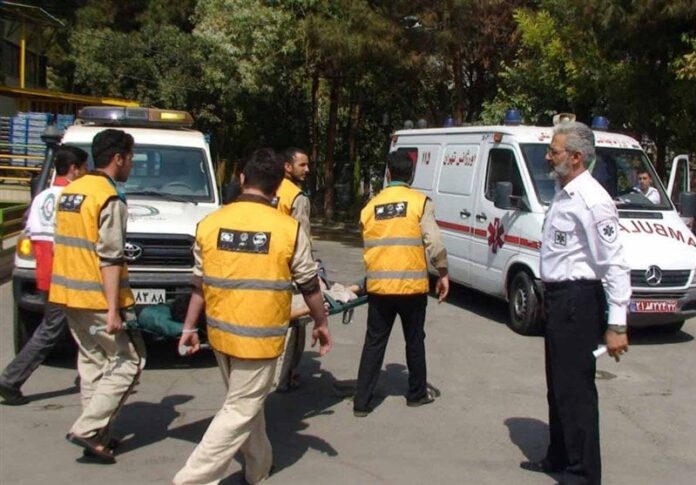
Speaking to Tasnim, Deputy Governor of Rey City Hadi Tamhidi said the stabbing incident began in Shahr-e-Rey subway station on Saturday morning, when a clergyman tried to give advice to the assailant on the basis of the Islamic principle of ‘promotion of virtue and prevention of vice.’

The angry man attacked the clergyman with a knife, he added, saying the assailant then refused to surrender to the police when officers intervened.

The attacker was finally shot dead by the police officers, he said

The injured clergyman and other citizens stabbed in the incidents have been taken to the hospital, Tamhidi went on to say.

The situation is reported to have returned to normal in Shahr-e-Rey subway station.

Iran Warns of Zionists’ Plot to Undermine Syria Gov’t

In a meeting with Russia’s special envoy on Syria, Alexander Lavrentiev, in Tehran on Saturday, Secretary of Iran’s Supreme National Security Council (SNSC) Ali Shamkhani said all sides involved in the Syrian crisis must respect the country’s national sovereignty.

“Any agreement must not undermine this unchangeable principle or prepare the ground for Syria’s breakup,” he added.

Iran Warns of Zionists' Plot to Undermine Syria Gov't

“The Zionist regime [of Israel] forms deep and extensive bonds with terrorist groups and their sponsors and seeks to make use of these groups as an instrument to allegedly secure Israel’s borders and to continue with the suppression of the oppressed Palestinian people,” he said.

The SNSC secretary described as “unacceptable and worrisome” moves by certain terrorist elements to take advantage of political talks and ceasefire to recover.

“These elements are not committed to any agreement or deal and will use any opportunity to kill innocent people and pursue their own inhumane objectives,” Shamkhani said.

The Russian diplomat, for his part, said Iran, Russia and Syria are playing a leading and determining role in the genuine fight against terrorism.

He emphasized that the three countries would seriously proceed with their strategic cooperation until uprooting terrorism.

Syria has been fighting different foreign-sponsored militant and terrorist groups since March 2011. The United Nations special envoy for Syria, Staffan de Mistura, estimated last August that more than 400,000 people had been killed in the crisis until then.

Syrian Defense Minister Major General Fahd Jassem al-Freij on Thursday lauded the support provided by Iran, Russia and Lebanon’s Hezbollah resistance movement in battling terrorism inside Syria.

Russia and Iran are the main international backers of the Syrian government in its battle against foreign-backed terrorists.

At Damascus’ request, Iran has been providing military advisory support to the Syrian army in its counterterrorism operations.

Russia has been also carrying out an aerial campaign in Syria in coordination with Damascus since September 2015 to further boost the Syrian military’s anti-terror fight.

‘A Jewel Named Maryam Mirzakhani’

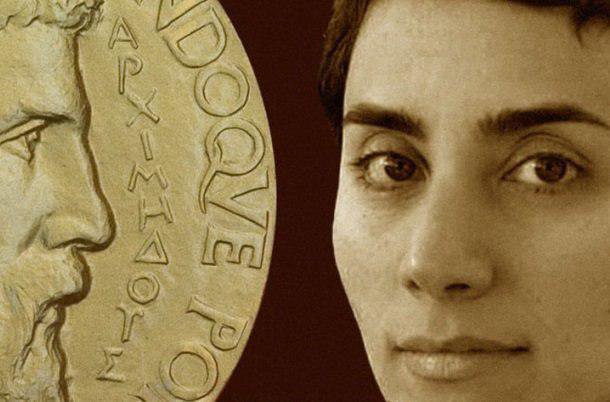
Former Iranian Education Minister Mohammad-Ali Najafi has, in a short piece, praised Iranian mathematical genius Maryam Mirzakhani, who died of cancer on June 15, 2017.

Najafi’s remarks are particularly significant as he himself received his master of science degree in mathematics from the prestigious Massachusetts Institute of Technology (MIT) in 1976 but dropped out of PhD program in 1978 during the Iranian revolution to return to Iran. He also received in B.S. in math from Sharif University of Technology.

Najafi, who is also an advisor to President Hassan Rouhani, wrote the piece just two days before Mirzakhani, the first Iranian woman to win the prestigious Fields Medal, passed away.

What follows are excerpts of Najafi’s remarks published on Thursday in IRNA:

Maryam Mirzakhani, the holder of the Fields Medal, the most prestigious math award in the world, is a gem stone for all women in Iran and across the world, and a paragon of modesty and philanthropy coupled with scientific and mental capability. We should pray for her. […]

Back in 1994 when I was Education Minister, Maryam and another girl (Ms. Roya Beheshti) were the first high school third-graders to become members of the National Students’ Maths Olympiad Team and leave for international competitions before they started their pre-university studies.

Given that the two were too young and even hadn’t finished their third grade, we didn’t expect too much of them. But much to our surprise, both won the gold medal and their performance astonished all participants. Maryam stood first in the event.

It was then when Maryam was identified as a genius. The following year, she got the complete score and won the gold medal again, standing first among the participants. Maryam continued her higher education at the Mathematics College of the Sharif University of Technology in Tehran. Fortunately, I could see for myself her brilliant accomplishments and progress.

After receiving her bachelor’s degree, she went to Harvard University where she received her Ph.D. and graduated summa cum laude. Then she began work as a professor at prestigious Princeton University.

Her mental innovations and eye-catching creativity saw her win numerous scientific awards, and finally she won the Fields Medal, the most prestigious math award in the world which is somehow regarded as the Math Nobel Prize.

‘A Jewel Named Maryam Mirzakhani’
Iranian mathematician Maryam Mirzakhani (3rd girl from right) & other Iranian students take photo with former late president, Akbar Hashemi Rafsanjani before departing for 1995 Math Olympiad in Canada

Maryam could be compared with the greatest mathematicians such as Amalie Emmy Noether, and her works will undoubtedly continue to be used by the world’s scientific math circles for many years.

But what has impressed me more than Maryam’s math genius over the past years are her moral values, especially her simplicity, scientific modesty and other good characteristics, which have made a perfect man of her in the true sense of the word.

Maryam loved Iran, and during the years when she was staying in the United States, she travelled to Iran for several times and shared her research findings with Iranian mathematicians.

It would be too sad if the mathematics world and Iranian scientific community lose the dear Maryam so soon. There are still many unknown mathematical concepts which might come to light thanks to her creativity. Maryam’s genius could pave the way for great advances in the field of mathematics for many years. So, I ask all fellow Iranians to pray for her.

Iran Launches ‘Simorgh’ Supercomputer, Will Build Another in Memory of Mirzakhani

Russia Warns against Use of Qatar Crisis to Change Mideast Balance

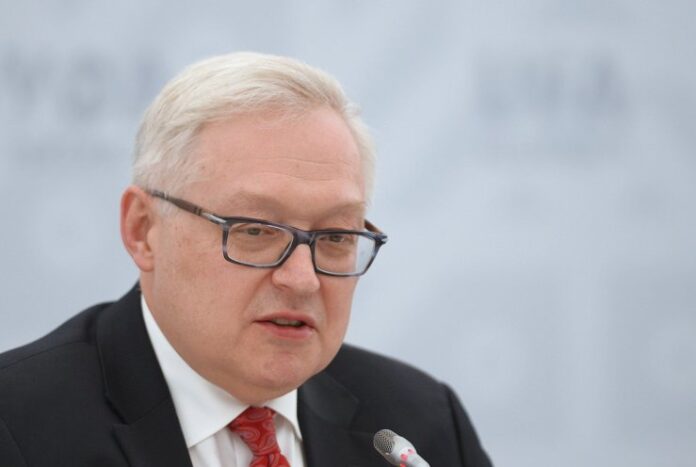
In an exclusive interview with the Etemad daily newspaper, Ryabkov has weighed in on a range of issues, from the nuclear deal between Tehran and world powers to the ‘promising’ relations between Tehran and Moscow, the Qatar crisis, and Russia’s presence in Syria.

During the interview, the Russian deputy foreign minister stressed that Moscow will stay in Syria as long as its goals are achieved in the Arab country.

Ryabkov also pointed to the bilateral ties between Russia and the Islamic Republic of Iran, and said the two sides have ‘one of the most promising relations on earth’ despite all the ups and downs.

He further warned the United States against playing games with the Joint Comprehensive Plan of Action (JCPOA), saying there is no alternative to the historic nuclear deal between Iran and the six world powers.

Ryabkov gave the interview to Etemad’s Sara Massoumi during his recent visit to Tehran on July 11, a few days before the second anniversary of signing the nuclear deal.

Here is the full text of the interview:

What are the main subjects of your discussions here in Tehran?

We have finished our round of exchanges with deputy ministers Araqchi and Takht-Ravanchi. We have focused, very much focused on the JCPOA and the implementation of JCPOA and future of this arrangement because as we all see the road is not necessarily without bumps, and there are in some ways predictable bothers so the ones which need to be looked into we have addressed. Besides, we have discussed some issues in relation to our joint and common work at the United Nations on issues of security. We didn’t touch any bilateral things since that was not the point and I’m not doing bilateral relationship with Iran formally in the Russian system although I follow it and I’m glad that the relationship is in an upswing and moving to new heights if you wish, both politically and economically. But centre, the focal point of our discussions today was JCPOA.

In the light of Donald Trump’s threatening remarks about the nuclear deal, has Russia pressed Washington or sent any direct messages to the Trump administration, calling for US commitment to the JCPOA?

You may rest assured that we have done so already many times at different levels, including at the very high political level. We have said that there is no alternative for the JCPOA, as a long-term sustainable solution to the problems that existed around the Iranian nuclear program for some time and frankly poisoned the atmosphere and made so many things difficult to achieve. Now, the JCPOA is there, and it has already made a difference in terms of releasing pressures in many forms, releasing sanctions, most of them but not all of them. This is one of the problems. We see continuous attempts by some circles in the US to put the JCPOA in question and even in jeopardy. We’ll warn the US administration against it, in strongest possible terms. We think it would be to the detriment of the interests of the US itself, if JCPOA is removed or if the JCPOA is subject to some modifications. I don’t see any reason why and how it should be modified. We stay very firm and strong on this point as well. And we warn the US altogether about this kind of easy-going frivolous, if you wish, approach to very serious things in international affairs. Serious things should be treated seriously. There is no place for just trying to scrape something on surface, and then to conclude that this is wrong or this is bad. All things deserve deep analysis and upon our own deep analysis we conclude that there is no alternative to JCPOA, and we warn the US against playing games with this agreement.

Russia will warn the US administration against putting the JCPOA in jeopardy, in strongest possible terms. We think it would be to the detriment of the interests of the US itself, if JCPOA is removed or if the JCPOA is subject to some modifications. I don’t see any reason why and how it should be modified. […] We warn the US against playing games with this agreement.

Did Russia receive any green light from the American side which shows that they are going to continue the implementation of JCPOA?

We know that the US is currently in the process of reviewing its policy towards Iran, including the JCPOA, as well as on many other aspects of their foreign and external policy altogether. We don’t know when this process will end. We thought initially that it may end somewhere mid-summer. That is in a very few days, and it didn’t happen and it will not happen, I believe before the end of summer. It may well take even longer than that but that continuous sense of uncertainty about the JCPOA is unhelpful. We think it would be much better if the US decides to observe and preserve the JCPOA and announces this sooner other than later. And of course we will once again warn against a very destructive scenario of reconsidering “the situation around the JCPOA”. And we use the time of this US policy review to make all these points known to them, at the political level and at lower levels including at the expert level. Next week, the next regular joint commission meeting is due in Vienna. We will use this venue and this platform once again to send this message as I have tried to describe it for you, to the US side in the course of the meeting and also on the margins of the meeting when we take bilateral contexts with the US side.

Was the nuclear deal or Iran regional activities brought up during the recent president Trump and president Putin meeting?

Let me tell you first that it was one of the most engaged and intense meetings that I know. I wasn’t present there myself and the only official present from each side was the foreign minister. Foreign Minister Lavrov and Secretary of State Tillerson. But the meeting was very intense and it was a long meeting. And it was focused so to say on three major clusters of issues. One is bilateral relationship between the US and Russia, which is in a very bad stance. The previous US administration, the Obama administration, deliberately created a situation when it is very hard for any new administration to move things into a more positive direction. Beside you saw all the speculations and ugly stories deliberately developed in the US media against Russian ambassador and Russia, as a state, so-called Russian meddling which never took place, I stress this and I can say as many times as you want that there was no Russian interference in the US domestic affairs. So this debate, this discussion, continued at the level of presidents for a while at their meeting in Hamburg. And they have agreed to more practically deal with the issues of information security and cybersecurity and also to try to develop if possible a framework for the US-Russian relationship of a more political nature, where mutual respect and mutual non-interference in domestic affairs and internal affairs could be set forth on a documentary basis.

During the meeting between the Russian President and Trump, the issue of Iran as a positive force regionally, an important player that manages to add reason and stability to this area of endless strategies for Syrian people was raised and ditched upon and highlighted by president Putin.

The second cluster was Syria and everything that relates to Syria, to the current moment, the political process, and also the process of establishing the zones of the de-escalation and one of the zones was announced practically in parallel with the presidential meeting there and they kind of gave a blueprint for that zone and the issue of Iran as a positive force regionally, an important player that manages to add reason and stability to this area of endless strategies for Syrian people was raised and ditched upon and highlighted by president Putin. I wouldn’t deny that it was questioned mildly by president Trump. But that was how we expected things to transpire and that was the only turn of the discussion when I think Iran was touched in a specific manner by the president. And the third question was Ukraine where we have a very difficult situation of president Poroshenko of Ukraine moving away and departing from the so-called Minsk package which we believe is the indispensable and the only actually basis for any viable solution. So president Putin explained our logic and said how we believe things should be moved forward in different formats including at the Normandy format and president Trump announced on that occasion that he has appointed or rather I may misinterpret what was said, that the US has appointed its envoy on Ukraine and that is ambassador Kurt Volker, former US permanent representative to NATO. He will serve as a successor to Victoria Nuland, former assistant secretary for Europe and Eurasia. She played a role as a appointed person on the US side in dialogue with Russia and with Ukraine for that case on these issues. Kurt Volker will step in her foots. So we look forward to continued dialogue with the US. So that was more or less how this meeting took place with some specific agreements in the end in terms of instructions to the leaders to work and in terms of de-escalation zone announced, but also a good deal of disagreement that is further substance for discussion. So the JCPOA was not mentioned there, to finish my long answer with a short sentence.

The US has repeatedly mooted Iran’s missiles program in the UN Security Council. However, the missiles program violates neither the JCPOA, nor the Resolution 2231. How does Russia view the issue?

We have here a very clear case of political misinterpretation of the earlier achieved agreements by the US. Nothing in 2231 allows the US to play these dirty games on the issue of Iranian missile testing and Iranian missile program altogether. The only thing, which 2231, you know, requests or even invites Iran to is to refrain from testing of missiles specifically designed for delivery of nuclear weapons. Well, invitation is not equal to prohibition. That’s obvious for any sensible person. Secondly, nothing in Iran has been done or will be done in terms of developing a nuclear-weapon device. We are very confident in this and I think JCPOA is a big achievement also in terms of restoring complete and full confidence in exclusively peaceful nature of the Iranian nuclear program. This is the backbone of JCPOA altogether. So it would be ridiculous if it would not be that serious that the US deliberately distorts the concept of 2231 to its own advantage. So we reject any attempts to use this as a pretext for further sanctions. There will be no place for UN-approved sanctions, additional sanctions on Iran. That I promise. But for the US unilateral sanctions on Iran, I think, is contrary to the spirit and letter of JCPOA and we thus question the US compliance with the JCPOA because of this type of behaviour. Not just because of this but also because of this. And how a discussion on the Iranian missiles program develops is a litmus test of good intentions of the US and their faithful implementation of the document.

Nothing in UNSC Resolution 2231 allows the US to play its dirty games on the issue of Iranian missile testing and Iranian missile program altogether. […] Moscow rejects any attempts to use this as a pretext for further sanctions.

How do you describe Iran-Russia relations? Some observers call them strategic partners, some see them as allies, and some call the ties as only temporarily strategic.

I think it’s not an easy relationship because it’s there for several centuries. And naturally, over centuries with the neighbours we have some ups and downs but I am a true and firm believer not just in the bright future of our relationship, it goes without saying, but also on our ability in our current positions to get more action more momentum more trekking in a positive sense because we are here united about some very clear and obvious goals; stability and prosperity in the region, be it west Asian region, Gulf region, Syria, broader Middle East, and also further north for Iran, in the vast area of Eurasia. We are good neighbours and we should explore opportunities and use these opportunities how to benefit from closeness in terms of developing trade, investment, exploration of natural resources, preservation of environment, sea environment, everything, transport corridors, you mentioned it. So I’m hopeful but I’m also keen to say that this is one of the most promising relations on earth.

The relations between Tehran and Moscow are one of the most promising relations on earth. The two sides are good neighbours and should explore opportunities to benefit from this closeness in developing trade, investment, exploration of natural resources, etc.

Does Russia have a long-term plan for military involvement in the Middle East? It is the most active military actor in Syria now.

Well, we don’t have those plans and I don’t believe we’ll develop some. We will be in Syria as long as we can say we have achieved our goals and that is to defeat the terrorists and ensure that the environment for the political process is the right one. Still there are forces that work to the detriment of it. I am encouraged by the fact that Iran together with Russia and Turkey plays that important role in terms of guaranteeing the arrangements arrived at during the Astana process, we’re also party to the Geneva process. But now with the US working on the zones of de-escalation in different areas, we’re stressing that it’s not an alternative to the unified territorial integral and sovereign Syria. It’s rather a tool to ensure that the integral and sovereign and territorially inviable Syria is in place and then let’s the Syrian themselves decide on how they will govern themselves. We will be there to defeat terrorists and ensure that destructive forces do not take over the more reasonable forces. That’s the point I will make. How long it would take is an open question, so we have no firm time-frame.

Russia has no firm time-frame for its presence in Syria, but it will be in the Arab country as long as we can say we have achieved our goals and that is to defeat the terrorists and ensure that the environment for the political process is the right one.

Why was ceasefire in southern Syria put off the table in Astana talks to be negotiated in direct bilateral talks between Russia and the US? Was it because of Israeli concerns about Iran’s role in the region?

No, I would not overplay the Israeli influence altogether. One could say equally that the Jordanian influence was there. My point would be that it’s a proper test ground where all the parties involved with a degree of confidence well below zero may try something alternative and more positive and constructive. And then try to spread this practice and use this experience elsewhere where the situation probably is even worse and more complicated than exactly in this area. I would not overplay the Israeli factor.

There is a new crisis in the Persian Gulf region which affected Qatar and some of its Arab neighbours especially Saudi Arabia. How concerned is Russia about this and did you try any kind of mediation in this crisis?

Of course we are concerned. I think although the immediate danger of some military conflict is no more there, nonetheless it is not gone and fundamental problems which turned into these open crises are not addressed in the way they should be. We have proposed in our contacts with all players involved including with the Qataris, the Emirates and the Saudis of course and others to offer our good offices. We’re not imposing anything. We follow how others behave. We follow with interest the US initiatives and action on this. But one thing we want to warn against is to use this dangerous situation in an attempt to “change the regional balance”. That would be yet another blow to the already very fragile situation and the least thing all of us will need is you know a major crisis in the Persian Gulf. And I welcome and approve the very responsible policy, position, stance which the government of the Islamic Republic of Iran takes on all these issues and the messages that are being sent from Tehran to the major actors in the Gulf. We follow these with interest and we’re trying to, as much as we can, to be there in a positive way, not to meddle but again to offer good services when and if required.

On Qatar crisis, Russia is following the US initiatives and action, but one thing we want to warn against is to use this dangerous situation in an attempt to “change the regional balance”. That would be yet another blow to the already very fragile situation and the least thing all of us will need is a major crisis in the Persian Gulf. 

Russia is fighting ISIS (Daesh) in Syria. However there are so many critics about the military presence of your country in Syria. Do you have any time table for withdrawing from Syria?

Well, we came into Syria for that purpose, to fight ISIS, Nusra, affiliates there. We didn’t have any particular success unfortunately in agreeing with the US under the previous administration on how to “separate” the terrorists from the opposition to the government which took weapons into their hands. I know it is a very fragile border, a very fragile limitation line between the two and the US was not able to draw that line in a manner that was clear and persuasive for us. And I suspect they didn’t do so on purpose frankly. They wanted to keep this grey zone to play their geopolitical games, dividing terrorists on “bad terrorists” and “not so bad terrorists”. That’s the worst thing possible and it prompted us in the end to get more involved in practical terms there. Some say that Russia is there to just support Assad militarily. We are not doing what we’re doing there to support Assad militarily but we support him militarily when he fights terrorists and some US action points to the contrary and we went public earlier this year by saying that for example while attacking the Shayrat airbase on April 7, which was an act of aggression on the part of the US in grave violation of UN Security Charter, the US played the game of terrorists. They played this into the hands of terrorists. We went public saying that they helped terrorists. That’s not the behaviour of a responsible superpower by no measure. And we will stay firm saying why we’re there and what we’re doing there and that this is right. And what they’re doing, that was wrong. Hopefully, the zone of de-escalation in southwestern Syria will help us build confidence and avoid mistakes, tragic mistakes, and miscalculations and misinterpretations of each other’s intentions.

‘EU’s Pro-JCPOA Stances Pushing Trump to Back Down’

Hamid Baeidinejad, the Iranian Ambassador to London and a member of the country’s nuclear negotiating team, has weighed in on the developments surrounding the deal signed between Tehran and six world powers on Iran’s nuclear program known as the Joint Comprehensive Plan of Action (JCPOA).

He wrote the Farsi article for the Iran newspaper on the eve of the second anniversary of the conclusion of the agreement.

The full text of his remarks follows:

Hamid Baeidinejad

Today, we are on the eve of the second anniversary of the signing, in Vienna, of the JCPOA, an agreement regarded by world governments and other members of the international community as the biggest achievement on the diplomatic front in recent decades. The JCPOA is an international deal which put an end to one of the toughest and most complicated recent international crises.

The JCPOA not only helped maintain and boost regional and international peace and security, but had brilliant achievements for Iran as well. It secured our country’s nuclear rights, and removed many of the obstacles to national progress and development created by the sanctions, something which is clear to all fair-minded individuals. The JCPOA ended sanctions against Iran in the fields of energy (oil, gas, and petrochemistry), transport (commercial vessels, oil tankers and planes), and many other similar areas. They were the sanctions whose destructive effects on Iran’s economy were really tangible. The lifting of financial, economic, energy, banking and other sanctions on Iran led to the resumption of the country’s oil and natural gas exports, unfreezing of tens of billions [of dollars] in frozen Iranian assets with foreign banks, purchase of aircraft for the first time and renovation of the country’s air fleet, and resumption of transiting commodities by sea.

The positive impact of the JCPOA on Iran’s economic development resulted in an eight-percent economic growth after dozens of years. It is hoped that this positive trend will, by God’s grace, continue despite all jealousies and pressures. Given Iran’s special status in the region, the JCPOA has provided us with an exceptional opportunity to establish strategic relations with neighbouring countries, especially Iraq. The defeat of the ISIS terror group in Iran and Syria once again proved that Iran’s power is not a tool to dominate other nations, but rather is a factor to establish and ensure peace and security in the region.

If, today, on the eve of the second anniversary of the conclusion of the JCPOA, the deal has remained the focus of attention on the regional and international levels, the reason is that the fundamental principles of the agreement are strong and firm. Even the new US administration, which had announced it would tear up the JCPOA once it comes into office, has failed to take action against the agreement and, despite all its rhetoric and breaches of promises, has had to abide by its obligations under the JCPOA and announce that it would continue to comply with its commitments until carrying out a precise assessment. Still, despite all objections, Washington has openly violated some of the key bilateral and multilateral agreements. In spite of objections, the US began the construction of a wall along its border with Mexico, unilaterally breached the agreements which the Obama administration and Havana had already signed and which had been termed “historic,” and worst of all, unilaterally pulled out of the Paris Climate Agreement.

The new US president launched the most severe attacks against the JCPOA at the beginning of his election campaign. He called the JCPOA the worst agreement in history and promised not to implement it. Nevertheless, despite all this rhetoric, the US administration made good on its commitments at a few sensitive junctures when it had to make key decisions for the JCPOA to continue to survive. The first juncture was when Washington ordered a ban to remain in place on the implementation of sanctions which would have been renewed after four months had the US not ordered its implementation to stop. This would have, incontrovertibly, been a violation of the JCPOA. It was a very sensitive juncture. However, the US president reinstated a ban on the enforcement of sanctions, which caused the implementation of the sanctions to stop.

The second juncture was when, by virtue of an earlier US congressional enactment, the administration had to report to the Congress on whether or not Iran was living up to its commitments under the JCPOA. At that stage, too, the US administration officially announced to legislators Iran’s compliance with the deal. The third juncture was when the US had to decide whether or not to get on board with the international community in confirming or not confirming Iran’s compliance with its commitments regarding money laundering; a confirmation that would, at least, suspend international restrictions against Iran’s banking system.

Although the move was not directly related to the implementation of the JCPOA, it could be a serious challenge to the implementation of the agreement. In a recent meeting of the Financial Action Task Force (FATF) on Money Laundering in Valencia held to discuss effective enforcement of regulations on fighting money laundering and funding terrorism, the US agreed along with a number of members to suspend measures against Iran.

Given the stances that the American president has adopted against the JCPOA time and again, the above-mentioned decisions by the US government were among the toughest decisions that Washington had to make. However, the most important reason why the US got on board with the international community was that all US allies, especially European countries and permanent members of the UN Security Council, unanimously believed that it was necessary to maintain the JCPOA as the most important accomplishment on the diplomatic front. This shows the JCPOA has a strong foundation, which guarantees its continued implementation.

But, indubitably, the implementation of the JCPOA is coupled with challenges as well. Although the US government has not specifically acted against its fundamental obligations until this moment, Washington’s maintaining its hostile policies vis-à-vis the JCPOA has somehow made major trade companies and international banks cautious about getting involved in economic and financial transactions with Iran. This runs counter to governments’ obligations under the JCPOA as they are committed, under the deal, to adopting effective measures to support the agreement in a bid to normalize trade relations with Iran. Within the same framework, if the US Senate bill passes through the House of Representatives and is signed by the US president, it would be a move which needs to be studied carefully, regardless of whether or not it is in compliance with the JCPOA. Such a move would undoubtedly create an atmosphere in economic and trade transactions with Iran which would keep the Islamic Republic from reaping the full benefits of the JCPOA. The US government and other key signatories to the JCPOA are committed to preventing such measures one way or another. The US, too, should end its hostile policies on the JCPOA.

All in all, the JCPOA is an international and multilateral agreement. No country can decide on its fate unilaterally, and all parties to the deal should remain committed to the implementation of its provisions in order to maintain the agreement.