Sunday, May 3, 2026
Home Blog Page 394

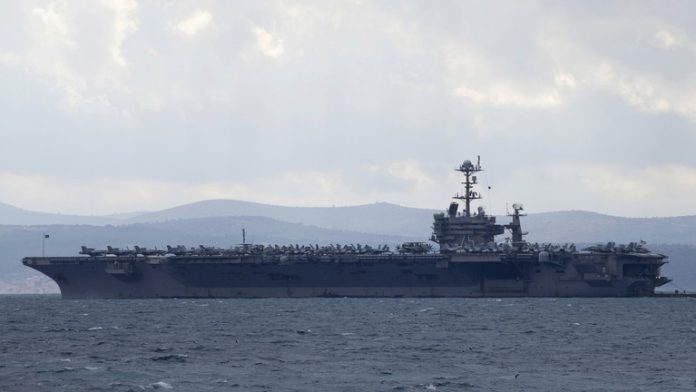
US loses another military aircraft off Yemen: CNN

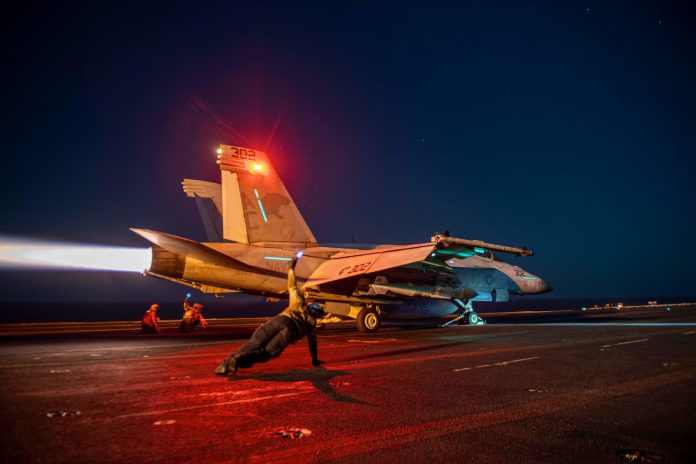
The aircraft reportedly plunged into the sea after experiencing an arrestment failure while attempting to land on the carrier, forcing both the pilot and weapons systems officer to eject. CNN reported on Tuesday, citing multiple sources familiar with the matter.

“The arrestment failed, causing the aircraft to go overboard. Both aviators safely ejected and were rescued by a helicopter assigned to Helicopter Sea Combat Squadron 11,” an unnamed defense official told USNI News.

“The aviators were evaluated by medical personnel and assessed to have minor injuries. No flight deck personnel were injured.”

The incident reportedly occurred the same day the Houthi rebel group “took a shot” at the Truman, though it remains unclear whether the two events are connected. A formal investigation is underway, while the Navy has yet to officially confirm the details.

Just last week, another F/A-18 fell overboard from the Truman during evasive maneuvers to avoid incoming Houthi missile fire. In a separate incident last December, an F/A-18 was mistakenly shot down by the guided-missile cruiser USS Gettysburg shortly after launching from the Truman for bombing raids against Houthi targets in Yemen.

Each F/A-18 Super Hornet costs between $60 million and $70 million, according to Pentagon estimates. The Houthis have also claimed to have shot down more than a dozen American MQ-9 Reaper drones over the past year, each valued at approximately $30 million.

The US has repeatedly clashed with the Houthis since the group began targeting Red Sea shipping in late 2023, claiming to act in solidarity with the Palestinian people amid Israel’s military campaign in Gaza. The Truman strike group has launched numerous airstrikes on Yemen as part of a broader US-UK operation.

However, on Tuesday, President Donald Trump announced that Washington would “immediately halt” its bombing campaign, claiming the Houthis had “capitulated” and no longer sought confrontation. Shortly after the announcement, Oman confirmed it had mediated a ceasefire agreement between the US and the Houthis, with both sides pledging not to target one another in the Red Sea.

Iranian start-up uses AI to help diagnose infertility at home

Iran Population

The project, led by physiology PhD graduate Hossein Ghasemi, aims to simplify and speed up early infertility diagnosis through AI-powered algorithms.

Speaking to local media, Ghasemi explained that their company, established six years ago, is focused on solving infertility issues using advanced technology.

“All the steps usually taken at fertility clinics can now be carried out by users at home, through a mobile AI-based device,” he said.

Traditionally, infertility diagnosis has required multiple visits to specialized medical centers. This new device, however, allows users to assess their reproductive health easily from home.

Ghasemi emphasized that the AI models used are fully developed in Iran, making the country one of only six in the world to have achieved this level of indigenous AI technology in reproductive health.

The product is commercially available and nearing the final stages of development for export. Ghasemi confirmed they are preparing to distribute the product internationally in the near future.

India conducts military operation against Pakistan

Pakistan announced on Wednesday that at least 26 people were killed and 46 others injured in the Indian attacks, accusing New Delhi of committing an “act of war”.

India said at least 10 people were killed by Pakistani shelling.

The leaders of both countries are holding crisis meetings on Wednesday.

The Indian strike and counterattack by Pakistan come amid soaring tensions, after a deadly attack last month on tourists in Indian-administered Kashmir that New Delhi blamed on Islamabad, which denied any involvement.

In a statement early on Wednesday, India’s government noted its military had attacked “terrorist infrastructure in Pakistan and Pakistan-occupied Jammu and Kashmir from where terrorist attacks against India have been planned and directed”.

“Our actions have been focused, measured and non-escalatory in nature. No Pakistani military facilities have been targeted. India has demonstrated considerable restraint in selection of targets and method of execution,” it added.

The missiles struck locations in Pakistan-administered Kashmir and the country’s eastern Punjab province.

A Pakistani military spokesman had earlier told the broadcaster Geo that at least five locations, including two mosques, had been hit. He also stated that Pakistan’s response was under way, without providing details.

In Punjab, missiles hit a mosque in the city of Bahawalpur, killing a child and wounding two civilians, the military said.

International Crisis Group’s Senior Analyst for India, Praveen Donthi, said that the “escalation between India and Pakistan has already reached a larger scale than during the last major crisis in 2019” with “potentially dire consequences”.

“Domestic emotions are high on both sides, fuelling the danger of further escalation,” he continued, but “India and Pakistan should choose diplomacy, as any further military action carries unacceptable risks.”

Following India’s attacks, the armies of the two sides exchanged intense shelling and heavy gunfire across their frontier in disputed Kashmir in at least three places, the Reuters news agency reported, quoting police and witnesses.

United Nations Secretary-General Antonio Guterres called for maximum restraint from both sides.

“The secretary-general is very concerned about the Indian military operations across the Line of Control and international border. He calls for maximum military restraint from both countries,” Guterres’s spokesperson said, adding, “The world cannot afford a military confrontation between India and Pakistan.”

The eruption of violence comes amid heightened tensions between the nuclear-armed neighbours, in the aftermath of an attack on tourists in Pahalgam in Indian-administered Kashmir last month.

India blamed Pakistan for the violence, in which 26 men were killed, and promised to respond. Pakistan denied that it had anything to do with the killings.

Nitasha Kaul, the director of the Centre for the Study of Democracy at the University of Westminster, London, said the strikes are “very concerning”.

“Once again, the worst affected are going to be the people in the region, the Kashmiris, who are caught between the competing and proprietorial and rival postures and attitudes of India and Pakistan,” Kaul told Al Jazeera.

Still, she added, the escalation is “not that surprising, because within India … there has been a domestic pressure building up for a more militarist response, given the fact that there is a particularly hyper-nationalist government in power.

“In that sense, sadly, this was a countdown to a greater escalation, and hopefully it won’t proceed much further beyond what has already happened with these strikes,” Kaul continued.

US’ Gaza pier injured far more troops than previously known: Report

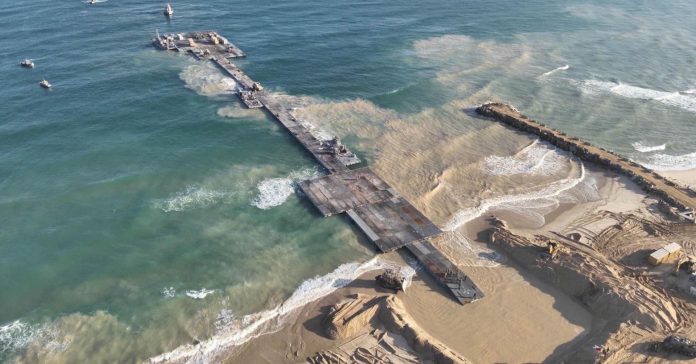
The pier, announced by Biden during a televised address to Congress in March 2024, was a massive endeavor that took about 1,000 U.S. forces to execute.

But bad weather and distribution challenges inside Gaza limited the effectiveness of what the U.S. military says was its biggest aid delivery effort ever in the Middle East. The pier was only operational for about 20 days and cost about $230 million.

While there were no deaths or known direct attacks on the pier, the Pentagon had said three U.S. troops suffered non-combat injuries in support of the pier in May, with one medically evacuated in critical condition.

But the new report by the Pentagon Inspector General said that the number was actually 62.

“Based on the information provided, we were not able to determine which of these 62 injuries occurred during the performance of duties or resulted off duty or from pre-existing medical conditions,” the report said.

The pier became a sore point in Congress, where Republicans branded it a political stunt by Biden, who was under pressure from fellow Democrats to do more to aid Palestinians after months of staunchly supporting Israel’s war on Gaza.

While it brought in sorely needed aid to a marshalling area on Gaza’s shore, the 1,200-foot-long (370-metre-long) floating pier had to be removed multiple times because of bad weather.

The Inspector General announced that the U.S. military did not meet the standards for the equipment.

“Nor did they organize, train, and equip their forces to meet common joint standards,” the report added.

Challenges to aid delivery in Gaza persist.

The United Nations and Palestinian representatives at the International Court of Justice have accused Israel of breaking international law by refusing to let aid into Gaza, after Israel began on March 2 to cut off all supplies to the 2.3 million residents of the Palestinian enclave.

Trump says bombing of Yemen’s Houthis to stop

US Air Force

“The Houthis have announced to us that they don’t want to fight any more. They just don’t want to fight, and we will honour that, and we will stop the bombings,” Trump told reporters in the White House on Tuesday during a meeting with Canadian Prime Minister Mark Carney.

Trump claimed that the Yemeni group “capitulated” and has promised not to carry out attacks on shipping. It launched those attacks in October 2023 shortly after the war in Gaza started, saying the attacks were in support of Palestinians.

“I will accept their word, and we will be stopping the bombing of Houthis, effective immediately,” the US president stated.

Omani Foreign Minister Badr Albusaidi said the two sides have agreed to a ceasefire.

“Following recent discussions and contacts conducted by the Sultanate of Oman with the United States and the relevant authorities in Sana’a, in the Republic of Yemen, with the aim of de-escalation, efforts have resulted in a ceasefire agreement between the two sides,” he wrote in a post on X.

“In the future, neither side will target the other, including American vessels, in the Red Sea and Bab al-Mandab Strait, ensuring freedom of navigation and the smooth flow of international commercial shipping.”

Mohammed Ali al-Houthi, a member of the Houthis’ Supreme Political Council, wrote in a post on X that “Trump’s announcement of a halt to America’s aggression against Yemen will be evaluated on the ground first.”

“Yemen operations were and still are a support for Gaza to stop the aggression and bring in aid,” he added, suggesting that the group would not halt its attacks on Israel.

The ceasefire announcement comes hours after the Israeli military launched air strikes on the airport in Sanaa, inflicting devastating damage and rendering it inoperable.

Dozens of Israeli warplanes also launched several waves of large-scale overnight strikes on Yemen’s vital port of Hodeidah in what Israel said was a response after the Houthis hit the perimeter of Tel Aviv’s Ben Gurion International Airport with a ballistic missile.

The US military has been launching daily air strikes across Yemen for nearly two months, destroying infrastructure and killing dozens of people, including children and civilians.

Trump may meet Iranian counterpart during Riyadh trip, analyst claims

Trump Pezeshkian

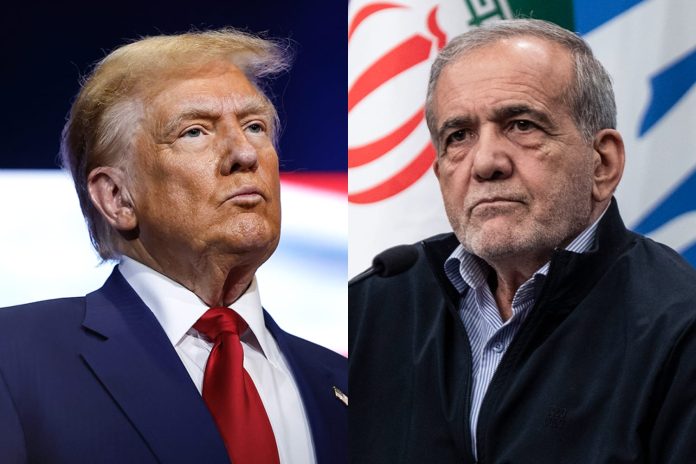
Kiomars Yazdanpanah, an Iranian expert on international affairs, suggested on Iran’s state television IRIB on Tuesday that Trump may be interested in meeting Pezeshkian, during his visit to Saudi Arabia.

“Given Trump’s comments about making important announcements, there is a possibility that he is seeking dialogue with Iranian political figures, or possibly President Pezeshkian,” Yazdanpanah claimed.

He further raised the possibility that the Iranian and American negotiating teams – during three rounds of talks on Iran’s nuclear program – have reached an initial agreement for the meeting.

In the Oval Office on Tuesday, during a ceremonial event for his new special envoy to the Middle East, Trump told reporters that he would be making a “very positive” announcement either Thursday, Friday, or Monday, just before or during his trip.

The nature of the announcement remains undisclosed, further fueling speculation about the purpose and possible surprises during the president’s regional tour.

Yemen’s Houthis vow retaliation after Israeli air attacks on Sanaa

Tuesday’s strikes killed at least three people and wounded 35 others, according to the Houthi-affiliated Al Masirah TV.

In a statement, the Houthi political bureau denounced the attacks as “further evidence” of Israel’s “bankruptcy”.

“Targeting Yemeni ports, Sanaa airport, cement factories, and power plants aims to impose a blockade on the Yemeni people,” the statement said.

The Houthis added that Israeli and US attacks on Yemen “will not deter Yemen from continuing its support for Gaza”.

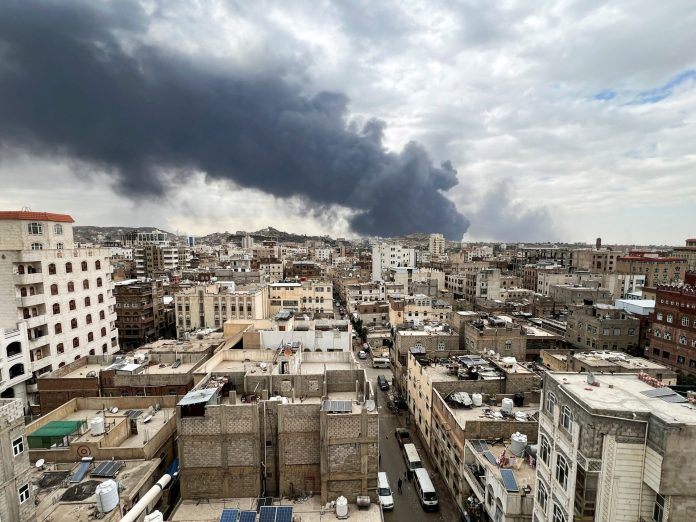
The Israeli army announced in a statement that it targeted Sanaa’s airport, “fully disabling” the civilian facility.

Tuesday’s attacks that also targeted a concrete factory and several power stations in and around the rebel-held capital came in response to Sunday’s ballistic missile strike near Tel Aviv’s Ben Gurion International Airport, the Israeli military statement said.

The army claimed that “the airport served as a central hub for the Houthi terrorist regime to transfer weapons and operatives”.

“The operation was approved by the Commander of the Air Force and the Chief of Staff,” it said.

The military added that it would “continue to act and strike with force” any group that poses a threat to Israel.

Footage of the aftermath of the airport attack, verified by Al Jazeera’s Sanad fact-checking unit, shows large clouds of dark smoke rising into the air over the capital.

Earlier, the Houthi-affiliated Al Masirah TV confirmed that among the sites targeted is a cement factory to the north of the capital and a power station in the Bani al-Harith area.

The attacks come less than 24 hours after Israel bombed the country’s key Hodeidah port, killing at least one person and wounding 35 others.

The Houthi media office said at least six strikes hit the crucial Hodeidah port. Others hit a cement factory in the district of Bajil, 55km (34 miles) northeast of Hodeidah, the group added.

The Israeli military claimed the strikes sought to undercut the Houthi military industry, claiming the factory is an “economic resource” for the Houthis and “used to build tunnels and military infrastructure”.

Since November 2023, the Houthis, also known as Ansar Allah, have launched more than 100 drone and missile attacks targeting vessels they said are linked to Israel in the Red Sea. The group noted that it acts in support of the Palestinians in Gaza and that its attacks will stop only when there is a permanent ceasefire in the enclave.

Although the Houthis paused attacks during a fragile ceasefire in Gaza this year, they resumed their operations after Israel cut off humanitarian aid to Gaza and resumed its offensive in March.

The United States military under US President Donald Trump has launched an intensified campaign of air strikes on war-torn Yemen since March 15.

Israel has repeatedly struck Yemen, killing dozens of people, including women and children.

Kamalvandi raps U.S. remarks as “misinformed,” reaffirms Iran’s right to peaceful nuclear energy

“Countries like the Netherlands, Belgium, South Korea, Brazil, and Japan all carry out uranium enrichment without possessing nuclear weapons. Iran seeks the same peaceful path,” he said.

Kamalvandi emphasized that the Islamic Republic’s nuclear activities are in line with international norms and are strictly for peaceful purposes.

He rejected attempts by Western officials to dictate Iran’s energy choices, asserting, “Donald Trump cannot decide for our nation whether we are allowed to have nuclear energy or not.”

Kamalvandi underscored the strategic importance of nuclear energy for Iran’s future, pointing out the limitations of relying solely on fossil fuels.

“Iran, like other responsible nations, must diversify its energy resources to meet growing domestic demand,” he said.

He reiterated that peaceful nuclear development is Iran’s sovereign right under the Nuclear Non-Proliferation Treaty (NPT) and warned against double standards that allow some countries to enrich uranium while others face unjust pressure.

The U.S. Secretary of State had claimed that the only countries in the world that enrich uranium are the ones that have nuclear weapons. Iran’s Foreign Minister has also responded to such a claim, noting: “There are several NPT members which enrich uranium while wholly rejecting nuclear weapons. Apart from Iran, this club includes several Asian, European, and South American nations.”

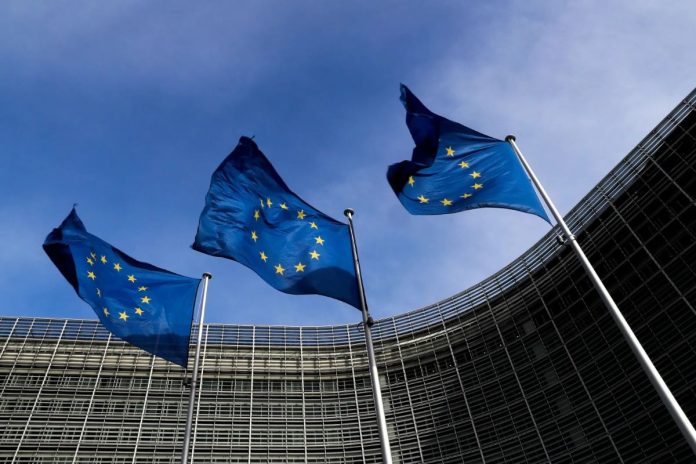
Ex-Iranian envoy to UK: EU in a hurry to secure its share amid Iran-U.S. tensions

The European Union

Sadatian emphasized the importance of Iran maintaining balanced and strategic engagement with both sides—not merely due to their internal rifts, but in pursuit of its own national interests.

“There is discord and friction between Europe and the U.S., even among the British, who traditionally maintain strong transatlantic ties,” he said. “Iran must consider these dynamics carefully and establish balanced relations with all involved parties.”

Sadatian noted that the Europeans are growing increasingly anxious over the looming expiration of their right to trigger the “snapback” mechanism under the Joint Comprehensive Plan of Action (JCPOA). According to the agreement, they have a three-month window to invoke this provision; if they miss the June deadline, they lose this legal leverage.

“That is why they are acting hastily—not only to preserve their influence but also out of concern that they are being sidelined from the process,” he explained.

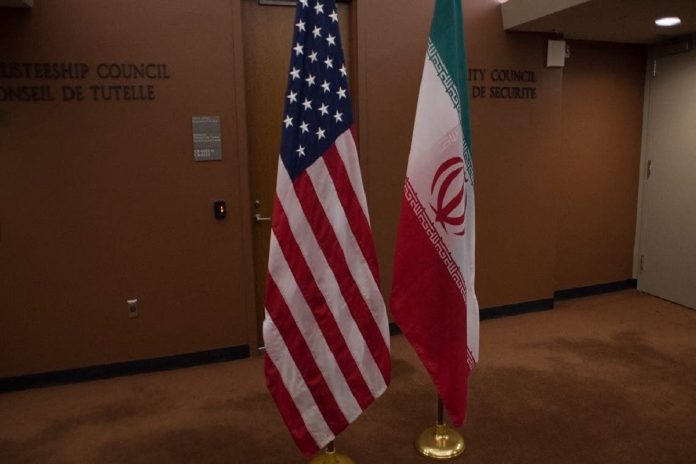
Source: Fourth round of indirect Iran-U.S. talks set for Sunday in Muscat

Iran US Flags

This new round of talks follows three rounds of intensive consultations in recent months, aimed at addressing long-standing issues, particularly related to Iran’s nuclear program.