Wednesday, April 22, 2026
Home Blog Page 3927

Iran MPs support foreign minister over nuclear talks

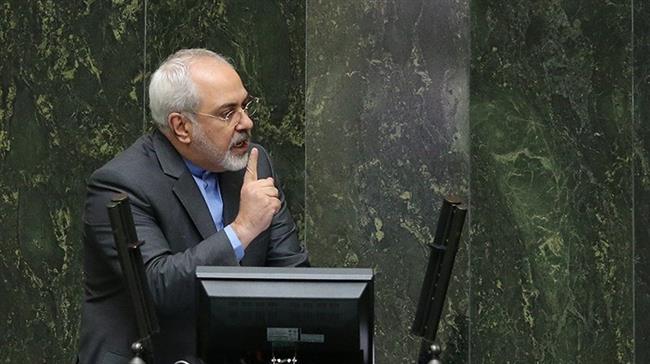
Zarif-Majlis

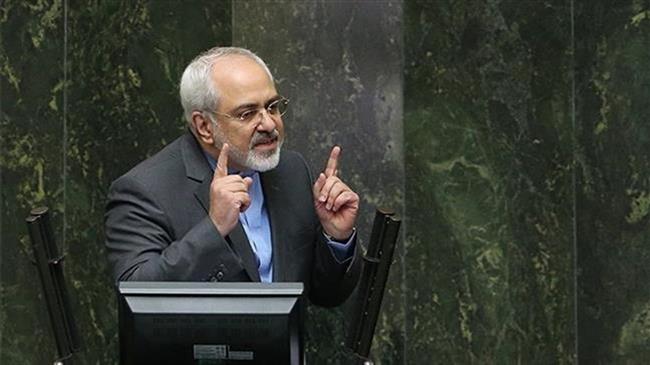
On Tuesday, Iranian Foreign Minister Mohammad Javad Zarif showed up in an open session of parliament to answer questions by lawmakers about the process of nuclear talks.

After Zarif’s explanations, the first deputy speaker of parliament, Mohammad Reza Bahonar, asked lawmakers to vote Aye or Nay for his explanations.

Out of 229 legislators present, as many as 125 MPs endorsed Zarif’s remarks while 86 were naysayers. The rest abstained.

A lawmaker from the northeastern city of Mashhad, Javad Karimi Ghoddousi, posed questions to Zarif on behalf of other legislators.

Nuclear negotiators from Iran and P5+1- the United States, France, Britain, Russia, China and Germany – wrapped up their latest round of talks on Tehran’s nuclear program in the Swiss city of Geneva on December 17, 2014.

The three-day Geneva discussions were held almost three weeks after Tehran and the six countries failed to reach a final agreement by a November 24 deadline despite making some progress.

The two sides agreed to extend their discussions for seven more months until July 1, 2015. They also agreed that the interim deal they had signed in Geneva in November 2013 should remain in place during the negotiations.

Tehran, P5+1 to hold next round of nuclear talks on Jan.18: Iran negotiator

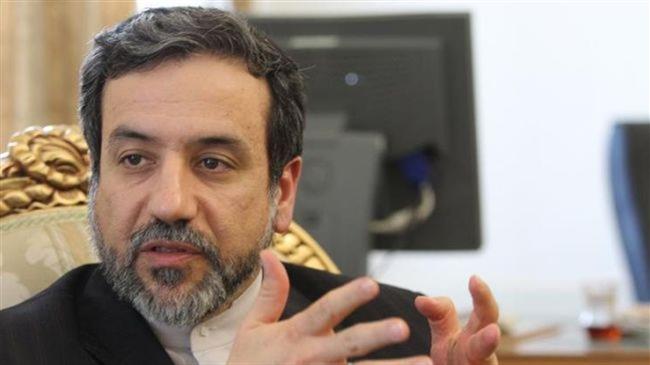
Abbas Araghchi

“The next round of negotiations between Iran and P5+1 will be held at deputy foreign ministerial level in the Swiss city of Geneva on January 18,” Iranian Deputy Foreign Minister for Legal and International Affairs Abbas Araghchi said on Tuesday.

He added that Iran’s negotiating team is also to hold mutual talks with delegations from the United States and Russia prior to the talks, adding that these mutual talks have yet to be scheduled.

Nuclear negotiators from Iran and P5+1– the US, Russia, China, France, Britain and Germany – wrapped up their latest round of talks on Tehran’s nuclear program in the Swiss city of Geneva on December 17, 2014.

The three-day Geneva discussions were held almost three weeks after Tehran and the six countries failed to reach a final agreement by a November 24 deadline despite making some progress.

The two sides agreed to extend their discussions for seven more months until July 1, 2015. They also agreed that the interim deal they had signed in Geneva in November 2013 should remain in place during the negotiations.

Iran has marked a 40-km red zone inside Iraqi border

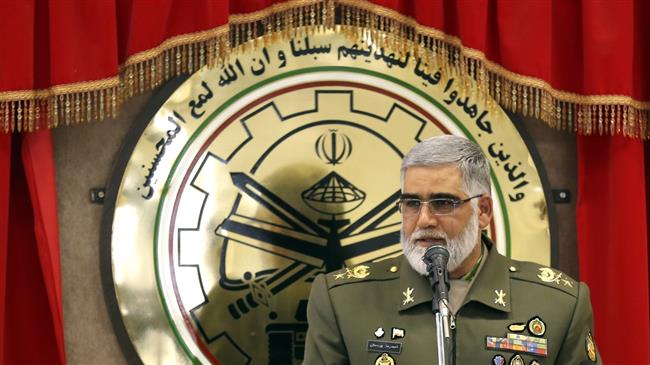
General Ahmad-Reza Pourdastan

Brigadier General Ahmad Reza Pourdastan said Tuesday that the Iranian army warned ISIL against any potential movement toward the Iranian border since the very beginning of the terrorist group’s incursion into Iraq.

“When ISIL Takfiri terrorists penetrated western Iraq and were close to the Iranian borders, the Ground Forces were fully ready to annihilate them,” the commander told IRNA.

“We marked a red line 40 kilometers into the Iraqi soil and warned (them) they will face Iran’s harsh response if they cross the line.

“The group received our message and fled the zone quickly,” he said.

Pourdastan said that the Iranian army is fully familiar with tactics used by terrorists and closely monitors their movement inside Iraq.

The ISIL terrorist group took control of Iraq’s second largest city of Mosul in June 2014, before sweeping through parts of the country’s Sunni Arab heartland.

The Takfiri group, with members from several Western countries, has been carrying out horrific acts of violence such as public decapitations and crucifixions against all communities, including Shias, Sunnis, Kurds, and Christians.

Ali Daei sends a message to Iranian national soccer squad and captain

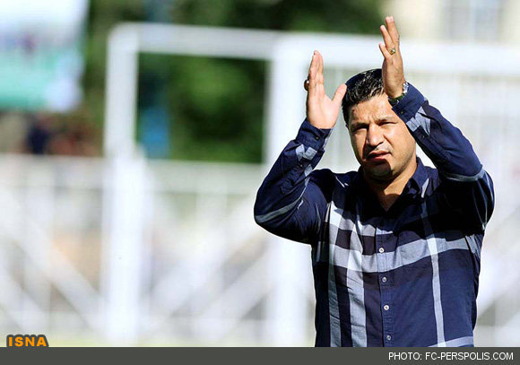
Ali Dai

The 2015 Asian Cup will kick off in less than a week in Australia. The Iranian national soccer team is now in Australia. On January 6, Ettela’at, a daily, reported that Ali Daei, who holds the title of the most prolific scorer in the soccer world, has sent a letter to the national team captain Javad Nekounam to lift the spirit of the skipper and his squad. What comes next is the translation of the message of the former national team captain and coach:

In an interesting move, Ali Daei congratulated Javad Nekounam on his imminent shattering of the record of the number of matches he has capped – a record Daei has held on to for years – and also wished the Iranian national soccer squad every success at the 2015 Asian Cup.

“Dear Javad, the national soccer team captain, I appreciate your efforts and I am wholeheartedly delighted that you will soon claim the title of the national team player with the highest number of matches under your belt. I congratulate you on that imminent achievement.

“I also hope that an Iranian will smash [my] world record for scoring goals in official international football matches so that the title will remain Iranian. I am aware that Iran head coach Carlos Queiroz is not happy with preparations for the [Australia] event and the national team has not been given what it deserves.

“However, I am sure that Queiroz, you and your teammates will make us proud and prove that in spite of all obstacles, you can make it. As a fan of the national team, in every moment of your upcoming matches, you are always on my mind and you will be in my prayers.

“God willing, I will fly to Australia for the final match to see firsthand our captain and his teammates lift the trophy [after the blow of the final whistle]. I want you not to pay attention to shortcomings and biased comments. I have no doubt that you, the national team, Carlos Queiroz and his assistants all deserve the best. I wish Iran and the Iranians every success.”

Iran will never give up nuclear rights: Zarif

Mohamad Javad Zarif

“In these negotiations, we will defend the interests of all people and take the country’s high goals into consideration,” Zarif said at an open session of Iran’s Parliament (Majlis) on Tuesday in response to questions by 40 lawmakers.

He pointed to Iran’s “effective and serious” presence and role in regional and international developments and added that the ill-wishers of Iran and the Islamic Revolution organized and implemented a relatively long-term plot to portray the Islamic Republic’s peaceful nuclear activities as a threat with two major objectives.

The first one, the Iranian minister said, was to “portray an insecure and dangerous image of Iran, [as a country] which endangers global peace and security; and the second one was to weaken the country’s economic, defense and industrial capability and exert pressure on our good people” through various cruel sanctions, including by the UN Security Council as well as unilateral bans.

The nuclear negotiations, however, illustrated an “interactive, stable and powerful” image of Iran and prevented the expansion of sanctions, he pointed out.

Zarif said that, following the Geneva deal reached between Iran and the P5+1 countries in November 2013, Iran’s foreign policy managed to counter the hostile propaganda against the Islamic Republic and boost the country’s security and power.

“I assure you that the [Iranian] government and negotiating team have never followed and will never follow any political and factional objective in the nuclear talks,” the top Iranian nuclear negotiator added.

Iran and the five permanent members of the UN Security Council – Russia, China, France, Britain and the US – plus Germany wrapped up their latest round of talks on the Islamic Republic’s nuclear program in the Swiss city of Geneva on December 17, 2014.

The three-day Geneva discussions were held almost three weeks after Tehran and the six countries failed to reach a final agreement by a November 24 deadline despite making some progress. Back then, the two sides agreed to extend their discussions for seven more months until July 1, 2015. They also agreed that the interim deal they had signed in Geneva in November 2013 should remain in place during the negotiations.

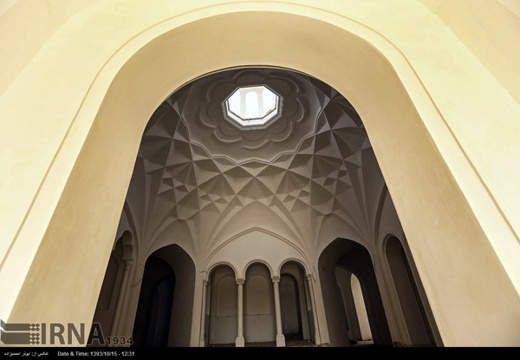
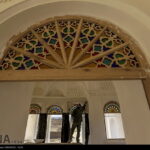
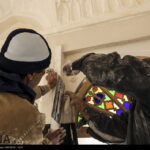
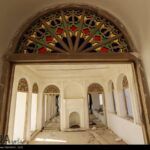
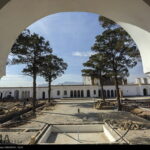
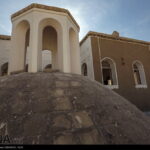
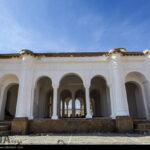
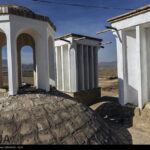
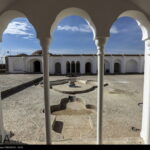
Renovation of Biglar Beigi Building in Photos

Iran-Biglar Beigi Garden

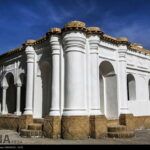
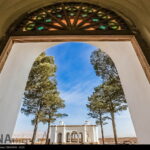
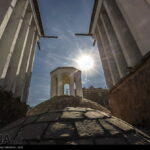
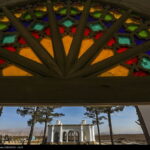
Biglar Beigi Garden is located in Ekhtiarabad Village, 25 km from the southern Iranian city of Kerman. The adobe building inside the garden, which is also known as Fathabad Garden, was built some 140 years ago when the Qajar Dynasty was in power. It was registered as a national site in 2002. The following are some images IRNA posted of the building which is undergoing renovation:


Rafsanjani warns of civil war in Iraq

Rafsanjani-Hakim

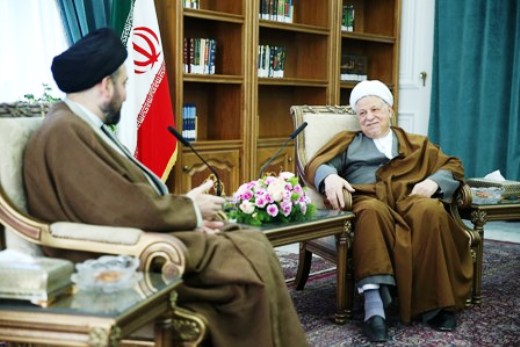
Chairman of the Expediency Council Ayatollah Akbar Hashemi Rafsanjani said on Monday that Shia and Sunni dignitaries should be watchful of civil war in Iraq.

He made the remarks in a meeting with head of the Supreme Iraqi Islamic Council, Ammar al-Hakim.

Ayatollah Rafsanjani said support for the IS terrorist group by certain regional states is the result of their lack of political wisdom and foresightedness.

‘The Shia and Sunni dignitaries should be vigilant not to allow enemies of Islam not to drag Muslims into civil war,’ warned Ayatollah Rafsanjani.

Saying that generosity and courage are two noble features of Iraqi people, as observed in Arbaeen procession this year, Ayatollah Rafsanjani said when insecurity was prevailing in every corner of Iraq, people set out, on foot, for Karbala from around the country and people in cities along the way host the majority of the guests, and drew the attention of global observers.

Ayatollah Rafsanjani said treating people with compassion was on agenda of the words and deeds of the infallible household of Holy Prophet (PBUH), and said a true Shia Muslim should learn from the infallible household of the prophet about how to stick to ethics and respect people equally.

He said religious festivals should not be an excuse for desecration of sanctity by followers of other religions.

The Ayatollah underlined the need for unity and solidarity in the world of Islam, especially in Iraq, and said divisions strengthen such groups as IS, Boko Haram, Jibha al-Nasra, Wahabis and Salafis.

He said that even if terrorists succeed in capturing certain regions by force, they will fail to do so when people’s consent and sovereignty is to be taken into consideration because they can do nothing other than massacre of people and plunder of assets and bullying them.

As for the goals behind strengthening terrorist groups in Muslim lands, Ayatollah Rafsanjani said establishment of military bases by enemies is the sign of their program for staying long in the Muslim lands.

He lauded the important and outstanding role of the authorities and people of the Iraqi Kurdistan Region in preserving and ensuring security in the country.

Emphasizing the need for cooperation between Iran and Iraq and ample ground for expansion of cooperation, Ayatollah Rafsanjani said Tehran and Baghdad with rich natural resources, geographical condition and Ahl-ul-Bayt (AS) school of thought have the potential to cooperate with the whole world.

Hakim in turn recalled the opinion of Ayatollah Shahid Seyed Mohammad-Bagher Hakim and the late Ayatollah Seyed Abdelaziz Hakim about Ayatollah Rafsanjani and said at different historical junctures, Ayatollah Rafsanjani played a key and influential role in Iraq, striving for interests and benefits of the public.

He then provided Ayatollah Rafsanjani with a report on the presence of some on 20 million people in Arbaeen ceremonies this year and said he had joined the public in the ceremony from Basra to Karbala and observed public love and feeling for Imam Hossein (AS) and his mourners.

Underlining political and security conditions in Iraq and unity between Shia and Sunni Muslims there he said solidarity between Muslims has prompted the enraged enemies to resort to savage acts of terror and the emergence of terrorist groups such as IS is a result of their latest attempts to that end.

He commented on conditions of Shia in the world of Islam, especially Iraq, and said Shia Muslims want Iraq for all people from all religious and ethnic groups and the past 11 years have shown that despite civil differences, Iraq believes in democracy in general.

Underscoring the need for cooperation between Kurds and Shia Muslims to ensure security in Iraq, he added our principal goal is to guarantee the territorial integrity of Iraq.

Iran favors security cooperation with Afghanistan: Official

Shamkhani-Iran-Afghanistan

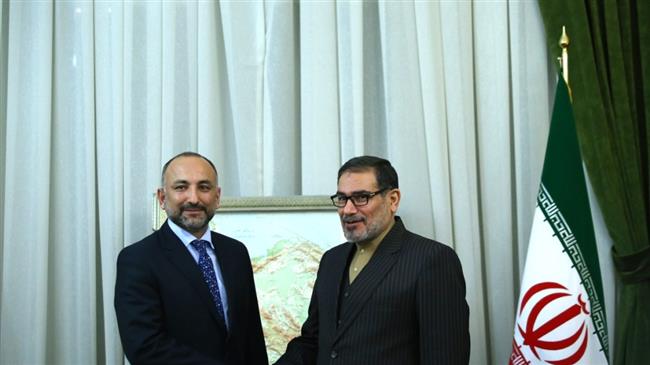
Secretary of Iran’s Supreme National Security Council Ali Shamkhani made the remarks in a Monday meeting with Afghan National Security Adviser Hanif Atmar in Tehran, where the Iranian official underscored the achievement of lasting solutions for the establishment of security along the joint border of the two countries.

Shamkhani pointed to the historical and cultural commonalities between Iran and Afghanistan as the main deterrent factor in the face of the divisive policies of the enemies of both countries.

Elsewhere in his remarks, Shamkhani said that the withdrawal of NATO troops from Afghanistan would serve as a suitable opportunity for the country’s army and security forces to prove their capabilities in defending national interests and countering terrorism.

The Iranian official said that the spread of insecurity and terror has been a long-time policy of certain powers to undermine the national capacities and regional standing of Muslim countries to justify their military, economic and political interference.

“The era of using terrorism as a tool for meddling in the region and advancing colonialist objectives is over,” Shamkhani said.

The Afghan official, for his part, praised Iran’s active role in the development and progress of Afghanistan and Iran’s hosting of Afghan refugees during years of war and insecurity in the country.

He said that concerted efforts for political cohesion and an all-out campaign against extremism and terrorism along with the expansion of cooperation, especially with the neighbors, are the priorities of the new Afghan government.

Onepetro picks Iranian paper on gas as highly-cited

gas

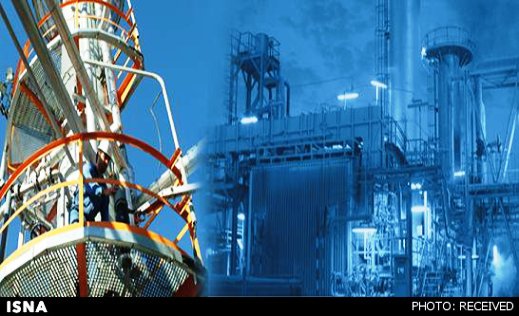
A paper submitted by an Iranian scientist at Amir Kabir Poly Technique University, Ehsan Khamehchi, was selected as a highly-cited paper by Onepetro database, a unique library of technical documents and journal articles linked to Society of Petroleum Engineers (SPE) and is serving the oil and gas exploration and production industry.

The article on ‘underground natural gas storage in Sarajeh Gas Field to provide gas for Tehran’ was published in 2006 in Onepetro database.

The article has been downloaded 700 times until December 9 and has been selected as a highly-cited one.

There are 160,000 papers and articles on Onepetro.

Dr. Khamehchi is a faculty member at Amir Kabir Poly Technique University.

Gas storage has been widely discussed in European countries since 40 years ago, and has been one of the key issues in Iran of late.

In late December, Iranian Deputy Health Minister for Research and Technology Reza Malekzadeh said the country accounts for 30 percent of scientific achievements in the Middle East.

“Iran’s achievements in science account for 30 percent of those in the Middle East and 1.5 percent in the world,” Malekzadeh said.

According to the Essential Science Indicators (ESI) data in 2014, there are 60,000 top researchers across the world working in different fields, of whom 88 are Iranian, 18 of them working on medicine.

According to Malekzadeh, out of 25,000,000 million papers in the world, 245,000 belong to Iran, 32 percent of them on medicine.

Iran stood 13th in the world and 1st in the region in terms of publishing papers in 2013.

According to the statistics, Iran produced over 39,000 articles in 2013, which gained the country the world’s 17th rank in science production and consolidated its top position in the region, above Turkey.

The promotion is mainly due to the achievements, in areas of medical research and medical technology, of Iran’s Pasteur Institute.

Iran’s scientific progress was the result of the country’s recent policies and programs to develop knowledge and facilitate researchers’ access to the world’s top academic resources.

Assessing and promoting research centers and universities of medical sciences as well as launching some 50 new research centers were among the activities that have paved the way for the country’s science improvement, according to the report of the Iranian Health Ministry’s Center.

In 2000, the Islamic Republic ranked 53rd in the world in terms of highly cited medical articles, but moved up to the 23rd rank in 2011.

According to the Institute for Scientific Information (ISI), Iranian researchers and scientists published a total of 60,979 scientific articles in major international journals from 1999 to 2008.

Iran’s 2009 growth rate in science and technology was highest globally, being 11 times faster than the world’s average rate.

Iran disbands terrorist cell

parchameiran_by_asr_entezar

The Islamic Revolution Guard Corps (IRGC) ground forces successfully identified and arrested members of a terrorist cell in the city of Sarbaz, southeastern Iran, the Public Relations Office of Quds Base of the force said in a report.

Joint operations by IRGC forces and police to identify and arrest the terrorist cell have produced the intended results, the report said.

The terrorist cell had already killed some teachers and Basij (volunteer) force in southeastern Iran.

According to the report, further information will be made public later.