Monday, December 29, 2025
Home Blog Page 3911

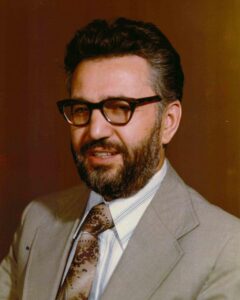
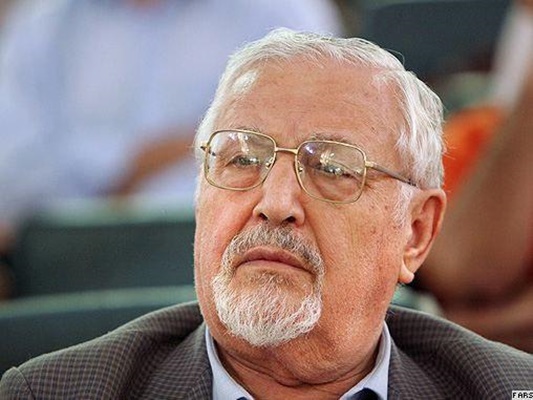
Former Iranian FM Ebrahim Yazdi Dies at 85

Ebrahim Yazdi

Former Iranian FM Ebrahim Yazdi Dies at 85Yazdi was born in Qazvin on 3 October 1931. He studied pharmacology at the University of Tehran. Then he received a master’s degree in philosophy again from the University of Tehran.

After the US-backed military coup of 1953, which deposed the democratically-elected government of Mohammad Mossadegh, Yazdi joined the underground National Resistance Movement of Iran, and was active in this organization from 1953 to 1960.

This organization opposed to the Shah, Mohammad Reza Pahlavi. Yazdi travelled to the United States in 1961 to continue his education and in the US, continued his involvement in political activities against the Shah. In 1967, he enrolled at Baylor University and received a PhD in biochemistry.

He was cofounder of the Freedom Movement of Iran, abroad, along with Mostafa Chamran, Ali Shariati, and Sadeq Qotbzadeh in 1961.

When the leader of Iran’s Islamic Revolution Ayatollah Ruhollah Khomeini moved to Neauphle-le-Château in Parisian suburb from Iraq in 1978, Yazdi also went to Neauphle-le-Château and began to serve as an advisor to the Ayatollah. He was also his spokesperson in Paris.

After the victory of the Islamic Revolution in 1979, Yazdi served Iran’s deputy prime minister and minister of foreign affairs in the interim government of Mehdi Bazargan, until his resignation in November 1979.

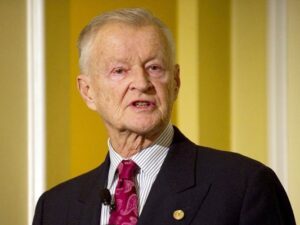
His resignation came after Bazargan, Yazdi, and then Defence Minister Mostafa Chamran held talks with Zbigniew Brzezinski, the then foreign policy advisor to US President Jimmy Carter.

The talks outraged revolutionary groups inside Iran, and led to the takeover of the US embassy in Tehran, which was later known as Iran Hostage Crisis.

Former US Diplomat Brzezinski Dies at 89Interview with Ebrahim Yazdi:

How Iran’s Talks with Brzezinski Led to Hostage Crisis

After his resignation, Yazdi ran in parliamentary elections and served as a member of the Iranian parliament from 1980 to 1984.

In subsequent elections in Iran for president, parliament, and city councils, Yazdi and other members of the Freedom Movement filed for candidacy but were barred from running by the Guardian Council.

Even though he was known in Iran as a pro-US figure, the United States refused to grant him a visa in early 2017, when he needed a medical surgery.

On 27 August 2017, Yazdi died of pancreatic cancer, at the age of 85 in Izmir, Turkey, where he was under treatment. His body is due to be transferred to Iran and buried in his hometown, Qazvin.

In a message on Monday, Iranian Foreign Minister Mohammad Javad Zarif offered his condolences to the family and relatives of Yazdi, and described him a prominent figure in anti-Shah struggles before the Revolution.

Zarif also wished that the former foreign minister would rest in peace in heaven.

Uber Picks Iranian-American Entrepreneur as New CEO

According to sources close to the company, Uber’s board made the decision late Sunday, but has yet to release an official statement.

Uber has been without a CEO since founder and former CEO Travis Kalanick resigned in June after an investigation into the company’s culture.

The firm is battling to repair its image after a series of scandals.

Several big names – including Hewlett Packard boss Meg Whitman and General Electric chairman Jeff Immelt – had been touted for the role.

A spokesperson for the company declined to comment on the appointment and there has been no comment from Khosrowshahi.

He has been chief executive of online travel firm Expedia from 2005.

If he takes the Uber job, he would have a steep task ahead of him. It includes repairing Uber’s corporate image, improving relations with investors and creating a profitable business after years of losses.

The Iranian-American businessman was born in Tehran in 1969. During the 1979 Islamic Revolution in Iran, he and his family were on vacation in the State of New York, but they did not return in spite of several manufacturing businesses they ran in Iran.

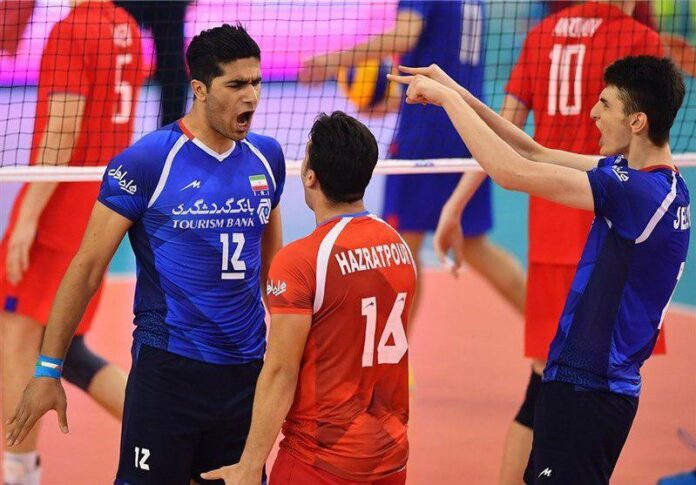
Iran Volleyball Team Claims World U-19 Championship Title

Mohammad Vakili’s boys defeated Russia 3-1 (25-20, 25-23, 21-25, 25-20) in the final match.

Porya Yali scored 29 points to lead all scorers, then Morteza Sharifi charted 19 points to guarantee the gold medal win for Iran.

Maksim Sapozhkov, who came off the bench in the second set, top scored for Russia with 16 points.

In the bronze medal match, Japan defeated South Korea 3-0 (25-22, 25-22, 25-18) at the Isa City Sports Hall.

Riyadh Planning Change of Policy vis-à-vis Iran: Analysts

Riyadh Planning Change of Policy vis-à-vis Iran: Analysts

The Alef news website has published an article dubbed “Iraq, the Gateway to Settlement of Syria Crisis, and Adel al-Jubeir, a Victim of Saudi Arabia’s Change of Policy.” The following are excerpts from the analytical piece regarding Riyadh’s possible change of regional policies.

Political and field developments in Iraq and Syria and their impact on the countries in the region have made Riyadh and its new leaders think. For instance, Adel al-Jubeir will probably become the new victim of the Al Saud dynasty, being fired under the pretext that he was the source of tension in relations with Iran and deepening divisions between the two countries.


Reason behind Riyadh’s Policy Shift

Numerous issues have made the Al Saud regime rethink its calculations and plan gradual changes in its policies. Those issues include the crisis between Qatar and the sheikhdoms, the Yemen war, victories over ISIS in Iraq and the defeat of terrorism in Syria which came about through coordination and cooperation between Damascus and Baghdad and collaboration between Syrian and Iraqi armies on the border between the two countries.

Saudi Arabia does not want to make a mistake that would cause it to lose the remaining cards in its hands, including the opposition in Riyadh, the coalition in Turkey and certain Saudi-backed armed groups such as Jaysh al-Islam.

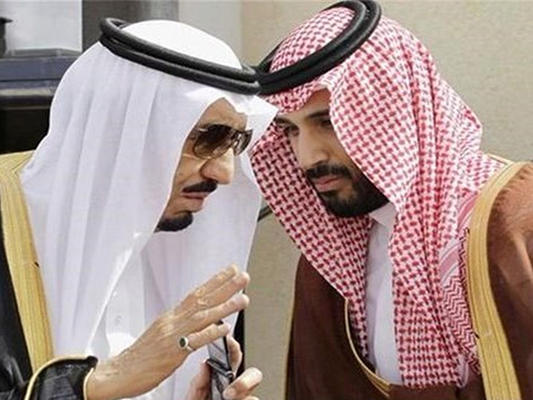
Confidential intelligence suggests that the Saudi crown prince intends to remove al-Jubeir from his post as foreign minister, and replace him with his younger brother prince Khaled bin Salman Al Saud, who has been installed as the Saudi ambassador to the US. Jubeir is at the forefront of the anti-Shi’ism campaign, so much so that he has, time and again, hit out at Iran for religious reasons, especially ideas associated with Mahdavism. Even the Saudi air to the throne criticized Iran for that matter and, unleashing ethnic rhetoric against Iran, led analysts to believe a religious war was likely to break out between Iran and Saudi Arabia.

Mohammad bin Salman wants to begin his rule by toning down the rhetoric against his enemies, especially Iran. Respecting Iranian pilgrims was the first step to that end. The next move would be to remove al-Jubeir from Saudi Arabia’s political landscape, regardless of whether or not his brother or somebody else would replace him.


Summary

Riyadh asking Baghdad to mediate between Saudi Arabia and Iran, Moqtada Sadr’s trip to the United Arab Emirates, the US-Russia agreement in Syria, the Syrian army’s advances in Homs and Hama, the call for armed groups in Eastern Ghouta to surrender, the international coalition stopping helping militants, and Ankara being persuaded to cooperate with Moscow amid Turkey’s outrage at Washington’s support for Kurds, have all laid the groundwork for a major political overhaul in the region, which will unfold fully by year’s end, and with the Syria war coming to an end, Saudi Arabia will begin to deal with its political, social and economic challenges at home.

Russia Not to Be Influenced by Israel: Analyst

Political analyst Rahmatollah Fallah has, in an article published on the Basirat news website, weighed in on the recent developments in Israel-Russia relations. The following is the full text of the analytical piece.

The meeting between Israeli Prime Minister Benjamin Netanyahu and Russian President Vladimir Putin during the premier’s trip to Russia on August 23, 2017, was the sixth meeting between them in the past two years. The talks held in the city of Sochi on the coast of the Black Sea were also attended by the Mossad chief and the head of the Israeli National Security Council. The centrepiece of the talks, like in previous meetings, was developments in the regions, including in Syria, and Iran’s role in regional crises, namely the Syria conflict. In the meeting, Netanyahu told Putin that, “We can defeat the ISIS terrorist group through joint efforts, and this is very important; but the bad thing about it is that the destruction of ISIS will allow Iran to gain a foothold.”

Although the Kremlin is no stranger to such remarks by the Israeli regime and has not officially confirmed them, it would be important to figure out what Israeli officials expect of Russia, given that Tel Aviv authorities keep traveling to Russia and rehashing unfounded allegations against Iran. Will Moscow fulfill part of Israel’s demands? This article offers and analysis of the Moscow-Tel Aviv relations as well as the above-mentioned questions.

Objectives of Netanyahu’s Trip to Russia

What basically triggered this trip and other visits to Russia by Israeli leaders over the past two years has been Tel Aviv’s concern over Iran’s role in the region, especially in the Syria crisis. In this regard, the following key points should be taken into account.

  1. Opposition to Outcome of Phased Process of Ceasefire

Over the past year, new trends have emerged for a phased settlement of the Syria crisis through the establishment of safe havens and decreasing tension. These trends are the result of multi-layer negotiations by players involved in the Syria conflict. Iran, Syria and Turkey have played a key role in this trend. The US and the UN back the process, too. In such a trend, the position of Syria led by President Bashar Assad as well as the role of Iran and resistance forces is reinforced as a result of the fight against ISIS. The Israeli regime seeks to reverse this trend by pressuring the US and Russia, and subject the presence of resistance forces in Syria to international negotiations. This is while resistance troops are on the ground in Syria at the official request of Damascus.

  1. 2. Entering Battlefield in Syria under Pretext of Fighting ISIS

Israel has somehow displayed its tactical objectives in recent years by carrying out airstrikes on Syrian army troops and other resistance forces involved in the fight against ISIS. However, under the current circumstances where fighting is to the detriment of ISIS militants, and the terrorists are leaving the battlefield in Syria, Zionists intend to secure a share for themselves through Washington and Moscow’s backing. This comes as Tel Aviv used to bang the drum for neutrality, which was just an act of deception, and many wounded terrorists were treated in Israeli hospitals.

  1. Pushing Iran-Leaning Forces away from Occupied Territories

The Israeli regime tries to get Russia and the U-S to give guarantees that Russia-brokered ceasefire agreements will drive Iran and Hezbollah away from Syria’s borders with occupied Palestinian territories, and that Iran will not be allowed to establish military bases in Syria or any facilities through which it could threaten Israel.

  1. 4. Upgrading Regional Talks to Level of Two Global Superpowers

Israel has serious misgivings over the cooperative approach that Iran, Turkey and Russia have adopted in Astana talks aimed at working out mechanisms to settle the Syria crisis. Hence, Tel Aviv wants the US and Russia to hold the key and final talks, and wouldn’t like Muslim regional countries to secure a strategic status in resolving the crisis.

Final Word

What results will Israeli leaders’ consultations with Russian officials about the role of Iran in the region, especially in the Syria crisis, have? The answer to that question hinges on the lasting and effective factors and situation in Syria and the Middle East.

The reality is that under the current circumstances, Iran and the resistance front together with Russia have complementary roles in fighting ISIS. The slightest doubt in this regard can serve the interests of terror groups as well as opposing international players such as the US and Saudi Arabia. At the end of the day, one should bear in mind that Russia, as an international or transregional power, will pursue its leadership requirements and will not be pressured by any regional player, including the Israeli regime. Finally, Russia will, through multilateralism, regulate its relations with opposing regional players simultaneously, and within this framework, can create a certain level of restriction for Turkey, Iran, Israel and Saudi Arabia.

It is important to note that through the prism of constructivism, Iran’s social and ideological association with the Middle East’s social sphere has created potentialities which would enable Iran to enter into talks and cooperation with the most divergent Muslim players in the region in line with international interests. A recent trip to Turkey by Chairman of the General Staff of Iran’s Armed Forces Major General Mohammad Hossein Baqeri as well as a planned visit to Tehran by his Turkish counterpart shows relations among key Muslim nations in West Asia will not be affected by the management of opposing and divergent international powers. The same could be generalized to Syria whose Muslim people can realize that Iran’s actions are part of a strategic jigsaw which is in line with the regional interests of the Muslim world.

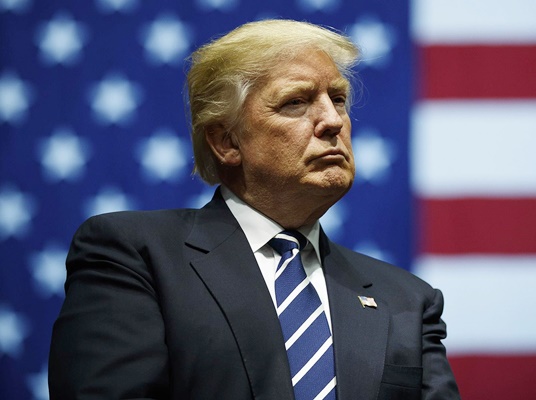
‘Trump Seeks to Cover Costs of Afghan War with Islamabad, Kabul’s Wealth’

trump

Senior Iranian legislator Shahrouz Barzegar Kolshani has, in a Farsi interview with ICANA, said the US president’s approach toward Washington’s ongoing presence in Afghanistan shows the real intentions and objectives of the White House.

“Wherever it is in the interests of the White House, the US goes into action in the name of war on terror or promoting democracy,” said Barzegar Kolshani, who sits on the Parliament’s National Security and Foreign Policy Commission.

“The American version of democracy remains silent against the Saudi regime’s dictatorship, but makes complaints vis-à-vis Iran’s religious democracy,” said the MP.

“The world public opinion has challenged the United States’ approach over the past decades, and now we’re seeing that Trump is practically ridiculing everybody.”

Trump Eying Pakistan’s Riches, Afghanistan’s Mines

The lawmaker touched upon the US president and secretary of state’s harsh criticism of Islamabad, saying, “Trump has an insatiable appetite for selling weapons, and now he’s set his eyes on Pakistan after Saudi Arabia,” said the legislator.

He said Trump wants to pay the cost of war against the Taliban with Pakistan’s wealth and Afghanistan’s mineral resources.

“The common interests that the US president speaks of, mean he wants to secure America’s interests and cover the expenses of the Pentagon’s military deployments,” said the legislator.

US Has Issues with Baghdad’s Democracy

The MP referred to Trump’s greed for a military buildup in Iraq, saying, “Generally speaking, the Americans have problems with democracy in Iraq and other Middle East countries.”

“After the downfall of the [former Iraqi] Ba’ath regime and the emergence of democracy in Baghdad, there was no room for continued presence of the US in Iraq, and they (the Americans) had to return home.”

He said the emergence of Takfiri terrorists and the crimes committed over the past six years have their roots in the “engineering of terror” at the hands of the Central Intelligence Agency.


Signs of Collapse of West’s System

He noted US presidents have always sought to disguise Washington’s plots with beautiful masks, but “Trump reveals the United States’ true intentions.”

“The Democrats, with their dovish policy, and the Republicans, with their hawkish policy, meddle [in other countries’ affairs], but Trump has adopted a ‘vulture policy’ which leads to the collapse of the West’s domineering system,” said the legislator.

He said Trump’s lack of knowledge about political sciences has resulted in his revelation of all issues, which has created rifts in the US foreign policy.

It is noteworthy that trump lashed out at Pakistan after announcing Washington’s strategy of a troop buildup in Afghanistan, and called on Islamabad to pay for the expenses of war in Afghanistan. Trump also believes Obama should not have ordered a troop pullout from Iraq.


Art, Culture Most Universal Iranian Elements: Minister

Speaking in his induction ceremony on Saturday, Iranian Minister of Culture and Islamic Guidance Seyyed Abbas Salehi weighed in on the status of the Iranian culture and art in the world.
“The Iranian art can make Iran more brilliant. None of our products is more universal than [our] culture and art. [For example] considerable investment has been made in Iran’s car industry for several decades, but how famous are we for this (cars)?”
“Today, we are known in the world for our cinema, our Oscars, our tableaus and our music; the Iranian art is dynamic. If we want guaranteed security and politics, we shouldn’t base them on oil and natural gas only; of course, these are important, but we shouldn’t take culture for granted,” he said.
“We have something to say in all domains, and this is a social reality. Today, culture and art have added value, and this added value can be exchanged on the world stage.”
“If physicians treat physical ailments, those involved in cultural and artistic activities are doctors for the spirit and soul,” he said, according to a Farsi report by Khabar Online.
He said Iran’s name should not be known with “Iranophobia,” adding a strong culture is a prelude to a strong economy and politics.

Iran Unafraid of Foreign Threats: President Rouhani

Rouhani made the announcement on Sunday as he took his new cabinet on a tour of Imam Khomeini’s mausoleum in southern Tehran to renew allegiance to the ideals of the Islamic Revolution, heralded by the late leader.

“We are not afraid of foreign threats and conspiracies, because we have learned from Imam [Khomeini] not to fear foreigners,” the IRNA news agency quoted Rouhani as saying.

Imam Khomeini, the president said, “taught us how a nation of strong will can confront all sorts of intrigues,” referring to the eight-year Iraqi imposed war of the 1980s under the former dictator Saddam Hussein.

President Rouhani begins his new term as the Trump administration is trying to unravel a nuclear agreement which he advocated to be reached with the former US government and its European and Asian counterparts.

Under Trump, Washington has imposed new sanctions on Tehran and is lately pushing for access to Iran’s military sites. The US military is also constantly accusing Iranian naval patrol in the Persian Gulf of “harassing” American warships.

Iranian military commanders say while their units continue routine operations, US naval units have changed their navigational patterns since Trump came into office and often engage in provocative maneuvers near Iran’s vessels.

Rouhani, however, said he is looking into the future on a more hopeful note than the past four years.

“What is of significance is that the people’s hope in the future, their presence, and trust in the establishment and the government should remain in place,” the president said.

“If the Leadership’s guidance is on our side and the support, encouragement and the spinal column of the nation remains in the scene, we will certainly bypass the problems,” Rouhani added.

The president said Iran’s power emanates from its people, where they are enjoying the privilege to hold free elections as manifested in the late Imam’s famous sentence of “the people’s vote constitutes the standard.”

Otherwise, “we would not be expecting now to celebrate the 40th anniversary of the victory of the Islamic Revolution,” Rouhani said.

Iran Unafraid of Foreign Threats: President Rouhani

Rouhani won re-election back in May. He took the oath of office earlier this month after being formally endorsed as the chief executive by Leader of the Islamic Revolution Ayatollah Seyyed Ali Khamenei.

Last Sunday, the Iranian parliament, Majlis, cleared all but one of his choices for the new cabinet.

Rouhani said after four years in office, there is no room for trial and error in his new administration.

“Today, more hopeful than the past four years and with a reserve of experience and a stronger will, we have prepared ourselves to fulfill the demands of the people,” he said.

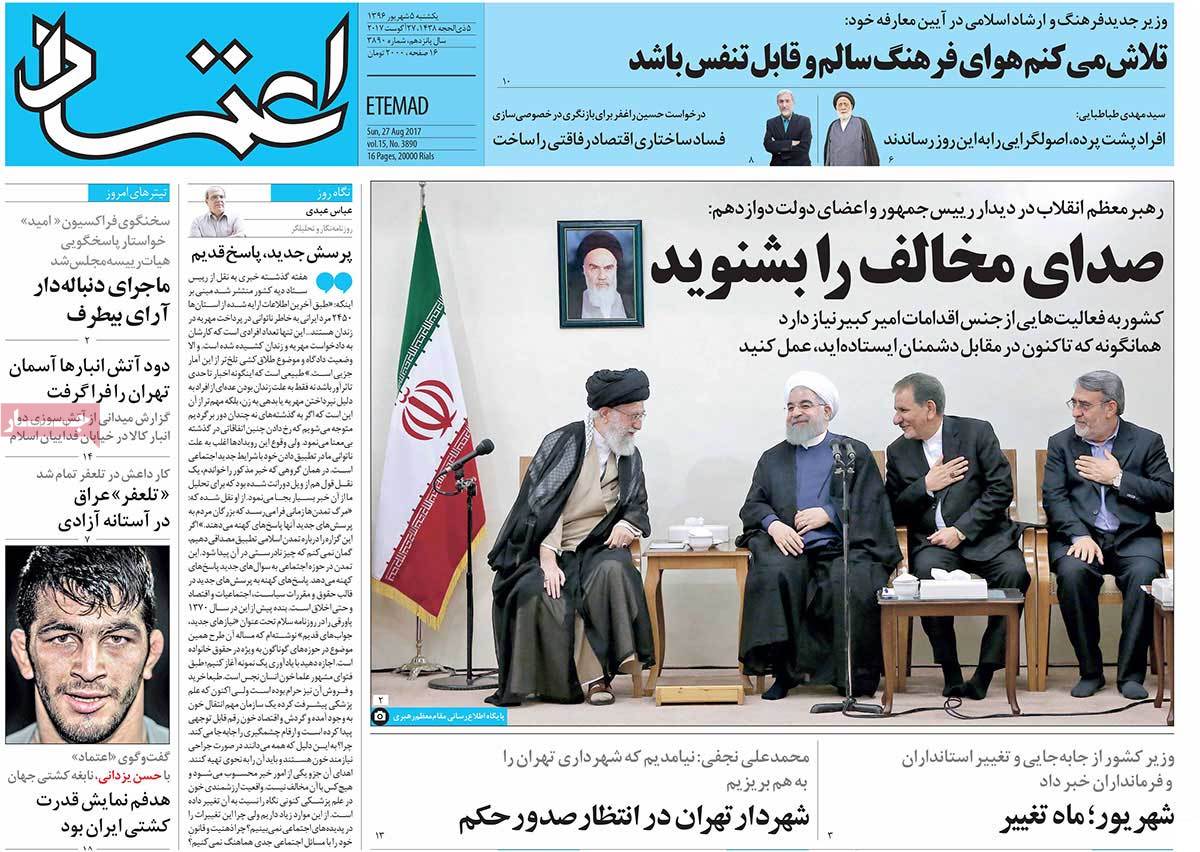
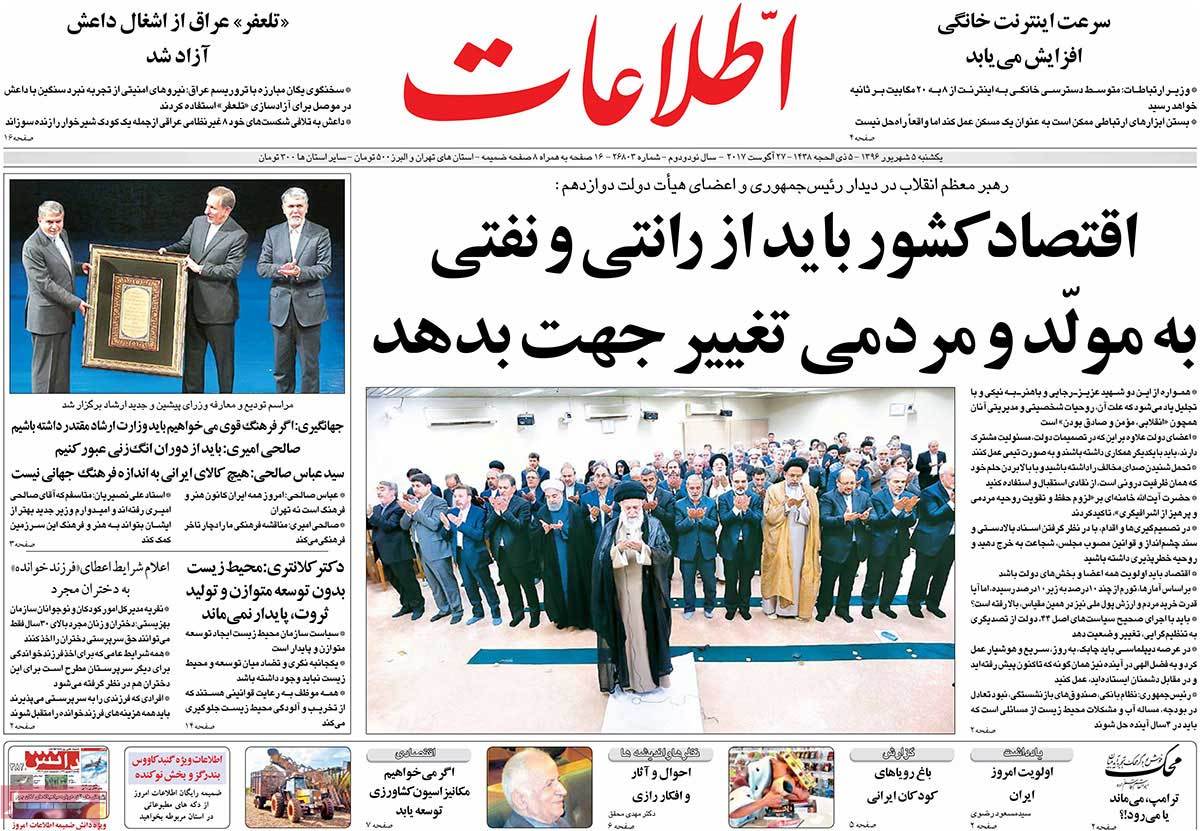
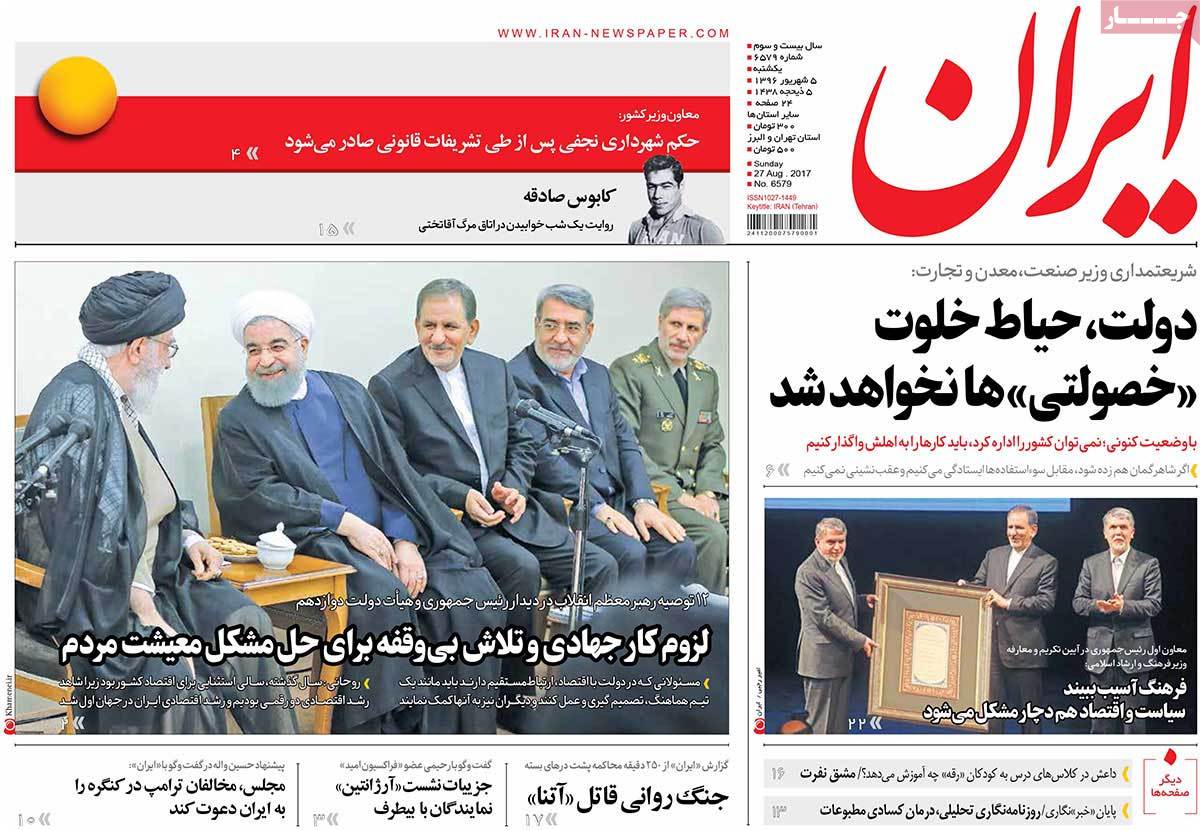
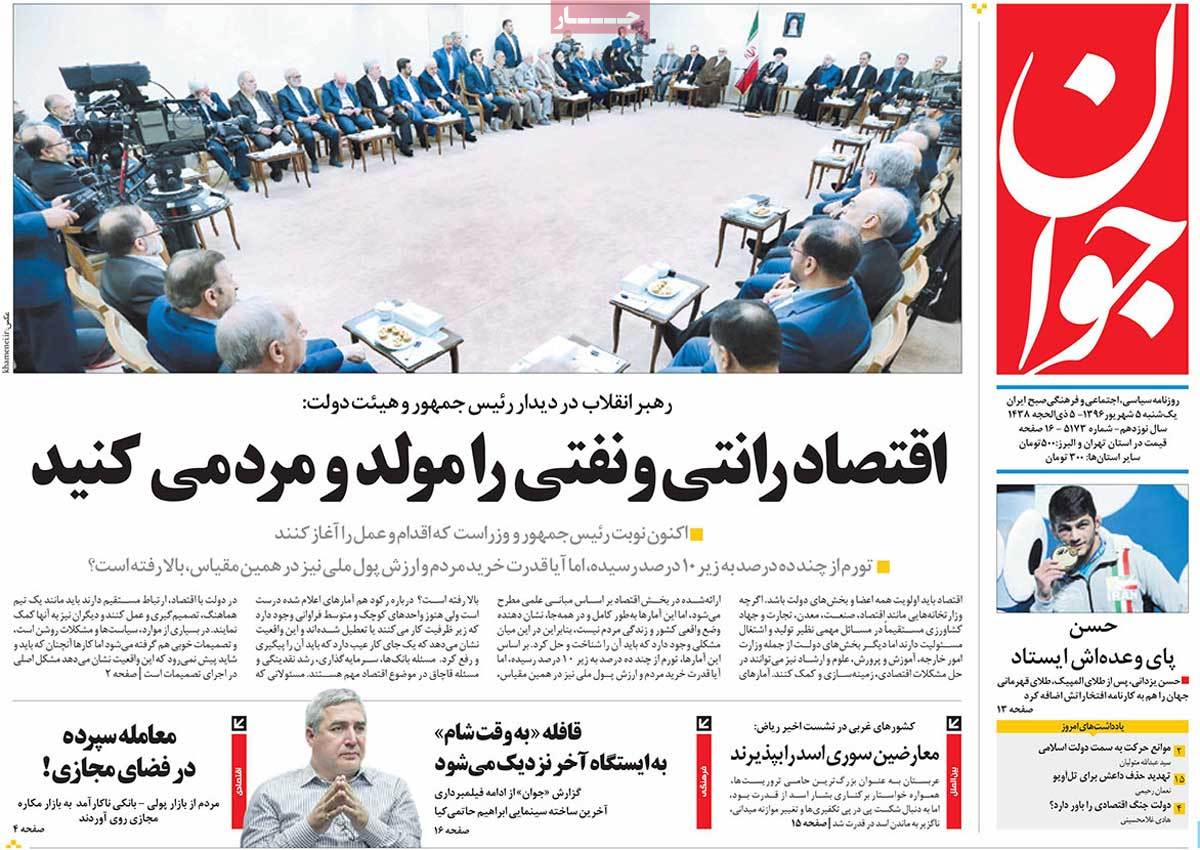
A Look at Iranian Newspaper Front Pages on August 27

The top story in all newspapers today was the remarks made by the Leader of Iran’s Islamic Revolution, Ayatollah Seyyed Ali Khamenei, in a meeting with President Hassan Rouhani and his cabinet members.

The Leader gave the government several pieces of advice, urging them to tolerate their critics and resolve the Iranian people’s economic problems as soon as possible.

The comments made in two ceremonies were also highlighted today: First, the ones in a ceremony to appreciate efforts made by former Tehran mayor Mohammad-Baqer Qalibaf, and second, those made in a ceremony to inaugurate new Culture Minister Seyyed Abbas Salehi.

The above issues, as well as many more, are highlighted in the following headlines and top stories:


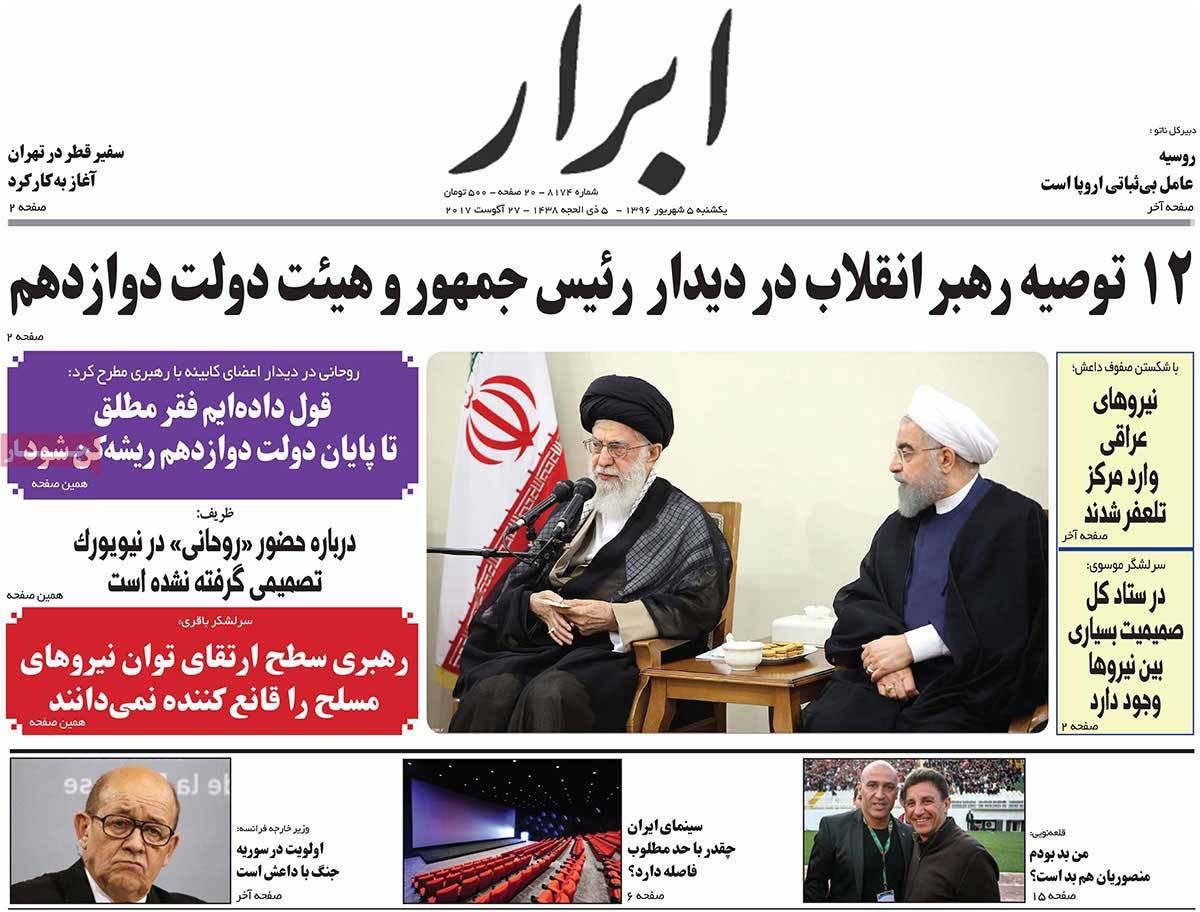
Abrar:

1- Rouhani: We’ve Promised to Eradicate Absolute Poverty in 4 Years

2- Zarif: No Decision Made Yet on Rouhani’s Trip to New York

3- Iran Top Officer: Leader Not Convinced by Level of Promotion in Armed Forces’ Power

A Look at Iranian Newspaper Front Pages on August 27 - abrar


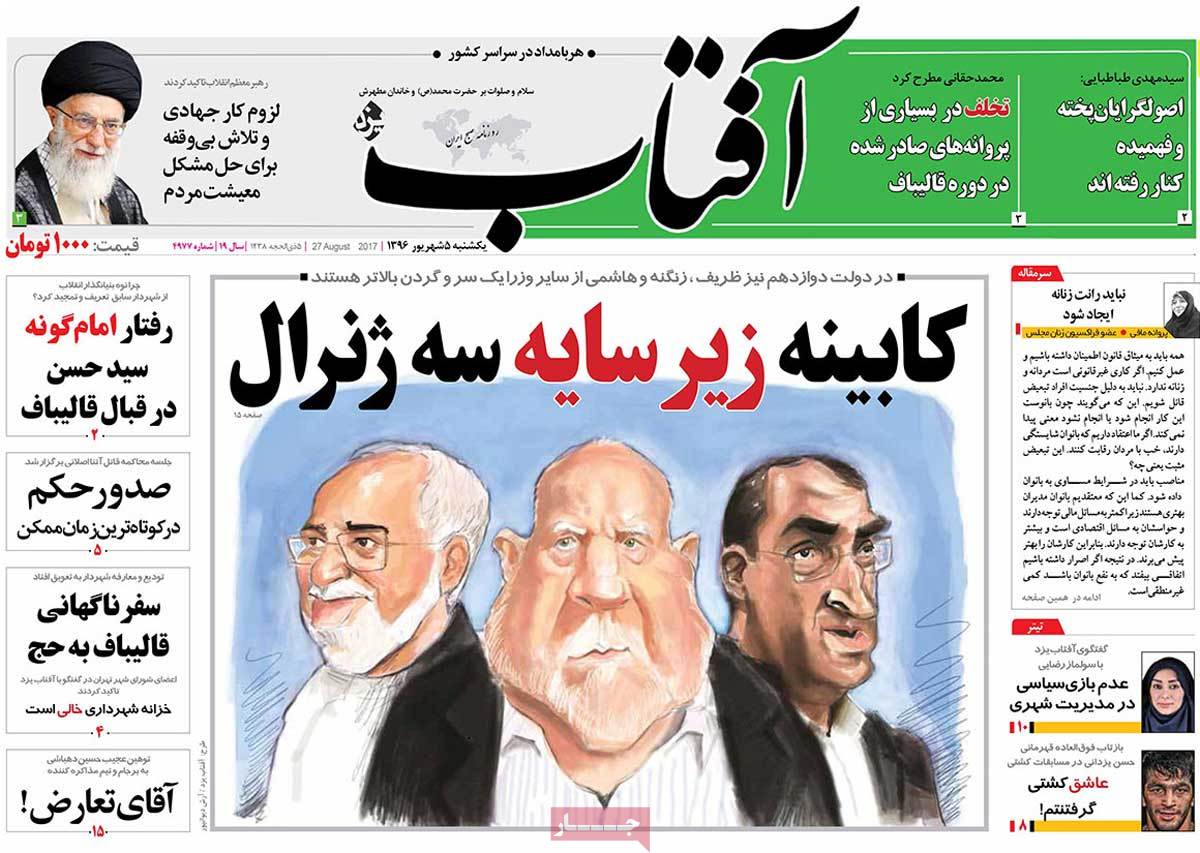
Aftab-e Yazd:

1- Iran Leader Calls for Government’s Nonstop Efforts to Resolve People’s Economic Woes

2- Cabinet Overshadowed by Three Generals

  • Ministers of Foreign Affairs, Health, Oil Most Competent Ones in Rouhani’s Cabinet

A Look at Iranian Newspaper Front Pages on August 27 - aftab


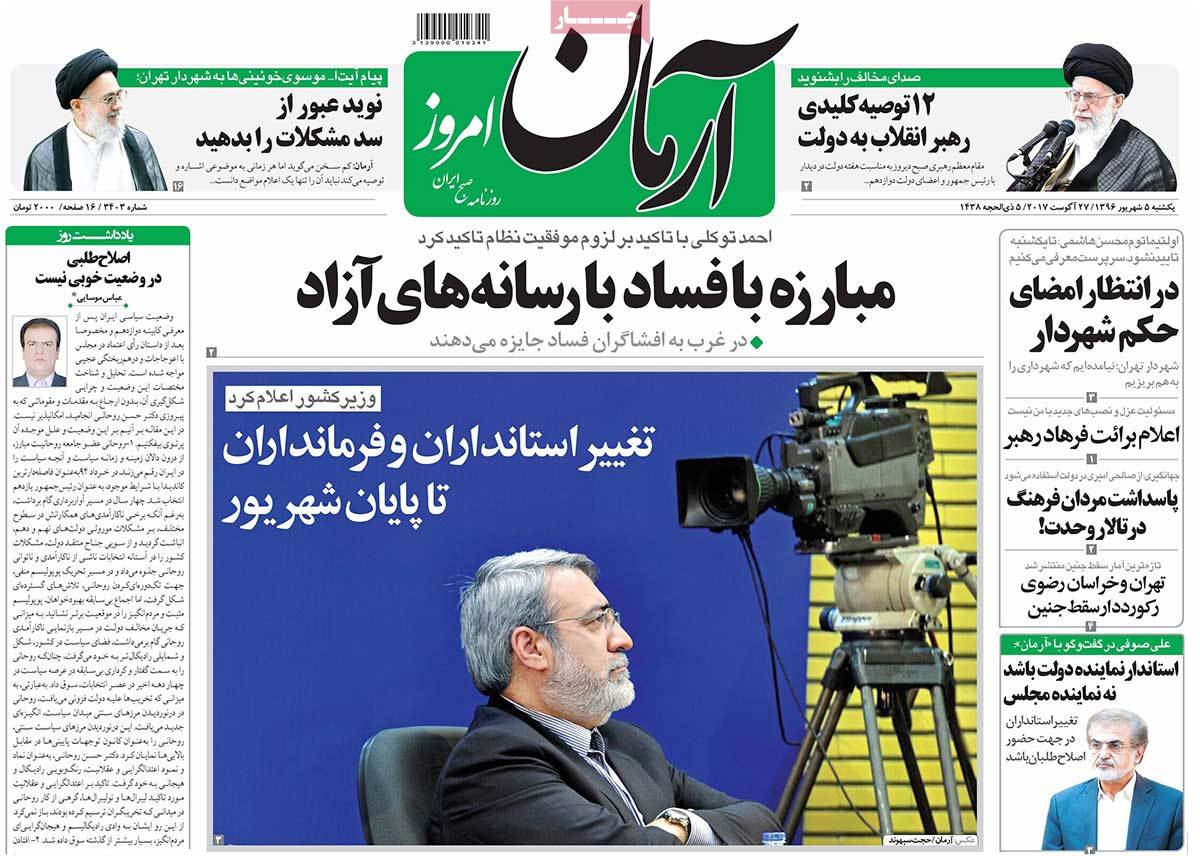
Arman-e Emrooz:

1- Iran Leader’s 12 Key Advice for Government; Listen to Your Critics

2- Ex-MP Underlines Need for Free Media to Fight Corruption

  • Western Countries Reward Whistle-Blowers

A Look at Iranian Newspaper Front Pages on August 27 - arman


Etemad:

1- New Culture Minister: I’ll Try to Keep Atmosphere of Iran’s Culture Breathable, Clean

A Look at Iranian Newspaper Front Pages on August 27 - etemad


Ettela’at:

1- Leader Calls for Decrease in Iranian Economy’s Reliance on Oil

2- Iraq’s Tal Afar Liberated from ISIS Occupation

A Look at Iranian Newspaper Front Pages on August 27 - etelaat


Iran:

1- Iran Leader Underlines Necessity of Nonstop Work for People’s Livelihood

2- Trade Minister: Government Won’t Be Backyard for Quasi-Public Corporations

A Look at Iranian Newspaper Front Pages on August 27 - iran


Javan:

1- Leader: Iran’s Economy Should Become Productive, Popular

2- Western Countries in Riyadh Summit Urge Syrian Dissidents to Accept Assad

A Look at Iranian Newspaper Front Pages on August 27 - javan


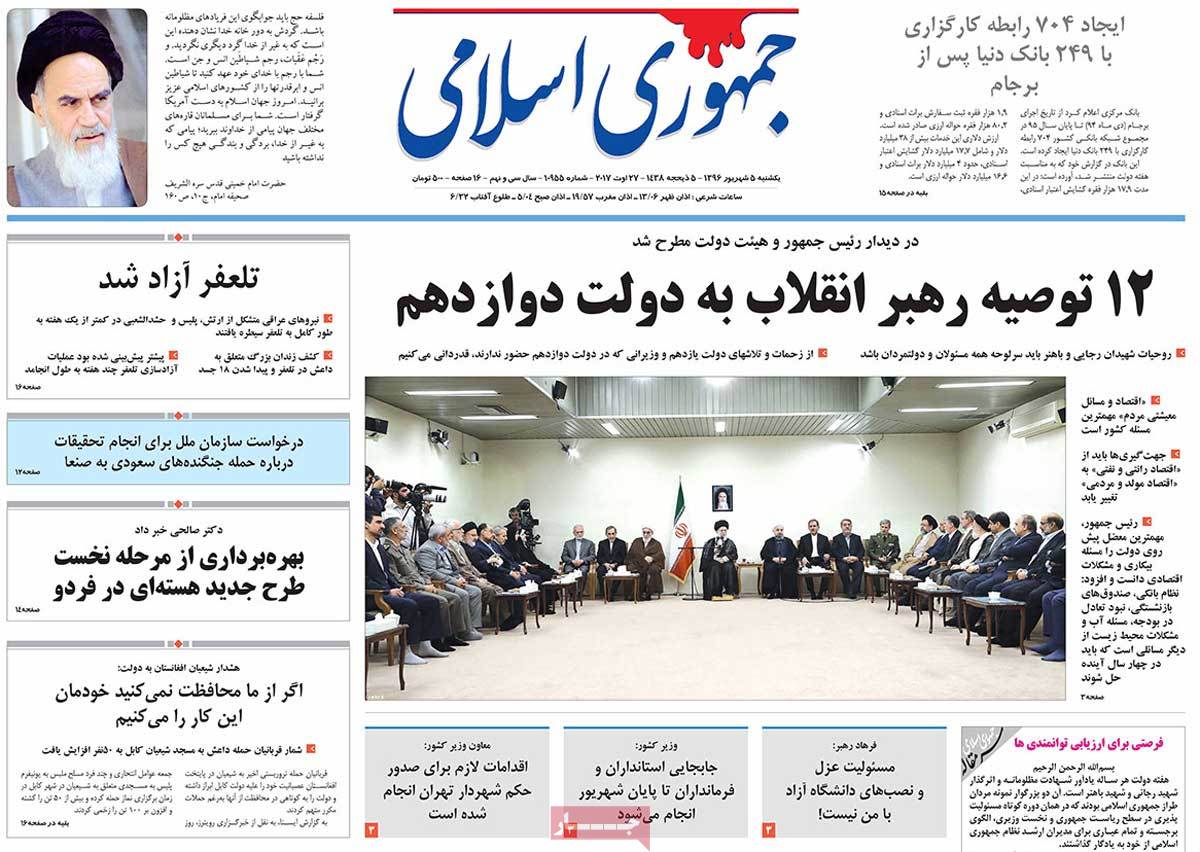
Jomhouri Eslami:

1- Iran Nuclear Chief: First Phase of New Nuclear Project in Fordow Inaugurated

2- Afghanistan’s Shiites Warn Gov’t: If You Don’t Protect Us, We’ll Do It Ourselves

3- 704 Broker Relations with 249 World Banks after Iran Nuclear Deal

A Look at Iranian Newspaper Front Pages on August 27 - jomhori


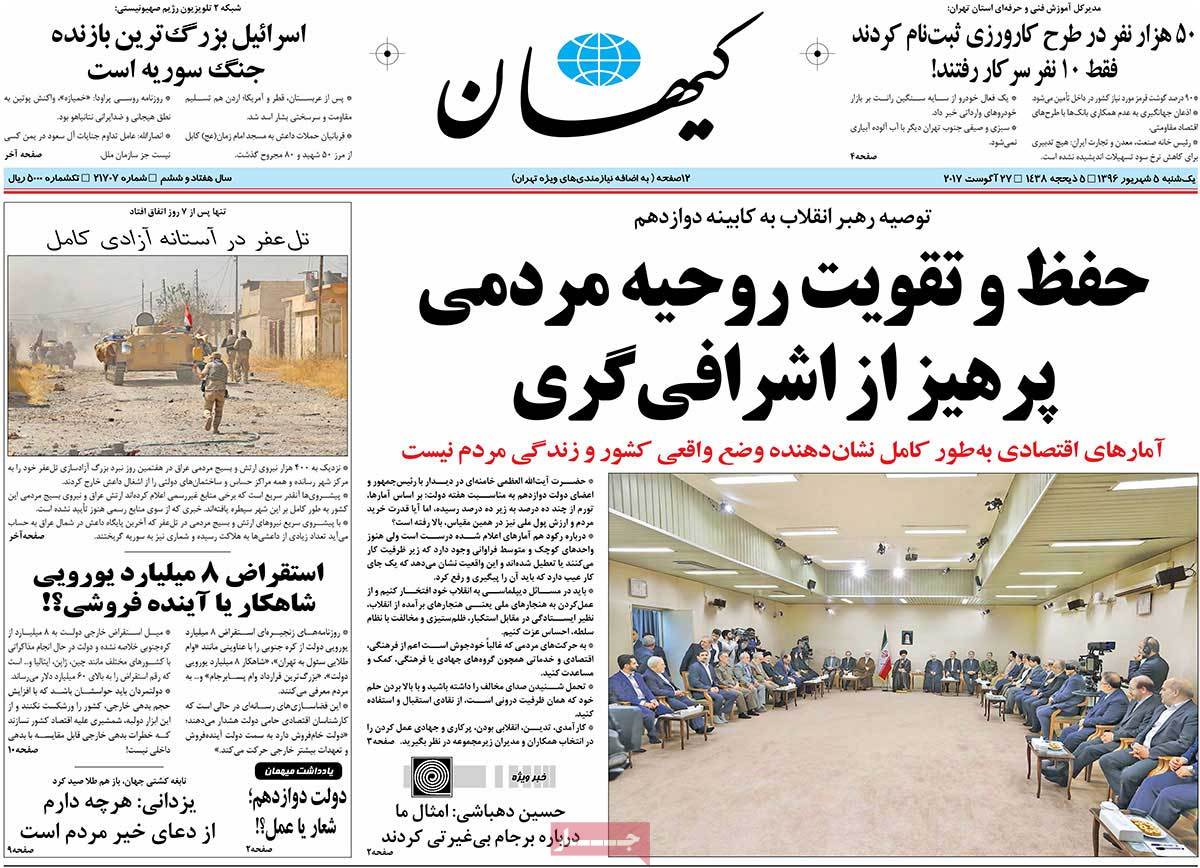
Kayhan:

1- Iran Leader Urges Government to Refrain from Aristocracy

  • Economic Statistics Don’t Fully Reflect People’s Real Lives

A Look at Iranian Newspaper Front Pages on August 27 - kayhan


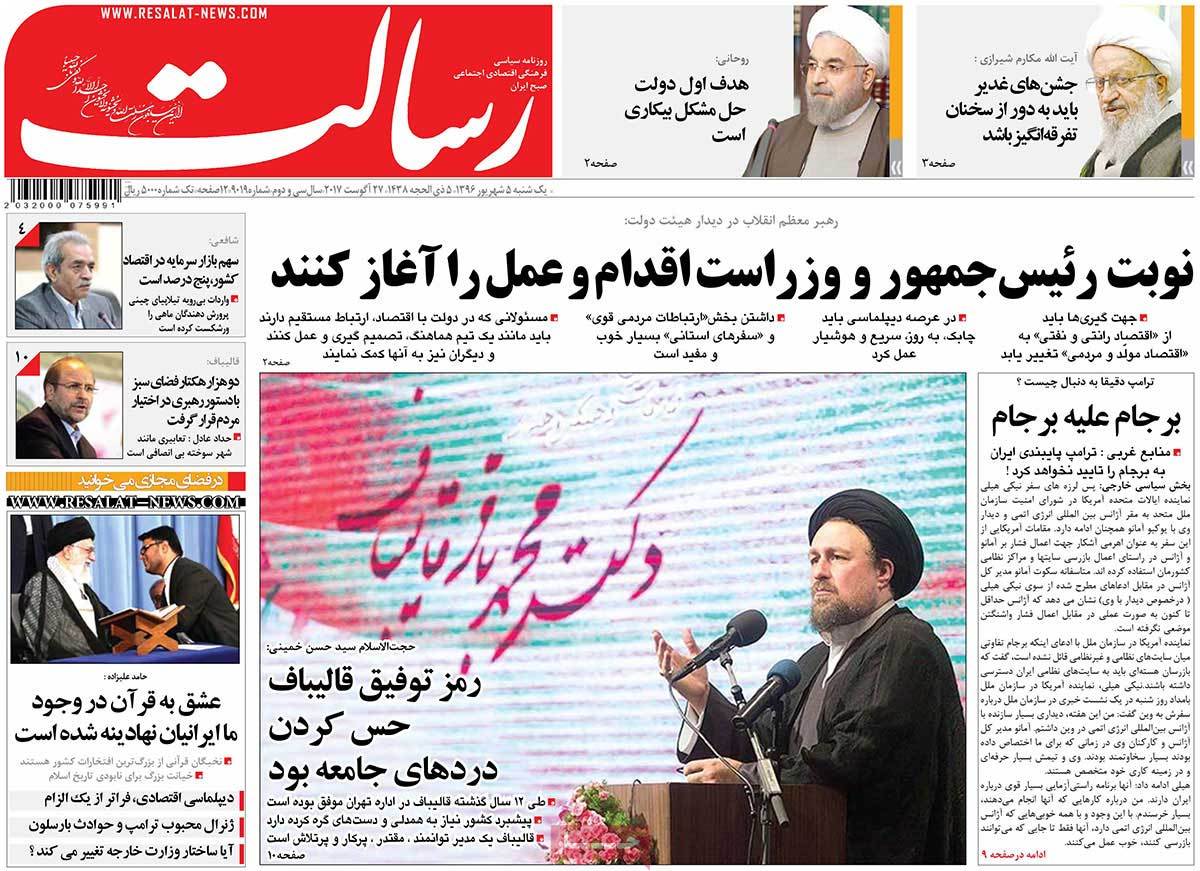
Resalat:

1- It’s Time for Rouhani, His Ministers to Start Action: Leader

2- Imam Khomeini’s Grandson: Qalibaf Felt Society’s Pains

3- Rouhani: Resolving Issue of Unemployment First Priority of Gov’t

A Look at Iranian Newspaper Front Pages on August 27 - resalat


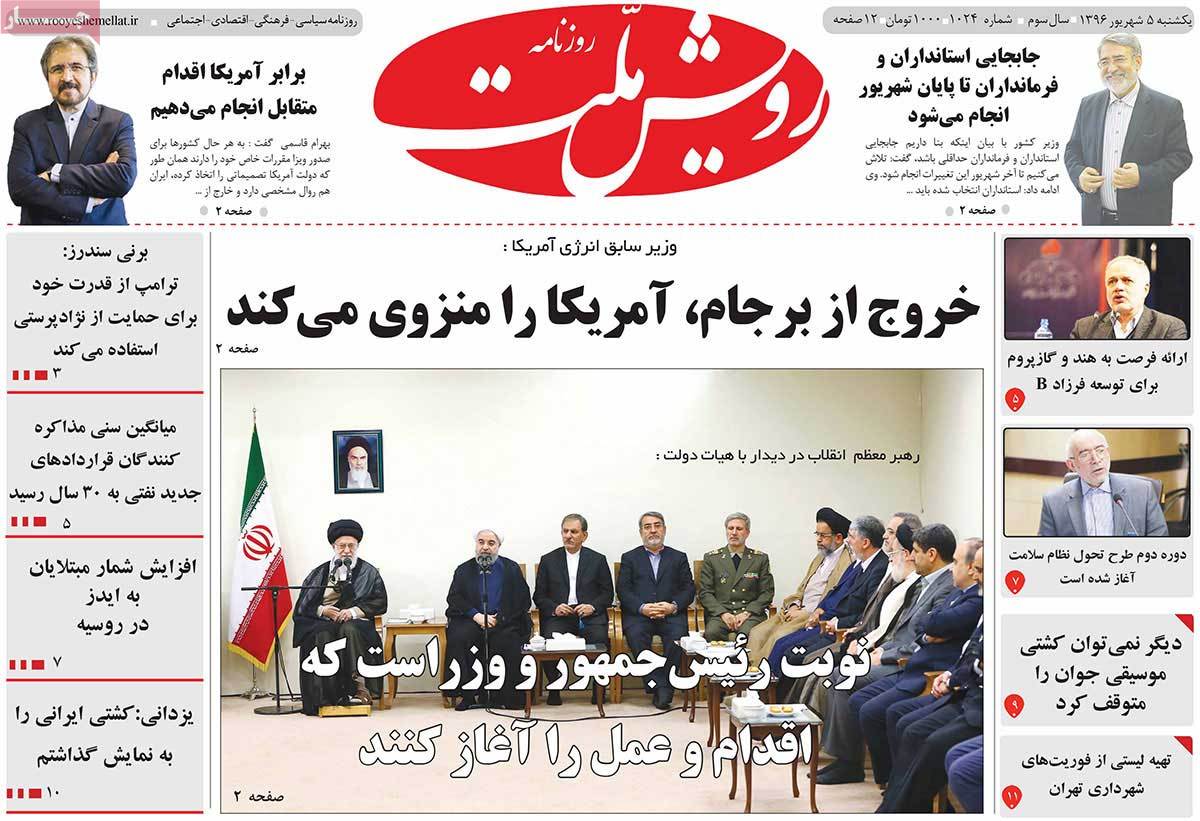
Rooyesh-e Mellat:

1- Withdrawal from JCPOA to Isolate US: Ex-Secretary

2- Qassemi: Iran to Reciprocate US Moves

3- Average Age of Oil Deal Negotiators Decreased to 30

A Look at Iranian Newspaper Front Pages on August 27 - royesh mellat


Shargh:

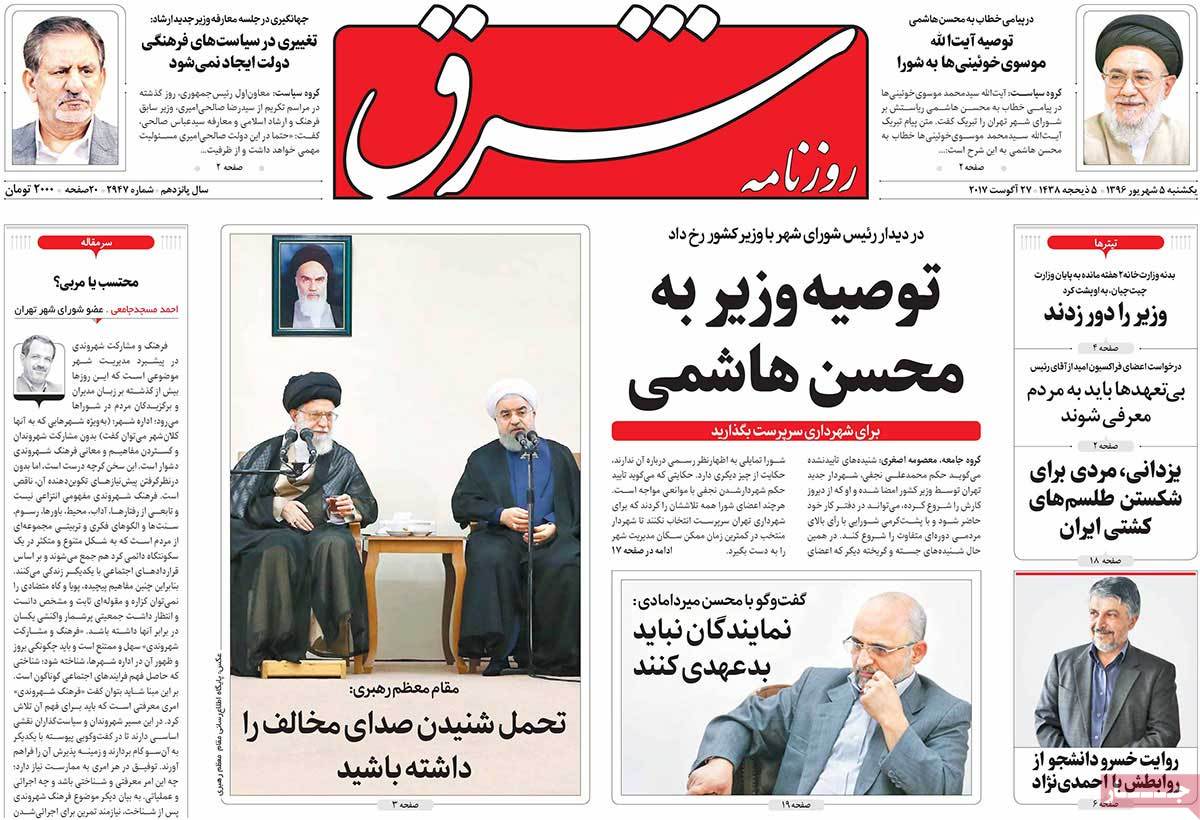
1- Iran Leader to Gov’t: Tolerate Your Critics

2- First VP: No Change to Be Made to Iran’s Cultural Policies

A Look at Iranian Newspaper Front Pages on August 27 - shargh

Iranian Shiite Muslims Set Out on World’s Longest Arba’een Pilgrimage Walk

The farewell ceremony of the world’s longest mass pilgrimage walk of Arba’een, the 40th day after the martyrdom anniversary of Imam Hussein – the third Shiite Imam – was held in the northeastern Iranian city of Mashhad.

According to a Farsi report by the Azad News Agency (ANA), the ceremony was attended by a number of the province’s people and officials.

Arba’een marks the end of a 40-day mourning period following the day of Ashura, Muharram 10, 61 AH (October 10, 680 AD), on which Imam Hussein as well as his 72 companions sacrificed their lives for the sake of Islam in the Battle of Karbala, which took place in the Iraqi city on the same day.

En route to Karbala, the caravan will pass through five Iranian provinces and some 13 cities including Torbat-e Heydarieh, Bajestan (both located in Khorasan Razavi Province), Ferdows and Tabas (both in South Khorasan Province), Khur and Biabanak County, Nain, Shahreza, Varzaneh, Dehaqan (all located in Isfahan Province), Borujen and Lordegan (both in Chaharmahal and Bakhtiari) as well as Izeh and Ahvaz (both in Khuzestan province). It will enter the Iraqi territory from Shalamcheh border checkpoint in western Iran and will arrive at Imam Hussein’s Holy Shrine on Arba’een.

Every year, millions of Shiite Muslims take part in Arba’een pilgrimage walk, one of the biggest marches worldwide. This year, Arba’een will fall on November 9.