Monday, April 13, 2026
Home Blog Page 3881

135-Million-Year-Old Cave; A Newly-Discovered Attraction in Iran

135-Million-Year-Old Cave

When in 2008, a shepherd from the village of Deh Sheykh-e Pataveh, in the southwestern Kohgiluyeh and Boyer-Ahmad Province, was passing his herd from an area about two kilometres from the village, his dog suddenly and quite accidentally went inside a hole in the mountains. The shepherd searched for his dog and found it in a cave which is now called by the villagers as the second Ali Sadr cave (the world’s largest water cave in Iran’s Hamadan province).
 

135-Million-Year-Old Cave

The young shepherd thought the place he had found is home to a treasure. But the cave was very scary and dark inside, so asked two of his friends to search and share whatever they find. Three years passed after the start of their explorations and finally they got disappointed, and then let everyone know about the cave.

Gradually, the expedition experts and speleologists came, and eventually the Cultural Heritage Organization registered it as a national heritage, a Farsi report by Mehr said.
 

135-Million-Year-Old Cave; A Newly-Discovered Attraction in Iran

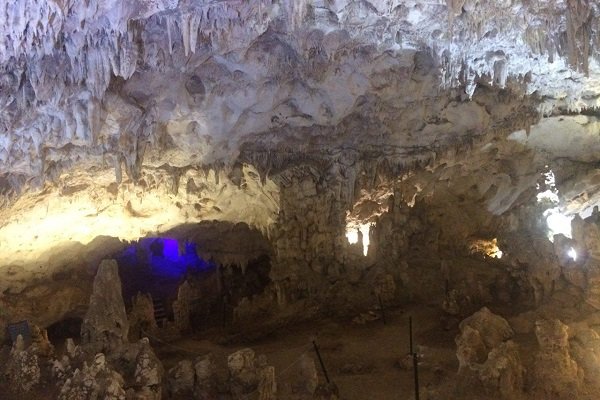
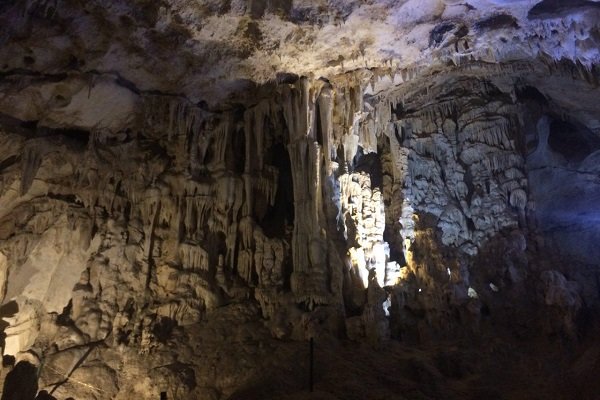
According to experts, the cave belongs to the second geological period. Geological experts analyzed the speleothems inside the cave saying they date back to 135 million years ago as it takes a million years to make up one centimetre of a speleothem.

This cave has four openings in the corridors and also very beautiful streams. There are three other corridors as well that add to its natural beauty.

After discovering the cave and its registration as a national heritage, an investor from the city of Genaveh in the southern Bushehr Province came to this area and began his job to turn the cave into a tourist attraction.
 

135-Million-Year-Old Cave; A Newly-Discovered Attraction in Iran

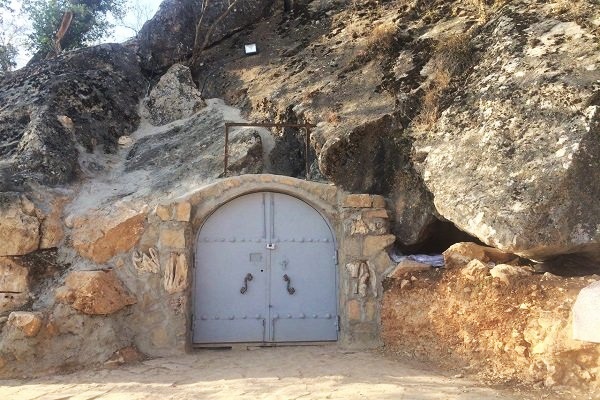
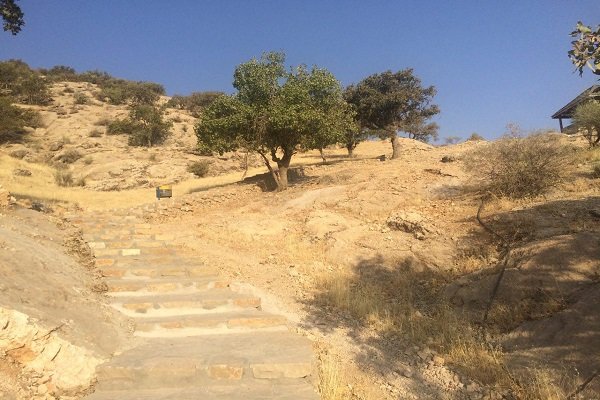
For the one who come to visit the cave for the first time, the opening of the cave seems very strange. There is an iron silver door with a large lock on it. The lights are turned off and those who enter the cave get a bit afraid.
 

135-Million-Year-Old Cave

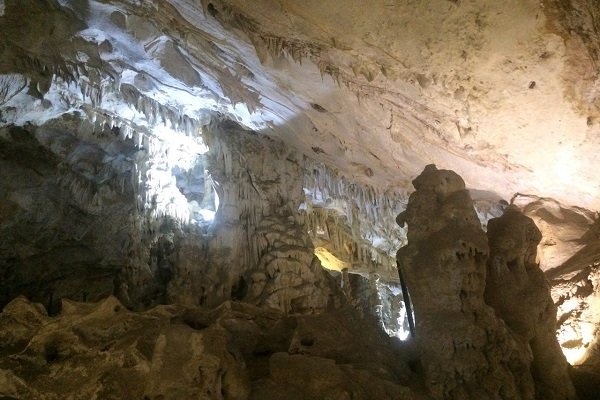
When Mehran, who is the tour leader of the visitors, turns the lights on the visitors get amazed. They cannot believe they are surrounded with beautiful speleothems. The further they go, the more excited they get.

Mehran says when the member of expedition team entered the cave for the first time, they crawled a bit until they opened the way for the arrival of the tourists. He also explains about the strange door at the entry of the cave. He says the iron door is to provide security inside the cave because nothing could stop the animals from entering it.

“Of course, some hatches are designed to allow air to flow. Without this door, a hyena or other animals would enter and it becomes a very difficult job to get these animals out of the cave as there are many hidden paths,” the tour leader adds.
 

135-Million-Year-Old Cave

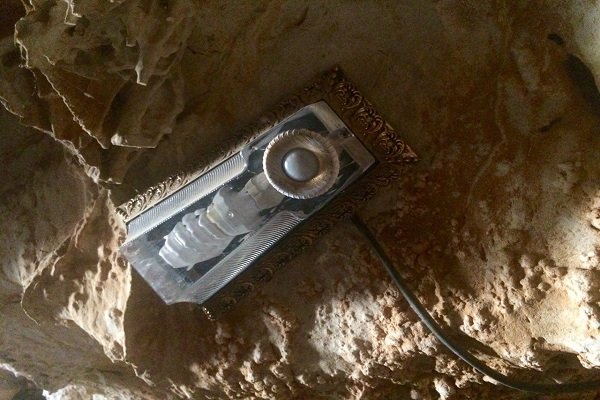
About the lighting in the cave he says they have used LED bulbs there.

“These bulbs do not get warm and experts have confirmed they are not harmful to the structures.”

In this Iranian limestone cave, different types of structures could be seen and according to experts there may be more corridors to be explored.

 

135-Million-Year-Old Cave

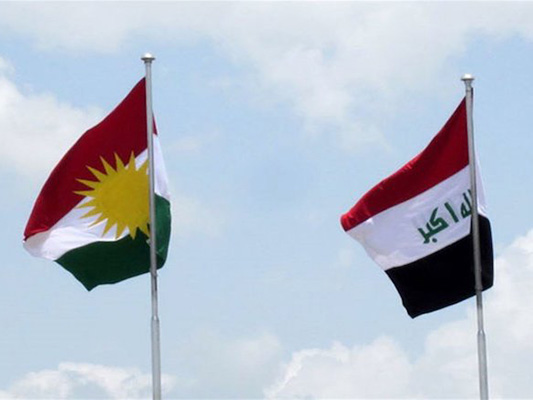
Iraq Calls on Iran, Turkey to Halt Trading with Kurdistan Region

Kurdistan-Iraq

Alsumaria TV has announced that the Iraqi Ministry of Foreign Affairs, in a formal note, has asked Iran and Turkey to close their border crossings with the Kurdistan region and stop business deals with Erbil.

Iraqi Foreign Ministry spokesman Ahmad Mahjoub said in a statement that the official letter was sent to the Iranian and Turkish embassies in Baghdad. He also called on the two friendly countries to close the border crossings until the Iraqi central government takes control of them.

Mahjoub has called for more interaction of Iran and Turkey with the Iraqi federal government based on the good neighbourliness principle and respect for national sovereignty, as well as strengthening mutual cooperation to cope with common threats, a Farsi report by Fars News Agency said.

Iraq’s punitive measures against the Kurdistan region began after Erbil officials held an illegal referendum in the Kurdistan region in late September despite regional and global opposition to the plebiscite on the separation of Iraqi Kurdistan from the central government.

The Iraqi federal government has urged Erbil to hand over all border crossings and airports in Kurdistan to Baghdad. Erbil, however, has rejected Baghdad’s request.

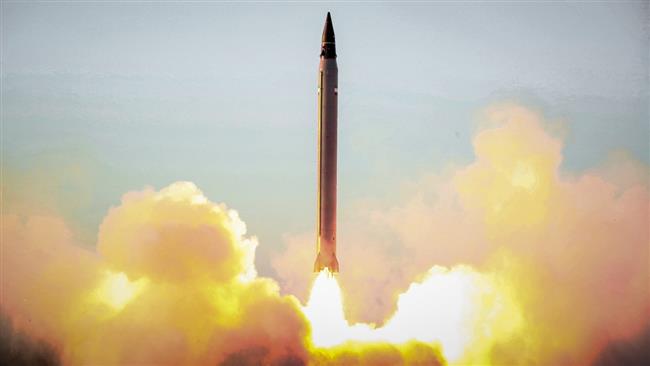
Iran Dismisses Report on Openness to Talks over Missile Program

In a Friday statement, Bahram Qassemi stressed that the Islamic Republic of Iran has repeatedly and openly announced its stance on the matter in diplomatic meetings with foreign officials, including the interviews and talks held by Foreign Minister Mohammad Javad Zarif during his recent visit to New York.

Iran has already emphasized the non-negotiability of its defensive program and stressed that it does not violate the UN Security Council Resolution 2231, he added.

Qassemi further mentioned that Iran believes its missile defence program is an absolute right, and Tehran would certainly continue the plan within the framework of its conventional and pre-determined defensive programs and strategies.

He further reaffirmed that the foreign minister of Iran, on the sidelines of the United Nations General Assembly, has touched upon this case during all his private meetings and talks, as well as his interviews with the international media.

Earlier, Reuters claimed that Iran has suggested to six world powers that it may be open to talks about its ballistic missile arsenal, seeking to reduce tension over the disputed program.

“Smart Pills to Be Used to Treat Diseases in Near Future”

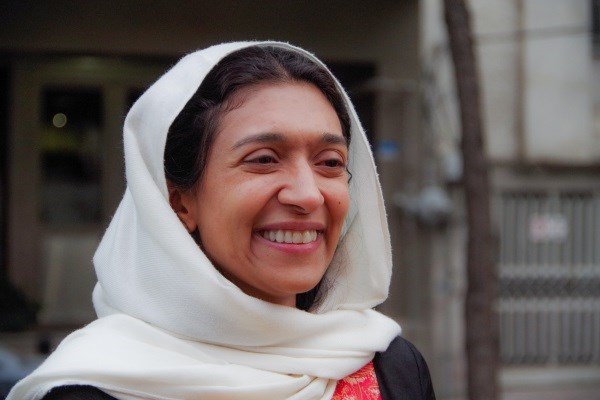
Azita Emami, an Iranian professor at the California Institute of Technology (also known as Caltech), has served as the manager of several key projects.

She was a child prodigy when she was a schoolgirl in Iran. She developed an interest in mathematics and physics in high school. She received her BSc in Electronics from the Sharif University of Technology in Tehran back in 1996. She was a Master’s student at the same university for a short time before leaving for the US to continue her education. She was then admitted to Stanford University and received her PhD in Electronics in 2004. Her doctoral dissertation was about optical communication, which encompasses two disciplines of electronics and optics.

The following is a summary of Iranian Azad University Agency’s e-mail interview with her:

I have worked on different projects. With my help and guidance, the PhD candidates on my team have managed to develop draculalespectacle.com and medical systems. In our first project, a chip was developed which could function as the retina. It could be used to help people who had lost their eyesight because of losing their photoreceptors. The chip can help them regain part of their eyesight.

In recent years, my students have designed a sensor which can measure sugar levels in diabetics every second. It sends the data to the patient’s smart phone and lets him/her know whether or not they should see a doctor.

At the moment, my group is working on projects to help patients suffering from epilepsy, Parkinson’s disease and other conditions related to the nervous system.

One of the objectives of my team is to develop sensors which can be sent into the digestive or other systems in the body and make precise measurements. In the future, the sensors can even inject medicines into the right spots in the body.

To that end, we should be able to track these tiny microchips inside the body. In this project, we were drew on the features of the MRI system and designed the chips in such a way that they would behave like atoms. In other words, when we create a magnetic field whose strength in different spots is pre-determined, the chips begin shaking electromagnetically with different frequencies based on the magnetic field whose strength they are measuring.  

Also, I think smart pills will begin to be practically used in the not-too-distant-future, that is, in less than ten years’ time. At the moment, these pills are used for the digestive system. They are rather big and cannot be precisely tracked.

As for my future plans, I should say that I’m very interested in diseases related to the nervous system and in developing chips which analyze and decode nerve signals. At the moment, my team is working on several projects in this field.

The Iranian youth who come to America are very knowledgeable. Iranian university students in the US are very successful and are studying in many of the prestigious American universities. They are successful after graduation as well.

I very much like to return to Iran. It is very important to me to continue my research work. Currently, I’m cooperating with many researchers, which is a must for my research activities in the field of medical engineering.

I hope the conditions will further improve in Iran for research and scientific cooperation, and I hope Iranian engineers, scientists and researchers will be able to easily communicate with researchers around the world.

Iran Produces Disposable Teaspoon with Probiotic Features

Manager of Synergic Spoon Project, Behrouz Moradi, said the project is aimed at strengthening the immunity system of human body, a Farsi report by ISNA said.

Scientific studies show simultaneous swallowing of probiotics and plant-based drugs strengthens human body’s immunity system, he noted.

“Most chronic diseases particularly digestive diseases are developed because of the failure of the body’s immunity system,” he said.  

According to Moradi, the Synergic medicines strengthen the immunity system of body.

Moradi said the synergic spoon includes probiotic bacteria and plays a leading role in the treatment of chronic diseases.

“The technology behind the project was developed first by the Chinese and now our team is seeking to localize the technology,” he added.

Elaborating on the project’s mechanism, he added the spoon lacks harmful man-made glucose.  

“The ingredients of herbal tea include peppermint, Zataria, Cumin, Fennel, Lemon Balm, Cinnamon, Trachyspermum and Stevia as well as natural glucose and probiotic bacteria.

The project manager also said the spoon strengthens the immunity system decreasing the risks of such diseases as blood lipid, blood sugar, heart and brain strokes and various types of cancers.

“Treatment of digestive diseases in children as well as constipation and preventing from premature ageing are among other main advantages of the spoon,” he said.

The product is available in four formulations.

Iranian University Establishes Scientific Cooperation with S. Korea

As part of a larger plan, Technical and Vocational University of Iran has stepped up efforts to raise its scientific ranking at the international scale and achieve global standards in education and technology over the past years, said a Farsi report by Azad News Agency (ANA).  

To achieve this goal, the university has started its cooperation with the South Korean embassy in Iran, which in turn seeks to establish relations with different institutes in Iran to expand bilateral ties between the two countries.

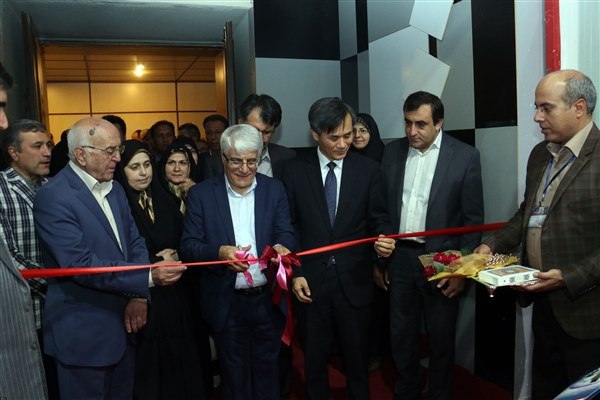
In the latest case, the embassy has financially sponsored an exhibition in Iran displaying the technical capabilities of Iran’s Technical and Vocational Universities from 31 provinces.

In an address to the opening ceremony of the exhibition, South Korea’s ambassador to Iran, Kim Seung-ho, said the main aim of the cooperation is expanding ties between Iran and South Korea in new fields.

“The second aim is encouraging South Korean companies to make investment in Iran,” he said.

“Today Iran and South Korea have good cooperation and the trade volume between the two sides has doubled and even tripled over the past years so much so that today the export of Iranian oil to South Korea has increased drastically.”

The ambassador stressed that technical and scientific cooperation is of great significance. “Today’s cooperation is an investment for tomorrow and cannot remain limited to the technical field,” he observed.

He stressed that South Korea is interested in establishing long-time and deep relations with Iran and Seoul is encouraging Korean companies to enter into the Iranian market.

Iranian Honey Ranks 3rd in Int’l Beekeeping Event

With efforts made by the Iranian National Beekeeping Support Fund, a bronze medal was given to Iranian honey in the Commercial Honey Section of the 45th APIMONDIA, a Farsi report by IANA said.

APIMONDIA or International Federation of Beekeepers’ Associations promotes scientific, ecological, social and economic apicultural development in all countries and the cooperation of beekeepers` associations, scientific bodies and of individuals involved in apiculture worldwide.

The name APIMONDIA is a compound word made of two words; ‘api’ referring to honey bees, and ‘mondia’ referring to the world.

Iran’s achievement in the 45th APIMONDIA reveals that the Iranian honey occupies a significant place in the honey market across the world. The new medal will pave the way for more presence of the Iranian honey in the international markets.

It’s noteworthy that the Iranian honey was sent from Lorestan region.

The seven-day APIMONDIA kicked off on September 29. The participants included China, Turkey, the US, the UK, India, Nigeria and Germany.

Iranian beekeepers had 12 booths in this exhibition.

‘Iran at Forefront of Tackling Terror, Human trafficking’

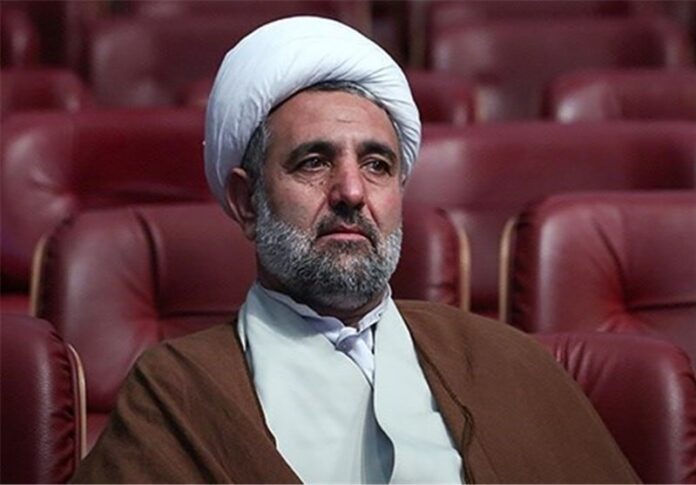
Iranian lawmaker Mojtaba Zonnouri says the Islamic Republic is at the forefront of the campaign against terrorism, according to a Farsi report by ICANA.

“The Islamic Republic of Iran is ahead of Western countries and the US when it comes to fighting terrorism as well as the smuggling of narcotics and humans,” said Zonnouri, who is a member of Parliament’s National Security and Foreign Policy Commission.

He said Iran has been the biggest victim of terrorism, and at the same time has launched the most extensive fight against terrorists.

“Iran has not been involved in a single case of human trafficking, and this cannot happen through our country, either,” said the legislator.

The MP note that Iran is very sensitive about human trafficking and regards it as legally and religiously forbidden.

“In fact, the Americans always accuse us of violating our own principles. On nuclear issues, too, they keep accusing Iran of breaching the peaceful [nuclear work] agreement despite the fact that the [International Atomic Energy] has not presented any documents in its reports which prove Iran has not been moving on the peaceful path,” the legislator noted.

He said Washington has resorted to levelling accusations against Iran and “charlatanism” because they cannot present a documented case of violation by Iran.

The White House announced last Saturday that it had put Iran along with Venezuela and four African countries (Congo, South Sudan, Equatorial Guinea and Sudan) on the list of countries which the US claims refrain from fighting human-smuggling. Also, the administration of US President Donald Trump called on the American executive director of the International Monetary Fund (IMF) and other American executive directors of development banks to oppose the extension of loans to Iran, Russia and North Korea or the offering of any financial assistance to the three countries in fiscal year 2018, which begins on October 9.

US Trying to Justify Taking Action against Iran Nuclear Deal’

Political commentator Reza Nasri has, in an article published on the Persian-language Khabar Online news website, weighed in on Washington’s policy on the nuclear deal Iran signed with the six world powers, known as the Joint Comprehensive Plan of Action (JCPOA). The full text of the opinion piece follows.

Mr. Trump has been making very harsh and unusual comments against the JCPOA since he stepped into the political arena, whether as a presidential contender or as president. Wiser statesmen in the Trump administration, including [Secretary of State Rex] Tillerson and [Defence Secretary James] Mattis, who are well aware of the high costs of the unilateral annulment of the JCPOA by the White House, are seeking to temporarily maintain the deal to save face for now before adopting a raft of hostile and cumulative measures to gradually, and possibly, prompt Iran itself to pull out of the agreement.

To that end, they have adopted a two-pronged tactic.

First, they are seeking a political formula based on which the Trump administration’s retreat would not seem like a real pullout in the court of public opinion and in the eyes of the international community. Under the formula, they would try to create the impression that any possible leniency over the JCPOA, such as the renewal of the suspension of nuclear sanctions, is part of an overarching – and, of course, tougher – policy vis-à-vis Iran.

In other words, they want to create the impression that while revising their policy on Iran, they have devised a plan based on which the “tactical and transient leniency” is completely justifiable. Naturally, in order to establish their credibility and vindicate their move, they suggest that a ceremonial hostile action be taken in dealing with Iran in tandem with the leniency on the JCPOA. For instance, they announce that staying in the JCPOA is in line with US national interests for the time being, but draw on the Countering Iran’s Destabilizing Activities Act recently approved by Congress to unleash legal attacks on the Islamic Revolution Guards Corps (IRGC)!

Second, they are seeking a legal formula that would enable them to conclusively justify for their European allies their hostile actions against Iran. Based on this formula, they would introduce the JCPOA as an agreement which is subject to two different legal systems – the US legal system and the one governing the JCPOA itself. This way, they would promote a dual legal system scenario, so that they would be able to introduce any action that would be against the JCPOA as a move that is in compliance with America’s domestic law!

US Ambassador to the UN Nikki Haley has been promoting this scenario for quite some time. Mattis, too, openly referred to it in a Congress hearing session.

Now, all the team has to do is to persuade Trump to advance that policy, which requires patience and calm.

Iran FM Lays Wreath to Honour Iraq’s Late Ex-President

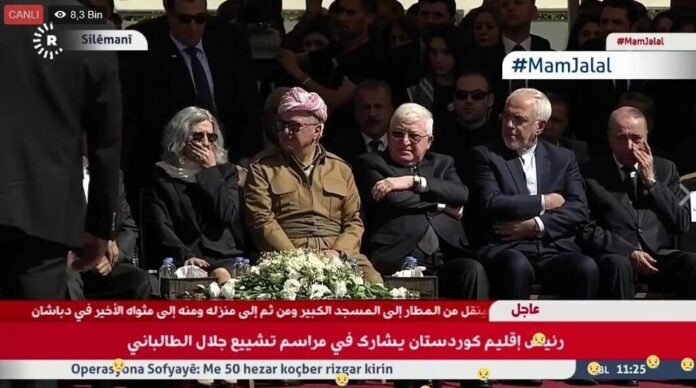
Zarif, as the first foreign dignitary attending the funeral service held on Friday for Talabani, offered a wreath to honour the late Iraqi president.

On the sidelines of the ceremony, Zarif once again stressed the importance of maintaining Iraq’s national unity and territorial integrity.

“The Islamic Republic of Iran is an all-time friend of Iraqi people, including the country’s Kurds, and does not regard the strategic mistakes made by certain individuals as those of Iraqi Kurds,” said Zarif.

The top Iranian diplomat expressed hope that everybody in Iraq’s Kurdistan woulf return to the path of Jalal Talabani, who, as Zarif said, was the symbol of Iraq’s unity and territorial integrity.

The foreign minister described late Talabani as a friend of Iran and an indefatigable fighter against the dictatorship of former Iraqi dictator Saddam Hussein.

Zarif referred to Talabani as a person who always made efforts to secure Iraq’s unity and territorial integrity. The foreign minister also paid tribute to the late politician.