Friday, April 24, 2026
Home Blog Page 3872

Iran DM Says IRGC at Forefront of Fight against Terrorism

“The IRGC is the most powerful anti-terror organization and is at the forefront of fighting terrorism,” General Hatami said on Thursday.

He added, “The IRGC, the (Iranian) Army, and the country’s other forces stand united and integrated in the face of the US government’s hostile and provocative policies and measures”.

Iran’s military forces will not allow Washington to jeopardize the region’s security through spreading proxy wars and terrorism, Hatami further said.

Describing the IRGC as the most powerful and popular force in the region, he said, “This revolutionary organization belongs to all nations in the region”.

The Iranian defense minister warned that designating the IRGC as a terrorist group would further destabilize the region.

US President Donald Trump is expected on October 15 to “decertify” a landmark 2015 international deal about Iran’s nuclear program, known as the Joint Comprehensive Plan of Action (JCPOA).

Trump is also expected to designate the IRGC as a terrorist organization, as he rolls out a broader, more hawkish US strategy on Iran.

In comments on Sunday, IRGC Commander Major General Mohammad Ali Jafari said if speculations about the US administration’s “stupid decision” to designate the IRGC as a terrorist organization are true, the IRGC will, in turn, treat the US military around the world, particularly in the Middle East, as Daesh (ISIL) forces.

Iran’s Leader Best Expert on Issues Related to US: Analysts

Iran’s missile program, support for resistance groups, and many other excuses Washington uses to put Iran under pressure are all signs of West’s non-commitment in the implementation of the Joint Comprehensive Plan of Action.

This comes as Iran’s Leader Ayatollah Seyyed Ali Khamenei had referred to these excuses long ago. The predictions of the Leader, which had been made a long time ago, were realized in the recent statements of the US Secretary of State, Rex Tillerson.

Basirat news website has conducted a Farsi interview with two leading Iranian international affairs experts, Dr Mohammad Jamshidi and Dr Foad Izadi, both university professors.

Here is the full text of this interview:

Q: You know that after the nuclear deal, the United States has been violating it in different ways. This as Iran’s Leader had repeatedly touched upon Washington’s unreiability. In your opinion, how did Ayatollah Khamenei come to know the US adiminstration in such an exact way? 

Jamshidi: This can be answered in two ways: First, the Leader has seen and experienced the US behaviour in different periods of time; whether in relations between Tehran and Washington, or during the war in Afghanistan, which followed the 9/11 attacks, and even during the negotiations on Iraq’s security, or after the nuclear talks where the US officials made some commitments. All these prove that the United States has a (pre-determined) pattern of behaviour. As Ayatollah Khamenei expressed, they consider themselves superior to others; therefore, they begin to ask for more after a round of negotiations. They do not make a deal to fulfil it. Their approach in negotiations is power-driven. In one step, they accept a series of issues and then start the next move. This was exactly their behaviour during the nuclear talks. The US practically wants to win more concessions, i.e. they are not pleased with what they have gained through the accord, and now they have actually started a new round of pressures.


Iran Leader has studied the US behaviours for the past 30 years. If a person studies a subject for more than three decades, he will definitely gain a deep understanding of that.


Izadi: After the 1979 Revolution, Iran’s Leader has been studying the US policies. Due to his previous responsibilities, and the responsibilities he was shouldering in the past, and also during his current position as the Leader of the Islamic Revolution of Iran, he has been in touch with issues related to the United States. If a person studies a subject for more than three decades, he will definitely gain a deep understanding of that. For that reason, if a person spends over thirty years on studying a matter, certainly he would become an expert in that field. I have mentioned it for several times that the Leader might be the best Iranian expert on the subject related to the United States. Given this background, he certainly has realized that the American side is not trustable.

Q: For how long and in which fields does the US intend to break promises? Why does Washington insist on such behaviour while knows that the Iranian people may get more pessimistic about the country?

Jamshidi: Americans have shown that they just want to exploit the Iranian people and use the Iranian society as a tool against Iran’s Establishment and government. To them, it is not important if you can provide their benefits even if their credibility is challenged. Because of this, they essentially do not change their own policies; the world’s public opinion and that of their own people is the same. They want to manage these opinions rather than developing their plans based on public opinion. The United States has a number of interests and their main plan is to restrict Iran in other areas and create strategic restrictions against Iran’s power. Their main strategy is to impose sanctions and put economic pressure on the country. It should be determined what the main plan of Iran is in this regard. Especially, when we see that the Islamic Republic’s nuclear program is so important to them. Although they have focused on the JCPOA, their main target is not the nuclear deal; they want to restrict Iran’s regional power. They focus on the deal as a means to persuade the Islamic Republic to open negotiations on its missile program. Therefore, this is the main US strategy, and the other issues like public opinion are not that much important to them.


The recent order by Trump to ban the entry of Iranians to US proves that he has problem with the Iranian people. He recently included Venezuela in the list as well, but the restriction was just for the Venezuelan officials, not its people. This proves the US is the enemy of the Iranian people.


Izadi: The United States will implement what it pursues. The US (government) is the enemy of the Iranian people. The recent order by Donald Trump to limit the entering of Iranian nationals to the United States proves that he has problem with the Iranian people. You may have heard in the news that he also included Venezuela in the list, but the restriction was just for the Venezuelan officials, not its people. Thus, in contrast to their claims, the Iranian people are targeted and they (the Iranian people) would suffer the most severe blow. This is because they have realized that it was the people who led the Revolution in the country. So, they have an old-standing grudge againt the Iranian people. The United States has been and will be an enemy of the Islamic Republic for many years, and what is not logical is to trust your enemy. The other party is seeking to interact with you while it wants to beat you and justify its violations.

Iran Condemns Somalia for Killing, Injuring Iranian Sailors

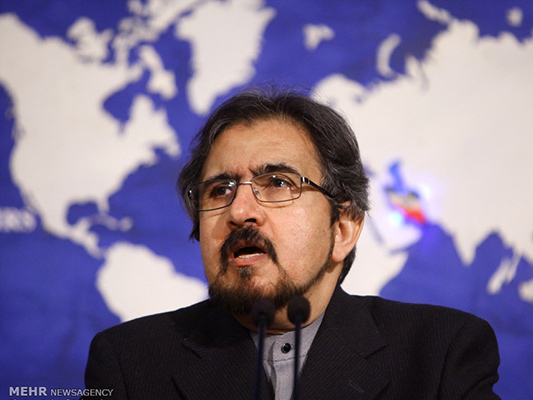
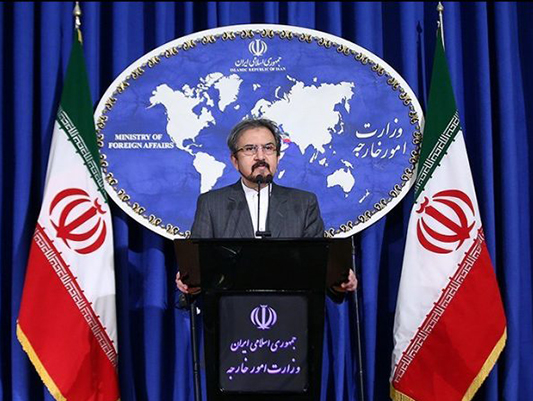
bahram qassemi

“Iran has conveyed its protest to Somalia in this regard through relevant channels,” Bahram Qassemi told ISNA on Wednesday.

He added that the Iranian Foreign Ministry was seriously following up on the issue.

Last week, Somali regional officials said the incident took place after security forces opened fire on the vessel during an operation in the Indian Ocean, according to reports.

The officials claimed the shooting took place after maritime police forces in Puntland, an autonomous region in northeastern Somalia, spotted two boats suspected to be fishing illegally Friday in Somali waters.

Colonel Mohamed Abdi Hashi of Puntland police said security forces opened fire on the boats when they ignored orders to stop and attempted to escape, adding that one boat was seized while the other fled.

According to the official, 16 other crew members were unharmed and apprehended.

He said he was not sure if Somali political leaders had made any contact with Iran about the incident.

Iran Can Share Counter-Terror Experiences with Friends: Rouhani

Iran Can Share Counter-Terror Experiences with Friends: Rouhani

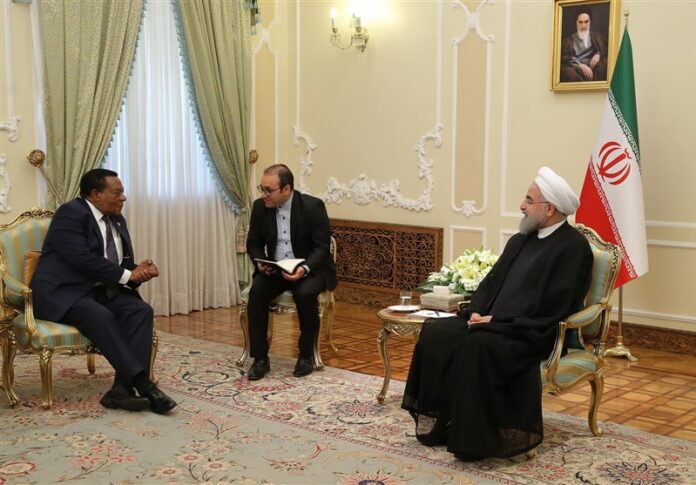
Speaking at a meeting with Tanzanian Foreign Minister Augustine Mahiga in Tehran on Wednesday, President Rouhani said Iran is willing to promote bilateral relations and cooperation with Tanzania in all areas.

He further described terrorism as “a major predicament” for the world and said terrorists have been active in all regions under various names but followed the same objectives.

President Rouhani stressed the need for all countries to fight against terrorism unitedly to tackle the phenomenon.

He also said Iran is ready to share its experiences in counterterrorism with all friendly nations, including Tanzania.

Mahiga, for his part, underlined that his country is resolved to promote relations with the Islamic Republic in all areas.

Heading a high-ranking delegation, the Tanzanian foreign minister arrived in Tehran on Wednesday to hold talks with Iranian officials on issues of mutual interest.

Expansion of relations with African nations in all political, economic and cultural fields is top on the agenda of Iran’s foreign policy.

President Rouhani, who won a second term back in May, has repeatedly stressed his government’s interest in boosting relations with the African states.

Iran Keen to Hold Further Military Drills with Oman

Iran Keen to Hold Further Military Drills with Oman

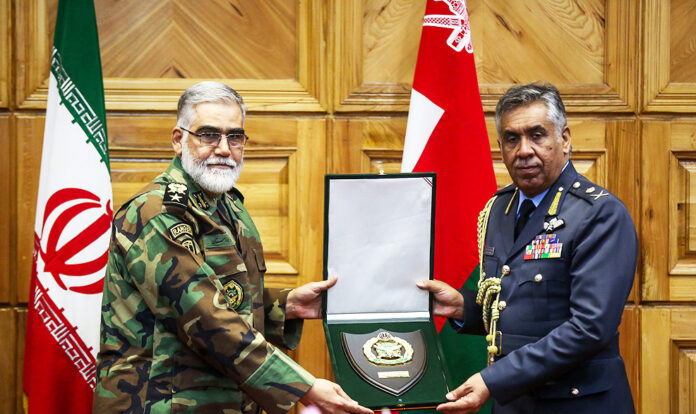
“Mechanisms should be developed so that interaction and cooperation increase in fields such as holding joint ground, air and sea drills,” the second-in-command of the Iranian Army, Brigadier General Ahmad Reza Pourdastan, said on Wednesday.

He made the remarks during a meeting with an Omani delegation headed by the commander of the Royal Air Force of Oman (RAFO), Air Vice-Marshal Matar bin Ali al-Obaidani, in Tehran.

Pourdastan said Tehran and Muscat enjoyed close relations and expressed hope that the visit by the Omani delegation would pave the way for extensive and deep-rooted cooperation and interaction between the Armed Forces of Iran and Oman.

Iran and Oman have so far held several naval search and rescue drills aimed at enhancing readiness for providing relief services, conducting rescue operations and exchanging experience.

Back in April, the two countries launched joint search and rescue drills in the eastern parts of the Strait of Hormuz and the northern parts of the Indian Ocean.

Elsewhere in his remarks, the Iranian commander praised the Islamic Republic’s defense capabilities, saying the country’s military might strips enemies of the courage to launch any act of military aggression against the country.

Pourdastan stressed that Iran’s military prowess was based on the doctrine of deterrence not aggression.

He also underscored the need for countries of the region to boost cooperation for the sake of regional security.

Regional countries, without the presence of foreigners, can address and resolve their problems and differences through dialogue and interaction, and they are capable of establishing peace in the region without any foreign assistance, he noted.

EU Reaffirms Commitment to Iran Nuclear Deal

Mogherini-z12

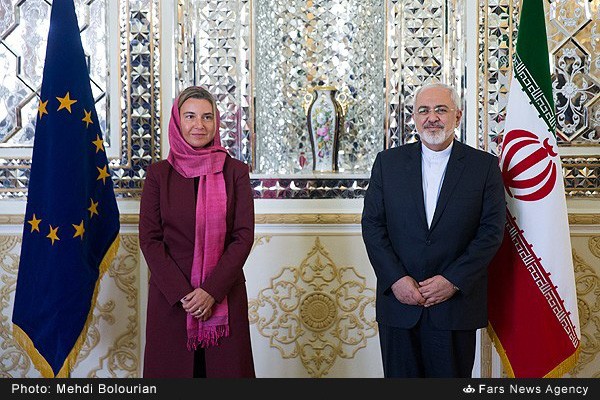
During the phone conversations on late Wednesday and early Thursday, Iranian Foreign Minister Mohammad Javad Zarif, Mogherini, and Gabriel underlined the need for all parties to remain committed to the Joint Comprehensive Plan of Action.

The two European officials stressed Europe’s commitment to the JCPOA and stated that Iran should enjoy the full economic benefits of the nuclear deal since it has fully complied with its commitments.

Both Mogherini and Gabriel shared the view that Europe will live up to its commitments as long as Iran remains committed to its obligations under the nuclear deal.

The talks came as US President Donald Trump is going to decertify the JCPOA and declare that it is against Washington’s national interests, asking the US Congress to decide whether to restore anti-Iran sanctions lifted under the 2015 accord.

Iran Urges Respect for Rule of Law in Spain

Bahram Qassemi

On the recent violence and unrest in Spain’s Catalonia, Qassemi said Spain is one of the main political and economic partners of the Islamic Republic in Europe and Iran is closely monitoring the developments in Spain and its Catalonia region.

“Based on its principles, Iran believes in a united, integrated, and democratic Spain and calls for maintaining the country’s stability, peace, national solidarity, and respect for the principles of Spain’s Constitution,” he noted.

“The Islamic Republic of Iran underlines the need for abiding by the rule of law, avoiding violence and confrontation, and pursuing demands through peaceful and legal means and dialogue,” he went on to say.

“Iran maintains that through national unification and synergy, the entire nation of Spain can better and further meet their interests, preserve their political stability and economic growth,” he added.

Catalans held a referendum on October 1 to announce independence from Spain. The central government in Madrid called the votes illegal and against the country’s Constitution. Hundreds of people in Catalonia were injured in violent clashes with police during the referendum day. Injuries came after riot police, with full gear, clashed with pro-independence people who had convened in front of the polling stations.

Iranian Robotic Team Wins “Best Idea” Award in AIChE 2017

Iranian Robotic Team Wins “Best Idea” Award in AIChE 2017

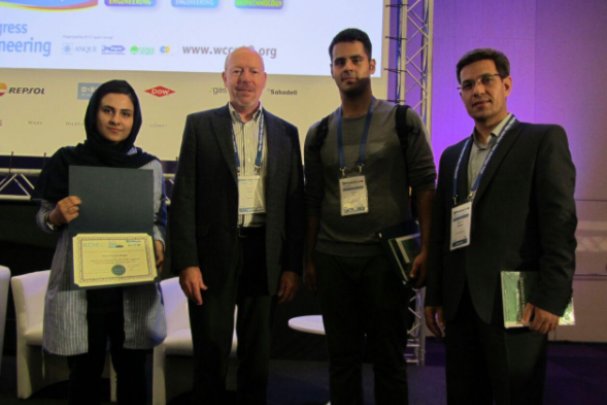
This was the first time a team from University of Kashan was participating in Chem-E-Car Competition.

“The robotic team named ‘Hiva’ from the Chemical Engineering Department of the University of Kashan ranked first in the “Best Creative Design” section of Chem-E-Car Competition, held in Spain from October 1 to 5, 2017, which was organized by the American Institute of Chemical Engineers (AIChE),” said Abdollah Irankhah, a faculty member of the Department of Chemical Engineering of Kashan University.

“Our robotic team has also held top ranks in the Iranian Chem-E-Car competitions for five consecutive years,” Mehr News Agency quoted him as saying in a Farsi report.

Chem-E-Car is an annual college competition for students majoring in Chemical Engineering. The competition is aimed at replacing internal combustion engines with green technologies. AIChE’s annual Chem-E-Car Competition engages college students in designing and constructing a car powered by a chemical energy source that will safely carry a specified load over a given distance and stop.

The vehicles must work with a chemical but environment-friendly fuel producing no dangerous gas or liquid. On the other hand, the competitors cannot use any commercial batteries in their vehicle.

The Kashan University team members were all chemistry students namely Omid Abdullah Ghazi (technical expert of the team), Erfan Omid Najafabadi, Abbasali Sabaghian, Kosar Yasin and Mohadeseh Arezi.

Iran’s Khorasan Razavi; Cradle of Rich Literary Heritage

Iran’s Khorasan Razavi; Cradle of Rich Literary Heritage

The Director General of the Cultural Heritage, Handicrafts and Tourism Department of Khorasan Razavi Province has highlighted the literary heritage of this province; which is located in northeastern Iran.

“Literature is any nation’s most important legacy,”  noted Mohammad Rahim Rahnama, according to a Farsi report by the Miras-e Arya News Agency. “It is manifestation of creativity; a symbol of self-esteem, a part of a nation’s spiritual heritage.”

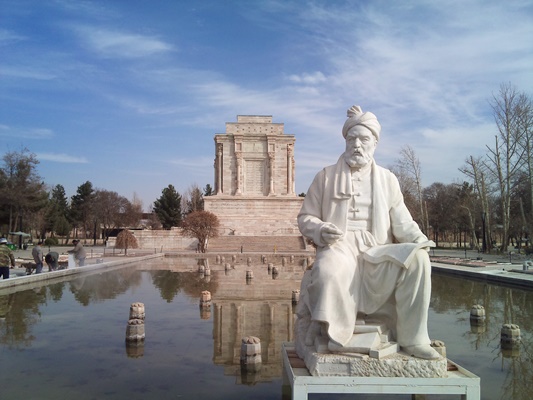
He then referred to the tombs of Iranian poets and scholars, such as Ferdowsi, Omar Khayyam and Attar of Nishapur, as permanent, important tourist destinations in Khorasan Razavi. Rahnama hopes that development of the province’s literary tourism programs encourage tourists to stay longer in Iran.

Urging the University of Ferdowsi to play a more prominent role in the revival of the province’s literary tourism; Rahnam added “the University can play a significant role in developing the country’s literary cultural heritage.”

“Literary tourism is one of the most compatible forms of the industry with prevailing conditions in Iran,” he underlined. “It faces less obstacles than other forms of tourism. Next to the religious, health and sport tourism, literary tourism can boost the industry across Iran.”

“Undoubtedly, the charms of literary heritage of Khorasan Razavi is of great importance in the Eastern civilization,” he concluded. “Using its potentials can be attractive to the people around the world, especially to cultural tourism enthusiasts.”

Rahnama then called for further cooperation between Iranian tourism sector and literary heritage hubs; mentioning it as a priority in the Cultural Heritage, Handicrafts and Tourism Department of Khorasan Razavi.

Governor of Iran’s Central Bank to Visit US

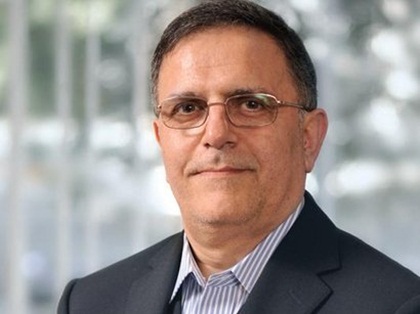
valiollah_seif

During this visit, two of Seif’s deputies, Peyman Qorbani and Gholam-Ali Kamyab, will accompany him. Seif’s deputies have headed to the United States a few days ago to attend preparatory sessions.

According to a Farsi report by Tasnim News Agency, the joint meetings of the International Monetary Fund (IMF) and the World Bank Group are held twice a year to bring together central bankers and ministers of finance of the member states.

The spring meetings are held in mid-April, and the autumn meetings (annual meetings) are usually held for two consecutive years at the IMF and World Bank headquarters in Washington, D.C. and every third year in another member country in mid-October.

Among the most important sessions are economic forums with the participation of senior officials from the International Monetary Fund and the World Bank, the meeting of ministers and heads of the Group of 24, and the meeting of deputies of the Group of 24.

In addition, the IMF’s International Monetary and Financial Committee (IMFC) and the joint World Bank-IMF Development Committee (DC) hold meetings to discuss progress on the work of the institutions.