Tuesday, December 30, 2025
Home Blog Page 3872

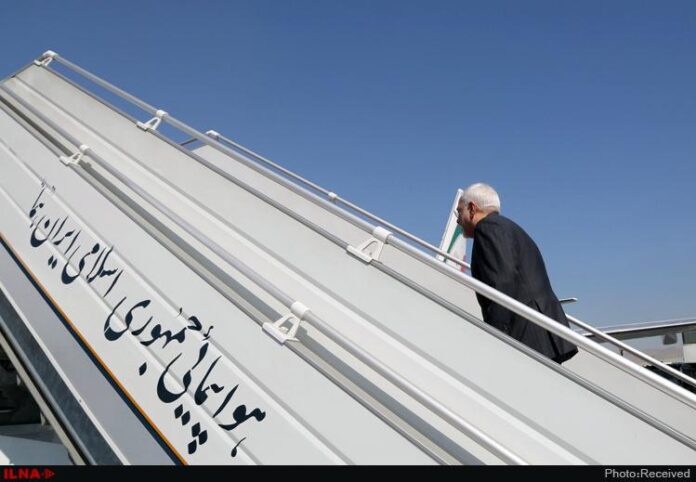
Iran FM to Visit Oman, Qatar in Coming Days

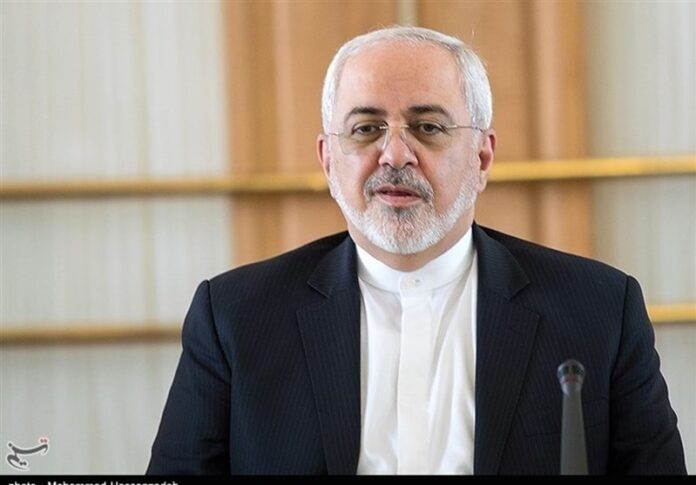
“As part of continued bilateral and regional consultations, Mohammad Javad Zarif will visit Oman and Qatar on Monday and Tuesday,” Foreign Ministry Spokesman Bahram Qassemi announced on Sunday.

During the visits, Zarif will meet his Omani and Qatari counterparts as well as other high-ranking officials of the two Arab states, Qassemi added.

In addition to bilateral issues, the latest regional and international developments will be discussed during Zarif’s meetings with top Omani and Qatari officials, he noted.

KSA Reforms: Saudi Women Authorized to Issue Fatwas

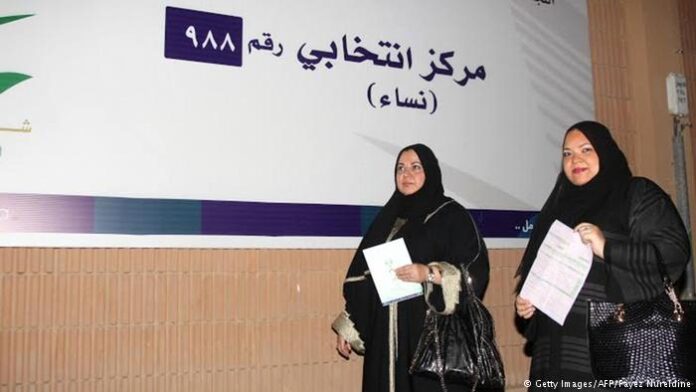
Saudi Arabia’s Parliament has allowed women to issue fatwas (religious edicts) after it annulled a ban on driving for ladies, reports the Persian-language Alef news website quoting Arab media.

The motion authorizing women to issue fatwas was passed in Saudi parliament with 107 votes.

Based on the legislation, women majoring in jurisprudence and relevant disciplines can issue religious edicts as male muftis can.

The development is in line with Riyadh’s recent moves to break with tradition in dealing with women.

In the meantime, media published an interesting picture which shows a document detailing the conditions set by a Saudi girl for marriage. That came after Saudi women were authorized to drive and issue fatwas.

The conditions set in the document include: a private house, a car (model 2017) signed over to the lady, agreement to allow her to continue her education, drive and work.

As Riyadh continues to change traditional rules on women, Saudi King Salman bin Abdulaziz has instructed Interior Minister Prince Abdulaziz bin Saud bin Nayef to put forward a plan on fighting sexual harassment against women.

The king’s message to the minister reads that given the dangers and negative consequences of sexual harassment for individuals, families and society, and its contradiction to Islamic values and the norms of the Saudi society as well as the country’s customs and traditions, and also with regard to the importance of drawing up a law to criminalize sexual harassment and designating punishments that would prevent such crimes, the Interior Ministry is responsible for proposing a legal plan to counter sexual harassment and handing it over in sixty days to go through the necessary arrangements for approval.

Iran Bans Fuel Shipment to Iraqi Kurdistan

The decision is in line with Tehran’s series of measures in response to a referendum held in the semi-autonomous region on possible secession from Iraq which has drawn international criticism.

“Given the recent developments in the region, it is suitable that international transportation companies and drivers active in this field avoid loading and carrying oil products to and from the Iraqi Kurdistan Region until further notice,” a directive by the ministry’s Road Maintenance and Transportation Organization said.

“It should be noted that the consequences of any action in this regard would befall the relevant company,” it added.

The transportation is mostly carried out by tanker trucks which take crude oil from the Iraqi Kurdistan to Iran and carry back refined products to the region.

The Iraqi Kurdistan Region went ahead with its plan to hold the referendum on Monday while Iraq’s neighbors and countries in the Middle East, including Iran and Turkey, had voiced opposition to such a move and supported the Baghdad central government.

On Monday night, thousands of Kurdish people in favor of KRG’s secession from Iraq took to the streets in Erbil, with some waving Israeli flags to celebrate.

No one in the region, except Israel’s Prime Minister Benjamin Netanyahu, endorsed the referendum, and all neighbors have warned that the secession plan would bring instability to the region and disintegrate Iraq.

Pressure has been building on officials in Erbil, Kurdistan’s regional capital, over the referendum, with regional carriers, including Turkish Airlines, Egypt Air and Lebanon’s Middle East Airlines submitting to Baghdad’s request to suspend their flights serving Iraqi Kurdistan.

Iraq Government Hails Top Shiite Cleric’s Stand on Kurdistan Referendum

Iran's President Lauds Ayatollah Sistani’s Vital Role after Controversy

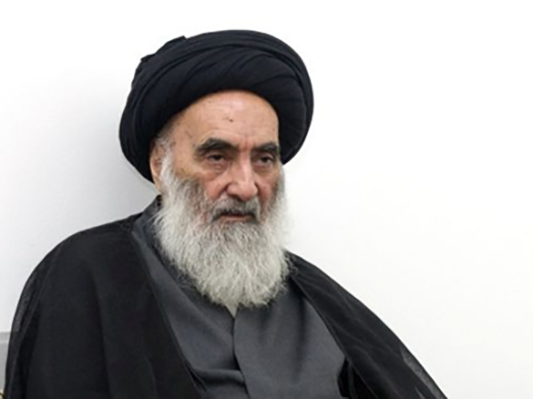
According to the Iraqi media, the office of Iraqi Prime Minister Haider al-Abadi released a statement expressing the premier’s appreciation for the grand cleric’s stance after Ayatollah Sistani called on the Kurds to return to the “constitutional” path.

It thanked Ayatollah Sistani for his stances on the need for safeguarding Iraq’s national unity and constitutional rule.

The statement referred to regional and international opposition with Iraqi Kurds’ secession plans and praised the cleric’s “sense of responsibility” for releasing a “historic” statement.

Meanwhile, Head of the National Wisdom Stream Ammar al-Hakim urged the Iraqi Kurdistan Region to follow the guidelines of the religious leadership.

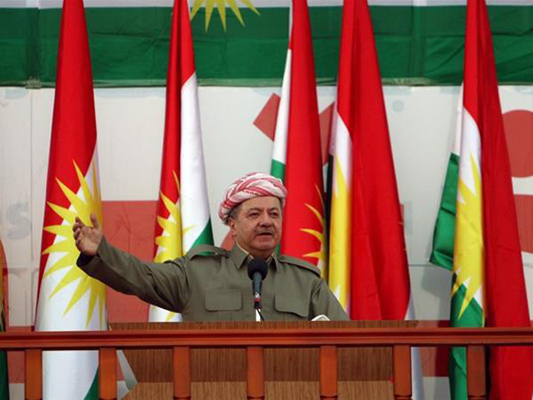
He asked Iraqi Kurdistan Region President Masoud Barzani to annul the results of the referendum held on September 25 in the northern Kurdish region and resume talks with Baghdad.

Ayatollah Ali al-Sistani in a statement on Friday said that Kurds must return to the “constitutional” path, arguing that is in the best interest of all Iraqi people, including the Kurds.

“We are calling on the officials in the region to go back to the constitutional path to solve the issues between the central government and region’s government,” the statement said.

“We also call on the Iraqi government and the political powers represented in parliament in all their decisions and steps to take into consideration the preservation of the constitutional rights of our Kurdish brothers,” it added.

The statement said that the recent development should not negatively affect the “solid relationship” between the Iraqi people, including Arabs and Kurds.

It went on to say the people of Iraq should avoid “anything that might harm the national unity of Iraq’s communities.”

The Iraqi Kurdistan Region went ahead with its plan to hold the referendum on Monday while Iraq’s neighbors and countries in the Middle East, including Iran and Turkey, had voiced opposition to such a move and supported the Baghdad central government.

According to Kurdish officials, over 90 percent of the voters said ‘Yes’ to separation from Iraq.

Pressure has been building on officials in Erbil, Kurdistan’s regional capital, over the referendum, with regional carriers, including Turkish Airlines, Egypt Air and Lebanon’s Middle East Airlines submitting to Baghdad’s request to suspend their flights serving Iraqi Kurdistan.

Iran FM Calls on Europe to Defy US in Case US Scraps Nuclear Deal

Speaking to the Guardian and the Financial Times, Zarif warned that if Europe followed Washington’s lead, the deal would collapse and Iran would emerge with more advanced nuclear technology than before the agreement was reached in Vienna in July 2015,

However, he insisted that technology would not be used to make weapons, in line with Tehran’s obligations under the Nuclear Non-Proliferation Treaty (NPT).

Zarif said the only way Iran would be persuaded to continue to observe the limits on its civil nuclear program would be if the other signatories – Russia, China, Britain, France, and Germany – all remained committed to its terms and defy any subsequent US sanctions.

“Europe should lead,” Zarif said in an interview in the Iranian UN ambassador’s residence in New York.

The Iranian foreign minister said he expected Trump to carry through his threat not to certify Iranian compliance in a state department report to Congress on October 15. Congress would then have 60 days to re-impose sanctions suspended under the deal.

“I think he has made a policy of being unpredictable, and now he’s turning that into being unreliable as well,” Zarif said. “My assumption and guess is that he will not certify and then will allow Congress to take the decision.”

Trump has said he has already made his decision but has not told anyone outside his immediate circle. He refused to tell Theresa May when she asked him at a bilateral meeting at the UN last week, despite the fact that Britain is a close ally and a fellow signatory to the agreement.

Zarif warned that US abrogation of the deal would backfire on Washington, saying that Iran would resume uranium enrichment and other elements of its nuclear program at a more advanced level than before.

“The deal allowed Iran to continue its research and development. So we have improved our technological base,” he said.

“If we decide to walk away from the deal we would be walking away with better technology. It will always be peaceful because membership of the NPT is not dependent on this deal. But we will not observe the limitations that were agreed on as part of the bargain in this deal.”

He added that “walking away” from the deal was just one option under consideration in Tehran.

“There are other options and those options will depend on how the rest of the international community deal with the United States,” he said. “If Europe and Japan and Russia and China decided to go along with the United States, then I think that will be the end of the deal.”

However, Zarif pointed out that in a previous era of high tensions between Washington and Tehran – when the US adopted sanctions legislation aimed at punishing European companies for doing business in Iran – Europe had resisted and sought to insulate its firms from US sanctions.

“In the 1990s they didn’t just ignore it,” Zarif said. “Europe, the EU, has legislation on the books that would protect EU businesses and adopt counter-measures against the US if the US went ahead with imposing restrictions. And it has been suggested by many that might be the course of action that Europe wants to take.”

A 1996 regulation adopted by the EU gave Europeans protection against the application of US sanctions at the time, including the Iran and Libya Sanctions Act passed in the same year. The law could be revived and expanded to cover any new US sanctions.

Following a ministerial meeting on the deal at the UN last week, the EU foreign policy chief, Federica Mogherini, stressed that all the signatories, including the US, had agreed that Iran was in compliance with its obligations under the terms of the agreement, and stressed that Europe would do everything possible to keep the deal alive, even in the event of US withdrawal.

In the wake of the Vienna agreement, however, Europe would have to go further than defying US sanctions. It would have to ignore UN measures as well. Under “snap-back” provisions in the agreement, the US alone could trigger the resumption of UN sanctions, as the provisions allow any participant in the deal to call a Security Council vote on a resolution on whether to continue with sanctions relief – a vote the US can veto.

The clause was designed to stop any country from shielding Iran if it broke the agreement. The negotiators did not anticipate it being used by a government to break the deal even while all other parties were in compliance.

The UN nuclear watchdog, the International Atomic Energy Agency (IAEA), has confirmed that Iran is abiding by the terms of the agreement, as have the other signatories to the deal, and the chairman of the US joint chiefs of staff, General Joseph Dunford, who warned that US abrogation would damage its long-term credibility.

Trump and his top officials have claimed that Iran is in violation of a line in the preface of the agreement that says the signatories anticipate the deal would contribute to regional peace and security. In his interview, Zarif rejected that reasoning.

“Even without being fully implemented, it has contributed because the region has one less issue to deal with. So it was already contributing to regional stability,” he said. “If anything, it has been the reaction of US allies in the region – who from the beginning didn’t like the deal and since the deal have done everything to undermine the deal – that have exacerbated tensions in the region.”

Saudi Man Arrested for Threatening to Set Women Drivers Afire

The Saudi man was apprehended for threatening to attack female drivers following a decree by Saudi King Salman to let women drive for the first time in the Arab country’s history, reports the Saudi Interior Ministry.

According to a Farsi report by IRNA, police in Eastern Province handed over the man to the country’s prosecutor general after arresting him, says the ministry, adding his identity has not been revealed yet.

The man had released a video vowing to set fire to Saudi women drivers together with their vehicles.

Saudi King Salman bin Abdulaziz Al Saud issued an official decree last Tuesday, repealing a decades-long ban on driving for women in the country.

Many Saudis welcomed the move while some became confused and furious at the annulment of the driving ban policy.

According to the ministry’s report, the revocation of the ban means Saudi women will have more opportunity to be in contact with non-relative men.

The driving ban for women in Saudi Arabia was a conservative tradition which would restrict their activities and which, according to human rights activists, was a sign of repression of women. Saudi Arabia was the only country where women were not authorized to drive.

Under the king’s order, Saudi women are allowed to drive from now on. This comes as Saudi female activists have been forbidden from making any comments in that regard.

Rights activists and politicians have also revealed on their Twitter pages that Saudi women activists had to refrain from reviewing and analyzing the issue of the lifting of the driving ban after they received threats against doing so.

Iran Raps Myanmar for Continued Violence against Rohingyas

In a statement on Friday, Foreign Ministry Spokesman Bahram Qassemi strongly criticized the Myanmar government for turning a blind eye to warnings and demands by other countries, international organizations and the world public opinion, which are calling for an end to acts of violence against the Rohingya Muslims.

“Unfortunately, every day that passes, the crisis becomes more complicated, the sufferings of the refugees increase and the responsibility of countries and international organizations becomes heavier, and more importantly, the chance to stop the crisis and make up for the ensuing damage is lost,” he noted.

“Such a complicated situation can turn the current circumstances into one of the worst human disasters of the current era,” Qassemi said.

“Despite giving awareness, warnings and demands by countries, international organizations, officials and the world public opinion, we are witnessing that the Myanmar government is disregarding the international community’s demand, which is unacceptable.”

“We believe that no action should annul the Myanmar government’s responsibility to stop the ongoing violence against the Rohingya Muslims, and no action should be used as a pretext to further aggravate the crisis and prevent the dispatch of the international community’s humanitarian aid to the crisis-hit areas in the country,” the spokesman added.

“Iran was among the first countries to react to the crisis based on its human and ideological responsibility. At least two letters sent by the Iranian foreign minister to the UN secretary general, several telephone conversations and contacts between the Iranian president and foreign minister and heads of Muslim states and their foreign ministers, bringing up the issue with the other parties in all meetings the Iranian president and foreign minister held in Tehran and New York over the past month, sending humanitarian aid provided by the Iranian nation to the refugees in Myanmar and Bangladesh as well as efforts by Iran’s local and international media to mirror the harrowing situation of Rohingya refugees in Bangladesh have been only part of the Islamic Republic’s political and diplomatic efforts to help settle the crisis and allay the sufferings of the Myanmarese refugees as soon as possible.”

From the outset of the fresh wave of crackdown on Rohingya Muslims, said Qassemi, the Myanmar government has been repeatedly asked to allow an Iranian delegation led by the deputy foreign minister along with humanitarian aid to be sent to that country; however, despite the promises made, it has not been possible to make the arrangements to that end.

Qassemi then referred to the Bangladesh government’s admitting the influx of Myanmarese refugees.

“The move by Bangladesh is invaluable from a humanitarian perspective, and the international community, including countries and international circles and all NGOs should, along with Bangladesh, act with more seriousness and better organization and make more effective efforts to stop the displacement of Rohingya Muslims and help send more aid to them and take care of their situation,” he concluded.


Kurdish Independence Harder to Achieve after Referendum

The following are the highlights of an editorial by Mohammad Saeed Ahmadian, the chief of the Persian-language Khorasan daily, on the consequences of the Iraqi Kurdistan’s independence referendum:

From the Kurdish residents’ point of view, creation of an independent state is a great cause, so holding a referendum on independence means taking a step towards this goal, but let’s examine whether the referendum has made the region closer to independence or has made it more difficult to achieve.

For the following reasons, I believe that Barzani’s policy has not only made the Kurdistan region far from becoming an independent state, but also has caused the region to lose many of its achievements:

1- Economic independence is the most important element in winning independence for a country. The geopolitical features of the Kurdistan region show that it is enclosed among neighbouring countries and has no access to free waters. Therefore, the most important obstacle for Iraqi Kurdistan in gaining independence is its geopolitical features. If they want to achieve independence, they must first resolve this problem by negotiation and diplomacy.

2- Another necessity for Kurdistan’s economic independence is to be in control of Kirkuk’s oil wells, which accounts for 35 percent of Iraq’s total oil. The main issue that we will likely see in the coming days is the deployment of the Iraqi government forces to Kirkuk, and if Barzani forces would not withdraw, it would be taken by force. The Kurdish people have not forgotten that how weak the region’s government is. If it was not for Iran’s help and clever and quick decisions of Major General Qassem Soleimani, the region would fall in the very first days of ISIS invasion. Moreover, it should be noted that this region is not composed of integrated ethnicities; therefore, in addition to military weakness, the separatists will be deprived of unified popular support.

3- Perhaps Barzani has been counting on the support of foreign governments, which is also an incorrect analysis. It is crystal clear that the Zionist regime is supporting the Kurds, but the reality is that this regime, without the help of the United States, cannot do any specific help to overcome the aforementioned problems. Moving along the separatism path with reliance on the United States will create three serious problems for Barzani: First, the United States has repeatedly proved it is an unreliable country, and it will quickly forget all its official and unofficial promises. Second, the US failure in Syria showed that even if they want, they may not be able to help Barzani effectively. And the third problem is that the Americans are smart enough not to bet on the wrong horse.

4- Taking any measure undoubtedly requires a legal background to endorse and guarantee its legitimacy. From this perspective, Barzani’s actions are not only problematic in terms of international law, but also contradict the text of the Iraqi Constitution.

5- Some believe that the referendum was not aimed at gaining independence, but was held to boost Barzani’s bargaining power to gain more privileges. I say this is a probable scenario, but the fact is that Barzani has shown if he pursues such a goal, he does not know much about diplomacy as the game that he had started well is drawing to its bad end because all the privileges had to be achieved before the plebiscite was held. Talking of a referendum was like the Sword of Damocles and it could have brought the Iraqi government to the negotiating table and convince the governments of Iran and Turkey to push Iraq to give more privileges. But by holding the referendum the game turned into a ‘zero-sum ‘ one, based on which one side must lose and the other side must win.

Naturally, the central government of Iraq is clever enough to use Barzani’s flaw to end one of the biggest post-ISIS challenges, i.e. Kirkuk case, so as to restore its sovereignty over the area forever. After the Iraqi government established its dominance over 35 percent of the country’s oil wells, naturally it will not be in a hurry, and will wait for the economic effects of the blockade on the Kurdish region’s borders. It is clear that in the following negotiations, the Kurdish region authorities will have to give more concessions. In this way, not only will they not receive new privileges, but they must manage the crisis-hit region by giving more concessions.

Trump Aware of Dangers of Violating Iran Nuclear Deal: Analyst

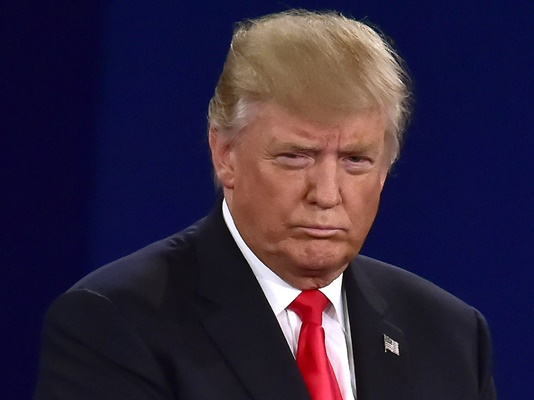
donald-trump

Shani Hormozi, an expert at the Expediency Council’s Centre for Strategic Studies, has, in an article published in the Persian-language Shargh daily, weighed in on the new US government’s policy on the Iran nuclear deal known as the Joint Comprehensive Plan of Action (JCPOA).

He underlined that the Trump administration is to, once again, report to Congress on Iran’s compliance with the JCPOA on October 15, 2017.

“The reality is that the Trump administration, despite being criticized for its inexperience in the foreign policy arena, is well aware of the dangers of the violation of the JCPOA. So, it seeks to set the stage for pointing the finger at Iran rather than openly withdrawing from the deal. One of the policies adopted [by Washington] in this regard is to lay the groundwork for presenting another definition of ‘compliance,’ whose general framework was delineated by [US Ambassador to the UN] Nikki Haley in a speech,” said the commentator.

Hormozi then referred to Haley’s speech at the American Enterprise Institute.

“Her use of false accusations to offer a new meaning of abidance by the JCPOA as well as using new untrue statements to accuse Iran of not remaining committed to the deal was planned within a meaningful structure,” said Hormozi.

Based on the new concept presented by the US, compliance with the JCPOA is not only a simple and basically technical concept; rather, it has three key components: The JCPOA, UN Security Council Resolution 2231and the law passed by the US Congress to monitor the implementation of the JCPOA.

Then the US says Iran’s compliance should not only be studied from the three above-mentioned perspectives, but, as a whole, it should be reviewed with regard to the nature and history of the Iranian government’s performance. This begs the question of why the Trump administration seeks to link the nature of the Iranian government and its performance since the 1979 Islamic Revolution to the JCPOA. The Trump administration is trying to mention respect for “international regulations” and abidance by “international agreements” together and come to the conclusion that respect for international regulations is a precursor to compliance with international agreements. Although the US has shrewdly crafted this policy to make international players pessimistic about Iran and the future of the country’s compliance with the JCPOA, it suffers from a major shortcoming, which is putting “intention” and “policy” in the wrong order. In fact, Trump first announced he intended not to confirm Iran’s compliance and then called on his Cabinet members and advisors to prepare the ground for announcing the non-compliance. This intention, and not policy, is not lost on media and Washington’s European allies.

Therefore, at least in the short run, arrangements and policies as such, will not be able to persuade key audiences. But what is important is that Trump’s personal traits and character are such that he is as likely to go back on his words as he is to keep them. This gives all players, namely Iran, the message that they should be prepared for all possible scenarios.

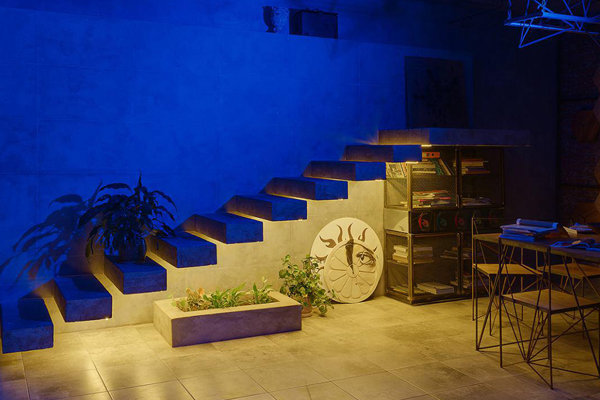
GAP Exhibition Presents Contemporary Iranian Architectural Works

The GAP was established based on an initiative by senior lecturer of the University of Melbourne, Blair Gardiner, and seeks to cultivate cross-cultural ties between Melbourne and cities around the world by organising exhibitions to show the architectural projects of various urban centres.

In the current academic year, Tehran has been selected as the eighth city to display its architectural works. Hence, the GAP has invited 7 prominent Iranian architects who have carried out prominent projects in Tehran to participate in the event.

From Iran, the Keivani Architects Studio, the Huba-Design Architectural Office, the Madjdabadi Architectural Office, the Cloot, the Shift Design Group, the Next office, and the Moj-e-No (New Wave) Architectural Office, have been invited to the exhibition.

Nima Keivani said in an interview with the Mehr News Agency that “the exhibition is a student collective activity that takes place at the Faculty of Architecture, Building and Planning of University of Melbourne, Australia. This is an excellent occasion for further introducing contemporary Iranian architecture and contemporary art to the international community. We see that the media and international organizations are paying great attention to architecture, and it proves that our country’s architectural position in the world is growing.”

At this event, seven well-known architectural offices of Tehran, who had previously carried out noticeable projects, present their works at the exhibition to the public as well as to the students of Designing and Architecture at the University of Melbourne.

On the sidelines of this exhibition, full interviews with Iranian architects will be published on the websites, publications and social pages of the university. They will also be published in the form of books and catalogues along with a full report of the exhibition.

Furthermore, a report and video footage in form of Q&A will be presented to the audience. At this session specialized questions in the field of architecture would be raised and the architects can express their concerns.

The exhibition was started at 6 pm on September 28 at Atrium of the University of Melbourne’s School of Design and will continue until October 12, 2017.